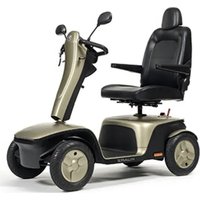
Kuarz - Electric scooter Vermeiren - Free user manual and instructions
Find the device manual for free Kuarz Vermeiren in PDF.


| Product type | Electric scooter for reduced mobility |
| Brand | Vermeiren |
| Model | Kuarz |
| Use | Outdoor (class C) |
| Maximum user weight | 150 kg |
| Dimensions (L x W x H) | 1505 x 680 x 1345-1395 mm |
| Folded height | 870 mm |
| Total weight | 158 kg |
| Removable seat weight | 21.3 kg |
| Battery | 80 Ah (C20), 12 V DC, AGM maintenance-free |
| Motor | 750 W, electromagnetic brakes |
| Maximum speed | 10-15 km/h depending on version |
| Theoretical range | 45 km |
| Climbable slope | 10° |
| Obstacle clearance | 100 mm |
| Maximum braking distance | 4.5 m |
| Minimum turning diameter | 3400 mm |
| Tires | 350 x 70 mm, max pressure 3.5 bar |
| Operating temperature | -10 °C to +40 °C |
| Storage temperature | +5 °C to +41 °C |
| Protection rating | IPX4 |
| Compliance | ISO 7176-8, ISO 7176-14, ISO 7176-21 |
| Maintenance | Clean with a damp cloth, do not use a pressure washer |
| Safety | Anti-tip, electromagnetic brakes, release lever, battery switch |
| Spare parts | Use only original Vermeiren parts |
Frequently Asked Questions - Kuarz Vermeiren
User questions about Kuarz Vermeiren
0 question about this device. Answer the ones you know or ask your own.
Ask a new question about this device
Download the instructions for your Electric scooter in PDF format for free! Find your manual Kuarz - Vermeiren and take your electronic device back in hand. On this page are published all the documents necessary for the use of your device. Kuarz by Vermeiren.
USER MANUAL Kuarz Vermeiren
natural_image
Exterior view of a modern electric motor with black and gold body, featuring a Kuarz brand logo (no text or symbols on the device itself)
Preface
4
1. Your product 6
1.1. Options 7
2. Before use 7
2.1. Intended use and indications 7
2.2. Safety instructions and applicable risks 8
2.3. Symbols on the scooter 9
2.4. Transport 10
2.5. First use and storage 11
3. Using your scooter 12
3.1. First ride 12
3.2. Operating your scooter 13
3.3. Transfer in and out of the scooter 21
3.4. Brake and free-wheel lever 21
3.5. Battery switch 22
3.6. Comfort adjustments 23
3.7. Battery status and charging 26
3.8. Anti-tipping 29
4. Maintenance 30
4.1. Points of maintenance 30
4.2. Maintenance instructions 31
4.3. Expected lifespan 32
4.4. Reuse 32
4.5. End of use 33
4.6. Warranty 33
5. Troubleshooting 33
6. Technical specifications 35
Preface
Congratulations! You are now owner of a Vermeiren scooter!
This scooter is made by qualified and committed personnel. It is designed and produced according to high quality standards guarded by Vermeiren.
Thank you for your trust in the products of Vermeiren. To support you on the use of this scooter and its operating options, this manual is offered. Please read it carefully; it will help you to get familiar with the operation, capabilities and limitations of your product.
If you still have questions after reading this manual, do not hesitate to contact your specialist dealer. He/she will be glad to help you.
Important note
To ensure your safety, and to prolong the lifetime of your product, please take good care of it and have it checked and serviced on a regular basis.
This manual reflects the latest product developments. Vermeiren has the right to implement changes to this type of product without any obligation to adapt or replace similar products previously delivered.
Pictures are used to clarify the instructions in this manual. Details of the depicted product may deviate from your product.
Information available
On our website http://www.vermeiren.com/ you will always find the most recent version of the information in this manual. Please consult this website regularly for possible updates.
Visually impaired people can download the electronic version of this manual and have it read out by means of a text-to-speech software application.
 | User manualFor user and specialist dealer |
 | User manual of battery chargerFor user and specialist dealer |
 | Service manual for scootersFor specialist dealer |
 | EC declaration of conformity |
1. Your product
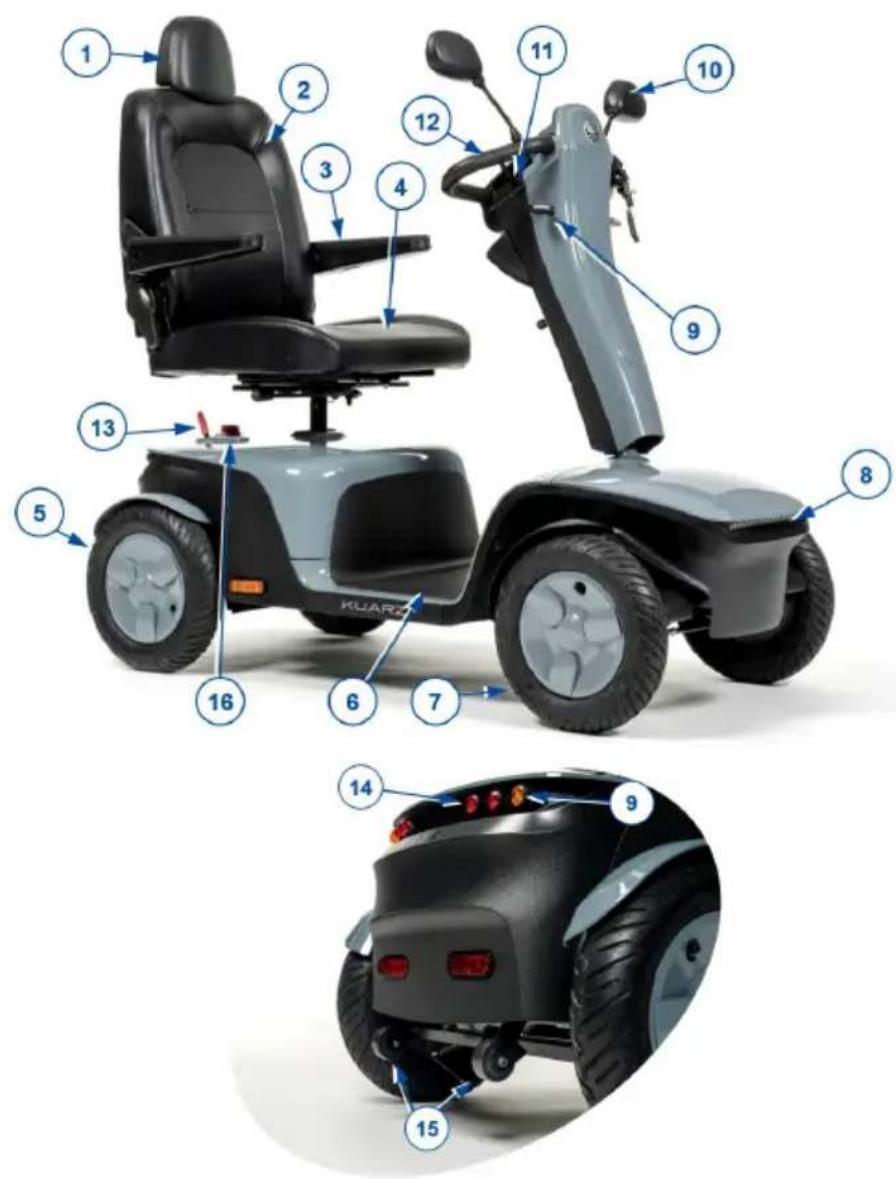
- Headrest
- Backrest
- Armrest / Arm pad
- Seat
- Rear wheels
- Footplate
- Front wheels
- Front light
- Indicator lights
-
Rear-view mirror
-
Speed lever
- Handgrips
- Free-wheel lever
- Rear light
- Anti-tipping
- Identification plate
1.1. Options
Contact your specialist dealer about options. He will gladly advise you.
2. Before use
2.1. Intended use and indications
• This product is a medical device.
- Indications and contraindications: The scooter is operated by the user himself. It is intended to transport elderly people and people with reduced walking abilities. You should NOT use this scooter if you suffer from physical or mental impairments that may put you, or other people, in danger when driving the scooter, such as; visual impairment, mental disorder, or loss of function in both arms. For this reason, consult your physician first and make sure that your specialist dealer is informed about his advice.
- This scooter is classified as a class C product and is suitable for outdoor use.
- This scooter is designed and produced solely to transport one (1) person with a maximum weight of 150kg. It is not designed to transport goods or objects, or for any other use than the transport previously described.
- Only use accessories and spare parts approved by Vermeiren.
- Please read all technical details and limits of your scooter in chapter 6..
- The warranty on this product is based on normal use and maintenance as described in this manual. Damage to your product caused by improper use or lack of maintenance will cause the warranty to lapse.
2.2. Safety instructions and applicable risks
CAUTION
Risk of injuries and/or damage
- Carefully read and follow the instructions in this manual. Otherwise you may get injured or your scooter may get damaged.
Keep the following general warnings in mind during use:
- Do not use your scooter if you are under the influence of alcohol, medicines or other substances that may influence your driving abilities.
- Be aware that some parts of your scooter may get very hot or cold due to ambient temperature, solar radiation, heating devices or due to the motor drive during the ride. Be careful when touching. Wear protective clothing if the weather is cold. After a ride, wait until the scooter/motor has cooled down.
- Before switching the scooter on, be aware of the environment/situation in which you are located. Adjust your speed to this before driving oil. We advise you to use the slowest speed setting to drive indoors. For outdoor driving you can adjust the speed to a suitable speed at which you feel comfortable and safe.
- ALWAYS keep in mind that your scooter may stop suddenly due to a discharged battery or a protection that prevents your scooter from further damage. Also check the causes mentioned in chapter 5..
- Your scooter has been tested for electromagnetic compatibility and complies with the standard. Nevertheless, sources of electromagnetic fields, such as the fields of mobile phones, power generators or high-power energy sources, may influence the driving performance of your scooter. On the other hand, the electronics of your scooter may affect other electronic appliances as well, such as alarm systems of shops and automatic doors. We therefore advise you to check your scooter regularly for damage and wear, since these may enlarge the interference (see also chapter 4.).
- Only drive on ☐at surfaces where all four wheels touch the ground and where there is sufficient contact to operate the scooter safely.
- Make sure that your hands, clothes, belts, buckles or jewellery don't get caught by wheels or other moving parts during use.
Any serious incident [MDR (EU) 2017/745 §2 (65)] that has occurred in relation to the device should be reported to the manufacturer and the competent authority of the Member State in which the user and/or patient is established.
2.3. Symbols on the scooter
 | Type designation |
 | Catalogue number |
 | Serial number |
 | Medical device |
 | Manufacturer |
 | Date of manufacture |
 | Declaration of conformity |
 | Attention: important information |
 | It is advised to read the manual |
 | Risk of entrapment |
 | For indoor use only |
 | Maximum weight of the user in kg |
 | Maximum safe slope in ° (degrees). |
 | Not intended to be used as a seat in a motor vehicle |
 | Maximum speed |
 | Maximum basket load |
 | For electric devices only: Do not dispose of parts in household waste! Submit for proper recycling. |
2.4. Transport
2.4.1. Moving the scooter
The best way to move the scooter is to make use of the neutral mode, see §3.4.. Place the scooter in neutral and roll the scooter to the desired place.
If this is not possible, you can carry the scooter according to the following steps:
- Switch the scooter off.
- Remove loose parts and options.
- Store loose parts in a safe place.
- Carry the frame + steering unit with 2 or 3 persons to the desired place. Hold the frame to the chassis or fixed parts of the frame, not the bumpers or the plastic parts.
2.4.2. Transport by vehicle, as luggage
WARNING
Risk of injuries and damage
- Do NOT use your scooter as a seat in a vehicle.
- Remove all loose parts prior to transportation.
-
There should be no people or objects under the scooter, on the footplate or on the seat during transportation.
-
Make sure that the scooter is attached properly to avoid injury of the passengers during collision or sudden braking.
- Do not place fingers between the components of the scooter.
The best way to transport your scooter in the car is to drive the scooter in the car using ramps. If you are not experienced to drive the scooter on ramps, you can also put the scooter in neutral mode and push it in the car using ramps.
When the scooter does not fit in the car, it is also possible to transport the scooter according to the following steps:
- Remove all loose parts prior to transport (seat, etc.).
- Store loose parts in a safe place.
- If possible, remove the batteries / battery boxes to save weight.
- Fold the steering unit down with the angle adjustment.
- Place the scooter in the car with 2 or 3 persons.
- Attach the frame of the scooter securely to the vehicle.
2.5. First use and storage
CAUTION
Risk of battery damage
- Never completely discharge the battery.
- Do not interrupt the charging cycle; only disconnect the battery charger when the battery is fully charged.
- Make sure that your scooter is stored in a dry environment to prevent mould from growing and the upholstery from being damaged, see also chapter 6.. If necessary, use a protective cover.
- Read the storage and maintenance instructions in §4. and technical details in §6..
Ensure that the battery has been fully charged before using your scooter, ask your dealer if this has already been done or not. To charge, follow the charging instructions in §3.7.
If the packaging of your product has been damaged, (unintentionally) opened, or affected by environmental conditions (moisture, heat,...) upon delivery, check the device integrity of your product. When in doubt, contact your specialist dealer.
3. Using your scooter
WARNING
Risk of injuries
- First read previous chapters and inform yourself about the intended use. Do NOT use your scooter unless you have read and fully understood all instructions.
- In case of doubts or questions, do not hesitate to contact your local specialist dealer, your care provider or technical adviser to help you with this.
3.1. First ride
CAUTION
Risk of injuries or damage
• Make sure that your scooter is switched OFF when getting on and off.
- Always unplug the battery charger from the scooter before starting to drive.
Make sure you are familiar with the operation of your scooter before using it in crowded and possibly dangerous places. First exercise at a spacious, open area with little bystanders and ask someone to accompany you.
1. Make sure that:
– the scooter is on a flat surface with all wheels touching the ground;
– the battery is fully charged, see § 3.7.;
– the motor is coupled, see § 3.4.;
- the tyres have the correct tyre pressure (if applicable), see § 4.2.1.;
– you have the correct sitting position;
– all adjustments are firmly secured, see §3.6..
- Switch your scooter on, see §3.2..
- Set the speed to lowest speed setting, see §3.2..
- Put both hands on the handgrips of the tiller.
- Slightly pull the right operating lever to drive to the front. Use the left operating lever to drive backwards. Release the lever to stop. Repeat this a few times.
- If you feel confident enough, you can try to drive at higher speed.
- Now try to turn, in forward and backward direction. Repeat this a few times.
- Make sure your scooter stands stable when ending the ride.
- Switch off the scooter and remove the key to protect against theft.
3.2. Operating your scooter
WARNING
Risk of injuries or damage
- Do NOT drive on slopes, obstacles, steps or kerbs larger than specified in § 6..
• Take the local road traffic law into consideration; it may differ per country. This counts for driving on pavements, unpaved roads or paved roadways. - Do not adjust the speed while you are driving.
- Take the weather conditions into consideration. Avoid driving by moist weather, extreme heat, snow, black ice, freezing temperatures; see technical specifications in chapter 6..
- To prevent tipping over, try to drive with a large turning radius at corners and curves. Do not cut corners and don't drive with sharp bends. Try to drive straight in small passages to prevent getting entrapped.
- Do not lean too far to the left/right/front/back of the scooter to prevent tipping over. Please pay specially attention when you are negotiating slopes and obstacles.
- Be aware of other road users to whom your scooter may be an obstacle. Pay special attention when turning, reversing or driving backward. If you are not acquainted with driving backwards, first practice in an open area. Indicate the direction you intent to go before cornering.
- When driving indoors, only use the lowest speed setting.
- Do not turn your scooter "OFF" while driving as this will lead to an emergency stop and possible risk of accident and injury.
- Keep the braking distance in mind. Be aware that the braking distance depends on speed, surface, weather conditions, slope and weight of the user.
- Pay attention if the road has holes or gaps that may cause entrapment of the wheels.
3.2.1. Operator control
- Switch the scooter ON by turning the key.
- The LCD screen (1) will light up and show the current level of your batteries.
- Press the speed control (2, 3, 4) to select the desired driving speed.
- Press button (4) to choose between the high/low speed setting.
- Press button (2) to lower the speed within the chosen setting.
- Press button (3) to raise the speed control.
• To sound the horn, press the horn button (5).
• To switch on the front and back lights, press the light button (7).
• To switch on the emergency flashers, press button (10).
- To switch on the indicator lights, press the desired button (9) (right indicator) or (8) (left indicator). The buzzer will make a beeping sound when turning the indicators lights on.
- To switch the function of the speed levers, press button (12) for 3 seconds. You can now drive forward with the left lever and backward with the right lever. Press button (12) again for 3 seconds to reverse again.
- Press the MODE button (11) to switch between the total mileage or the current trip distance.
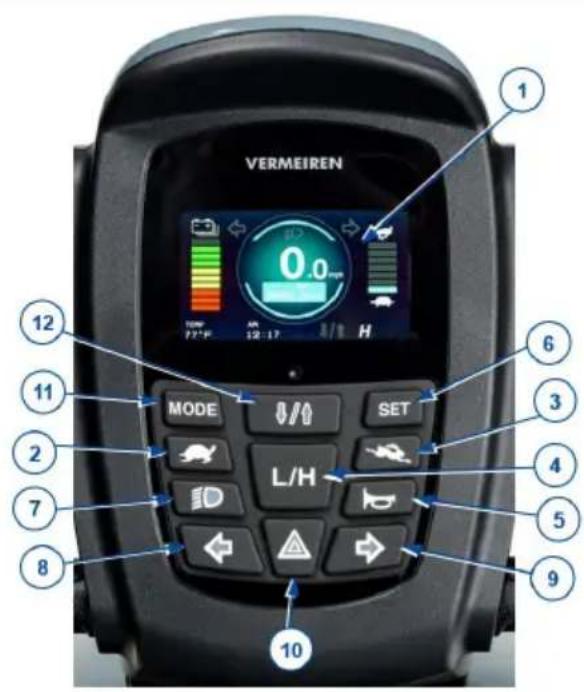
- Battery level indicator / LCD display
- Speed control (slow)
- Speed control (fast)
- Speed switch
- Horn button
- SET button
- Lights (front and rear)
- Left indicator
- Right indicator
- Emergency lights
- MODE button
- Speed lever reverse button
3.2.2. LCD display
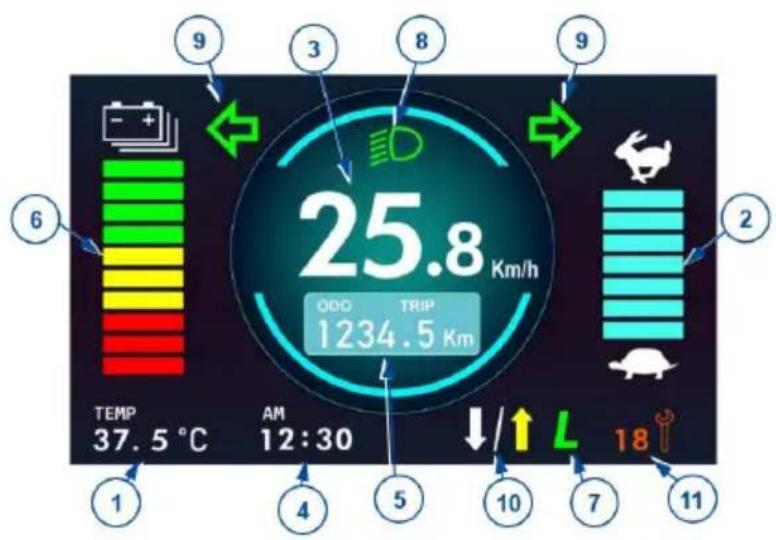
- Temperature indication
- Speed bar
- Speed indication
- Time indication
- Mileage or distance indication
- Battery indicator
- High / slow speed mode indication
- Lights on
- Indicator left/right, emergency lights
- Speed lever reverse
- Controller system code
- Charging
The time setting is linked to the battery system. Once you change to or connect new batteries, you must reset the time setting.
The system has a mileage memory for driving distance. You do not have to reset the mileage display after changing the batteries.
3.2.2.1. Rear view camera (optional)
When your scooter is equipped with a rear view camera, the LCD display will automatically switch to rear view once you start driving backwards.
3.2.3. Technical protections
To avoid accidental battery rundown, your scooter is equipped with an automatic power shutdown system. If the scooter is switched on and remains undisturbed for a period of ten minutes, it will automatically turn off. Should this occur, simply switch your scooter off and back on.
3.2.4. Settings
- Press SET (§3.2.1., 6) for 3 seconds to enter the settings menu.
- Shortly press SET to select the item you want to change in the settings menu.
- Use the arrows (§3.2.1., 8 or 9) to modify each item.
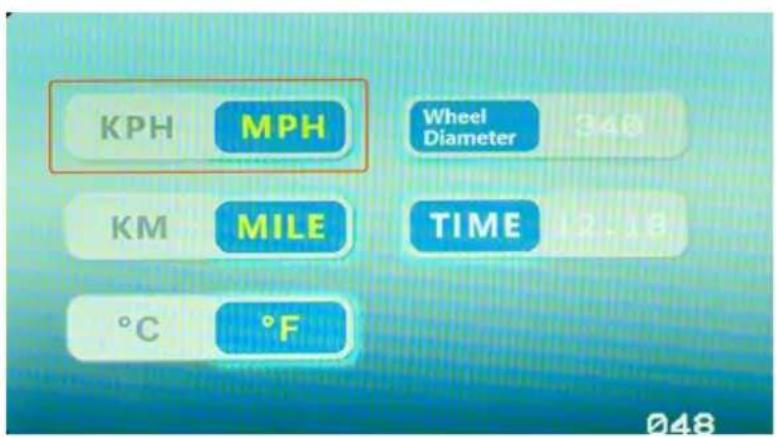
Vermeiren is responsible for the changes in the software. Contact your dealer or Vermeiren for questions or updates.
3.2.4.1. Resetting the trip distance
-
Press MODE (§3.2.1., 11) to show the trip distance.
-
Press and hold the speed control buttons (§3.2.1., 2 and 3) for 3 seconds until the trip distance is returned to 0 ~km .
3.2.5. Operating the brakes
3.2.5.1. To apply the electromagnetic brakes:
- Let go of the speed lever. The electromagnetic brake in the motor will be activated, the scooter will stop.
3.2.5.2. To apply the manual brakes (optional) - emergency brake:
- Pull the brake lever (1) to the handgrip.
- Release the brake lever (1).

natural_image
Line drawing of a hand operating a mechanical device with a lever and belt, labeled with number 1 (no text or symbols on the diagram itself)3.2.5.3. To apply the manual brakes (optional) - parking brake:
- Pull the brake lever (1) towards the handgrip and use the button to lock it.
- Squeeze the brake lever again to release the button.
The manual brake tightness can be adjusted with the brake cable adjuster.
3.2.6. Driving the scooter
CAUTION
Risk of injuries
- Do not use both sides of the speed lever simultaneously. This might leave you unable to control your scooter.
Move the speed lever in the required direction:
- PULL ACTION BY THE RIGHT HAND = FORWARD MOVEMENT
- PULL ACTION BY THE LEFT HAND = BACKWARD MOVEMENT
Pulling the lever more will increase the speed within the selected speed setting. Only use higher speed settings when you are confident that you can easily operate and control your scooter.
When you switch on the scooter, wait for 3 seconds before pulling the speed lever. Otherwise, the horn will sound as a warning and the scooter will not move. If this is the case, switch OFF the scooter and switch ON again.
3.2.7. Braking
To brake, let go of the speed lever. It will return to the neutral position and slow down your scooter to a gentle stop. Practice pulling away and braking to get accustomed to the scooter. You need to be able to estimate how your scooter will react when you drive or brake.
CAUTION
Risk of injuries
- Reduce your speed before you enter a curve or corner.
• Always maintain an adequate distance from corners and obstacles. - Do not drive your vehicle in an "S" pattern or make erratic turnings.
For corners and bends, use both hands to turn the handle bar in the direction you wish to take. It is very important that you ensure that there is enough space allowing you to go around bends and corners. Narrow passages must preferably be approached in a large curve so as to allow you to enter the narrowest part as straight from the front as possible. Bear in mind that your scooter's back part will in most cases be wider than the front part.
3.2.9. Backward movement
The speed of rearward movement is automatically reduced compared to forward driving. We also recommend that you use the slowest speed setting when you drive backward.
Do not forget that the steering direction with rearward driving is the opposite of when you go forward, and that your scooter will turn directly in the required direction.
3.2.10. Driving on slopes
CAUTION
Risk of injuries or damage
- Never put your scooter in free-wheel mode on a slope. The scooter may start moving, causing injuries to you or bystanders.
- Do not turn when driving down a slope, since the weight of the scooter may cause tipping over.
- Make sure all four wheels touch the ground while riding up or down a slope.
- Never reverse on a slope.
3.2.10.1.Going up:
- Drive in a straight line and with higher speed on a slope, and lean slightly forward. When you drive in an angle or too slow, there is a risk of tipping over or falling.
3.2.10.2.Going down:
-
Drive in a straight line (forward or backward) and with lower speed on a slope. When you drive in an angle or too fast, there is a risk of tipping over or falling.
-
Lean slightly backward during a forward descent; lean slightly forward during a backward descent.
3.2.11. Coping with obstacles
CAUTION
Risk of injuries
- Do not use your scooter on an escalator.
• Always approach a kerb from the front.
• Make sure that all four wheels touch the ground when driving up or down.
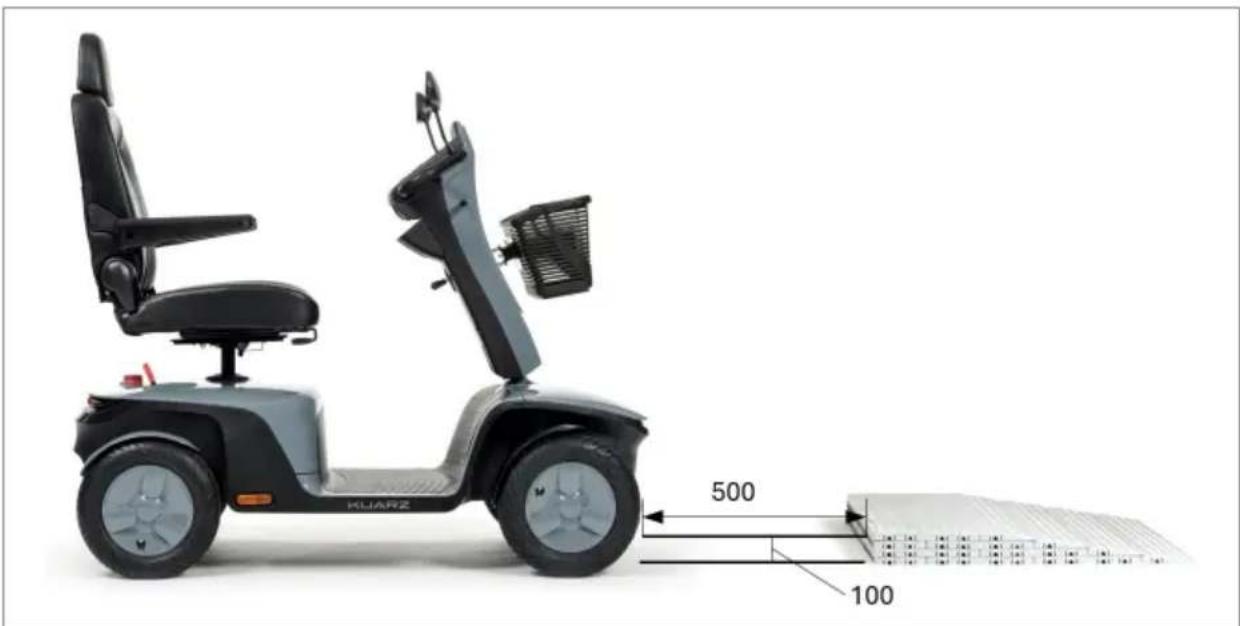
It is possible to drive with your scooter over steps of 100 mm maximum. Take a 500 mm run-up to take these step.
3.3. Transfer in and out of the scooter
EN
- Park the scooter as close as possible to the place where you want to transfer.
- Make sure that the scooter is switched off.
- Turn the armpad upwards on the side where you want to transfer.
- Swivel the seat until it is facing you (see §3.6.2.).
- Transfer to / from the seat of the scooter.
3.3.1. Correct position in the scooter
Some recommendation for comfortable use of the scooter:
- Sit down on the seat with your lower back against the backrest.
- Make sure that your upper legs are horizontal and that your feet are in a comfortable position. Adjust if necessary.
3.4. Brake and free-wheel lever
CAUTION
Risk of injuries or damage
- Only operate the free-wheel lever when your scooter is turned OFF!
- An attendant should operate the free-wheel lever if you have impaired mobility. NEVER operate it from sitting position.
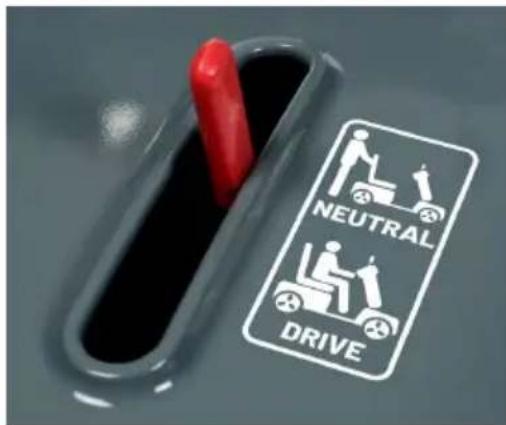
The scooter is fitted with a free-wheel device that is accessible and operable by the attendant, or the user when he/she is not sitting in the scooter. You should only put the scooter in neutral to transport the scooter or to move it out of a danger zone.
3.4.1. Drive
- While the scooter is OFF, switch the free-wheel lever to "drive".
- Switch the scooter ON.
- Electronically controlled driving is now possible.
3.4.2. Neutral
- Switch the scooter OFF.
- Switch the free-wheel lever to "neutral".
- The scooter can now be pushed without electronic drive.
3.5. Battery switch
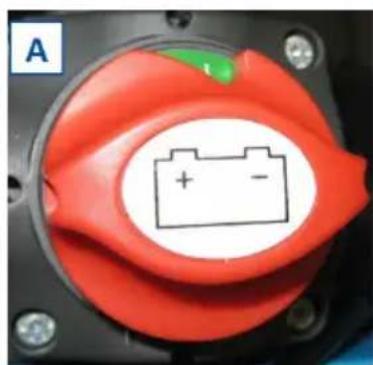
Your scooter is equipped with a battery switch to interrupt the circuit between the power module and batteries. The disconnection is used for safety during transport, maintenance and repairs. It is also possible to remove the battery switch knob to prevent that the scooter is moved during your absence.
Turn the red battery switch
- clockwise to "I" to connect the battery to the power module [A].
- anticlockwise to "0" to disconnect the battery [B].
- anticlockwise, passing "0" to its end position [C] and remove the knob from the switch.
natural_image
Close-up of a red battery switch with a circular icon and green indicator, labeled 'A' in the corner (no text or symbols on the switch itself)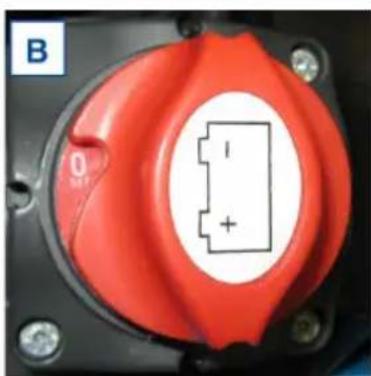
natural_image
Close-up of a red battery terminal with a white circular icon and battery symbol (no text or numbers visible)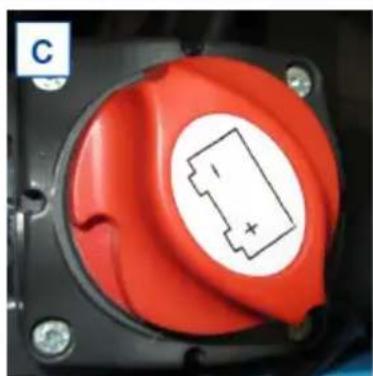
natural_image
Close-up of a red battery cover with a white circular logo and plus/minus symbols (no readable text or numbers)3.6. Comfort adjustments
EN
CAUTION
Risk of injuries or damage
- Never perform adjustments while driving.
- The allowed adjustments can change the stability of your scooter (tilting back or sideways).
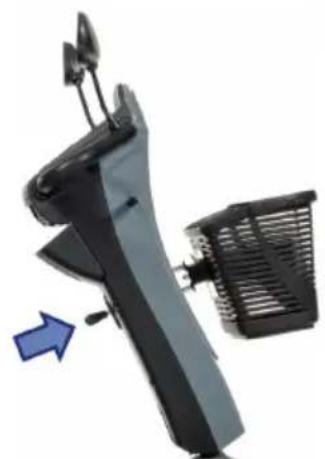
3.6.1. Adjusting the steering unit
CAUTION
Risk of injuries
• Turn the scooter off before you adjust the angle of the steering unit.
- Do not lean with your whole body on the steering unit.
natural_image
Close-up of a handheld electronic device with a blue arrow pointing to the left side (no visible text or symbols)The steering unit can be adjusted to many different positions (stepless) to suit each driver.
- Push the lever downwards.
- Adjust the steering unit to the desired position.
- Release the lever.
3.6.2. Adjusting the seat
CAUTION
Risk of injuries
- Make sure that the seat is locked securely.
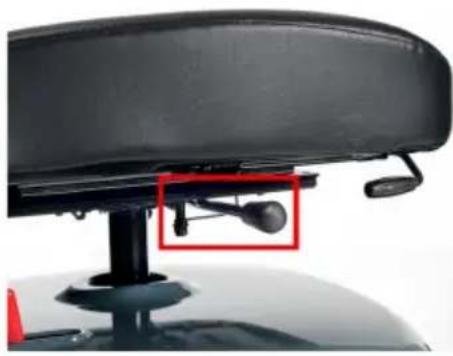 | 3.6.2.1. Removing the seat1. Pull the seat lever forward.2. Turn the seat a little bit and lift the seat out of the adjustment bar.3. Release the seat lever. |
| 3.6.2.2. Placing and locking the seat into place1. Pull the seat lever forward.2. Place the seat on the adjustment bar and, at the same time, keep the seat lever pressed in.3. Release the seat lever. | |
| 3.6.2.3. Swivelling the seat1. Pull the seat lever forward.2. Turn the seat in the desired direction.3. Release the seat lever. The seat will always stop after 90°. | |
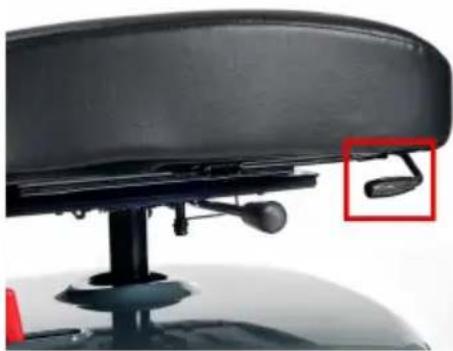 | 3.6.2.4. Depth adjustment1. Pull the seat depth adjustment lever upwards.2. Move the seat forward or backward over the seat depth rails.3. To lock the seat in place, let go of the lever once the seat has reached the desired position.4. Swivel the seat a little until it locks in position. |
3.6.3. Adjusting the backrest
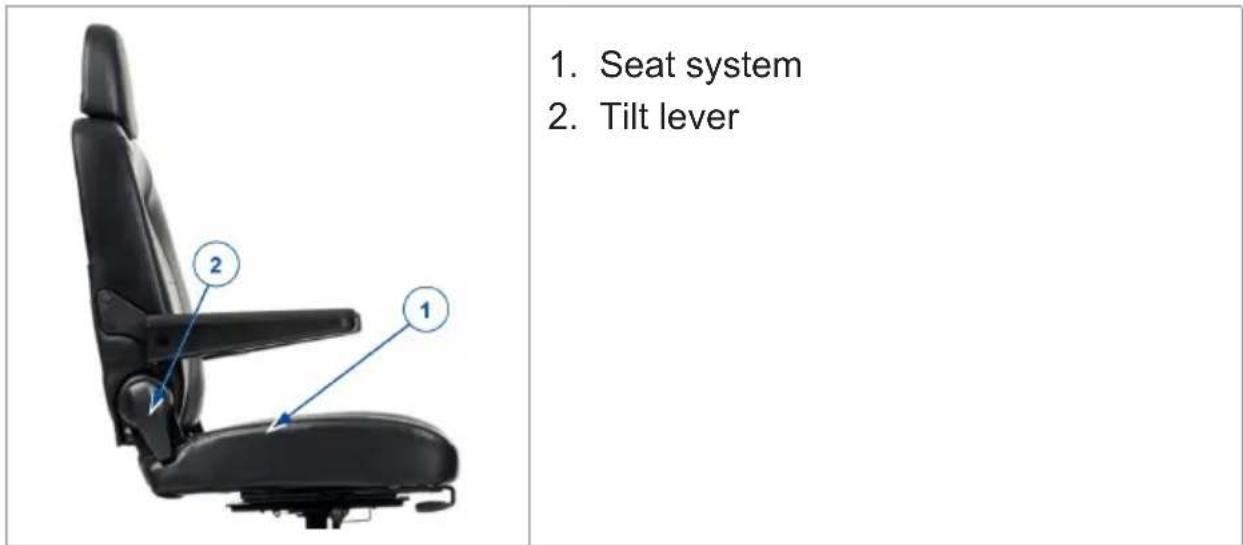
- Pull and hold the lever to release the backrest locking mechanism.
- Place the backrest in the desired position, or fold it down on the seat for transport.
- Release the lever. Make sure that the backrest is well fixed.
3.6.4. Adjusting the headrest
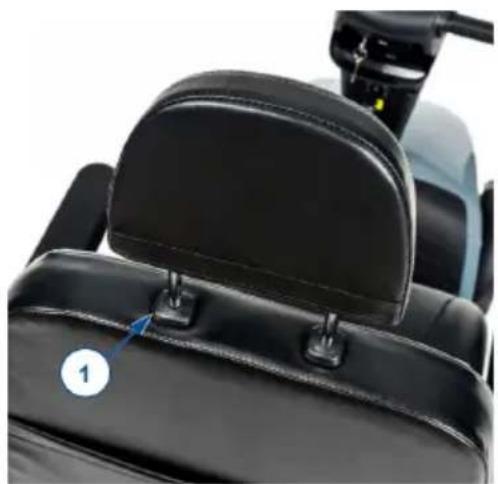
- Gently press the locking pin (1) toward the headrest.
- Move the headrest to the desired height.
- Let go of the locking pin (1).
- The headrest audibly locks into place.
natural_image
Close-up of a black car seat with a headrest and side-mounted sensors, labeled with number 1 (no text or symbols on the main subject)3.6.5. Adjusting the armrests
CAUTION
Risk of injuries
- Do not put your fingers, buckles, clothes, jewelry between the swing away system of the armpad.
natural_image
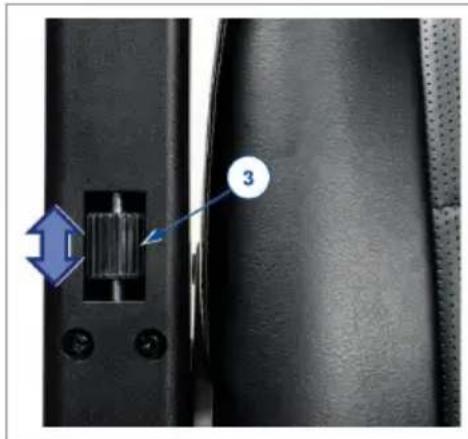
Close-up of a black electronic device with a metallic connector and labeled component '3' (no text or symbols beyond label)- Fold the armpad backwards.
- Turn the rotating knob (3) up/down until the desired angle of the arm pad:
- Rotating knob fully up: horizontal arm pad angle.
- Rotating knob fully down: highest arm pad angle.
3.7. Battery status and charging
WARNING
Risk of injuries and damage due to fire
- Only use the battery charger delivered with the scooter. The use of any other charger may be dangerous (fire hazard).
- The battery charger is only intended to charge the batteries delivered with the scooter, not to charge any other batteries.
- Do not adapt any of the delivered parts, like cables, plugs or battery charger. Never open or change the battery or the connection points.
- Protect the battery and battery charger against flames, high and low temperatures (see chapter 6.), moisture, sunshine, severe shocks (for example dropping). Do NOT use the battery if this has been the case.
- Charge the battery with the battery charger, indoors, in a well-ventilated area, out of children's reach.
- First read the user instruction of the applied battery charger before charging the scooter's battery. For more information, contact your specialist dealer or consult our website http://www.vermeiren.com/
Risk of damage
- Battery self-discharge and the quiescent current of the connected users will drain the battery charge slowly. The battery may be irreversibly damaged if the battery is fully discharged. Therefore, make sure that the battery is charged on time:
- With intensive use (long distances, daily use): Immediately recharge after use.
– With average use (short distances, daily or a few times a week):
Charge when battery indicator shows 50% discharge.
– With little use or storage: Charge once a month.
- Read the storage and maintenance instructions in §4. and technical details in §6..
- Only disconnect the battery charger when the battery is fully charged, see the following symbols on the charger.
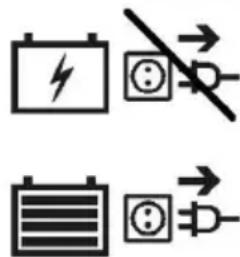
- Do not charge batteries below 0^ C. Move the battery to a warmer place and start charging.
- Keep the connection point for the battery charger free of dust and other contamination.
- In case of any problems due to which the battery cannot be charged according to the following instructions, please contact your specialist dealer.
- For instructions on how to change the batteries, see the installation manual.
It is recommended to unplug the battery charger from the mains when not in use. This is to prevent unnecessary energy consumption.
If appliances stay plugged into the USB port while charging the electronic wheelchair, the battery will never charge fully. Therefore, unplug all appliances from the USB port before charging the wheelchair.
The light emitting diode (LEDs) in the steering unit indicates the remaining capacity of your batteries. If the battery charger is turned on and no LED's are lit, check the fuse. If the red LED does not illuminate, the charger is defective. Consult your specialist dealer.
- Switch the scooter OFF and remove the key.
- FIRST connect the battery charger to a 230V AC power socket. Use the battery charger directly, without extension cord, on the power supply (without time switch).
- Refer to the battery charger manual for the explication of the indicators on the charger.
- If applicable, open the cover of the charging point on the scooter and connect the charger.
- Wait until the battery is fully charged. Consult the battery charger manual for more information.
- Disconnect the battery charger.
- Switch the scooter ON and check if all lights of the battery status indicator are ON.
- Remove the battery charger from the socket, let it cool down and store it in a safe place.
When the operating console displays the system code “Drive inhibit” after charging, make sure that the battery charger is disconnected. This safety measure prevents driving with the charger still connected to the supply grid.
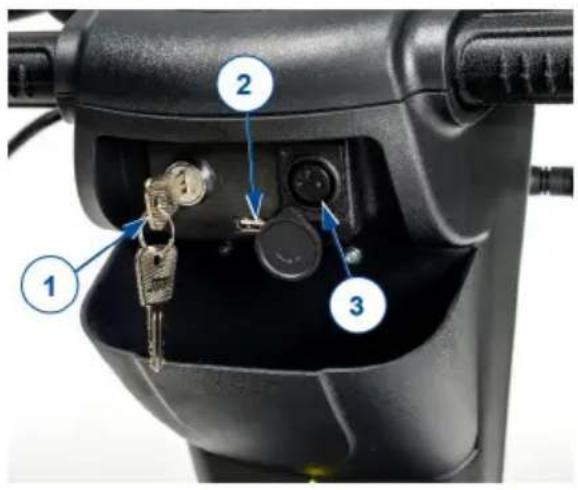
- Key
- USB connection
- Battery charger socket
3.8. Anti-tipping
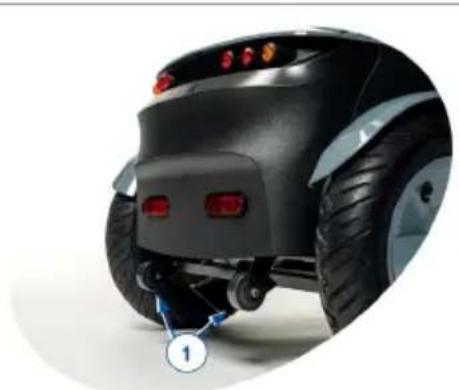
An anti-tipping (1) is fixed to the frame of the scooter on the rear side. It is not possible to remove them. The anti-tipping is there for your safety. It prevents the scooter from tipping over backward when you drive over small obstacles that do NOT exceed the maximum height as specified in §6..
natural_image
Close-up of a black robotic vehicle's rear wheel and side-mounted sensors, labeled with number 1 (no text or symbols on the vehicle itself)4. Maintenance
i Regular care ensures that your scooter is preserved in a perfectly functional condition. For the maintenance manual, refer to the Vermeiren website: www.vermeiren.com.
4.1. Points of maintenance
CAUTION
Risk of injuries and damage
• Repairs and replacements may only be undertaken by trained persons and only genuine replacement parts of Vermeiren should be used.
The last page of this manual contains a registration form for the specialist dealer to record each service.
The service frequency depends on the frequency and intensity of use. Contact your dealer to agree to a common timetable for inspection/maintenance/repair.
i Read the user instructions of the applied battery charger regarding maintenance.
4.1.1. Before each use
Inspect the following points:
- All parts: Present and undamaged or unworn.
• All parts: Clean, see § 4.2.2.. - Battery status: charge the battery when necessary, see §3.7..
• Condition of wheels/tyres, see § 4.2.1..
Contact your specialist dealer for possible repairs or part replacements.
4.1.2. Yearly or more often
EN
Have your scooter inspected and serviced by your specialist dealer at least once a year, or more often. The minimum maintenance frequency depends on use and should therefore be commonly agreed upon with your specialist dealer.
4.1.3. If stored
Make sure that your scooter is stored in a dry environment to prevent mould from growing and the upholstery from being damaged. Disconnect the battery to prevent it from being damaged.
If your scooter is stored for a longer period, you still need to charge the batteries every month. For more information, see §3.7..
4.2. Maintenance instructions
4.2.1. Wheels and tyres
Proper working of the brakes depends on the state of the tyres, and can change due to wear and contamination (water, oil, mud, ...).
Keep your wheels free of wires, hair, sand and fibres.
Check the profile of the tyres. If the tread depth is less than 1 mm, the tyres need to be replaced. Contact your specialist dealer for this matter.
Inflate each pneumatic tyre to the correct pressure (see pressure indication on the tyres).
4.2.2. Cleaning
CAUTION
Risk of damage by moisture
- Keep the operating console clean and protect it from water and rain.
- Never use a hose or high-pressure cleaner to clean the scooter.
Wipe all rigid parts of the scooter with a damp cloth (not drenched). If necessary, use a mild soap, suitable for varnishes and synthetics.
The upholstery can be cleaned with lukewarm water and a mild soap. Do not use abrasive cleaning agents to clean.
Keep the ventilation openings of the battery charger clean and free of accumulated dust. Blow away the dust and clean the battery charger enclosure with a slightly moistened cloth, if required.
4.2.3. Disinfection
CAUTION
Risk of damage
- Disinfections may only be undertaken by trained persons. Consult your specialist dealer.
4.3. Expected lifespan
The scooter is designed to have an average lifespan of 5 years. Depending on the frequency of use, driving circumstances and maintenance, the lifespan of your scooter will increase or decrease.
4.4. Reuse
Before each reuse, have the scooter disinfected, inspected and serviced according to the instructions in the maintenance manual.
4.5. End of use
At end of life, you need to dispose of your scooter according to the local environmental legislation. The best way to do so, is to disassemble the scooter to facilitate the transport of recyclable parts. Usually, batteries are collected separately.
4.6. Warranty
The warranty on this product is subject to the general terms and conditions of each country.
5. Troubleshooting
Even if you use your scooter properly, a technical problem may occur. In this case, contact your local specialist dealer.
WARNING
Risk of injuries and damage
- NEVER attempt to repair your scooter yourself.
- For problems in the operating console you need to contact your specialist dealer. He/She will decide if the console needs to be reprogrammed.
The following symptoms may indicate a serious problem. Therefore always contact your specialist dealer if you spot any of the following deviations:
- Strange sound;
- Frayed/damaged wiring harnesses;
- Cracked or broken connectors;
- Uneven tread wear on one of the tyres;
- Jerky movements;
- Scooter deflects to one side;
- Damaged or broken wheel assemblies.
- Scooter does not switch on;
- Scooter is powered, but does not move to the front or back.
In case of a possible problem, a system code is displayed on the LCD display, see §3.2.2.. The following table summarises the possible system codes. Some problems can be solved by yourself. For all problems marked with a star (*), consult your specialist dealer.
| Code Problem Meaning | ||
| 1 Low battery Recharge the battery immediately. | ||
| 2 * Motor voltage Check the motor and associated connections and wiring. Contact your specialist dealer. | ||
| 3 * Motor short circuit Contact your specialist dealer. | ||
| 4 * Parking brake Parking brake not engaged; turn the free-wheel lever from “Neutral” to “Drive”. | ||
| 5 Motor overload Turn off the scooter, leave for a few minutes and turn back on.Take less steep slopes. | ||
| 6 Drive inhibit Disconnect the battery charger. OR Release the speed lever before switching on your scooter. | ||
| 7 * Speed pot Check the throttle and speed pot, as well as all associated connections and wiring. Contact your specialist dealer. | ||
| 8 * Controller Turn off the scooter, leave for a few minutes and turn back on.Check the motor and associated connections and wiring. Contact your specialist dealer. | ||
| 9 * Parking brake not found Check all connections and wiring. Contact your specialist dealer. | ||
| 10 High battery If traveling down a slope, stop / reduce your speed. Take less steep slopes. | ||
6. Technical specifications
EN
The technical details below are only valid for this scooter, at standard settings and optimal ambient conditions. If other accessories are used, the tabulated values will change. Changes in outdoor temperatures, humidity, uphills, downhills, soils and battery levels can reduce output. Take these details into account during use. The values are no longer applicable if your scooter has been modified, damaged, or is severely worn.
| Brand Vermeiren | |
| Product group Scooters, Class C | |
| Type Kuarz | |
| Description Dimensions | |
| Maximum user weight 150 kg | |
| Overall length 1505 mm | |
| Overall width 680 mm | |
| Overall height 1345 mm - 1395 mm | |
| Folded height 870 mm | |
| Total mass 158 kg | |
| Mass of heaviest part 136 kg | |
| Mass of removable partsSeat | 21,3 kg |
| Energy consumption * | 45 km |
| Rated slope | 10° |
| Obstacle climbing | 100 mm |
| Maximum speed forward | 10 km/h13 km/h (XD-version)15 km/h |
| Max. braking distance from max.speed | 4,5 m |
| Seat plane angle | 6° |
| Effective seat depth | 480 mm |
| Effective seat width | 525 mm |
| Backrest angle | Max. 115° |
| Backrest height 550 mm | |
| Footplate to seat distance | 480 mm - 530 mm |
| Floor to seat distance | 680 mm - 730 mm |
| Footplate height | 200 mm |
| Armrest to seat distance 205 mm | |
| Minimum turning diameter 3400 mm | |
| Reversing width 2300 mm | |
| Ground clearance 100 mm | |
| Wheel diameter 350 x 70 mm | |
| Tyre pressure ** Max. 3,5 bar | |
| Min. battery 80 Ah (C20), 12V DC, non-spillable AGM battery,maintenance-free | |
| Driving motors Nom. 750 Watt, electromagnetic brakes | |
| Blow fuse 10 A | 120 A |
| Battery charger | 8 Amp (external) |
| Degree of protection | IPX4 |
| Strength tests according to | ISO 7176-8 |
| Tests of power and control systemaccording to | ISO 7176-14 |
| Ignitability of upholstery according to | EN 1021-2:2006 |
| EMC compliance | ISO 7176-21 |
| Storage temperature | +5°C - +41°C |
| Use temperature | -10°C - +40°C |
| Storage and use humidity | 30% - 70% |
| We reserve the right to introduce technical changes. Measurement tolerance +- 15mm / 1,5 kg / 1,5°* The theoretical driving distance will be reduced if the scooter is used frequently on slopes, rough ground or to climb curbs.** Since different tyres may be used, please note the correct operating pressure of the tyres you use. For other tyre diameters refer to your specialist dealer. | |
Table des matières
FR
Préface
38
1. Votre produit 40
1.1. Options 41
3.2.3. Protections techniques
natural_image
Line drawing of a hand operating a vehicle's steering wheel, showing lever and seat positioning (no text or symbols)natural_image
Close-up of a red battery switch with a circular indicator showing a battery symbol (no text or labels visible)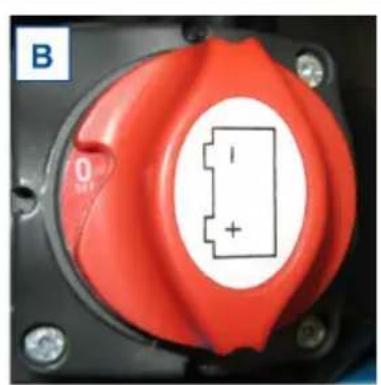
natural_image
Close-up of a red battery switch with a white circular icon and battery symbol (no text or numbers visible)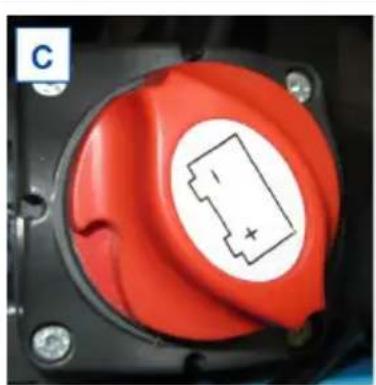
natural_image
Close-up of a red and white industrial electrical switch with a circular logo (no visible text or symbols)natural_image
Close-up of a handheld electronic device with a blue arrow pointing to its side panel (no visible text or symbols)natural_image
Close-up of a black ergonomic chair seat with a red annotation box highlighting the lower leg (no text or symbols visible)natural_image
Close-up of a black ergonomic chair with a red annotation highlighting a small mechanical component (no text or symbols visible)natural_image
Close-up of a black automotive seat rearrest with a blue arrow pointing to the seat area, no visible text or symbols.natural_image
Close-up of a black electronic device with a metallic connector and labeled component '3' (no text or symbols beyond label)FR
natural_image
Close-up of a black robotic car wheel with visible sensor lights and a numbered component (1) pointing to the side (no text or symbols on the vehicle itself)4. Entretien
natural_image
Line drawing of a hand operating a vehicle's steering wheel, showing lever and seat positioning (no text or symbols)3.2.5.3. Om de manuele remmen in te schakelen (optioneel) - parkeerrem:
natural_image
Side view of a modern electric scooter with visible battery, showing front and side dimensions (no text or symbols on the device itself)3.3. Transfer in/uit de scooter
natural_image
Close-up of a red battery terminal with a circular indicator showing a battery symbol (no text or labels visible)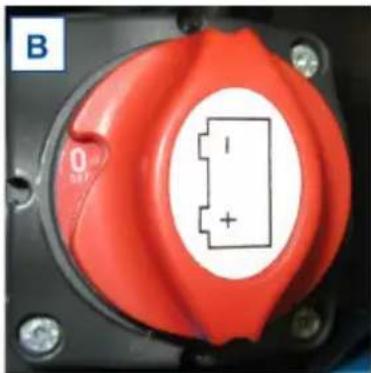
natural_image
Close-up of a red battery switch with a white circular icon and a battery symbol (no text or labels visible)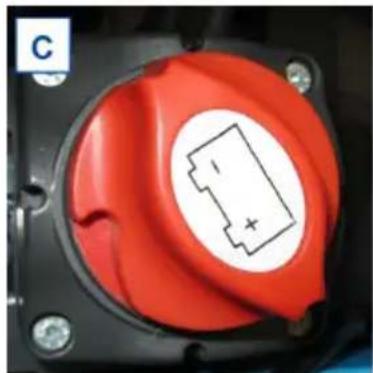
natural_image
Close-up of a red battery cover with a white circular icon and plus/minus symbols (no readable text or numbers)3.6. Comfortaanpassingen
NL
VOORZICHTIG
Kans op letsel of schade
natural_image
Close-up of a black electronic device with attached fan and ventilation grille, showing a blue arrow pointing to the left side (no text or symbols visible)natural_image
Close-up of a black car seat with a circular badge labeled '1' on the backrest (no text or symbols beyond label)natural_image
Close-up of a black electronic device with a metallic connector and labeled component '3' (no text or symbols beyond label)natural_image
Close-up of a black robotic vehicle with visible sensor lights and a numbered component (1) on the side, no text or symbols present.4. Onderhoud
gauge
| Metric | Value | |--------|-------| | Temperature | 37.5 °C | | Amplitude | 12:30 | | L | 18 | | Speed | 25.8 Km/h | | Label | 6 | | Number of Car | 9 | | Number of Gear | 2 | | Label | 11 | | Label | 10 | | Label | 7 | | Label | 5 | | Label | 4 | | Label | 3 | | Label | 8 | | Label | 9 |natural_image
Line drawing of a hand operating a vehicle's steering wheel, showing motion direction (no text or symbols)natural_image
Close-up of a red battery switch with a circular indicator showing a battery symbol (no text or labels visible)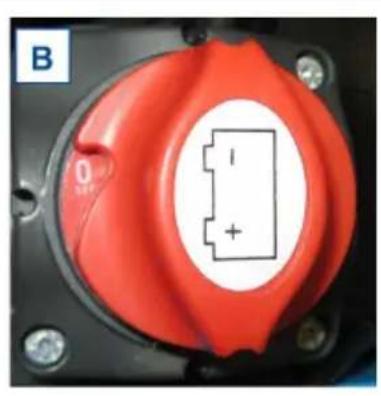
natural_image
Close-up of a red battery switch with a white circular label and a battery symbol (no readable text or numbers)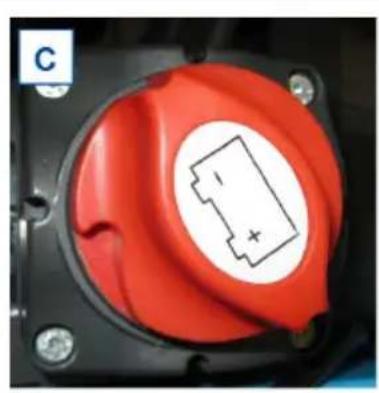
natural_image
Close-up of a red battery cover with a white circular icon and a plus sign, mounted on a black electrical panel (no readable text or symbols)natural_image
Close-up of a black handheld device with attached fan and motor, showing a blue arrow pointing to the left side (no text or symbols visible)natural_image
Close-up of a black ergonomic chair with a red annotation highlighting a mechanical component (no text or symbols visible)natural_image
Close-up of a black ergonomic chair seat with a red annotation box highlighting the handle area (no text or symbols present)natural_image
Close-up of a black car seat with a circular label and blue arrow pointing to the side panel (no text or symbols on the main subject)natural_image
Close-up of a black electronic device with a metallic connector and labeled component (no text or symbols visible)natural_image
Close-up of a black robotic car wheel with visible sensor lights and a numbered component (1) pointing to the side (no text or symbols on the vehicle itself)4. Wartung
natural_image
Line drawing of a hand operating a vehicle's steering wheel, showing lever and seat positioning (no text or symbols)natural_image
Close-up of a red battery terminal with a circular indicator showing a battery symbol (no text or labels visible)
natural_image
Close-up of a red battery switch with a white circular label and a battery symbol (no readable text or numbers)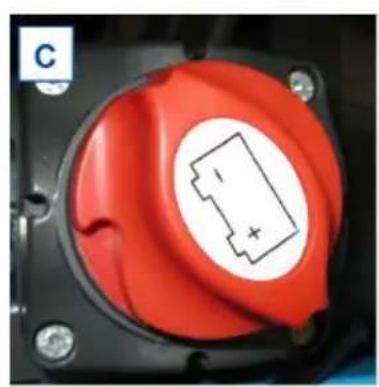
natural_image
Close-up of a red battery cover with a white circular icon and plus/minus symbols (no readable text or numbers)natural_image
Close-up of a black handheld device with attached fan and ventilation grille, showing a blue arrow pointing to the left side (no text or symbols visible)natural_image
Close-up of a black ergonomic chair seat with a red annotation box highlighting the lower leg area (no text or symbols present)natural_image
Close-up of a black ergonomic chair with a red button highlighting the side panel (no text or symbols visible)natural_image
Close-up of a black automotive seat with a circular badge labeled '1' and a blue arrow pointing to the neck (no text or symbols on the seat itself)ATTENZIONE
Rischio di lesioni
natural_image
Close-up of a black electronic device with a metallic connector and a numbered label (3), showing no readable text or symbols.natural_image
Close-up of a black robotic car with visible wheels and sensor lights, labeled with number 1 (no text or symbols on the vehicle itself)4. Manutenzione
IT
natural_image
Line drawing of a hand operating a vehicle's steering wheel, showing mechanical components and motion direction (no text or symbols)natural_image
Close-up of a red battery switch with a white circular icon and plus/minus signs, labeled 'A' in the corner (no readable text or symbols beyond labels)
natural_image
Close-up of a red battery switch with a white circular indicator and battery symbol (no text or numbers visible)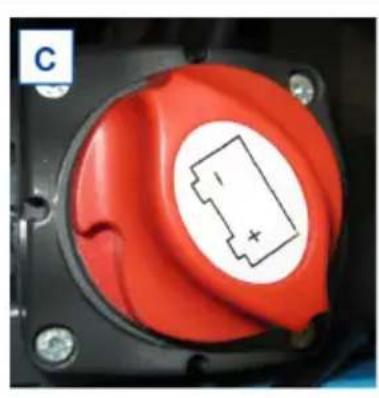
natural_image
Close-up of a red battery terminal with a white circular icon and a plus sign, no visible text or symbols.natural_image
Close-up of a handheld electronic device with a blue arrow pointing to a component (no visible text or symbols)natural_image
Close-up of a black ergonomic chair seat with a red annotation box highlighting the handle (no text or symbols visible)natural_image
Close-up of a black ergonomic chair with a red button highlighting the seat area (no text or symbols visible)natural_image
Close-up of a black car seat with a circular badge labeled '1' pointing to the neck (no text or symbols on the car itself)PRECAUCIÓN
Riesgo de lesiones
natural_image
Close-up of a black electronic device with a metallic connector and a numbered annotation (3), showing no readable text or symbols.natural_image
Close-up of a black robotic car's rear wheel and side-mounted sensors, labeled with number 1 (no text or symbols on the vehicle itself)4. Mantenimiento
ES
natural_image
Line drawing of a hand operating a vehicle intake manifold, no text or symbols presentnatural_image
Side view of a KUARZ electric scooter with labeled dimensions (500 and 100 units) and no visible text or symbols on the device itself.natural_image
Close-up of a red battery switch with a circular indicator showing a battery symbol (no text or numbers visible)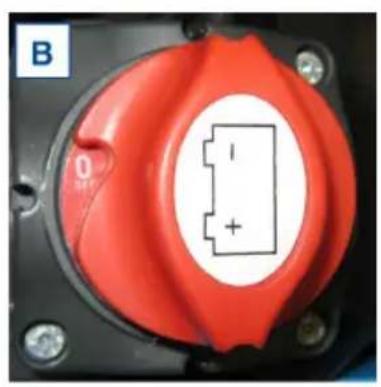
natural_image
Close-up of a red battery switch with a white circular icon and battery symbol (no text or numbers visible)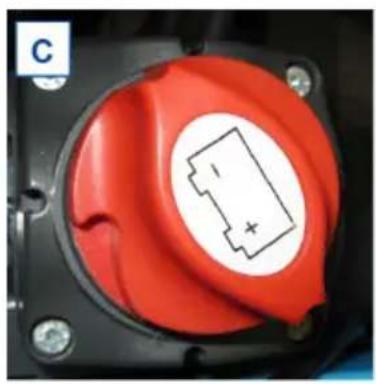
natural_image
Close-up of a red and black electrical switch with a white circular label (no readable text or symbols)natural_image
Close-up of a black electronic device with a blue arrow pointing to its left side, showing no visible text or symbols.natural_image
Close-up of a black ergonomic chair with a red annotation highlighting a mechanical component (no text or symbols visible)natural_image
Close-up of a black ergonomic chair with a red annotation highlighting a small mechanical component (no text or symbols visible)natural_image
Close-up of a black automotive seatrest with a blue arrow pointing to the seat area, no visible text or symbols.natural_image
Close-up of a black electronic device with a labeled component (3) and directional arrow, no readable text or symbols beyond the number.natural_image
Close-up of a black robotic car's rear wheel and side-mounted sensors, labeled with number 1 (no text or symbols on the vehicle itself)4. Konserwacja
natural_image
Line drawing of a hand operating a vehicle intake manifold, no text or symbols presentnatural_image
Side view of a KUARZ electric scooter with labeled dimensions (500 and 100 units) and no visible text or symbols on the device itself.natural_image
Close-up of a red battery terminal with a circular indicator showing a battery symbol (no text or labels visible)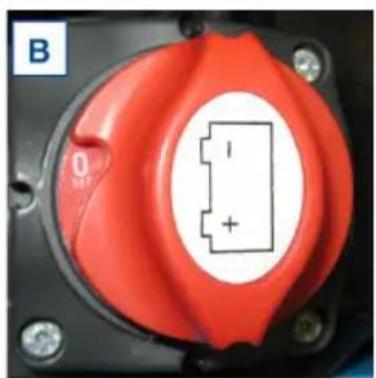
natural_image
Close-up of a red battery switch with a white circular icon and battery symbol (no text or numbers visible)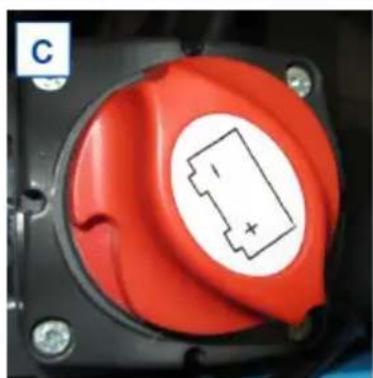
natural_image
Close-up of a red battery cover with a white circular icon and plus symbol (no text or numbers visible)natural_image
Close-up of a black electronic device with attached fan and ventilation grille, showing a blue arrow pointing to the left side (no text or symbols visible)natural_image
Close-up of a black ergonomic chair seat with a red annotation box highlighting the handle area (no text or symbols visible)natural_image
Close-up of a black ergonomic chair with a red annotation highlighting a small mechanical component (no text or symbols visible)natural_image
Close-up of a black car seat with a circular badge labeled '1' on the backrest (no text or symbols beyond label)natural_image
Close-up of a black mechanical component with a labeled pin and arrow indicator (no text or symbols beyond the number 3)- Klíček
- Konektor USB
- Konektor nabíječky baterie
natural_image
Close-up of a black robotic car's rear wheel and side-mounted sensors, labeled with number 1 (no text or symbols on the vehicle itself)4. Údržba
Service registration form
This product (name): ....
was inspected (I), serviced (S), repaired (R) or disinfected (D):
| By (stamp):Kind of work: I / S / R / DDate: | By (stamp):Kind of work: I / S / R / DDate: | By (stamp):Kind of work: I / S / R / DDate: |
| By (stamp):Kind of work: I / S / R / DDate: | By (stamp):Kind of work: I / S / R / DDate: | By (stamp):Kind of work: I / S / R / DDate: |
| By (stamp):Kind of work: I / S / R / DDate: | By (stamp):Kind of work: I / S / R / DDate: | By (stamp):Kind of world: I / S / R / DDate: |
| By (stamp):Kind of work: I / S / R / DDate: | By (stamp):Kind of work: I / S / R / DDate: | By (stamp):Kind of work: I / S / R / DDate: |
| By (stamp):Kind of work: I / S / R / DDate: | By (stamp):Kind of work: I / S /R / DDate: | By (stamp):Kind of work: I / S / R / DDate: |
| By (stamp):Kind of work: I / S / R / DDate: | By (stamp):Kind of work: I / S / R / DDate: | By (stamp):Kind of work: I / S / R / DDate: |
VERMEIREN GROUP
Vermeirenplein 1/15
2920 Kalmthout
Belgium
www.vermeiren.com
Version: C, 2026-02
Basic UDI-DI: 5415174KuarzDU
All rights reserved, including translation.

- Preface
- Your product 6
- Before use 7
- Using your scooter 12
- Maintenance 30
- Troubleshooting 33
- Technical specifications 35
- Important note
- Information available
- Your product
- Options
- Before use
- Intended use and indications
- Safety instructions and applicable risks
- CAUTION
- Risk of injuries and/or damage
- Symbols on the scooter
- Transport
- Moving the scooter
- Transport by vehicle, as luggage
- WARNING
- Risk of injuries and damage
- First use and storage
- Risk of battery damage
- Using your scooter
- Risk of injuries
- First ride
- Risk of injuries or damage
- Make sure that:
- Operating your scooter
- Operator control
- LCD display
- Rear view camera (optional)
- Technical protections
- Settings
- Resetting the trip distance
- Operating the brakes
- To apply the electromagnetic brakes:
- To apply the manual brakes (optional) - emergency brake:
- To apply the manual brakes (optional) - parking brake:
- Driving the scooter
- Braking
- Backward movement
- Driving on slopes
- 3.2.10.1.Going up:
- 3.2.10.2.Going down:
- Coping with obstacles
- Transfer in and out of the scooter
- Correct position in the scooter
- Brake and free-wheel lever
- Drive
- Neutral
- Battery switch
- Comfort adjustments
- Adjusting the steering unit
- Adjusting the seat
- Adjusting the backrest
- Adjusting the headrest
- Adjusting the armrests
- Battery status and charging
- Risk of injuries and damage due to fire
- Risk of damage
- Anti-tipping
- Maintenance
- Points of maintenance
- Before each use
- Yearly or more often
- If stored
- Maintenance instructions
- Wheels and tyres
- Cleaning
- Risk of damage by moisture
- Disinfection
- Expected lifespan
- Reuse
- End of use
- Warranty
- Troubleshooting
- Technical specifications
- Table des matières
- Préface
- Votre produit 40
- Protections techniques
- Entretien
- Om de manuele remmen in te schakelen (optioneel) - parkeerrem:
- Transfer in/uit de scooter
- Comfortaanpassingen
- VOORZICHTIG
- Kans op letsel of schade
- Onderhoud
- Wartung
- ATTENZIONE
- Rischio di lesioni
- Manutenzione
- PRECAUCIÓN
- Riesgo de lesiones
- Mantenimiento
- Konserwacja
- Údržba
- Service registration form
Brand : Vermeiren
Model : Kuarz
Category : Electric scooter