YT-85705 - Vacuum Cleaner Yato - Free user manual and instructions
Find the device manual for free YT-85705 Yato in PDF.


User questions about YT-85705 Yato
0 question about this device. Answer the ones you know or ask your own.
Ask a new question about this device
Download the instructions for your Vacuum Cleaner in PDF format for free! Find your manual YT-85705 - Yato and take your electronic device back in hand. On this page are published all the documents necessary for the use of your device. YT-85705 by Yato.
USER MANUAL YT-85705 Yato
EN WORKSHOP AND FIREPLACE VACUUM CLEANER
DE WERKSTATT- UND KAMINSAUGER
natural_image
Close-up of a hand adjusting a mechanical component with a circular knob (no visible text or symbols)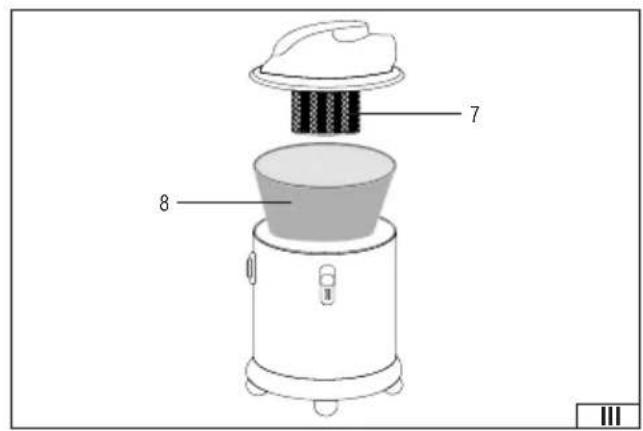
natural_image
Close-up of a metallic chain securing a cylindrical container with a textured cloth underneath (no visible text or symbols)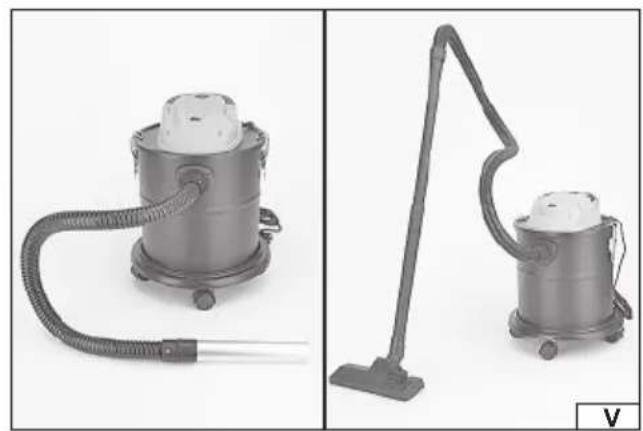
natural_image
Two grayscale photos of a vacuum cleaner with coiled hose and handle, shown from different angles (no text or symbols visible)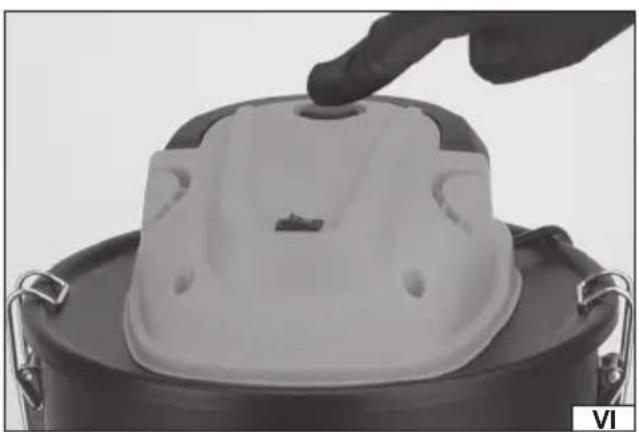
natural_image
Close-up of a hand pressing down on a white plastic object into a black container (no text or symbols visible)-
vacuum cleaner cover
-
tank
-
inlet hole
-
outlet hole
-
handle
-
switch
-
rigid air fi Iter
-
fabric air filter
-
fl exible ash hose
-
aluminum nozzle
-
fl exible vacuum cleaner hose
-
extension tube
-
wide brush
-
narrow nozzle
-
reverse thrust button
DE
Read the operating instruction
Wear protective goggles
Second class of insulation
This symbol indicates that waste electrical and electronic equipment (including batteries and storage cells) cannot be disposed of with other types of waste. Waste equipment should be collected and handed over separately to a collection point for recycling and recovery, in order to reduce the amount of waste and the use of natural resources. Uncontrolled release of hazardous components contained in electrical and electronic equipment may pose a risk to human health and have adverse effects for the environment. The household plays an important role in contributing to reuse and recovery, including recycling of waste equipment. For more information about the appropriate recycling methods, contact your local authority or retailer.
WYPOSAŻENIE PRODUKTU
PRODUCT CHARACTERISTICS
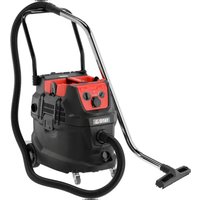
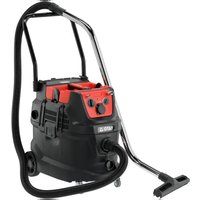
Workshop and fireplace vacuum cleaner designed for dry and ash work, allows for cleaning workshops, workplaces, fireplaces and grills. It allows for the removal of both dry dirt and cold, dry ash. Thanks to the capacious tank and flexible hose, it allows for thorough cleaning of even hard-to-reach places. Equipped with replaceable air filters and a base with wheels for easy transport.
Before using the tool, read the entire manual and keep it.
The supplier is not liable for any damage resulting from failure to comply with the safety regulations and recommendations of this manual.
PRODUCT EQUIPMENT
The product is delivered complete and does not require assembly. The product is supplied with filters, flexible hoses, extension pipes and three suction tips: wide, narrow and aluminum.
GENERAL SAFETY CONDITIONS
The appliance can be used by children aged 8 and over and by persons with reduced physical, sensory or mental abilities, including those with a lack of experience and knowledge, provided they are supervised, have been given instructions on safe use and understand the risks. Children must be supervised to ensure that they do not play with the appliance. Cleaning and maintenance should not be carried out by children without supervision. The vacuum cleaner is designed for dry operation. It is forbidden to suck up water, wet ash or other wet waste. This may result in electric shock, which may consequently pose a threat to the health and life of the user and bystanders. Never suck up hot, glowing or burning objects. This may result in fire or explosion and expose the user to serious injury or death. The maximum temperature of the sucked-up waste must not exceed 40°C. It is forbidden to suck up flammable, explosive, corrosive or health hazardous materials. This may result in fire, explosion or damage to the vacuum cleaner. The device is designed for use in closed rooms and should not be exposed to water, including precipitation. It is prohibited to use the vacuum cleaner without a filter installed. Only use filters recommended by the manufacturer. Using inappropriate or worn filters may damage the device or create a fire hazard. Filters should be cleaned or replaced regularly in accordance with the manufacturer's recommendations. Using a vacuum cleaner with a dirty or damaged filter may result in reduced vacuuming efficiency, overheating of the device or the release of contaminants into the environment. It is prohibited to make any alterations or modifications to the device. Before connecting the power cable plug to the device, make sure that the parameters of the power network correspond to the parameters shown on the device's rating plate. Before each use, check the condition of the device, including the condition of the power cable and plug. If you notice any defects, do not use the device. Damaged cables and wires must be replaced with new ones at a specialist facility. Before starting maintenance on the device, make sure that the power cable plug has been disconnected from the mains socket. The device should be stored in a place inaccessible to unauthorized persons, especially children. Also, during operation, make sure that the device is in a place inaccessible to unauthorized persons, especially children. Carry the device using the handle, do not move the device by pulling on the power cable. When using the vacuum cleaner as a blower, it is forbidden to direct the hose outlet towards people
EN
or animals. The condition of the hose should be checked regularly. It is forbidden to use the vacuum cleaner with a damaged hose.
The device has been designed to ensure electromagnetic compatibility. However, under certain conditions, it may cause interference with other electronic devices or the impact of external interference on the device's operation, especially if the other devices do not meet the appropriate standards.
TECHNICAL DATA
| Parameter Unit of measurement Value | ||
| Catalogue number YT-85705 | ||
| Mains voltage [V~] 220-240 | ||
| Network frequency [Hz] 50-60 | ||
| Rated power [W] 1200 | ||
| Tank capacity [I] 20 | ||
| Insulation class II | ||
| Mass [kg] | 5.5 |
Check the vacuum cleaner tank and empty it of waste if necessary.
Check the condition of the filters. The vacuum cleaner has two types of filters, one rigid, equipped with a rubber seal and a fabric filter. If the filters are dirty, clean them only dry using a compressed air jet with a pressure of no more than 0.3 MPa. If the dirt cannot be removed from the filters, replace them with new ones. Check the condition of the seal integrated with the upper edge of the rigid filter, if it shows damage, replace the filter with a new one.
WARNING! It is forbidden to operate the vacuum cleaner without properly installed air filters. This can damage the vacuum cleaner and cause electric shock.
The base of the vacuum cleaner is equipped with the possibility of mounting wheels. To do this, press the wheel pins into the holes in the base (II).
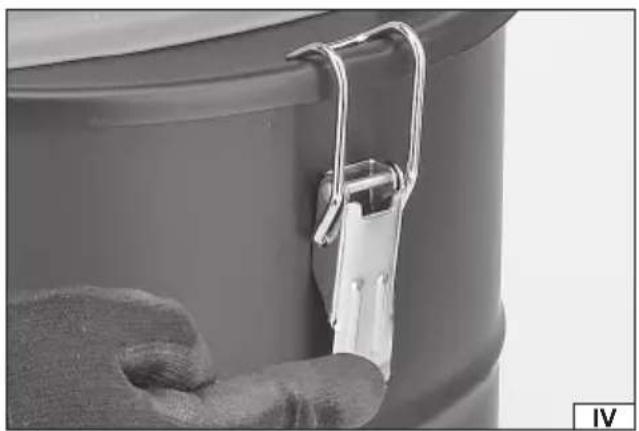
The material filter is placed on the edge of the tank (III). Make sure that the edge of the filter is in contact with the edge of the tank along its entire circumference. Attach the cover to the upper edge of the vacuum cleaner tank so that it is in contact along its entire circumference (IV).
Depending on the type of work being performed, an appropriate hose and suction nozzle should be used.
To clean ash from fireplaces, stoves or grills, use a metal ash hose and an aluminum nozzle (V). To remove other dry dirt, use a flexible vacuum cleaner hose with extension tubes and/or a nozzle suitable for the type of work being performed (VI).
To attach the hose, insert its connector into the vacuum cleaner inlet so that the notches on the connector align with the protrusions inside the hole. Then turn the hose connector until you feel it lock. Make sure that the hose is properly attached and will not slip out during operation.
Connect the suction nozzle to the free end of the hose by inserting it into the hose connector as far as it will go.
To remove the hose, turn the connector in the opposite direction and then slide it out of the inlet opening.
The vacuum cleaner also allows you to connect a hose to the exhaust opening, so you can use it as a blower.
Working with a vacuum cleaner
NOTE! It is forbidden to work with hot ash with a vacuum cleaner. The temperature of the waste sucked in by the vacuum cleaner cannot exceed 60 degrees Celsius.
Make sure that all preparations have been carried out correctly.
Make sure the vacuum cleaner switch is in the off position "O".
Insert the power cable plug into the wall outlet and then turn the switch to the "l" position.
After finishing work, turn the vacuum cleaner off using the switch, and then disconnect the power cord plug from the power outlet.
Proceed with vacuum cleaner maintenance activities.
If you notice a drop in performance during operation, this may indicate a clogged filter. You can try cleaning the filter using the
EN
reverse flow function. Press and hold the reverse flow button located on the top of the cover for a few seconds. Repeat the procedure several times. If you still notice a drop in performance, stop working, disconnect the vacuum cleaner's power cord from the socket and clean the filter manually or replace it with a new one.
Note! If during operation you observe suspicious vibrations, a drop in traction or you hear a louder engine operation, it may mean that the tank is full or the hose or suction nozzle is clogged. In such a case, immediately turn off the vacuum cleaner using the switch and disconnect the power cable plug from the mains socket. Then empty the tank and check the hose and nozzle for obstruction. If necessary, unclog them. If it is not possible to unclog the hose or suction nozzle, replace them with new ones before continuing work.
Caution! When using the vacuum cleaner as a blower, make sure that the tank has been emptied of all debris and the filter has been cleaned or replaced with a new one. There is a risk of sucking in dirt collected in the tank through the outlet.
Vacuum cleaner maintenance
Note! Before starting any maintenance activities, make sure that the power cord plug has been disconnected from the wall outlet. After each use of the vacuum cleaner, check the tank, cover seal and air filter as described in the section: „Preparing for work”. Clean the outside of the vacuum cleaner using a jet of compressed air with a pressure of no more than 0.3 MPa. Pay special attention to the patency of the ventilation holes, both inlet and outlet. If necessary, clean using a jet of compressed air with a pressure of no more than 0.3 MPa. Do not use sharp, metal objects to clean the ventilation holes. Do not immerse the vacuum cleaner in water to clean it. The vacuum cleaner hose should be checked for damage after and before each use. It is forbidden to use a damaged hose.
Remove larger dirt from the housing with a soft cloth.