MTP850 - Rototiller SCHEPPACH - Free user manual and instructions
Find the device manual for free MTP850 SCHEPPACH in PDF.


| Brand | Scheppach |
| Model | MTP850 |
| Product type | Gasoline tiller |
| Engine | 4-stroke, 196 cc, 4.8 kW (6.5 HP) |
| Working speed | 3600 rpm |
| Starting system | Reversible starter |
| Working width | 372 / 612 / 760 mm (3 settings) |
| Blade diameter | 32 cm |
| Fuel | Regular unleaded gasoline |
| Tank capacity | 3.6 L |
| Engine oil | 0.6 L (SAE 15W40) |
| Weight | 56 kg |
| Spark plug | F7RTC |
| Working depth | Adjustable (100-150 mm recommended for plowing) |
| Functions | Forward, reverse, depth adjustment, adjustable handlebar |
| Safety equipment | Tine guards, engine stop switch, clutch |
| Wear parts | Spark plug, air filter, fuel filter, blades, belt |
| Regular maintenance | Cleaning after use, annual greasing of axles |
| Long-term storage | Drain fuel, engine oil, grease parts |
Frequently Asked Questions - MTP850 SCHEPPACH
User questions about MTP850 SCHEPPACH
0 question about this device. Answer the ones you know or ask your own.
Ask a new question about this device
Download the instructions for your Rototiller in PDF format for free! Find your manual MTP850 - SCHEPPACH and take your electronic device back in hand. On this page are published all the documents necessary for the use of your device. MTP850 by SCHEPPACH.
USER MANUAL MTP850 SCHEPPACH
natural_image
Red Scheppach tiller machine with black and black body, no visible text or symbols on the device itselfMTP850
| DE | Benzin-BodenhackeOriginalbetriebsanleitung | 6-16 |
| GB | Petrol Power CultivatorOriginal operating Instructions | 17-26 |
| FR | Motobêche à essenceMode d'emploi d'origine | 27-37 |
| PL | Glebogryzarka spalinowaTłumaczenie oryginalnej instrukcji obsługi | 38-48 |
natural_image
Blank gray image with no visible content, text, or symbols
natural_image
Blank white image with no visible content, text, or symbols
natural_image
Blank white image with no visible content, text, or symbols.
natural_image
Blank white image with no visible content, text, or symbols.
natural_image
Blank white image with no visible content, text, or symbols.
natural_image
Blank white image with no visible content, text, or symbols.
natural_image
Blank white image with no visible content, text, or symbols.
natural_image
Blank white image with no visible content, text, or symbols.
natural_image
Blank white image with no visible content, text, or symbols.
natural_image
Blank white image with no visible content, text, or symbols.
natural_image
Blank white image with no visible content, text, or symbols.
natural_image
Blank white image with no visible content, text, or symbols.
natural_image
Blank white image with no visible content, text, or symbols.
natural_image
Blank white image with no visible content, text, or symbols.
natural_image
Blank white image with no visible content, text, or symbols.
natural_image
Blank white image with no visible content, text, or symbols.
natural_image
Blank white image with no visible content, text, or symbols.
natural_image
Blank white image with no visible content, text, or symbols.
natural_image
Blank white image with no visible content, text, or symbols.
natural_image
Blank white image with no visible content, text, or symbols.
natural_image
Blank white image with no visible content, text, or symbols.
natural_image
Blank white image with no visible content, text, or symbols.
natural_image
Blank white image with no visible content, text, or symbols.
natural_image
Blank white image with no visible content, text, or symbols.
natural_image
Blank white image with no visible content, text, or symbols.
natural_image
Blank white image with no visible content, text, or symbols.
natural_image
Blank white image with no visible content, text, or symbols.
natural_image
Blank white image with no visible content, text, or symbols.
natural_image
Blank white image with no visible content, text, or symbols.
natural_image
Blank white image with no visible content, text, or symbols.
natural_image
Blank white image with no visible content, text, or symbols.
natural_image
Blank white image with no visible content, text, or symbols.
natural_image
Blank white image with no visible content, text, or symbols.
natural_image
Blank white image with no visible content, text, or symbols.
natural_image
Blank white image with no visible content, text, or symbols.
natural_image
Blank white image with no visible content, text, or symbols.
natural_image
Blank white image with no visible content, text, or symbols.
natural_image
Blank white image with no visible content, text, or symbols.
natural_image
Blank white image with no visible content, text, or symbols.
natural_image
Blank white image with no visible content, text, or symbols.
natural_image
Blank white image with no visible content, text, or symbols.
natural_image
Blank white image with no visible content, text, or symbols.
natural_image
Blank white image with no visible content, text, or symbols.
natural_image
Blank white image with no visible content, text, or symbols.
natural_image
Blank white image with no visible content, text, or symbols.
natural_image
Blank white image with no visible content, text, or symbols.
natural_image
Blank white image with no visible content, text, or symbols.
natural_image
Blank white image with no visible content, text, or symbols.
natural_image
Blank white image with no visible content, text, or symbols.

natural_image
Blank white image with no visible content, text, or symbols.
natural_image
Blank white image with no visible content, text, or symbols.
natural_image
Blank white image with no visible content, text, or symbols.
natural_image
Blank white image with no visible content, text, or symbols.
natural_image
Blank white image with no visible content, text, or symbols.
natural_image
Blank white image with no visible content, text, or symbols.
natural_image
Blank white image with no visible content, text, or symbols.
natural_image
Blank white image with no visible content, text, or symbols.
natural_image
Blank white image with no visible content, text, or symbols.
natural_image
Blank white image with no visible content, text, or symbols.

natural_image
Blank white image with no visible content, text, or symbols.
natural_image
Blank white image with no visible content, text, or symbols.
natural_image
Blank white image with no visible content, text, or symbols.
natural_image
Blank white image with no visible content, text, or symbols.
natural_image
Blank white image with no visible content, text, or symbols.
natural_image
Blank white image with no visible content, text, or symbols.
natural_image
Blank white image with no visible content, text, or symbols.
natural_image
Blank white image with no visible content, text, or symbols.
natural_image
Blank white image with no visible content, text, or symbols.
natural_image
Blank white image with no visible content, text, or symbols.
natural_image
Blank white image with no visible content, text, or symbols.
natural_image
Blank white image with no visible content, text, or symbols.
natural_image
Blank white image with no visible content, text, or symbols.
natural_image
Blank white image with no visible content, text, or symbols.
natural_image
Blank white image with no visible content, text, or symbols.
natural_image
Blank white image with no visible content, text, or symbols.
natural_image
Blank white image with no visible content, text, or symbols.
natural_image
Blank white image with no visible content, text, or symbols.
natural_image
Blank white image with no visible content, text, or symbols.
natural_image
Blank white image with no visible content, text, or symbols.
natural_image
Blank white image with no visible content, text, or symbols.
natural_image
A solid black horizontal line on a white background (no text or symbols)
natural_image
Pure black horizontal bar with no text or symbols
natural_image
Blank white image with no visible content, text, or symbols.
natural_image
Blank white image with no visible content, text, or symbols.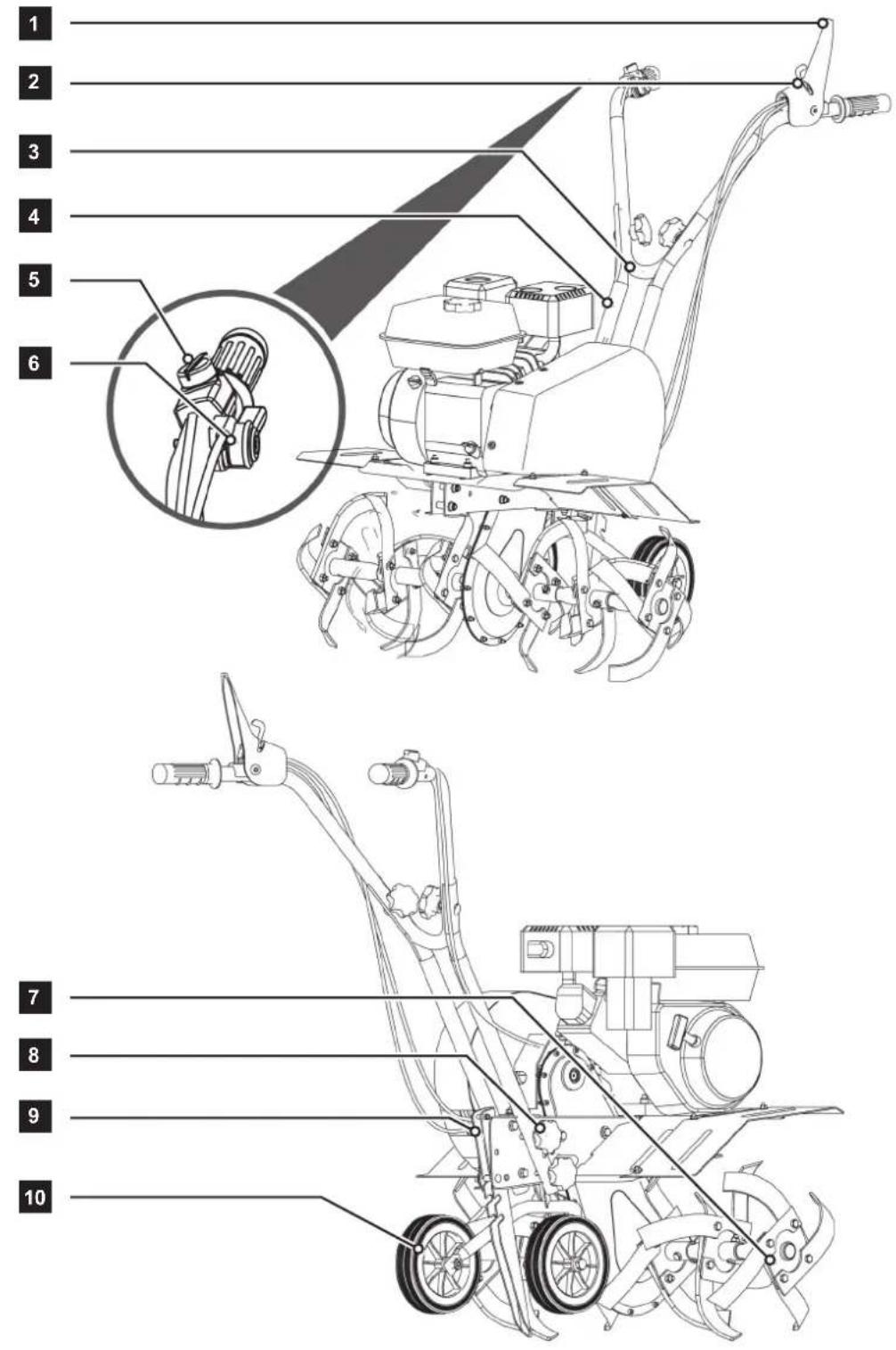
natural_image
Technical line drawing of a tiller machine with dual wheels and a flat blade (no text or symbols)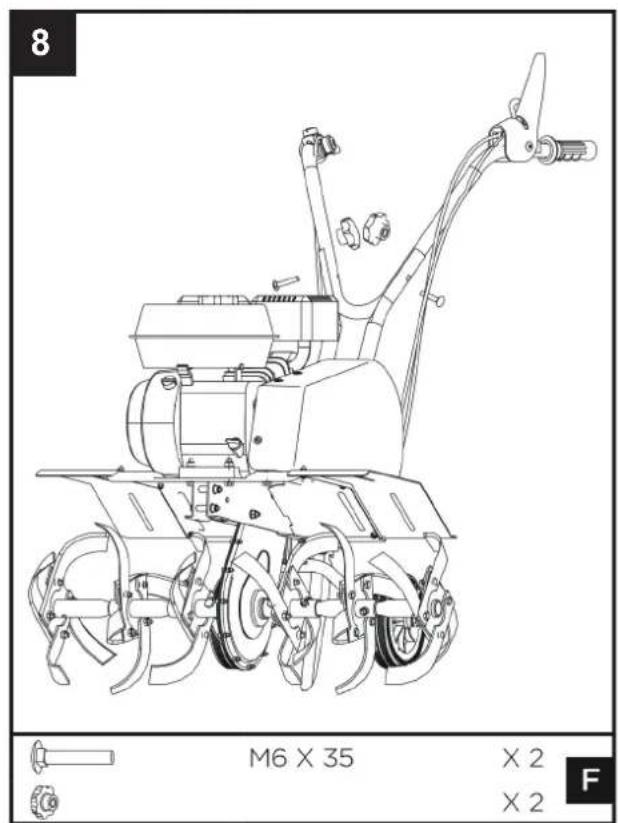
Günzburger Straße 69
D-89335 Ichenhausen
Verehrter Kunde,
Description of the symbols

Read instruction manual and safety instructions before starting up and pay attention!

Wear ear protection!

Wear safety goggles!

Wear work gloves!

Wear robust footwear when using the device!

Open fires forbidden!

Attention! Do not touch rotating parts. There is serious risk of injury!

Do not remove or modify protection and safety devices.
Description of the symbols

Attention! Hot components - Do not touch

Risk of catapulted parts if the engine is running. Be sure to keep a safe distance.
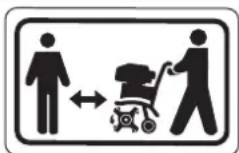
Keep bystanders away from the device!
Table of contents: Page:
- Introduction 20
- Device description 20
- Scope of delivery 20
- Intended use 20
- Safety instructions 21
- Technical data 23
- Assembly 23
- Function 23
- Operation 24
- Working instructions 24
- Maintenance 25
- Storage 25
- Troubleshooting 26
- Declaration of conformity 51
1. Introduction
Manufaturer:
Günzburger Straße 69
D-89335 Ichenhausen
Dear customer,
We hope your new tool brings you much enjoyment and success.
Note:
According to the applicable product liability laws, the manufacturer of the device does not assume liability for damages to the product or damages caused by the
product that occurs due to:
- Improper handling,
• Non-compliance of the operating instructions,
• Repairs by third parties, not by authorized service technicians,
• Installation and replacement of non-original spare parts,
• Application other than specified,
We recommend:
Read through the complete text in the operating instructions before installing and commissioning the device. The operating instructions are intended to help the user to become familiar with the machine and take advantage of its application possibilities in accordance with the recommendations. The operating instructions contain important information on how to operate the machine safely, professionally and economically, how to avoid danger, costly repairs, reduce downtimes and how to increase reliability and service life of the machine.
In addition to the safety regulations in the operating instructions, you have to meet the applicable regulations that apply for the operation of the machine in your country.
Keep the operating instructions package with the machine at all times and store it in a plastic cover to protect it from dirt and moisture. Read the instruction manual each time before operating the machine and carefully follow its information. The machine can only be operated by persons who were instructed concerning the operation of the machine and who are informed about the associated dangers. The minimum age requirement must be complied with.
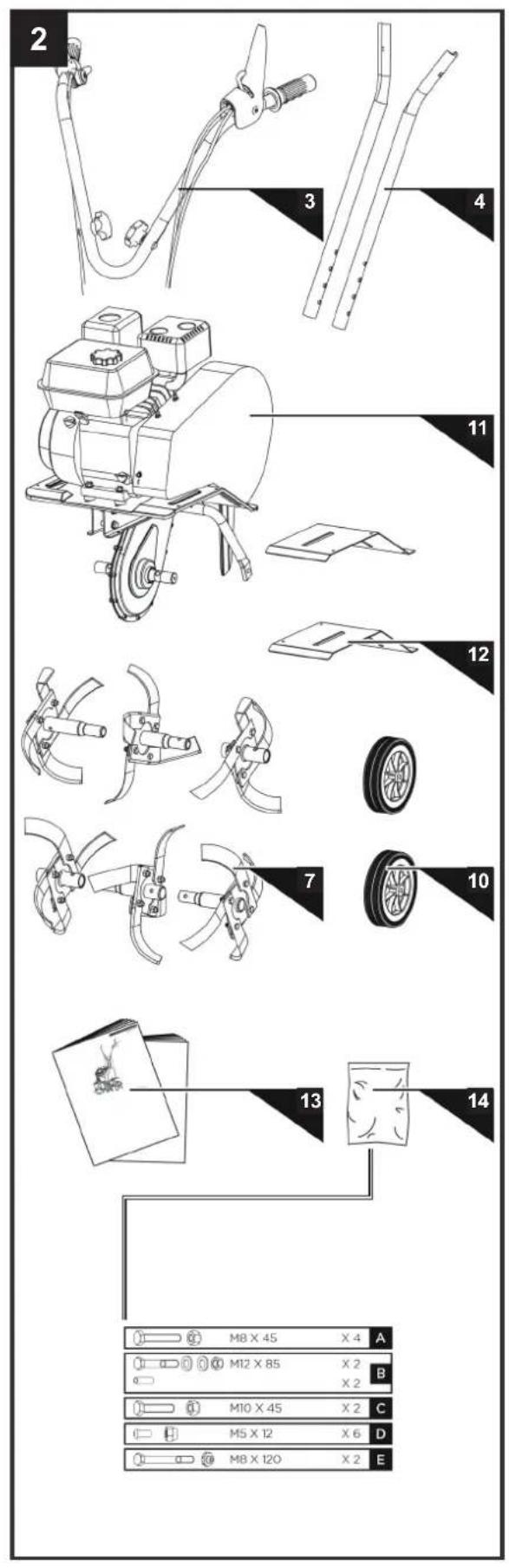
2. Device description (Fig. 1+2)
1 Clutch control lever
2 Forward/ reverse steering lever
3 Upper handle
4 Lower handle (2x)
5 Engine Stop Switch
6 Throttle Lever
7 Tilling Tine (3x)
8 Knurled screw attachment handle bar
9 Depth Regulator Rod
10 Wheel (2x)
11 Tiller Chassis with Engine and Transmission
12 Tine shield extension (2x)
13 Operator's Manual
14 Hardware bag
3. Scope of delivery (Fig. 2)
• Upper handle (1x)
- Lower handle (2x)
- Tiller Chassis with Engine and Transmission (1x)
• Tine shield extension (2x)
- Tilling Tine (3x)
- Wheel (2x)
- Operator's Manual
- Hardware bag
- Open the packaging and remove the device carefully.
- Remove the packaging material as well as the packaging and transport bracing (if available).
- Check that the delivery is complete.
- Check the device and accessory parts for transport damage. When complaints the dealer must be informed immediately. Subsequent complaints will not be accepted.
- If possible, store the packaging until the warranty period has expired.
- Read the operating instructions to make yourself familiar with the device prior to using it.
- Only use original parts for accessories as well as for wearing and spare parts. Spare parts are available from your specialized dealer.
- Specify our part numbers as well as the type and year of construction of the device in your orders.
ATTENTION!
The device and packaging materials are not toys! Children must not be allowed to play with plastic bags, film and small parts! There is a risk of swallowing and suffocation!
4. Intended use
The machine is designed for digging over beds and fields. Be sure to observe the restrictions in the additional safety instructions.
The equipment is allowed to be used only for its prescribed purpose. Any other use is deemed to be a case of misuse. The user/operator and not the manufacturer will be liable for any damage or injuries of any kind resulting from such misuse.
Please note that our equipment has not been designed for use in commercial, trade or industrial applications. Our warranty will be voided if the equipment is used in commercial, trade or industrial businesses or for equivalent purposes.
5. Safety instructions
General safety rules
Understand your machine.
Read and understand the operator's manual and labels affixed to the machine. Learn its application and limitations as well as the specific potential hazards peculiar to it. Be thoroughly familiar with the controls and their proper operation. Know how to stop the machine and disengage the controls quickly.
Make sure to read and understand all the instructions and safety precautions as outlined in the Engine Manufacturer's Manual, packed separately with your unit. Do not attempt to operate the machine until you fully understand how to properly operate and maintain the Engine and how to avoid accidental injuries and/or property damage.
Work area
Never start or run the engine inside a closed area. The exhaust fumes are dangerous, containing carbon monoxide, an odorless and deadly gas. Operate this unit only in a well ventilated outdoor area.
Never operate the machine without good visibility or light.
Never operate the machine on a steep slope.
Always work transversally, not up and down.
Personal safety
1 Do not operate the machine while under the influence of drugs, alcohol, or any medication that could affect your ability to use it properly.
2 Dress properly. Wear heavy long pants, boots and gloves. Do not wear loose clothing, short pants, and jewelry of any kind. Secure long hair so it is above shoulder level. Keep your hair, clothing and gloves away from moving parts. Loose clothes, jewelry or long hair can be caught in moving parts.
3 Use safety equipment. Always wear eye protection.
4 Safety equipment such as a dust mask, hard hat, or hearing protection used for appropriate conditions will reduce personal injuries.
5 Check your machine before starting it. Keep guards in place and in working order. Make sure all nuts, bolts, etc. are securely tightened.
6 Never operate the machine when it is in need of repair or is in poor mechanical condition.
7 Replace damaged, missing or failed parts before using it. Check for fuel leaks. Keep the machine in safe working condition.
8 Never tamper with safety device. Check their proper operation regularly.
9 Do not use the machine if the engine's switch does not turn it on or off. Any gasoline powered machine that can not be controlled with the engine switch is dangerous and must be replaced.
10 Form a habit of checking to see that keys and adjusting wrenches are removed from machine area before starting it. A wrench or a key that is left attached to a rotating part of the machine may result in personal injury.
11 Stay alert, watch what you are doing and use common sense when operating the machine.
12 Do not overreach. Do not operate the machine while barefoot or when wearing sandals or similar lightweight footwear. Wear protective footwear that will protect your feet and improve your footing on slippery surfaces.
13 Keep proper footing and balance at all times. This enables better control of the machine in unexpected situations.
14 Avoid accidental starting. Be sure the engine is off before transporting the machine or performing any maintenance or service on the unit. Transporting or performing maintenance or service on a machine with engine on invites accidents.
Fuel Safety
1 Fuel is highly flammable, and its vapors can explode if ignited. Take precautions when using to reduce the chance of serious personal injury.
2 When refilling or draining the fuel tank, use an approved fuel storage container while in a clean, well-ventilated outdoor. Do not smoke, or allow sparks, open flames or other sources of ignition near the area while adding fuel or operating the unit. Never fill fuel tank indoors.
3 Keep grounded conductive objects, such as tools, away from exposed, live electrical parts and connections to avoid sparking or arcing. These events could ignite fumes or vapors.
4 Always stop the engine and allow it to cool before filling the fuel tank. Never remove the cap of the fuel tank or add fuel while the engine is running or when the engine is hot. Do not operate the machine with known leaks in the fuel system.
5 Loose the fuel tank cap slowly to relieve any pressure in the tank.
6 Never over fill fuel tank. Fill tank to no more than 12.5mm (1/2" below the bottom of the filler neck to provide space for expansion as the heat of the engine can cause fuel to expand).
7 Replace all fuel tank and container caps securely and wipe up spilled fuel. Never operate the unit without the fuel cap securely in place.
8 Avoid creating a source of ignition for spilled fuel. If fuel is spilled, do not attempt to start the engine but move the machine away from the area of spillage and
avoid creating any source of ignition until fuel vapors have dissipated.
9 Store fuel in containers specifically designed and approved for this purpose.
10 Store fuel in a cool, well-ventilated area, safely away from sparks, open flames or other sources of ignition.
11 Never store fuel or machine with fuel in the tank inside a building where fumes may reach a spark, open flame, or other sources of ignition, such as a water heater, furnace, clothes dryer and the like. Allow the engine to cool before storing in any enclosure.
Machine use and care
1 Never pick up or carry a machine while the engine is running.
2 Do not force the machine. Use the correct machine for your application. The correct machine will do the job better and safer at the rate for which it was designed.
3 Do not change the engine governor settings GB or over-speed the engine. The governor controls the maximum safe operating speed of the engine.
4 Do not run the engine at a high speed when you are not tilling.
5 Do not put hands or feet near rotating parts
6 Avoid contact with hot fuel, oil, exhaust fumes and hot surfaces. Do not touch the engine or muffler. These parts get extremely hot from operation. They remain hot for a short time after you turn off the unit. Allow the engine to cool before doing maintenance or making adjustments.
7 If the machine should start to make an unusual noise or vibration, immediately shut off the engine, disconnect the spark plug wire, and check for the cause. Unusual noise or vibration is generally warning of trouble.
8 Use only attachments and accessories approved by the manufacturer. Failure to do so can result in personal injury.
9 Maintain the machine. Check for misalignment or binding of moving parts, breakage of parts and any other condition that may affect the machine's operation. If damaged, have the machine repaired before use. Many accidents are caused by poorly maintained equipment.
10 Keep the engine and muffler free of grass, leaves, excessive grease or carbon build up to reduce the chance of a fire hazard.
11 Keep cutting tools sharp and clean. Properly maintained cutting tools with sharp cutting edges are less likely to bind and are easier to control.
12 Never douse or squirt the unit with water or any other liquid. Keep handles dry, clean and free from debris. Clean after each use.
13 Observe proper disposal laws and regulations for gas, oil, etc. to protect the environment.
14 Store idle machine out of the reach of children and do not allow persons unfamiliar with the machine or these instructions to operate it. Machine is dangerous in the hands of untrained users.
Service
Before cleaning, repair, inspecting, or adjusting, shut off the engine and make certain all moving parts have stopped. Disconnect the spark plug wire, and keep the wire away from the plug to prevent accidental starting.
Have your machine serviced by qualified repair personnel using only identical replacement parts. This will ensure that the safety of the machine maintained.
Specific safety rules
1 Thoroughly inspect the area to be tilled, and remove all debris and hard or sharp objects such as stones, sticks, glass, wire, bones, etc.
2 Do not operate tiller in soil with large rocks and foreign objects which can damage the machine.
3 Do not till above underground electric cables, telephone lines, water lines, gas line, pipes, or hoses. If in doubt, contact your utility or telephone company to locate underground services.
4 Keep all bystanders, children, and pets at least 23m away. If you are approached, stop the unit immediately.
5 Walk, never run with the machine.
6 This unit has a clutch. Squeeze the clutch control lever and check that i t returns automatically to the neutral position. If it does not, have unit adjusted by a qualified repair personnel.
7 Disengage clutch lever before starting the engine.
8 Start the engine carefully according to instructions and with feet well away from the tines.
9 The tines remain stationary when the clutch is disengaged. If it does not, have unit adjusted by a qualified repair personnel.
10 Always operate the machine from behind, never pass or stand in front of the machine when the engine is running.
11 Always hold the unit with both hands when operating. Keep a firm grip on the handlebars.
12 Be aware that the machine may unexpectedly bounce upward or jump forward if the tines should strike buried obstacles such as large stones, roots, or stumps.
13 If the unit strikes a foreign object, stop the engine, disconnect the spark plug, thoroughly inspect the machine for any damage, and repair the damage before restarting and operating the machine.
14 Use extreme caution when in reverse ornpulling the machine towards you.
15 Do not overload the machine capacity by tilling too deep in a single pass or at too fast a rate.
16 Never operate the tiller at high transport speeds on hard or slippery surfaces.
17 Be careful when tilling in hard ground. The tines may catch in the ground and propel the tiller forward. If this occurs, let go of the handlebars and do not restrain the machine.
18 Use caution when tilling near fences, buildings and underground utilities. Rotating tines can cause property damage or personal injury.
19 Exercise extreme caution when operating on or crossing gravel drives, walks, or roads. Stay alert for hidden hazards or traffic. Do not carry passengers.
20 Never leave the operating position when the engine is running.
21 Always stop the engine when tilling is delayed or when walking from one tilling location to another.
22 Keep unit clean of vegetation and other materials. They may become lodged between the tines. Stop the engine and disconnect the spark plug before unclogging the tines.
Repairs
Use only the accessory and spare parts recommended by the manufacturer. If the machine suers a failure despite our quality controls and your care, have repair work carried out only by a trained electrician.
Environmental protection
Do not simply dispose of the machine, accessories and packaging in the dustbin, but ensure that it can be recycled. A small amount of effort on your part can do a great deal of good for our environment.
Residual risks
Even though using the machine properly there will always remain a residual risk which can't be eliminated. From the type and construction of the machine following dangers can occur:
- Ejection of parts of the cutting material
- Damage of hearing if no prescribed hearing protection is worn
- Inhalation of the cutting material
6. Technical data
Engine: 4-stroke engine,
1 9 6 c c m
Engine rating: 4,8 kW/6,5 hp
Engine working speed: 3600 rpm
Working width: 372/612/760 mm
Starting system: reversing
starter
| Fuel: | Unleaded petrol |
| min. 90 octane | |
| max. 5% | |
| bio-ethanol | |
Engine oil: 0,6l (15W40)
Tank capacity: 3,6 l
Weight: 56 kg
Spark plug: F7RTC
7. Assembly
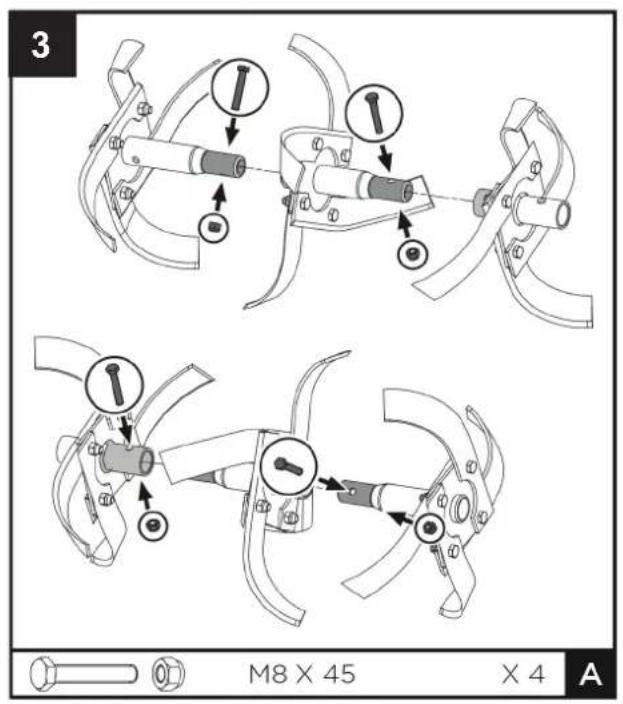
1) Mount the external parts of the tine on the internal parts, fixing them together with M8X45 screws (A) and nuts (fig.3).
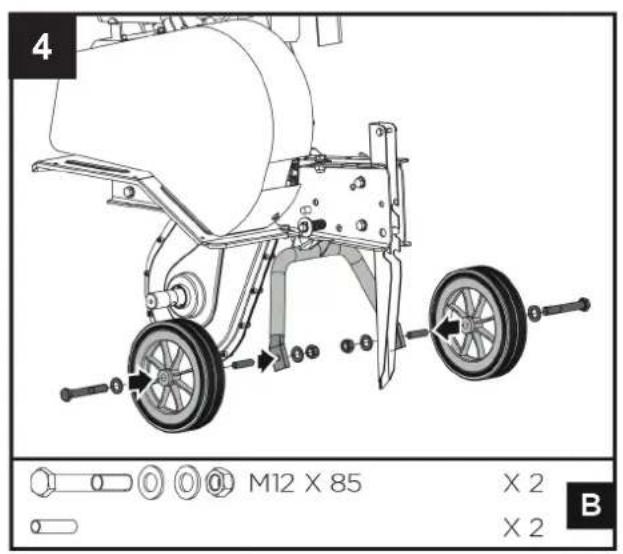
2) Slide the tube sleeve into the wheels and mount the wheels on both sides of the bracket with M12X85 screws, washers and nuts (B) (fig.4).
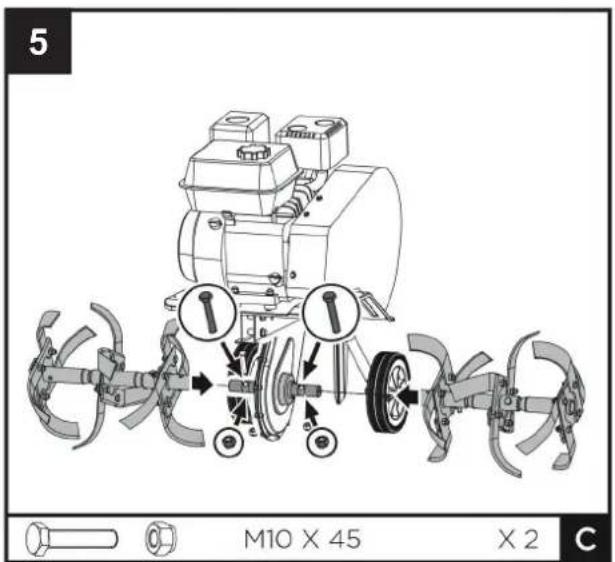
3) Place tilling tines on the tine shaft on both sides of the transmission box. Line up the holes in the tine frame sleeves and tine shaft. Insert M10X45 (C) screws through the holes in tine frames and tine shaft from one side, then lock nuts from the other side. Tighten down. 3 pairs tilling tines can be adjusted according to the operator's tilling width to 372/612/852mm respectively (fig.5).
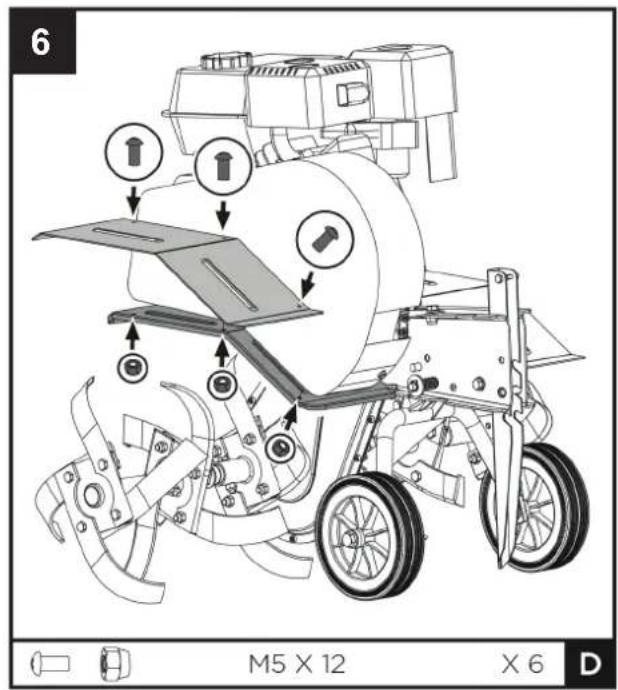
4) Attach the tine shield extension to the tine shield with M5X12 screws and nuts (D) (fig.6).
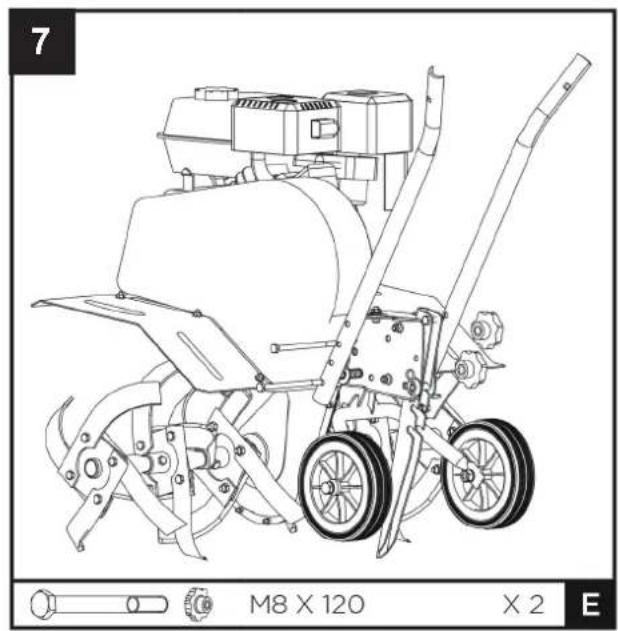
5) Mount the lower handles on the end connecting plate with M8x120 bolts, washers and nuts (E) (fig.7).
6) Line up the holes in the lower handles and upper handles, secure them with M8x45 bolts and star knob (F) (fig.8).
Adding oil △ ATTENTION! OIL HAS BEEN DRAINED FOR SHIPPING.
Failure to fill engine sump with oil before starting engine will result in permanent damage and void engine warranty (see Engine operator's manual).
8. Function
Engine Stop Switch (5)
It cuts out power to the machine at the end of working or when a problem occurs.
Forward Steering Lever (1)
Push down to engage tines into forward, releasing returns machine to neutral.
Throttle Lever (6)
It controls engine speed. Moving the throttle lever in the directions shown makes the engine run faster or slower.
Reverse Steering Lever (2)
Grip to reverse the machine. Releasing returns machine to neutral.
Wheel (10)
The spring locks wheel bracket at different height and distance from the tines. Pull the spring-connected wheel bracket downwards to raise the wheel in the upper groove when tilling. Set the wheel down when transporting the tiller. Tilt the machine back until the tines clear the ground. Push or pull the unit to the next location.
Handlebar Adjustment Knob (8)
To regulate the height and lateral adjustment of the handlebar, loosen knob, adjust handlebar to the desired position, and then fasten the knob.
Depth Regulator Rod (9)
It regulates the tilling depth and helps the operator control the direction and speed of the tiller. Insert the depth regular rod in the groove at the rear of the chassis, with the pointed end downward and the notched side outward.
Lowering the depth regulator rod will slow the tiller and make it till deeper. Raising the depth regulator rod will allow it to move faster and till shallower. To adjust the tilling depth:
- Remove the cotter pin.
- Raise or lower the depth regulator rod to the desired position.
- Replace the cotter pin.
9. Operation
9.1 Adding fuel
Fill the fuel tank as instructed in the separate Engine Manual.
9.2 Starting engine
The controls required to start and run the tiller are located on the engine and are marked "CHOKE" and "THROTTLE". Throttle can be adjusted by the throttle control lever (6) mounted on the right upper handle through a control cable.
Cold start
- Turn choke lever on the engine to full choke position.
- Set the throttle lever at half way position.
- Pul I the starting rope slowly several times to allow the gasoline to flow into the engine's carburetor. Then hold the start handle firmly and pull the rope out for a short distance, until you feel some resistance. Then pull the rope smoothly and briskly, and allow the rope to return gently. Do not let the rope snap back. If necessary, pull the rope several times until the engine starts.
- Allow the engine to run for several seconds to warm up. Then, gradually move choke lever to "OPEN" position and adjust the throttle control to desired speed.
- Grip the handles firmly with both hands. Squeeze down on the clutch control lever - this will engage the tines and move the tiller in a forward direction.
Warm start
Restarting an engine that is already warm from previous running does not normally require use of the choke.
- Set the throttle lever at half way position.
- Hold the start handle firmly and pull the rope out for a short distance, until you feel some resistance. Then pull the rope smoothly and briskly, and allow the rope to return gently. Do not let the rope snap back.
- Adjust the throttle control to desired speed.
- Grip the handles firmly with both hands. Squeeze down on the clutch control lever to engage the tine and move the tiller in a forward direction.
9.3 Idle Speed
Set throttle control lever (6) to its "LOW" position to reduce stress on the engine when tilling is not being performed.
Lowering the engine speed to idle the engine will help extend the life of the engine, as well as conserve fuel and reduce the noise level of the machine.
9.4 Shifting Speed
Shift between forward speed and reverse speed:
Clutch (1) to engage tines into forward.
Release clutch control (1) and grip shift control and reengage clutch control (2) to reverse the machine.
Release shift control (1) to forward the machine.
9.5 Shutting Down
Release tine clutch control lever (1) to neutral position to stop the tines. Set engine stop switch (5) to its "OFF" position to stop the engine.
⚠️ ATTENTION! Do not move choke control to „CHOKE“ to stop engine. Backfire or engine damage may occur.
9.6 Operating Speed
For normal tilling:
- set the throttle control lever to "HIGH" for best tiller action.
Cultivating: - The throttle should be set to control forward movement to a slow walking speed for cultivating.
10. Working instructions
10.1 Depth regulator
Besides depth regulator rod setting, variation of pressure on the handles also helps further control of tilling depth and travel speed. A downward pressure on the handles will reduce the tilling depth and increase the forward speed. An upward pressure on the handles will increase the working depth and reduce the forward speed.
10.2 Tiling
Tilling is digging in, turning over and breaking up garden soil and preparing a seedbed for planting. Best tilling depth is 100mm to 150mm. A tiller will also clear the soil of unwanted vegetation. The decomposition of this vegetation matter enriches the soil. Avoid tilling soil that is too dry as it will pulverize and produce a dust that will not hold water
- Water a few days before tilling. Also, tilling soil that is too wet will produce unsatisfactory clods.
- Wait a day or two after heavy rain for the soil to dry. Better growth will be obtained if an area is tilled properly and used soon after tilling to preserve the moisture content.
The type of soil and working conditions will determine the actual setting of the tilling depth. In some soils, the desired depth is reached by first passing over garden. In other soils, the desired depth is obtained by going over the garden two or three times. In later case, the depth regulator rod should be lowered before each succeeding pass over the garden.
Passes should be made across the length and width of the garden alternately. Do not try to dig too deeply in the first pass. If the machine jumps or bucks, allow the unit to move forward at a lightly faster rate.
If the tiller stops forward motion and tries to dig in one spot, rock the handles from side to side to start it moving forward again.
Rocks which are turned up should be removed from the garden area.
10.3 Cultivating
Cultivating is loosening or digging around growing plants to disrupt weeds and aerate soil. Less than 50mm depth is always desirable.
11. Maintenance
Keeping your tiller in top running condition will prolong its life, and help you obtain optimum performance whenever you wish to till your garden.
Cleaning Tine Area
Clean the tiller underside of the tine shield after each use. The dirt washes off tines easier if rinsed off immediately instead of after it dries.
- Turn off engine. Engine must be cool.
- Keep the engine's throttle control in its "STOP" position, and remove spark plug wire from spark plug and secure.
- Remove all vegetation, string, wire, and other materials that may have accumulated to the axle between the inside set of tines and the seal on the transmission housing.
Checking the clutch
- Clutch: as clutch wears out, the same lever could have a wider opening, being so uneasy to use. This means that it is necessary to adjust the cable, setting clutch lever on its original position acting on the adjustment device and on counter-nut.
-
Always towel dry the tiller afterwards and apply a light coat of oil or silicone to prevent rusting or water damage.
-
Replace spark plug wire.
ATTENTION! Never use a “pressure washer” to clean your tiller. Water can penetrate tight areas of the tiller and its transmission case and cause damage to spindles, gears, bearings, or the engine. The use of pressure washers will result in shortened life and reduce serviceability.
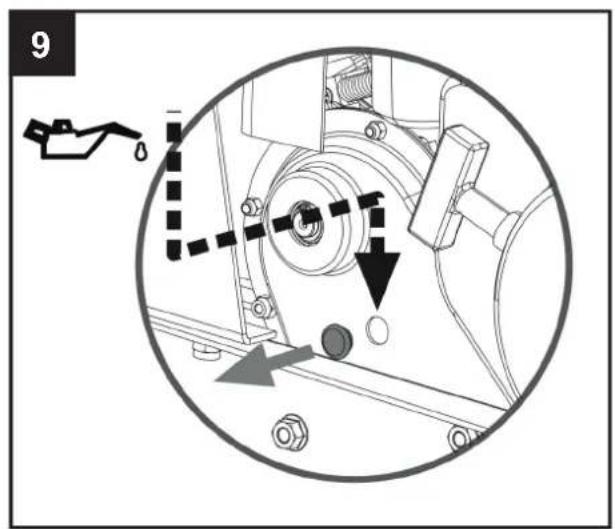
Lubrication (fig. 9)
Remove the tine assemblies to lubricate the tine shafts at least once a season.
The worm gear housing is pre-lubricated and sealed at the factory. At the beginning of each season, make sure enough lubricant inside the worm gear housing. Use portable tool lithium grease.
Allow the transmission to cool before filling with grease.
- Remove right side tines and place the tiller on level surface.
-
Remove the grease fitting screw and air vent screw to fill the worm gear housing through the lower grease fitting hole until the grease begins to come out from the upper air vent hole.
-
Reinstall the grease fitting screw and air vent screw.
Do not overfill. Too much grease can create pressure which could damage seals.
Engine Maintenance
Follow the instructions in the engine manual!
Service information
Please note that the following parts of this product are subject to normal or natural wear and that the following parts are therefore also required for use as consumable. Wear parts*: spark plug, air filter, petrol filter, knife, belt
* Not necessarily included in the scope of delivery!
12. Storage
If the tiller will not be used for a period longer than 30 days, follow the steps below to prepare your tiller for storage.
-
Drain the fuel tank completely. Stored fuel containing ethanol or MTBE can start to go stale in 30 days. Stale fuel has a high plastic content and can clog the carburetor and restrict fuel flow.
-
Start the engine and allow it to run until it stops. This ensures no fuel is left in the carburetor. Run the engine until it stops. This helps prevent plastic deposits from forming inside the carburetor and possible engine damage.
-
While the engine is still warm, drain the oil from the engine. Refill with fresh oil of the grade recommended in the Engine Manual.
-
Allow the engine to cool. Remove the spark plug and put 30 ml of high quality motor oil into the cylinder. Pull the starter rope slowly to distribute the oil. Replace the spark plug.
⚠️ ATTENTION! Remove the spark plug and drain all of the oil from the cylinder before attempting to start the unit after storage.
- Use clean cloths to clean off the outside of the tiller and to keep the air vents free of obstructions.
⚠️ ATTENTION! Do not use strong detergents or petroleum based cleaners when cleaning plastic parts. Chemicals can damage plastics.
-
Inspect for any loose or damaged parts. Repair or replace damaged parts and tighten loose screws, nuts or bolts.
-
Remove the tines. Clean and apply oil to the tines and tine shafts to prevent rusting. Mount the tines onto the tine shafts.
-
Coat the wheel axles lightly with oil. Oil the throttle cables and all visible moving parts. Do not remove the engine cover.
-
Remove the tines. Clean and apply oil to the tines and tine shafts to prevent rusting. Mount the tines onto the tine shafts.
- Coat the wheel axles lightly with oil. Oil the throttle cables and all visible moving parts. Do not remove the engine cover.
9. To store with the handles folded down:
loosen the knobs that secure the upper handle to the lower handles. Carefully fold the upper handle down. Do not allow control cables to become pinched or bent.
Tighten the knobs.
- Store your tiller in upright position in a clean, dry building that has good ventilation.
ATTENTION! Do not store tiller with fuel in an non-ventilated area where fuel fumes may reach flame, sparks, pilot lights or any ignition sources. Use only approved fuel containers.
13. Troubleshooting
| Problem Cause Remedy | ||
| Engine fails to start. 1. Spark plug wire disconnected.2. Out of fuel or stale fuel.3. Throttle control lever not in correct starting position.4. Choke not in „ON“ Position.5. Blocked fuel line.6. Fouled spark plug.7. Engine flooding.8. Tine clutch control not in neutral position. | 1. Attach spark plug wire securely to spark plug.2. Fill with clean, fresh gasoline.3. Move throttle control lever to start position.4. Chock must be positioned at CHOKE for a cold start.5. Clean the fuel line.6. Clean, adjust gap, or replace.7. Wait a few minutes to restart, but do not prime.8. Tine clutch control lever must be released to neutral to start the engine. | |
| Engine runs erratically. 1. Spark plug wire loose.2. Unit running on CHOKE.3. Blocked fuel line or stale fuel.4. Vent plugged.5. Water or dirt in fuel system.6. Dirty air cleaner.7. Improper carburetor adjustment. | 1. Connect and tighten spark plug wire.2. Move choke lever to OFF.3. Clean fuel line. Fill tank with clean, fresh gasoline.4. Clear vent.5. Drain fuel tank. Refill with fresh fuel.6. Clean or replace air cleaner.7. Refer to Engine Manual. | |
| Engine overheats. 1. Engine oil level low.2. Dirty air cleaner.3. Air flow restricted.4. Carburetor not adjusted properly. | 1. Fill crankcase with proper oil.2. Clean air cleaner.3. Remove blower housing and clean.4. Refer to Engine Manual. | |
| Engine will not stop when throttle control is positioned at „stop“, or engine speed does not increase properly when throttle control is adjusted. | 1. Debris interfering with throttle linkage.2. Improper throttle linkage adjustment. | 1. Clean dirt and debris.2. Refer to Engine Manual to check and adjust throttle linkage. |
| Tiller moves forward during starting. | Tine clutch control not in neutral position. Tine clutch control lever must be released to neutral to start the engine. | |
| Tiller is difficult to control when tilling (machine jumps or lurches forward). | 1. Improper tilling depth setting.2. Too high engine speed on hard ground. | 1. Raise the tines for shallower tilling by raising the depth regulator rod.2. Set the throttle lever at lower speed. |
| Tines do not engage. 1. Foreign object lodged in tines.2. Tine clevis pin(s) missing.3. Belt worn and/or stretched.4. Pulley and idler not in correct adjustment. | 1. Stop tiller completely, check and discard foreign object.2. Replace tine clevis pin(s).3. Replace belt.4. Contact dealer. |
Günzburger Straße 69
D-89335 Ichenhausen
Cher client,
Günzburger Straße 69
D-89335 Ichenhausen
Szanowny kliencie,
natural_image
Blank gray image with no visible content, text, or symbols
natural_image
Blank white image with no visible content, text, or symbols
natural_image
Blank white image with no visible content, text, or symbols.
natural_image
Blank white image with no visible content, text, or symbols.
natural_image
Blank white image with no visible content, text, or symbols.
natural_image
Blank white image with no visible content, text, or symbols.
natural_image
Blank white image with no visible content, text, or symbols.
natural_image
Blank white image with no visible content, text, or symbols.
natural_image
Blank white image with no visible content, text, or symbols.
natural_image
Blank white image with no visible content, text, or symbols.
natural_image
Blank white image with no visible content, text, or symbols.
natural_image
Blank white image with no visible content, text, or symbols.
natural_image
Blank white image with no visible content, text, or symbols.
natural_image
Blank white image with no visible content, text, or symbols.
natural_image
Blank white image with no visible content, text, or symbols.
natural_image
Blank white image with no visible content, text, or symbols.
natural_image
Blank white image with no visible content, text, or symbols.
natural_image
Blank white image with no visible content, text, or symbols.
natural_image
Blank white image with no visible content, text, or symbols.
natural_image
Blank white image with no visible content, text, or symbols.
natural_image
Blank white image with no visible content, text, or symbols
natural_image
Blank white image with no visible content, text, or symbols
natural_image
Blank white image with no visible content, text, or symbols
natural_image
Blank white image with no visible content, text, or symbols
natural_image
Blank white image with no visible content, text, or symbols
natural_image
Blank white image with no visible content, text, or symbols
natural_image
Blank white image with no visible content, text, or symbols
natural_image
Blank white image with no visible content, text, or symbols
natural_image
Blank white image with no visible content, text, or symbols
natural_image
Blank white image with no visible content, text, or symbols
natural_image
Blank white image with no visible content, text, or symbols
natural_image
Blank white image with no visible content, text, or symbols
natural_image
Blank white image with no visible content, text, or symbols.
natural_image
Blank white image with no visible content, text, or symbols
natural_image
Blank white image with no visible content, text, or symbols
natural_image
Blank white image with no visible content, text, or symbols
natural_image
Blank white image with no visible content, text, or symbols.
natural_image
Blank white image with no visible content, text, or symbols
natural_image
Blank white image with no visible content, text, or symbols.
natural_image
Blank white image with no visible content, text, or symbols.
natural_image
Blank white image with no visible content, text, or symbols
natural_image
Blank white image with no visible content, text, or symbols.
natural_image
Blank white image with no visible content, text, or symbols.
natural_image
Blank white image with no visible content, text, or symbols.
natural_image
Blank white image with no visible content, text, or symbols.
natural_image
Blank white image with no visible content, text, or symbols.
natural_image
Blank white image with no visible content, text, or symbols.
natural_image
Blank white image with no visible content, text, or symbols.
natural_image
Blank white image with no visible content, text, or symbols.

natural_image
Blank white image with no visible content, text, or symbols.
natural_image
Blank white image with no visible content, text, or symbols.
natural_image
Blank white image with no visible content, text, or symbols.
natural_image
Blank white image with no visible content, text, or symbols.
natural_image
Blank white image with no visible content, text, or symbols.
natural_image
Blank white image with no visible content, text, or symbols.
natural_image
Blank white image with no visible content, text, or symbols.
natural_image
Blank white image with no visible content, text, or symbols.
natural_image
Blank white image with no visible content, text, or symbols.
natural_image
Blank white image with no visible content, text, or symbols.

natural_image
Blank white image with no visible content, text, or symbols.
natural_image
Blank white image with no visible content, text, or symbols.
natural_image
Blank white image with no visible content, text, or symbols.
natural_image
Blank white image with no visible content, text, or symbols.
natural_image
Blank white image with no visible content, text, or symbols.
natural_image
Blank white image with no visible content, text, or symbols.
natural_image
Blank white image with no visible content, text, or symbols.
natural_image
Blank white image with no visible content, text, or symbols.
natural_image
Blank white image with no visible content, text, or symbols.
natural_image
Blank white image with no visible content, text, or symbols.
natural_image
Blank white image with no visible content, text, or symbols.
natural_image
Blank white image with no visible content, text, or symbols.
natural_image
Blank white image with no visible content, text, or symbols.
natural_image
Blank white image with no visible content, text, or symbols.
natural_image
Blank white image with no visible content, text, or symbols.
natural_image
Blank white image with no visible content, text, or symbols.
natural_image
Blank white image with no visible content, text, or symbols.
natural_image
Blank white image with no visible content, text, or symbols.
natural_image
Blank white image with no visible content, text, or symbols.
natural_image
Blank white image with no visible content, text, or symbols.
natural_image
Blank white image with no visible content, text, or symbols.
natural_image
A solid black horizontal line on a white background (no text or symbols)
natural_image
Pure black horizontal bar with no text or symbols
natural_image
Blank white image with no visible content, text, or symbols.
natural_image
Blank white image with no visible content, text, or symbols.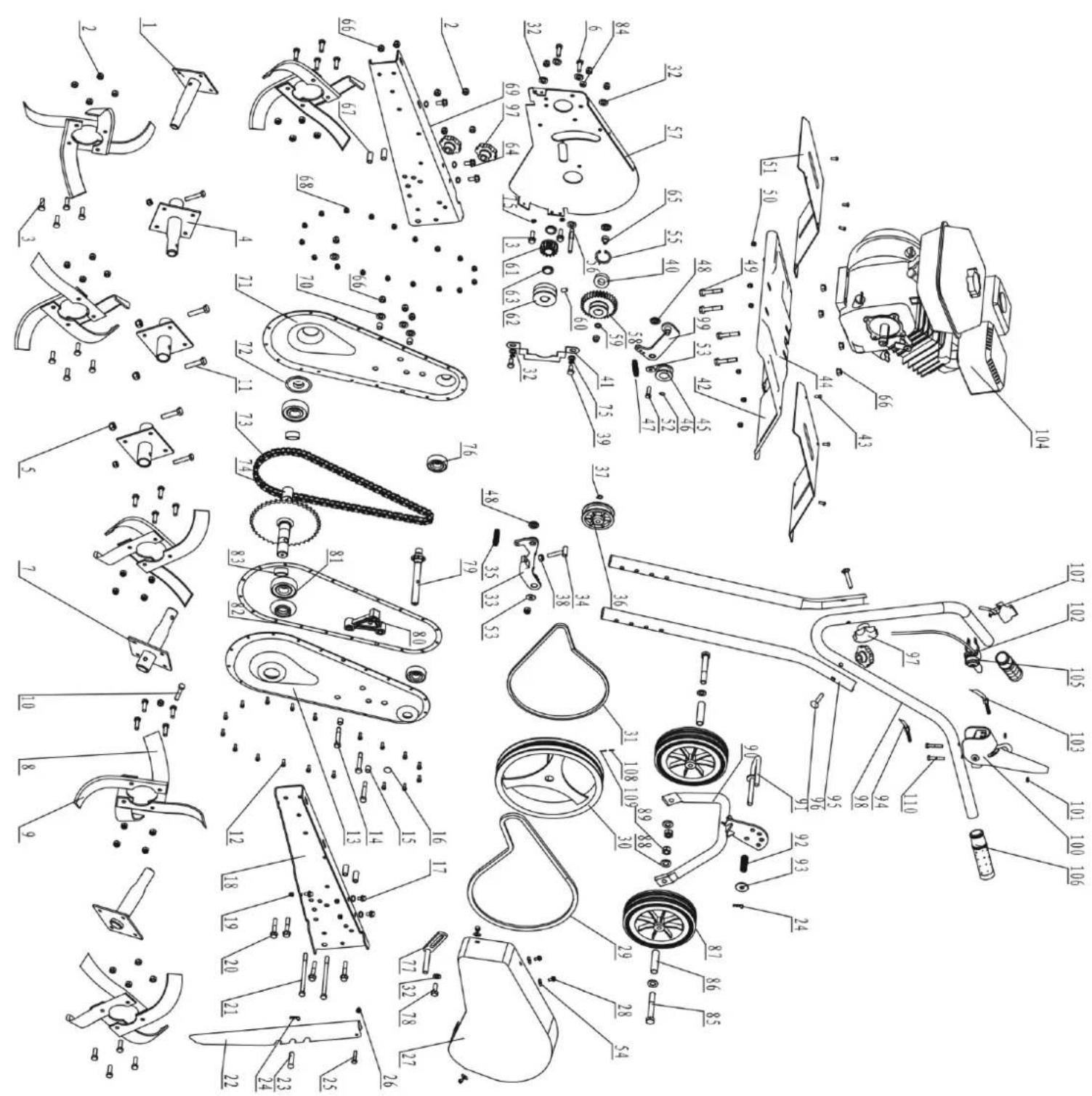
CE - Declaration of Conformity
hereby declares the following conformity under the EU Directive and standards for the following article
FR
Noise: measured L_WA = xx dB(A) ; guaranteed L_WA = xx dB(A) P = xx KW; L/∅ = cm
Notified Body:
Notified Body No.:

2010/26/EC
Emission. No: e11*97/68SA*2010/26*2673*00
X 2006/42/EC
Annex IV
Notified Body:
Notified Body No.:
Certificate No.:
Standard references:
EN 709:1997+A1:2009+AC:2012; EN 55012:2007+A1; EN 61000-1-1:2007
This declaration of conformity is issued under the sole responsibility of the manufacturer.
Apparent defects must be notified within 8 days from the receipt of the goods. Otherwise, the buyers rights of claim due to such defects are invalidated. We guarantee for our machines in case of proper treatment for the time of the statutory warranty period from delivery in such a way that we replace any machine part free of charge which provably becomes unusable due to faulty material or defects of fabrication within such period of time. With respect to parts not
manufactured by us we only warrant insofar as we are entitled to warranty claims against the upstream suppliers. The costs for the installation of the new parts shall be borne by the buyer. The cancellation of sale or the reduction of purchase price as well as any other claims for damages shall be excluded.