HG2000 - Heat gun SCHEPPACH - Free user manual and instructions
Find the device manual for free HG2000 SCHEPPACH in PDF.


| Product type | Heat gun |
| Brand | Scheppach |
| Model | HG2000 |
| Rated voltage | 220-240 V~ / 50/60 Hz |
| Rated power | 2000 W |
| Adjustable temperature | 50°C to 650°C |
| Air flow rate | 250 L/min or 500 L/min |
| Protection class | II (double insulation) |
| Included accessories | Scraper, large surface nozzle, reduction nozzle, reflective nozzle, spatula nozzle |
| Main applications | Paint stripping, defrosting, heat shrinking, plastic welding |
| Maintenance | Clean with a soft brush; do not use running water |
| Wear parts (consumables) | Carbon brushes, nozzles, scrapers |
| Switch | 2-level on/off switch (I, II, 0) |
| Protective cover | Removable for access to hard-to-reach areas |
| Display | Digital temperature display |
Frequently Asked Questions - HG2000 SCHEPPACH
User questions about HG2000 SCHEPPACH
0 question about this device. Answer the ones you know or ask your own.
Ask a new question about this device
Download the instructions for your Heat gun in PDF format for free! Find your manual HG2000 - SCHEPPACH and take your electronic device back in hand. On this page are published all the documents necessary for the use of your device. HG2000 by SCHEPPACH.
USER MANUAL HG2000 SCHEPPACH
natural_image
Black industrial blender with brand logo, no visible text or symbols on bodyHG2000
| DE | HeißluftpistoleOriginalbetriebsanleitung | 6-10 |
| GB | Hot Air GunTranslation of Original Operating Manual | 11-15 |
| FR | Pistolet à air chaudTraduction de la notice originale | 16-20 |
| CZ | Horkovzdušná pistolePřeklad originálního návodu k obsluze | 21-25 |
| SK | Teplovzdušná pištol'Preklad originálneho návodu na obsluhu | 26-30 |
| HU | HőlégpisztolyAz eredeti használati útmutató fordítása | 31-35 |
| PL | OpalarkaTlumaczenie oryginalnej instrukcji obsługi | 36-40 |
1
2
natural_image
Black handheld industrial blender with handle and spout (no visible text or symbols)3
natural_image
Exterior view of a portable heat exchanger with labeled parts (1 and 2), showing internal structure and handle (no text or symbols on the device itself)Günzburger Straße 69
D-89335 Ichenhausen
VEREHRTER KUNDE,
Explanation of the symbols on the equipment
 | GB | Warning! Danger to life, risk of injury or damage to the tool are possible by ignoring!. | ||
 | GB | Caution - Read the operating instructions to reduce the risk of inquiry | ||
 | GB | Protection class II | ||
Introduction
MANUFACTURER:
Günzburger Straße 69
D-89335 Ichenhausen
DEAR CUSTOMER,
We hope your new tool brings you much enjoyment and success.
NOTE:
According to the applicable product liability laws, the manufacturer of the device does not assume liability for damages to the product or damages caused by the product that occurs due to:
- Improper handling,
• Non-compliance of the operating instructions,
• Repairs by third parties, not by authorized service technicians,
- Installation and replacement of non-original spare parts,
• Application other than specified,
- A breakdown of the electrical system that occurs due to the non-compliance of the electric regulations and VDE regulations 0100, DIN 57113 / VDE0113.
WE RECOMMEND:
Read through the complete text in the operating instructions before installing and commissioning the device.
The operating instructions are intended to help the user to become familiar with the machine and take advantage of its application possibilities in accordance with the recommendations.
The operating instructions contain important information on how to operate the machine safely, professionally and economically, how to avoid danger, costly repairs, reduce downtimes and how to increase reliability and service life of the machine.
In addition to the safety regulations in the operating instructions, you have to meet the applicable regulations that apply for the operation of the machine in your country.
Keep the operating instructions package with the machine at all times and store it in a plastic cover to protect it from dirt and moisture. Read the instruction manual each time before operating the machine and carefully follow its information. The machine can only be operated by persons who were instructed concerning the operation of the machine and who are informed about the associated dangers. The minimum age requirement must be complied with.
In addition to the safety requirements in these operating instructions and your country's applicable regulations, you should observe the generally recognized technical rules concerning the operation of woodworking machines.
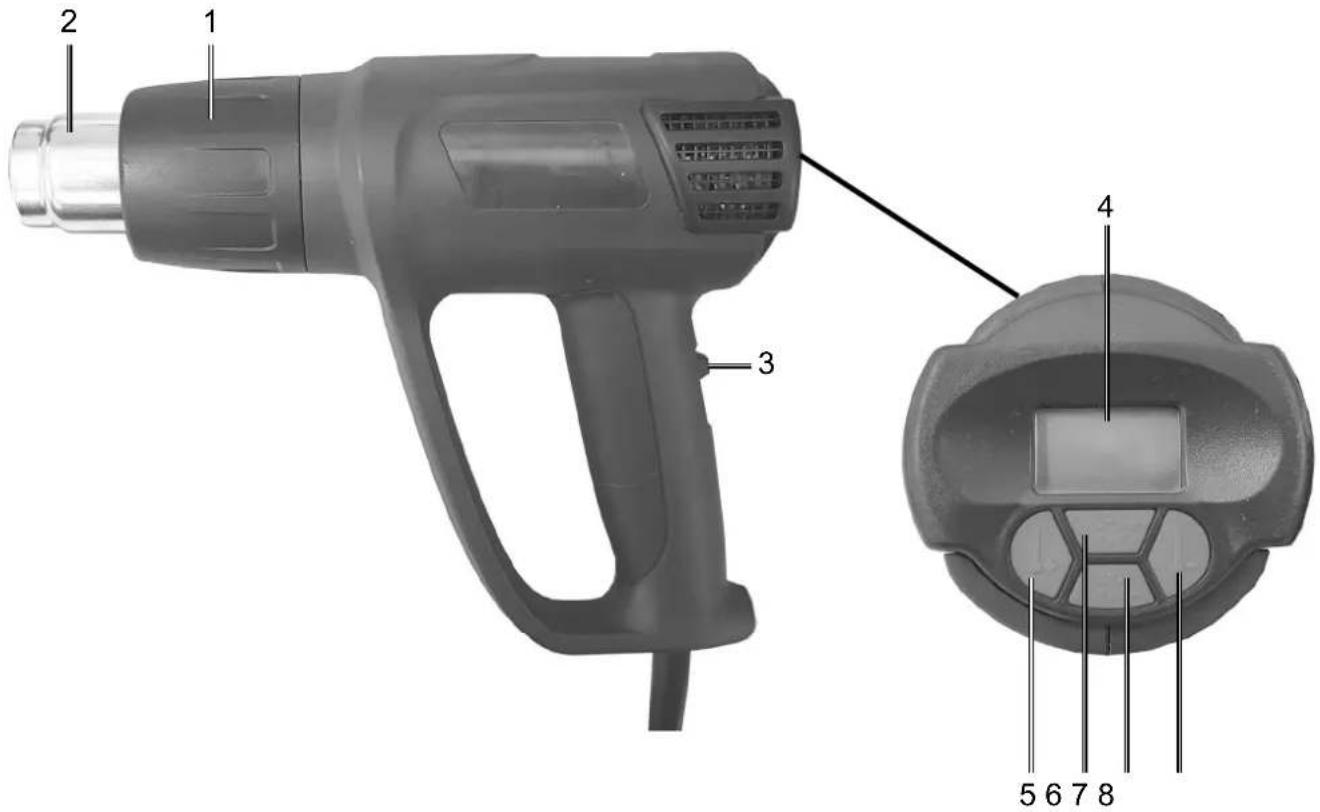
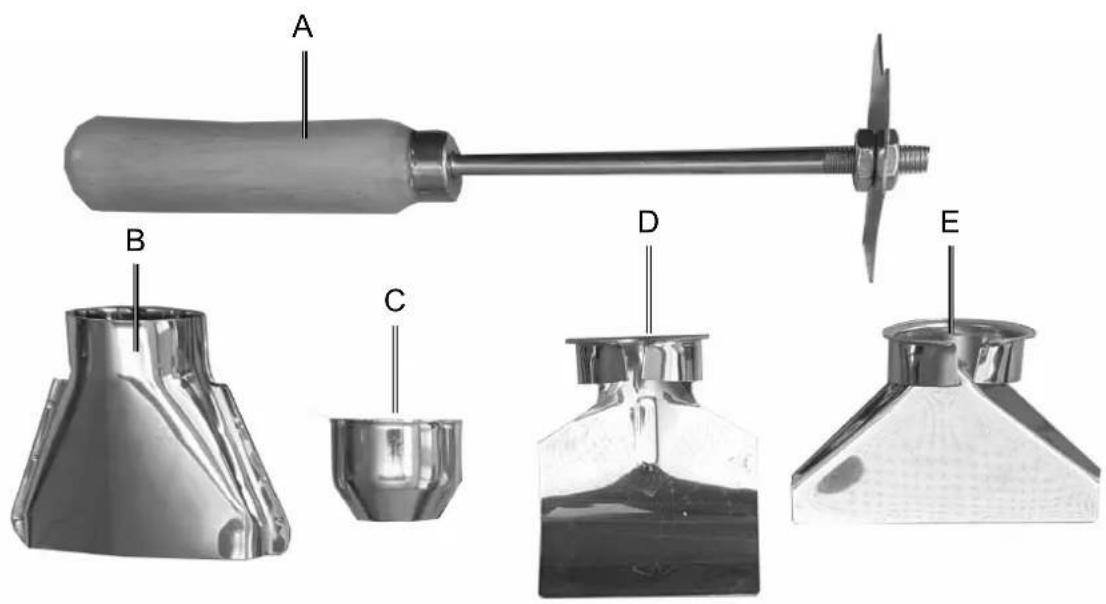
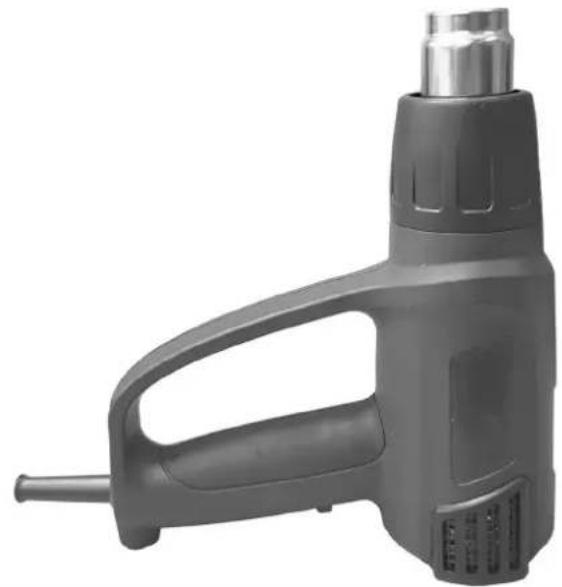
Device Description (Fig. 1)
1 Removable protective cover
2 Nozzle
3 Two-stage ON/OFF switch
4 Display
5 Button for increasing temperature
6 Button for increasing airflow
7 Button for decreasing airflow
8 Button for decreasing temperature
A Scraper
B Flat nozzle
C Reducer nozzle
D Reflector nozzle
E Spatula nozzle
Unpacking
- Open the packaging and remove the device carefully.
- Remove the packaging material as well as the packaging and transport bracing (if available).
- Check that the delivery is complete.
- Check the device and accessory parts for transport damage.
- If possible, store the packaging until the warranty period has expired.
ATTENTION
The device and packaging materials are not toys! Children must not be allowed to play with plastic bags, film and small parts! There is a risk of swallowing and suffocation!
Intended use
This appliance is intended for removing paint, for heating (e.g. heat-shrinkable tubing) and for forming and welding plastics. It can also be used for separating glued joints, thawing frozen pipes and lighting barbecues. Any other usage of or modification to the appliance is deemed to be improper and carries a significant risk of accidents. The manufacturer accepts no responsibility for damage attributable to misuse. The appliance is not meant for commercial use.
General Power Tool Safety Warnings ⚠ WARNING!
Read all safety warnings and all instructions. Failure to follow the warnings and instructions may result in electric shock, fire and/or serious injury.
Save all warnings and instructions for future reference.
The term „power tool“ in the warnings refers to your mains-operated (corded) power tool or battery operated (cordless) power tool.
- Do not expose power tools to rain or wet conditions. Water entering a power tool will increase the risk of electric shock.
- Do not abuse the cord. Never use the cord for
carrying, pulling or unplugging the power tool. Keep cord away from heat, oil, sharp edges or moving parts. Damaged or entangled cords increase the risk of electric shock.
- If operating a power tool in a damp location is unavoidable, use a residual current device (RCD) protected supply. Use of an RCD reduces the risk of electric shock.
- Do not use the power tool if the switch does not turn it on and off. Any power tool that cannot be controlled with the switch is dangerous and must be repaired.
General instructions for hot air blowers
- This appliance may be used by children aged 8 years and above and by persons with limited physical, sensory or mental capabilities or lack of experience and knowledge, provided that they are under supervision or have been told how to use the appliance safely and are aware of the potential risks. Children must not use the appliance as a plaything. Cleaning and user maintenance tasks may not be carried out by children unless they are supervised.
- To avoid potential risks, if the appliance power cord is damaged it must be replaced by the manufacturer, its customer service or by a qualified technician.
- Have your power tool serviced by a qualified repair person using only original replacement parts. This will ensure that the safety of the power tool is maintained.
- Plugs and power cords should only be replaced by the manufacturer of the power tool or the manufacturer's authorised customer service agent. This will ensure that the safety of the power tool is maintained.
Safety instructions for the hot air blower
- Careless use of the appliance can cause a fire.
• Take care when using the appliance in the vicinity of inflammable materials. - Do not aim at the same place for a prolonged period of time.
- Do not use in the presence of an explosive atmosphere.
- Heat can be transferred to combustible materials which are hidden from view.
- Do not leave the appliance unattended while it is in operation.
- Supervise children to ensure that they do not play with the hot air blower.
Additional safety instructions
CAUTION! Avoid the risk of injury or fire as well as health risks:
- In case of danger, remove the power plug from the socket immediately.
- CAUTION! RISK OF INJURY! Never use the appliance as a hair dryer.
- Never aim the hot air stream at people or animals.
-
Never look directly into the nozzle on the outlet.
-
CAUTION! RISK OF BURNS! Do not touch the hot nozzle. Wear protective gloves.
- CAUTION! RISK OF FIRE AND EXPLOSION! The appliance generates a lot of heat. Careless use can lead to an increased risk of fire and explosions.
- Do not work in the presence of flammable gases or materials, or in an explosive environment. When working on plastics, paints, lacquers, etc., hazardous gasses can be released. Always ensure sufficient ventilation.
- Always remove the plug from the power socket during work breaks, when adjusting the appliance (e.g. changing nozzles) and when it is no longer in use.
- Keep the nozzle at a distance from the workpiece or the area being processed. A build-up of hot air can result in damage to the appliance.
- Pay close attention to the area being worked and also the surrounding area. The heat can reach combustible parts outside your field of vision.
- The appliance must always be kept clean, dry and free from oil or grease.
- Never use the appliance for purposes other than the ones for which it was designed.
Technical Data
| Rated voltage: 220-240 V~ / 50/60 Hz |
| Nominal power: 2000 W |
| Air flow: 250 L/min / 500 L/min |
| Temperature (nozzle outlet): 50°C 50°C - 650°C |
| Protection class: II |
Operation
Caution!
Do not cover the ventilation slots.
⚠ Caution! Risk of burns!
Do not touch the hot nozzle
Switching the appliance on (fig. 1):
- Move the two-stage ON/OFF switch (3) to position "I" or "II".
Setting the temperature (fig. 1)
- Move the two-stage ON/OFF switch (3) to position "0".
The temperature can only be adjusted on the display (4) when the two-stage ON/OFF switch is in position "II".
Position "l" = cold air stage
Is suitable for cooling an overheated workpiece or for drying of paint.
Position "II" = hot air stage
The button for increasing temperature (5) and the button for decreasing temperature (8) allow you to precisely set the temperature.
Setting the airflow (fig. 1)
The airflow can be adjusted when the two-stage ON/OFF switch is in position "I" or "II".
The button for increasing airflow (6) and the button for decreasing airflow (8) allow you to precisely set the airflow.
Use as a free-standing appliance/cooling (Fig. 2)
Place the appliance upright on a level surface
– to have both hands free to work.
- or to allow the appliance to cool down.
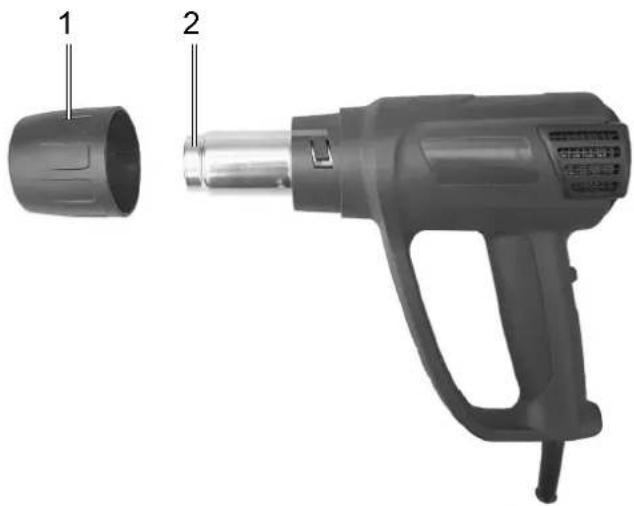
Removing the protective cover (fig. 3)
When working at particularly hard-to-reach locations, remove the removable protective cover (1) by turning it and pulling it off the nozzle (2).
Caution!
Increased risk of burns!
Using the accessory (fig. 1)
Scraper (A): Install the scraper blade between the two nuts.
The scraper (A) allows you to remove paint, for example
Using the nozzles:
Plug the desired nozzle adapter (B-E) onto the nozzle (2).
Flat nozzle (B) – separating glued joints, softening paints:
Avoid prolonged exposure to heat as burnt paint can be very difficult to remove. Many adhesives can be softened with heat. The glued joints can be separated and excess glue removed.
Reducer nozzle (C) – welding plastics:
Use the reducer nozzle with heat-shrinkable tubing and films.
The reflector nozzle (D) is designed for soldering and shaping tubes, for defrosting water pipes and for shrinking insulating hoses.
Spatula nozzle (E) – removing paints or varnish:
The spatula shape of the nozzle is designed for targeted hot air delivery. Use it together with a separate spatula to remove paint and coatings.
Additional usage examples for house, car and garden
Defrosting water pipes:
Note! Do not use on PVC piping.
Note! Water and gas pipes are often indistinguishable from the outside. If in doubt, always ask a professional.
Note! Copper pipes are soldered and may not be heated to above 200^ C.
Releasing screwed joint:
- Heat screwed joints carefully with hot air and the screws can then usually be removed easily.
Removing weeds:
- The hot air can be used to dry out weeds and seedlings.
Cleaning and Servicing
Pull the mains plug before any adjustments, maintenance or repair.
△ Have any work on the device that is not described in this instruction guide performed by a professional. Only use original parts. Allow the device to cool off before any maintenance or cleaning is undertaken. There is a risk of burning!
Always check the device before using it for obvious defects such as loose, worn or damaged parts, correct the positioning of screws or other parts. Exchange the damaged parts.
Cleaning
Do not use any cleaning agents or solvents. Chemical substances can etch the plastic parts of the device. Never clean the device under running water.
- Thoroughly clean the device after every use.
- Clean the ventilation openings and the surface of the device with a soft brush or cloth.
Service information
Please note that the following parts of this product are subject to normal or natural wear and that the following parts are therefore also required for use as consumables.
Wear parts*: Carbon brushes; nozzles, scraper
* Not necessarily included in the scope of delivery!
Storage
Store the device and its accessories in a dark, dry and frost-proof place that is inaccessible to children.
The optimum storage temperature is between 5 and 30°C.
Store the electrical tool in its original packaging.
Cover the electrical tool in order to protect it from dust and moisture.
Store the operating manual with the electrical tool.
Disposal and recycling
The equipment is supplied in packaging to prevent it from being damaged in transit. The raw materials in this packaging can be reused or recycled. Never place batteries in your household refuse, in fire or in water. Batteries should be collected, recycled or disposed of by environment-friendly means. The equipment and its accessories are made of various types of material, such as metal and plastic. Defective components must be disposed of as special waste. Ask your dealer or your local council.
Old devices must not be disposed of with household waste!
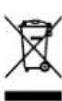
This symbol indicates that this product must not be disposed of together with domestic waste in compliance with the Directive (2012/19/EU) pertaining to waste electrical and electronic equipment (WEEE). This product must be disposed of at a designated collection point. This can occur, for example, by handing it in at an authorised collecting point for the recycling of waste electrical and electronic equipment. Improper handling of waste equipment may have negative consequences for the environment and human health due to potentially hazardous substances that are often contained in electrical and electronic equipment. By properly disposing of this product, you are also contributing to the effective use of natural resources. You can obtain information on collection points for waste equipment from your municipal administration, public waste disposal authority, an authorised body for the disposal of waste electrical and electronic equipment or your waste disposal company.
Günzburger Straße 69
D-89335 Ichenhausen
CHER CLIENT,
Position I = mode froid
Position II = mode air chaud
Günzburger Straße 69
D-89335 Ichenhausen
VÁŽENÝ ZÁKAZNÍKU,
Günzburger Straße 69
D-89335 Ichenhausen
VÁŽENÝ ZÁKAZNÍK,
Günzburger Straße 69
D-89335 Ichenhausen
TISZTELT VÁSÁRLÓ!
Günzburger Straße 69
D-89335 Ichenhausen
DROGI KLIENCIE,
This appliance is intended for removing paint, for heating (e.g. heat-shrinkable tubing) and for forming and welding plastics. It can also be used for separating glued joints, thawing frozen pipes and lighting barbecues. Any other usage of or modification to the appliance is deemed to be improper and carries a significant risk of accidents. The manufacturer accepts no responsibility for damage attributable to misuse. The appliance is not meant for commercial use.
CE - Declaration of Conformity
Noise: measured L_NA = xx dB(A) ; guaranteed L_WA = xx dB(A) P = 0.55 KW; L/∅ = cm
Notified Body:
Notified Body No.:
2006/42/EC
Annex IV
Notified Body:
Notified Body No.:
Certificate No.:
2010/26/EC
Emission. No:
Standard references:
EN 60335-2-45; EN 60335-1; EN 62233; EN 55014-1; EN 55014-2; EN 61000-3-2; EN 61000-3-3
This declaration of conformity is issued under the sole responsibility of the manufacturer.
Subject to change without notice
Documents registar: Georg Kohler
Günzburger Str. 69, D-89335 Ichenhausen