
43-ACCU PUSH - Lawn mower SABO - Free user manual and instructions
Find the device manual for free 43-ACCU PUSH SABO in PDF.


| Brand | SABO |
| Model | 43-ACCU PUSH |
| Product type | Cordless walk-behind lawn mower |
| Dimensions (L × W × H) | 1480 × 500 × 1000 mm |
| Weight (without battery) | 22.5 kg |
| Weight (with 8 Ah battery) | 24.4 kg |
| Power source | 40V lithium-ion battery (recommended: 4, 5 or 8 Ah) |
| Cutting width | 430 mm |
| Cutting heights | 22, 30, 35, 42, 50, 60, 80 mm (central adjustment) |
| Grass bag capacity | 55 litres |
| Motor | 40 V brushless DC motor, max 700 W |
| Rotation speed (default/automatic) | 2800 min⁻¹ / 3000 min⁻¹ |
| Cutting types | Collection, Mulching (optional kit) |
| Fill indicator | Turbo indicator (inflatable indicator) |
| Safety stop | Blade stops in less than 3 seconds (safety bar) |
| Maintenance | Clean after each use; lubricate bearings every 15-20 hours |
| Spare parts | Batteries, charger, blade, safety key, mulching kit, grease (see manual for part numbers) |
Frequently Asked Questions - 43-ACCU PUSH SABO
User questions about 43-ACCU PUSH SABO
0 question about this device. Answer the ones you know or ask your own.
Ask a new question about this device
Download the instructions for your Lawn mower in PDF format for free! Find your manual 43-ACCU PUSH - SABO and take your electronic device back in hand. On this page are published all the documents necessary for the use of your device. 43-ACCU PUSH by SABO.
USER MANUAL 43-ACCU PUSH SABO
natural_image
Line drawing of a lawn mower with 'SABO' branding, no text or symbols on the diagram itselfDE
RASENMÄHER
BETRIEBSANLEITUNG
FR
TONDEUSE À GAZON
LIVRET D'ENTRETIEN
EN
LAWN MOWER
OPERATOR'S MANUAL
NL
GRASMAAIER
BEDIENINGSHANDLEIDING
ES
CORTACÉSPED
MANUAL DEL OPERADOR
IT
TAGLIAERBA
MANUALE DELL'OPERATORE
| A1 | O4 | B1 |
 |  |  |
| R1 | C1 | I |
 |  |  |
| K2 | V1 | G2 |
 |  |  |
| N2 | W1 | U4 |
 |  |  |
A2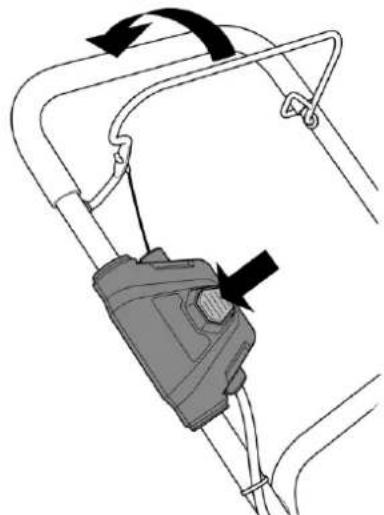 | F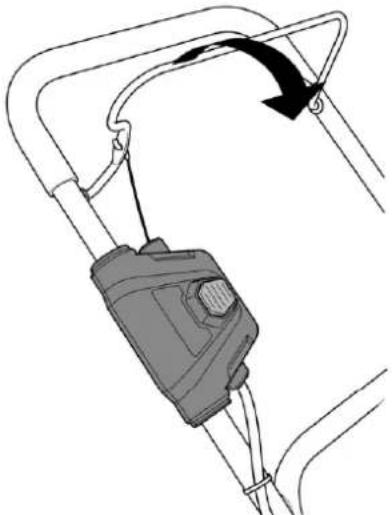 | J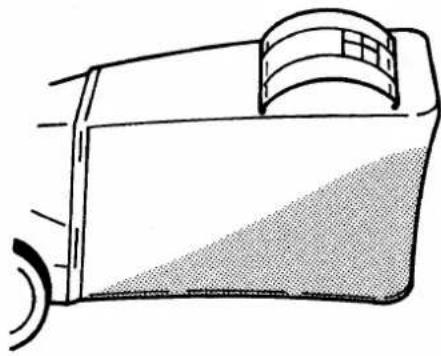 |
K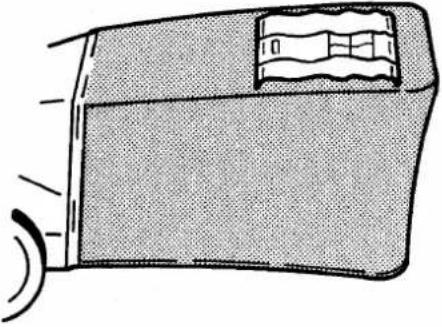 | L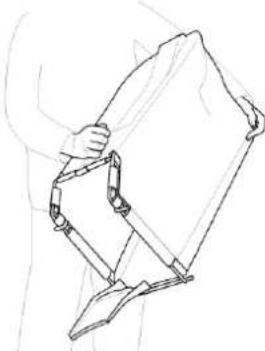 | M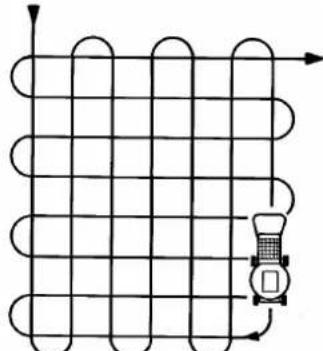 |
N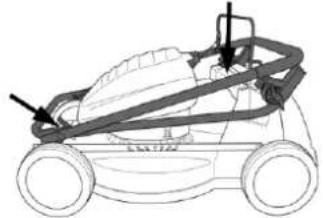 | N4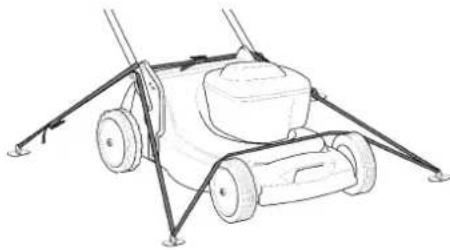 | O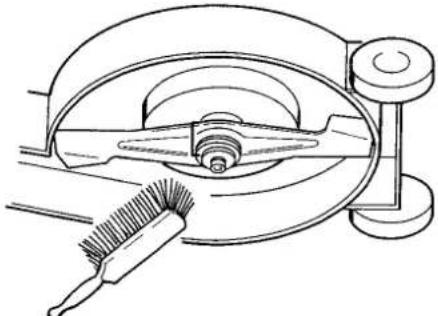 |
Q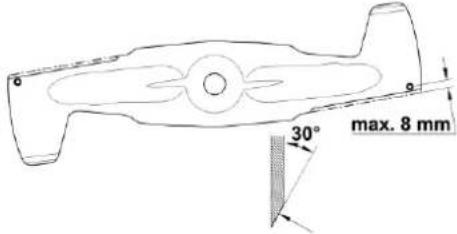 | S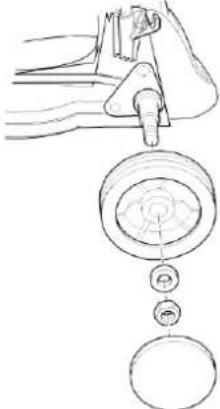 | U5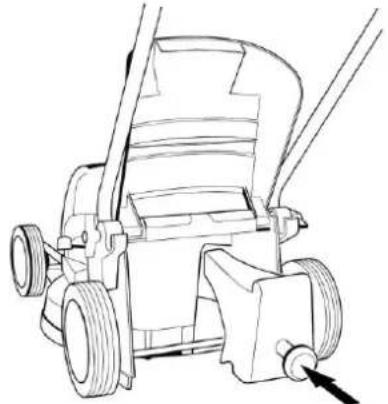 |
Deutsch
Translation of the original instructions
Nederlands
(illustration J + K)....10
Vider le sac de ramassage d'herbe (illustration F + L)....10
Nettoyage (illustration O)
IMPORTANT
General safety instructions for machines....2
Lawn mower safety warnings....4
1 Introduction....5
2 Explanation of the rating plate affixed to the machine ....5
3 Explanation of the pictograms....5
4 Explanation of the symbols....5
5 Intended use....6
6 General safety instructions for the walk-behind rotary lawn mower ......6
General safety instructions....6
Preparatory measures....6
Handling....6
Maintenance and storage....7
7 Description of the components ....8
8 Preparatory work....8
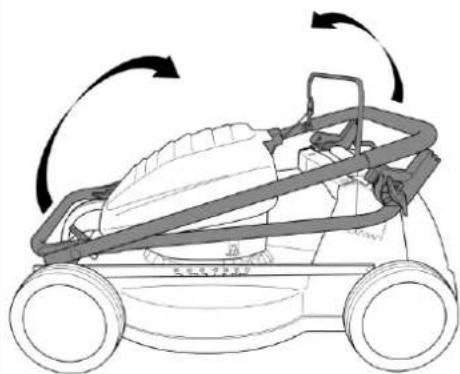
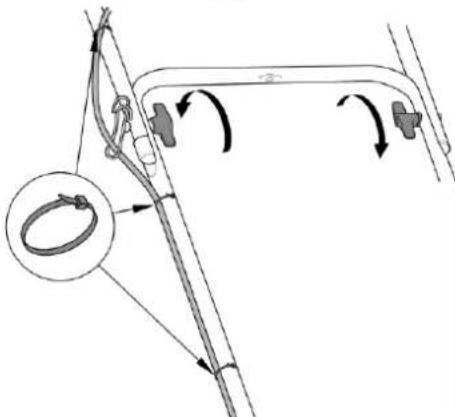
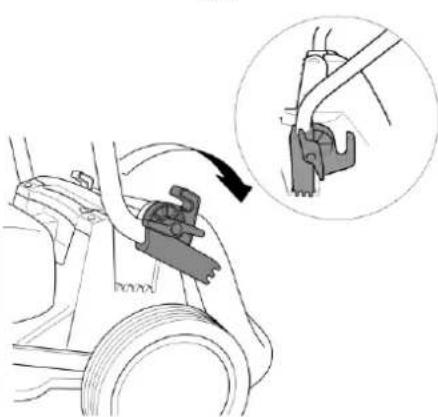
Raise the guide rail (Figure A1 + O4 + B1)....8
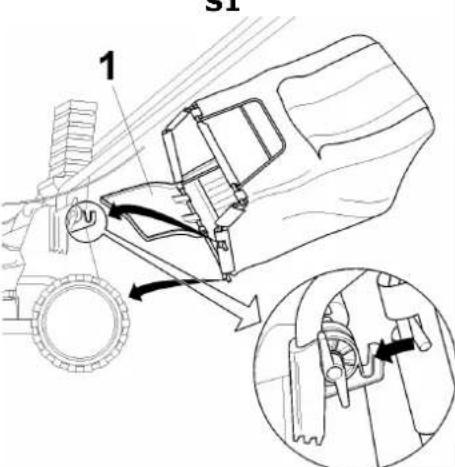
Attach the grass bag to the mower (Figure R1 + S1)....8
Set the cutting height (Figure I)....8
Inserting the charged battery (Figure K2 + V1 + G2)....8
Remove the battery (Figure F + K2 + N2)....8
9 Before initial commissioning....9
Charging the battery (Figure W1)....9
Battery status display (Figure U4) 9
10 Starting the engine (Figure G2+ A2)....9
11 Switching off the engine (Figure F + N2 + K2) 9
12 Stopping in an emergency 9
13 Grass catcher....9
Operation with grass bag 9
TurboSignal (grass bag fill indicator) (Figure J + K) 9
Emptying the grass catcher bag (Figure F + L)....9
Operation without grass bag 9
14 Mowing operation....9
Mowing on slopes....9
Checking operational safety....10
Time restrictions 10
Automatic speed increase 10
Tips for lawn care (Figure M) 10
Mulching....10
Conversion to mulching mower (Figure F + N2 + K2+ U5)....10
15 Maintenance intervals....10
16 Care and maintenance of the mower 10
Cleaning (Figure O)....10
Storage 10
Folding down the guide rail (Figure A1) 10
Transporting and securing the appliance (Figure N+ N4)....11
Maintenance of the blade bar....11
Regrinding and balancing the blade bar (Figure Q)....11
Replacing the blade bar 11
Maintenance of the wheels (Figure S) 11
Customer service....11
17 Causes of faults and their elimination....11
18 Technical data....12
Engine....12
Charger....12
Battery 12
Mower....12
Sound power level....12
Sound pressure level....12
Vibrations....12
19 Original spare parts and accessories 12
Declaration of Conformity ...... see at the back, after the last language
EN
General safety instructions for machines

WARNING Read all safety warnings, instructions, illustrations and specifications provided with this machine. Failure follows all instructions listed below may result in electric shock, fire and/or serious injury.
Save all warnings and instructions for future reference.
The term "machine" in the warnings refers to your mains-operated (corded) machine or battery-operated (cordless) machine.
1) Work area safety
a) Keep work area clean and well lit. Cluttered or dark areas invite accidents.
b) Do not operate machines in explosive atmospheres, such as in the presence of flammable liquids, gases or dust. Machines create sparks which may ignite the dust or fumes.
c) Keep children and bystanders away while operating a machine. Distractions can cause you to lose control.
2) Electrical safety
a) Machine plugs must match the outlet. Never modify the plug in any way. Do not use any adapter plugs with earthed (grounded) machines. Unmodified plugs and matching outlets will reduce risk of electric shock.
b) Avoid body contact with earthed or grounded surfaces, such as pipes, radiators, ranges and refrigerators. There is an increased risk of electric shock if your body is earthed or grounded.
c) Do not operate the machine in rain or wet conditions. This may increase the risk of electric shock.
d) Do not abuse the cord. Never use the cord for carrying, pulling or unplugging the machine. Keep cord away from heat, oil, sharp edges or moving parts. Damaged or entangled cords increase the risk of electric shock.
e) When operating a machine outdoors, use an extension cord suitable for outdoor use. Use of a cord suitable for outdoor use reduces the risk of electric shock.
f) If operating a machine in a damp location is unavoidable, use a residual current device (RCD) protected supply. Use of an RCD reduces the risk of electric shock.
3) Personal safety
a) Stay alert, watch what you are doing and use common sense when operating a machine. Do not use a machine while you are tired or under the influence of drugs, alcohol or medication. A moment of inattention while operating machines may result in serious personal injury.
b) Use personal protective equipment. Always wear eye protection. Protective equipment such as a dust mask, non-skid safety shoes, hard hat or hearing protection used for appropriate conditions will reduce personal injuries.
c) Prevent unintentional starting. Ensure the switch is in off-position before connecting to power source and/or battery pack, picking up or carrying the machine. Carrying machines with your finger on the switch or energising machines that have the switch on invite accidents.
d) Remove any adjusting key or wrench before turning the machine on. A wrench or a key left attached to a rotating part of the machine may result in personal injury.
e) Do not overreach. Keep proper footing and balance at all times. This enables better control the machine in unexpected situations.
f) Dress properly. Do not wear loose clothing or jewellery. Keep your hair and clothing away from moving parts. Loose clothes, jewellery or long hair can be caught in moving parts.
g) If devices are provided for the connection of dust extraction and collection facilities, ensure these are connected and properly used. Use of a dust collection can reduce dust-related hazards.
h) Do not let familiarity gained from frequent use of machines allow you to become complacent and ignore machine safety principles. A careless action can cause severe injury within a fraction of a second.
4) Machine use and care
a) Do not force the machine. Use the correct machine for your application. The correct machine will do the job better and safer at the rate for which it was designed.
b) Do not use the machine if the switch does not turn it on and off. Any machine that cannot be controlled with the switch is dangerous and must be repaired.
c) Disconnect the plug from the power source and/or remove the battery pack, if detachable, from the machine before making any adjustments, changing accessories, or storing machines. Such preventive safety measures reduce the risk of starting the machine accidentally.
d) Store idle machines out of the reach of children and do not allow persons unfamiliar with the machine or these instructions to operate the machine. Machines are dangerous in the hands of untrained users.
e) Maintain machines and accessories. Check for misalignment of binding of moving parts, breakage or parts and any other condition that may affect the machine's operation. If damaged, have the machine repaired before use. Many accidents are caused by poorly maintained machines.
f) Keep cutting tools sharp and clean. Properly maintained cutting tools with sharp cutting edges are less likely to bind and are easier to control.
EN
g) Use the machine, accessories and tool bits etc. in accordance with these instructions, taking into account the working conditions and the work to be performed. Use of the machine for operations different from those intended could result in a hazardous situation.
h) Keep handles and grasping surfaces dry, clean and free from oil and grease. Slippery handles and grasping surfaces do not allow for safe handling and control of the machine in unexpected situations.
5) Battery machine use and care
a) Recharge only with the charger specified by the manufacturer. A charger that is suitable for one type of battery pack may create a risk of fire when used with another battery pack.
b) Use machines only with specifically designated battery packs. Use of any other battery packs may create a risk of injury and fire.
c) When battery pack is not in use, keep it away from other metal objects, like paper clips, coins, keys, nails, screws or other small metal objects, that can make a connection from one terminal to another. Shorting the battery terminals together may cause burns or a fire.
d) Under abusive conditions, liquid may be ejected from the battery; avoid contact. If contact accidentally occurs, flush with water. If liquid contacts eyes, additionally seek medical help. Liquid ejected from the battery may cause irritation or burns.
e) Do not use a battery pack or machine that is damaged or modified. Damaged or modified batteries may exhibit unpredictable behaviour resulting in fire, explosion or risk of injury.
f) Do not expose a battery pack or machine to fire or excessive temperature. Exposure to fire or temperature above 130 °C (265 °F) may cause explosion.
g) Follow all charging instructions and do not charge the battery pack or machine outside the temperature range specified in the instructions. Charging improperly or at temperatures outside the specified range may damage the battery and increase the risk of fire.
6) Service
a) Have your machine serviced by a qualified repair person using only identical replacement parts. This will ensure that the safety of the machine is maintained.
b) Never service damaged battery packs. Service of battery packs should only be performed by the manufacturer or authorized service providers.
EN
Lawn mower safety warnings
a) Do not use the lawn mower in bad weather conditions, especially when there is a risk of lightning. This decreases the risk of being struck by lightning.
b) Thoroughly inspect the area for wildlife where the lawn mower is to be used. Wildlife may be injured by the lawn mower during operation.
c) Thoroughly inspect the area where the lawn mower is to be used and remove all stones, sticks, wires, bones and other foreign objects. Thrown objects can cause personal injury.
d) Before using the lawn mower, always visually inspect to see that the mower blade and mower deck are not worn or damaged. Worn or damaged parts increase the risk of injury.
e) Check the grass catcher frequently for wear or deterioration. A worn or damaged grass catcher may increase the risk of personal injury.
f) Keep guards in place. Guards must be in working order and be properly mounted. A guard that is loose, damaged or is not functioning correctly may result in personal injury.
g) Keep all cooling air inlets clear of debris. Blocked air inlets and debris may result in overheating or risk of fire.
h) While operating the lawn mower, always wear non-slip and protective footwear. Do not operate the lawn mower when barefoot or wearing open sandals. This reduces the chance of injury to the feet from contact with the rotating mower blade.
i) While operating the lawn mower, always wear long trousers. Exposed skin increases the likelihood of injury from thrown objects.
j) Do not operate the lawn mower in wet grass. Walk, never run. This reduces the risk of slipping and falling which may result in personal injury.
k) Do not operate the lawn mower on excessively steep slopes. This reduces the risk of loss of control, slipping and falling which may result in personal injury.
When working on slopes, always be sure of your footing, always work across the face of slopes, never up or down and exercise extreme caution when changing direction. This reduces the risk of loss of control, slipping and falling which may result in personal injury.
m) Use extreme caution when reversing or pulling the lawn mower towards you. Always be aware of your surroundings. This reduces the risk of tripping during operation.
n) Only hold the machine by the insulated gripping surfaces, as the mower blade may come into contact with covered live wires. Contact between the mower blade and a live wire can also energise metal parts of the appliance and lead to an electric shock.
o) Do not touch blades or other hazardous moving parts while they are still in motion. This reduces the risk of injury from moving parts.
p) When clearing jammed material or cleaning the lawn mower, make sure all power switches are off and the battery pack is disconnected. Unexpected operation of the lawn mower may result in serious personal injury.
1 INTRODUCTION
Dear gardening friend,
When the joy of gardening is added to the pride of a well-tended lawn, then you know what you have in your garden tools. You have made a good choice with your new lawn mower. It combines the performance of a great traditional brand with the innovations of modern high-tech. You will feel this when you work with it, and you will be delighted when you see the marvellous results.
But before you start with lawn care, here is some important information that you should definitely bear in mind.
Before using the mower for the first time, read these operating instructions carefully to familiarise yourself with the correct operation and maintenance of the machine and to avoid injury or damage to your lawn mower.
Please also read and observe the separate operating instructions for the charger and battery, in particular the safety instructions.
Use the lawn mower with care. The pictograms on the appliance indicate the most important precautionary measures.
The safety instructions in these operating instructions are labelled with symbols.
The meaning of the pictograms and symbols is explained in the following chapters.
The designations "left" and "right" always refer to the left or right side of the appliance when viewed in the direction of travel.
If you follow the technical instructions carefully, your lawn mower will work reliably. We would like to point out that damage to the mower caused by operating errors is not covered by the warranty / guarantee.
We hope you enjoy lawn and grounds maintenance.
2 EXPLANATION OF THE RATING PLATE AFFIXED TO THE MACHINE
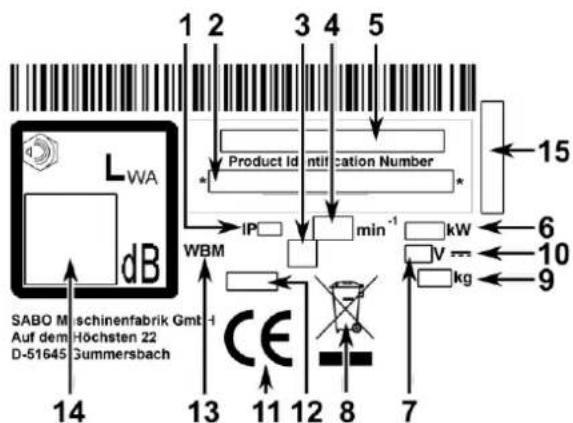
1 IP Protection class
2 Product identification number
3 Protection class symbol (depending on model)
4 Rated speed
5 Model
6 Performance
7 Rated voltage
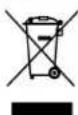
8 This appliance should not be disposed of with household waste. Dispose of the appliance, accessories and packaging for environmentally friendly recycling
9 Weight
10 DC voltage symbol
11 CE conformity mark
12 Year of construction
13 Walk-Behind Lawn Mower
14 Guaranteed sound power level
15 Serial number
These operating instructions apply to the following model:
43-ACCU PUSH (SA501325): Cutting width 430 mm
Please refer to the type plate for the correct model designation of your appliance and the serial number.
3 EXPLANATION OF THE PICTOGRAMS
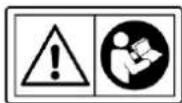
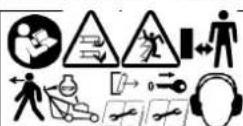
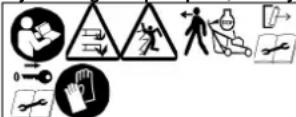
Read and observe the operating instructions and safety instructions before commissioning!
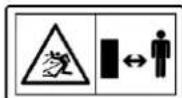
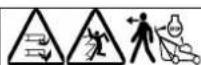
Danger from spinning parts when the engine is running - keep a safe distance / keep third parties away from the danger zone!
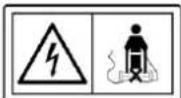

Keep live cables away from the cutting tool.
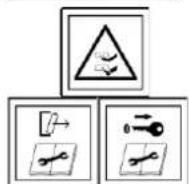
Beware of sharp blades! Avoid contact with the rotating blade bar! Ensure that hands and feet do not get under the housing! - Switch off the motor and remove the battery and safety key before cleaning and maintenance work.
Noise hazard - Hearing protection is recommended for prolonged use.
Batteries and chargers should not be disposed of with household waste. Return the battery or charger to your dealer or take it to a public collection point.
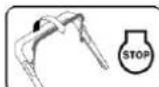
Motor STOP
This appliance should not be disposed of with household waste. Dispose of the appliance, accessories and packaging for environmentally friendly recycling.
4 EXPLANATION OF THE SYMBOLS
 | WARNINGCarefully read and observe the operating instructions and general safety regulations. Keep the operating instructions for future reference.Intended use also includes compliance with the operating,maintenance and servicing conditions specified by the manufacturer. |
 | WARNINGKeep your distance / keep third parties out of the danger zone!Contact with the rotating blade bar can lead to serious injuries.Thrown objects can cause serious injuries.Never mow while people, especially children, or animals are nearby. |
 | WARNINGElectric shock can cause serious injury.The electrical equipment must not be modified.Read and observe the safety instructions for handling the battery pack(s) and the charger in the respective separate operating instructions!Do not spray the appliance with water. The electrical system could be damaged. |
 | WARNINGElectric shock can cause serious injury.Never drive over live cables with the cutting tool switched on.Check the area for live cables before and during mowing and remove them if possible.If a live cable is damaged, switch off the appliance and disconnect the cable from the mains supply. |
 | WARNINGBeware of sharp blades! Contact with the rotating blade bar can lead to serious foot injuries.Only start the engine while standing behind the mower.Make sure that the feet do not get under the housing. |
 | WARNINGBeware of sharp blades! Contact with the rotating blade bar can lead to serious hand and foot injuries.When the motor/blade is running, maintain the safety distance given by the length of the guide rail.Ensure that hands and feet do not get under the housing. |
 | WARNINGThrown objects can cause serious injuries.Remove all stones, sticks, wires, toys and other foreign objects from the lawn before mowing, especially in areas covered with leaves.Never use the appliance with damaged or missing protective devices.Missing or damaged safety and protective equipment jeopardises your safety and the safety of others.Check the fastening of the blade screw before first use, then check the blade bar for tight fit, wear and damage before each mowing session.Have a worn or damaged blade replaced by an authorised specialist workshop. Have the blade bolt tightened by an authorised specialist workshop. |
EN
| WARNINGIf the battery is not removed when working on the appliance, the engine could start and cause serious injury.Contact with the rotating blade bar can lead to serious hand and foot injuries. Thrown objects can cause serious injuries.Always be aware that the blade bar will continue to run for a short time after the blade stop safety switch lever is released.Switch off the motor, wait until the cutting tool has come to a standstill and remove the battery and safety key:– before maintenance and repair work;– if the mower needs to be lifted or tilted, e.g. for transport;– when driving outside the lawn on paths or roads;– when the machine is transported to and from the mowing area;– before removing or attaching the grass bag;– before the mulch plug is inserted into or removed from the discharge chute;– if the machine is left unattended;Switch off the motor and wait until the cutting tool has come to standstill before removing or inserting the battery from the battery compartment on the motor!Refer to the operating instructions for appropriate cleaning or maintenance instructions.Insufficient maintenance of your appliance leads to safety-relevant defects. | |
| WARNINGContact with the rotating blade bar can lead to serious hand and foot injuries. Thrown objects can cause serious injuries.Switch off the motor and wait until the cutting tool has come to standstill:– before the cutting height is set;– before the grass catcher bag is removed! | |
| CAUTIONContact with the sharp edges of the blade bar and other sharp edges of the appliance can lead to injuries.Always wear protective gloves when carrying out maintenance and cleaning work. | |
| CAUTIONNoise hazard - Hearing protection is recommended for prolonged use. |
5 INTENDED USE
- The appliance is intended exclusively for mowing grass and lawns as part of garden and landscape maintenance ("Intended use"). Any other use is considered improper use; the manufacturer is not liable for any resulting damage; the user alone bears the risk. Intended use also includes compliance with the operating, maintenance and servicing conditions prescribed by the manufacturer.
• Special care is required when using in public areas, parks, sports facilities, on roads and in agricultural and forestry operations. - The mower must not be used in particular for trimming bushes, hedges and shrubs, for cutting climbing plants or vegetation on roofs and in balcony boxes, for vacuuming and/or blowing away on pavements.
- The use of any accessories and attachments not approved by the manufacturer is not permitted. The use of such accessories and attachments invalidates CE conformity and the warranty. Unauthorised modifications to this lawn mower exclude the manufacturer's liability for any resulting damage.
6 GENERAL SAFETY INSTRUCTIONS FOR THE WALK-BEHIND ROTARY LAWN MOWER
General safety instructions

For your own protection and to ensure proper function, read the operating instructions carefully. Familiarise yourself with the controls and the correct use of the machine. Keep the operating instructions for future reference.
• Remember that the machine operator or user is responsible for accidents involving other persons or their property.
• These operating instructions are part of the machine and must be handed over to the purchaser of the appliance in the event of resale.
- Never allow children and persons under the age of 16 or other persons who are not familiar with the operating instructions to use the machine. Local regulations may specify the minimum age of the user.
- Explain to anyone who is to work with the appliance the potential hazards and how to avoid accidents. This appliance may only be used, maintained and repaired by persons who are familiar with it and have been informed of the dangers. The relevant accident prevention regulations and other generally recognised safety and occupational health regulations must be observed.
- This appliance is not intended for use by persons with reduced physical, sensory or mental capabilities, or lack of experience and/or knowledge, unless they have been given supervision or instruction concerning use of the appliance by a person responsible for their safety. This supervisor must decide in advance
whether the person with reduced physical, sensory or mental capabilities is suitable for this activity.

Never mow while people, especially children, or animals are nearby.
- Store your machine safely! Always store unused devices with the safety key removed and without the batteries inserted in a dry, closed room and out of reach of children.
- Safety and protective devices on the machine must not be manipulated or deactivated!
- The cable routing must not be manipulated, e.g. by removing cable clamps or attaching additional cable ties! The cables must lie against the outside of the upright in such a way that they are neither crushed nor overstretched when the upright is folded down. A damaged cable can lead to a technical defect in the appliance.
Preparatory measures
- Always wear sturdy, closed, non-slip footwear or safety shoes and long trousers when mowing. Avoid wearing loose clothing or clothing with hanging strings or belts. Do not mow barefoot or in sandals. Wear safety goggles to protect your eyes.
- Loud noises can lead to hearing damage. We recommend wearing hearing protection.

Before and during mowing, fully inspect the area on which the appliance is being used and remove all stones, sticks, wires, toys and other foreign objects that could be caught and thrown away.

Check the area for live cables before and during mowing and remove them if possible.
Never drive over live cables with the cutting tool switched on. Danger: electric shock!
If a live cable is damaged, switch off the appliance and disconnect the cable from the mains supply

If you also use a robotic lawnmower for lawn care, the following safety instructions must be observed with regard to the working area of the robotic lawnmower:
- Before working on these areas (mowing, scarifying, etc.), always check the area of the boundary wire.
- If the cables are laid in the ground, they must be checked, no cables must be visible, special care must be taken with the charging station.
- If the boundary wires are laid above ground, they should be stretched directly over the ground and not lie slack in the grass. The cables must be adequately secured with boundary pegs, see operating instructions.
- the perimeter nails must not protrude, otherwise the nails must be pressed down.
- Remove any cable remnants lying around before mowing. In the conditions described above, there is a risk of the cable being pulled in and wound up by the working tool, which can lead to serious injuries.
- Hanging branches and similar obstacles can injure the user or hinder mowing. Cables can get caught and be damaged or torn off. A damaged cable can lead to a technical defect in the appliance. Before and during mowing, pay attention to possible obstacles such as hanging branches and cut them back or remove them.

The electrical equipment must not be modified. Read and observe the safety instructions for handling the battery and charger in the respective separate operating instructions!
- Before use, always visually check whether the cutting tool, fastening screws and the entire cutting unit are worn or damaged. To avoid an imbalance, worn or damaged blades and fastening screws must be replaced by an authorised specialist workshop.
- The condition of the pictograms must be checked each time they are used. Worn or damaged pictograms must be replaced.
Handling
- The batteries may only be charged with an authorised charger. You could endanger yourself or damage your device.
Only use the lawn mower with the approved batteries.
Incorrect use of batteries and charger can cause electric shock or fire.
Permitted chargers and batteries: see chapter "Original spare parts and accessories".
• The appliance must not be operated in potentially explosive atmospheres.
• Do not mow in bad weather when there is a risk of lightning strikes.
- Do not expose the appliance to rain or moisture.
- Do not wear headphones to listen to the radio or music. Safety during maintenance and operation of the machine requires full attention.
- Only mow in daylight or in good lighting conditions. Operate the machine at walking pace.
- Adapt the driving speed to the person and terrain. Slowly increase the speed until you have reached your suitable driving speed.
-
Be particularly careful when blind corners, bushes, trees or other obstacles may impair visibility.
-
Do not drive too close to holes, ditches and embankments. The machine can suddenly roll over if a wheel drives over the edge of a ditch or an embankment or if an edge suddenly gives way.
• Take care when mowing under play equipment (e.g. swings). The appliance could become unsafe. There is a risk of injury.
• Do not operate the machine if you are ill, tired or under the influence of alcohol, medication or drugs.
• If possible, avoid using the appliance on wet grass. There is a risk of slipping.
• Always ensure a good, secure footing on slopes. Mow across the slope, never up or down. Be particularly careful when changing direction on a slope. - Do not mow on excessively steep slopes! Mowing on slopes always harbours risks. Always ensure that you are standing securely. Walk-Behind Lawn Mowers should never be used on slopes steeper than 26% (15° incline). There is a risk of losing stability.
- Be particularly careful when turning the machine or pulling the appliance towards you.
- There is a risk of tripping when reversing with the machine. Avoid walking backwards. Avoid abnormal body posture. Ensure that you are standing securely and keep your balance at all times.
- Maintain the safety distance given by the length of the guide rail.
- To prevent the appliance from slipping when carrying it, always hold the appliance by the gripping devices provided for this purpose (carrying handle, housing, spar ends or crossbar of the lower part of the guide spar). Do not hold the ejection flap!
- Observe the weight of the machine before lifting or carrying it (see chapter "Technical data"). Lifting heavy weights can lead to health problems.
- Never lift or carry a machine with the motor running.
- Never use the machine with damaged or missing safety and protective devices. Missing or damaged safety and protective equipment jeopardises your safety and the safety of others.
Safety devices (see chapter "Description of the components"):

– Safety switch lever Blade stop (1)
The lawn mower is equipped with a blade stop device.
During operation and in the event of danger, the motor is switched off by releasing the blade stop safety switch lever.
The blade must come to a standstill within 3 seconds.
After being released, the safety switch lever must always return to the position shown in the image "Description of the components". If this is not the case, an immediate inspection by an authorised specialist workshop is required.
Risk of injury!
If the run-on time of the blade is longer, stop using the appliance and take it to an authorised specialist workshop.
Measuring the run-on time
After starting the engine, the blade rotates and a wind noise is audible.
The run-on time corresponds to the duration of the wind noise after the motor is switched off; it can be measured with a stopwatch. The function of the safety switch lever must not be overridden under any circumstances.
Ensure that the safety switch lever is functioning properly. If the safety switch lever is not functioning properly, have it repaired by an authorised specialist workshop.
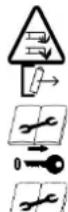
— Battery (5), safety key (6)
These safety devices protect against injuries caused by unintentional starting of the engine.
To prevent unauthorised operation of the machine, the battery and safety key must be removed during all work on the machine, before maintenance and repair work, when the machine is left and during storage.
Protective devices (see chapter "Description of the components"):

— Housing (10), grass bag (13), discharge flap (3)
These guards protect against injuries caused by objects being thrown upwards.
The appliance must not be operated with a damaged housing or without a properly secured grass bag or discharge flap attached to the housing.

– Housing (10)
This protective device protects against injuries caused by contact with the rotating blade bar.
The appliance must not be operated with a damaged housing. Ensure that hands and feet do not get under the housing.

— Insulation elements (insulation shells (11))
These protective devices provide additional protection against injury from electric shock.
The appliance must not be operated with damaged insulating elements. Ensure that your hands are only in the designated areas during use (upper part of the handlebar).
• The protective devices must not be modified.
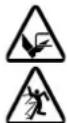
During commissioning, ensure that the feet are at a safe distance from the cutting tool.
When starting the engine, the machine must not be tilted upwards but, if necessary, must be tilted by pressing down the guide rail so that the cutting tool points in the direction away from the user, but only as far as is absolutely necessary. As long as the appliance is not resting with all 4 wheels on the ground, both hands must be on the upper part of the handlebar.
Do not start the engine when people or animals are standing in front of the mower.

Never place your hands or feet near or under rotating parts. Ensure that hands and feet do not get under the housing.
Switch off the motor by releasing the blade stop safety switch lever and make sure that all moving parts are completely stationary and that the battery and safety key have been removed:
- if you leave the machine unattended;
— before checking, cleaning or working on the machine; - if you need to lift or tilt the machine, e.g. for transport;
— when transporting the machine to and from the mowing area;
— before removing or attaching the grass bag;
— before inserting the mulch plug into the discharge chute or removing it from the discharge chute;
— when driving outside the lawn;
— before loosening blockages or clearing blockages in the discharge duct;
— if a foreign body has been hit; - when a fault occurs;
- if the machine starts to vibrate abnormally.
- If a foreign object has been hit and if the machine is blocked, e.. by hitting an obstacle, an authorised specialist workshop must check whether parts of the appliance have been damaged or deformed. Always have any necessary repairs carried out by an authorised specialist workshop. Do not restart or operate the machine before doing so.
- If the machine starts to vibrate abnormally or make unusual noises, it must be checked immediately by an authorised specialist workshop. High vibrations on your hands can cause damage to your health. If strong vibrations occur, contact an authorised specialist workshop immediately.

Switch off the motor by releasing the blade stop handle and make sure that all moving parts have come to a complete standstill,
- before removing or inserting the battery from the battery compartment on the motor;
- if you want to adjust the cutting height;
– before removing the grass bag.
- WARNING
The noise level and vibration value specified in the operating instructions have been determined in accordance with the standard and may differ from these values when the machine is actually used. This depends on the way in which the machine is used.
It is necessary to define safety measures to protect the operator based on an estimation of the vibration load during the actual conditions of use. All parts of the operating cycle must be taken into account, for example times when the machine is switched off or switched on but not under load.
The use of unbalanced cutting tools, excessive travelling speed and inadequate maintenance have a significant impact on noise emissions and vibrations. Preventive measures must therefore be taken to avoid possible damage caused by high noise levels or vibration stresses.
Ensure that the machine is well maintained, wear hearing protection and take breaks during work.
Observe the maintenance work listed in these operating instructions and have the appliance checked and serviced regularly by an authorised specialist workshop.
Maintenance and storage
• Insufficient maintenance of your appliance leads to safety-relevant defects.
- Ensure that all screw connections are firmly tightened and that the appliance is in a safe working condition.

The discharge flap may only be opened and the grass bag removed or the mulch plug removed when the engine is switched off and the blade bar is stationary.
Check the grass catcher for wear or loss of functionality before each mowing.
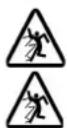
Check the condition and tight fit of the blade before every mowing session. The blade fastening screw must always be tightened by an authorised specialist workshop. If the blade screw is tightened too tightly or too loosely, the blade mounting and blade bar can be damaged or come loose, which can lead to serious injury. A worn or damaged blade must always be replaced.
Replacement, regrinding and balancing of the blade must be carried out by an authorised specialist workshop.
EN
An incorrectly assembled blade attachment can cause the blade bar to come loose, which can lead to serious injuries.
An improperly sharpened and unbalanced blade can cause strong vibrations and damage the lawn mower.
- Replace worn or damaged parts for safety reasons.
- Never clean the appliance under running water or with high-pressure cleaners. The electrical system could be damaged.
- Empty the grass catcher bag before storing.

Always wear protective gloves when carrying out maintenance and cleaning work.
- Suitable protective equipment (e.g. suitable protective gloves) must be worn when handling operating materials such as lubricants.
The data sheets for the operating materials must be observed.
Maintenance and cleaning work should only be carried out on level surfaces with the motor switched off and the battery and safety key removed.
Regular maintenance is essential to ensure safety and maintain performance.
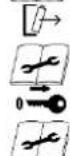
Always store the appliance in a clean and well-maintained condition in a closed, dry room out of the reach of children.
Always remove the battery and safety key before storing the machine to prevent unauthorised operation of the machine.
For guarantee/warranty and safety reasons, only original spare parts may be used.
Non-equivalent spare parts can damage the machine and jeopardise your safety.
7 DESCRIPTION OF THE COMPONENTS
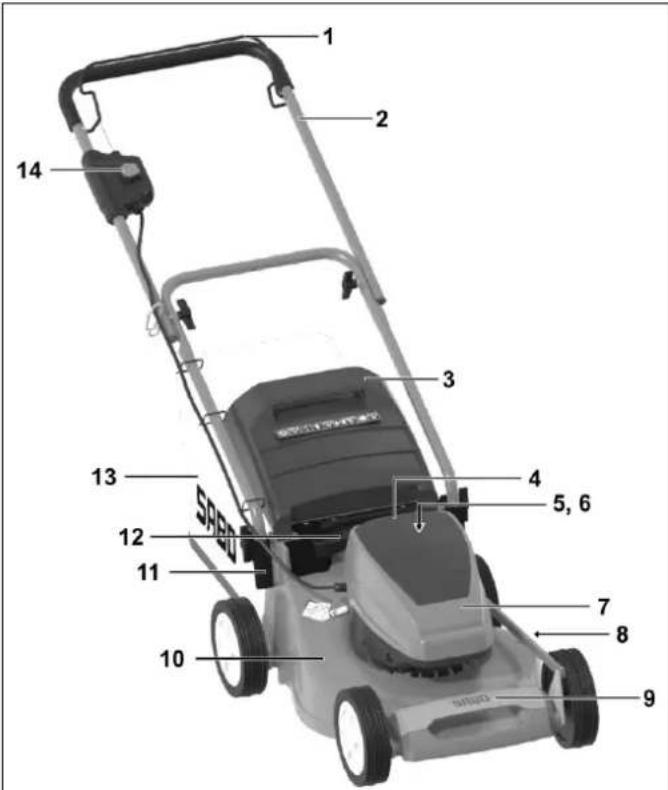
1 Safety switch lever Blade stop
2 Guide rail
3 Ejection flap
4 Battery cover
5 Battery (under the battery cover)
6 Security key (under the battery cover)
7 Motor cover
8 Cutting height display
9 Carrying handle at the front
10 Housing
11 Insulation shell (on both sides)
12 Rear carrying handle with push button for cutting height adjustment
13 Grass bag
14 Engine start release button (red)
8 PREPARATORY WORK
The following individual parts are included in the packaging for assembling the mower:
• Mower with pre-mounted guide bar
- Catch cloth, catch bag frame
- Security key
• Tool bag with the following contents:
Operating instructions with declaration of conformity
— Warranty conditions (depending on model)
- Various mounting parts.
If, contrary to expectations, a part is missing, please contact your specialist dealer.
Raise the guide rail (Figure A1 + O4 + B1)
IMPORTANT
Ensure that the cables are not pinched, crushed, twisted or overstretched when folding and unfolding the guide rails! Always route the cables on the outside of the rail connection. A damaged cable can lead to a technical defect in the appliance.
CAUTION
When operating the handlebar height adjustment, loosening the wing nuts B1 for fastening the lower part of the handlebar to the housing (only loosen them enough to allow the handlebar to move freely) and disengaging the toothed plastic adjustments from the recess in the housing can cause the handlebar to swing over unintentionally. This can also result in crushing points between the lower part of the rail and the housing. There is a risk of injury!
— Pull the Z-shaped folded guide rail apart upwards A1.
- If the upper and lower guide rail sections are in the same plane, tighten the wing nuts firmly by hand 04.
- Swivel the lower part of the guide bar backwards until the toothed plastic adjustments at the lower end engage in the similarly toothed recess on the mower housing.
Three different rail heights can be set B1.
— Tighten the wing nuts on both sides firmly by hand B1.
- Insert the cable into the cable guide and fasten it to the upper and lower sections of the guide rail using the cable straps from the tool bag O4. Lay the cable on the outside of the handlebar so that the ejection flap can move freely when lifting and closing.
When folding down the top rail, make sure that the cable can move freely.
Attach the grass bag to the mower (Figure R1 + S1)
- Insert the catching bag frame into the catching cloth with the bracket first. Align the upper seams of the catch cloth with the bracket.
— Press the retaining profiles onto the front frame of the collection bag frame R1.
— Open the discharge flap of the mower upwards. - Lift the grass catcher bag by the carrying handle, insert the ramp (1) R1 at the catcher bag opening into the discharge opening and hook the grass catcher bag onto the top of the mower housing using its two side hooks S1.
— Fold the discharge flap onto the grass bag.
Set the cutting height (Figure I)
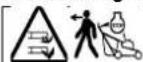
Safety note!
Explanation of symbols see table on
page 5
IMPORTANT
Mowing at the lowest cutting height should only be carried out on level and flat lawns!
Please note that the lower cutting height settings should only be used in optimum conditions. If you set the cutting height too low, the sward may be damaged and possibly even destroyed.
In addition to the cutting height, the travelling speed also influences the cutting pattern and catching result. Adjust the cutting height and forward speed to the height of the grass to be cut.
The cutting height is set behind the motor.
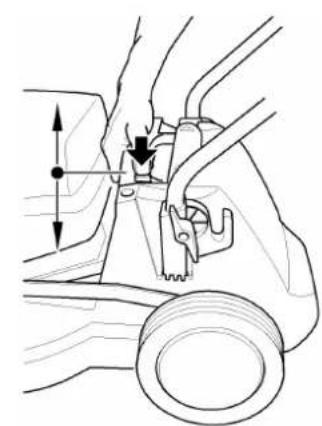
- Press the grey push button with your thumb and use the handle to raise or lower the mower to the desired position.
— After releasing the push button, the lever engages at the desired cutting height. - The marking on the left-hand side of the housing indicates the set cutting height.
Inserting the charged battery (Figure K2 + V1 + G2)
The handling of the charger and battery is described in the respective separate operating instructions. Read and observe the safety instructions in particular! Fully charge the battery before first use!
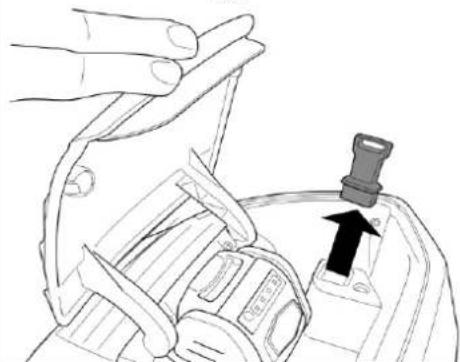
— Open the battery cover and hold it firmly.
- Remove safety key K2.
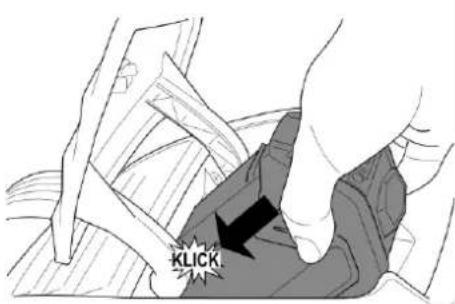
- Push the battery into the battery compartment until the latch engages V1. Ensure that the latch on the battery moves freely and engages properly.
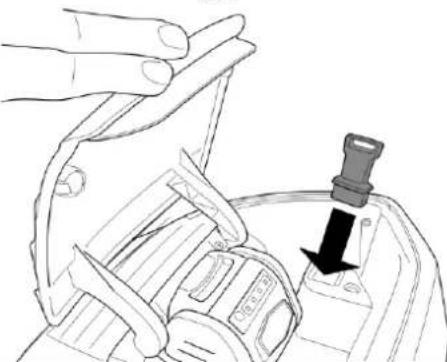
— Insert the safety key if the machine is to be used immediately G2.
- Close the battery cover. Ensure that the cover closes automatically. Dirt and grass residue can prevent this and must therefore be removed.
Remove the battery (Figure F + K2 + N2)
-
Switch off motor F.
— Open the battery cover and hold it firmly. -
Remove safety key K2.
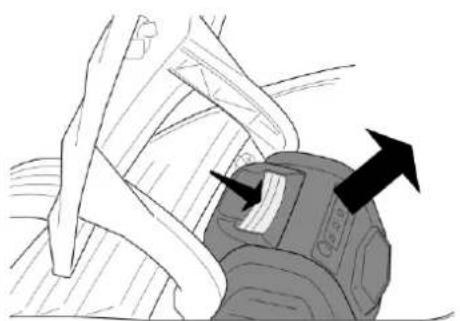
- Press and hold the release button on the top of the battery and remove the battery from the battery compartment N2.
To make it easier to remove the battery, press it lightly into the battery compartment before pulling it out. Meanwhile, press and hold the release button. The built-in springs make it easier to remove the battery.
— Close the battery cover. Ensure that the cover closes automatically. Dirt and grass residue can prevent this and must therefore be removed.
9 BEFORE INITIAL COMMISSIONING

Safety note!
Explanation of symbols see table on page 5
Check that all screw connections are tight. Tighten the screws if necessary! In particular, the fastening of the blade bar must be checked (see chapter "Maintenance of the blade bar").
The blade fastening screw must always be tightened by an authorised specialist workshop. If the blade screw is tightened too tightly or too loosely, the blade attachment and blade bar may be damaged or come loose, which can lead to serious injury.
The lawn mower is equipped with a blade stop device.
Before starting up for the first time, check that the blade stop safety switch lever is working properly. When the safety switch lever is released, the blade bar must come to a standstill within 3 seconds.
After being released, the safety switch lever must always spring back into the position shown in the "Description of components" illustration.
If this is not the case, an immediate inspection by an authorised specialist workshop is required.
Risk of injury!
If the run-on time of the blade is longer, stop using the appliance and take it to an authorised specialist workshop.
Measuring the run-on time
After starting the engine, the blade rotates and a wind noise is audible.
The run-on time corresponds to the duration of the wind noise after the engine has been switched off; it can be measured with a stopwatch.
Safety and protective devices on the machine must not be manipulated or deactivated! Ensure that all protective devices are properly fitted and not damaged!
Charging the battery (Figure W1)
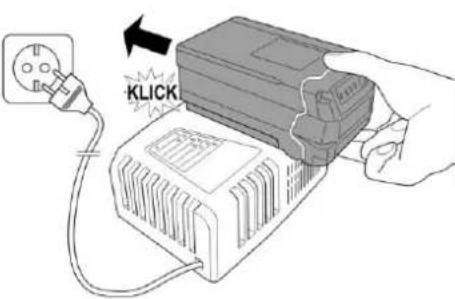
The handling of the charger and battery is described in the respective separate operating instructions. Read and observe the safety instructions in particular! Fully charge the battery before first use!

All safety instructions on handling, storage, storage, transport and disposal of the lithium-ion batteries as well as first aid measures and firefighting measures can be found in the "Product safety data sheet" at www.sabo-online.com in the operating instructions.
Information telephone number for lithium-ion batteries
+49 (0) 2261 704-0
Battery status display (Figure U4)
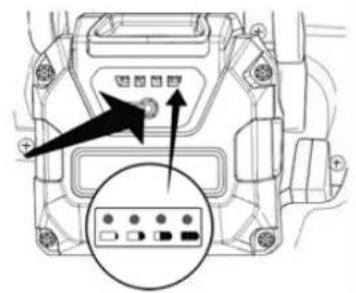
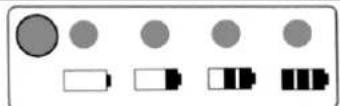
To check the available charge, press the battery status indicator button on the battery. The indicator LEDs light up according to the charge status of the battery:
| LEDs | Explanation |
| 4 green LEDs light up | Battery is more than 80 % charged |
| 3 green LEDs light up | Battery is charged between 60 and 80 % |
| 2 green LEDs light up | Battery is charged between 35 and 60 % |
| 1 green LED lights up | Battery is charged between 15 and 35 % |
| 1 green LED flashes | Battery is charged between 5 % and 15 % and needs to be recharged soon |
| LEDs remain off | Battery is charged below 5 % must be charged immediately to avoid irreparable damage (deep discharge) |
10 STARTING THE ENGINE (FIGURE G2+ A2)
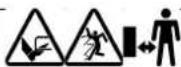
Safety note!
Explanation of symbols see table on
page 5
Only start the engine while standing behind the mower.
Always place the mower on a level surface that is not overgrown with tall grass (grass that is too tall will prevent the blade bar from starting and make the starting process more difficult). When starting the engine, the machine must not be tilted upwards but, if necessary, must be tilted by pressing down the guide bar so that the cutting tool points in the direction away from the user, but only as far as is absolutely necessary. As long as the appliance is not standing on all 4 wheels, both hands must be on the upper part of the handlebar.
— Open the battery cover and hold it firmly.
- Insert the charged battery into the battery compartment (see chapter "Inserting the charged battery (Figure K2 + V1 + G2)")
- Insert the security key G2.
- Close the battery cover. Ensure that the cover closes automatically. Dirt and grass residue can prevent this and must therefore be removed.
— To switch on the engine, first press and hold the engine start release button A2 - Use your other hand to pull the shift lever to the upper part of the handlebar. During operation, the shift lever must be held in this position.
- The engine start release button can then be released.
11 SWITCHING OFF THE ENGINE (FIGURE F + N2 + K2)
- Release the safety switch lever F.
— Wait for the blade bar to come to a standstill.
— Remove the battery from the battery compartment N2 - Remove safety key K2.
12 STOPPING IN AN EMERGENCY
Release the blade stop safety switch lever.
— The blade motor stops and the blade comes to a standstill.
ATTENTION
Before each mowing session, check that the blade stop safety switch lever is working properly:
- When the blade stop safety switch lever is released, the blade must stop within 3 seconds.
Otherwise, contact the nearest authorised specialist workshop.
13 GRASS CATCHER
Safety note!
Explanation of symbols see table on
page 5
Operation with grass bag
WARNING
When operating with a grass bag, it must be fully assembled and in perfect technical condition.
IMPORTANT
Take care not to bend the jump (1) S1 when handling the grass catcher bag.
When mowing, ensure that the grass bag is emptied in good time. The turbo signal on the grass bag shows you the right time to empty it
TurboSignal (grass bag fill indicator) (Figure J + K)
IMPORTANT
If the collection bag fabric is very dirty, the Turbo Signal will not inflate - you should clean the fabric immediately. You can only achieve perfect grass collection with an air-permeable grass bag.
IMPORTANT
Do not clean the grass catcher bag with hot water!
There is an indicator on the top of the grass bag that shows whether the grass bag is empty or full:
- When the grass bag is empty and during mowing, the turbo signal inflates J.
- If the grass catcher bag is full, the turbo signal collapses; stop the mowing process immediately and empty the grass catcher bag K.
Emptying the grass catcher bag (Figure F + L)
— Switch off the motor F, wait until the blade bar comes to a standstill.
- Lift the discharge flap.
- Unhook the filled grass bag from the mower using the carrying handle - the discharge flap closes automatically.
Thoroughly pour out the grass catcher bag while holding it by the carrying handle and the recessed grip on the underside of the floor L.
Operation without grass bag
WARNING
When operating without a grass bag, the discharge cap on the mower housing must always be closed (folded down).
14 MOWING OPERATION
Safety note!
Explanation of symbols see table on
page 5
NOTE
If the battery voltage is too low, the blade motor switches off automatically. Therefore, charge the battery in good time.
Mowing on slopes
CAUTION
Do not mow on excessively steep slopes! Mowing on slopes is always dangerous. Mow across the slope, never up or down.
EN
Always ensure that you are standing securely. Walk-Behind Lawn Mowers should never be used on slopes of more than 26% (15° incline). There is a risk of losing stability.
Checking operational safety
The lawn mower is equipped with a blade stop device.
Before each mowing session, check that the blade stop safety switch lever is working properly. When the safety switch lever is released, the blade bar must come to standstill within 3 seconds.
After being released, the safety switch lever must always return to the position shown in the image "Description of the components".
If this is not the case, an immediate inspection by an authorised specialist workshop is required.
Risk of injury!
If the run-on time of the blade is longer, stop using the appliance and take it to an authorised specialist workshop.
Measuring the run-on time
After starting the blade motor, the blade rotates and a wind noise is audible.
The run-on time corresponds to the duration of the wind noise after the engine has been switched off; it can be measured with a stopwatch.
Safety and protective devices on the machine must not be manipulated or deactivated! Ensure that all protective devices are properly fitted and not damaged!
To avoid danger, check the condition and tight fit of the blade before every mowing session. The blade fastening screw must always be tightened by an authorised specialist workshop. If the blade bolt is tightened too tightly or too loosely, the blade mounting and blade bar can be damaged or come loose, which can lead to serious injury. A worn or damaged blade must always be replaced (see chapter "Maintenance of the blade bar").
Check the fan, blade attachment and fan housing for wear and fit every 10 operating hours. Also check the screws and nuts of the appliance for tightness and retighten if necessary!
If the mower is blocked, e.g. due to hitting an obstacle, have an authorised specialist workshop check whether any parts of the mower are damaged or deformed. Always have any necessary repairs carried out by an authorised specialist workshop.
If the machine starts to vibrate abnormally or make unusual noises, it must be checked immediately by an authorised specialist workshop.
Time restrictions
In Germany, the temporal operation of lawn mowers is regulated in the "32nd Ordinance on the Implementation of the Federal Immission Control Act (32nd BlmSch-V)".
In addition, regional restrictions are possible (e.g. to protect the midday rest period), about which the responsible local authority can provide you with information.
Automatic speed increase
In difficult mowing conditions, such as high grass, the blade motor automatically increases its speed from 2800 to 3000 revolutions per minute.
As soon as the mowing conditions normalise, the speed automatically drops back to the standard setting of 2800 revolutions per minute.
Tips for lawn care (Figure M)
WARNING
Remove all foreign objects (stones, wood, branches, etc.) from the lawn before each cut; however, pay attention to objects lying around during mowing.
You can obtain instructions on lawn care from your dealer on request. Information and instructions on mowing can also be found on the manufacturer's website.
Mulching
Your lawn mower can be fitted with a mulching kit. The corresponding
Conversion kit to mulching system is available from specialist dealers as an accessory (order no.
see chapter "Original spare parts and accessories").
The mulching kit also contains tips and information on mulching. Also on the homepage of the manufacturer you will find information on the subject of mulching.
Conversion to mulching mower (Figure F + N2 + K2+ U5)
WARNING
Always have the mower converted to a mulching system by an authorised specialist workshop. An incorrectly assembled blade attachment or a blade bolt that is too tight or too loose can cause the blade bar to come loose, which can lead to serious injuries.
When the blade system is converted to mulching:
- Switch off the engine F, wait until the blade bar comes to a standstill.
- Remove battery N2
- Remove safety key K2.
— Lift the discharge flap.
– Remove the grass catcher bag.
– Clean the discharge duct if necessary.
- Insert the mulch plug into the discharge chute as far as it will go U5. Ensure that it is firmly seated.
- Close the ejection flap.
NOTE
The mower can also be used with the mulching blade system as a rear discharge mower. It is not necessary to convert the mulching blade system! In difficult mowing conditions (e.g. wet grass), however, the collection bag filling may be reduced.
15 MAINTENANCE INTERVALS
IMPORTANT
Avoid damage! Under extreme or exceptional conditions, shorter maintenance periods than those specified below may be required. If you notice any defects, please contact an authorised specialist workshop.
Carry out routine maintenance on the machine in accordance with the following maintenance intervals.
The following maintenance intervals must be carried out in addition to the maintenance work listed in these operating instructions.
Before initial commissioning
• Charge the battery according to the separate operating instructions.
- Check that all screw connections are tight.
- Check the blade screw and have it tightened by an authorised specialist workshop if necessary.
- Check that the blade stop safety switch lever is working properly.
- Check that all protective devices are properly fitted and not damaged.
Before each operation
- Check the lawn and remove all foreign objects, especially live cables.
- Check the area of the boundary wire (if an automatic mower is also used for lawn care).
- Check the battery charge (see chapter "Battery status display (Figure U4)").
- Check the condition and tight fit of the blade and, if necessary, have the blade screw tightened by an authorised specialist workshop.
- Check that the blade stop safety switch lever is working properly.
• Check that all protective devices are properly fitted and not damaged.
- Check the grass catcher for wear or loss of functionality.
After each operation
- Clean the mower.
- Check the blade for damage and wear.
Every 10 operating hours
- Check that all screw connections are tight.
- Check the fan, blade mounting and fan housing for wear and fit.
Every 15-20 operating hours or annually
- Grease the wheel bearings.
16 CARE AND MAINTENANCE OF THE MOWER
Regular maintenance is the best guarantee for a long service life and trouble-free operation! Inadequate maintenance of your appliance will lead to safety-relevant defects!
Only use original spare parts, as only these guarantee safety and quality!
Safety note!
Explanation of symbols see table on page 5
Cleaning (Figure O)
IMPORTANT
For cleaning and maintenance work, switch off the motor unit, remove the battery and safety key, then tilt up the mower
When tipping up the mower, make sure that the discharge flap is not is damaged. Secure the mower when it is raised!
ATTENTION
Do not insert your fingers into the openings of the fan housing and hold the fan firmly. If the blade bar is rotated during cleaning, there is a risk of fingers being crushed between the fan and fan housing!
IMPORTANT
Never spray the mower with water. The electrical system could be damaged.
Remove dirt and grass clippings immediately after mowing. Use a brush or cloth for cleaning.
Storage
Always store the device with the safety key removed and without the battery inserted. Always store the appliance in a clean and well-maintained condition in a closed, dry room out of the reach of children.
Always allow the appliance to cool down before storing it.
Empty the grass catcher bag before storing.
Folding down the guide rail (Figure A1)
IMPORTANT
Ensure that the cables are not pinched, crushed, twisted or overstretched when folding and unfolding the guide rails! Always route the cables on the outside of the rail connection. A damaged cable can lead to a technical defect in the appliance.
CAUTION
When repositioning the upright for transport and storage purposes, the upright may inadvertently tip over when the wing nuts are loosened and the toothed plastic adaptors disengage from the recess in the housing. In addition, crushing points may occur between the lower and upper part of the rail and the housing. There is a risk of injury!
- For space-saving storage or transport, loosen the four wing nuts until the guide rail can be folded into a Z-shape over the motor without resistance A1.
The toothed plastic adjustments at the end of the lower bar must snap out of the recess in the housing.
- Do not kink or crush the cable.
Transporting and securing the appliance (Figure N+ N4)
If the appliance is to be carried, do not hold it by the ejection flap! Take hold of the carrying handle at the front and rear N.
Observe the weight of the machine before lifting or carrying it (see chapter "Technical data"). Lifting heavy weights can lead to health problems.
We recommend that the appliance is always lifted or carried by at least two people if other aids are not available.
If the appliance is transported on a loading area, a loading ramp should be used for loading and unloading.
- Transport the appliance upright on all 4 wheels to prevent damage to the appliance and injury to persons.
CAUTION
Avoid injuries! Take particular care when loading or unloading the machine.
When using a trailer, it is recommended to ensure that it is equipped with sturdy side walls.
Only the designated points on the transport vehicle may be used to secure the appliance.
ATTENTION
Do not overtighten the straps. Fixing the appliance too tightly can lead to damage.
- Park the means of transport on level ground so that the appliance cannot roll away before it is secured.
— Unhook the grass bag and secure it separately during transport. - Securely fasten the appliance on or in the vehicle using approved load securing equipment (e.g. lashing straps with tensioning element). Lashing straps are straps made of synthetic fibres. Each lashing strap is labelled. The label contains important information on use. The instructions on this label must be observed when using the lashing strap.
Direct lashing with four lashing straps is recommended for loads that can roll. To do this, the straps are attached directly to the attachment points on the appliance and in the lashing points on the cargo bed and slightly pre-tensioned N4.
Maintenance of the blade bar
A sharp blade guarantees optimum cutting performance. Check the condition and tight fit of the blade before every mowing session. The blade fastening screw must always be tightened by an authorised specialist workshop. If the blade screw is tightened too tightly or too loosely, the blade mounting and blade bar can be damaged or come loose, which can lead to serious injury. A worn or damaged blade must always be replaced.
Regrinding and balancing the blade bar (Figure Q)
WARNING
Regrinding and balancing of the blade bar must be carried out by an authorised specialist workshop. An improperly sharpened and unbalanced blade can cause strong vibrations and damage the lawn mower.
WARNING
A blade that has exceeded the wear limit (marking) can break and be thrown away, which can lead to serious injury.
The cutting edges of the blade bar may only be reground until the wear limit is reached. This is indicated by a ring-shaped marking (1) in the blade bar Q. The wear limit is 8 mm. Your specialist workshop can check this value for you! Attention! Observe a sanding angle of 30^ .
Replacing the blade bar
WARNING
The blade bar must be replaced by an authorised specialist workshop. An incorrectly assembled blade attachment or a blade screw that is too tight or too loose can cause the blade bar to come loose, which can lead to serious injuries.
- Only use original blade bars for replacements. Non-equivalent spare parts can damage the machine and jeopardise your safety.
- Replacement blade bars must be permanently labelled with the name and/or company logo of the manufacturer or supplier and the part number.
Maintenance of the wheels (Figure S)
Grease the wheel bearings once a year or every 15-20 operating hours.
- Remove hub caps S.
- Loosen the hexagon nut with a socket spanner and remove the disc and wheels.
After the bearings have been greased with "KAJO longlife grease LZR 2" roller bearing grease, slide on the wheels, fit the disc, secure with a hexagon nut and tighten again until the wheels can still be turned easily but without play. Replace the hub cap.
Customer service
Customer service is provided by an authorised specialist dealer. For Germany, you can find your nearest authorised dealer on our homepage at www.sabo-online.com and under the "Service" / "Dealer search" tab. If you are unsure, please contact your sales partner.
17 CAUSES OF FAULTS AND THEIR ELIMINATION
| Malfunctions | Possible causes | Elimination |
| Engine does not start | Start routine not executed correctly | 1. Press the engine start release button2. Press the safety switch lever blade stop against the handlebar and hold.3. Release the engine start release button |
| Security key not inserted | Insert security key G2 . | |
| Battery is empty | Charging the battery W1 . (for more information, see the separate operating instructions for the battery and charger) | |
| Battery is not functional or cannot be charged | Replace battery. | |
| Cutting height set too low (grass that is too high inhibits the motor from starting) | Set a higher cutting height I .Tilt the machine when starting. | |
| Too much grass clippings in the housing or discharge chute | Clean grass from cutting chamber/ejection channel, keep gap between fan and housing clean (first remove battery and safety key N2 + K2 !). | |
| Have it checked by an authorised specialist workshop. | ||
| An acoustic signal sounds | Battery charge level is below 10%. | Charging the battery W1 . (for more information, see the separate operating instructions for the battery and charger) |
| Battery is not functional or cannot be charged. | Replace battery. | |
| Acoustic signal sounds even though the battery is charged: Technical defect in the mower | Have it checked by an authorised specialist workshop. | |
| Motor switches off when mowing | Cutting height too low | Set a higher cutting height I . |
| Battery is empty | Charging the battery W1 . (for more information, see the separate operating instructions for the battery and charger) | |
| Too much grass clippings in the housing or discharge chute | Clean grass from cutting chamber/ejection channel, keep gap between fan and housing clean (first remove battery and safety key N2 + K2 !). | |
| Engine performance decreases | Blunt blade bar | Have them reground and balanced by an authorised specialist workshop Q . |
| Battery voltage low | Charging the battery W1 . (for more information, see the separate operating instructions for the battery and charger) | |
| Too much grass clippings in the housing or discharge chute | Clean grass from cutting chamber/ejection channel, keep gap between fan and housing clean (first remove battery and safety key N2 + K2 !). | |
| Strong shocks (vibrations) | Have it checked by an authorised specialist workshop. | |
| Cut unclean Lawn turns yellow | Blunt blade bar | Have them reground and balanced by an authorised specialist workshop Q . |
| Cutting height too low | Set a higher cutting height I . | |
| Mowing at too high a speed | Adjust the mowing speed. | |
| Mowing paths not sufficiently overlapped | If the grass is tall, the mowing paths may need to overlap further. | |
| Matted lawn | Noticeable improvement can be achieved by using a scarifier. |
EN
| Sputum congested | TurboSignal not observed J + K | Empty collection bag L. |
| Cutting height too low when grass is too high | Set a higher cutting height I. | |
| Mowing at too high a speed | Adjust the mowing speed. | |
| Grass is moist | Allow the lawn to dry. | |
| The mulched grass looks bad: Lumps, excessive amounts of clippings, rough cut | Blunt blade bar | Have them reground and balanced by an authorised specialist workshop. |
| Mulching rule not followed (cut max. 1/3 of the grass height; the grass height to be cut must be lower than 10 cm) | Set a higher cutting height I. | |
| Driving speed too high | Adjust the travelling speed. | |
| Accumulation of grass under the mower | Set a higher cutting height I. | |
| Mowing paths not sufficiently overlapped | If the grass is tall, the mowing paths may need to overlap further. | |
| Grass is moist | Set a higher cutting height I. Allow the lawn to dry. |
In the event of faults and defects not listed here, please contact your nearest authorised specialist workshop.
Repairs that require specialist knowledge should only be carried out by a specialist. Your authorised specialist workshop will also be happy to help you if you do not wish to carry out the maintenance work described here yourself.
18 TECHNICAL DATA
Engine
| Blade motor | 40 V brushless DC motor | |
| Blade motor speed | Standard setting | 2800 min ^-1 |
| Automatic speed increase in difficult mowing conditions | 3000 min ^-1 | |
| Blade motor power (max.) | 700 W | |
Charger
See separate operating instructions for the charger.
Permissible temperature range for charging +4 to +40 °C
Battery
See separate operating instructions for the battery.
Recommended temperature range for storage 0 to +45 °C
Mower
| Housing | Die-cast aluminium | |
| Cutting width | 430 mm | |
| Cutting heights | Centre,22, 30, 35, 42, 50, 60, 80 mm | |
| Height-adjustable guide rail | 3-fold | |
| Collection bag volume | 55 litres | |
| Weight | Machine with empty collection bag additionally with 1 x 40 V 8 Ah battery | 22.5 kg24.4 kg |
| Length | 1480 mm |
| Width | 500 mm |
| Height | 1000 mm |
| Front / rear wheels | 180 mm / 180 mm |
| Front bearing | Cone ball bearing |
| Rear bearing | Cone ball bearing |
| Permissible temperature range for use | 0 to +45 °C |
| Permissible temperature range for storage | -5 to +60 °C |
| Maximum permissible humidity | 70 %, non-condensing |
Sound power level
| Sound power level; measured according to DIN EN IEC 62841-4-3 Measurement uncertainties; according to DIN EN ISO 4871 | L_WA = 91.3 dB(A) 2.5 dB |
| Guaranteed sound power level; measured according to 2000/14/EC | L_WA = 93 dB(A) |
Sound pressure level
| Emission sound pressure level at the operator station; measured according to DIN EN IEC 62841-4-3 | L_pA = 81 dB(A) |
| Measurement uncertainties; according to DIN EN ISO 4871 | 1.5 dB |
Vibrations
The specified total vibration value has been measured according to a standardised test procedure and can be used for comparison with another machine. This value can be used for a preliminary assessment of the vibration load.
| Vibrations on the guide rail; measured according to DIN EN IEC 62841-4-3 Measurement uncertainties; according to DIN EN 12096 | a_HW = 0.50 m/s^2 |
| 0.25 m/s^2 |
19 ORIGINAL SPARE PARTS AND ACCESSORIES
| Recommended lithium-ion batteries | SAU17216 (4Ah, 144 Wh)(order no. SAA12800)SAU17217 (5Ah, 180 Wh)(Order no. SAA12774SAU22166 (8 Ah, 288 Wh)A complete list of authorised rechargeable batteries can be found in the "Product safety data sheet" on www.sabo-online.com under Instructions. |
| Recommended battery chargers | Standard charger SAU15033(order no. SAA11781)Fast charger SAU16509(order no. SAA16509)All approved chargers are listed in the battery operating instructions. |
| Security key | SAA11774 |
| Rolling bearing grease | SAA11300 |
| Conversion kit to mulching system | BSA649 |
| Blade bar | For safety reasons, the blade bar may only be replaced by an authorised specialist workshop. This authorised workshop also has the corresponding spare part number for the blade bar. |
Name and address of the person in the community authorized to compile the technical construction file:
- Deutsch
- Nederlands
- Nettoyage (illustration O)
- IMPORTANT
- EN
- General safety instructions for machines
- 1) Work area safety
- 2) Electrical safety
- 3) Personal safety
- 4) Machine use and care
- 5) Battery machine use and care
- 6) Service
- Lawn mower safety warnings
- INTRODUCTION
- Dear gardening friend,
- EXPLANATION OF THE RATING PLATE AFFIXED TO THE MACHINE
- EXPLANATION OF THE PICTOGRAMS
- EXPLANATION OF THE SYMBOLS
- INTENDED USE
- GENERAL SAFETY INSTRUCTIONS FOR THE WALK-BEHIND ROTARY LAWN MOWER
- General safety instructions
- Preparatory measures
- Handling
- Safety devices (see chapter "Description of the components"):
- Risk of injury!
- Measuring the run-on time
- Protective devices (see chapter "Description of the components"):
- - WARNING
- Maintenance and storage
- DESCRIPTION OF THE COMPONENTS
- PREPARATORY WORK
- Raise the guide rail (Figure A1 + O4 + B1)
- CAUTION
- Attach the grass bag to the mower (Figure R1 + S1)
- Set the cutting height (Figure I)
- Inserting the charged battery (Figure K2 + V1 + G2)
- Remove the battery (Figure F + K2 + N2)
- BEFORE INITIAL COMMISSIONING
- Safety note!
- Charging the battery (Figure W1)
- Information telephone number for lithium-ion batteries
- Battery status display (Figure U4)
- STARTING THE ENGINE (FIGURE G2+ A2)
- SWITCHING OFF THE ENGINE (FIGURE F + N2 + K2)
- STOPPING IN AN EMERGENCY
- ATTENTION
- GRASS CATCHER
- Operation with grass bag
- WARNING
- TurboSignal (grass bag fill indicator) (Figure J + K)
- Emptying the grass catcher bag (Figure F + L)
- Operation without grass bag
- MOWING OPERATION
- NOTE
- Mowing on slopes
- Checking operational safety
- Time restrictions
- Automatic speed increase
- Tips for lawn care (Figure M)
- Mulching
- Conversion to mulching mower (Figure F + N2 + K2+ U5)
- MAINTENANCE INTERVALS
- Before each operation
- After each operation
- CARE AND MAINTENANCE OF THE MOWER
- Cleaning (Figure O)
- Storage
- Folding down the guide rail (Figure A1)
- Transporting and securing the appliance (Figure N+ N4)
- Maintenance of the blade bar
- Regrinding and balancing the blade bar (Figure Q)
- Replacing the blade bar
- Maintenance of the wheels (Figure S)
- Customer service
- TECHNICAL DATA
- Vibrations
Brand : SABO
Model : 43-ACCU PUSH
Category : Lawn mower