WG549E.9 - Vacuum Cleaner WORX - Free user manual and instructions
Find the device manual for free WG549E.9 WORX in PDF.


| Product type | Cordless lithium battery blower/vacuum |
| Brand | Worx |
| Model | WG549E.9 |
| Rated voltage | 20 V (max 20 V, nominal 18 V) |
| No-load speed | 2500 /min |
| Blowing speed | 200 km/h |
| Charging time | Approximately 1 h (depending on charger) |
| Weight | 1.2 kg (without battery) |
| Battery | Lithium-ion, 20 V max, model WA3551.1 (included) |
| Charger | Model WA3860 (included) |
| Sound pressure level | 74 dB(A) |
| Sound power level | 85 dB(A) |
| Vibrations (total value) | 1.96 m/s² (uncertainty K=1.5 m/s²) |
| Use | Outdoor only, blowing and vacuuming light debris |
| Assembly | Blower tube mounted with screw, detachable via release button |
| Starting | On/Off switch (positions I and O) |
| Maintenance | Cleaning with a damp cloth and mild soap; self-lubricating bearings |
| Safety | Wear goggles and hearing protection; do not expose to rain; keep children away |
| Spare parts | Use only Worx original accessories |
| Repairability | Contact Worx after-sales service for any repairs |
| Recommended charging temperature | 15 °C to 25 °C |
| Battery protection | Protection against deep discharge and overheating |
Frequently Asked Questions - WG549E.9 WORX
User questions about WG549E.9 WORX
0 question about this device. Answer the ones you know or ask your own.
Ask a new question about this device
Download the instructions for your Vacuum Cleaner in PDF format for free! Find your manual WG549E.9 - WORX and take your electronic device back in hand. On this page are published all the documents necessary for the use of your device. WG549E.9 by WORX.
USER MANUAL WG549E.9 WORX
natural_image
Line drawing of a WORX power tool with handle and grip (no text or symbols on the diagram itself)20VMAX LITHIUM
| Cordless Li-Ion Blower/Sweeper | EN | P05 |
| Gebläse/Kehrmaschine mit Lithiumbatterie | D | P13 |
| Souffleur/Balayeur à piles de Lithium | F | P22 |
| Soffiante/Spazzatrice con batteria al litio | I | P31 |
| Sopladora/Barredora con Batería de Litio | ES | P39 |
| Lithiumbatterij Blazer/Veger | NL | P47 |
| Bezprzewodowa dmuchawa/zamiatarka z akumulatorem Li-Jon | PL | P55 |
| Zsinór nélküli, lítium-ion elemmel működő porszívós seprů | HU | P64 |
| Ventilator/Aspirator cu baterie din Li-Ion fără cablu | RO | P72 |
| Bezdrátový Li-Ion foukač/zametač | CZ | P80 |
| Akumulátorový (lítiovo-iónový) vysávač/dúchadlo | SK | P88 |
| Original instructions EN | |
| Übersetzung der Originalanleitung D | |
| Traduction des instructions initiales F | |
| Traduzione delle istruzioni originali I | |
| Traducción de las instrucciones originales ES | |
| Vertaling van de oorspronkelijke instructies NL | |
| Tłumaczenie oryginalnych instrukcji PL | |
| Eredeti használati utasítás fordítása HU | |
| Traducerea instrucțiunilor inițiale | RO |
| Překlad původních pokynů | CZ |
| Preklad pôvodných pokynov | SK |

natural_image
Technical line drawing of a mechanical tool with no visible text or symbols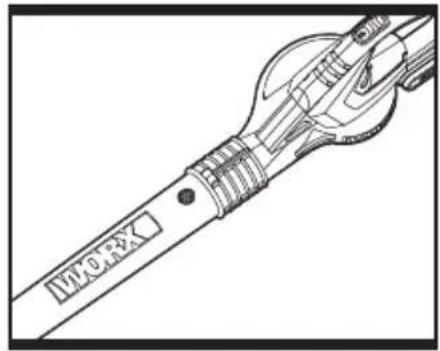
A
natural_image
Line drawing of a robotic vacuum cleaner head with directional arrows indicating motion (no text or symbols)BCD
natural_image
Illustration of a pipe cutting through a grid with scattered debris and smoke, no text or symbols presentE
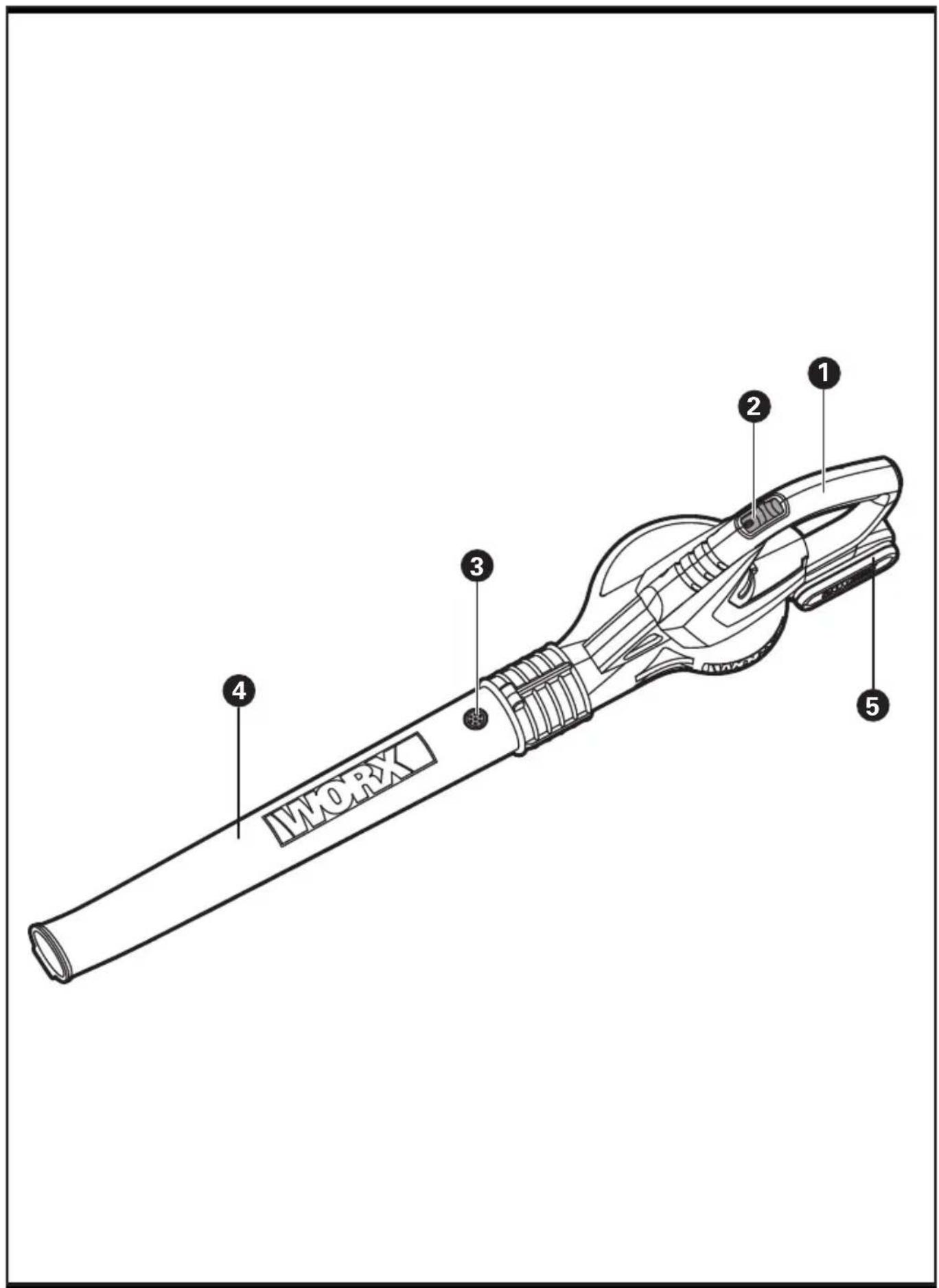
1. HANDLE
2. ON/OFF SWITCH
3. TUBE RELEASE BUTTON
4. BLOWER TUBE
5. BATTERY PACK
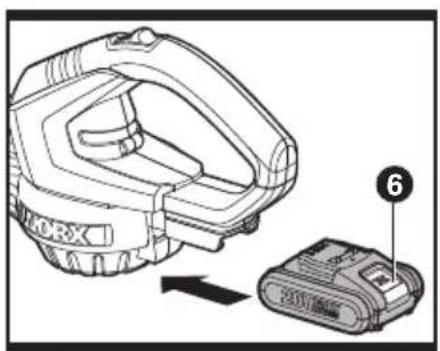
6. BATTERY PACK RELEASE BUTTON (See Fig. C)
Not all the accessories illustrated or described are included in standard delivery.
TECHNICAL DATA
Type WG549E WG549E.3 WG549E.5 WG549E.9 (520-559-designation of machinery, representative of Cordless Blower)
| WG549E WG | 549E.3 WG549E. | 5 WG549E.9 | ||
| Voltage 20V | --- Max* Lithium | |||
| No load speed 12500/min | ||||
| Blow speed 200km/h | ||||
| Charging time 5hr approx. | 2hr approx. | 1hr approx. / | ||
| Machine weight | 1.6kg | 1.9kg | 1.6kg | 1.2kg |
*Voltage measured without workload. Initial battery voltage reaches Maximum of 20volts. Nominal voltage is 18volts.
NOISE DATA
| A weighted sound pressure | L_pA :74dB(A) |
| A weighted sound power | L_wA :85dB(A) |
| K_pA & K_wA | 3.0dB(A) |
| Wear ear protection |
VIBRATION INFORMATION
Typical weighted vibration
a_n = 1.96m / s^2 Uncertainty K = 1.5m / s^2
The declared vibration total value may be used for comparing one tool with another, and may also be used in a preliminary assessment of exposure.

WARNING: The vibration emission value during actual use of the power tool can differ
from the declared value depending on the ways in which the tool is used dependant on the following examples and other variations on how the tool is used:
How the tool is used and the materials is cut or drilled.
The tool being in good condition and well maintained.
The use the correct accessory for the tool and ensuring it is sharp and in good condition.
The tightness of the grip on the handles and any anti vibration accessories are used.
And the tool is being used as intended by its design and these instructions.
This tool may cause hand-arm vibration syndrome if its use is not adequately managed.

WARNING: To be accurate, an estimation of exposure level in the actual conditions of use should also take account of all parts of the operating cycle such as the times when the tool is switched off and when it is running idle but not actually doing the job. This may significantly reduce the exposure level over the total working period.
Help to minimize your vibration exposure risk.
ALWAYS use sharp chisels, drills and blades.
Maintain this tool in accordance with these instructions and keep well lubricated (where appropriate).
If the tool is to be used regularly then invest in anti vibration accessories.
Avoid using tools in temperatures of 10^ C or less.
Plan your work schedule to spread any high vibration tool use across a number of days.
ACCESSORIES
| WG549E WG | 549E.3 WG549E.5 | WG549E.9 | ||
| Battery pack 1(WA3551.1) 1(WA3553) | 1(WA3551.1) / | |||
| Charger 1(WA3760) 1(WA3860) 1(WA3860) / | ||||
We recommend that you purchase your accessories from the same store that sold you the tool.
Choose the type according to the work you intend to undertake. Refer to the accessory packaging for further details. Store personnel can assist you and offer advice.
ORIGINAL INSTRUCTION PRODUCT SAFETY

WARNING: Read all safety warnings and all
instructions. Failure to follow the warnings and instructions may result in electric shock, fire and/or serious injury.
Save all warnings and instructions for future reference.
The appliance is only to be used with the power supply unit provided with the appliance.
IMPORTANT READ CAREFULLY BEFORE USE KEEP FOR FUTURE REFERENCE
Safe operating practices 1) Training
a) Read the instructions carefully. Be familiar with the controls and the correct use of the machine.
b) Never allow children, persons with reduced physical, sensory or mental capabilities or lack of experience and knowledge or people unfamiliar with these instructions to use the machine, local regulations may restrict the age of the operator.
c) Never operate the machine while people, especially children, or pets are nearby.
d) Keep in mind, that the operator or user is responsible for
accidents or hazards occurring to other people or their property.
2) Preparation
a) While operating the machine, always wear substantial footwear and long trousers. Do not operate the machine when barefoot or wearing open sandals. Avoid wearing clothing that is loose fitting or that has hanging cords or ties.
b) Do not wear loose clothing or jewellery that can be drawn into the air inlet. Keep long hair away from the air inlets.
c) Obtain ear protection and safety glasses. Wear them at all times while operating the machine.
d) Operate the machine in a recommended position and only on a firm, level surface.
e) Do not operate the machine on a paved or gravel surface where ejected material could cause injury.
f) Before using, always visually inspect to see, that the fasteners are secure, the housing is undamaged and that guards and screens are in place. Replace worn or damaged components in sets to preserve balance. Replace damaged or unreadable labels.
3) Operation
a) Before starting the machine, make certain that the feeding chamber is empty.
b) Keep your face and body away from the feed intake opening.
c) Do not allow hands or any other part of the body or clothing inside the feeding chamber, discharge chute, or near any moving part.
d) Keep proper balance and footing at all times. Do not overreach. Never stand at a higher level than the base of the machine when feeding material into it.
e) Always stand clear of the discharge zone when operating this machine.
f) If the machine should start making any unusual noise or vibration, immediately shut off the power source and allow the machine to stop. Remove the battery pack from the machine and take the following steps before restarting and operating the machine:
i) inspect for damage;
ii) replace or repair any damaged parts;
iii) check for and tighten any loose parts.
g) Do not allow processed material to build up in the discharge zone; this may prevent proper discharge and can result in kickback of material through the intake opening.
h) If the machine becomes clogged, shut-off the power source and remove the battery pack from the machine before
cleaning debris.
i) Never operate the machine with defective guards or shields, or without safety devices.
j) Keep the power source clean of debris and other accumulations to prevent damage to the power source or possible fire.
k) Do not transport this machine while the power source is running.
I) Always disconnect the machine from the power supply (e.g. remove the battery pack from the machine)
- Whenever you leave the machine,
- Before clearing blockages or unclogging chute,
- Before checking, cleaning or working on the machine.
m) Avoid using the machine in bad weather conditions especially when there is a risk of lightning.
4) Maintenance and storage
a) keep all nuts, bolts and screws tight to be sure the appliance is in safe working condition.
b) Replace worn or damaged parts.
c) Use only genuine replacement parts and accessories.
d) Store the machine in a dry place out of the reach of children.
e) When the machine is stopped for servicing, inspection, or storage, or to change
an accessory, shut off the power source, disconnect the machine from the supply and make sure that all moving parts are come to a complete stop. Allow the machine to cool before making any inspections, adjustments, etc. Maintain the machine with care and keep it clean.
f) Store the machine in a dry place out of the reach of children.
g) Always allow the machine to cool before storing.
h) Never attempt to override the interlocked feature of the guard.
SAFETY WARNINGS FOR BATTERY PACK
a) Do not dismantle, open or shred cells or battery pack.
b) Do not short-circuit a battery pack. Do not store battery packs haphazardly in a box or drawer where they may short-circuit each other or be short-circuited by conductive materials.
When battery pack is not in use, keep it away from other metal objects, like paper clips, coins, keys, nails, screws or other small metal objects, that can make a connection from one terminal to another. Shorting the battery terminals together may cause burns or a fire.
c) Do not expose battery pack to heat or fire. Avoid storage in direct sunlight.
d) Do not subject battery pack to mechanical shock.
e) In the event of battery leaking, do not allow the liquid to come into contact with the skin or eyes. If contact has been made, wash the affected area with copious amounts of water and seek medical advice.
f) Seek medical advice immediately if a cell or battery pack has been swallowed.
g) Keep battery pack clean and dry.
h) Wipe the battery pack terminals with a clean dry cloth if they become dirty.
i) Battery pack needs to be charged before use. Always refer to this instruction and use the correct charging procedure.
j) Do not maintain battery pack on charge when not in use.
k) After extended periods of storage, it may be necessary to charge and discharge the battery pack several times to obtain maximum performance.
I) Battery pack gives its best performance when it is operated at normal room temperature (20°C ± 5°C).
m) When disposing of battery
packs, keep battery packs of different electrochemical systems separate from each other.
n) Recharge only with the charger specified by WORX. Do not use any charger other than that specifically provided for use with the equipment.
A charger that is suitable for one type of battery pack may create a risk of fire when used with another battery pack.
o) Do not use any battery pack which is not designed for use with the equipment.
p) Keep battery pack out of the reach of children.
q) Retain the original product literature for future reference.
r) Remove the battery from the equipment when not in use.
s) Dispose of properly.
SYMBOLS

Read the operator's manual

Wear eye protection

Wear ear protection

Do not expose to rain
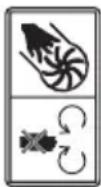
Warning of hazard
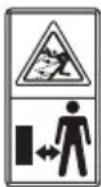
Keep bystanders away

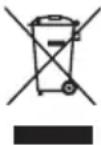
Do not dispose of batteries, Return exhausted batteries to your local collection or recycling point.
Li-Ion
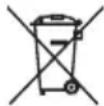


Do not expose to rain or water
Do not burn
Waste electrical products must not be disposed of with household waste. Please recycle where facilities exist. Check with your local authorities or retailer for recycling advice.
xINR18/65-y: Cylindrical lithium ion battery cells with max diameter of 18mm and max height of 65mm; "x" represents a number cells serial connected, blank if 1; "-y" represents a number of cells paralleled connected, blank if 1.
ASSEMBLY
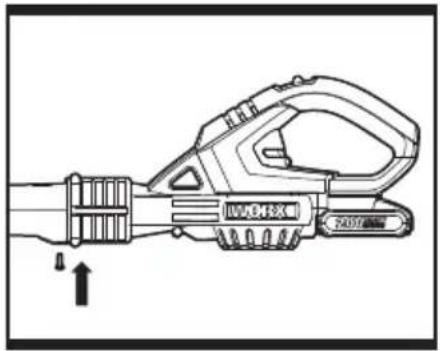
ASSEMBLING THE BLOWER TUBE (See Fig. A & Fig. B)
Before assembling the Blower Tube (4), be sure the on/off switch (2) is in "O" Off position. Fit the Blower Tube to the motor housing as shown in Fig. A. Fix the blower tube to the blower port with the screw provided. Check the Blower Tube is firmly secured.

WARNING! Do not attempt to operate or disable the On/Off
Switch by any means other than the normal assembly or removal of the tube.
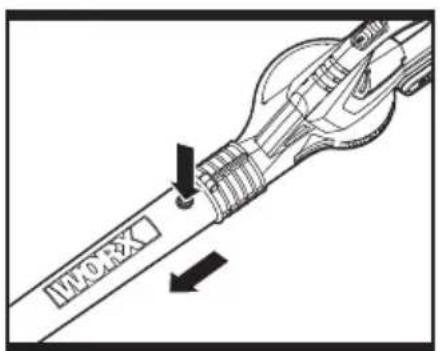
NOTE: Before disassembling the Blower
Tube, be sure the on/off switch (2) is in "O" Off position. Loosen the screw. Press the Release Button (3), so that you can separate the tube (See Fig. B). Do not try to separate the tubes by force or by using tools.
OPERATION
INTENDED USE:
The blower is intended for blow debris. ⚠️ It’s not intended for use indoors and animal grooming.

WARNING! The charger and battery pack are specially designed to
work together so do not attempt to use any other devices. Never insert or allow metallic objects into your charger or battery pack connections because of an electrical failure and hazard will occur.
Your battery pack is UNCHARGED and you must charge once before use.
The battery charger supplied is matched to the Li-Ion battery installed in the machine. Do not use another battery charger.
The Li-Ion battery is protected against deep discharging. When the battery is empty, the machine is switched off by means of a protective circuit:
In a warm environment or after heavy use, the battery pack may become too hot to permit charging. Allow time for the battery to cool down before recharging.
3. TO REMOVE OR INSTALL BATTERY PACK (See Fig. C)
Depress the battery release button (6) to release battery pack from your tool. After recharging, insert the battery pack into tool's battery port. A simple push and slight pressure will be sufficient.
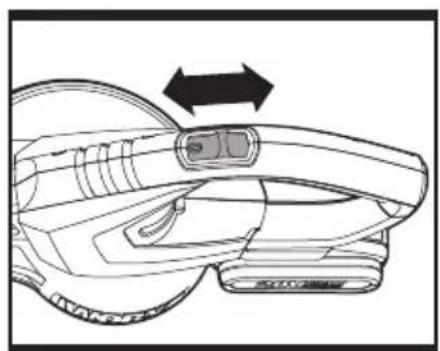
4. STARTING/STOPPING (See Fig. D) Starting
Move the On/Off switch (2) to the "I" On position.
Stopping
Move the On/Off switch (2) to the "O" Off position.

WARNING! The tool runs for a few seconds after it has been switched off.
Let the motor come to a complete standstill before setting the tool down.
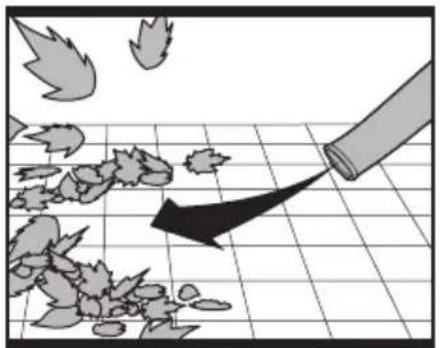
5. USING THE BLOWER (See Fig. E)
The blower is intended for residential use only. Use the blower outdoors to move debris from hard surfaces. This blower is not designed to clear leaves from large grassy areas, or move wet, heavy debris.
USER TIPS
- Hold the blow tube approx 180mm above the ground when operating the tool.
Use a sweeping motion from side to side. Advance slowly keeping the accumulated debris/leaves in front of you. - After blowing the debris/leaves into a pile, it is easy to dispose of the pile.

CAUTION!
- Do not blow hard objects such as nails, bolts, or rocks.
- Do not operate the blower near bystanders or pets.
- Use extra care when cleaning debris from stairs or other tight areas.
- Wear safety goggles or other suitable eye protection, long pants, and shoes.
CLEANING THE TOOL
Clean the tool regularly.

WARNING: Keep your product dry.
Under no circumstances spray with
water.
- To clean the tool, use only mild soap and a damp cloth.

WARNING: Do not use any type of detergent, cleaner or solvent which
may contain chemicals that could seriously damage the plastic.
- Self lubricating bearings are used in your product, therefore lubrication is not required.
DECLARATION OF CONFORMITY
We,
POSITEC Germany GmbH
Declare that the product,
Description
WORX Cordless Li-Ion Blower/Sweeper
Type WG549E WG549E.3 WG549E.5
WG549E.9 (520-559-designation of machinery, representative of cordless blower)
Function Blowing debris
Complies with the following Directives,
2006/42/EC, 2014/30/EU, 2011/65/EU,
2000/14/EC amended by 2005/88/EC
2000/14/EC amended by 2005/88/EC
- Conformity Assessment Procedure as per Annex V
- Measured Sound Power Level 85dB(A)
- Declared Guaranteed Sound Power Level 88dB(A)
Standards conform to,
EN 60335-1 EN 50636-2-100
EN 62233 EN ISO 3744
EN 55014-1 EN 55014-2
The person authorized to compile the technical file,
Name Russell Nicholson
Address Positec Power Tools (Europe)
Ltd, PO Box 6242, Newbury, RG14 9LT, UK

Suzhou 2016/07/07
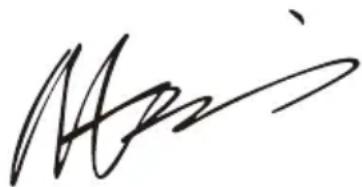
Allen Ding
Deputy Chief Engineer, Testing & Certification
Ltd, PO Box 6242, Newbury, RG14 9LT, UK
CE
Suzhou 2016/07/07
Allen Ding
INFORMATIONS RELATIVES AU BRUIT
INFORMATIONS RELATIVES AUX VIBRATIONS
Ltd, PO Box 6242, Newbury, RG14 9LT, UK
CE
Suzhou 2016/07/07
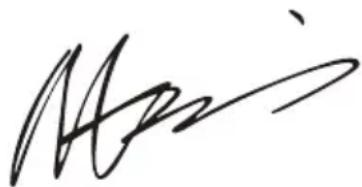
Allen Ding
Indirizzo Positec Power Tools (Europe) Ltd, P0 Box 6242, Newbury, RG14 9LT, UK
CE
Suzhou 2016/07/07
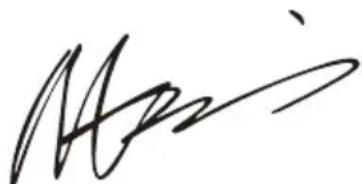
Allen Ding
Type WG549E WG549E.3 WG549E.5
Ltd, PO Box 6242, Newbury, RG14 9LT, UK
Suzhou 2016/07/07
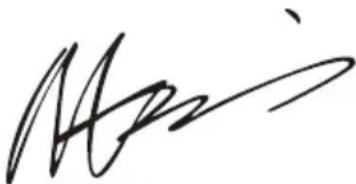
Allen Ding
Do not load or transport package if Damaged.
A fire hazard could exist.
For more information, call:+86-512-65152811
LITHIUM-IONEN-BATTERIE
Copyright © 2016, Positec. All Rights Reserved. AR01005101