
OSE 2-70x198 18-EC - Sander Flex - Free user manual and instructions
Find the device manual for free OSE 2-70x198 18-EC Flex in PDF.


| Brand | Flex |
| Model | OSE 2-70x198 18-EC |
| Product Type | Cordless orbital sander |
| Rated voltage | 18 V DC |
| No-load speed | 6 000 – 10 000 min⁻¹ |
| Weight (without battery) | 1.12 kg |
| Compatible battery | AP 18.0/2.5 (0.4 kg) or AP 18.0/5.0 (0.7 kg) |
| Operating temperature | -10 to 40 °C |
| Storage temperature | -20 to 50 °C |
| Sound pressure level | 80 dB(A) |
| Sound power level | 88 dB(A) |
| Vibration emission value | 3.35 m/s² |
| Speed adjustment | 4 levels (6,000, 7,500, 8,000, 10,000 min⁻¹) |
| Sanding pad | Hook-and-loop, replaceable |
| Dust extraction | Dust bag or suction adapter (short/long) |
| Speed memory function | Yes – stores the last speed level |
| Safety stop after power interruption | Does not restart automatically |
| Compatible materials | Wood, plastic, paint, filler and similar (dry sanding) |
| Maintenance and cleaning | Regular cleaning of ventilation slots with dry compressed air |
| Repairs | Only by an authorized service center |
| Replacement parts available | Sanding pad, abrasive sheets, suction adapter, dust bag |
| Compliance | CE, UKCA, directives 2014/30/EU, 2006/42/EC, 2011/65/EU |
| Intended use | Commercial use in industry and trade |
Frequently Asked Questions - OSE 2-70x198 18-EC Flex
User questions about OSE 2-70x198 18-EC Flex
0 question about this device. Answer the ones you know or ask your own.
Ask a new question about this device
Download the instructions for your Sander in PDF format for free! Find your manual OSE 2-70x198 18-EC - Flex and take your electronic device back in hand. On this page are published all the documents necessary for the use of your device. OSE 2-70x198 18-EC by Flex.
USER MANUAL OSE 2-70x198 18-EC Flex
OSE 2-70x198 18-ECOSE 2-70:
natural_image
Line drawing of a precision power tool labeled 'FLEX' with no additional text or symbolsen Original operating instructions....11
natural_image
Technical line drawing of a mechanical device with an arrow indicating direction (no text or symbols present)C
natural_image
Diagram showing a hand holding a rectangular device with circular holes, being dropped by a black arrow (no text or symbols present)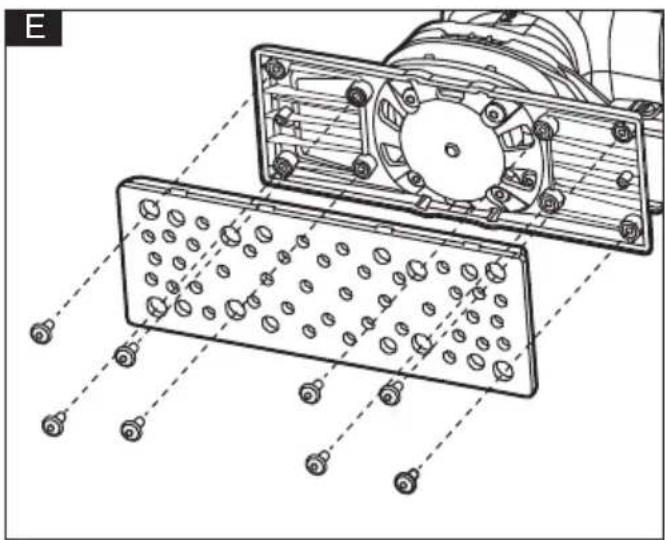
natural_image
Technical line drawing of a mechanical assembly with mounting holes and internal components (no text or symbols)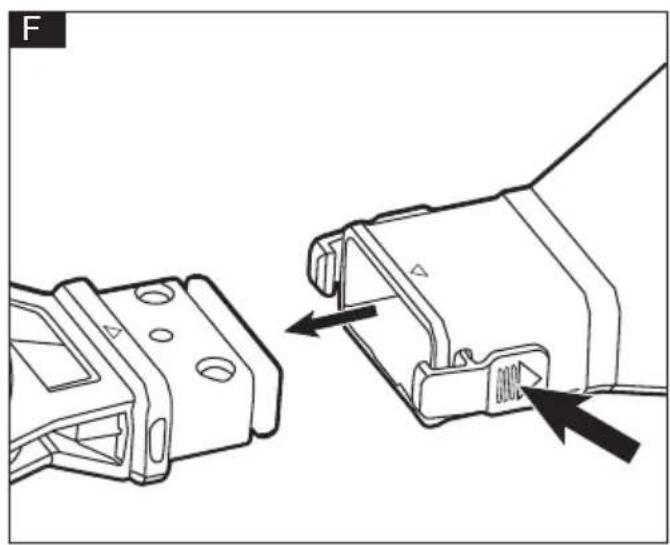
natural_image
Technical line drawing of a mechanical component with two views, one showing a cutaway view and the other showing a close-up with arrows indicating direction (no text or symbols)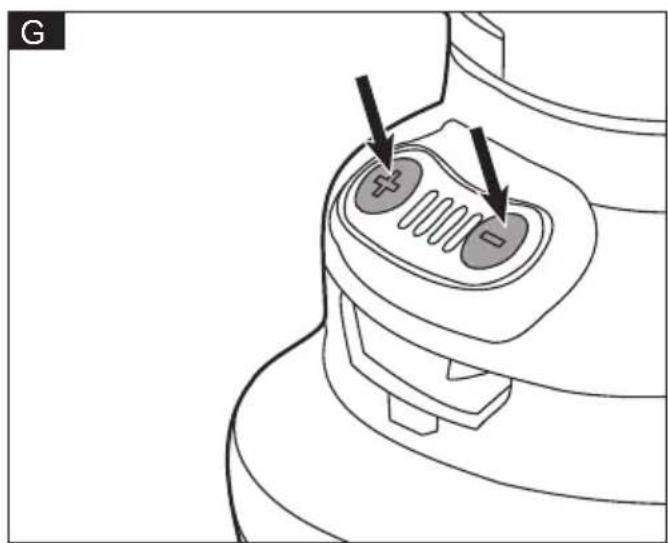
natural_image
Line drawing of a device's electrical socket with two buttons and a grid, no text or symbols present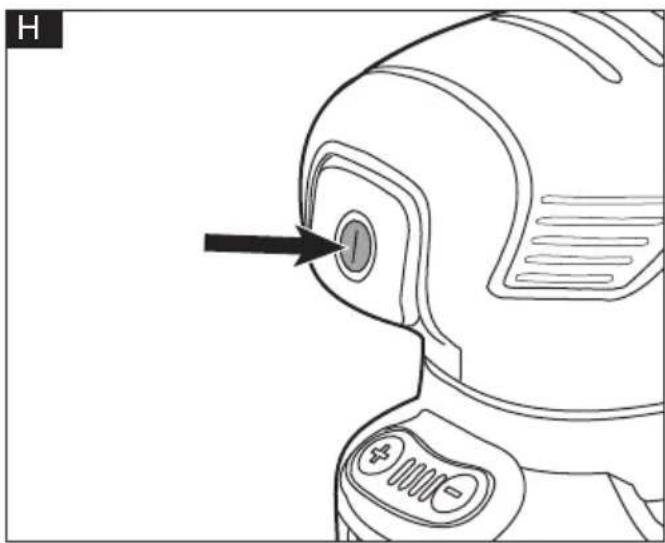
natural_image
Line drawing of a robot's camera with a black arrow pointing to the eye area (no text or symbols)Inhalt
Symbols used in this manual ..... 11
Symbols on the product....11
Important safety information....11
Noise and vibration....12
Technical data....12
Overview....13
Operating instructions .... 13
Transport 14
Maintenance and care....15
Disposal information....15
CE Declaration of conformity....15
UK CA Declaration of conformity....16
Exemption from liability 16
Symbols used in this manual
WARNING!
Denotes impending danger. Non-observance of this warning may result in death or extremely severe injuries.
CAUTION!
Denotes a possibly dangerous situation. Non-observance of this warning may result in slight injury or damage to property.
NOTE
Denotes application tips and important information.
Symbols on the product

To reduce the risk of injury, read the operating instructions!

Wear eye protection!

Disposal information for the old machine (see page 15)

CE marking

UKCA marking
Important safety information
WARNING!
Before using the power tool, please read the following and act accordingly :
– these operating instructions,
- the "General safety instructions" on the handling of power tools in the enclosed booklet (leaflet-no.: 315915),
– the currently valid site rules and the regulations for the prevention of accidents.
This power tool is state of the art and has been constructed in accordance with the acknowledged safety regulations.
Nevertheless, when in use, the power tool may pose a danger to life and limb of the user or a third party, or the power tool or other property may be damaged.
The power tool may be operated only
- for its intended use
- in perfect working order.
Faults which impair safety must be repaired immediately.
Intended use
The cordless orbital sander is intended
– for commercial use in industry and trade,
– for sanding wood, plastic, paint, filler and similar materials using the dry sanding process,
- for use with Velcro sanding sheet and accessories which are indicated in these instructions or which are recommended by the manufacturer.
Safety instructions for orbital sander
WARNING!
Read all safety warnings, instructions, illustrations and specifications provided with this power tool. Failure to follow all instructions listed below may result in electric shock, fire and/or serious injury. Save all warnings and instructions for future reference.
■ Attention Risk of fire! Avoid overheating the material to be ground and the grinder. Always empty the dust container before taking breaks from work. Grinding dust in the dust bag, microfilter, paper bag (or in the filter bag or filter of the dust extractor) may self-ignite under unfavourable conditions, e.g. caused by flying sparks when grinding metals. It is particularly hazardous if the grinding dust is mixed with paint or polyurethane residue or other chemical substances and if the material is ground for a long time until hot.
- Dust released from materials, such as lead paints, some types of wood, minerals and metal, may be hazardous to the operator or people in the vicinity.
Inhaling or touching these dusts may result in respiratory diseases and/or allergic reactions.
- Ensure the work place is well ventilated!
- If possible, use external dust extraction.
- It is recommended to wear a respirator mask belonging to filter class P2.
Noise and vibration
The noise and vibration values have been determined in accordance with EN 62841. The A-weighted noise level of the power tool is typically:
– Sound pressure level L_pA : 80 dB(A)
- Sound power level L_WA : 88 dB(A)
- Uncertainty: K = 3 dB
Total vibration value:
- Emission value a_h : 3.35 m/s
– Uncertainty: K = 1.5 m/s

CAUTION!
The specified measured values apply to new power tools. Daily use causes the noise and vibration values to change.

NOTE
The vibration emission level stated in these instructions has been measured in accordance with a standardised test given in EN 62841 and may be used to compare one tool with another. It can also be used for a preliminary assessment of exposure.
The declared vibration emission level represents the main applications of the tool. However, if the tool is used for different applications, with different accessories or poor maintenance, the vibration emission
level may differ. This may significantly increase the exposure level over the total working period.
To make an accurate estimation of the vibration exposure level, it is also necessary to take into account the times when the tool is switched off or running but not actually in use. This may significantly decrease the exposure level over the total working period.
Identify additional safety measures to protect the operator from the effects of vibration such as: Maintaining the tool and the accessories, keeping the hands warm, organisation of work patterns.

CAUTION!
Wear ear defenders at a sound pressure over 85 dB(A)
Technical data
| Product type OSE 2-70x198 18-EC | |||
| Product Orbital sander | |||
| Rated voltage Vdc 18 | |||
| No-load speed min ^-1 | 6000-10000 | ||
| Weight according to"EPTA Procedure 01/2003"(without battery) | kg 1.1 | 2 | |
| Battery 18V | AP 18.0/2.5AP 18.0/5.0 | ||
| Weight of battery | kg | AP 18.0/2.5AP 18.0/5.0 | 0.40.7 |
| Working temperature | -10 - 40°C | ||
| Charging temperature | 0 - 40°C | ||
| Storage temperature | -20 - 50°C | ||
| Charger range | CA 12/18CA 18.0-LDCA 10.8/18.0CA SP 2x 12/18 | ||
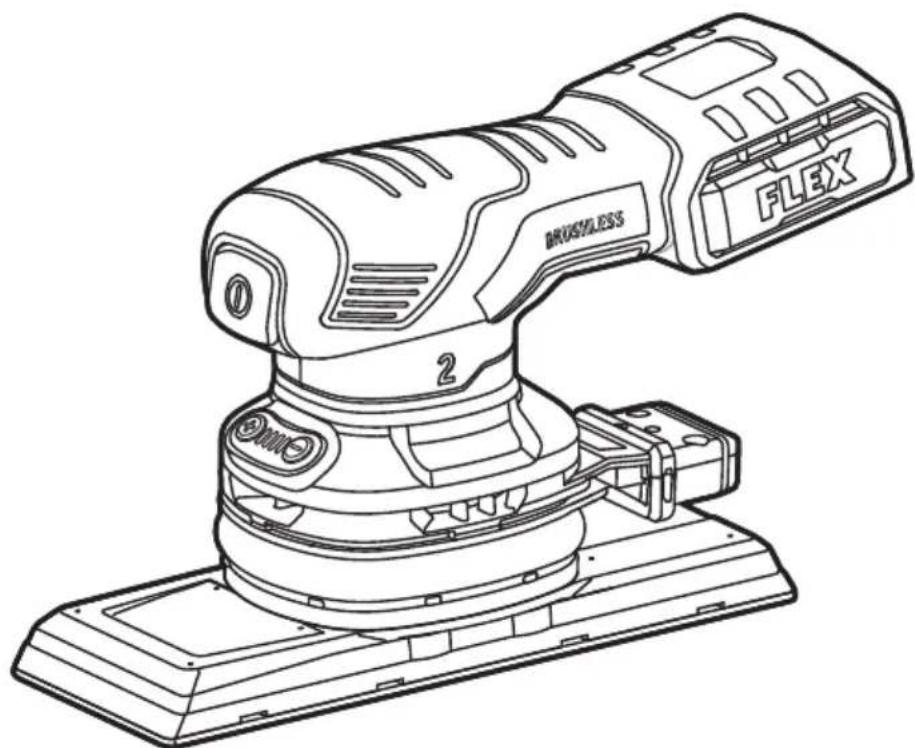
Overview (see figure A)
The numbering of the product features refers to the illustration of the machine on the graphics page.
- Insulated grip surfaces
- ON/OFF switch
- Speed setting buttons
- Sanding plate
- Dust extraction outlet
- Short dust extraction adapter
- Long dust extraction adapter
- Dust extraction bag
- Buckles
Operating instructions

WARNING!
Remove the battery before carrying out any work on the power tool.
Before switching on the power tool
Unpack the cordless orbital sander and check that here are no missing or damaged parts.

NOTE
The battery is not fully charged on delivery. Prior to initial operation, charge the battery fully. Refer to the charger operating manual.
Tips for a long battery service life

CAUTION!
- Never charge batteries at temperatures below 0 °C or above 40 °C.
- Do not charge batteries in environments with high air humidity or ambient temperature.
- Do not cover batteries and the charger during the charging process.
- Pull out the charger mains plug at the end of the charging process.
Battery and charger heat up during the charging process. This is perfectly normal!

NOTE
Follow the instructions for correct battery charging in the operating instructions for the battery.
If batteries are not used for an extended period of time, store them partially charged in a cool place.
Inserting/replacing the battery
■ Press the charged battery into the power tool until it clicks into place (see figure B).
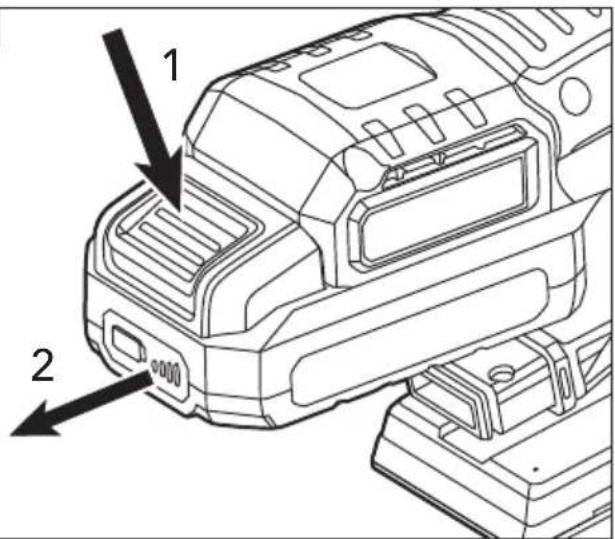
■ To remove, press the release button(1.) and pull out the battery (2.) (see figure C).

CAUTION!
When the device is not in use, protect the battery contacts. Loose metal parts may short circuit the contacts; explosion and fire hazard!
Attaching/changing the sanding sheet
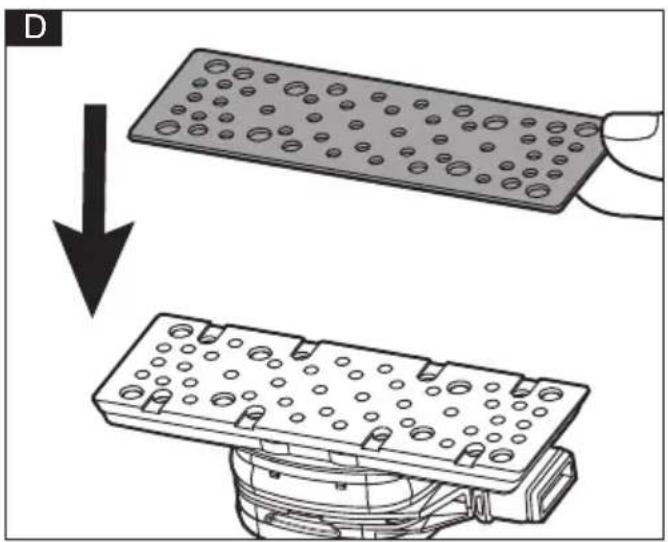
The sanding plate (4) has Velcro fasteners and is therefore designed exclusively for use with Velcro sanding sheet (see figure D).
■ Remove the battery.
■ Remove used sanding sheet.
■ Remove any coarse debris from the sanding plate (4).
■ Attach new sanding sheet. Align the holes in the sanding sheet with the holes in the sanding plate (4).
■ Attach the sanding sheet by gently pressing it against the Velcro fasteners on the sanding plate (4).
Changing the sanding plate
If the sanding plate (4) has worn out, it can be replaced (see figure E).
■ Remove the battery.
■ Undo the eight screws.
■ Remove the sanding plate (4) by pulling it downwards.
■ Attach a new sanding plate.
■ Tighten the eight screws back.
NOTE: When removing and installing the screws, the sanding plate needs to be held down so that it does not rotate when the screws are screwed in.
Attaching /removing extraction dust bag and dust extraction adapter

WARNING!
When using the sander, you must use a dust extraction bag or an external dust extraction.

WARNING!
Avoid dust accumulation at the workplace.
Dust can easily ignite.
■ Align the triangle on the dust extraction bag (8) or dust extraction adapter (6&7) with the triangle on the dust extraction outlet.
■ Press the buckles (9) on both sides of the dust extraction bag (8) or dust extraction adapter (6&7) and push the dust extraction bag (8) or dust extraction adapter (6&7) onto the dust extraction outlet (5) all the way until the buckles (9) on the dust extraction bag (8) or dust extraction adapter (6&7) snap into the groove of the dust extraction outlet (5) (see figure F).
■ To remove the dust extraction bag (8) or dust extraction adapter (6&7), press the buckles (9) on both sides of the dust extraction bag (8) or dust extraction adapter (6&7) and remove it.
■ A dust extraction hose can be connected to the short or long dust extraction adapter.
NOTE: Because the size of the battery will interfere with the dust extraction adapter, when using a short dust extraction adapter (6), only use 2.5Ah battery and using a long dust extraction adapter (7), use 2.5Ah or 5.0Ah battery. The sander is not suitable for the 8.0Ah battery.
Setting the speed (see figure G)
There are four speed levels that can be changed using the speed setting buttons (3).
Press the "+" button to increase the speed. Press "-" button to decrease the speed. The LED lights above the numbers indicate the current speed level.
The speed level can be set when the tool is already in operation.
After you turn the tool off, the memory function will remember and revert to the last active speed level the next time the tool is turned on.
The approximate OPM (oscillations per minute) are:
| Speed level /min(OPM) | |
| 1 6000 | |
| 2 7500 | |
| 3 8000 | |
| 4 10000 | |
Switching on and off
Switch power tool on or off by pressing on/off switch (2) (see figure H).

CAUTION!
Following a power failure, the switched-on power tool will not start running again.
Operating instructions

WARNING!
When the power tool is switched off, the grinding tool continues running briefly.
■ Switch on the sander and place the whole sanding sheet on the surface to be processed.
■ Applying moderate pressure, move the sander evenly over the workpiece.
■ The sanding result is determined primarily by the selection of the correct sanding sheet, the selected number of oscillations and the contact pressure.
■ Replace sanding sheets in good time.
■ An excessive increase in the contact pressure will not increase the grinding performance, but will increase the wear on the electric power tool and the sanding tool.
Transport
Lithium-Ion batteries are subject to the Dangerous Goods Legislation requirements.
Transportation of those batteries has to be done in accordance with local, national and international provisions and regulations.
Users may transport these batteries by road without further requirements.
The commercial transportation of lithium-ion batteries by shipping companies is subject to the regulations for the transportation of dangerous goods. Shipping preparations and transportation may only be carried out by appropriately trained persons. The entire process must be professionally supervised.
The following points must be observed when transporting rechargeable batteries:
Ensure that the battery contact terminals are protected and insulated to prevent short circuits.
Ensure that the battery pack is secured against movements inside the packaging.
Damaged or leaking batteries must not be transported.
Contact your shipping company for further information.

CAUTION!
Do not post batteries which have a damaged housing.
Maintenance and care

WARNING!
Remove the batteries before carrying out any work on the power tool.
Cleaning

CAUTION!
When cleaning with dry compressed air, always wear goggles.
Regularly clean the power tool and ventilation slots. Frequency of cleaning is dependent on the material and duration of use. Regularly blow out the housing interior and motor with dry compressed air.
Repairs
Repairs may be carried out by an authorized customer service centre only.

NOTE
During the warranty period, do not loosen the screws on the housing. Failure to comply with this requirement will invalidate any claims under the manufacturer's warranty.
Spare parts and accessories
Other accessories, in particular tools and accessories, can be found in the manufacturer's catalogues. Exploded drawings and spare-part lists can be found on our homepage: www.flex-tools.com.
Disposal information

WARNING!
Render redundant power tools unusable:
- battery operated power tool by removing the battery.

EU countries only
Do not throw electric power tools into the household waste!
In accordance with the European Directive 2012/19/EU on Waste Electrical and Electronic Equipment and transposition into national law used electric power tools must be collected separately and recycled in an environmentally friendly manner.

Raw material recovery instead of waste disposal.
Device, accessories and packaging should be recycled in an environmentally friendly manner. Plastic parts are identified for recycling according to material type.

WARNING!
Do not throw batteries into the household waste, fire or water. Do not open used batteries.
EU countries only:
In accordance with Directive 2006/66/EC defective or used batteries must be recycled.

NOTE
Please ask your dealer about disposal options!
CE-Declaration of conformity
We declare on our sole responsibility that the product described in "Technical data" conforms to the following standards or normative documents:
EN 62841-1:2015+A11:2022
EN 62841-2-4:2014
EN IEC 55014-1:2021
EN IEC 55014-2:2021
in accordance with the regulations of the directives 2014/30/EU, 2006/42/EC, 2011/65/EU.
Responsible for technical documents:
Technical Director Head of Quality Department
(QD)
26.11.2024
Declaration of Conformity
We as the manufacturer: FLEX Elektrowerkzeuge GmbH, Business address: Bahnhofstr. 15, 71711 Steinheim, Germany declare under our sole responsibility, that the product(s) described under „Technical specifications“ fulfills all the relevant provisions of The Supply of Machinery (Safety) Regulations S.I. 2008/1597 and also fulfills all the relevant provisions of the following UK Regulations:
Electromagnetic Compatibility Regulations S.I. 2016/1091, The Restriction of the Use of Certain Hazardous Substances in Electrical and Electronic Equipment Regulations
S.I. 2012/3032 and are manufactured in accordance with the following designated Standards:
EN 62841-1:2015+A11:2022
EN 62841-2-4:2014
EN IEC 55014-1:2021
EN IEC 55014-2:2021
Place of declaration: Steinheim, Germany. Responsible person: Peter Lameli, Technical Director - FLEX-Elektrowerkzeuge GmbH
Authorized to compile the technical file: FLEX Power Tools Limited, Unit 8 Anglo Office Park, Lincoln Road, HP 12, 3RH Buckinghamshire, United Kingdom.
Peter Lameli Klaus Peter Weinper
Technical Director Head of Quality
Department (QD)
26.11.2024
Exemption from liability
The manufacturer and his representative are not liable for any damage and lost profit due to interruption in business caused by the product or by an unusable product.
The manufacturer and his representative are not liable for any damage which was caused by improper use of the product or by use of the product with products from other manufacturers.
Table des matières
Hrup in tresljaji....113


- OSE 2-70x198 18-ECOSE 2-70:
- Inhalt
- Symbols used in this manual
- WARNING!
- CAUTION!
- NOTE
- Symbols on the product
- Important safety information
- Intended use
- Safety instructions for orbital sander
- Noise and vibration
- Technical data
- Overview (see figure A)
- Operating instructions
- Before switching on the power tool
- Tips for a long battery service life
- Inserting/replacing the battery
- Attaching/changing the sanding sheet
- Changing the sanding plate
- Attaching /removing extraction dust bag and dust extraction adapter
- Avoid dust accumulation at the workplace.
- Setting the speed (see figure G)
- Switching on and off
- Transport
- Maintenance and care
- Cleaning
- Repairs
- Spare parts and accessories
- Disposal information
- Raw material recovery instead of waste disposal.
- CE-Declaration of conformity
- Declaration of Conformity
- Exemption from liability
- Table des matières
Brand : Flex
Model : OSE 2-70x198 18-EC
Category : Sander