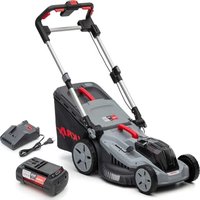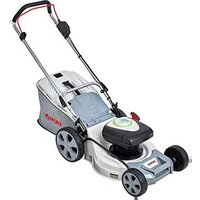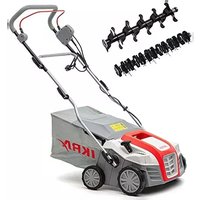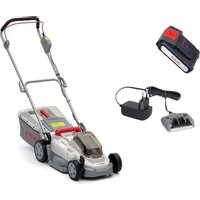
ICM 2033 - Lawn mower IKRA - Free user manual and instructions
Find the device manual for free ICM 2033 IKRA in PDF.


User questions about ICM 2033 IKRA
0 question about this device. Answer the ones you know or ask your own.
Ask a new question about this device
Download the instructions for your Lawn mower in PDF format for free! Find your manual ICM 2033 - IKRA and take your electronic device back in hand. On this page are published all the documents necessary for the use of your device. ICM 2033 by IKRA.
USER MANUAL ICM 2033 IKRA
natural_image
Top-down view of a lawn mower with black and white body, mounted on a wheeled cart (no text or symbols visible)GB Operating Instructions - Translation of the original Operating Instructions Read operating instructions before use!
text_image
Diagram of a lawn mower with labeled parts and an icon indicating upload or delivery.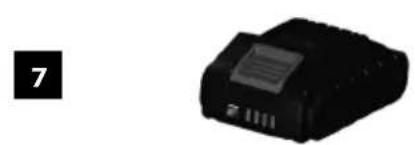
natural_image
Black electronic device with a screen and indicator lights, labeled with number 7 (no text or symbols on the device itself)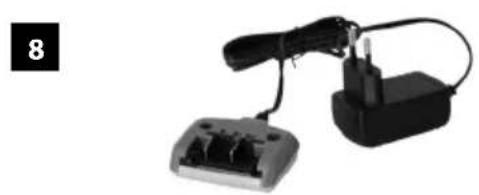
natural_image
Black-and-white photo of a battery pack connected to a charging plug (no text or symbols visible)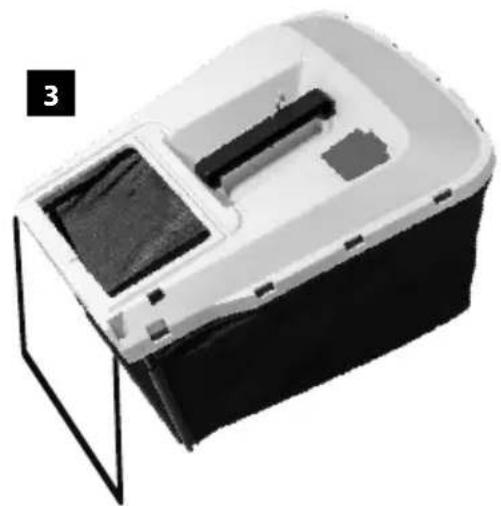
natural_image
3D rendering of a small electronic device with black and white casing, showing internal components (no text or symbols visible)
natural_image
Three black mechanical components with circular holes, shown in a row (no text or symbols)
natural_image
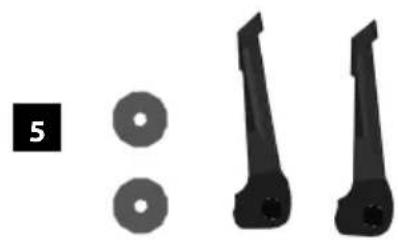
Two mechanical components with circular holes and arrows indicating alignment (no text or symbols)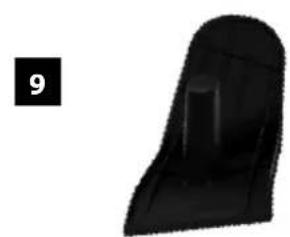
natural_image
Black plastic object with rounded edges and a small rectangular cutout, labeled with number 9 in the corner (no other text or symbols)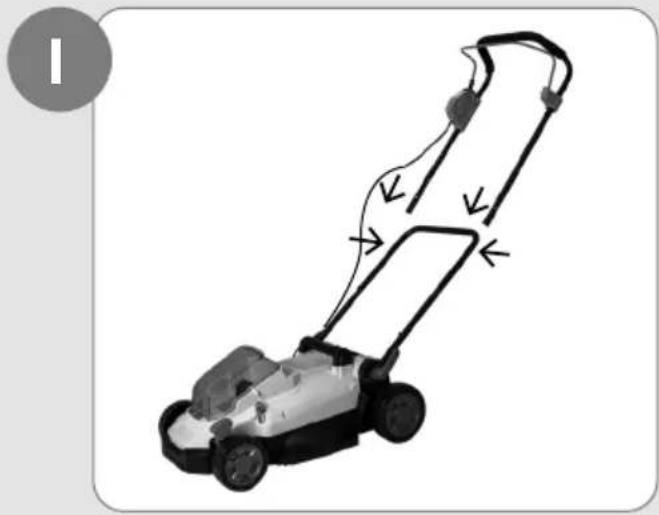
natural_image
Illustration of a lawn mower with attached hoses and wheels (no text or symbols)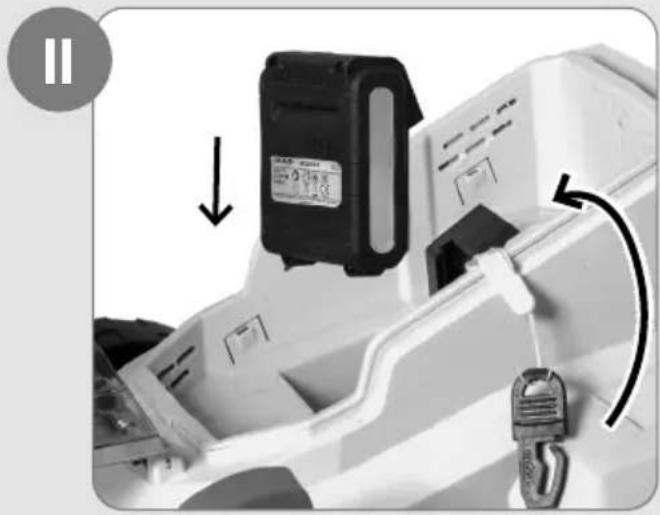
natural_image
Close-up of a white electronic device with a black hard drive and a curved arrow indicating rotation (no text or symbols visible)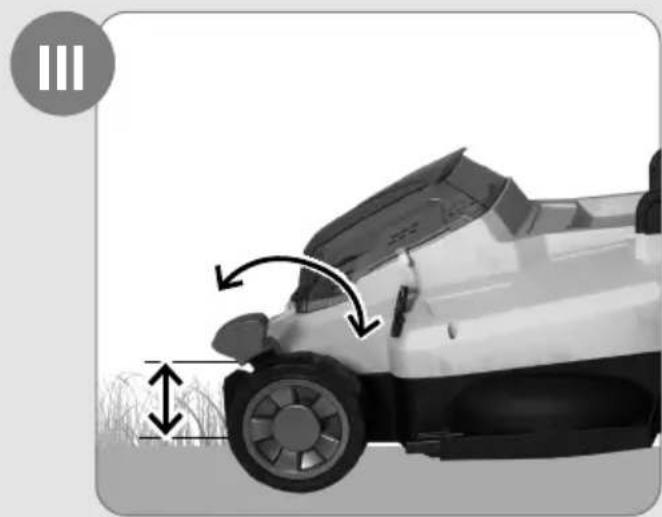
natural_image
Side view of a robotic car with motion arrows indicating movement, no visible text or symbols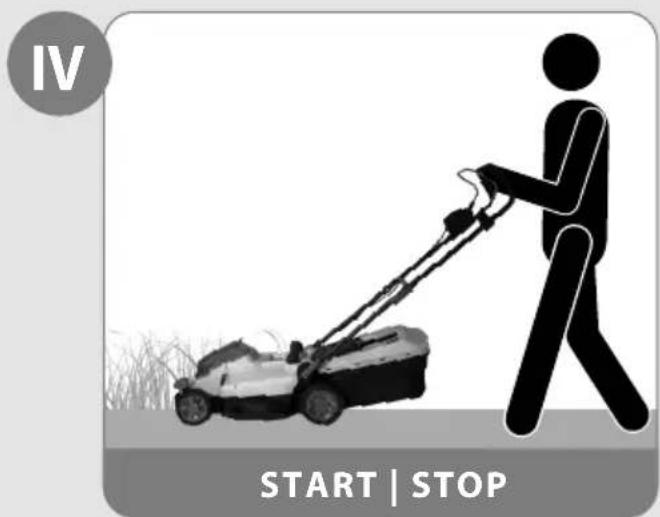
text_image
IV START | STOP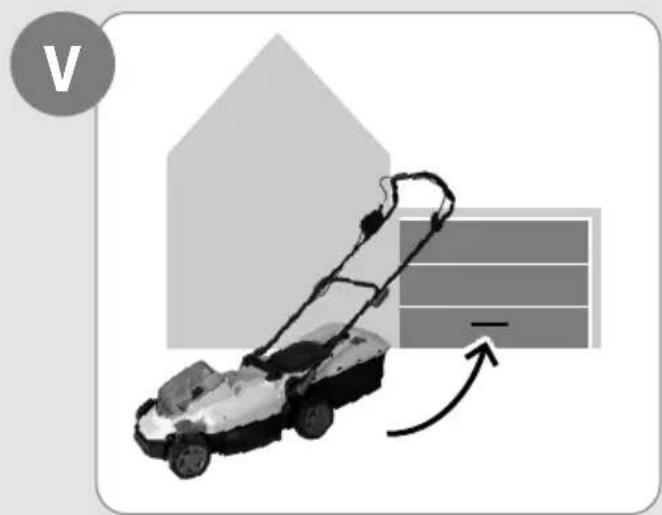
natural_image
Illustration of a lawn mower with an arrow indicating motion, next to a house (no text or symbols)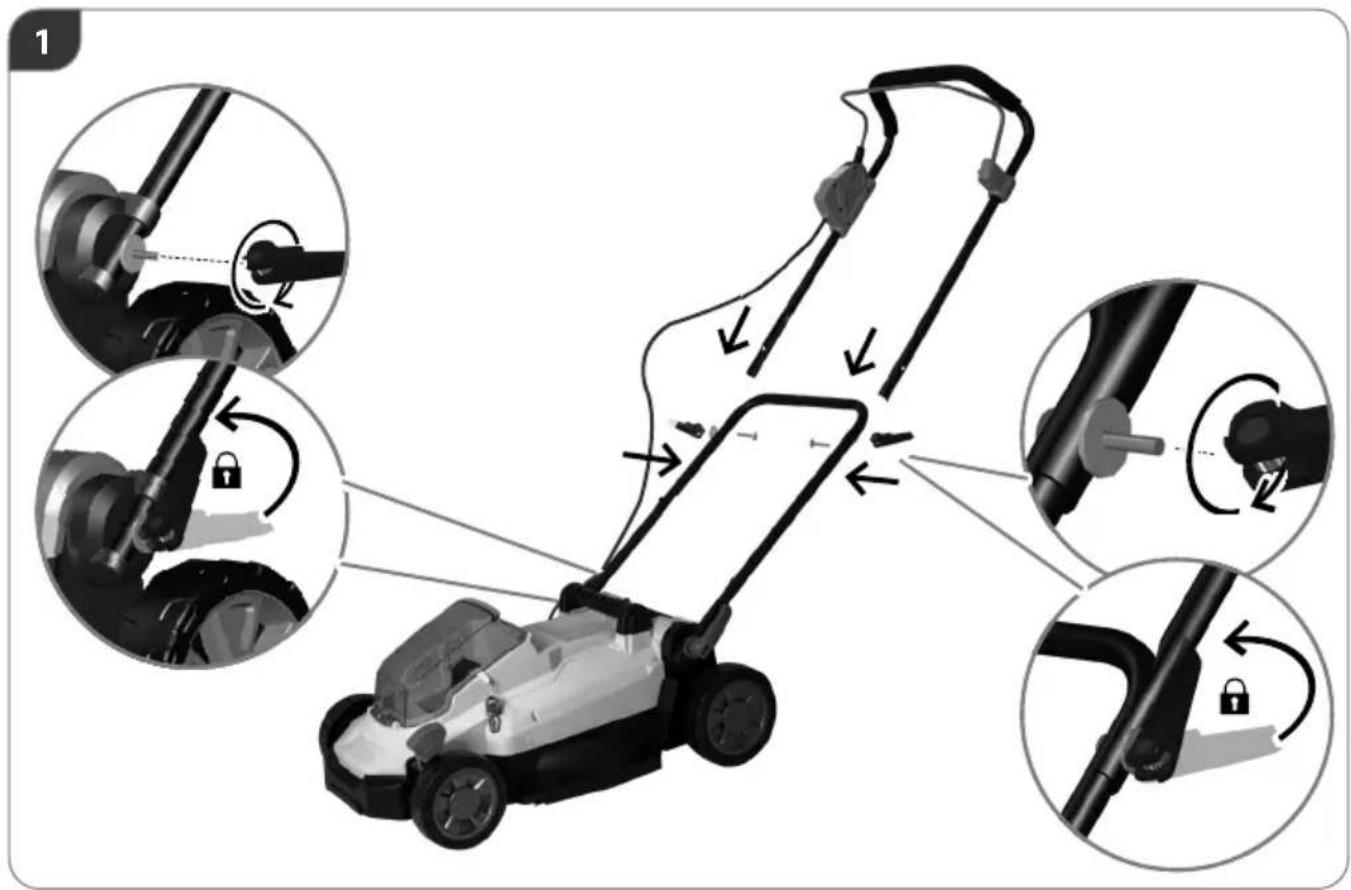
text_image
Diagram illustrating how to adjust the lawn guard system using a lawn mower, with labeled steps and mechanical components.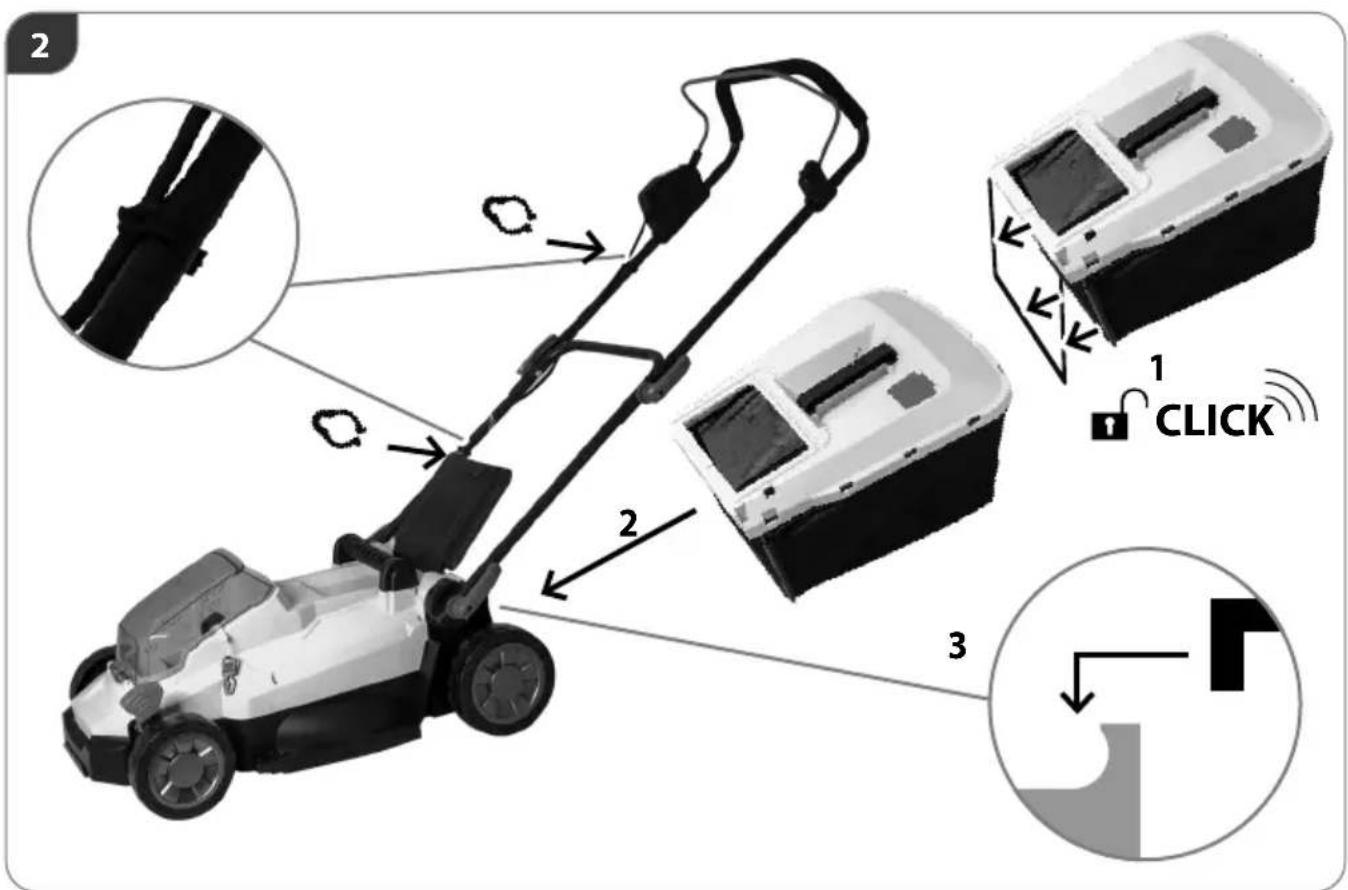
text_image
Diagram illustrating a lawn mower system with labeled components and directional arrows, including a CLICK button and sensor placement.


text_image
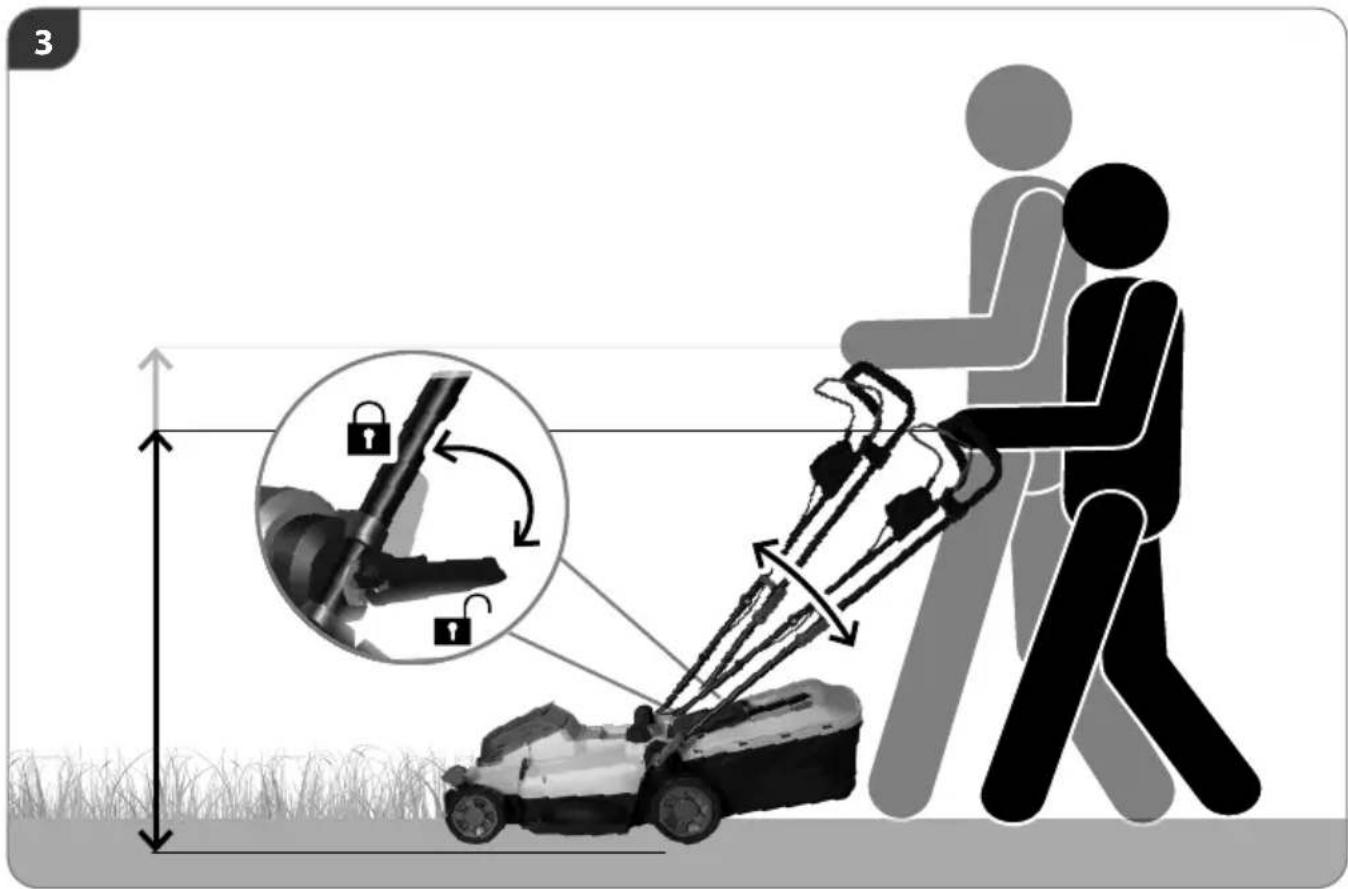
Illustration showing a person using a lawn mower to lift a motor, with an inset highlighting the mechanism of locking keys.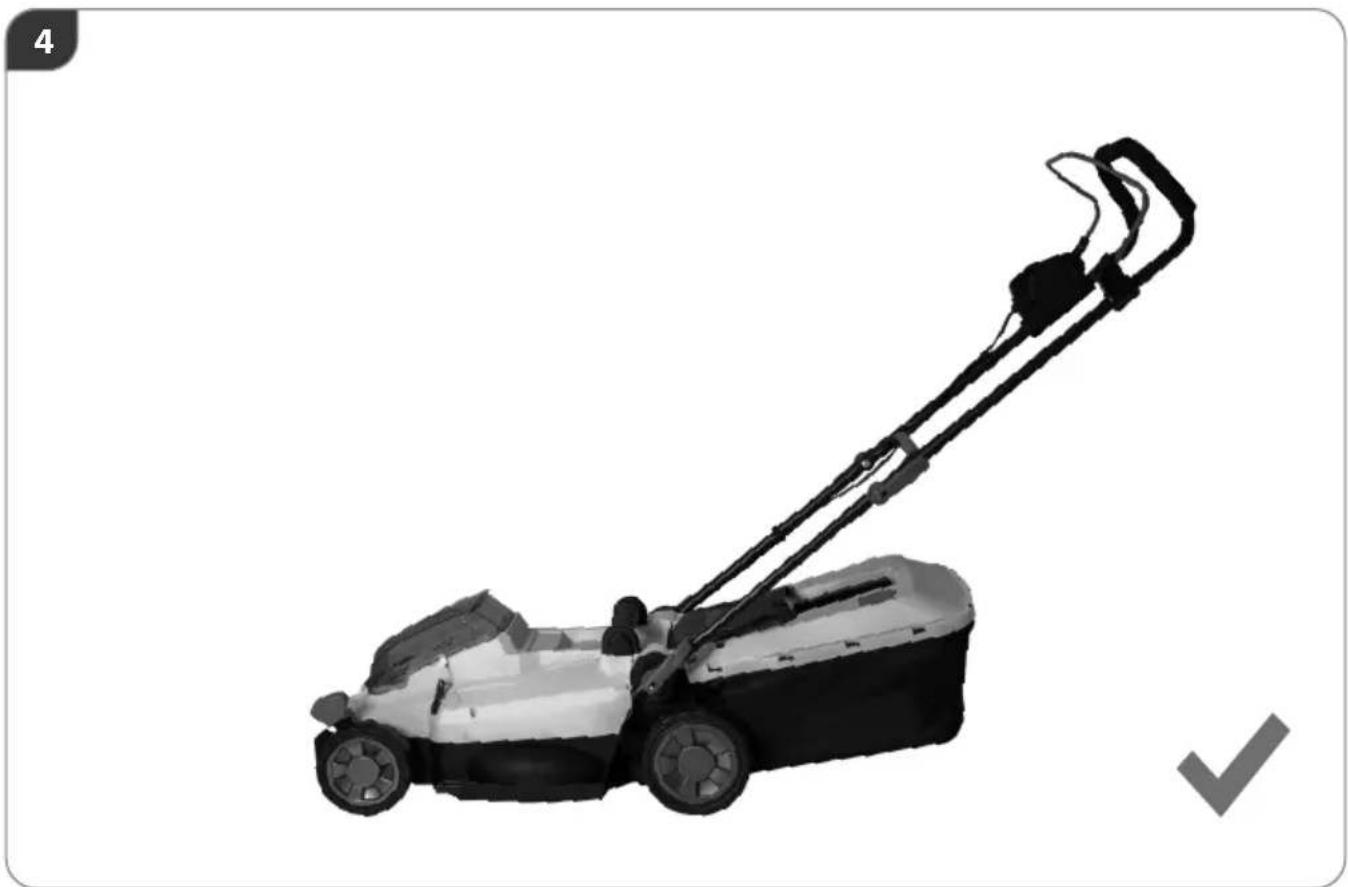
natural_image
Side view of a lawn mower with extended blade and mounting bracket (no text or symbols visible)
natural_image
Illustration of a lawn mower with a base case and a separate motor, shown in 3D style (no text or symbols)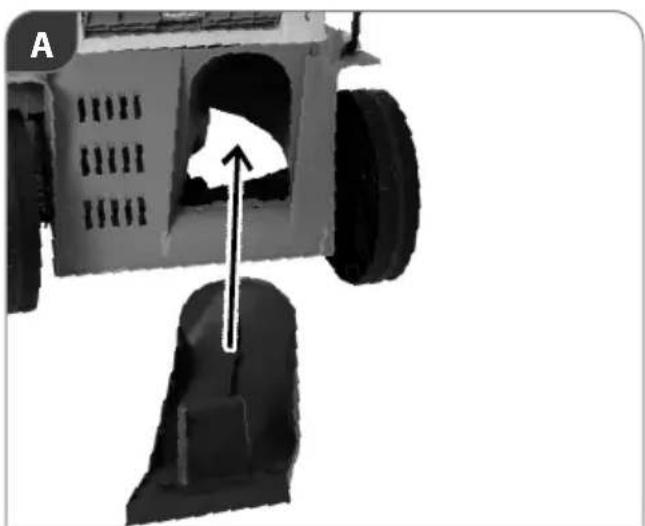
natural_image
Mechanical component with a white arrow pointing to a cavity or feature, no visible text or symbols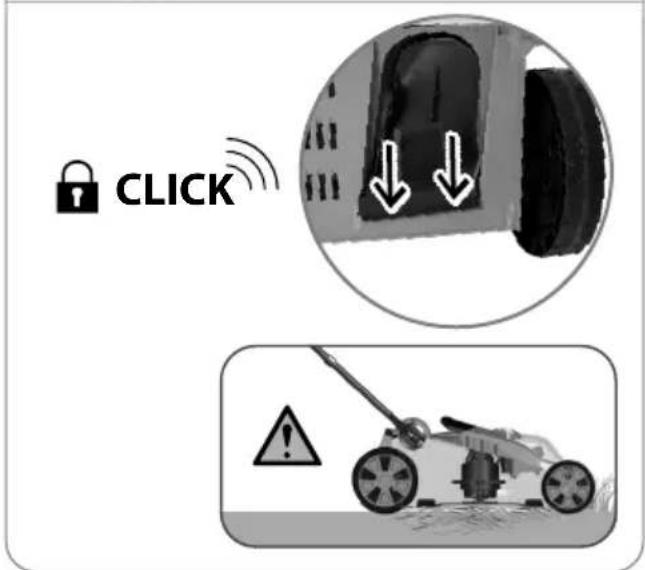
text_image
CLICK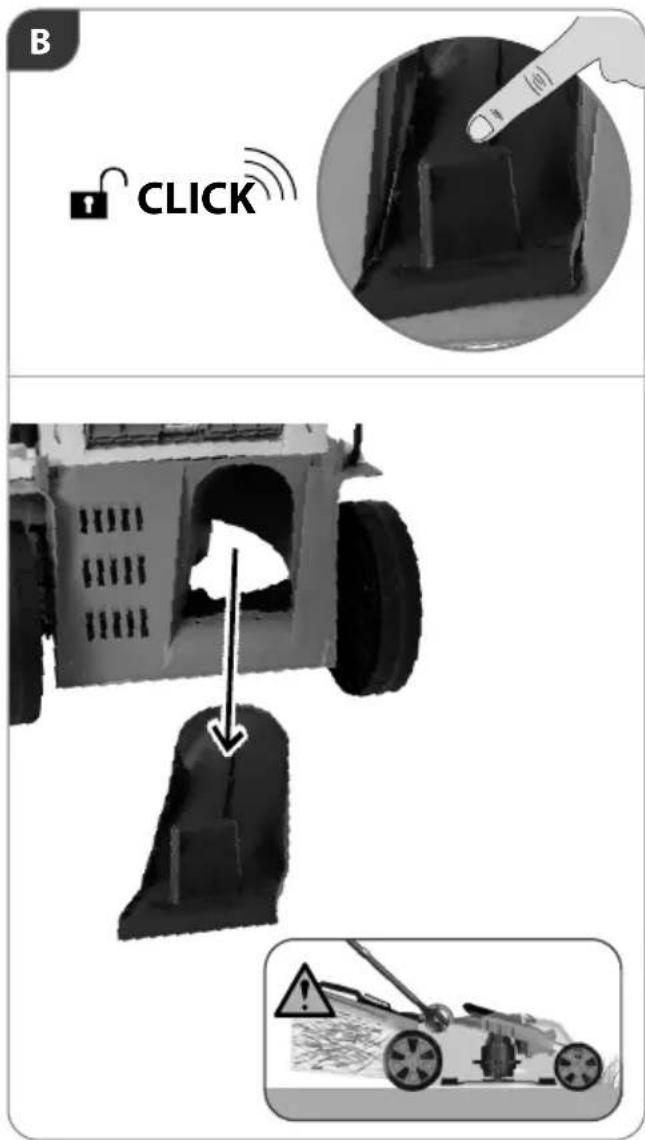
text_image
B CLICK (0)
natural_image
Illustration of a lawn mower with attached circuit board (no text or symbols)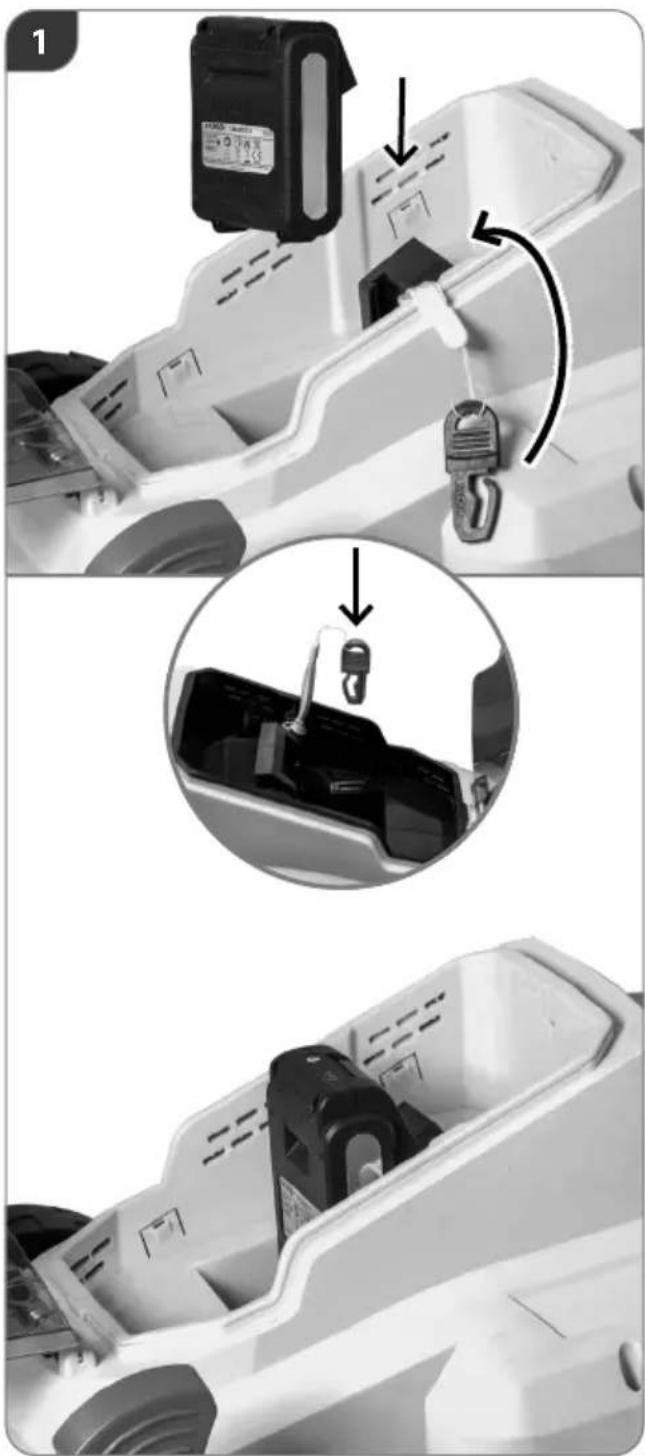
text_image
Technical diagram showing three steps of a battery pack installation, with labeled components and directional arrows indicating assembly or repair.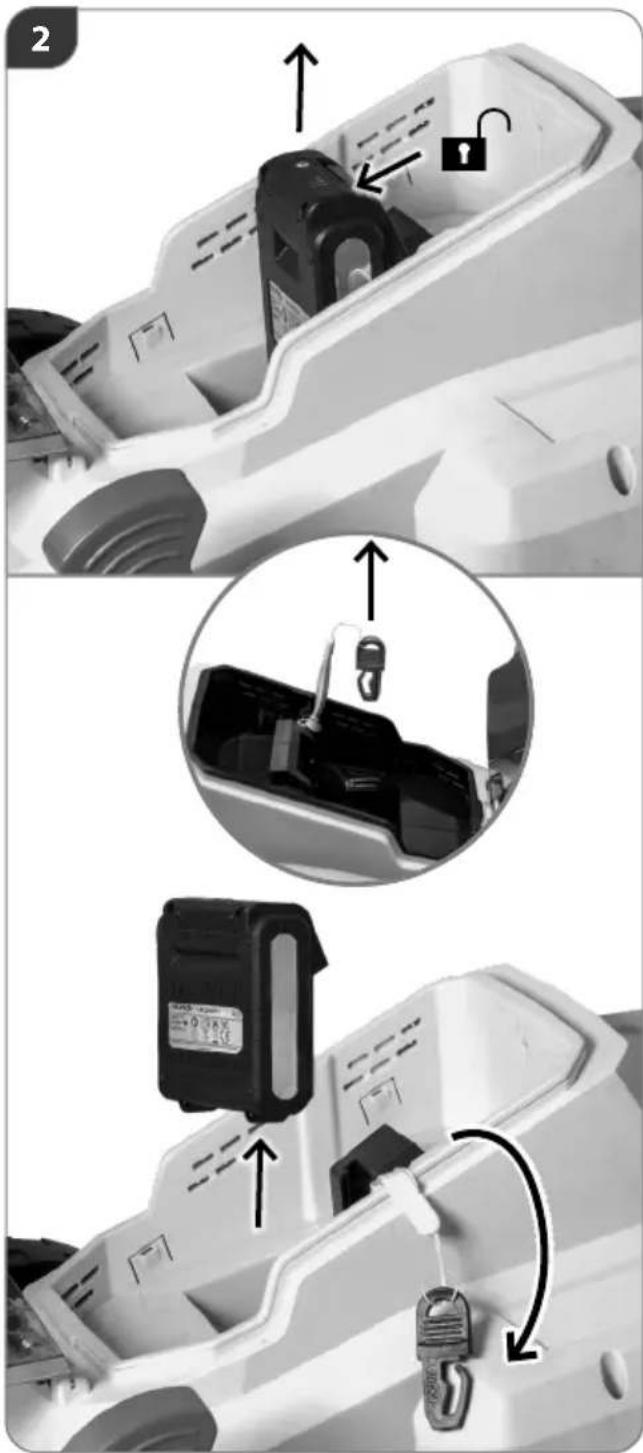
text_image
Diagram illustrating the step-by-step installation of a battery pack, showing lock state change and internal components with arrows.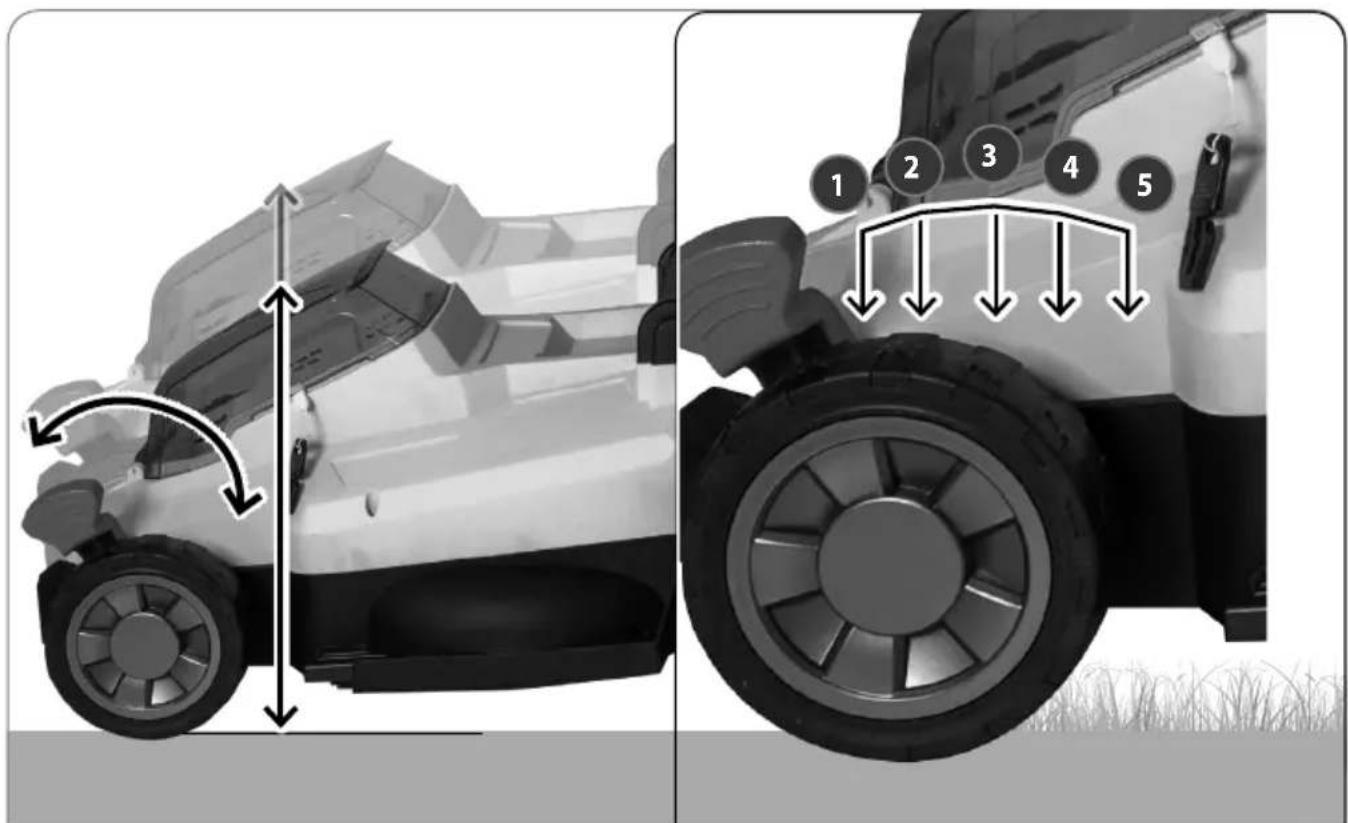
text_image
Diagram showing a grassy tractor with labeled parts and directional arrows indicating motion or movement.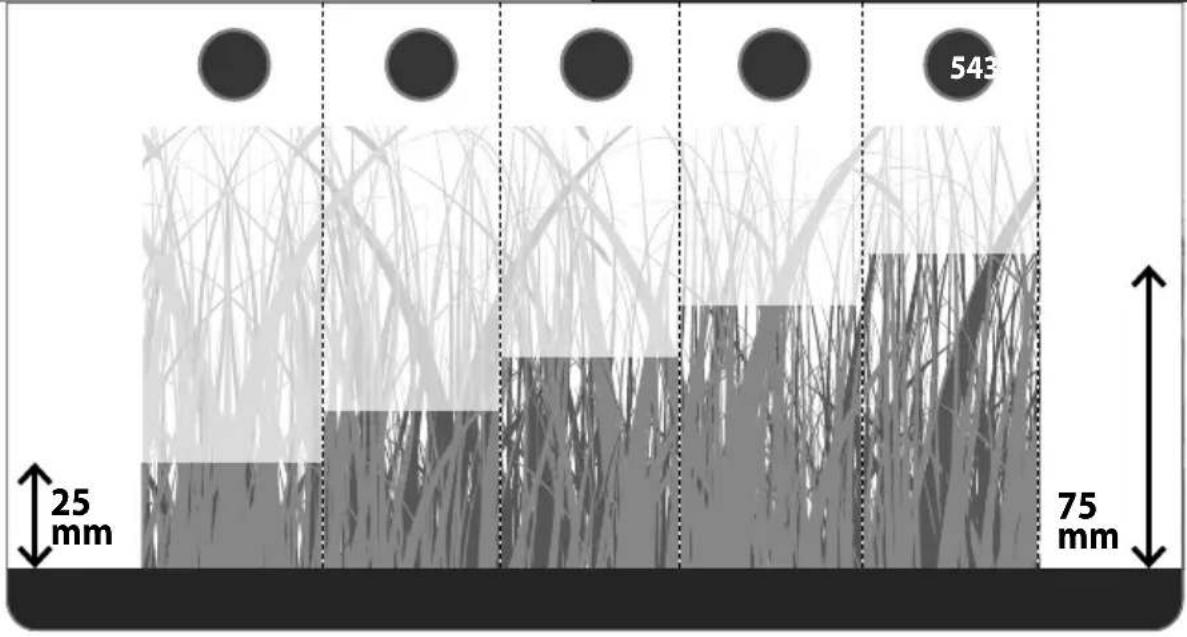
text_image
25 mm 75 mm 543START
text_image
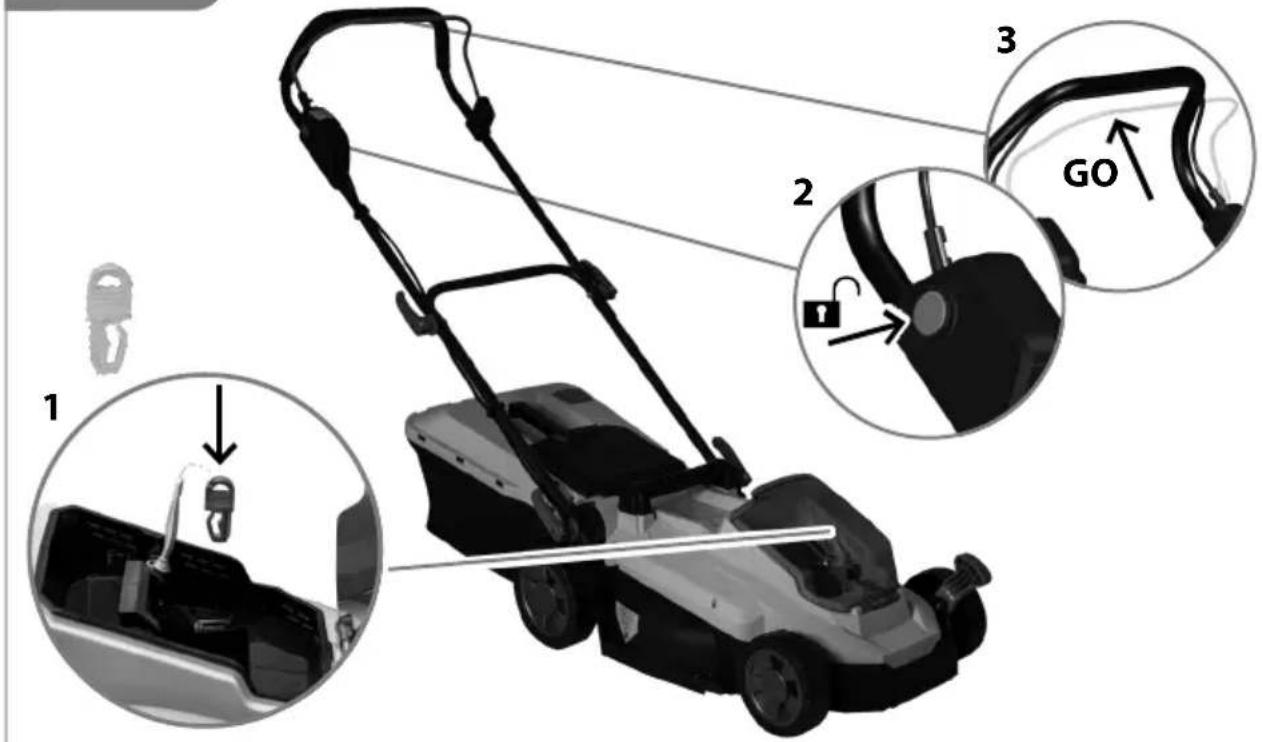
1 2 3 GO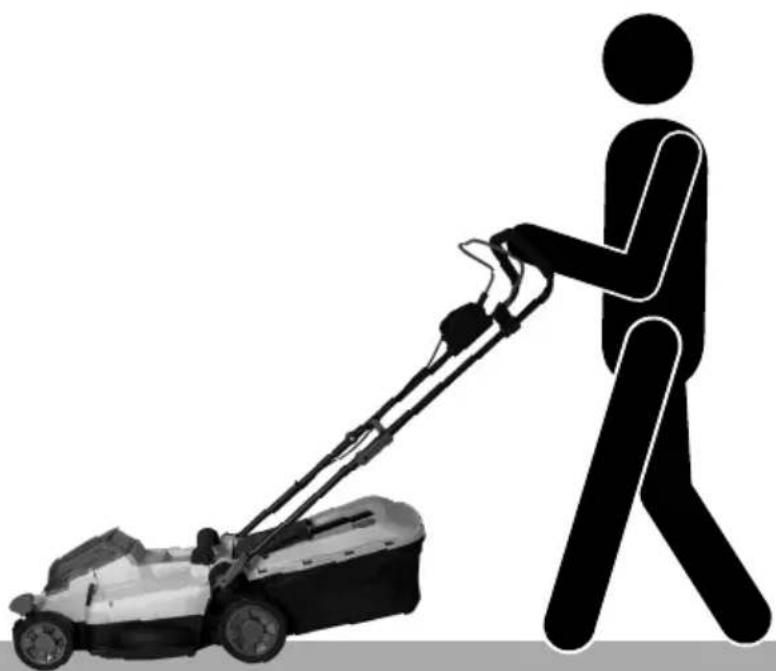
natural_image
Silhouette of a person pushing a lawn mower (no text or symbols)STOP
natural_image
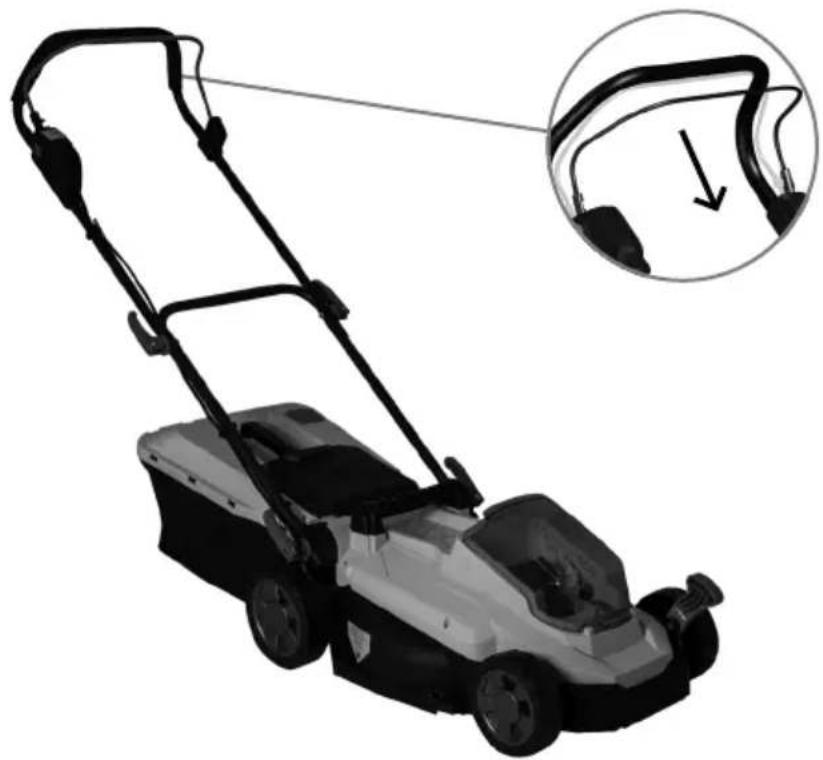
Illustration of a lawn mower with a magnified inset showing the blade and handle (no text or symbols)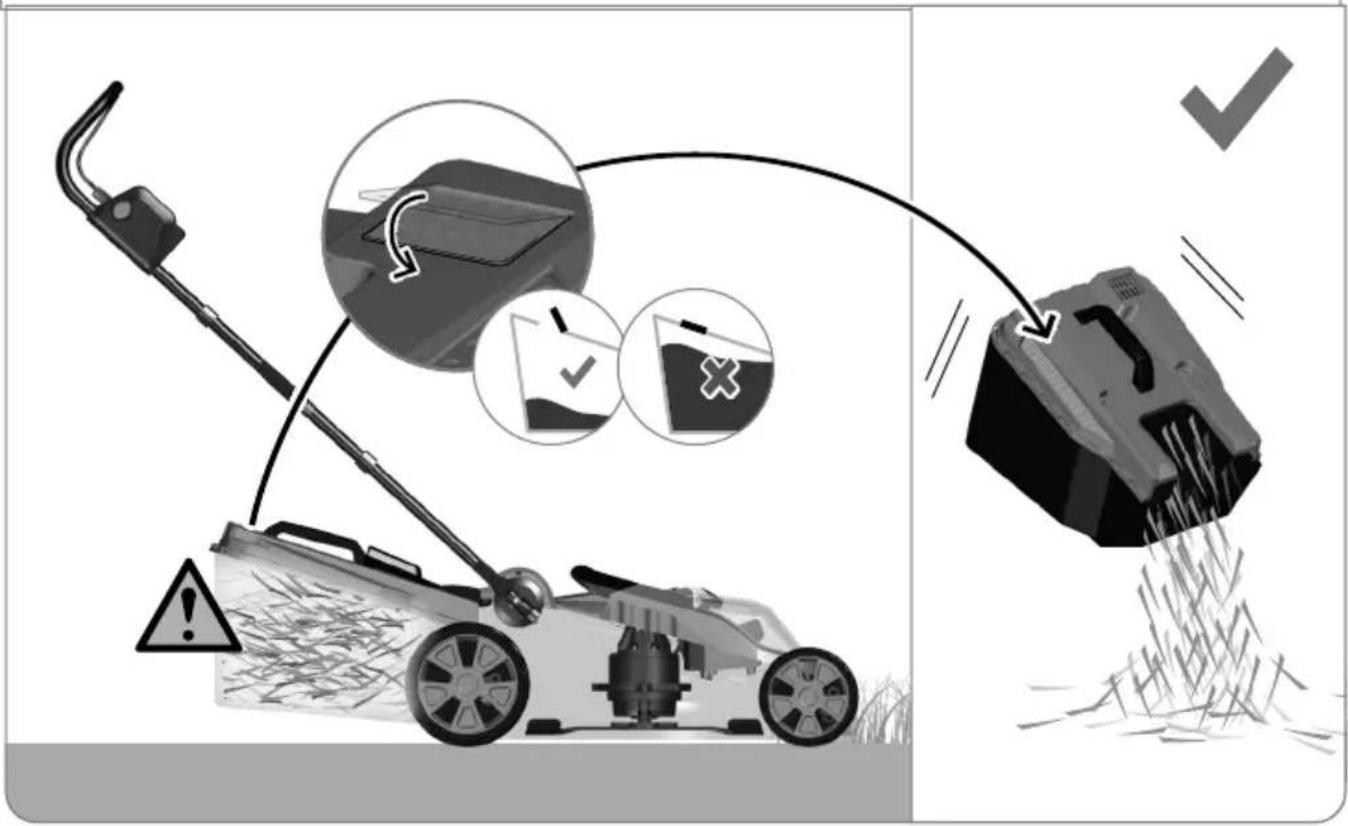
text_image
Diagram illustrating the environmental hazard of a lawn mower, showing components like cleaning, inspection, and waste disposal.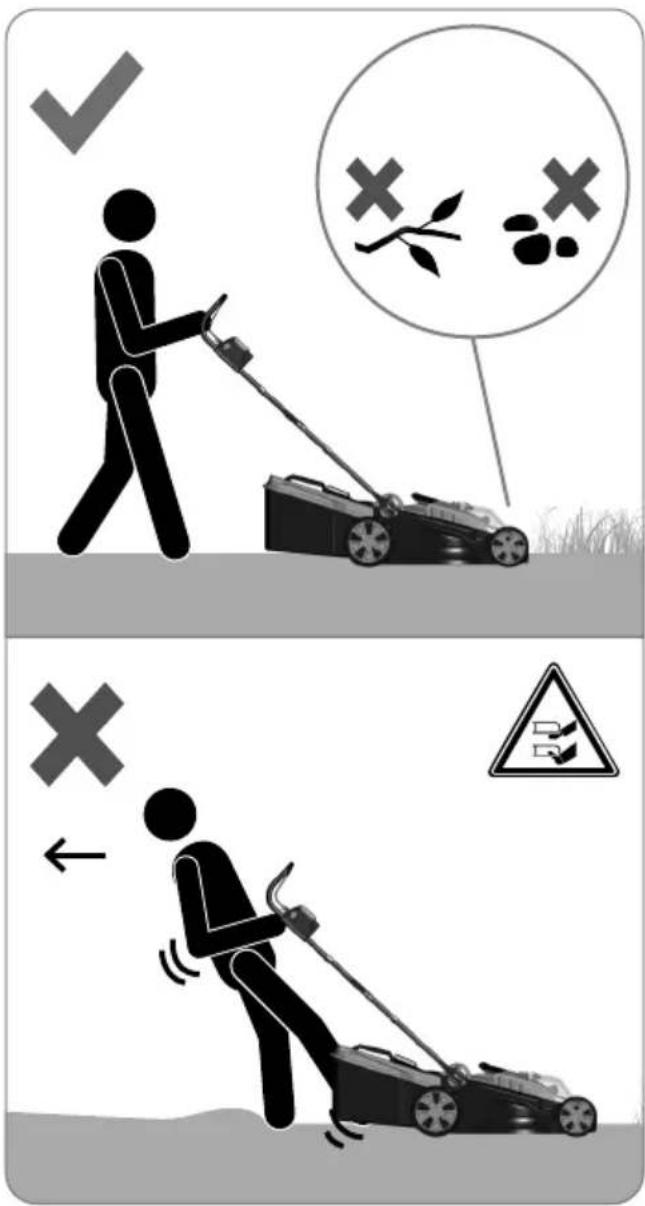
text_image
Safety warning illustration showing two scenarios: one with a person using a lawn mower, the other with a person using a lawn saw and the other with a crosshair indicating incorrect conditions.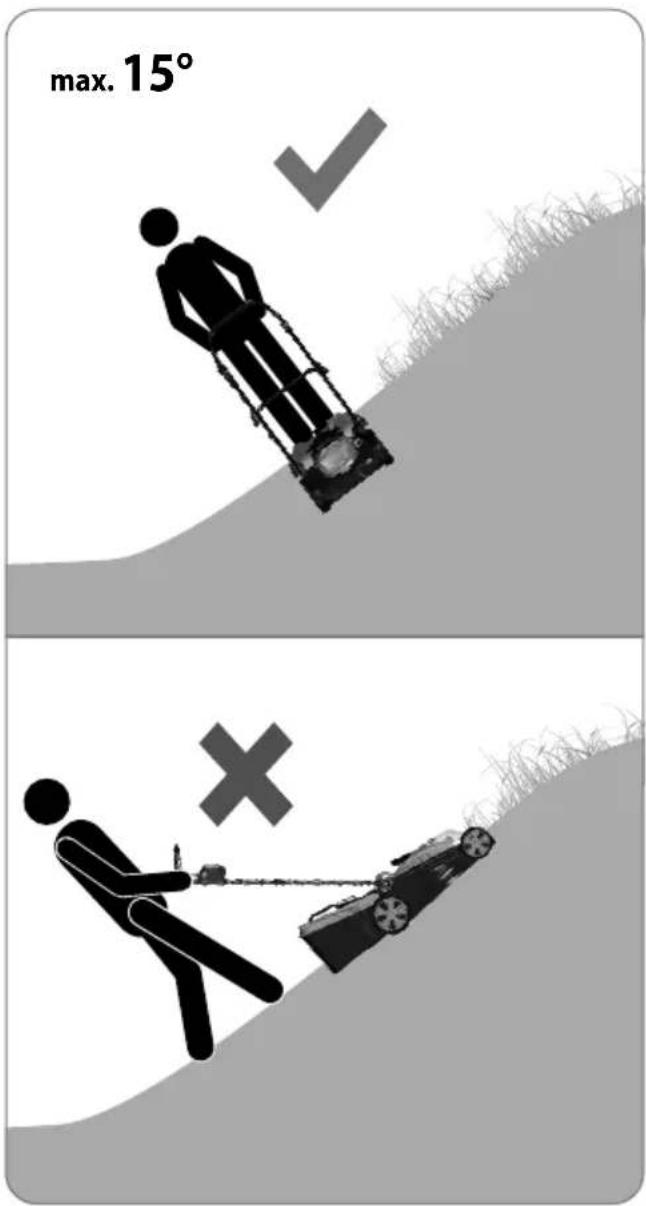
text_image
max. 15° ×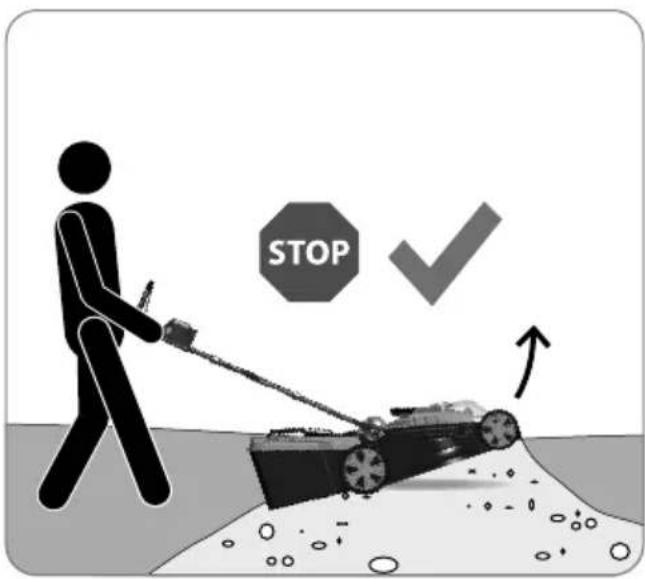
text_image
STOP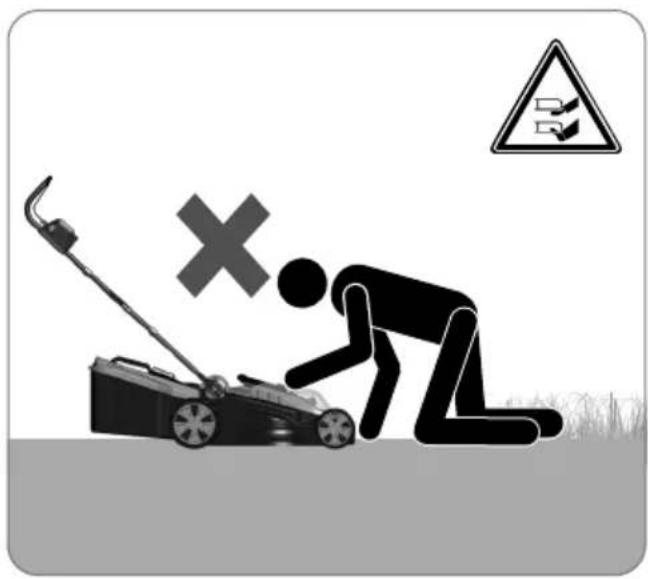
natural_image
Illustration of a person using a lawn mower to clean grass, with a warning sign and cross symbol (no text or symbols on the diagram itself)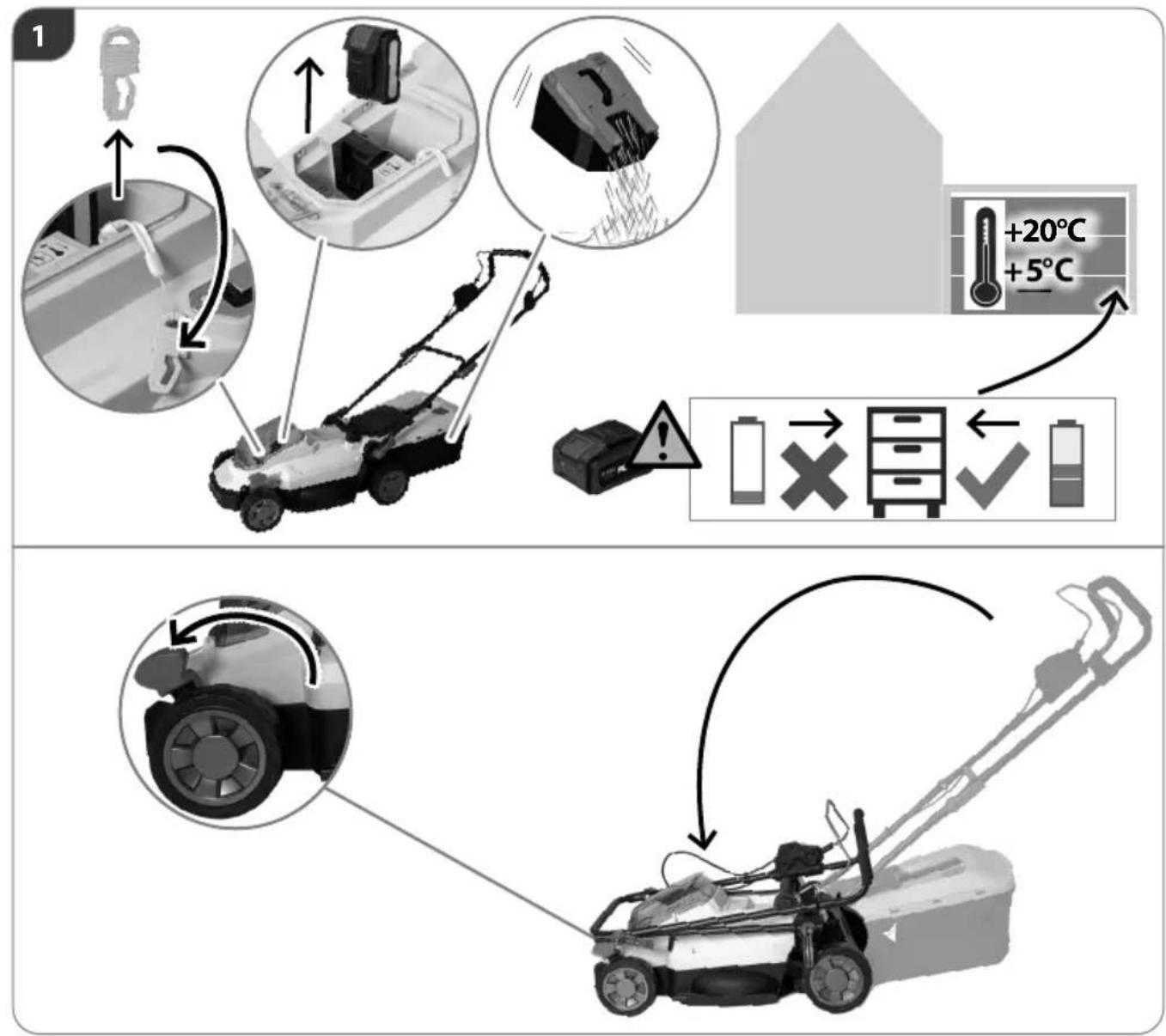
text_image
Diagram illustrating the process of a lawn mower system with temperature and battery status indicators, including mechanical components and safety warnings.
text_image
Diagram illustrating hair cleaning process using a lawn mower, with labeled parts and tool pathSpare parts and accessories
If you need accessories or spare parts, please contact our Service department.
| Battery Charger | CGB20 |
| Input voltage 100 - 240 V AC | |
| Frequency 50 - 60 Hz | |
| Output voltage 21 V DC | --- |
| Output current 470 mA | |
| Input power 15 W | |
| Recommended battery types | Typ LI 22 / LBC202Z-2 |
| Battery | Typ LI 22 / LBC202Z-2 |
| Battery voltage 20 V DC | --- |
| Battery capacity (Li-Ion) 2,0 Ah | |
| Battery power 40 Wh | |
| Recommended chargers | CGB20 |
Technical changes reserved.
WARNING: The declared vibration emission level represents the main applications of the tool. However if the tool is used for different applications, with different accessories or poorly maintained, the vibration emission may differ. This may significantly increase the exposure level over the total working period.
The vibration emission level will vary because of the ways in which a power tool can be used and may increase above the level given in this information sheet.
The vibration emission level may be used to compare one tool with another.
It may be used for a preliminary assessment of exposure.
An accurate estimate of the vibratory load should also take into account the times when the tool is shut down or when it is running but not actually in use. This may significantly reduce the vibratory load over the total working period.
Identify additional safety measures to protect the operator from the effects of vibration such as: maintain the tool and the accessories, keep the hands warm, organisation of work patterns.
SYMBOLS

Warning/caution!

Please read the instructions carefully before starting the machine.
Read the Operating Instructions!
Save all warnings and instructions for future reference.
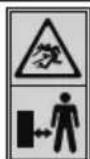
Warning against thrown-off items
Do not let other persons get near due to foreign objects being thrown off.
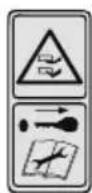
Keep fingers and feet away. Warning against sharp knives. Knives keep running for a short time after the appliance is switched off.
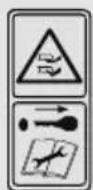
Switch the appliance off and remove the contact key before any adjustment, cleaning and servicing work.

Do not expose tools to rain. Do not use tools in damp or wet locations.

CAUTION Knives run down! Wait until all rotating parts have come to a standstill.

Idling speed n_0

Cutting diameter

Weight

Voltage alternating battery Direct current
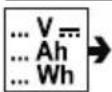
Battery voltage / Direct Current Battery capacity Battery power
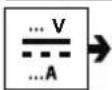
Output voltage Direct Current Output current
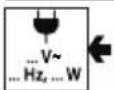
Input voltage / AC Current Frequency, Input power

Remove the battery pack before starting any work on the appliance.

Recommended battery type

Protect the battery against temperatures above 45^ C.

Protect the battery against heat and fire.

Safety class II

Charger to be used in closed spaces only.

Sound power level

CE marking

Do not dispose electric tools, batteries/re-chargeable batteries together with household waste material. Electric tools and batteries that have reached the end of their life must be collected separately and returned to an environmentally compatible recycling facility. Check with your local authority or retailer for recycling advice and collection point.
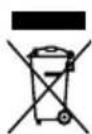
Deliver the batteries to a collection centre of old batteries where they will be recycled in an environmentally friendly way.
SPECIFIED CONDITIONS OF USE
The cordless lawn mower has been designed to cut small to medium-sized grass areas in private gardens by the house or in hobby gardens. Due to the physical danger to the user and other persons, the lawn mower may not be used for other purposes.
WARNING
Risk of injury
The mower must not be used for cutting bushes, hedges and thickets, for cutting and mulching creepers or lawns on roofs or in balcony boxes. The mower must also not be used as a crusher for mulching tree cuttings and hedges or levelling any terrain roughness.
Do not use this product in any other way as stated for normal use. Not observing general regulations in force and instructions from this manual does not make the manufacturer liable for damages.
Please note that permissible uses for the tool could be limited by national regulations. It is necessary to comply with the regulations applicable in the country where the truck is used.
Do not use the device near flammable liquids or gases. Risk of fire and explosion in case of short circuit.
SAFETY INSTRUCTIONS
Read and understand the operating instructions before using the appliance. Familiarise with the control elements and how to use the appliance properly. Abide by all the safety measures stated in the service manual. Act responsibly toward third parties.
The operator is responsible for accidents or risks to third parties.
In case of any doubts about connection and operation refer please to our customer center
General Power Tool Safety Warnings

WARNING! Read all safety warnings,
instructions, illustrations and specifications provided with this power tool. Failure to follow all instructions listed below may result in electric shock, fire and/or serious injury.
Save all warnings and instructions for future reference.
The term „power tool“ in the warnings refers to your mains-operated (corded) power tool or battery-operated (cordless) power tool
1) Work area safety
a) Keep work area clean and well lit. Cluttered or dark areas invite accidents.
b) Do not operate power tools in explosive atmospheres, such as in the presence of flammable liquids, gases or dust. Power tools create sparks which may ignite the dust or fumes.
c) Keep children and bystanders away while operating a power tool. Distractions can cause you to lose control..
2) Electrical safety
a) Power tool plugs must match the outlet. Never modify the plug in any way. Do not use any adapter plugs with earthed (grounded) power tools. Unmodified plugs and matching outlets will reduce risk of electric shock.
b) Avoid body contact with earthed or grounded surfaces, such as pipes, radiators, ranges and refrigerators. There is an increased risk of electric shock if your body is earthed or grounded.
c) Do not expose power tools to rain or wet conditions. Water entering a power tool will increase the risk of electric shock.
d) Do not abuse the cord. Never use the cord for carrying, pulling or unplugging the power tool. Keep cord away from heat, oil, sharp edges or moving parts. Damaged or entangled cords increase the risk of electric shock.
e) When operating a power tool outdoors, use an extension cord suitable for outdoor use. Use of a cord suitable for outdoor use reduces the risk of electric shock.
f) If operating a power tool in a damp location is unavoidable, use a residual current device (RCD) protected supply. Use of an RCD reduces the risk of electric shock.
3) Personal safety
a) Stay alert, watch what you are doing and use common sense when operating a power tool. Do not use a power tool while you are tired or under the influence of drugs, alcohol or medication. A moment of inattention while operating power tools may result in serious personal injury.
b) Use personal protective equipment. Always wear eye protection. Protective equipment such as dust mask, non-skid safety shoes, hard hat, or hearing protection used for appropriate conditions will reduce personal injuries.
c) Prevent unintentional starting. Ensure the switch is in the off-position before connecting to power source and/or battery pack, picking up or carrying the tool. Carrying power tools with your finger on the switch or energising power tools that have the switch on invites accidents.
d) Remove any adjusting key or wrench before turning the power tool on. A wrench or a key left attached to a rotating part of the power tool may result in personal injury.
e) Wear appropriate clothing. Do not wear loose clothing or jewellery. Keep hair, clothing and gloves away from moving parts. Loose clothing, jewellery or long hair can be caught by moving parts.
f) Dress properly. Do not wear loose clothing or jewellery. Keep your hair and clothing away from moving parts. Loose clothes, jewellery or long hair can be caught in moving parts.
g) If devices are provided for the connection of dust extraction and collection facilities, ensure these are connected and properly used. Use of dust collection can reduce dust-related hazards.
h) Do not let familiarity gained from frequent use of tools allow you to become complacent and ignore tool safety principles. A careless action can cause severe injury within a fraction of a second.
4) Power tool use and care
a) Do not force the power tool. Use the correct power tool for your application. The correct power tool will do the job better and safer at the rate for which it was designed.
b) Do not use the power tool if the switch does not turn it on and off. Any power tool that cannot be controlled with the switch is dangerous and must be repaired.
c) Disconnect the plug from the power source and/or remove the battery pack, if detachable, from the power tool before making any adjustments, changing accessories, or storing power tools. Such preventive safety measures reduce the risk of starting the power tool accidentally.
d) Store idle power tools out of the reach of children and do not allow persons unfamiliar with the power tool or these instructions to operate the
power tool. Power tools are dangerous in the hands of untrained users.
e) Maintain power tools and accessories. Check for misalignment or binding of moving parts, breakage of parts and any other condition that may affect the power tool's operation. If damaged, have the power tool repaired before use. Many accidents are caused by poorly maintained power tools.
f) Keep cutting tools sharp and clean. Properly maintained cutting tools with sharp cutting edges are less likely to bind and are easier to control.
g) Use the power tool, accessories and tool bits etc. in accordance with these instructions, taking into account the working conditions and the work to be performed. Use of the power tool for operations different from those intended could result in a hazardous situation.
h) Keep handles and grasping surfaces dry, clean and free from oil and grease. Slippery handles and grasping surfaces do not allow for safe handling and control of the tool in unexpected situations.
5) Battery tool use and care
a) Recharge only with the charger specified by the manufacturer. A charger that is suitable for one type of battery pack may create a risk of fire when used with another battery pack.
b) Use power tools only with specifically designated battery packs. Use of any other battery packs may create a risk of injury and fire.
c) When battery pack is not in use, keep it away from other metal objects, like paper clips, coins, keys, nails, screws or other small metal objects, that can make a connection from one terminal to another. Shorting the battery terminals together may cause burns or a fire.
d) Under abusive conditions, liquid may be ejected from the battery; avoid contact. If contact accidentally occurs, flush with water. If liquid contacts eyes, additionally seek medical help. Liquid ejected from the battery may cause irritation or burns.
e) Do not use a battery pack or tool that is damaged or modified. Damaged or modified batteries may exhibit unpredictable behaviour resulting in fire, explosion or risk of injury.
f) Do not expose a battery pack or tool to fire or excessive temperature. Exposure to fire or temperature above 130^ C may cause explosion.
g) Follow all charging instructions and do not charge the battery pack or tool outside the temperature range specified in the instructions. Charging improperly or at temperatures outside the specified range may damage the battery and increase the risk of fire.
6) Service
a) Have your power tool serviced by a qualified repair person using only identical replacement parts. This will ensure that the safety of the power tool is maintained.
b) Never service damaged battery packs. Service of battery packs should only be performed by the manufacturer or authorized service providers.
Read and understand the operating instructions before using the appliance. Familiarise with the control elements and how to use the appliance properly.
Abide by all the safety measures stated in the service manual. Act responsibly toward third parties. The operator is responsible for accidents or risks to third parties.
Never allow children or people unfamiliar with these instructions to use the lawn mower.
Local regulations may stipulate the minimum age of the user.
Keep children and other persons including animals in a safe distance when using the appliance.
Persons over 16 years of age can only work on the appli-ance. An exception includes youngsters trained in order to reach knowledge under supervision of the trainer during occupational education.

DANGER!
Warning: This power tool generates an electromagnetic field during operation. Under certain circumstances, this field may affect active or passive medical implants. To reduce the risk of serious or fatal injury, we recommend that individuals with medical implants consult your physician and the manufacturer of the medical implant before operating the machine.

WARNING
Wear personal protective equipment.
• Always wear goggles when using the machine.
- Wear ear protectors!
- Wear solid shoes and long trousers.
- Do not wear loose clothing or jewels. Hear, clothing and gloves must be out of reach of moving parts as they could get caught by the rotating parts. Do not use the appliance when barefooted or in open sandals.
- Use protective gloves when handling the blades.
Carefully check the terrain where the appliance is going to be used and remove all objects that could get caught or thrown off by the appliance such as stones, branches, wires, animals, etc.
Before using, always visually inspect to see that the blades, blade bolts and cutter assembly are not blunt, worn or damaged. Replace worn or damaged blades and bolts in sets to preserve balance;
Do not use the appliance if you are tired, ill, under influence of drugs, alcohol drinks or medicaments.
Do not overreach. Keep proper footing and balance at all times. Be careful when going backwards – risk of tripping! Provide adequate lighting or good lighting conditions when working with the machine. Poor lighting/light conditions represent a high safety risk.
Avoid operating the equipment in wet grass, where feasible;
Walk! Never run!
Make sure your posture is safe, especially on slopes. Do not cut on too steep slopes. Be particularly careful when changing travelling direction on slopes.
Always operate rotary machines with wheels at a right angle to the slope and not up and down.
Pay maximum attention when turning around and pulling the appliance to you.
WARNING
Risk of injury
Rotating blades may lead to serious injuries by cutting or amputating parts of the body.
- Switch the mower off whenever carrying or inclining it or when being outside a grass area. Wait until all rotating parts have stopped.
- All protection covers and safety devices must be correctly attached to operate the device.
- Never remove the collection bag when the machine is being operated.
- Do not start the engine before your feet are in a safe distance from the cutting tools.
- Do not incline the appliance when being started.
- Do not start the appliance when you are standing in front of the ejection opening.
- Never touch under the housing body when the engine is running. Keep a distance from the ejection opening at all times.
- Any works / adjusting on the machine to be only performed with the engine switched off, contact key taken out and when the mowing blade is not moving.
WARNING
Risk of injury
Thrown-off stones or soil may lead to injuries.
- Before mowing, check the area to be mowed for any undesirable objects.
- Make sure the collection bag is properly suspended.
-
Wear safety goggles when working.
-
Stop the machine and take out the contact key. Wait until all rotating parts have stopped and the unit has cooled down. Take out the key.whenever you leave the lawnmower.
• To release a blocked blade. - Clean the mower or do any other works before checking the mower.
- Check the machine if working perfectly after catching an undesirable object. Repairs must be executed before putting the machine into operation again.. If the appliance starts abnormally vibrating, switch the engine off and search for the cause immediately. Generally, vibrations are a warning against operating failure. The appliance must not be used if damaged or safety equipment is defective. Replace any worn-out and damaged parts.
The ON/OFF switch and safety switch must not be locked. When working with this machine, do not use spare parts other than those recommended by us. Using spare parts not recommend by us can result in serious injuries to persons or damage to the machine.
Despite the observance of the operating instructions there still may be some hidden residual risks.
CAUTION
Damage to health arising from vibrations to hand and arms if the device is used for a long time or if the device is not guided and evaluated properly.
Vibration damping systems are no guaranteed protection against white finger disease or carpal tunnel syndrome. Therefore, it is necessary to carefully check the state of your fingers and wrist if you have regularly used the appliance for a long time. If any symptom of the diseases above appears, seek medical advice immediately. To reduce the white finger disease risk, keep your hands warm and take regular breaks during your work.
CAUTION
Hearing damage
A longer stay in the immediate vicinity of the running unit may cause hearing damage. Wear ear protectors!
When working with the device, a certain level of noise cannot be avoided. Noisy work should be scheduled for hours, during which it is allowed by statute or other local regulations. Adhere to any applicable rest times and limit your working time to the necessary minimum time.
For your personal protection and the protection of people nearby, suitable hearing protection must be worn.
Noise emission information in accordance with the German Product Safety Act (ProdSG) and the EC Machine Directive: the noise pressure level at the place of work can exceed 80 dB(A). In such cases the operator will require noise protection (e.g. wearing of ear protectors).
Please do also consider any local regulations concerning noise protection!
BATTERY
Recharge only with the charger specified by the manufacturer. A charger that is suitable for one type of battery pack may create a risk of fire when used with another battery pack.
Use power tools only with specifically designated battery packs. Use of any other battery packs may create a risk of injury and fire.
When battery pack is not in use, keep it away from other metal objects, like paper clips, coins, keys, nails, screws or other small metal objects, that can make a connection from one terminal to another.
Shorting the battery terminals together may cause burns or a fire.
Under abusive conditions, liquid may be ejected from the battery; avoid contact. If contact accidentally occurs, flush with water. If liquid contacts eyes, additionally seek medical help. Liquid ejected from the battery may cause irritation or burns.
Vapours may leak out in case of unauthorised use or when using a damaged accumulator. Bring fresh air and seek medical advice if experiencing difficulties. Vapours may irritate the respiratory system.
WARNING
Risk of fire! Risk of explosion!
Never use damaged, defective or deformed accumulators. Never open or damage the accumulator or let it fall on the ground.
Never charge the battery in an environment with acids and easily flammable materials.
Protect the battery against heat and fire.
Battery to be used at the ambient temperatures between 10^ C and +40^ C only.
Never put the battery on heaters and do not expose it to strong sunlight for a long time.
After being subject to heavy load, let the battery cool down first.
Short circuit - do not bridge the accumulator contacts with metal parts.
The accumulator must be packaged (plastic bag, box) or accumulator contacts must be sealed up for accumulator disposal, transport or storage.
SAFETY INSTRUCTIONS BATTERY CHARGER
Safety instructions Battery chargerThis appliance can be used by children aged from 8 years and above and persons with reduced physical, sensory or mental capabilities or lack of experience and knowledge if they have been given supervision or instruction concerning use of the appliance in a safe way and understand the hazards involved.
Children shall not play with the appliance.
Cleaning and user maintenance shall not be made by children without supervision.
WARNING
Do not try to charge non-rechargeable batteries with this charger.
To avoid danger, a damaged mains supply pipe must be replaced by the manufacturer.
Read and understand the operating instructions before using the appliance. Familiarise with the control elements and how to use the appliance properly.
Abide by all the safety measures stated in the service manual. Act responsibly toward third parties. The operator is responsible for accidents or risks to third parties.
The appliance must be stored in a dry place and protected from frost.
No metal parts may enter the shaft to slide the battery (risk of short circuit).
Never use the charger in moist or wet conditions. Suitable for indoor areas only.
Make sure the system voltage corresponds to the charger type plate details. There is a risk of electric shock.
Cable connections to be separated by pulling the plug only. Pulling the cable could damage both the cable and plug. As a result, electric safety would no longer be guaranteed.
Never use the charger when the cable, plug or the machine is damaged by external influences. In case damage let repaired in authorized workshop
Make sure the cooling function is not limited by covering the cooling slots. Do not operate the appliance near heat sources or on a flammable surface.
Never open the charger. Contact a specialised workshop in case of any defect.
The outer battery surface must be clean and dry before the battery starts being charged.
The chargers are only suitable for charging the following removable batteries:
Type LI 22 / LBC202Z-2
Charging other batteries is not permitted.
MAINTENANCE

DANGER!

Switch the appliance off and remove the contact key before any adjustment, cleaning and servicing work. Wait until all rotating parts have stopped and the appliance has cooled down. Keep hands away from all cutting edges and moving parts. Fingers can be pulled into cutting carriage and be cut or crushed.

IMPORTANT!
If the battery is to remain unused for a period of time, it must be charged to approx. 50% and stored at room temperature ( 5^ C o 20^ C). In the event of a prolonged period of storage, the battery must be charged once per year in order to avoid complete discharge.
After every work stint, clean the machine thoroughly to remove all dust and debris, and repair or replace any faulty parts. Check the collection bag at regular intervals for any wear and aging.
Clean the ejection opening and cover at regular intervals. Keep the device, in particular the air vents, clean at all times. Never spray water on the device body!
Never clean the machine and its components with solvents, flammable or toxic liquids. Us only a damp cloth making.
Keep all nuts, bolts and screws tight to be sure the equipment is in safe working condition;
Only a regularly maintained and treated appliance can serve as a satisfactory aid. Insufficient maintenance and care can lead to unforeseen accidents and injuries.
Repairs and works specified in these Instructions may only be performed by qualified authorised staff.
Use only original accessories and original spare parts. Using other spare parts can result in accidents/injuries of the user. The manufacturer will not be liable for any such damage.
Please contact our service department if you need accessories or spare parts.
Accessories:
The appliance must be stored in a dry place and protected from frost. Lock the device in a proper place to protect it from unauthorised use.
Let the engine cool down, before you store the device in a closed room.
FAILURE REMOVAL
| Defect | Cause | Removal |
| The motor does not start | Battery is empty Charge the battery | |
| Battery is defective Contact customer service | ||
| Contact key is not inserted Refer to the instructions in these operating instructions. | ||
| Main switch or safety arch is not controlled Refer to the instructions in these operating instructions. | ||
| Unsteady running, strong vibrations | Blade is damaged Replace the blade | |
| Blade is loose Check and tighten the blade clamping | ||
| Poor mowing/catching performance | Blade is blunt Have the blade sharpened or replaced | |
| Battery is defective Contact customer service | ||
| Collection bag is blocked Empty the collection bag | ||
| Mowing height adjustment not regulated Adjust the mowing height | ||
| Grass is not collected | Linked channel Clean the ejection channel | |
| Full collection bag Empty the collection bag | ||
| Too wet grass | Cut in dry weather | |
DISPOSAL
If your device should become useless somewhere in the future or you do not need it any longer, do not dispose of the device together with your domestic refuse, but dispose of it in an environmentally friendly manner.
Please dispose of the device itself at an according collecting/recycling point. By doing so, plastic and metal parts can be separated and recycled. Information concerning the disposal of materials and devices are available from your local administration. Batteries are not to be put into the rubbish. As a consumer you are legally obliged to return used batteries and accumulators. At the end of the duration of your apparatus, the batteries or accumulators have to be taken from the apparatus, disposing of them separately. You have the possibility of delivering your old batteries and accu-mulators to the local collecting points of your municipality or to your dealer or to the distribution centers.
Dispose of the batteries when discharged. We recommend applying an adhesive tape on the poles to protect them against short circuit. Never open the battery.
CARACTÉRISTIQUES TECHNIQUES
Type LI 22 / LBC202Z-2
GB - explains the following conformity according to EU directives and norms for the following product
Normen / Standard References:
EN 62841-1:2015/A11:2022
EN IEC 62841-4-3:2021/A11:2021
EN IEC 55014-1:2021
EN IEC 55014-2:2021
EN IEC 63000:2018
Norm für Akku:
EN IEC 55014-1:2021
EN IEC 55014-2:2021
Norm für Ladegerät:
EN 60335-1:2012+A11:2014+A13:2017+A1:2019+A2:20
19+A14:2019+A15:2021
EN 60335-2-29:2021+A1:2021
EN 62233:2008
EN IEC 55014-1:2021
EN IEC 55014-2:2021
EN IEC 61000-3-2:2019+A1:2021
EN 61000-3-3:2013+A1:2019+A2:2021
EN IEC 63000:2018
IKRA Warranty conditions
Warranty period:
IKRA provides a warranty for a period of 2 years in accordance with the following conditions for defects in IKRA products that are proven to be due to a manufacturing or material defect within the warranty period. The warranty period begins with the purchase, so that the date on the original purchase receipt is decisive.
Warranty provider:
ikra GmbH, Schlesier Straße 36, D-64839 Münster-Altheim, Germany (hereafter referred to as IKRA)
Area of validity:
The warranty is only intended for consumers. A consumer (hereafter referred to as the purchaser) is any natural person who concludes a legal transaction for purposes that are predominantly attributed neither to commercial activities nor to self-employed work-related activities. The warranty is valid for IKRA products purchased within the EU.
No restriction of the legal rights of the purchaser:
The purchaser's warranty claims arising from the purchase contract with the seller as well as statutory rights are not affected by this warranty, the claiming of the aforementioned rights is free of charge.
The warranty shall not apply or shall expire in the following cases:
- Batteries, chargers and accessories that are due to use or other natural wear
- Demonstration devices / used products
- Defects due to improper or inappropriate use, e.g. commercial use, non-observance of operating instructions, use other than for the intended purpose, lack of maintenance and care
- Defects that arise from the use of incorrect accessory parts
- Defects due to external influences, e.g. transport damage, weather damage, impact or breakage
- IKRA products on which modifications or additions have been made or which have been completely or partially dismantled
- Defects caused by incorrect voltage (mains voltage), e.g. when used abroad
- Repairs with non-original parts (original spare parts can be found here: www.ikra.de/ersatzteile/)
- Use of force, deliberate overloading of the motor
Repairs under warranty may only be carried out by authorised workshops, otherwise the warranty shall be voided. Service addresses can be found at www.ikra.de/serviceadressen.
Enforcement of the warranty (warranty claim):
If the product does not function during the warranty period or does not function as intended for use, this is a warranty claim. The competent IKRA partners are available to the purchaser for advice and assistance during the entire warranty period and can check to what extent a replacement part can remedy the defect without sending for repair.
Important spare parts can be found in the first part of the operating instructions after the assembly diagrams under "Spare parts / accessories". On the back of these operating instructions you will find the contact details in the respective countries.
Shipping costs incurred from or within countries other than Germany, as well as customs and import duties, shall be borne by the purchaser. The laws of the Federal Republic of Germany shall apply to this contract, with the exception of the UN Convention on the International Sale of Goods (CISG).
FR
IKRA Conditions de garantie
Durée de garantie :
FR | ikra Service France
IT | Ikra Service Italia, by BRUMAR
Loc. Valgera 110/B
14100 ASTI (AT)
📞 +39 0141 232900
Service.IT@ikra.de
ES | RECABALL
CI Fraqua, 20 – Pol. Ind Los Rosales
28932 Móstoles (Madrid)
900 983 432 (9.00-12.00+14.00-16.00)
Service.ES@ikra.de
NL | Muldertechniek
Noorderkijl 1
9571 AR 2 e Exloermond
+800 283 8000
Service.NL@ikra.de
PL | ABEMATECH
ul. Ostroroga 18A
01-163 Warszawa
+48 22 4245420
Service.PL@ikra.de