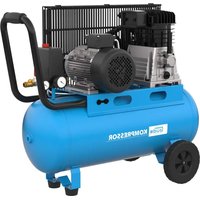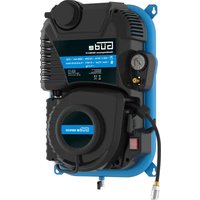
Wandkompressor 160/08/2 ST - Compressor Güde - Free user manual and instructions
Find the device manual for free Wandkompressor 160/08/2 ST Güde in PDF.


User questions about Wandkompressor 160/08/2 ST Güde
0 question about this device. Answer the ones you know or ask your own.
Ask a new question about this device
Download the instructions for your Compressor in PDF format for free! Find your manual Wandkompressor 160/08/2 ST - Güde and take your electronic device back in hand. On this page are published all the documents necessary for the use of your device. Wandkompressor 160/08/2 ST by Güde.
USER MANUAL Wandkompressor 160/08/2 ST Güde
Translation of the original operating instructions Wall compressor
ENGLISH Please read the instructions carefully before starting the machine.
Technical Data /Device description / SafetyWarnings / Specified Conditions of Use / Emergency procedure / Symbols / Maintenance / Disposal / Guarantee / Service 15
Suction capacity. 160 l/min

Free air delivery. 90 l/min

Max. working pressure.. 8 bar


Read and understand the operating instructions before using the appliance. Abide by all
the safety measures stated in the service manual. Act responsibly toward third parties. In case of any doubts about connection and operation refer please to our customer center Preserve all the documentation so that anyone who uses the compressor can consult this beforehand.
Specified Conditions Of Use
The compressor can only be used for the production of compressed air to be used at home and by handymen. - Respecting technical data and safety precautions.

The compressed air produced by the npressor cannot not be used for pharmaceuti-food or medical purposes or to fill the air tles of scuba divers.

The compressor must be used in a suitable environment (well ventilated with an ambient temperature of between +5^ and +40^ ) and over in places with dust, acids, vapors, explosives, flammable gases.
Do not use this product in any other way as stated for normal use. Not observing general regulations in force and instructions from this manual does not make the manufacturer liable for damages.
Safety instructions

WARNING! Electric shock! There is a risk of injury caused by electric shock!

Operation is only allowed with a safety pitch against stray current (RCD max. stray rent of 30mA ).

Weight. 11,2 kg
Degree of protection IP 20
Protection class
Sound power level L_WA^* 89 dB(A)
*Measured according to 2005/88/EC

Check the voltage. Technical data given on the type label must correspond with electric network voltage.
Insert the plug of the electrical cable in a socket of suitable shape, voltage and frequency complying with current regulations.
Use extension cables with a maximum length of 5 meters and with a cable cross-section of not less than 1.5mm2 Use of extension cables of different length and cross-section and also of adapters and multiple sockets should be avoided.
Check the cable and/or socket for damages before the appliance putting into operation.
To avoid danger, a damaged mains supply pipe must be replaced by the manufacturer. Do not under any circumstances attempt any repair yourself.
Never let the compressor come into contact with water or other liquids and never direct the jet of liquids sprayed by tools connected to the compressor towards the compressor: as the appliance is live, this could cause electrocution or short-circuits.
Never use the appliance with bare feet or wet hands or feet.
Never yank the power cable to disconnect the plug from the power outlet or to move the compressor.
Warning: the compressor may restart when power is restored following a blackout.

Compressed air is a potentially dangerous form of energy; always take great care when using the compressor and its accessories.
This device is not intended for use by persons (including children) with limited physical, sensory or mental capabilities or without the necessary lack experience or knowledge unless they are supervised by a person who is responsible for their safety or were instructed by that person in how to use the device.
Children should be supervised to ensure that they do not play with the device. Always keep children and unauthorised persons out of reach of the appliance.
Never use the compressor without being supervised.
Never direct the jet of air towards persons, animals or your body.
Never keep the air flow in body holes as that could lead to fatal injuries!
Keep the work area free.
When operating, the compressor must be placed on a stable surface.
The compressor must be used in the horizontal position only, resting on its rubber feet.
Safety goggles should be worn when using the compressor in order to protect the eyes against any foreign bodies lifted by the jet of air.
If possible, when using air-powered accessories, wear safety clothing.
Always maintain a safety distance of at least 4 meters between the compressor and the work area.
Caution! The pneumatic hose may lash you when the quick-acting coupling is opened! The pneumatic hose should be held by hand.
Always use the handle to move the compressor.
When using compressed air, you must know and comply with the safety precautions to be adopted for each type of application (inflation, airpowered tools, painting, washing with water-based detergents only, clinching, etc.).
When using compressed air, you must know and comply with the safety precautions to be adopted for each type of application (inflation, airpowered tools, painting, washing with water-based detergents only, clinching, etc.).
Caution! Never switch the compressor on or off using the plug. Pressure switch to be pressed at all times.
Do not leave the compressor on over night as it could become a source of danger.
Never leave the appliance exposed to adverse weather conditions (rain, sun, fog, snow).
If this compressor is used outdoors, always remember to stow it after use in a covered or closed place.
Never use the compressor outdoors in rain or bad weather.
Do not place flammable or nylon/fabric objects close to and/or on the compressor.
Do not cover the air inlets on the compressor.
The compressor must not be fitted in a vehicle for industrial purposes without an inspection by an expert!
Caution! When fitted in automatic equipment, it is necessary to install appropriate alarm or warning devices in case of power outage or malfunction or compressor (e.g. feed line, etc.) failure.
General safety instructions for compressed air tools
- Install the hose reel before using it. This minimizes the risk of injury.
- Use the hose reel only with compressed air. The hose reel must not be used with liquids.
- Use only accessories in perfect condition and intended for use with a hose reel.
- Never exceed the maximum working pressure of the hose reel or pneumatic tool you use with it.
- Only connect the hose reel to supply lines that ensure that the maximum allowable pressure is not exceeded by more than 10% , e.g. by means of a pressure regulating valve (pressure reducing valve) integrated in a pressure air duct with a connected or built-in safety valve.
- Keep the compressed air hose at a safe distance from heat, oil, and sharp edges.
- Always check the hose before using the hose reel.
- Operate the hose reel only with a compres - sor.
Operation with pneumatic cylinders is not permitted.
Operation of compressed air tools with flammable gases is prohibited. There is a risk of explosion! - The hose reel must not be used for other purposes.
- Keep the hose reel away from children.
- Never point the hose reel or its hose at people or animals.
- Use only original spare parts for repairs. Non-original spare parts can cause dangerous damage.
- Disconnect the hose reel from the compressed air supply before performing maintenance, adjusting, and repair work, when changing the connecting pieces or when the hose reel will not be used.
- Do not make any changes to the hose reel.
- Use the hose reel only when it is in perfect condition. If in doubt, consult a specialist first.
- Have it repaired by qualified personnel only.
- Do not carry the hose reel by the hoses.
- When disconnecting the hose from the com
pressed air source or the pneumatic tool, or the hose reel, hold the hose firmly. Swinging compressed air hoses pose a risk of injury.
ATTENTION! Keep a firm grip on the hose during automatic retraction and run it to the reel until the hose is fully retracted. Flapping compressed air hoses are a safety and injury risk.
Requirements for operating staff
The operating staff must carefully read the Operating Instructions before using the appliance.
Qualification: Apart from the detailed instructions by a professional, no special qualification is necessary for appliance using.
Minimum age: Persons over 16 years of age can only work on the appliance. An exception includes youngsters trained in order to reach knowledge under supervision of the trainer during occupational education.
Training: Using the appliance only requires corresponding training by a professional or the Operating Instructions. No special training is necessary.
Emergency procedure
Conduct a first-aid procedure adequate to the injury and summon qualified medical attendance as quickly as possible. Protect the injured person from further harm and calm them down. For the sake of eventual accident, in accordance with DIN 13164, a workplace has to be fitted with a first-aid kit. It is essential to replace any used material in the first-aid kit immediately after it has been used.
If you seek help, state the following pieces of information:
- Accident site
- Accident type
- Number of injured persons
- Injury type(s)
Maintenance

Before carrying out any work on the machine, connect the plug from the socket. Run the essory connected dry until there is no more air in receiver.
Prior to every use, visually check the machine to rule out any defects, in particular on the power cable and the plug. Safety valve Functional check. The machine must not be used under any circumstances if the machine or the safety devices are damaged.
Use only original accessories and original spare parts.
Never clean the machine and its components with
solvents, flammable or toxic liquids. Use only a damp cloth making.

Oil-free
No need to add oil for operation
Only a regularly maintained and treated appliance can serve as a satisfactory aid. Insufficient maintenance and care can lead to unforeseen accidents and injuries. If necessary, a list of spare parts can be found at www.guede.com.
Disposal
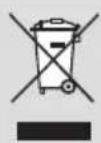
Waste batteries and waste electrical and electronic equipment must not be disposed of together with household waste. Waste batteries and waste electrical and electronic equipment must be collected and disposed of separately. Remove used batteries, accumulators and lamps from the devices before disposing of them. Ask the local authorities or your retailer about recycling centres and collection points. Depending on local regulations, retailers may be obliged to take back used batteries and waste electrical and electronic equipment free of charge. Help reduce the demand for raw materials by reusing and recycling your used batteries and waste electrical and electronic equipment. Waste batteries (especially lithium-ion batteries) and waste electrical and electronic equipment contain valuable, recyclable materials that can have a negative impact on the environment and your health if not disposed of in an environmentally friendly manner. Delete any personal data on your old device before disposing of it.
Guarantee
The guarantee solely covers inadequacies caused by material defect or manufacturing defect. Original payment voucher with the sales date needs to be submitted for any claim in the guarantee period.
The guarantee does not cover any unauthorised use such as appliance overloading, use of violence, damage as a result of any unauthorised interference or caused by foreign items. Failing to follow the operating and assembly instructions and common wear are also not included in the guarantee.
Service
Do you have any technical questions? Any claim? Do you need any spare parts or operating instructions?
We will quickly help you and without needles bureaucracy at our web pages at www.guide.com in the Servicing part. Please help us be able to help you. In order to identify your device in case of claim we need the serial No., product No. and year of production. All this data can be found on the type label. Please enter it here for future reference:
Serial No.:
Art. No:
Year of production:
Symbols

Read the Operating Instructions!

Before carrying out any work on the machine, disconnect the plug from the socket.

Wear eye protective goggles! Wear ear protectors!

Protect against humidity Never expose tool to rain.

Cable pulling / transport prohibited

Warning/caution!

Dangerous voltage

Caution - hot surface! Warning, hot surfaces!

Danger - automatic control (closed loop)

Warning against thrown-off items
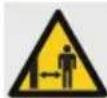
Keep distance of persons! Observe to keep out of dangerous zone
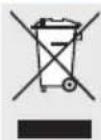
Any damaged or disposed electric or electronic devices must be delivered to appropriate collection centres.

Protect against humidity

This side up
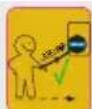
Attention! Hose bouncing around
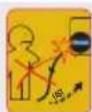
Attention! Hose bouncing around
Failure removal
| Defect Causes Measure | ||
| Compressor not starting after being switched on | Defective supply Have the current supply checked by an authorised person | |
| Worn carbons Replace the carbons | ||
| Compressor getting warm too much | Air supply is not sufficient Make sure sufficient air supply and outlet (minimum distance from wall is 40 cm) is provided | |
| Too long time of appliance operation | Switch the compressor off | |
| Compressor being overheated and keeps switching off | Compressor is overloaded Contact the Güde service centre | |
| Compressor is defective Contact the Güde service centre | ||
| Compressor under undervoltage Contact the Güde service centre | ||
| Outdoor temperature of 35°C | ||