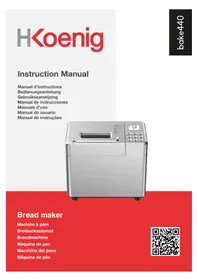
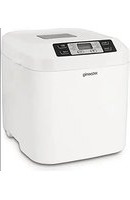
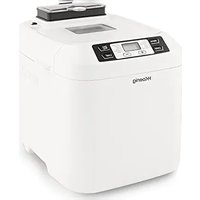
USER MANUAL BAKE440 H.KOENIG
To prevent personal injury or property damage, read and follow all instructions and warnings.
When using electrical appliances, basic safety precautions should always be followed including the following:
- Read all instructions.
- Do not touch hot surfaces. Use handle or knobs. Always use hot pads or oven mitts when handling hot bread and bread pan.
- To protect against electric shock do not immerse cord, plugs, or other electric parts in water or other liquids.
- Close supervision is necessary when this appliance is used by or near children.
- Unplug the appliance from outlet when not in use and before cleaning. Allow to cool before putting on or taking off parts.
- Do not operate any appliance with a damaged cord or plug or after the appliance malfunctions or if the appliance is dropped or damaged in any manner. If you experience any problems with your appliance, unplug it immediately from the electrical outlet. For service information see warranty page.
- The use of accessory attachments not recommended may cause fire, electric shock, or injury to persons.
- Do not use this appliance outdoors.
- Do not let cord hang over the edge of a table or counter, or touch hot surfaces.
- Do not place on or near a hot gas or electric burner, or in a heated oven.
- Extreme caution must be used when moving an appliance during operation.
-
To disconnect, turn control to "OFF," then remove plug from wall outlet.
-
Do not use appliance for other than intended use.
- Avoid contacting moving parts.
- Do not let cord contact hot surface, including the stove.
- Set bread pan on hot pad, trivet or other heat protective surface. Do not set hot bread pan directly on the counter, table or other surface.
- Do not put hand inside oven chamber after bread pan is removed. Heating unit will still be hot.
- Do not use your bread maker with a converter or transformer. This will destroy the electronic controls.
- Do not attempt to repair this appliance yourself.
- A short power-supply cord is provided to reduce risks resulting from becoming entangled in or tripping over a longer cord.
- Longer, detachable power-supply cords or extension cords are available and may be used if care is exercised in their use. While use of an extension cord is not recommended, if you must use one, the marked electrical rating of the detachable power-supply cord or extension cord should be at least as great as the electrical rating of the appliance. If the appliance is of the grounded type, the extension cord should be a grounding-type 3-wire cord. The cord should be arranged so that it will not hang over the counter top or tabletop where it can be pulled by children or tripped over.
- For household use only.
CLEANING YOUR BREADMAKER
- Unplug the cord from the electrical outlet and allow the appliance to cool completely before cleaning.
- After the bread is removed from the bread pan, and the pan has cooled, fill it half-full with warm water and a small amount of dish soap. Allow the bread pan to soak for 5 to
20 minutes, or until the knead blades can be lifted off of the shafts. You may need to twist the knead blades slightly to loosen. If the knead blades are difficult to remove after soaking, secure the cross bar on the underside of the bread pan while twisting the knead blades to loosen. Wash the inside of the bread pan and knead blades with a soft cloth, rinse and dry. Use a mild detergent. Never use chemical cleaning agents, oven cleaners, abrasive scouring pads, or cleansers on the bread pan or knead blades, as damage to the coating or finish can occur. Replace the knead blades on the shaft.
- Never immerse the bread pan in water or wash in an automatic dishwasher as damage to the bearing that turns the knead blade can occur. Wipe the inside of the oven chamber and the outside surfaces of the bread maker with a damp cloth if necessary. Never dip the appliance in water or fill the baking compartment with water! The lid cannot be removed for cleaning.
USE ENVIRONMENT
The machine may work well in a wide range of temperature, but there will be any difference in loaf size between a very warm room and cold room. We suggest that the room temperature should be within the range of 15^ to 34^ .
PARTS AND FEATURES
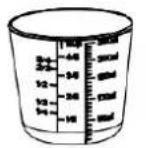
Measuring cup
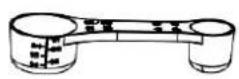
Measuring spoon
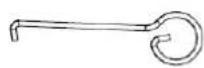
Hook (Kneading paddle remover)
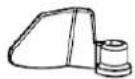
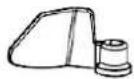
Kneading paddle
FUNCTION INTRODUCTION
1. CONTROL PANEL
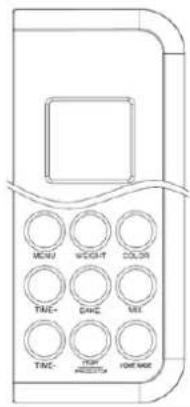
2. POWER "ON"
Plug the bread maker into power supply, a beep will be heard and "3:10" will be displayed. But the colon between the "3" and "10" don't flash constantly. And "1" is the default program. The arrows point to "750g" and "MEDIUM" as they are default settings.
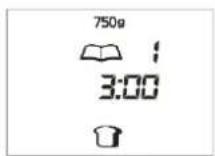
Press the START/STOP button once to start a program. The indicator will light up, and the colon in the time display begin to flash and the program will start. Any other button is inactivated except the START/STOP button after a program has begun.
Press the START/STOP button for 0.5 seconds and shift to pause state, if no operation in 3 minutes, the program will continue processing unit the setting program completed.
Press the START/STOP button for 3 seconds to cancel a program, then a beep will be heard, it means that the program has been switched off. This feature will help to prevent any unintentional disruption to the operation of program.
To remove bread, press the START/STOP button to end the baking cycle.
Press MENU button to select your desired programs. Each time it is pressed (accompanied by a short beep) the program will vary. Press the button discontinuously, the corresponding program number will be cycled to show on the LCD display.
5. CRUST COLOR
Press COLOR button to select your desired setting: Light, Medium, or Dark crust This button is adjustable in programs menu 1-7, 10, 13-15.
6. WEIGHT
Press the Weight button to choose your desired gross weight (500g, 750g, 1000g). This button is adjustable in programs menu 1-7.
7. DELAY TIMER ("or▲")
Use the DELAY TIMER feature to start the bread maker at a later time. Press buttons to increase the cycle time shown on the LCD display. Add up to 15 hours including the delay time and bread making program.
NOTES
- Set the Delay Time after selecting PROGRAM MENU, WEIGHT, and CRUST COLOR.
- Do not use the timer function with recipes that include dairy or other ingredients, such as eggs, milk, cream, or cheese.
- You must decide how long it will be before your bread is ready by pressing the or . Please note the delay time should include the baking time of program. After baking program is completed the bread machine will shift to the Keep Warm setting for 1 hour. Before start making
bread, press the program menu and crust color are select first, by pressing to increase or decrease the delay time at the increment of 10 minutes. The maximum delay is 15 hours.
POWER INTERRUPTION
In the event of a power outage, the process of making bread will continue automatically within 10 minutes, even without press START/STOP button. If the interruption time is longer than 15 minutes, the unit will not continue running and the LCD display will revert back to the default setting. If the dough has started rising, discard the ingredients in the bread pan and start over. If the dough has not entered the rising phase when the power cord is removed from wall outlet. You can press the START/STOP button to continue the program from the beginning.
WARNING DISPLAY
"HHH"-This warning means that the temperature inside of the bread pan is too high. Press START/STOP button (see below figure1) to stop the program, unplug the power cord, open the top lid, and let the machine cool down completely for 10-20 minutes before restarting.
"EE0"-This warning means that the temperature sensor is disconnected. Press START/STOP button (see below figure2) to stop the program, unplug the power cord. Please check the sensor by the nearest authorized service agent for examination, repair or electrical /mechanical adjustment.
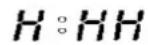

Figure 1
Figure 2
KEEP WARM
After baking program is complete, the bread machine will beep 10 times and shift to Keep Warm setting for 1 hour. It will be displayed "0:00". After 60 minutes, the symbol will be shown on the LCD display. To cancel the Keep Warm process, press the START/STOP button for 3 seconds.
TIP : Removing bread immediately after baking program is complete will prevent crust from becoming darker.
USING THE FRUIT & NUT DISPENSER
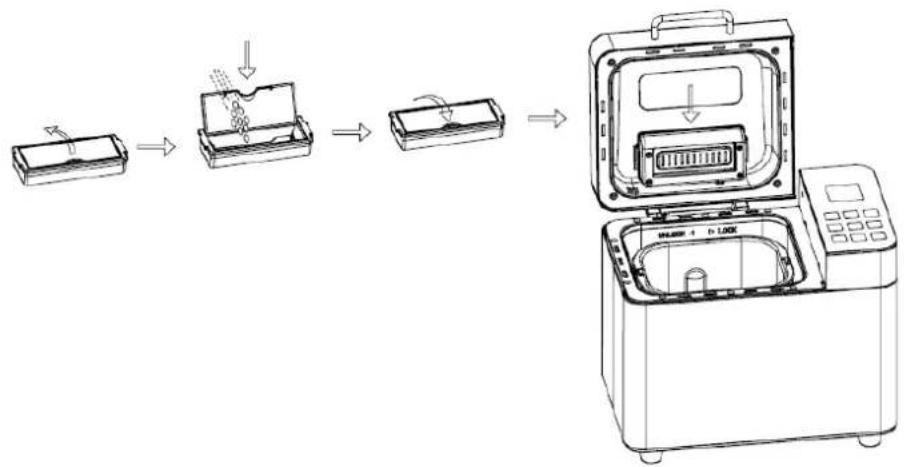
If you wish to add nuts or seeds to your loaf, and keep the best flavor, better not put them into flour at the beginning of the preparation. Otherwise they would lose flavor and texture.
Automatic adding add-ins (fruits, nuts, raisins) function will help you without waiting by the side of bread maker. Tip in the nuts or seeds at dispenser then install it below the lid. Close the lid then start the program, after approximately 30 minutes (the exact time is program dependent), the nut dispenser will operate 3 times to push the bottom cover open, to ensure all the contents have dispensed.
This function is automatically in menu 1~7 and 13.
BEFORE THE FIRST USE
Wash and dry bread pan and kneading paddle.
Note: Do not use metal utensils in bread pan since they may damage the non-stick surface.
CAUTION : Falling Object Hazard. Bread maker can wobble and walk during kneading cycle. Always position it in the center of counter away from the edge.
- Check for any missing or damaged parts.
-
Clean all the parts according to the "CLEANING AND MAINTENANCE" section.
-
Set the bread maker on bake mode and bake empty for about 10 minutes. Then let it cool down and clean all the detached parts again. The appliance may emit a little smoke and/or odor when you turn it on for the first time. This is normal and will subside after the first or second use. Make sure the appliance has sufficient ventilation.
- Dry all parts thoroughly and assemble them, the appliance is ready for use.
DETAILED INSTRUCTIONS
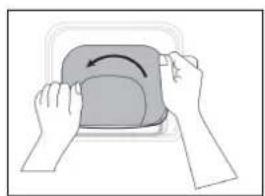
- Using the bread pan handle, turn the bread pan counter-clockwise and then pull it out of the appliance.
- Push the kneading paddle onto the drive shaft inside the bread pan.
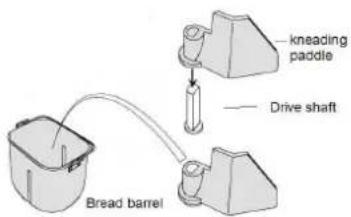
- Add the ingredients to the bread pan in order listed in the recipe. First, add the liquids, sugar, and salt; then the flour; and last the yeast.
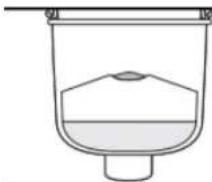
LAST:Yeast.MUST be separate from wet ingredients
SECOND: Dry ingredients (sugar, salt, shortening, flour)
FIRST: Liquid ingredients - room temperature
- Carefully measure and add ingredients to the bread pan in the EXACT order given in the recipe.
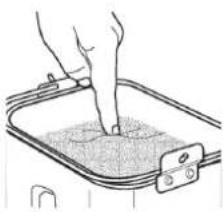
NOTE: Make a small indentation on the top of flour with finger, add yeast into the indentation. Make sure that yeast does not come into contact with salt nor liquids.
TIP: Premeasured all ingredients, including add-ins (nuts, raisins), prior to beginning.
- Place the bread pan into the break make and make sure it is firmly locked in place by turning it clockwise. Close the lid.
NOTE : Bread pan must lock into place for proper mixing and kneading.
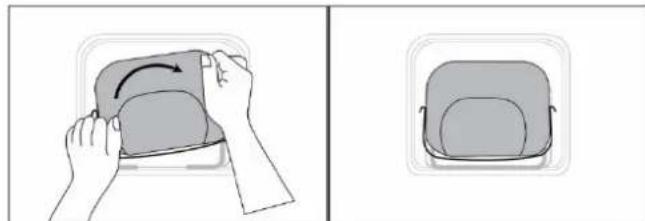
- Plug in the appliance beep will be heard and the LCD display will default to Program 1.
- Press PROPGRAM MENU button until your desired program is displayed.
- Press the WEIGHT button to move the arrow to 500g,750g,1000g.(WEIGHT is not an option in program 8-15.)
- Press the CRUST button to move the arrow to desired setting: Light, Medium, Dark crust. (Crust is not adjustable in program 8-9, 11-12.)
- If desired, set the DELAY TIMER button. Press + and - buttons to increase the cycle time shown on the LCD display. (Delay function is not available in program 9, 12-14)
NOTE: Do not use the feature when using dairy, eggs, etc. This step may be skipped if you want the bread maker to start working immediately.
- Press the START/STOP button once to start program. Bread maker will beep once and "3:00" will be displayed. But the colon between the "3" and "10" don't flash constantly and the indicator will light up. The kneading paddle will begin to mix your ingredients. If Delay Timer was activated, kneading paddle will not mix ingredients until program is set to begin.
- Once the process is complete, ten beeps will be heard and shift to the Keep Warm setting for 1 hour. You can press START/STOP button for 3 seconds to stop the process and Keep Warm setting will end. Unplug the power cord and then open lid using oven mitts.
- Let the bread pan cool down slightly before moving the bread. Use oven mitts, carefully turn the bread pan counterclockwise to unlock and lift up on the handle to remove from the machine.
Caution: The Bread pan and bread may be very hot! Always handle with care.
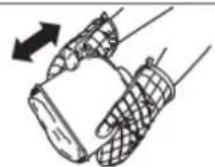
- Using oven mitts, turn the bread pan upside down (with the bread pan handle folded down) onto a wire cooling rack or clean cooking surface and gently shake until bread falls out. Use a non-stick spatula to gently loosen the sides of the bread from the bread pan.
- Let the bread cool for about 20 minutes before slicing. It is recommended slicing bread with electric cutter or dentate cutter, had better not with fruit knife or kitchen knife, otherwise the bread may be subject to deformation.
- If kneading paddle remains in the bread, gently pry it out using a spatula or small utensil. The bread is hot, never use the hand to remove the kneading paddle. When do not use or when operation is complete, unplug the power cord.
Note: Store remaining bread in a sealed plastic bag for up to three days at room temperature. To store for a long time, place sealed plastic bag in refrigerator for up to 10 days.
REMOVING BREAD
Bread pan and baking chamber will be hot and oven mitts should be used. Remove the bread pan by lifting the handle and turning it counterclockwise to unlock and pull bread pan straight up from the base of the chamber.
Carefully shake the bread upside down until the bread falls out of the bread pan. Allow to cool on a wire rack for 10 minutes before slicing and slice with bread knife.
TIP: If kneading paddle comes out in the loaf, remove it with a spatula or small utensil.
INGREDIENTS INTRODUCTION
1. Bread Flour
Bread flour is the most important ingredients of making bread and is recommended in most yeast-bread recipes. It has a high gluten content and (so it can be also called high-gluten flour which contains high protein), and keep the size of the bread from collapsing after rising. Flour varies by region. The gluten content is higher than the all-purpose flour, so it can be used for making bread with large in size and higher inner fiber.
2. All-Purpose Flour
Flour that contains no baking powder, suitable for "quick "breads or bread made with the Quick settings. Bread flour is better suited for yeast breads.
3. Whole-Wheat Flour
Whole-wheat flour is ground from the entire wheat kernel. Bread made with all or part whole-wheat flour will higher fiber and nutritional content. Whole-Wheat flour is heavier and, as a result, loaves may be smaller in size and have a heavier texture.
It contains wheat skin and gluten. Many recipes usually combine with Whole -Wheat flour or Bread Flour to achieve the best result.
4. Black Wheat Flour
Black Wheat Flour, also named as "Rye Flour", it is a kind of high fiber flour, and it is similar with whole-wheat flour. To obtain the large size after rising, it must be used in combination with high proportion of bread flour.
5. Self-rising flour
Flour that contains baking powder, use especially for making cakes. Do not use self-rising flour in combination with yeast.
6. Corn flour and oatmeal flour
Corn flour and oatmeal flour are ground from corn and oatmeal separately. They are the additive ingredients of making rough bread, which are used for enhancing the flavor and texture.
7. Sugar
Sugar is "food" for yeast and also increases the sweet taste and color of bread. It is a very important element of making the bread rise. White sugar is normally used; however, brown sugar, powdered sugar, or cotton sugar may also be called for in some recipes.
8. Yeast
Yeast is a living organism and should be kept in the refrigerator to remain fresh. It needs carbohydrates found in sugar and flour as nourishment. Yeast used in bread maker recipes will be sold under several different names: Bread machine yeast (preferred) active-dry yeast, and instant yeast.
After yeasting process, the yeast will produce carbon dioxide. The carbon dioxide will expand bread and make the inner fiber soften.
1 tbsp dry yeast = 3 tsp dry yeast
1 tbsp dry yeast = 15ml yeast
1 tsp dry yeast = 5ml
Before using, check the expiration date and storage time of yeast. Return to refrigerator immediately after each use, the fungus will be killed at high temperature usually the failure of bread rising is caused by the bad yeast.
TIP: To check whether your yeast is fresh and active:
(1) Pour 1 cup (237ml) warm water (45-500C) into a measuring cup.
(2) Add 1 teaspoon (5ml) white sugar into the cup and stir, then 1 tablespoon (15ml) yeast over the water.
(3) Place the measuring cup in a warm place for about 10min. Do not stir the water.
(4) Fresh, active yeast will begin to bubble or "grow". If it does not, the yeast is dead or inactive.
9. Salt
Salt is necessary to improve bread flavor and crust color. It is also used to restrain yeast activity. Never use too much salt in a recipe. But bread would be larger if without salt.
10. Egg
Eggs can improve bread texture, make the bread more nourish and larger in size. The egg must be whisked in with the other liquid ingredients.
- Grease, Butter and Vegetable Oil
Grease can make bread soften and delay storage life. Butter should be melted or chopped to small pieces before adding to liquid.
- Baking Powder
Baking powder is used for rising the Ultra Fast bread and cake. As it does not need rise time, and it can produce the air, the air will form bubble to soften the texture of bread utilizing chemical principle.
- Baking Soda
It is similar with baking powder. It can also used in combination with baking powder.
- Water and Other Liquids (always add first)
Water is essential ingredient for making bread. Generally speaking, water should be in room temperature between 20^ and 25^ . Some recipes may call for milk, or other liquids purpose of enhancing bread flavor. Never use dairy with the Delay Timer option.
USE EXACT MEASUREMENT
TIPS: One of the most important steps of making good bread is the proper measurement of ingredients. Measure each ingredient carefully and add to your bread pan in the order given in the recipe.
It is strongly suggested that use measuring cup or measuring spoon to obtain accurate amount, otherwise the bread will be largely influenced.
- Adding Sequence
Always add ingredients in the order given in the recipe.
FIRST: Liquid ingredients
SECOND: Dry ingredients
LAST: Yeast
The yeast should only be placed on the dry flour and never come in contact with the liquid or salt. When you use the Delay Timer function for a long time, never add perishable ingredients such as eggs or milk.
After the flour is complete kneading for first time, a beep will heard and put fruit ingredients into the mixture. If the fruit ingredients are added too early, the flavor will be diminished after long time stir.
- Liquid Ingredients
Water, fresh milk or other liquids should be measured with measuring cups with clear markings and a spout. Set the cup on the counter and lower yourself to check the liquid level. When measuring cooking oil or other ingredients, clean the measuring cup thoroughly without other ingredients.
3. Dry measurements
Measure dry ingredients by gently spooning flour, etc., into the measuring cup and then, once filled, leveling off with a knife. Never use the measuring cup to scoop your dry ingredients directly from a container as this could add up to one tablespoon of extra ingredients. Do not tap the bottom of the measuring cup or pack down.
HINT: Before measuring, stir the flour to aerate it. When measuring small amounts of dry ingredients, such as salt or sugar, use a measuring spoon, making sure it is leveled off.
TROUBLESHOOTING
| NO. | PROBLEM | PROBLEM CAUSE | SOLUTION |
| 1 | Odor or burning smell | *Flour or other ingredients have spilled into the baking chamber. | *Stop the bread maker and allow to cool completely.Wipe excess flour etc., from the baking chamber with a paper towel. |
| 2 | Ingredients not blending can hear motor burning | *Bread pan or kneading paddle may not be installed properly.
*Too many ingredients. | *Make sure kneading paddle is set all the way on shaft.
*Measure ingredients accurately. |
| 3 | "HHH" displays when START/STOP button is pressed. | *Internal temperature of bread maker is too high. | *Allow unit to cool down in between programs.
Unplug unit, open lid, and remove bread pan. Allow to cool 15-30 minutes before beginning new programs. |
| 4 | Window is cloudy or covered with condensation. | *May occur during mixing or rising programs. | *Condensation usually disappears during baking programs. Clean window well in between uses. |
| 5 | Kneading paddle comes out with the bread. | *Thicker crust with dark crust setting. | *It is not uncommon for the kneading paddle to come out with the bread loaf. Once the loaf cools, remove the paddle with a spatula. |
| 6 | Dough is not blending thoroughly; flour and other ingredients are built up on sides of pan; bread loaf is coated with flour | *Bread pan or kneading paddle may not be installed properly.
*Too many ingredients.
*Gluten-free dough is typically very wet. It may need additional help by scraping sides with a rubber spatula. | *Make sure bread pan is securely set in unit and kneading paddle is firmly on shaft.
*Make sure ingredients are measured accurately and added in the proper order.
*Excess flour can be removed from loaf once baked and cooled. Add water, one tablespoon at a time, until dough has formed into a ball. |
| 7 | Bread raised too high or pushed lid up. | *Ingredients not measured properly(too much yeast, flour).
*Kneading paddle not in bread pan.
*Forgot to add salt. | *Measure all ingredients accurately and make sure sugar and salt have been added.
*Try decreasing yeast by 1/4 teaspoon(1.2ml).
*Check installation of kneading paddle. |
| 8 | Bread does not rise; loaf short. | *Incurred measurement of ingredients or inactive yeast.
*Lifting lid during programs. | *Measure all ingredients accurately *Check expiration date of yeast and flour. *Liquids should be room temperature. |
| 9 | Bread has a crater in the top of the loaf once baked. | *Dough has risen too fast.
*Too much yeast or water.
*Incorrect program chosen for the recipe. | *Do not open lid during baking.
*Select a darker crust option. |
| 10 | Crust color is too light | *Opening the lid during baking. | *Do not open lid during baking.
*Select a darker crust option. |
| 11 | Crust color is too dark | *Too much sugar in the recipe. | *Decrease sugar amount slightly.*Select a lighter crust option |
| 12 | Bread loaf is lopsided. | *Too much yeast or water.Kneading paddle pushed dough to one side before rising and baking. | *Measure all ingredients accurately.*Decrease yeast or water slightly.*Some loaves may not be evenly shaped, particularly with whole-grain flour. |
| 13 | Loaves made are different shapes. | *Varies by the type of bread. | *Whole-grain or multigrain is denser and may be shorter than a basic white bread. |
| 14 | Bottom is hollow or holey inside. | *Dough too wet, too much yeast, no salt.Water too hot. | *Measure all ingredients accurately *Decrease yeast or water slightly. Check salt measurement.Use room temperature water. |
| 15 | Under baked or sticky, dough bread. | *Too much liquid; incorrect program chosen. | *Decrease liquid and measure ingredients carefully.*Check program hosen for recipe. |
| 16 | Bread mashes down when slicing. | *Bread is too hot. | *Allow to cool on wire rack for 15-30 minutes before slicing. |
| 17 | Bread has a heavy, thick texture. | *Too much flour, old flour.*Not enough water. | *Try increasing water or decreasing flour. *Whole-grain breads will have a heavier texture. |
| 18 | Base of bread pan has darkened or is spotted. | *After washing in dishwasher. | *This is normal and will not affect the bread pan. |
RECIPE
| Menus | | Ingredie | Volume | Volume | Volume | Remark |
| 1 Basic Bread | | bread weight | 1000g | 750g | 500g | |
| [1] | water | 300ml | 240ml | 180ml | |
| [2] | salt | 1.5 | 1 spoons | 0.5 spoon | put on the corner |
| [3] | sugar | 3 scoops | 2.5 | 2 scoops | put on the corner |
| [4] | oil | 4 scoops | 3 scoops | 2 scoops | |
| [5] | high gluten flour | 3.5cups/ 500g | 2.75cups/ 400g | 2.25cups/3 00g | |
| [6] | instant yeast | 0.8 spoons | 0.8 spoons | 0.5 spoon | put on the dry flour, don't touch with any liquid |
| 2 French Bread | | bread weight | 1000g | 750g | 500g | |
| [1] | water | 300ml | 230ml | 160ml | |
| [2] | salt | 2 | 1.5 | 1 spoons | put on the corner |
| [3] | sugar | 3 scoops | 2 scoops | 1.5 scoops | put on the corner |
| [5] | oil | 2 scoops | 1.5 spoons | 1.25 spoons | |
| [6] | high gluten flour | 3.5cups/ 500g | 2.75cups/ 400g | 2.25cups/ 300g | |
| [7] | instant yeast | 0.8 spoons | 0.8 spoons | 0.5 spoon | put on the dry flour, don't touch with any liquid |
| 3 Whole-wheat bread | | bread weight | 1000g | 750g | 500g | |
| [1] | water | 300ml | 240ml | 180ml | |
| [2] | salt | 1 spoons | 1 spoon | 0.5 spoon | put on the corner |
| [3] | sugar | 6 scoops | 5 scoops | 4 scoops | put on the corner |
| [4] | oil | 3 scoops | 2.5 | 2 scoops | |
| [5] | high gluten flour | 1.75cup s/200g | 1.5cups/1 60g | 1.25cups/1 20g | |
| [6] | whole-wheat | 1.75cup /200g | 1.5cups/2 10g | 1cups/180g | |
| [7] | instant yeast | 2.0 spoons | 2 spoons | 2.5 spoons | put on the dry flour, don't touch with any liquid. |
| 4 Quick Bread | | bread weight | 1000g | 750g | 500g | |
| [1] | water | 320ml | 240ml | 180ml | water temperature 40-50°C |
| [2] | salt | 1.5 spoons | 1 spoons | 0.5spoon | put on the corner |
| [3] | sugar | 3 scoops | 2.5 scoops | 2 scoops | put on the corner |
| [4] | oil | 4 scoops | 3 scoops | 2.5 scoops | |
| [5] | high gluten flour | 3.5cups/ 500g | 2.75cups/ 400g | 2.25cups/ 300g | |
| [6] | instant yeast | 2.5 spoons | 2 spoons | 2 spoons | put on the dry flour, don't touch with any liquid. |
| 5 Sweet bread | | bread weight | 1000g | 750g | 500g | |
| [1] | water | 300ml | 240ml | 160ml | |
| [2] | salt | 1 spoon | 1 spoon | 0.75 spoon | put on the corner |
| [3] | sugar | 0.4 cup | 0.3 cup | 0.2 cup | put on the corner |
| [4] | oil | 5 scoops | 3 scoops | 2.5 scoop | |
| [5] | high gluten | 3.5cups/ 500g | 2.75cups/ 400g | 2.25cups/ 300g | |
| [6] | Milk powder | 2 scoops | 1.5 scoops | 1 scoops | |
| [7] | instant yeas | 0.8 spoons | 0.8 spoon | 0.5 spoons | put on the dry flour, don't touch with any liquid. |
| 6 Sandwich bread | | bread | 1000g | 750g | 500g | |
| [1] | water | 300ml | 240ml | 160ml | |
| [2] | Edible butter | 3 scoops | 2.5scoops | 2.5scoops | |
| [3] | sugar | 3scoop | 2.5scoop | 2scoop | put on the corner |
| [4] | salt | 1 spoon | 1 spoon | 3/4spoon | put on the corner |
| [5] | high gluten | 3.5cups/ 500g | 2.75cups/ 400g | 2.25cups/ 300g | |
| [6] | Milk powder | 2 scoops | 1.5 scoops | 1 scoops | |
| [7] | instant yeas | 0.8 spoons | 0.8 spoon | 0 .5 spoons | put on the dry flour, don't touch with any liquid. |
| 7 Gluten free bread | | bread | 1000g | 750g | 500g | |
| [1] | water | 240ml | 180ml | 120ml | |
| [2] | salt | 1.5spoo | 1 spoon | 0.7 spoon | put on the corner |
| [3] | sugar | 3.5scooo | 3scoop | 2scoop | put on the corner |
| [4] | oil | 3scoop | 2.5scoop | 2scoop | |
| [5] | high gluten flour | 2cups/2 80g | 1.5cups/2 00g | 1cups/130g | |
| [6] | corn flour | 2cups/2 80g | 1.5cups/2 00g | 1cups/130g | can replace of oat flour |
| [7] | instant yeast | 1 spoon | 1 spoon | 1 spoon | put on the dry flour, don't touch with any liquid |
| 8 Mix | | Milk | 80ml | 1、Stir unsalted cream to become sticky; |
| Sugar | 30g | 2、Mash strawberry, and mix well with milk, sugar and sticky cream. Put the mixture into fridge, let it cool down to 5-10°C. |
| Unsalted cream | 130ML |
| | Strawbery | 60g | 3、Install ice cream barrel, press I Mix, set the time 25-30min, start the program, pour the mixture slowly into ice cream barrel.4、Wait until the program competed. Beep will be heard. |
| 9Yogurt | | time | 8:00 | | | |
| [1] | milk | 1000ml | | | |
| [2] | lactic acid bacteria | 100ml | | | |
| 10Dessert | | time | 1:40 | | | |
| [1] | egg | 2pcs | | | |
| [2] | milk | 1cups | | | |
| [3] | cooked rice | 1.5 cups | | | |
| [4] | sugar | 0.5 cups | | | |
| [5] | raisin | 0.5 cups | | | |
| 11Dough | | time | 1:30 | | | |
| [1] | water | 330ml | | | |
| [2] | salt | 1spoon | | | put on the corner |
| [3] | oil | 3scoop | | | |
| [4] | high gluten flour | 4cups/5 60g | | | |
| [5] | instant yeast | 0.5spoon | | | put on the dry flour, don't touch with any liquid. |
| 12Jam | | time | 1:20 | | | |
| [1] | pulp | 3 cups | | | stir to mushy, can put some water or not |
| [2] | starch | 0.5cups | | |
| [3] | sugar | 1cups | | | up to flavor |
| 13Cake | | bread weight | 1000g | 750g | 500g | |
| time | 2:20 | | | |
| [1] | water | 30ml | | | |
| [2] | egg | 3pcs | | | |
| [3] | sugar | 0.5cups | | | put on the corner |
| [4] | oil | 2scoop | | | |
| [5] | self- rising flour | 2cups/2 80g | | | |
| [6] | instant yeast | 1spoon | | | put on the dry flour, don't touch with any liquid |
| 14 Bake | [1] | 00:30;adjust baking temperature by pressing crust button :100°C(light);150°C(medium);200°C(dark), default 150 °C |
| 15Home made | | time | 3:00 | | | |
| [1] | Press this button enter to home-made menu., in this menu, user can set each process' time e.g. knead, ferment, bake. Suitable for DIY bread |
HOMEMADE PROGRAM
| Program Setting | Default time (min) | Adjustable time (min) |
| Stir 1 | 15 | 1-30 |
| REST 1 | 3 | 0-30 |
| Stir 2 | 20 | 0-30 |
| REST2 | 10 | 0-30 |
| Stir 3 | 0 | 0-25 |
| Ferment 1 | 42 | 0-60 |
| Ferment 2 | 40 | 0-60 |
| ferment 3 | 0 | 0-60 |
| Bake | 50 | 0-80 |
| Three crust color | medium |
| Keep warm | 60 | 0-60 |
WARRANTY
The warranty period for our products is 2 years, unless otherwise stated, starting from the date of initial purchase or the date of delivery.
If you have any problems or questions, you can easily access our help pages, troubleshooting tips, FAQ, and user manuals on our service site: https://sav.hkoenig.com.
By typing the reference name of your device in the search bar, you can access all available online support, designed to best meet your needs.
If you still cannot find an answer to your question or problem, then click on "Did the answer solve your problem?" This will direct you to the Customer Support Request Form, which you can fill out to validate your request and get help.
WARRANTY CONDITIONS
The warranty covers all failures occurring under normal use, in accordance with the usage and specifications in the user's manual.
This warranty does not apply to packaging or transportation problems during shipment of the product by the owner. It also does not include normal wear and tear of the product, nor maintenance or replacement of consumable parts.
EXCLUSION OF WARRANTY
- Accessories and wearing parts (^*)
- Normal maintenance of the device.
- All breakdowns resulting from improper use (shocks, failure to comply with power supply recommendations, poor conditions of use, etc.), insufficient maintenance or misuse of the device, as well as the use of unsuitable accessories.
- Damage of external origin: fire, water damage, electrical surge, etc.
- Any equipment that has been disassembled, even partially, by persons other than those authorized to do so (notably the user).
- The products whose serial number would be missing, deteriorated or illegible that would not allow its identification.
- The products subjected to leasing, demonstration, or exhibition.
(*) Some parts of your device, called wear parts or consumables, deteriorate with time and frequency of use of your device. This wear and tear are normal but can be accentuated by poor conditions of use or maintenance of your device. These parts are therefore not covered by the warranty.
The accessories supplied with the device are also excluded from the warranty. They cannot be exchanged or refunded. However, some accessories can be purchased directly through our website: https://sav.hkoenig.com/.
ENVIRONMENT
CAUTION:

Do not dispose of this product as it has with other household products. There is a separation of this waste product into communities, you will need to inform your local authorities about the places where you can return this product. In fact, electrical and electronic products contain hazardous substances that have harmful effects on the
environment or human health and should be recycled. The symbol here indicates that electrical and electronic equipment should be chosen carefully, a wheeled waste container is marked with a cross.
Adeva SAS / H.Koenig Europe - 8 rue Marc Seguin - 77290 Mitry Mory - France
www.hkoenig.com - sav@hkoenig.com - contact@hkoenig.com - Tél: +33 1 64 67 00 05
FRANÇAIS
CONSIGNES DE SECURITÉ IMPORTANTES
CONDITIONS DE GARANTIE
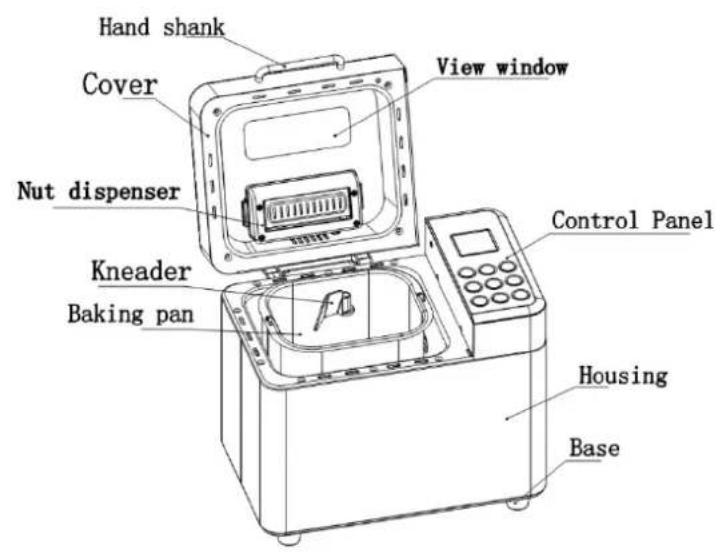
Hand shank = Griff / Cover = Deckel / View window = Fenster / Nut dispenser = Nuss-Spender / Control Panel = Bedienfeld / Kneader = Knetmaschine / Baking pan = Backform / Housing = Gehäuse / Base = Sockel
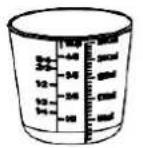
Measuring cup
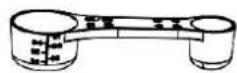
Measuring spoon
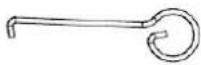
Hook (Kneading paddle remover)
Kneading paddle
Measuring cup = Messbecher / Measuring spoon = Messlöffel / Haken (Knethakenentferner) / kneading paddle = Knethaken
Kneeding paddle = Knethaken / drive shaft = Antriebswelle / bread barrel = Brotkasten
WAARSCHUWING OP DISPLAY
1 eetl droge gist = 15ml gist
1 theel droge gist = 5ml
PROGRAMMA ZELFGEMAAKT
| Programmainstell ing | Standaard Tijd (min) | Instelbarearend (min) |
| Kneden 1 | 15 | 1-30 |
| Rusten 1 | 3 | 0-30 |
| Kneden 2 | 20 | 0-30 |
| Rusten 2 | 10 | 0-30 |
| Kneden 3 | 0 | 0-25 |
| Fermenteren 1 | 42 | 0-60 |
| Fermenteren 2 | 40 | 0-60 |
| Fermenteren 3 | 0 | 0-60 |
| Bakken | 50 | 0-80 |
| Drie korstkleuren | medium |
| Warmhouden | 60 | 0-60 |
GARANTIE
MEDIDAS E CANTIDADES EXACTAS