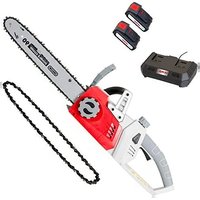
ICC 2/2035 - Saw IKRA - Free user manual and instructions
Find the device manual for free ICC 2/2035 IKRA in PDF.


User questions about ICC 2/2035 IKRA
0 question about this device. Answer the ones you know or ask your own.
Ask a new question about this device
Download the instructions for your Saw in PDF format for free! Find your manual ICC 2/2035 - IKRA and take your electronic device back in hand. On this page are published all the documents necessary for the use of your device. ICC 2/2035 by IKRA.
USER MANUAL ICC 2/2035 IKRA
natural_image
3D rendering of a chain-linking power saw with visible blades and handle (no text or symbols)GB Operating Instructions
Cordless-Chain saw 31
natural_image
Illustration of a chain-linking power saw and its chainmail (no text or symbols)MONTAGE | Assembly | Montage | Montage | Montaż
11
natural_image
Close-up of a precision optical instrument with labeled parts (no readable text or symbols)VOR DEM START | Before the start | Avant le démarrage | Prima dell'avvio | Przed Uruchomieniem
[Non-Text]
natural_image
Black plastic electronic component with a square top and internal slots (no visible text or symbols)natural_image
Close-up of a mechanical device with black and white textured sections (no visible text or symbols)START / STOP | Start / Stop | Démarrer / Arrêter | Start / Stop | Start / Stop
V
natural_image
Illustration of a futuristic vehicle with wings and wheels, no visible text or symbolsSÄGETECHNIK | Sawing technique | Technique de sciage | Tecnica di taglio | Technika Cięcia
VI
natural_image
Illustration of a chainsaw pulling a house with an arrow indicating direction (no text or symbols)TRANSPORT UND LAGERUNG
Transportation and Storage | Transport et stockage | Trasporto e conservazione | Transport Magazynowanie
natural_image
Diagram of a handheld device with internal components and a close-up view of the interior (no text or symbols)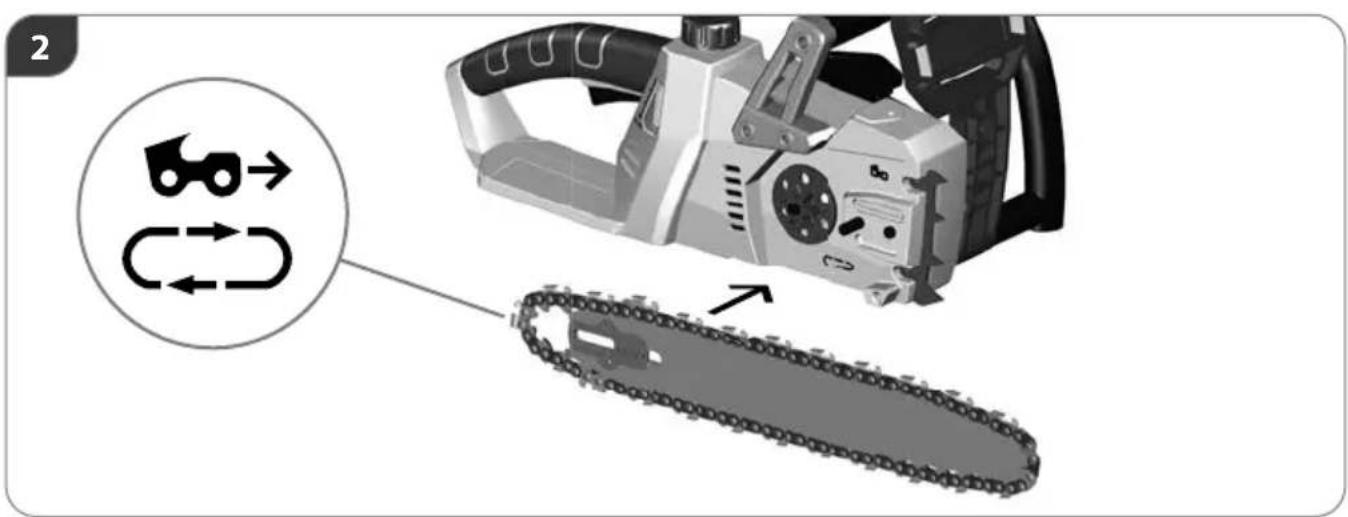
text_image
Diagram showing a chain drive with gear and chain attachment, labeled with arrows and a circled diagram.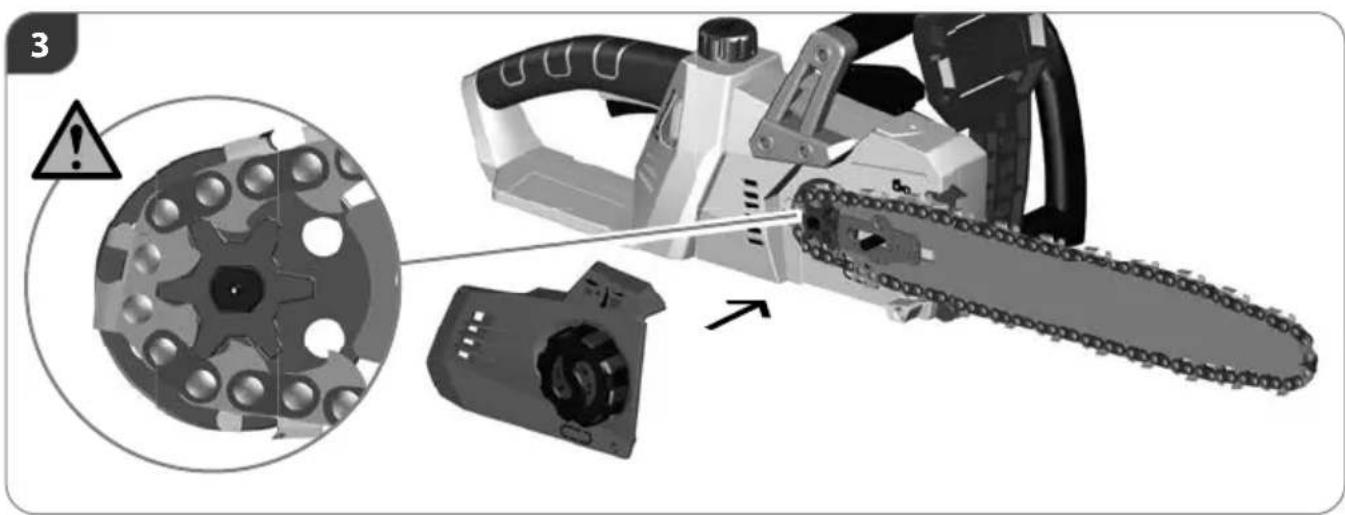
natural_image
Mechanical chain-linking device with gear assembly and warning symbol (no text or labels)

natural_image
Illustration of a manual chain-linking tool with a close-up view showing internal components (no text or symbols)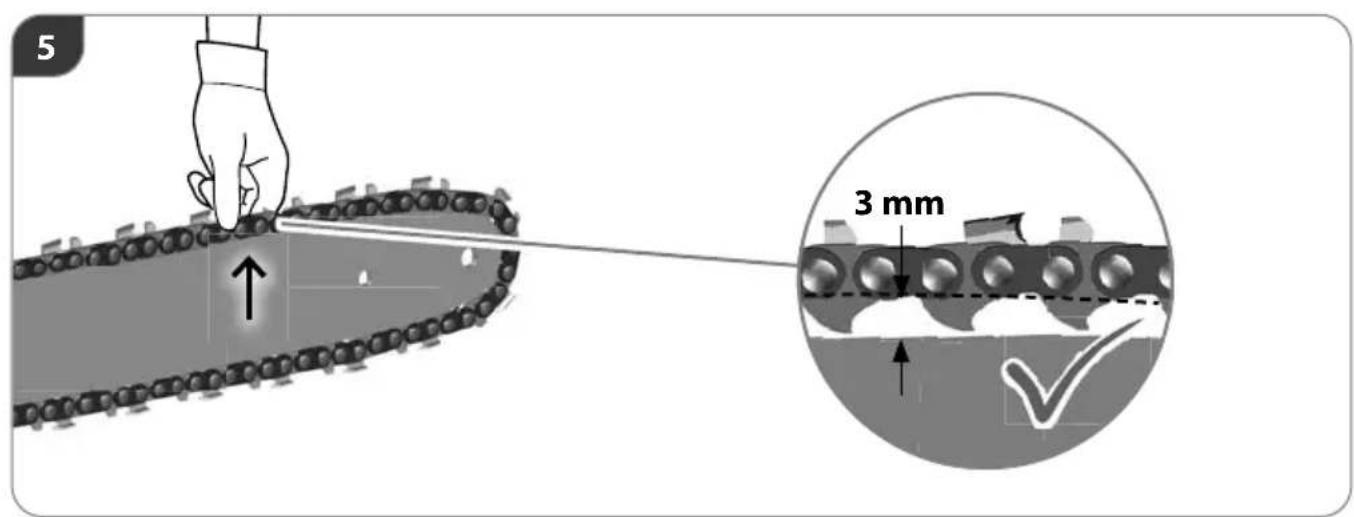
text_image
5 3 mm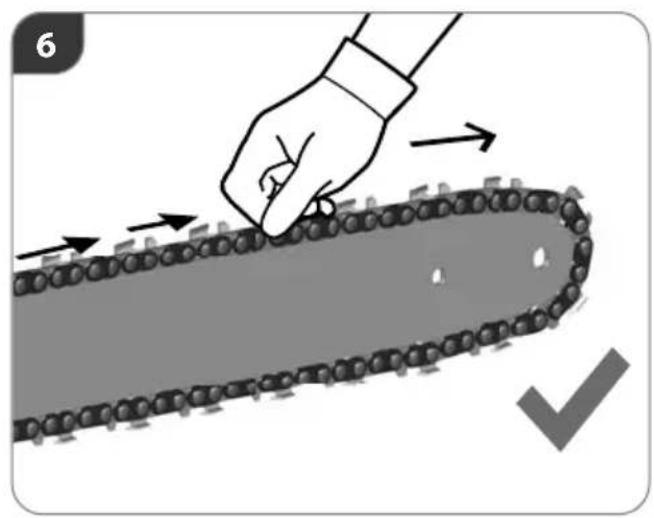
natural_image
Illustration of a hand pressing down on a chain with arrows indicating motion (no text or symbols)
natural_image
Mechanical assembly diagram showing a chain-linking device with a close-up inset of its internal component (no text or symbols present)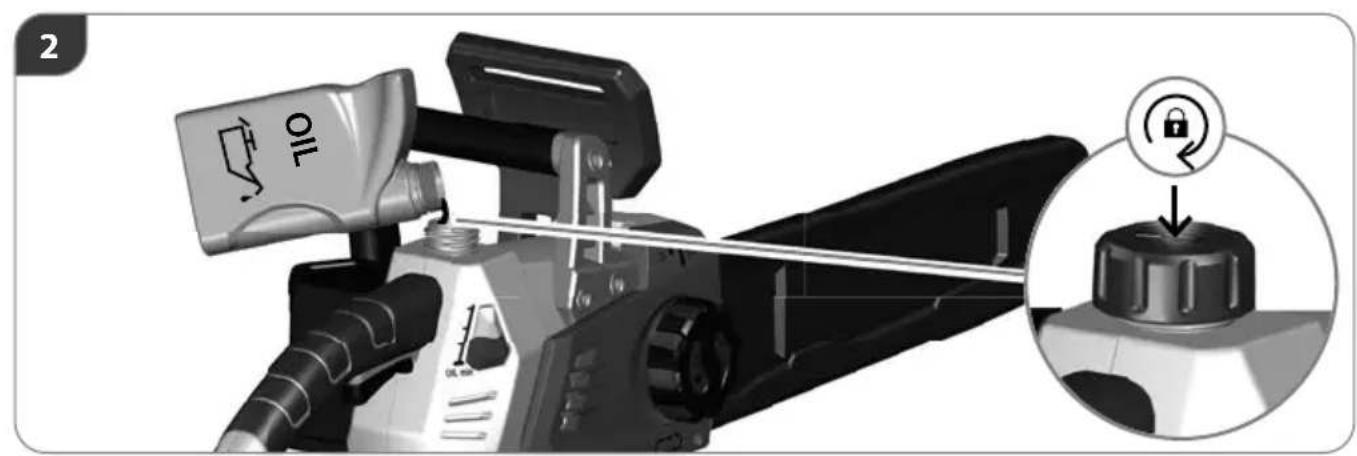
text_image
2 OIL 100 gm 100 gm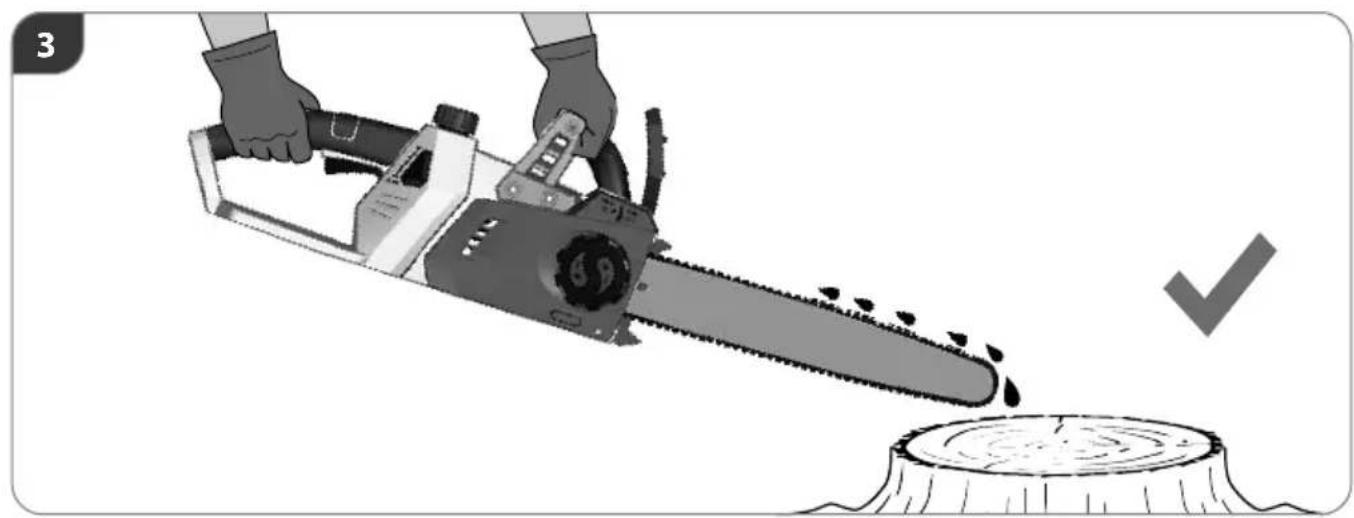
natural_image
Illustration of a hand using a chainsaw to cut tree stump with a checkmark (no text or symbols)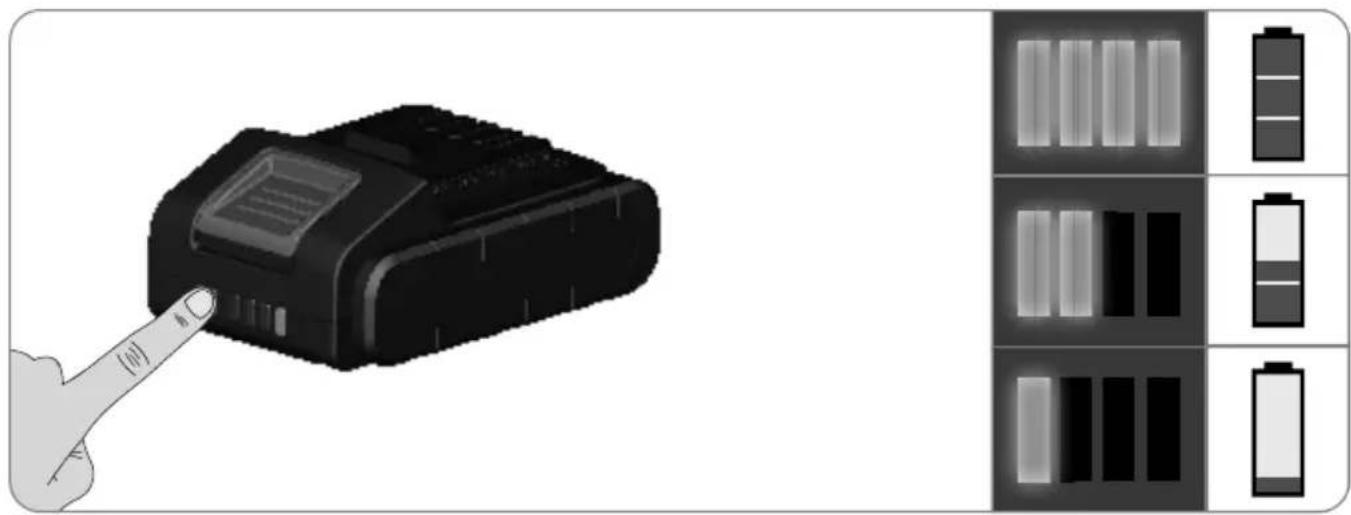
natural_image
Illustration of a handheld electronic device with a pointing finger, next to a vertical stack of battery cells (no text or symbols)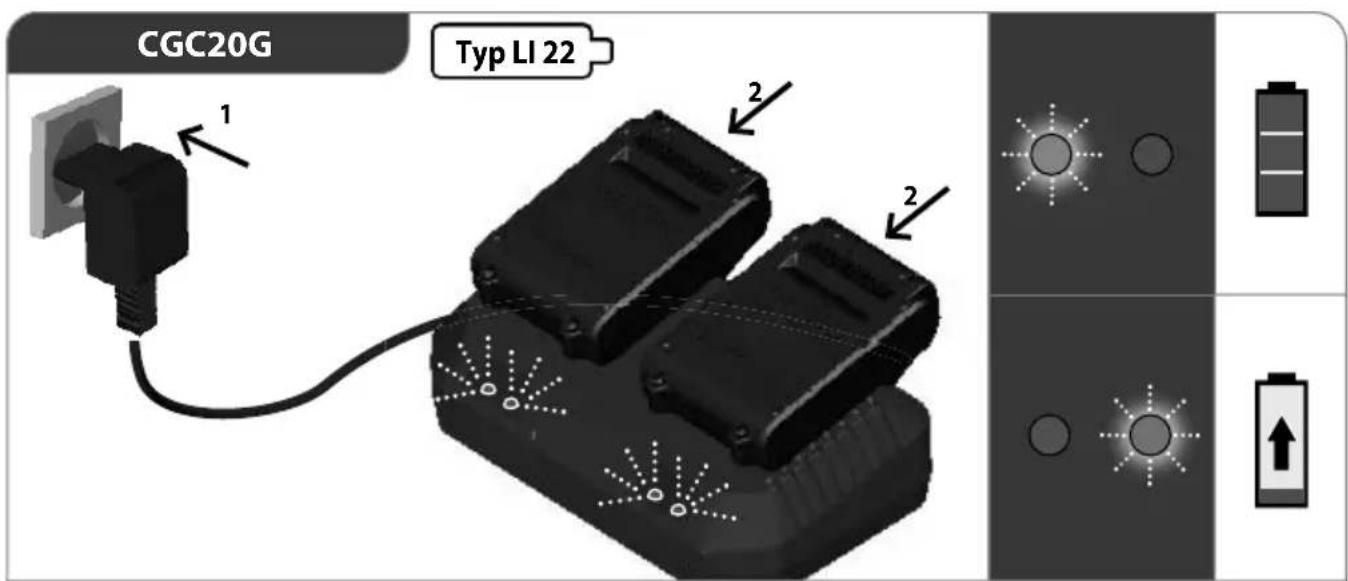
text_image
CGC20G Typ LI 22 1 2 2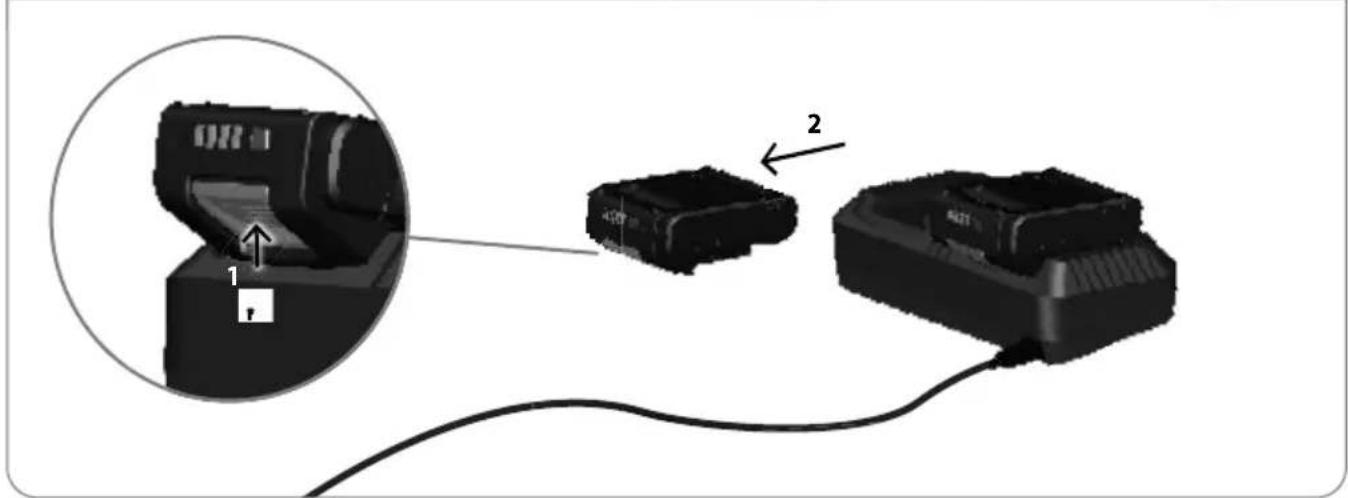
natural_image
Diagram showing a device connected to two electronic devices via a cable, with an inset magnified view of the device's internal structure (no text or symbols visible)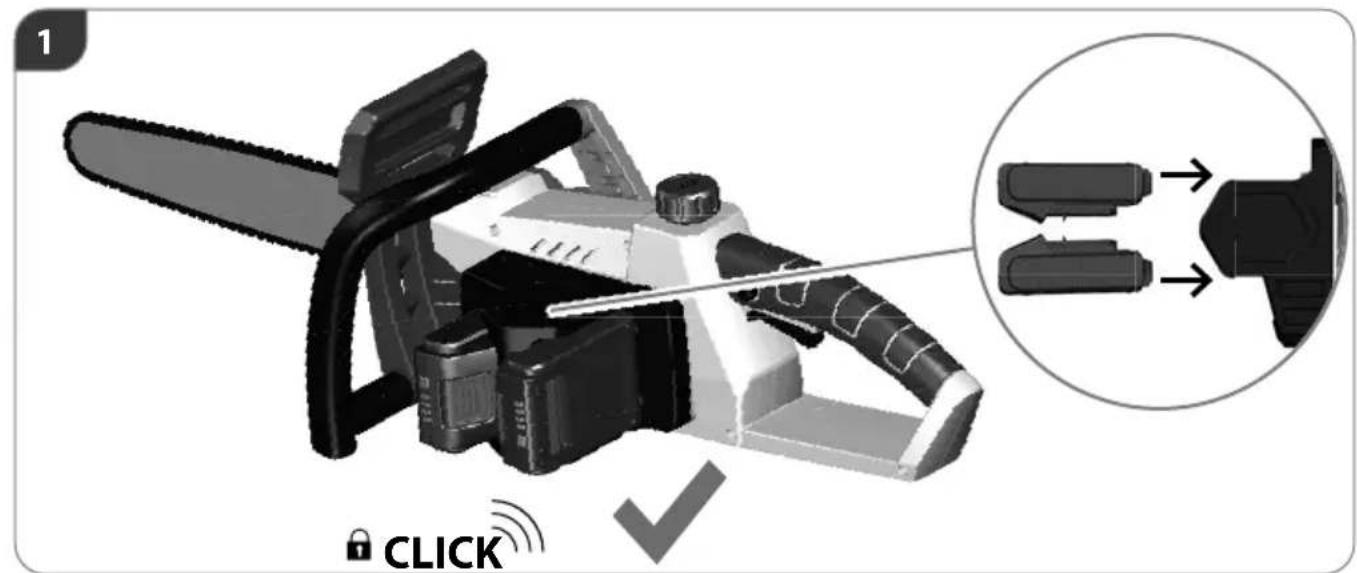
text_image
1 CLICK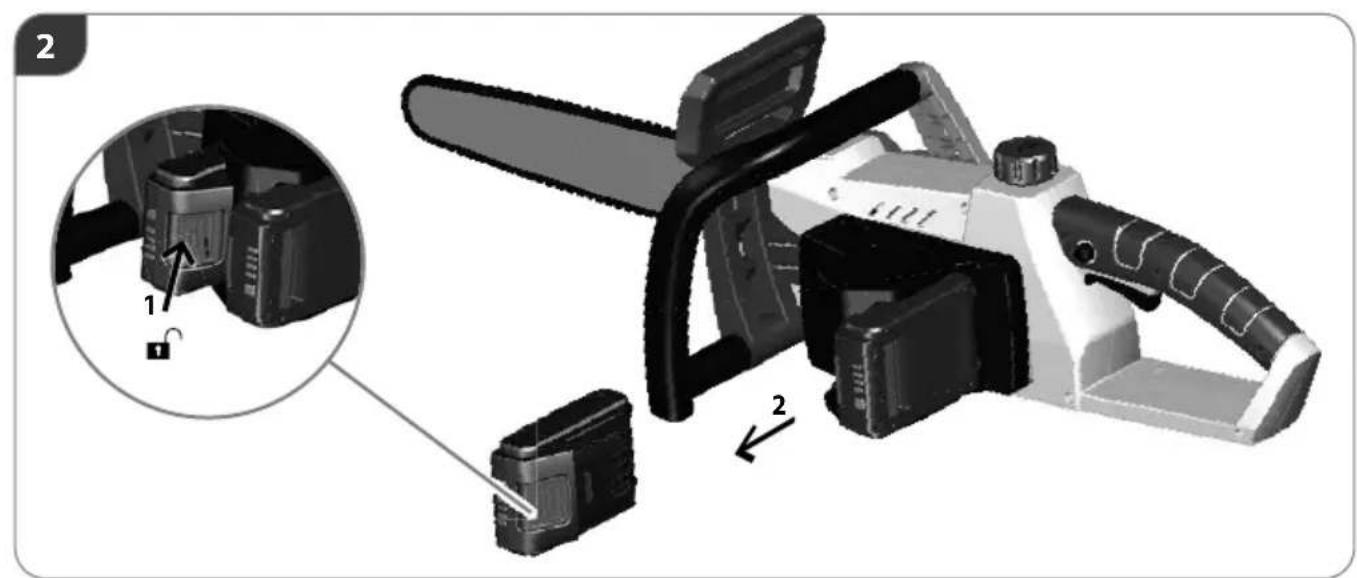
text_image
Diagram of a handbar with labeled parts and zoomed-in detail, showing internal components and assembly steps.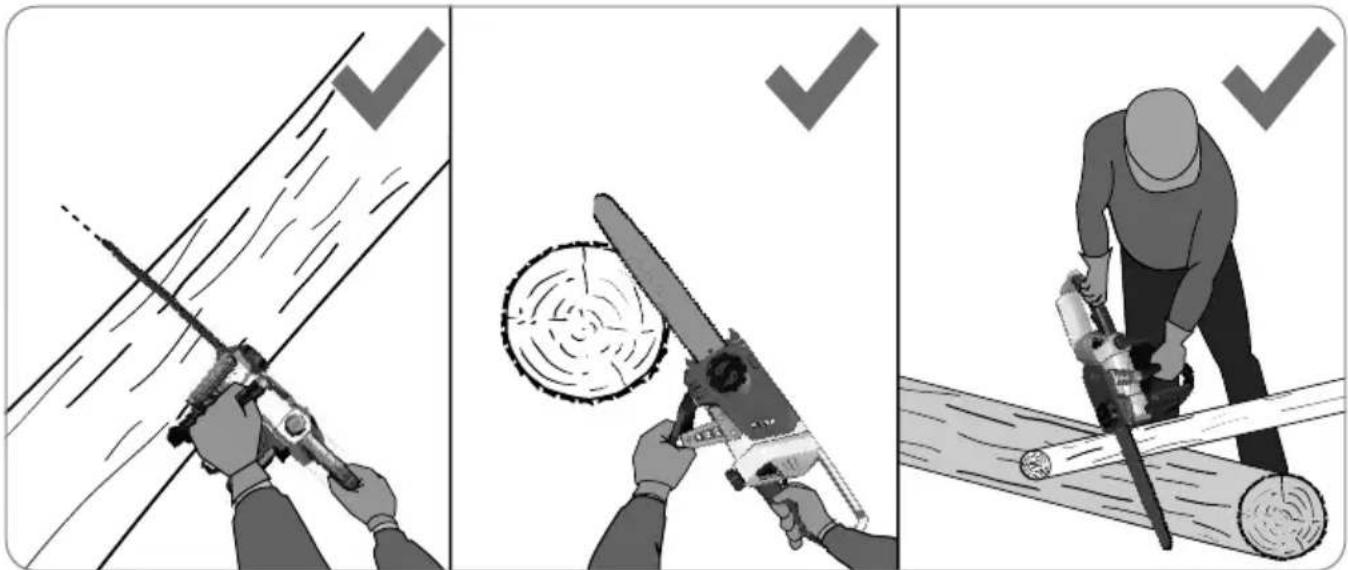
text_image
Three-step wood sawing instruction showing tool, cutter, and cutting with checkmarks indicating removal or repair steps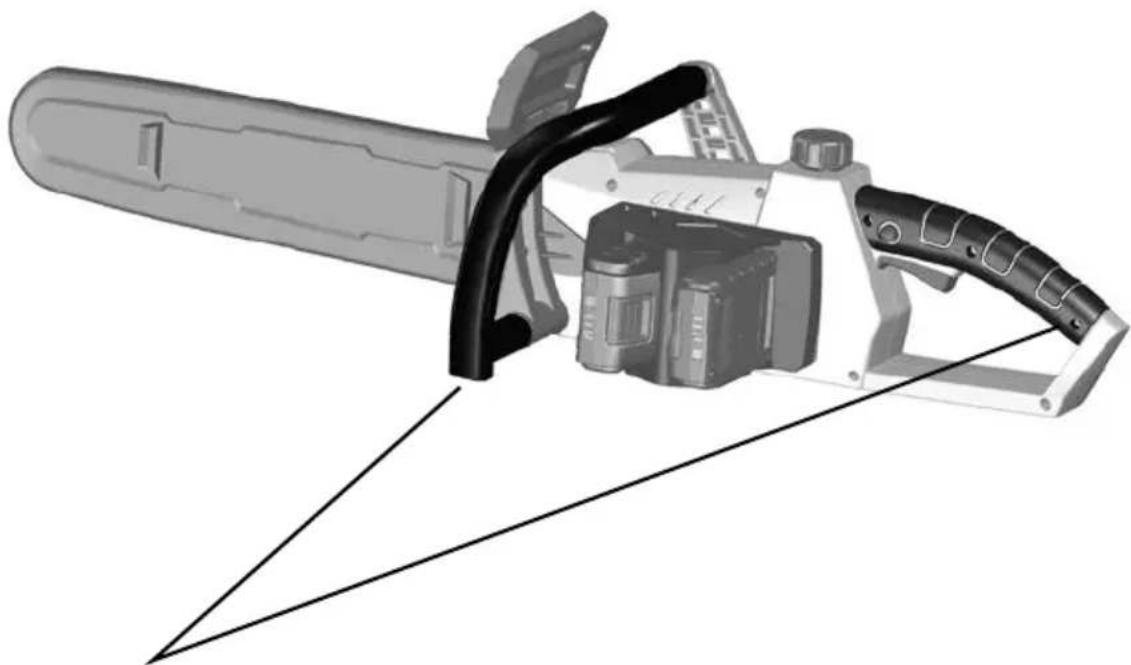
natural_image
Technical illustration of a manual power saw cutting through a mechanical component (no text or symbols)Insulated gripping surface
natural_image
Illustration of a chain-linking tool transforming into a separate blade (no text or symbols)START
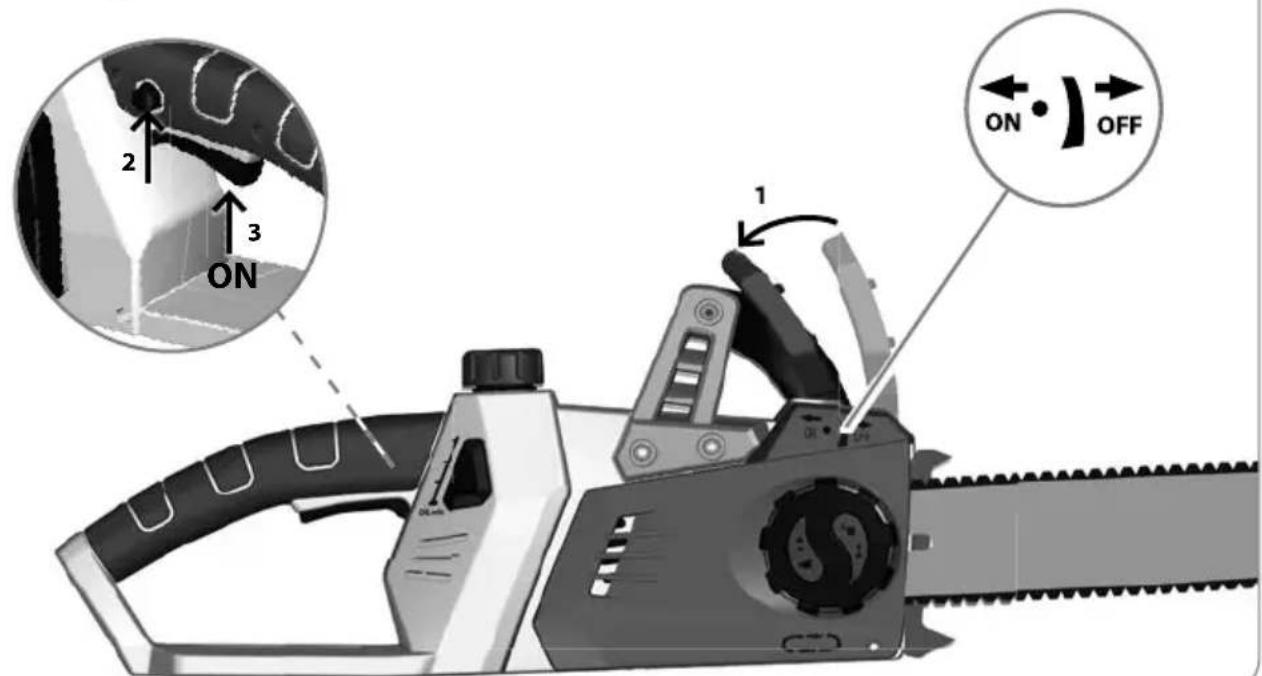
text_image
2 3 ON 1 ON • OFFSTOP
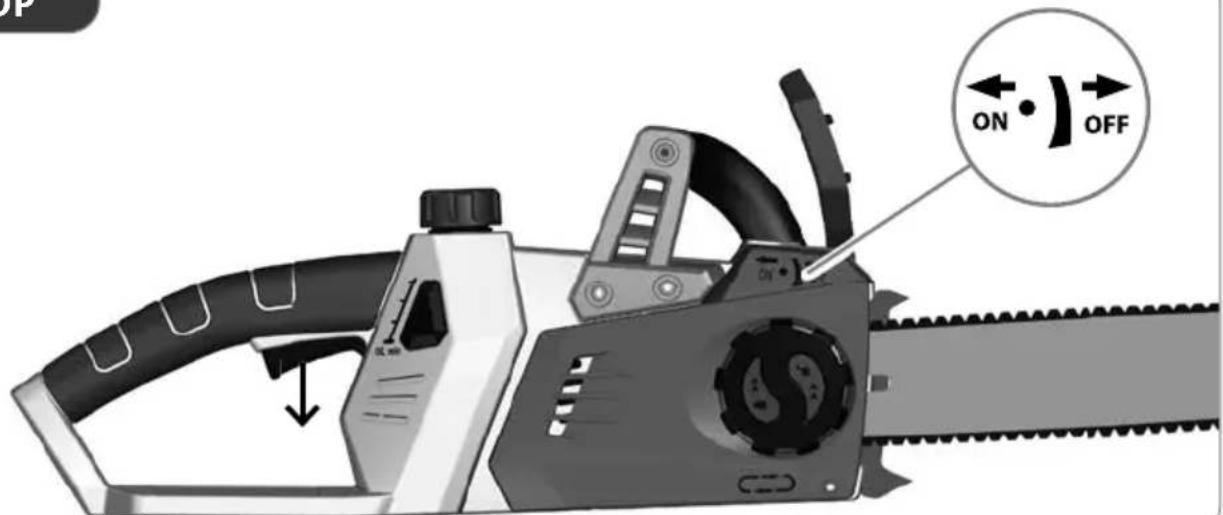
text_image
ON OFF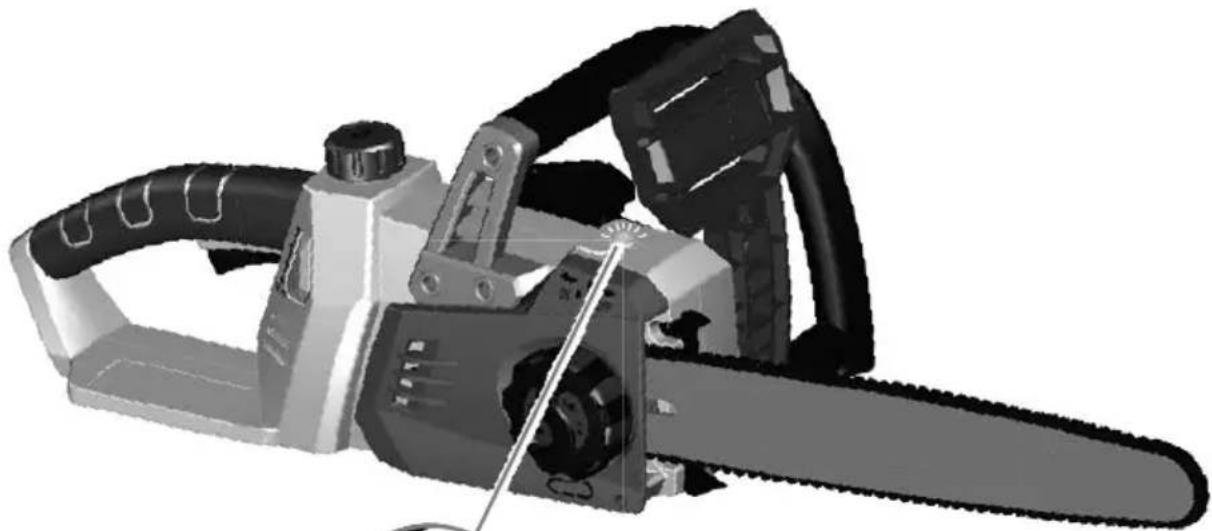
natural_image
3D rendering of a chainsaw with visible blades and handle (no text or symbols)Yellow - ready for use / Flashing yellow -charge the battery
natural_image
Three circular diagrams showing progressive stages of a sunlit landscape, with no text or symbols present.Green - normal operation
Verde - modo normal
Red - overload operation
natural_image
Illustration of a manual saw cutting a large tree stump, with an inset showing the blade being cut (no text or symbols present)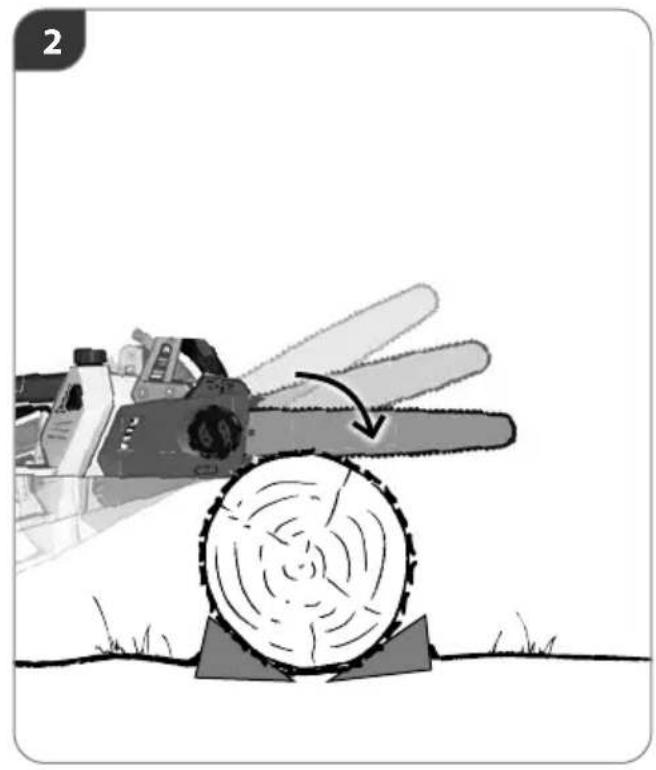
natural_image
Illustration of a saw cutting through a circular saw, with no visible text or symbols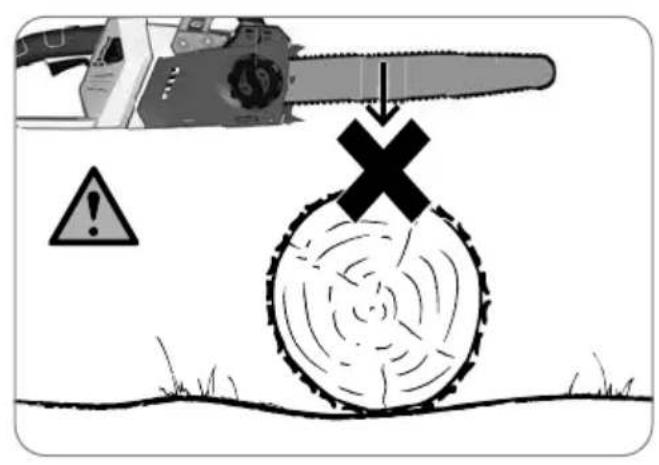
text_image
Safety warning illustration showing a chainsaw cutting through a gear with warning symbols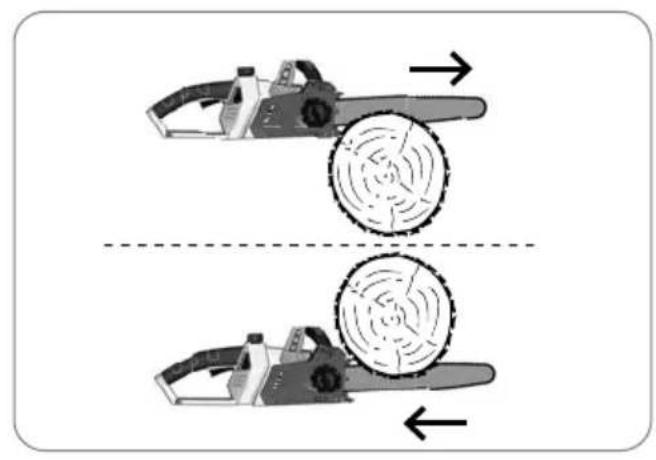
natural_image
Diagram showing two mechanical devices with arrows indicating motion, no text or symbols present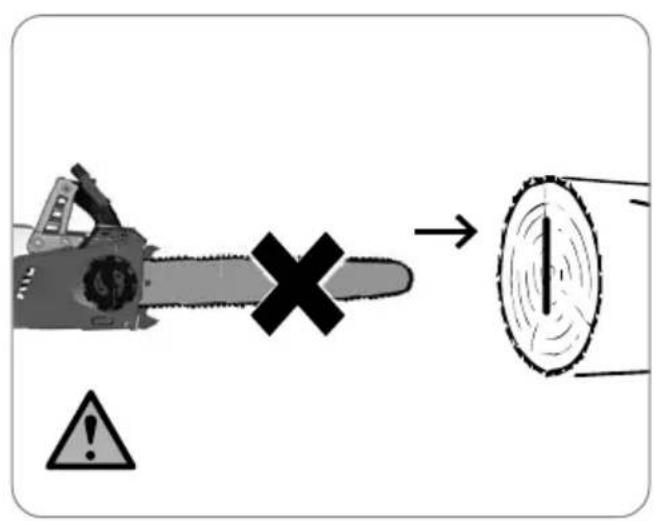
text_image
Diagram illustrating a process of clearing a tree with a hammer and cross symbol, leading to a circular cutter head.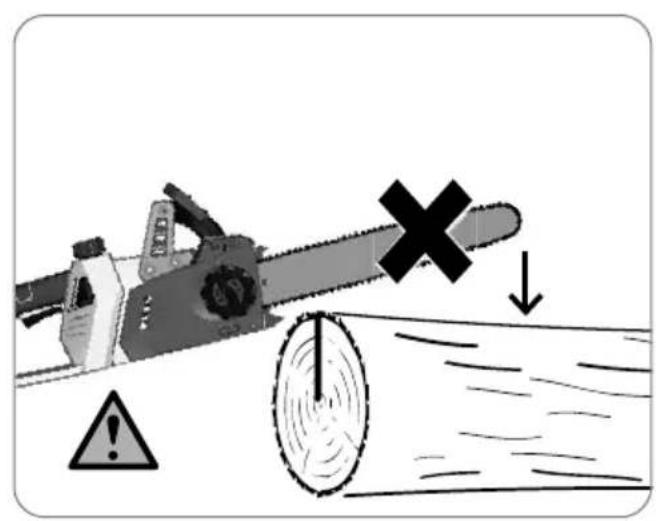
text_image
Warning illustration showing a chainsaw cutting water with a warning symbol and an 'X' mark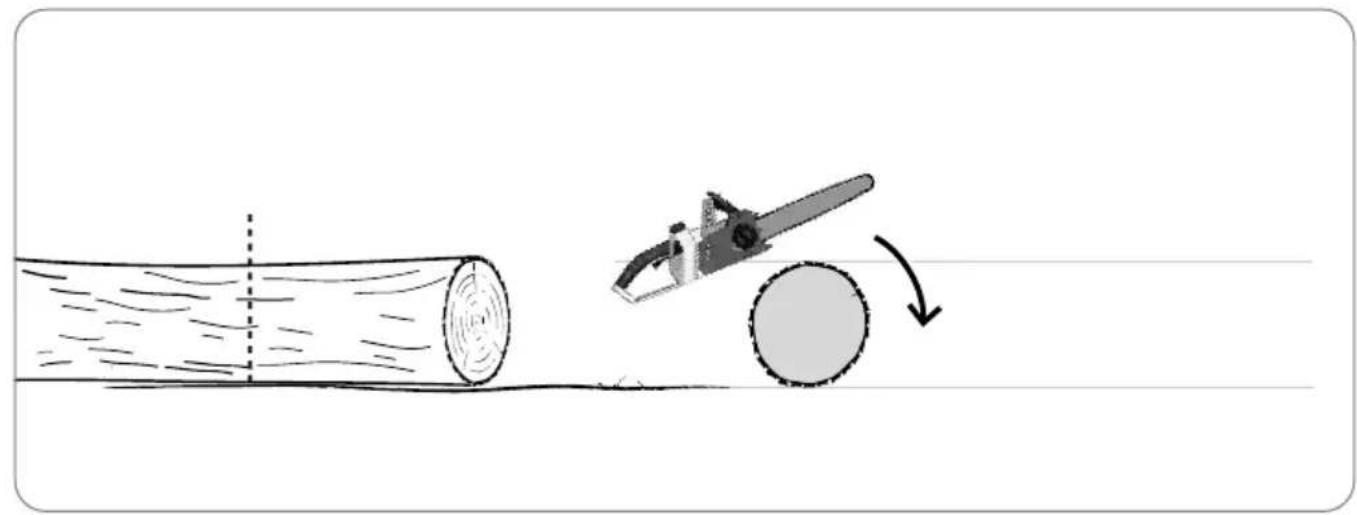
natural_image
Illustration of a wooden log being cut by a chainsaw with a circular object, showing motion direction (no text or symbols)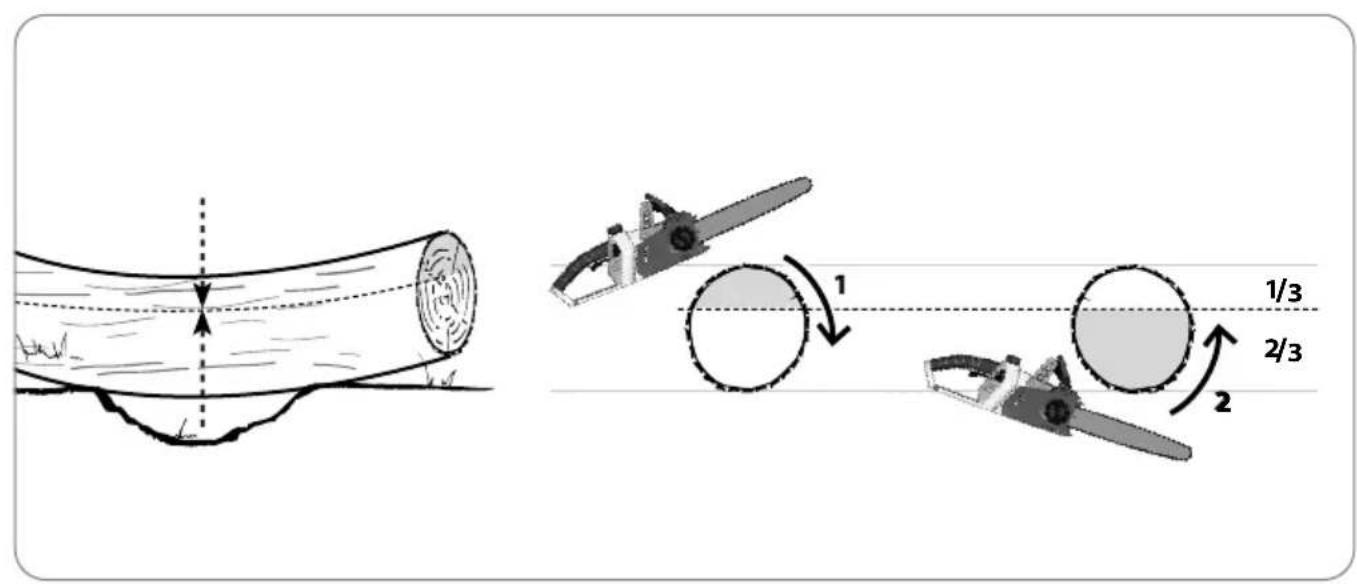
text_image
Diagram illustrating a sawing process with labeled steps and a circular component, showing tool positioning and cutting path.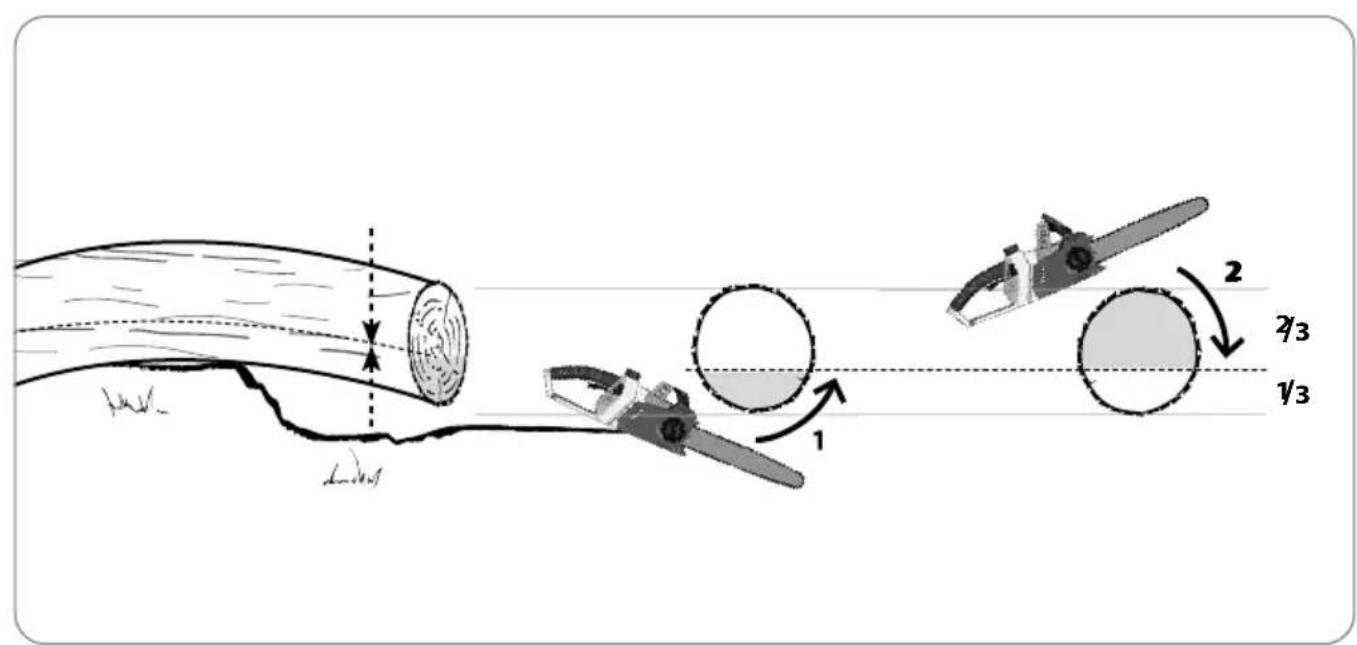
text_image
Diagram illustrating a mechanical process with labeled components and directional arrows, including a tool, rollers, and a chain.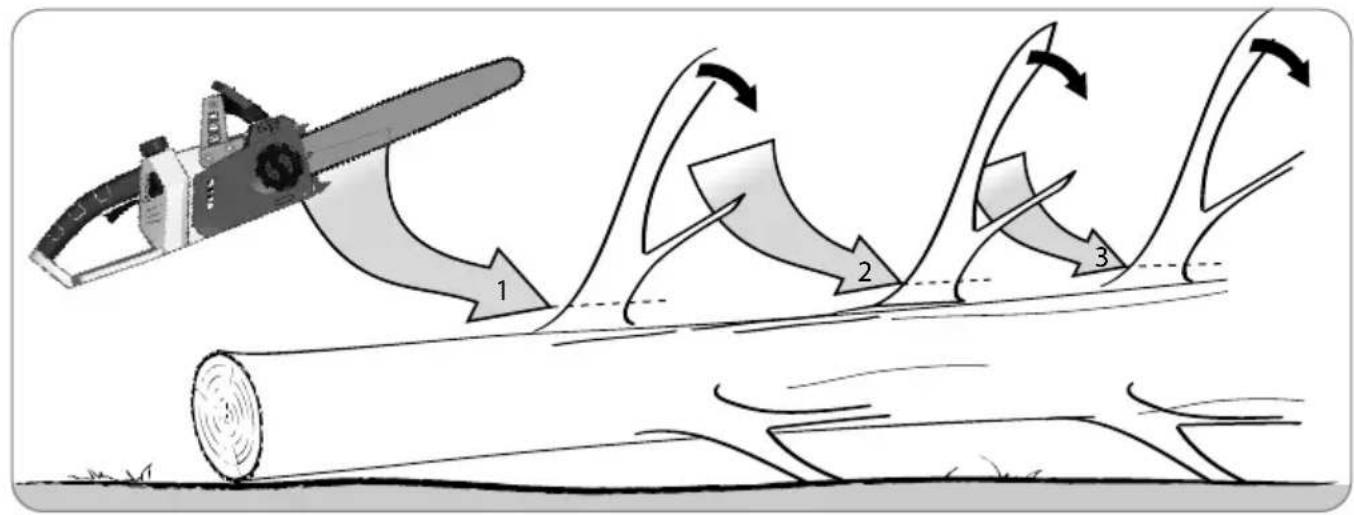
flowchart
graph TD
    A["Step 1: Cutting"] --> B["Step 2: Rolling"]
    B --> C["Step 3: Cutting"]
    C --> D["End"]
natural_image
Illustration of a hand saw cutting through wood with a cross symbol indicating failure or damage (no text or symbols present)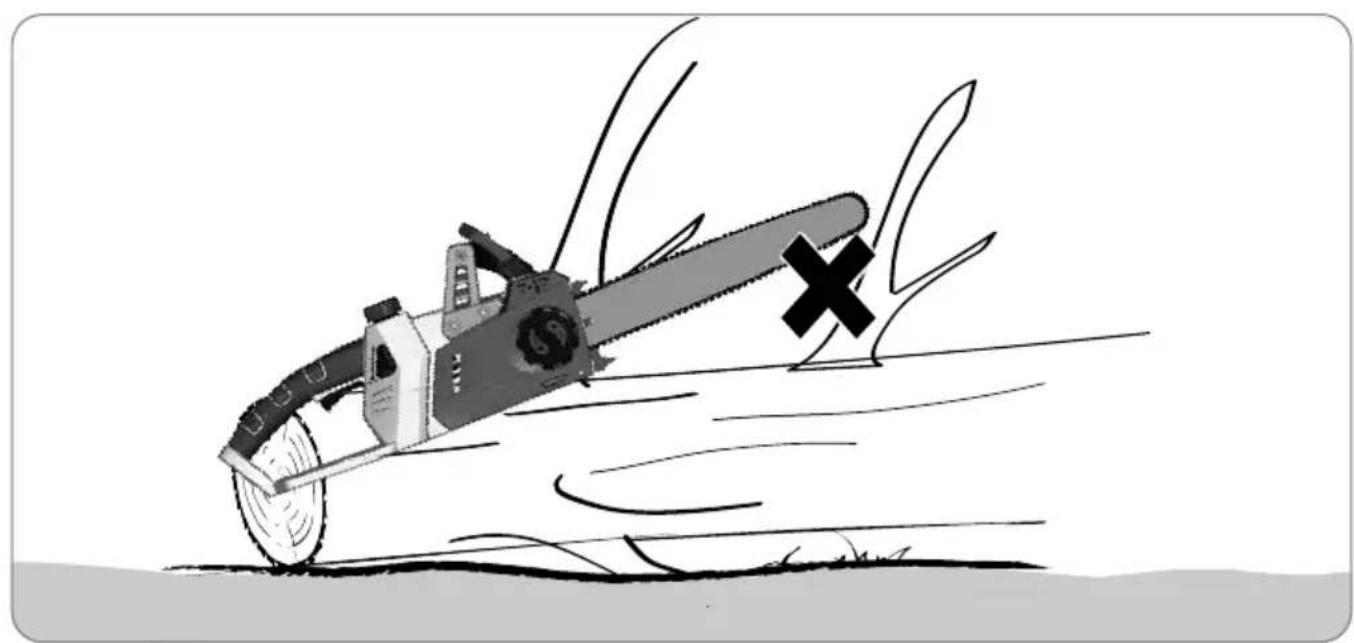
natural_image
Illustration of a manual power saw cutting through a slope with a cross mark (no text or symbols)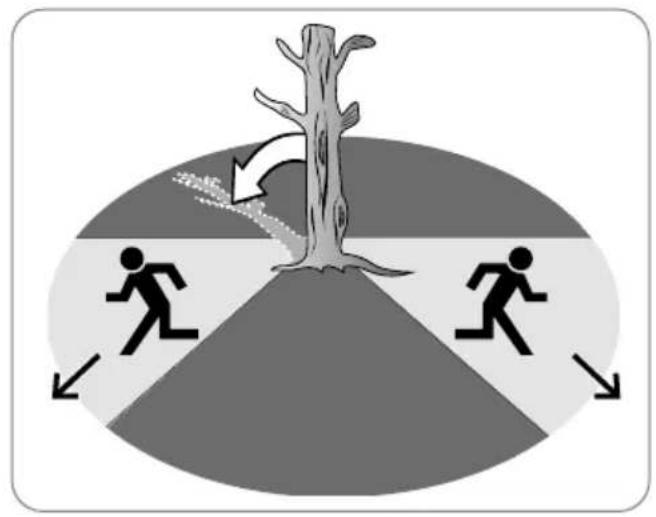
natural_image
Illustration of two stick figures running toward a tree with arrows indicating movement, set against an oval background (no text or symbols)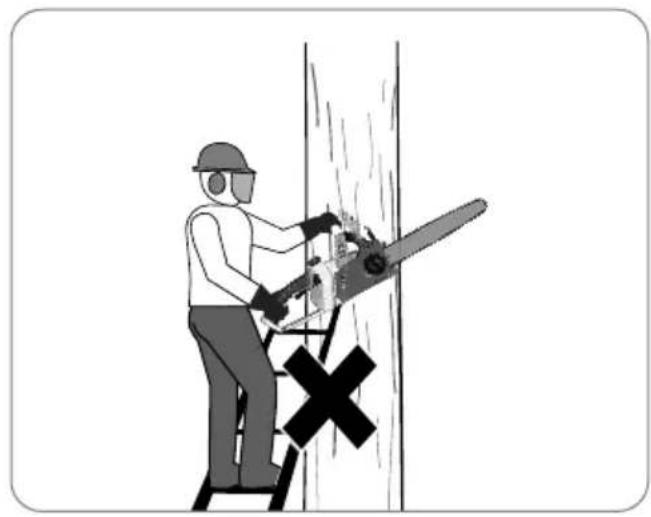
natural_image
Illustration of a worker using a saw to cut through a vertical barrier, with a cross symbol indicating failure or rejection (no text or symbols present)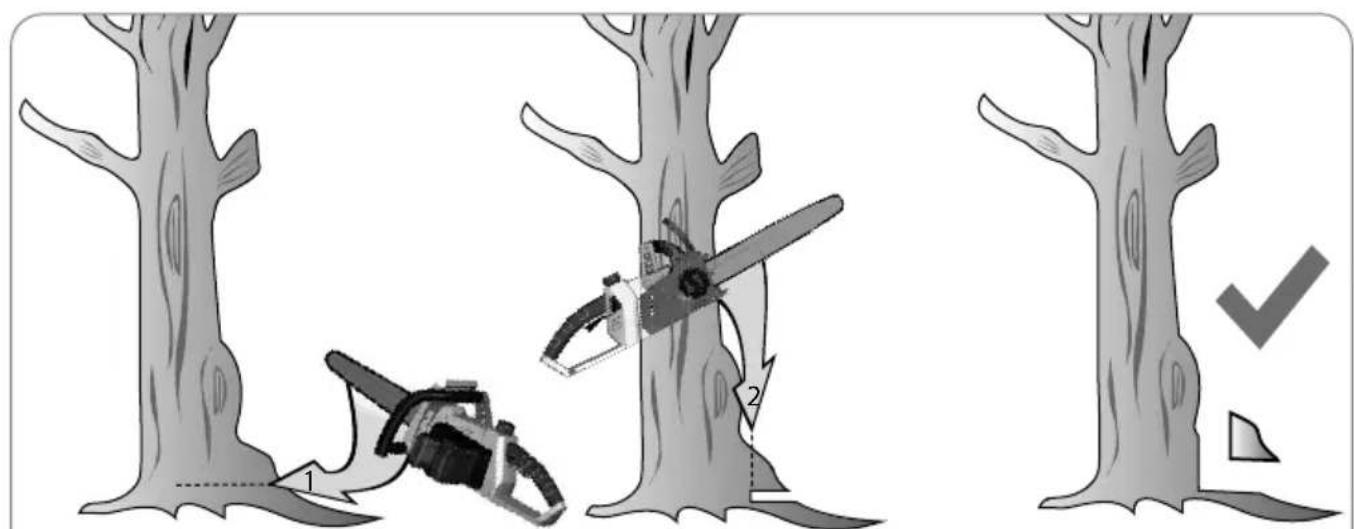
text_image
Illustration showing a chain saw cutting through tree bark, with numbered steps and a checkmark indicating completion.WURZELANSÄTZE ENTFERNEN Remove roots Enlever les racines Rimuovi le radici Odcinanie Korzeni
text_image
1 2 45° min 50 mm 3 2/3V
natural_image
Diagram showing a cutting tool interacting with a circular saw blade, no text or symbols present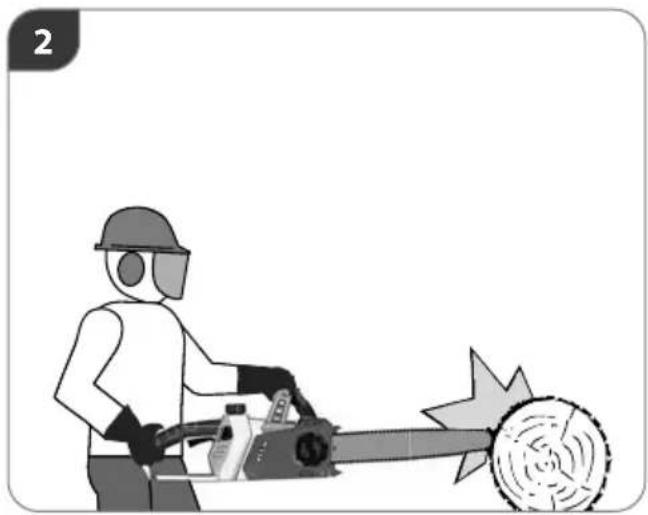
natural_image
Illustration of a person using a power tool to cut a large circular object, no text or symbols present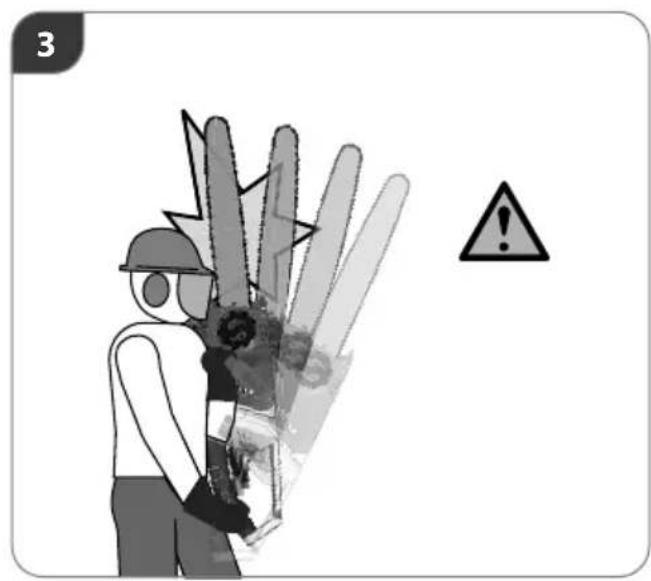
text_image
3
natural_image
Completely blank white image with no visible content, text, or symbols.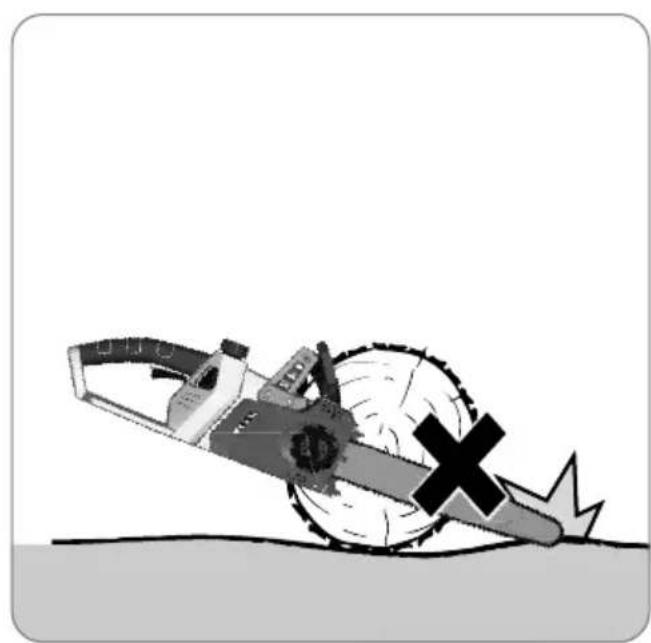
natural_image
Illustration of a mechanical device with a cross symbol, no text or symbols present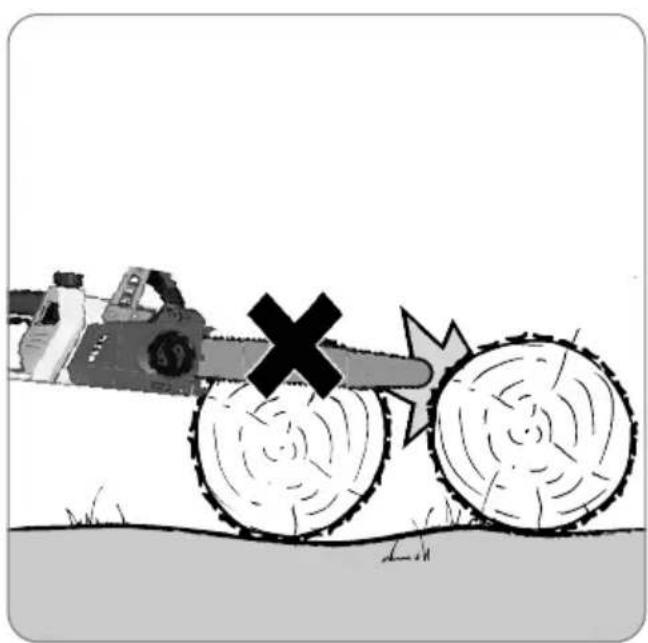
natural_image
Cartoon illustration of a military vehicle pulling two large tires with a cross symbol (no text or symbols present)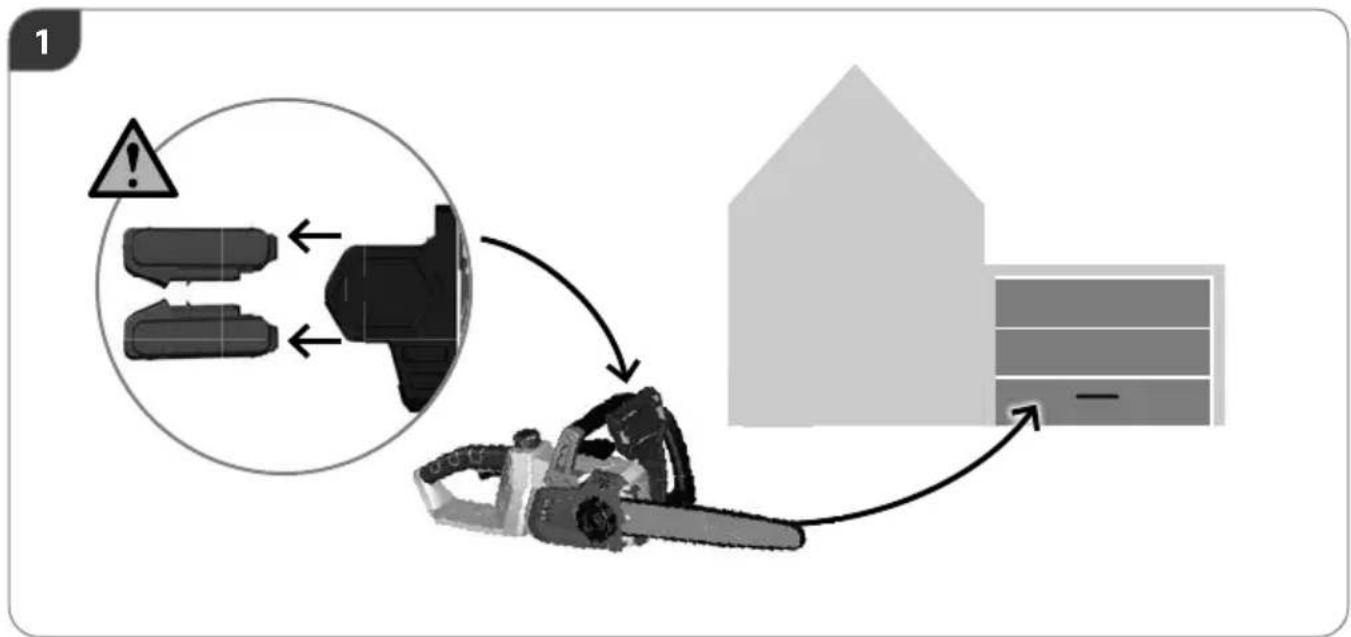
flowchart
graph TD
    A["Sharwood Warehouse"] --> B["Sharwood Inventory"]
    B --> C["Sharwood Storage"]
    C --> D["Sharwood Inventory"]
    D --> E["Sharwood Storage"]
    style A fill:#f9f,stroke:#333
    style B fill:#ccf,stroke:#333
    style C fill:#cfc,stroke:#333
    style D fill:#fcc,stroke:#333
    style E fill:#ffc,stroke:#333
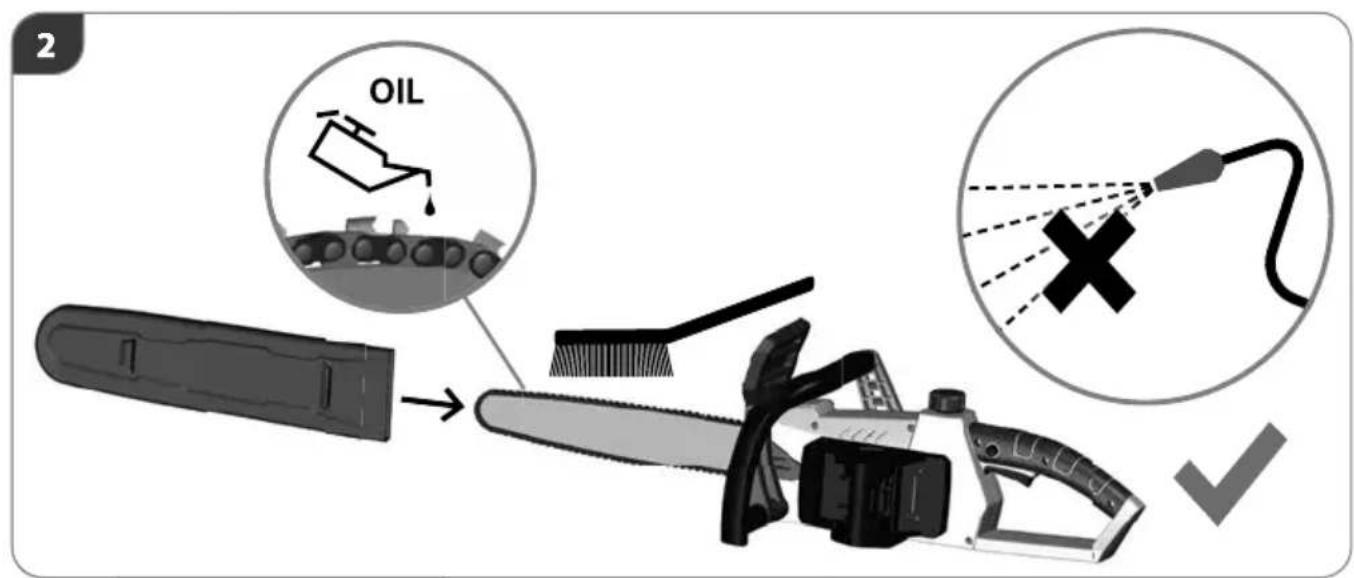
text_image
2 OIL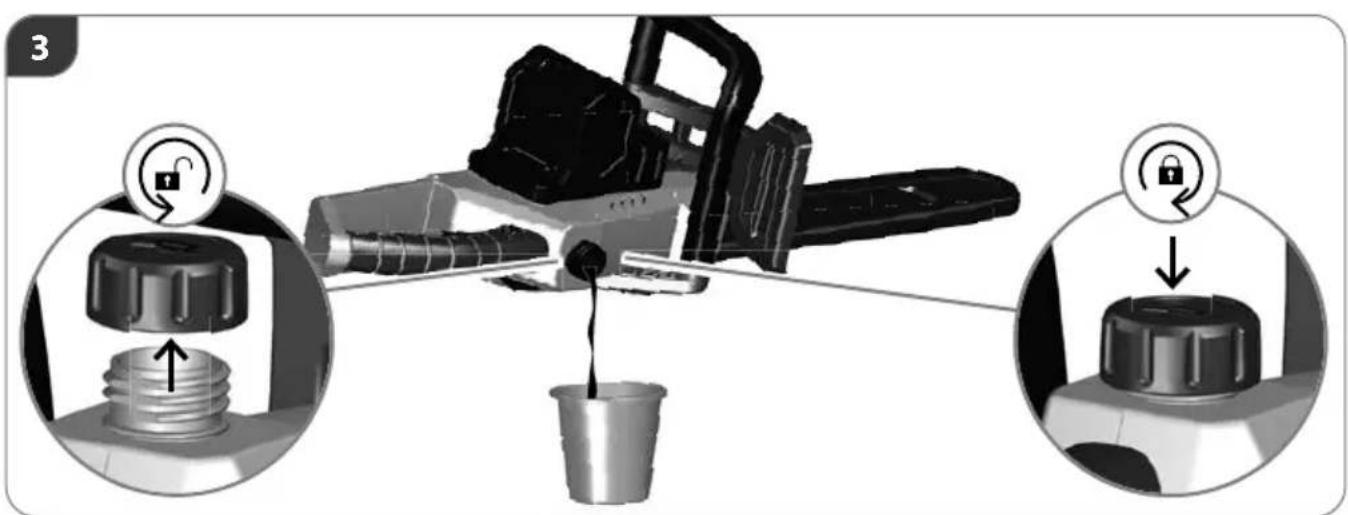
text_image
Diagram illustrating the process of a chain oil lamp with lock icons and mechanical components, showing liquid transfer and lock mechanism.TECHNISCHE DATEN
text_image
Safety warning diagram showing a person standing with various hazard symbols and safety icons including helmet, mask, hand, and foot.Sicherheitshelm
text_image
Diagram of a chain saw with labeled parts and numbered annotationsWARNING
| Battery Charger | CGC20G |
| Input voltage | 220 - 240 V |
| Frequency | 50/60 Hz |
| Output voltage | 20 V --- |
| Output current | 2 x 2 A |
| Rated input | 140 W |
| Recommended battery types | Typ LI 22 / LBC202Z-2 |
| Battery type | Typ LI 22 / LBC202Z-2 |
| Battery voltage | 20 V --- |
| Battery capacity (Li-Ion) | 2 Ah |
| Battery power | 50 Wh |
| Recommended charger | CGC20G |
Technical changes reserved.
WARNING: The declared vibration total value(s) and the declared noise emission value(s) were measured according to a standardized test method according to EN 60745 and can be used to compare one power tool with another. The declared vibration emission level represents the main applications of the tool. However if the tool is used for different applications, with different accessories or poorly maintained, the vibration emission may differ. This may significantly increase the exposure level over the total working period. The vibration emission level will vary because of the ways in which a power tool can be used and may increase above the level given in this information sheet.
The vibration emission level may be used to compare one tool with another.
It may be used for a preliminary assessment of exposure.
An accurate estimate of the vibratory load should also take into account the times when the tool is shut down or when it is running but not actually in use. This may significantly reduce the vibratory load over the total working period.
Identify additional safety measures to protect the operator from the effects of vibration such as: maintain the tool and the accessories, keep the hands warm, organisation of work patterns.
SAFETY WARNINGS
Read and understand the operating instructions before using the appliance. Familiarise with the control elements and how to use the appliance properly. Abide by all the safety measures stated in the service manual. Act responsibly toward third parties.
The operator is responsible for accidents or risks to third parties.
In case of any doubts about connection and operation refer please to our customer center
General Power Tool Safety Warnings

WARNING Read all safety warnings and all uctions. Failure to follow the warnings and uctions may result in electric shock, fire and/or us injury.
Save all warnings and instructions for future reference.
The term „power tool“ in the warnings refers to your mains-operated (corded) power tool and battery-operated (cordless) power tool.
1) Work area safety
a) Keep work area clean and well lit. Cluttered or dark areas invite accidents.
b) Do not operate power tools in explosive atmospheres, such as in the presence of flammable liquids, gases or dust. Power tools create sparks which may ignite the dust or fumes.
c) Keep children and bystanders away while operating a power tool. Distractions can cause you to lose control.
2) Electrical safety
a) Power tool plugs must match the outlet. Never modify the plug in any way. Do not use any adapter plugs with earthed (grounded) power tools. Unmodified plugs and matching outlets will reduce risk of electric shock.
b) Avoid body contact with earthed or grounded surfaces, such as pipes, radiators, ranges and refrigerators. There is an increased risk of electric shock if your body is earthed or grounded.
c) Do not expose power tools to rain or wet conditions. Water entering a power tool will increase the risk of electric shock.
d) Do not abuse the cord. Never use the cord for carrying, pulling or unplugging the power tool. Keep cord away from heat, oil, sharp edges or moving parts. Damaged or entangled cords increase the risk of electric shock.
e) When operating a power tool outdoors, use an extension cord suitable for outdoor use. Use of a cord suitable for outdoor use reduces the risk of electric shock.
f) If operating a power tool in a damp location is unavoidable, use a residual current device (RCD) protected supply. Use of an RCD reduces the risk of electric shock.
3) Personal safety
a) Stay alert, watch what you are doing and use common sense when operating a power tool. Do not use a power tool while you are tired or under the influence of drugs, alcohol or medication. A moment of inattention while operating power tools may result in serious personal injury.
b) Use personal protective equipment. Always wear eye protection. Protective equipment such as dust mask, non-skid safety shoes, hard hat, or hearing protection used for appropriate conditions will reduce personal injuries.
c) Prevent unintentional starting. Ensure the switch is in the off-position before connecting to power source and/or battery pack, picking up or carrying the tool. Carrying power tools with your finger on the switch or energising power tools that have the switch on invites accidents.
d) Remove any adjusting key or wrench before turning the power tool on. A wrench or a key left attached to a rotating part of the power tool may result in personal injury.
e) Do not overreach. Keep proper footing and balance at all times. This enables better control of the power tool in unexpected situations.
f) Dress properly. Do not wear loose clothing or jewellery. Keep your hair, clothing and gloves away from moving parts. Loose clothes, jewellery or long hair can be caught in moving parts.
g) If devices are provided for the connection of dust extraction and collection facilities, ensure these are connected and properly used. Use of dust collection can reduce dust-related hazards.
4) Power tool use and care
a) Do not force the power tool. Use the correct power tool for your application. The correct power tool will do the job better and safer at the rate for which it was designed.
b) Do not use the power tool if the switch does not turn it on and off. Any power tool that cannot be controlled with the switch is dangerous and must be repaired.
c) Disconnect the plug from the power source and/or the battery pack from the power tool before making any adjustments, changing accessories, or storing power tools. Such preventive safety measures reduce the risk of starting the power tool accidentally.
d) Store idle power tools out of the reach of children and do not allow persons unfamiliar with the power tool or these instructions to operate the power tool. Power tools are dangerous in the hands of untrained users.
e) Maintain power tools. Check for misalignment or binding of moving parts, breakage of parts and any other condition that may affect the power tool's operation. If damaged, have the power tool
repaired before use. Many accidents are caused by poorly maintained power tools.
f) Keep cutting tools sharp and clean. Properly maintained cutting tools with sharp cutting edges are less likely to bind and are easier to control.
g) Verwenden Sie Elektrowerkzeug, Zubehör, Einsatzwerkzeuge usw. entsprechend diesen Anweisungen. Berücksichtigen Sie dabei die Arbeitsbedingungen und die auszuführende Tätigkeit. Use of the power tool for operations different from those intended could result in a hazardous situation.
5) Battery tool use and care
a) Recharge only with the charger specified by the manufacturer. A charger that is suitable for one type of battery pack may create a risk of fire when used with another battery pack.
b) Use power tools only with specifically designated battery packs. Use of any other battery packs may create a risk of injury and fire.
c) When battery pack is not in use, keep it away from other metal objects, like paper clips, coins, keys, nails, screws or other small metal objects, that can make a connection from one terminal to another. Shorting the battery terminals together may cause burns or a fire.
d) Under abusive conditions, liquid may be ejected from the battery; avoid contact. If contact accidentally occurs, flush with water. If liquid contacts eyes, additionally seek medical help. Liquid ejected from the battery may cause irritation or burns.
6) Service
a) Have your power tool serviced by a qualified repair person using only identical replacement parts. This will ensure that the safety of the power tool is maintained.
Chain saw safety warnings
- Keep all parts of the body away from the saw chain when the chain saw is operating. Before you start the chain saw, make sure the saw chain is not contacting anything. A moment of inattention while operating chain saws may cause entanglement of your clothing or body with the saw chain.
- Hold the chain saw by insulated gripping surfaces only, because the saw chain may contact hidden wiring. Saw chains contacting a „live“ wire may make exposed metal parts of the chain saw „live“ and could give the operator an electric shock.
- Always hold the chain saw with your right hand on the rear handle and your left hand on the front handle. Holding the chain saw with a reversed hand configuration increases the risk of personal injury and should never be done.
-
Hold the chain saw by insulated gripping surfaces only, because the saw chain may contact hidden wiring. Saw chains contacting a „live“ wire may make exposed metal parts of the chain saw „live“ and could give the operator an electric shock.
-
Wear safety goggles and ear protection. Further protective equipment for hearing, head, hands, legs and feet is recommended. Adequate protective equipment will reduce personal injury from flying debris or accidental contact with the saw chain.
- Do not work on trees with the chainsaw. There is a risk of injury when working on a tree.
- Always keep proper footing and operate the chain saw only when standing on fixed, secure and level surface. Slippery or unstable surfaces may cause a loss of balance or control of the chain saw.
- When cutting a limb that is under tension, be alert for spring back. When the tension in the wood fibres is released the spring loaded limb may strike the operator and /or throw the chain saw out of control.
- Use extreme caution when cutting brush and saplings. The slender material may catch the saw chain and be whipped toward you or pull you off balance.
- Carry the chain saw by the front handle with the chain saw switched off and away from your body. When transporting or storing the chain saw, always fit the guide bar cover. Proper handling of the chain saw will reduce the likelihood of accidental contact with the moving saw chain.
- Follow instructions for lubricating, chain tensioning and changing accessories. Improperly tensioned or lubricated chain may either break or increase the chance for kickback.
- Keep handles dry, clean, and free from oil and grease. Greasy, oily handles are slippery causing loss of control.
- Cut wood only. Do not use chain saw for purposes not intended. For example: do not use chain saw for cutting metal, plastic, masonry or non-wood building materials. Use of the chain saw for operations different than intended could result in a hazardous situation.
Causes and operator prevention of kickback:
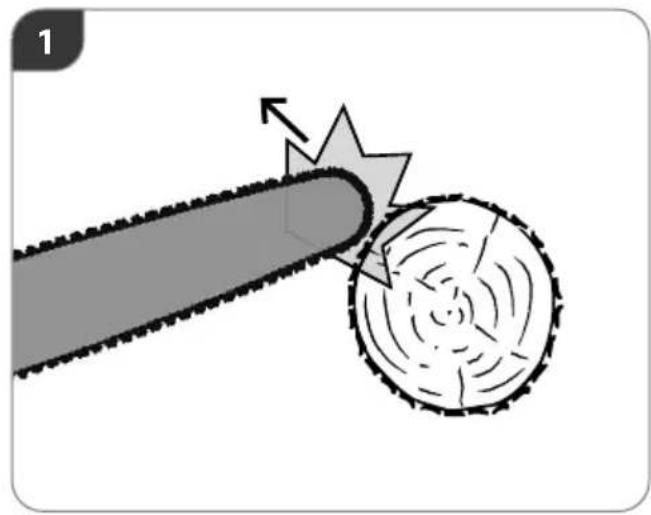
Kickback may occur when the nose or tip of the guide bar touches an object, or when the wood closes in and pinches the saw chain in the cut.
Tip contact in some cases may cause a sudden reverse reaction, kicking the guide bar up and back towards the operator.
Pinching the saw chain along the top of the guide bar may push the guide bar rapidly back towards the operator.
Either of these reactions may cause you to lose control of the saw which could result in serious personal injury. Do not rely solely on the safety devices with which the chain saw is equipped. As a chain saw user, you should take several steps to keep your cutting jobs free from accident or injury.
Kickback is the result of tool misuse and/or incorrect operating procedures or conditions and can be avoided by taking proper precautions as given below:
- Maintain a firm grip, with thumbs and fingers encircling the chain saw handles, with both hands on the saw and position your body and arm to allow you to resist
kickback forces. Kickback forces can be controlled by the operator, if proper precautions are taken. Niemals die Kettensäge loslassen.
- Do not overreach and do not cut above shoulder height. This helps prevent unintended tip contact and enables better control of the chain saw in unexpected situations.
- Only use replacement bars and chains specified by the manufacturer. Incorrect replacement guide bars and chains may cause chain breakage and/or kickback.
- Follow the manufacturer's sharpening and maintenance instructions for the saw chain. Decreasing the depth gauge height can lead to increased kickback.
Additional Safety and Working Instructions
It is recommended to cut logs on a saw-horse or cradle when operating the machine for the first time.
Ensure all guards, handles, and spiked bumper are properly fitted and are in good condition.
Persons using the chain saw should be in good health. The chain saw is heavy, so the operator must be physically fit.
The operator should be alert, have a good vision, mobility, balance, and manual dexterity. If there is any doubt, do not operate the chain saw.
Do not start using the chain saw until you have a clear work area, secure footing, and a planned retreat path away from a falling tree. Beware of the emission of lubricant mist and saw dust. Wear a mask or respirator, if required.
Do not cut vines and/or small undergrowth (less than 75 mm in diameter).
Always hold the chain saw with both hands during operation. Use a firm grip with thumbs and fingers encircling the chain saw handles. Right hand must be on the rear handle and left hand on the front handle.
Before starting the chain saw, make sure the saw chain is not contacting any object.
Do not modify the chain saw in any way or use it to power any attachments or devices not recommended by the manufacturer for your chain saw.
There should be a first-aid kit containing large wound dressings and a means to summon attention (e.g., whistle) close to the operator. A larger more comprehensive kit should be reasonably nearby.
An incorrectly tensioned chain can jump off the guide bar and could result in serious injury or fatality. The length of the chain depends on the temperature. Check the tension frequently.
You should get used to your new chain saw by making simple cuts on securely supported wood. Do this whenever you have not operated the saw for some time.
To reduce the risk of injury associated with contacting moving parts, always stop the motor, apply the chain brake, remove the battery pack and make sure all moving parts have come to a stop before:
• cleaning or clearing a blockage
• leaving the machine unattended
• installing or removing attachments
- checking, conducting maintenance or working on the machine
The size of the work area depends on the job being performed as well as the size of the tree or work piece involved. For example, felling a tree requires a larger work area than making other cuts, i.e., bucking cuts, etc. The operator needs to be aware and in control of everything happening in the work area.
Do not cut with your body in line with the guide bar and chain. If you experience kickback, this will help prevent the chain coming into contact with your head or body.
Do not use a back-and-forward sawing motion, let the chain do the work. Keep the chain sharp and do not try to push the chain through the cut.
Do not put pressure on the saw at the end of the cut. Be ready to take on the weight of the saw as it cuts free from the wood. Failure to do so could result in possible serious personal injury.
Do not stop the saw in the middle of a cutting operation.
Keep the saw running until it is already removed from the cut. Do not fix the on/off switch in the "on" position when using the saw hand-held.
Remove the battery pack before starting any work on the appliance.
WARNING! To reduce the risk of fire, personal injury, and product damage due to a short circuit, never immerse your device, battery pack or charger in fluid or allow a fluid to flow inside them. Corrosive or conductive fluids, such as seawater, certain industrial chemicals, and bleach or bleach containing products, etc., Can cause a short circuit.
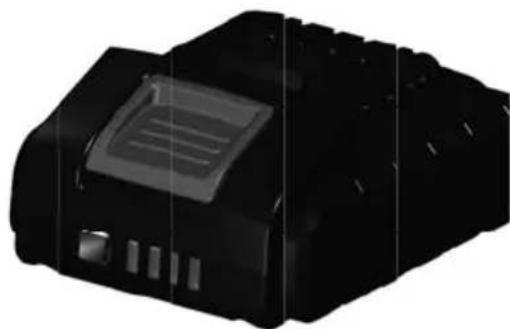
Use only System Typ LI 22 / LBC202Z-2 chargers for charging System CGC20G battery packs.
Never break open battery packs and chargers and store only in dry rooms. Keep dry at all times.
Push and pull
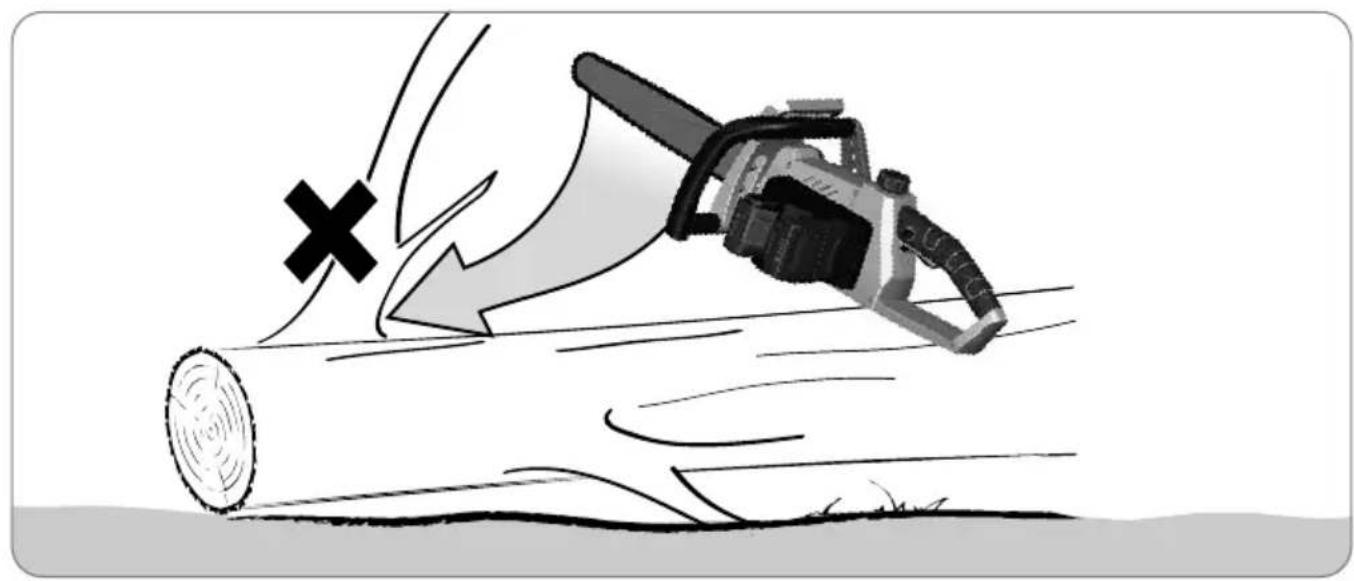
The reaction force is always opposite to the direction the chain is moving. Thus, the operator must be ready to control the tendency for the machine to pull away (forward motion) when cutting on the bottom edge of the bar and the push backwards (towards the operator) when cutting along the top edge.
Saw jammed in the cut
Stop the chain saw and make it safe. Do not try to force the chain and bar out of the cut as this is likely to break the chain, which may swing back and strike the operator. This situation normally occurs because the wood is incorrectly supported which forces the cut to close under compression, thereby pinching the blade. If adjusting the support does not release the bar and chain, use wooden wedges or a lever to open the cut and release the saw.
Never try to start the chain saw when the guide bar is already in a cut or kerf.
Skating / Bouncing
When the chainsaw fails to dig in during a cut, the guide bar can begin hopping or dangerously skidding along the surface of the log or branch, possibly resulting in the loss of control of the chainsaw. To prevent or reduce skating or bouncing, always use the saw with both hands make sure the saw chain establishes a groove for cutting. Never cut small, fl exible branches or brushes with your chainsaw. Their size and fl exibility can easily cause the saw to bounce towards you or bind up with enough force to cause a kickback. The best tool for that kind of work is a hand saw, pruning shears, an axe or other hand tools.
Personal protective equipment
Wear a helmet at all times when operating the machine. A helmet, equipped with mesh visor, can help reduce the risk of injury to the face and the head if kickback occurs. Wear ear protectors. Exposure to noise can cause hearing loss.
Good quality personal protective equipment, as used by professionals, will help reduce the risk of injury to the operator. The following items should be used when operating the machine:
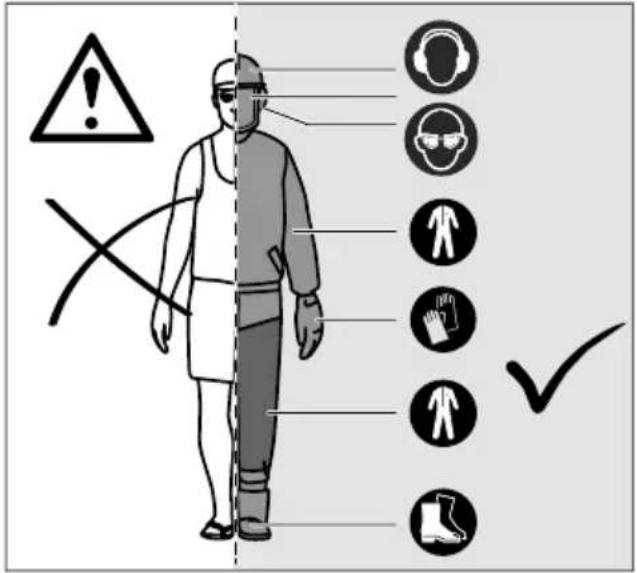
text_image
Safety warning diagram showing a person standing with various hazard symbols and safety indicators including warning, cross, and checkmark.Safety helmet
should comply with EN 397 and be CE marked
Hearing protection
should comply with EN 352-1 and be CE marked
Eye and face protection
should be CE marked and comply with EN 166 (for safety glasses) or EN 1731 (for mesh visors)
Gloves
should comply with EN381-7 and be CE marked
Leg protection (chaps)
should comply with EN 381-5, be CE marked and provide allround protection
Chain saw safety boots
should comply with EN ISO 20345:2004 and be marked with a shield depicting a chain saw to show compliance with EN 381-3. (Occasional users may use steel toe-cap safety boots with protective gaiters which conform to EN 381-9 if the ground is even and there is little risk of tripping or catching on undergrowth)
Chain saw jackets for upper body protection
should comply with EN 381-11 and be CE marked
Know your Chain saw

text_image
Trigger Release On/off switch Chain Drive Bar Groove Rear Handle Battery Front handle 8 Front Hand Guard / Chain brake lever Chain Lubricant Cap Guide Bar Saw Chain Guide Bar Cover Chain tensioner wheel Chain Catcher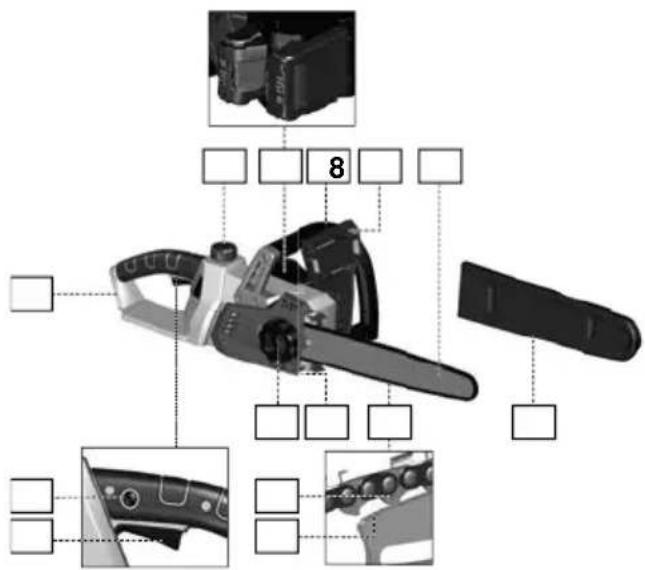
text_image
Diagram of a chainback tool with labeled parts and numbered callouts, showing exploded view and assembly details.WARNING
Consequences of improper maintenance, removal or modification of safety features like the chain brake, ignition switch, hand guard (front and back), spiked bumper, chain catcher, guide bar, low kickback saw chain may cause the safety features to not function correctly, thus increasing the potential for serious injury.
Low kick-back saw chain
A low-kick-back saw chain helps to reduce the possibility of a kickback event. The rakers (depth gauges) ahead of each cutter can minimize the force of a kick-back reaction by preventing the cutters from digging in too deeply. Only use replacement guide bar and chain combinations recommended by the manufacturer. As saw chains are sharpened, they lose some of the low kickback qualities and extra caution is required. For your safety, replace saw chains when cutting performance decreases.
Spiked Bumper
The integral bumper spike may be used as a pivot when making a cut. It helps to keep the body of the chain saw steady while cutting. When cutting, push the machine forward until the spikes dig into the edge of the wood, then by moving the rear handle up or down in the direction of the cutting line it can help ease the physical strain of cutting.
Guide Bar
Generally, guide bars with small radius tips have somewhat lower potential for kick-back. You should use a guide bar and matching chain which is just long enough for the job. Longer bars increase the risk of loss of control during sawing. Regularly check the chain tension. When cutting smaller branches (less than the full length of the guide bar) the chain is more likely to be thrown off if the tension is not correct.
Chain Brake
Chain brakes are designed to quickly stop the chain from rotating. When the chain brake lever/front hand guard is pushed towards the bar, the chain should stop immediately. A chain brake does not prevent kickback. It only lowers the risk of injury should the chain bar contact the operator's body during a kickback event. The chain brake should be tested before each use for correct operation in both the run and brake positions.
Chain Catcher
A chain catcher (14) prevents the saw chain from being thrown back towards the operator if the saw chain comes loose or breaks.
Instructions concerning the proper techniques for basic felling, limbing and cross-cutting (p. 10-14)
Understanding the forces within the wood
When you understand the directional pressures and stresses inside the wood you can reduce the "pinches" or at least expect them during your cutting. Tension in the wood means the fibers are being pulled apart and if you cut in this area, the "kerf" or cut will tend to open as the saw goes through. If a log is being supported on a saw horse and the end is hanging unsupported over the end, tension is created on the upper surface due to the weight of the overhanging log stretching the fibers. Likewise, the underside of the log will be in compression and the fibers are being pushed together. If a cut is made in this area, the kerf will have the tendency to close up during the cut. This would pinch the blade.
Felling a tree
When bucking and felling operations are being performed by two or more persons at the same time, the felling operations should be separated from the bucking operation by a distance of at least twice the height of the tree being felled.
Trees should not be felled in a manner that would endanger any person, strike any utility line, or cause any property damage.
The chain saw operator should keep on the uphill side of the terrain as the tree is likely to roll or slide downhill after it is felled.
If the tree does make contact with any utility line, the company should be notified immediately.
An escape path should be planned and cleared as necessary before cuts are started. The escape path should extend back and diagonally to the rear of the expected line of fall.
Before felling starts, consider the natural lean of the tree, the location of larger branches, and the wind direction to judge which way the tree will fall.
Remove dirt, stones, loose bark, nails, staples, and wire from the tree.
Do not attempt to fell trees which are rotten or have been damaged by wind, fire, lightning, etc. This is extremely dangerous and should only be completed by professional tree surgeons.
1. Setting the notches
Make the notch 1/3 the diameter of the tree, perpendicular to the direction of the fall. Make the lower horizontal notching cut first. This will help to avoid pinching either the saw chain or the guide bar when the second notch is being made.
2. Felling-back cut
Make the felling-back cut at least 50 mm/2 in. higher than the horizontal notching cut. Keep the felling-back cut parallel to the horizontal notching cut. Make the felling back cut so enough wood is left to act as a hinge. The hinge wood keeps the tree from twisting and falling in the wrong direction.
Do not cut through the hinge.
As the felling gets close to the hinge, the tree should begin to fall. If there is any chance that the tree may not fall in the desired direction or it may rock back and bind the saw chain, stop cutting before the felling-back cut is complete and use wedges of wood, plastic or aluminium to open the cut and drop the tree along the desired line of fall.
When the tree begins to fall remove the chain saw from the cut, stop the motor, put the chain saw down, and use the retreat path planned. Be alert for falling overhead limbs and watch your footing.
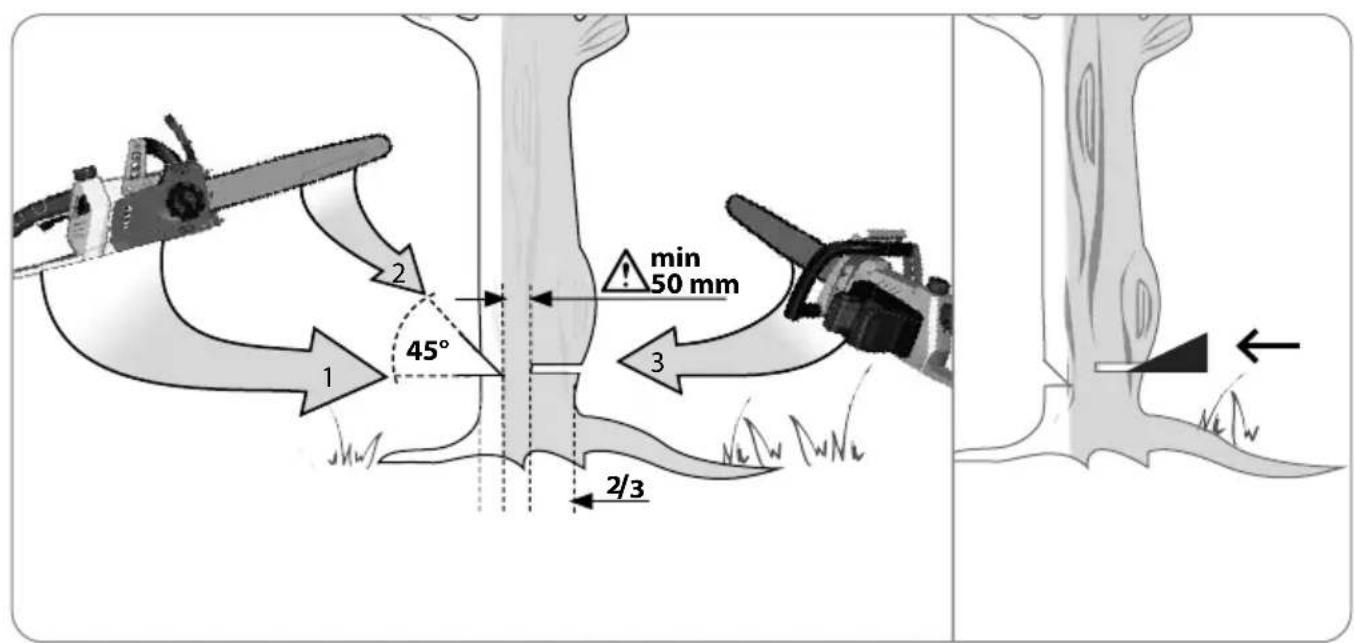
Removing buttress roots
A buttress root is a large root extending from the trunk of the tree above the ground. Remove large buttress roots prior to felling. Make the horizontal cut into the buttress first, followed by the vertical cut. Remove the resulting loose section from the work area. Follow the correct tree felling procedure after you have removed the large buttress roots.
Limbing a tree
Limbing is removing the branches from a fallen tree. Branches under tension should be cut from the bottom up to avoid binding the chain saw.
Bucking a log
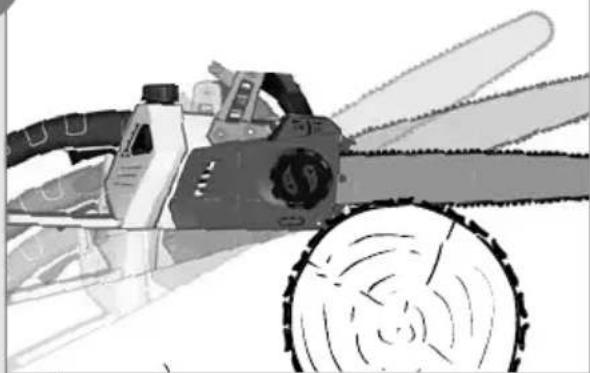
Bucking is cutting a log into lengths. It is important to make sure your footing is firm and your weight is evenly distributed on both feet. When possible, the log should be raised and supported by the use of limbs, logs or chocks.
Follow the simple directions for easy cutting. When the log is supported along its entire length, it is cut from the top (overbuck).
When the log is supported on one end, cut 1/3 the diameter from the underside (underbuck). Then make the finished cut by overbucking to meet the first cut.
When the log is supported on both ends, cut 1/3 the diameter from the top (overbuck). Then make the finished cut by underbucking the lower 2/3 to meet the first cut.
When bucking on a slope always stand on the uphill side of the log. To maintain control when "cutting through", release the cutting pressure near the end of the cut without relaxing your grip on the chain saw handles.
Don't let the chain contact the ground. After completing the cut, wait for the saw chain to stop before you move the chain saw. Always stop the motor before moving from tree to tree.
Cutting springpoles
A springpole is any log, branch, rooted stump, or sapling which is bent under tension by other wood so that it springs back if the wood holding it is cut or removed.
On a fallen tree, a rooted stump has a high potential of springing back to the upright position during the bucking cut to separate the log from the stump. Watch out for springpoles—they are dangerous.
WARNING
Springpoles are dangerous and could strike the operator, causing the operator to lose control of the chain saw. This could result in severe or fatal injury to the operator. This should be done by trained users.
Additional safety warnings
Some regions have regulations that restrict the use of the machine. Check with your local authority for advice.
Never allow children or people unfamiliar with the instructions to use the machine. Local regulations may restrict the age of the operator.
Ensure before each use that all controls and safety devices function correctly. Do not use the machine if the "off" switch does not stop the motor.
Do not wear loose fitting clothing, short trousers, or jewellery of any kind.
Secure long hair so it is above shoulder level to prevent entanglement in moving parts.
Beware of thrown, flying, or falling objects. Keep all bystanders, children, and animals at least 15 m away from the work area.
Do not operate in poor lighting. The operator requires a clear view of the work area to identify potential hazards.
Use of hearing protection reduces the ability to hear warnings (shouts or alarms). The operator must pay extra attention to what is going on in the work area.
Operating similar tools nearby increases both the risk of hearing injury and the potential for other persons to enter your work area.
Keep firm footing and balance. Do not overreach.
Overreaching can result in loss of balance and can increase the risk of kickback.
Keep all parts of your body away from any moving part. Inspect the chain saw before each use. Check for correct operation of all controls, including the chain brake. Check for loose fasteners, make sure all guards and handles are properly and securely attached. Replace any damaged parts before use.
Do not modify the machine in any way or use parts and accessories which are not recommended by the manufacturer.
WARNING
If the machine is dropped, suffers heavy impact or begins to vibrate abnormally, immediately stop the machine and inspect for damage or identify the cause of the vibration. Any damage should be properly repaired or replaced by an service station.
Residual Risk
- Even when the product is used as prescribed, it is still impossible to completely eliminate certain residual risk factors. The following hazards may arise in use and the operator should pay special attention to avoid the following:
- Injury caused by vibration Always use the right tool for the job. Use designated handles. Restrict working time and exposure.
- Damage to hearing due to exposure to noise Wear hearing protection and limit exposure.
- Injury caused by contact with exposed saw teeth of the chain
- Injury caused by thrown-out pieces of the workpiece (wood chips, splinters)
- Injury caused by dust and particles
- Injury to the skin caused by contact with lubricants
- Parts ejected from the saw chain (cutting/injection hazards)
- Unforeseen, abrupt movement, or kickback of the guide bar (cutting hazards)"
Risk Reduction
- It has been reported that vibrations from handheld tools may contribute to a condition called Raynaud's Syndrome in certain individuals. Symptoms may include tingling, numbness, and blanching of the fingers, usually apparent upon exposure to cold. Hereditary factors, exposure to cold and dampness, diet, smoking and work practices are all thought to contribute to the development of these symptoms. There are measures that can be taken by the operator to possibly reduce the effects of vibration:
- Keep your body warm in cold weather. When operating the unit wear gloves to keep the hands and wrists warm.
• After each period of operation, exercise to increase blood circulation. - Take frequent work breaks. Limit the amount of exposure per day.
- Protective gloves available from professional chain saw retailers are designed specifically for chain saw use which give protection, good grip and also reduce the effect of handle vibration. These gloves should comply with EN 381-7 and must be CE marked.
If you experience any of the symptoms of this condition, immediately discontinue use and see your doctor.
WARNING
Injuries may be caused, or aggravated, by prolonged use of a tool. When using any tool for prolonged periods, ensure you take regular breaks.
ASSEMBLY
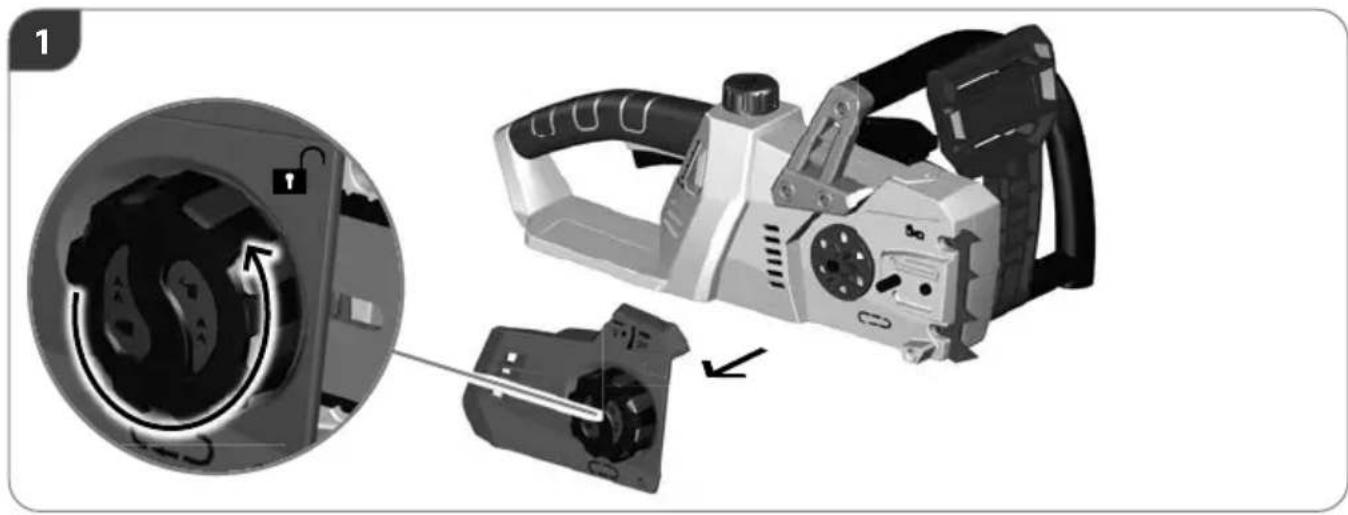
Assembling saw chain and guide bar
WARNING
If any parts are damaged or missing do not operate the machine until the parts are replaced. Failure to heed this warning could result in serious personal injury.
Make sure to remove the battery. Wear protective gloves.
WARNING
The saw chain is sharp. Always wear protective gloves when performing maintenance to the chain.
Adjusting the chain tension (p. 5)
Remove the battery pack before you do any work on the chain saw.
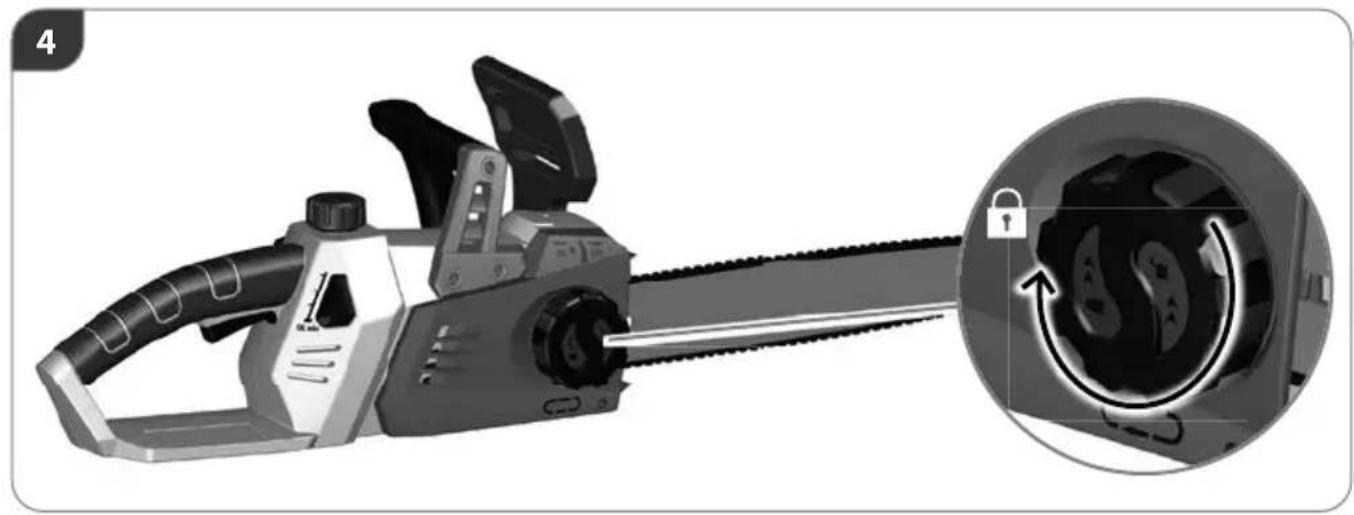
To increase the chain tension, turn the chain tensioning screw clockwise and check the chain tension frequently. To reduce the chain tension, turn the chain tensioning screw counterclockwise and check the chain tension frequently.
and measure the distance between the bar and the teeth of the chain cutters. Tighten the bar mounting nuts (Fig. 4) by turning it clockwise.
Note Do not over-tension the chain - excess tension will cause excessive wear and will reduce the life of the chain and could damage the bar. New chains could stretch and loosen during initial use. Remove battery pack and check chain tension frequently during the first two hours of use. The temperature of the chain increases during normal operation causing the chain to stretch. Check the chain tension frequently and adjust as required. A chain tensioned while warm may be too tight upon cooling. Make sure that the chain tension is correctly adjusted as specified in these instructions.
OPERATION
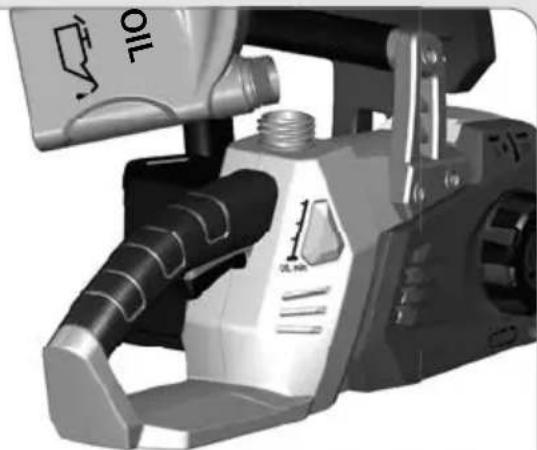
Adding the chain lubricating oil
WARNING
Never work without chain lubricant. If the saw chain is running without lubricant, the guide bar and the saw chain can be damaged. It is essential to frequently check the oil level in the oil level gauge and before starting to use the chain saw.
Keep the reservoir more than 14 full to ensure sufficient oil is available for the job.
Note: It is recommended to use a vegetable based chain oil when pruning trees. Mineral oil may harm trees. Never use waste oil automotive oil, or very thick oils. These could damage the chain saw. Clear surface around the oil cap to prevent contamination.
Holding the chain saw
Always hold the chain saw with your right hand on the rear handle and your left hand on the front handle. Grip both handles with the thumbs and fingers encircling the handles.
Starting the chain saw
Before starting the chain saw, you should install the battery pack in the chain saw and make sure the chain brake is in run position by pulling the chain brake lever/hand guard toward the front handle.
Checking and operating the chain brake
Activate the chain brake by holding the front handle with your left hand. Press the chain brake lever/hand protection towards the guide rail with the back of your hand, while the chain is moving fast. Please ensure that both your hands are on the handles at all times.
Reset the chain brake back into the run position by grasping the top of the chain brake lever/hand guard and pulling toward the front handle until you hear a click.
WARNING
If the chain brake does not stop the chain immediately, or if the chain brake will not stay in the run position without assistance, bring the chain saw to an service station for repair prior to use.
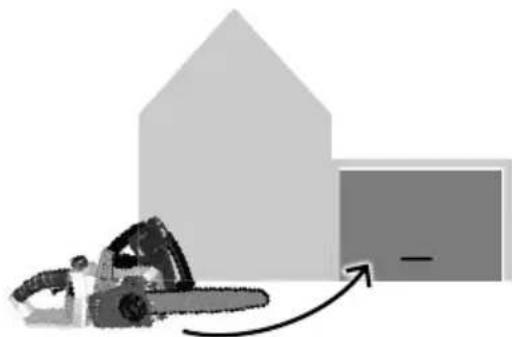
TRANSPORTATION AND STORAGE
Always lightly oil the chain when storing to prevent rust. Always empty the oil tank when storing to prevent leakage. Stop the machine, remove the battery, and allow it to cool before storing or transporting.
Clean all foreign materials from the machine. Store the machine in a cool, dry, and well-ventilated place that is inaccessible to children. Keep away from corrosive agents, such as garden chemicals and de-icing salts. Do not store outdoors.
Fit the guide bar cover before storing the machine or during transportation.
For transportation in vehicles, secure the machine against movement or falling to prevent injury to persons or damage to the machine.
AUTION
Hearing damage
A longer stay in the immediate vicinity of the running unit may cause hearing damage. Wear ear protectors.
When working with the device, a certain level of noise cannot be avoided. Noisy work should be scheduled for hours, during which it is allowed by statute or other local regulations. Adhere to any applicable rest times and limit your working time to the necessary minimum time. For your personal protection and the protection of people nearby, suitable hearing protection must be worn.
Please observe the following: according to the German Machine Noise Protection Regulation from September 2002, this device may not be operated on Sundays and Bank holidays or working days from 8pm to 7am. Furthermore, it is forbidden to operate the machine at the following times of day: from 7 a.m. to 9 a.m., from 1 p.m. to 3 p.m. and from 5 p.m. to 8 p.m.
Please do also consider any local regulations concerning noise protection!
ANGER
Warning This power tool generates an electromagnetic field during operation. Under certain circumstances, this field may affect active or passive medical implants. To reduce the risk of serious or fatal injury, we recommend that individuals with medical implants consult their physician and the manufacturer of the medical implant before operating the machine.

WARNING
Risk of personal injury due to chainsaw in operation.
- Keep your hands in safe distance.
Never use the machine with a damaged cover or protective device or without cover or protective devices. - Remove the battery pack before starting any adjustment, cleaning and maintenance work on the device. Wait until all rotating parts have stopped and the appliance has cooled down.
Check the work area before using the appliance.
Remove any hard objects such as stones, shards of glass, wires, etc. that could be thrown off, knocked back or that could otherwise cause injury or damage during appliance operation.
Never use the appliance when the proper equipment is not fitted.
The appliance must not be used if damaged or safety equipment is defective. Replace any worn-out and
damaged parts.
Check all screw and plug-in connections and protective equipment if fi rm and tightened properly and whether all moving parts are running smooth whenever the appliance is to be put into operation.
The protective equipment on the appliance is strictly prohibited to be disassembled, changed, used in conflict with the designation and it is prohibited to attach any protective equipment of other manufacturers.
If the appliance starts abnormally vibrating, switch the engine off and search for the cause immediately. Generally, vibrations are a warning against operating failure.
When being blocked, turn the appliance immediately off and remove the jammed item.
The appliance must be stored in a dry place and protected from frost.
Store idle power tools out of the reach of children and do not allow persons unfamiliar with the power tool or these instructions to operate the power tool.
SYMBOLS
| Warning /Caution! | |
| WARNING! Please read the instructions carefully before starting the machine. | |
| Remove the battery pack before starting any work on the appliance. | |
| Wear goggles. | |
| Wear ear protectors. | |
| Charger to be used in closed spaces only. | |
| Warning against thrown-off itemsDo not let other persons get near due to foreign objects being thrown off. Minimum safe distance is 15 m. | |
| Do not expose tools to rain. Do not use tools in damp or wet locations. | |
| Remove the battery pack before starting any adjustment, cleaning and maintenance work on the device. | |
| CE | European Conformity Mark |
| Protect the battery against temperatures above 45 °C. | |
| Protect the battery against heat and fi re.. | |
| Protect the battery against water and moisture. | |
| Output voltageDirect CurrentOutput current | |
| Input voltage / AC CurrentFrequency, Rated input | |
| Sound power level | |
| Recommended battery types | |
| Do not dispose electric tools, batteries/rechargeable batteries together with household waste material. Electric tools and batteries that have reached the end of their life must be collected separately and returned to an environmentally compatible recycling facility. Check with your local authority or retailer for recycling advice and collection point. |
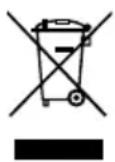
Do not dispose electric tools, batteries/rechargeable batteries together with household waste material. Electric tools and batteries that have reached the end of their life must be collected separately and returned to an environmentally compatible recycling facility. Check with your local authority or retailer for recycling advice and collection point.

Deliver the batteries to a collection centre of old batteries where they will be recycled in an environmentally friendly way.
SPECIFIED CONDITIONS OF USE
The cordless chain saw is only intended for use outdoors.
For safety reasons, the chian saw must be adequately controlled by using two-handed operation at all times.
The chain saw is designed for cutting branches, trunks, logs, and beams of a diameter determined by the cutting length of the guide bar. It is only designed to cut wood. It is only to be used by adults who have received adequate training on the hazards and preventative measures/actions to be taken while using the chain saw.
Do not use the chain saw for any purpose not listed in the specified conditions of use. It is not to be used for professional tree services. The chain saw is not to be used by children or by persons not wearing adequate personal protective equipment and clothing.

WARNING
When using the chain saw, the safety rules must be followed. For your own safety and that of bystanders, you must read and fully understand these instructions before operating the chain saw. You should attend a professionally organized safety course in the use, preventative actions, fi rst-aid, and maintenance of chain saws. Please keep these instructions safe for later use.

WARNING
Chain saws are potentially dangerous tools. Accidents involving the use of chain saws often result in loss of limbs or death. It is not just the chain saw that is the hazard. Falling branches, toppling trees, and rolling logs can all kill. Diseased or rotting timber poses additional hazards. You should assess your capability of completing the task safely. If there is any doubt, leave it to a professional tree surgeon.
Not observing general regulations in force and instructions from this manual does not make the manufacturer liable for damages.
BATTERY

WARNING
Risk of fire! Risk of explosion
Never use damaged, defective or deformed accumulators. Never open or damage the accumulator or let it fall on the ground.
Never charge the battery in an environment with acids and easily flammable materials.
Protect the battery against heat and fire.
Battery to be used at the ambient temperatures between 10^ C and +40^ C only.
Never put the battery on heaters and do not expose it to strong sunlight for a long time.
After being subject to heavy load, let the battery cool down first.
Short circuit - do not bridge the accumulator contacts with metal parts.
The accumulator must be packaged (plastic bag, box) or accumulator contacts must be sealed up for accumulator disposal, transport or storage.
Recharge only with the charger specified by the manufacturer. A charger that is suitable for one type of battery pack may create a risk of fire when used with another battery pack.
Use power tools only with specifically designated battery packs. Use of any other battery packs may create a risk of injury and fi re.
When battery pack is not in use, keep it away from other metal objects, like paper clips, coins, keys, nails, screws or other small metal objects, that can make a connection from one terminal to another. Shorting the battery terminals together may cause burns or a fire.
Under abusive conditions, liquid may be ejected from the battery; avoid contact. If contact accidentally occurs, fl ush with water. If liquid contacts eyes, additionally seek medical help. Liquid ejected from the battery may cause irritation or burns.
Vapours may leak out in case of unauthorised use or when using a damaged accumulator. Bring fresh air and seek medical advice if experiencing difficulties. Vapours may irritate the respiratory system.
Transporting Lithium Batteries
Lithium-ion batteries are subject to the Dangerous Goods Legislation requirements. Transportation of those batteries has to be done in accordance with local, national and international provisions and regulations.
The user can transport the batteries by road without further requirements.
Commercial transport of Lithium-Ion batteries by third parties is subject to Dangerous Goods regulations.
Transport preparation and transport are exclusively to be carried out by appropriately trained persons and the process has to be accompanied by corresponding experts.
When transporting batteries: Ensure that battery contact terminals are protected and insulated to prevent short circuit. Ensure that battery pack is secured against movement within packaging. Do not transport batteries that are cracked or leak. Check with forwarding company for further advice
SAFETY WARNINGS BATTERY CHARGER
This appliance can be used by children aged from 8 years and above and persons with reduced physical, sensory or mental capabilities or lack of experience and knowledge if they have been given supervision or instruction concerning use of the appliance in a safe way and understand the hazards involved.
Children shall not play with the appliance.
Children are not allowed to carry out cleaning or user maintenance unless under supervision.

WARNING
Do not try to charge non-rechargeable batteries with this charger.
To avoid danger, a damaged mains supply pipe must be replaced by the manufacturer.
Read and understand the operating instructions before using the appliance. Familiarise with the control elements and how to use the appliance properly.
Abide by all the safety measures stated in the service manual. Act responsibly toward third parties. The operator is responsible for accidents or risks to third parties.
The appliance must be stored in a dry place and protected from frost.
No metal parts may enter the shaft to slide the battery (risk of short circuit). Never use the charger in moist or wet conditions. Suitable for indoor areas only. Make sure the system voltage corresponds to the charger type plate details. There is a risk of electric shock.
Cable connections to be separated by pulling the plug only. Pulling the cable could damage both the cable and plug. As a result, electric safety would no longer be guaranteed.
Never use the charger when the cable, plug or the machine is damaged by external influences. The accumulator must be packaged (plastic bag, box) or accumulator contacts must be sealed up for accumulator disposal, transport or storage. Make sure the cooling function is not limited by covering the cooling slots. Do not operate the appliance near heat sources or on a flammable surface.
Never open the charger. Contact a specialised workshop in case of any defect.
The outer battery surface must be clean and dry before the battery starts being charged.
Chargers are exclusively suitable to charge these replaceable batteries::
Typ LI 22 / LBC202Z-2
Charging any other battery is not allowed.
MAINTENANCE
DANGER

Remove the battery pack before starting any adjustment, cleaning and maintenance work
on the device. Wait until all rotating parts have stopped and the appliance has cooled down.
Keep the device, in particular the air vents, clean at all times. Never spray water on the device body! Never clean the machine and its components with solvents, flammable or toxic liquids. Us only a damp cloth making.
Use only original accessories and original spare parts. Using other spare parts can result in accidents/injuries of the user. The manufacturer will not be liable for any such damage.
Please contact our service department if you need accessories or spare parts.
Only a regularly maintained and treated appliance can
Replacing the guide bar and saw chain
WARNING
Wear protective gloves.
A dull or improperly sharpened chain can cause excessive motor speed during cutting which may result in severe motor damage.
Failure to replace or repair a damaged chain can cause serious injury.
The saw chain is sharp. Always wear protective gloves when performing maintenance to the chain.
Inspecting and cleaning the chain brake
Always keep the chain brake mechanism clean by lightly brushing the linkage free from dirt.
Always test the chain brake performance after cleaning..
Refer to "Checking and operating the chain brake" section in this manual for additional information.
serve as a satisfactory aid. Insufficient maintenance and care can lead to unforeseen accidents and injuries.
Repairs and works specified in these Instructions may only be performed by qualified authorised staff.
Keep your chain saw professionally maintained and safe.
- Sharpening the chain safely is a skilled task. Therefore, the manufacturer strongly recommends that a worn or dull chain is replaced with a new one, available at your service agent. The part number is available in the product specification table in this manual.
Follow instructions for lubricating and chain tension checking and adjustment.
After each use, clean the machine with a soft dry cloth. Remove any chips, dirt and debris in the battery bay..
Check all nuts, bolts, and screws at frequent intervals for security to ensure the machine is in safe working condition. Any part that is damaged should be properly repaired or replaced by a service station.
Maintenance schedule
Daily check
Bar lubrication Before each use
Chain tension Before each use and
frequently
Chain sharpness Before each use, visual
check
For damaged parts Before each use
For loose fasteners Before each use
Chain brake function Before each uselnspect
and clean
Guide Bar Before each use
Complete saw After each use
Replacement parts (Bar and chain)
Chain 90PX052X
Guide Bar 144MLEA041
Chain must be fitted with bar from the same
manufacturer according to above combinations.
DISPOSAL
If your device should become useless somewhere in the future or you do not need it any longer, do not dispose of the device together with your domestic refuse, but dispose of it in an environmentally friendly manner.
Please dispose of the device itself at an according collecting/recycling point. By doing so, plastic and metal parts can be separated and recycled. Information concerning the disposal of materials and devices are available from your local administration.
Batteries are not to be put into the rubbish. As a consumer you are legally obliged to return used batteries
and accumulators. At the end of the duration of your apparatus, the batteries or accumulators have to be taken from the apparatus, disposing of them separately. You have the possibility of delivering your old batteries and accumulators to the local collecting points of your municipality or to your dealer or to the distribution centers.
Dispose of the batteries when discharged. We recommend applying an adhesive tape on the poles to protect them against short circuit. Never open the battery.
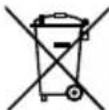
Do not dispose of electric tools together with household waste material!

Dln observance of European Directive 2012/19/
EU on waste electrical and electronic equipment and its implementation in accordance with national law, electric tools that have reached the end of their life must be collected separately and returned to an environmentally compatible recycling facility.
Recycling alternatives to request for return:
If the ownership of the electronic device is relinquished, the owner of the device is under obligation to ensure its proper recycling instead of returning it. For this purpose, the old device can also be left with a collection facility that disposes of it in line with the national Recycling and Waste Act. This does not concern the accessories and tools without electronic components provided along with the old devices.
CARACTÉRISTIQUES TECHNIQUES
text_image
Safety warning diagram showing a person standing with various hazard symbols and safety icons including helmet, mask, hand, glove, outfit, and cross.Casque de sécurité
text_image
Diagram of a chain saw with labeled parts and numbered annotations
AVERTISSEMENT
text_image
Safety warning diagram showing a person standing with various hazard symbols and safety indicators including head, face, hand, leg, and shoe.Casco di sicurezza
text_image
Diagram of a chain saw with labeled parts and numbered annotations, showing exploded view and assembly details.
AVVERTENZA
text_image
Safety warning diagram showing a person standing with various hazard symbols and safety icons, including warning signs and checkmark.Kask ochronny
text_image
Diagram of a chain saw with labeled parts and numbered annotations
OSTRZEŻENIE
The warranty is valid for 2 years from the handover date. The original invoice or a copy of the invoice serves as proof.
Warranty provider
ikra GmbH, Schlesier Straße 36, D-64839 Münster-Altheim, Germany
Area of validity
The warranty is only intended for consumers. A consumer is any natural person who concludes a legal transaction for purposes which can predominantly neither be attributed to his commercial nor to his self-employed professional activity.
The warranty is valid for all products purchased within the EU, UK and Switzerland.
No restriction of the legal rights of the buyer
Within the framework of the applicable national laws on the sale of consumer goods, the buyer has legal rights, e.g. due to liability for defects (guarantee), which are not restricted by the warranty.
Contents of the warranty
In the event of a warranty claim, the warranty provider shall bear the repair and material costs for defective parts. If a repair is uneconomical, we reserve the right to provide the customer with a replacement device. The refund of the purchase price is excluded within the scope of the warranty. Postage and shipping costs inside Germany that are incurred under warranty shall be borne by ikra GmbH. Shipping costs incurred from or within countries other than Germany, as well as customs and import duties, shall be borne by the customer. Repair or replacement of the device does not lead to the warranty period starting again.
The warranty shall not apply or shall e pire in the following cases
Batteries and wear parts
Improper or inappropriate use, e.g. commercial use
- Damages that arise from the use of incorrect accessory parts
- Damage due to external influences, e.g. transport damage, weather damage, impact or breakage
- Damage caused by incorrect voltage (mains voltage), e.g. when used abroad
- Repairs with non-original parts (original spare parts can be found here: www.ikra.de/ersatzteile/)
• Repairs or modifications that have not been carried out by us
Application of force
- Wilful motor overloading
Malice, wilful deception
Repairs under warranty may only be carried out by authorised workshops or by the in-house customer service department, otherwise the warranty shall be voided. Service addresses can be found at www.ikra.de/serviceadressen. During the repair we do not provide the customer with any temporary replacement equipment.
Repair costs that are not covered by the warranty will be invoiced to the customer. The customer shall be consulted prior to the performance of any repairs that result in additional costs.
Enforcement of the warranty (warranty claim)
If the product does not function during the warranty period or does not function as intended for use, this is a warranty claim.
In the event of a warranty claim, please contact
Tel: +49 (0) 6071-3003-0
Email: kundenservice@ikra.de
You will find further service addresses, which you are welcome to contact if you require assistance, at www.ikra.de/serviceadressen.
Assertion of the defect must take place immediately after the occurrence of the defect and within the warranty period.
Our competent customer hotline and technical hotline are by your side throughout the complete warranty period with advice and assistance. In the event of a warranty case, contact us and you can send the faulty device to us free of charge. The return shipping of the repaired device or the replacement device back to you is also free of charge.
Dur e de garantie
GB - explains the following conformity according to EU directives and norms for the following product
Normen / Standard References:
EN 60745-1:2009/A11:2010;
EN 60745-2-13:2009/A1:2010
EN 55014-1:2017
EN 55014-2:2015
EN IEC 63000:2018
M6A 032082 0148 Rev. 00
DE | Ikra Mogatec - Service
FR | ikra Service France
GB-Northampton, NN3 8RH
UK/N.Ireland: 0344 824 3524
customerservice@b-gr8.co.uk
NL | Muldertechniek
Noorderkijl 1
9571 AR 2 e Exloermond
+31 599 745024
service.NL@mogatec.com
AT | ikra - Reparatur Service
IN | Agritech Floritech Inc.
206 - B Rajindera Arihant Tower
B-1 Community Centre Janak Puri
New Delhi - 110058 / India
+91 11 45662679
info@agrifl oritech.com
RO | BRONTO COMPROD S.R.L.
Str. Corneliu Coposu nr. 35-37
400235 Cluj-Napoca
+40 264 435 337
tehnic@bronto.ro
CY | Lambrou Agro Ltd.
11 Othellos Street, Dali Industrial Zone
2540 Nicosia
+357 22667908
info@lambrouagro.com.cy
IR | BGR8 Ltd. c/o Seabourne Group
South Portway Close, Round Spinney
Northampton, NN3 8RH
+353 1890 8823 74
enquiries@gardenhomepower.com
SE | ikra Service Sweden
Verkstadsgatan 8
57341 Tranás
+46 763 268982
ikrawinbladh@gmail.com
CZ | GentlemansTools s.r.o.
Nádražní 1585
Turnov 51101
+420 737 858 868
info@gttools.cz
IT | Ikra Service Italia, by BRUMAR
Loc. Valgera 110/B
14100 ASTI (AT)
+800 768 412
service.IT@mogatec.com
SI | BIBIRO d.o.o.
Tržaška cesta 233
1000 Ljubljana
+386 1256 4868
bibiro.ljubljana@siol.net
DK | Bahn-Larsen
Skov- Have- og Parkmaskiner
Vinkelvej 28
7840 Hoejslev
① +45 48 28 70 20
post@bahn-larsen.dk
JO | Taha & Qashou Agri Co. (LLC)
205 Mekka Street
Amman 11821, Jordan
+962 6 585 0251
info@tahaandqashou.net
SK | AGF Invest s.r.o.
Hlinikova 365/39
95201 Vráble
+421 02 62 859549
info@agfi nvest.sk
EE | Hooldusbuss OÜ
Kabelikopli tee, 5
79221 Kohila vald, Raplamaa
+372 56 678 672
info@hooldusbuss.ee
LT | ikra Lithuania
Kalvariju q. 206
08314 Vilnius
+370 641 76434 / +370 6491 5665
parduotuve@fokusgroup.lt
(LLC "TC "Euroinstrument")
бул. I. Лепсе, 79