RT-CS 190/1 - Saw EINHELL - Free user manual and instructions
Find the device manual for free RT-CS 190/1 EINHELL in PDF.


User questions about RT-CS 190/1 EINHELL
0 question about this device. Answer the ones you know or ask your own.
Ask a new question about this device
Download the instructions for your Saw in PDF format for free! Find your manual RT-CS 190/1 - EINHELL and take your electronic device back in hand. On this page are published all the documents necessary for the use of your device. RT-CS 190/1 by EINHELL.
USER MANUAL RT-CS 190/1 EINHELL
natural_image
Silhouette of a manual cutting cutter with a blade and gear (no text or symbols)RT-CS 190/1
natural_image
Diagram of a window with grid pattern on left and slatted side, no text or symbols present© Bitte Seite 2-5 ausklappen
GB Please fold out page 2 - 5
© Veuillez déplier les pages 2-5
① Aprite le pagine dalla 2 alla 5
⑤ Fäll ut sidorna 2-5
©Nalistujte prosím stranu 2-5
BK Prosím otvorte strany 2-5
NL Gelieve blz. 2-5 uit te vouwen
E Desdoblar página 2-5
© É favor desdobrar as páginas 2-5
®Ole hyvä ja käännä sivut 2-5 auki
H Kérjük a 2-től – 5-ig levő oldalakat szétnyitni
© Prosimy rozłożyć instrukcję na stronach 2-5
© Ξεδιπλώστε τις σελίδα 2-5
TR Lütfen Sayfa 2-5'i açın
text_image
1a 11 22 3 10 2 9 8 4 7 13 6 5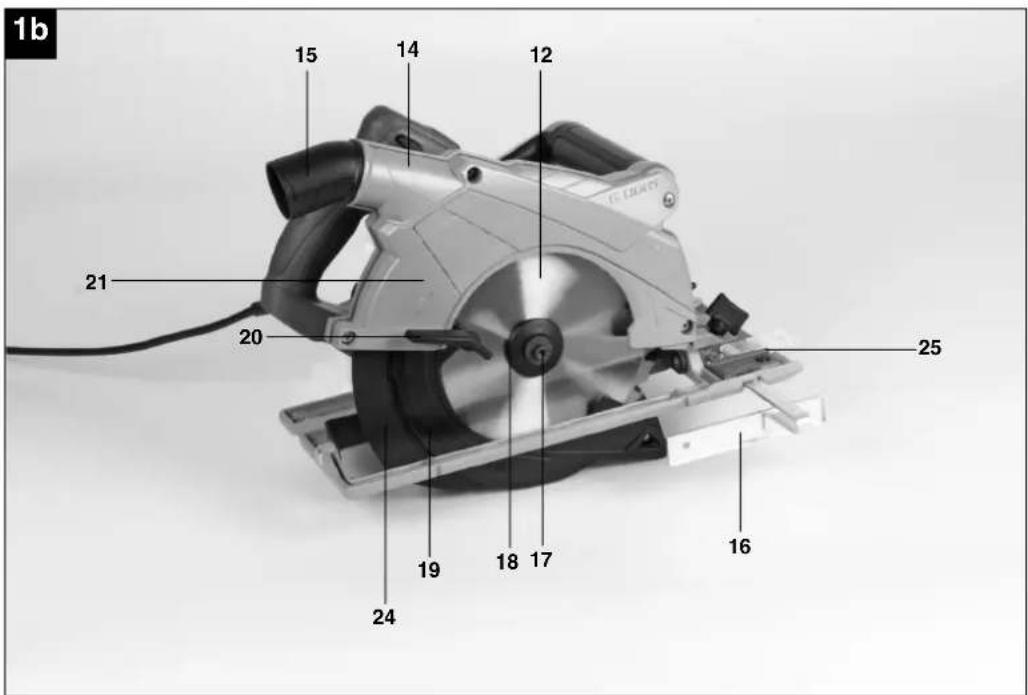
text_image
1b 15 14 12 21 20 25 16 17 18 19 24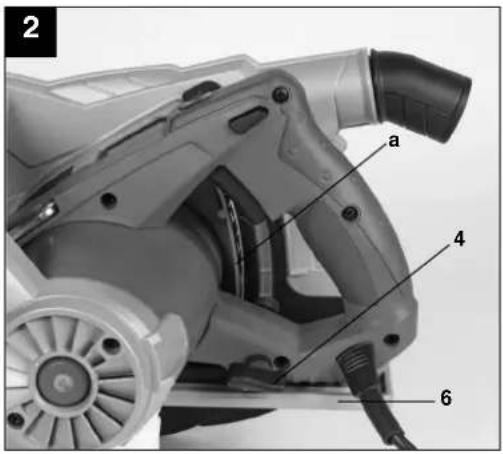
text_image
2 a 4 6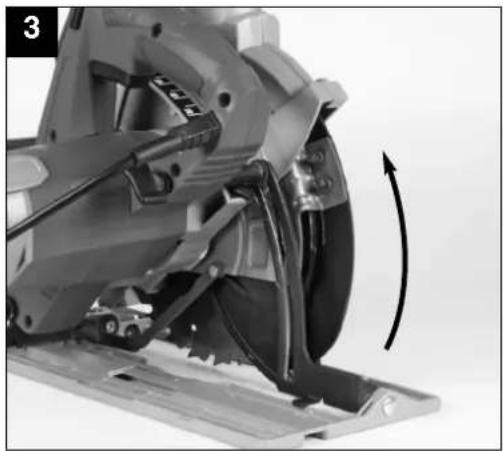
natural_image
Close-up of a mechanical device with a rotating blade and mounting base (no visible text or symbols)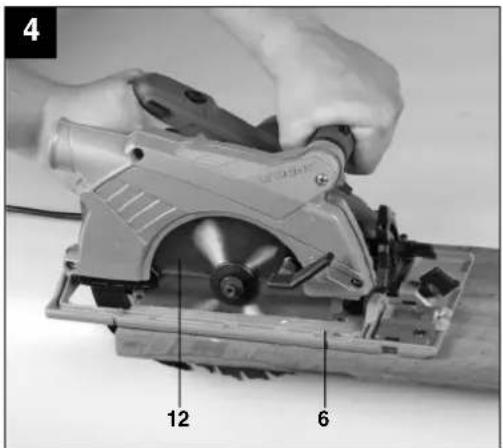
text_image
4 12 6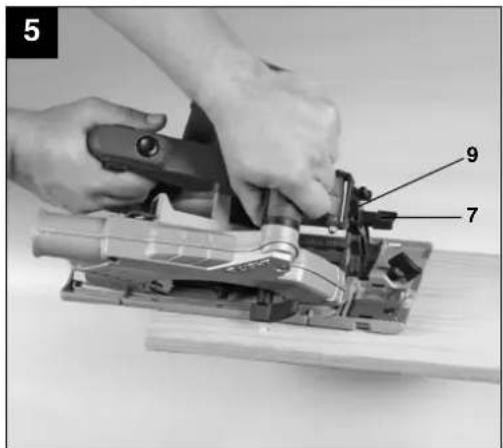
text_image
5 9 7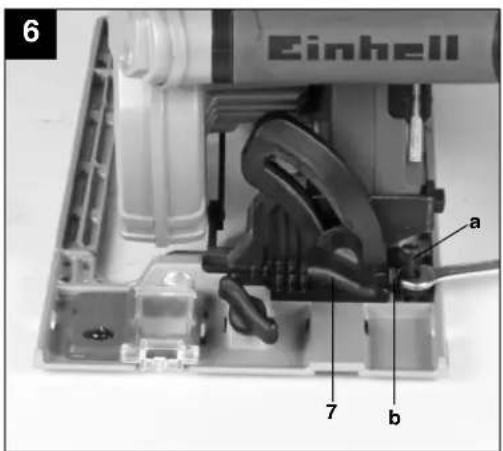
text_image
Einhell a b 7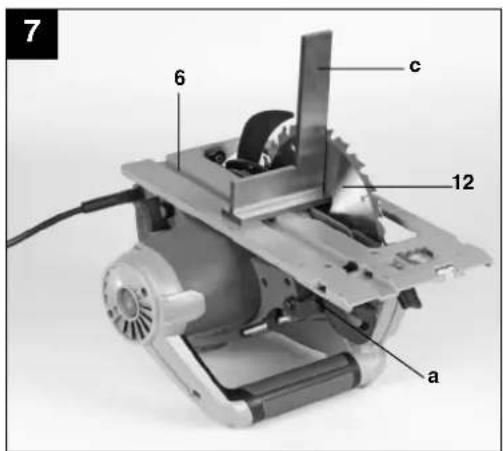
text_image
7 6 c 12 a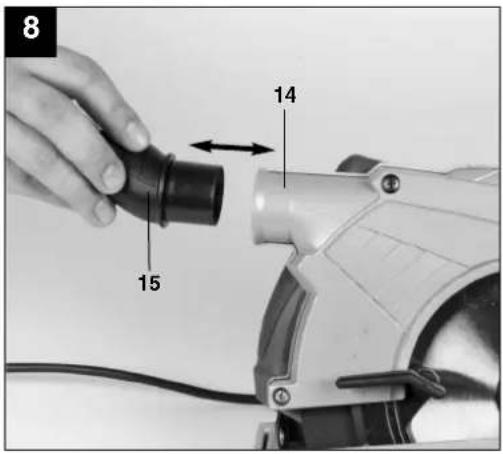
text_image
8 14 15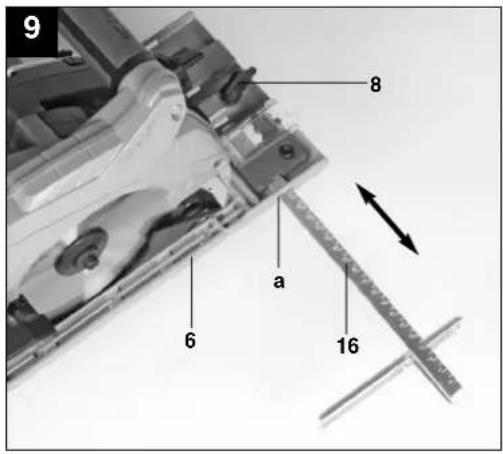
text_image
9 8 a 6 16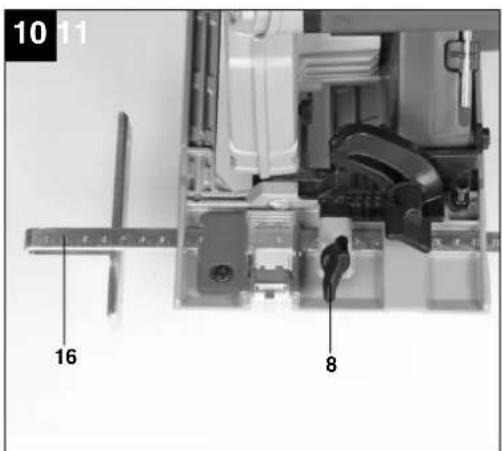
text_image
10 11 16 8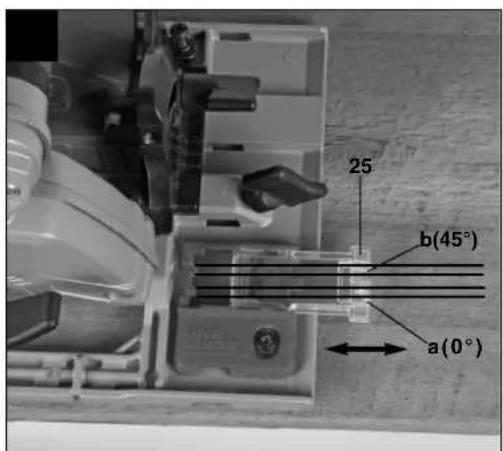
text_image
25 b(45°) a(0°)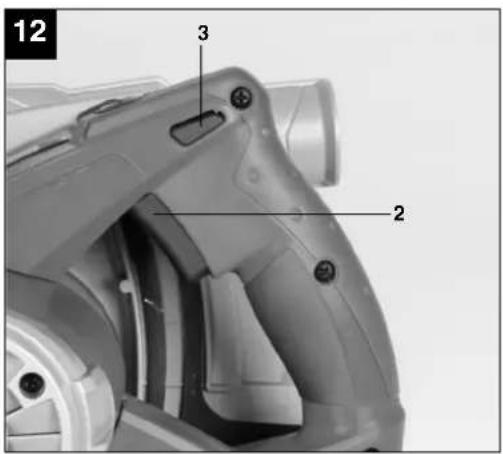
text_image
12 3 2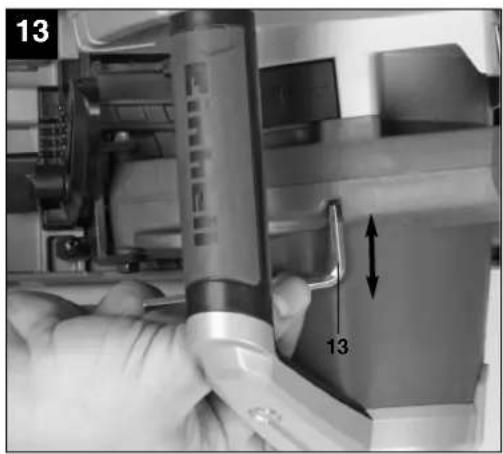
natural_image
Close-up of a hand holding a mechanical device with a 13-inch valve and directional arrow (no text or symbols visible)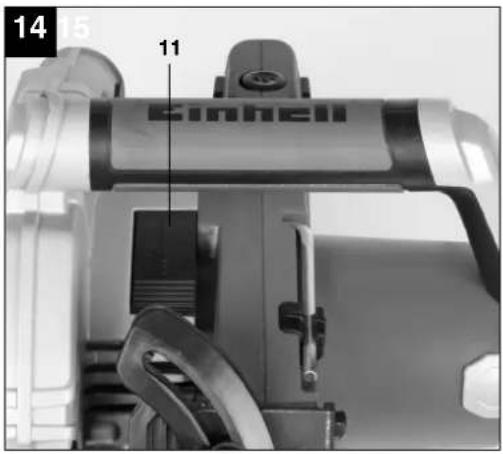
text_image
14 15 11 Einhell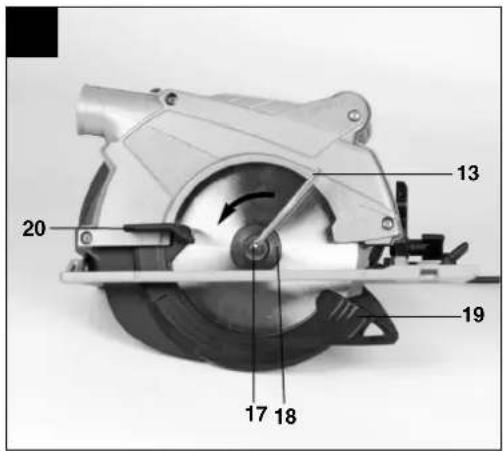
text_image
13 20 19 17 18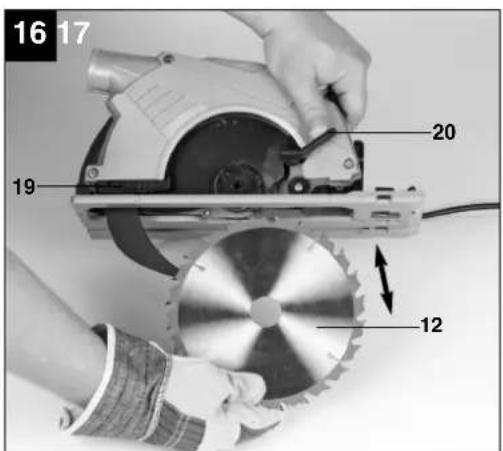
text_image
16 17 19 20 12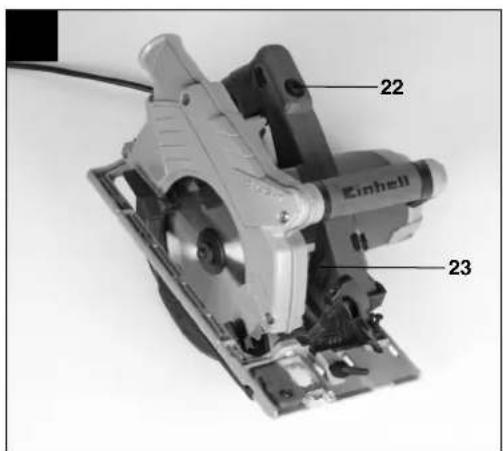
text_image
22 Einhell 23D
Inhaltsverzeichnis
- Safety regulations
- Layout and items supplied
- Proper use
- Technical data
- Before starting the equipment
- Operation
- Replacing the power cable
- Cleaning, maintenance and ordering of spare parts
- Disposal and recycling
- Storage

"Caution - Read the operating instructions to reduce the risk of inquiry"

Wear ear-muffs.
The impact of noise can cause damage to hearing.

Wear a breathing mask.
Dust which is injurious to health can be generated when working on wood and other materials.
Never use the device to work on any materials containing asbestos!

Wear safety goggles.
Sparks generated during working or splinters, chips and dust emitted by the device can cause loss of sight.
GB
⚠️ Important!
When using equipment, a few safety precautions must be observed to avoid injuries and damage. Please read the complete operating manual with due care. Keep this manual in a safe place, so that the information is available at all times. If you give the equipment to any other person, give them these operating instructions as well.
We accept no liability for damage or accidents which arise due to non-observance of these instructions and the safety information.
1. Safety regulations
The corresponding safety information can be found in the enclosed booklet.
CAUTION!
Read all safety regulations and instructions.
Any errors made in following the safety regulations and instructions may result in an electric shock, fire and/or serious injury.
Keep all safety regulations and instructions in a safe place for future use.
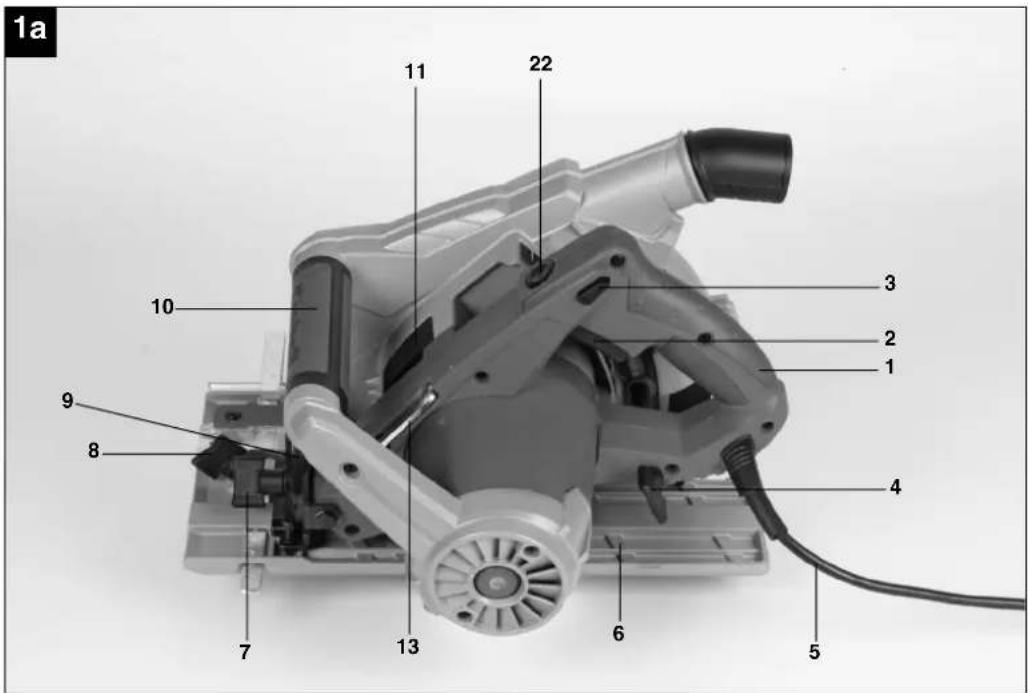
2. Layout and items supplied (Fig. 1a/1b/17)
2.1 Layout
-
Handle
-
ON/OFF switch
-
Locking button for ON/OFF switch
-
Locking lever for cutting depth setting
-
Power cable
-
Soleplate
-
Locking lever for miter setting
-
Locking screw for parallel stop
-
Scale for miter angle
-
Additional handle
-
Spindle lock
-
Saw blade
-
Saw blade wrench
-
Connection for sawdust extractor
-
Dust extraction adapter
-
Parallel stop
-
Screw for securing the saw blade
-
Flange
-
Swing guard hood
-
Lever for swing guard hood
-
Guard hood
-
ON/OFF switch for LED light
-
LED light
-
Splitter
-
Line guide
16
2.2 Items supplied
- Open the packaging and take out the equipment with care.
- Remove the packaging material and any packaging and/or transportation braces (if available).
●Check to see if all items are supplied.
●Inspect the equipment and accessories for transport damage. - If possible, please keep the packaging until the end of the guarantee period.
IMPORTANT
The equipment and packaging material are not toys. Do not let children play with plastic bags, foils or small parts. There is a danger of swallowing or suffocating!
●Hand-held Circular Saw
●Saw blade
●Saw blade wrench
●Connection for sawdust extractor
●Parallel stop
●Original operating instructions
●Safety instructions
3. Proper use
The hand-held circular saw is designed for sawing straight cuts in wood, wood-type materials and plastics.
The equipment is to be used only for its prescribed purpose. Any other use is deemed to be a case of misuse. The user / operator and not the manufacturer will be liable for any damage or injuries of any kind caused as a result of this.
Please note that our equipment has not been designed for use in commercial, trade or industrial applications. Our warranty will be voided if the machine is used in commercial, trade or industrial businesses or for equivalent purposes.
4. Technical data
Mains voltage: 230 V \~ 50 Hz
Power input: 1500 W
Idling speed: 5,500 min
Cutting depth at 90°: 66 mm
Cutting depth at 45°: 48 mm
Saw blade: ∅ 190 mm
Blade holder: ∅ 30 mm
Blade thickness: 2.8 mm
Protection class: II / 回
Weight: 5.2
Sound and vibration
Sound and vibration values were measured in accordance with EN 60745.
L_pA sound pressure level 90,2 dB(A)
K_pA uncertainty 3
L_WA sound power level 101,2 dB(A)
K_WA uncertainty 3
Wear ear-muffs.
The impact of noise can cause damage to hearing.
Total vibration values (vector sum of three directions) determined in accordance with EN 60745.
Handle
Vibration emission value a_h ≤ 2.5 m/s^2
K uncertainty = 1.5 m/s ^2
Additional handle
Vibration emission value a_h = 2.664 m/s^2
K uncertainty = 1.5 m/s ^2
Additional information for electric power tools
Warning!
The specified vibration value was established in accordance with a standardized testing method. It may change according to how the electric equipment is used and may exceed the specified value in exceptional circumstances.
The specified vibration value can be used to compare the equipment with other electric power tools.
The specified vibration value can be used for initial assessment of a harmful effect.
Keep the noise emissions and vibrations to a minimum.
●Only use appliances which are in perfect working order.
●Service and clean the appliance regularly.
●Adapt your working style to suit the appliance.
●Do not overload the appliance.
●Have the appliance serviced whenever necessary.
●Switch the appliance off when it is not in use.
●Wear protective gloves.
Residual risks kg
Even if you use this electric power tool in accordance with instructions, certain residual risks cannot be rules out. The following hazards may arise in connection with the equipment's construction and layout:
- Lung damage if no suitable protective dust mask is used.
- Damage to hearing if no suitable ear protection is used.
- Health damage caused by hand-arm vibrations if the equipment is used over a prolonged period or is not properly guided and maintained.
5. Before starting the equipment
Before you connect the equipment to the mains supply make sure that the data on the rating plate are identical to the mains data.
Always pull the power plug before making adjustments to the equipment.
5.1 Setting the cutting depth (Figure 2/3)
●Release the handle on the rear of the guard hood for adjusting the cutting depth (4).
- Place the soleplate (6) flat on the surface of the workpiece you wish to saw. Raise the saw until the saw blade (12) is at the required cutting depth (a).
●Refasten the handle for adjusting the cutting depth (4). Check the handle is securely fastened.
5.2 Miter stop (Figure 4/5)
●The preset standard angle between the saw foot (6) and saw blade (12) is 90°. You can adjust this angle to carry out angled cuts.
●Release the locking lever for miter setting (7) on the front of the saw foot.
●You can now adjust the cutting angle to around
GB
45°. Keep an eye on the cutting angle scale (9) as you do so.
●Refasten the locking lever for miter setting (7). Check the handle is securely fastened.
5.3 Precision adjustment of the miter stop to 0° or 90° (Figure 6/7)
With a 90^ angle stop you can adjust the angle setting to 0^ or 90^ . To do so, undo the locking screw for the miter stop (7) and the counternut (b) on the adjustment screw (a). (See Figure 6) Turn the hand-held circular saw upside down and place the angle stop (c) between soleplate (6) and saw blade (12). (See Figure 7) Now set the adjustment screw (a) until the angle between the soleplate (6) and saw blade (12) equals 90^ .
Retighten the counternut (b) and the locking screw for the miter stop (7).
5.4 Extraction of dust and chips (Figure 8)
- Connect your circular saw to a suitable vacuum cleaner with the dust extractor adaptor (15). Then fit the dust extraction adaptor (15) into the intended sawdust extraction outlet (14) on the hand-held circular saw. You can then connect a suitable vacuum cleaner to the dust extractor adaptor (15) (vacuum cleaner not supplied). This will provide excellent dust extraction on the workpiece. The benefits are that you will protect both the equipment and your own health. Your work area will also be cleaner and safer.
●Dust created when working may be dangerous. Refer to the section entitled "Safety instructions".
●Important! The vacuum cleaner you use for the extraction work must be suitable for the workpiece material.
- Check that all the parts are properly connected.
5.5 Parallel stop (Figure 9/10)
●The parallel stop (16) enables you to saw parallel lines.
●Loosen the locking screw for the parallel stop (8) on the saw foot (6).
●To assemble, slide the parallel stop (16) into the guide (a) on the saw foot (6) (see Figure 9)
- Set the required spacing and then tighten the locking screw (8) again.
●Using the parallel stop: Position the parallel stop (16) flat on the edge of the workpiece and start the cut.
⚠️ Important! Carry out a trial cut in a piece of waste wood
5.6 Line Guide (Figure 11)
Using the line guide (25) you can carry out exact cuts following cutting lines marked on the workpiece. Push the line guide (25) forward to have a better view.
The marks (a) and (b) show the cutting width of the installed saw blade.
Use the mark (a) for the 0^ or 90^ angle setting. and the mark (b) for the 45^ angle setting. For information on the angle setting see 5.2
⚠️ Important. Carry out a trial cuts in a piece of waste wood.
6. Operation
6.1 Working with the hand-held circular saw
●Always hold the circular saw firmly.
●The swing guard hood (19) is pushed back automatically by the workpiece.
●Do not use force!
Push forwards gently and evenly with the circular saw.
●The waste piece should be on the right-hand side of the circular saw so that the wide section of the support bench supports its full area.
- If you are sawing down a line that has been drawn, guide the circular saw along the corresponding notch.
●Clamp small pieces of wood securely before sawing them. Never hold them with your hand.
●Always follow the safety instructions. Wear safety goggles.
- Do not use defective saw blades or blades that are cracked or broken.
- Do not use any flanges / flange nuts whose bore hole is larger or smaller than those in the saw blade.
●The saw blade must not be decelerated by hand or by applying lateral pressure to the blade.
●The swing guard hood must not jam and must return to its initial position after the operation has been completed.
●Before you use the circular saw, check the function of the swing guard hood with the mains plug disconnected.
●Before you use the machine, ensure that the safety equipment such as the swing guard hood, splitter, flanges and adjustment devices are in working order and are correctly adjusted and secure.
●You can connect a suitable dust extraction system to the dust extraction adapter (15). Ensure that the dust extraction system is safely and correctly connected.
●The moving swing guard hood must not be fixed in the retracted guard hood when the saw is in use.
●Saw blades whose main body is thicker or tooth set thinner than the thickness of the splitter must not be used.
⚠️ Important. Always pull out the power plug before doing any work on the circular saw!
6.2 Using the circular saw
- Adjust the cutting depth, cutting angle and parallel stop (see section 5.1, 5.2 and 5.5)
●Ensure that the ON/OFF switch (2) is not depressed. Only then should you connect the mains plug to a suitable socket. - Do not switch on the circular saw until you have fitted a saw blade.
- Place the saw foot flat on the workpiece you wish to saw. The saw blade must not be in contact with the workpiece.
●Hold the circular saw firmly with both hands.
6.3 Switching ON/OFF (Fig. 12)
To switch on:
Press the locking button (3) and the ON/OFF switch (2) at the same time
- Allow the saw blade to accelerate until it reaches full speed. Then slowly move the saw blade along the cutting line. Only exert gentle pressure on the saw blade as you do so.
To switch off:
Release the locking button and ON/OFF switch
- If you release the handle the equipment will shut down automatically which means that it cannot operate accidentally.
●Ensure that you do not cover or block the ventilation openings whilst working with the tool. - Do not slow down the saw blade after you switch it off by pressing it sideways.
●Important! Do not put down the machine until the saw blade has reached a complete standstill.
⚠️ Important. Carry out a trial cut in a piece of waste wood
6.4 Changing the saw blade (Fig. 13-16)
⚠️ Important. Always pull out the power plug before doing any work on the circular saw!
Only use saw blades of the same type as the saw blade supplied with this circular saw. Ask your dealer for advice. Do not use grinding wheels.
Use the saw blade key (13) supplied to change the saw blade. The saw blade key (13) is stored in the housing. If required, pull the saw blade key (13) out of the housing (see Figure 13).
Important. The hand-held circular saw must not be operated with the saw blade key (13) inserted in it.
●Press the spindle lock (11).
●Undo the screw to secure the saw blade (17) using the saw blade key (13).
●Push back and secure the moving swing guard hood (19) using the lever for the swing guard hood (20).
- Remove the flange (18) and the saw blade (12) in a downwards direction.
●Clean the flange and insert the new saw blade. Pay attention to the running direction (see arrow on the guard hood and saw blade).
●Tighten the screw to secure the saw blade (17), check it runs true.
●Before you press the On/Off switch, make sure that the saw blade is correctly fitted and that moving parts run smoothly and the clamping screws are tightened securely.
6.5 Using the LED light (Figure 17)
The LED light (23) can be used in poor lighting conditions to additionally illuminate the cutting position.
To switch on the LED illumination press the switch (22).
To switch off the LED light (23) press the switch for LED illumination (22) again.
Always switch off the LED light when not in use.
The LED light is powered by the mains voltage. Batteries are therefore not required.
7. Replacing the power cable
If the power cable for this equipment is damaged, it must be replaced by the manufacturer or its after-sales service or similarly trained personnel to avoid danger.
GB
8. Cleaning, maintenance and ordering of spare parts
Always pull out the mains power plug before starting any cleaning work.
8.1 Cleaning
- Keep all safety devices, air vents and the motor housing free of dirt and dust as far as possible. Wipe the equipment with a clean cloth or blow it with compressed air at low pressure.
●We recommend that you clean the device immediately each time you have finished using it.
●Clean the equipment regularly with a moist cloth and some soft soap. Do not use cleaning agents or solvents; these could attack the plastic parts of the equipment. Ensure that no water can seep into the device.
8.2 Carbon brushes
In case of excessive sparking, have the carbon brushes checked only by a qualified electrician. Important! The carbon brushes should not be replaced by anyone but a qualified electrician.
8.3 Maintenance
There are no parts inside the equipment which require additional maintenance.
8.4 Ordering replacement parts:
Please quote the following data when ordering replacement parts:
●Type of machine
●Article number of the machine
●Identification number of the machine
●Replacement part number of the part required For our latest prices and information please go to www.isc-gmbh.info
9. Disposal and recycling
The unit is supplied in packaging to prevent its being damaged in transit. This packaging is raw material and can therefore be reused or can be returned to the raw material system.
The unit and its accessories are made of various types of material, such as metal and plastic.
Defective components must be disposed of as special waste. Ask your dealer or your local council.
10. Storage
Store the equipment and accessories out of children's reach in a dark and dry place at above freezing temperature. The ideal storage temperature is between 5 and 30^ . Store the electric tool in its original packaging.
Table des matières
2009/105/EC
2006/95/EC
2006/28/EC
2005/32/EC
x 2004/108/EC
2004/22/EC
□ 1999/5/EC
97/23/EC
90/396/EC
□ 89/686/EC_96/58/EC
2006/42/EC
Annex IV
Notified Body: Notified Body No.: Reg. No.:
□ 2000/14/EC_2005/88/EC
Annex V
□ Annex VI
Noise: measured L_wA = dB(A) ; guaranteed L_wA = dB(A) P = kW; L/∅ = cm Notified Body:
2004/26/EC
Emission No.:
Standard references: EN 60745-1; EN 60745-2-5; EN 55014-1; EN 55014-2; EN 61000-3-2; EN 61000-3-3
Subject to change without notice Wiesenweg 22, D-94405 Landau/Isar
Documents registrar: Georg Riedel
natural_image
Symbol of a trash bin crossed out by two diagonal lines (no text or numbers present)
©Nur für EU-Länder
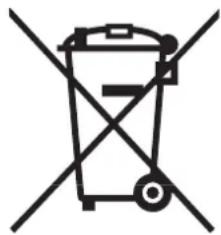
Never place any electric tools in your household refuse.
To comply with European Directive 2002/96/EC concerning old electric and electronic equipment and its implementation in national laws, old electric tools have to be separated from other waste and disposed of in an environment-friendly fashion, e.g. by taking to a recycling depot.
Recycling alternative to the demand to return electrical devices:
As an alternative to returning the electrical device, the owner is obliged to cooperate in ensuring that the device is properly recycled if ownership is relinquished. This can also be done by handling over the used device to a returns center, which will dispose of it in accordance with national commercial and industrial waste management legislation. This does not apply to the accessories and auxiliary equipment without any electrical components which are included with the used device.
© Len pre krajiny EÚ
The reprinting or reproduction by any other means, in whole or in part, of documentation and papers accompanying products is permitted only with the express consent of ISC GmbH.
F
All of our products undergo strict quality checks to ensure that they reach you in perfect condition. In the unlikely event that your device develops a fault, please contact our service department at the address shown on this guarantee card. Of course, if you would prefer to call us then we are also happy to offer our assistance under the service number printed below. Please note the following terms under which guarantee claims can be made:
- These guarantee terms cover additional guarantee rights and do not affect your statutory warranty rights. We do not charge you for this guarantee.
- Our guarantee only covers problems caused by material or manufacturing defects, and it is restricted to the rectification of these defects or replacement of the device. Please note that our devices have not been designed for use in commercial, trade or industrial applications. Consequently, the guarantee is invalidated if the equipment is used in commercial, trade or industrial applications or for other equivalent activities. The following are also excluded from our guarantee: compensation for transport damage, damage caused by failure to comply with the installation/assembly instructions or damage caused by unprofessional installation, failure to comply with the operating instructions (e.g. connection to the wrong mains voltage or current type), misuse or inappropriate use (such as overloading of the device or use of non-approved tools or accessories), failure to comply with the maintenance and safety regulations, ingress of foreign bodies into the device (e.g. sand, stones or dust), effects of force or external influences (e.g. damage caused by the device being dropped) and normal wear resulting from proper operation of the device. This applies in particular to rechargeable batteries for which we nevertheless issue a guarantee period of 12 months.
The guarantee is rendered null and void if any attempt is made to tamper with the device.
-
The guarantee is valid for a period of 2 years starting from the purchase date of the device. Guarantee claims should be submitted before the end of the guarantee period within two weeks of the defect being noticed. No guarantee claims will be accepted after the end of the guarantee period. The original guarantee period remains applicable to the device even if repairs are carried out or parts are replaced. In such cases, the work performed or parts fitted will not result in an extension of the guarantee period, and no new guarantee will become active for the work performed or parts fitted. This also applies when an on-site service is used.
-
In order to assert your guarantee claim, please send your defective device postage-free to the address shown below. Please enclose either the original or a copy of your sales receipt or another dated proof of purchase. Please keep your sales receipt in a safe place, as it is your proof of purchase. It would help us if you could describe the nature of the problem in as much detail as possible. If the defect is covered by our guarantee then your device will either be repaired immediately and returned to you, or we will send you a new device.
Of course, we are also happy offer a chargeable repair service for any defects which are not covered by the scope of this guarantee or for units which are no longer covered. To take advantage of this service, please send the device to our service address.