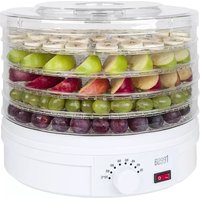
TSA3030 - Food Dehydrator Teesa - Free user manual and instructions
Find the device manual for free TSA3030 Teesa in PDF.



| Brand | Teesa |
| Model | TSA3030 |
| Product type | Food dehydrator |
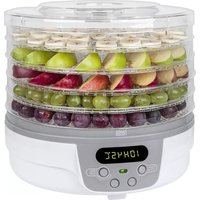
| Number of trays | 5 transparent trays |
| Tray diameter | 32 cm |
| Total capacity | 5 kg |
| Drying temperature | 35-70°C (adjustable) |
| Power | Max. 250 W |
| Power supply | 220-240 V, 50/60 Hz |
| Housing material | ABS plastic |
| On/off function | Switch with red indicator light |
| Recommended use | Drying fruits, vegetables, mushrooms, herbs, medicinal plants, flowers, preparing muesli |
| Safety | Do not use for more than 40 hours continuously; do not cover; hot surface; unplug before cleaning |
| Maintenance and cleaning | Clean the base with a damp cloth; wash trays with warm water and mild detergent; do not immerse base in water; do not wash in dishwasher |
| Repairability | No user-repairable parts; contact an authorized technical service if damaged |
| Included accessories | Base, 5 drying trays, top cover |
| Approximate weight | Not specified in the manual |
| Dimensions (total height) | Not specified in the manual |
Frequently Asked Questions - TSA3030 Teesa
User questions about TSA3030 Teesa
0 question about this device. Answer the ones you know or ask your own.
Ask a new question about this device
Download the instructions for your Food Dehydrator in PDF format for free! Find your manual TSA3030 - Teesa and take your electronic device back in hand. On this page are published all the documents necessary for the use of your device. TSA3030 by Teesa.
USER MANUAL TSA3030 Teesa
OBSLUHA
BEDIENUNG
Owner's manual Owner's manual18 19
reesa
Thank you for purchasing TEESA appliance. Please read this operation instruction carefully before use, and keep it for future use.
Distributor does not take responsibility for damages caused by inappropriate handling and use of the product.
SAFETY INSTRUCTIONS
In order to reduce the injuries or damages, follow basic safety precautions applied when using any electrical device, including the following:
- Read this instruction manual carefully, even if you are familiar with the appliance. Keep the manual for future reference.
- Before connecting the device to power supply socket, make sure the voltage indicated on the appliance corresponds to the voltage in the power supply socket.
- Place the device on flat, stable surface.
- Clean this device in accordance to instructions listed in "Cleaning and Maintenance" section.
- ALWAYS turn off the device and disconnect it from the mains supply:
• if it's not operating correctly
- if there's an uncommon voice when using
• before disassembling the device
• before cleaning
- when not in use
- When you disconnect the power cord of the device, grasp and pull the plug, not the cord/cable.
- Appliance during operation becomes hot; do not touch the housing of the device while it's operating.
- Keep the device out of the reach of children. Do not leave children unsupervised with the product.
- This appliance must not be used by persons (including children) with reduced physical, sensory or mental capabilities, or lack of experience and knowledge, unless they are supervised by the person who is responsible for their safety.
- Keep the device and its cord/cable away from heat, water, moisture, sharp edges and any other factor which may damage the appliance or its cord.
- Do not place the appliance in water or any liquid; nor handle/use it with wet or moist hands.
- Do not use the product for purposes different from displayed in this operating manual.
- Do not leave the appliance unattended when it's working.
- Producer of this product is not responsible for damages caused by inappropriate handling and using of the device.
- ALWAYS disconnect the product form the mains supply when it is not in use.
- Clean this device only when it is cool.
- DO NOT use this device if the cord or the plug is damaged, or the appliance is broken.
- Do not attempt to repair this appliance yourself. Only authorized and qualified personnel may repair this device. Never disassemble this device.
- Do not use unauthorized accessories.
-
Appliance for indoor use only.
-
Make sure the power cord does not touch any hot or sharp elements.
- Do not move the appliance while it is operating.
- Do not cover the device while it's working; it may bring the risk of fire.
- Do not use this device for longer than 40 hours at a time. When you have finished using the appliance, turn it off, disconnect from mains supply and let it cool down.
- This device is not suitable to be controlled by an external timer or remote control.
- This appliance is suitable exclusively for food preparation. Do not place anything but food in the appliance.
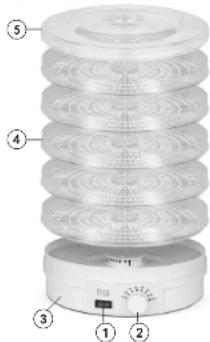
PRODUCT DESCRIPTION
- ON/OFF button
- Temperature regulation knob
- Base
- Food trays (x5)
- Top lid
OPERATION
Hot air stream, in temperature set by user, circulates between top lid, food trays and the base. Thanks to such air flow, the process of dehydration leaves the food with as many vitamins and minerals as possible. With the use of the food dehydrator, you can enjoy fruits, vegetables and mushrooms all year round.
You can also dehydrate flowers, herbs and prepare muesli.
Note:
Dehydrating time of different products may vary, and depends on humidity, thickness, quantity of the products and temperature of operation. Thicker food usually take longer time to prepare. According to user's preferences, dehydrating process can be stopped at any time.
DEHYDRATING
- Prior to first use, clean the parts of the device that will come in contact with food; and dry the device afterward.
- Place the food on food trays.
- Place the food so it does not block the air flow.
- Place the food trays on the base.
- Place the top lid. Top lid HAS TO BE ON the appliance during the whole period of the operation.
- Plug the appliance to mains supply, turn it on by switching the power supply button to ON position; The power supply button will be back lighted in red. Set the dehydrating temperature.
- After you have finished working on the appliance, turn it off by switching the power supply button to OFF position and disconnect it from mains supply.
Suggested dehydrating temperatures:
Herbs: 50°C
Bread: 50°C
Mushrooms: 50-70°C
Vegetables: 50°C
Fruits: 50°C-60°C
Note:
EN
Dehydrating time presented in this manual are only for reference. Dehydrating time depends on temperature and humidity of the room, humidity of the food, their thickness, etc.
Containers for storing dehydrated products should be clean and dry.
FOOD PREPARATION
Before dehydrating, follow the below steps:
- Wash the food.
• Note: do not place wet food into the appliance; dry them with paper towel beforehand.
• Do not place wet food trays into the appliance. - Remove redundant food parts (e.g. hull, cut out cores, etc.).
- Slice food and place on the trays so they do not block the air flow.
Dehydrating time depends on thickness of the food pieces. - To shorten the preparation time, shuffle the trays positions. Move top trays to the bottom while bottom trays to the top. Some fruits consist of natural coating, which will prolong the dehydrating process. In order to avoid that, put the food into boiling water for about 1-2 minutes before processing them in food dehydrator, then place them into cold water and dry (e.g. with paper towel).
Warning:
BE CAREFULL WHILE OPERATING THE APPLIANCE, AS HOUSING OF THE DEVICE MAY BE HOT.
FRUIT DEHYDRATING
- Wash the fruits.
- Hull, core and remove any redundant parts.
- Slice the fruits, and make sure the elements do not block the air flow between the trays.
- Sprinkle the fruits with cinnamon or coconut shreds to add them extra aroma.
- To preserve natural fruit color, perform below instructions:
• Take 1/4 glass of the organic juice (of the dehydrated fruit).
• Mix with 2 glasses of water. - Dip the fruits into the mixture and leave for 2 hours before processing them in food dehydrator.
FRUIT DEHYDRATING CHART
| Fruit Preparation | Dehydrated Dehydration | time (hours) | |
| Apricot Remove the seeds, hull and slice. Soft 10-18 | |||
| Orange peels | Slice into long strips | Crispy | 6-16 |
| Fresh pineapples | Peel and slice | Hard | 6-36 |
| Canned pineapples | Drain syrup and dry the pieces | Soft 6-36 | |
| Bananas | Peel and slice (3-4 mm thick) | Crispy | 8-38 |
| Grapes | Suitable for dehydrating without slicing | Soft | 10-18 |
| Cherries | Remove the seeds (seeds can be removed also after slight dehydrating) | Soft 10-18 | |
| Pears | Peel and slice | Soft 15-30 | |
| Figs | Chop | Hard | 6-26 |
| Cranberry | Suitable for dehydrating without slicing | Soft | 6-26 |
| Peaches | Cut in half, remove seeds and hull | Soft 6-26 | |
| Dates | Remove seed, hull and chop | Hard | 6-26 |
| Apples | Peel, core and chop | Soft 6-8 | |
VEGETABLES DEHYDRATING
- Wash the vegetables.
- Hull, core and remove any redundant parts.
- Slice or chop the vegetables, and make sure the elements do not block the air flow between the trays.
- Before dehydrating, it is suggested to put the vegetables into hot water for 1-5 minutes, then put them into cold water, and dry them (with paper towel) afterward.
INITIAL VEGETABLES PREPARATION
- Before processing French beans, cauliflower, broccoli, asparagus, potatoes it is recommended to boil them in order to preserve their natural color: put the vegetables into boiling water for about 3-5 minutes, then dry the food (with paper towel) and place them into food dehydrator.
- To add lemon flavor to French beans, asparagus etc. dip the vegetables into lemon juice for about 2 minutes.
VEGETABLES DEHYDRATING CHART
| Fruit Preparation | Dehydrated Dehydration | time (hours) | |
| Artichoke Slice (3-4 mm thick) | Crispy 5-13 | ||
| Eggplant Peel and slice (6-12 mm thick) | Crispy 6-18 | ||
| Broccoli | Chop and boil for 3-5 min | Crispy 6-20 | |
| French beans | Slice and boil till it changes color | Crispy 6-10 | |
| Pumpkin | Chop (6 mm thick) | Crispy 6-18 | |
| Zucchini | Peel and chop | Hard | 6-14 |
| Brussels sprouts | Cut in half | Crispy 8-30 | |
| Cauliflower | Boil until it gets ripe | Hard | 6-16 |
| Potatoes | Chop and boil for 8-10 minutes | Crispy 8-30 | |
| Onion | Slice | Crispy 8-14 | |
| Carrots | Boil until it gets ripe, then chop | Crispy 8-14 | |
| Cucumber | Peel and chop (12 mm thick) | Hard | 6-18 |
| Sweet pepper | Core, slice into strips or chop (6 mm thick) | Crispy | 4-14 |
| Hot peppers | Suitable for dehydrating without slicing | Hard | 8-14 |
| Parsley | Place leaves on trays | Crispy 2-10 | |
| Tomatoes Peel and slice | Hard | 8-24 | |
| Rhubarb | Peel and chop (3 mm thick) | Crispy 8-38 | |
| Beet roots | Boil, let them cool down, chop off tips and roots, slice. | Crispy 8-26 | |
| Celery | Chop (6 mm thick) | Crispy 3-7 | |
| Spring onion | Chop | Crispy 6-10 | |
| Asparagus | Chop (2-5 mm thick) | Crispy 6-14 | |
| Garlic | Peel and slice | Crispy 6-16 | |
| Spinach | Boil until it changes color | Crispy 6-16 |
HERBS DEHYDRATING
Herbs are recommended to be dehydrated in temperature of 50° C for about 5-10 hours. Once the herbs are dehydrated, they should be placed in a paper bag or glass jar and stored in dry and dark place.
MUSHROOM DEHYDRATING
- Clean the mushroom and remove any redundant/rotten parts.
- Slice or chop the mushrooms, and make sure the elements do not block the air flow between the trays, or leave them unsliced if they are small.
Suggested mushroom dehydration time is 2-6 hours, or by preference.
Note: When processing champignons, it is advised to chose ones with their caps folded inward.
DEHYDRATED FOOD STORAGE
- Containers for storing dehydrated products should be clean and dry.
- For better storing, it is advised to use glass jars with metal lids, and keep them in dark, chill place within temperature 5-20°C.
- During the first week after dehydrating, check for the vapor on the inside of the jars. If the vapor is present, it means the food has not been properly dehydrated, and the process should be repeated.
• Note: let the food cool down, before storing.
CLEANING AND STORAGE
Proper and systematic cleaning provides safety usage and prolongs operation time of the appliance.
Warning: before cleaning ALWAYS turn off the appliance, disconnect it from mains supply and let it cool down.
- Food dehydrator base should be cleaned with soft, slightly damp cloth.
- Trays can be washed in warm water with an addition of light cleaning chemical.
Important!!
- DO NOT use any chemical agents (abrasives, solvents, etc.) to clean the appliance, as it may damage the casing.
• DO NOT use any sharp, metal or abrasive utensils, as it may damage the casing of the device.
• DO NOT immerse the base of the appliance in water or any other liquid.
• Before storing, make sure the device is dry.
teesa
Owner's manual24
• Store the device in dry, dark place, out of the reach of children.
• None of the parts of the device is suitable for cleaning in washing machine.
REPAIRS AND MAINTENANCE
• The device has no user-serviceable parts. Do not attempt to repair this appliance yourself.
- In case of damaging this device or its power cord/plug, contact authorized service point for check-up or repair.
SPECIFICATION
5 transparent containers Container diameter: 32 cm Total container capacity: 5 kg Adjustable temperature: 35-70°C ABS housing Power supply: 220 – 240 V, 50/60 Hz Power: max. 250 W

English
Correct Disposal of This Product
(Waste Electrical & Electronic Equipment)


(Applicable in the European Union and other European countries with separate collection systems) This marking shown on the product or its literature, indicates that it should not be disposed with other household wastes at the end of its working life. To prevent possible harm to the environment or human health from uncontrolled waste disposal, please separate this from other types of wastes and recycle it responsibly to promote the sustainable reuse of material resources. Household users should contact either the retailer where they purchased this product, or their local government office, for details of where and how they can take this item for environmentally safe recycling. Business users should contact their supplier and check the terms and conditions of the purchase contract. This product should not be mixed with other commercial wastes for disposal.
FR
UTILISATION
CONSERVATION DES PRODUITS SÉCHÉS
ΛΕΙΤΟΥΡΓΙΑ
KEZELÉSE
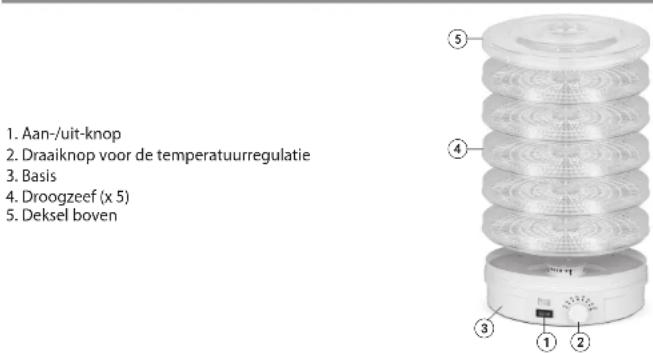
BESCHRIJVING VAN HET PRODUCT
NAPRAWA I KONSERWACJA
FUNCTIONARE
- OBSLUHA
- BEDIENUNG
- OWNER'S MANUAL OWNER'S MANUAL18 19
- REESA
- SAFETY INSTRUCTIONS
- OPERATION
- NOTE
- DEHYDRATING
- SUGGESTED DEHYDRATING TEMPERATURES
- EN
- FOOD PREPARATION
- WARNING
- FRUIT DEHYDRATING
- VEGETABLES DEHYDRATING
- INITIAL VEGETABLES PREPARATION
- HERBS DEHYDRATING
- MUSHROOM DEHYDRATING
- DEHYDRATED FOOD STORAGE
- CLEANING AND STORAGE
- IMPORTANT
- TEESA
- OWNER'S MANUAL24
- REPAIRS AND MAINTENANCE
- SPECIFICATION
- FR
- UTILISATION
- CONSERVATION DES PRODUITS SÉCHÉS
- ΛΕΙΤΟΥΡΓΙΑ
- KEZELÉSE
- BESCHRIJVING VAN HET PRODUCT
- NAPRAWA I KONSERWACJA
- FUNCTIONARE
Brand : Teesa
Model : TSA3030
Category : Food Dehydrator