EasyManual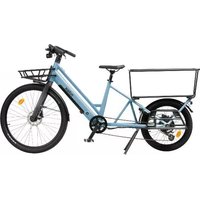
30NXEBCLTV1 - Electric bike NILOX - Free user manual and instructions
Find the device manual for free 30NXEBCLTV1 NILOX in PDF.



User questions about 30NXEBCLTV1 NILOX
0 question about this device. Answer the ones you know or ask your own.
Ask a new question about this device
Download the instructions for your Electric bike in PDF format for free! Find your manual 30NXEBCLTV1 - NILOX and take your electronic device back in hand. On this page are published all the documents necessary for the use of your device. 30NXEBCLTV1 by NILOX.
USER MANUAL 30NXEBCLTV1 NILOX
- La lumière Rouge devient immédiatement verte : vérifiez que la batterie est complètement chargée. Si elle ne l’est pas, la batterie ou le chargeur sont défectueux.87 Notes88 Translation of the original notice The purpose of this manual is to give you the information necessary for the proper use, adjustment and maintenance of your bike. Please take the time to read these instructions carefully before riding and keep them for the life of the bike. They contain important safety and maintenance instructions. It is the user's responsibility to read this manual before using the product. Failure to follow these instructions exposes you to the risk of improper use of your bike, premature wear of certain components which could lead to a fall and/or an accident. In the event that an original part proves to be defective in workmanship within its warranty period, we promise to replace it. The warranty period for e-bikes is as follows: ➢ frames and forks : 5 years ➢ Electrical parts : 2 years with proper care and maintenance ➢ All other components: 2 years with proper care and maintenance As for the battery , it is guaranteed against manufacturing defects for 6 months on the pieces consumables ( cells ) and 24 months on pieces electrical , under reserve of respect of the instructions for use and storage indicated below: ✓ Do not connect not the positive terminal directly to the terminal negative of this battery; ✓ Do not place not battery in a high temperature place, in an exposed environment in or near the sun of fire ; ✓ Do not place not battery in a humid environment Or immersed in a liquid; ✓ Do not disassemble not the battery pack without the guidance of a technician professional; ✓ keep battery in a dry and temperate environment . Load battery all the month; ✓ Please load this battery with charger exclusive accompanied by your bike. ✓ Report your used battery at the house of your reseller. This warranty does not include labor or transportation costs. The company assumes no liability for consequential or special damages. This warranty is applicable only to the original retail purchaser with proof of purchase validating any claim. This warranty is applicable only in case of defective parts and does not cover the effects of normal use, rental use, professional use, or damage caused by accidents, abuse, excessive loads, negligence, improper assembly, improper maintenance or addition objects inconsistent with normal use of the bicycle.89 No bicycle is indestructible and no claim can be accepted for damage caused by improper use, rental use, professional use, use in competitions, stunts, ramp jumps, jumps or similar activities. Complaints must be made to the dealer. Your legal rights are not affected. The company reserves the right to change or correct any details without notice. All information and details in this manual are correct at the time of printing. He is forbidden to modify or tamper with the manual provided with the bike . The bike is certified according to the standards of the law in force . It is absolutely forbidden to change the parameters and specifications of the assembled electrical/mechanical components and standard functions of the motorcycle because this would compromise the proper operation of the vehicle and the safety of the user himself. Should this happen, the user will be fully responsible for everything related to shaming.90 Conditions of use of this electrically assisted bicycle This electrically assisted bicycle is designed for urban and peri-urban use, it allows you to move around town, on the road or on a paved surface where the tires are always in contact with the ground. It is equipped with electric pedaling assistance which will make all your daily trips easier, to go further and for longer. Your electric bike is an adult bike, for people over 14 years old. In the event that the bicycle is used by a child, the responsibility is with the parents and must ensure that the user is able to use the bicycle safely. Your bike is not intended for use on unpaved or rough terrain. It is not designed for ''all-terrain'' use, nor for competition. Failure to comply with this practice may result in a fall or accident and may prematurely and potentially irreversibly deteriorate the condition of your electric bike. Your e-bike is not a moped. The purpose of the assistance is to provide a complement to the pedalling. The moment you start pedaling, the motor kicks in and helps you in the effort. The assistance varies according to the speed of the bike, high at start-up, less sustained when the bike is launched then disappears when the bike reaches 25 km/h. The assistance is cut off as soon as one of the two brake levers is actuated or the speed is greater than 25 km/h. This will resume automatically below 23 km/h with pedalling. It must be properly maintained according to the instructions in this manual.
WARNING: Like any mechanical component, a bicycle is subject to high stress and wear.
Different materials and components may react differently to wear or fatigue. If the expected lifespan of a component has been exceeded, it may break suddenly, risking injury to the cyclist. Cracks, scratches and discoloration in high stress areas indicate that the component has exceeded its life and should be replaced.
Recommendation: Safe and secure use Before using your e-bike, make sure it is in good working order. Check the following points in particular:
- Position should be comfortable
- Nuts, screws, clamping levers, clamping components
- The brakes are in working order
- The handlebar travel is good without too much play, the handlebar is correctly fixed to the stem
- Wheels are unobstructed and bearings are properly adjusted
- The wheels are properly tightened and attached to the frame/fork
- The tires are in good condition and their pressure is good.
- The condition of the rims
- The pedals are firmly attached to the crankset91
- The operation of the transmission
- The reflectors are in the correct position.
RECOMMENDATION: Your electrically assisted bicycle must be serviced every 6 months by a professional to ensure that it is in good working order and safe to use. It is the user's responsibility to ensure that all components are in good working order before use. Pick a safe place away from traffic to familiarize yourself with your new bike. The assistance can be triggered with force, check that your handlebars are straight and that the path is clear. Make sure you are in good health before getting on your bike. In the case of unusual weather conditions (rain, cold, night, etc.), be particularly vigilant and adapt your speed and reactions accordingly. When transporting your bike outside your vehicle (bike carrier, roof rack, etc.), it is strongly recommended to remove the battery and store it in a temperate place. The user must comply with the requirements of national regulations when the bicycle is used on public roads (lighting and signaling for example).
WARNING: You acknowledge that you are responsible for any loss, injury or damage
caused by failure to follow the above instructions and that this will automatically void the warranty.
WARNING: Do not exceed a speed of 45 km/h when using the bicycle downhill or on
level ground with a full load or without any added load.92 Structure of power - assisted bicycles electric ALPA E-Cargo Components
1. Tire and inner tube
8. Crankset and cranks
25. Luggage rack loading plan back
First start -up and settings Installation of security elements Lighting Lighting is provided to you, it consists of two reflectors (a white one included in the front headlight and a red fixed on the rear mudguard), a front headlight, a rear light, reflectors positioned between the spokes of the wheels. The lighting system is a safety feature of your bike, it must be present on your bike. Check that your lighting system is working properly before setting off. Headlight Front lighting is activated directly from the screen. See chapter "Display" on the following pages. Taillight lighting back is activated directly Since the screen . See "Display" chapter on the pages following . doorbell A bell is installed on your handlebars. It will allow you to be heard 50 m away. The bell is a security feature of your bike, it must be present on your handlebars. Wearing a helmet For safe use, wearing a bicycle helmet is strongly recommended. It guarantees a reduction in head trauma in the event of a fall and augment the user safety.
WARNING: Wearing a helmet is compulsory for children under 14 as drivers or
passengers. For more information, ask your dealer.94 Saddle and handlebar adjustment It is important to adapt the settings of your bike to your morphology. Saddle Open the quick release system (see paragraph for the methodology for using the quick release). When adjusting the saddle to its lowest position, make sure that it does not touch any component of the bicycle, such as the luggage rack. Likewise, take care not to exceed the minimum seat tube insertion mark. This insertion mark should never be visible when using the bike.
To check the correct saddle height, sit with your legs stretched out, heel resting on the pedal (fig. B). When pedalling, the knee will be slightly bent with the foot in the low position (fig. A).95
Handlebar The bicycle is equipped with a handlebar stem called ''Aheadset'', you can adjust the height of the stem by increasing or removing the adjustment rings located between the stem and the upper steering bearing. The inclination of the steering column can be adjusted by acting on the screw indicated in the image to the side. It is recommended that these operations be carried out by a qualified technician. Make sure the handlebar is perpendicular to the front wheel axle. ATTENTION: The handlebar can have a negative influence on the response time of the cyclist during braking and in turns.
Tires Check tire pressure regularly. Driving with under-inflated or over-inflated tires can affect performance, cause premature wear, reduce range or increase the risk of an accident. If significant wear or a nick is visible on one of the tires, replace it before riding the bike. A pressure range is indicated on the sidewall of the tire by the manufacturer and in the following table. The pressure must be adapted according to the weight of the user.
Method for determining correct adjustment of quick-release mechanisms (wheel and seat clamp) Quick release devices are designed to be operated by hand. Never use tools to block or unblock the mechanism so as not to damage it. To adjust the clamping force of the wheel axle, you must use the adjusting nut and not the quick release lever. If the lever can be moved with minimal hand pressure, it is not tight enough. It is therefore necessary to tighten the adjusting nut. The quick-release system must mark the fork dropouts when closed in the locked position.96 At each adjustment operation, check that the front wheel is correctly centered in relation to the fork. To adjust, close and open the quick-release mechanisms, apply the following method:
Adjusting the brakes Before each use, check that the front and rear brakes are in perfect working order. The right handle activates your rear brake. The left handle activates the front brake. It is recommended to distribute your braking force on average 60/40 between the front and the rear. The brake lever must not come into contact with the handlebars and the sheaths must not be subject to closed angle trajectories so that the cables slide with the minimum of friction. Damaged, frayed, rusted cables should be changed immediately.
- In the event of rain or wet weather, braking distances are extended. It is recommended to anticipate braking in such a situation.
- When cornering and braking, the handlebars can have a negative influence on the cyclist's response time.
- Do not touch the disc brakes after intensive use of the braking system of your electric bike at the risk of being burned.
Adjusting the hydraulic disc brakes The brake pads exert pressure on a disc fixed in the hub of the wheel. The intensity of the pressure is regulated by a brake lever with a liquid via the pressure exerted via the water hose. Do not apply the brake lever when the wheel is detached from the frame or the fork. To align the automatic disc brake bracket, unscrew the bracket fixing screw from the brake bracket. Brake with the corresponding brake lever (the brake bracket is correctly positioned) and hold the brake handle in this position by tightening the fixing screws of the bracket bracket. Check that the inner pad (inside the wheel) is 0.2 - 0.4mm from the disc. If this is not the case and you are not comfortable with this operation, contact a qualified technician. It is recommended that you never pour oil or lubricating material on the disc or pads (when servicing the chain or derailleur, for example). If this happens, the pads or rotor should be degreased or replaced. Check the alignment of the pads by spinning the wheel to use the bike on the road. Discs: the bike is equipped with discs with a diameter of 160 mm. Adjusting nut Opened Closed97 brake pads are standard, replace them when the pad no longer has any friction elements .
Don't forget not only new brake pads must be lapped . Breaking -in is done by using the bike for a few minutes and applying the alternating brakes between stops abrupt and light braking . Replacement of brake pads Remove the wheel and remove thr old brake caliper pads . Place the pads new In the stirrup so that that the braking surfaces are touching . Don't touch not the braking surfaces . Insert the pads one by one In the brake caliper . Wheel wear As all piece wear , the rim must be controlled regularly . The hoop can weaken and break , you doing lose control or fall.
NB: it is important to check the state of wear of the rims . A rim damaged can be dangerous and must be replaced .98 Adjusting the shift system The bike has several gears interchangeable manually with a derailleur system back. Be careful, never pedal in back when changing gear and never force the control lever. Use the right handle to change the rear chainring and the left handle to change the front chainring. On the slope, the small plateau and the large gable make pedaling easier. Adjust the transmission ratio (crown/ pinion) according to your needs Be careful, never pedal in back when changing gear and never force the control lever. For optimum use of the gear change system, it is advised avoid changing gears except when pedaling intense. Adjusting the stops The derailleur travel is adjusted using the H and L screws. Screw L is used to adjust the upper stop (large gear side). By loosening screw L, the chain is positioned further outside the large sprocket. Screw H is used to adjust the lower stop (small pinion side). By loosening screw H, the chain is positioned further outside the small sprocket. These manipulations are carried out by quarter turn. With each adjustment, you must obtain perfect alignment between the sprocket, the chain and the pulley of the rear derailleur. Rear derailleur diagram
Adjusting screw H Adjusting screw L
pulley guide large pinion pulley guide99 Cable tension adjustment To set a correct sprocket change, use the knob present on the rear derailleur or the grip. This wheel allows you to adjust the tension of the derailleur cable and allows you to position the derailleur correctly according to the speed chosen. Chain setting Your bike is fitted with an external rear derailleur, the chain is automatically tensioned. New chains are sold with too many links, the first step is to reduce it to the correct length. The safest method is to count the number of links in the old chain in order to adjust the new one. To disassemble the old chain, simply bypass it (remove a rivet). Once it is removed, the new one must be mounted. To do this, it must be passed around the chainring of the crankset and the rear pinion so that it meshes correctly with the other elements of the transmission. To close the chain we recommend using a quick release. This acts as a female link that fits between two male links. Subsequently, the quick release will also make it easier to remove the chain for cleaning. In order to check if the length of the chain is correct, it must be put on the small sprocket. In this configuration, the virtual line drawn between the hub of the rear wheel and the axle of the lower pulley of the derailleur must be vertical. Change of pedals To change your pedals, identify the pedals by looking at the letter noted on the pedal. The right pedal is marked “R” (Right) and the left pedal “L” ( Left ). Turn the “R” pedal clockwise to secure it to the crank. Turn the L pedal counterclockwise. wheel and motor After the first month of use, it is advisable to tighten your spokes to limit the impact of engine traction on your rear wheel. When starting the engine, a slight noise may occur. This noise is normal because the motor starts and assists pedalling. This noise can become more prominent when fully loaded. Interview Your bike requires regular maintenance for your safety but also to increase its lifespan. It is important to check the mechanical elements periodically in order to ensure, if necessary, replacement of worn parts or parts showing signs of wear. When replacing components, it is important to use original parts in order to maintain the performance and reliability of the bicycle. Be sure to use appropriate spare parts for tyres, tubes, transmission components and the various components of the braking system. It is the responsibility of the user to use parts different from the original parts.
WARNINGS: Always remove the battery before any maintenance operation.100 Cleaning In order to avoid corrosion of the bike, it is necessary to rinse your bike regularly with fresh water, especially if it has been exposed to sea air. Cleaning must be done with a sponge, a basin of warm soapy water and a jet of water (no pressure).
RECOMMENDATION : Take special care not to use a high pressure water jet cleaner.
Lubrication Lubrication is essential on the various components that are in motion in order to avoid corrosion. Oil the chain regularly, brush the sprockets and chainrings, periodically introduce a few drops of oil into the brake and derailleur cable sheaths. It is advisable to start by cleaning and drying the elements to be lubricated. It is advisable to use specific oil for the chain and the derailleur. Grease must be used for the other components. Regular checks Regarding the tightening of the bolts: lever, crank, pedals, stems. The tightening torques to be applied are as follows: COMPONENTS RECOMMENDED TORQUE (Nm) SPECIAL INSTRUCTIONS Pedals on crank arms 10 – 15 Grease the threads Crank arm on bracket
Grease the threads Stem/handlebar tightening
Headset tightening 4 – 5
Quick release101 Other tightening torques depend on the size of the nuts: M4: 2.5 to 4.0 Nm, M5: 4.0 to 6.0 Nm, M6:
6.0 to 7.5 Nm. Tighten the screws evenly to the required torque.
Regularly check the tires and in particular the condition of the rear tire teeth: wear, cuts, cracks, pinching. Replace the tire if necessary. Check the rims and the absence of excessive wear, deformations, blows, cracks... Revisions To ensure safety and keep components in good working condition, you should have your e-bike checked periodically by your dealer. In addition, maintenance of your bicycle should be carried out regularly by a qualified technician. First service: 1 month or 150 km
- Verification of the tightening of the elements: crank, wheel, stem, pedals, handlebars, saddle clamp,
- Checking the operation of the electric assistance,
- Checking and adjusting the brakes,
- Wheel tension and/or runout. Every year or 2000 km:
- Verification of wear levels (brake pads, transmission, tyres),
- Checking the operation of the electric assistance,
- Checking the bearings (bottom bracket, wheels, steering, pedals),
- Changing the transmission (chain, freewheel, chainring),
- Checking the operation of the electric assistance,
- Wheel wear control (spokes, rim),
- Spoke tension and/or wheel trueing,
- Change of pads or brake pads,
- Control of electrical functions.102 Pedal assistance and battery The user must rotate the crank forward to benefit from the motorized assistance. This is an important safety aspect. This electric-assisted bicycle provides motorized assistance up to a speed of 25 km/h. Beyond that, the motor will stop. You can go faster, but you will have to do it on your own without power assistance. The motor will not run until you turn the crankset one full turn. This feature protects the motor and its controller and extends the life of electrical components. Pedal assist To start the bike, turn on the main switch on the side of the ON/OFF battery The rest of the settings and information are done directly on the display located on the handlebars.
Recommendation: Please turn off the main switch on the battery when you are no longer in the saddle. This saves battery charge.103 Display Below is a description of the various commands and display functions.
Activation/deactivation of display Press and hold (>2.5S) on the screen to turn on the system. Press and hold (>2.5S) again to turn off the system.
Assisted level selection When the screen is on, press the button (<0.5S) to change the assisted level, the lowest level is 1, the highest level is 3. When the assisted level indicator does not light up , there is no electric assistance. Notes : Only use assistance level 3 when the bike is fully loaded.104
Turn on and off the lighting system Double-click the button to turn on the headlight, and the display interface will darken. Double-click the button again to turn off the headlight, and the display interface lights up. NOTES The display is internally equipped with a twilight sensor sensitive to variations in light intensity, which allows the general lighting to be switched on and off independently. It is still possible to act manually by pressing the on/off button.105 Battery capacity indication The battery capacity is indicated with 5 levels. When the lowest level indicator flashes, it means the battery needs to be recharged. The battery capacity is indicated as follows: Load lines LOAD LEVEL Display icon
Bluetooth function This display can interface with the dedicated application "BAFANG Go" via bluetooth , it is possible to download the application for Android and iOS systems and proceed with the connection. It is equipped with the OTA function to automatically update the firmware of the display. Using the application in question, it is possible to view from your smartphone the main system data, the simultaneous values of the bike and various customizations of display and use.106 Below is the list of accessible data displayed through the application: NOT. Function NOT. Function
Error code Cause Hubmotor System "05" The accelerator is not not in place
1. Check if the accelerator is in place .
2. Check if the cable accelerator is properly connected or if
the cable (from throttle to controller ) is damaged .
1. Check if the nominal voltage of the battery is the same as
that of the controller .
"08" The Hall signal in the motor is abnormal
1. Check if the motor cable is properly connected Or if the
cable (from the motor to the controller ) is damaged .
"09" Phase wire in motor abnormal
1. If you ride for a long time , turn off the system and let the
"10" Motor overheat protection ( occurs uniquely when the engine is crew of one temperature sensor .
1. If you roll during a long time , turn off the system and let
2. If you don't ride not or don't ride not during a short period
, troubleshoot the part defective :
"11" Engine temperature sensor abnormal ( occurs uniquely when the engine is equipped with the temperature sensor .
cable (from the motor to the controller) is damaged .
1. If you ride for a long time , turn off the system and let the
2. If you are not riding or ride for a short period , replace the
controller . "15" Controller Temperature Sensor Abnormal Replace Controller "21" Abnormal speed sensor
1. Check if the motor cable is properly connected Or if the
cable (from the motor to the controller ) is damaged .
"26" Torque sensor abnormal ( occurs uniquely when the system workout is equipped with the torque sensor . )
1. Check if the torque sensor cable is properly connected or
if the cable (from sensor to controller ) is damaged .
"30" Abnormal communication
1. Check if the HMI cable is properly connected or if the
cable (from the HMI to the controller ) is damaged .
2) Replace the HMI whether the HMI does not shut down
automatically after an error code appears for 20 seconds . ( go to next page )
3) If the BESTT tool is available, connect it to the HMI and
the controller , read the information of the HMI and the controller , and replace the part that cannot not read the information . "35" The 15V detection circuit has a error Using the BESTT tool , update the controller For see if the problem is resolved . Whether This is not not the case , change the controller Or contact the supplier . "36" Abnormal on / off button detection circuit ( occurs uniquely when the system workout is equipped with the communication protocol Bafang CAN.)
1. If you keep pressing the ON /OFF button when the HMI
lights up , the error code will be triggered . Release the button and see if the code disappears .
"37" WDT (Watch Dog Timer) in controller is abnormal Replace Controller "42" Battery discharge voltage is too low
1. Charging the battery
2. Replace the battery
"49" The discharge voltage of each cell is too low.
1. Charging the battery
2. Replace the battery
"4C" difference between individual cells Replace battery109 Battery Reading the battery charge level To check the charge level , press a the charge button on top of the battery.
The 4 LEDs light up to indicate the charge according to the level correspondent . LEDs LOAD LEVEL BLUE 100% GREEN 75% RED 50% Flashing LED < 25% need to recharge110 Insert/remove battery For correct insertion, the battery must be connected, ensuring that all pins are properly connected to the battery holder. When you push the battery into position. Make sure the battery clicks into the locking mechanism before you go.
1. Hold both sides of the battery to seat the bottom of the battery into the frame, making sure it sits
comfortably on the bottom bracket.
2. Push the top of the battery into the frame until you hear the battery click into place. Rotate the
limiting cap to prevent the battery from falling.111 To remove the battery, reverse the procedure as indicated below :
1. Turn the key in the lock For open the first battery locking mechanism . Note than the top of the
battery comes a few centimeters from the frame .
2. Make turn the limit stop for free the second lock and hold mechanism both sides of the battery to
get it out of the frame . To release the battery , turn the key to the unlock symbol noted on the ratchet ( see picture below), for free the battery from sound compartment , turn the lever black on the battery . To lock the battery , reinsert the battery In her compartment , press on the upper part to fix it in her housing , turn the key in correspondence with padlock symbol noted on the ratchet ( see picture below).
CAUTION : Be sure to remove the key and keep it safe after remove the battery !
Remarks: To prevent the battery from losing too much charge, it is placed in sleep mode after a period of non- use extended.112 Accessories The E-cargo ALPA model is equipped with various functional accessories to enrich the type of use of this bicycle in everyday life. Below is the assembly procedure for the various accessories supplied with the bicycle. Luggage rack Features: ✓ Maximum load capacity 15 kg ✓ Convenient to load items ✓ excellent load capacity
Warning: do not exceed the maximum load allowed 15 kg
Accessories supplied for correct assembly113 Below is the assembly procedure:
1- Unscrew the screws already mounted on the bike, place the luggage rack front on the frame like
shown in the pictures below.
2- Secure the front rack with the screws provided as shown in the pictures below.114
Large luggage rack back Features: ✓ maximum load capacity 80 kg ✓ convenient for loading items ✓ excellent load capacity ✓ Possibility of attaching two seats for transporting babies (not available as optional accessories)
Accessories supplied for correct assembly115 Below is the assembly procedure:
1- Place the Large Rear Rack components onto the frame as shown in the images below.
3- Mount the side bars and secure them with the supplied screws as shown in the pictures below.
Kickstand Features: ✓ convenient to use ✓ safe and stable
Accessories supplied for correct assembly117 Below is the assembly procedure:
1- Place the kickstand on the frame
2- Mount the bracket by inserting the internal bar with the spring and secure it with the screws
provided as shown in the images below.118
3- Follow the method described in the images below to complete the assembly.
Footrest Features: ✓ Maximum load capacity of 35 kg on each footrest
Accessories supplied for correct assembly119 Below is the assembly procedure:
1- Unscrew the screws already mounted on the bike, place the footrest on the frame as shown in
2- Mount the footrest and secure it using the screws provided.120
Using the Charger Before charging the battery, please read the user manual and the charger manual, if they came with your bike. Please also note the following points regarding the battery charger :
- Follow the instructions on the battery charger label.
- Do not use this charger near explosive gases or corrosive substances.
- Do not shake the charger, do not subject it to shocks and avoid falls.
- Always protect the charger from rain and humidity, for indoor use.
- The temperature tolerance of this charger is between 0 and +40°C.
- It is forbidden to disassemble the charger, in the event of a problem, entrust the device to a qualified repairer.
- You should only use the charger supplied with your e-bike to avoid damage. Note that failure to comply with this constraint will void the warranty.
- When recharging, the battery and charger should be at is 10cm away from the wall and in a dry and ventilated place. Do not place anything in direct proximity to the charger during use.
- Do not touch the charger for too long during charging (risk of superficial burns).
- Do not position the charger unstable.
- Do not cover the charger to avoid overheating while charging.
- Do not immerse the product
- Avoid contact with water while charging the battery. Do not touch the charger with wet hands.
- Do not use charger with damaged power cord or plugs. Make sure the charger plug is properly connected to the mains for charging.
- Do not short the charger pins using a metal object.
- Disconnect power before connecting or disconnecting battery connections.
- This charger is designed to charge Lithium batteries, do not charge the wrong type of battery. Do not use on a non-rechargeable battery.
- This device can be used by children aged of at under 8 years and by people having abilities reduced physical , sensory or mental Or devoid of experience or knowledge , if they ( if they ) are properly monitored or if instructions relating to the safe use of the device security their have summer data and if the risks incurred have summer apprehended . THE children should not not play with the device . Cleaning and maintenance by the user must not not be made by children without monitoring .
- It should be monitored THE children For make sure they don't play not with the device .
- Keep out of reach of children, this product is not a toy.
- The external flexible cable of this product cannot be replaced; in the event of damage to the cord, the product must be scrapped.
- At the end of its life, take the product to a recycling centre.121 Recharge procedure If a power outlet is available near your bike, you can charge the battery directly on the bike without detaching it. The charger socket is covered by a plastic cap, you just need to open it to charge the battery directly. Removing the battery can be useful in places that cannot accommodate your bike or when it is not near a power outlet.
RECOMMENDATION: Charging the battery should be done indoors in a ventilated area. Please charge the bicycle battery according to the following procedure:
- The battery can be recharged using a standard power outlet. It is not necessary to activate its switch.
- Insert the charger plug into the battery and plug the charger power cable into a nearby outlet.
- When charging, the LED on the charger will be red to indicate proper operation. When it turns green, it means the battery is charged.
- To finish charging, you must disconnect the power plug, then the plug connected to the battery. Finally close the battery socket cap. Battery life This e-bike is equipped with a high quality Li-ion battery. Li-ion batteries have memory-free charging and a wide temperature tolerance range of -10 to +40°C. To ensure maximum battery life and to protect it from damage, please follow the use and care instructions below. Battery life After charging your battery, it is advisable to let it rest for 20 to 30 minutes before use. Your battery life depends on several usage factors:
- The choice of assistance mode
- The elevation of the road
- The pedaling effort provided
- Starting and frequency of stops
- The outside temperature122 Warning, precautions It is recommended to recharge the batteries on a regular basis, or after each use. There is no memory effect on these batteries. In order to maximize the life of your battery, it is recommended:
- Avoid hot places (ideal charging temperature 20°C)
- Let the battery cool down 30 minutes after using the bike
Precautions for use:
- Use the battery only for this bike.
- Only use the specific charger delivered to charge the battery.
- Only charge the battery in a well-ventilated area.
- Do not expose the battery to heat or charge it in direct sunlight.
- Do not disassemble or modify the case and the battery which is integrated in the case.
- Do not connect the (+) and (-) connections of the battery with a metal object.
- Do not expose the battery to liquids.
- Do not use a damaged battery.
- Do not continue to charge the battery if the charge is not complete after the theoretical charge time.
- Do not use the battery if it emits an unusual odor, heats up unusually, or if anything appears abnormal.
- Do not leave the battery within the reach of children.
- Recharge your battery before prolonged storage and carry out the same operation after this storage.
Batteries can suffer from performance aging after a large number of charges. This will depend on the usage habits of the pedelec. You must drop off your used batteries at your store or at specialized recycling drop-off points. Above all, do not throw your battery at the end of its life into the environment.
Battery maintenance To ensure maximum battery life and to protect it from damage, please follow these use and care instructions: When you notice that the charge drops to 10%, the battery needs to be recharged quickly.123
RECOMMENDATION: If the bike is not used frequently over a period of time, it should be fully charged every month. The battery case should be stored in a dry, protected place at a temperature between 5 and 35°C.
- Battery life may be reduced by prolonged storage without regular recharging as mentioned above.
- Do not use any metal to directly connect two poles of the battery, which may cause a short circuit.
- Never place the battery near a fireplace or any other heat source.
- Do not shake the battery, subject it to shock or drop it.
- When the battery pack is removed from the bike, keep it out of the reach of children to avoid accidents.
- It is forbidden to open the battery. Use and maintenance of the electric motor Our e-bikes are programmed to start the e-assist after half a turn of the pedal. Do not use the bike in flooded places or during thunderstorms. Do not immerse electrical components in water to avoid damage. Avoid knocks on the engine to avoid damaging it. Controller Maintenance It is very important to take good care of the controller according to the following instructions:
- Protect the controller from water ingress and submersion. Note: If you suspect water may have entered the case, please turn off the battery immediately and continue without assistance. You can restart it as soon as the controller is dry.
- Do not shake the controller, do not subject it to shock and avoid dropping.
WARNING: Do not open the controller enclosure. Any attempt to open the controller
enclosure, modify it or adjust it will void the warranty. Please ask your dealer or qualified professional to carry out repairs. Any modification of the parameters of the electric management system, in particular the change of the speed limit, is strictly prohibited and will invalidate the guarantee of your bike.124 Electrical diagram and specifications We reserve the right, without notice, to modify this product. For further information, please contact your retailer125 Main data sheet Features ALPA e-cargo weight : User + Cargo + bike 180kg speed with assistance 25 km/h Autonomy Approx . 40 - 60km Motorization Max power 250W – 45Nm Voltage 36V Maximum noise in use <70dB Battery type Lithium Voltage 36V Ability 10Ah Weight 2.4kg Charging time 6 hours Number of cycles (≥70% capacity) 500 cycles Charger Input voltage 100-240V Output voltage 36V Total bike weight 27.5kg Size of the bike 20“ - 27.5“ Size tires / wheels 20“ x 2.25 27.5“ x 2.20 User size
After- sales Wear part The different wear elements are standard elements. Always replace worn parts and/or parts to be changed with identical components sold on the market or from your dealer. Basic troubleshooting Do not attempt to access or repair any electrical component yourself. Contact the specialist closest to you for maintenance by a qualified person. The information below is for explanatory purposes and not instructions to assist the user in repairs. Any troubleshooting procedure mentioned should be performed by a qualified professional who is aware of safety issues and familiar with electrical maintenance. Description of the problem Possible causes Resolution After the battery is turned on, the motor does not assist pedaling.
1) the motor cable (waterproof
connection joint) is connected incorrectly
2) the brake lever did not properly
return to the normal position, forcing the switch off
3) the battery fuse is blown
4) the speed sensor is too far from
the magnetic disk on the BB axis
5) The connection between the
sensor and the controller is not established or has a bad contact. First, check that the battery is charged. If not, reload it.
1) check that the connection is well
established, without any play
2) return the brake lever to its normal
position carefully without braking
3) Open the top of the battery pack
and check the condition of the fuse. If blown, contact your authorized retailer or professional for a replacement.
4) Adjust the distance between the
sensor and the magnetic strip to be no more than 3mm
5) Make sure the controller and
sensor are well connected. Battery life shortens ( note : battery performance is directly influenced by the weight of the user, luggage, wind strength, type of road, constant braking).
1) the reload time is not enough
2) the ambient temperature is too
low and influences the battery operation
3) frequent hills or headwinds as well
as poor road conditions
4) the tire pressure is not sufficient
5) frequent shutdowns and restarts
6) the battery has been stored
without recharging for a long time.
1) please recharge the battery
following the instructions (chapter 7.3)
2) In winter or temperature below
0°C, your battery should be kept indoors
3) This is a normal cause and the
problem will resolve as conditions improve
4) inflate the tires to a pressure of 3.1
5) The problem will resolve with the
improvement of usage situations
6) Carry out regular recharging in
accordance with the instruction manual. If this does not solve the problem, contact your dealer or qualified professional.127 After plugging in the charger, the charging LEDs do not light up.
1) problem with the electrical outlet
2) poor contact between the charger
input socket and the electrical outlet
3) the temperature is too low.
1) inspect and repair electrical outlet
2) inspect and insert the plug fully
If the above solutions have no effect, contact your dealer or qualified professional. After charging for more than 4/5 hours, the charging indicator LED is still red ( note : it is very important to recharge the battery following the instructions to avoid damaging the equipment).
1) ambient temperature is 40°C or
2) ambient temperature is 0°C or less
3) the bike was not recharged after
use which exaggerated the unloading
4) the output voltage is too low to be
able to recharge the battery.
1) Charge the battery under
temperature below 40°C and in accordance with the instructions
2) recharge the battery indoors and in
accordance with the instructions
3) Properly maintain the battery to
avoid over-discharging
4) Do not perform recharging with
voltage lower than 100V. If the above solutions have no effect, contact your dealer or qualified professional. LCD display : The speed is not displayed on the LCD screen. The magnetic ball on the spoke of the wheel is too far from the sensor (attached to the rear of the frame or to the front fork) which prevents the sensor from receiving the signal when the wheel is spinning. Check the distance between the magnetic ball and the sensor and make sure it does not exceed 5mm .
Troubleshoot charger issues:
- The Red light does not work during charging: check that the connectors are correctly connected. Check if the normal voltage is passed at once, if so, please check the charger repair. If the above is correct, the battery is definitely faulty.
- Red light does not turn green: turn off the power, after 5 seconds then connect the AC power, it can continue to charge. The battery can no longer be charged, the battery is definitely defective.