WSIH 110TU - Heat pump DIMPLEX - Free user manual and instructions
Find the device manual for free WSIH 110TU DIMPLEX in PDF.



| Brand | Dimplex |
| Model | WSIH 110TU |
| Product type | Brine/water heat pump |
| Power supply | 230 V / 50 Hz |
| Max. power consumption (intermediate circuit pump) | 1301 W |
| Max. power consumption (generator pump) | 563 W |
| Intermediate circuit pump | Grundfos Magna3 65-150F |
| Heat generator circuit pump | Grundfos Magna3 50-120F |
| Well water pump | To be provided on site |
| Operating temperature range (pumps) | -10 °C to 110 °C |
| Frost protection thermostat | RAT 0601, set to 4 °C |
| Flow switch | DFS (integrated) |
| Heat exchanger | Stainless steel bolted plates |
| Heat exchanger material | Stainless steel |
| Expansion vessel | 25 liters |
| Relief valve | DN 25 |
| Input signal connection | 0-10 V |
| Pump installation length | 280 mm (Magna3 50-120F), 340 mm (others) |
| Installation type | Indoor or outdoor (diffusion-tight insulation required indoors) |
| Maintenance | Clearance of 1.5 to 2 times the width of the heat exchanger |
| Bleeding | Bleed valves at the highest point |
| Protection | Do not use insulating jackets on the heat source side |
Frequently Asked Questions - WSIH 110TU DIMPLEX
User questions about WSIH 110TU DIMPLEX
0 question about this device. Answer the ones you know or ask your own.
Ask a new question about this device
Download the instructions for your Heat pump in PDF format for free! Find your manual WSIH 110TU - DIMPLEX and take your electronic device back in hand. On this page are published all the documents necessary for the use of your device. WSIH 110TU by DIMPLEX.
USER MANUAL WSIH 110TU DIMPLEX
Installation and Operating Instructions
DC intermediate circuit package for brine-to-water heat pump for using ground water as a heat source
1 Assembly, installation and safety instructions . GB-2
1.1 Hydraulic integration: GB-3
1.2 Screwed stainless steel plate heat exchanger.. GB-3
1.3 Connecting the heat generator and brine (intermediate) circuit pump: GB-4
1.4 Connection supply voltage 230V . GB-7
1.5 Connection input signal 0 - 10V . GB-7
1.6 Frost protection thermostat (T) and flow rate switch (FS). GB-8
1 Assembly, installation and safety instructions
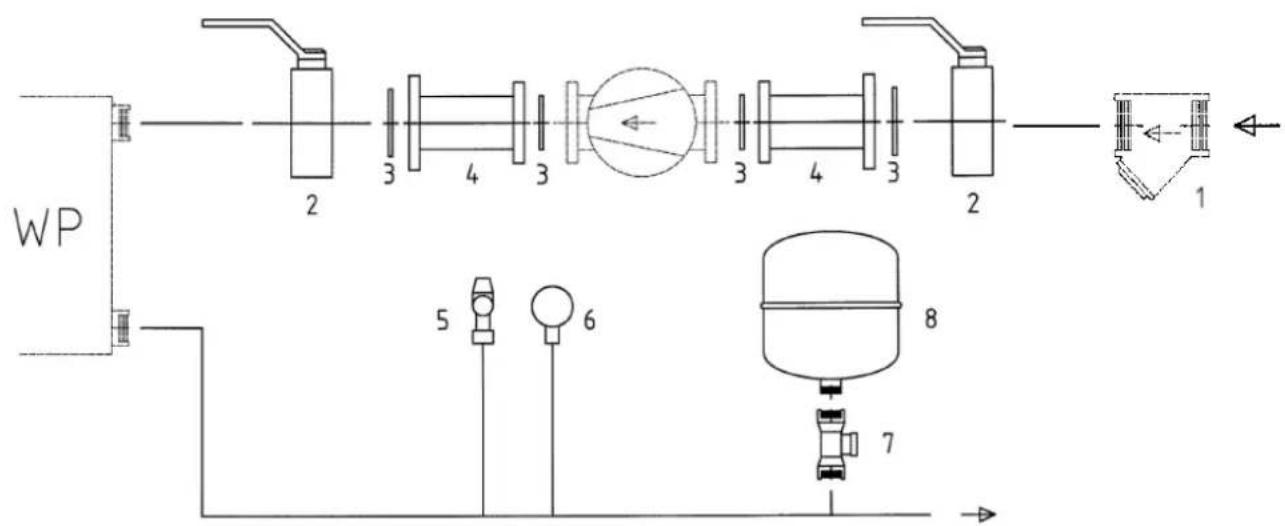
Layout:
Fig. 1.1: Layout
Apart from position 1, all components numbered in the drawing form part of the DC intermediate circuit. Position 1 is included in the heat pump scope of supply.
The drawing shown is a suggested integration, which may be deviated from in practice due to conditions on-site.
Components list:
1) Dirt trap 3"
2) Isolating valve DN 80 3"
3) Flange seal 90 (DN 80) or 75 (DN 65)
4) Flange reduction, glued
5) Pressure relief valve DN 25
6) Pressure gauge
7) Cap valve DN 20 14
8) Expansion vessel 25 litres
NOTE
The equipment for the DC intermediate circuit can be mounted inside or outside the building. Diffusion-tight insulation is required for installation in buildings. The circulating pump should be mounted as an assembly with the isolating valves as shown in the drawing.
iNOTE
For design reasons, all high-efficiency pumps (in particular brine circulating pumps) must be mounted in a dry and frost-free place!
1.1 Hydraulic integration:
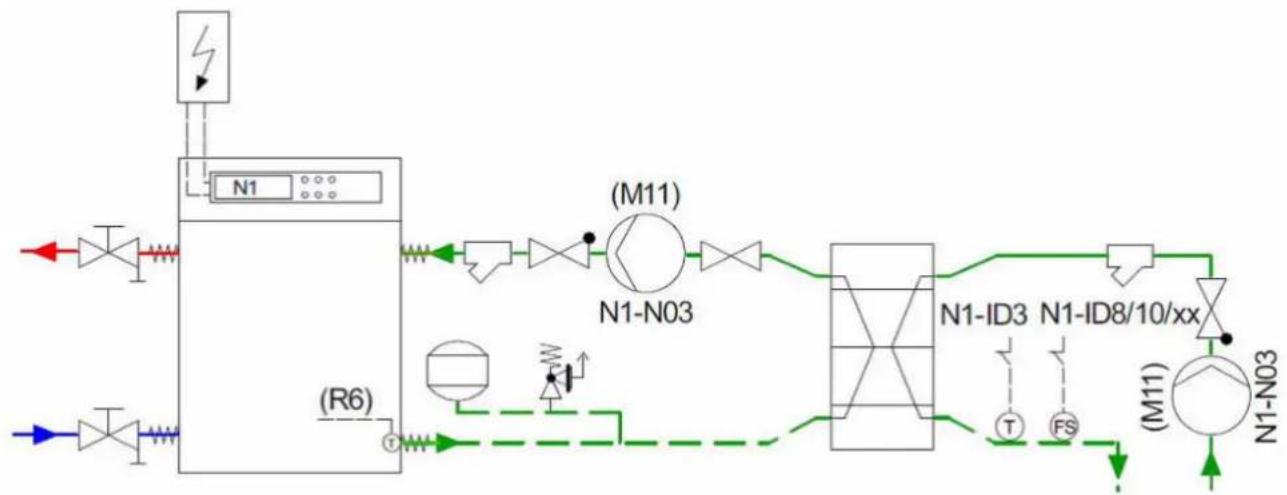
Fig. 1.2: Hydraulic integration
1.2 Screwed stainless steel plate heat exchanger
Requirements on the installation area:
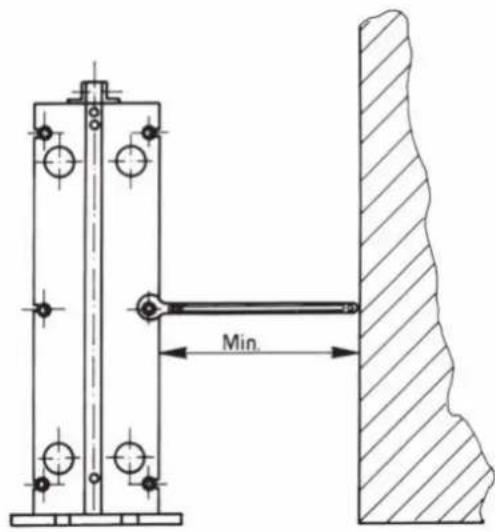
Sufficient space must be left free around the plate heat exchanger for maintenance (replacing plates, tightening the package). The free space should usually be around 1.5 to 2× the width of the heat exchanger.
Transport, lifting the plate heat exchanger:
The heat exchanger is delivered screwed to a plate. The following points must be observed when lifting the device:
Remove the fixing screws from the pallet.
- Attach a strap around a bolt on each side. Never use steel cables or chains!
- Lift the heat exchanger from the pallet, lower it horizontally onto its feet and position in its end position on solid ground, fix in place if necessary!
ATTENTION!
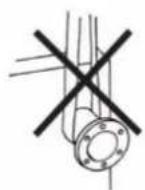
Never lift the heat exchanger by the connections or surrounding stud bolts!
Always use the lifting lugs (if present) or lift on the top side of the front pallet. Fix the straps onto their bolts for this.
Installation of the pipe connections:
ATTENTION!
When connecting the pipe system to the heat exchanger, ensure that it is not subjected to stress or strain by the pipe system! Clean the pipework before installation on the heat exchanger!
Heavy pipework must be supported to prevent strong forces from being applied on the heat exchanger.
Use flexible connections to prevent vibrations on the heat exchanger and to compensate for the expansion of the pipes caused by temperature fluctuations on the heat exchanger (tension-free lengthways installation).
NOTE
To guarantee adequate venting, the bleeder valves should be mounted in the highest position in the flow direction of the medium (preferably on a pressure vessel). Isolating valves can be used on all connections of the heat exchanger to make them easier to open when necessary!
Threaded pipe connections:
During installation, ensure that these connections do not turn while pipe connectors or flanges are being mounted.
Turning the threaded pipe connections could damage the seal in the heat exchanger, which acts as a seal against the rear side of the pipe connection!
Flange connections:
If the connection is lined with rubber, the lining also acts as a flange seal. The connection flange should be connected directly to the end plate using the designated tapped holes. The screws should be tightened evenly - do not tighten excessively, as this could overwind the threads cut in to the frame plate.
If loose support flanges are mounted on the heat exchanger, a suitable seal is required for sealing the flange.
Commissioning:
ATTENTION!
Start the cold circuit first, followed by the hot circuit.
Purge the system completely by closing the isolating valves between the pump and the heat exchanger (if a valve is installed in the return of the heat exchanger, open it).
Then start the brine circulating pump and open the valves in the flow to the heat exchanger gradually.
If necessary, purge again and repeat the above steps for the secondary circuit if this is also a closed circuit.
1.3 Connecting the heat generator and brine (intermediate) circuit pump:
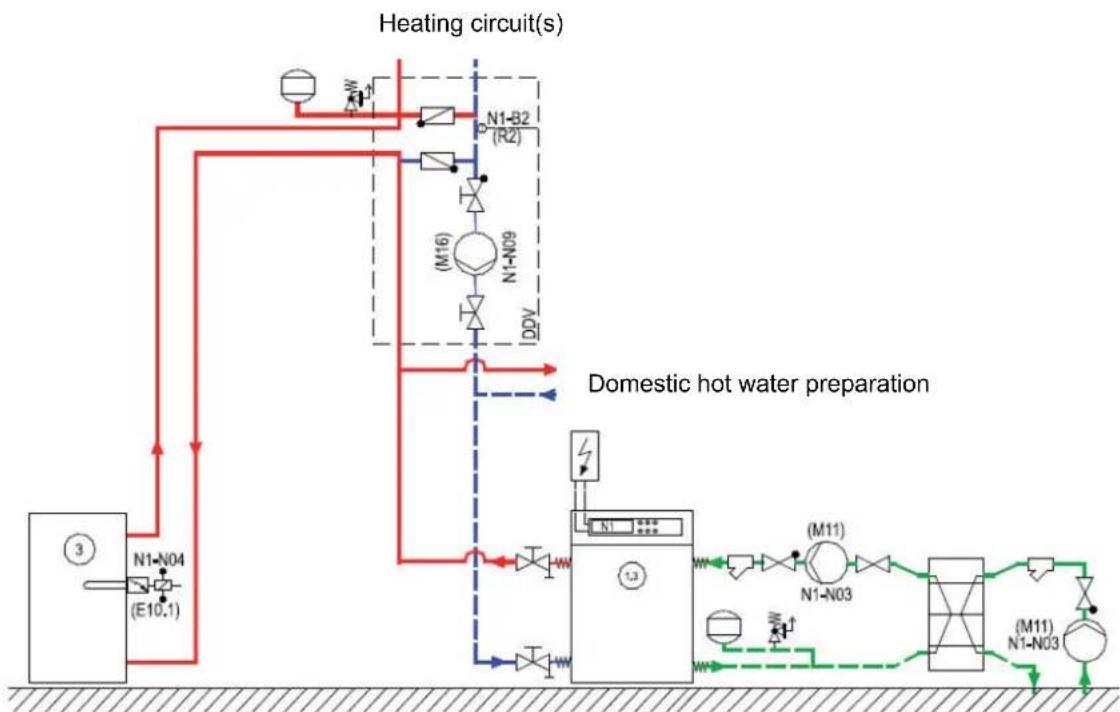
Fig. 1.3: Connecting the heat generator and brine (intermediate) circuit pump
| SIH 90TU WSIH 110TU | SI 130TU WSI 150TU | |
| Heat generator circuit pump M 16: | Magna3 50-120F Magna3 | 65-80F |
| Intermediate circuit pump M11: | Magna3 65-100F Magna3 | 65-150F |
| Well pump M11: | To be provided on-site | |
i NOTE
The insulation shells provided may NOT be used on the heat source side (use as brine circulating pump M11)!
NOTE
For design reasons, all high-efficiency pumps (in particular brine circulating pumps) must be mounted in a dry and frost-free place!
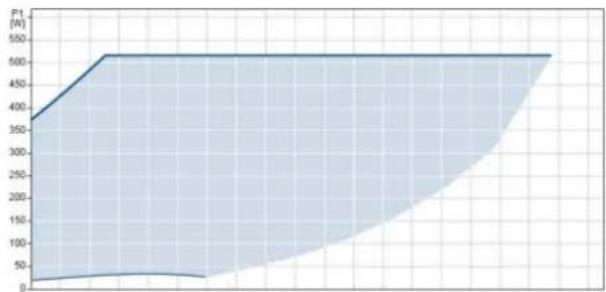
Technical data Magna3 50-120F
| Operating temperature range -10 °C to | 10 °C |
| Installation length 280 mm | |
| Power consumption max. (P1) 563 W | |
| Current consumption max. (I1) 2.37 A |
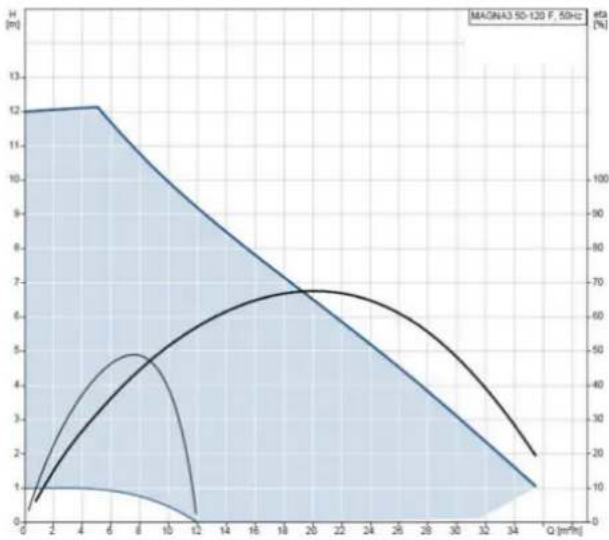
Pump characteristic curve:
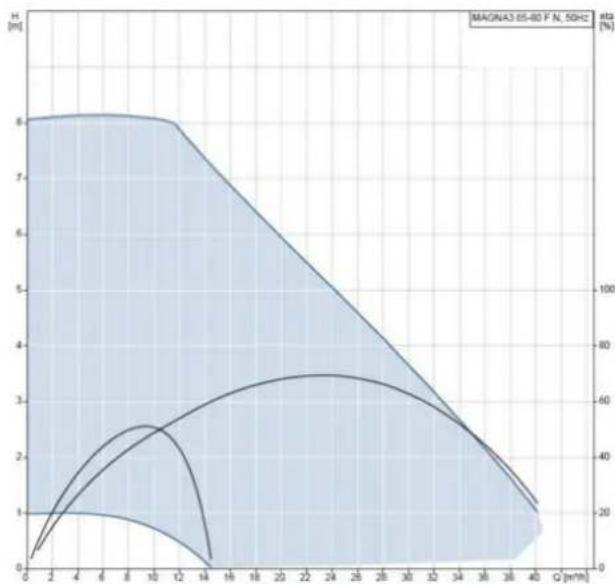
Technical data Magna3 65-80F
| Operating temperature range -10 °C to | 10 °C |
| Installation length 340 mm | |
| Power consumption max. (P1) 478 W | |
| Current consumption max. (I1) 2.12 A |
Pump characteristic curve:
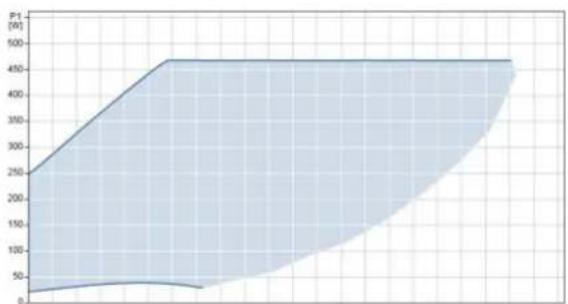
Technical data Magna3 65-100F
| Operating temperature range -10 °C to | 10 °C |
| Installation length 340 mm | |
| Power consumption max. (P1) 613 W | |
| Current consumption max. (I1) 2.7 A |
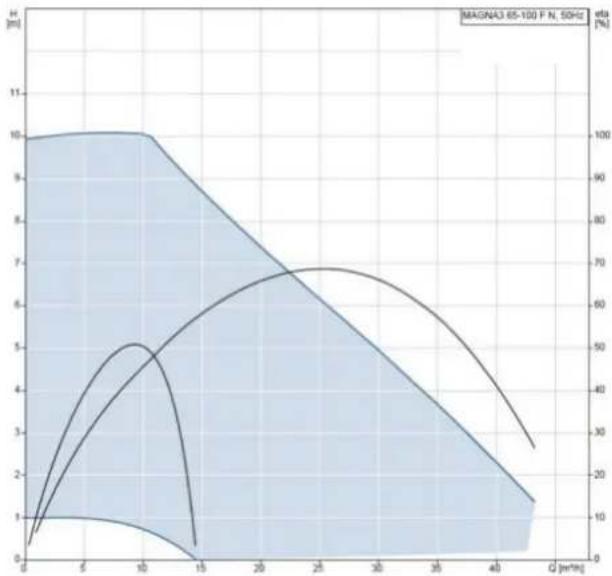
Pump characteristic curve:
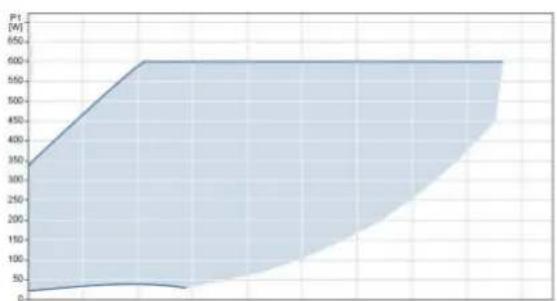
Technical data Magna3 65-150F
| Operating temperature range -10 °C to | 10 °C |
| Installation length 340 mm | |
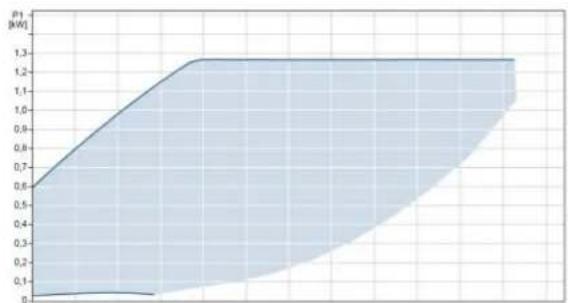
| Power consumption max. (P1) 1301 W | |
| Current consumption max. (I1) 5.68 A |
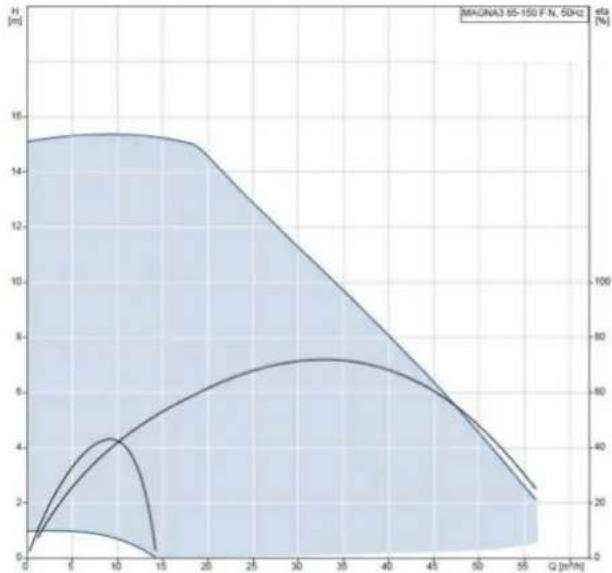
Pump characteristic curve:
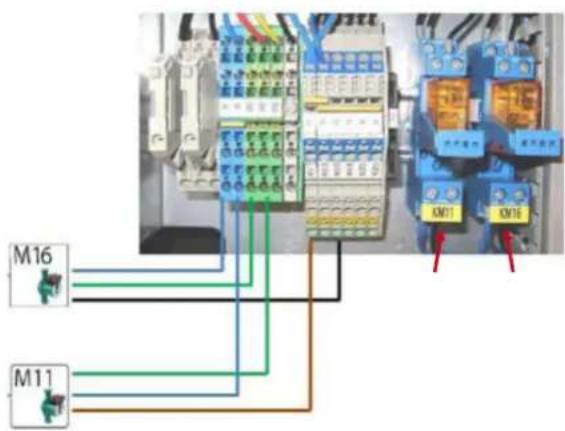
1.4 Connection supply voltage ~ 230 V
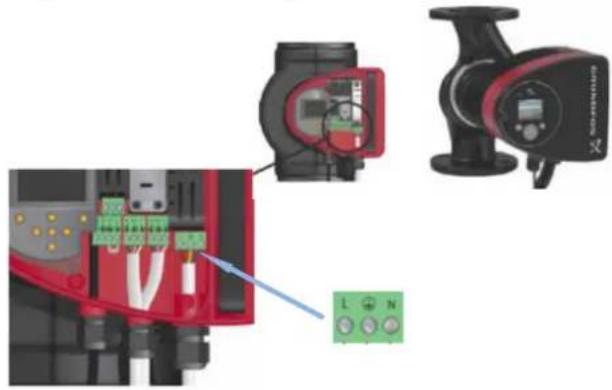
Magna3 50-120F to Magna3 65-150F
1.5 Connection input signal 0 - 10V Magna3 50-120F to Magna3 65-150F
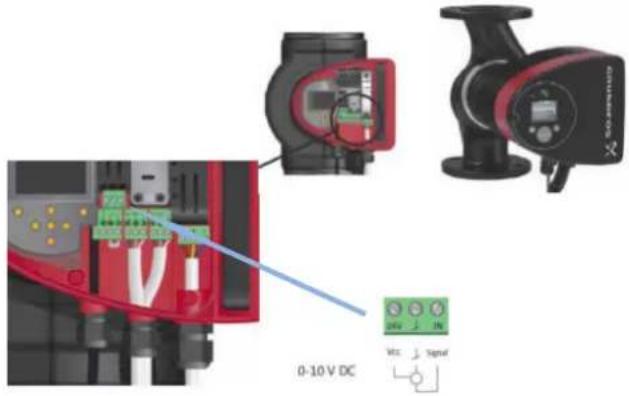
| Pump Terminal Signal | ||
| M 16 J4/Y3 - X3 GND 0 - 10 V | ||
| M 11 intermediate circuit pump | J4/Y4 - X3 GND | 0 - 10 V |
| M 11 well pump Optional | ||

1.6 Frost protection thermostat (T) and flow rate switch (FS)
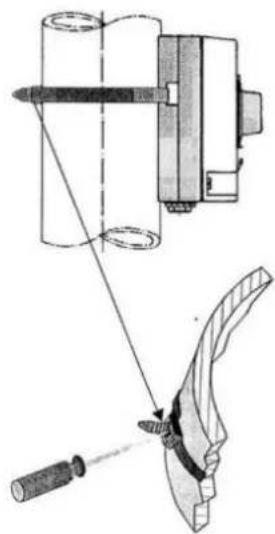
Pipe-mounted thermostat RAT 0601 (frost protection):
ATTENTION!
In order to ensure fault-free functioning of the device(s), the instructions given in the following text must be observed.
No temperature stratification must occur in the pipework at the installation site.
The surface of the pipe must be bare at the installation site and any paint or other insulation must be removed.
The tightening strap provided is inserted through the sensor base and pulled tight on the pipework. Excess lengths can be cut off.
The strap-on sensor must lie tightly against the pipe (use heat transfer compound if necessary)!
Switching function:
If the temperature reaches or falls short of the set setpoint of 4^ , the changeover contact switches from terminal P1 - 2 to P1 - 1. If the temperature exceeds the setpoint by approx. 4K the changeover contact switches back again
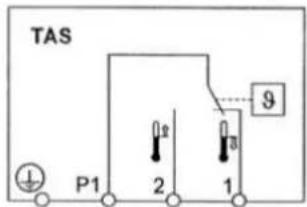
Connecting the frost protection thermostat (T) to the heat pump manager:
N1 ID 3 and X3 G / 24 V AC as
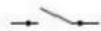
Contact in inactive state (no flow rate)
ATTENTION!
An additional flow rate switch installed in the primary circuit (FS) prevents the heat pump from switching on if the volume flow of the cooling water or ground water pump is not present.
Connecting the flow rate switch (FS) to the heat pump manager:
N1 ID 8/10/xx and X3 G