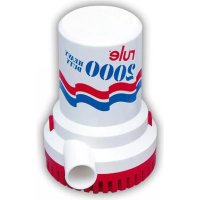
Standard Bilge Pump - Pump Rule - Free user manual and instructions
Find the device manual for free Standard Bilge Pump Rule in PDF.


| Product Type | DC Electric Bilge Pump |
| Brand | Rule |
| Model | Standard Bilge Pump |
| Intended Use | Pumping bilge water on small boats (hull length ≤ 24 m) |
| Compatible Fluids | Clear water and salt water only |
| Power Supply | Direct current (DC) – installation by certified electrician |
| Compliance Standards | ISO 8846:1990, ISO 8849:2003, ISO 10133:2012, ISO 15083:2003 |
| European Directives | 2004/108/EC, 2003/44/EC, 2011/65/EU |
| Safety Precautions | Risk of explosion, electrocution, drowning – read manual before use |
| Recommended Safety Equipment | Helmet, goggles, gloves, protective shoes, gas mask, hearing protection |
| Washing Procedure (chemical contact) | Rinse with running water for 15 minutes for eyes, wash with water and soap for 1 minute for skin |
| Regular Maintenance | Check operation, remove debris from inlets, seal openings with marine sealant |
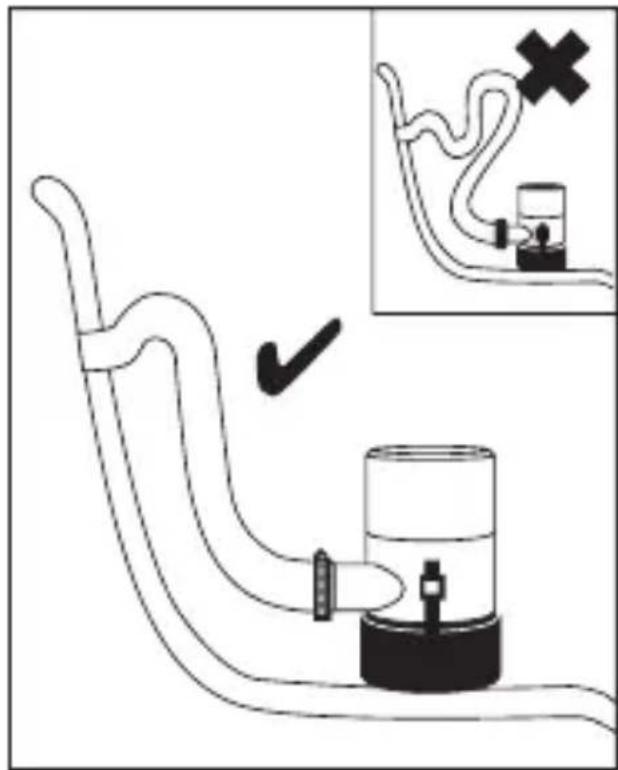
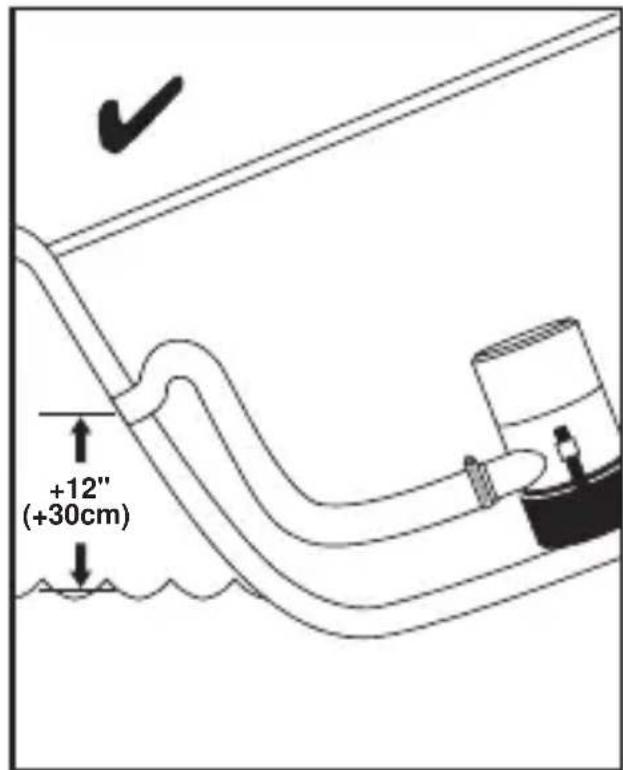
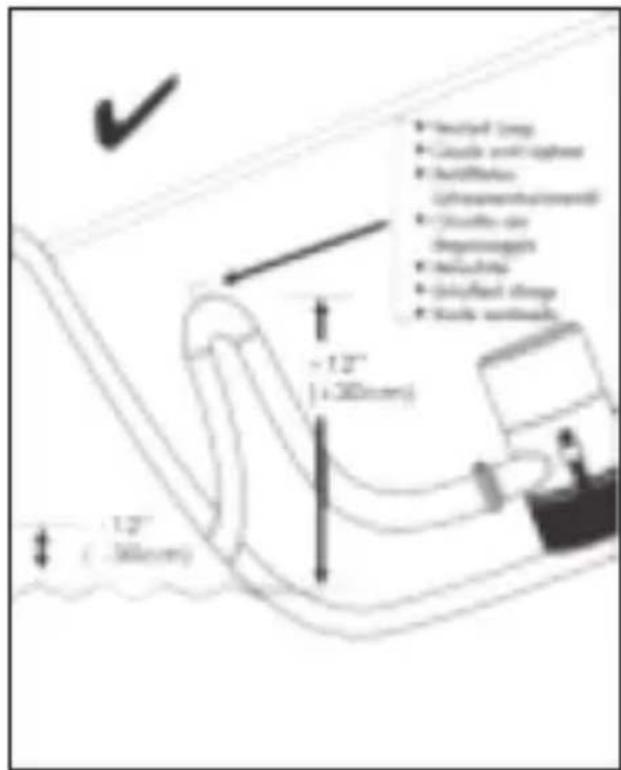
| Installation | Compliant with ABYC H-22 and E-11 – bulkhead valves normally closed |
| Recycling | Comply with local regulations for electrical waste |
| Spare Parts | Contact a Xylem representative or authorized dealer |
Frequently Asked Questions - Standard Bilge Pump Rule
User questions about Standard Bilge Pump Rule
0 question about this device. Answer the ones you know or ask your own.
Ask a new question about this device
Download the instructions for your Pump in PDF format for free! Find your manual Standard Bilge Pump - Rule and take your electronic device back in hand. On this page are published all the documents necessary for the use of your device. Standard Bilge Pump by Rule.
USER MANUAL Standard Bilge Pump Rule
Purpose of this manual
The purpose of this manual is to provide necessary information for product installation, operation and maintenance.

CAUTION: Read this manual carefully before installing, using or servicing this product. Failure to follow the instructions within this manual could result in explosion, property damage, severe personal injury and/or death.

NOTICE: Save this manual for future reference, and keep it readily available at the location of the unit.
Safety

WARNING:
- The operator must be aware of safety precautions to prevent physical injury.
- Operating, installing or maintaining the unit in any way that is not covered in this manual could cause death, serious personal injury or damage to the equipment. This includes any modification to the equipment or use of parts not provided by Xylem. If there is a question regarding the intended use of equipment, please contact Xylem representative before proceeding.
- Do not change the service application without the approval of a authorized Xylem representative.
DANGER: Failure to follow this instruction manual may lead to significant property damage or may result in serious injury or death.
Safety terminology and symbols
About safety messages
It is extremely important that you read, understand and follow the safety messages and regulations carefully before handling the product. They are published to help prevent these hazards:
• Personal accidents and health problems
- Damage to the product
- Product malfunction
Hazard Level: Indication:
| DANGER | A hazardous situation which, if not avoided, will result in death or serious injury. |
| WARNING | A hazardous situation which, if not avoided, could result in death or serious injury. |
| CAUTION | A hazardous situation which, if not avoided, could result in minor or moderate injury. |
| NOTICE | A potential situation which, if not avoided, could result in undesirable conditions.A practice not related to personal injury. |
Hazard categories
Hazard categories can either fall under hazard levels or let specific symbols replace the ordinary hazard levels symbols. Electrical hazards are indicated by the following specific symbols:

ELECTRICAL HAZARD:
These are examples of other categories that can occur. They fall under the ordinary hazard levels and may use complementing symbols:
- Crush hazard
- Cutting hazard
- Arc flash hazard
User safety
General safety rules
These are safety rules apply:
• Always keep work area clean
- Pay attention to the risks presented by gas and vapors in the work area.
- Avoid all electrical dangers. Pay attention to the risks of electric shock or arc flash hazards
• Always bear in mind the risk of drowning, electrical accidents and burn injuries
Safety equipment
Use safety equipment according to the company regulations. Use this safety equipment within the work area:
- Hard hat
- Safety goggles, preferably with side shields
- Protective shoes
-
Protective gloves
-
Gas mask
- Hearing protection
- First-aid kit
- Safety devices
NOTICE: Never operate a unit unless safety devices are installed.
Electrical connections
Electrical connections must be made by certified electricians in compliance with all international, national, state and local regulations. For more information about requirements, see sections dealing specifically with electrical connections.
Precautions before work
Observe these safety precautions before you work with the product or are in connection with the product:
- Provide a suitable barrier around the work area, for example, a guard rail
-
Make sure that all safety guards are in place and secure
• Make sure that you have a clear path of retreat
• Make sure that the product cannot roll or fall over and injure people or damage property -
Make sure that the lifting equipment is in good condition
- Use a lifting harness, a safety line and a breathing device as required
- Allow all system and pump components to cool before you handle them
- Make sure that the product has been thoroughly cleaned
- Disconnect and lock out power before you service the pump
- Check the explosion risk before you weld or use electric hand tools
Wash the skin and eyes
Follow these procedures for chemicals or hazardous fluids that have come into contact with your eyes or skin:
| Condition | Action |
| Chemicals or hazardous fluids in eyes | 1. Hold your eyelids apart forcibly with your fingers2. Rinse the eyes with eyewash or running water for al least 15 minutes3. Seek medical attention |
| Chemicals or hazardous fluids on skin | 1. Remove contaminated clothing2. Wash the skin with soap and water for a least 1 minute3. Seek medical attention, if necessary |
Environmental safety
The work area
Always keep the station clean
Waste and emissions regulations
Observe these safety regulations regarding waste and emissions:
- Appropriately dispose of all waste
- Handle and dispose of the processed liquid in compliance with applicable environmental regulations
- Clean up all spills in accordance with safety and environmental procedures
• Report all environmental emissions to the appropriate authorities

WARNING: Radiation Hazard. Do NOT send the product to Xylem if it has been exposed to any nuclear radiation
Electrical installation
For electrical installation recycling requirements, consult your local electric utility
Recycling guidelines
Always follow local laws and regulations regarding recycling

DANGER: This product is not intended for damage control or to deal with flooding resulting from hull damage. This product is intended to be used in Bilge Pumping Systems for small craft with a hull length up to 24 meters, as described within the introduction and scope of ISO 15083. Bilge Pumping Systems, as specified in ISO 15083, are limited to normal amounts of water in an intact boat due to spray, rain, seepage, spillage, and occasional small amounts of water shipped from boat movements in heavy weather. Use of product in any other way could result in flooding, catastrophic damage to craft, serious personal injury, or death.

WARNING: This pump is designed for use with fresh water and salt water ONLY. Use with any other hazardous, caustic, or corrosive material could result in damage to the pump and the surrounding environment, possible exposure to hazardous substances and injury.

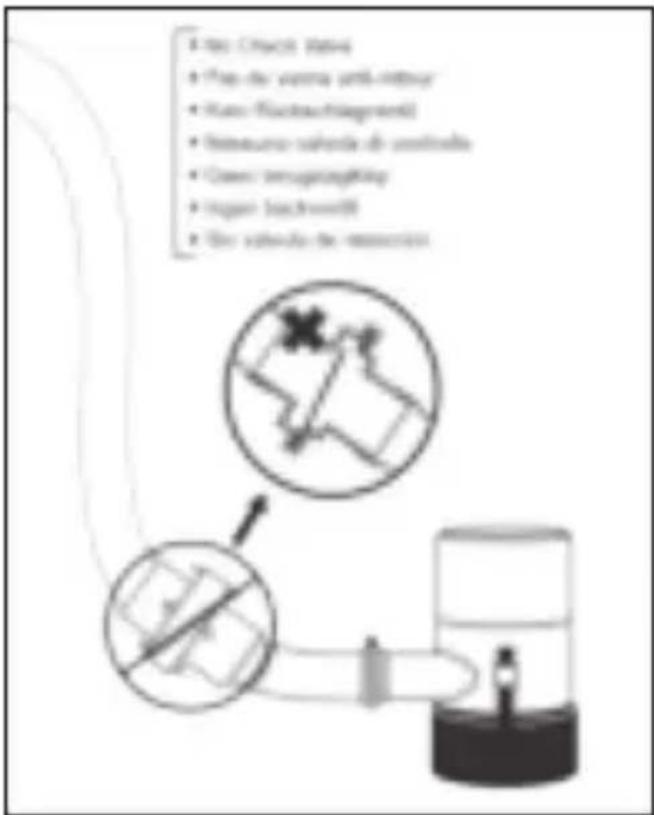
WARNING: Check the function of all bilge pumps at regular intervals. Clear pump inlets from debris. If seacocks are fitted in the fore and aft peak bulkheads, they shall be kept closed and shall only be opened to let water drain into the main bilges.

| Rated Flow | Open FlowOutput @ 0ft/0m(0 kPa) GPH (LPH) | Open FlowOutput @ 3.35ft/1m(10 kPa) GPH (LPH) | Open FlowOutput @ 6.7ft/2m(20 kPa) GPH (LPH) |
| FRDébit nominal | Débit libreSortie à 0 pied/0 m(0 kPa) GPH (LPH) | Débit libreSortie à 3,35 pieds/1 m(10 kPa) GPH (LPH) | Débit libreSortie à 6,7 pieds/2 m(20 kPa) GPH (LPH) |
| DEGemessener Durchfluss | Offener DurchflussPumpleistung bei 0 m(0 kPa) GPH (LPH) | Offener DurchflussPumpleistung bei 1 m(10 kPa) GPH (LPH) | Offener DurchflussPumpleistung bei 2 m(20 kPa) GPH (LPH) |
| ITFlusso nominale | Flusso apertoUscita @ 0ft/0m(0 kPa) GPH (LPH) | Flusso apertoUscita @ 3,35ft/1m(10 kPa) GPH (LPH) | Flusso apertoUscita @ 6,7ft/2m(20 kPa) GPH (LPH) |
| NLOminaal debiet | Open debietUitvoer @ 0ft/0m(0 kPa) GPH (LPH) | Open debietUitvoer @ 3,35ft/1m(10 kPa) GPH (LPH) | Open debietUitvoer @ 6,7ft/2m(20 kPa) GPH (LPH) |
| SENominellt flöde | Öppet flödeEffekt @ 0ft/0m(0 kPa) GPH (LPH) | Öppet flödeEffekt @ 102,11cm/1m(10 kPa) GPH (LPH) | Öppet flödeEffekt @ 204,22cm/2m(20 kPa) GPH (LPH) |
| ESCaudal Nominal | Caudal AbiertoSalida @ 0 pies/0 m(0 kPa) GPH (LPH) | Caudal AbiertoSalida @ 3.35 pies/1 m(10 kPa) GPH (LPH) | Caudal AbiertoSalida @ 6.7 pies/2 m(20 kPa) GPH (LPH) |
| 360 360 (1) | 362) 265 (1003) 190 (719) | ||
| 500 500 (1) | 892) 360 (1362) 260 (984) | ||
| 700 700 (2) | 649) 562 (2127) 330 (1249) | ||
| 800 800 (3) | 028) 615 (2328) 425 (1608) | ||
| 1000 1000 (3) | 785) 725 (2744) 450 (1703) | ||
| 1100 1100 (4) | 164) 860 (3255) 550 (2081) | ||
| 1500 1500 (5) | 678) 1200 (4542) 680 (2574) | ||
| 2000 2000 (7) | 1620 (6132) 1300 (4921) | ||
| 3700 3700 (1) | 14006) 2900 (10977) 2450 (9274) | ||
| 4000 4000 (1) | 15142) 3527 (13351) 2952 (11174) | ||
| Note: Output is based on 10 hour break-in period and at 13.6V (12V models) or 27.2V (24V models) | |||
Pump Performance - Large RULE Pumps
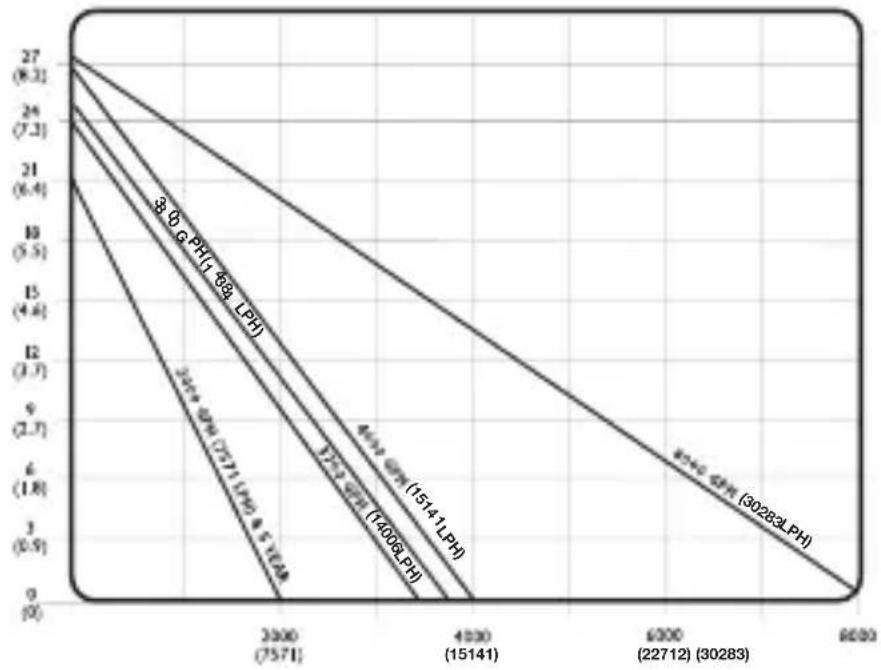
line
| pH (LPH) | Value | |---|---| | 8.0 G | 1.63 | | 7.2 LPH | 1.54 | | 6.4 LPH | 1.44 | | 5.5 LPH | 1.35 | | 4.6 LPH | 1.26 | | 3.7 LPH | 1.17 | | 2.7 LPH | 1.08 | | 1.8 LPH | 0.99 | | 0.9 LPH | 0.90 | | 0 | 0 |Pump Performance - Small RULE Pumps
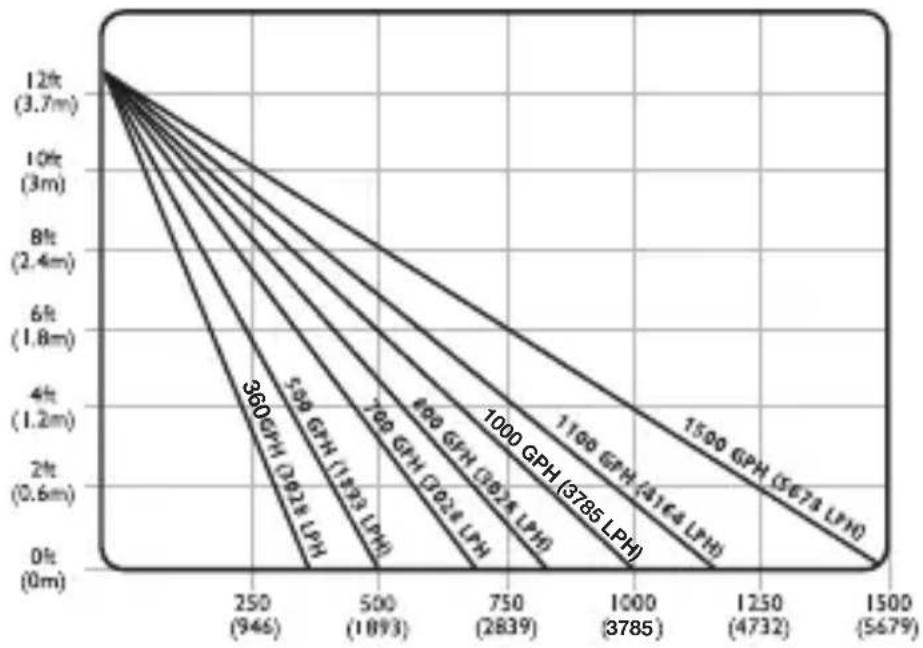
line
| X-axis Label | Y-axis Value | Label | |---|---|---| | 250 (946) | 12ft (3.7m) | 360 GPH (3928 LPH) | | 500 (1893) | 10ft (3m) | 589 GPH (1993 LPH) | | 750 (2839) | 8ft (2.4m) | 769 GPH (7024 LPH) | | 1000 (3785) | 6ft (1.8m) | 860 GPH (9824 LPH) | | 1100 (4164 LPH) | 4ft (1.2m) | 1000 GPH (3785 LPH) | | 1250 (4732) | 2ft (0.6m) | 1500 GPH (5673 LPH) | | 1500 (5679) | 0ft (0m) | — |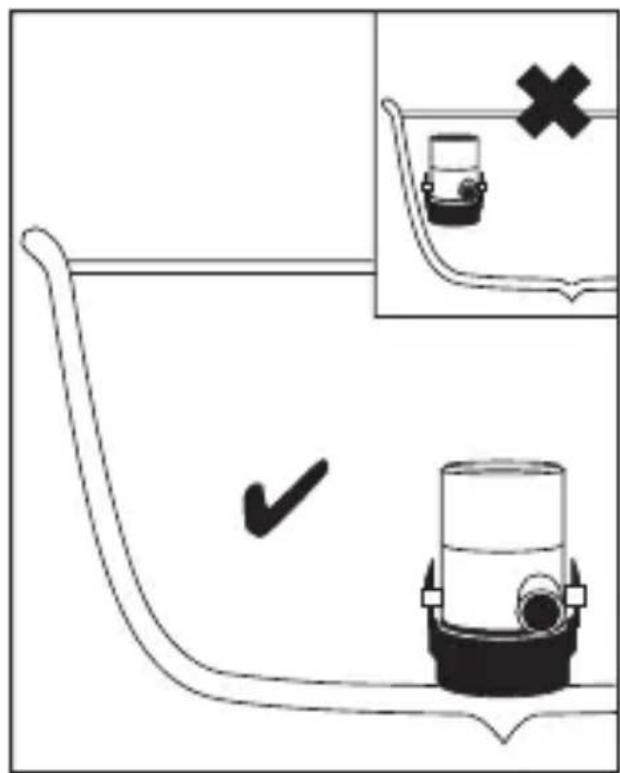
natural_image
Pure mechanical diagram showing a gear and wheel assembly without any text, numbers, or symbols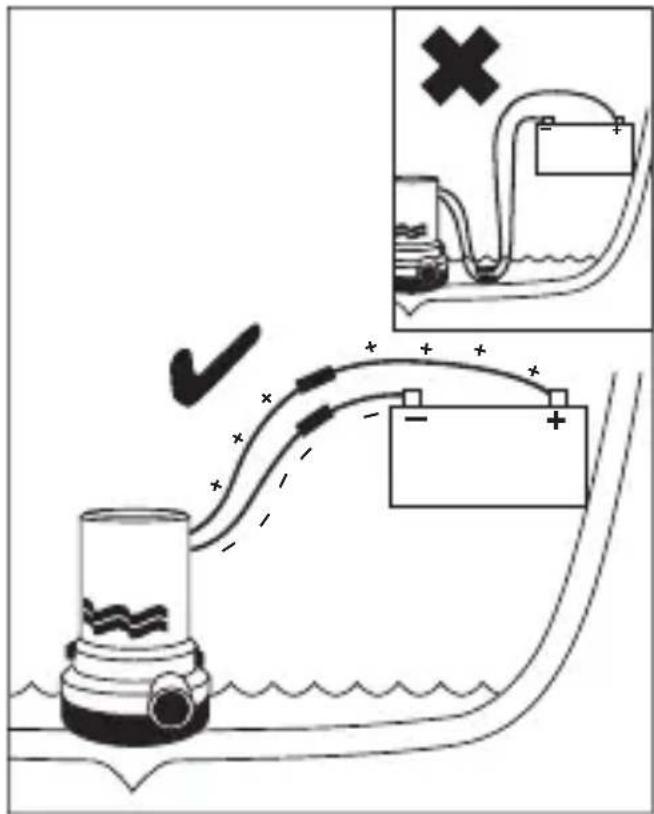


WARNING: Electrical connections should be performed by a competent marine electrical technician.

CAUTION: Disconnect power from the system before working on the unit to avoid personal injury, damage to the surrounding environment and/or damage to the unit.

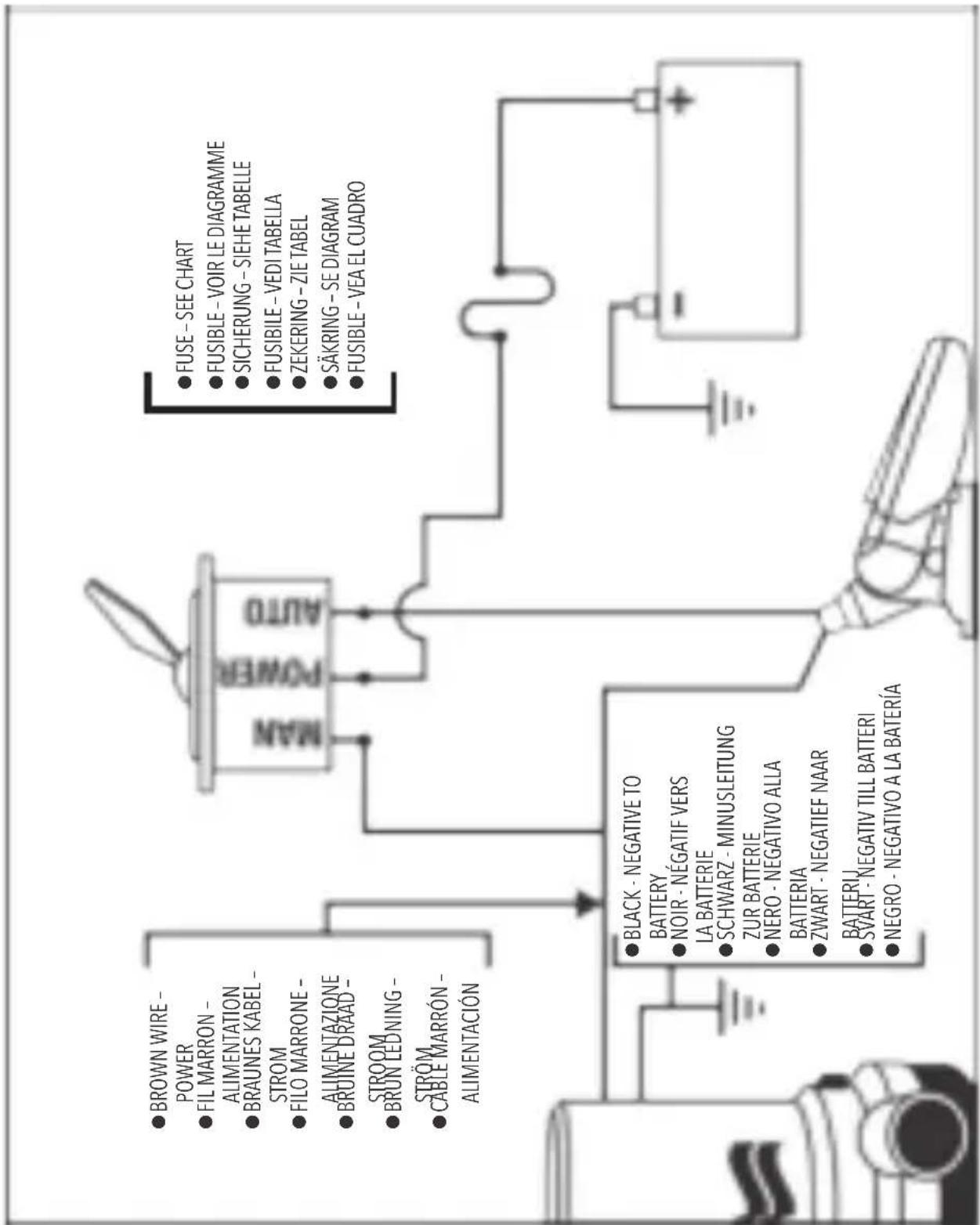
CAUTION: Always install proper fuse size to prevent damage to product should a short occur. Failure to install proper fuse could increase risk of pump malfunction potentially resulting in personal injury and/or fire hazard.

CAUTION: Keep all wire connections above the highest water level. Wires must be joined with butt connectors and a marine grade sealant to prevent wire corrosion.
| A | B | C | D | E | F | |
| GPH (LPH) | Model | Volts | Amps (Volts) | Amps (Volts) | Fuse Size | |
| FR | G/H (L/H) | Modèle | Volts | Amp. (Volts) | Amp. (Volts) | Taille de fusible |
| DE | G/S (L/S) | Modell | Volt | Ampere (Volt) | Ampere (Volt) | Sicherungsstärke |
| IT | G/O (L/O) | Modello | Volt | Amp (Volt) | Amp (Volt) | Dimensione fusibile |
| NL | G/U (L/U) | Model | Volt | Amp (Volt) | Amp (Volt) | Zekering |
| SE | G/T (L/T) | Modell | Volt | Ampere (Volt) | Ampere (Volt) | Säkringsstorlek |
| ES | G/H (L/H) | Modelo | Voltios | Amperios (Voltios) | Amperios (Voltios) | Tama-o del fusible |
| A | B | C | D | E | F |
| 4000(15140) | 56D | 12DC | 15.5 (12v) | 20.0 (13.6v) | 25 |
| 4000(15140) | 56D-24 | 24DC | 6.9 (24v) | 10.0 (27.2v) | 15 |
| 4000(15140) | 56D-32 | 32DC | 5.0 (32v) | 7.5 (36.3v) | 10 |
| 3700(14010) | 13A | 12DC | 15.5 (12v) | 20.0 (13.6v) | 25 |
| 3700(14010) | 14A | 12DC | 15.5 (12v) | 20.0 (13.6v) | 25 |
| 3700(14010) | 16A | 24DC | 6.9 (24v) | 10.0 (27.2v) | 15 |
| 3700(14010) | 15A | 32DC | 5.0 (32v) | 7.5 (36.3v) | 10 |
| 2000(7571) | 09 | 12DC | 8.4 (12v) | 12.0 (13.6v) | 15 |
| 2000(7571) | 10 | 12DC | 8.4 (12v) | 12.0 (13.6v) | 15 |
| 2000(7571) | 11 | 32DC | 3.1 (32v) | 5.0 (36.3v) | 5 |
| 2000(7571) | 12 | 24DC | 4.0 (24v) | 6.0 (27.2v) | 7.5 |
| 1500(5678) | 02 | 12DC | 4.8 (12v) | 7.0 (13.6v) | 10 |
| 1500(5678) | 02-6 | 12DC | 4.8 (12v) | 7.0 (13.6v) | 10 |
| 1500(5678) | 03 | 24DC | 2.3 (24v) | 3.5 (27.2v) | 3 |
| 1500(5678) | 04 | 12DC | 4.8 (12v) | 7.0 (13.36) | 10 |
| 1100(4164) | 27D | 12DC | 3.3 (12v) | 5.0 (13.6v) | 5 |
| 1100(4164) | 27D-6 | 12DC | 3.3 (12v) | 5.0 (13.6v) | 5 |
| 1100(4164) | 28D | 24DC | 1.3 (24v) | 2.0 (27.2v) | 3 |
| 1100(4164) | 27DC | 12DC | 3.3 (12v) | 5.0 (13.6v) | 5 |
| 1000(3785) | 20A | 12DC | 2.9 (12v) | 4.0 (13.6v) | 5 |
| 800(3028) | 20F | 12DC | 2.8 (12v) | 4.0 (13.6v) | 5 |
| 800(3028) | 20R | 12DC | 2.8 (12v) | 4.0 (13.6v) | 5 |
| 800(3028) | 21R | 24DC | 1.3 (24v) | 2.0 (27.2v) | 3 |
| 800(3028) | 20RC | 12DC | 2.8 (12v) | 4.0 (13.6v) | 5 |
| 500(1893) | 26D | 24DC | 0.9 (24v) | 1.3 (27.2v) | 1.5 |
| 500(1893) | 25D | 12DC | 1.9 (12v) | 2.5 (13.6v) | 3 |
| 500(1893) | 25D-6 | 12DC | 1.9 (12v) | 2.5 (13.6v) | 3 |
| 500(1893) | 25D-6WC | 12DC | 1.9 (12v) | 2.5 (13.6v) | 3 |
| 500(1893) | 25DC | 12DC | 1.9 (12v) | 2.5 (13.6v) | 3 |
| 360(1363) | 24 | 12DC | 2.1 (12v) | 2.5 (13.6v) | 3 |
| 360(1363) | 24-6DC | 12DC | 1.9 (12v) | 2.5 (13.6v) | 3 |
flowchart
graph TD
    A["MAIN"] --> B["BROWN WIRE - POWER"]
    A --> C["FIL MARRON - ALIMENTATION"]
    A --> D["BRAUNES KABEL - STROM"]
    A --> E["FILO MARRONE - ALIMENTAZIONE"]
    A --> F["BRUINE DRAAD - STROOM"]
    A --> G["BRUN LEDNING - STRÖM"]
    A --> H["CABLE MARRÓN - ALIMENTACIÓN"]
    I["AUTO"] --> J["FUSE - SEE CHART"]
    I --> K["FUSIBLE - VOIR LE DIAGRAMME"]
    I --> L["SICHERUNG - SIEHE TABELLE"]
    I --> M["FUSIBLE - VEDI TABELLA"]
    I --> N["ZEKERING - ZIE TABEL"]
    I --> O["SÄKRING - SE DIAGRAM"]
    I --> P["FUSIBLE - VEA EL CUADRO"]

    Q["Black - NEGATIVE TO BATTERY"]
    Q --> R["NOIR - NÉGATIF VERS LA BATTERIE"]
    Q --> S["SCHWARZ - MINUSLEITUNG ZUR BATTERIE"]
    Q --> T["NERO - NEGATIVO ALLA BATTERIA"]
    Q --> U["ZWART - NEGATIEF NAAR BATTERIJ"]
    Q --> V["SVART - NEGATIV TILL BATTERI"]
    Q --> W["NEGRO - NEGATIVO A LA BATERÍA"]
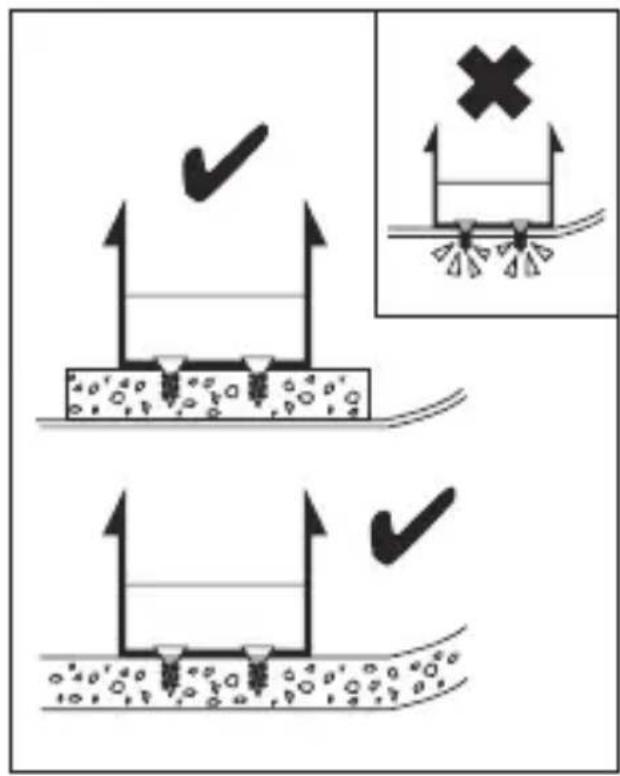
All mounting holes must be sealed with a marine grade sealant to prevent water intrusion.

Install to ABYC H-22 and E-11

We hereby declare, under our sole responsibility, that our product to which this declaration relates has been designed to comply in accordance with the following Directives:
Electromagnetic Compatibility Directive 2004/108/EC Recreational Craft Directive 2003/44/EC RoHS 2011/65/EU
With the relevant selections of the following Standards:
ISO 8846:1990 / Ignition Protection ISO 8849:2003 / Electrically Operated DC Bilge Pumps ISO 10133:2012 / Extra Low Voltage D.C. Installations ISO 15083:2003 / Bilge Pumping Systems
This product is intended to be used in Bilge Pumping System for small craft with a hull length up to 24 meters, as described within the introduction and scope of ISO 15083. Install following the Provisions of the Recreation Craft Directives 2003/44/EC
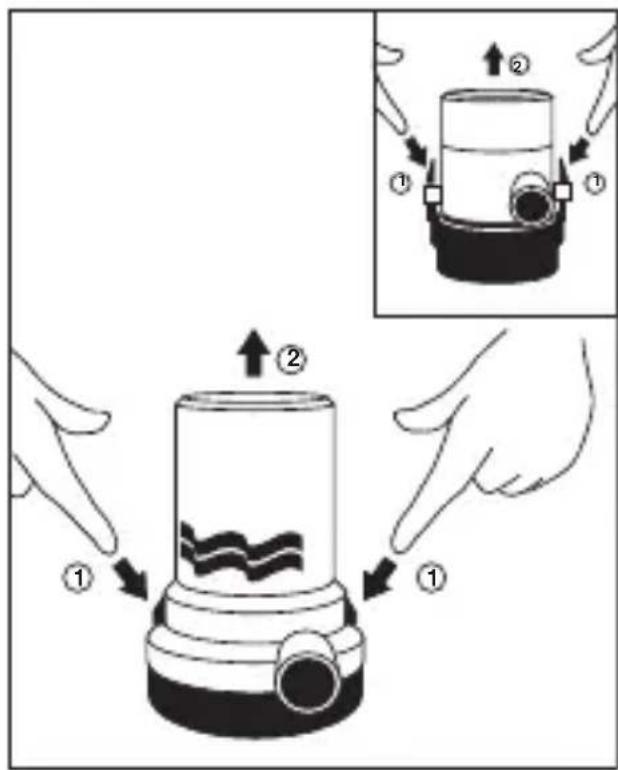
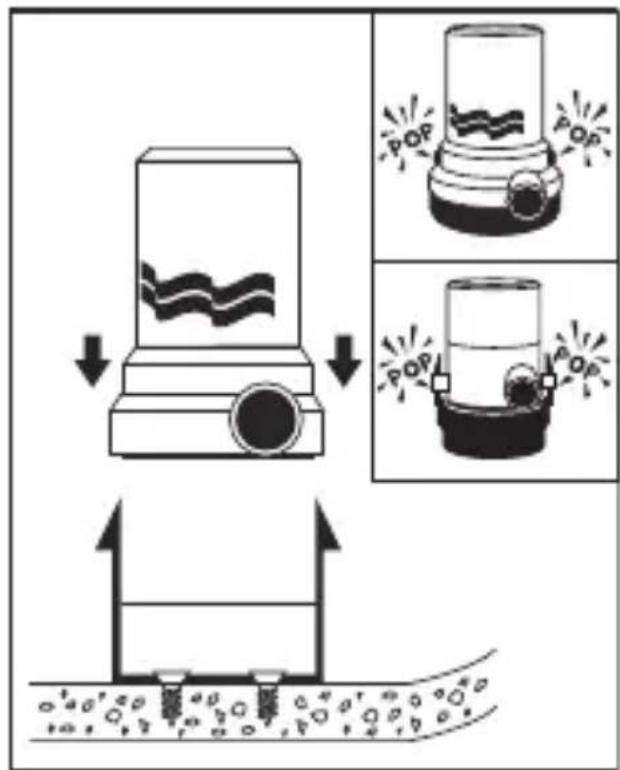
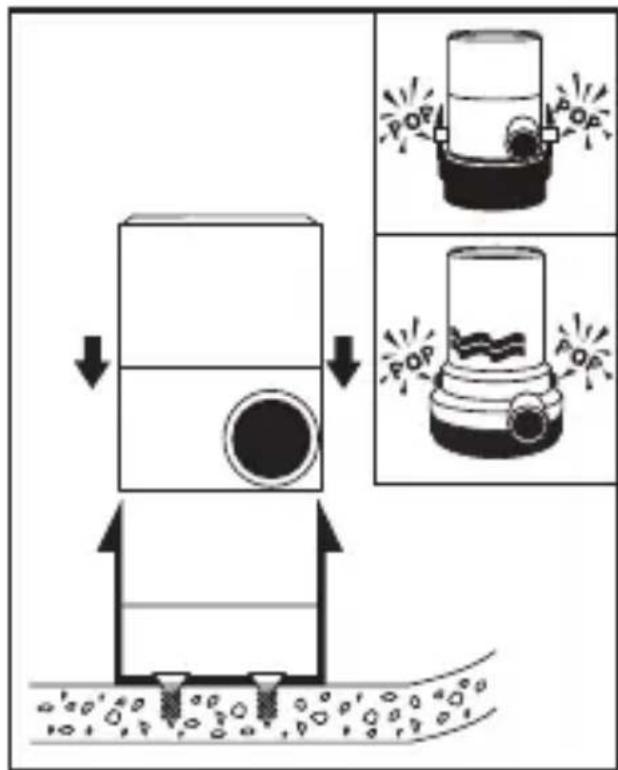
CARTRIDGE BILGE PUMPS
Featuring replaceable motor cartridges
Only for models: 25DC, 20RC & 27DC
MOUNTING:
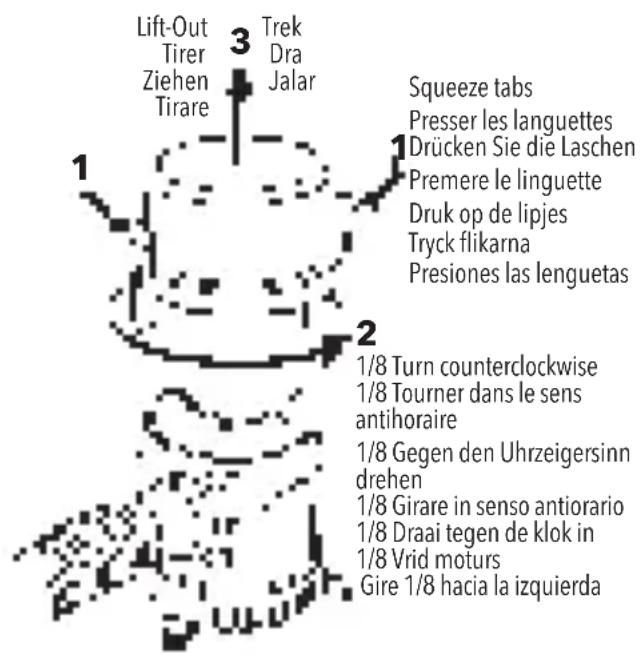
Please note that the entire motor cartridge may be removed for cleaning or replacement. Do not be alarmed that it is a very tight fit. To remove the cartridge, squeeze both locking tabs and turn motor counterclockwise until it stops. Lift motor out.
To remove / pour changer / So entfernen / Per rimuovere / te verwijderen / För att ta bort / Para remover
Setting Standards for Safer Boating
Setting Standards for Safer Boating
Installare su ABYC
H-22 ed E-11

Setting Standards for Safer Boating
www.rule-industries.com
© 2014 Xylem Inc. All right reserved.
Rule is a trademark of Xylem Inc. or one of its subsidiaries.
950-0584A Rev. A 08/2014