
PFBS 12 C6 - Drill PARKSIDE - Free user manual and instructions
Find the device manual for free PFBS 12 C6 PARKSIDE in PDF.


| Product type | Cordless precision drill/grinder |
| Brand | Parkside |
| Model | PFBS 12 C6 |
| Nominal voltage | 12 V (DC) |
| Rotation speed | 5000 – 25000 min⁻¹ (variable) |
| Battery capacity | 1300 mAh (integrated Li-Ion) |
| Charge type | USB-C (cable included, charger not included) |
| Approximate weight | 0.5 kg |
| Max. disc diameter | 25 mm |
| Clamping range of chuck | Max. Ø 3.2 mm |
| Main functions | Drilling, milling, engraving, polishing, cleaning, sanding, cutting |
| Processed materials | Wood, metal, plastic, ceramic, stone |
| Included accessories | Set of 50 pieces (drill bits, collets, discs, brushes, etc.) |
| Sound level (LpA) | 59.6 dB(A) |
| Vibration level (ah) | 0.93 m/s² |
| Maintenance and cleaning | Clean with a dry cloth; do not use aggressive cleaning agents |
| Safety | Wearing safety glasses, ear protection and mask recommended |
| Spare parts and repairability | Repair by qualified personnel; parts available through customer service |
| Warranty | 3 years (according to conditions) |
| Article number (IAN) | 499890_2204 |
| Certification | CE |
| Protection class (charger) | II (double insulation) |
Frequently Asked Questions - PFBS 12 C6 PARKSIDE
User questions about PFBS 12 C6 PARKSIDE
0 question about this device. Answer the ones you know or ask your own.
Ask a new question about this device
Download the instructions for your Drill in PDF format for free! Find your manual PFBS 12 C6 - PARKSIDE and take your electronic device back in hand. On this page are published all the documents necessary for the use of your device. PFBS 12 C6 by PARKSIDE.
USER MANUAL PFBS 12 C6 PARKSIDE

natural_image
Black Parkside electric drill bit with visible model and branding (no text beyond brand name)CORDLESS PRECISION DRILL GRINDER 12V / AKKU-FEINBOHRSCHLEIFER 12 V / PERCEUSE-MEULEUSE DE PRÉCISION SANS FIL 12 V PFBS 12 C6
DE AT CH
Translation of the original instructions
FR BE CH
PERCEUSE-MEULEUSE DE PRÉCISION SANS FIL 12 V
Intended use. Page 30
Scope of delivery.... Page 30
Parts list Page 31
Technical data Page 31
General safety instructions.... Page 32
General power tool safety warnings Page 32
Grinder safety warnings. Page 35
Safety instructions for all applications Page 35
Additional safety instructions for all applications. Page 37
Supplementary safety instructions for grinding and abrasive cutting. Page 38
Supplementary safety instructions for working with wire brushes Page 39
Vibration and noise reduction Page 39
Behaviour in emergency situations.... Page 40
Residual risks Page 40
Battery charger safety warnings Page 40
First set-up of the product Page 41
Accessories Page 41
Operation.... Page 41
Information on the battery ...... Page 41
Changing/inserting the tool/collet chuck Page 42
Switching on and off/setting speed range. Page 43
Notes on working with materials, tools and speed ranges... Page 43
Working instructions Page 44
Grinding.... Page 44
Wire brushing Page 44
Abrasive cutting Page 44
Selecting a suitable accessory tool Page 45
Cleaning and care ...... Page 46
Cleaning. Page 46
Maintenance Page 46
Repair. Page 46
Storage Page 46
Transportation Page 47
Disposal Page 47
Warranty Page 48
Warranty claim procedure.... Page 48
Service Page 48
EC Declaration of conformity.... Page 49
| List of pictograms usedThe following warnings are used in this instruction manual, on the packaging and on the rating label: | |||
  | Read the instruction manual. Wear eye protection! | ||
 | DANGER! This symbol in combination with the signal word "Danger" marks a high-risk hazard that if not prevented could result in death or serious injury. | Wear hearing protection! | |
 | WARNING! This symbol in combination with the signal word "Warning" marks a medium-risk hazard that if not prevented could result in death or serious injury. | Wear dust protection! | |
| ~ | Alternating current/voltage | ||
 | CAUTION! This symbol in combination with the signal word "Caution" marks a low-risk hazard that if not prevented could result in minor or moderate injury. | Direct current/voltage | |
| n_o | No-load speed | ||
 | Protect the battery against heat and continuous intense sunlight. | min^-1 | Revolutions per minute |
 | Protect the battery against water and moisture. | Protection class II (double insulation) | |
 | Protect the battery from fire. Use in dry indoor rooms only. | ||
| [T407] | Safety information Instructions for use | CE | CE mark indicates conformity with relevant EU directives applicable for this product. |
CORDLESS PRECISION DRILL GRINDER 12 V
Introduction
Congratulations on the purchase of your new product hereafter referred to only as "the product".
You have chosen a high-quality product. The instruction manual forms an integral part of this product. It contains important information on operation, safety, use and disposal. Prior to use of the product, familiarise yourself with the product and all operation and safety notes. For this purpose, carefully read the following operating instructions and safety notes.
Only use the product as described and for the applications stated. Keep this manual in a safe place. If you hand the product on to third parties, all documentation must be passed on as well.
Intended use
This cordless precision drill grinder (hereinafter "product" or "power tool") is designed for performing the following tasks using corresponding accessories:
- Drilling
- Milling
- Engraving
- Polishing
- Cleaning
- Grinding
- Cutting of materials such as wood, metal, plastics, ceramics, and stone
The product is not intended for any other types of applications that are not described herein.
■ Examples for non-intended use:
- Grinding using unsuitable grinding tools
- Grinding with cooling agents
- Grinding or cutting dangerous goods such as asbestos
- Commercial use
■ Use the product in dry interior rooms only.
Always use the correct accessory tools according to the intended use! Observe the technical requirements of this product (see "Technical data") when purchasing and using accessory tools!
■ Any other use or modification of the product are considered improper use and can result in hazards such as death, life-threatening injuries and damage. The manufacturer is not liable for any damages caused by improper use. The product is not intended for commercial use or for any other use.
- Scope of delivery
WARNING!
The product and the packaging are not children's toys! Children must not play with plastic bags, sheets and small parts! There is a danger of choking and suffocation!
1x Cordless precision drill grinder
1x USB charger cable
1x Accessories set (50 pieces)
1x Carrying case
1x Instruction manual
Parts list
Cordless precision drill grinder Fig. A
1 Speed control
2 Battery LED
3 On/off switch
4 Charging socket
5 USB charger cable
6 Thread insert
7 Tensioning nut
8 Union nut
9 Spindle lock
Accessories
Fig. B
10 6 HSS drill bits
11 2 Mandrels as tool holders
12 3Polishingdiscs
13 4Grindingdiscs
14 1 Metalbrush
15 16Cuttingdiscs
16 5Colletchucks
17 2Syntheticbrushes
18 3Millingbits
19 2Engravingbits
20 5Grindingbits
21 1 Combinationspanner
Not illustrated:
22 Carrying case
- Technical data
Model : PFBS 12 C6
Rated voltage : 12 V (direct current) Rated speed n : 5000–25000 min
Max. disc ∅ : 25 mm
Chuck clamping range : max. ∅ 3.2 mm Capacity : 1300 mAh Battery (integrated) : Lithium LITHIUM-ION Cells : 3
Use only the following charger to charge the cordless tool\*:
| Information | Value | |
| Manufacturer's name or trade mark, commercial registration number and address: | OWIM GmbH & Co. KG HRA 721742 Stiftsbergstraße 1, 74167 Neckarsulm, GERMANY | |
| Model identifier: | HG06825 HG06825-BS | |
| Input voltage: | 100-240 | V~ |
| Input AC frequency: | 50/60 | Hz |
| Output voltage: | 5.0 | V--- |
| Output current: | 1.7 | A |
| Output power: | 8.5 | W |
| Average active efficiency: | 78.2 | % |
| No-load power consumption: | 0.07 | W |
| Input current: | 0.3 | A |
| Protection class: | II / ☐ (double insulation) | |
| Connection type: | USB (Type A) | |
* Charger is not included.
Noise emission value
Noise measurement value determined in accordance with EN 60745. The A-rated noise level of the power tool is typically as follows:
Sound pressure level L_pA = 59.6 dB Uncertainty K_pA = 3 dB Sound power level L_WA = 70.6 dB Uncertainty K K_WA = 3 dB
Vibration emission value
Vibration total values (triaxial vector sum) determined according to EN 60745-2-23: Total vibration value a_h = 0.93 m/s^2 Uncertainty K = 1.5 m/s ^2

WARNING!

Wear hearing protection!
NOTE
The declared vibration total value and the declared noise emission value have been measured in accordance with a standard test method and may be used for comparing one tool with another.
The declared total vibration value and the declared noise emission value may also be used for a preliminary assessment of exposure.

WARNING!
The vibration and noise emissions during actual use of the power tool can differ from the declared values depending on the manner in which the tool is used, especially what kind of workpiece is processed.
Try to minimise exposure to vibration and noise. Examples of measures to reduce vibration include wearing gloves when using the tool and limiting working time. All parts of the operating cycle must be taken into account (e.g. times when the power tool is switched off and when it is running idle in addition to the trigger time).

General safety instructions
● General power tool safety warnings

WARNING!
Read all safety warnings and all instructions. Failure to follow the warnings and instructions may result in electric shock, fire and/or serious injury.
Save all warnings and instructions for future reference.
The term "power tool" in the warnings refers to your mains-operated (corded) power tool or battery-operated (cordless) power tool.
Work area safety
1) Keep work area clean and well lit.
Cluttered or dark areas invite accidents.
2) Do not operate power tools in explosive atmospheres, such as in the presence of flammable liquids, gases or dust. Power tools create sparks which may ignite the dust or fumes.
3) Keep children and bystanders away while operating a power tool.
Distractions can cause you to lose control.
Electrical safety
1) Power tool plugs must match the outlet. Never modify the plug in any way. Do not use any adapter plugs with earthed (grounded) power tools. Unmodified plugs and matching outlets will reduce risk of electric shock.
2) Avoid body contact with earthed or grounded surfaces, such as pipes, radiators, ranges and refrigerators. There is an increased risk of electric shock if your body is earthed or grounded.
3) Do not expose power tools to rain or wet conditions. Water entering a power tool will increase the risk of electric shock.
4) Do not abuse the cord. Never use the cord for carrying, pulling or unplugging the power tool. Keep cord away from heat, oil, sharp edges or moving parts. Damaged or entangled cords increase the risk of electric shock.
5) When operating a power tool outdoors, use an extension cord suitable for outdoor use. Use of a cord suitable for outdoor use reduces the risk of electric shock.
6) If operating a power tool in a damp location is unavoidable, use a residual current device (RCD) protected supply. Use of an RCD reduces the risk of electric shock.
Personal safety
1) Stay alert, watch what you are doing and use common sense when operating a power tool. Do not use a power tool while you are tired or under the influence of drugs, alcohol or medication. A moment of inattention while operating power tools may result in serious personal injury.
2) Use personal protective equipment. Always wear eye protection.
Protective equipment such as dust mask, non-skid safety shoes, hard hat, or hearing protection used for appropriate conditions will reduce personal injuries.
3) Prevent unintentional starting. Ensure the switch is in the off-position before connecting to power source and/or battery pack, picking up or carrying the tool.
Carrying power tools with your finger on the switch or energising power tools that have the switch on invites accidents.
4) Remove any adjusting key or wrench before turning the power tool on. A wrench or a key left attached to a rotating part of the power tool may result in personal injury.
5) Do not overreach. Keep proper footing and balance at all times. This enables better control of the power tool in unexpected situations.
6) Dress properly. Do not wear loose clothing or jewellery. Keep your hair, clothing and gloves away from moving parts. Loose clothes, jewellery or long hair can be caught in moving parts.
7) If devices are provided for the connection of dust extraction and collection facilities, ensure these are connected and properly used. Use of dust collection can reduce dust-related hazards.
Power tool use and care
1) Do not force the power tool. Use the correct power tool for your application. The correct power tool will do the job better and safer at the rate for which it was designed.
2) Do not use the power tool if the switch does not turn it on and off. Any power tool that cannot be controlled with the switch is dangerous and must be repaired.
3) Disconnect the plug from the power source and/or the battery pack from the power tool before making any adjustments, changing accessories, or storing power tools. Such preventive safety measures reduce the risk of starting the power tool accidentally.
4) Store idle power tools out of the reach of children and do not allow persons unfamiliar with the power tool or these instructions to operate the power tool. Power tools are dangerous in the hands of untrained users.
5) Maintain power tools. Check for misalignment or binding of moving parts, breakage of parts and any other condition that may affect the power tool's operation. If damaged, have the power tool repaired before use. Many accidents are caused by poorly maintained power tools.
6) Keep cutting tools sharp and clean.
Properly maintained cutting tools with sharp cutting edges are less likely to bind and are easier to control.
7) Use the power tool, accessories and tool bits etc. in accordance with these instructions, taking into account the working conditions and the work to be performed. Use of the power tool for operations different from those intended could result in a hazardous situation.
Use and handling of the cordless electrical power tool
1) Charge a rechargeable battery unit using only the charger recommended by the manufacturer. Chargers are often designed for a particular type of rechargeable battery unit. There is the danger of fire if other types of rechargeable battery units are used.
2) Only the rechargeable battery units supplied are to be used with an electrical power tool. The use of other rechargeable battery units may lead to the danger of injury or fire.
3) When they are not being used, store rechargeable battery units away from paperclips, coins, keys, nails, screws or other small metal objects that could cause the contacts to be bridged. Short-circuiting the contacts of a rechargeable battery unit may result in heat damage or fire.
4) Fluids may leak out of rechargeable battery units if they are misused. If this happens, avoid contact with the fluid. If contact occurs, flush the affected area with water. Seek additional medical help if any of the fluid gets into your eyes. Escaping battery fluid may cause skin irritation or burns.
5) Protect the rechargeable battery from heat; for example, from continuous exposure to sunlight, fire, water and moisture. There is a risk of explosion.
Service
1) Have your power tool serviced by a qualified repair person using only identical replacement parts. This will ensure that the safety of the power tool is maintained.
● Grinder safety warnings

WARNING!
Dust from materials such as lead paint, some types of wood, and metal can be harmful to your health.
Contact with or inhaling this type of dust can present a danger to the user or persons nearby.

WARNING!


Wear safety glasses and a dust mask!
● Safety instructions for all applications
General safety instructions for grinding, sandpaper sanding, working with wire brushes, polishing, milling and abrasive cutting
1) This power tool is intended for use as a grinder, sandpaper sander, wire brush, polisher, milling machine and abrasive cutting machine. Please follow all safety instructions, instructions, diagrams and data that you receive with the appliance. If you do not observe the following instructions, this can lead to electrical shock, fire and/or serious injuries.
2) Do not use any accessories that have not been provided or recommended by the manufacturer for this power tool. Just because you can attach the accessories to your power tool, does not ensure they are safe to use.
3) The permissible speed of the accessory tool used must be at least as high as the maximum speed specified for the power tool.
Accessories that rotate faster than the permissible rate can break and throw pieces into the air.
4) The external diameter and thickness of the accessory tool used must comply with the dimensions of your power tool. Incorrectly dimensioned accessory tools cannot be sufficiently shielded or controlled.
5) Grinding discs, sanding drums or other accessories must match the grinding spindle or collet chuck of your power tool exactly. Accessory tools which do not fit precisely into the take-up of the power tool will rotate unevenly, vibrate severely and can lead to a loss of control.
6) Discs, grinding cylinders, cutting tools or other accessories mounted on a mandrel must be completely inserted in the collet or chuck. Any "protrusion" or exposed parts of the mandrel between the grinding tool and the collet or chuck must be kept to a minimum. If the mandrel is not sufficiently tightened or the grinding tool protrudes too far, the tool could come loose and be thrown out at high speed.
7) Never use damaged accessory tools. Before each use, check accessory tools such as grinding discs for chips or cracks, sanding drums for cracks or excessive wear and tear and wire brushes for loose or broken wires. If the power tool or the accessory tool in use is dropped, check to see if it is damaged or use an undamaged accessory tool. When you have checked and inserted the accessory tool, ensure that you and any other people in the vicinity remain outside of the range of the rotating accessory tool and allow the tool to rotate at maximum speed for one minute. Damaged accessory tools usually break during this test period.
8) Wear personal protective equipment. Depending on the application, ensure that you use full face protection, eye protection or goggles. If required, use a dust mask, ear protectors, protective gloves or a special apron to protect you from grindings and material particles. Protect your eyes from flying debris that may be created during certain applications. Dust or filter masks must be used to filter any dust created by the application. If you are exposed to loud noise for any length of time, you may suffer hearing loss.
9) Ensure that other people remain at a safe distance from your workspace. Anyone who enters the workspace must wear personal protective equipment. Fragments of the work piece or broken accessory tools can fly off and cause injury – even outside the immediate working area.
10) Hold the power tool only by the insulated gripping surfaces when performing an operation where the accessory tool may contact hidden wiring or its own cord. Contact with a live cable can also make metal parts of the appliance live and could result in an electric shock.
11) Always hold the power tool firmly. When running up to full speed, the torque of the motor can cause the power tool to twist.
12) If possible, use clamps to hold the workpiece in position. Never hold a small workpiece in one hand and the power tool in the other while you are using it. By clamping small workpieces, you keep both hands free for better control of the power tool. When cutting round workpieces such as dowels, rods or pipes, be aware that these can roll away and this can cause the tool to jam and be thrown towards you.
13) Hold the power cord away from any rotating accessories. If you lose control of the appliance, the cord may get cut or caught and your hand or arm could get caught in the rotating accessory tool.
14) Never put the power tool down until the accessory tool has come to a complete standstill. The rotating accessory tool can come into contact with the surface and cause you to lose control of the power tool.
15) When changing accessory tools or changing settings, tighten the collet nut, the chuck or other fixing elements tightly. Loose fastening elements can shift unexpectedly and lead to loss of control; unsecured, rotating components will fly off violently.
16) Do not leave the power tool running whilst carrying it. Accidental contact between your clothing and the rotating accessory tool could lead to physical injury.
17) Clean the ventilation slits of your power tool regularly. The engine fan draws dust into the housing and a strong accumulation of metal dust can cause electrical hazards.
18) Do not use the power tool in the vicinity of flammable materials. Sparks can ignite such materials.
19) Do not use any accessory tools which require liquid coolant. The use of water or other liquid coolants may lead to electric shock.
● Additional safety instructions for all applications
Kickback and corresponding safety instructions
Kickback is a sudden reaction caused when a rotating accessory tool, e.g. grinding disc, grinding band, wire brush, etc., catches or jams and leads to an abrupt stop of the rotating accessory tool. If this happens, an uncontrolled power tool will turn rapidly against the direction of rotation of the accessory tool.
If, for example, a grinding disc catches or jams, the edge of the grinding disc that is projecting into the workpiece can get caught and break off the grinding disc or cause a kickback. The grinding disc can then fly in the direction of the operator or away from him, depending on the direction of rotation of the disc at the blockage. This can also break grinding discs. A kickback is caused by improper or incorrect use of the power tool. This can be avoided by taking proper precautions as described below.
1) Hold the power tool firmly in both hands and position your body and arms so they can absorb the force of a kickback. By taking adequate precautions, the operator can stay in control of the kickback forces.
2) Take special care when working on corners, sharp edges, etc. Avoid allowing the accessory tool to bounce back from the workpiece or jam in the workpiece. The rotating accessory tool is more likely to jam in corners or sharp edges or if it rebounds off them. This can cause a loss of control or kickback.
3) Do not use toothed saw blades. Such accessories often cause a kickback or loss of control over the power tool.
4) Always move the accessory tool in the same direction in the material in which the cutting edge leaves the material (in other words, the same direction in which the dust is thrown out). Guiding the power tool in the wrong direction will cause the cutting edge of the accessory tool to jump out of the workpiece which can lead to the accessory tool being pulled in this direction.
5) Always clamp the workpiece when using rotary files, cutting discs, high-speed milling tools or hard-metal tools. Even a minimal tilting in the groove can cause these tools to jam and lead to a kickback. When a cutting disc jams, it usually breaks. When a rotary file, high-speed milling tool or hard-metal milling tool jams, the accessory tool can jump out of the groove and lead to loss of control of the power tool.
● Supplementary safety instructions for grinding and abrasive cutting
Special safety instructions for grinding and abrasive cutting
1) Use only the grinding accessories approved for your power tool and only for the recommended applications. Example: Never grind with the side surface of a cutting disc. Cutting discs are designed to remove material with the edge of the disc. Any lateral application of force on these grinding tools can lead to breakage.
2) For conical and straight pencil grinders, use only undamaged mandrels of the correct size and length and without an undercut on the shoulder. Using an appropriate mandrel reduces the risk of breakages.
3) Avoid cutting disc jams or excessive contact pressure. Do not make any excessively deep cuts. Overloading the cutting disc increases the stress and likelihood of tilting or jamming and thus the possibility of kickback or breakage of the grinding tool.
4) Avoid putting your hand in the area in front of or behind the rotating cutting disc. When you move the cutting disc away from your hand, it is possible, in the event of a kickback, that the power tool (along with the rotating disc) could be thrown out directly towards you.
5) If the cutting disc jams or you stop working, switch the tool off and hold it steady until the disc has completely stopped turning. Never attempt to pull a rotating cutting disc out of a cut. This could lead to kickback. Identify and remove the cause of the jam.
6) Do not switch the power tool back on while it is still in the workpiece. Allow the cutting disc to reach its full speed before you carefully resume the cut. Otherwise, the disc may jam, jump out of the workpiece or cause kickback.
7) Support panels or large workpieces to reduce the risk of the cutting disc jamming and causing a kickback.
Large workpieces can bend under their own weight. The workpiece must be supported on both sides, namely in the vicinity of the cut, and also at the edge.
8) Be particularly careful when making "pocket cuts" into existing walls or other obscured areas.
The inserted cutting disc may cut into gas or water pipes, electrical wiring or other objects that can cause kickback.
● Supplementary safety instructions for working with wire brushes
Special safety instructions for working with wire brushes
1) Be aware that the brush can lose wire bristles even during normal operation. Do not overstress the wires by applying excessive pressure to the brush. The wire bristles can easily penetrate light clothing and/or skin.
2) Allow the brush to run at working speed for at least one minute before applying it to the workpiece. Ensure that no one is standing in front of or in line with the brush during this time. Loose pieces of wire can fly off during the run-in period.
3) Aim the rotating steel brush away from yourself. When working with these brushes, small particles and minute pieces of wire can fly off at great speed and pierce skin.
● Vibration and noise reduction
To reduce the impact of noise and vibration emission, limit the time of operation, use low-vibration and low-noise operating modes as well as wear personal protective equipment.
Take the following points into account to minimise the vibration and noise exposure risks:
■ Only use the product as intended by its design and these instructions.
- Ensure that the product is in good condition and well maintained.
- Use correct accessory tools for the product and ensure they are in good condition.
- Keep tight grip on the handles / grip surface.
- Maintain this product in accordance with these instructions and keep it well lubricated (where appropriate).
Plan your work schedule to spread any high vibration tool use across a longer period of time.
● Behaviour in emergency situations
Familiarise yourself with the use of this product by means of this instruction manual. Memorise the safety warnings and follow them to the letter. This will help to prevent risks and hazards.
■ Always be alert when using this product, so that you can recognise and handle risks early. Fast intervention can prevent serious injury and damage to property.
- Switch the product off and disconnect it from the mains if there are malfunctions. Have the product checked by a qualified professional and repaired, if necessary, before you operate it again.
Residual risks
Even if you are operating this product in accordance with all the safety requirements, potential risks of injury and damage remain. The following dangers can arise in connection with the structure and design of this product:
■ Health defects resulting from vibration emission if the product is being used over long periods of time or not adequately managed and properly maintained.
Injuries and damage to property due to broken accessory tools or the sudden impact of hidden objects during use.
■ Danger of injury and property damage caused by flying objects.
NOTE
This product produces an electromagnetic field during operation! This field may under some circumstances interfere with active or passive medical implants! To reduce the risk of serious or fatal injury, we recommend persons with medical implants to consult their doctor and the medical implant manufacturer before operating this product!
● Battery charger safety warnings
This appliance can be used by children aged from 8 years and above and persons with reduced physical, sensory or mental capabilities or lack of experience and knowledge if they have been given supervision or instruction concerning use of the appliance in a safe way and understand the hazards involved.
Children shall not play with the appliance.
Cleaning and user maintenance shall not be made by children without supervision.
■ Only use the product with the charger intended for this purpose (see „Technical data“).
■ The appliance (not included) is suitable for indoor use only.
If the supply cord is damaged, it must be replaced by the manufacturer, its service agent or similarly qualified persons in order to avoid a hazard.
■ Protect the electrical parts against moisture. Do not immerse such parts in water or other liquids to avoid electrical shock. Never hold the appliance under running water. Pay attention to the instructions provided for cleaning, maintenance and repair.
● First set-up of the product
Accessories
Accessories and accessory tools are available through your authorised dealer. When buying always consider the technical requirements of this product (see "Technical data").
If you are not certain, ask a qualified specialist and get advice from your trusted dealer.
WARNING!
Do not use accessories not recommended by Parkside. This may result in electric shock or fire.
Operation
Information on the battery
NOTE
A new battery or a battery which has not been used for a long time will need to be charged before first use/reuse.
The integrated battery is partially charged when delivered. Li-ion batteries can be charged at any time without affecting their service life. Cancelling the charging process will not damage the battery.
This product has a built-in battery that cannot be replaced by the user. The battery may only be removed or replaced by the manufacturer or its service agent or a similarly qualified person in order to avoid hazards. When disposing of this product, it shall be noted that the product contains a rechargeable battery.
Start charging
Connect the USB-C plug on the USB charging cable 5 to the charging socket 4.
■ Connect the USB-A plug on the USB charging cable 5 to the charger.
■ Connect the charger to a mains power socket.
The battery is fully charged when the battery LED 2 lights up red/orange/green.
Stop charging
■ Disconnect the USB charging cable 5 from the product.
■ Pull the charger out of the power outlet.
Checking the battery charge level
If the product is switched on, the remaining charge is indicated by the battery LED 2:
Battery LED 2 Charging level
Red/orange/green Maximum charge
Red/orange Medium charge
Red Low charge: Charge the battery
● Changing/inserting the tool/collet chuck
WARNING!
Always switch the product off and let the product cool down before cleaning or making any adjustments!
CAUTION! RISK OF INJURY!
Keep your hands away from the accessory tool when the product is in operation.
After the product has been switched off, the accessory tool continues moving for some time. Do not touch the accessory tool and do not attempt to brake it.
Only use accessory tools recommended by the manufacturer. Using other accessory tools and other accessories can represent a risk of injury for you.
Only use accessory tools, which bear information about the manufacturer, type of binding, dimension and permitted number of revolutions.
Only use accessory tools where the printed rotational speed is at least as high as what has been specified on the product marking.
Do not use any broken, cracked, or otherwise damaged accessories.
▶ Only use flawless accessory tools.
▶ Ensure that the accessory tool dimensions match those of the product.
▶ Never re-drill a locating hole which is too small to make it larger.
▶ Never use separate bushings or adaptors in order to make wheels with a hole that is too large fit the product.
▶ Support plates or workpieces to reduce the risk of kickback from a jammed wheel. Large workpieces may bend under their own weight. The workpiece must be supported on both sides of the wheel, near the wheel as well as at the edge.
■ Press the spindle lock 9 and hold it down.
■ Turn the tensioning nut 7 until the lock clicks into place.
■ Undo the tensioning nut 7 from the thread using the combination spanner 21.
■ Remove any attached accessory tool or an inserted collet chuck 16.
■ Push the intended tool through the tensioning nut 7.
Insert the tool shaft into the appropriate collet chuck 16.
■ Press the spindle lock 9 and hold it down.
■ Push the collet chuck 16 into the thread insert 6. Screw the tensioning nut 7 tight with the combination spanner 21.
NOTE
Use the screwdriver side of the combination spanner 21 to undo and tighten the screw on the mandrel 11 .
- Switching on and off/setting speed range

CAUTION! RISK OF INJURY!

Always wear protective gloves when handling or working with the product.
Keep your hands away from the accessory tool when the product is in operation.
After the product has been switched off, the accessory tool continues moving for some time. Do not touch the accessory tool and do not attempt to brake it.
▶ Never work on materials containing asbestos. Asbestos is considered carcinogenic.
Switching on/setting the speed range
■ Set the on/off switch 3 to the I position.
- Set the speed control 1 to a position between 1 and MAX.
Switching off
■ Set the on/off switch 3 to the ● position.
Notes on working with materials, tools and speed ranges
Use Speed range
■ Plastics 1-3 (low)
■ Materials with low melting point
■ Cleaning 4-5 (medium)
Polishing
Buffing work
Stones
Ceramics
Softwood
Hardwood 6 (high)
Iron Max
■ Steel
Tool:
18 Milling bits
- Aluminium Determine the suitable
■ Copper rotational speed range
■ Zinc by trying it out on test
Zinc alloys pieces.
The above notes are recommendations only and not binding. When carrying out practical work, carry out your own tests to see which tool and which settings are ideal for the material you are working on.
● Working instructions
NOTE
Take note of the correct protusion distances (see "Selecting a suitable accessory tool").
The maximum diameter of the assembled grinding bodies, grinding cones, pencil grinders with a thread insert may not exceed 55 mm.
The maximum diameter of sandpaper grinding accessories may not exceed 80 mm.
The max. permissible length of a mandrel is 33 mm.
Grinding

WARNING!
▶ Never use a cutting wheel for grinding!
- Hold the product at a 10 to 15^ angle for easy handling and smooth grinding results.
■ Apply the grinding wheel to the work surface with a light, steady pressure for maximum grinding efficiency. It should never be necessary to force the product. The weight of the product applies adequate pressure.
Excessive pressure will overload the motor, slow the grinding action, put dangerous stress on the grinding wheel and causes breakage.
■ Move the product back and forth steadily.
Wire brushing

WARNUNG!
Do not use a brush that is damaged, or which is out of balance. Use of a damaged brush could increase potential for injury from contact with broken brush wires.
- Avoid applying too much pressure which causes over bending of wires, leading to premature breakage.
■ Work with moderate feed, suited to the material being worked.
- Avoid bouncing and snagging the wire brush, especially when working corners, sharp edges etc. This can cause loss of control and kick-back.
- Abrasive cutting

WARNING!
▶ Never use grinding wheels for cutting!
■ Only use tested, fibre reinforced cutting or grinding wheels.
■ Always work at a low forward speed. Apply only moderate pressure to the workpiece.
■ Always use up (conventional) milling. This will prevent loss of the product when it leaves the cut.
- Selecting a suitable accessory tool
| Function Accessory Use | Protrusion (min-max) | ||
| Drilling | 10 HSS drills | ■ Working wood | 18-25 mmUsing the smallest drill: 10 mm protrusion |
| Milling | 18 Milling bit | ■ Various jobs; e.g.: - recesses - hollows - creating forms, grooves or slits | 18-25 mm |
| Engraving | 19 Engraving bits | ■ Labelling■ Handicrafts | 18-25 mm |
| Rust removal1 | 14 Metal brush | ■ Rust removal 9-15 mm | |
| Polishing1 | 12 Polishing discs | ■ Various metals and plastics, especially precious metals such as gold and silver | 12-18 mm |
| Cleaning | 17 Synthetic brushes | ■ Examples:- Cleaning hard-to-access plastic housings - Cleaning the area around a door lock | 9-15 mm |
| Grinding | 13 Grinding discs | ■ Grinding work on stone, wood■ Fine work on hard materials such as ceramics or alloyed steel | 12-18 mm10 mm |
| 20 Grinding bits | |||
| Cutting | 15 Cutting discs | ■ Working metal, plastic and wood | 12-18 mm |
1 CAUTION! Exert only a light pressure when applying the tool to the workpiece.
● Cleaning and care
Cleaning
WARNING!
Always switch the product off and let the product cool down before performing inspection, maintenance and cleaning work!
Have the product repaired by the service centre or a qualified electrician and only using genuine replacement parts. This will ensure that the safety of the product is maintained.
■ Never allow fluids to get into the product.
The product must always be kept clean, dry and free from oil or grease. Remove debris from it after each use and before storage.
■ Regular and proper cleaning will help ensure safe use and prolong the life of the product.
- Clean the product with a dry cloth. Use a soft brush for areas that are hard to reach.
In particular clean the air vents after every use with a cloth and soft brush.
The vents must always be clear.
- Charge the battery completely at the beginning and at the end of a longer period of non-use.
If a lithium-ion battery is to be stored for a longer period of time, the state of charge must be checked regularly. The optimal state of charge is between 50 and 80%. The optimal storage climate is cool and dry.
NOTE
Do not use chemical, alkaline, abrasive or other aggressive detergents or disinfectants to clean this product as they might be harmful to its surfaces.
▶ Spare parts not listed (such as the charger) can be ordered via our call centres.
Maintenance
Before and after each use: Check the product and accessories (e.g. accessory tools) for wear and damage. If required, exchange them for new ones. Observe the technical requirements (see "Technical data").
Repair
This product does not contain any parts that can be repaired by the user. Contact an authorised service centre or a similarly qualified person to have it checked and repaired.
Storage
■ Switch the product off.
■ Clean the product as described above.
■ Store the product and its accessories in a dark, dry, frost-free, well-ventilated place.
Always store the product in a place that is inaccessible to children. The ideal long term storage (longer than 3 months) temperature is between +20 and +26 °C.
■ Store the product in its carrying case 22.
Transportation
NOTE
The integrated Li-ion battery may only be removed by trained or qualified personnel.
To remove the battery from the housing, the battery must be empty and the screws of the housing must be loosened. The battery connections must be individually disconnected and insulated.
This product contains a rechargeable Li-ion battery and is therefore subject to the legal regulations on hazardous substances.
The product with integrated rechargeable battery can be transported by road and sea without any special requirements.
Packaging and labelling are subject to special requirements when transported by third-party carriers (e.g. airline, courier, freight forwarder). An expert in dangerous goods must be consulted when transporting through third-party providers.
■ Transport the product in its carrying case 22.
■ Protect the product from any heavy impact or strong vibrations which may occur during transportation in vehicles.
● Disposal
The packaging is made of environmentally friendly materials, which you be disposed through your local recycling facilities.

Observe the marking of the packaging materials for waste separation, which are marked with abbreviations (a) and numbers (b) with following meaning: 1-7: plastics / 20-22: paper and fibreboard / 80-98: composite materials.
Product:

flowchart
graph LR
    A["Person Recycling"] --> B["Document"]
    B --> C["Recycle Bin"]
    C --> D["Recycle Bin"]
    D --> E["Paper"]
    E --> F["Recycle Bin"]
The product incl. accessories and packaging materials are recyclable and are subject to extended producer responsibility.
Dispose them separately, following the illustrated Info-tri (sorting information), for better waste treatment.
The Triman logo is valid in France only.

Contact your local refuse disposal authority for more details of how to dispose of your worn-out product.

To help protect the environment, please dispose of the product properly when it has reached the end of its useful life and not in the household waste. Information on collection points and their opening hours can be obtained from your local authority.
Faulty or used batteries / rechargeable batteries must be recycled in accordance with Directive 2006/66/EC and its amendments. Please return the batteries / rechargeable batteries and / or the product to the available collection points.
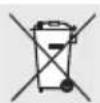
Environmental damage through incorrect disposal of the batteries / rechargeable batteries!
Remove the batteries / battery pack from the product before disposal.
Batteries / rechargeable batteries may not be disposed of with the usual domestic waste. They may contain toxic heavy metals and are subject to hazardous waste treatment rules and regulations. The chemical symbols for heavy metals are as follows: Cd = cadmium, Hg = mercury, Pb = lead. That is why you should dispose of used batteries / rechargeable batteries at a local collection point.
Warranty
The product has been manufactured to strict quality guidelines and meticulously examined before delivery. In the event of material or manufacturing defects you have legal rights against the retailer of this product. Your legal rights are not limited in any way by our warranty detailed below.
The warranty for this product is 3 years from the date of purchase. The warranty period begins on the date of purchase. Keep the original sales receipt in a safe location as this document is required as proof of purchase.
Any damage or defects already present at the time of purchase must be reported without delay after unpacking the product.
Should the product show any fault in materials or manufacture within 3 years from the date of purchase, we will repair or replace it – at our choice – free of charge to you. The warranty period is not extended as a result of a claim being granted. This also applies to replaced and repaired parts.
This warranty becomes void if the product has been damaged, or used or maintained improperly.
The warranty covers material or manufacturing defects. This warranty does not cover product parts subject to normal wear and tear, thus considered consumables (e.g. batteries, rechargeable batteries, tubes, cartridges), nor damage to fragile parts, e.g. switches or glass parts.
● Warranty claim procedure
To ensure quick processing of your claim, observe the following instructions:
Make sure to have the original sales receipt and the item number (IAN 499890_2204) available as proof of purchase.
You can find the item number on the rating plate, an engraving on the product, on the front page of the instruction manual (bottom left), or as a sticker on the rear or bottom of the product.
If functional or other defects occur, contact the service department listed below either by telephone or by e-mail.
Once the product has been recorded as defective you can return it free of charge to the service address that will be provided to you.
Ensure to enclose the proof of purchase (sales receipt) and a short, written description outlining the details of the defect and when it occurred.
Service
GB Service Great Britain
Tel.: 08000569216
E-Mail:owim@lidl.co.uk
IE Service Ireland
Tel.: 1800 200736
E-Mail:owim@lidl.ie
Ni Service Northern Ireland
Tel.:08000927852
E-Mail:owim@lidl.ie
MT Service Malta
Tel.:80062960
E-Mail:owim@lidl.com.mt
CY Service Cyprus
Tel.:80094211
E-Mail:owim@lidl.com.cy
CE
EC Declaration of conformity
EC DECLARATION OF CONFORMITY
| IAN: | 499890_2204 |
| Product identification: | "Parkside" 12V Cordless Precision Drill Grinder |
| Model Number: | HG09847 |
The object of the declaration described above is in conformity with the relevant Union harmonisation legislation:
| Directive 2006/42/EC |
| Directive 2014/30/EU |
| Directive 2011/65/EU |
References to the relevant harmonised standards used or references to the other technical specifications in relation to which conformity is declared:
| N° / Parts |
| Directive 2014/30/EU |
| EN 55014-1:2017/A11:2020 |
| EN 55014-2:1997/A2:2008 |
| EN IEC 55014-1:2021 |
| EN IEC 55014-2:2021 |
| EN 61000-3-2:2014 |
| EN IEC 61000-3-2:2019/A1:2021 |
| EN 61000-3-3:2013 |
| EN 61000-3-3:2013/A2:2021 |
| N° / Parts |
| Directive 2006/42/EC |
| EN 60745-1:2009/A11:2010 |
| EN 60745-2-23:2013 |
The object of the declaration described above is in conformity with Directive 2011/65/EU of the European Parliament and of the Council of 8 June 2011 on the restriction of the use of certain hazardous substances in electrical and electronic equipment:
| N° / Parts |
| Directive 2011/65/EU |
| EN IEC 63000: 2018 |
Keeper of the technical documentation: OWIM GmbH & Co.KG
Signed for and on behalf of:
This declaration of conformity is issued under the sole responsibility of the manufacturer.
Original declaration of conformity
Neckarsulm
Place
14.09.2022
Date
Benjamin Steeb
Managing Director
88a. 2nd
ppa.Jehs Buchheim
Authorised Signatory
raccordement : USB (type A)
DÉCLARATION DE CONFORMITÉ CE
IAN : 499890_2204
Directive 2006/42/EC
Directive 2014/30/EU
Directive 2011/65/EU
Authorised Signatory
NL
DEKLARACJA ZGODNOŚCI WE
Authorised Signatory
Authorised Signatory
Authorised Signatory
Liste over brugte piktogrammer .... Side 162
Indledning Side 163
Authorised Signatory
DK
Authorised Signatory
HU
OWIM GmbH & Co. KG
Stiftsbergstraße 1
74167 Neckarsulm
GERMANY
Model No.: HG09847
Version: 10/2022
IAN 499890_2204
8=



- CORDLESS PRECISION DRILL GRINDER 12V / AKKU-FEINBOHRSCHLEIFER 12 V / PERCEUSE-MEULEUSE DE PRÉCISION SANS FIL 12 V PFBS 12 C6
- PERCEUSE-MEULEUSE DE PRÉCISION SANS FIL 12 V
- General safety instructions.... Page 32
- First set-up of the product Page 41
- Operation.... Page 41
- Notes on working with materials, tools and speed ranges... Page 43
- Working instructions Page 44
- Cleaning and care ...... Page 46
- Disposal Page 47
- Warranty Page 48
- EC Declaration of conformity.... Page 49
- CORDLESS PRECISION DRILL GRINDER 12 V
- Introduction
- Intended use
- - Scope of delivery
- WARNING!
- Parts list
- Cordless precision drill grinder Fig. A
- Accessories
- Fig. B
- Not illustrated:
- - Technical data
- Model : PFBS 12 C6
- Use only the following charger to charge the cordless tool\*:
- Noise emission value
- Vibration emission value
- NOTE
- General safety instructions
- Save all warnings and instructions for future reference.
- Work area safety
- Electrical safety
- Personal safety
- Power tool use and care
- Use and handling of the cordless electrical power tool
- Service
- ● Grinder safety warnings
- ● Safety instructions for all applications
- ● Additional safety instructions for all applications
- Kickback and corresponding safety instructions
- ● Supplementary safety instructions for grinding and abrasive cutting
- Special safety instructions for grinding and abrasive cutting
- ● Supplementary safety instructions for working with wire brushes
- Special safety instructions for working with wire brushes
- ● Vibration and noise reduction
- ● Behaviour in emergency situations
- Residual risks
- ● Battery charger safety warnings
- ● First set-up of the product
- Operation
- Start charging
- Stop charging
- Checking the battery charge level
- Battery LED 2 Charging level
- ● Changing/inserting the tool/collet chuck
- CAUTION! RISK OF INJURY!
- Switching on/setting the speed range
- Switching off
- Notes on working with materials, tools and speed ranges
- Use Speed range
- ● Working instructions
- Grinding
- Wire brushing
- WARNUNG!
- - Abrasive cutting
- ● Cleaning and care
- Cleaning
- Maintenance
- Repair
- Storage
- Transportation
- ● Disposal
- Product:
- Environmental damage through incorrect disposal of the batteries / rechargeable batteries!
- Warranty
- ● Warranty claim procedure
- EC Declaration of conformity
- DÉCLARATION DE CONFORMITÉ CE
- Liste over brugte piktogrammer .... Side 162
- Indledning Side 163
Brand : PARKSIDE
Model : PFBS 12 C6
Category : Drill