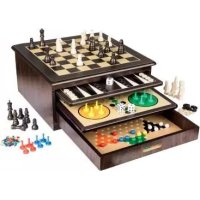
HG05262 - Board game Playtive - Free user manual and instructions
Find the device manual for free HG05262 Playtive in PDF.



| Product type | Multi-game board game |
| Brand | Playtive |
| Model | HG05262 |
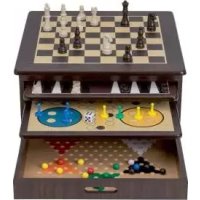
| Number of games included | 10 games: chess, backgammon, checkers, mancala, tic-tac-toe, Chinese checkers, snakes and ladders, ludo/pachisi, solitaire, dice race |
| Recommended age | 6 years and up |
| Number of players | 1 to 6 depending on the game |
| Box contents | 1 game box, 2 chessboards, 1 drawer, 80 pawns (32 chess pieces, 32 backgammon checkers, 16 ludo pawns), 60 marbles, 48 mancala stones, 2 dice, 1 doubling cube, 1 rulebook |
| Materials | Plastic, cardboard |
| Box dimensions | Approximately 30 x 30 x 5 cm (estimated) |
| Weight | Approximately 0.8 kg (estimated) |
| Power supply | None (non-electronic game) |
| Care and cleaning | Clean with a dry cloth; do not use harsh cleaning agents |
| Storage | Store the product dry and clean in a temperate room |
| Safety | Not suitable for children under 36 months (small parts, choking hazard). Keep packaging away from children |
| Warranty | 3 years from date of purchase; covers material and manufacturing defects; does not cover normal wear |
| Customer service | Tel. 0800 919270 (FR) or 070 270 171 (BE); email: owim@lidl.fr / owim@lidl.be |
| Repairability | Spare parts not available separately; contact customer service in case of defect |
Frequently Asked Questions - HG05262 Playtive
User questions about HG05262 Playtive
0 question about this device. Answer the ones you know or ask your own.
Ask a new question about this device
Download the instructions for your Board game in PDF format for free! Find your manual HG05262 - Playtive and take your electronic device back in hand. On this page are published all the documents necessary for the use of your device. HG05262 by Playtive.
USER MANUAL HG05262 Playtive

10-IN-1 HOLZ-SPIELESAMMLUNG / 10-IN-1 WOODEN GAME COLLECTION / BOÎTE DE JEUX EN BOIS 10 EN 1
DE AT CH
Set of instructions for use
NL BE
10-IN-1 VERZAMELING HOUTEN SPELLEN
Gebruiksaanwijzing
CZ
SADA HER 10 V 1
Návod k použití
IAN 321910_1901
GB / IE Set of instructions for use Page 13
Schlagen:
Home-BoardOuter-Board

Intended use....Page 14
Safety instructions......Page 14
Game instructions......Page 14
Chess (two players) Page 14
Backgammon (two players) Page 16
Draughts (two players) Page 18
Mancala (two players) Page 18
Tic-Tac-Toe (two players) Page 19
Chinese Checkers (two to six players)......Page 19
Snakes and Ladders (two to four players) Page 19
Ludo / Pachisi (two to four players)......Page 20
Solitaire (one to two players)....Page 20
Dice race (two players) Page 20
Care and storage......Page 21
Disposal Page 21
Warranty Page 21
Warranty claim procedure....Page 21
Service Page 21
10-in-1 Wooden Game Collection
- Introduction
We congratulate you on the purchase of your new product. You have chosen a high quality product. Familiarise yourself with the product before using it for the first time. In addition, please carefully refer to the operating instructions and the safety advice below. Only use the product as instructed and only for the indicated field of application. Keep these instructions in a safe place. If you pass the product on to anyone else, please ensure that you also pass on all the documentation with it.
- Delivery contents
1 game box
2 game boards, 1 drawer
80 playing pieces (32 chess pieces, 32 backgammon counters, 16 ludo figures)
60 playing balls
48 mancala playing pieces
2 dice
1 doubling cube
1 game instructions
- Intended use
The product is a toy for players over 6 years of age and is intended for private use only.

Safety instructions
KEEP ALL SAFETY NOTICES AND INSTRUCTIONS FOR FUTURE REFERENCE!


ENTION! DANGER TO LIFE AND RISK OF ACCIDENTS FOR INFANTS AND CHILDREN!

WARNING! Not suitable for children under 36 months. Small ball. Choking hazard.
■ ATTENTION! All packaging and fastening materials are not part of the toy and should always be removed for safety reasons before the product is given to children to play with.
■ Retain packaging for future reference!
● Game instructions
- Chess (two players)
Playing materials:
32 chess pieces (16 light, 16 dark)
1 game board
1 game instructions
Playing the game:
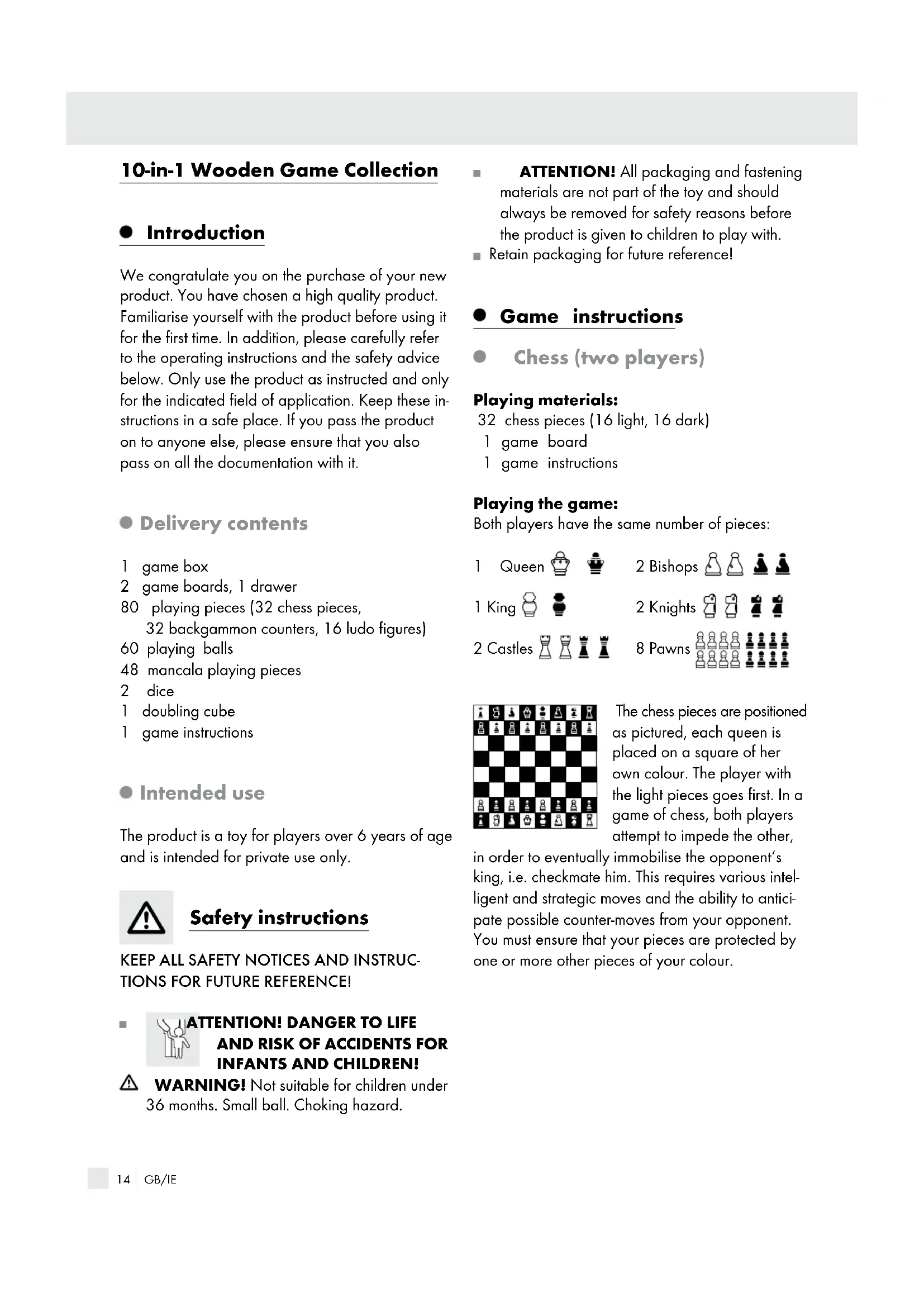
Both players have the same number of pieces:
1
Queen


2 Bishops


1 King


2 Knights


2 Castles


8 Pawns


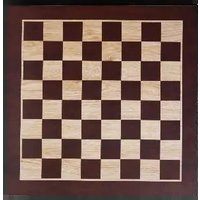
The chess pieces are positioned as pictured, each queen is placed on a square of her own colour. The player with the light pieces goes first. In a game of chess, both players attempt to impede the other,
in order to eventually immobilise the opponent's king, i.e. checkmate him. This requires various intelligent and strategic moves and the ability to anticipate possible counter-moves from your opponent. You must ensure that your pieces are protected by one or more other pieces of your colour.
Moving the chess pieces:
□ Queen
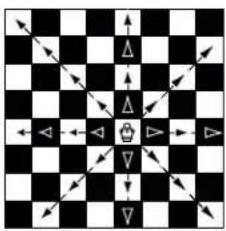
With the queen, a player can move as many squares as desired, in all directions, i.e. diagonally, vertically and horizontally.
□ King

With the king, a player can move in any direction (diagonally, vertically, horizontally), but only by one square per turn. When the king is threatened, he may not be treated like any other piece. A player
must warn that the king is under threat by calling "check".
□ Castle
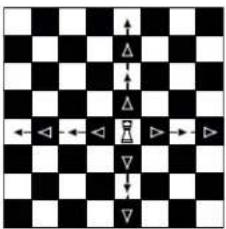
With the castle, a player can move as many squares as desired, either vertically or horizontally. The opponent's pieces can only be attacked and captured within this row of squares.
□ Bishop
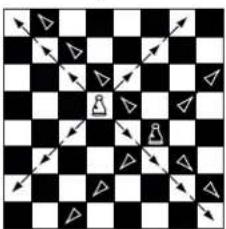
The bishops can be moved any desired number of squares, but only in a diagonal direction. Since the bishops may never change their square colour, they can only be attacked or captured on a square
of „their“ colour.
□ Knight

The knight is the only piece with which a player may jump over other pieces. It is a particularly manoeuvrable piece. Moves using the knight are made as follows: „one square ahead, then one square
diagonally". That means that moves made with a knight always end on squares of the other colour.
□ Pawns

Pawns can only be moved forwards by one or two squares - however they can only be moved two squares from their starting position. As soon as the pawns are outside of their starting position, they
may only be moved one square per turn. The pawns can neither move backwards, nor attack or capture other pieces in a backwards direction. Pawns can only be used to capture opposing pieces by moving in a diagonal direction.
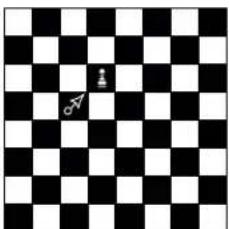
If you succeed in moving a pawn all the way to your opponent's base line, you can swap it for another piece that your opponent took from you in a previous move, regardless of whether or not the same
pieces are already in the game.

Capturing:
When a chess piece is captured, the attacking piece takes the place of the piece which was removed from the board. An „en passant“ capture may only be made if a pawn is moved from the starting position. If a player moves a pawn two squares
forward from its starting position and over a threatened square, coming to rest next to an opponent's pawn, then the opponent's pawn can capture the player's pawn in the next move by moving to the previously threatened square. That means that the opponent's pawn stands on the square that it threatened and the captured pawn is removed from the board. "En passant" moves are not obligatory.
Castling:
This is a double move, in which the king and castle are moved at the same time. This move serves to bring the king into a particularly protected position. Castling is only possible,
- if neither the king nor the castle was moved in a previous turn,
- if no other pieces find themselves between the king and the castle,
- if the king is not in check,
- if this move does not put the king under threat (check).
Checkmate:
If the king is threatened by an opposing piece, he is in „check“. This term must be spoken aloud by the attacking player. Now the other player must free his king from this situation. To do this there are a number of possibilities: the piece threatening the king can be captured, the king can be moved to another square which is not under threat, or another piece can be moved into the line of attack in order to defend the king. Checkmate means that the opposing king can no longer be saved from a position of check by using any of the previously described counter-moves, and will be captured in the following turn.
Draw:
In the final stages of the game, situations can occur in which neither player can put their opponent in check. The game now ends in a draw. Both players must agree to the draw.
- Backgammon (two players)
Playing materials:
30 backgammon counters (15 light, 15 dark)
2 dice
1 doubling cubes
1 game board
1 game instructions
Preparing the game:
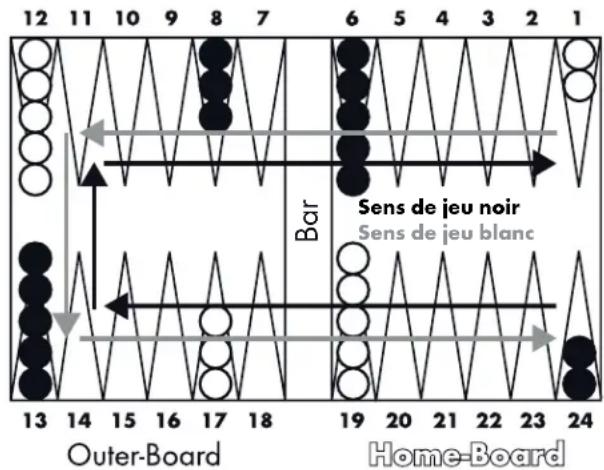
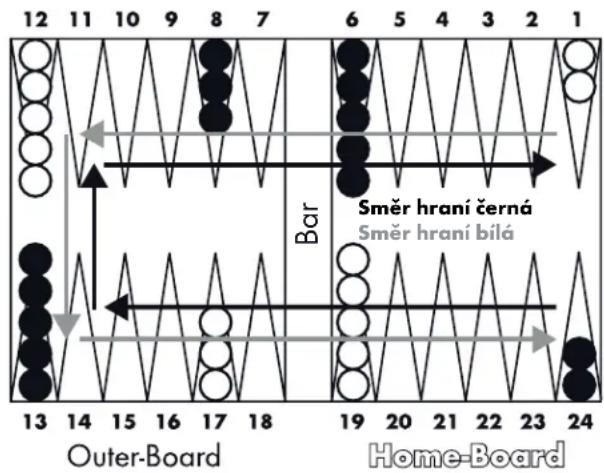
The game board is positioned between the two players so that each player is sitting in front of a spiked box with 12 pointed triangles (the so-called POINTS). The playing area is split into 4 tables and the colours dark and light are assigned. The dark inner table (the so-called home board) is in the top right, the dark outer table (the so-called outer board) in the top left, the light inner board in the bottom right and the light outer board in the bottom left. The upper POINTS (1-12) are the dark POINTS, the lower points (13-24) are the light POINTS.
Each player receives 15 counters, which are distributed on the game board as follows:
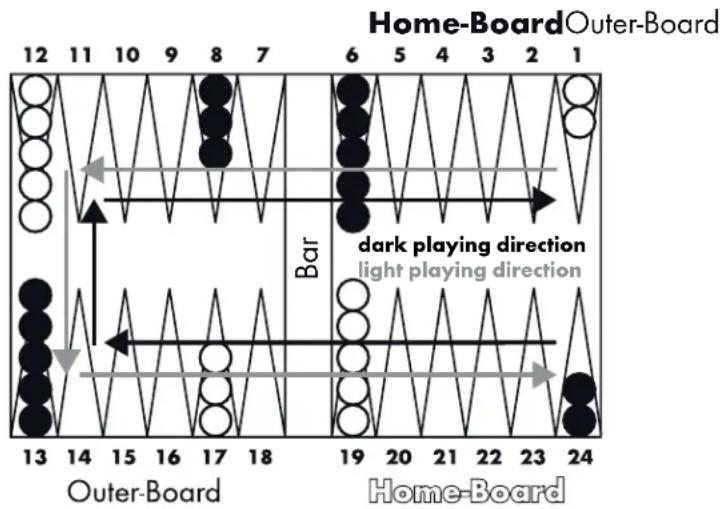
DARK:
2 counters on POINT 24
5 counters on POINT 13
3 counters on POINT 8
5 counters on POINT 6
LIGHT:
2 counters on POINT 1
5 counters on POINT 12
3 counters on POINT 17
5 counters on POINT 19
Players roll using 2 normal dice and 1 doubling cube.
Aim of the game:
Both players attempt to get their counters into their own home board, i.e. the inner table of their colour, as fast as possible. The winner is the first player who has no counters left on the board.
Playing the game:
☐ Each player rolls with one dice; the player who rolls the highest number moves first. He makes his first move using the two numbers that were just rolled by himself and his opponent.
Subsequently both players take turns to roll using two dice. Both of the rolled numbers are played, each number separately. The player uses the number by moving one of his counters around the POINTS in the direction of his home board by as many spaces as specified by the dice value. In doing so, he may jump over his own and his opponent's counters and land on a free POINT. The POINT counts as occupied if it is occupied by five of the player's or at least two of the opponent's counters.
If a counter lands on a POINT that is occupied by only one of the opponent's counters, then the opponent's counter is removed from the board and placed on the bar (the part of the frame in the middle of the board). The player of this counter must then try to bring this counter back into play before he can continue with any other move. He must place the counter in the opponent's home board according to the numbers rolled on the dice. If he rolls e.g. a 1 and a 6, he places the counter on POINT 1 or on POINT 6 if the chosen position is still unoccupied.
☐ Each player can play his two numbers one after another using one or two counters. If he rolls e.g. 2 + 4 , the player can first place a
counter on 2 and then on 4, or vice versa. However 2 and 4 may not be directly summed up to 6, the player must always be able to land in between! The roll may however also be played using 2 different counters.
☐ If a double is rolled (2+2, 3+3 etc.) the player must use the roll twofold, i.e. play 4x. He is obligated to continue playing unless he has no opportunity to move by one or both of the dice values.
□ Moving backwards is not allowed.
If a player has moved all of his counters into his home board, he can begin „bearing off“. He must now not use his dice values to move, but instead to remove his pieces from the board. If the player throws 1+3, he can „bear off“ a counter each from POINT 1 and 3 (remove it from the board). If a double 3 is rolled, he can bear off four counters from POINT 3, provided that he has 4 counters placed there.
☐ If he cannot use the dice values to bear off any counters, the player must move from a back position to a forward one. Exception: if the last dark counter stands e.g. on POINT 4, dark can bear off the counter with a 4, a 5, and a 6, i.e. the dice value of POINTS that have already been cleared can be used for the last POINT.
The winner is the first player to bear off all of his counters. If his opponent was able to bear off at least 1 counter, a single game is won. If the opponent was not able to bear off any counters, the win counts for double (a so-called „Gammon”).
If the opponent still has counters left within the home board of the winning player or on the bar, and the opponent has still not been able to bear off any counters, then the winner scores a triple game (a so-called „Backgammon”).
Doubling:
During the game, each player can double his stake by taking the doubling cube before his next roll and placing it with the 2 facing upwards so that the opponent can read it. The opponent has the opportunity to accept or reject the doubling. If he accepts, he can double again during the game and turn the cube to 4. An attempted doubling is
not counted. If dark wins e.g. a single game and the doubling cube shows 2, then dark ultimately wins double. If dark wins a double game and the doubling cube shows 2, then dark wins 4x, etc. A player can find out if he has the advantage and if doubling would be profitable by counting how many POINTS each of his own counters and each of his opponent's counters must still get over before bearing off. The player with the fewest turns left to play has the advantage.
Draughts (two players)
Playing materials:
24 counters (12 light, 12 dark)
1 game board
1 game instructions
Preparing the game:
The board is positioned so that each of the two players has a white corner square on his right. Each player places his counters on the black squares of the first 3 rows on his side, so that 4 counters are positioned in each row.


Playing the game and aim of the game:
Light goes first, after which players take turns.
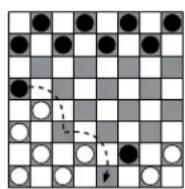
The counters are always moved by only one square at a time, and always onto a dark square. If a counter is lying directly in front of an opponent's counter, and the square behind it is free, the counter can be jumped over. The counter that was jumped over is removed from the game board. If the jumping counter finds itself in the same situation on the square that it lands on, it can jump over the next counter in the same move, including at a right angle. In this way, two or more counters can be removed from the game board in one turn.
If the opponent's baseline is reached, the counter can be converted into a „queen“. A queen is
made from two counters placed on top of one another, can move both forwards and backwards and has an unlimited operating range. A queen also does not have to land between two of the opponent's counters if she wants to take them, instead she can capture two counters at the same time if there is more than one free square in between them.
If a player fails to capture an opponent's counter even though he could have done, he must remove his counter from the board.
☐ The losing player is the player who has no counters left or who can no longer move.
Mancala (two players)
Playing materials:
48 mancala pieces
1 game board
1 game instructions
1 game board 1 game instructions
Preparing the game and aim of the game:
The game board is made up of six pits plus a Mancala for each player. Players sit opposite one another. A player owns the pits directly in front of him and the „Mancala“ (store) to his right. To begin the game, four pieces are placed in each pit - apart from in the Mancalas. The aim of the game is to deposit as many pieces as possible into your own Mancala.
Playing the game:
☐ Decide on which player will go first. The player selects one of his pits and picks up all the pieces in it. Moving in an anticlockwise direction, he then places one piece into each of the subsequent pits, until he has distributed all the pieces. When doing so, the player includes his own Mancala but not his opponent's. Then it is the turn of the other player.
If one of the players arrives at an empty pit on his own side with his final piece, he can capture this piece as well as any of the opponent's pieces in the pit directly opposite and deposit them into his Mancala.
☐ When there are no longer any pieces left on
the opponent's side, the other player is allowed to deposit all his pieces into his Mancala. The game is then over. The winner is the player with the most pieces in his Mancala.
Tic-Tac-Toe (two players)
Playing materials:
10 counters (5 light, 5 dark)
1 game board
1 game instructions
Preparing the game and aim of the game:
☐ Each player receives either 5 light or 5 dark counters. Decide on which player will go first. The winner is the first player to place 3 counters in a row without a break.
Playing the game:
☐ Both players take it in turns to place one counter on a square within the playing area.
When a player has placed 3 counters of the same colour in a row, either vertically, horizontally or diagonally, the game is over.
☐ If neither player managed to make a row of 3 counters, the game ends in a draw.
● Chinese Checkers (two to six players)
Playing materials:
60 playing balls (10 balls in each of the 6 colours)
1 game board
1 game instructions
Preparing the game and aim of the game:
☐ Each player deposits his playing balls into one of the six coloured triangles. Each player is allocated a colour. This results in the selection of his start and home areas as well as his playing balls. The winner is the first player to deposit his 10 playing balls into the opposite triangle.
Playing the game:
☐ Decide on which player will go first. Going around the board, each player takes it in turns
to move one of his playing balls. There are two permitted moves: single-stepping or hopping.
☐ When single-stepping, the player moves only one playing ball. The ball can move one step in any direction.
If a space is taken up by your own or an opponent's ball, the player can choose to hop over this ball. To do this, the space behind the ball that is jumped over must be free.
For every turn, the player must decide between a single-step or a hop. Doing both in one turn is not allowed. You are allowed to hop as long as it is possible to do so. However you don't have to do so.
Once a playing ball has arrived at a home space, it cannot leave it.
● Snakes and Ladders (two to four players)
Playing materials:
4 ludo figures (1 figure in each of the 4 colours)
1 dice
1 game board
1 game instructions
Preparing the game and aim of the game:
☐ Each player receives one figure and places it on the starting square of the same colour. The winner is the player who reaches the home square first.
Playing the game:
☐ Decide which player will roll first. The player may move forward the number of squares indicated by the dice value. Play then continues in turns.
At the end of his turn, if a player lands on a square with a ladder, he may climb up it.
At the end of his turn, if a player lands on a square with a snake's head, he must return to the snake's tail.
If a player lands on a square which is already occupied by an opponent's figure, the piece is captured and the opponent must go back to the start.
☐ If the dice displays a 6, the player may roll again.
☐ You need an exact number in order to land on the home square.
Ludo/Pachisi (two to four players)
Playing materials:
16 ludo figures (4 pieces in each of the 4 colours)
1 dice
1 game board
1 game instructions
Preparing the game and aim of the game:
☐ Each player receives 4 figures of one colour and places these in the corresponding starting house. The winner is the first player to reach the home area with his 4 figures.
Playing the game:
☐ Decide which player will roll first. Play then continues in turns.
☐ Each player may roll 3 times. If a player rolls a 6, he may take a figure out of the starting house and place it on the starting square. Then the player rolls again and moves forward the number of spaces indicated by the dice value. As long as a player has all 4 figures inside the starting house, he may roll 3 times.
☐ If a player rolls a 6 again, he can decide whether to bring another figure into the game or to move a figure forward 6 spaces. After every 6, a player may roll again.
If a player lands on a square that is occupied by an opponent's figure, he can capture this figure. The opponent's figure must then go back to the starting house and can be brought back into the game with a 6.
☐ If a square is occupied by one of his own figures, a player must make the move using one of his other figures. Two figures are not allowed to occupy a single square.
In the home area, the figures are safe and cannot be captured. The figures that have already
reached the home area may not be jumped over.
- Solitaire (one to two players)
Playing materials:
32 counters
1 game board
1 game instructions
Preparing the game and aim of the game:
☐ The 32 counters are distributed on the playing area so that only the square in the middle remains free. The aim of the game is to have one counter remaining in the middle at the end.
Playing the game:
☐ Remove as many counters as possible by jumping over other counters horizontally or vertically.
☐ You may only ever jump over one counter and the space that you land on must be empty.
☐ When playing with 2 players, take it in turns to move. If a player cannot make a move, he has lost the game.
● Dice race (two players)
Playing materials:
30 counters (15 light, 15 dark)
2 dice
1 game board
1 game instructions
Preparing the game and aim of the game:
☐ Each player receives either 15 light or 15 dark counters. Decide on which player will go first. The winner is the player who has the most counters on the playing area at the end of the game.
Playing the game:
Both dice are rolled at the same time. The rolled numbers are added together. Then the
player places a counter on the corresponding playing area.
Then it is the turn of the next player. If he rolls the same result as his opponent, he is not allowed to place a counter on the playing area.
☐ The game continues until all areas are occupied.
● Care and storage
□ Always store the dry and clean product in a temperate room.
☐ Do not clean the product with harsh cleaning agents, use only a dry cleaning cloth.
- Disposal
The packaging is made entirely of recyclable materials, which you may dispose of at local recycling facilities.
Contact your local refuse disposal authority for more details of how to dispose of your worn-out product.
- Warranty
The product has been manufactured to strict quality guidelines and meticulously examined before delivery. In the event of product defects you have legal rights against the retailer of this product. Your legal rights are not limited in any way by our warranty detailed below.
The warranty for this product is 3 years from the date of purchase. Should this product show any fault in materials or manufacture within 3 years from the date of purchase, we will repair or replace it – at our choice – free of charge to you.
The warranty period begins on the date of purchase. Please keep the original sales receipt in a safe location. This document is required as your proof of purchase. This warranty becomes void if the product has been damaged, or used or maintained improperly.
The warranty applies to defects in material or manufacture. This warranty does not cover product parts subject to normal wear, thus possibly considered consumables (e.g. batteries) or for damage to fragile parts, e.g. switches, rechargeable batteries or glass parts.
● Warranty claim procedure
To ensure quick processing of your case, please observe the following instructions:
Please have the till receipt and the item number (e.g. IAN 123456_7890) available as proof of purchase.
You will find the item number on the type plate, an engraving on the front page of the instructions (bottom left), or as a sticker on the rear or bottom of the appliance.
If functional or other defects occur, please contact the service department listed either by telephone or by e-mail.
You can return a defective product to us free of charge to the service address that will be provided to you. Ensure that you enclose the proof of purchase (till receipt) and information about what the defect is and when it occurred.
Service
GB Service Great Britain
Tel.: 0800 404 7657
E-Mail: owim@lidl.co.uk
IE Service Ireland
Tel.: 1890 930 034
(0,08 EUR / Min., (peak))
(0,06 EUR / Min., (off peak))
E-Mail: owim@lidl.ie
CE
Introduction......Page 23
Prendre:
Home-BoardOuter-Board
Slaan:
Home-BoardOuter-Board
![graph TD subgraph Outer-Board A["13"] --> B["14"] B --> C["15"] C --> D["16"] D --> E["17"] E --> F["18"] F --> G["19"] end subgraph Home-Board H["12"] --> I["11"] I --> J["10"] J --> K["9"] K --> L["8"] L --> M["7"] M --> N["6"] N --> O["5"] O --> P["4"] P --> Q["3"] Q --> R["2"] R --> S["1"] end A…](/content/2026/04/593374/images/4018ca5ea6196e6ef6fc0950d17e6e13e720a34e66e174a3c58777906cddff5b.jpg)
ZWART:
Zbijanie:
□ Střelec

Home-BoardOuter-Board
Vyhadzovanie:
Home-BoardOuter-Board
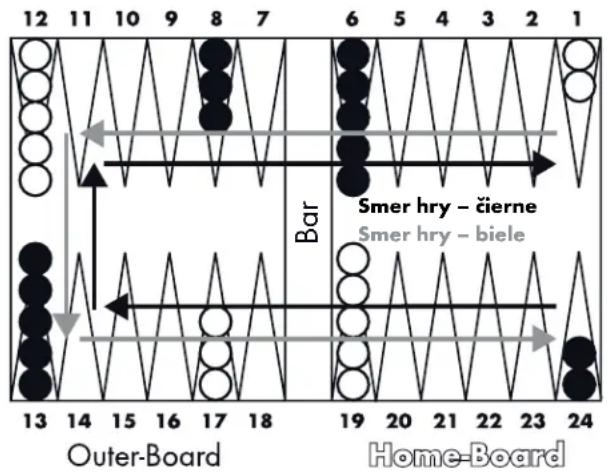
ČIERNA:
2 kamene na POINT 24
5 kameňov na POINT 13
3 kamene na POINT 8
5 kameňov na POINT 6
BIELA:
2 kamene na POINT 1
5 kameňov na POINT 12
3 kamene na POINT 17
5 kameňov na POINT 19


- 10-IN-1 HOLZ-SPIELESAMMLUNG / 10-IN-1 WOODEN GAME COLLECTION / BOÎTE DE JEUX EN BOIS 10 EN 1
- SCHLAGEN
- SAFETY INSTRUCTIONS......PAGE 14
- GAME INSTRUCTIONS......PAGE 14
- CARE AND STORAGE......PAGE 21
- DISPOSAL PAGE 21
- WARRANTY PAGE 21
- 10-IN-1 WOODEN GAME COLLECTION
- INTRODUCTION
- DELIVERY CONTENTS
- INTENDED USE
- SAFETY INSTRUCTIONS
- ENTION! DANGER TO LIFE AND RISK OF ACCIDENTS FOR INFANTS AND CHILDREN
- ● GAME INSTRUCTIONS
- CHESS (TWO PLAYERS)
- PLAYING MATERIALS
- PLAYING THE GAME
- MOVING THE CHESS PIECES
- CAPTURING
- CASTLING
- CHECKMATE
- DRAW
- BACKGAMMON (TWO PLAYERS)
- PREPARING THE GAME
- DARK
- LIGHT
- AIM OF THE GAME
- DOUBLING
- DRAUGHTS (TWO PLAYERS)
- PLAYING THE GAME AND AIM OF THE GAME
- MANCALA (TWO PLAYERS)
- PREPARING THE GAME AND AIM OF THE GAME
- TIC-TAC-TOE (TWO PLAYERS)
- ● CHINESE CHECKERS (TWO TO SIX PLAYERS)
- ● SNAKES AND LADDERS (TWO TO FOUR PLAYERS)
- LUDO/PACHISI (TWO TO FOUR PLAYERS)
- SOLITAIRE (ONE TO TWO PLAYERS)
- ● DICE RACE (TWO PLAYERS)
- ● CARE AND STORAGE
- DISPOSAL
- WARRANTY
- ● WARRANTY CLAIM PROCEDURE
- SERVICE
- GB SERVICE GREAT BRITAIN
- IE SERVICE IRELAND
- CE
- INTRODUCTION......PAGE 23
- PRENDRE
- SLAAN
- ZWART
- ZBIJANIE
- VYHADZOVANIE
- ČIERNA
- BIELA
Brand : Playtive
Model : HG05262
Category : Board game