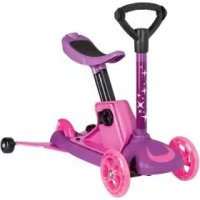
IAN 346311 - Electric scooter Playtive - Free user manual and instructions
Find the device manual for free IAN 346311 Playtive in PDF.



| Brand | Playtive |
| Model | IAN 346311 |
| Product type | Children's scooter (non-electric) |
| Assembly variants | 4 variants: with/without seat, round or T-handlebar |
| Recommended age | 1½ to 3 years (variants 1-2); 2-3 years (variant 3); 3 years and up (variant 4) |
| Maximum user weight | 20 kg (variants 1-3); 50 kg (variant 4) |
| Materials | Plastic, metal |
| Front wheel diameter | 120 mm |
| Wheels | 2 front wheels + 1 rear support wheel |
| Adjustable seat height | Approximately 26 to 32 cm |
| Brake | Friction brake on rear wheel (seatless variant); braking by placing feet on ground (with seat) |
| Steering | By weight shifting |
| Power supply | None (non-electric) |
| Batteries required | None |
| Safety level | Do not use on public roads; wear protective equipment (helmet, knee pads, etc.) |
| Maintenance | Clean with a damp cloth, dry after use; check screw tightness |
| Wheel replacement | Possible; use wheels of the same diameter (120 mm) |
| Warranty | 3 years from date of purchase |
| Spare parts | Available during the warranty period |
| Dimensions (L x W x H) | Not specified in manual; approximately 60 x 30 x 50 cm (estimate) |
| Product weight | Not specified; approximately 2-3 kg (estimate) |
| Manufacturing number | IAN: 346311_2004 |
Frequently Asked Questions - IAN 346311 Playtive
User questions about IAN 346311 Playtive
0 question about this device. Answer the ones you know or ask your own.
Ask a new question about this device
Download the instructions for your Electric scooter in PDF format for free! Find your manual IAN 346311 - Playtive and take your electronic device back in hand. On this page are published all the documents necessary for the use of your device. IAN 346311 by Playtive.
USER MANUAL IAN 346311 Playtive
4-IN-1 TRI-SCOOTER 4-IN-1 SCOOTER TROTTINETTE 4 EN 1
DE AT CH
4-IN-1 TRI-SCOOTER
Gebrauchsanweisung
FR BE
TROTTINETTE 4 EN 1
Instructions for use
NL BE
4-IN-1 TRI-SCOOTER
Gebruiksaanwijzing
C
KOLOBÉZKA 4 V 1
Návod k použití
C E
IAN 346311_2004
DE AT CH GB IE FR BE NL PL CZ SK




DE AT CH
Storage, cleaning 12
Disposal 12
Notes on the guarantee and service handling 12-13
NL BE
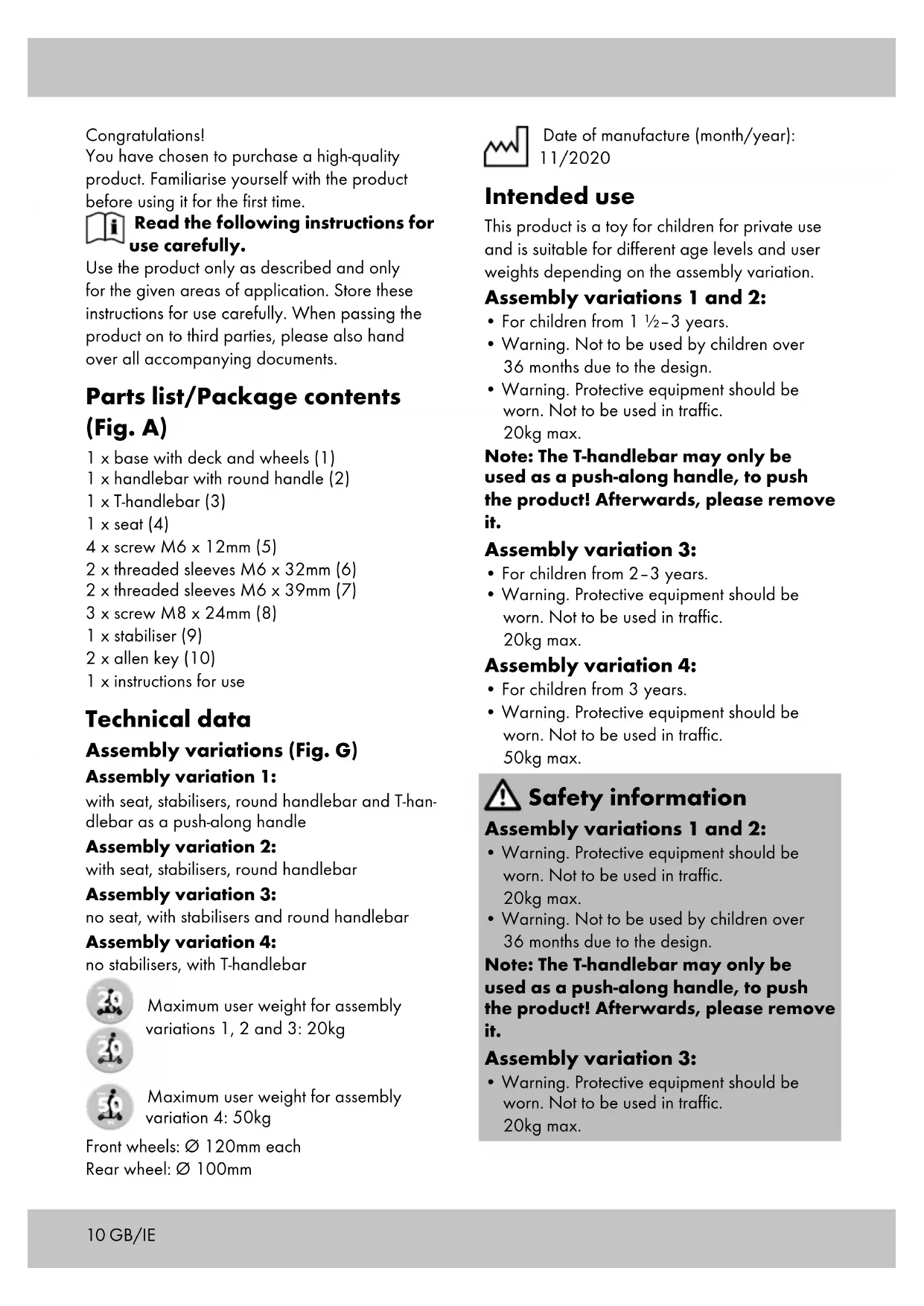
You have chosen to purchase a high-quality product. Familiarise yourself with the product before using it for the first time.

Read the following instructions for use carefully.
Use the product only as described and only for the given areas of application. Store these instructions for use carefully. When passing the product on to third parties, please also hand over all accompanying documents.
Parts list/Package contents (Fig. A)
1 x base with deck and wheels (1)
1 x handlebar with round handle (2)
1 x T-handlebar (3)
1 x seat (4)
4× screw M6× 12mm (5)
2 × threaded sleeves M6 × 32mm (6)
2× threadedleeves M6× 39mm (7)
3 × screw M8 × 24mm (8)
1 x stabiliser (9)
2 × allen key (10)
1 x instructions for use
Technical data
Assembly variations (Fig. G)
Assembly variation 1:
with seat, stabilisers, round handlebar and T-handlebar as a push-along handle
Assembly variation 2:
with seat, stabilisers, round handlebar
Assembly variation 3:
no seat, with stabilisers and round handlebar
Assembly variation 4:
no stabilisers, with T-handlebar

Maximum user weight for assembly variations 1, 2 and 3: 20kg


Maximum user weight for assembly variation 4:50kg
Front wheels: 0.120mm each
Rear wheel: 0100mm

Date of manufacture (month/year):
11/2020
Intended use
This product is a toy for children for private use and is suitable for different age levels and user weights depending on the assembly variation.
Assembly variations 1 and 2:
- For children from 11/2 - 3 years.
- Warning. Not to be used by children over 36 months due to the design.
- Warning. Protective equipment should be worn. Not to be used in traffic. 20kg max.
Note: The T-handlebar may only be used as a push-along handle, to push the product! Afterwards, please remove it.
Assembly variation 3:
- For children from 2-3 years.
- Warning. Protective equipment should be worn. Not to be used in traffic. 20kg max.
Assembly variation 4:
- For children from 3 years.
- Warning. Protective equipment should be worn. Not to be used in traffic. 50kg max.

Safety information
Assembly variations 1 and 2:
- Warning. Protective equipment should be worn. Not to be used in traffic. 20kg max.
- Warning. Not to be used by children over 36 months due to the design.
Note: The T-handlebar may only be used as a push-along handle, to push the product! Afterwards, please remove it.
Assembly variation 3:
- Warning. Protective equipment should be worn. Not to be used in traffic. 20kg max.
Assembly variation 4:
- Warning. Protective equipment should be worn. Not to be used in traffic. 50kg max.
Assembly variations 1, 2, 3 and 4: WARNING!
- None of the packaging materials and fittings are part of the toy itself, and must be removed for safety reasons before giving the product to children to play with.
Children may only play with the product under supervision.
Risk of injury!
- Adult assembly only due to small parts!
The product may only be used by one person at a time. - Check the product for damage or wear before each use. Always check that all fasteners are tight. The product should only be used if it is in perfect condition!
- Make sure that the screws and threaded screws retain their self-locking properties.
- Do not modify the product in a way that might endanger your safety.
Always wear suitable protection (helmet, hand protectors, elbow pads, knee pads and wrist guards) and shoes! - Always show consideration for other people!
- Use the product only on suitable surfaces that are smooth, clean and dry. Keep away from other traffic users, if possible.
Avoid sloping terrain, stairs and open water.
- Never ride in the dark or when visibility is poor.
- Do not let your child use the product unsupervised, as children cannot assess potential dangers.
- Using the product requires skill to prevent falls or collisions, which could result in injury to the user or others.
Preventing damage to the product!
- Avoid water, oil, potholes and very rough surfaces.
Assembly
Assembling the handlebar (Fig. B)
You will need the base (1) and, for the assembly variations 1, 2 and 3, the round handlebar (2) and the T-handlebar (3) for assembly variation 4.
Press the pin (2a, 3a) and insert the handlebar into the base.
Important: Make sure that the handlebar locks into place in the base.
Assembly variations 1 and 2 (Fig. C)
Place the seat (4) on the base (1). Make sure that the holes on the seat and the base are lying on top of each other.
Insert the short sleeves (6) from above through the two front holes and secure them from below with two screws (5).
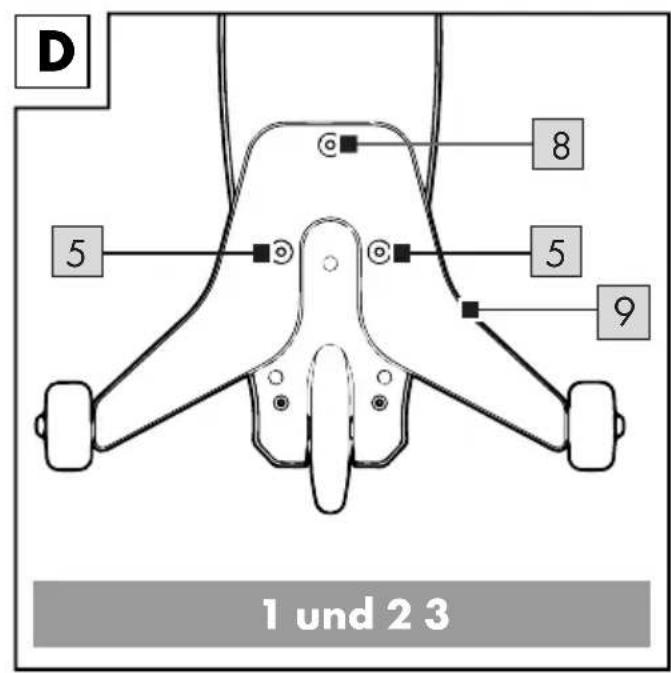
Insert the long sleeves (7) from above through the two rear holes on the seat and the rear holes on the stabiliser (9).
Secure them from below with two screws (5). Put a screw (8) into the front hole of the stabiliser and tighten it (Fig. D).
Use the Allen key (10) provided for the assembly and lock all screws and threads.
Note: The T-handlebar can be used as a push-along handle for assembly variation 1.
Press the pin (3a) on the T-handlebar (3) inwards and insert the T-handlebar (3) into the opening on the seat (4). The pin (3a) must audiably click into place.
Assembly variation 3 (Fig. E)
Secure the stabilisers (9) in the rear three holes with the screws (8) and tighten the screws with one of the Allen keys (10) provided.
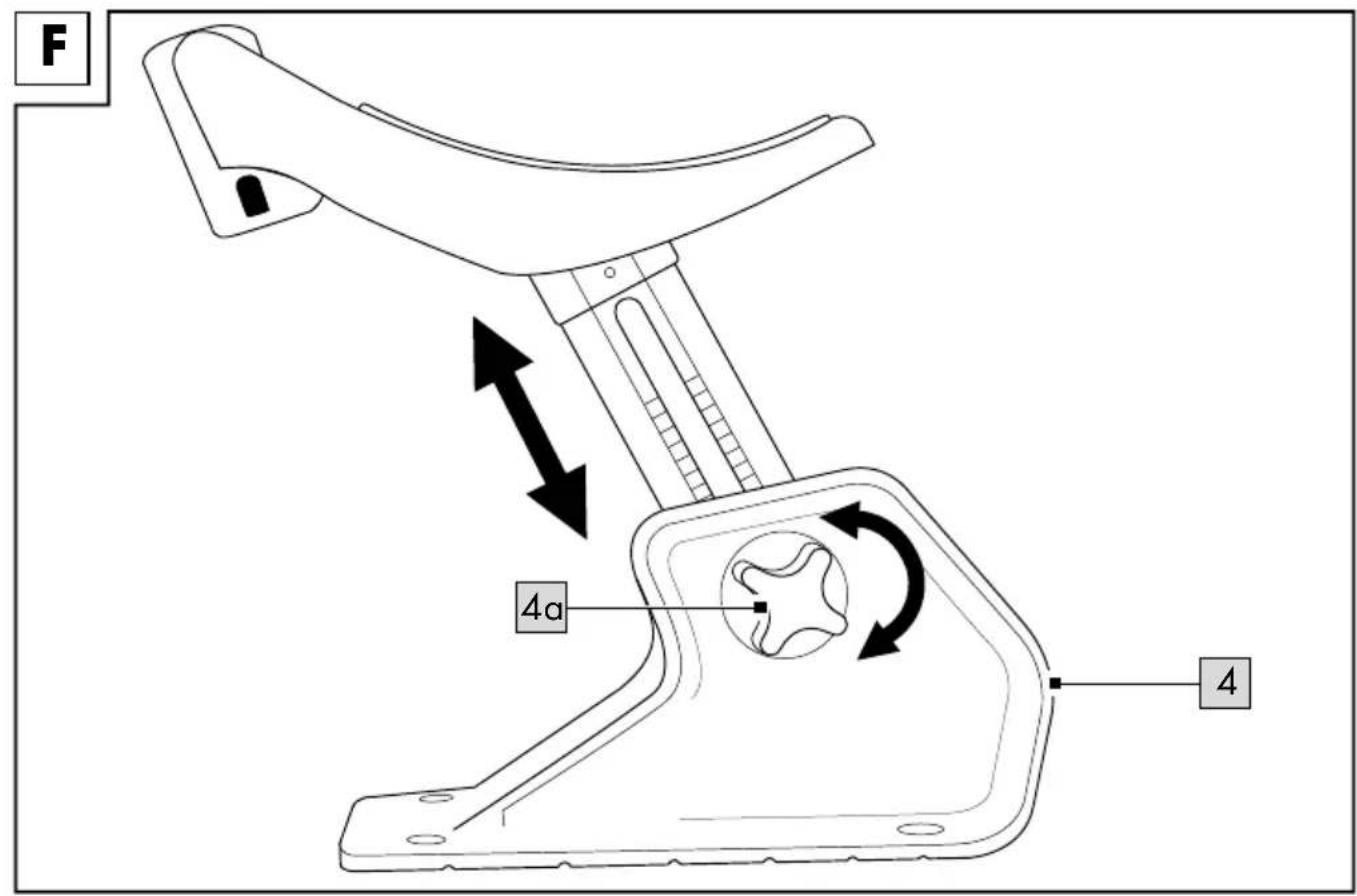
Adjusting the height of the seat (Fig. F)
The seat can be adjusted to various heights from approx. 26 - 32cm
To do this, loosen the locking screw (4a) and adjust the seat to the desired height.
Tighten the locking screw again.
Disassembly
Disassembling the handlebars
Press the pin (2a, 3a) on the back of the base and pull out the handlebar (Fig. B). To remove the handlebar from the seat, press the pin (3a) and pull the handlebar out.
Disassembling the seat (Fig. C)
Loosen the screws and remove the threaded sleeves. Take off the seat.
Use
Riding
Depending on the assembly variation, either sit on the seat and give momentum by regularly pushing off with both legs, or, if using without the seat, put one leg on the deck and give momentum by regularly pushing off with the other leg. The product is steered by shifting your weight.
Braking
For the assembly variation with a seat, apply the brakes by setting both feet on the ground. When using without the seat, you can brake by pressing one foot on the rear wheel friction brake.
Maintenance
Replacing the front wheels
You can replace the front wheels.
Important!
Pay attention to the technical specifications. Wheels with a different diameter, may alter the riding properties and possibly endanger the user.
Do not use wheels that cannot be installed properly.
Never use wheels that are larger than the original wheels on the product.
Wheels wear out. This wear depends on many factors, such as, for example, the terrain, the size and weight of the user, the weather conditions, the material of the wheels and their hardness, etc. Therefore, it is necessary to replace them now and then.
- Using a suitable Allen key, loosen the screws of the two front wheels and remove them.
- Install the new wheels and secure them with the screws.
After replacing the wheels: After the first few minutes of riding, make sure that the screws are still tight and that nothing has detached or become loose.
Tension the wheel once more to make sure that it is running quietly.
Storage, cleaning
We recommend that you clean and dry the product thoroughly after use.
Remove small stones or other objects that may have got caught on the wheels. Always store the product in a dry place.
Disposal
Dispose of the article and the packaging materials in accordance with current local regulations. Packaging materials such as foil bags are not suitable to be given to children. Keep the packaging materials out of the reach of children.

Dispose of the products and the packaging in an environmentally friendly manner.

The recycling code is used to identify various materials for recycling. The code consists of the recycling symbol - which
is meant to reflect the recycling cycle - and a number which identifies the material.
Notes on the guarantee and service handling
The product was produced with great care and under constant supervision. You receive a three-year warranty for this product from the date of purchase. Please retain your receipt.
The warranty applies only to material and workmanship and does not apply to misuse or improper handling. Your statutory rights, especially the warranty rights, are not affected by this warranty. With regard to complaints, please contact the following service hotline or contact us by e-mail.
Our service employees will advise as to the subsequent procedure as quickly as possible. We will be personally available to discuss the situation with you.
Any repairs under the warranty, statutory guarantees or through goodwill do not extend the warranty period. This also applies to replaced and repaired parts. Repairs after the warranty are subject to a charge.
IAN:346311_2004

Service Great Britain
Tel.: 08004047657
E-Mail: deltasport@lidl.co.uk

Service Ireland
Tel.: 1890 930 034
(0,08 EUR/Min., (peak))
(0,06 EUR/Min., (off peak))
E-Mail: deltasport@lidl.ie
Felicitations!

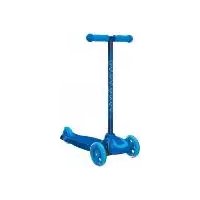
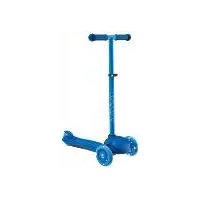
- 4-IN-1 TRI-SCOOTER 4-IN-1 SCOOTER TROTTINETTE 4 EN 1
- DE AT CH
- NL BE
- READ THE FOLLOWING INSTRUCTIONS FOR USE CAREFULLY
- PARTS LIST/PACKAGE CONTENTS (FIG. A)
- TECHNICAL DATA
- ASSEMBLY VARIATIONS (FIG. G)
- ASSEMBLY VARIATION 1
- ASSEMBLY VARIATION 2
- ASSEMBLY VARIATION 3
- ASSEMBLY VARIATION 4
- INTENDED USE
- ASSEMBLY VARIATIONS 1 AND 2
- SAFETY INFORMATION
- ASSEMBLY VARIATIONS 1, 2, 3 AND 4: WARNING
- RISK OF INJURY
- PREVENTING DAMAGE TO THE PRODUCT
- ASSEMBLY
- ASSEMBLING THE HANDLEBAR (FIG. B)
- IMPORTANT: MAKE SURE THAT THE HANDLEBAR LOCKS INTO PLACE IN THE BASE
- ASSEMBLY VARIATIONS 1 AND 2 (FIG. C)
- NOTE: THE T-HANDLEBAR CAN BE USED AS A PUSH-ALONG HANDLE FOR ASSEMBLY VARIATION 1
- ASSEMBLY VARIATION 3 (FIG. E)
- ADJUSTING THE HEIGHT OF THE SEAT (FIG. F)
- DISASSEMBLY
- DISASSEMBLING THE HANDLEBARS
- DISASSEMBLING THE SEAT (FIG. C)
- USE
- RIDING
- BRAKING
- MAINTENANCE
- REPLACING THE FRONT WHEELS
- NEVER USE WHEELS THAT ARE LARGER THAN THE ORIGINAL WHEELS ON THE PRODUCT
- STORAGE, CLEANING
- DISPOSAL
- NOTES ON THE GUARANTEE AND SERVICE HANDLING
Brand : Playtive
Model : IAN 346311
Category : Electric scooter