GS100 - String Trimmer SABO - Free user manual and instructions
Find the device manual for free GS100 SABO in PDF.


| Product type | Grass shear / Lawn shear and hedge trimmer |
| Brand | SABO |
| Model | GS100 |
| Rated voltage | 7.2 V |
| Motor type | DC motor |
| No-load speed | 1200 ± 10% rpm |
| Battery | Integrated lithium-ion 7.2 V, 2000 mAh (2 cells) |
| Charger | Input 100-240 V~, 50/60 Hz, 0.5 A max; Output 9.5 V, 500 mA |
| Charging time | Less than 4.5 hours |
| Weight (without shaft) | 0.73 kg |
| Weight (with telescopic shaft) | 1.20 kg |
| Cutting length (grass shear) | 75 mm |
| Blade gap (grass shear) | 24 mm |
| Cutting length (hedge trimmer) | 100 mm |
| Blade gap (hedge trimmer) | 8 mm |
| Sound pressure level (LPA) | 80.0 dB(A), k=3 dB(A) |
| Guaranteed sound power level (LWA) | 103.0 dB(A), k=3 dB(A) |
| Vibration (ah) | 2.5 m/s², k=1.5 m/s² |
| Telescopic shaft | Yes, included |
| Intended use | Outdoor, domestic use: grass cutting and trimming hedges/shrubs |
| Maintenance and cleaning | Clean with a damp cloth and mild detergent; regular blade lubrication |
| Safety | Safety lock, blade guard, automatic stop |
| Spare parts and repairability | Spare parts available through authorized dealer; repair by qualified personnel |
| General information | CE compliant; integrated Li-Ion battery; charger included; prolonged lifespan by monthly charging during storage |
Frequently Asked Questions - GS100 SABO
User questions about GS100 SABO
0 question about this device. Answer the ones you know or ask your own.
Ask a new question about this device
Download the instructions for your String Trimmer in PDF format for free! Find your manual GS100 - SABO and take your electronic device back in hand. On this page are published all the documents necessary for the use of your device. GS100 by SABO.
USER MANUAL GS100 SABO
| Product description Grass shear | |
| Type | SA562022 |
| Motor 7,2 V dc motor | |
| Idling speed 1200 ±10% rpm | |
| Weight without telescopic pole | 0.73 kg |
| Weight with telescopic pole 1.20 kg | |
| Battery | 7.2 V Li-lon (Integrated) EVE ICR18650/20P 3.6 VDC; 2000 mAh |
| Number of battery cells 2 | |
| Charger | YLJXA-E095050 Input:100 - 240 V; 50/60 Hz 0.5 A (max.) Output: 9.5 V; 500 mA |
| Charging time | < 4.5 h |
| Measured sound pressure level - line L | PA=80.0 dB(A) k = 3 dB(A) |
| Guaranteed sound power level - line | LWA=103.0 dB(A) |
| Vibration a | h≤2.5 m/s2k = 1.5 m/s2 |
| Grass shear | |
| Blade length | 75 mm |
| Cutting capacity 24 mm | |
| Shrub shear | |
| Blade length | 100 mm |
| Cutting capacity 8 mm | |
| WARNING |
| The hand-arm vibrations from actually using the tool may deviate from the stated value. This depends on the how the tool is used. Avoid the danger of vibrations with the following precautionary measures: wear gloves when using it, limit the period of use and shorten the application time. |
2 DESCRIPTION
See figures page 2
1. Grass shear blade
2. Battery charge indicator
3. Handle
4. Battery charger
5. Switch trigger
6. Safety lock button
7. Cover
8. Charging socket
9. Plug connector for charger
10. Cover release button
11. Telescopic pole
12. Connecting plug telescopic pole
13. Switch trigger telescopic pole
14. Safety lock button telescopic pole

3 EXPLANATION OF THE IDENTIFICATION PLATE ON THE GRASS SHEAR
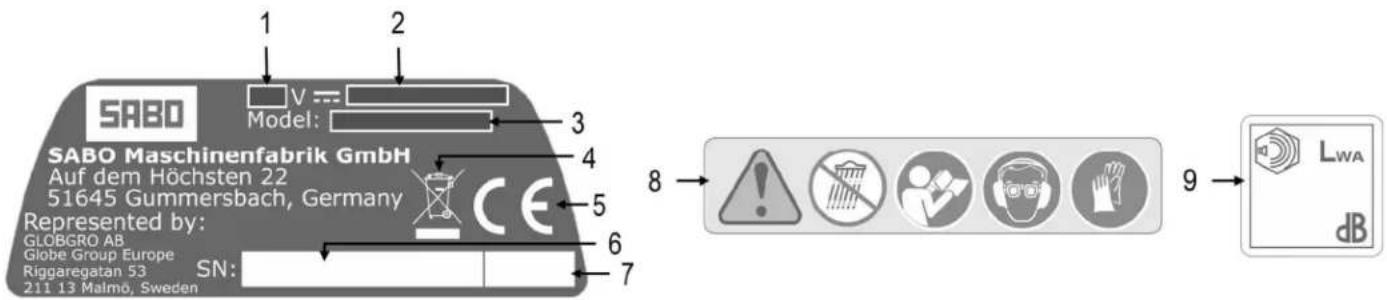
1 Rated voltage
2 Product description
3 Type description
Do not dispose of this device with household waste. The device, accessories and packaging must be returned for recycling in accordance with environmental guidelines.
5 CE conformity mark
6 Production identification number
7 Date of production
8 Instruction, prohibition and warning information
9 Guaranteed sound power level
4 EXPLANATION OF THE SYMBOLS
The following symbols are shown on your device. Familiarise yourself with these symbols and note their meaning. A good understanding of these symbols will assist you in using the product better and more safely.
| SYMBOL | DESCRIPTION/EXPLANATION |
| Read and understand all the instructions before using the product. Follow all the warnings and safety instructions. | |
| When using this device, wear safety goggles and ear protection. | |
| Wear non-slip, heavy duty protective gloves when using this device. | |
| Do not expose the device to rain or moisture. | |
| Objects on the ground, such as stones, may be thrown and cause injury and physical damage. Keep bystanders away. | |
| Warning: Cutting means continues to run a short time after the switch trigger (5) has been released or rather the motor has been switched off. |
EN
| Only use the battery charger indoors. | |
| The polarity of the charger |
| The following signal words and meanings indicate the degree of risk associated with this product. | ||
| SYMBOL SIGNAL MEANING | ||
| A | DANGER: | Describes an immediate dangerous situation that, if it is not prevented, can lead to death or serious injuries. |
| A | WARNING: | Describes a possible dangerous situation that, if it is not prevented, can lead to death or serious injuries. |
| A | ATTENTION! | Describes a possible dangerous situation that, if it is not prevented, can lead to minor and moderate injuries. |
| ATTENTION! (without safety symbol) Describes a situation which can lead to material damage. | ||
| i | NOTE Describes information that will help you better understand the operation of the device. | |
TECHNICAL MAINTENANCE
The maintenance requires the highest levels of caution and knowledge and therefore should only be performed by an expert. We recommend that you take the device to a nearby approved dealer for repair. In servicing the device, only original replacement parts may be used.
| WARNING |
| Use of a power tool can lead to other objects hitting you in the eyes and cause serious eye injuries. Before working with power tools, always wear safety goggles with side protection and, if applicable, with face protection. We recommend vision safety mask, which can be used with normal glasses or standard safety goggles with side protection. Always wear eye protection that corresponds to standard EN 166. |
5 INTENDED USE
The device may only be used for the following purposes:
This product is only suitable for outdoor use.
This product is intended for light trimming of shrubs and lawn edges in domestics use.
Any use going beyond this is considered not proper; the manufacturer is not liable for any damage resulting from such use, the risk is borne by the user alone. Proper use also includes adherence to the operation, maintenance and service conditions prescribed by the manufacturer.
Special care is required during use in public areas, parks, sports facilities, on roads and in agricultural and forestry operations.
Please note that this device is not designed for commercial, trade or industrial use. We accept no warranty claims for devices that are used in commercial, trade or industrial operations or similar activities.
The use of any additional equipment and attachments not approved by the manufacturer is prohibited. If such additional equipment and attachments are used, the CE conformity and guarantee are considered null and void. Unauthorized modifications to this grass shear exclude the manufacturer from liability for any damage resulting from these modifications
There is a residual risk despite the intended use and particular care of the user. Use the device with care at all times. Possible dangers are:
Flying cuttings, earth and smaller stones.
Damage to hearing if you do not wear ear protection.
Injuries to eyes or face if safety goggles or face protection is not worn.
Safety datasheet
Your grass shear has been developed and produced with the highest levels of reliability, user-convenience and user safety. It maintained carefully, the device will work reliably and fault-free for many years.
6 GENERAL SAFETY WARNINGS

WARNING
Read all safety warnings and all instructions.
Failure to follow the warnings and instructions may result in electric shock, fire and/or serious injury.
Save all warnings and instructions for future reference.
The term "power tool" in the warnings refers to your mains-operated (corded) power tool or battery-operated (cordless) power tool.
Work area safety
- Keep work area clean and well lit. Cluttered or dark areas invite accidents.
Do not operate power tools in explosive atmospheres, such as in the presence of flammable liquids, gases or dust. Power tools create sparks which may ignite the dust or fumes.
EN
- Keep children and bystanders away while operating a power tool. Never operate the machine while people, especially children, or pets are nearby. Distractions can cause you to lose control.
- Do not use the device in bad weather if there is any risk of a lightning strike.
Electrical safety
- Power tool plugs must match the outlet. Never modify the plug in any way. Do not use any adapter plugs with earthed (grounded) power tools. Unmodified plugs and matching outlets will reduce risk of electric shock.
- Avoid body contact with earthed or grounded surfaces, such as pipes, radiators, ranges and refrigerators. There is an increased risk of electric shock if your body is earthed or grounded.
Do not expose power tools to rain or wet conditions. Water entering a power tool will increase the risk of electric shock.
Do not abuse the cord. Never use the cord for carrying, pulling or unplugging the power tool. Keep cord away from heat, oil, sharp edges or moving parts. Damaged or entangled cords increase the risk of electric shock. - When operating a power tool outdoors, use an extension cord suitable for outdoor use. Use of a cord suitable for outdoor use reduces the risk of electric shock.
If operating a power tool in a damp location is unavoidable, use a residual current device (RCD) protected supply. Use of an RCD reduces the risk of electric shock.
Personal safety
- Stay alert, watch what you are doing and use common sense when operating a power tool. Do not use a power tool while you are tired or under the influence of drugs, alcohol or medication. A moment of inattention while operating power tools may result in serious personal injury.
Use personal protective equipment. Always wear eye protection. Protective equipment such as dust mask, non-skid safety shoes, hard hat, or hearing protection used for appropriate conditions will reduce personal injuries.
Prevent unintentional starting. Ensure the switch is in the off-position before connecting to power source and/or battery pack, picking up or carrying the tool. Carrying power tools with your finger on the switch or energising power tools that have the switch on invites accidents. - Remove any adjusting key or wrench before turning the power tool on. A wrench or a key left attached to a rotating part of the power tool may result in personal injury.
Do not overreach. Keep proper footing and balance at all times. This enables better control of the power tool in unexpected situations. - Dress properly. Do not wear loose clothing or jewellery. Keep your hair, clothing and gloves away from moving parts. Loose clothes, jewellery or long hair can be caught in moving parts.
If devices are provided for the connection of dust extraction and collection facilities, ensure these are connected and properly used. Use of dust collection can reduce dust-related hazards.
Do not let familiarity gained from frequent use of tools allow you to become complacent and ignore tool safety principles. A careless action can cause severe injury within a fraction of a second.
Power tool use and care
Do not force the power tool. Use the correct power tool for your application. The correct power tool will do the job better and safer at the rate for which it was designed.
Do not use the power tool if the switch does not turn it on and off. Any power tool that cannot be controlled with the switch is dangerous and must be repaired.
- Disconnect the plug from the power source and/or remove the battery pack, if detachable, from the power tool before making any adjustments, changing accessories, or storing power tools. Such preventive safety measures reduce the risk of starting the power tool accidentally.
- Store idle power tools out of the reach of children and do not allow persons unfamiliar with the power tool or these instructions to operate the power tool. Power tools are dangerous in the hands of untrained users.
- Maintain power tools. Check for misalignment or binding of moving parts, breakage of parts and any other condition that may affect the power tool's operation. If damaged, have the power tool repaired before use. Many accidents are caused by poorly maintained power tools.
- Keep cutting tools sharp and clean. Properly maintained cutting tools with sharp cutting edges are less likely to bind and are easier to control.
Use the power tool, accessories and tool bits etc. in accordance with these instructions, taking into account the working conditions and the work to be performed. Use of the power tool for operations different from those intended could result in a hazardous situation.
- Keep handles and grasping surfaces dry, clean and free from oil and grease. Slippery handles and grasping surfaces do not allow for safe handling and control of the tool in unexpected situations.
Battery tool use and care
- Recharge only with the charger specified by the manufacturer. A charger that is suitable for one type of battery pack may create a risk of fire when used with another battery pack.
- When battery pack is not in use, keep it away from other metal objects like paper clips, coins, keys, nails, screws, or other small metal objects that can make a connection from one terminal to another. Shorting the battery terminals together may cause bums or a fire.
Use power tools only with specifically designated battery packs. Use of any other battery packs may create a risk of injury and fire.
Under abusive conditions, liquid may be ejected from the battery, avoid contact. If contact accidentally occurs, flush with water. If liquid contacts eyes, additionally seek medical help. Liquid ejected from the battery may cause irritation or burns. - Do not use a battery pack or tool that is damaged or modified. Damaged or modified batteries may exhibit unpredictable behaviour resulting in fire, explosion or risk of injury.
- Do not expose a battery pack or tool to fire or excessive temperature. Exposure to fire or temperature above 130^ may cause explosion.
- Follow all charging instructions and do not charge the battery pack or tool outside the temperature range specified in the instructions. Charging improperly or at temperatures outside the specified range may damage the battery and increase the risk of fire.
All safety information regarding the handling, storage, safekeeping, transport, disposal of the lithium-ion battery and first-aid measures and measures for.
combating fires is contained in the "Product safety datasheet" at www.sabo-online.com under Instructions.
Information hotline for lithium ion batteries
+49 (0) 2261 704-0
Service
Have your power tool serviced by a qualified repair person using only identical replacement parts. This will ensure that the safety of the power tool is maintained.
- Never service damaged battery packs. Service of battery packs should only be performed by the manufacturer or authorized service providers.
INSTRUCTION
- Read the instructions carefully. Be familiar with the controls and the correct use of the machine.
- Never allow children or people unfamiliar with these instructions to use the machine. Local regulations can restrict the age of the operator.
- Keep in mind that the operator or user is responsible for accidents or hazards occurring to other people or their property.
This appliance is not intended for use by persons (including children) with reduced physical, sensory or mental capabilities, or lack of experience and knowledge, unless they have been given supervision or instruction concerning use of the appliance by a person responsible for their safety.
Children should be supervised to ensure that they do not play with the appliance.
PREPARATION
Check the battery for signs of damage and ageing before use. If the battery is damaged during use, switch off the device. Do not use the device if the battery is damaged or wom.
Before use, always visually inspect the machine for damaged, missing or misplaced guards or shields.
- Never operate the machine while people, especially children, or pets are nearby.
OPERATION
- Keep wirings or cords away from cutting means.
- Wear eye protection and stout shoes at all times while operating the machine.
- Avoid using the machine in bad weather conditions especially when there is a risk of lightning.
- Use the machine only in daylight or good artificial light.
- Never operate the machine with damaged guards or shields or without guards or shields in place.
- Switch on the motor only when the hands and feet are away from the cutting means.
Do not to touch moving hazardous parts before the machine is switched off and the moving hazardous parts have come to a complete stop.
Always switch off the machine and don't switch it on
whenever the machine is left unattended.
before clearing a blockage,
before checking, cleaning or working on the machine.
after striking a foreign object,
whenever the machine starts vibrating abnormally.
Take care against injury to feet and hands from the cutting means.
Always ensure that the ventilation openings are kept clear of debris.
- Residual risks: Even when the machine is used as prescribed it is not possible to eliminate all residual risk factors. The following hazards may arise in connection with the tool's construction and design:
a) Damage to eyes if an effective eye protection is not worn.
b) Damage to lungs if an effective dust mask is not worn.
c) Damage to hearing if effective hearing protection is not worn.
d) Health defects resulting from vibration emission if the power tool is being used over longer period of time or not.
MAINTENANCE AND STORAGE
- Switch off the machine and don't switch it on before carrying out maintenance or cleaning work.
- Use only the manufacturer's recommended replacement parts and accessories.
- Inspect and maintain the machine regularly. Have the machine repaired only by an authorized repairer.
- When not in use, store the machine out of the reach of children.
- Carry the shrub shear by the handle with the cutter blade stopped. When transporting or storing the shrub shear always fit the cutting device cover. Proper handling of the shrub shear will reduce possible injury form the cutter blades.
7 SAFETY INFORMATION FOR GRASS SHEAR AND THEIR CHARGER
HEDGE TRIMMER SAFETY WARNINGS
- Keep all parts of the body away from the cutter blade. Do not remove cut material or hold material to be cut when blades are moving. Make sure the switch is off when clearing jammed material. A moment of inattention while operating the hedge trimmer may result in serious personal injury.
- Carry the hedge trimmer by the handle with the cutter blade stopped. When transporting or storing the hedge trimmer always fit the cutting device cover. Proper handling of the hedge trimmer will reduce possible personal injury from the cutter blades.
-
Hold the power tool by insulated gripping surfaces only, because the cutter blade may contact hidden wiring. Cutter blades contacting a "live" wire may make exposed metal parts of the power tool "live" and could give the operator an electric shock.
-
Keep cable away from cutting area. During operation the cable may be hidden in shrubs and can be accidentally cut by the blade.
- Check the hedge for foreign objects before use, e.g. wire fences.
- Cleaning and maintenance may not be performed by unsupervised children.
The battery must be removed from the device before it is disposed of.
The battery must be disposed of safely. - Avoid unergonomic postures. Make sure you have a firm footing and keep your balance at all times. This allows you to control the power tool better in unexpected situations.
Wear clothing appropriate for the conditions. Do not wear loose-fitting clothing or jewellery. Keep hair, clothing and gloves away from moving parts. Loose-fitting clothing, jewellery and long hair can be trapped in moving parts.
This device is not suitable for use by persons (including children) with impaired physical, sensory or mental aptitude or lack of experience and knowledge unless they are supervised or have been instructed in the use of the device by a person responsible for their safety.
Children should be supervised in order to ensure they do play with the device.
If a metal cutting attachment is mounted: Fit the transport guard.


WARNING
The blades continue to move for a few seconds after the garden product is switched off.
BATTERY CHARGERS SAFETY WARNINGS

WARNING
Keep the battery charger away from rain or moisture. Penetration of water in the battery charger increases the risk if an electric shock.
This charger can be used by children aged from 8 years and above and persons with reduced physical, sensory or mental capabilities or lack of experience and knowledge if they have been given supervision or instruction concerning use of the charger in a safe way and understand the hazards involved. Children shall not play with the appliance. Cleaning and user maintenance shall not be made by children without supervision.
The charger is designed for use from a standard household electrical supply. Do not attempt to connect the charger to a supply with a different voltage.
Do not charge other batteries. The battery charger is suitable only for the cordless shrub/grass shear. Otherwise there is danger of fire and explosion.
- Do not charge non-rechargeable batteries. There is danger of explosion.
To reduce the risk of an electric shock, unplug the charger from the power supply before attempting to clean it. Removing the output terminal alone does not reduce the risk.
- Pull on the charger to disconnect it from the power source. Do not pull on the lead.
- Keep the battery charger clean. Contamination can lead to danger of an electric shock.
Before each use, check the battery charger. If damage is detected, battery charger should be changed to new one. Never open the battery charger yourself. Have repairs performed only by a qualified technician an only suing original spare parts. Damaged battery chargers, cables and plugs increase the risk of an electric shock.
Do not operate the battery charger on easily inflammable surfaces (e.g., paper, textiles, etc.) or surroundings.
- The heating of the battery charger during the charging process can pose a fire hazard.
KEEP THESE INSTRUCTIONS SAFE. READ THEM REGULARLY AND EXPLAIN THEM TO ANYONE WHO MAY WANT TO USE THIS DEVICE. IF YOU LEND THIS DEIVCE, PLEASE ALSO PASS ON THESE INSTRUCTIONS.
8 ASSEMBLY
UNPACKING
This product must be assembled before the first use.
Carefully remove the product and accessories from the box. Check whether all the objects listed in the packing list are included. In some cases these may already be pre-fitted on the device in the specified position. In these cases the disassembly and reassembly of the unit is necessary.

WARNING
Do not use this product if parts listed on the packing list are already fitted to your product when you unpack it. The parts on this list have not been prefitted to the product by the manufacturer and must be fitted by the customer. The use of a product that has not been correctly fitted can lead to serious injuries.
PACKING LIST
- Grass shear (basic unit)
Battery charger (4) - Grass shear blade (1)
-
Shrub shear blade
Operator manual -
Carefully inspect the product and make sure that no damage has occurred during the transport.
Do not immediately dispose of the packaging material until you have carefully inspected and successfully used the product.

WARNING
If any of the parts are damaged or missing, wait until the parts have been replaced before using the device. Using this product with damaged or missing parts can lead to serious injuries.

WARNING
Do not try to modify this device or attach accessories that have not been recommended for this device. Any changes or incorrect use of this device can be very risky and lead to possible serious physical injuries.

WARNING
To avoid serious physical injuries, always stop the device before assembling parts. Note that the blades will continue to run a few seconds after you have released the switch trigger (5).
ASSEMBLING THE TELESCOPIC POLE
See figure 8 to 11

WARNING
Periodically check the connections to ensure that they are tightened securely.
Align the arrow on the end of lower shaft with the arrow on the upper shaft. Push the upper shaft onto the lower shaft (see figure 9 and 10).
- Fasten the head coupler (see figure 11).
CHARGING THE BATTERY
See figure 1
Do not use other battery chargers. The supplied battery charger is designed for the lithium-ion battery in your garden product.
Observe the mains voltage! The voltage of the power supply must correspond with the data given on the nameplate of the battery charger.
The voltage range of the charger is 100-240V. Ensure that the plug matches the outlet.
Note: The battery is supplied partially charged. To ensure full capacity of the battery, completely charge the battery with the battery charger (4) before using your power tool for the first time.
| CHARGING PROCEDURE (LED INDICATOR) | |
| LED STATUS DESCRIPTION | |
| Solid red | The battery is charging. |
| Solid green | The battery is fully charged. |
| Green light goes out once, then the red light blinks twice. The battery is at low voltage. | |
| Green light goes out once, then the red light blinks three times. | Over current |
| Solid red | Normal operation |

WARNING
Do not continue to press the switch trigger (5) after the device has been automatically switched off. The battery can be damaged.
Plug the mains plug of the battery charger (4) into a socket outlet and the plug connector for charger (9) into the charging socket (8) on the rear side of the handle (3) (see figure 1).
The charging procedure starts as soon as the plug connector for charger (9) of the battery charger (4) is inserted into the charging socket (8).
The battery charge indicator (2) indicates the charging progress. During the charging process, the indicator flashes green. When the battery charge indicator (2) lights up green continuously, the battery is fully charged.
- During the charging procedure, the handle (3) of the device warms up. This is normal.
- Disconnect the battery charger (4) from the mains supply when not using it for longer periods.
9 COMMISSIONING

WARNING
Even if you know the device well, the highest caution must be taken when using it. Even a momentary lapse of attention can result in serious injuries.

WARNING
When using a power tool, always wear safety goggles with side protection. Failure to wear this equipment may lead to objects hitting you in the eyes, resulting in serious injuries.

WARNING
Never use blades, hammering devices, wires or ropes on this product. Do not use attachments or accessories that are not recommended by the manufacturer of this device. Using attachments or accessories that are not recommended can lead to serious injuries.
STARTING/STOPPING THE GRASS SHEAR
See figure 1
To start the grass shear, press and hold the safety lock button (6) and additionally press the switch trigger (5).
To continue using the grass shear, release the safety lock button (6) and continue holding the switch trigger (5).
- To stop the grass shear, release the switch trigger (5).

WARNING
Noise: A certain amount of noise from the machine is unavoidable. High noise levels during work is only allowed during certain times. Observe the quite periods and limit working time to a minimum. Persons who are not working with the device or who are remaining nearby must wear ear protection.
Vibration: Always wear safety and anti-vibration gloves. Excessive vibrations can cause Raynaud's syndrome or carpal tunnel syndrome. If you experience an unpleasant feeling while using the machine or if the skin on your hands becomes discoloured, stop working. Schedule reasonable rest periods. Frequent and regular users should carefully check the conditions of their hands and fingers.
CUTTING GRASS
- Keep the device parallel to the ground.
- The grass shear blade (1) should be guided parallel to the ground over the desired length.
The results are the best when the lawn is dry.
Press and hold the safety lock button (6) and additionally press the switch trigger (5) to cut the grass.

NOTE: To avoid serious physical injury, always turn off the machine before cleaning, when the machine was jammed. Use a soft brush to remove debris from intakes and cutting blade. Then restart the machine.
TRIMMING HEDGES
The device may be used to trim small hedges and shrubs.
- Hold the device in a slight angle to the hedge you would like to trim.
First, trim the lateral areas from the lower to the upper edges, and then trim the upper edge.
Press and hold the safety lock button (6) and additionally press the switch trigger (5) to trim the hedges.
EXTENDED-USAGE
See figure 12 and 13
This shear can be used in conjunction with a telescopic pole (11) for comfortable operation that only suits for cutting grass.
Plug the connecting plug telescopic pole (12) into charging socket (8) on the rear side of the handle (3) (see figure 12).
STARTING/STOPPING THE EXTENDED GRASS SHEAR
See figure
To start the grass shear, press and hold the safety lock button telescopic pole (14) and additionally press the switch trigger telescopic pole (13).
To continue using the grass shear, release the safety lock button telescopic pole (14) and continue holding the switch trigger telescopic pole (13).
To stop the grass shear, release the switch trigger telescopic pole (13).
10 GENERAL MAINTENANCE AND CARE

WARNING
To avoid serious physical injuries, always stop the device before cleaning or maintenance the device. Note that the blades will continue to run a few seconds after you have released the switch trigger (5).

CAUTION
Do not touch the moving blades.
Note: To ensure long and reliable service, carry out the following maintenance regularly.
The product should be inspected for damaged, missing or loose parts, such as screws, nuts, bolts, covers, etc. before every use. Tighten all the fastenings and covers and do not use the product until all the missing or damaged parts have been replaced. Do not use solvents to clean plastic parts. Most plastics can be damaged by different types of commercial solvent. Use a clean cloth to remove dirt, dust, oil, lubricants etc.
If the garden product should happen to fail despite the care taken in manufacture and testing, repair should be carried out by an authorized dealer.
Before service work:
- Stop the machine.
- Let the motor cool.
- Store the machine in a cool and dry place.
- Wear appropriate and close-fitting clothing, protective gloves and protective goggles.
BLADE MAINTENANCE
Always clean the cutting blades after operation and lubricate with Maintenance spray.
During longer cutting jobs, we recommend periodically lubricating the cutting blade with Maintenance Spray.
- Visually check the condition of the cutting edges of the cutting blade.
- Ensure that the cutting blade is stored with the blade guard supplied when not in use.
CHANGING THE BLADE
See figure 2 to 6

WARNING
Always wear non-slip, heavy duty protective gloves when using, adjusting or cleaning this garden product.

WARNING
Do not change the blade without blade covers attached to it.
BLADE REMOVAL
See figure 2 and 3
- Lift the cover release button (10) from the cover (7).
- Slide the cover (7) towards the switch trigger (5).
- Lift away the cover (7) from the housing.
- Lift the grass shear blade (1) or shrub shear blade out.
BLADE ASSEMBLY
See figure 4 to 6
-
Locate the end of the grass shear blade (1) or shrub shear blade under the retaining rib in the rear corner of the housing, press down the whole blade until aligning the holes in the blade onto the pins.
-
When refitting the cover (7) ensure all four location legs are inside the housing prior to sliding cover (7) into place.
- Slide the cover (7) back towards the blade to secure it.
| CAUTION |
| Always ensure that the tool is switched off and totally stopped before making any adjustments. |
CLEAN MACHINE
| WARNING |
| Never allow brake fluids, petrol products based on oils, etc. come into contact with plastic parts. Chemicals can damage, weaken or destroy plastic, which can lead to serious injuries. |
- Clean the machine after use with a damp towel that is moistened with neutral cleaning agent.
- Do not use aggressive cleaning agents or solvents to clean the plastic parts or handle.
- Keep the cutting blades free of grass, leaves or excess grease.
- Keep the air openings clean and free of dirt to prevent overheating and damage to the motor or to the battery.
- Do not spray water on the motor or the electrical components.
Only the parts listed in the spare parts list are authorised for repair or replacement by the customer. All other parts have to be replaced by the authorised customer service.
11 STORING THE BRUSHCUTTER
| WARNING |
| To avoid serious physical injuries, always stop the device before cleaning or maintenance the device. Note that the blades will continue to run a few seconds after you have released the switch trigger (5). |
| CAUTION |
| Do not touch the moving blades. |
| WARNING |
| Always wear non-slip, heavy duty protective gloves when using, adjusting or cleaning this garden product. |
Clean the product before storing it (see chapter "CLEAN MACHINE").
- Carry the device by the handle (3) with the blade stopped.
Always assemble the blade cover before transporting and storing the device.
- Store it in a location out of the reach of children.
- Keep the battery away from the corrosives such as garden chemicals and salt.
- Keep an unused battery away from paperclips, coins, keys, screws, nails and all other objects that could connect the contacts.
A short circuit of the battery can cause burns or fires. Store the battery in a dry place and at a temperature below 27^
- Never store discharged batteries. A battery that is too warm must be allowed to cool before charging.
The battery's charge will diminish during storage. The higher the temperature, the faster the discharge. Recharge the batteries monthly if they are being stored for a longer period. This increases the life and maintains performance.
- Remove the battery from the device before adjusting settings, replacing accessories or after use. This prevents the risk of your device being switched on inadvertently or unsupervised.
- Secure the grass shear during transport in order to prevent damage and injuries. Clean the device before storage.
- Do not place other objects on top of the garden device.
ENVIRONMENTAL PROTECTION
Environmental protection should be an essential and prioritised aspect when using the machine. Do not disturb your surroundings when using the device.
Strictly observe the local provisions for disposal of the packaging, oil, petrol, filters, damaged parts or all other polluting materials. These materials must not be disposed of with domestic waste, but instead must be collected separately and disposed of at a recycling site that recycles the materials.
- Strictly observe the local provisions for disposal of the cut waste.
The device must not be disposed of in the regular waste, but instead must be disposed of at a recycling site according to the local provisions.

12 TROUBLESHOOTING
| PROBLEM POSSIBLE CAUSES SOLUTION | ||
| The motor does not start when you press the switch trigger (5). | The battery is empty. | Charge the battery according to the chapter "CHARGING THE BATTERY". |
| The motor runs, but the blades are not moving. | The device is damaged. Do not continue to use the grass shear. | Contact customer service. |
| The motor hums, but the blades are not moving. | Debris or other may be jamming the blades. | Switch off the device by releasing the switch trigger (5) and carefully remove the debris. CAUTION: Note that the blades will continue to run a few seconds after you have released the switch trigger (5). |
13 DISPOSING OF THE DEVICE
Do not dispose of electric devices with household waste.
Dispose of these devices at recycling centres.
Contact the relevant authorities or your retailer for information about this.
Separate collection of used products and packaging allows materials to be recycled.
The reuse of materials helps to prevent pollution and reduces the demand for raw materials.
Dispos of batteries at the end of their service life and in a manner that respects the environment.
The battery contains material that is dangerous to you and to the environment.
Therefore, it must be disposed of separately in a facility that accepts lithium-ion batteries.
14 SPARE PARTS LIST
Please contact the dealer. They can provide you with a list of the spare parts.


Batteries
1 SPECIFICATION. 38
2 BESCHRIJVING. 38
3 VERKLARING VAN HET OP DE GRASSCHAAR AANGEBRACHE TYPEPLAATJE 39
4 VERKLARING VAN DE SYMBOLEN 39
5 BEOOGD GEBRUIK 40
6 ALGEMENE VEILIGHEIDSWAARSCHUWINGEN 40
7 VEILIGHEIDSINSTRUCTIES VOOR GRASSCHAREN EN HUN LADER 42
8 MONTAGE 43
9 INGEBRUKNAME. 44
10 ALGEMEEN ONDERHOUD EN REINIGING 45
11 OPSLAG VAN DE GRASSCHAAR 46
12 OPLOSSEN VAN FOUTEN 47
13 AFVALVERWIJDERING. 47
14 LIJST MET RESERVEONDERDELEN 47
15 EU CONFORMITEITSVERKLARING 71

1 SPECIFICATIE
6 ALGEMENE VEILIGHEIDSWAARSCHUWINGEN

WAARSCHUWING
GLOBGRO AB, Globe Group Europe
EU DECLARATION OF CONFORMITY
GLOBGRO AB, Globe Group Europe
Riggaregatan 53,211 13 MalmöSweden
Name and address of the person authorised to collate technical files:
Name: Peter Söderström
Address: Riggaregatan 53, 211 13 Malmo, Sweden
We herewith declare that the product
Category: 7.2 V Grass shear/Hedge trimmer
Model
Serial number:
Year of manufacture
SAA562022
see product identification plate
see product identification plate
-
complies with the corresponding conditions of the Machinery Directive (2006/42/EC)
-
complies with the conditions of the other following Directives:
EMC Directive 2014/30/EU
Directory 2000/14/EC on noise emissions as amended by 2005/88/EU
RoHS Directive 2011/65/EC as amended by 2015/863/EC
and we also declare that the following (parts/conditions from) European harmonised standards
have been applied, which were valid on the date of creation of the declaration of conformity.
EN60335-1,EN50636-2-94
EN60745-1,EN60745-2-15
EN 62233
EN ISO 3744 EN ISO 11094
EN55014-1EN55014-2
EN62321-3-1,EN62321-4,EN62321-5,EN62321-6,EN62321-7-1,EN62321-7-2,EN62321-8
Measured sound power level:
100.0 dB(A)
Guaranteed sound power level
103.0 dB(A)
Conformity assessment method following Directive 2000/14/EC Annex V
Place, date: Malmö, 01/01/2022
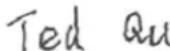
Signature
Ted Qu
Quality Director
GLOBGRO AB, Globe Group Europe
as authorised representative of the manufacturer

DECLARATION DE CONFORMITE UE
Fabricant
GLOBGRO AB, Globe Group Europe
Riggaregatan 53,211 13 Malmö,Suede
Director Quality Director
GLOBGRO AB, Globe Group Europe
GLOBGRO AB, Globe Group Europe
Riggaregatan 53,211 13 Malmö,Zweden
GLOBGRO AB, Globe Group Europe
Directora de calidad/Quality Director
GLOBGRO AB, Globe Group Europe
GLOBGRO AB, Globe Group Europe
Riocaregatan 53,211 13 Malmo.Svezia
GLOBGRO AB, Globe Group Europe

- DESCRIPTION
- EXPLANATION OF THE IDENTIFICATION PLATE ON THE GRASS SHEAR
- EXPLANATION OF THE SYMBOLS
- TECHNICAL MAINTENANCE
- INTENDED USE
- Safety datasheet
- GENERAL SAFETY WARNINGS
- WARNING
- Work area safety
- EN
- Electrical safety
- Personal safety
- Power tool use and care
- Battery tool use and care
- Service
- INSTRUCTION
- PREPARATION
- OPERATION
- MAINTENANCE AND STORAGE
- SAFETY INFORMATION FOR GRASS SHEAR AND THEIR CHARGER
- HEDGE TRIMMER SAFETY WARNINGS
- BATTERY CHARGERS SAFETY WARNINGS
- ASSEMBLY
- UNPACKING
- PACKING LIST
- ASSEMBLING THE TELESCOPIC POLE
- CHARGING THE BATTERY
- COMMISSIONING
- STARTING/STOPPING THE GRASS SHEAR
- CUTTING GRASS
- TRIMMING HEDGES
- EXTENDED-USAGE
- STARTING/STOPPING THE EXTENDED GRASS SHEAR
- GENERAL MAINTENANCE AND CARE
- CAUTION
- BLADE MAINTENANCE
- CHANGING THE BLADE
- BLADE REMOVAL
- BLADE ASSEMBLY
- CLEAN MACHINE
- STORING THE BRUSHCUTTER
- ENVIRONMENTAL PROTECTION
- DISPOSING OF THE DEVICE
- SPARE PARTS LIST
- ALGEMENE VEILIGHEIDSWAARSCHUWINGEN
- WAARSCHUWING
- EU DECLARATION OF CONFORMITY
- SAA562022
- dB(A)
- dB(A)
- Ted Qu
- DECLARATION DE CONFORMITE UE
Brand : SABO
Model : GS100
Category : String Trimmer