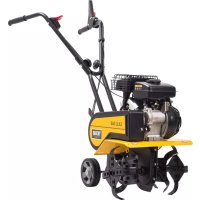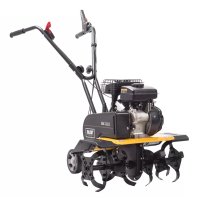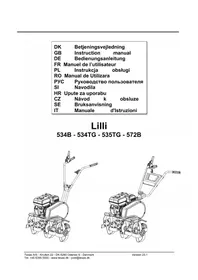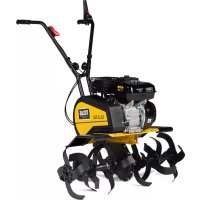
Lilli 534TG - Rototiller Texas - Free user manual and instructions
Find the device manual for free Lilli 534TG Texas in PDF.



| Product type | Tiller |
| Brand | Texas |
| Model | Lilli 534TG |
| Dimensions (L × W × H) | 1210 × 620-850 × 1240 mm |
| Weight | 52.5 kg |
| Engine | Texas TG715, 208 cm³, 4.0 kW at 3600 rpm |
| Fuel | Unleaded petrol E5 |
| Working width | 36 to 85 cm |
| Working depth | 33 cm |
| Blade rotation speed | 150 to 160 rpm |
| Number of forward gears | 1 |
| Number of reverse gears | 1 |
| Sound power level | 101 dB(A) |
| Sound pressure level | 81 dB(A) |
| Vibration level | 4.7 m/s² (K=2.4 m/s²) |
| Gearbox lubricant | Multifak EP-1 (lubricated at factory, do not open) |
| Recommended engine oil | SAE-30 |
| Spark plug gap | 0.7 to 0.8 mm |
| Available accessories | Side guards, scarifier, push rake, harrow, rake, ridging plough, claws, snow plough, anti-skid chains, weights, intermediate blades, wheels, rear hook |
| Oil change maintenance | After 5 hours of run-in, then once a year |
| Cleaning | With garden hose, avoid high pressure cleaner |
| Storage period | Rinse and dry, store in a dry place |
| Spare parts | Available at www.texas.dk |
Frequently Asked Questions - Lilli 534TG Texas
User questions about Lilli 534TG Texas
0 question about this device. Answer the ones you know or ask your own.
Ask a new question about this device
Download the instructions for your Rototiller in PDF format for free! Find your manual Lilli 534TG - Texas and take your electronic device back in hand. On this page are published all the documents necessary for the use of your device. Lilli 534TG by Texas.
USER MANUAL Lilli 534TG Texas
GB - Table of Contents - "Original instructions"
Illustrations 2
Warning symbols. 6
Safety precautions. 12
Assembly 13
Clothing 13
Operating the tiller 13
Operation zone 13
Adjusting the handle 13
Adjusting the wheel/depth skid 13
Lubrication of gearbox 14
Starting and stopping the engine 14
Cleaning the tiller. 14
Changing the oil 14
Air filter maintenance 14
Storage 15
Troubleshooting 15
Noise, vibration and precautionary measures 15
Warranty terms and conditions. 15
Specifications 57
Accessories 64
EC Certificate of conformity 70
Congratulations on purchasing your new tiller. Please read this instruction manual carefully, especially the safety warnings marked with the symbol:

Spare parts
Spare part drawings for the specific product can be found on our website www texas.dk If you find the part numbers yourself, this will facilitate more rapid service.
For purchase of spare parts, please contact your dealer. You will find a list of dealers on the Texas website.
Safety precautions
Setup
Do not put hands or feet near or under rotating parts.
Read this manual carefully. Make sure that you are familiar with the different controls, settings and handles of the equipment.
Know how to stop the unit and ensure that you are familiar with emergency stop.
Never allow children or people unfamiliar with these instructions to use the machine. Note, that local regulations can restrict the age of the operator.
If you feel unwell, tired or have consumed alcohol or drugs, do not operate the machine.
Always inspect the machine before usage Ensure that no parts are worn or damaged.
Replace worn out or damaged elements and bolts in sets to preserve balance.
The operator of the machine is responsible for people's safety.
Never use the machine near children or animals.
The operator of the machine is held liable for any accidents or hazards to other people and their property.
Thoroughly inspect the area, where the equipment is to be used, if necessary, remove any foreign objects.
A Do not refuel gasoline indoors or while the engine is running.
Spilled gasoline is extremely flammable; never refuel while the engine is still hot.
Wipe off any spilled gasoline before starting the engine. It may cause a fire or explosion!
Beware of hazards, while working on difficult soil hence; extremely stony or hard soil.
1 Boots with non-slip soles with steel jacket is required. Avoid loose-fitting clothes.
Operation
Always start the engine from safety zone.
1 Do not leave the safety zone while operating the machine, if it is necessary to leave the safety zone, turn off the engine before leaving the zone.
After striking a foreign object, stop the engine immediately, remove the spark plug cap and inspect the machine thoroughly for damage. Repair the damage before continuing
If the machine should start to vibrate abnormally, stop the engine and check immediately for the cause. Vibration is generally a warning of damage.
Always disengage the levers, turn off the engine, and remove the spark plug, when the unit is left unattended.
Always turn off the engine and ensure that all moving parts have come to a complete stop before making any repairs, adjustments, or inspections.
Exercise extreme caution when operating on slopes.
1 Never operate the machine at a fast pace.
1 Do not overload machine capacity by attempting to work at too fast a rate.
Do not carry passengers.
Pay attention, while the machine is in reverse.
! Never allow any bystanders in front of unit.
Always disengage the blades, if not in use.
Only operate the machine at daylight or in fully illuminated areas
Ensure a stable foothold and always keep a firm hold on the handles. Always walk, never run.
Do not operate the equipment when barefoot or wearing sandals.
Exercise extreme caution when changing direction on slopes
By rear tillers, ensure that the blades are protected by safety shield, only the part of the blades that works into the soil must be free.
! Never attempt to make any adjustments, while the engine is running.
Use extreme caution when reversing or pulling the machine backwards
1 Never operate the engine indoor or in areas with low ventilation. The exhaustion from the engine contains carbon monoxide. Failure to observe could result in permanent injury or death.
Gasoline safety
Use extreme care in handling gasoline. Gasoline is extremely flammable, and the fumes are explosive.
Serious personal injury can occur, when gasoline is spilled on yourself or your clothes. Rinse your skin and change clothes immediately!
Use only an approved gasoline container. Do not use soft drink bottle or similar!
Extinguish all cigarettes, cigars, pipes and other sources of ignition.
! Never refuel your machine indoors.
Let the engine cool down before refilling
Never fill the fuel tank to more than 2.5cm below bottom of filler in order to provide space for fuel to expansion.
After refueling, ensure that the cap tighten securely.
Never use the lock-function on the gasoline gun, when refueling.
Do not smoke while refueling.
Never refuel inside a building or where gasoline fumes may get in contact with an ignition source.
Keep gasoline and engine away from appliance, pilot lights, barbecues, electric appliances, power tools, etc.
If the fuel tank has to be drained, this shall be done outdoors
Maintenance and storage
The engine shall be stopped when carrying out maintenance and cleaning operations, when changing tools and when being transported by means other than under its own power.
Check regularly that all bolts and nuts are tightened. Retighten if necessary.
The engine must be completely cooled before storing indoors or covered.
If the machine unused for a period of time, please refer to the instructions in this manual.
Maintain or replace safety and instruction labels, as necessary.
Only use original spare parts or accessories. If not original parts or accessories is used, the liability is no longer applied.
Replace faulty silencers.
Miscellaneous
The gears are delivered pre-greased. However, always ensure they are well greased before each use.
The motor is not pre-filled with oil.
Factory-fitted control devices, such as the handle-mounted clutch cable, must not be removed or exposed.
Only drain the fuel tank outdoors. Gasoline is extremely flammable, and the fumes are explosive.
Ensure that the machine is properly secured when transported on a flatbed etc.
Reduce the throttle during engine shutdown and close the fuel valve.
Due to vibrations, it is recommended to take a break for every 30 minutes use to avoid fatigue in your arms.
Assembly
Please follow the steps in figure:
Actual model may vary from the illustration shown
- Box content
A. Extension blades
B. Tiller with cables and support wheels
C. Blades Outer
D. Side guards
E. Handlebar (Lilli 572/575)
F. Depth skid
G. Mounting bracket for handlebar (Lilli 572/575)
H. Lower handle x2 (Lilli 534/535)
I. Handlebar (Lilli 534/535)
- Only for model Lilli 534/535:
Fit the lower handle section. Use the supplied mountings and bolts.
Fit the handle. Use the supplied assembly kit as shown.
- Only for model Lilli 572/575:
Fit the handle into the bracket (1-G) fasten with hand wheel.
NB: Ensure the bolt goes through the spring.
- Mount clutch handle and throttle control as shown on the picture.
- Mount the side guards using the bolts and nuts supplied. Note the side guard must go under the body frame.
- Mount the blades using the cotter bolts and pins.
- Mount the depth skid with the cotter bolt and pin.
- Fit the panel to the handlebar with the 4 screws. (only Lilli 572/575)
Fill the engine with oil.
See changing the oil section for more details.
Clothing
When using the machine, wear close-fitting work clothes, hard-wearing work gloves, ear defenders and non-slip boots with steel toecaps.
Operating the tiller
Ensure the machine is placed on a level surface with the support wheels lowered prior to start.
1 Remove all foreign objects from the work area before using the machine. Stones, glass, branches and similar items may damage the tiller. Also, check the bolts on the tiller are tightened.
Start the motor as per the instructions below. Stand clear of the machine's moving parts.
! Never attempt to move the machine in any way other than intended for normal use while the motor is running.
The tiller is designed for use in vegetable gardens and flowerbeds. Ensure that you are familiar with these instructions before operating the machine, in particular the motor start and stop procedures.
Fig 9: To use the black handle the control stick must first be activated. By tilting the control stick to the right or left side and then activate the black handle lever, the tiller will move forward or backwards.
Pay attention while reversing. It is important that the area is cleared, for any obstacle before reversing. Never reverse the tiller against a wall, tree or any other fixed obstacle.
Operation zone
While the machine is being operated and the motor is running, do not leave the operation zone marked fig 11. If it is necessary to leave the operation zone, for example to attach an accessory, first stop the engine.
It is normally necessary to drive the tiller over a section of earth 2-3 times from different directions. Do not till very wet soil, as clods of earth will form that are difficult to break up.
Adjusting the handle
Lilli 572/575 only: Fig 13. The handle angle can be adjusted. Use the two hand wheels to set one of the 3 available positions. The handle can be flipped forward during transport. NB: Ensure the cables do not become trapped.
Adjusting the wheel/ depth skid
Fig. 14: The support wheels are mounted on the tiller. They can be adjusted to the required height by pulling the lock handle (A) and moving the ring up or down. The wheel ring can be used to stabilise the machine when tilling and help to prevent the machine falling into soft soil.
Fig. 15. The depth skid can be adjusting for tilling in three different depths. The deeper the depth skid sits in the soil, the deeper the tilling blades will work and the slower the machine will advance. The right cultivating depth will lighten your workload. The correct tilling depth depends on the soil, and we recommend you make several attempts to see how deep the depth skid should be so that you can work optimally in your soil.
To adjust the depth skid, pull it backwards and up till the preferred height is found. Place the depth skid vertically, and it will fall into a notch.
Lubrication of gearbox
The gearbox is permanently lubricated at the factory, never open the gearbox.
Starting and stopping the engine
Remember: Always check the oil level prior to use!
The oil level must always be between the min. and max. Mark on the dipstick. Always use SAE-30 oil. Use only unleaded E5 gasoline. Never over-fill the gas tank.
Warning: Stay out of dashed zone, while starting the engine! Always start the engine from dotted operation zone. See fig. 12.
Starting the engine See fig. 10
- Set the throttle control (C) on the handle to max.
- Position the choke at max. Move the choke lever fully to the left. The choke is not required if the motor is hot.
- Pull the start cord to start the motor. Always feed the start cord back into the motor by hand.
- When the motor is started, set the choke to minimum (fully to the right) Engage the throttle slightly.
Stopping the engine
- Set the throttle control to "low" and let the motor run for approx. 30 seconds.
- When the motor idles, set the throttle control to full stop.

Vibrations may travel up into the handle during use. We therefore recommend taking a break every 30 minutes.
Important - Adjustment of clutch cables before use:
- Start the engine on tiller and lift the blades, so they don't touch the ground.
- Activate the clutch handle slowly (forward and reverse) to find the point where blades start to turn around - and then at that point measure the distance between grip and outer plastic handle. See fig. 16+17.
It is recommended to be 2 persons doing this:
One that holds the tiller and activate clutch handle and one that adjust the cables.
Forward:
The forward belt should first be activated (blades start to rotate), when the clutch handle is 80mm above the grip. Then the belt will not slide on the pulley.
Reverse:
The reverse belt should first be activated (blades starts to rotate), when the clutch handle is 30mm above the grip. This to avoid that the reverse belt is too tight and being activated unintendedly and thereby becomes warm and risks to shrink.
If the belt is activated with a different distance, adjust the clutch cable for forward and/or reverse by following this procedure:
The clutch cable can be adjusted both on the clutch handle or behind the belt cover on machine. See fig.18+19. It doesn't matter which place to tighten it.
- Loosen the nut (A)
- Adjust the bolt (B): -Clockwise will loosen the cable (+) - Anti-clockwise will tighten the cable (-)
- Find the right adjustment to get the recommended distance between grip and handle
- Tighten the nut (A)
It is recommended to check above again after the first 30 min use. And then every 5 hours (and before first time's use each year). This will extend the lifetime of the belts.
Cleaning the tiller
The tiller should be cleaned after use. Use a garden hose to wash off soil and dirt. Remove any grass, etc. from the rotor shaft. The chassis number should only be cleaned with a damp cloth to avoid unnecessary wear. Avoid using a high-pressure washer during cleaning.
Changing the oil
The oil should initially be changed after the first 5 hours of use, and thereafter once per year.
- Let the motor run for 5 minutes to heat up the oil. This allows the oil to run more freely and makes for a more complete oil change.
- After 5 minutes, stop the motor. Remove the spark plug cap. Drain the oil by unscrewing the sump plug. Remember to drain the oil into a container of sufficient capacity. NB: The motor must not be tipped backwards more than 45 degrees.
- Screw the sump plug back in and pour new oil into the motor. Do this by removing the dipstick and pouring in the recommended quantity of oil.
- Refit the spark plug cap.
Alternatively, use an oil extractor kit.
- Suck the oil up through the oil filler hole using the syringe. Use the hose to reach the sump.
- Transfer the used oil to the container.
- Fill the engine with new SAE-30 oil.
- Check the oil level using the dipstick.
Remember to dispose of used oil in a safe way. Oil and oil extractor kit are not included
Air filter maintenance
Please inspect and clean the air filter on a regular basis. If the filter has not been cleaned for a longer period, this will have influence on the engines power take-off and the exhaustion.
- Clean around the air filter before it is removed.
- Carefully remove the paper filter and check it. Clean it with a soft brush. If it is very dirty, it must be changed. Take care that no dirt gets into the intake of the engine.
- Wash the black foam element on the right side in warm soapy water.
- Press the water out of the foam element and let it dry. Put a few drops of SAE-30 oil on the filter to moisten it lightly with oil. Carefully squeeze out any surplus oil. Remount the element.
- Check that all parts are fitted correctly, and the cover closed as shown in the picture.
Spark plug maintenance
- Remove the spark plug cap.
- Brush away any dirt and deposit of the spark plug.
- Loosen the spark plug using a spark plug socket.
- Check the insulation is intact.
- Clean the spark plug using a wire brush.
- Measure the electrode gap 0.7 - 0.8mm . Avoid damaging the electrode.
- If it is damaged, replace it with a new one.
- Refit the spark plug.
- Refit the spark plug cap.
Storage
- If the machine is likely to be stored unused for prolonged periods, follow the instructions below. This will ensure longer machine lifetime.
- Use a garden hose to wash off soil and dirt. Remove any grass, etc. from the rotor shaft. The chassis number should only be cleaned with a damp cloth to avoid unnecessary wear. Avoid using a high-pressure washer during cleaning.
- Wipe the tiller with a damp cloth so that all surfaces are clean. Wipe the surfaces down with an oily cloth to prevent rust.
- Always store the machine in a dry, clean location.
Troubleshooting
The motor will not start
- Check the fuel control is set correctly.
- Check the spark plug.
- Check there is fresh gas in the tank.
- See separate motor instructions for further troubleshooting.
The motor is not running smoothly
- Ensure the throttle control is not set to max.
- Check there is fresh gas in the tank.
The blades will not rotate
- Check for stones lodged between the blades.
- Release any stones by removing the blades.
- Check the cables are in good working order and fitted correctly.
-
Check the belt is in good working order and fitted correctly.
-
Ensure the belt tensioner is adjusted correctly.
The blades will not stop
- Stop the engine and contact your dealer.
Noise, vibration and precautionary measures
- Long-term exposure to noise levels exceeding 85 dB (A) are damaging. Always use ear defenders when the machine is being used.
- Reduce the running speed of the motor to reduce vibration and noise levels.
- To reduce noise levels further, only use the machine in an open environment.
- Vibrations can be reduced further by holding the handle firmly.
- To avoid disturbing others, the machine should only be used during the daytime.
- Always wear close-fitting work clothes, hard-wearing work gloves, ear defenders and non-slip boots with steel toecaps.
- Take a 30-minute break every 2 working hours.
- A worn belt has to be replaced/ serviced by an authorized dealer
Warranty terms and conditions
The warranty period is 2 years for private end users in EU countries.
Products sold for commercial use, only have a warranty period of 1 year.
The warranty covers material and/or fabrication faults.
Restrictions and requirements
Normal wear and replacement of wearing parts are NOT covered by the warranty.
Wearing parts, which are NOT covered for more than 12 months:
Blades
Cables
Belts
Switches
Membranes/gaskets
Spark plugs
Engine liquids (oil, gasoline)
- Starter cords
- Filters
If you start the engine without adding oil, it will be damaged and cannot be repaired and therefore not covered by the warranty.
The warranty does NOT cover damages/faults caused by:
- Lack of service and maintenance
Structural changes - Exposure to unusual external conditions
- Damages to the bodywork, deck, handles, panels etc.
- If the machine has been improperly used or overloaded
- Wrong use of oil, gasoline or other liquid types, which are not recommended in this user manual
- Bad or dirty gasoline, which results in contamination of the fuel system
- Use of unoriginal spare parts.
- Other conditions where Texas cannot be held responsible.
Whether a case is a warranty claim or not is determined in each case by an authorized service center.
Your receipt is your warranty note, why it should always be kept safe.
REMEMBER: The purchase of spare parts as well as any request for warranty repair, art. no. (e.g. 900611XX), year and serial number should always be informed. It can be found on the CE-label on the machine!
- We reserve the right to change the conditions and accept no liability for any misprints
YcTaHOBnTb HmKHOU qaCTb pyJ. NcNoJb3yTe npnraeMbI KOMnNEKT KpenJeHn I 60NTOB.
YcTaHOBnte pyNb. IcNoIb3yIte NoCTaBnEMykOMNJIeKr DJIra C6OpKn, KAK NOKa3aHO Ha pncyHKe.
- Tójblo kOДЯ moJoL Lilll 572/575:
UctaHOBnTe pyuKy B KpoHHTeH (1-G) 3akpennte 6apaKoM.
NB:Y6eDntEcB,yTo 6oTn npoxoDHT uepe3 npyKinHy.
- YcTaHOBIne pbIar cUeJIeHnI a TaKKe pyKy ra3a , KaK nOKa3aHo Ha pUCyHke..
- YctaHOBNTe IINACTIKOBBE KpbJIbIc NOMOUIbIO 60JTOB IraEK N3 KOMIIeKTA NOCTaBKn. O6paTIne BHHMaHHe, YTO KpbJIbIy YcTaHaBnBaIOTcN IOd MetaIIHueckN KOxyX.
- YcTaHOBnTeΦpe3bI C NOMOuBIO MeTaJIINueCKNX naJIbueB uINIIHnTob.
- YCTAHOBNTECOHHK
- YctahOBka nAHeHn Ha pyKoRtKax (ToJIbKO Lilll 572/575)
3aene Te Macno B DnuratEn. Boone noDpo6Ho cm. pa3den «3aemeHa macna».
Cneoedka
IЯ pa6oTbI C KylbTnBaTOPOM CneDyET HaDeBaTb NIOTHO npJIeRAHOUpo pa6OuO OJExNy, IIOTHO npINERAOUue pa6OuNe nepaATKn, cpeCTBa 3aunTbI opraHOB Cnyxa I 6OTnHKn C HeCKOnb3aUeN IOOuBOH IN CTaJIbHbIM HOCOM.
I IpnexKe Yem 3anyckaTb KylbTnBaTOp, y6eNITecb, UTO OH paCnONoXeH Ha rOpN3OHTaJIbHOI NOBepxHOCTn I erO KOJeca OnyuJeHbI.
I Ipepa6oToO OHCTnTe pa6oUyIO NIOuaDb OT BCEX NOCTOPOHNX PpeMeTOB. KaMHN, CTEKNO, BETBn T. D. MOrYT NOBpeDNTb KylbTnBaTOP. IpoBepbTe, BCE Nn 60JIbTaHa KylbTnBaTope 3aTAYtbl.
3aNyCTnTe DBnraTeNb COrJaCHO HcHcTpKuIyM, nPbBeDeHHbIM Hxke. DePknTeCb B CTopoHe OT DnKyUxCxCyaCTeK KyJbTnBaTopa.
HnKOrJa He nbTaIteCb nepemeaTb KyltbBaTOpB DpyROM HnPaBHeHH, Yem npEHa3HaueHHbI JIra HopMaJIbHOJ EKcPiYaTuIN BO BpEmpa6ObTB IIBnIaTeJIa.
KylbTBAToP npedHa3HaeH nIe 6pa60Kn oropoOB n Knym6. Ipeep 3Kcnnyataune KylbTBAToPA y6eNTecb, YTO Bbl O3HaKOMNJINcB C 3TNMI INHCTpyKUJAMN,OCO6EHHO C npOeDypaMn 3anyCk N OCTaHOBa DBVaTeJI.
Pnc 9:ДяИСпОЛБЗOBAHЯЧЕHо руки сцeнлEHЯ npexde Heo6xOДМоakTNBIPOBaTb pbyaXOK.пepemeuaя pbIaXOK BnpaBO nIN BJIeBO,a 3aTeM aKTHBUPy ChEPHyO pykycuENIIeHЯ, KJbTBNaTbOp 6ydet DBNraTbC8 COOTBETCTBeHNO Bnpei nIN Ha3ad.
Будte BнмATEbHbI, MeHЯ HAnpaBneHne DBNKeHnA.
PpeJde Yem MeHrtb HnnpabHe NDbXeHnBaxHo 6yBeNtbc B OTCyTcTBn npenrTcBn. Hn B Koem Cnyuae He DonyckaTe, T06bl KyIbTnbAtOp ynpaIcR B cTeHy, DepeBo nIN dpyroE HenoDbXHHO npenrTcBne.
Be3onacHa 3OHa
Bo Bpem 3Kcnpnyataun KyIbTnBaTopa, KOrda pa6oTaet DBIratEnb, He BbIXOOnTe 3a npedeBbI 6e3oNaChOH 30HbI, 06o3HaueHHo KpaChbIM CBETOM Pnc.11.Ecn Hc6xOIMBOBtN 3a npedeBbI 6e3oNaChOH 30HbI, HanpImep, TTObl 3aKepeNTb npHaadJeKHOCTb, ChaJa 3aRnyuInTe DBIratEnb.
O6bHIO,ДЯ NOJUeyHIN KaueCTBeHHOro pe3yNbTata, Heo6xOdIMO CcenaTb 2-3 npoxOa KynTBaTOPOM Ha o6pa6aTbIbAemom yAcTke 3eMnB pa3NmHbIX HanpabNeHnx. He KynTBuBpyTe OeHb BnaXHyIO NOBy, NocKoIbKy o6pa3yOTcKOMKn rpyHTa, KOtOpblE 6yDet TpydHO pa3bNb.
Perynpobka pyukn
ToIbKO Lilli 572/575.Pnc.13 Yron pynmaoXHO perynpoBaTbB ONOH n3 Tpex DoCTynhix NOJIOKeHH.Bo BpeM TraHCnOpTnPOBaHHpyNb MOxHO OTKNHyTB Bnepei. BHMaHHe: y6eDntecb, yTO Tpocbl He 3aUeMJIeHbl.
Perynnpobka konec / couHnka
Pnc 14.Ha KynbTnBaTope yctAHOBHeHb
TpaHCnpTnpOBOHyIe KOleCa. OH MOry T perynipoBaTcRn NO Blicote 3aueKo. KoneCa nCNoB3yOtCra IPrAHCnpTnpOBKn KynbTnBaTopa, o6ecneHnYCTOHNIOpN KynbTnBnPOBaHNn Ipn
IpeD0TbpauEHHn PpOBaNOB B pbxNyIO nuBy.
Pnc 15.Дя КьтВиврOBAHЯ COWHK MOKeT 6bITb
yCTaHOBnEH B TPN NOJOKeHn. Yem ITy6Ke COWHK BXODNTB NOUY, TEM 6OJIbWe 6yDet 3aIy6JIeHne Ope3
KylTBtBaTopa IN MeJINHee DBNKeHne KylTBNaTopa.
IpaBnHna ITy6HnA KylTBNaCIn CHN3NT pa6OHyO
Harpy3ky Ha MexAHn3MbI. BblOp ITy6HbI KylTBNaCIn3aBNCHT OT NoYbI, N03TOMy peKOMeHNyETc CdeNaTbBhauane HeCKONbKO p06bHbIX npoxoOB, YTObI ONpeDEJIntbHyxHoe NOJOKeHnE COwHnKa. IocNe 3TORo BblCMoXeTeONTMaJIbHO O6pa6OtaTb CBOI yAcToK.
Длpeулровк COUнkaNotHnTe erHa3aI N BBepx Do Доctижени Кeелаemon BbICOTbl. YcTaHOBnTE COUHnK BepTKaJIbHo.
Cma3ka peyktopa
PepyKTop 3anpaBneH cma3kOHa 3aBoJe-3roTOBnteHa BeCb cpoK cnYk6bl.
3anyckIOCTaHOBka DBnraTeT
POMHHTe: Bcerda npoBepaTe ypoBeHb Macna nepeI nCNoJIb3OBAHNEM!
YpOBeH MaCJa DOnJKeH BcerJa HaxOuNTbCBA Dnana3oHe OT MmHMaJIbHO J Do MaKcMImbHOOTMeTKn Ha Uyne. BcerJa NcNoJIb3yIte MacNo SAE-30. NcNoJIb3yIte ToJIbKO He3TNINPOBaHbHb 6eH3IN COKTaHOBBIM YNCIOm He HnKe 92. HnKOrJa He nepenONHraTe 6eH3O6aK.
BHHMaHHe:BcERda 3aNyCKaITe DbIraTeIb, HaxOJaCb B 30He,OTMeueHHo IyHKTnPHbIMTOUkAMN cm.pnc12.
3anyck Dnuratela CM. pnc. 10
- YctahOBInTe pyKy ra3a (C) B noJoxKeHne MaKc.
2.ПереметитepbUar BO3dyuHOn 3acNoHKnHa DBIrataTeIdo ynpa BNeBO. 3.aKpbBaTb BO3dyuHHyo 3acNoHky He Tpe6yeTc, ecNn DBIrataTeIb ropayn. - Notaryte 3a shyptapTepa, yTo6bl 3anyctntb DBnraTeIb. He 6pocaiTe pyky cTapTepa, conpoBoxdaIte o6paTHo pykoN.
- Korda DnBiratel 3abeTeTc, yCTaHOBITe pbIar ra3a B noLoXKeHne «MaIbIra3» (Puc.9 A npabaJ qactb).
OctaHOBka DBrTaTeJia
- YctahOBHTe pbUar r3a B noNoXeHne «MaJIbI ra3» I daTe DnBraTeIIO npa6oTaTb B TeueHne 30 cekyHd.
- Посné зтого посяпдгпс рьчаг ra3a в noложене Stop.
Bovbemr3KcnpnyataunHa pyneMOryT Bo3HnKaTb Bn6paun. N03tomy pekomeHdyetca deNaTb nepepbiv Kaxkbile 30 MNHT.
OuHcTka KynbTnBaTopa
CneIyET BbINOHNrTb ONUCTKy KylbTnBaTopa nocIe NcNOJIb3OBAHn. PnI NOMOuI caIOBOro IHaHa r CMOITe NOUYI rPRA3b. YdaNITE Tpaby N T. c BAJa pe3. Homep Ha WACCIN CNEyET npOuNtA TbTONbKO BnaxHOI TKaHBIO, B npOTNBOM CNYaE erO MOXHO IOBpeINTb. He npON3BOJNTe ONUCTKBy BOOn ION BBICOKIM DaBHeHEm.
3aMeHa Macna
B nepBb pa3 macno B dBnraTeJe Heo6xOmo 3aMeHnTb nocne nepBbix 5 yacob 3KcnnyatauIN, 3aTeM MeHrTb erO oDIn pa3 B roD Jn60 pa3 B 25 yacob B 3aBncmocTo OT TORO, qTO HAcTyNt paHee.
- 3anyctnte DbIrataTeNb Ha 5 MNHyT, YTO6bl MacNo nporpelenocb. BnaIorapra 3tomy MacNo Teuyet IerYe n npoIN3BOIDNTc4 60Jee NOJIHbI CNIB Macnla.
- Yepe3 5 MmHyT 3aIpyuHte DBrarateBc. Chmnte KOJNaqK CO CBeU 3axnraHn. CneTe MacNo, BbIKpyTNb np6ky KapTepa. He 3a6yDte NOCTaBnTb KOHTeHep DoCTaTOHOrO o6bema dNcnaMa macna. O6paTnte BHMaHHe: DBrarateBdoJIkeH 6bItb HAKIOHeH Bnepe6olee Yem Ha 45^
- Bkpynte npo6ky Kaptepa Ha MeTo n 3aJeTe HOBoe MacNo B DnIraTeJIb. IJr 3TOrO yJaIne Uyn n 3aJeTe peKOMeHIOBAAHOE KOnNHeCTBO MacJa.
- YctaHOBnTE KOJNaYOK CBeUH 3aXnraHnHa MeCTO.
Takke MoKHO nCnOb3OBaTb Ha6Op CO uPnPcEm dIy 3aMeHb MaCna. IINr 3TOr:
- YdaHTe MacNoYepe3 MacNoHaJIbHBoe OTBepCTne C NOMObIoo Wnpuca. NcNoIb3yJte WnAHR DnRA BBeDeHnB KApTep.CneTe Otpa6oTaHHeMacNo B KOHTeHep.
- 3aJIeIe B DnIraTeJIb HOBOe MaCIO Tuna SAE-30.
- PpOBePbTe yPoBHeH MacnC nOMoUbIO uyna.
IOMHHTe, yTO yTINN3aunr OTPa6oTaHHOrO MaCn dONJXHa BbINOHNbTCBc C COBJIODeHHeM HOpM NO 3aUInTe OKpykaiouei cpebl. Macno n Haobp C MacJIyHbIM WnpuCeM He BXODT B KOMNKeT NocTabKn.
Perynpho npOBepaTe n OuyuAte Bo3dyhbln pHbTp. EcnnpHbTp He 6bln ouuue HIN 3amehen B TeueHne DInTEbHO rpeNoDa BpeMeHN, 3TO MOKeT CTAb npuHoi NoTePNMOUHOCTN DBrataTeJ.
- OuHCTnTe MeCTo BOKpyr BO3dUyHoro FInbTpra nepei CHaTnEM.
- AkkypaTHO CHIMnTE 6yMaXHbI ΦnJIbTp c NopoJHOOBbIM npEoDΦnJIbTpOM nPpOBepbTe erO. OcNCTnTe erO c NOMOuB MoRKO uTKeK. EcNn ΦnJIbTp oYehr gr3HbI -3aMeHnTe erO. Y6eUInTeCb, UTO gr3b He nonaDaet BHyTp bDnraTeJ.
- BbIMoTe YeHbI NopoIOHObI 3nEMeHT B TeTIOB MblbHO B0E.
4.ДаTe Emy BbICoxHyTb.NOMeCTnTe HeCKoNbKO KanenbSAE-30,MacnaHaNoPOnHObBmФnBtp. - OToXMMTe N3NIMKn Macna.
- Cobepnte fnnbtp.
- Y6eIntecb, yTO BCE deTaIIy cTaHOBneHb I npaBnIbHO n 3akpoTe KpbIuKy.
06cnyxbHaeCBeu3aKHaHn
- N3BNeKTe CBevy 3axnHaHna.
OuHCTnTe rpa3b n HaJIeT CO CBeU 3axnHaHn.
Bbikpynte cbeuy 3axnraHna. - PpOBePbTe ueIOCTHOCTb H3OJIaIIN.
OuHCTIe CBeU npOBJOnUHOH uETKoI. - I3MepbTe 3a3Op Mekdy 3neKtpoamn. CneDnte 3a Tem, YTO6bI He NOBpeDNTb 3neKtpoDbl. 3a3Op DOJIKeH 6bITb 0.7 -0.8 MM.
- YctaHOBInTe CBeUy 3axnraHnHa MeCTO. Ecn OHa NOBpeKdHa, 3aMeHNTe ee HOBoN.
- YCTAHOBITE KONNAQOK CBEU 3aXINRAHNA HA MECTO.
XpaHeHne
EcIN OxNdaetcYTO KylbTnBAtOp dNITeHbHOe BpEm 6yDeT HAXOINTbcra Ha xpaHeHH N He 6yDet NCNOJb30BaTcBcRA, BblONJIHNTe PnIBeDEHHbIe HIXKe yka3aHn.3To oBeCneHT dNITeHbHbI cPOK cIyX6bl MaunHbl.
- Ppi NOMOUI CaIOBOrO ⅢJHaHra CMOIte NOyBy I rpr3b. YdaJInte TpaBy n T. n. c Bana fpe3. HOpE Ha Waccn CJIeDyET IpOuHuaTb TOJIbKO BnaXHoN TKaHbIO, B npOTINBHOM CIIyue erO MOxHO IOBpeINr. He npON3BOIDTE OUHCTKY BOoI NOd BBICOKM DaBNeHHeM. OUnCTNE IOBepXHOCTb KylbTnBaTOPa BnaXHoN TkaHbIO.
ДяnpedotBpaueHnKoppoHn NOBepxHOCTb CneDyET npotepeT cMOeHHbIM B MaCJIe KycOCHOM TkaHn.
Bcerda xpaHnte kynbTnBaTOP BCYOM N YNCTOM MecTe.
YctpaHHe HEnCnpaBHOCTe
Dbratelhe3anyckaetc
- y6eINTEcB, yTO TOnJIINBHyI KpaH OTKpbIT.
- OcmOTpuTe CBeUy 3aKnraHnA.
- PpOBepeTe, eCTb Jn 6eH3nB 6aKe.
4.Дононгельньи ИСТуки NO yCtpaHEnHIO HeICnравHOCTe IpruBedeHb B OTdeJIbHOM pyKOBODCTBE K DBNarTaTeIIO.
BbntbpaobTaethepaBHomepHo
- Y6eIITecb, yTO dPocceJIbHa 3acNOHka yCTaHOBJIeHa Ha MaKcImaJIbHbIe O6OpOtbl.
- Поверпд дocтаточhoe konmuectBO CBexeRo 6eH3nHa B 6ake.
Φe3bI He BpaaJIoTcR
Mazani prevodovsky 47
Startovani a vypinani motoru 47
Cisteni rotavatoru 47
Vymena oleje 47
| Side guards: used for tilling in between crops, such as carrots/potatoes, to avoid covering the crops in soil. Side guards can also be used for tilling along a wall or stone path, or in soft soil. Item number 91061000100 | Fig. 25 |
| Scarifier: used to aerate the lawn and remove underlying dead grass from the lawn. The grass grows greener and stronger, which prevents the grown of moss. The rear bracket is necessary for fitting. Item number 91051500100 + 91057000100 | Fig. 18Fig. 30 |
| Push hoe: used to loosen the soil and thus remove weeds on paths and entrances. The rear bracket is necessary for fitting. Item number 91061500100 + 91057000100 | Fig. 17Fig. 30 |
| Harrow: used to loosen the soil between crops and thus remove weeds.The rear bracket is necessary for fitting. Item number 91070000100 + 91057000100 | Fig. 16Fig. 30 |
| Rake: used to rake paths and entrances with loose stones, for instance pebbles. The rear bracket is necessary for fitting. Item number 91062500100 + 91057000100 | Fig. 15Fig. 30 |
| Ridge plough: used to plough up ground for potatoes, carrots and other root crops. The rear bracket is necessary for fitting. Item number 91060500100 + 91057000100 | Fig. 20Fig. 30 |
| Digging claws: used if the soil is loose and the machine is to be operated with a ridge plough or harrow instead of wheels. Item number 91060700100 | Fig. 22 |
| Snow scraper: used to scrape snow from a solid surface, such as paving slabs. Can be tilted to the left/right. The assembly plate is necessary for fitting. Item number 92000160100 + 91058000100 | Fig. 24Fig. 23 |
| Snow chains: used with snow blade if it is very slippery to the machine gives a better grip. Item number 91115000100 | Fig. 28 |
| Weight blocks: used to give the machine a better grip when operating with a trailer or snow scraper.Can only be fitted with wheels. Item number 91097000100 | Fig. 26Fig. 21 |
| Intermediate blades: used to give the machine a larger tiller width. They also give the machine a smoother ride and can be advantageously used by very loose soil. Item number 91050700100 | Fig. 27 |
| Wheels: used to mount accessories, such as rake. Item number 91053000100 | Fig. 21 |
| Rear bracket: used to fit accessories. Item number 91057000100 | Fig. 30 |
Zubehor
2000/14/EC amended by 2005/88/EC
Materiellet er udfort i overensstemmelse med følgende standarder · Conforms with the following standards · In Übereinstimmung mit den folgende Standards · Conformément aux normes suivantes · jest zgodna z nastepujacymi normami · Echipament se face in conformitate cu urmatoarele standarde · V skladu z naslednjimi standardi · Proizvod je sukladan sa lijedecim standardima · Odpovidá následujícím normám · Utrustningen ar tillverkad i enlight med føljande standarder · Conforme con i seguenti standard
EN709: 1997+A4:2009, EN709+A4/AC:2012, EN14982:2009
Measured LpA 81,0 dB(A), K=3dB Guaranteed LwA 101 dB(A)
Lilli 534B S/N: 2203021910000 - 2503021999999
Lilli 534TG S/N: 2203025010000 - 2503025099999
Lilli 535TG S/N: 2203023010000 - 2503023099999
Lilli 572B S/N: 2203020610000 - 250302069999
Texas Andreas Petersen A/S
Knullen 22 · DK-5260 Odense S
25.07.2022

Johnny Lolk Managing Director
Keeper of documentation
Johnny Lolk
TEXAS
EQUIPMENT