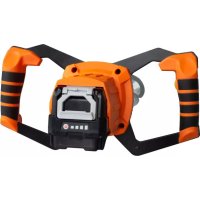
RLC 4010 - Paint mixer ATIKA - Free user manual and instructions
Find the device manual for free RLC 4010 ATIKA in PDF.

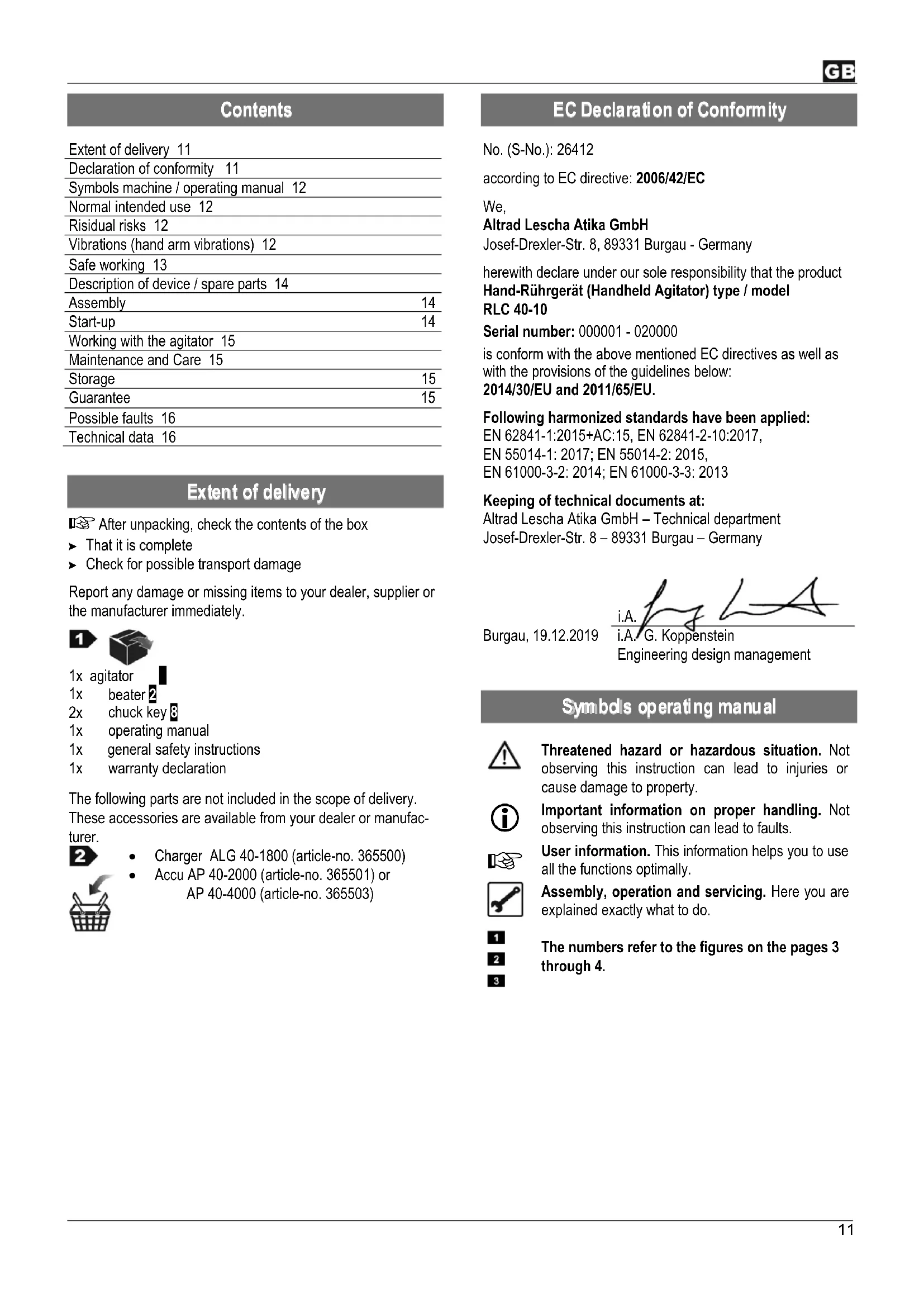


| Product type | Paint mixer (handheld agitator) |
| Brand | ATIKA |
| Model | RLC 4010 (RLC 40-10) |
| Power supply | Li-ion battery 36 V (not included) |
| Compatible batteries | AP 40-2000 (2.0 Ah) or AP 40-4000 (4.0 Ah) |
| Compatible charger | ALG 40-1800 (ref. 365500) |
| Rotation speed | 0 – 740 min⁻¹ (continuously adjustable, 6 levels) |
| Max. stirrer diameter | 120 mm |
| Stirrer mount | M14 |
| Stirrer length | approx. 570 mm |
| Max. mixing volume | approx. 40 liters |
| Weight | approx. 4.8 kg |
| Sound pressure level | 85 dB(A) (uncertainty 3 dB(A)) |
| Sound power level | 96 dB(A) (uncertainty 3 dB(A)) |
| Vibration (hand-arm) | 5.56 m/s² (K=1.5 m/s²) |
| Protection class | II |
| Main functions | Mixing of paints, mortars, adhesives, plasters, fillers, etc. |
| Safety | Start-up lock, automatic shut-off in case of discharge or overload |
| Maintenance | Clean ventilation slots, check carbon brushes, replace stirrer if worn |
| Spare parts | Stirrer (ref. 372582), tightening wrench (ref. 372562) |
| Warranty | See attached warranty statement |
| Standards | CE, EN 62841, EN 55014, directive 2006/42/EC |
Frequently Asked Questions - RLC 4010 ATIKA
User questions about RLC 4010 ATIKA
0 question about this device. Answer the ones you know or ask your own.
Ask a new question about this device
Download the instructions for your Paint mixer in PDF format for free! Find your manual RLC 4010 - ATIKA and take your electronic device back in hand. On this page are published all the documents necessary for the use of your device. RLC 4010 by ATIKA.
USER MANUAL RLC 4010 ATIKA
Original instructions
Notice originale
Extent of delivery 11
Declaration of conformity 11
Symbols machine / operating manual 12
Normal intended use 12
Residual risks 12
Vibrations (hand arm vibrations) 12
Safe working 13
Description of device / spare parts 14
Assembly 14
Start-up 14
Working with the agitator 15
Maintenance and Care 15
Storage 15
Guarantee 15
Possible faults 16
Technical data 16
Extent of delivery
After unpacking, check the contents of the box
▶ That it is complete
▶ Check for possible transport damage
Report any damage or missing items to your dealer, supplier or the manufacturer immediately.


1x agitator
1x beater 2
2x chuck key 8
1x operating manual
1x general safety instructions
1x warranty declaration
The following parts are not included in the scope of delivery. These accessories are available from your dealer or manufacturer.

• Charger ALG 40-1800 (article-no. 365500)
- Accu AP 40-2000 (article-no. 365501) or AP 40-4000 (article-no. 365503)

EC Declaration of Conformity
No. (S-No.): 26412
according to EC directive: 2006/42/EC
We,
Altrad Lescha Atika GmbH
Josef-Drexler-Str. 8, 89331 Burgau - Germany
herewith declare under our sole responsibility that the product Hand-Rührgerät (Handheld Agitator) type / model RLC 40-10
Serial number: 000001 - 020000
is conform with the above mentioned EC directives as well as with the provisions of the guidelines below: 2014/30/EU and 2011/65/EU.
Following harmonized standards have been applied:
EN 62841-1:2015+AC:15, EN 62841-2-10:2017,
EN 55014-1: 2017; EN 55014-2: 2015,
EN 61000-3-2: 2014; EN 61000-3-3: 2013
Keeping of technical documents at:
Altrad Lescha Atika GmbH – Technical department
Josef-Drexler-Str. 8 – 89331 Burgau – Germany
Burgau, 19.12.2019
Engineering design management
Symbols operating manual

Threatened hazard or hazardous situation. Not observing this instruction can lead to injuries or cause damage to property.

Important information on proper handling. Not observing this instruction can lead to faults.

User information. This information helps you to use all the functions optimally.

Assembly, operation and servicing. Here you are explained exactly what to do.
1
The numbers refer to the figures on the pages 3 through 4.
2
3
Symbols machine
Memorise the meaning to be able to operate the device more safely and to protect yourself and other from possible injuries.
 | Carefully read operator's manual and the safety instructions before starting the machine and observe the instructions when operating. | ||
 | Wear eye and ear protection. |  | Wear dust mask. |
 | Wear protective gloves. |  | Protect against humidity. |
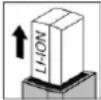 | Pulling out the battery⇒ before starting any work (cleaning, maintenance, repair, etc.) on the device.⇒ when interrupting work, during transport and storage. | ||
 | Speed regulation (infinitely variable)0 – 740 min-1 | ||
 | This product complies with European regulations specifically applicable to it. | ||
 | Machine of the protection class II (double insulated) | ||
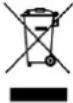 | Electrical devices do not go into the domestic rubbish. Give devices, accessories and packaging to an ecofriendly recycling.According to the European Directive 2012/19/EU on electrical and electronic scrap, electrical devices that are no longer serviceable must be separately collected and brought to a facility for an environmentally compatible recycling. | ||
Normal intended use
- This agitator is suited for DIY work for mixing liquid and powdry building material such as: paints, mortar, adhesives, plaster, grouting compounds, knifing fillers, coating compounds.
- Only beaters intended for the device with the max. diameter 120 mm (RLC 40-10) must be used.
• ⚠️ This machine must not be used
— as a drilling machine or as a drive for other devices
- for polishing, grinding, sharpening, engraving with any attachments.

- STOP Any other utilisation counts as improper use, especially mixing combustible or explosive materials (⚠️ fire and explosion hazard) and use with foodstuffs. The manufacturer is not liable for damages resulting from improper use.
→ the user alone shall bear the risk. - The intended usage also includes compliance with the operating, servicing and repair conditions prescribed by the
manufacturer and following the safety instructions included in the instructions.
- The relevant accident prevention regulations for the operation as well as the other generally acknowledged occupational medicine and safety rules must be complied with.
- Unauth orised modifi ca tio ns on th e agitator exclude a liability of the manufacturer for damages of any kind resulting from it.
- Only persons who are familiarised with the device and informed about possible risks are allowed to prepare, operate and service this device. Repair works may only be carried out by us or by a customer service agent nominated by us.
Risidual risks
Even if used properly, residual risks can exist even if the relevant safety regulations are complied with due to the design determined by the intended purpose.
Residual risks can be minimised if the “Safety instructions” and the “Normal intended use” as well as the whole of the operating instructions are observed.
Observing these instructions, and taking proper care, will reduce the risk of personal injury or damage to the equipment.
- Failure to observe the safety precautions can lead to injury to the operator or damage to property.
- Contact with the rotating shaft (6) (risk of bruises).
■ Reaching in the rotating beater (risk of cuts) - Risk from electricity, by using non-standard electrical connections.
- Touching live parts of opened electrical components.
- Impairment of hearing when working on the machine for longer periods of time without ear protection.
In addition, in spite of all the precautionary measures taken, non-obvious residual risks can still exist.
Vibrations (hand arm vibrations)
RLC 40-10 : 5,56 m/s²; K = 1.5 m/s²
Warning!
The actual vibration emission level during the use of the machine may differ from that indicated in the operating instructions or indicated by the manufacturer. This may be caused by the following factors to be minded before and during the use:
- Proper use of the machine
- Correct operating of the machine
- Proper condition of the machine for use
- Proper condition of the beaters or installation of the correct beater
- Handles and optional anti-vibration handles properly mounted on the machine body
When you feel uncomfortable or notice discoloration of skin on your hands during the use of the machine, stop working immediately. Observe sufficient break times to rest. Failure to have
sufficient break times may result in a hand-arm vibration syndrome.
The extent of exposure depending on the type of work or machine use should be estimated and appropriate breaks taken. In this way, the extent of exposure can be considerably reduced over the entire work time. Minimise the risk caused by vibrations. Maintain this machine according to the instructions in the manual.
Avoid the use of this machine at temperatures under 10° C.
Create a work schedule in order to minimise vibration exposure.
Safe working
Pass the safety instructions on to all persons who work with the machine.
Children and young persons under 16 years of age as well as persons who have not read the instruction manual are not allowed to operate this product.
Keep these safety instructions in a safe place.
i Follow the attached "General safety instructions".
- Do not use the machine for unsuitable purposes (see "Normal intended use" and "Working with the agitator").
- Do not touch, inhal (dust) or swallow cement and additives. Wear personal protective equipment (gloves, safety goggles, face mask) when filling or emptying the mixing container.
- Keep children, bystanders and animals at a distance from your working area. Do not allow other persons, especially children, to touch the tool or the cable.
- Switch off the machine if persons, in particular children or pets, are close to you or if you change your working area.
- The operator is responsible to third persons within the area of operations.
- The operator is responsible for accidents or risks which occur to other persons or their properties.
- Never operate the machine if other persons are in the immediate vicinity.
■ Never leave the device unattended. - Only operate the machine with complete and correctly attached safety equipment and do not alter anything on the machine that could impair the safety.
- Do not modify the device or parts of the device respectively.
-
Switch the machine off and remove the remove the battery before
-
carrying out repair works
- maintenance and cleaning
- eliminating faults.
– checking connecting lines, whether these are knotted or damaged. - transport
– leaving unattended (even during short interruptions).
– unusual noises and vibrations
■ Thoroughly maintain your agitator:
- Make sure that the ventilation apertures are free.
- Keep handles dry and free of oils and grease. Follow the maintenance instructions.
- Check the machine for possible damage:
- Before further use of the machine the safety devices must be checked carefully for their proper and intended function.
- Check whether movable parts function perfectly and do not stick or whether parts are damaged. All parts must be correctly installed and fulfil all conditions to ensure perfect operation of the machine.
- Damaged guards and parts must be properly repaired or exchanged by a recognized, specialist workshop; insofar as nothing else is stated in the instructions for use.
- Damaged or illegible safety labels should be replaced immediately.
- Store unused equipment in a dry, locked place out of the reach of children.
Safety instructions for agitators
a) Hold the power tool with both hands by the handles provided. Loss of control may result in injury.
b) To avoid a dangerous atmosphere, ensure adequate ventilation when mixing flammable substances. Vapours formed may be inhaled or ignited by sparks generated by power tools.
c) Do not stir any food. Power tools and their implements are not designed for processing food.
d) Keep the power cords away from the work area. The power cord can get caught in the beater.
e) Ensure that the agitator tank is firmly and safely positioned. An improperly secured container may move unexpectedly.
f) Make sure that no liquid splashes against the housing of the power tool. Liquid entering the power tool may cause damage and electric shock.
g) Follow the directions and safety instructions for the material to be mixed. The material to be mixed can be harmful to health.
h) If the power tool falls into the material to be mixed, immediately unplug the power plug and have the power tool checked by qualified personnel. Reaching into the container with the power tool still hanging from the socket inside it can lead to an electric shock.
i) During the stirring process, do not reach into the agitator container with your hands or insert any other objects. Contact with the beater can lead to serious injuries.
j) Only let the power tool start up and come to a stop in the agitator tank. The beater can spin around or bend in an uncontrolled manner.
Refer to the enclosed brochure “General safety instructions” for additional safety notices.
1 Description of device / Spare parts
| Pos | Denomination Order-No. | |
| 1 | Agitator | |
| 2 | Mortar beatera) Barb) Beater attachment | 372582 120 mm |
| 3 | ON / OFF-switch | |
| 4 | Trip switch | |
| 5 | Speed control | |
| 6 | Shaft | |
| 7 | Handle | |
| 8 | Spanners SW 22 372562 | |
| 9 | Safety label | |
| 10 | Charger 1,8 A 2 | 365500 |
| 11 | Accu 2,0,Ah 2 | 365501 |
| 12 | Accu 4,0 Ah 2 | 365503 |

Assembly
Fitting the beater
3 Screw the beater attachment (2b) on the bar (2a).
4 Screw the beater (2) on the shaft (6).
Fix the beater using the spanners (8).

Start-up
Do not use any device where the switch can not be switched on and off. Damaged switches must be repaired or replaced immediately by the customer service.
Battery
2 The lithium ion batteries AP 40-4000 (Article No. 365503) or AP 40-2000 (Article No. 365501) as well as the charger ALG 40-1800 (Article No. 365500) are not included in the scope of delivery and must be purchased separately.
Use only an original battery and the original charger.
Refer to the respective "Operating instructions" for further information on the batteries and the charger.
Inserting the battery
7 Insert the battery (11/12) in the device. Make sure to slide the battery fully in until it engages with a click.
Switching on/off
Do not use any device where the switch can not be switched on and off. Damaged switches must be repaired or replaced immediately by the customer service.
Switching on
i Start the machine at the lowest rotational speed (Level 1).
5 The On/Off switch is integrated in the handle.
First press the trip switch (4), keep it depressed and operate the on/off switch (3).
Switching off
The device stops automatically when you release the switch.
This machine is not suited for continuous operation.
To protect the battery the device automatically switches off at a low battery charge and during overload.
Be sure not to continue operating the On/Off switch; this may damage the battery.
Charge the lithium-ion battery ( "Battery" operating instructions).
Speed control
With this type, the motor's speed and thus the agitator performance can be adjusted. (Level 1 - 6).
6 You can continuously adjust the speed with the speed control (5).
• Level 1 → min. power = SLOW.
• Level 6 → max. power = FAST.
Working with the agitator
Instruction for using the agitator
Before starting any work read and understand
▶ the safety notes,
▶ following additional instructions on how to work with this machine.
■ Hold the device with both hands during mixing.
Do not reach in the running beater (rotating beater).
- ① Avoid splashing. Work with low speed when immersing the beater in the material to be mixed or pulling it out.
- Only use beaters recommended by the manufacturer.
Pay attention the max. diameter: ∅ 120 mm - RLC 40-10.
- The supplied mortar beater is suitable for materials with tough and tenacious consistency: e.g. mortar, knitting fillers, cement, plaster, lime, concrete, flooring plaster, etc.
- Increase the speed during the mixing process. Immerse the beater through the material to be mixed until it is thoroughly mixed. Follow the processing instructions from the suppliers.
- Do not work with low speed in continuous mode. This may result in overloading/overheating the motor as no sufficient cooling can be generated.

Maintenance and Care
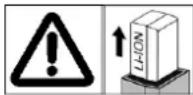
Before each maintenance and cleaning work:
- switch off device
- wait for standstill of the beater
- remove the battery
Use only original parts. Other parts can result in unexpected damages and injuries.
Maintenance and repair work beyond this is only allowed to be carried out by the manufacturer or authorized service staff.
Store unused equipment in a dry, locked place out of the reach of children.
i Observe the following to maintain the operability of the machine:
- Keep vent slits clean and free from obstructions.
■ Remove dust and dirt using a cloth or a soft brush. - Do not clean the machine with running water or high-pressure cleaners.
- Do not use solvents for the synthetic parts (petrol, alcohol, etc.) as these can damage the synthetic parts.
- Check that the handles are properly secured.
- Clean the beater.
- The agitator is equipped with carbon brushes. Have the carbon brushes be replaced by the customer service if they are worn
⚠️ Regularly check the beater for damages for your own safety. Immediately replace any damaged beater.
⚠️ Check the shaft on a regular basis. An agitator with defective shaft must no longer be used. Have the device be repaired by the customer service.
Carbon brushes
When the carbon brushes have reached the minimum length, the agitator switches off automatically. Increased sparking may occur shortly before the minimum length is reached.
Have the carbon brushes replaced by an authorised specialist workshop or customer service.
Storage
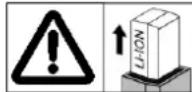
Remove the battery
- Store unused equipment in a dry, locked place out of the reach of children.
Before a longer period of storage carry out the following to extend the machine's service life and ensure an easy operating:
→ remove the battery
→ thoroughly clean the device
Refer to the respective “Operating instructions” for further information on the batteries and the charger.
Guarantee
Please observe the enclosed terms of guarantee.
Possible faults
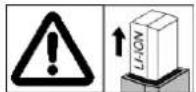
Before each fault elimination:
- switch off device
— wait for standstill of the beater - remove the battery
After each fault clearance, put into operation and recheck all security installations.
| Problem Possible cause Remedy | ||
| Motor won't start | ⇒ Li-Ion battery run down⇒ Lithium-ion battery not inserted correctly⇒ Li-Ion battery too cold/ too warm⇒ Li-Ion battery, Motor or switch defect | ⇒ Charge the Li- ion battery⇒ Check whether the lithium battery has engaged audibly.⇒ Allow the lithium battery to warm up/cool down⇒ Have the battery, motor or switch checked / repaired by a licensed electrician or customer service or replaced by original spare parts. |
| Unusual vibrations | ⇒ Beater defective.⇒ Chuck defective.⇒ Non-intended material to be mixed. | ⇒ Replace the beater.⇒ To correct the problem, refer to the manufacturer or other approved service centre.⇒ Incorrect processing. Follow the processing instructions from the supplier. |
| Device starts but blocks under slight load and cuts off automatically. | ⇒ Extension cable too long, or cross-section too small.⇒ Socket too far away from main connection, and cross-section of connection lead too small. | ⇒ Extension cable at least 1,5 mm2 , maximum 25 m long.⇒ Cross- section of at least 2,5 mm2 in longer cables. |
| Output per battery charge too short | ⇒ Rechargeable battery is low⇒ Battery service life exhausted | ⇒ Charge the Li- ion battery (manual battery “Charging the battery”)⇒ Charging the rechargeable battery |
Technical data
| Type / Model RLC 40 – 10 | |
| Year of construction See last page | |
| Suitable for battery type | Li-Ion 36 V |
| Suitable for battery capacity | 2000 mAh oder 4000 mAh |
| Speed n0 (with speed control) 0 - 740 min | -1 |
| Beater diameter 120 mm | |
| Beater chuck M14 | |
| Beater length approx. 570 mm | |
| Volume of the material to be mixed approx. 40 litres | |
| Weight (without battery) approx. 4.8 kg | |
| Hand-arm-vibration on the handle ah | 5.56 m/s 2 |
| Measuring uncertainty K | 1,5 m/s 2 |
| Sound power level LWA | 96 dB (A) |
| Measuring uncertainty KWA | 3.0 dB (A) |
| Measured sound pressure level LPA | 85 dB (A) |
| Measuring uncertainty KPA | 3.0 dB (A) |
Technical modifications reserved!
Sommaire
type / model RLC 40-10
(Hand-Arm-vibrationer)
RLC 40-10: 5,56 m/s 2 ; K = 1,5 m/s 2
Varning:
GB Year of construction


- EXTENT OF DELIVERY
- EC DECLARATION OF CONFORMITY
- SYMBOLS OPERATING MANUAL
- SYMBOLS MACHINE
- NORMAL INTENDED USE
- RISIDUAL RISKS
- VIBRATIONS (HAND ARM VIBRATIONS)
- WARNING
- SAFE WORKING
- SAFETY INSTRUCTIONS FOR AGITATORS
- 1 DESCRIPTION OF DEVICE / SPARE PARTS
- ASSEMBLY
- FITTING THE BEATER
- START-UP
- BATTERY
- INSERTING THE BATTERY
- SWITCHING ON/OFF
- SWITCHING ON
- SWITCHING OFF
- SPEED CONTROL
- WORKING WITH THE AGITATOR
- INSTRUCTION FOR USING THE AGITATOR
- MAINTENANCE AND CARE
- CARBON BRUSHES
- STORAGE
- REMOVE THE BATTERY
- GUARANTEE
- POSSIBLE FAULTS
- BEFORE EACH FAULT ELIMINATION
- TECHNICAL DATA
- SOMMAIRE
- (HAND-ARM-VIBRATIONER)
- VARNING
Brand : ATIKA
Model : RLC 4010
Category : Paint mixer