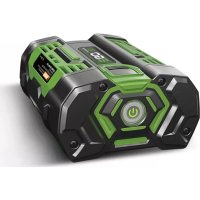
BA1120E - Battery EGO - Free user manual and instructions
Find the device manual for free BA1120E EGO in PDF.



| Product Type | Lithium-ion Battery |
| Brand | EGO |
| Model | BA1120E |
| Nominal Voltage | 56 V |
| Capacity | 2.0 Ah |
| Weight | 1.2 kg |
| Optimal Charging Temperature | 5 °C to 40 °C |
| Operating Temperature | 5 °C to 40 °C |
| Charge Indicator | Power indicator: green (charge > 15%), red (low voltage), flashing red (almost discharged) |
| Battery Protection | Protection against excessive temperature, overcharge and over-discharge |
| Compatible Chargers | EGO CH5500E, CH2100E |
| Runtime | Varies depending on the tool used |
| Care and Cleaning | Clean with a dry cloth; do not immerse; do not use solvents |
| Safety | Remove battery before any maintenance; do not expose to heat, water, or flames; wear eye protection |
| Spare Parts and Repairability | Use only identical EGO replacement parts; repair by a qualified technician |
| Warranty | See egopowerplus.com for terms |
| Recycling | Do not dispose of with household waste; recycle in accordance with local regulations |
Frequently Asked Questions - BA1120E EGO
User questions about BA1120E EGO
0 question about this device. Answer the ones you know or ask your own.
Ask a new question about this device
Download the instructions for your Battery in PDF format for free! Find your manual BA1120E - EGO and take your electronic device back in hand. On this page are published all the documents necessary for the use of your device. BA1120E by EGO.
USER MANUAL BA1120E EGO
natural_image
Technical line drawings of three mechanical housing components (no text or symbols)OPERATOR'S MANUAL
56 VOLT BATTERY
2.0AH/2.5AH/4.0AH/6.0AH/5.0AH/7.5AH
MODEL NUMBER BA1120E/BA1400/BA2240E/BA2800/BA3360/BA4200
⚠️ Residual risk! People with electronic devices, such as pacemakers, should consult their physician(s) before using this product. Operation of electrical equipment in close proximity to a heart pacemaker could cause interference or failure of the pacemaker.
WARNING: To ensure safety and reliability, all repairs should be performed by a qualified service technician.
SAFETY SYMBOLS
The purpose of safety symbols is to attract your attention to possible dangers. The safety symbols and the explanations with them deserve your careful attention and understanding. The symbol warnings do not, by themselves, eliminate any danger. The instructions and warnings they give are no substitutes for proper accident prevention measures.
WARNING: Be sure to read and understand all safety instructions in this Operator's Manual, including all safety alert symbols such as "DANGER," "WARNING," and "CAUTION" before using this tool. Failure to follow all instructions listed below may result in electric shock, fire, and/or serious personal injury.
WARNING: To ensure safety and reliability, all repairs should be performed by a qualified service technician.

WARNING: The operation of any power tools can result in foreign objects being thrown into your eyes, which can result in severe eye damage. Before beginning power tool operation, always wear safety goggles or safety glasses with side shields and a full face shield when needed. We recommend a Wide Vision Safety Mask for use over eyeglasses or standard safety glasses with side shields.
WARNING: Risk of fire and burns. Do not disassemble, heat above 100 °C, or incinerate. Keep battery out of reach of children and in original package until ready to use. Dispose of used batteries promptly according to local recycling or waste regulations.
SAFETY INSTRUCTIONS
This page depicts and describes safety symbols that may appear on this product. Read, understand, and follow all instructions on the machine before attempting to assemble and operate.
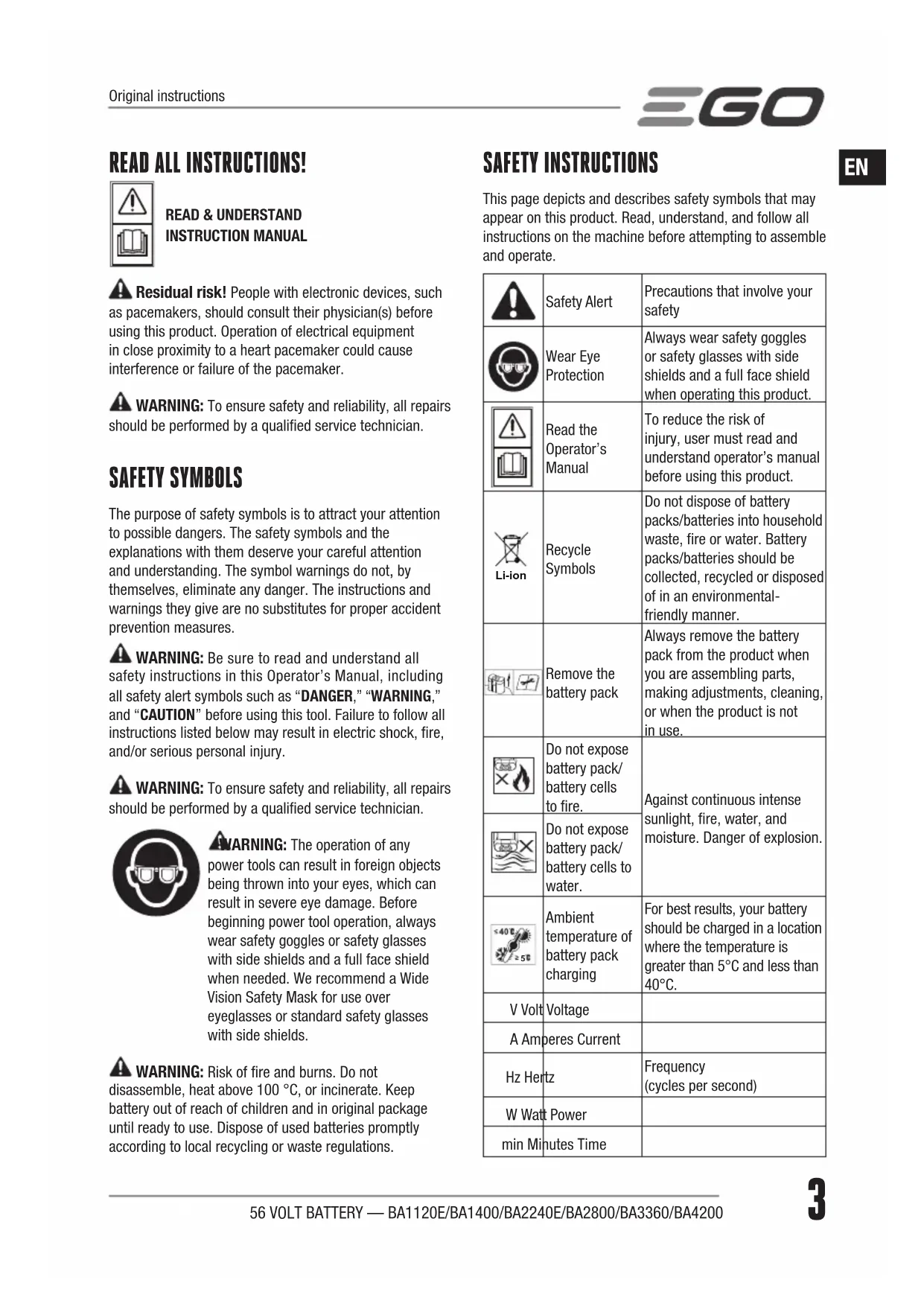
 | Safety Alert | Precautions that involve your safety |
 | Wear Eye Protection | Always wear safety goggles or safety glasses with side shields and a full face shield when operating this product. |
 | Read the Operator's Manual | To reduce the risk of injury, user must read and understand operator's manual before using this product. |
 | Recycle Symbols | Do not dispose of battery packs/batteries into household waste, fire or water. Battery packs/batteries should be collected, recycled or disposed of in an environmental-friendly manner. |
 | Remove the battery pack | Always remove the battery pack from the product when you are assembling parts, making adjustments, cleaning, or when the product is not in use. |
 | Do not expose battery pack/ battery cells to fire. | Against continuous intense sunlight, fire, water, and moisture. Danger of explosion. |
 | Do not expose battery pack/ battery cells to water. | |
 | Ambient temperature of battery pack charging | For best results, your battery should be charged in a location where the temperature is greater than 5°C and less than 40°C. |
| V Volt | Voltage | |
| A Amperes Current | ||
| Hz Hertz | Frequency (cycles per second) | |
| W Watt Power | ||
| min Minutes Time | ||
EN
| ~ | Alternating Current | Type of current |
| == | Direct Current | Type or a characteristic of current |
WARNING: Read and understand all instructions.
Failure to follow all instructions may result in electric shock, fire and/or serious personal injury. The term “power tool” in all of warnings listed refers to EGO Power+ battery operated (cordless) Lawn & Garden machines.
WORK AREA SAFETY
- Keep the work area clean and well lit. Cluttered or dark areas invite accidents.
■ Do not operate power tools in explosive environments, such as in the presence of flammable liquids, gases, or dust. Power tools create sparks, which may ignite the dust or fumes.
ELECTRICAL SAFETY
■ Do not expose power tools to rain or wet conditions. Water entering a power tool will increase the risk of electric shock.
■ Use only with chargers listed below:
| BATTERY PACKS CHARGER | |
| BA1120E, BA1400, BA2240E,BA2800, BA3360, BA4200 | CH5500E,CH2100E |
BATTERY TOOL USE AND CARE
■ Recharge only with the chargers specified by the manufacturer. A charger that is suitable for one type of battery pack may create a rise of fire when used with another battery pack.
■ Use power tools only with specifically designated battery packs. Use of any other battery packs may create a risk of injury and fire.
- When battery pack is not in use, keep it away from other metal objects like paper clips, coins, keys, nails screws or other small metal objects that can make a connection from one terminal to another. Shorting the battery terminals together may cause burns or a fire.
■ Under abusive conditions, liquid may be ejected from the battery; avoid contact. If contact accidentally occurs, flush with water. If liquid contacts eyes, additionally seek medical help. Liquid ejected from the battery may cause irritation or burns.
■ Do not dismantle, open or shred secondary cells or batteries.
- Do not expose cells or batteries to heat or fire. Avoid storage in direct sunlight.
- Do not short-circuit a cell or a battery. Do not store cells or batteries haphazardly in a box or drawer where they may short-circuit each other or be short-circuited by other metal objects.
■ Do not remove a cell or battery from its original packaging until required for use.
■ Do not subject cells or batteries to mechanical shock.
In the event of a cell leaking, do not allow the liquid to come in contact with the skin or eyes. If contact has been made, wash the affected area with copious amounts of water and seek medical advice.
■ Do not use any charger other than that specifically provided for use with the equipment.
■ Do not use any cell or battery which is not designed for use with the equipment.
■ Do not mix cells of different manufacture, capacity, size or type within a device.
■ Keep cells and batteries out of the reach of children.
- Seek medical advice immediately if a cell or a battery has been swallowed.
■ Always purchase the correct cell or battery for the equipment.
- Keep cells and batteries clean and dry.
■ Wipe the cell or battery terminals with a clean dry cloth if they become dirty.
Secondary cells and batteries need to be charged before use. Always use the correct charger and refer to the manufacturer's instructions or equipment manual for proper charging instructions.
■ Do not leave a battery on prolonged charge when not in use.
■ After extended periods of storage, it may be necessary to charge and discharge the cells or batteries several times to obtain maximum performance.
■ Secondary cells and batteries give their best performance when they are operated at normal room temperature (20 °C ± 5 °C).
■ Retain the original product literature for future reference.
■ Use only the cell or battery in the application for which it was intended.
■ When possible, remove the battery from the equipment when not in use.
■ Dispose of properly.
SERVICE
■ Follow instructions in the Maintenance section of this manual. Use of unauthorized parts or failure to follow Maintenance instructions may create a risk of shock or injury.
SPECIFIC SAFETY RULES
- Know your power tool. Read the operator's manual carefully. Learn the applications and limitations, as well as the specific potential hazards related to the tool. Following this rule will reduce the risk of electric shock, fire, or serious injury.
■ Battery tools do not have to be plugged into an electrical outlet; therefore, they are always in operating condition. Be aware of possible hazards when not using your battery tool. Always remove the battery before changing accessories. Following this rule will reduce the risk of electric shock, fire or serious personal injury. - Do not place the battery tools or battery pack near fire or heat. This will reduce the risk of explosion and possibly injury.
- Do not dispose of the batteries in a fire. The cells may explode. Check with local codes for possible special disposal instructions.
- Do not open or mutilate the battery. Released electrolyte is corrosive and may cause damage to the eyes or skin. It may be toxic if swallowed.
- Do not crush, drop or damage the battery pack. Do not use a battery pack or charger that has been dropped or received a sharp blow. A damaged battery is subject to explosion. Properly dispose of a dropped or damaged battery immediately.
- Batteries vent hydrogen gas and can explode in the presence of a source of ignition, such as a pilot light. To reduce the risk of serious personal injury, never use any cordless product in the presence of open flame. An exploded battery can propel debris and chemicals. If exposed, flush with water immediately.
■ Do not charge the battery in a damp or wet location. Following this rule will reduce the risk of electric shock.
■ For best results, your battery should be charged in a location where the temperature is greater than 5° C and less than 40° C. Do not store it outside or in vehicles.
■ Under extreme usage or temperature conditions, battery leakage may occur. If liquid comes in contact with your skin, wash immediately with soap and water, then neutralize with lemon juice or vinegar. If liquid gets in your eyes, flush them with clean water for at least 10 minutes, and then seek immediate medical attention. Following this rule will reduce the risk of serious personal injury.
- Do not let gasoline, oils, petroleum-based products, etc. come in contact with plastic parts. These substances contain chemicals that can damage, weaken or destroy plastic.
- Have your battery pack serviced by a qualified repairperson using only identical replacement parts. This will ensure that the safety of the battery pack is maintained.
Save these instructions. Refer to them frequently and use them to instruct others who may use this tool. If you lend someone this tool, lend them these instructions also to prevent misuse of the product and possible injury.
SAVE THESE INSTRUCTIONS!
SPECIFICATIONS
| Battery | BA1120E: 56V 2.0Ah Lithium-ionBA1400: 56V 2.5Ah Lithium-ionBA2240E: 56V 4.0Ah Lithium-ionBA2800: 56V 5.0Ah Lithium-ionBA3360: 56V 6.0Ah Lithium-ionBA4200: 56V 7.5Ah Lithium-ion |
| Optimum Charging Temperature | 5°C-40°C |
| Battery weight | BA1120E: 1.2 kgBA1400: 1.3kgBA2240E: 2.2 kgBA2800: 2.2 kgBA3360: 2.8 kgBA4200: 2.8 kg |
DESCRIPTION
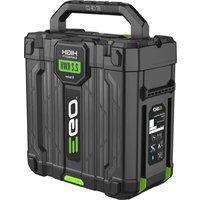
KNOW YOUR LITHIUM-ION BATTERY PACK (Fig. A)
- Cooling Air Port
- Power Indicator
- Battery Contacts
EN
OPERATION
POWER INDICATOR ON BATTERY PACK
This lithium-ion battery pack is equipped with a power indicator, which indicates the charge capacity level of the battery pack. Press the power indicator to display the charge level. The LED indicator will shine for 10 seconds.
■ The green light indicates that the battery pack is over 15% of its charge capacity.
■ The red light indicates low voltage of the battery pack.
■ The blinking red light indicates that the battery pack is nearly depleted and needs to be charged immediately.
BATTERY PROTECTION
The battery circuitry protects the battery pack from extreme temperature, over-discharge, and over-charge. To protect the battery from damage and prolong its life, the battery pack circuitry will turn off the battery pack if it becomes overloaded or if the temperature becomes too high during use. This may happen in extremely high torque, binding, and stalling situations. The battery pack will shut down with power indicator flashing orange for 10s when its operating temperature exceeds 70°C, and will begin normal operation when it returns to 67°C.
Notice: A significantly reduced run time after fully charging the battery pack indicates that the batteries are near the end of their usable life and must be replaced.
This Lithium-Ion battery pack will provide optimal performance in temperatures between 5°C and 40°C. When the battery pack is very cold, it may “pulse” for the first minute of use to warm itself. Put the battery pack on a tool and use the tool in a light application. After about a minute, the battery pack will have warmed itself and will operate normally.
WHEN TO CHARGE THE BATTERY PACK
NOTICE: Lithium-Ion battery packs are shipped partially charged. Before using it the first time, fully charge the battery pack.
NOTICE: This battery pack is equipped with an advanced self-maintenance function to extend the battery life. Depending on the battery charge, it will automatically perform a self-discharge operation after one month of storage. After this self-maintenance, the battery pack will enter sleep mode and maintain 30% of its charge capacity. If stored for a month or longer, fully recharge the battery before the next use.
It is not necessary to run down the battery pack charge before recharging. The Lithium-Ion battery can be charged at any time and will not develop a “memory” when charged after only a partial discharge. Use the power indicator to determine when the battery pack needs to be recharged.
HOW TO CHARGE THE BATTERY PACK
Follow the instructions in the Operator's Manual for the EGO CH5500E Rapid Charger or CH2100E Charger.
TO ATTACH AND DETACH THE BATTERY PACK
Follow the instructions in the Operator's Manual for the individual EGO product.
MAINTENANCE
WARNING: To avoid serious personal injury, always remove the battery pack from the tool when changing accessories, cleaning or performing any maintenance.
WARNING: When servicing, use only identical EGO replacement parts. Use of any other parts may create a hazard or cause product damage.
WARNING: It is not recommended to use compressed dry air as a cleaning method for the battery pack. If cleaning with compressed air is the only method to apply, always wear safety goggles or safety glasses with side shields. If the operation is dusty, also wear a dust mask.
GENERAL MAINTENANCE
Avoid using solvents when cleaning plastic parts. Most plastics are susceptible to damage from various types of commercial solvents and may be damaged by their use. Use clean clothes to remove dirt, dust, oil, grease, etc.
WARNING: Do not at any time let brake fluids, gasoline, petroleum-based products, penetrating oils, etc. come in contact with plastic parts. Chemicals can damage, weaken or destroy plastic which may result in serious personal injury.
WARNING: TO REDUCE THE RISK OF FIRE, PERSONAL INJURY, AND PRODUCT DAMAGE DUE TO A SHORT CIRCUIT, NEVER IMMERSE YOUR TOOL, BATTERY PACK OR CHARGER IN FLUID OR ALLOW A FLUID TO FLOW INSIDE THEM. CORROSIVE OR CONDUCTIVE FLUIDS, SUCH AS SEAWATER, CERTAIN INDUSTRIAL CHEMICALS, AND BLEACH OR BLEACH CONTAINING PRODUCTS, ETC., CAN CAUSE A SHORT CIRCUIT.
BATTERIES
The battery pack is equipped with Lithium-Ion rechargeable batteries. The duration of use from each charge will depend on the type of work performed.
The batteries in this tool have been designed to provide maximum trouble-free life. Like all batteries, they will eventually wear out.
Do not disassemble the battery pack or attempt to replace the batteries. Handling of the batteries, especially when wearing rings and jewelry could result in a serious burn.
To obtain the longest possible battery life, read and understand the operator's manual.
■ It is good practice to unplug the charger and remove the Lithium-Ion battery pack when not in use.
For Lithium-Ion battery pack storage longer than 30 days:
Store the Lithium-Ion battery pack where the temperature is below 26° C and free of moisture.
■ Store Lithium-Ion battery packs in a 30%-50% charged condition.
■ Every six months of storage, fully charge the Lithium-Ion battery pack.
■ Exterior may be cleaned with a cloth or soft non-metallic brush.
NOTICE: This battery pack has equipped with an advanced self-maintenance function. It can maintain 30% of its charge capacity automatically after it is stored over one month.
BATTERY PACK REMOVAL AND PREPARATION FOR RECYCLING
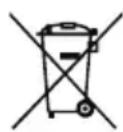
Li-ion
Do not dispose of battery charger and batteries/rechargeable batteries into household waste!
According to the European law 2012/19/EU, electrical and electronic equipment that is no longer usable, and according to the European law 2006/66/EC, defective or used battery packs/batteries, must be collected separately and disposed of in an environmentally correct manner.
Consult your local waste authority for information regarding available recycling and/or disposal options.
WARNING: Upon removal of the battery pack for disposal or recycling, cover the battery pack's terminals with heavy-duty adhesive tape. Do not attempt to destroy or disassemble the battery pack or remove any of its components. Lithium-Ion batteries must be recycled or disposed of properly. Also, never touch the terminals with metal objects and/or body parts as a short circuit may result. Keep away from children. Failure to comply with these warnings could result in fire and/or serious injury.
TROUBLESHOOTING
| PROBLEM CAUSE SOLUTION | ||
| The battery pack charge is reduced after more than one month of non-use. | The battery pack has automatically performed self-maintenance to extend its life. | Fully recharge the battery pack before use. |
| The power indicator flashes orange. | The battery is too hot. | Cool the battery pack until the temperature drops below 67°C. |
| The battery endcap gets warm during storage. Power indicator flashes green every two seconds. | The battery pack is automatically performed self-maintenance to extend battery life. | No action is required; this is normal. Press the power indicator the self-maintenance process will stop. |
WARRANTY
EGO WARRANTY POLICY
Please visit the website egopowerplus.com for full terms and conditions of the EGO Warranty policy.
⚠️ WARNING: Risk of fire and burns. Do not disassemble, heat above 100 °C, or incinerate. Keep battery out of reach of children and in original package until ready to use. Dispose of used batteries promptly according to local recycling or waste regulations.
SICHERHEITSHINWEISE
SIKKERHET I ARBEIDSOMRÅDET
GENERELT VEDLIKEHOLD
BEZPIECZEŃSTWO W MIEJSCU PRACY
POLITYKA GWARANCYJNA EGO
JÄTKE SEE KASUTUSJUHEND ALLES!
ANDMED
 | m g n u g n u m m s m m m m m m m m m m m m m m m m m m m m m m m m m m m m m m m m m m | y y z z z z z z z z z z z z z z z z z z z z z z z z z z z z z z z z z z |
| [wzwt] | m m m m m m m m m m m m m m m m m m m m m m m m m m m m m m m m mΩ | |
 | y y y y y y y y y y y y y y y y y y y y y y y y y y y y y y y y y yΩ | y y y y y y y y y y y y y y y y y y y y y y y y y y y y y y y yΩ |
| V | m m m m m m m m m m m m m m m m m m m m m m m m m m m m m m m mΩ | |
| A | y η y η | y y y y y y y y y y y y y y y y y y y y y y y y y y y y y y y Y |
| Hz | y y η | y y y y y y y y y y y y y y y y y y y y y y y y y y y y y Y |
| W | y η y y y y y y y y y y y y y y y y y y y y y y y y y y y y y y y y y | |
| min | y y y y y y y y y y y y y y y y y y y y y y y y y y y y y y y yΔyΔyΔyΔyΔyΔyΔyΔyΔyΔyΔyΔyΔyΔyΔyΔyΔyΔyΔyΔyΔyΔyΔyΔyΔyΔyΔyΔyΔyΔyΔyΔyΔyΔuΔyΔyΔyΔyΔyΔyΔyΔyΔyΔyΔyΔyΔyΔyΔyΔyΔyΔyΔyΔyΔyΔyΔyΔyΔyΔyΔyΔyΔyΔyΔyΔyΔy | |
| ~ | y y y y y y y y y y y y y y y y y y y y y y y y y y y y y y y y | y y y y y y y y y y y y y y y y y y y y y y y y y y y y y y yy |
| = | y y y y y y y y y y y y y y y y y y y y y y y y y y y y y y y y | y y y y y y y y y y y y y y y y y y y y y y y y y y y y y y Y |
gδo gδs: gδo gδs:
■ ๑๕๖๖๖๐ ๑๗๙๖๘๘ ΣΟΦΦΦΦΦΦΦΦΦΦΦΦΦΦΦΦΦΦΦΦΦΦΦΦΦΦΦΦΦΦΦΦΦΦΦΦΦΦΦΦΦΦΦΦΦΦΦΦΦΦΦΦΦΦΦΦΦΦΦΦΦΦΦΦΦΦΦΦΦΦΦΦΦΦΦΦΦΦΦΦΦΦΦΦΦΦΦΦΦΦΦΦΦΦΦΦΦΦΦΦФΩΣΟΥΟΙΟΙΟΙΟΙΟΙΟΙΟΙΟΙΟΙΟΙΟΙΟΙΟΙΟΙΟΙΟΙΟΙΟΙΟΙΟΙΟΙΟΙΟΙΟΙΟΙΟΙΟΙΟΙΟΙΟΙΟΙΟΙΟΙΟΙΟΙΟΙΟΙΟΙΟΙΟΙΟΙΟΙΟΙΟΙΟΙΟΙΟΙΟΙΟΙΟΙΟι
Bosbolu qas dmzmyg kshoogolu yadm tegmssfymis bosbolu osmdzmyh kshoagdi asde dmmsbghm qasbosbgdols dolzolu dylsdgozhydmyg qasbosbgdols muzob dylsdgozhydmyg smlsmngyls dmsssglencan ayjgiao byerulssfyrn, smlsmngyls dmssgldyeso dylsdgozhydmyg szydyganszheho sa gudkngbo dmzymbgomnás szydygnsm deo doafojdo dmzyndgomnás luombgdo sb dolsgon lsadgyemgás luombgis loombgdo sbadbyglo udsygmj doombg dygsooglu doyboos. zmómbogynds luombgáds, dygzoegju dobeni. zmómbogynds duombg duyms#ogas beggols fyuocnu, bggcybkou mma#oqs a##zbi y##o, boingjdo oda obeyglb#oeycno jodozgdpde, daayguzhydnyco oboglu#ommo jodozsfgdo, daaygom#dgmo sf dolso dyndgynco deamwryjl#do, dylsdgrms sb dolso dydzhrgmo 36mowyd#gdo, dylsdmmss ya#mo#gomb dmzymy gskoizs ysdmo#zomb dmzymy kshoizs.
###


- VOLT BATTERY
- 2.0AH/2.5AH/4.0AH/6.0AH/5.0AH/7.5AH
- SAFETY SYMBOLS
- SAFETY INSTRUCTIONS
- EN
- WARNING: Read and understand all instructions.
- WORK AREA SAFETY
- ELECTRICAL SAFETY
- BATTERY TOOL USE AND CARE
- SERVICE
- SPECIFIC SAFETY RULES
- SAVE THESE INSTRUCTIONS!
- DESCRIPTION
- KNOW YOUR LITHIUM-ION BATTERY PACK (Fig. A)
- OPERATION
- POWER INDICATOR ON BATTERY PACK
- BATTERY PROTECTION
- WHEN TO CHARGE THE BATTERY PACK
- HOW TO CHARGE THE BATTERY PACK
- TO ATTACH AND DETACH THE BATTERY PACK
- MAINTENANCE
- GENERAL MAINTENANCE
- BATTERIES
- For Lithium-Ion battery pack storage longer than 30 days:
- BATTERY PACK REMOVAL AND PREPARATION FOR RECYCLING
- WARRANTY
- EGO WARRANTY POLICY
- SICHERHEITSHINWEISE
- SIKKERHET I ARBEIDSOMRÅDET
- GENERELT VEDLIKEHOLD
- BEZPIECZEŃSTWO W MIEJSCU PRACY
- JÄTKE SEE KASUTUSJUHEND ALLES!
Brand : EGO
Model : BA1120E
Category : Battery