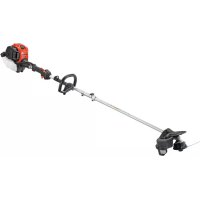
USER MANUAL CS246.4C DOLMAR
Read this instruction manual carefully before putting the Multi Function Power Head into operation and strictly observe the safety regulations! Save instruction manual for future reference.
Avertissement :
DOLMAR
English
(Original instructions)
Thank you very much for purchasing the DOLMAR Multi Function Power Head. We are pleased to recommend to you the DOLMAR Multi Function Power Head which is the result of a long development programme and many years of knowledge and experience.
Please read this booklet which refers in detail to the various points that will demonstrate its outstanding performance. This will assist you to obtain the best possible result from your DOLMAR Multi Function Power Head.

Table of Contents Page
Symbols....2
Safety instructions....3
Technical data....6
Approved attachments....7
Designation of parts....8
Mounting of handle....9
Mounting attachment....9
Disassembling 10
Before start of operation....11
Correct handling of machine....13
Points in operation and how to stop 13
Servicing instructions....16
Storage....19
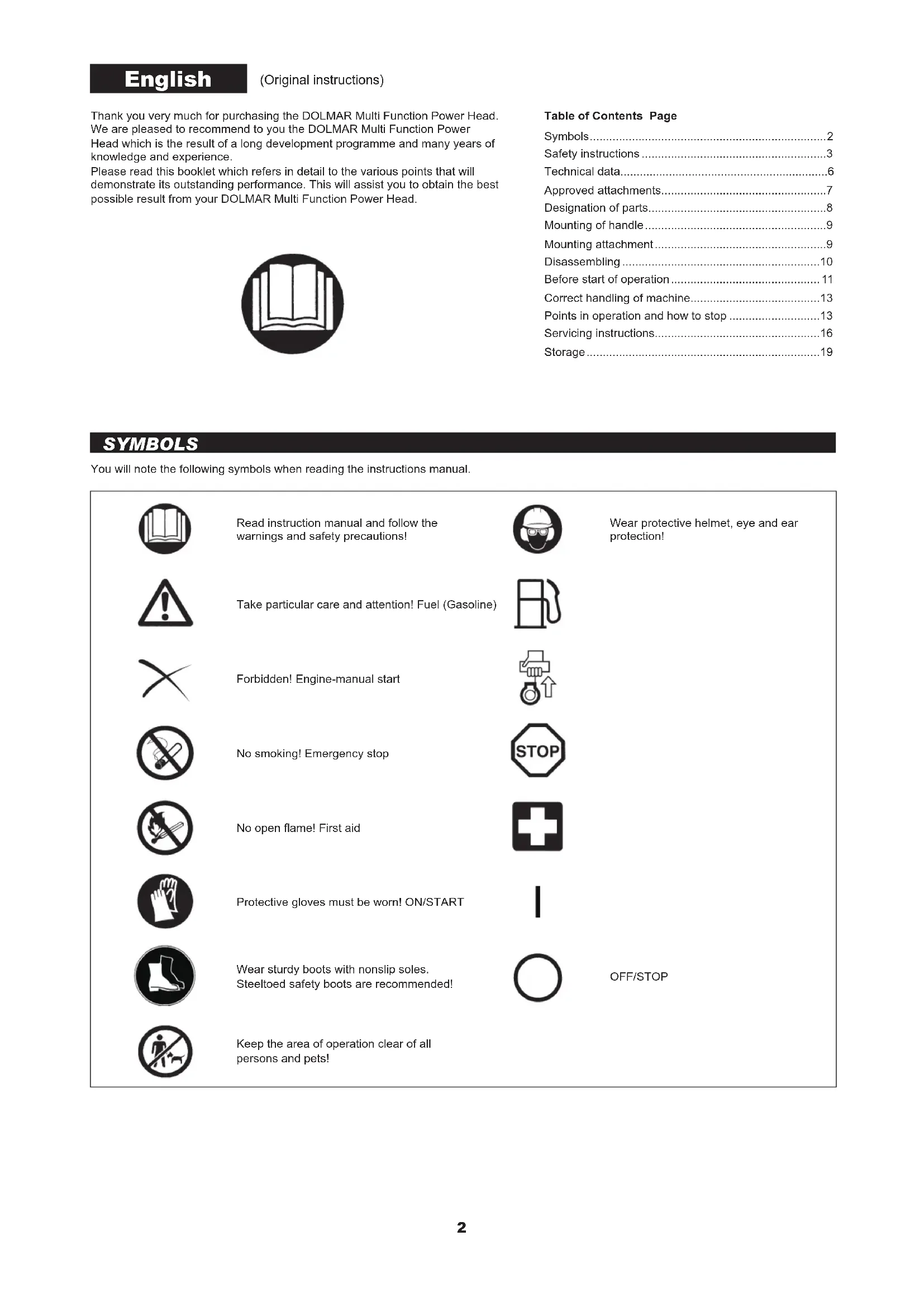
SYMBOLS
You will note the following symbols when reading the instructions manual.

Read instruction manual and follow the warnings and safety precautions!

Wear protective helmet, eye and ear protection!

Take particular care and attention! Fuel (Gasoline)


Forbidden! Engine-manual start


No smoking! Emergency stop


No open flame! First aid


Protective gloves must be worn! ON/START


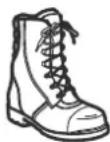
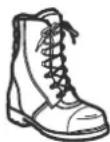
Wear sturdy boots with nonslip soles.
Steeltoed safety boots are recommended!

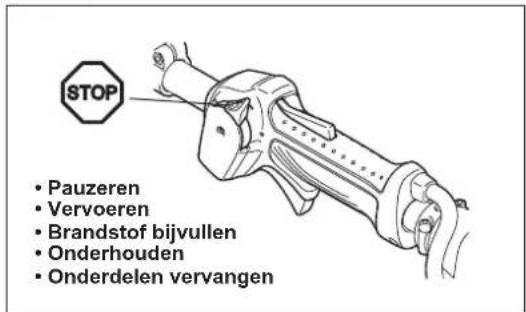
OFF/STOP

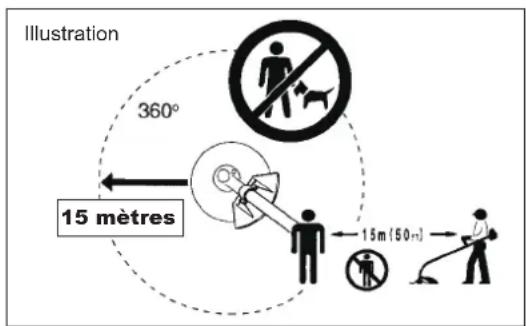
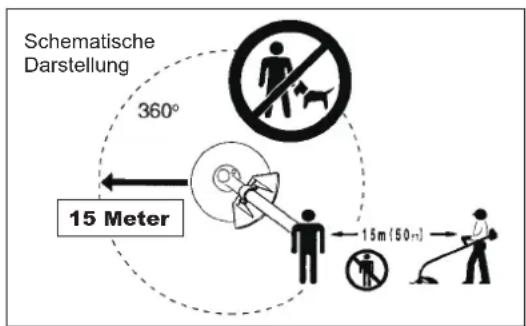
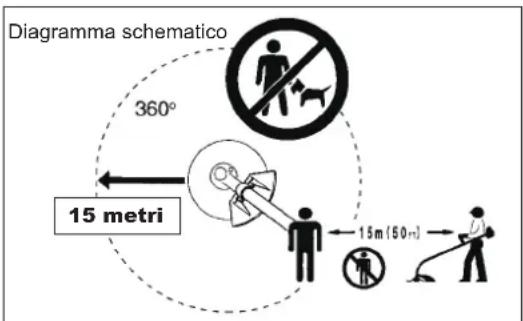
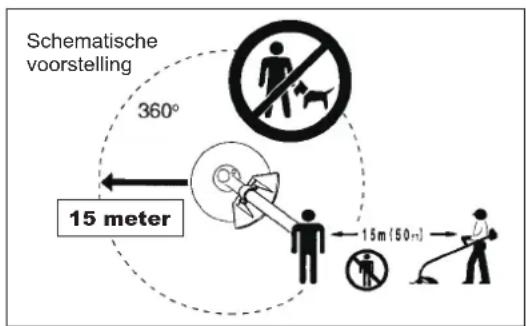
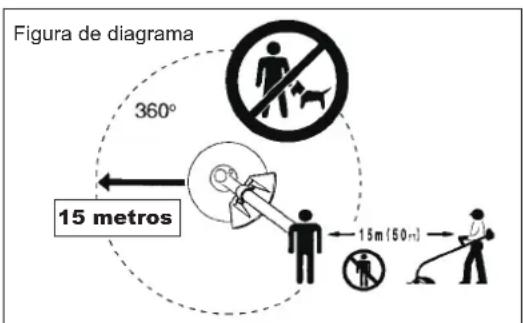
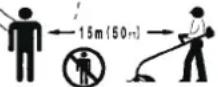
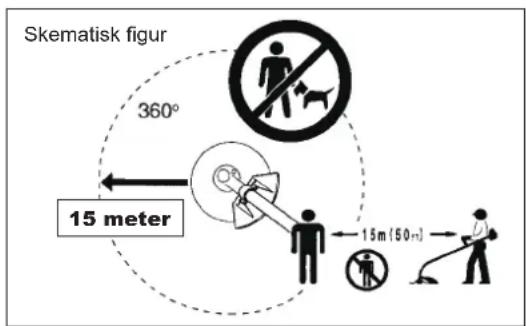
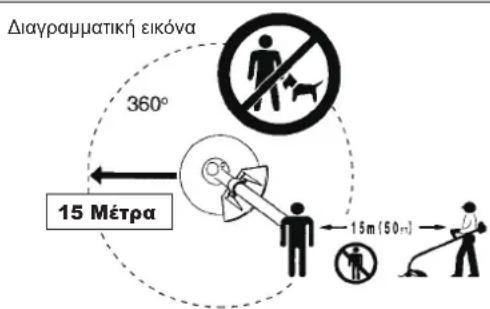
Keep the area of operation clear of all persons and pets!
Intended use of the machine
This multi function power head is intended for driving an approved attachment listed in this instruction manual. Never use the machine for the other purpose.
SAFETY INSTRUCTIONS
General instructions
- To ensure correct operation, user has to read this instruction manual to make himself familiar with the handling of the Multi Function Power Head. Users insufficiently informed will risk danger to themselves as well as others due to improper handling.
- It is recommended only to lend the Multi Function Power Head to people who have proven to be experienced with Multi Function Power Heads. Always hand over the instruction manual.
- First users should ask the dealer for basic instructions to familiarize oneself with the handling of an engine powered cutter.
- Children and young persons aged under 18 years must not be allowed to operate the Multi Function Power Head. Persons over the age of 16 years may however use the device for the purpose of being trained only whilst under supervision of a qualified trainer.
- Use Multi Function Power Heads with the utmost care and attention.
- Operate the Multi Function Power Head only if you are in good physical condition. Perform all work calmly and carefully. The user has to accept liability for others.
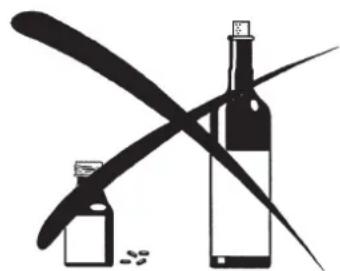
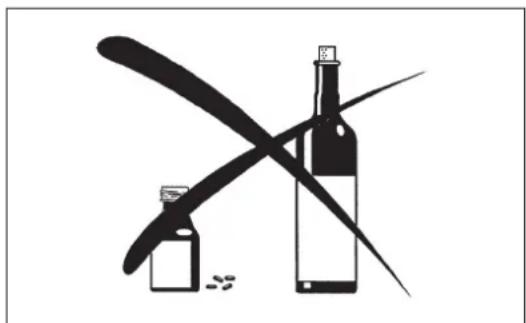
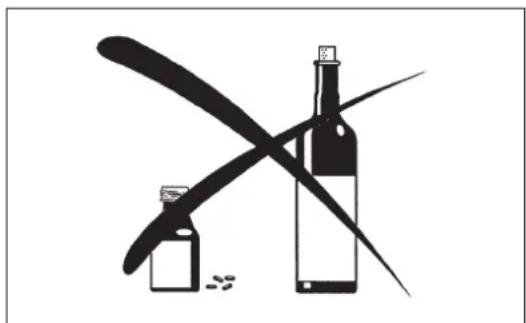
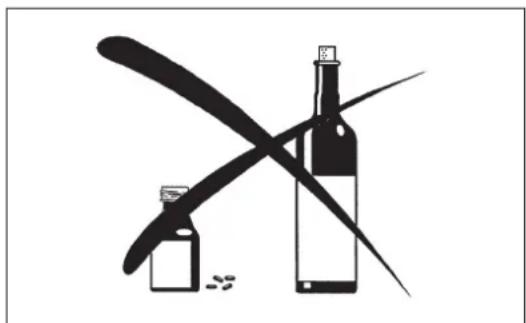
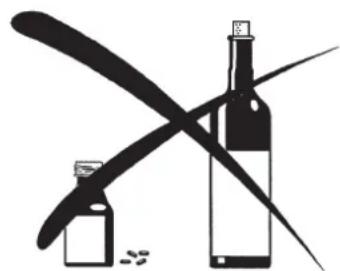
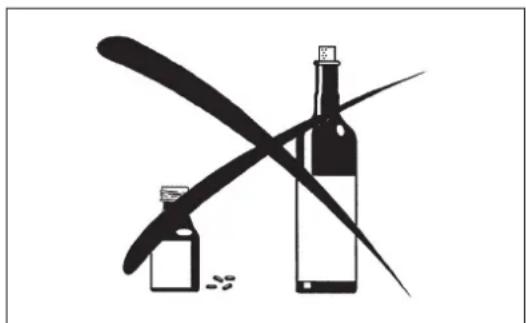
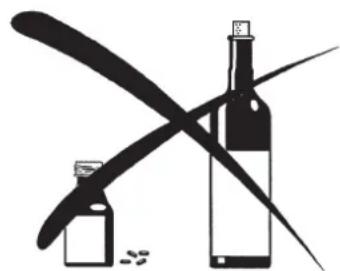
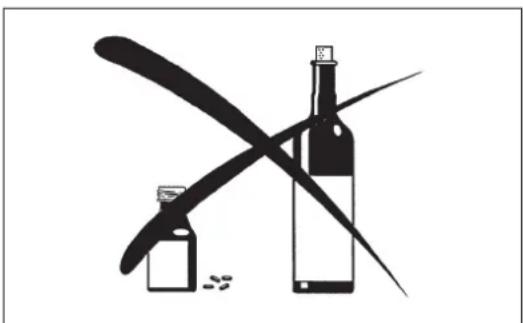
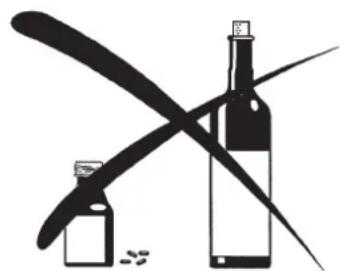
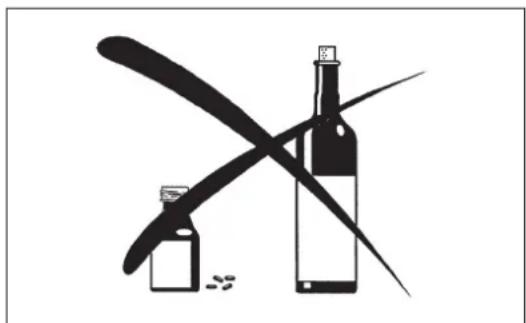
- Never use the Multi Function Power Head after consumption of alcohol or drugs, or if feeling tired or ill.
- National regulation can restrict the use of the machine.
Personal protective equipment
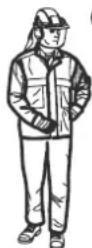
- The clothing worn should be functional and appropriate, i.e. it should be tight-fitting but not cause hindrance. Do not wear either jewelry or clothing which could become entangled with bushes or shrubs.
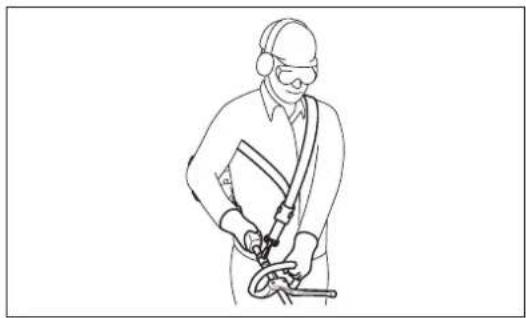
- In order to avoid either head-, eye-, hand-or foot injuries as well as to protect your hearing the following protective equipment and protective clothing must be used during operation of the Multi Function Power Head.
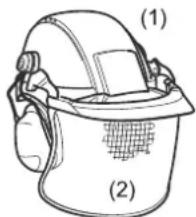
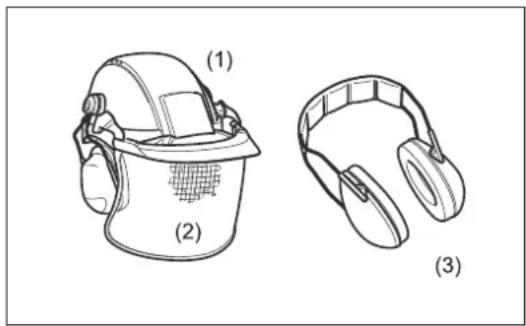
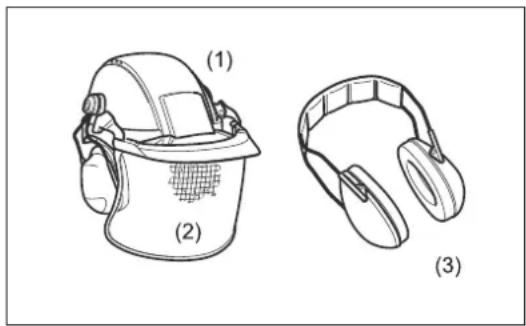
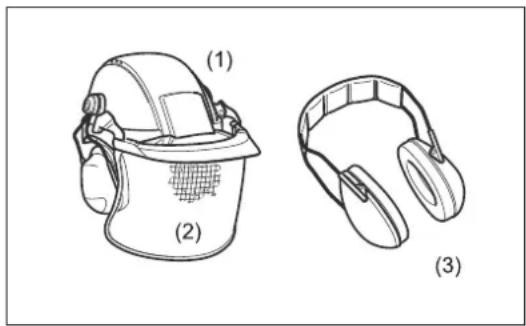
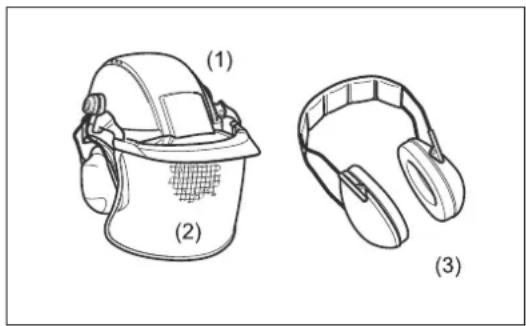
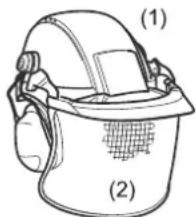
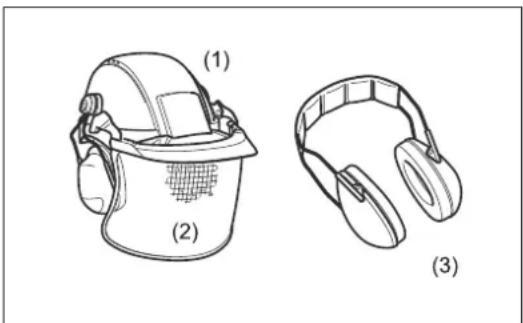
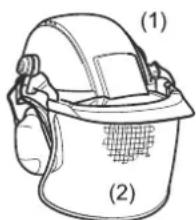
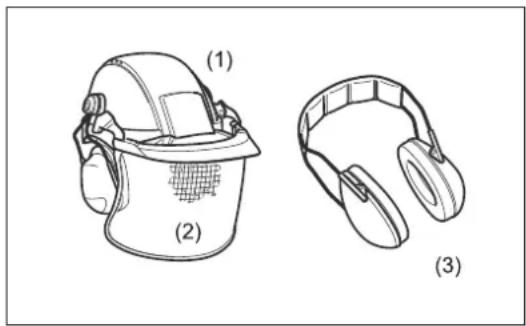
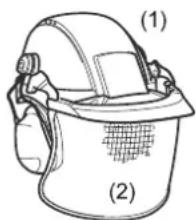
- Always wear a helmet where there is a risk of falling objects. The protective helmet (1) is to be checked at regular intervals for damage and is to be replaced at the latest after 5 years. Use only approved protective helmets.
- The visor (2) of the helmet (or alternatively goggles) protects the face from flying debris and stones. During operation of the Multi Function Power Head always wear goggles, or a visor to prevent eye injuries.
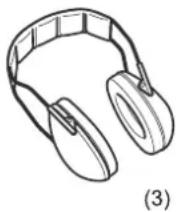
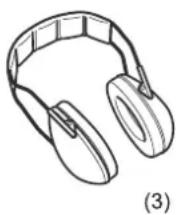
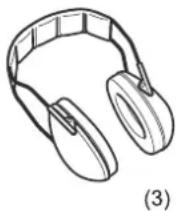
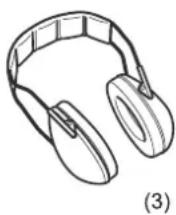
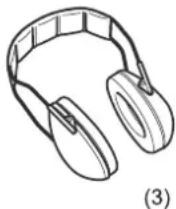
- Wear adequate noise protection equipment to avoid hearing impairment (ear muffs (3), ear plugs etc.).
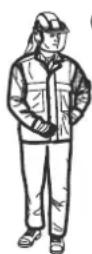
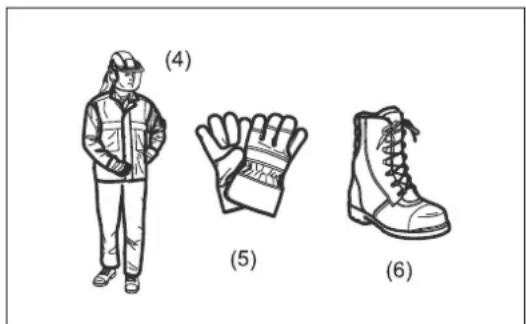
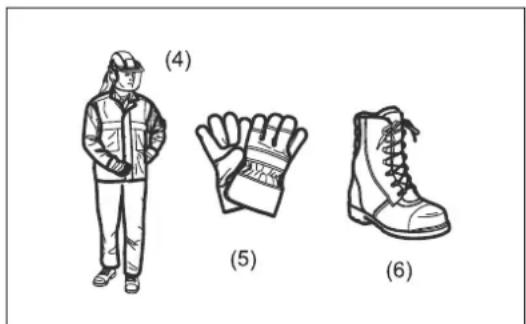
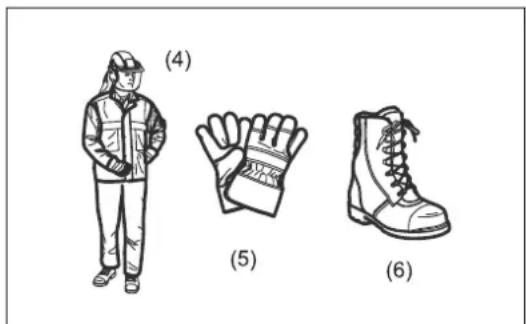
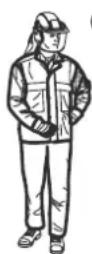
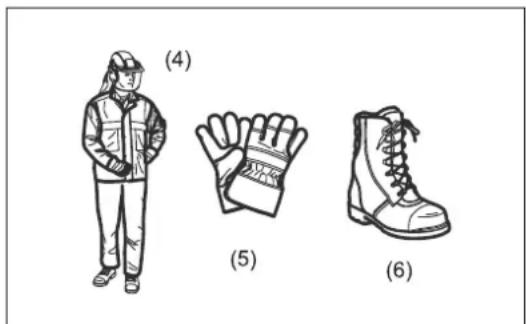
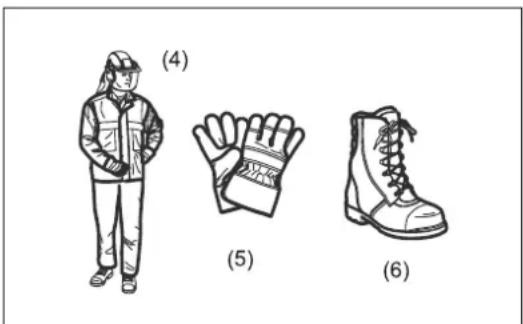
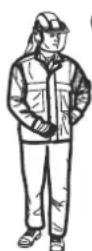
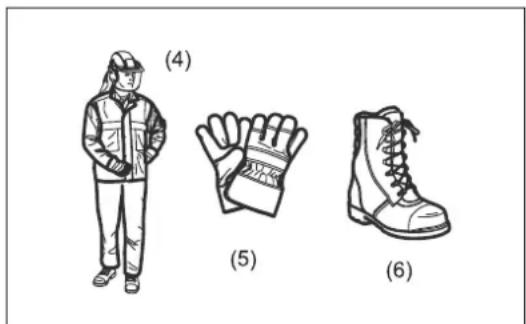
- The work overalls (4) protect against flying stones and debris. We strongly recommend that the user wears work overalls.
- Special gloves (5) made of thick leather are part of the prescribed equipment and must always be worn during operation of the Multi Function Power Head.
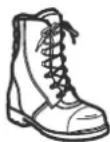
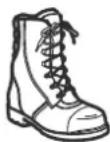
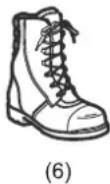
- When using the Multi Function Power Head, always wear sturdy shoes (6) with a non-slip sole. This protects against injuries and ensures a good footing.
Starting up the Multi Function Power Head
- Please make sure that there are no children or other people, also pay attention to any animals in the working vicinity.
- Make sure that the attachment is attached in place, the control lever for easy action and check for proper functioning of the lock-off lever.
- Motion of the attachment during idling speed is not allowed. Check with your dealer for adjustment if in doubt. Check for clean and dry handles and test the function of the start/stop switch.





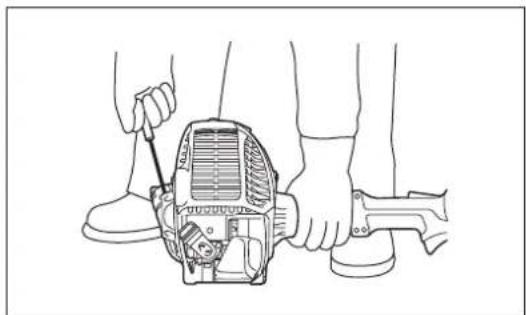
Start the Multi Function Power Head only in accordance with the instructions.
- Do not use any other methods for starting the engine!
- Use the Multi Function Power Head and the tools only for such applications as specified.
- Only start the Multi Function Power Head engine, after the entire assembly is done. Operation of the device is only permitted after all the appropriate accessories are attached!
- Before starting make sure that the attachment has no contact with hard objects such as branches, stones etc. as the attachment will revolve when starting.
- The engine is to be switched off immediately in case of any engine problems.
- Should the attachment hit stones or other hard objects, immediately switch off the engine and inspect the attachment.
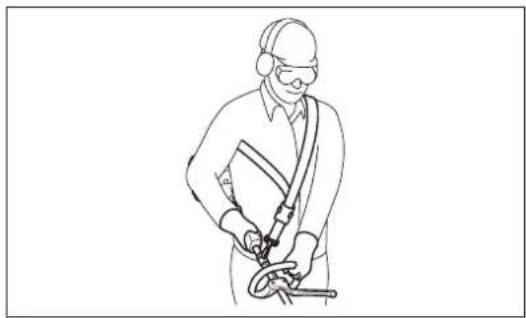
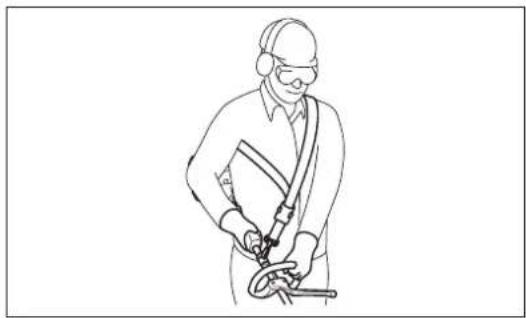
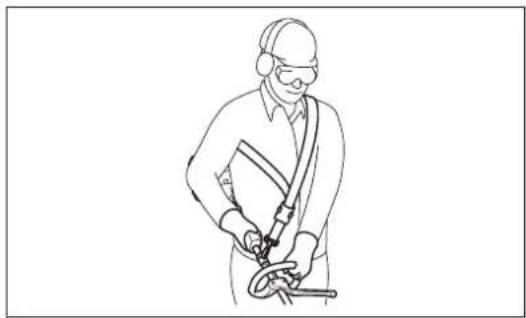
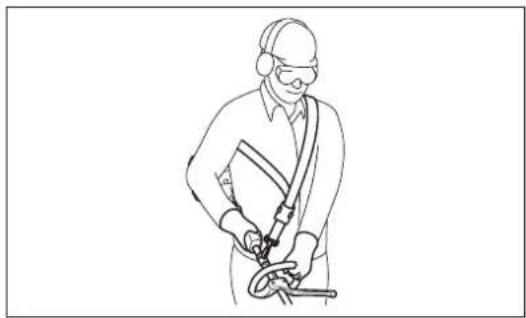
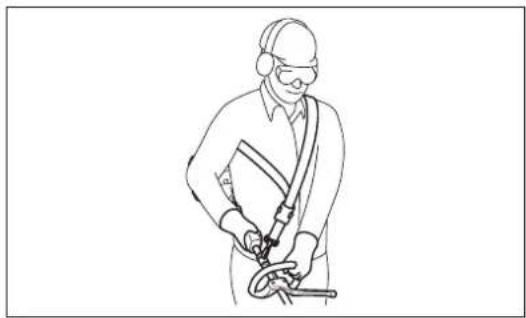
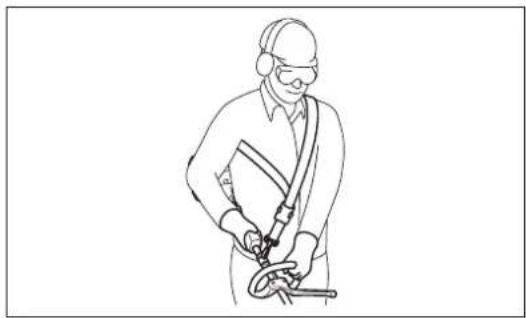
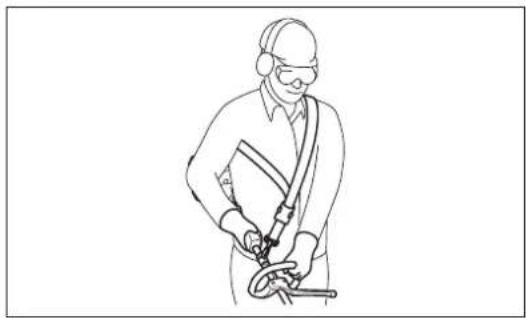
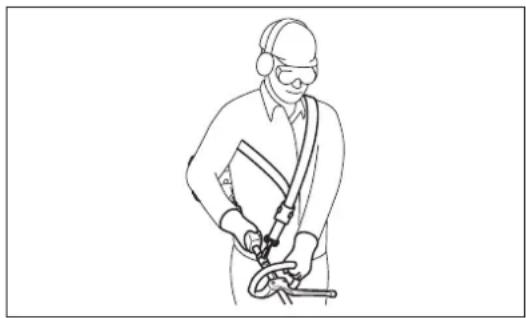
- Operate the Multi Function Power Head only with the shoulder strap attached which is to be suitably adjusted before putting the Multi Function Power Head into operation. It is essential to adjust the shoulder strap according to the user size to prevent fatigue occurring during use. Never hold the cutter with one hand during use.
- During operation always hold the Multi Function Power Head with both hands. Always ensure a safe footing.
- Operate the Multi Function Power Head in such a manner as to avoid inhalation of the exhaust gases. Never run the engine in enclosed rooms (risk of gas poisoning). Carbon monoxide is an odorless gas.
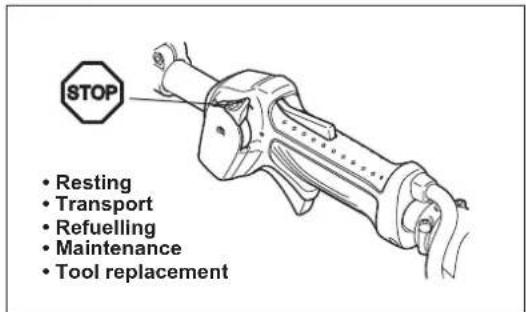
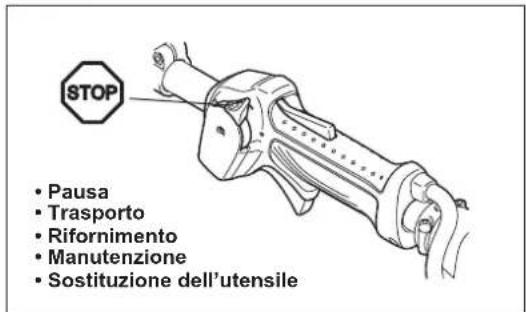
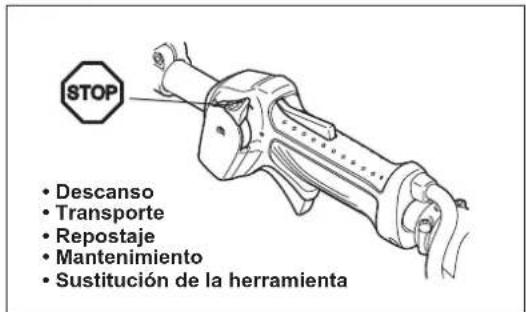
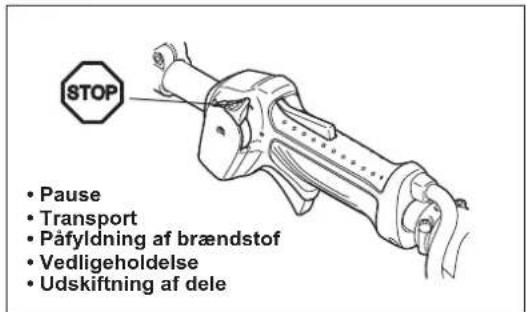
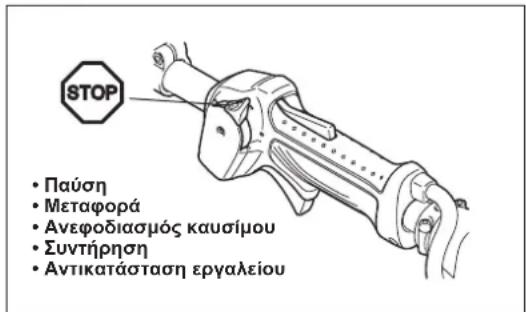
- Switch off the engine when resting and when leaving the Multi Function Power Head unattended, and place it in a safe location to prevent danger to others or damage to the machine.
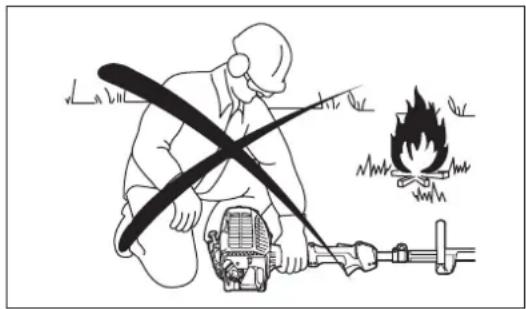
- Never put the hot Multi Function Power Head onto dry grass or onto any combustible materials.
- All protective installations and guards supplied with the machine must be used during operation.
- Never operate the engine with faulty exhaust muffler.
- Shut off the engine during transport.
- During transport over long distances the tool protection included with the equipment must always be used.
- Ensure safe position of the Multi Function Power Head during car transportation to avoid fuel leakage.
- When transporting the Multi Function Power Head, ensure that the fuel tank is completely empty.
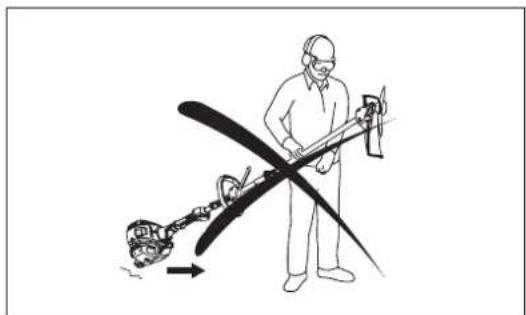
- When unloading the Multi Function Power Head from the truck, never drop the engine to the ground or this may severely damage the fuel tank.
- Except in case of emergency, never drop or cast the Multi Function Power Head to the ground or this may severely damage the Multi Function Power Head.
- Remember to lift the entire equipment from the ground when moving the equipment. Dragging the fuel tank is highly dangerous and will cause damage and leakage of fuel, possibly causing fire.
- If the equipment gets heavy impact or fall, check the condition before continuing work. Check the fuel system for fuel leakage and the controls and safety devices for malfunction. If there is any damage or doubt, ask our authorized service center for the inspection and repair.
Refuelling
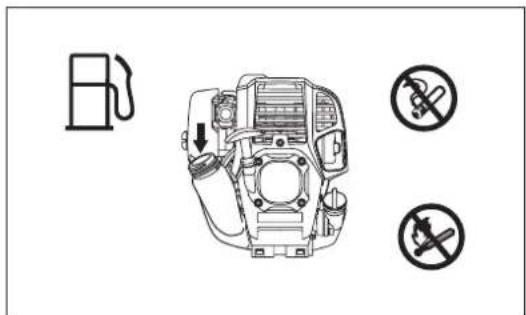
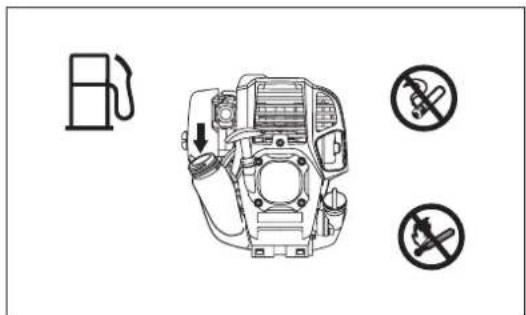
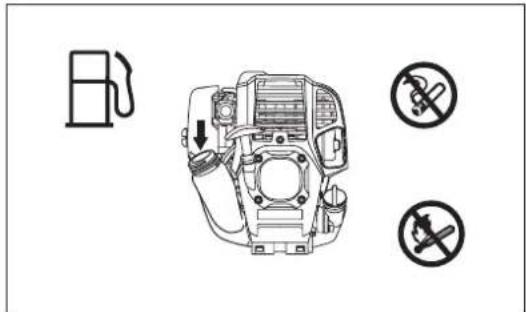
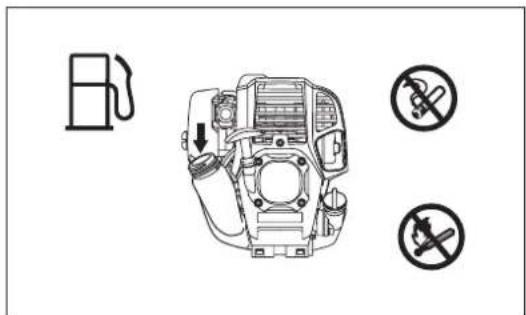
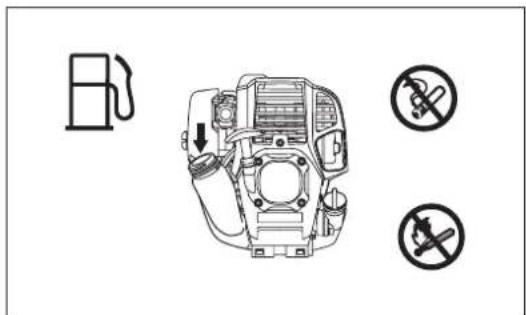
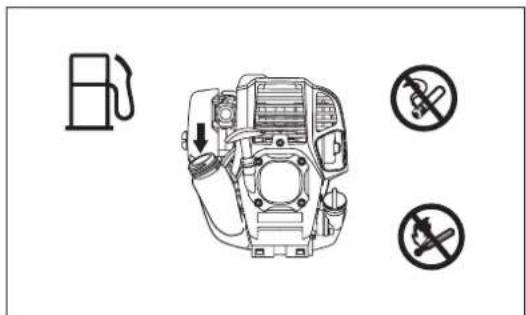
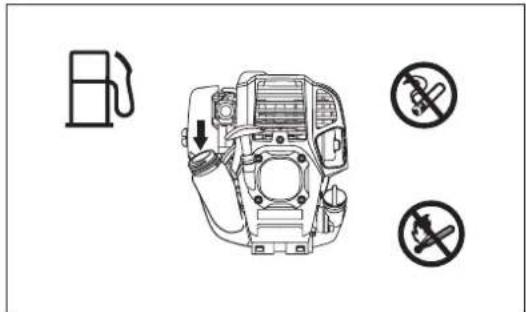
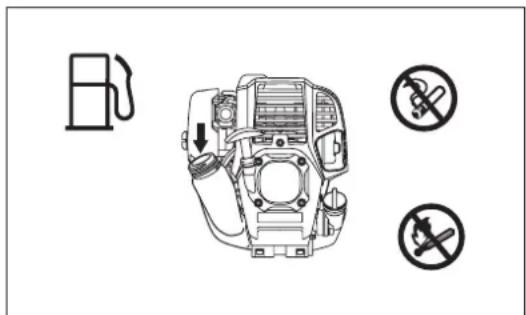
- Shut off the engine during refuelling, keep away from open flames and do not smoke.
- Avoid skin contact with mineral oil products. Do not inhale fuel vapor. Always wear protective gloves during refuelling. Change and clean protective clothing at regular intervals.
- Take care not to spill either fuel or oil in order to prevent soil contamination (environmental protection). Clean the Multi Function Power Head immediately after fuel has been spilt.
- Avoid any fuel contact with your clothing. Change your clothing instantly if fuel has been spilt on it (to prevent clothing catching fire).
- Inspect the fuel cap at regular intervals making sure that it can be securely fastened and does not leak.
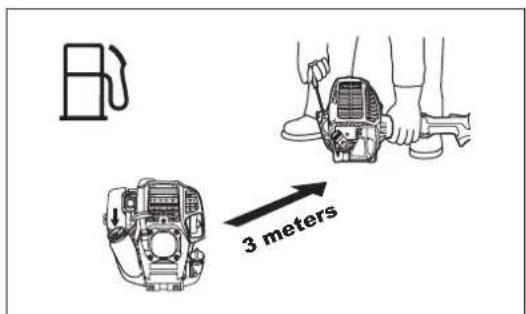
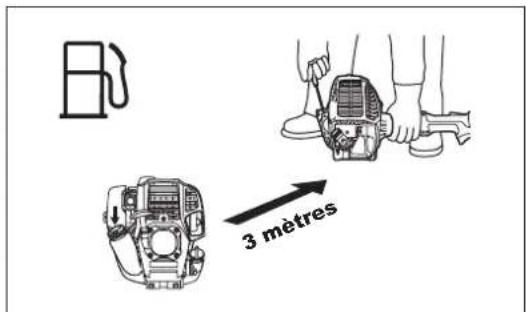
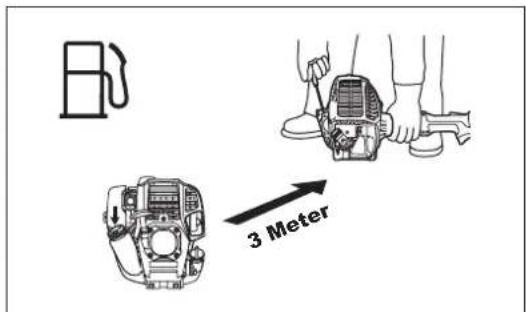
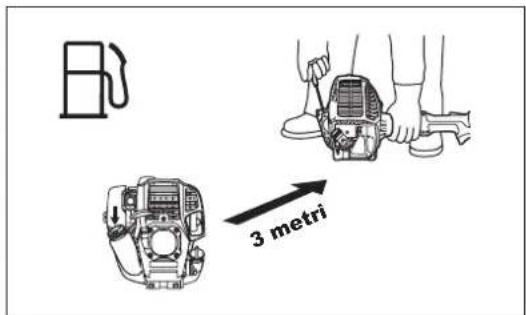
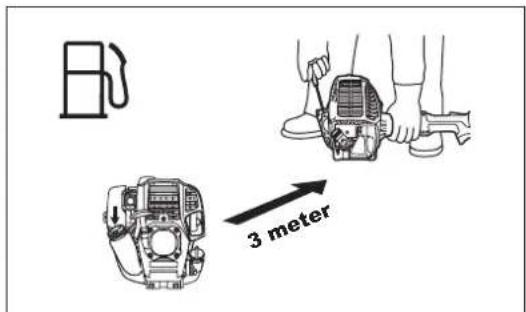
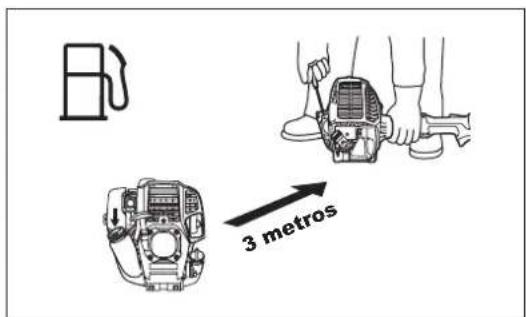
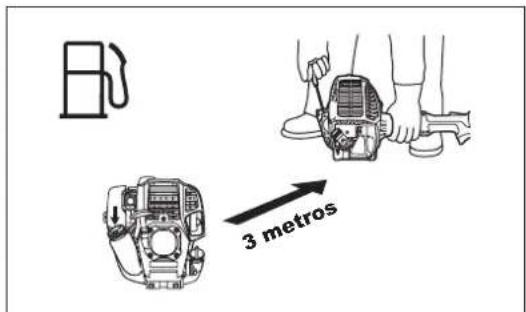
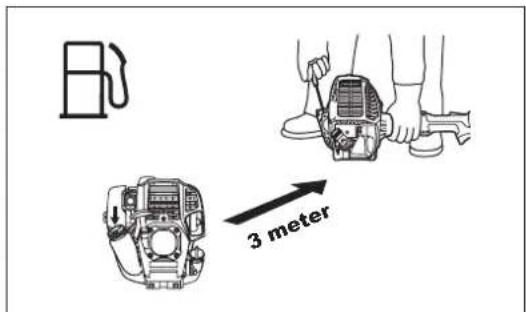
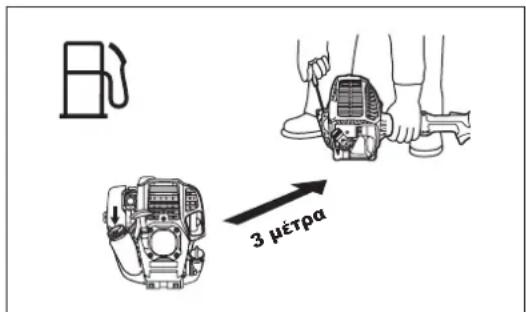
- Carefully tighten the fuel tank cap. Change location to start the engine (at least 3 meters away from the place of refuelling).
- Never refuel in closed rooms. Fuel vapors accumulate at ground lever (risk of explosions).
- Only transport and store fuel in approved containers. Make sure the fuel stored is not accessible to children.
Method of operation
- Only use the Multi Function Power Head in good light and visibility. During the winter season beware of slippery or wet areas, ice and snow (risk of slipping). Always ensure a safe footing.
- Never stand on a ladder and run the Multi Function Power Head.
- Never climb up into trees to perform cutting operation with the Multi Function Power Head.
- Never work on unstable surfaces.
- Before using attachment, the attachment must have reached full working speed.
- Take a rest to prevent loss of control caused by fatigue. We recommend to take a 10 to 20-minute rest every hour.
Maintenance instructions
- Have your equipment serviced by our authorized service center, always using only genuine replacement parts. Incorrect repair and poor maintenance can shorten the life of the equipment and increase the risk of accidents.
- Operate the Multi Function Power Head with as little noise and contamination as possible. In particular check the correct setting of the carburetor.
- Clean the Multi Function Power Head at regular intervals and check that all screws and nuts are well tightened.
- Never service or store the Multi Function Power Head in the vicinity of naked flames.
- Always store the Multi Function Power Head in locked rooms and with an emptied fuel tank. If the fuel tank has to be drained, this shall be done outdoors.
Observe the relevant accident prevention instructions issued by the relevant trade associations and by the insurance companies. Do not perform any modifications on the Multi Function Power Head as this will endanger your safety.
The performance of maintenance or repair work by the user is limited to those activities as described in the instruction manual. All other work is to be done by an Authorized Service Agent. Use only genuine spare parts and accessories released and supplied by DOLMAR.
Use of non-approved accessories and tools means increased risk of accidents.
DOLMAR will not accept any liability for accidents or damage caused by the use of non-approved attachments and fixing devices of attachments, or accessories.
First aid
In case of accident make sure that a first-aid box is available in the vicinity of the cutting operations. Immediately replace any item taken from the first aid box.
- Place of accident
- What happened
- Number of injured persons
- Kind of injuries
- Your name

Vibration
- People with poor circulation who are exposed to excessive vibration may experience injury to blood vessels or the nervous system. Vibration may cause the following symptoms to occur in the fingers, hands or wrists: "Falling asleep" (numbness), tingling, pain, stabbing sensation, alteration of skin color or of the skin. If any of these symptoms occur, see a physician!
- To reduce the risk of "white finger disease", keep your hands warm during operation and well maintain the equipment and accessories.
For European countries only
The EC declaration of conformity is included as Annex A to this instruction manual.
TECHNICAL DATA CS-246.4C
| Model CS-246.4C | |
| Handle type Loop handle | |
| Dimensions: length x width x height (without cutting blade) with barrier mm | 975 x 323 x 241 |
| Dimensions: length x width x height (without cutting blade) without barrier mm | 975 x 242 x 241 |
| Mass (without plastic guard and cutting blade) kg 4.6 | |
| Volume (fuel tank) L 0.6 | |
| Volume (oil reservoir) L 0.08 | |
| Engine displacement cm 3 | 25.4 |
| Maximum engine performance kw 0.77 at 7,000 min | -1 |
| Engine speed at recommended max. spindle speed min-1 | 10,000 |
| Idling speed min-1 | 3,000 |
| Clutch engagement speed min-1 | 3,900 |
| Carburetor | Diaphragm type |
| Ignition system | Non-contact, magnet type |
| Spark plug type | NGK CMR4A |
| Electrode gap mm | 0.7 - 0.8 |
| Fuel | Automobile gasoline (petrol) |
| Engine oil | API grade SF class or higher, SAE 10W-30 oil (automobile 4-stroke engine oil) |
Vibration
| Right handle(Rear grip) | Left handle(Front grip) | Applicable standards |
| Attachment | ahveq (m/s2) | Uncertainty K ( m/s2 ) | ahveq (m/s2) | Uncertainty K ( m/s2 ) |
| BC-CS | 6.5 | 1.2 | 5.9 | 1.8 | ISO 22867 |
| BC-AC | 5.6 | 2.1 | 4.8 | 1.0 | ISO 22867 |
| LT-CS | 7.1 | 2.8 | 5.5 | 2.7 | ISO 22867 |
| PS-CS 1 | 6.5 | 2.0 | 3.8 | 2.0 | ISO 22867 |
| PS-CS 1 + SE-CS | 5.6 | 2.0 | 3.4 | 2.0 | ISO 22867 |
| MC-CS | 5 | 1.1 | 4.4 | 2.3 | ISO 22867 |
| CH-CS | 7.1 | 1.5 | 4.9 | 1.5 | ISO 22867 |
| CH-CS + SE-CS | 6.4 | 0.6 | 4.0 | 0.7 | ISO 22867 |
| HT-CS 1 | 7.7 | 0.8 | 5.9 | 2.5 | ISO 22867 |
| HT-CS 1 + SE-CS | 9.6 | 2.2 | 7.6 | 2.7 | ISO 22867 |
| HT-CS 2 | 7.8 | 2.0 | 6.6 | 3.6 | ISO 22867 |
| HT-CS 2 + SE-CS | 10.8 | 1.4 | 9.2 | 2.0 | ISO 22867 |
| HT-CS 3 | 9.1 | 1.7 | 6.3 | 4.0 | ISO 22867 |
| PE-CS | 8.6 | 1.7 | 3.5 | 1.6 | ISO 22867 |
| MC-CS1 | 4.2 | 0.3 | 5.3 | 0.9 | ISO 22867 |
| MB-CS | 9.2 | 0.7 | 3.6 | 1.0 | ISO 22867 |
| MW-CS | 8.3 | 1.4 | 4.1 | 1.5 | ISO 22867 |
| AG-CS | 6.5 | 0.8 | 3.3 | 0.4 | ISO 22867 |
Noise
| Sound pressure level average Sound power level average | Applicable standards |
| Attachment L | PAeq (dB (A)) Uncertainty K (dB (A)) L | WAeq (dB (A)) Uncertainty K (dB (A)) |
| BC-CS 95.0 4.4 105.5 3.3 ISO 22868 | | | | | |
| BC-AC 89.9 3.6 99.7 2.7 ISO 22868 | | | | | |
| LT-CS 97.9 4.2 106.2 4.0 ISO 22868 | | | | | |
| PS-CS 1 92.6 2.5 104.7 2.5 ISO 22868 | | | | | |
| PS-CS 1 + SE-CS 90.5 2.5 107.9 2.5 ISO 22868 | | | | | |
| MC-CS 93.7 2.6 99.7 1.2 ISO 22868 | | | | | |
| CH-CS | 89.0 2.3 99.8 1.1 ISO 22868 | | | | |
| CH-CS + SE-CS | 88.1 2.2 100.8 2.3 ISO 22868 | | | | |
| HT-CS 1 | 90.7 1.6 104.3 3.8 ISO 22868 | | | | |
| HT-CS 1 + SE-CS | 89.2 2.9 103.7 2.2 ISO 22868 | | | | |
| HT-CS 2 | 87.8 0.8 102.9 1.6 ISO 22868 | | | | |
| HT-CS 2 + SE-CS | 88.7 1.1 103.6 0.7 ISO 22868 | | | | |
| HT-CS 3 | 88.7 1.0 103.8 2.0 ISO 22868 | | | | |
| PE-CS | 89.5 2.0 99.7 2.6 ISO 22868 | | | | |
| MC-CS1 | 87.9 0.2 102.5 0.3 ISO 22868 | | | | |
| MB-CS | 89.9 0.9 103.2 0.6 ISO 22868 | | | | |
| MW-CS | 88.8 1.8 102.9 0.7 ISO 22868 | | | | |
| AG-CS | 93.3 0.6 105.2 0.4 ISO 22868 | | | | |
APPROVED ATTACHMENTS
| ATTACHMENTS | Models |
| Brushcutter Attachment | BC-CS, BC-AC |
| String Trimmer Attachment | LT-CS |
| Pole Saw Attachment | PS-CS 1 |
| Hedge Trimmer Attachment | HT-CS 1, HT-CS 2 |
| Ground Trimmer Attachment | HT-CS 3 |
| Cultivator Attachment | MC-CS, MC-CS1 |
| Coffee Harvester Attachment | CH-CS |
| Edger Attachment | PE-CS |
| Shaft Extension Attachment | SE-CS |
| Power Brush Attachment | MB-CS |
| Power Sweep Attachment | MW-CS |
| Blower Attachment | AG-CS |
CS-246.4C
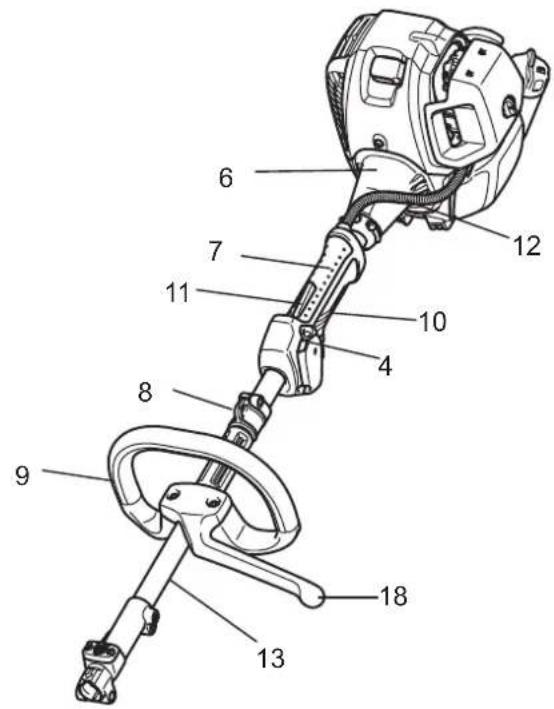
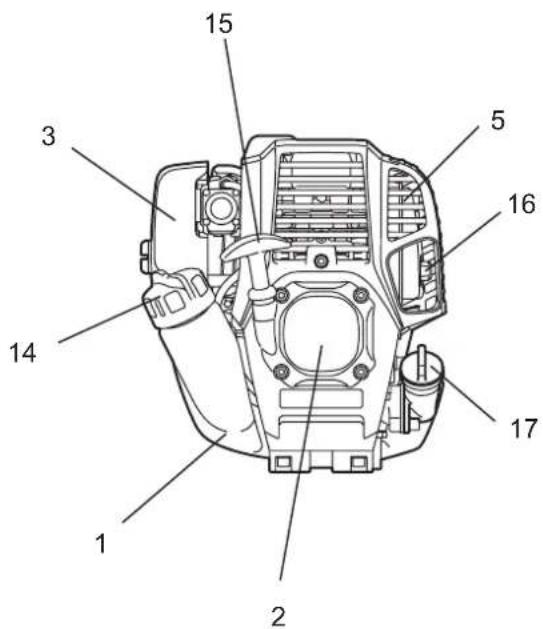
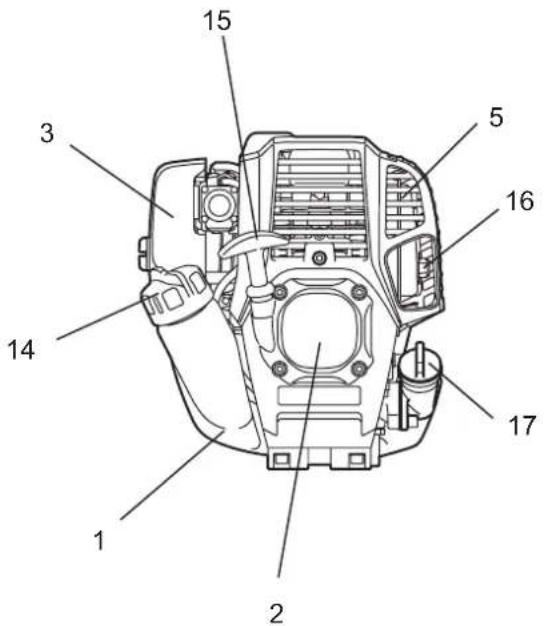
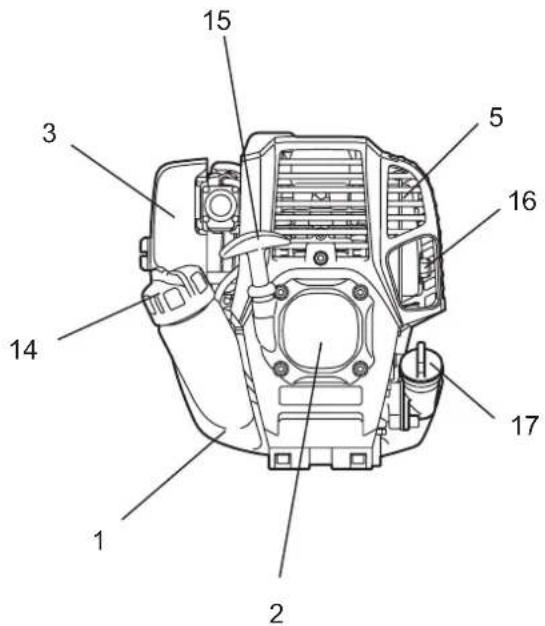
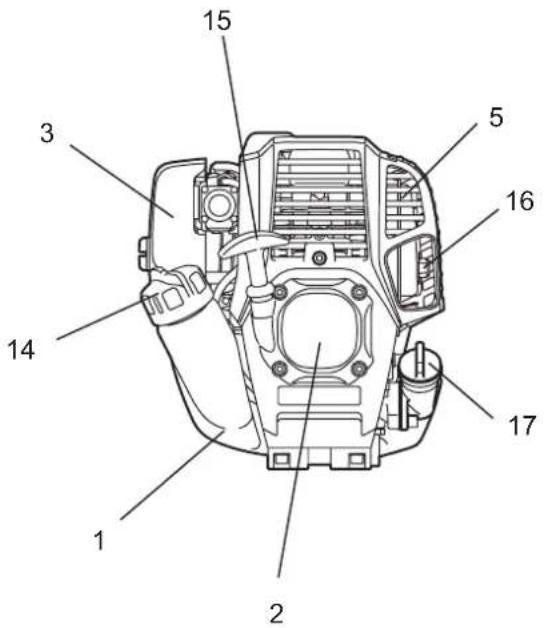
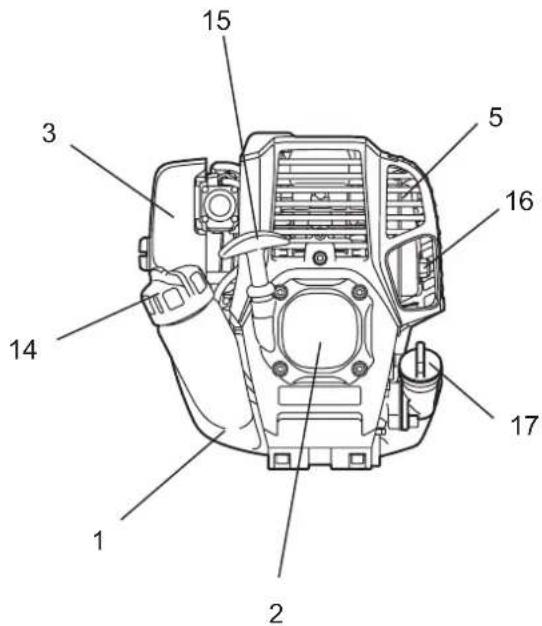
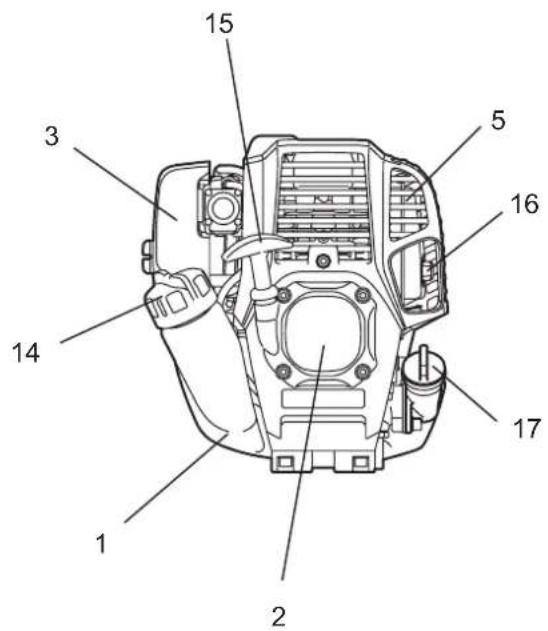
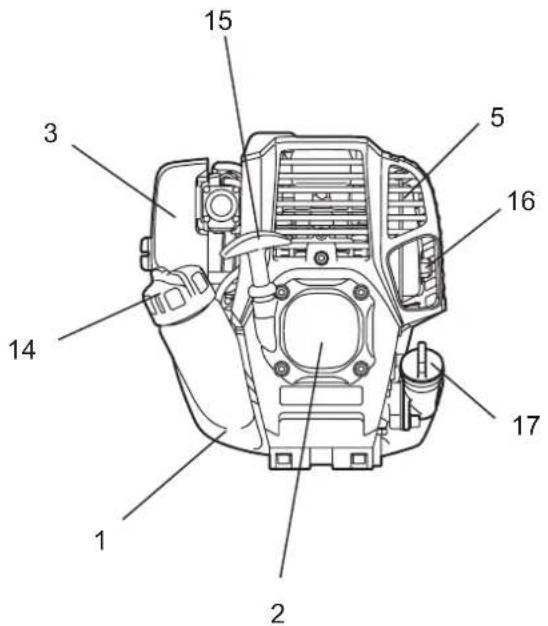
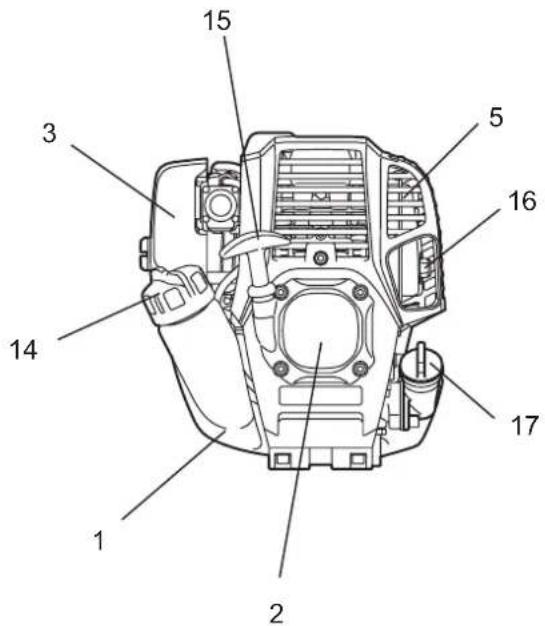
| GB DESIGNATION OF PARTS |
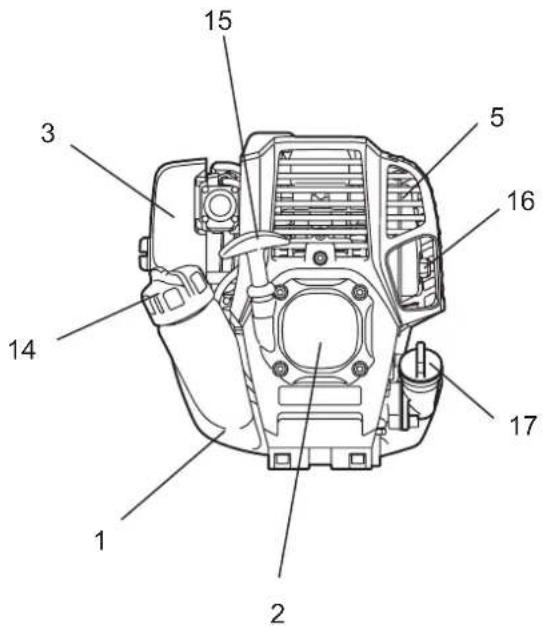
| 1 Fuel tank |
| 2 Rewind starter |
| 3 Air cleaner |
| 4 I-O switch (on/off) |
| 5 Exhaust muffler |
| 6 Clutch case |
| 7 Rear grip |
| 8 Hanger |
| 9 Handle |
| 10 Throttle lever |
| 11 Lock-off lever |
| 12 Control cable |
| 13 Shaft |
| 14 Fuel filler cap |
| 15 Starter knob |
| 16 Exhaust pipe |
| 17 Oil cap |
| 18 Barrier* |
Note: In some countries, the barrier is not provided with the tool.
MOUNTING OF HANDLE
CAUTION: Before doing any work on the Multi Function Power Head, always stop the engine and pull the spark plug connector off the spark plug. Always wear protective gloves!
CAUTION: Start the Multi Function Power Head only after having assembled it completely.
Assembling loop handle
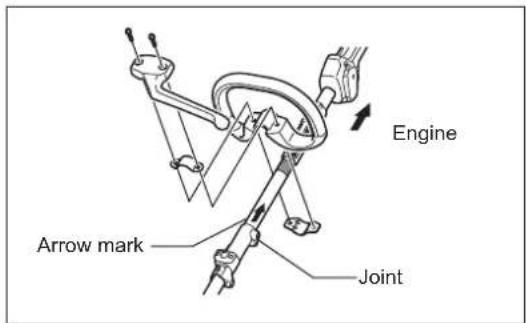
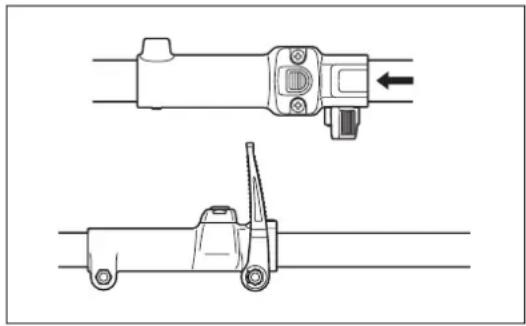
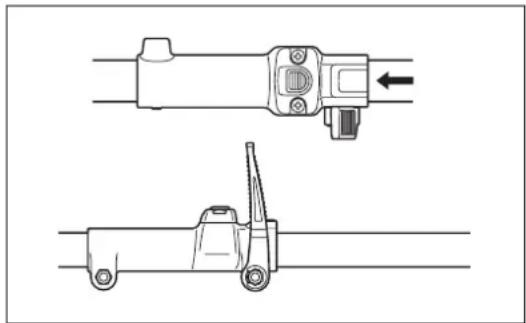
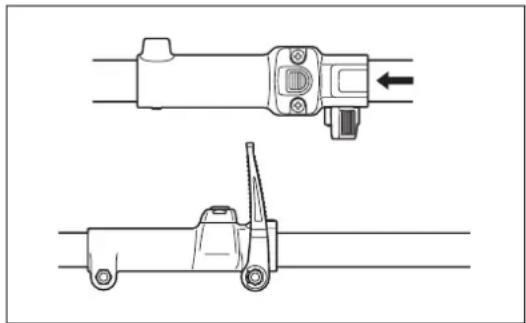
- Securely fit the barrier and grip onto the shaft pipe with two screws and clamps. At this time, put the barrier on the left side of the machine as illustrated.
- Make sure that the grip/barrier assembly is located between the spacer and the arrow mark. Do not remove or shrink the spacer.
- Once assembled, do not remove the barrier.
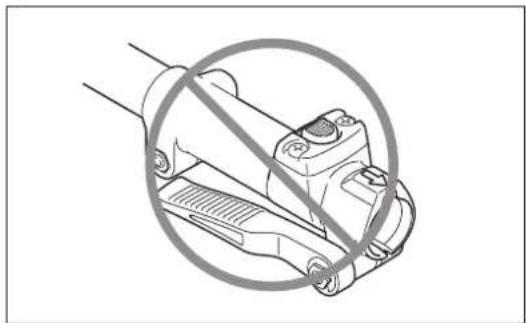
CAUTION: Never install the grip on the label or joint.
Note: In some countries, the barrier and arrow mark are not provided with the tool.

MOUNTING ATTACHMENT
CAUTION: Before doing any work on the Multi Function Power Head, always stop the engine and pull the spark plug connector off the spark plug. Always wear protective gloves!
CAUTION: Start the Multi Function Power Head only after having assembled it completely.
Assembly
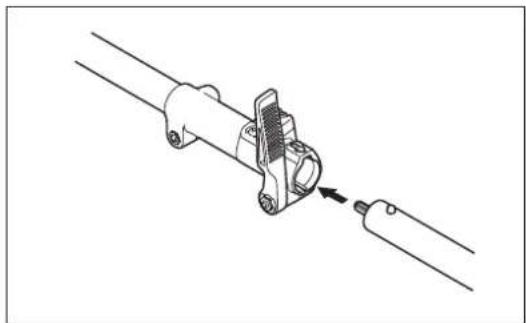
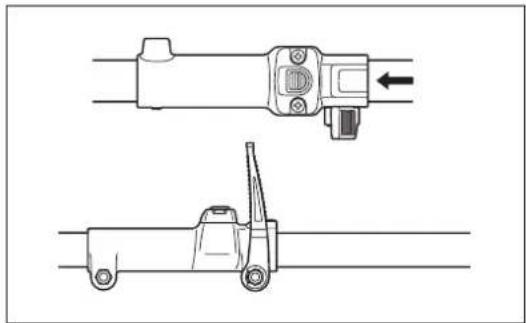
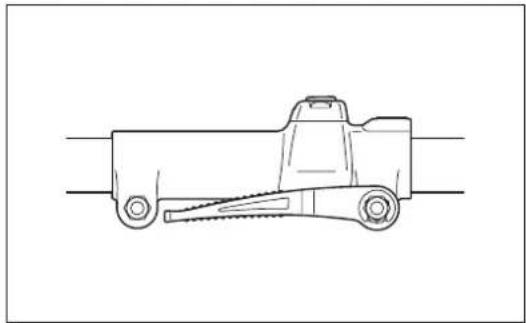
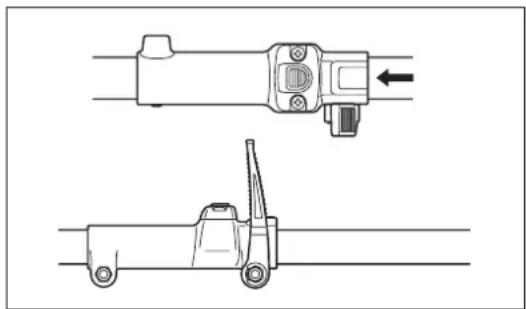
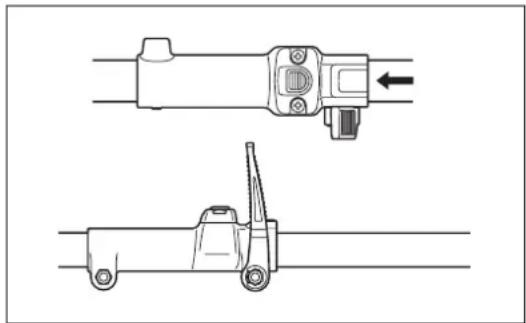
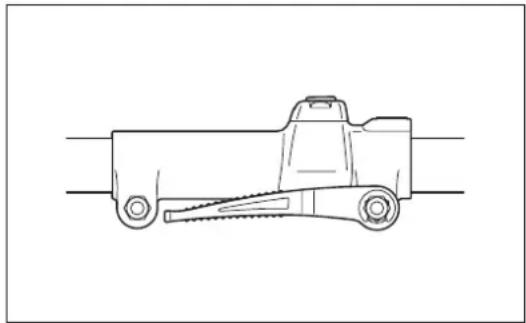
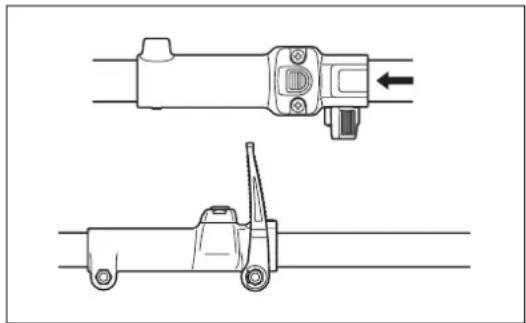
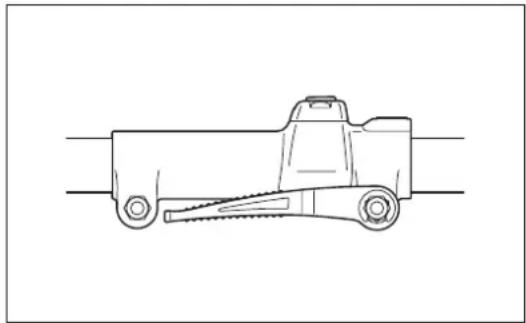
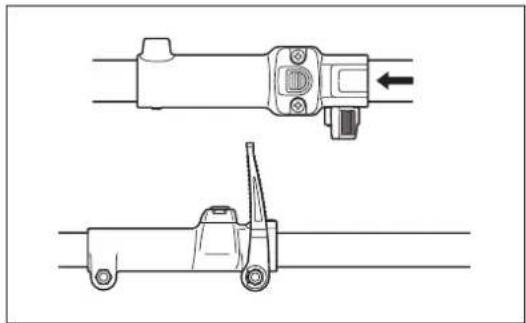
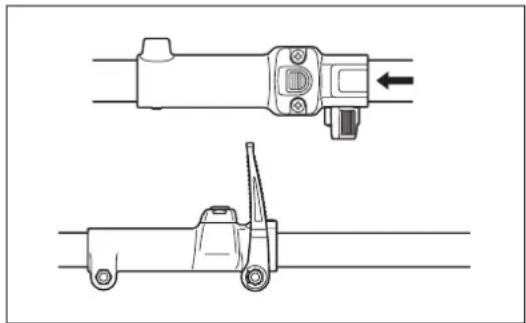
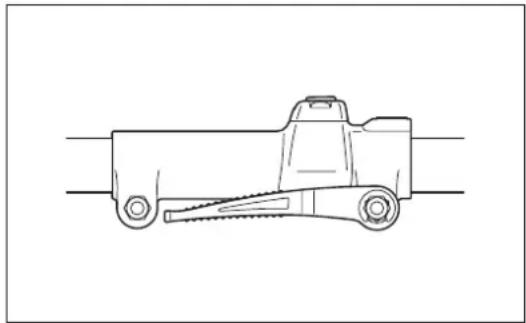
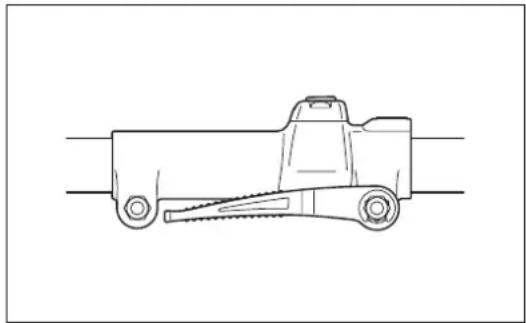
- Loosenlever.
- Align the attachment's pin with the joint's groove and insert pin.
- Insert attachment up to the arrow position of attachment. And, check to see that button has risen.
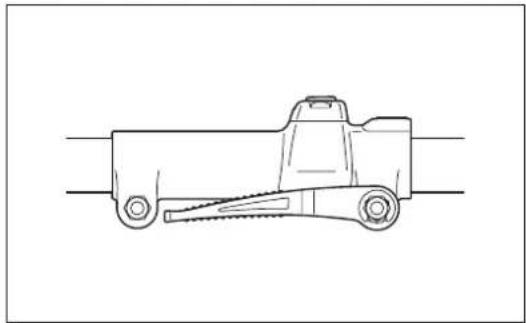
- Tighten lever.
(See diagram on right for guideline.)

DISASSEMBLING
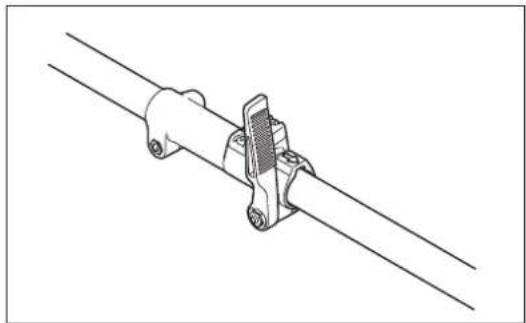
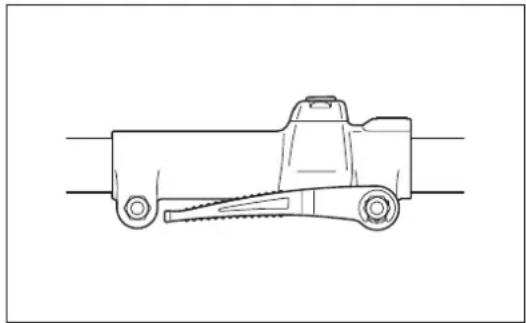
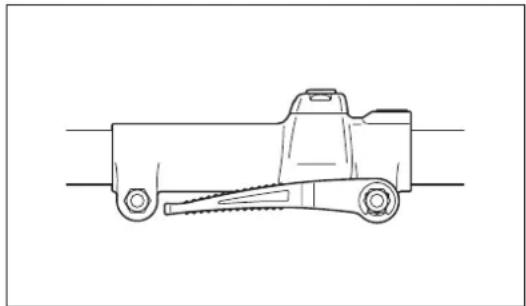
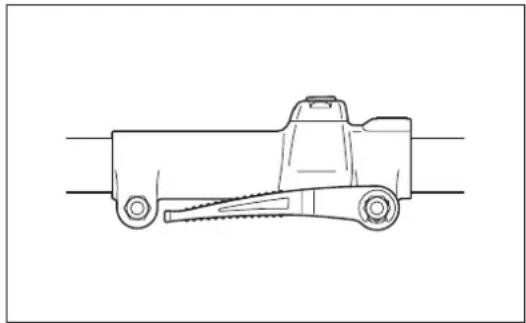
- Loosen lever.
- Press button and extract attachment.
(As much as possible, try to extract the attachment in a straight line.)
Note:
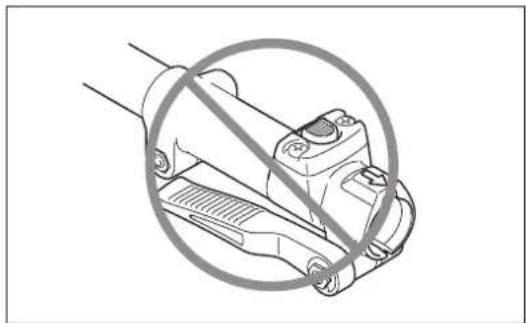
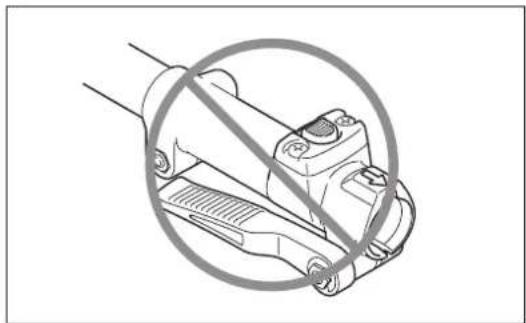
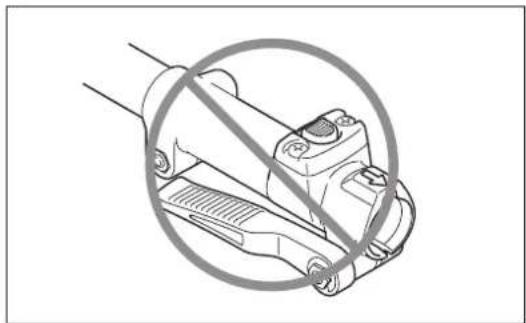
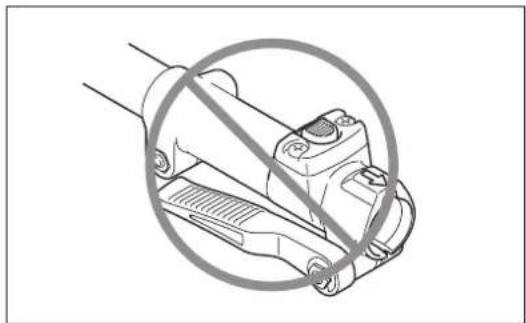
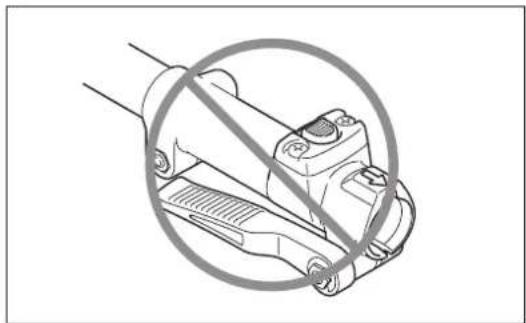
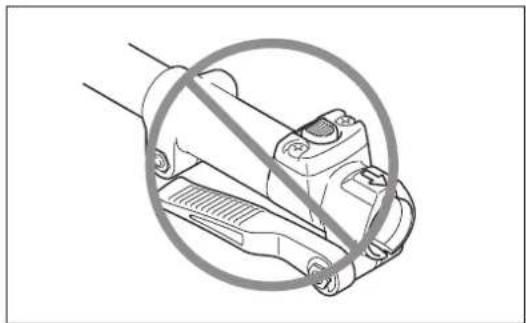
- Do not leave the lever in a tightened state when attachment is not attached.

Inspection and refill of engine oil
- Perform the following procedure, with the engine cooled down.
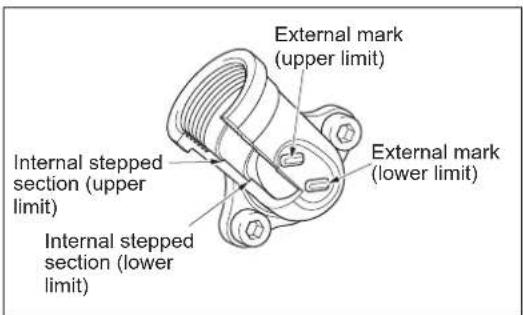
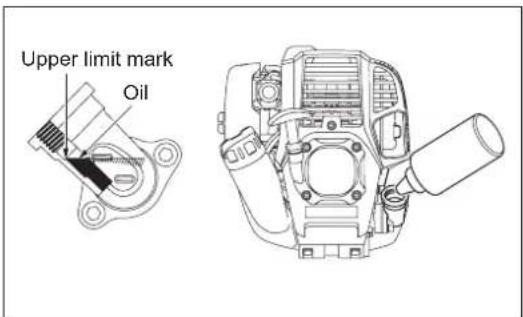
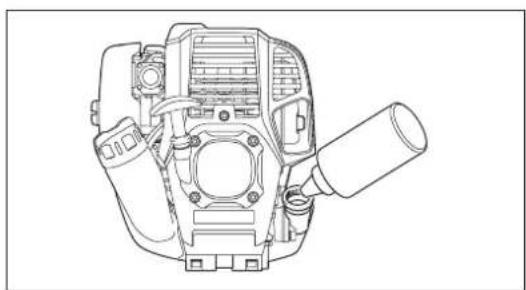
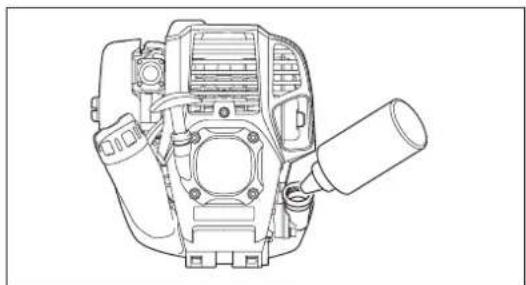
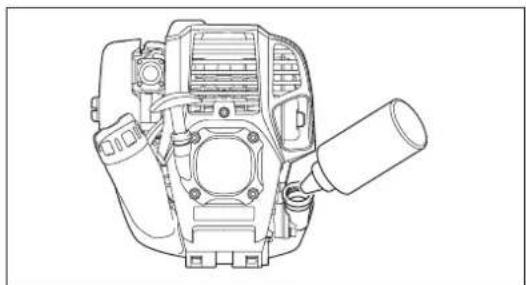
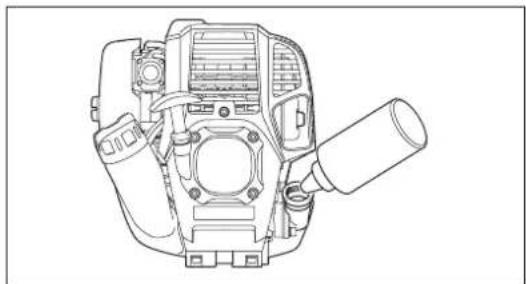
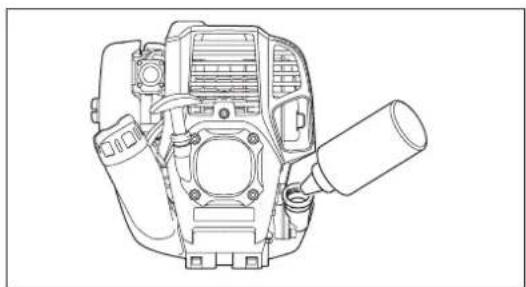
- Set the engine level, remove oil cap (Fig. 1), and check to see whether or not there is oil in the range between the upper limit and lower limit marks of the oil pipe (Fig. 2).
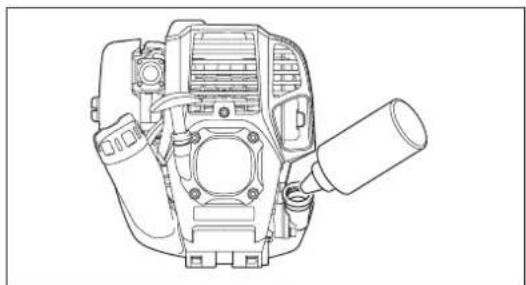
- Top up with oil to upper limit mark if oil is insufficient (oil level is close to lower limit mark) (Fig. 3).
- The area surrounding the external marks is transparent, so the amount of oil inside can be checked without having to remove the oil cap. However, if oil pipe becomes extremely dirty, visibility may be lost, and oil level will have to be checked against stepped section on inside of oil pipe.
- For reference, the oil refill time is about 10h (every 10 refuellings).
If the oil changes in color or mixes with dirt, replace it with new one. (For the interval and method of replacement, refer to P 16)
Recommended oil: SAE 10W-30 oil of API Classification, Class SF or higher (4-stroke engine for automobile)
Oil volume: Approx. 0.08L
Note: If the engine is not kept upright, oil may go into around the engine, and may be refilled excessively. If the oil is filled above the limit, the oil may be contaminated or may catch fire with white smoke.
Point 1 in Replacement of oil: "Oil cap"
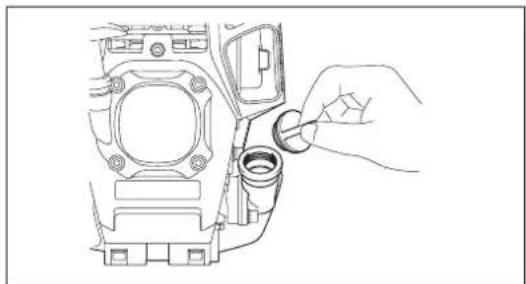
- Remove dust or dirt near the oil refill port, and detach the oil cap.
- Keep the detached oil cap free of sand or dust. Otherwise, any sand or dust adhering to the oil cap may cause irregular oil circulation or wear on the engine parts, which will result in troubles.
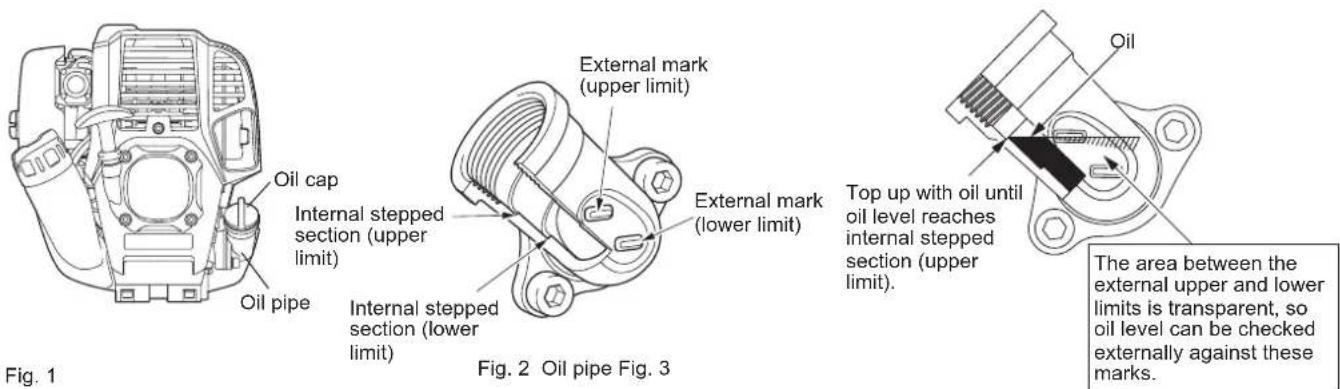
Internal stepped section (upper limit)
Internal stepped section (lower limit)
(1) Keep the engine level, and detach the oil cap.
(2) Fill with oil to upper limit mark. (see Fig. 3) Use oil bottle when filling.
(3) Securely tighten the oil cap. Insufficient tightening may cause oil leakage.
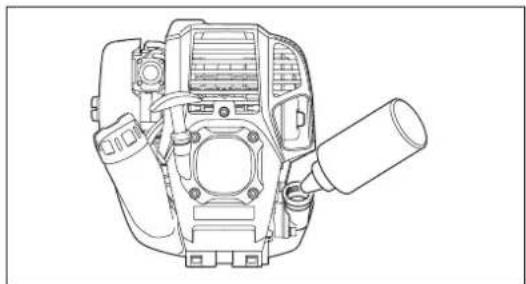
Note
- Do not replace oil with the engine in a tilted position.
- Filling with oil while engine is tilted leads to overfilling which causes oil contamination and/or white smoke.
Point 2 in Replacement of oil: "If oil spills out"
- If oil spills out between the fuel tank and engine main unit, the oil is sucked into through the cooling air intake port, which will contaminate the engine. Be sure to wipe out spilt oil before start of operation.
REFUELING
Handling of fuel
It is necessary to handle fuel with utmost care. Fuel may contain substances similar to solvents. Refueling must be performed in a sufficiently ventilated room or in the open air. Never inhale fuel vapor, and keep fuel away from you. If you touch fuel repeatedly or for a long time, the skin becomes dry, which may cause skin disease or allergy. If fuel enters into the eye, clean the eye with fresh water. If your eye remains still irritated, consult your doctor.
Storage period of fuel
Fuel should be used up within a period of 4 weeks, even if it is kept in a special container in a well-ventilated shade. If a special container is not used or if the container is not covered, fuel may deteriorate in one day.
STORAGE OF MACHINE AND REFILL TANK
- Keep the machine and tank at a cool place free from direct sunshine.
- Never keep the fuel in the cabin or trunk.
Fuel
The engine is a four-stroke engine. Be sure to use an automobile gasoline (regular gasoline or premium gasoline).
Points for fuel
- Never use a gasoline mixture which contains engine oil. Otherwise, it will cause excessive carbon accumulation or mechanical troubles.
- Use of deteriorated oil will cause irregular startup.
Refueling
WARNING: INFLAMMABLES STRICTLY PROHIBITED
Gasoline used: Automobile gasoline (unleaded gasoline)
- Loosen the tank cap a little so that there will be no difference in atmospheric pressure.
- Detach the tank cap, and refuel, discharging air by tilting the fuel tank so that the refuel port will be oriented upward. (Never refill fuel full to the oil refill port.)
- Wipe well the periphery of the tank cap to prevent foreign matter from entering into the fuel tank.
-
After refueling, securely tighten the tank cap.
-
If there is any flaw or damage on the tank cap, replace it.
- The tank cap is consumable, and therefore should be renewed every two to three years.
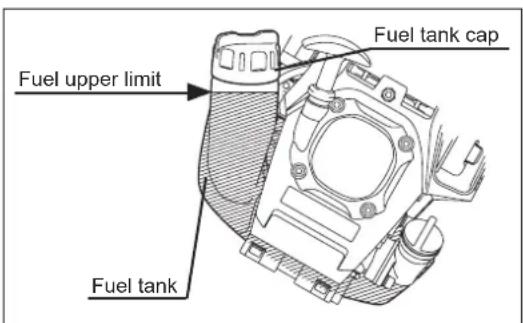
CORRECT HANDLING OF MACHINE
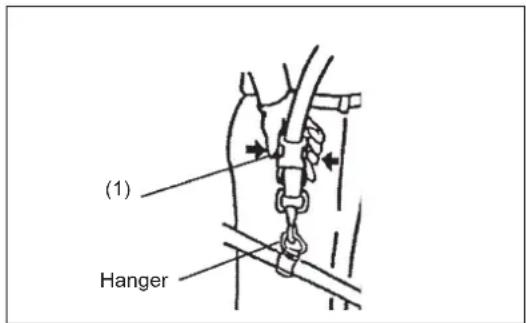
Attachment of shoulder strap
- Adjust the strap to the suitable length for your operation.
Detachment
- In an emergency, push the notches (1) at both sides, and you can detach the machine from you.
Be extremely careful to maintain control of the machine at this time. Do not allow the machine to be deflected toward you or anyone in the work vicinity.
WARNING: Failure to maintain complete control of the machine at all could result in serious bodily injury or DEATH.
POINTS IN OPERATION AND HOW TO STOP
Observe the applicable accident prevention regulations!



STARTING
Move at least 3 m away from the place of refuelling. Place the Multi Function Power Head on a clean piece of ground taking care that the attachment does not come into contact with the ground or any other objects.
A: Cold start
1) Set this machine on a flat space.
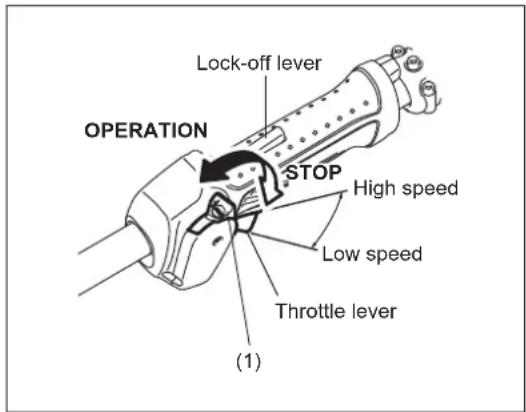
2) Set the I-O switch (1) to OPERATION.
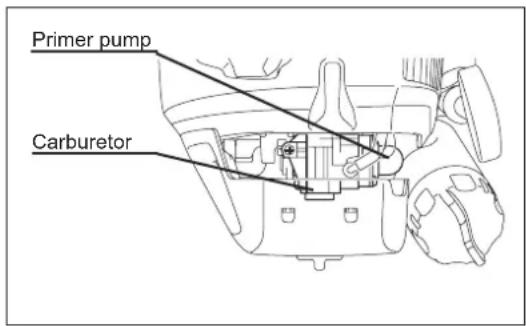
3) Primer pump
Continue to push the primer pump until fuel enters into the primer pump. (In general, fuel enters into the primer pump by 7 to 10 pushes.) If the primer pump is pushed excessively, an excess of gasoline returns to the fuel tank.
4) Recoil starter
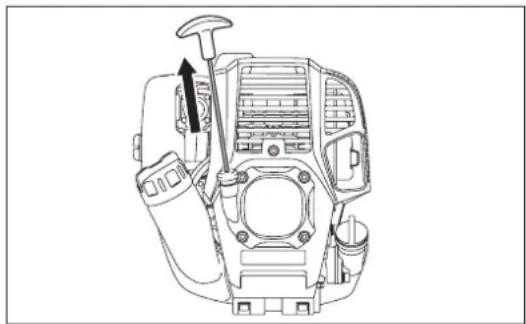
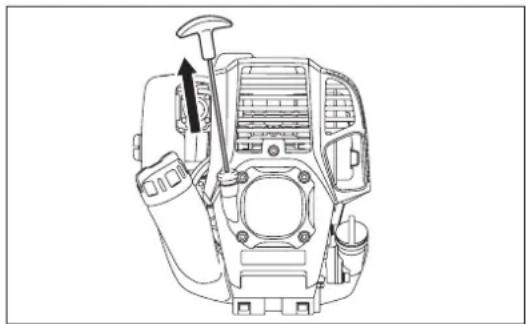
Pull the start knob gently until it is hard to pull (compression point). Then, return the start knob, and pull it strongly.
Never pull the rope to the full. Once the start knob is pulled, never release your hand immediately. Hold the start knob until it returns to its original point.
5) Warm-up operation
Continue warm-up operation for 2 to 3 minutes.
Note: In case of excessive fuel intake, remove the spark plug and pull the starter handle slowly to remove excess fuel. Also, dry the electrode section of the spark plug.
Caution during operation:
If the throttle lever is opened fully in a no-load operation, the engine rotation is increased to 10,000 min -1 or more. Never operate the engine at a higher speed than required and at an approximate speed of 6,000 - 8,500 min -1 .
B: Startup after warm-up operation
1) Push the primer pump repeatedly.
2) Keep the throttle lever at the idling position.
3) Pull the recoil starter strongly.
4) If it is difficult to start the engine, open the throttle by about 1/3.
Pay attention to the attachment which may rotate.
At times, such as winter, when starting the engine is difficult
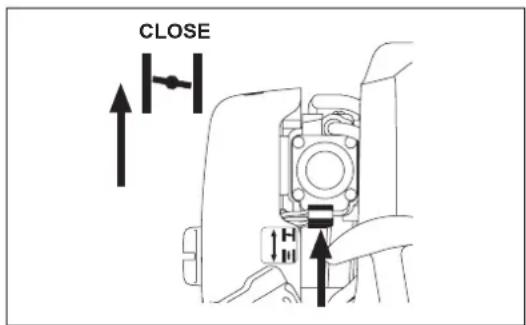
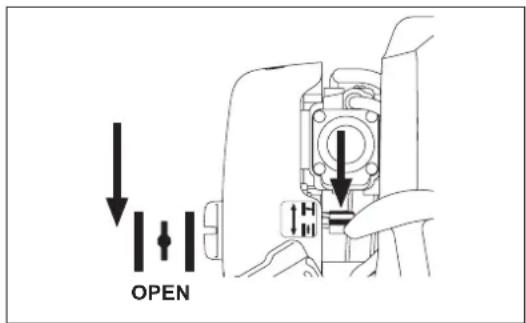
Operate choke lever with the following procedure when starting engine.
- After implementing startup steps 1) to 3), set choke lever to the CLOSE position.
- Implement startup step 4) and start engine.
- Once engine starts, set choke lever to the OPEN position.
- Implement startup step 5) and complete warm up.
CAUTION: If a bang (explosive sound) is heard and the engine stops, or the just-started engine stalls before the choke lever is operated, return the choke lever to the OPEN position, and pull the starter knob a few times again to start the engine.
CAUTION: If the choke lever is left in the CLOSE position, and the starter knob merely pulled repeatedly, too much fuel will be sucked in, and the engine will become difficult to start.
STOPPING
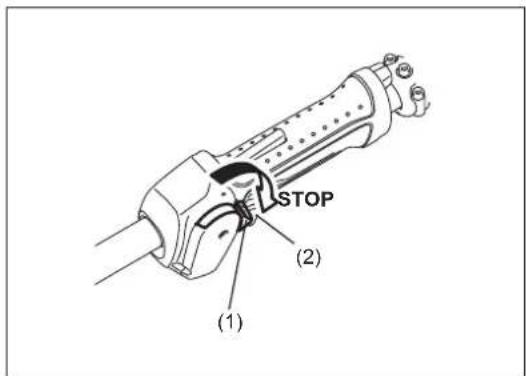
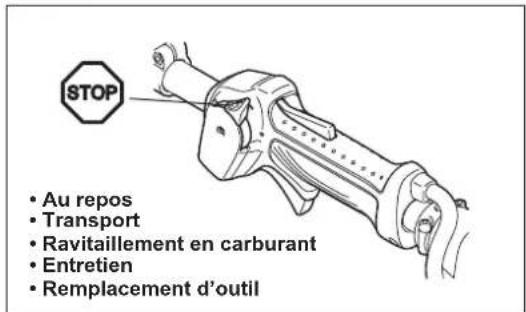
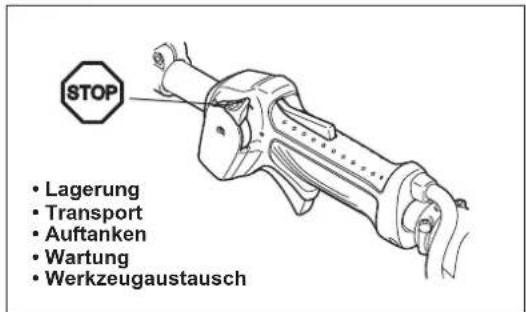
1) Release the throttle lever (2) fully, and when the engine rpm has lowered, set the I-O switch to STOP the engine will now stop.
2) Be aware that the attachment may not stop immediately and allow it to slow down fully.
ADJUSTMENT OF LOW-SPEED ROTATION (IDLING)
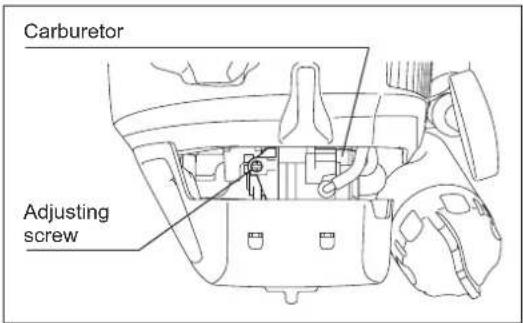
When it is necessary to adjust the low-speed rotation (idling), perform it by the carburetor adjusting screw.
CHECKUP OF LOW-SPEED ROTATION
- Set the low-speed rotation to 3,000 min 1
If it is necessary to change the rotation speed, regulate the adjusting screw (illustrated on the right), with Phillips screwdriver.
- Turn the adjusting screw to the right, and the engine rotation will increase. Turn the adjusting screw to the left, and the engine rotation will drop.
- The carburetor is generally adjusted before shipment. If it is necessary to readjust it, please contact Authorized Service Agent.
SERVICING INSTRUCTIONS
CAUTION: Before doing any work on the Multi Function Power Head, always stop the engine and pull the plug cap off the spark plug (see "checking the spark plug").
Always wear protective gloves!
Never use gasoline, benzine, thinner, alcohol or the like. Discoloration, deformation or cracks may result.
To ensure a long service life and to avoid any damage to the equipment, the following servicing operations should be performed at regular intervals.
Daily checkup and maintenance
- Before operation, check the machine for loose screws or missing parts. Pay particular attention to a specified attachment for mounting in place securely.
- Before operation, always check for clogging of the cooling air passage and the cylinder fins.
Clean them if necessary.
- Perform the following work daily after use:
- Clean the Multi Function Power Head externally and inspect for damage.
- Clean the air filter. When working under extremely dusty conditions, clean the filter several times a day.
- Check that there is sufficient difference between idling and engagement speed to ensure that the attachment is at a standstill while the engine is idling (if necessary reduce idling speed).
If under idling conditions the tool should still continue to run, consult your nearest Authorized Service Agent.
- Check the functioning of the I-O switch, the lock-off lever and the control lever.
REPLACEMENT OF ENGINE OIL
Deteriorated engine oil will shorten the life of the sliding and rotating parts to a great extent. Be sure to check the period and quantity of replacement.

ATTENTION: In general, the engine main unit and engine oil still remain hot just after the engine is stopped. In replacement of oil, confirm that the engine main unit and engine oil are sufficiently cooled down. Otherwise, there may remain a risk of scald.
Note: If the oil filled above the limit, it may be contaminated or may catch fire with white smoke.
Interval of replacement: Initially, every 20 operating hours, and subsequently every 50 operating hours
Recommended oil: SAE10W-30 oil of API Classification SF Class or higher (4-stroke engine oil for automobile)
In replacement, perform the following procedure.
1) Confirm that the fuel tank cap is tightened securely.
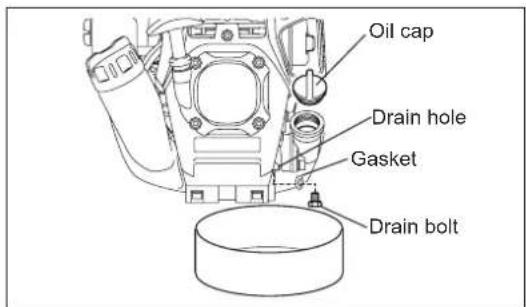
2) Place large container (pan, etc.) under drain hole.
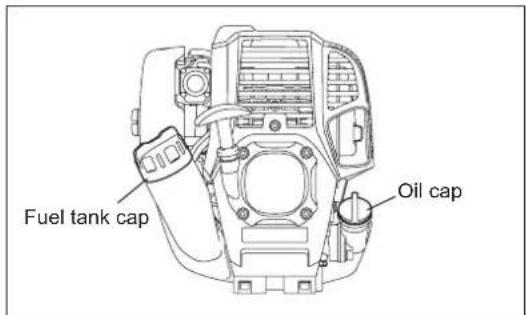
3) Remove drain bolt and then remove oil cap to drain out oil from drain hole. At this time, be sure not to mislay drain bolt's gasket, or to make dirty any of the removed components.
4) Once all the oil has been drained, combine gasket and drain bolt, and tightly secure drain bolt, so that it will not loosen and cause leaks.
* Use cloth to fully wipe off any oil attached to bolt and equipment.
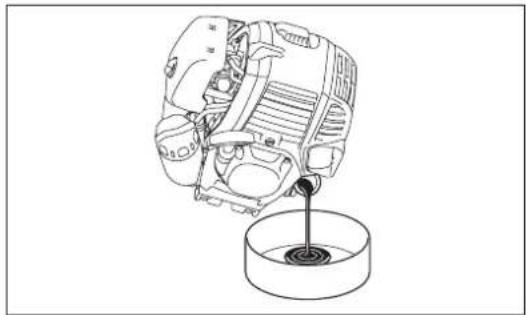
Alternative draining method
Remove oil cap, tilt Multi Function Power Head toward oil filler hole, and drain out oil.
Collect oil in container.
5) Set the engine level, and gradually fill up to upper limit mark with new oil.
6) After filling, tightly secure oil cap, so that it will not loosen and cause leaks. If oil cap is not tightly secured, it may leak.
POINTS ON OIL
- Never discard replaced engine oil in garbage, earth or sewage ditch. Disposal of oil is regulated by law. In disposal, always follow the relevant laws and regulations. For any points remaining unknown, contact Authorized Service Agent.
- Oil will deteriorate even when it is kept unused. Perform inspection and replacement at regular intervals (replace with new oil every 6 months).
CLEANING OF AIR CLEANER

DANGER: INFLAMMABLES STRICTLY PROHIBITED
Interval of cleaning and inspection: Daily (every 10 operating hours)
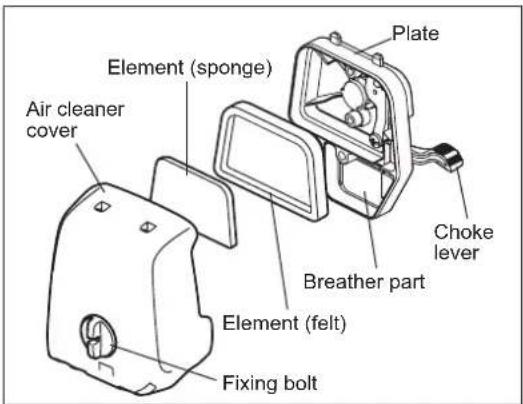
- Turn the choke lever to the full close side, and keep the carburetor off from dust or dirt.
- Loosen the fixing bolt.
- Remove the air cleaner cover by pulling its bottom side.
- Remove the elements and tap them to remove dirt.
- If the elements are heavily contaminated:
Remove the elements, immerse them in warm water or in water-diluted neutral detergent, and dry them completely. Do not squeeze or rub them when washing.
- Before attaching the elements, be sure to dry them completely. Insufficient drying of the elements may lead to difficult startup.
- Wipe out oil adhering around the air cleaner cover and the breather part with waste cloth.
- Fit the element (sponge) into the element (felt).
Fit the elements into the plate so that the sponge faces the air cleaner cover.
- Immediately attach the cleaner cover and tighten it with fixing bolts. (In remounting, first place the upper claw, and then the lower claw.)
NOTICE:
- Clean the elements several times a day, if excessive dust adheres to it. Dirty elements reduce engine power and make starting engine difficult.
- Remove oil on the elements. If operation continues with the elements remaining not cleared of oil, oil in the air cleaner may fall outside, resulting in contamination of the environment.
- Do not put the elements on the ground or dirty place. Otherwise they pick up dirt or debris and it may damage the engine.
- Never use fuel for cleaning the elements. Fuel may damage them.
CHECKING THE SPARK PLUG
- Only use the supplied universal wrench to remove or to install the spark plug.
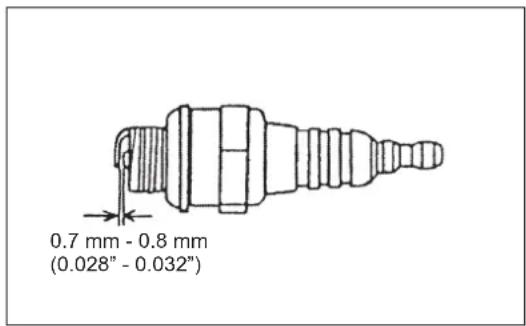
- The gap between the two electrodes of the spark plug should be 0.7 - 0.8 mm (0.028" - 0.032"). If the gap is too wide or too narrow, adjust it. If the spark plug is clogged or contaminated, clean it thoroughly or replace it.
CAUTION: Never touch the spark plug connector while the engine is running (danger of high voltage electric shock).
CLEANING OF FUEL FILTER
WARNING: INFLAMMABLES STRICTLY PROHIBITED
Interval of cleaning and inspection: Monthly (every 50 operating hours)
Suction head in the fuel tank
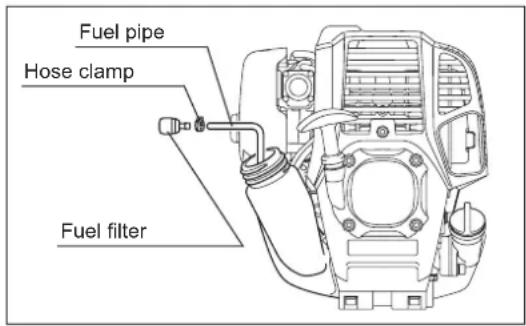
Check the fuel filter periodically. To check the fuel filter, follow the steps below.
(1) Remove the fuel tank cap, drain the fuel to empty the tank. Check the tank inside for any foreign materials. If any, remove them.
(2) Pull out the suction head by using a wire hook through the tank opening.
(3) If the fuel filter clogged slightly, clean it. To clean it, gently shake and tap it in fuel. To avoid damage, do not squeeze or rub it. The fuel used for the cleaning must be disposed in accordance with the method specified by regulations in your country.
If the fuel filter became hard or heavily clogged up, replace it.
(4) After checking, cleaning or replacing, push the fuel filter in all the way to the bottom of the fuel tank.
Clogged or damaged fuel filter can cause insufficient fuel supply and reduce engine power. Replace the fuel filter at least quarterly to ensure satisfactory fuel supply to the carburetor.
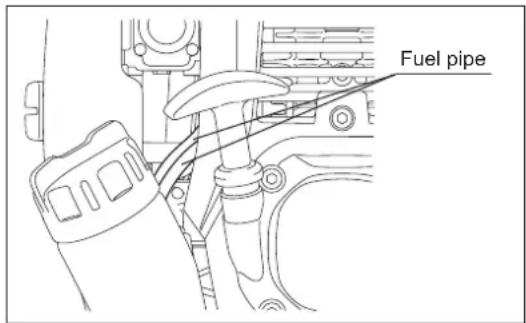
REPLACEMENT OF FUEL PIPE
CAUTION: INFLAMMABLES STRICTLY PROHIBITED
Interval of cleaning and inspection: Daily (every 10 operating hours)
Replacement: Annually (every 200 operating hours)
Replace the fuel pipe every year, regardless of operating frequency. Fuel leakage may lead to fire.
If any leakage is detected during inspection, replace the fuel pipe immediately.
INSPECTION OF BOLTS, NUTS AND SCREWS
- Retighten loose bolts, nuts, etc.
- Check for fuel and oil leakage.
- Replace damaged parts with new ones for safety operation.
CLEANING OF PARTS
- Keep the engine always clean.
- Keep the cylinder fins free of dust or dirt. Dust or dirt adhering to the fins will cause piston seizure.
REPLACEMENT OF GASKETS AND PACKINGS
In reassembling after the engine is dismounted, be sure to replace the gaskets and packings with new ones.
Any maintenance of adjustment work that is not included and described in this manual is only to be performed by Authorized Service Agents.
STORAGE

WARNING: When draining the fuel, be sure to stop the engine and confirm that the engine cools down.
Just after stopping the engine, it may still hot with possibility of burns, inflammability and fire.

ATTENTION: When the machine is kept out of operation for a long time, drain up all fuel from the fuel tank and carburetor, and keep it at a dry and clean place.
- Drain up fuel from the fuel tank and carburetor according to the following procedure:
1) Remove the fuel tank cap, and drain fuel completely. If there is any foreign matter remaining in the fuel tank, remove it completely.
2) Pull out the fuel filter from the refill port using a wire.
3) Push the primer pump until fuel is drained from there, and drain fuel coming into the fuel tank.
4) Reset the filter to the fuel tank, and securely tighten the fuel tank cap.
5) Then, continue to operate the engine until it stops.
- Remove the spark plug, and drip several drops of engine oil through the spark plug hole.
- Gently pull the starter handle so that engine oil will spread over the engine, and attach the spark plug.
- Do not move the lever in the lock position while not mounting the attachment. The lever in the lock position without the attachment being mounted does not allow the pole shaft of the attachment to be mounted.
- In general, store the machine in horizontal position. If it is not possible, place the machine as the motor unit comes below the cutting tool. Otherwise engine oil may leak from inside.
- Always pay attention to storing the machine in a safe place to prevent machine damage and personal injury.
- Keep the drained fuel in a special container in a well-ventilated shade.
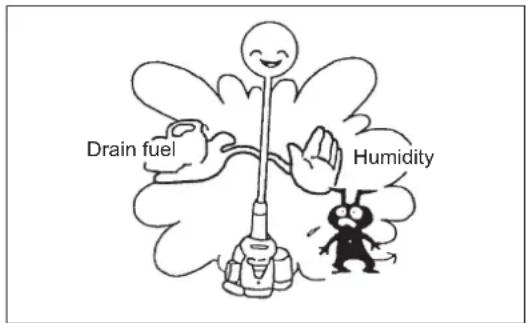
Attention after long-time storage
- Before startup after long-time shutdown, be sure to replace oil (refer to P 16). Oil will deteriorate while the machine is kept out of operation.
Fault location
| Fault System Observation Cause | | |
| Engine not starting or with difficulty | Ignition system Ignition | spark O.K. Fault in fuel supply | or compression system, mechanical defect |
| No ignition spark STOP-switch operated, wiring fault or short circuit, spark plug or connector defective, ignition module faulty |
| Fuel supply Fuel tank filled | Incorrect choke position, carburetor defective, fuel supply line bent or blocked, fuel dirty |
| Compression No compression when pulled over | Cylinder bottom gasket defective, crankshaft seals damaged, cylinder or piston rings defective or improper sealing of spark plug |
| Mechanical fault Starter not engaging Broken starter spring, broken parts inside of the engine |
| Warm start problems | | Tank filled ignition spark existing | Carburetor contaminated, have it cleaned |
| Engine starts but dies | Fuel supply | Tank filled | Incorrect idling adjustment, carburetor contaminated |
| Fuel tank vent defective, fuel supply line interrupted, cable or STOP-switch faulty |
| Insufficient performance | Several systems may simultaneously be affected | Engine idling poor | Air filter contaminated, carburetor contaminated, muffler clogged, exhaust duct in the cylinder clogged |
| Item\Operating time | | Before operation | After lubrication | Daily (10h) | 30h 50h | 200h | | Shutdown/rest | Corresponding P |
| Engine oil | Inspect | ○ | | | | | | | 12 |
| Replace | | | | | ○*1 | | | 16 |
| Tightening parts (bolt, nut) | Inspect | ○ | | | | | | | 18 |
| Fuel tank | Clean/inspect | ○ | | | | | | | — |
| Drain fuel | | | | | | | ○*3 | 19 |
| Throttle lever Check function | | | ○ | | | | | | — |
| Stop switch Check function | | | ○ | | | | | | 15 |
| Low-speed rotation Inspect/adjust | | | | ○ | | | | | 15 |
| Air cleaner Clean | | | | ○ | | | | | 17 |
| Ignition plug Inspect | | | | ○ | | | | | 18 |
| Cooling air duct Clean/inspect | | | | ○ | | | | | 18 |
| Fuel pipe | Inspect | | | ○ | | | | | 18 |
| Replace | | | | | | ○*2 | | — |
| Fuel filter Clean/replace | | | | | | ○ | | | 18 |
| Clearance between air intake valve and air discharge valve | Adjust | | | | | | ○*2 | | — |
| Engine overhaul | | | | | | | ○*2 | | — |
| Carburetor Drain fuel | | | | | | | | ○*3 | 19 |
*1 Perform initial replacement after 20h operation.
*2 For the 200 operating hour inspection, request Authorized Service Agent or a machine shop.
*3 After emptying the fuel tank, continue to run the engine and drain fuel in the carburetor.
Check instruction manuals for each attachment, and carry out maintenance on them when they are being used.
TROUBLESHOOTING
Before making a request for repairs, check a trouble for yourself. If any abnormality is found, control your machine according to the description of this manual. Never tamper or dismount any part contrary to the description. For repairs, contact Authorized Service Agent or local dealership.
| State of abnormality Probable cause (malfunction) Remedy | |
| Engine does not start | Failure to operate primer pump Push 7 to 10 times |
| Low pulling speed of starter rope Pull strongly | |
| Lack of fuel Feed fuel | |
| Clogged fuel filter Clean | |
| Bent fuel tube Straighten fuel tube | |
| Deteriorated fuel Deteriorated fuel makes starting more difficult.Replace with new one. (Recommended replacement: 1 month) |
| Excessive suction of fuel Set throttle lever from medium speed to high speed, and pull starter handle until engine starts.Once engine starts, attachment starts rotating or moving. Pay full attention to attachment.If engine will not start still, remove spark plug, make electrode dry, and reassemble them as they originally are. Then, start as specified. |
| Detached plug cap Attach securely | |
| Contaminated spark plug Clean | |
| Abnormal clearance of spark plug Adjust clearance |
| Other abnormality of spark plug Replace | |
| Abnormal carburetor Make request for inspection and maintenance. |
| Starter rope cannot be pulled Make request for inspection and maintenance. |
| Abnormal drive system | Make request for inspection and maintenance. |
| Engine stops soonEngine speed does not increase | Insufficient warm-up Perform warm-up operation |
| Choke lever is set to “CLOSE” although engine is warmed up. | Set to “OPEN” |
| Clogged fuel filter Clean or replace | |
| Contaminated or clogged air cleaner | Clean |
| Abnormal carburetor Make request for inspection and maintenance. |
| Abnormal drive system | Make request for inspection and maintenance. |
| Attachment does not rotate or move↓Stop engine immediately | Attachment not inserted to the specified point. | Insert as instructed. |
| Abnormal drive system | Make request for inspection and maintenance. |
| Main unit vibrates abnormally↓Stop engine immediately | Attachment not inserted to the specified point. | Insert as instructed. |
| Loosened lever | Tighten securely. |
| Abnormal drive system | Make request for inspection and maintenance. |
| Attachment does not stop immediately↓Stop engine immediately | High idling rotation | Adjust |
| Detached throttle wire | Attach securely |
| Abnormal drive system | Make request for inspection and maintenance. |
| Engine does not stop↓Run engine at idling, and set choke lever to CLOSE | Detached connector Attach securely | |
| Abnormal electric system | Make request for inspection and maintenance. |
| |
When the engine does not start after warm-up operation:
If there is no abnormality found for the check items, open the throttle by about 1/3 and start the engine.
Français
(Instructions d'origine)
Mode d'emploi
DÉMONTAGE
AVANT DE COMMENCER
Remarque
RÉGLAGE DE LA ROTATION A BAS RÉGIME (RALENTI)
MONTIEREN DES GRIFFS
DEMONTIEREN
VOR DEM BETRIEB
Hinweis
Alternative Ablassmethode

(4)

(5)
(6)
SMONTAGGIO
Nota
AVVIAMENTO
Gebruiksmethode
DE HANDGREEP MONTEREN
DEMONTEREN
VÓÓR HET BEGIN VAN HET WERK
Opmerking
HET LAAG TOERENTAL (VOOR STATIONAIR DRAAIEN) AFSTELLEN
Zuigkop in brandstoftank



Método de trabajo
DESMONTAJE
ANTES DEL USO
Nota
(4)

(5)
(6)
Diagrama
, 360°
2017
DESMONTAGEM
Nota
INÍCIO
Betjeningsmetode
AFMONTERING
INDEN ANVENDELSE
Bemærk
JUSTERING AF OMDREJNINGER VED LAV HASTIGHED (TOMGANG)

(4)

Μέθοδος λειτουργίας
ΑΠΟΣΥΝΑΡΜΟΛΟΓΗΣΗ

Σημείωση