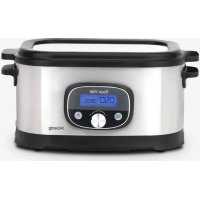
SVCOOK40 - Other kitchen appliances H.KOENIG - Free user manual and instructions
Find the device manual for free SVCOOK40 H.KOENIG in PDF.


| Product type | Sous vide cooker (immersion circulator) |
| Brand | H.Koenig |
| Model | SVCOOK40 |
| Power supply | 230 V ~ 50 Hz |
| Temperature range | 45°C to 90°C (adjustable in 1°C increments) |
| Cooking time range | 30 minutes to 72 hours (in 30-minute increments) |
| Display | Digital screen |
| Water capacity | Approximately 10 to 12 liters (not specified by manufacturer) |
| Power | Approximately 1000-1500 W (estimate) |
| Main material | Stainless steel (likely) |
| Weight | Approximately 3 kg (estimate) |
| Dimensions | Not specified |
| Included accessories | Cooking rack |
| Main functions | Programmable sous vide cooking, preheating, keep warm |
| Control type | +/- buttons, Timer/Temp, Start/Stop |
| Cleaning and maintenance | Unplug before cleaning; wipe with a soft cloth; do not immerse |
| Usage | Domestic, for sous vide cooking |
| Safety | Do not leave unattended; hot surface; use on heat-resistant surface |
| Warranty | According to manufacturer's terms |
Frequently Asked Questions - SVCOOK40 H.KOENIG
User questions about SVCOOK40 H.KOENIG
0 question about this device. Answer the ones you know or ask your own.
Ask a new question about this device
Download the instructions for your Other kitchen appliances in PDF format for free! Find your manual SVCOOK40 - H.KOENIG and take your electronic device back in hand. On this page are published all the documents necessary for the use of your device. SVCOOK40 by H.KOENIG.
USER MANUAL SVCOOK40 H.KOENIG
To get the best out of your new sous vide cooker, please read this user guide carefully before using it for the first time. Take particular note of the safety precautions. We also recommend that you keep the instructions for future reference.
GENERAL SAFETY INSTRUCTIONS
- This appliance may only be used by children aged from 8 years and above and persons with reduced physical, sensory or mental capabilities or lack of experience and knowledge if they are supervised or have been given instructions concerning use of the appliance in a safe way and understand the hazards involved. Children must not play with the appliance. Cleaning and user maintenance must not be performed by children without supervision.
- Keep the appliance under constant supervision while in use. Keep an eye on any children in the vicinity of the appliance when it is in use. The appliance is not a toy.
- Incorrect use of this appliance may cause personal injury and damage the appliance.
- Use for its intended purpose only. The manufacturer is not responsible for any injury or damage resulting from incorrect use or handling (see also Warranty Terms).
- For domestic use only. Not for outdoor or commercial use.
- Remove all packaging and transport materials from the inside and outside of the appliance.
- Check that the appliance has no visible damage and that no parts are missing.
- Do not use with any cords other than that supplied.
- Check that it is not possible to pull or trip over the cord or any extension cord.
- The appliance must not be used together with a timer switch or a separate remote control system.
- Turn off the appliance and remove the plug from the socket before cleaning, or when the appliance is not in use.
- Avoid pulling the cord when removing the plug from the socket. Instead, hold the plug.
- Keep the cord and appliance away from heat sources, hot objects and naked flames.
- Ensure that the cord is fully extended.
- The cord must not be twisted or wound around the appliance.
-
Check regularly that neither the cord nor plug is damaged and do not use the appliance if there is any damage, or if it has been dropped on the floor, dropped in water or damaged in any other way.
-
If the appliance, cord or plug has been damaged, have the appliance inspected and if necessary repaired by an authorised repairer.
- Connect to 230V , 50Hz only. The warranty is not valid if the appliance is connected to incorrect voltage.
- Never try to repair the appliance yourself. Please contact the store where you bought the appliance for repairs under warranty.
- Unauthorised repairs or modifications will invalidate the warranty.
- Caution! Some parts of this product can become very hot and cause burns.
Particular attention should be paid where children and vulnerable people are present. - Keep the appliance and its cord out of reach of children aged less than 8 years.
SPECIAL SAFETY INSTRUCTIONS ABOUT SOUS VIDE COOKING
- Always place the appliance on a dry, level, firm and heat-resistant surface well away from any edges.
- Always place the appliance at a safe distance from flammable objects such as curtains, tablecloths or similar.
- The appliance must not be placed or stored near other sources of heat.
- Do not cover.
- The surfaces become very hot during use. Do not touch the hot surfaces due to the danger of burns.
- Do not move the appliance when in use.
- Please note that the appliance will remain hot for a while after you switch it off. Always allow the appliance to cool down completely before storage.
- Allow the lid to cool before cleaning with water.
- Never use the appliance if the lid is damaged.
- Only place vacuum-packed foods in the appliance. Do not try to cook unwrapped food!
BEFORE USE
- Remove all packaging and transport material from the appliance.
- Wash the lid and the inside of the water bath with hot water and a little washing-up liquid, and then dry the parts thoroughly.
ABOUT SOUS VIDE COOKING
- Sous vide has long been a popular cooking method with professional chefs.
-
"Sous vide" is French for "under vacuum". It describes a cooking method in which food is placed in sealed vacuum bags and cooked in a water bath. The food is cooked at a constant low temperature over a long time to make it moist and flavoursome. As the vacuum bag
-
is sealed, the food cooks in its own juices together with the marinades or spices you added. Vitamins, minerals and juices are retained and the flavour of the food is enhanced.
- This makes the food healthier, more tender and more flavourful. As meat cooked sous vide is more tender, it is possible to use cheaper cuts,
such as neck fillet, shank and shoulder, which are often tastier than the more expensive cuts.
As sous vide cooking requires that foods be vacuum packed individually, several items can be cooked at the same time, as long as their cooking temperature is the same.
It is difficult to overcook food with sous vide, but the structure of the food can change slightly during cooking. The food can be prepared in plenty of time before serving, making sous vide perfect when you have guests.
Temperatures
The appliance has a temperature range of
45-90 °C in increments of 1 °C. Different temperatures are required for different foods and different degrees of doneness. You can see sous vide temperatures and times in the table later on in these instructions.
Cooking time
The cooking time does not depend on the weight of the food, but its thickness. The standard cooking time is 8 hours. The time can be adjusted from 30 minutes to 72 hours. You can see sous vide temperatures and times in the table later on in these instructions.
Foods for sous vide cooking
Meat is particularly suited to sous vide cooking, as it makes it more tender, juicy and flavoursome, but vegetables and fish can also be cooked in this way.
We recommend sous vide cooking for the following foods:
Beef, veal, lamb, pork and game
Chicken, turkey and duck
- Lean and oily fish, lobster tails and scallops
- Root vegetables such as potatoes, carrots, parsnips, beetroot and turnips
- Crisp vegetables such as peas, asparagus, corn, broccoli, cauliflower, aubergines, onions and squash
- Hard fruits such as apples and pears
- Soft fruits such as mango, plums, apricots, peaches, nectarines, papaya and straw-berries
SOUS VIDE COOKING STEP BY STEP
1. Seasoning
You can marinate the food or add spices, herbs, butter or oil before you seal the vacuum bag.
2. Vacuum sealing
The food must be vacuum sealed in a bag to remove air and moisture. This ensures the foods retain their natural flavour and nutritional content. Vacuum sealing also helps to open the pores of meat, poultry, fish and shellfish, so that the marinade and spices are absorbed better and the food is more flavoursome.
Oxygen and moisture in the ambient air reduces the flavour, nutritional content and structure of food, and it is therefore important to use a high-quality vacuum sealer to remove air and moisture before the bag is sealed to ensure the food is optimally vacuum packed.
3. Cooking
Once the water in the water bath has reached the required temperature, the vacuum bags containing the food should be placed gently in the water. Make sure the bags are completely under water, and that the water can circulate around the bags, so the food cooks evenly.
4. Browning
When foods are cooked sous vide, it may be necessary to brown meat in particular in a frying pan or grill in order to enhance its appearance and flavour. Remove the food from the bag and brown it quickly on a very hot frying pan or grill rack. This causes the fat and proteins to caramelise and enhances the flavour.
PREPARING FOODS
- Foods for sous vide cooking must be absolutely fresh.
- Check that meat, poultry, fish and shellfish have been stored correctly below 5^ before cooking.
- Only use brand new and clean vacuum bags.
- Keep fresh and cooked foods apart.
- Wash your hands and work area thoroughly before handling food.
The thickness of the food must be as described in the table of sous vide temperatures and times.
MAIN COMPONENTS
USE
Place the appliance on a flat surface. Plug In.
Fill the water bath with lukewarm or hot water. The water must not be hotter than the cooking temperature.
The water must not be above the FILL mark in the water bath, and it must cover the foods you want to cook. Make sure not to overfill the water bath with water so that it overflows when the foods are placed in it!
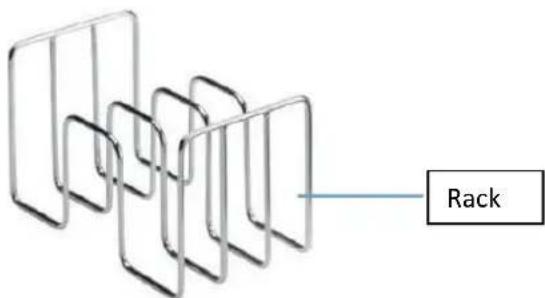
If necessary, insert the rack in the water bath if you want to cook foods that are best placed on the rack.
Place the lid on the water bath.
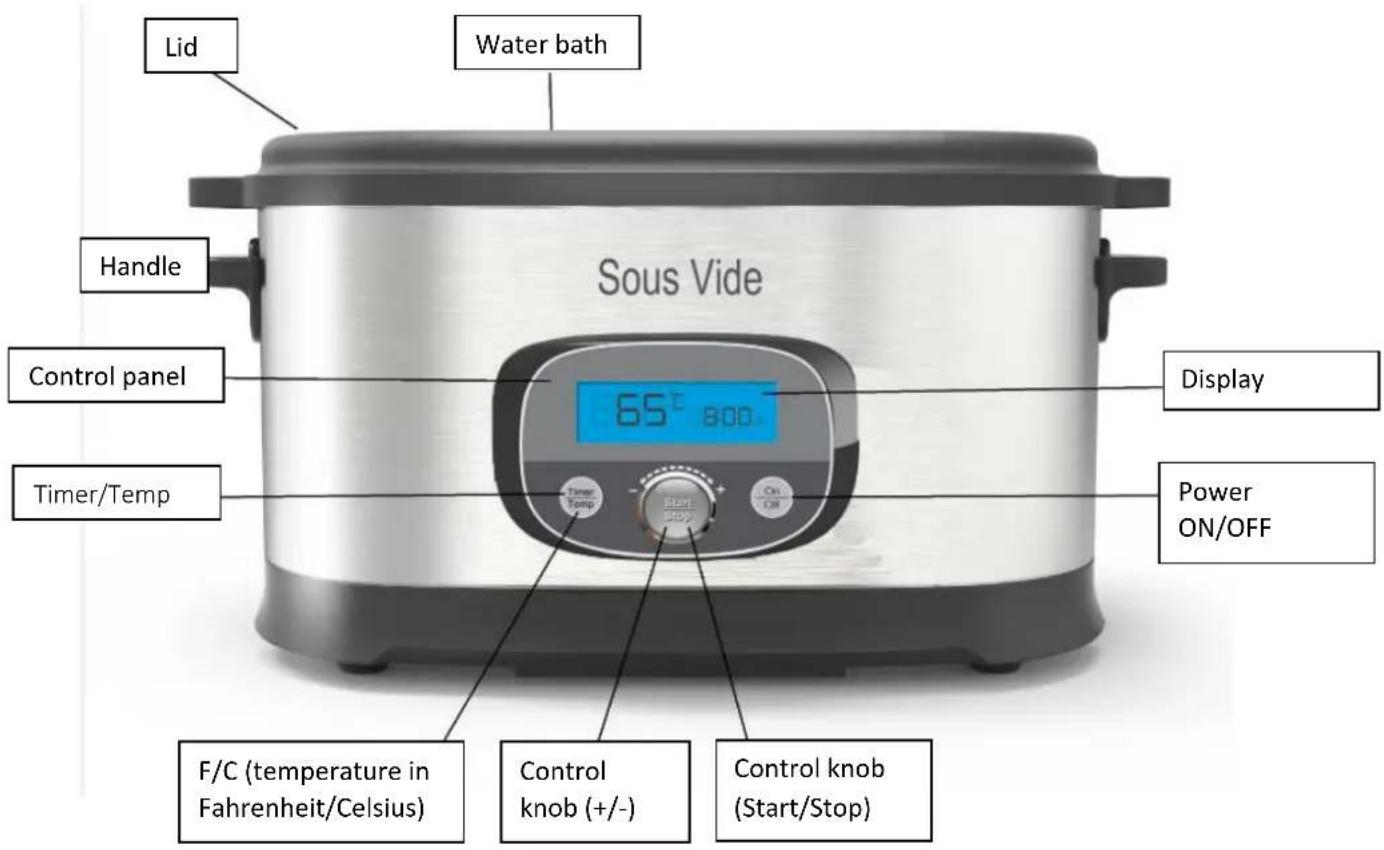
Press and hold the on/off button to switch the appliance on. The display will come on and the temperature is automatically set to 56^ .
- Adjust the temperature as required using the control knob to scroll + and - . You can also switch the temperature display between
Celsius and Fahrenheit using the Timer/Temp button. - Press the Timer/Temp button and adjust the cooking time from 30 minutes to 72 hours using the control knob to scroll + and - . The cooking time is set as standard to 8 hours.
- Press the control knob "Start/Stop". The appliance preheats the water to the set temperature before the cooking time begins to count down. The display shows the current temperature of the water. If you press the "Timer/Temp", the set temperature is displayed for 5 seconds.
- Once the water has reached the preset temperature, 3 beeps will sound. Lift the lid off and carefully lay the vacuum-packed food in the water bath using tongs. The water must be able to circulate around the packs of food. Replace the lid.
- Press the control knob "Start/Stop". The cooking time starts to count down.
- Once the cooking time has elapsed, 3 beeps will sound and the appliance will switch itself off.
- You must not remove the lid during cooking unless absolutely necessary. The appliance cooks at a very low temperature, so it takes a long time to regain any heat loss. If condensation forms on the inside of the lid so that you cannot see into the water bath, you can tilt the lid gently away from you so that condensation runs down into the water bath.
Note
Make sure the bags are completely sealed before cooking begins.
Make sure the bags are still completely sealed once cooking is finished.
If the food is to be consumed within a few hours, it can be kept in the water bath for a short time without ruining the structure. You can see the standing times in the table later on in these instructions.
If the food is to be stored in the fridge for later use, immediately place the bags in ice water to quickly reduce the temperature of the food.
CLEANING
When cleaning the appliance, you should pay attention to the following:
- Unplug the appliance and allow it to cool before cleaning it and putting it away.
- Pour the water out of the water bath. Wipe the water bath and lid with a tea towel.
- Do not immerse the appliance, cord or plug in water and make sure no water enters the appliance.
- Wipe the outside of the appliance with a well-wrung cloth and dry with a dry soft cloth.
※ ENVIRONMENT
CAUTION :
Do not dispose of this product as it has with other household products. There is a separation of this waste product into communities, you will need to inform your local authorities about the places where you can return this product. In fact, electrical and electronic products contain hazardous substances that have harmful effects on the environment or human health and should be recycled. The symbol here indicates that electrical and electronic equipment should be chosen carefully, a wheeled waste container is marked with a cross.
WARRANTY TERMS
The warranty does not apply:
- if the above instructions have not been followed
- if the appliance has been interfered with
- if the appliance has been mishandled, subjected to rough treatment, or has suffered any other form of damage
- if the appliance is faulty due to faults in the electricity supply.
Due to the constant development of our products in terms of function and design, we reserve the right to make changes to the product without prior warning.
TABLE OF COOKING TEMPERATURES AND TIMES
| Food item | Thickness* | Temp. (℃) | Time | Standing time** |
| Beef, veal, lamb, game | ||||
| Filletts, chops, ribeye, T-bone, sirloin, porterhouse (tender cuts) | 1-2 cm | 49+ | 1 hour | Up to 6 hours |
| 2-5 cm | 49+ | 2 hours | Up to 8 hours | |
| Flank, neck, thigh, shoulder, shank | 4-6 cm | 49+ | 8 hours | Up to 10 hours |
| Pork | ||||
| Pork breast | 3-6 cm | 82 | 10 hours | Up to 12 hours |
| Spareribs | 2-3 cm | 59 | 10 hours | Up to 12 hours |
| Cutlets | 2-4 cm | 56+ | 4 hours | Up to 6 hours |
| Pork loin | 5-7 cm | 56+ | 10 hours | Up to 12 hours |
| Poultry | ||||
| Chicken breast with bone | 3-5 cm | 82 | 2 hours | Up to 3 hours |
| Boneless chicken breast | 3-5 cm | 64 | 1 hour | Up to 2 hours |
| Chicken thigh with bone | 3-5 cm | 82 | 1.5 hours | Up to 3 hours |
| Boneless chicken thigh | 3-5 cm | 64 | 1 hour | Up to 2 hours |
| Chicken drumstick | 5-7 cm | 82 | 2 hours | Up to 3 hours |
| Duck breast | 3-5 cm | 64 | 2 hours | Up to 2 hours |
| Fish | ||||
| Lean and oily fish | 3-5 cm | 47+ | 1 hour | Up to 1 hour |
| Shellfish | ||||
| Shrimps | 2-4 cm | 60 | 1 hour | Up to 1 hour |
| Lobster tail | 4-6 cm | 60 | 1 hour | Up to 1 hour |
| Scallops | 2-4 cm | 60 | 1 hour | Up to 1 hour |
| Vegetables | ||||
| Root vegetables | 1-5 cm | 83+ | 1 hour | Up to 2 hours |
| Crisp vegetables | 1-5 cm | 83+ | 1 hour | Up to 2 hours |
If the meat is thinner than specified, it will cook faster.
The standing time is the longest time the food can remain in the water after cooking without the structure changing.
TABLE OF DONENESS AND TEMPERATURES
| Food item | Doneness | Temperature (℃) |
| Beef, veal, lamb, pork and game | Rare | 49 |
| Medium-rare | 56 | |
| Medium | 60 | |
| Medium-well done | 65 | |
| Well done | 71+ | |
| Poultry, boneless | Well done | 64 |
| Poultry, with bone | Well done | 82 |
| Fish | Rare | 47 |
| Medium-rare | 56 | |
| Medium | 60 | |
| Vegetables | General | 83-87 |
FRANCAIS
INTRODUCTION

- GENERAL SAFETY INSTRUCTIONS
- SPECIAL SAFETY INSTRUCTIONS ABOUT SOUS VIDE COOKING
- BEFORE USE
- ABOUT SOUS VIDE COOKING
- Temperatures
- Cooking time
- Foods for sous vide cooking
- SOUS VIDE COOKING STEP BY STEP
- Seasoning
- Vacuum sealing
- Cooking
- Browning
- PREPARING FOODS
- USE
- Note
- CLEANING
- ※ ENVIRONMENT
- CAUTION :
- WARRANTY TERMS
- FRANCAIS
- INTRODUCTION
Brand : H.KOENIG
Model : SVCOOK40
Category : Other kitchen appliances