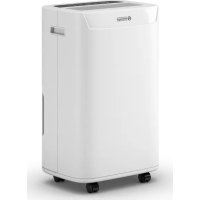
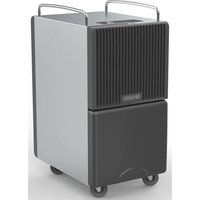
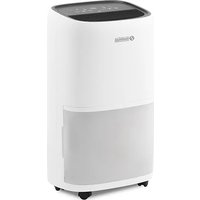
USER MANUAL Aquaria S1 10 P OLIMPIA SPLENDID
natural_image
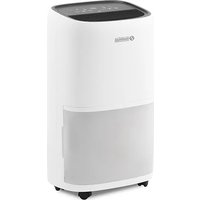
Illustration of a white industrial air purifier with control panel and wheels (no text or symbols)
AQUARIA S1
10-12-14-16 P
Caution: risk of fire
natural_image
Illustration of kitchen appliances with crossed-out lines indicating prohibition (no text or symbols)
natural_image
Diagram showing a mechanical assembly with intersecting diagonal lines and a central component (no text or symbols)
0 -AVVERTENZE 2
0.1 - INFORMAZIONI GENERALI....2
0.2 - SIMBOLOGIA....2
natural_image
Illustration of a hand using a power plug to install an electrical socket (no text or symbols present)
natural_image
Illustration of a hand using a power plug to switch an electrical outlet (no text or symbols present)

AVVERTENZA
natural_image
Illustration of a hand using a power plug to switch an electrical outlet (no text or symbols present)
4.1 - PULIZIA
1 -DESCRIPTION OF THE APPLIANCE 10
1.1 - FEATURES .... 10
1.2 - IDENTIFICATION OF THE MAIN COMPONENTS 10
2 - INSTALLATION 10
2.1 - APPLIANCE TRANSPORT 10
2.2 - WARNINGS....11
2.3 - INSTALLATION OF THE APPLIANCE 11
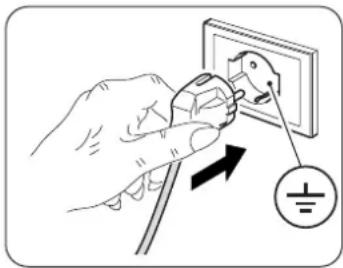
2.4 - ELECTRICAL CONNECTION 11
3 - USE OF THE APPLIANCE 12
3.1 - CONTROL PANEL SYMBOLS AND KEYS 12
3.2 - OPERATION OF THE APPLIANCE 12
3.2.a - Preliminary operations....12
3.2.b - ON/OFF key 12
3.2.c - Fan speed 13
3.2.d - Timer function....13
3.2.e - Activation of the display....13
3.2.f - Humidity level setting 13
3.3 - MODE SELECTION 13
3.3.a - Laundry mode 13
3.3.b - Dehumidification mode....14
3.4 - WATER UNLOADING 14
3.4.a - Emptying the tank....14
3.4.b - Continuous water unloading....14
3.5 - BLACKOUT 14
4 - MAINTENANCE AND CLEANING 14
4.1 - CLEANING....15
4.1.a - Cleaning the appliance....15
4.2 - ACTIVE CARBONS FILTER CLEANING....15
4.3 - TANK CLEANING 15
5 - PRESERVATION OF THE APPLIANCE.... 16
6 - TECHNICAL DATA 16
7 - TROUBLE SHOOTING.... 16
EN - 1
0 - WARNINGS
First of all, we would like to thank you for choosing our appliance.
0.2 - SYMBOLS
The pictograms in the next chapter provide the necessary information for correct, safe use of the machine in a rapid, unmistakable way.
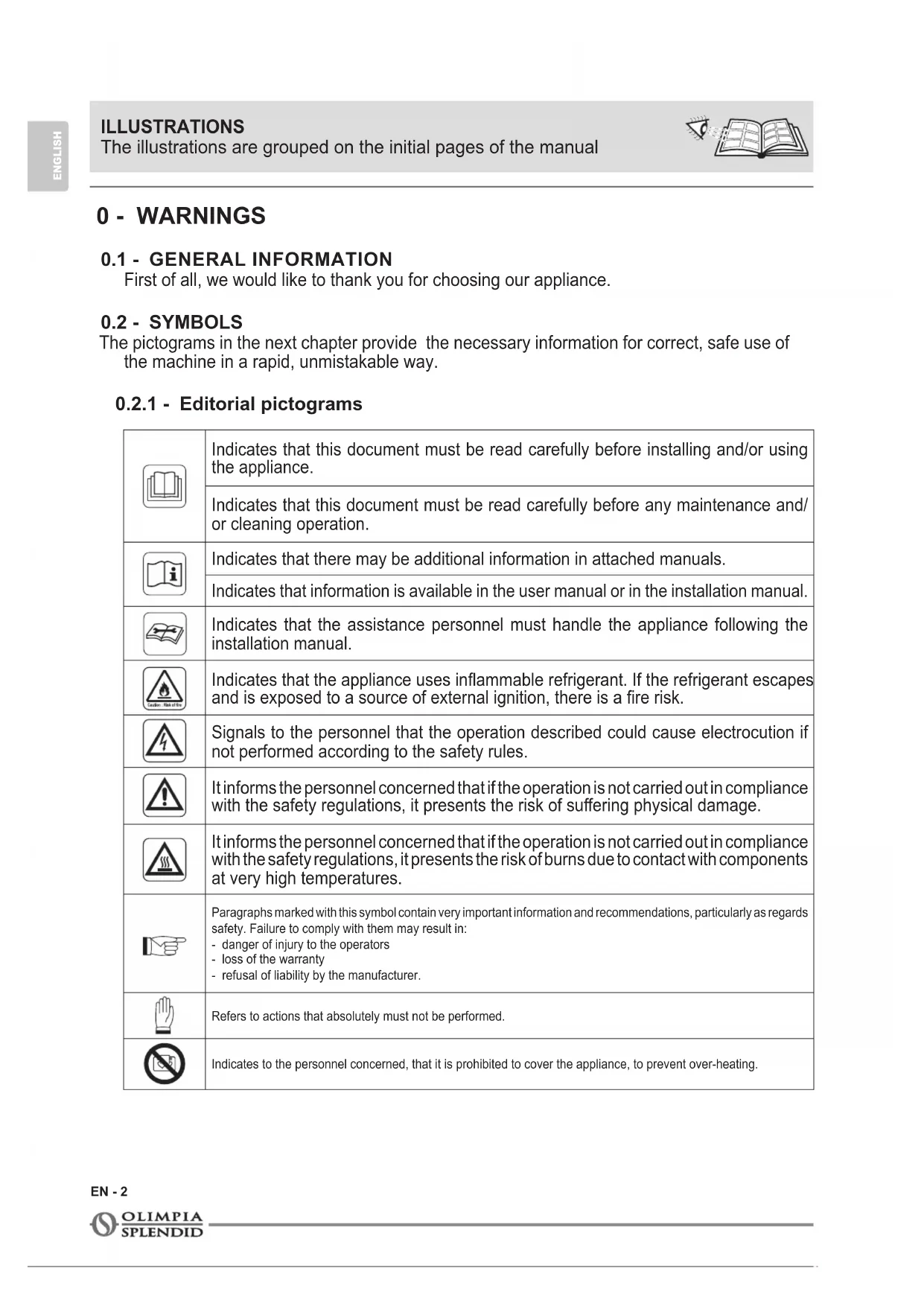
0.2.1 - Editorial pictograms
 | Indicates that this document must be read carefully before installing and/or using the appliance. |
| Indicates that this document must be read carefully before any maintenance and/or cleaning operation. |
 | Indicates that there may be additional information in attached manuals. |
| Indicates that information is available in the user manual or in the installation manual. |
 | Indicates that the assistance personnel must handle the appliance following the installation manual. |
 | Indicates that the appliance uses inflammable refrigerant. If the refrigerant escapes and is exposed to a source of external ignition, there is a fire risk. |
 | Signals to the personnel that the operation described could cause electrocution if not performed according to the safety rules. |
 | It informs the personnel concerned that if the operation is not carried out in compliance with the safety regulations, it presents the risk of suffering physical damage. |
 | It informs the personnel concerned that if the operation is not carried out in compliance with the safety regulations, it presents the risk of burns due to contact with components at very high temperatures. |
 | Paragraphs marked with this symbol contain very important information and recommendations, particularly as regards safety. Failure to comply with them may result in:- danger of injury to the operators- loss of the warranty- refusal of liability by the manufacturer. |
 | Refers to actions that absolutely must not be performed. |
| [W22C] | Indicates to the personnel concerned, that it is prohibited to cover the appliance, to prevent over-heating. |
0.3 - GENERAL WARNINGS
WHEN USING ELECTRICAL EQUIPMENT, BASIC SAFETY PRECAUTIONS MUST ALWAYS BE FOLLOWED IN ORDER TO REDUCE RISKS OF FIRE, ELECTRIC SHOCKS AND INJURY, INCLUDING THE FOLLOWING:

This document is restricted in use to the terms of the law and may not be copied or transferred to third parties without the express authorization of the manufacturer, OLIMPIA SPLENDID.
Our machines are subject to change and some parts may appear different from the ones shown here, without this affecting the text of the manual in any way.

Read this manual carefully before performing any operation (installation, maintenance, use) and follow the instructions contained in each chapter.

Keep the manual carefully for future reference.
-
After removing the packaging, check that the appliance is in perfect condition. The packaging materials must not be left within reach of children as they can be dangerous.
-
THE MANUFACTURER IS NOT RESPONSIBLE FOR DAMAGES TO PERSONS OR PROPERTY CAUSED BY FAILURE TO FOLLOW THE INSTRUCTIONS IN THIS MANUAL.
-
The manufacturer reserves the right to make any changes it deems advisable to its models, although the essential features described in this manual remain the same.

- The maintenance of appliances for air dehumidification such as this may result dangerous since, inside this appliance, an under pressure refrigerant gas and live electrical components are present.
For this reason, possible maintenance interventions (with the exception of filters cleaning) must be performed exclusively by authorized and qualified personnel.
-
Failing to comply with the instructions contained in this manual, and using the unit with temperatures exceeding the permissible temperature range will invalidate the warranty.
-
Routine maintenance of the filters and general external cleaning can be done by the user as these operations are not difficult or dangerous.
-
During assembly and at each maintenance operation, it is necessary to respect the precautions indicated in this manual and on the labels located inside or on the appliance, as well as to take all the precautions suggested by common sense and by the Safety Regulations in force in the country of installation.

- In case of replacement of parts, use only original OLIMPIA SPLENDID parts.

- If the unit is unused for a long period, or no-one uses the climate-controlled room, it is recommended to disconnect the electric power supply in order to prevent accidents.

- Do not use liquid or corrosive detergents to clean the unit, do not spray water or other liquids onto the unit, since they could damage the plastic components or even cause electric shocks.

- Do not get the appliance wet.
Short circuits or fires may occur.
Do not immerse the appliance in water or in other liquids.

-
In case of functioning anomalies (for example: abnormal noise, bad smell, smoke, abnormal increase in temperature, electrical dispersions, etc.), immediately switch off the appliance and disconnect the plug from the power socket.
For repair work contact solely the technical service centres authorised by the manufacturer and ask for original spare parts to be used. Failure to do this can affect the safety of the appliance.
-
Do not leave the appliance active if there are opened doors or windows.

-
Do not disconnect the power plug during functioning. or electrical shocks hazard.
-
Do not place heavy or hot objects on top of the appliance.
Do not sit or get on the appliance.
-
Before electrically connecting the appliance, make sure the plate data correspond to those of the distribution network. The power socket must be equipped with a Ground System. The data plate (11) is located on the side of the appliance (Fig.2).
-
Install the appliance according to the manufacturer's instructions. An incorrect installation can cause damage to people, animals or property for which the manufacturer accepts no responsibility.

Do not let the appliance work in enclosed areas such as a cabinet since it could cause a fire.
-
If the appliance's plug is incompatible with the socket, have the socket replaced with a suitable one by a qualified technician, who must ascertain that the section of the socket cables is compatible with the power absorbed by the appliance. We do not recommend using adaptors and/or extension cables. If they cannot be avoided, however, they must comply with current safety regulations and their ampacity (A) must not be below the maximum ampacity of the appliance.
-
This appliance is NOT intended to be run via an external timer or with a separate remote control system.
-
Always and only use the appliance in a vertical position.
-
Do not obstruct the air inlet and outlet grids in any manner.
-
Do not insert extraneous items in the air inlet and outlet grids as this will create the risk of electrical shocks, fire or damages to the appliance.
-
Do not use the appliance:
- with wet or damp hands;
- barefoot.
-
Do not pull the power cable or the appliance itself to remove the plug from the socket.
-
Do not use this product under direct sunlight or near a heat source such as a stove, heater or radiator (Fig.3).
-
Do not use the appliance near gas equipment (Fig.3).
-
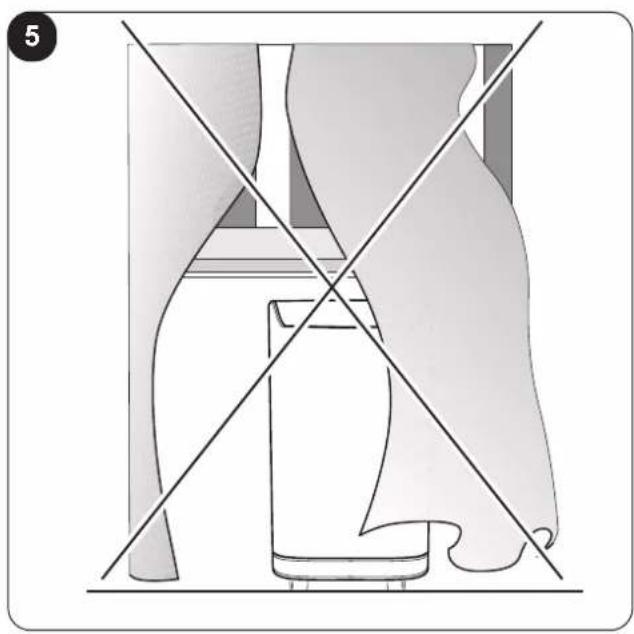
Do not activate the appliance near curtains since they can be sucked in the air vents (Fig.5)
-
Always place the appliance on a stable, plane and levelled surface.
-
Leave at least 20cm of free space on the sides and behind the appliance and leave at least 30cm of free space above the appliance (Fig.1).
-
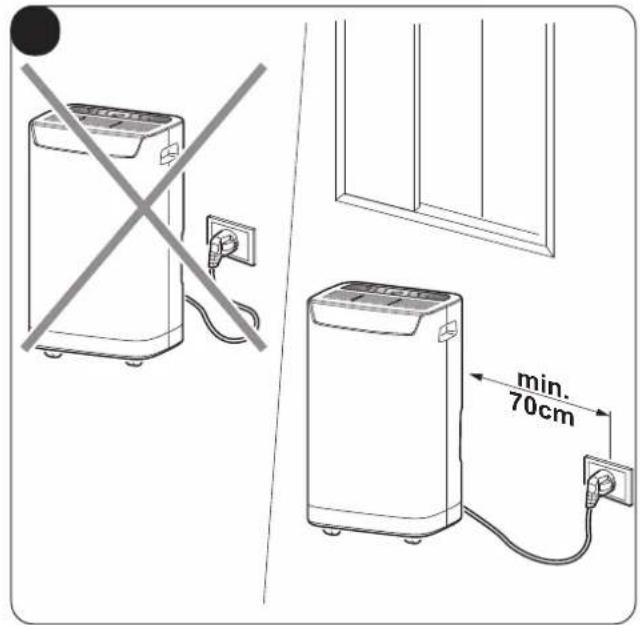
Do not place the appliance near a power socket (Fig.4).
-
The socket must be easily accessible so that the plug can be removed easily in an emergency.
-
Do not handle the plug with wet hands.
-
Do not excessively bend, twist, pull or damage the power cord.
-
Do not run the cord under carpeting, throw rugs or runners etc. Arrange cord away from traffic areas so that it will not be tripped over.
-
Unplug the cord when unit is not in use for an extended period of time and/or when no one is home.
-
Do not use the appliance outdoors or on wet surfaces. Avoid dropping liquids on the appliance. Do not use the appliance near sinks and taps.
-
Do not tilt the appliance to any side since water which may leak could damage it.
41a. Empty water which has been recovered in the tank.
If installed, the exhaust pipe must be downhill in order to ensure that condensing water is continuously unloaded.
- Clean the appliance with a damp cloth; do not use abrasive products or materials. See the appropriate paragraph for the filters cleaning.
EN - 4
- The most common cause of overheating is dust or lint deposit in the appliance. Regularly remove these accumulations by disconnecting the appliance from the power socket and vacuuming the grids.
- Do not use the appliance in environments subject to significant temperature changes as condensation could form inside the appliance itself.
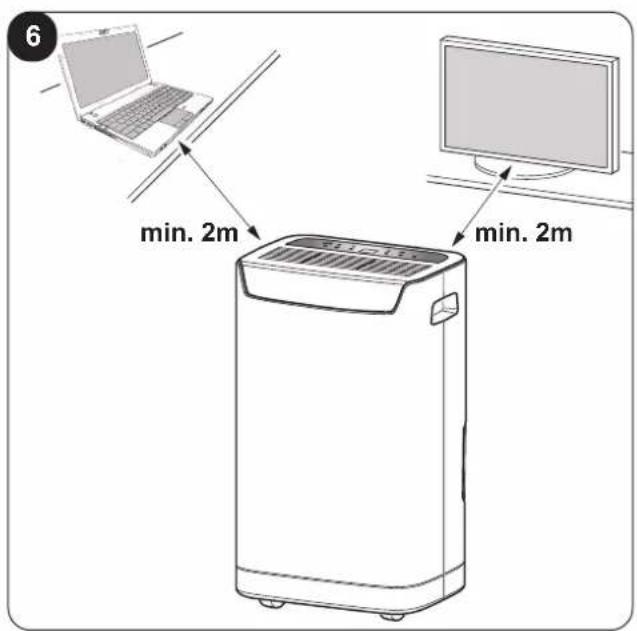
- Install the appliance at at least 2 meters from other electronic devices (TV, radio, computer, dvd player, etc.) in order to avoid disturbances (Fig.6).
- Do not use the appliance if insecticide gas has just been sprayed in the room or in the presence of burning incenses, chemical vapours or oily residues.
- Do not use the appliance if the filters are not positioned correctly.
- Disassembly, repair or reconversion performed by an unauthorized person could cause heavy damages and will cancel the manufacturer warranty.
- Do not use the appliance in case of malfunctioning or faults, if the cord or plug are damaged, or if it has been dropped or damaged in any manner. Turn the appliance off, disconnect the plug from the socket and let it be checked by professionally qualified personnel.
- Neither disassemble nor modify the appliance.

-
In the presence of gas leaks from other equipment, ventilate the room well before activating the appliance.
-
Use the appliance in environments with a temperature between 5^ C and 32^ C.
- Repairing the appliance by yourself is extremely dangerous.
- If you no longer wish to use this appliance, it must be made inoperative by cutting the power supply cable after removing the plug from the power socket. Hazardous parts of the appliance must be rendered harmless, especially as there is a risk of children playing with it.
- Do not leave the appliance exposed to atmospheric agents (rain, sun, etc.).
- Do not use the appliance in the immediate vicinity of a bathtub, a shower or of a pool.
Details of type and rating of fuses: AT; 2A
0.4 - PROPER USE
- The appliance must be used exclusively as fan or dehumidifier with the sole purpose of making the room where you're staying comfortable.
- This appliance is only intended for a domestic use or similar.
- An improper use of the appliance with possible damages caused to people, things or animals releases OLIMPIA SPLENDID from any responsibility.
- The dehumidifiers must not be installed in environments with the presence of inflammable gases, explosive gases, in very humid environments (laundries, greenhouses, etc.), or in places with other machines that generate a strong heat source, in proximity of a sources of salt water or sulphurous water.

DO NOT use gas, gasoline or other inflammable liquids near to the appliance.

This product must be used exclusively according to the specifications indicated in this manual. Use different to that specified, could cause serious injuries.
THE MANUFACTURER IS NOT LIABLE FOR INJURY/DAMAGE TO PERSONS/OBJECTS DERIVING FROM FAILURE TO COMPLY WITH THE REGULATIONS CONTAINED IN THIS MANUAL.
0.6 - WARNINGS FOR R290 REFRIGERANT GAS
- THE APPLIANCE CONTAINS R290 GAS (FLAMMABILITY CLASSIFICATION A3).
- THE APPLIANCE SHALL BE STORED IN A WELL-VENTILATED AREA WHERE THE ROOM SIZE CORRESPONDS TO THE ROOM AREA AS SPECIFIED FOR OPERATION.
- THE APPLIANCE MUST BE INSTALLED, USED AND STORED IN A ROOM WITH A FLOOR SURFACE HIGHER THAN THE ONE INDICATED IN THE CHART.
| Quantity of R290 gas in Kg(see data label on the appliance) | 0,045 | 0,050 | 0,055 | 0,060 | 0,065 | 0,070 | 0,075 | 0,080 | 0,085 | | |
| Minimum size of the sitefor use and storage ( m^2 ) | 4 4 4 | 4 5 5 5 5 | 6 | | | | | | | |
- THIS APPLIANCE CONTAINS A QUANTITY OF REFRIGERANT GAS R290 EQUAL TO THE ONE INDICATED IN THE DATA LABEL LOCATED ON THE APPLIANCE.
- THE APPLIANCE SHALL BE STORED IN A ROOM WITHOUT CONTINUOUSLY OPERATING IGNITION SOURCES (FOR EXAMPLE: OPEN FLAMES, AN OPERATING GAS APPLIANCE OR AN OPERATING ELECTRIC HEATER).
- Do not pierce or burn.
- Be aware that the refrigerants may not contain an odour.
- R290 is a refrigerant gas in compliance with the European directives on environment. Do not pierce any part of the refrigerant circuit.
-
Do not use means to accelerate the defrosting process or to clean, other than those recommended by the manufacturer.
-
Do not use tools different from those recommended by the manufacturer when defro cleaning the appliance.
-
If the appliance is installed, used or stored in a non-ventilated area, the room must be designed to prevent the accumulation of refrigerant leaks with the consequent fire or explosion hazard due to the refrigerant combustion caused by electrical heaters, stoves or others sources of ignition.
- Compliance with national gas regulations shall be observed.
- Keep ventilation openings clear of obstruction.
- The appliance shall be stored so as to prevent mechanical damage from occurring.
- Any person who is involved with working on or breaking into a refrigerant circuit should hold a current valid certificate from an industry-accredited assessment authority, which authorises their competence to handle refrigerants safely in accordance with an industry recognised assessment specification.

-
Servicing shall only be performed as recommended by the equipment manufacturer. Maintenance and repair requiring the assistance of other skilled personnel shall be carried out under the supervision of the person competent in the use of flammable refrigerants.
-
TRANSPORT OF EQUIPMENT CONTAINING FLAMMABLE REFRIGERANTS
See transport regulations.
- MARKING OF EQUIPMENT USING SIGNS
See local regulations.
- DISPOSAL OF EQUIPMENT USING FLAMMABLE REFRIGERANTS
See national regulations.
- STORAGE OF EQUIPMENT/APPLIANCES
The storage of equipment should be in accordance with the manufacturer's instructions.
- STORAGE OF PACKED (UNSOLD) EQUIPMENT
Storage package protection should be constructed such that mechanical damage to the equipment inside the package will not cause a leak of the refrigerant charge.
The maximum number of pieces of equipment permitted to be stored together will be determined by local regulations.

a) Checks to the area
Prior to beginning work on systems containing flammable refrigerants, safety checks are necessary to ensure that the risk of ignition is minimised.
For repair to the refrigerating system, the following precautions shall be complied with prior to conducting work on the system.
EN - 6
b) Work procedure
Work shall be undertaken under a controlled procedure so as to minimise the risk of a flammable gas or vapour being present while the work is being performed.
c) General work area
All maintenance staff and others working in the local area shall be instructed on the nature of work being carried out.
Work in confined spaces shall be avoided.
The area around the workspace shall be sectioned off.
Ensure that the conditions within the area have been made safe by control of flammable material.
d) Checking for presence of refrigerant
The area shall be checked with an appropriate refrigerant detector prior to and during work, to ensure the technician is aware of potentially flammable atmospheres.
Ensure that the leak detection equipment being used is suitable for use with flammable refrigerants, i.e. non-sparking, adequately sealed or intrinsically safe.
e) Presence of fire extinguisher
If any hot work is to be conducted on the refrigeration equipment or any associated parts, appropriate fire extinguishing equipment shall be available at hand.
Have a dry powder or CO2 fire extinguisher adjacent to the charging area.
f) No ignition sources
No person carrying out work in relation to a refrigeration system which involves exposing any pipe work that contains or has contained flammable refrigerant shall use any sources of ignition in such a manner that it may lead to the risk of fire or explosion.
All possible ignition sources, including cigarette smoking, should be kept sufficiently far away from the site of installation, repairing, removing and disposal, during which flammable refrigerant can possibly be released to the surrounding space.
Prior to work taking place, the area around the equipment is to be surveyed to make sure that there are no flammable hazards or ignition risks. No Smoking signs shall be displayed.
g) Ventilated area
Ensure that the area is in the open or that it is adequately ventilated before breaking into the system or conducting any hot work.
A degree of ventilation shall continue during the period that the work is carried out.
The ventilation should safely disperse any released refrigerant and preferably expel it externally into the atmosphere.
h) Checks to the refrigeration equipment
Where electrical components are being changed, they shall be fit for the purpose and to the correct specification.
At all times the manufacturer's maintenance and service guidelines shall be followed.
If in doubt consult the manufacturer's technical department for assistance.
The following checks shall be applied to installations using flammable refrigerants:
The charge size is in accordance with the room size within which the refrigerant containing parts are installed; The ventilation machinery and outlets are operating adequately and are not obstructed; If an indirect refrigerating circuit is being used, the secondary circuit shall be checked for the presence of refrigerant; Marking to the equipment continues to be visible and legible. Markings and signs that are illegible shall be corrected; Refrigeration pipe or components are installed in a position where they are unlikely to be exposed to any substance which may corrode refrigerant containing components, unless the components are constructed of materials which are inherently resistant to being corroded or are suitably protected against being so corroded.
i) Checks to electrical devices
Repair and maintenance to electrical components shall include initial safety checks and component inspection procedures. If a fault exists that could compromise safety, then no electrical supply shall be connected to the circuit until it is satisfactorily dealt with. If the fault cannot be corrected immediately but it is necessary to continue operation, an adequate temporary solution shall be used.
This shall be reported to the owner of the equipment so all parties are advised. Initial safety checks shall include: That capacitors are discharged: this shall be done in a safe manner to avoid possibility of sparking; That there no live electrical components and wiring are exposed while charging, recovering or purging the system; That there is continuity of earth bonding.
23. REPAIRS TO SEALED COMPONENTS
a) During repairs to sealed components, all electrical supplies shall be disconnected from the equipment being worked upon prior to any removal of sealed covers, etc. If it is absolutely necessary to have an electrical supply to equipment during servicing, then a permanently operating form of leak detection shall be located at the most critical point to warn of a potentially hazardous situation.
b) Particular attention shall be paid to the following to ensure that by working on electrical components, the casing is not altered in such a way that the level of protection is affected.
This shall include damage to cables, excessive number of connections, terminals not made to original specification, damage to seals, incorrect fitting of glands, etc.
Ensure that apparatus is mounted securely.
Ensure that seals or sealing materials have not degraded such that they no longer serve the purpose of preventing the ingress of flammable atmospheres.
Replacement parts shall be in accordance with the manufacturer's specifications.

The use of silicon sealant may inhibit the effectiveness of some types of leak detection equipment. Intrinsically safe components do not have to be isolated prior to working on them.
24. REPAIR TO INTRINSICALLY SAFE COMPONENTS
Do not apply any permanent inductive or capacitance loads to the circuit without ensuring that this will not exceed the permissible voltage and current permitted for the equipment in use. Intrinsically safe components are the only types that can be worked on while live in the presence of a flammable atmosphere. The test apparatus shall be at the correct rating. Replace components only with parts specified by the manufacturer. Other parts may result in the ignition of refrigerant in the atmosphere from a leak.
25. CABLING
Check that cabling will not be subject to wear, corrosion, excessive pressure, vibration, sharp edges or any other adverse environmental effects. The check shall also take into account the effects of aging or continual vibration from sources such as compressors or fans.
26. DETECTION OF FLAMMABLE REFRIGERANTS
Under no circumstances shall potential sources of ignition be used in the searching for or detection of refrigerant leaks.
A halide torch (or any other detector using a naked flame) shall not be used.
27. LEAK DETECTION METHODS
The following leak detection methods are deemed acceptable for systems containing flammable refrigerants. Electronic leak detectors shall be used to detect flammable refrigerants, but the sensitivity may not be adequate, or may need re-calibration. (Detection equipment shall be calibrated in a refrigerant-free area). Ensure that the detector is not a potential source of ignition and is suitable for the refrigerant used. Leak detection equipment shall be set at a percentage of the LFL of the refrigerant and shall be calibrated to the refrigerant employed and the appropriate percentage of gas (25 % maximum) is confirmed. Leak detection fluids are suitable for use with most refrigerants but the use of detergents containing chlorine shall be avoided as the chlorine may react with the refrigerant and corrode the copper pipe-work.
If a leak is suspected, all naked flames shall be removed/ extinguished.
If a leakage of refrigerant is found which requires brazing, all of the refrigerant shall be recovered from the system, or isolated (by means of shut off valves) in a part of the system remote from the leak.
Oxygen free nitrogen (OFN) shall then be purged through the system both before and during the brazing process.
28. RÉMOVAL AND EVACUATION
When breaking into the refrigerant circuit to make repairs or for any other purpose conventional procedures shall be used.
However, it is important that best practice is followed since flammability is a consideration.
The following procedure shall be adhered to:
- Remove refrigerant;
• Purge the circuit with inert gas;
- Evacuate;
• Purge again with inert gas;
- Open the circuit by cutting or brazing.
The refrigerant charge shall be recovered into the correct recovery cylinders. The system shall be
EN - 8
flushed with OFN to render the unit safe.
This process may need to be repeated several times.
Compressed air or oxygen shall not be used for this task.
Flushing shall be achieved by breaking the vacuum in the system with OFN and continuing to fill until the working pressure is achieved, then venting to atmosphere, and finally pulling down to a vacuum.
This process shall be repeated until no refrigerant is within the system. When the final OFN charge is used, the system shall be vented down to atmospheric pressure to enable work to take place.
This operation is absolutely vital if brazing operations on the pipe-work are to take place.
Ensure that the outlet for the vacuum pump is not close to any ignition sources and there is ventilation available.
29. CHARGING PROCEDURES
In addition to conventional charging procedures, the following requirements shall be followed.
Ensure that contamination of different refrigerants does not occur when using charging equipment.
Hoses or lines shall be as short as possible to minimise the amount of refrigerant contained in them.
Cylinders shall be kept upright.
Ensure that the refrigeration system is earthed prior to charging the system with refrigerant.
Label the system when charging is complete (if not already).
Extreme care shall be taken not to overfill the refrigeration system. Prior to recharging the system it shall be pressure tested with OFN.
The system shall be leak tested on completion of charging but prior to commissioning. A follow up leak test shall be carried out prior to leaving the site.
30. DECOMMISSIONING
Before carrying out this procedure, it is essential that the technician is completely familiar with the equipment and all its detail. It is recommended good practice that all refrigerants are recovered safely.
Prior to the task being carried out, an oil and refrigerant sample shall be taken in case analysis is required prior to re-use of reclaimed refrigerant. It is essential that electrical power is available before the task is commenced.
a) Become familiar with the equipment and its operation.
b) Isolate system electrically.
c) Before attempting the procedure ensure that:
- Mechanical handling equipment is available, if required, for handling refrigerant cylinders;
- All personal protective equipment is available and being used correctly;
- The recovery process is supervised at all times by a competent person;
- Recovery equipment and cylinders conform to the appropriate standards.
d) Pump down refrigerant system, if possible.
e) If a vacuum is not possible, make a manifold so that refrigerant can be removed from various parts of the system.
f) Make sure that cylinder is situated on the scales before recovery takes place.
g) Start the recovery machine and operate in accordance with manufacturer's instructions.
h) Do not overfill cylinders. (No more than 80 % volume liquid charge).
i) Do not exceed the maximum working pressure of the cylinder, even temporarily.
j) When the cylinders have been filled correctly and the process completed, make sure that the cylinders and the equipment are removed from site promptly and all isolation valves on the equipment are closed off.
k) Recovered refrigerant shall not be charged into another refrigeration system unless it has been cleaned and checked.
31. LABELLING
Equipment shall be labelled stating that it has been de-commissioned and emptied of refrigerant. The label shall be dated and signed.
Ensure that there are labels on the equipment stating the equipment contains flammable refrigerant.
32. RECOVERY
When removing refrigerant from a system, either for servicing or decommissioning, it is recommended good practice that all refrigerants are removed safely.
When transferring refrigerant into cylinders, ensure that only appropriate refrigerant recovery cylinders are employed.
Ensure that the correct number of cylinders for holding the total system charge is available.
All cylinders to be used are designated for the recovered refrigerant and labelled for that refrigerant (i.e. special cylinders for the recovery of refrigerant). Cylinders shall be complete with pressure relief
valve and associated shut-off valves in good working order. Empty recovery cylinders are evacuated and, if possible, cooled before recovery occurs. The recovery equipment shall be in good working order with a set of instructions concerning the equipment that is at hand and shall be suitable for the recovery of flammable refrigerants. In addition, a set of calibrated weighing scales shall be available and in good working order. Hoses shall be complete with leak-free disconnect couplings and in good condition. Before using the recovery machine, check that it is in satisfactory working order, has been properly maintained and that any associated electrical components are sealed to prevent ignition in the event of a refrigerant release. Consult manufacturer if in doubt. The recovered refrigerant shall be returned to the refrigerant supplier in the correct recovery cylinder, and the relevant Waste Transfer Note arranged. Do not mix refrigerants in recovery units and especially not in cylinders. If compressors or compressor oils are to be removed, ensure that they have been evacuated to an acceptable level to make certain that flammable refrigerant does not remain within the lubricant.
The evacuation process shall be carried out prior to returning the compressor to the suppliers. Only electric heating to the compressor body shall be employed to accelerate this process.
When oil is drained from a system, it shall be carried out safely.
1 - DESCRIPTION OF THE APPLIANCE
1.1 - FEATURES
The appliance is packaged singularly in a cardboard packaging.

Store the packaging in vertical position.
The dehumidifier powerfully removes moisture from the air to decrease the humidity level of the room and keep the indoor air dry and comfortable.
It is possible to select the desired level of humidity by means of the digital humidistat.
Thanks to the timer, it is possible to set the automatic switching on and off of the appliance.
1.2 - IDENTIFICATION OF THE MAIN COMPONENTS (Fig.A)
- Front shell
- Air outlet grid
- Handle
- Control panel
- Air inlet grid
- Back shell
-
Water tank
-
Wheels
- Supply cord
- Active carbons filter
- Data plate
- Instruction booklet
- Condensation drain connection
- Hose for continuous condensation drain
2 - INSTALLATION
2.1 - APPLIANCE TRANSPORT

• Transport and handling of the appliance must be carried out in vertical position.
• If it is transported in a horizontal position, wait at least one hour before starting it.
- Before moving or transporting the appliance, completely drain condensation by working as described in paragraph 3.4.a

CAUTION
Transporting the appliance on delicate floors (for instance: wooden floors):
• Completely drain condensation.
- Pay particular attention while moving the appliance since the wheels may mark the floor. Although the wheels are made from a rigid material and are swivelling, they could get damaged by use or excessive dirt.
It is recommended to check that the wheels are clean and that they can move freely.
EN - 10

OLIMPIA
SPLENDID
2.2 - WARNINGS

A failure to respect what follows may cause damages to the appliance.
a. Install the appliance on flat, stable and on floor level surfaces.
b. Only connect the appliance to outlets equipped with a ground system.
c. Make sure that curtains or other objects do not obstruct the air suction filters (Fig.5).
d. Make sure to keep a minimum distance of 20/30 cm between the appliance and the adjacent objects (Fig.1).
e. The appliance must always be activated paying attention that there are no obstacles for air suction and output.
f. The appliance must not be used in laundry rooms.
g. Only install the appliance in dry rooms.
h. The appliance must not be started in the presence of dangerous materials, vapours or liquids.
i. Clean the air filters at least once a week.
natural_image
Illustration of a hand using a power plug to install an electrical socket (no text or symbols present)
2.3 - INSTALLATION OF THE APPLIANCE
• After removing the packaging, check that the appliance is in perfect condition; in case of doubts do not use it and refer to professionally qualified personnel.
• Install the appliance on a rigid and levelled floor while keeping the room ventilated.
- Place the appliance in a suitable environment.
Make sure that curtains or other objects don-t obstruct the air flow (Fig. 5).
- Leave at least 20cm of free space on both sides and behind the appliance and leave at least 30cm of free space above it (Fig. 1).
- Remove the tank (7) and uncoil the supply cord (9).
- Correctly reposition the tank (7) in the appliance body.
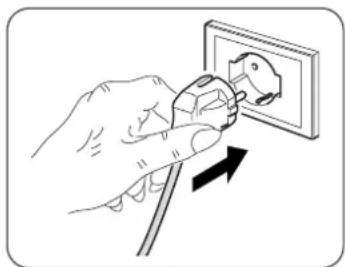
- Insert the plug in the power socket; the appliance emits a “beep” and the display shows the percentage of humidity in the room.
2.4 - ELECTRICAL CONNECTION
The appliance is fitted with a power cable with plug.
Before connecting the appliance, make sure that:
- The voltage and power frequency values match those specified on the appliance plate data.
- The power supply line is equipped with an efficient ground connection and that it is correctly dimensioned for the maximum absorption of the appliance.
- The appliance's power network must be equipped with a suitable omnipolar disconnection device compliant with national installation regulations.
- The appliance is powered solely through a socket compatible with the plug provided.
natural_image
Illustration of a hand using a power plug to insert an electrical socket (no text or symbols)

CAUTION
Any replacement of the power cable must be carried out solely by Olimpia Splendid technical support or by similarly qualified personnel.
3 - USE OF THE APPLIANCE
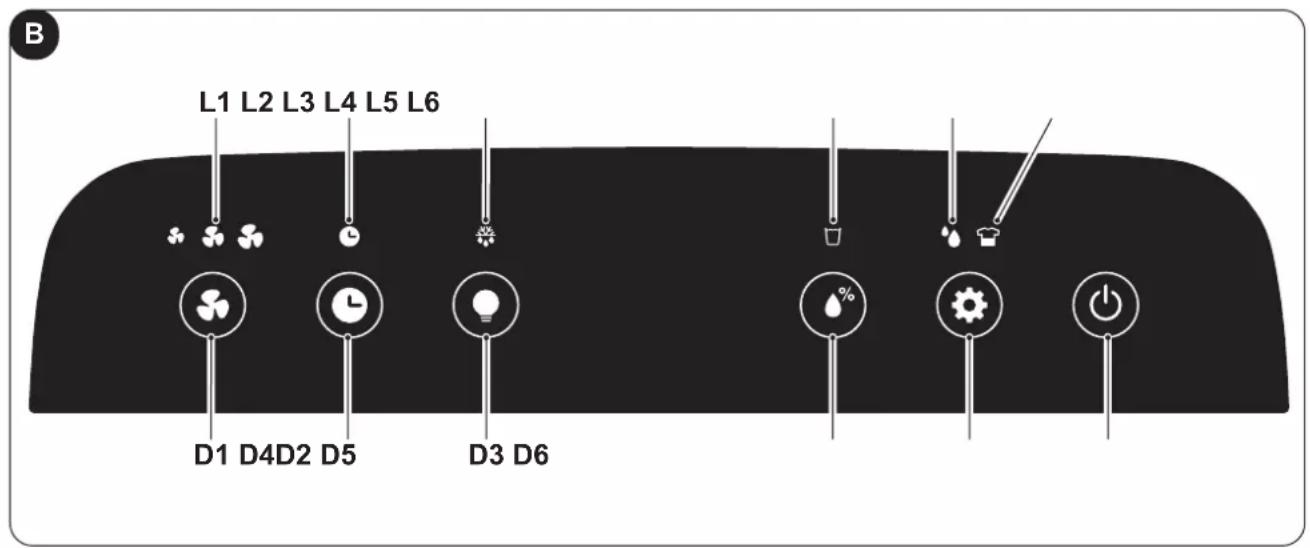
3.1 - CONTROL PANEL SYMBOLS AND KEYS (Fig.B)
B
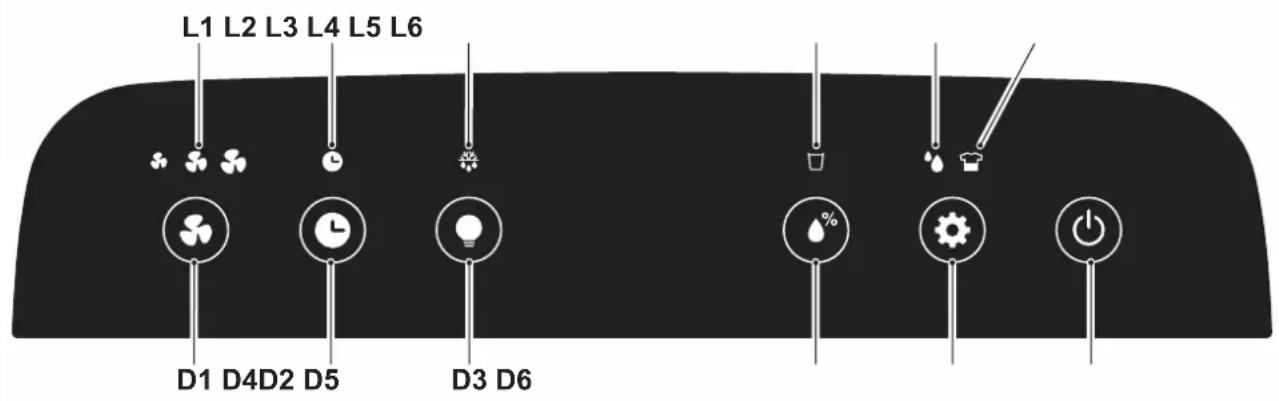
• D1: "Speed" key;
• D2: "Timer" key;
• D3: "Led" key;
• D4: "Setting level of humidity" key;
- D5: Mode selection key:
"Laundry" - "Dehumidification";
• D6: "ON/OFF" key.
• L1: Fan speed Led;
• L2: “Timer” active Led;
• L3: “Defrost function” active Led;
• L4: "Water tank full" Led;
• L5: “Dehumidification” mode active Led;
• L6: “Laundry” mode active Led.
Work as follows in order to use the appliance.

Before starting the appliance, kindly open the air outlet.
NOT insert anything (fingers, hands, objects, etc.) in the air outlet in order to avoid damaging the appliance.
Cuts or wounds hazard!
3.2.a - Preliminary operations

- Place the appliance on a stable and not inclined base, at at least 20/30 cm. from the wall or from any other object, in order to ensure the correct air circulation. (Fig.1). Place it on a water-resistant surface since the possible water leakage could damage furniture or the floor.
- Do not place the appliance directly on carpets, towels, blankets or other absorbent surfaces.
- Insert the plug in the power socket.

Before electrically connecting the appliance, make sure the plate data correspond to those of the electricity distribution network.
3.2.b - ON/OFF key
Press the ON/OFF key (D6) and the appliance switches on, the display shows the percentage of humidity detected.
To switch off the appliance, press the key ON/OFF (D6) again.
EN - 12

OLIMPIA
SPLENDID
3.2.c - Fan speed
Press the "Speed" key (D1) to be able to select the fan speed:

Once fan speed is selected, the respective Led (L1) remains on.

If "LAUNDRY" mode is active, fan speed cannot be changed.
3.2.d - Timer function
Press the "Timer" (D2) key to set the delay time for "ON" (start) or "OFF" (switch off) modes.
In "ON" mode, press the "Timer" (D2); key once or more; the display shows the delay time for the appliance switch off in hours (0 -> 1 -> 2 -> .... -> 23 -> 24 -> 0 -> 1 -> ....).
Once the desired value has been selected, wait a few seconds to allow the memorization of the set value after which the appliance switches off (OFF); the (L2) led switches on in green.
In "OFF" mode, press the "Timer" (D2); key once or more; the display shows the delay time for the appliance start in hours (0 -> 1 -> 2 -> .... -> 23 -> 24 -> 0 -> 1 -> ....).
Once the desired value has been selected, wait a few seconds to allow the memorization of the set value after which the appliance starts (ON); the (L2) led switches on in green.
To cancel the Timer function programming, press the "Timer" (D2)key once or more until selecting "0" or press the "ON/OFF" (D6) key.
3.2.e - Activation of the display
Press the "Setting level of humidity" (D4) and "Led" (D3) keys simultaneously, the detected room temperature appears on the display.
Press the "Led" key (D3), the display and the active Led switch off, the machine continues to work.
3.2.f - Humidity level setting
Press the "Setting level of humidity" key (D4) to select the desired level of humidity in the room:
“CO” (Continuous cycle) --> 30% --> 35% --> ... --> 85% --> 90% --> “CO” (Continuous cycle) --> ..
The settable value must be included between 30% and 90% with 5% intervals.
After a certain period of operation, when the percentage of humidity in the room is lower than the set value, the compressor stops temporarily.
After a certain period of operation, when the percentage of humidity in the room is lower than the set value, the compressor stops temporarily.
Periodically, when the appliance is working (ON mode), dehumidification can be temporarily interrupted in order to defrost the heat exchanger.

Upon switching on, the appliance starts in "Dehumidification" mode.
3.3 - MODE SELECTION
3.3.a - Laundry mode
Press the "Laundry" key (D5), the appliance starts in "CO" (continuous cycle) mode.
The compressor and the fan continue to work independently from the detected level of humidity.
In this mode the fan will work at maximum speed.
3.3.b - Dehumidification mode
Press the “Dehumidification” key (D5), the appliance starts with the percentage of humidity set during the last use, press the “Setting level of humidity” key (D4) to change it.
3.4 - WATER UNLOADING
3.4.a - Emptying the tank
- When the led "Water tank full" (L4) switches on, the appliance stops, the buzzer rings and it is necessary to empty the tank (7).
- Remove the tank (7) from the appliance body working with both hands (Fig.7).
• Empty the tank (7) (Fig.8).

Do not remove the float (7b) from the water tank (7). The full water sensor won't be able to correctly detect water level anymore.
- Correctly reposition the tank (7) in the appliance body, otherwise the led (L4) remains turned on and the appliance doesn't work.
3.4.b - Continuous water unloading
- If desired, it is possible to connect the supplied hose (14) to the connection (13) to continuously drain water collected by dehumidification.
- Switch off the appliance and disconnect the plug from the power socket.
- Connect the rubber hose (14) with an internal diameter of 10mm to the connection (13) (Fig. 9).
- It is advised to fix the hose (14) to the connection (13) using a clamp (not supplied).
- Correctly reposition the tank (7) in the appliance body making the hose (14) pass in specific seat located in the tank (7). If this operation is not completed, the led (L4) remains on and the appliance doesn't work.

Make sure the rubber hose (14) doesn't exceed the exhaust joint height, otherwise water will remain in the appliance and could cause a malfunction, damage it and/or cause dangerous work conditions.

During operation with continuous unloading, do not remove the water tank.

Possible problems caused by the external water drain are not detected by the full tank alarm. An efficient supervision is necessary in order to prevent malfunctions, damages to the appliance and/or dangerous work conditions.
3.5 - BLACKOUT
In case of blackout, the appliance restarts to work in the previously selected conditions when power is restored.
4 - MAINTENANCE AND CLEANING

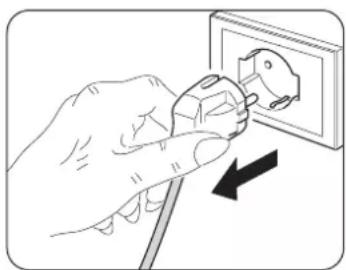
Before performing any cleaning or maintenance intervention on the appliance, disconnect the plug from the power socket and wait for the fan to stop completely.
natural_image
Illustration of a hand using a power plug to switch an electrical outlet (no text or symbols present)
EN - 14
4.1 - CLEANING
4.1.a - Cleaning the appliance
- Use a dry cloth to clean the appliance.
- If the appliance is very dirty, it is possible to use a cloth dampened with warm water (max 50°C) and a mild detergent to clean its external parts. Dry with a dry cloth.
- Use a vacuum cleaner to remove dust from the air inlet/outlet grids.

Make sure the appliance is completely dry before reconnecting the plug to the power socket.

Do not use a chemically treated or antistatic cloth to clean the appliance. Not use petrol, solvents, polishing pastes or similar.
These products could break or deform the plastic surface.

Do not use oils, chemical substances or abrasive products to clean the appliance.

Neither wash nor immerse the appliance with/in water.

In case of an appliance malfunction, do not try to disassemble it but instead refer to the retailer or to the technical assistance service.
4.2 - ACTIVE CARBONS FILTER CLEANING
It is advised to clean the filter every two weeks of operation.
- Switch the appliance off and disconnect the plug from the power socket.
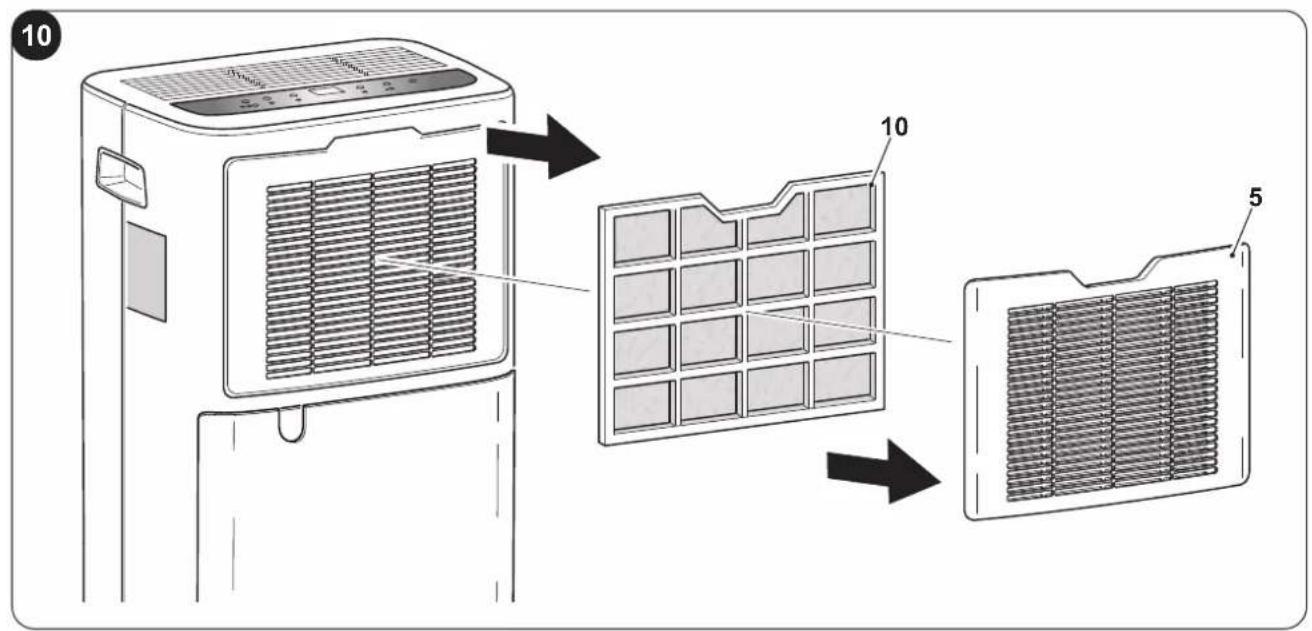
- Remove the grid (5).
- Remove the filter (10) (Fig.10).
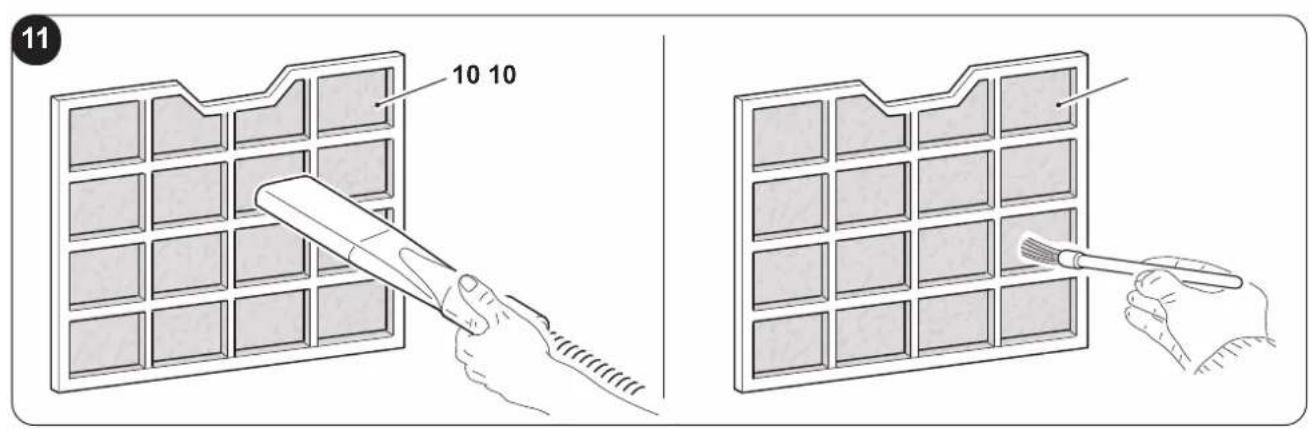
- Clean the filter (10) using a vacuum cleaner or a soft-bristled brush to remove dust (figure 11).

The filter (10) cannot be washed.

O NOT use the appliance if the filter (10) is damaged; provide for its replacement.
- Correctly reposition the filter (10) in its specific seat.
- Suck possible fluff from the grid (5).

Do not use the appliance without the grid (5) and/or the filter (10).
4.3 - TANK CLEANING
- If the drainage tank is dirty, wash it with cold or lukewarm water.
- Switch the appliance off and disconnect the plug from the power socket.
- Remove the tank (7).
• Work as described in paragraph "3.4.a".

Do not use detergent, scouring pads, chemically treated dust cloths, gasoline, benzene, thinner or other solvents, as these can scratch and damage the tank and cause water leakage.
5 - PRESERVATION OF THE APPLIANCE
If you do not intend to use the appliance for a particularly long period of time or if operations which could produce a lot of dust must be performed, it is advised to store the appliance as follows:
- Switch the appliance off and disconnect the plug from the power socket.
• Empty any water remaining in the tank.
- Wrap the supply cord and position it in the water tank (after making sure that the tank is completely dry).
- Clean the filter.
- Store in a fresh and dry place away from humidity.
6 - TECHNICAL DATA
Consult the data plate applied to the product (Fig. 2) for the technical data listed below:
| Supply voltage Absorbed | power Insulation class Appliance weight | |
7 - TROUBLE SHOOTING
BEFORE CALLING FOR SERVICE
Before contacting professional service, consult this list.
This list includes common occurrences that are not the result of a defect in workmanship or materials.
Low temperature operation with Auto Defrost function
The appliance is equipped with an automatic defrost function (indicated by the specific led “L4” switching on) which, thanks to opportunely timed intervals and by checking room temperature, adjust the machine operation.
| PROBLEM POSSIBLE CAUSES ADVISED SOLUTIONS | |
| The unit doesn't operate. | The supply cord is disconnected. Insert the plug in | the power socket and make sure there's electrical voltage. |
| The tank full warning led is turned on (tank full or not correctly positioned). | Drain water tank and reset your setting, or replace the water tank to right place. |
| Room temperature exceeding the maximum work conditions of the appliance. | Self-Protection designed to protect the unit.Can not work under such temperature. |
| Compressor protection is active (the unit cannot work). |
| The dehumidifying function doesn't work or the unit turn on / off frequently. | Filter is clogged.Filter damaged. | Clean the filter.Replace the filter. |
| Door or window open. Close the door and/or the window. |
| The air inlet/outlet grilles are clogged. Remove the obstruction or clean the air inlet/outlet grilles. |
| The room is too large or there's too much humidity. | If possible, remove or reduce the level of humidity. |
| Operation is noisy. | The unit is tilted or unsteady. Place the appliance on an even, solid surface (less vibration). |
| Filter is clogged.Filter damaged. | Clean the filter.Replace the filter. |
| The display shows E1. Temperature sensor faulty. Call the service center. | |
0 -MISES EN GARDE....2
0.1 - INFORMATIONS GÉNÉRALES ......2
0.2 - SYMBOLOGIE 2
natural_image
Illustration of a hand using a power plug to install an electrical socket (no text or symbols present)
2.3 - INSTALLATION DE L'APPAREIL
natural_image
Illustration of a hand using a power plug to switch an electrical outlet (no text or symbols present)

RECOMMANDATION
“CO” (Cycle continu) --> 30% --> 35% --> ... --> 85% --> 90% --> “CO” (Cycle continu) --> ..
natural_image
Illustration of a hand using a power plug to switch an electrical outlet (no text or symbols present)
FR - 14
4.1 - NETTOYAGE
natural_image
Illustration of a hand using a power plug to install an electrical socket (no text or symbols present)
2.3 - MONTAGE DES GERÄTS
natural_image
Illustration of a hand using a power plug to switch an electrical outlet (no text or symbols present)

HINWEIS
natural_image
Illustration of a hand using a power plug to insert an electrical socket (no text or symbols present)
DE - 14
4.1 - REINIGUNG
natural_image
Illustration of a hand using a power plug to install an electrical socket (no text or symbols present)
natural_image
Illustration of a hand using a power plug to switch an electrical outlet (no text or symbols present)

ADVERTENCIA
natural_image
Illustration of a hand using a power plug to switch an electrical outlet (no text or symbols present)
ES - 14
4.1 - LIMPIEZA
7 - PROBLEMAS E SOLUÇÕES...... 16
0 - ADVERTÊNCIAS
natural_image
Illustration of a hand using a power plug to install an electrical socket (no text or symbols present)
natural_image
Illustration of a hand using a power plug to insert an electrical socket (no text or symbols present)

ADVERTÊNCIA
natural_image
Illustration of a hand using a power plug to insert an electrical socket (no text or symbols present)
PT - 14

OLIMPIA
SPLENDID
4.1 - LIMPEZA
4.1.a - Limpeza do aparelho
7 - PROBLEMAS E RESOLUÇÕES
ANTES DE LIGAR PARA O SERVIÇO DE ASSISTÊNCIA TÉCNICA
3.4 - WATERAFVOER....14
0.6 - WAARSCHUWINGEN VOOR HET KOELGAS R290
- HET APPARAAT BEVAT GAS R290 (ONTVLAMBAARHEIDSCATEGORIE A3)
- HET APPARAAT MOET OPGESLAGEN WORDEN IN EEN GOED GEVENTILEERD VERTREK, WAARVAN DE AFMETINGEN OVEREENKOMEN MET DE MATEN DIE GESPECIFICEERD ZIJN VOOR HET GEBRUIK VAN HET APPARAAT.
- HET APPARAAT MOET GEINSTALLEERD, GEBRUIKT EN BEWAARD WORDEN IN EEN RUIMTE WAARVAN HET OPPERVLAK VAN DE VLOER GROTER IS DAN ZIE TABEL.
1 - OMSCHRIJVING VAN HET APPARAAT
1.1 - KENMERKEN
2.2 - WAARSCHUWINGEN

natural_image
Illustration of a hand using a power plug to install an electrical socket (no text or symbols present)
2.3 - INSTALLATIE APPARAAT
natural_image
Illustration of hands using a power plug to switch an electrical outlet (no text or symbols)
3 - GEBRUIK VAN HET APPARAAT
3.1 - SYMBOLEN EN TOETSEN BEDIENINGSPANEEL (Afb.B)
3.2 - WERKING VAN HET APPARAAT
“CO” (Continue cyclus) --> 30% --> 35% --> ... --> 85% --> 90% --> “CO” (Continue cyclus) -->
natural_image
Illustration of a hand using a power plug to insert an electrical socket (no text or symbols present)
NL - 14

OLIMPIA
SPLENDID
4.1 - REINIGING
natural_image
Illustration of a hand using a power plug to insert an electrical socket (no text or symbols present)

ΠΡΟΕΙΔΟΠΟΙΗΣΗ
natural_image
Illustration of a hand using a power plug to switch an electrical outlet (no text or symbols present)
EL - 14
4.1 - ΚΑΘΑΡΙΣΜΟΣ
3.3 - WYBÓR TRYBU PRACY 13
3.3.a - Tryb Laundry 13
3.3.b - Tryb osuszania 14
3.4 - ODPROWADZANIE WODY 14
natural_image
Illustration of a hand using a power plug to install an electrical socket (no text or symbols present)
2.3 - INSTALACJA URZĄDZENIA
natural_image
Illustration of a hand using a power plug to switch an electrical outlet (no text or symbols present)

OSTRZEŻENIE
3.3 - WYBÓR TRYBU PRACY
3.3.a - Tryb Laundry
natural_image
Illustration of a hand using a power plug to switch an electrical outlet (no text or symbols present)
4.1 - CZYSZCZENIE
natural_image
Illustration of a hand using a power plug to install an electrical socket (no text or symbols present)
2.3 - INSTALARE APARAT
natural_image
Illustration of a hand using a power plug to switch an electrical outlet (no text or symbols present)

AVERTISMENT
natural_image
Illustration of a hand using a power plug to switch an electrical outlet (no text or symbols present)
RO - 14

OLIMPIA
SPLENDID
4.1 - CURĂȚARE
natural_image
Illustration of a hand using a power plug to install an electrical socket (no text or symbols present)
2.3 - INSTALLATION AV APPARATEN
natural_image
Illustration of a hand using a power plug to switch an electrical outlet (no text or symbols present)

WARNINGAR
natural_image
Illustration of a hand using a power plug to insert an electrical socket (no text or symbols present)
SV - 14

OLIMPIA
SPLENDID
4.1 - RENGÖRING
4.1.a - Rengöring av apparaten
6 - TEKNISET TIEDOT 16
7 - ONGELMAT JA KORJAUKSET 16
FI - 1
0 - VAROITUKSIA
0.1 - YLEISTIETOJA
natural_image
Illustration of a hand using a power plug to install an electrical socket (no text or symbols present)
2.3 - LAITTEEN ASENNUS
natural_image
Illustration of a hand using a power plug to switch an electrical outlet (no text or symbols present)

VAROITUS
natural_image
Illustration of a hand using a power plug to insert an electrical socket (no text or symbols)
4.1 - PUHDISTUS
4 - VEDLIKEHOLD OG RENGJ∅RING....14
4.1 - RENGJ∅RING 15
4.1.a - Rengjøring av apparatet....15
4.2 - VEDLIKEHOLD AV FILTERET MED AKTIVE KARBONER....15
4.3 - RENGJ∅RING AV BEHOLDEREN 15
5 - OPPBEVARING AV APPARATET 16
6 - TEKNISKE DATA.... 16
7 - PROBLEMER OG L∅SNINGER 16
NO - 1
0 - ADVARSLER
- INFORMASJON OM VEDLIKEHOLD
natural_image
Illustration of a hand using a power plug to install an electrical socket (no text or symbols present)
2.3 - INSTALLASJON AV APPARATET
- Etter å ha fjernet emballasjen må du forsikre deg om at apparatet er helt og uskadet. Hvis du skulle være i tvil må du henvende deg til profesjonelt kvalifisert personale.
- Installer apparatet på et solid og vatret gulv og hold rommet ventilert.
- Plasser apparatet på et egnet sted.
natural_image
Illustration of a hand using a power plug to switch an electrical outlet (no text or symbols present)

ADVARSEL
natural_image
Illustration of a hand using a power plug to switch an electrical outlet (no text or symbols present)
NO - 14

OLIMPIA
SPLENDID
4.1 - RENGJ∅RING
natural_image
Illustration of a hand using a power plug to install an electrical socket (no text or symbols present)
2.3. - A BERENDEZÉS TELEPÍTÉSE
natural_image
Illustration of a hand using a power plug to switch an electrical outlet (no text or symbols present)

FIGYELMEZTETÉS
natural_image
Illustration of a hand using a power plug to switch an electrical outlet (no text or symbols present)
HU - 14

OLIMPIA
SPLENDID
4.1 - TISZTÍTÁS
3.3 - VOLBA REŽIMU....13
natural_image
Illustration of a hand using a power plug to install an electrical socket (no text or symbols present)
2.3 - INSTALACE SPOTŘEBIČE
natural_image
Illustration of a hand using a power plug to insert an electrical socket (no text or symbols present)

UPOZORNĚNÍ
natural_image
Illustration of a hand using a power plug to switch an electrical outlet (no text or symbols present)
CS - 14
4.1 - ČIŠTĚNÍ
natural_image
Illustration of a hand using a power plug to install an electrical socket (no text or symbols present)
natural_image
Illustration of a hand using a power plug to insert an electrical socket (no text or symbols present)

ПОПЕРЕДЖЕННЯ
natural_image
Illustration of a hand using a power plug to insert an electrical socket (no text or symbols present)
UK - 14

OLIMPIA
SPLENDID
4.1 - ОЧИЩЕННЯ
2.1 - TRANSPORT AF APPARATET
natural_image
Illustration of a hand using a power plug to install an electrical socket (no text or symbols present)
2.3 - MONTERING AF APPARATET
natural_image
Illustration of a hand using a power plug to switch an electrical outlet (no text or symbols present)

ADVARSEL
natural_image
Illustration of a hand using a power plug to switch an electrical outlet (no text or symbols present)
4.1 - RENG∅RING