
BP5218 - Saw BLAUPUNKT - Free user manual and instructions
Find the device manual for free BP5218 BLAUPUNKT in PDF.



| Product Type | Cordless Jigsaw |
| Brand | Blaupunkt |
| Model | BP5218 |
| Rated Voltage | 18 V (Li-Ion battery) |
| Variable Speed | 0 – 3000 strokes/min |
| Stroke Length | 25.4 mm |
| Max. Wood Thickness | 80 mm |
| Max. Steel Thickness | 10 mm |
| Sound Pressure Level (LpA) | 81 dB(A), K=3 dB(A) |
| Sound Power Level (LWA) | 92 dB(A), K=3 dB(A) |
| Vibration Level | 8.3 m/s², K=1.5 m/s² |
| Articulated Foot | Yes, depth adjustable |
| Safety Lock | Yes, safety switch |
| Front Handle | Yes, ergonomic |
| Removable Battery | Yes, with charge indicator (4 LEDs) |
| Protective Equipment Included | Goggles, gloves, hearing protection, dust mask (recommended) |
| Intended Use | Cutting wood, metals, plastics |
| Maintenance | Clean after use, check blade tightness, store in a dry place |
| Warranty | 3 years against manufacturing defects |
Frequently Asked Questions - BP5218 BLAUPUNKT
User questions about BP5218 BLAUPUNKT
0 question about this device. Answer the ones you know or ask your own.
Ask a new question about this device
Download the instructions for your Saw in PDF format for free! Find your manual BP5218 - BLAUPUNKT and take your electronic device back in hand. On this page are published all the documents necessary for the use of your device. BP5218 by BLAUPUNKT.
USER MANUAL BP5218 BLAUPUNKT
Enjoy it.
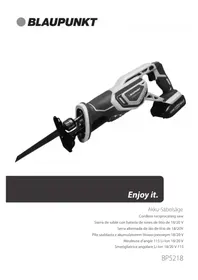
Cordless reciprocating saw
Cordless reciprocating saw

Power Tools – General Safety Guidelines
This guidance is general guidance for all electrical power tools and accessories such as chargers. Other advice specific to the supplied power tool is contained in the relevant section of this manual. Failure to adhere to the following may result in electric shock or serious injury.
- Wear Protective Equipment: Ensure you wear all personal protective equipment as directed in this manual.
- Eye Protection: Always wear eye protection. Any power tool can throw foreign objects into your eyes and cause permanent eye damage. ALWAYS wear safety goggles (not glasses) that comply with EU safety standard EN166. Everyday glasses have only impact resistant lenses. They ARE NOT safety glasses.
- Hand Protection: Always wear suitable gloves compliant with EU safety standard EN388.
- Hearing Protection: Always wear suitable hearing protection compliant with EU safety standard EN352.
- Dust Masks: Always wear a dust mask compliant with EN149/EN405 suitable for the material you are working with.
- Before each use: You must inspect the condition of the tool. If any damage is found you must not use the tool and have it repaired by a suitably qualified person.
- Check Working Area: Check your work area to ensure it is clear of hazards and people. Always maintain a tidy area while working to reduce risk of injury.
- Wet and Damp: Electrical tools must not be used in wet, damp conditions or during rain, neither should they be left or stored outside. Never touch the plug or operate the machine with wet hands.
- Dress properly: Do not wear loose clothing or jewellery. Keep your hair, clothing and gloves away from moving parts. Loose clothes, jewellery or long hair can be caught in moving parts.
- Take Regular Breaks: Tiredness can result in loss of concentration and makes working with tools dangerous.
- Adults Only: Power tools are designed for use by able-bodied ADULTS only. If you are in any way unsure of your ability to use the tool, do not use it.
- Training: Never use a power tool unless you have undertaken formal training in its use. There are often unforeseen factors that may put you or others in danger.
- Loaning Tools: Only loan tools to people you are sure are trained to use them. Always provide the instruction manual along with the tool.
- Medicines and Drugs: Never operate tools or machinery if you are taking medication that may leave you drowsy, or if you are under the influence of alcohol or illegal drugs.
- Store in a Safe Place: When not in use or once you have finished using, power tools must always be stored in a safe place away from damp/water and not accessible to children or others. In between breaks or tasks, it is important to ensure that tools are placed in a safe location.
- For Intended Use Only: Power tools should be used for their intended use only – always check the manual if unsure.
- Dust: If devices are provided for the connection of dust extraction and collection facilities, ensure these are connected and properly used. Use of dust collection can reduce dust-related hazards.
- Water: Do not expose power tools to rain or wet conditions. Water entering a power tool will increase the risk of electric shock.
- Explosion Hazard: Do not operate power tools in explosive atmospheres, such as in the presence of flammable liquids, gases, or dust. Power tools create sparks which may ignite the dust or fumes.
- Service: Have your power tool serviced by a qualified repair person using only identical replacement parts. This will ensure that the safety of the power tool is maintained.
Electrical Tools – General Safety Guidelines
These are still relevant if you have purchased a battery tool and it is supplied with a battery charger.
- Use an RCD: For safe operation it is always necessary to use an RCD device which will protect you in the case of an electrical emergency.
- Operating voltage: Before putting the tool into operation, make sure that the voltage stated on the rating plate is the same as that of your electricity supply.
- Extension cables: Always ensure a cable does not become a trip hazard by routing it safely to your work location. Do not walk, ride, or place objects on the cable as it will result in damage. It is important that you are aware of the location of an extension cable whenever you are working to prevent accidents. Always protect power cables from sharp edges, heat, and oil. Do not allow the cable to become knotted or kinked.
- If the extension cord becomes damaged: Pull the plug immediately from the socket outlet, do not touch the cable until you have done so.
Battery Tools – General Safety Guidelines
These guidelines are relevant for all tools supplied with a battery.
- Battery Acid Hazard: If accidental damage occurs to the battery or it is used under abusive conditions, liquid may be ejected from the battery; avoid contact. Liquid ejected from the battery may cause irritation or burns.
- If Contact Occurs, quickly flush with water. If liquid contacts eyes flush with water for a minimum of 10 minutes and seek medical help. Inform the medical staff that the liquid is a 25 - 35% solution of potassium hydroxide.
- Connecting A Battery: Before connecting a battery to a power tool always ensure that the on/off switch is locked in the off position. Unintentional activation of the tool may result in serious personal injury.
- Transporting The Tool: Always remove the battery before transporting the tool when transporting the tool to avoid unintentional activation.
- Charger: Recharge only with the charger specified by the BLAUPUNKT. A charger that is suitable for one type of battery pack may create a risk of fire when used with another battery pack.
- Correct Battery: Use BLAUPUNKT power tools only with BLAUPUNKT battery packs. Use of any other battery packs may create a risk of injury and fire.
- Short Circuit Hazard: When battery pack is not in use, keep it away from other metal objects, like paper clips, coins, keys, nails, screws or other small metal objects that can make a connection from one terminal to another. Shorting the battery terminals together may cause burns or a fire.
- Do Not Open: Never attempt to open the battery pack for any reason. If the plastic housing of the battery pack breaks open or cracks, immediately discontinue its use and do not recharge it.
- Disposal: When the battery reaches the end of its life or is disposed of for any other reason, it must not be disposed of in household waste. In order to protect the environment please take to your local waste recycling centre or other authorised collection and disposal facility.
Battery Tools – Charging The Battery
The following guidelines will ensure the lifetime of the battery and charger is not reduced.
- Charge Before Use: The battery pack for this tool has been shipped in a low charge condition. You should charge the battery pack fully before use.
- Charge Cycles: Batteries will not reach full charge the first time they are charged. Allow several cycles (operation followed by recharging) for them to become fully charged.
- Indicator Lights: The red LED on the front right hand side of the charger will illuminate to indicate charging is in progress. A green LED will illuminate when the battery is fully charged. If at any point during the charging process none of the LEDs are lit, remove the battery pack from the charger to avoid damaging the product. DO NOT insert another battery. • Overcharging: Once the battery is charged and the green light is illuminated remove the battery immediately.
- Temperature: Do not charge batteries when the work area or the battery temperature is at or below 0°C or above 45°C.
- Charger Care: When charging more than one battery pack in succession allow at least 30 minutes for the charger to cool down before charging an additional battery.
Battery Tools – Battery Charge Level Lights
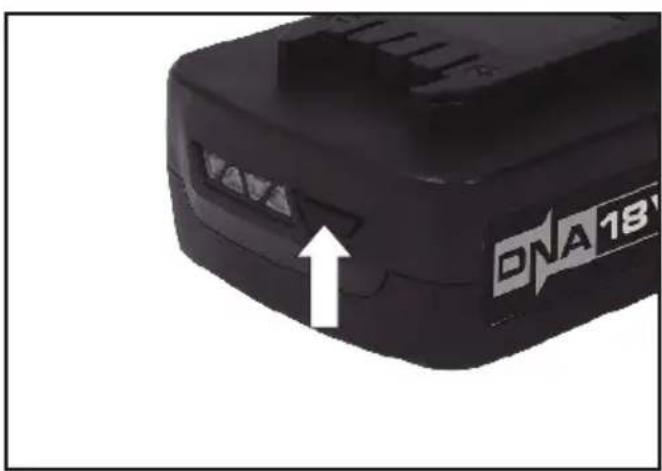
The battery is fitted with a charge level indicator so you can check the remaining power during use. To display the remaining charge press the button on the side of the battery and refer to the following table.
| Number of Lights Illuminated Charge Remaining | |
| 0 0 – 10 % | |
| 1 10 – 25 % | |
| 2 25 – 50 % | |
| 3 50 – 75 % | |
| 4 75 – 100 % | |
Know Your Reciprocating Saw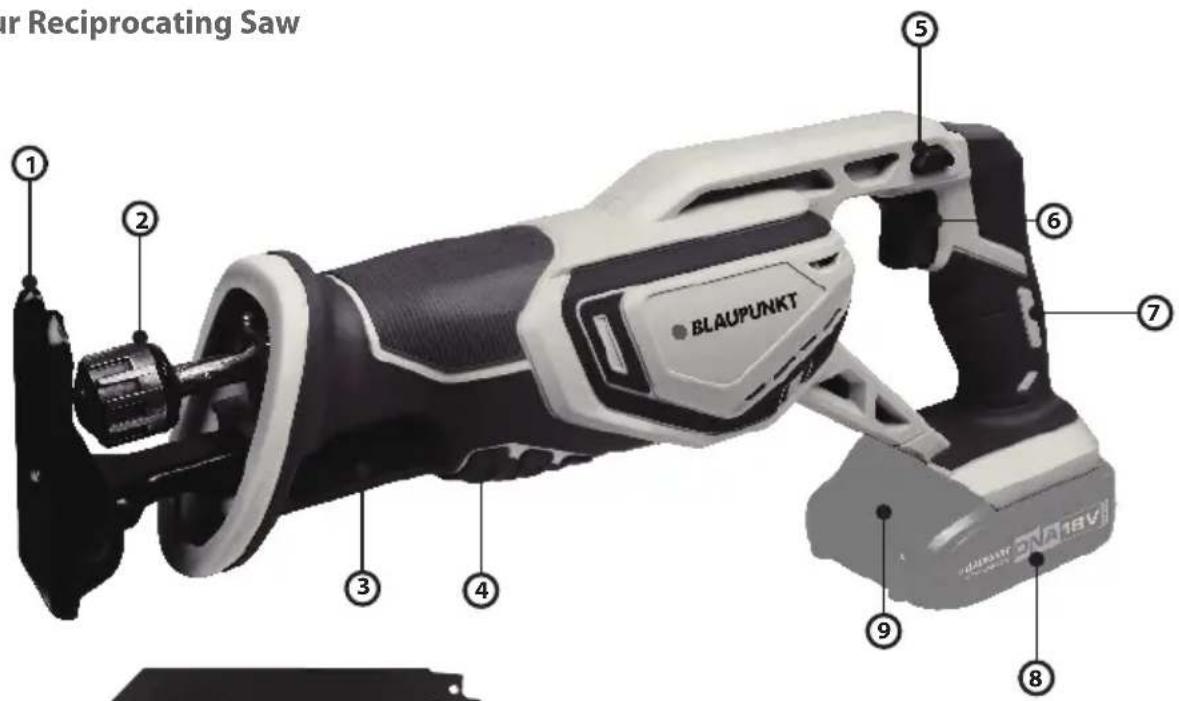
(Fig. 1)
- Hinged Shoe Assembly
- Blade Clamp
- Hinged Shoe Locking Lever
- Front Hand Grip
- Safety Lock
- On/Off Trigger
- Rear Handle
- Li-Ion Battery
- Battery Release Catch
- Wood Cutting Blade
Machine Specific Safety Instructions
Know your reciprocating saw. Do not plug the charger into the power source or install the battery in the tool until you have read and understand this Instruction Manual. Learn the tool's applications and limitations, as well as the specific potential hazards related to this tool. Following this rule will reduce the risk of electric shock, fire, or serious injury.
- This machine requires the use of two hands to ensure safe operation and should not be used when working from ladders and step ladders. If the machine is to be used when working at height, a suitable, stable platform or scaffold tower with hand rails and kick boards should be used.
- Hold the power tool by the insulated gripping surfaces when performing an operation where the cutting tool may contact hidden wiring or its own cord. Contact with a "live" wire will make exposed metal parts of the tool "live" and shock the operator.
- Ensure that power tools are disconnected from the battery supply when not in use, before servicing, lubricating or making adjustments and when changing accessories such as blades.
- Do not stop the blade by forcing the machine or by using sideways pressure.
- Do not use blades that are bent or have missing teeth. This is highly dangerous and could result in a serious accident causing injury to the operator and bystanders and damage to the machine. Only use blades that are recommended by the supplier and that are in good condition.
- Do not use blades that are larger than specified. Only use blades that are rated for the machine.
- Always keep the blade securing mechanism clean and free from dust build-up.
- Do not start the machine with the blade in contact with the workpiece.
- Check the workpiece for any protruding nails, screw heads or anything that could damage the blade.
- Ensure that there are no obstructions underneath the workpiece, as it is easy to cut into sawhorses and bench tops. Hold the machine correctly and adopt a stable stance.
- Use clamps or other practical ways to secure and support the workpiece to a stable platform. Holding the workpiece by hand or against your body leaves it unstable and may lead to loss of control.
- Do not attempt to modify the machine or its accessories in any way.
- Do not force the machine. This will reduce wear on the machine and blade, increasing its efficiency and operating life.
Kickback
Kickback occurs when the blade becomes jammed in the material that you are cutting and results in the machine moving backwards and forwards violently. When operating the saw, you should always be aware and prepared for this.
- To ensure that you have the most control in the event of kickback, use only one finger to operate the trigger. This allows you to use the rest of your hand for gripping the handle.
- In the event of kickback, you should keep a firm grip on the handle and release your grip on the trigger only. Do not let go of the saw. Once the saw has stopped, free the blade from the jam. Do not attempt to free the blade by turning on the saw.
ASSEMBLY
Installing Blades
- Remove battery pack.
- Note: There is a small hole in the machine end of the blade, which attaches to a small peg in the reciprocating spindle. Ensure that you are using the correct type of blade.
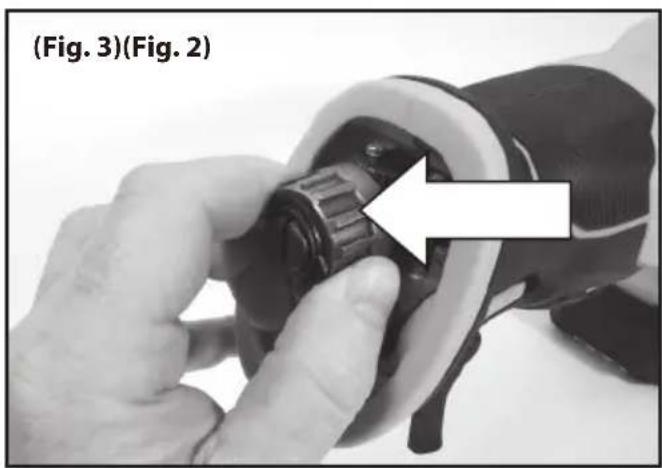
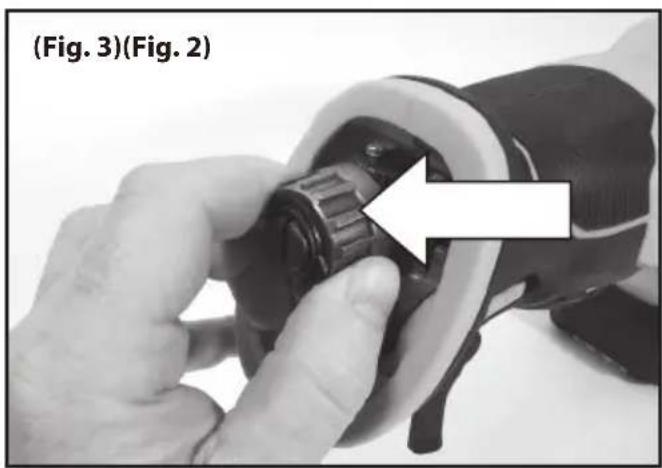
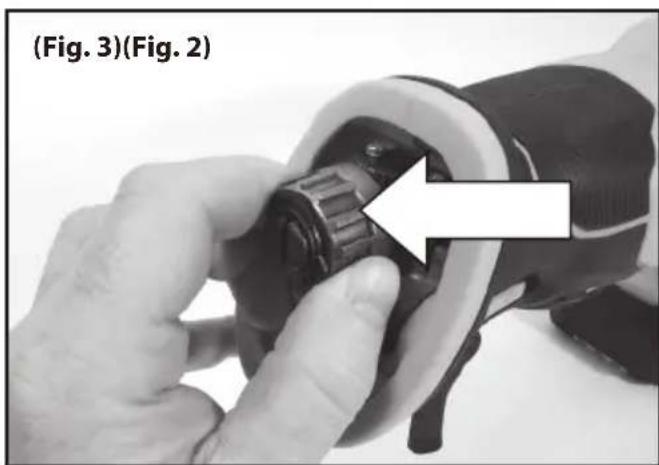
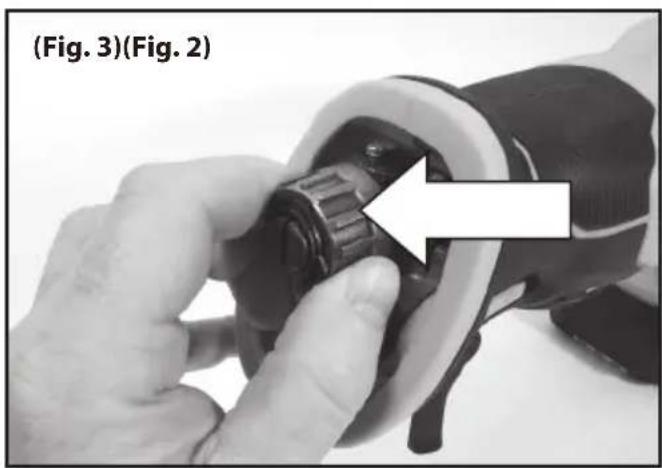
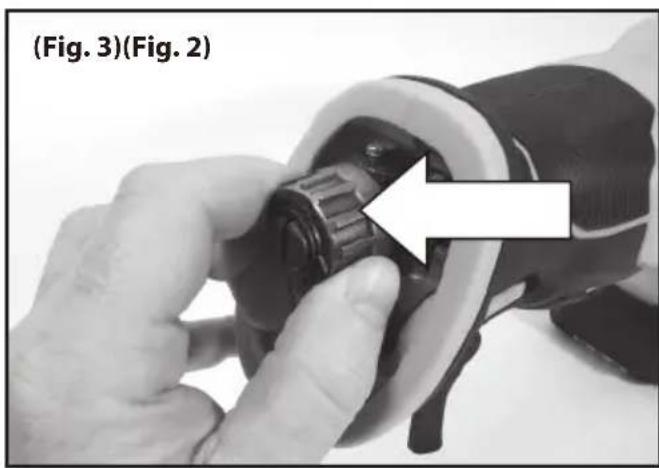
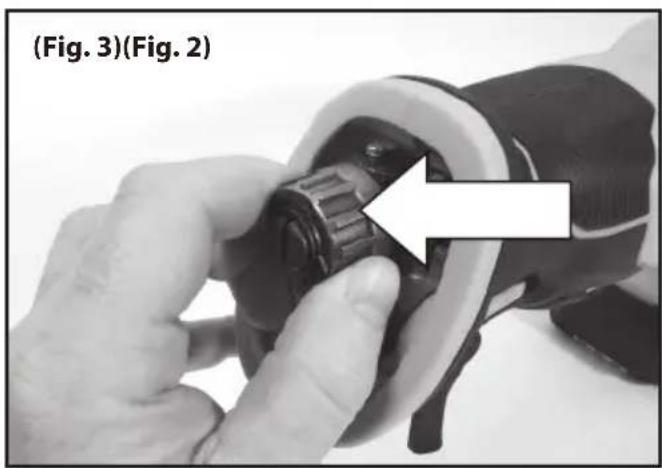
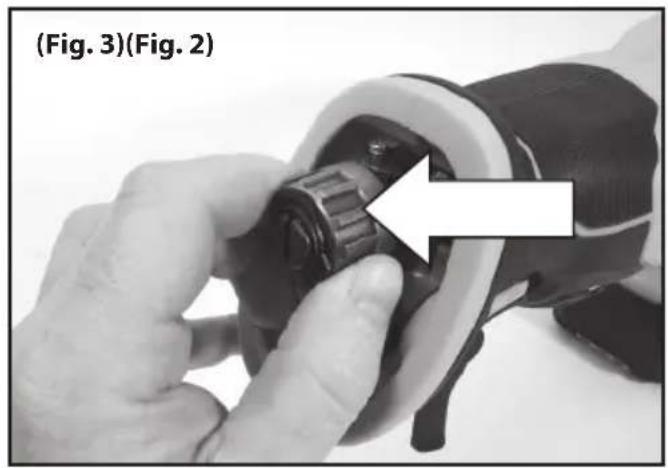
- Rotate the blade clamp and release mechanism anticlockwise (Fig.3).
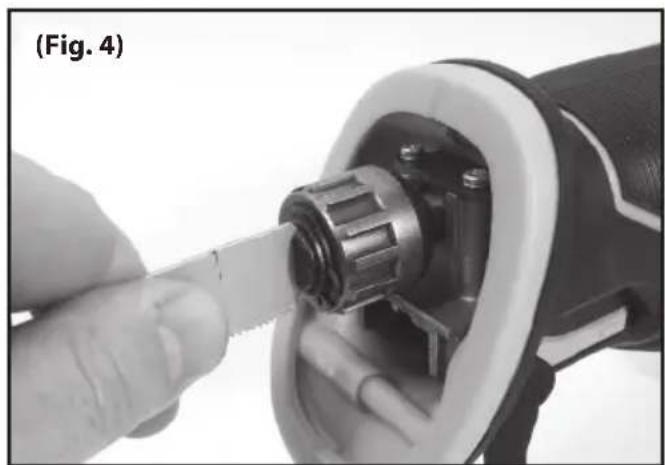
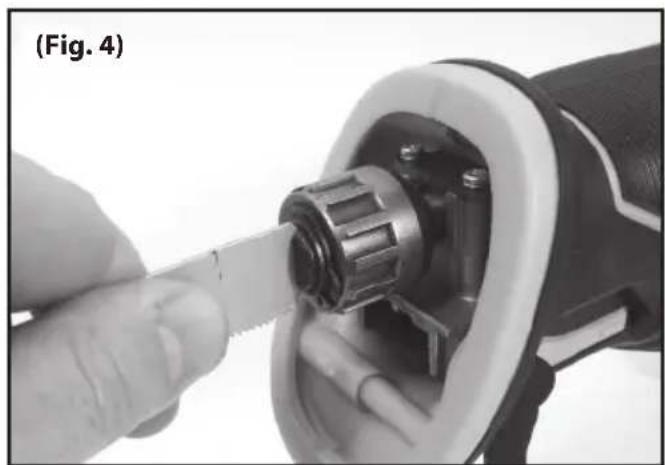
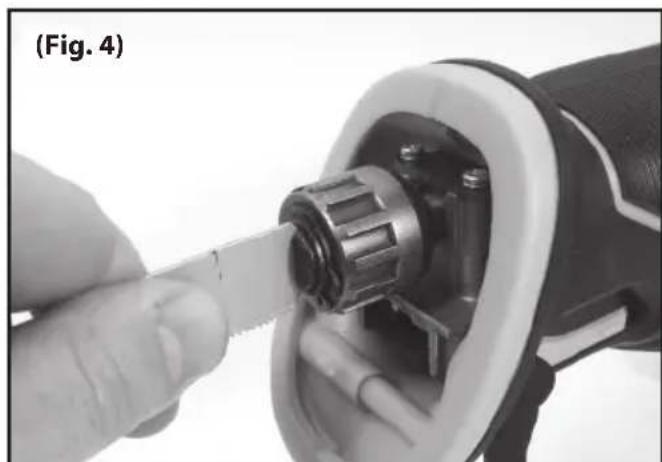
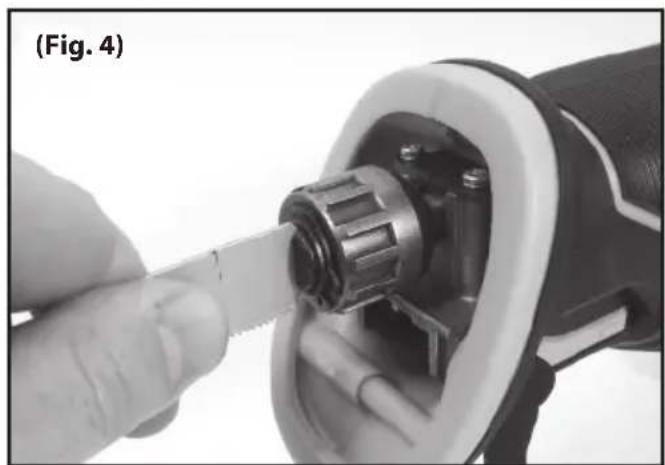
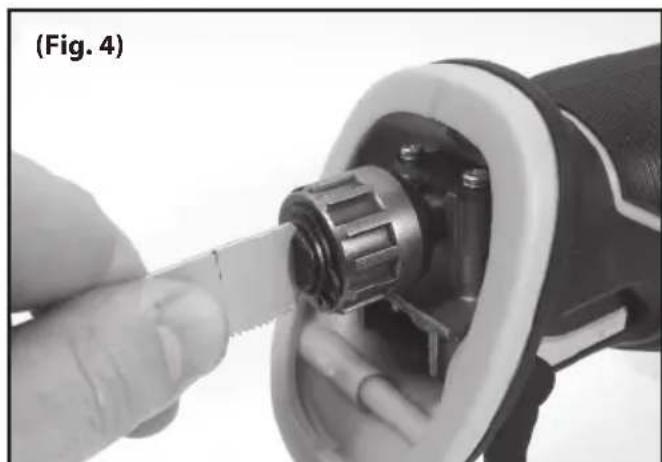
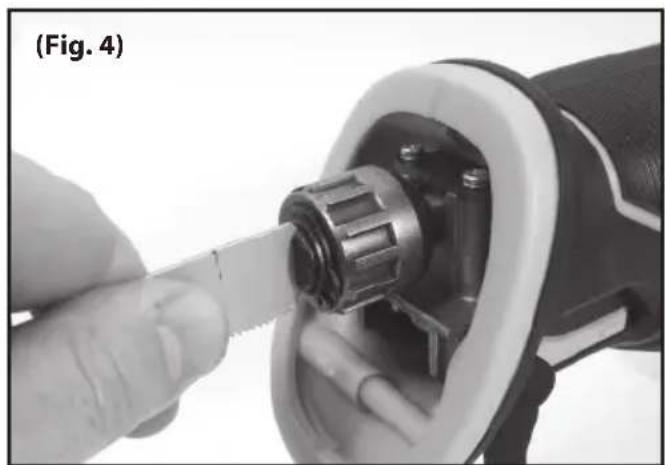
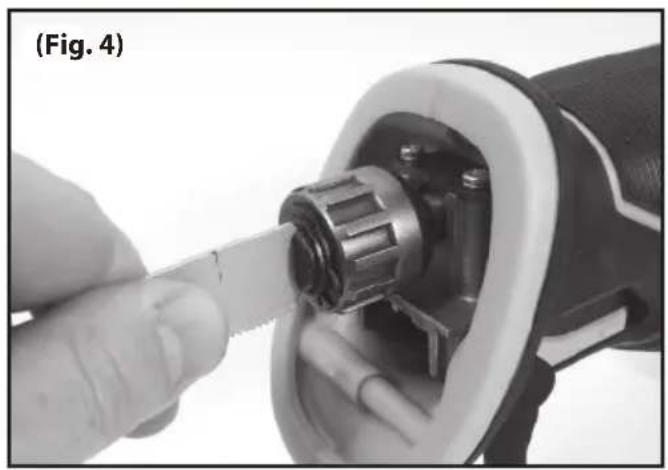
- Keeping the blade clamp and release mechanism fully rotated, insert the blade inside the spindle (Fig.4).
- Release the blade clamp and release mechanism and ensure the blade is securely fitted.
Hinged Shoe Assembly Adjustment
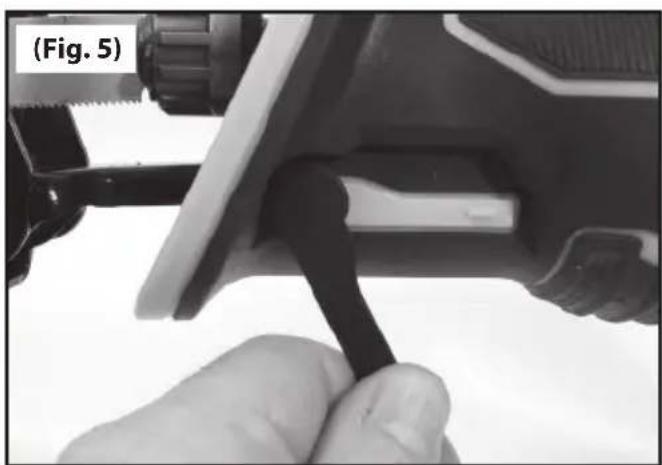
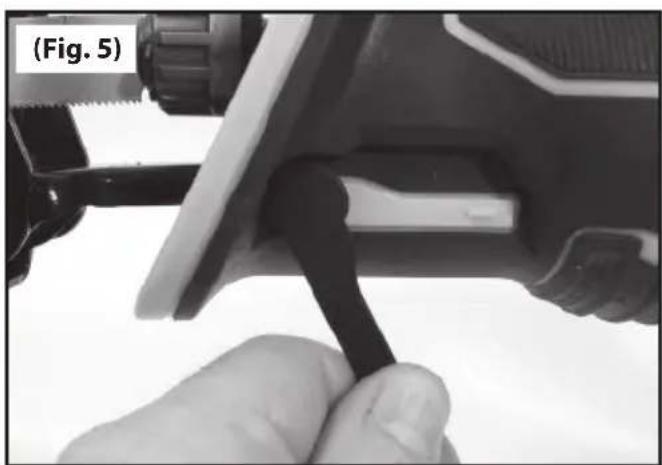
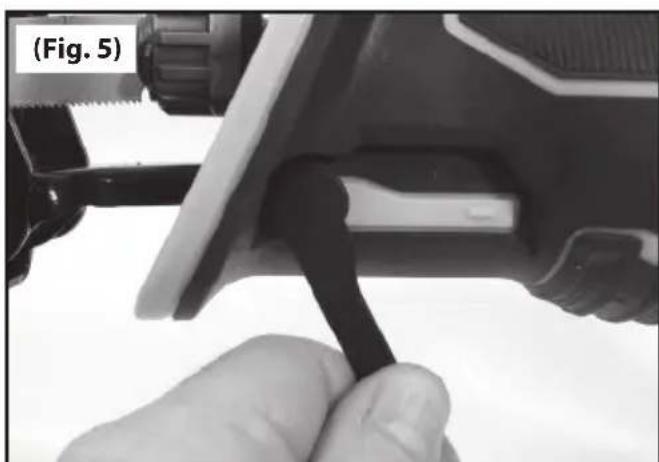
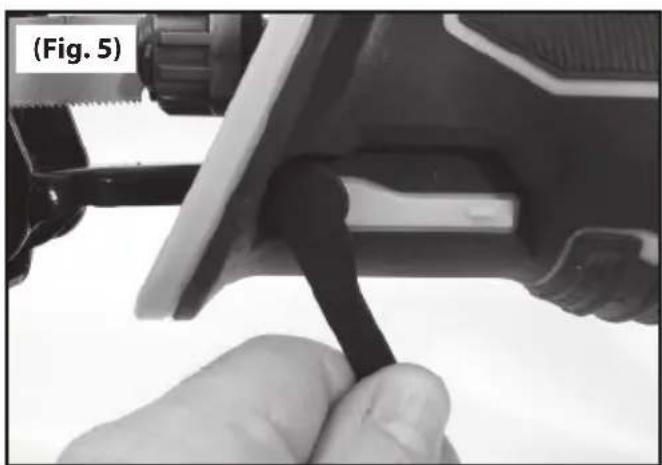
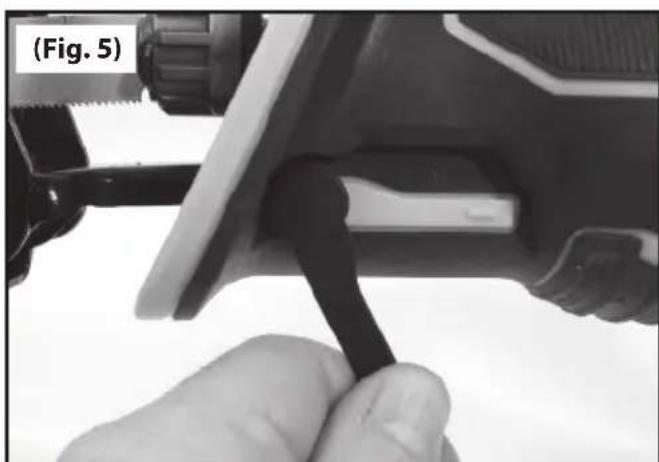
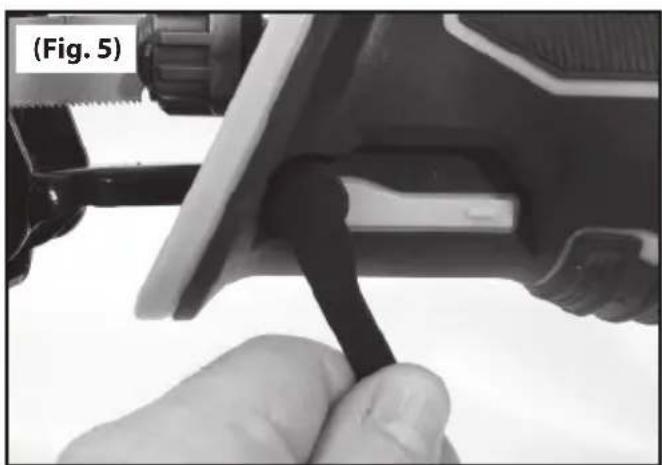
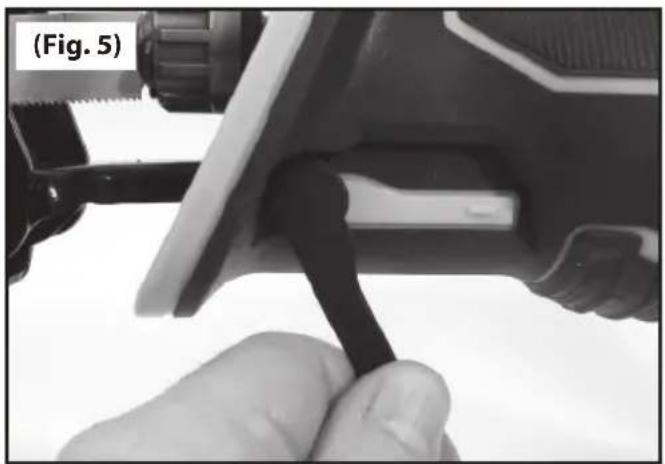
• The hinged shoe assembly can be adjusted to vary the depth of cut. • To adjust, turn the hinged shoe locking lever downwards (Fig.5). Move the hinged shoe assembly to the desired position. Lock the hinged shoe assembly by moving the locking lever upwards.
Installing the Battery
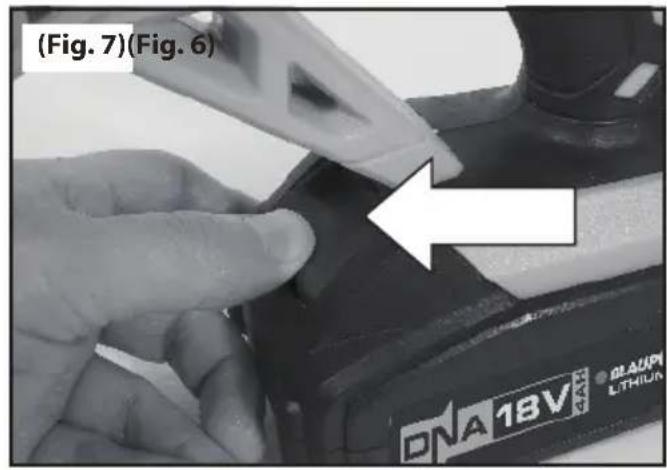
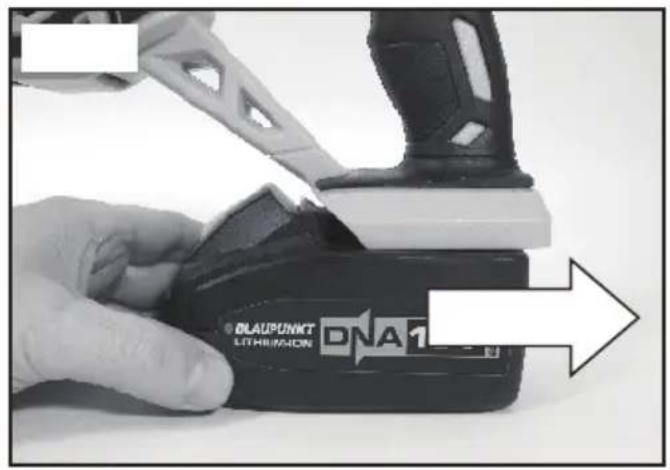
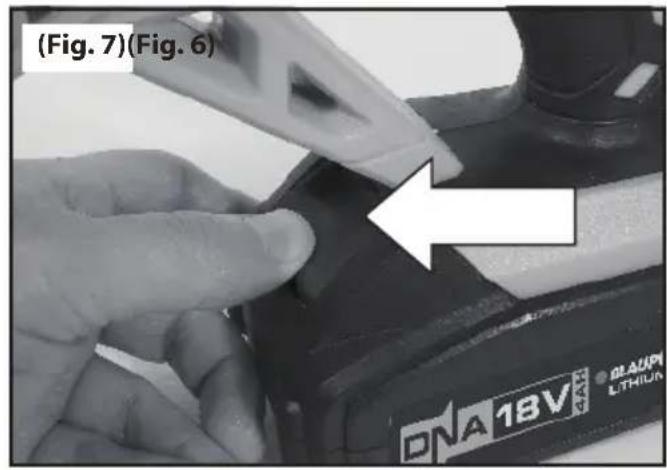
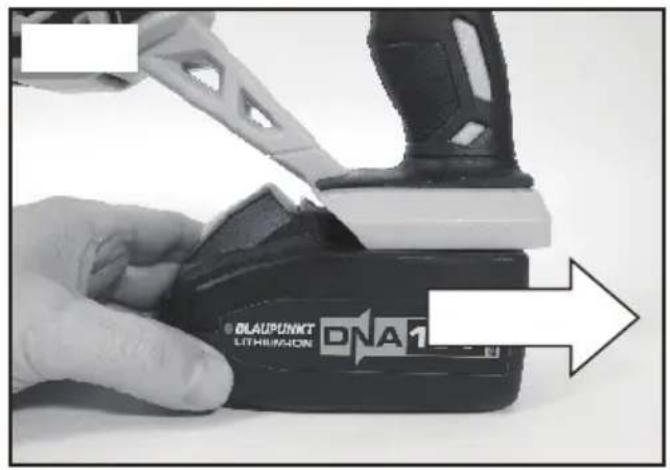
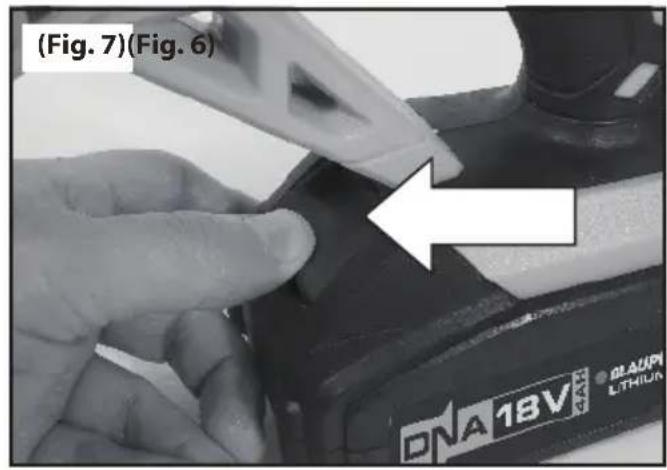
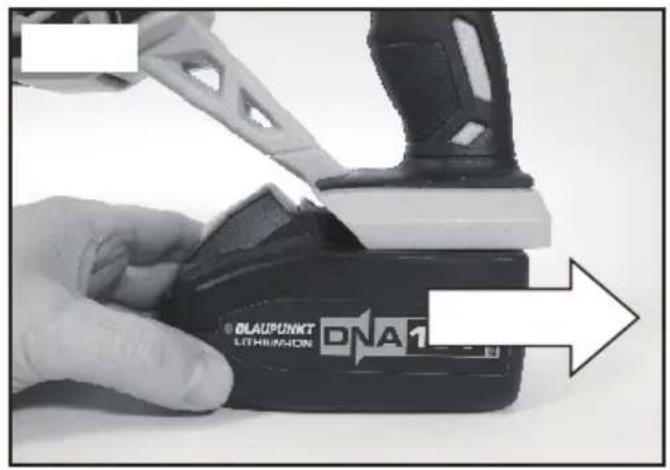
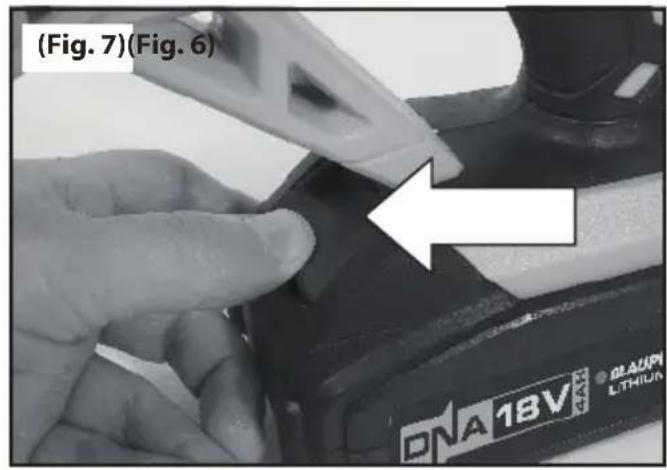
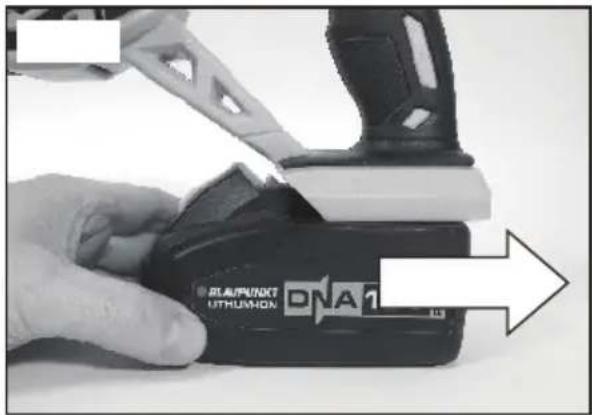
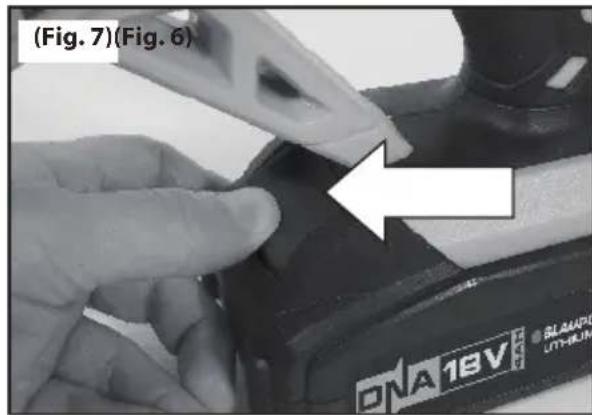
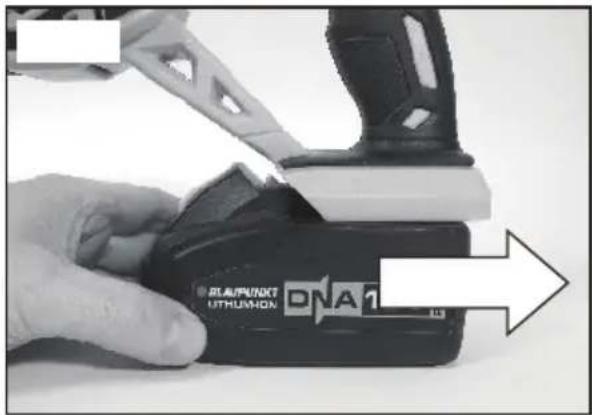
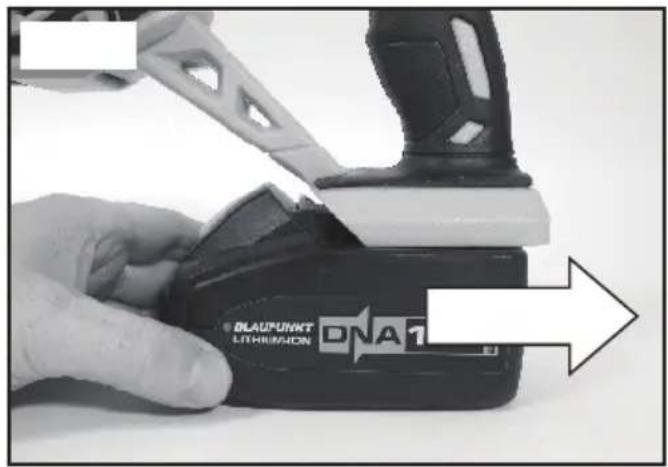
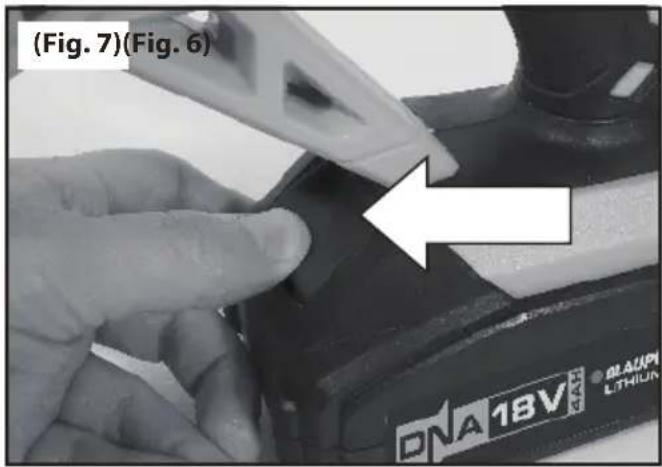
- Warning: To avoid serious personal injury, always remove the battery pack and keep hands clear of the Safety Lock button when carrying or transporting the tool. • Slide the battery pack into the tool base (Fig.6). • The battery has raised ribs which allow it to fit into the pole saw only one way.
- Make sure the battery pack snaps into place and that the battery pack is secured in the tool before beginning operation.
OPERATING THE SAW
Starting and Stopping
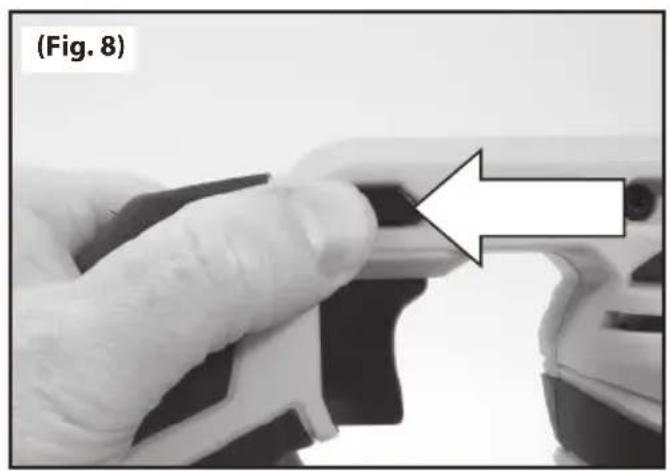
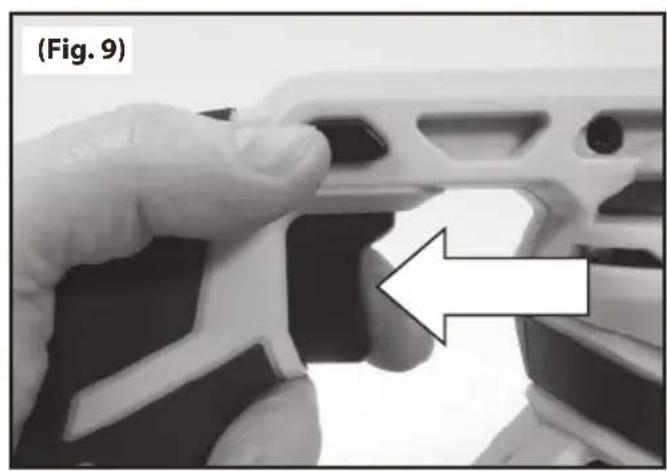
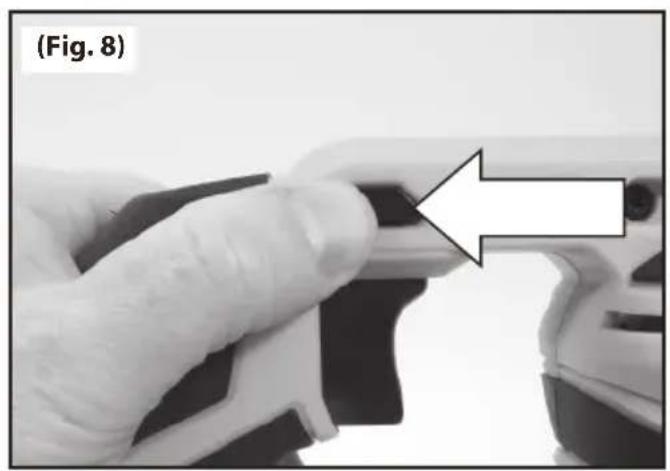
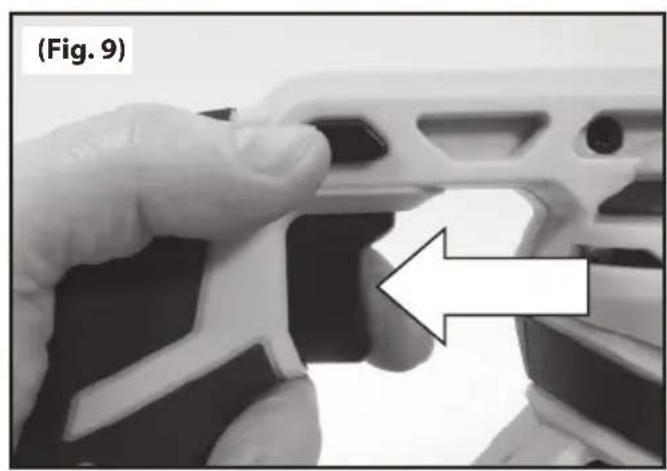
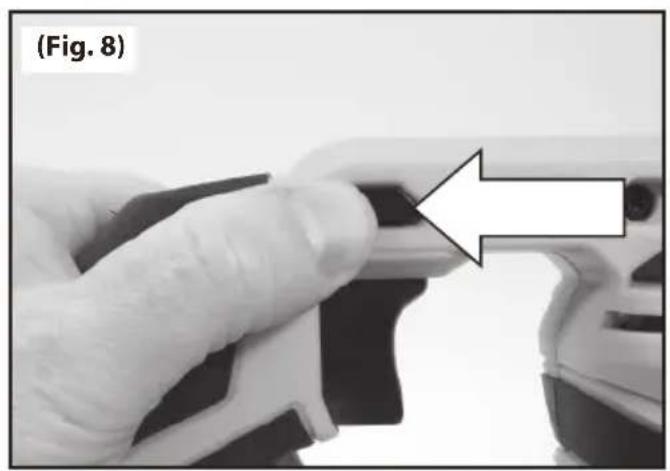
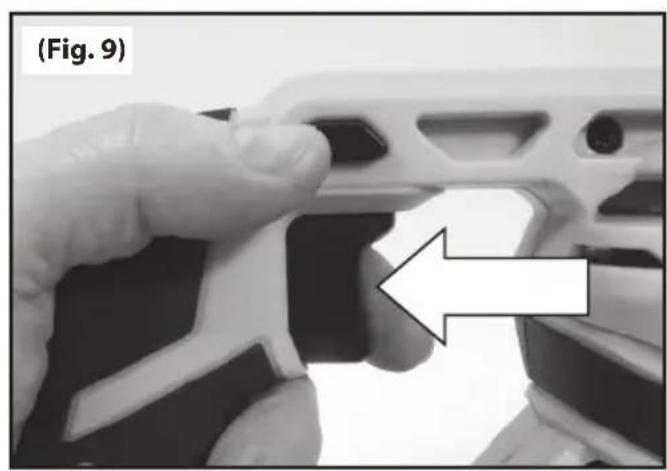
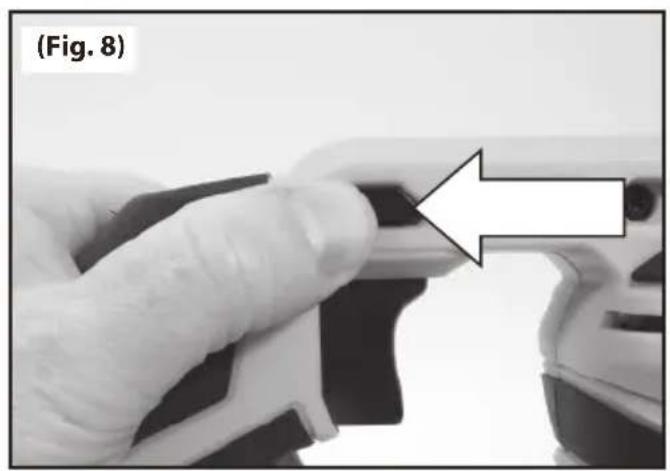
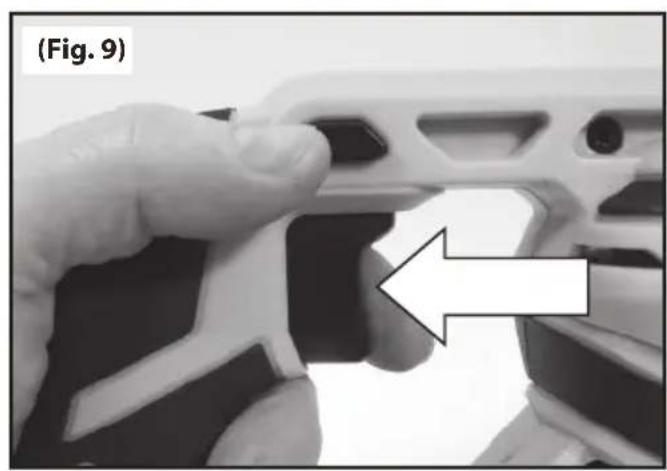
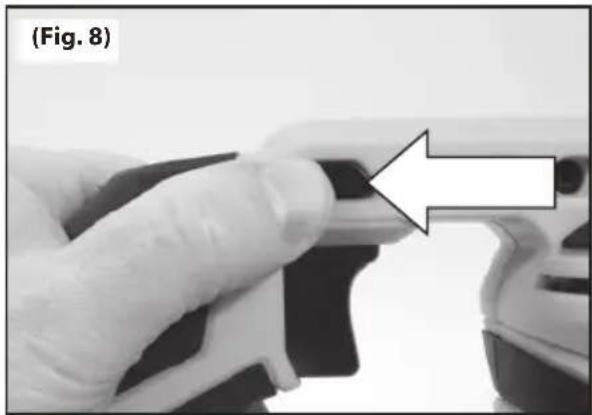
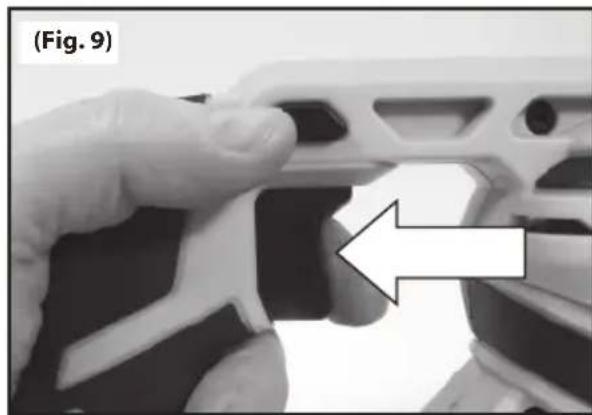
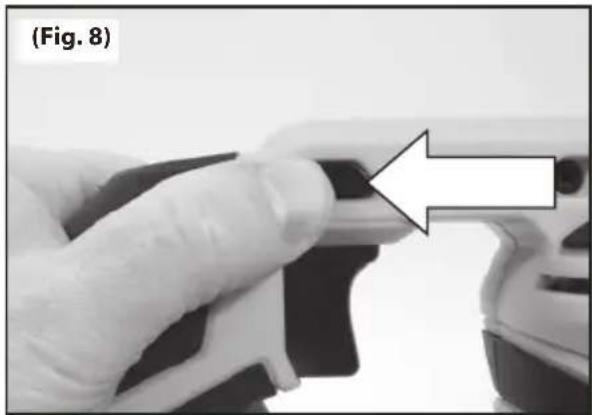
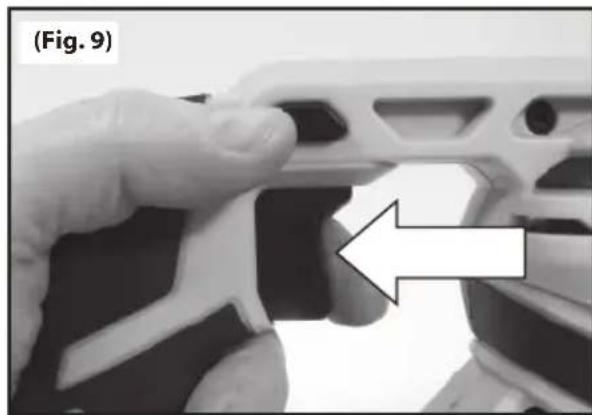
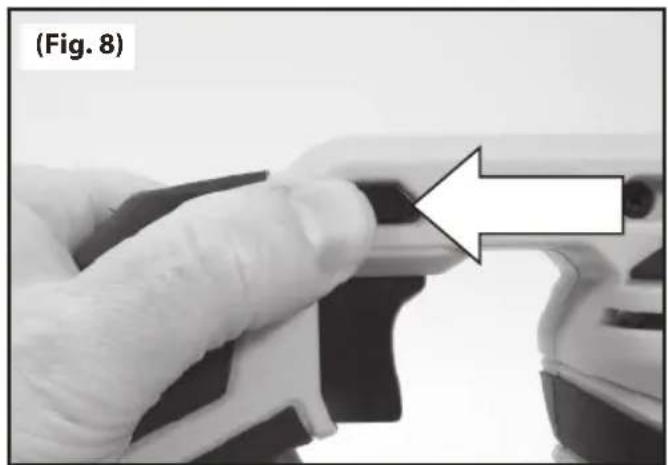
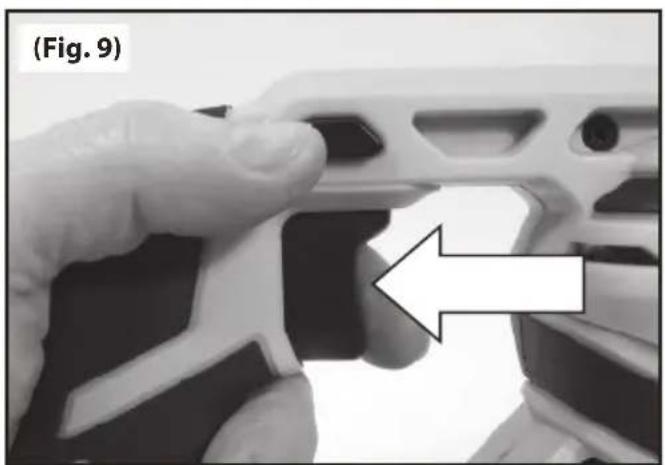
• To start the saw, press in the safety lock switch (Fig.8) then press and hold in the trigger (Fig.9). There is no need to hold the safety lock in; it will remain in place as long as the trigger is pressed. • To stop the saw, release the trigger; the safety lock will return to the locked position.
General Cutting
It is highly important to check that there are no live electric cables behind the surface you are cutting.
- Hold the saw firmly in front of and clearly away from you. Be sure the material to be cut is held firmly.
- Small work pieces should be securely clamped in a vice or with clamps to the work bench or table. • Mark the line of cut clearly.
- Start the saw and allow it to reach full speed before making contact with the material you are cutting.
Place the shoe assembly against the material, then move the blade into the work. Keep the shoe pressed firmly against the surface.
- Do not force, use only enough pressure to keep the saw cutting. Excessive pressure that causes bending or twisting of the blade may result in broken blades.
Metal Cutting
You may cut metals such as sheet steel, pipe, steel rods, aluminium, brass, and copper with the saw. Observe the following tips when metal cutting:
• Do not force, twist or bend the saw blade. - Use cutting oil when cutting soft metals and steel. Cutting oil also keeps the blades cool, increases cutting action, and prolongs blade life. • Never use flammable liquids to lubricate, sparks could ignite fumes. - Clamp the material you are cutting firmly and cut close to the clamping point to eliminate any vibration of the workpiece. - When cutting conduit pipe or angle iron use a vice. - To cut thin sheet material, 'sandwich' the material between hardboard or plywood and clamp the layers to eliminate vibration and material tearing. • Always keep the shoe held firmly against the material.
| Product Specifications | |
| Voltage | 18V |
| Variable Speed 0 – 3000 SPM | |
| Stroke Length 25.4mm | |
| Maximum Material Thisckness (Wood) 80mm | |
| Maximum Material Thickness (Steel) 10mm | |
| Sound Pressure Level LpA 81 dB(A) K=3dB(A) | |
| Sound Power Level LWA 92 dB(A) K=3dB(A) | |
| Vibration Level 8.3 m/s2, K=1.5m/s2 | |
Symbols
The manual or rating plate on your tool may show symbols. These represent important information about the product or instructions on its use.
 | You must read the instruction manua Wear |  /e /e | footwear |
 | Product is compliant with CE safety standards |  | Wear ear protection |
 | Product is compliant with RoHS safety standards |  | Wear safety gloves |
 | General warning |  | Wear protective clothing |
 | Dispose of in compliance with WEEE standards |  | Wear safety mask |
 | Contains Lithium-Ion battery |  | Wear eye protection |
 | Product is double insulated |  | Wear head protection |
 | Fire hazard |  | Wear respiratory protection |
| Electrocution hazard |
DISPOSAL
Do not dispose of in general waste.
As stated in European Directive 2012/19/EU for Waste Electrical and Electronic Equipment, this product must be disposed of in an environmentally safe manner. We recommend taking it to a recycling facility.
Warranty
This product has 3 Years Warranty (except batteries) for manufacturing defects. The warranty period will be counted from the date of purchase of the product, according to purchase invoice. Product warranty only covers manufacturing defects, defects resulting from improper use, such as dropping, improper transportation, connection to the mains power supply not in compliance with the voltage specified in this manual, insertion of foreign objects and natural wear of parts and parts Such as plastic parts (caps, buttons, handles, latch locks, power cables, etc.) and metal parts (wires, motors, etc.).
Also not covered are damages due to agents of nature, lightning, food, sea, oxidation, humidity etc.). The product will lose its warranty if it presents defects, which after analysis by our technicians, are characterised as being improperly used, used for professional use or for the purpose for which it is not intended (according to the Owner's Manual). This warranty will be void if it is found that the device has been tampered with, has been repaired by a person or service not authorised by Blaupunkt. The guarantee is only valid with the receipt/invoice provided at purchase.
We undertake to provide the above-mentioned services within the warranty period only in places where it maintains an authorised service. Consumers not located near an authorised service centre are responsible for the costs and risks of transport to an authorised service.
Territorial Limitations: Any repair, replacement, or support of the Products provided under the Warranty (or any other support service offered in our sole discretion), shall be restricted to, and provided solely within, the Distribution Territory as then in effect on the date the Product is delivered to you. If you purchase a Product within a defined Distribution Territory and later transport the Product outside of the Distribution Territory, we cannot provide returns, warranty, out-of-warranty, or aftermarket support of any kind outside the Distribution Territory.
Natural 'wear and tear' is not covered under warranty.
This product is for domestic use only.
SAVE THESE INSTRUCTIONS
Imported and distributed by:
UNOLD AG
Mannheimer Straße 4
68766 Hockenheim
Tel.: 06205 9418 0
E-Mail: info@unold.de



- ENJOY IT
- POWER TOOLS – GENERAL SAFETY GUIDELINES
- ELECTRICAL TOOLS – GENERAL SAFETY GUIDELINES
- BATTERY TOOLS – GENERAL SAFETY GUIDELINES
- BATTERY TOOLS – CHARGING THE BATTERY
- BATTERY TOOLS – BATTERY CHARGE LEVEL LIGHTS
- MACHINE SPECIFIC SAFETY INSTRUCTIONS
- KICKBACK
- ASSEMBLY
- INSTALLING BLADES
- HINGED SHOE ASSEMBLY ADJUSTMENT
- INSTALLING THE BATTERY
- OPERATING THE SAW
- STARTING AND STOPPING
- GENERAL CUTTING
- METAL CUTTING
- SYMBOLS
- DISPOSAL
- WARRANTY
Brand : BLAUPUNKT
Model : BP5218
Category : Saw