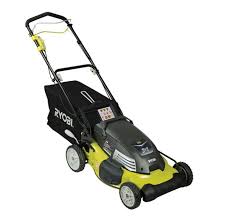
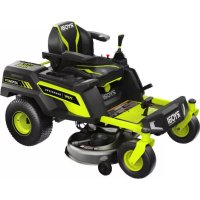
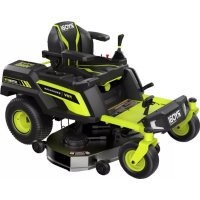
USER MANUAL RLM4852L RYOBI
REEMPLACEMENT DES ROUES AVANT
Voir figure 17.
English (Original instructions)
Your product has been engineered and manufactured to Ryobi's high standard for dependability, ease of operation, and operator safety. When properly cared for, it will give you years of rugged, trouble-free performance.
Thank you for buying a Ryobi product.
Save this manual for future reference
INTENDED USE
This product is intended for domestic lawn mowing. The cutting blade should rotate approximately parallel to the ground over which it is being wheeled. All four wheels should touch the ground while mowing. It is a pedestrian controlled walk behind mower.
NOTE: The mower should never be operated with the wheels off the ground, it should not be pulled or ridden on. It should not be used to cut anything other than domestic grass lawns.
GENERAL SAFETY RULES
WARNING
To reduce the risk of injury, the user must read and understand the operator's manual.
WARNING
Do not attempt to operate this mower until you have read thoroughly and understood completely all instructions, safety rules, etc. contained in this manual. Failure to comply may result in accidents involving electric shock, fire, and/or serious personal injury.
WARNING
The machine should be operated with the battery pack. When using battery operated machine basic safety precaution should always be followed to reduce the risk of fire, leaking batteries and personal injury.
PERSONAL SAFETY
This lawn mower is capable of amputating hands and feet, and throwing objects. Failure to observe all safety instructions could result in serious injury or death.
- Never allow children or people unfamiliar with the instructions to use the machine. Local regulations may restrict the age of the operator.
- Stay alert, watch what you are doing, and use common sense when operating the lawn mower. Do not operate the mower while tired or under the influence of drugs, alcohol, or medication. A lapse in concentration while operating the machine may result in serious personal
injury.
- Wear heavy, long trousers, long sleeves, boots, and gloves. Do not wear loose fitting clothing, short trousers, sandals, or go barefoot.
Always wear safety glasses with side shields. Use face mask if operation is dusty.
Always be sure of your footing. Keep firm footing and balance. Do not overreach. Overreaching can result in loss of balance.
Walk, never run.
- Mow across the face of slopes, never up and down. Exercise extreme caution when changing direction on slopes.
- Do not mow near drop-offs, ditches, excessively steep slopes, or embankments. Poor footing could cause a slip and fall accident.
Plan your mowing pattern to avoid discharge of material toward roads, public pavements, bystanders and the like. Also, avoid discharging material against a wall or obstruction, which may cause the material to ricochet back toward the operator.
WORK AREA SAFETY
- Never mow while people, especially children, or pets are nearby.
Always mow in the daylight or in good artificial light.
- Do not operate the machine in explosive atmospheres, such as in the presence of flammable liquids, gases or dust. The tool create sparks which may ignite the dust or fumes.
- Objects struck by the lawn mower blade can cause severe injuries to persons. Thoroughly inspect the area where the machine is to be used and remove all rocks, sticks, metal, wire, bones, toys, or other foreign objects.
- Do not operate the machine in wet grass or in the rain.
- Keep in mind that the operator or user is responsible for accidents or hazards occurring to other people or their property.
- Tragic accidents can occur if the operator is not alert to the presence of children. Children are often attracted to the machine and the mowing activity. Never assume that children will remain where you last saw them.
- Keep children out of the mowing area and under the watchful care of a responsible adult other than the operator.
- Be alert and turn mower off if a child enters the area.
- Never allow children or people unfamiliar with the instructions to use the machine.
Use extra care when approaching blind corners, shrubs, trees, or other objects that may block your
English (Original instructions)
view.
- Keep work area clean.
- Keep work area well lit.
- Cluttered or dark areas invite accidents.
Before using, always visually inspect to ensure blades, blade bolts, and cutter assembly are not worn or damaged.
- Replace worn or damaged blades and bolts in sets to preserve balance.
- Check all nuts, bolts, and screws at frequent intervals for proper tightness to be sure the equipment is in safe working condition.
- Check the grassbox frequently for wear or deterioration.
Replace worn or damaged parts.
- Do not force the machine. It will do the job better and safer at the speed for which it was designed.
- Do not overload your mower. Mowing long thick grass may cause the motor speed to drop, or the power to cut out. When mowing in long thick grass a first cut with the cutting height set higher will help reduce the load. See adjusting the blade height.
Please note that cutting long grass will drain the battery quicker than cutting shorter grass.
- Stop the blade when crossing gravel surfaces.
- Do not pull the mower backward unless absolutely necessary. If you must back the machine away from a wall or obstruction, first look down and behind to avoid tripping or pulling the machine over your feet.
- Stop the blade(s) if the machine has to be tilted for transportation when crossing surfaces other than grass, and when transporting the machine to and from the area to be mowed.
- Never operate the machine with defective guards or shields, or without safety devices, for example, deflectors and/or grassboxes, in place.
- Switch on the motor according to instructions and keep hands and feet away from cutting area. Keep clear of the discharge opening at all times.
- Never pick up or carry a lawnmower while the engine is running.
Remove isolator key for the below cases:
whenever you leave the machine
- before cleaning a blockage
- before checking, cleaning or working on the machine
- after striking a foreign object; inspect the appliance for damage and make repairs as necessary
- before clearing the grassbox
- if the machine starts to vibrate abnormally (check immediately)
- when not in use and storing the machine
-
when recharging and removing/inserting battery pack
-
Avoid holes, ruts, bumps, rocks, property stakes, or other hidden objects. Uneven terrain could cause a slip and fall accident.
If the machine should start to vibrate abnormally, stop the motor and check immediately for the cause. Replace the blade if it is unevenly worn or damaged in any way. Vibration is generally a warning of trouble.
If the machine strikes a foreign object, follow these steps:
-
Stop the machine by releasing the power lever, wait until the blade comes to a complete stop, and then remove isolator key.
- Thoroughly inspect the machine for any damage.
- Replace the blade if it is damaged in any way. Repair any damage before restarting and continuing to operate the mower.
-
Use the right appliance. Do not use the machine for any job except that for which it is intended.
-
When not in use, mower should be stored in a wellventilated, dry, locked up place-out of the reach of children. The isolator key should also be removed.
- Follow manufacturer's instructions for proper operation and installation of accessories. Only use accessories approved by the manufacturer.
SERVICE
Service on the product must be performed by qualified repair personnel only. Service or maintenance performed by unqualified personnel could result in a risk of injury to the user, or damage to the machine.
Use only identical replacement parts when servicing the product. Use of unauthorised parts may create a risk of serious injury to the user, or damage to the product.
NOTE: Only perform the tasks listed in this manual. For other service or repair, it should be done by a qualified person.
BATTERY RULES FOR SAFETY
- Battery operated units do not have to be plugged into an electrical outlet; therefore, they are always in operating condition. Be aware of possible hazards even when unit is not operating.
- Remove the battery pack before making any adjustments, cleaning, or removing material from the unit.
- Ensure the isolator key is removed before inserting
English (Original instructions)
battery pack.
- A battery pack must be recharged only with the charger specified by the manufacturer. Using a charger with an incompatible battery pack may create a risk of fire. Use battery pack only with charger listed.
Use only battery pack intended specifically for the machine. Use of any other battery packs may result in a risk of fire, electric shock, or injury to persons.
- When battery pack is not in use, keep it away from other metal objects like, paper clips, coins, keys, nails, screws, or other small metal objects, that can make a connection from one terminal to another. Shorting the battery pack terminals together may cause sparks, burns, or a fire.
- Do not place battery products or their batteries near fire or heat. This will reduce the risk of explosion and possibly injury.
- Do not open or mutilate the battery pack. Released electrolyte is corrosive and may cause damage to the eyes or skin. It may be toxic if swallowed.
- Do not short-circuit the battery pack. There is danger of explosion.
- Protect the battery pack against moisture and water. Do not charge unit in a damp or wet location. Following this rule will reduce the risk of electric shock.
If electrolyte contacts the skin, wash it off immediately with water.
If electrolyte contacts the eyes, flush thoroughly and immediately with water. Seek medical attention.
In case of damage and improper use of the battery, vapour may be emitted. Provide for fresh air and seek medical help in case of complaints. The vapour can irritate the respiratory system.
- Do not leave the battery pack in the car in the summer.
Do not incinerate the battery.
SAFETY RULES FOR CHARGER
Use of an attachment not recommended by the manufacturer may result in a risk of fire, electric shock, or injury to persons. Following this rule will reduce the risk of electric shock, fire, or serious personal injury.
- Do not clean machine with isolator key or charger installed.
- Do not use the charger when the ambient temperature is above 40^ or below 0^ .
- Do not operate charger with a damaged cable or plug, which could cause shorting and electric shock. Return to authorised service centre for repair or replacement.
- Do not operate charger if it has received a sharp blow, been dropped, or otherwise damaged in any way. Take it to an authorised service center for electrical
check to determine if the charger is in good working order.
- Do not disassemble charger, take it to an authorised service station if repair is required. Incorrect reassembly may result in a risk of electric shock or fire.
Unplug charger from outlet before attempting any cleaning to reduce the risk of electric shock.
- Disconnect charger from the power supply when not in use to prevent damage to the charger during a power surge.
- Do not expose machine to rain or wet conditions. Water entering charger will increase the risk of electric shock.
Make sure cable is located so that it will not be stepped on, tripped over, come in contact with sharp edges or moving parts or otherwise subjected to damage or stress. This will reduce the risk of accidental wash, which could cause injury, and damage to the cable, which could result in electric shock.
- Keep cable and charger away from heat to prevent damage to housing or internal parts.
-
Do not let gasoline/petrol, oils, petroleum-based products, etc. come in contact with plastic parts. They contain chemicals that can damage, weaken or destroy plastic.
An extension cable should not be used for the charger unless absolutely necessary. Use of improper extension cable could result in a risk of fire and electric shock. If extension cable must be used, make sure:
-
That pins on plug of extension cable are the same number, size and shape as those of plug on charger.
- That extension cable is properly wired and in good electrical condition.
WARNING
If any parts are missing, do not operate unit until the missing parts are replaced. Failure to do so could result in possible serious personal injury.
Save these instructions. Refer to them frequently and use them to instruct others who may use this product. If you lend someone this unit, lend them these instructions also.
SYMBOL
Some of the following symbols may be used on this product. Please study them and learn their meaning. Proper interpretation of these symbols will allow you to operate the product better and safer.
V Volts
English (Original instructions)
A Amperes
Hz Hertz
W Watts
Hours

Precautions that involve your safety.

To reduce the risk of injury, user must read and understand user's manual before using this product.

Do not expose machine to rain or wet conditions.

Pay attention that bystanders are not injured through foreign objects thrown from the mower.

Keep all bystanders (especially children and pets) at least 15 m away from the work area.

Keep hands and feet away from blade and cutting area.

Switch off and remove isolator key before adjusting, cleaning and before leaving the product unattended for any period.

Do not operate on inclines greater than 15^ Mow across the face of slopes, never up and down.

Beware of electric shock hazard.

Wait for all components of machine to have completely stopped before touching them.

The charger is intended for indoor use only.

Tool in which protection against electric shock relies on double insulation or reinforced insulation.
ENVIRONMENTAL PROTECTION
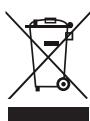
Waste electrical products should not be disposed of with household waste. Please recycle where facilities exist. Check with your local authority or retailer for recycling advice.
Do not dispose of battery packs/batteries into household waste, fire or water. Battery packs/batteries should be collected, recycled or disposed of in an environmental-friendly manner.
Consult your local waste authority for information regarding available recycling and/or disposal options.
DESCRIPTION
- Motor control cable
- Start button
- Power lever (grey)
- Handle
- Self propel lever (green)
- Battery meter
- Key cover/slot
- Side discharge door opening
- Battery pack
- Isolator key
- Side discharge deflector
- Height adjustment lever
- Mulching plug
- Grassbox
- Charger
- Upper handle
- Lower handle
- Hand knobs
- Rear discharge door
- Rear discharge opening
21.Pins
- Side discharge door
- Hooks of side discharge deflector
- Slots
- Grassbox handle
- Grassbox hooks
- Rear door rod
- Highest blade setting
- Lowest blade setting
- Charge receptacle 2
- LED
- Charge receptacle 1
- Motor shroud
- Resettable fuse
- Blade
- Wrench
37.Wood
- Blade posts
- Shaft
- Fan assembly
- Blade insulator
- Spacer
- Blade nut
- Nut
English (Original instructions)
- Rear wheels
- Dust cover
- E-ring
- Washer
49.Pins
50.Wheel gear
- Front wheels
52.Wheel axle
SPECIFICATIONS
| Lawn mower | RLM4852L |
| Width of cut | 50.2 cm |
| Height of cut | 19 mm - 76 mm |
| No-load speed | 3000 rpm |
| Self-propelled speed | 0.8~1.0 m/s |
| Grassbox capacity | 55 L |
| Mower weight | 43.1±2 kg |
| Serial number | See product rating label |
| Battery | Lead-acid |
| Battery number | 31108469 |
| Rated voltage | 48 V |
| Charging time | 8-10 Hours |
| Weight | 14.6 ± 0.7 kg |
| Battery charger | QL-91435A-4801300F |
| Input | 220-240 V, 50-60 Hz, AC only |
| Output | 48 V DC, 1.3 A |
| Allowable charging temperature range | 0-40 °C |
KNOW YOUR LAWN MOWER
See figure 1.
The safe use of the product requires an understanding of the information on the tool and in this operator's manual as well as a knowledge of the project you are attempting. Before use of this product, familiarize yourself with all operating features and safety rules.
BATTERY METER
The battery meter measures the amount of charge remaining in the battery.
GRASSBOX
The grassbox collects grass clippings and prevents them from being discharged across your lawn as you mow.
HEIGHT ADJUSTMENT LEVER
The height adjustment lever provides cutting height adjustments.
MOTOR CONTROL CABLE
The motor control cable, located on the upper handle of the mower, engages and disengages the motor and blade.
ISOLATOR KEY
The isolator key must be inserted before the mower can be started.
MULCHING PLUG
Your mower is equipped with a mulching plug that covers the rear discharge opening, which allows the mower blade to cut and recut for finer clippings.
SELF-PROPELLED FEATURE
Pulling the self propel lever (green) upward to meet the handle turns on the self-propelled feature of your mower.
SIDE DISCHARGE DEFLECTOR
Use the side discharge deflector on your mower when the grass is too high to mulch or when side discharging is preferred. The grass clippings produced when using the side discharge deflector are noticeably larger than those produced when using the mulching plug and side mulching plate.
SIDE DISCHARGE DOOR
Your mower is equipped with a door that covers the side discharge opening, which allows the mower blade to cut and recut the grass for finer clippings if the mulching plug is engaged, or otherwise sends the grass clippings to the collection bag.
ASSEMBLY
UNPACKING
This product requires assembly.
- Carefully remove the product and any accessories from the box. Make sure that all items listed in the packing list are included.
WARNING
Do not use this product if any parts on the packing list are already assembled to your product when you unpack it. Parts on this list are not assembled to the product by the manufacturer and require customer installation. Use of a product that may have been improperly assembled could result in serious personal injury.
Inspect the product carefully to make sure no breakage or damage occurred during shipping.
English (Original instructions)
- Do not discard the packing material until you have carefully inspected and satisfactorily operated the product.
If any parts are damaged or missing, please call your Ryobi service centre for assistance.
PACKING LIST
Lawn mower
■ Isolator key
Grassbox
Charger
Mulching plug
Side discharge deflector
Operator's manual

WARNING
If any parts are damaged or missing do not operate this product until the parts are replaced. Using a product with damaged or missing parts could result in serious personal injury.

WARNING
Do not attempt to modify this product or create accessories not recommended for use with this product. Any such alteration or modification is misuse and could result in a hazardous condition leading to possible serious personal injury.

WARNING
Do not insert isolator key until assembly is complete and you are ready to mow. Failure to comply could result in accidental starting and possible serious personal injury.

WARNING
To prevent accidental starting that could cause serious personal injury, always remove the battery pack from the product when assembling parts.

WARNING
Never operate the mower without the proper safety devices in place and working. Never operate the mower with damaged safety devices. Operation of this product with damaged or missing parts could result in serious personal injury.
UNFOLDING AND ADJUSTING HANDLE
- Fully loosen the handle knobs on both sides of the handle by rotating counterclockwise.
- Pull up and back on the upper handle to raise the handle into operating position. Make certain the handles snap into place securely.
- Tighten the handle knobs on both sides of the handle to secure by rotating clockwise. Avoid pinching or trapping any cables.
INSTALLING THE MULCHING PLUG (FOR MULCHING OPERATION)
NOTE: When using the mulching plug, do not install either the side discharge deflector or the grassbox.
- Lift and hold up the rear discharge door.
- Grasp the mulching plug by its handle and insert it at a slight angle, as shown.
- Push the mulching plug securely into place.
- Ensure side discharge door is down.
- Lower the rear discharge door.
INSTALLING SIDE DISCHARGE DEFLECTOR (FOR SIDE DISCHARGE OPERATION)
NOTE: When using the side discharge deflector, do not install the grassbox. The mulching plug should remain installed.
- Lift the side discharge door.
- Align the hooks on the deflector with the hinge rod on the underside of the door.
- Lower the deflector until the hooks are secured on the mulch door hinge rod.
- Release the deflector and side discharge door.
INSTALLING THE GRASSBOX (FOR REAR BAGGING OPERATION)
NOTE: When using the grassbox, do not install either the side discharge deflector or the mulching plug. Also, ensure side discharge door is closed securely.
- Lift the rear discharge door.
- Lift the grassbox by its handle and place under the rear door, so that the hooks on the grassbox frame are seated into the slots in the handle bracket.
- Release the rear door. When installed correctly, the hooks on the grassbox will rest securely in the slots on the handle brackets.
SETTING BLADE HEIGHT
When shipped, the wheels on the mower are set to a low
English (Original instructions)
cutting position. Before using the mower for the first time, adjust the cutting position to the height best suited for your lawn. The average lawn should be between 38 mm and 51 mm during cool months and between 51 mm and 70 mm during hot months.
To adjust the blade height
- Stop the mower, allow the blade to stop rotating and remove the isolator key before making adjustment.
The mower can be set to 7 cutting heights between 19 mm and 73 mm.
Using the cut height between 19 and 36mm will shorten the battery duration.
To raise the blade height, grasp the height adjustment lever and move it toward the back of the mower.
To lower the blade height, grasp the height adjustment lever and move it toward the front of the mower.
OPERATION
WARNING
Do not allow familiarity with products to make you careless. Remember that a careless fraction of a second is sufficient to inflict serious injury.
WARNING
Always wear eye protection. Failure to do so could result in objects being thrown into your eyes resulting in possible serious injury.
WARNING
Do not use any attachments or accessories not recommended by the manufacturer of this product. The use of attachments or accessories not recommended can result in serious personal injury.
WARNING
Always inspect mower for missing or damaged parts and blade for damage, uneven, or excessive wear prior to use. Using a product with damaged or missing parts could result in serious personal injury.
BATTERY METER
Since the mower battery is shipped in a low charge condition, the battery must be charged before use. The battery has four LED lights to indicate battery capacity. These lights will illuminate when the button is pressed.
If your LED lights illuminate, the battery is 100% charged and ready for use. Three lights indicate a 50 - 80% charge. Two lights indicate a 30 - 50% charge.
If one light illuminates, the battery will soon require charging. It is recommended that the battery be charged at this point. The battery is at 5 - 30% charge when one light illuminates.
If no light illuminates, the battery must be charged immediately before use. There is less than 5% of battery charge remaining if none of the lights are on.
NOTE: When none of the lights are on, you must stop the mower and charge the battery immediately, or it will reduce the life of the battery.
CHARGING THE BATTERY PACK
See figure 7-8.
WARNING
Always remove the isolator key and store it in a separate location out of the reach of children when the mower is charging or not in use. Failure to remove the isolator key may result in accidental starting or unauthorised use and cause serious personal injury.
The lawn mower comes with a maintenance-free, spill-free, sealed 48 volt battery pack.
- The battery charger is only for use indoors, it must not be used in wet or damp environments. Do not operate the charger near petrol/gasoline or other explosive gasses or vapours.
The battery should be charged in a cool, dry place. The battery charger should be operated in temperatures between 0^ and 40^ .
- Charge the battery pack only with the charger provided.
The battery pack may be charged while it is connected to the mower, or while it is disconnected from the mower.
- Allow at least 8-10 hours of charge time before initial use of the mower.
For optimal performance, recharge the battery every 2 months even when it is not in use and prior to each usage.
The charger may remain connected to the battery pack any time the mower is not in use.
To improve battery life, store battery indoors in a controlled climate.
The battery does not have to be fully discharged before recharging.
- Two to three initial charging/discharging cycles may be required to achieve maximum run time/capacity.
English (Original instructions)
- When fully charged, the battery can be safely stored in environment of 25^ for a period of up to two months, before it requires charging.
To charge:
Make sure the power supply is normal household voltage, 220-240 V, 50-60 Hz, AC only.
- Remove the isolator key and store in separate location out of reach of children.
Method 1: Remove the isolator key, then plug the charger connector into the slot on the right vent when the battery is on the mower. See figure 8.
Method 2: After parting the battery from the mower, plug the charger connector into the receptacle on the battery. See figure 7-18.
Insert the plug of the charger into the wall receptacle.
The red light on the charger should come on, indicating you have power and the battery is being charged. The red light should go off when charging is complete. A fully discharged mower will charge in approximately 8-10 hours.
- When charging is complete, disconnect the charger from the battery, or the slot from the right vent.
STARTING/STOPPING THE MOWER
- Insert the isolator key into the slot on the motor/shroud assembly.
- Press and hold the start button. Pull the power lever toward the handle and release the button to start the mower. To stop the mower, release the power lever.
For starting in thick grass conditions maybe necessary to press down on the handlebars and slightly raise the front wheels until the motor reaches full speed.
- Never lift the rear wheels as this can cause debris to be thrown towards you and increase risk of injury.
SELF-PROPELLED MOWING
Once the mower has been started, the self-propelled feature is engaged by pulling the self propel lever upward to meet the handle.
To disengage the self-propelled feature, release the self propel lever.
MOWING TIPS
Make sure the lawn is clear of stones, sticks, wires, and other objects that could damage the lawn mower blades or motor. Do not mow over property stakes or other metal posts. Such objects could be accidentally
thrown by the mower in any direction and cause serious personal injury to the operator and others.
For a healthy lawn, always cut off one-third or less of the total length of the grass.
- Do not cut wet grass, it will stick to the underside of the deck and prevent proper bagging or mulching of grass clippings.
New or thick grass may require a higher cutting height.
Clean the underside of the mower deck after each use to remove grass clippings, leaves, dirt, and any other accumulated debris.
NOTE: Always stop mower, allow blades to completely stop, and remove the isolator key before cleaning underneath the mower.
SLOPE OPERATION
WARNING
Slopes are a major factor related to slip and fall accidents that can result in severe injury. Operation on slopes requires extra caution. If you feel uneasy on a slope, do not mow it. For your safety, do not attempt to mow slopes greater than 15 degrees.
- Mow across the face of slopes, never up and down. Exercise extreme caution when changing direction on slopes.
Watch for holes, ruts, rocks, hidden objects, or bumps which can cause you to slip or trip. Tall grass can hide obstacles. Remove all objects such as rocks, tree limbs, etc., which could be tripped over or thrown by the blade.
Always be sure of your footing. A slip and fall can cause serious personal injury. If you feel you are losing your balance, release the power lever immediately.
- Do not mow near drop-offs, ditches, or embankments; you could lose your footing or balance.
- Stop mower, allow blades to completely stop, and remove isolator key.
- Lift the rear door.
- Lift the grassbox by its handle to remove from mower.
- Empty grass clippings.
- Lift the rear door and reinstall the grassbox as described earlier in this manual.
English (Original instructions)
MAINTENANCE
WARNING
Before performing any maintenance, make sure the mower battery and isolator key are removed to avoid accidental starting and possible serious personal injury.
WARNING
When servicing, use only authorised replacement parts. Use of any other parts may create a hazard or cause product damage.
WARNING
Keep the motor and battery compartments free from grass, leaves or excessive grease. This will help reduce the risk of fire.
GENERAL MAINTENANCE
Before each use, inspect the entire product for damaged, missing, or loose parts such as screws, nuts, bolts, caps, etc.
Tighten securely all fasteners and caps and do not operate this product until all missing or damaged parts are replaced. Please call Ryobi customer service for assistance. Avoid using solvents when cleaning plastic parts. Most plastics are susceptible to damage from various types of commercial solvents and may be damaged by their use. Use clean cloths to remove dirt, dust, oil, grease, etc.
WARNING
Do not at any time let brake fluids, gasoline, petroleum-based products, penetrating oils, etc., come in contact with plastic parts. Chemicals can damage, weaken, or destroy plastic which may result in serious personal injury.
Periodically check all nuts and bolts for proper tightness to ensure safe operation of the mower.
Wipe the mower clean with a dry cloth occasionally. Do not use water.
LUBRICATION
All of the bearings in this product are lubricated with a sufficient amount of high grade lubricant for the life of the unit under normal operating conditions. Therefore, no further bearing lubrication is required.
WARNING
Always protect hands by wearing heavy gloves and/or wrapping the cutting edges of the blade with rags and other material when performing blade maintenance. Contact with the blade could result in serious personal injury.
A WARNING
Do not lubricate any of the wheel components. Lubrication may cause the wheel components to fail during use, which could result in serious personal injury to the operator and/or mower or property damage.
RESETTING THE FUSE
See figure 13.
If the motor stops while you are cutting grass, you may need to reset the fuse. Press the reset button on the fuse and try restarting the motor.
REPLACING THE CUTTING BLADE
See figure 14-15.
NOTE: Only use authorised replacement blades. Replace worn or damaged blades and bolts in sets to preserve balance.
- Stop the motor and remove the isolator key. Allow blade to come to a complete stop.
- Remove the battery pack.
- Turn the mower on its side.
- Wedge a block of wood (not provided) between the blade and mower deck to prevent the blade from turning.
- Loosen the blade nut by turning it counterclockwise (as viewed from bottom of mower) using a 15mm wrench or socket (not provided).
- Remove the blade nut, spacer, blade insulator, and blade.
- Make certain the fan assembly is pushed completely against the motor shaft.
- Place the new blade on the shaft. Ensure blade is properly seated with shaft going through center blade hole and the two blade posts inserted into their respective holes on the blade. Make sure it is installed with the curved ends pointing up toward the mower deck and not down toward the ground. When seated properly, the blade should be flat against the fan assembly.
- Replace the blade insulator and spacer, then thread the blade nut on the shaft and finger tighten.
NOTE: Make certain all parts are replaced in the exact order in which they were removed.
English (Original instructions)
- Torque the blade nut down clockwise using a torque wrench (not provided) to ensure the bolt is properly tightened. The recommended torque for the blade nut is 62.5-71.5 kgfcm (350-400 in.-lb.).
To reduce the fire hazard, keep the motor and battery compartment free of grass, leaves, or excessive grease.
To ensure smooth operation of wheels, the wheel assembly should be cleaned before storage.
- Remove the nut by turning counter clockwise. Remove wheel and set aside.
- Remove dust cover, e-ring, washer, pins, and wheel gear. Clean any dirt from these items and the end of the drive shaft by wiping with a dry cloth. If necessary, rubbing alcohol may be used to remove any stubborn dirt.
- Reinstall wheel gear with the arrows facing the front of the mower. Reinstall pins, washer, e-rings, and dust cover.
- Reinstall wheel and nut. Tighten nut clockwise to secure.
REPLACING FRONT WHEELS
See figure 17.
- Using a hex wrench (not provided), remove the hex nut by turning counterclockwise.
- Remove the wheel and replace with new wheel.
- Replace the hex nut and tighten securely by turning clockwise.
STORING THE MOWER
See figure 2.
- Remove the isolator key and store in separate location out of reach of children.
- Removal of the battery is not required for storage.
- When the battery pack is not in use, store it in an environment of 25^ and recharge it every 2 months.
Before storage, wipe any dirt or debris from the battery area.
- Turn mower on its side and clean grass clippings that have accumulated on the underside of the mower deck.
Wipe the mower clean with a dry cloth occasionally. Do not use water.
-
Check all nuts, bolts, knobs, screws, fasteners, etc., for tightness.
Inspect moving parts for damage, breakage, and wear. Have repairs made on any damaged or missing parts. Check blade for damage, uneven, or excessive wear and replace blade if these conditions exist.
-
Store mower indoors in a clean, dry place out of the reach of children.
- Do not store near corrosive materials such as fertilizer or rock salt.
To lower the handle before storing:
- Fully loosen the handle knobs on the sides of the handle and fold the upper handle down.
- Push inward on each side of the lower handle, and lift the sides of the lower handle past the edges of the handle mounting brackets. Avoid pinching or trapping any cables.
REPLACING THE BATTERY
See figure 18.
The mower battery is designed for maximum life; however, like all batteries, it will eventually need to be replaced.
Charge the new battery pack before use. See charging the battery pack in the operation section of this manual.
To install a new battery:
- Remove the isolator key.
- Carefully lift the old battery by the handle.
- Install the new battery pack.
- Take the old battery pack to a recycling center that accepts lead acid/lithium ion batteries. Never dispose of battery in fire or regular household trash.
English (Original instructions)
TROUBLESHOOTING
| Problem | Possible cause | Solution |
| Handle is not in position. | Carriage bolts are not seated properly. | Adjust the height of the handle and make sure the carriage bolts are seated properly. |
| Cam handle is not tightened. | Tighten cam handle. |
| Mower is not starting. | Battery is low in charge. | Charge the battery. |
| Battery is either inoperable or will not take a charge. | Replace the battery. |
| Mower is cutting grass unevenly. | Lawn is rough or uneven or cutting height not set properly. | Move the wheels to a higher position. All wheels must be placed in the same cutting height for the mower to cut evenly. |
| Mower is not mulching properly. | Wet grass clippings are sticking to the underside of the deck. | Wait until the grass dries before mowing. |
| Mower is hard to push. | High grass, rear of mower housing and blade are dragging in heavy grass, or cutting height too low. | Raise the cutting height. |
| Mower is not bagging properly. | Cutting height is set too low. | Raise the cutting height. |
| Mower is vibrating at higher speed. | Blade is unbalanced, excessively or unevenly worn. | Replace the blade. |
| Motor shaft is bent. | Stop the motor, remove isolator key and battery, disconnect the power source, and inspect for damage. Have it repaired by an authorised service center before restarting. |
| Mower does not self-propel. | | Take the mower to an authorised service center. |
| Motor stops while cutting. | Cutting height is set too low. | Raise the cutting height. |
| Battery has no power. | Charge the battery. |
| Resettable fuse protected. | Press the reset button on the fuse. |
If these solutions do not solve the problem contact your authorised service dealer.