IGBS 3.6 USB - Lawn mower IKRA - Free user manual and instructions
Find the device manual for free IGBS 3.6 USB IKRA in PDF.




| Product type | Battery-powered grass shear and hedge trimmer |
| Brand | IKRA |
| Model | IGBS 3.6 USB |
| Battery voltage | 3.6 V DC |
| Battery type | Lithium-ion |
| Battery capacity | 1.3 Ah / 4.68 Wh |
| Runtime | Up to 35 min |
| Charging time | Approx. 1.5 h |
| No-load speed | 1000 min⁻¹ |
| Cutting width | 70 mm |
| Cutting length | 115 mm |
| Max. cutting thickness | 8 mm |
| Weight | 0.6 kg |
| Measured sound level | 83 dB(A) |
| Sound pressure level | 73 dB(A) (k=3.0 dB(A)) |
| Vibration | <2.5 m/s² |
| Charger - Input voltage | 100-240 V ~ / 50/60 Hz |
| Charger - Charging voltage | 5.0 V DC |
| Charger - Charging current | 1000 mA |
| Main functions | Grass shear and hedge trimmer (interchangeable blades) |
| Safety | Safety button, blade lock, blade guard |
| Maintenance | Cleaning and lubricating blades, replacing blades |
| Spare parts | Replacement blades available |
| Warranty (private use) | 24 months |
| Certifications | CE, RoHS, guaranteed sound level 87 dB(A) |
Frequently Asked Questions - IGBS 3.6 USB IKRA
User questions about IGBS 3.6 USB IKRA
0 question about this device. Answer the ones you know or ask your own.
Ask a new question about this device
Download the instructions for your Lawn mower in PDF format for free! Find your manual IGBS 3.6 USB - IKRA and take your electronic device back in hand. On this page are published all the documents necessary for the use of your device. IGBS 3.6 USB by IKRA.
USER MANUAL IGBS 3.6 USB IKRA
Accu Grass- and Shrub shear
Operating Instructions - Translation of the original Operating Instructions
FR
natural_image
Product photo of a KARJ electric shaver tool with attached blade and gasket (no text or symbols visible)

Read operating instructions before use!

text_image
Technical diagram of a handheld device with numbered parts and exploded view, including cable, connector, and internal components.DE
1 Grass cutter blade
2 Blade release mechanism
3 Safety lock-off
4 ON button
5 Shrub cutter blade
6 Blade guard
7 Battery charger
8 Interlock butten (handle)
IT
natural_image
Technical line drawing of a handheld electric shaver with labeled component A (no text or symbols beyond label)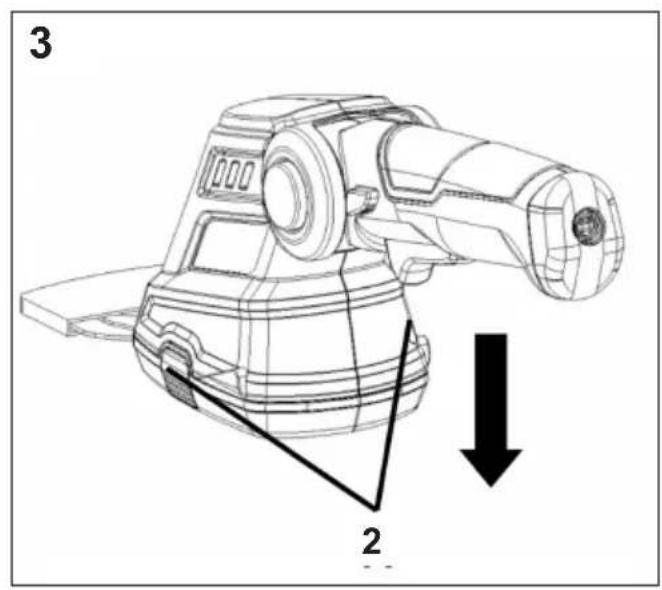
text_image
3 2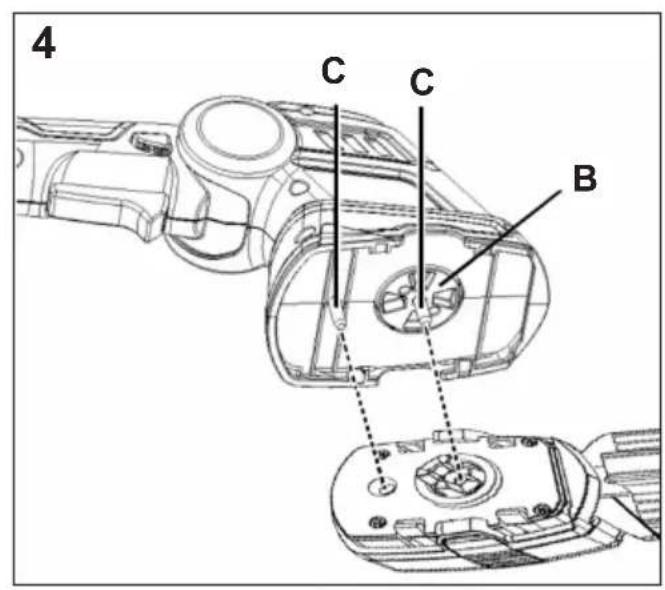
text_image
4 C C B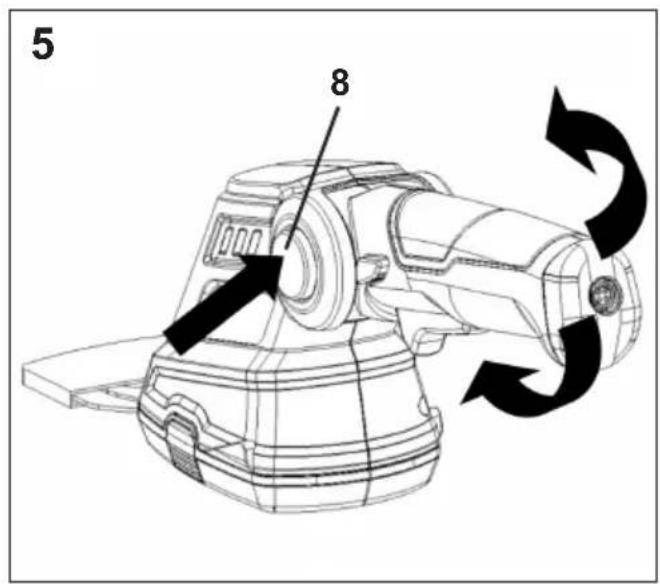
text_image
5 81 Warning!
2 After-running of the appliance!
3 Read the operation instructions
4 Do not use tool in wet weather conditions
5 Keep third persons out of the danger zone
6 Attention: Environmental Protection! This device may not be disposed of with general/household waste. Disposeof only at a designated collection point.
7 Protection class III
8 Confirms the conformity of the power tool with the directives of the European Community.
9 Guaranteed acoustic capacity level L WA 87 dB(A)
10 Rechargeable battery contains lithium! Recycle defective rechargeable batteries!
11 Polarity of the plug connector
12 Only for indoor use.
13 Protection class II
IT
64839 Münster, Germany
GB | Operating Instruction
We have created this instruction manual for you in order to ensure the reliable operation of your clippers. By following the instructions, your machine will always work to your satisfaction and we can guarantee its long lifetime.
Our machines were tested under extremely severe conditions prior to production. They were also subjected to continuous testing during production. This series of tests guarantees the consumer a high quality product.
Design and performance are subject to change, without prior notice, due to improvements.
CONTENT Page
Illustrations 1 - 3
Pictogram illustration and explanation 4 - 7
Technical Specifications GB-2
Intended use GB-3
General safety instructions GB-3
Before starting GB-7
Charging the battery GB-7
Switching the tool on/off GB-7
Hints for your work with the tool GB-7
Changing the blades GB-8
When you adjust the handle angle GB-8
Maintenance GB-8
Storage GB-8
Waste disposal and environmental protection GB-8
Spare parts GB-8
Warranty GB-8
Declaration of Conformity GB-9
Service
GB | Operating Instruction
Accu Grass- and Shrub shear IGBS 3.6 USB
Technical Specifications
| Battery voltage/operation voltage | V DC | 3,6 |
| Battery type | Ah / Wh | 1,3 / 4,68 / lithium-ion |
| Operating time | min. | max. 35 |
| No-load Speed n_0 | rpm | 1000 |
| Cutting width * | mm | 70 |
| Cutting length ** | mm | 115 |
| Cutting thickness ** | mm | 8 |
| Weight | kg | 0,6 |
| Measured Acoustic capacity level | dB(A) | 83 k=3,0 dB (A) |
| Noise pressure level as per (DIN EN 60745-2-15) | dB (A) | 73 k=3,0 dB (A) |
| Vibrations (DIN EN 60745-2-15) | m/s^2 | <2,5 |
| Mains battery charger | ||
| Mains voltage | V~ / Hz | 100-240 / 50/60 |
| Charging voltage | V DC | 5,0 |
| Charging current | mA | 1000 |
| Charging time | h | approx 1,5 hours |
* Grass trimmer ** Shrub trimmer
- The specified vibration emission value was measured by a standardized test methods and can compare with other power tools are used.
- The specified vibration emission value can also be necessary for the assessment of work breaks are used.
- The specified vibration emission value can vary during the actual use of the electric tool by specifying the value, depending on the way how to use the power tool.
- Note: You create the privilege against vascular pulsations of the hands in time breaks.
- Try to keep the stress due to vibration as low as possible. For example, measures to reduce vibration stress are wearing gloves when using the tool and limiting the work time. All phase of the operating cycle must be considered in this regard, (for example, times when the power tool is switched off, and times when the power tool is switched on but is not running under load).
- Always keep hands and feet away from the cutting tools, particularly when switching on the motor!

Attention: Noise protection! Please observe the local regulations when operating your device
Intended use
As required, this device may be converted via simple replacement of the included attachments into grass shears or bush shears.
Hints for your work with the tool
The shrub trimmer cuts ornamental shrubs and light undergrowth or bushes. The device is also well-suited for ornamental cuts as, for example, for the care of graves.

The battery-powered grass and shrub shear can not and should not replace your hedge shears.
They are exclusively designed to trim and cut back ornamental shrubs and brush- wood with a low wood thickness. Any other use is not deemed appropriate and the manufacturer/ supplier is not liable for damages resulting from such use.
Please note that our equipment has not been designed for use in commercial, trade or industrial applications. Our warranty will be voided if the machine is used in commercial, trade or industrial businesses or for equivalent purposes.
Important! It is prohibited to use the tool to chop material for composting because of the potential danger to persons and property.
The grass shears allow for clean cuts of lawn edges or hardly accessible lawn areas.
Each type of use other than those given in these instructions for use can damage the machine and cause serious risk to the user.
Please always observe the safety instructions in order to safeguard your guarantee claim and in the interests of product safety. Due to the machine's design, we are unable to fully exclude all residual risks.
Residual dangers
Residual risks always remain even if the hedge trimmer is used properly. The hedge trimmer's design can entail the following hazards:
- Contact can be made with the unprotected blade (resulting in cutting injuries)
- Reaching into or grabbing the hedge trimmer while it is in operation (resulting in cutting injuries)
- Unanticipated, sudden movement of the plant material being cut (resulting in cutting injuries)
- Ejection or catapulting of damaged cutting teeth
- Ejection or catapulting of the plant material being cut
- Hearing damage if the specified hearing protection is not worn
• Inhalation of cut materials
Important!
When using the equipment, a few safety precautions must be observed to avoid injuries and damage. Please read the complete operating instructions and safety regulations with due care. Keep this manual in a safe place, so that the information is available at all times. If you give the equipment to any other person, hand over these operating instructions and safety regulations as well. We cannot accept any liability for damage or accidents which arise due to a failure to follow these instructions and the safety instructions.
General safety instructions
Attention! Read all instructions contained herein. Failure to observe the following instructions may result in electric shock, burns and/or severe injury. The term ‘power tool’ used in the following includes both mains-operated tools (with mains supply) and battery-operated tools (without mains supply).
KEEP THESE INSTRUCTIONS CAREFULLY!
1) Working area
a) Keep your working area clean and tidy. Untidy and poorly lit working areas may lead to accidents.
b) Do not operate the tool in potentially explosive environments containing combustible fluids, gases or dusts. Power tools generate sparks that may ignite dusts or fumes.
c) Keep children and other persons away when you are operating the power tool. Distractions may result in the operator loosing control over the tool.
2) Electrical safety
a) The mains plug of the power tool must fit into the mains socket. The plug must not be modified in any way. Do not use adapter plugs/connectors in combination with tools with protective earthing. Unmodified plugs and fitting sockets reduce the risk of electric shock.
b) Avoid physical contact with earthed surfaces as pipes, heaters, ovens and refrigerators. There is an increased risk of electric shock if your body earthed.
c) Keep the tool out of the rain. The penetration of water into a power tool increases the risk of electric shock.
d) Do not use the cable to carry or hang up the tool or to pull the plug out of the socket. Keep the cable away from heat, oil and sharp edges or moving parts of the tool. Damaged or tangled cables increase the risk of electric shock.
e) When operating a power tool outdoors, use exclusively extension cables that are approved for outdoor-use. The use of an extension cable that is suitable for outdoor use reduces the risk of electric shock.
3) Personal safety
a) Always pay attention to what you do and apply reasonable care when working with a power tool. Do not use the tool when you are tired or under the influence of medication, drugs or alcohol. When working with power tools even a short moment of inattentiveness may result in severe injury.
b) Wear personal protection equipment and always wear eye protection (safety goggles). Wearing personal protection equipment as a dust mask, nonslip safety shoes, safety helmet or ear protectors (depending on the type and use of the tool) reduces the risk of injury.
c) Avoid unintentional activation. Ensure that the electrical tool is switched off before you connect it to the power supply and/or the battery, pick it up, or carry it. If you have your finger on the switch while carrying the electrical tool or connect the device to the power supply with the switch activate, then this may cause accidents.
d) Avoid unintentional operation. Make sure that the switch is in 'OFF' position before pulling the plug from the mains socket. When carrying the tool with your finger on the on/off switch or connecting the tool to the mains supply with the switch in 'ON' position, this may result in accidents.
e) Remove adjustment tools or wrenches and the like before you switch the tool on. A wrench or another tool that is inside or on a turning part of the tool may cause injury.
f) Do not overestimate your abilities. Take care of a safe footing and keep your balance at all times. This will allow you to bet-
ter control the tool in unexpected situations.
g) Wear suitable clothes. Do not wear wide clo-thing or jewellery. Keep your hair, clothes and gloves clear of all moving parts. Loose clothing, jewellery or long hair may get caught in moving parts.
h) If dust extraction/collection devices are provided make sure that they are connected and used properly. The use of these devices reduces hazards caused by dust.
4) Careful handling and use of power tools
a) Do not overtax the power tool. Use the power tool intended for your type of work in each case. The use of the suitable power tool within the stated range of performance makes working more effective and safer.
b) Do not use a power tool with a damaged switch. A power tool that cannot be switched on or off any more is dangerous and must be repaired.
c) Pull out the plug connector from the socket and/or remove the battery before you change the device settings, change accessories, or put away the device. These care instructions prevent the device from starting unintentionally.
d) Store power tools out of the reach of children. Do not allow persons to use the tool if they are not familiar with the tool or these instructions. Power tools are dangerous if used by inexperienced persons.
e) Thoroughly maintain your power tool. Check whether moving parts are working properly and are not jamming/sticking, and whether parts are broken or otherwise damaged in a way that affects the function of the tool. Have damaged parts repaired before using the tool. Many accidents are the result of poorly maintained power tools.
f) Keep cutting tools sharp and clean. Thoroughly looked-after cutting tools with sharp cutting edges are jamming less often and are easier to guide.
g) Use power tools, accessories, add-on tools, etc. in accordance with these instructions and in the way prescribed for the respective type of tool. You should
also consider the working conditions and the work to be carried out. The use of power tools for purposes other than those intended for the respective tool may result in dangerous situations.
5) Appropriate handling and use of battery-operated power tools
a) Make sure that the device has been switched off before inserting the battery. Inserting a battery into a switched-on power tool may lead to accidents!
b) Only use charging devices recommended by the manufacturer to charge the batteries. Charging units are usually designed for certain types of batteries; if used with other types there is a risk of fire!
c) Only use batteries designed for your power tool. The use of other batteries may lead to injury and risk of fire!
d) Keep unused batteries clear of paper clips, coins, keys, nails, screws or other small metal objects that may bridge the contacts. A short circuit between the battery contacts may lead to burns or fire!
e) Improper use may result in fluid leaking out of the battery. Avoid any contact with battery fluid. Flush with water in case of contact. If battery fluid should get into your eyes seek medical advice additionally. Leaking battery fluid may lead to irritations of the skin or burns!
6) Service
a) Have the power tool serviced by qualified technical personnel only; repairs should be carried out using exclusively original spare parts. This will ensure the safe operation of the power tool.
Safety instructions for grass- and shrub shear:
-
Keep all parts of your body away from the cutting blades. Do not try to remove cut-off matter with the tool running. Do not try to hold material to be cut off with your hand.
Remove cut-off matter that is stuck between the blades only with the tool being switched off! When working with hedge trimmers even a short moment of inattentiveness may result in severe injury. -
Carry the hedge trimmer at the handle with the cutting blades standing still. Always put on the protection cover when transporting or storing the hedge trimmer. Careful handling reduces the risk of injury through the cutting blades.
-Only hold the power tool on the insulated handle surfaces, because the cutting blade can come into contact with concealed power lines. If the cutting blade comes into contact with an energised line, device parts can become energised and cause an electric shock.
-Before starting work, search the hedge for concealed objects, e.g. wire, etc. Pay careful attention to ensure that the cutting tool does not come into contact with wire or other metal objects.
-Hold the power tool properly, e.g. with both hands on the handles, if two handles are present. Losing control of the device can result in injuries.
Grass shears safety warning
- This product is not intended for use by persons (including children) with reduced physical, sensory or mental capabilities, or lack of experience and knowledge.
- This machine may cause serious injuries. Please read the instruction manual carefully as to the correct handling, the preparations, the maintenance and the proper use of the hedgetrimmer. Familiarize yourself with the machine before the first use and also have yourself introduced to practical use of the machine.
- The cutting tool continues to run after the device is switched off.
- Turn off power before cleaning.
- Beware! Keep your fingers away from the cutting area!
- Only switch on the device if your hands and feet are away from the cutting tools.
- Remove all debris from the working area before use and pay attention to such debris while working!
- Turn the machine off before transporting and wait until the blade stops moving. Maintenance and cleaning should be performed only when the machine is turned off.
• Children and teenagers under 16 years of age must never use this device!
- Never permit children or persons who are not familiar with the operating instructions to use this device.
- Statutory regulations can restrict the age of the operator.
- Be aware of third persons in the work area.
- Use of the machine must be prevented is people, especially children and house pets are present.
- Only use the shear in daylight or sufficiently bright artificial illumination.
- The clippers must be subjected to regular maintenance and checks. Damaged blades must be replaced as a pair. Professional repair is required if damage occurs due to impact.
- The machine should be inspected and maintained regularly by a responsible repair service only.
- Wear suitable working clothes, i.e. protective glasses, protective means for ears, non-slippery shoes and working gloves. Do not wear broad clothes which could be caught by the moving parts.
- After you finish using the clippers and before cleaning them, it is necessary to ensure that the machine cannot be accidentally turned on, such as by unlocking the switch.
- Check the cutting unit regularly for damage
- Never hold the clippers by the blades, you may run the risk of injury even when the clippers are not moving!
- Never touch moving blades in an attempt to remove debris or if the blades are blocked. Always switch off the device.
- Keep the machine away from children and store it in a safe place.
- When working with the shears, always take a stable standing position, particularly when you are using steps or a ladder.
- Do not use shears with a damaged or excessively worn-out cutting part
- Ensure that all protective devices and handles are installed on the machine. Never try to put an incomplete machine in operation.
- Always use the protective part designed for the blade when transporting and storing the shears.
- Before starting the work, make yourself familiar with the surroundings and possible dangers which you may not hear because of the noise.
- Only use the spare sparts and accessories recommended by the manufacturer.
- Note that the user shall be responsible himself for accidents and hazards that result to other people or their property.
- Prior to using the machine, inspect it visually for damaged, missing, or incorrectly attached protective devices or coverings.
- Never use the machine with damaged coverings or protective devices or without the covering or protective devices.
- Eye protection, long pants, and sturdy footwear must be worn the entire time the machine is used.
- The machine should not be used in case of poor weather conditions, especially in case of lightning.
• Always switch off the machine - if the machine is left unattended.
- before inspecting or working on the machine
- after contact with foreign objects
- if the machine begins to vibrate strangely
- Always ensure that the ventilation openings are kept free of foreign objects.
- Always maintain your balance to stand securely on slopes. Walk, don't run.
- Warning! Do not touch moving dangerous parts before the machine has been switched off and the moving dangerous parts have come to a complete standstill.
- A tingling feeling or numbness in the hands is sign of excessive vibration. Limit the operating time, take sufficiently long work breaks, distribute the work between several people or wear anti-vibration gloves when using the tool for extended periods.
Before starting
Items supplied
- Open the packaging and take out the equipment with care.
- Remove the packaging material and any packaging and/or transportation braces (if available).
- Check to see if all items are supplied.
- Inspect the equipment and accessories for transport damage.
- If possible, please keep the packaging until the end of the guarantee period.
Important! The equipment and packaging material are not toys. Do not let children play with plastic bags, foils or small parts.

There is a danger of swallowing or suffocating!
Charging the battery
Safety Instructions:
- When the hedge shears are delivered, the replaceable battery is not charge. Before starting the machine for the first time, the battery must be charged
- Use the included charging unit for charging the battery only. It is specially designed to match the tool's battery.
- Connect the battery charger only to mains with such a voltage as stated on the type-bearing plate.
- Never use other charging unit. This will result in fire and/or explosion hazard!
- Always keep the charging unit clear of rain or moisture. Hazard of electric shock! - Never charge the battery in the open without protection, always choose a dry, protected place.
- Never try to charge third-party batteries with this charging unit. This will result in fire and/or explosion hazard!
- Check the housing, plug and cable for damage before each use of the charging unit. Do not use the unit if you detect damage.
- Do not open the charging unit by force. In case of a defect, the charging unit must be replaced.
- The charging unit heats up during the charging process. Do not place the unit on a flammable surface or operate it in a flammable environment. Fire hazard!
- Never open the battery cells. Hazard of short circuits!
- In case of damage to the battery, hazardous vapours or fluids may escape. In case of incidental contact flush with water and seek medical advice immediately. The fluid may have irritating or caustic effects on the skin.
- Charge the batteries only at a temperature within the range of 10^ C to 40^ C.
-
Store the battery at temperatures up to 30°C only. Higher storage temperatures may result in damage to the battery. The ideal storage temperature range is 10-15°C.
-
Protect the battery from heat, intense insolation and fire. Explosion hazard!
- The battery is equipped with a deep-discharge protection feature: the tool is automatically switched off if the battery is discharged. Recharge the battery immediately if this should be the case.
- Before storing the batteries for the wintertime, charge them fully once more.
Charging the battery pack
- Connect the charger to the charging station (Fig. 2).
- Check that your mains voltage is the same as that marked on the rating plate of the battery charger.
- Plug the battery charger in a socket-outlet. The red LED (Fig. 2 / Item A) comes on to indicate that charging voltage is available.
- The battery pack is being charged. An empty battery pack requires a maximum charging period of 1.5 hours. The temperature of the battery pack may rise slightly during the charging operation. This is normal.
- As soon as battery pack is fully charged, the red LED (Fig. 2/Item A) extinguishes. If the rechargeable battery fails to charge, check whether there is voltage at the socket outlet.
Timely recharging of the battery pack will help it serve you well for a long time.
Recharging is always necessary when you notice a drop in the tool's performance.
Never allow the battery pack to become fully discharged. This will cause it to develop a defect.
Alternatively the device can also be charged via USB cable on a computer or something similar.
Switching the tool on/off (Fig. 1)
Press the safety lock (3) and activate switch (4). After the tool has been switched on, you do not have to hold the switch-on lock (3) any longer.
To switch off just let go of the switch (4).

Attention! The blades will coast for a certain time after switch-off!
Hints for your work with the tool

As the device is operated with one hand please be careful not to move the other hand near the running cutting tools.
Cutting grass
The area to be cut must first be cleared of stones and other solid objects.
Allow the grass cutter to glide above the ground. The best results are achieved when the lawn is dry.
When you notice a drop in cutting performance, recharge the tool immediately so that the battery does not become fully discharged.
Trimming hedges
- The tool can be used to trim small hedges and shrubs.
- Hold the tool slightly tilted in relation to the hedge you want to cut.
- First cut the sides from the bottom up, then cut the top.
- Watch out for foreign objects in or on the hedge which could damage the blades.
When is the best time to trim hedges?
- As a general rule, hedges which lose their leaves in the autumn should be trimmed in June and October.
- Hedges which do not lose their leaves should be cut in April and August.
Changing the blades

Caution! Risk of injury!
To protect against injuries, slide the provided blade guard over the blade and wear protective gloves.
To remove the blade, press the release mechanism (Fig. 3 /Item 2) and move down the blade as shown in Fig. 3.
Once you have removed the blade you will be able to see the toothed wheels of the gear unit (Fig. 4). Make sure that no dirt gets into the gear unit when you change the blade.
To assemble, proceed in the reverse order. The guide pins (C) must fit into the corresponding receptacles on the back of the blade.
Adjust the handle angle
- Push inside the rotation button then rotate the machine handle. Fig. 5
- There have 3 position between handle and housing.
- When you chosen the position what you want, then release the rotation button.
Maintenance
Clean the blade from any crushed plants and dirt. The blades should be detached at least once a season for the removal of debris.
Warning! The leading edges of the blades must be oiled to ensure proper lubrication. If the leading edges are not oiled, blade durability may be adversely affected.
If the cutting tools have become dull after long use please replace them with original spare parts.
Clean the device using only a brush or cloth. Do never wash down the device with water and do never dip the device into water.
Apply protective spray to the blades after each use.
Replace blunt blades.
Always put on the blade guard after use.
Examine the tool for obvious defects and have it repaired in an authorised service shop if required.
Storage
Always store the tool in a dry, clean place outside the reach of children. Make sure that the place of storage is frost-free.
Waste disposal and environmental protection

Please observe the following directions for the disposal of your accumulator/battery.
Batteries are not to be put into the rubbish. As a consumer you are legally obliged to return used batteries and accumulators.

At the end of the duration of your apparatus, the batteries or accumulators have to be taken from the apparatus, disposing of them separately.
You have the possibility of delivering your old batteries and accumulators to the local collecting points of your municipality or to your dealer or to the distribution centers.
If your device should become useless somewhere in the future or you do not need it any longer, do not dispose of the device together with your domestic refuse, but dispose of it in an environmentally friendly manner.
Please dispose of the device itself at an according collecting/recycling point. By doing so, plastic and metal parts can be separated and recycled. Information concerning the disposal of materials and devices are available from your local administration.
Spare parts
If you need accessories or spare parts, please contact our Service department.
When working with this tool, do not use any accessory parts other than those recommended by our company. Otherwise the operator or others in the vicinity could suffer serious injuries, or the tool could be damaged.
The following information should be provided when ordering spare parts:
- Type of machine
- Item number of the machine
Warranty
For this tool, the company provides the end user - independently from the retailer's obligations resulting from the purchasing contract - with the following warranties:
The warranty period is 24 months beginning from the hand-over of the device which has to be proved by the original purchasing document. For commercial use and use for rent, the warranty period is reduced to 12 months. Wearing parts, rechargeable batteries and defects caused by the use of non fitting accessories, repair with parts that are not original parts of the man-
ufacturer, use of force, strokes and breaking as well as mischievous overloading of the motor are excluded from this warranty. Warranty replacement does only include defective parts, not complete devices. Warranty repair shall exclusively be carried out by authorized service partners or by the company's customer service. In the case of any intervention of not authorized personnel, the warranty will be held void.
All postage or delivery costs as well as any other subsequent expenses will be borne by the customer.
EC Declaration of Conformity
We, ikra GmbH, Schlesierstrasse 36, 64839 Münster, Germany, declare under our sole responsibility that the product/s Accu-Grass- und Shrub shear IGBS 3.6 USB, to which this declaration relates correspond to the relevant basic safety and health requirements of Directives 2006/42/EC (Machinery Directive), 2014/30/EU (EMC-Guideline), only charger: 2014/35/EU (Low Voltage Guideline), 2011/65/EU (RoHS-Guideline) and 2000/14/EC+2005/88/EC (noise directive) incl. modifications. For the relevant implementation of the safety and health requirements mentioned in the Directives, the following standards and/or technical specification(s)
have been respected:
EN 60745-1:2009+A11:2010
EN 60745-2-15:2009+A1:2010
EN 60335-1:2012/A11:2014; EN 50636-2-94:2014
EN 62233:2008, EN 50581:2012
AfPS GS 2014:01 PAK
EN 55014-1:2017
EN 55014-2:2015
Only charger:
EN 60335-2-29:2004+A2:2010
EN 60335-1:2012+A11:2014
EN 62233:2008
EN 55014-1:2006+A1+A2; EN 55014-2:1997+A1+A2
EN 61000-3-2:2014; EN 61000-3-3:2013
measured acoustic capacity level 83,0 dB (A)
guaranted acoustic capacity level 87,0 dB (A)
Conformity assessment method to annexe V / Directive 2000/14/EC
The year of manufacture is printed on the nameplate and can be additionally retrieved via the consecutive serial number.
Münster, 03.12.2018
Matthias Fiedler, Senior Product Manager Ikra GmbH
Maintenance of technical documentation:
64839 Münster, Germany
Drujba1, 5038 Str, near block 86a 1592 Sofia
+359 2 4830225
+359 2 9786477
markovad@dezmomotors.com
11 Othellos Street, Dali Industrial Zone
2540 Nicosia
+357 22667908
+357 22667157
info@lambrouagro.com.cy
CZ | Drupol, výrobní družstvo ul. Miru 701
FR | ikra Service France
GB-Northampton, NN3 8RH
UK/N.Ireland: 0344 824 3524
customerservice@b-gr8.co.uk
GR | Panos Vrontanis & Co
3 Molas Street
13679 Aharnes
+30 210 2402020
+30 210 2463300
sales@bulbcenter.gr
HR |VAR - ERCO d.o.o.
Stipana Vilova 14A
10090 ZAGREB
+385 91 571 3164
+385 1 3454 906
var.erco@gmail.com
HU | Tooltechnic Kft.
Budaörsi út 165.
1112 Budapest
+36 1 330 4465
+36 1 283 6550
info@tooltechnic.net
IN | Agritech Floritech Inc.
206 - B Rajindera Arihant Tower
B-1 Community Centre Janak Puri
New Delhi - 110058 / India
+91 11 45662679
+91 11 25597432
info@agrifloritech.com
IR | BGR8 Ltd, c/o Seabourne Group
South Portway Close, Round Spinney
Northampton, NN3 8RH
+353 1890 8823 74
+44 113 385 1115
enquiries@gardenhomepower.com
IT | Ikra Service Italia, by BRUMAR
Loc. Valgera 110/B
14100 ASTI (AT)
+39 0141 477309
+39 0141 440385
brumargp@brumargp.it
JO | Taha & Qashou Agri Co. (LLC)
205 Mekka Street
Amman 11821, Jordan
+962 6 585 0251
+962 6 582 5728
info@tahaandqashou.net
LT I ikra Lithuania
Kalvariju g. 206
08314 Vilnius
+370 641 76434 / +370 6491 5665
parduotuve@fokusgroup.lt
LU | Bobinage Georges Back
53 Rue Nic. Meyers
4918 Bascharage
+352 507622
+352 504889
MK | FEROELEKTRO D.O.O.
Str.Nikola Parapunov br.35A/3
1000 Skopje
+389 2 3063190
+389 2 3063190
fero@t-home.mk
MD | OLSOM S.R.L.
Mateevici Str., 38/1
2009 Chisinau
+373 22 214075
+373 22 225009
olsommtd@googlemail.com
NL | Muldertechniek
Noorderkijl 1
9571 AR 2 e Exloermond
+31 599 745024
+31 599 672650
RO I BRONTO COMPROD S.R.L.
Str. Corneliu Coposu nr. 35-37
400235 Cluj-Napoca
+40 264 435 337
+40 264 406 703
tehnic@bronto.ro
SE | ikra Service Sweden
Verkstadsgatan 8
57341 Tranås
+46 763 268982
ikrawinbladh@gmail.com
SI | BIBIRO d.o.o.
Tržaška cesta 233
1000 Ljubljana
+386 1256 4868
+386 1 256 4867
bibiro.ljubljana@siol.net
SKI AGF Invest s.r.o.
Hliniková 365/39
95201 Vráble
+421 02 62 859549
+421 02 62 859052
info@agfinvest.sk
(LLC "TC "Euroinstrument")
бул. I. Лепсе, 79