BTCSD002 - Screwdriver Batavia - Free user manual and instructions
Find the device manual for free BTCSD002 Batavia in PDF.


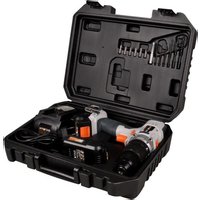
| Product type | Cordless screwdriver with charger |
| Brand | Batavia |
| Model | BTCSD002 |
| Article number | 7061166 |
| Charger dimensions | 54 × 71 × 77 mm |
| Charger weight | 592 g |
| Charger power supply | 230-240 V AC, 50/60 Hz |
| Charger output voltage | 4.6 V DC |
| Charger power consumption | 40 W |
| Charging time | Approximately 60 seconds |
| Battery type | Flash Cell Lithium-ion |
| Screwdriver voltage | 4.6 V DC |
| Maximum torque | 2.5 Nm |
| No-load speed | 200 min⁻¹ |
| Chucks and bits | Magnetic bit holder |
| Main functions | Screwing, unscrewing, LED torch, LED work light |
| Handle | Adjustable (pistol or straight) |
| Rotation direction | Reverse switch with middle lock position |
| Sound pressure level | 58.7 dB(A) |
| Sound power level | 69.7 dB(A) |
| Charger protection class | II |
| Maintenance and cleaning | Dry or slightly damp cloth, no abrasive products |
| Storage | Dry place, away from dust and extreme temperatures |
| Safety | Read instructions, use PPE, disconnect before maintenance |
| Warranty | 2 years |
Frequently Asked Questions - BTCSD002 Batavia
User questions about BTCSD002 Batavia
0 question about this device. Answer the ones you know or ask your own.
Ask a new question about this device
Download the instructions for your Screwdriver in PDF format for free! Find your manual BTCSD002 - Batavia and take your electronic device back in hand. On this page are published all the documents necessary for the use of your device. BTCSD002 by Batavia.
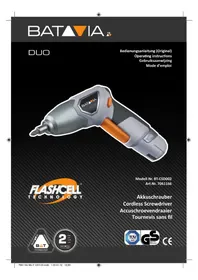
USER MANUAL BTCSD002 Batavia
Operating instructions
Gebruiksaanwijzing
Mode d'emploi
FLASHCELL TECHNOLOGY
Cordless Screwdriver
Safety Instructions 11
Intended Use 14
Before first Use. 14
Charging the Flash Cell Screwdriver.....14
Inserting/Replacing the Screw Bit. 15
Using the Twist-Grip 15
Switching ON and OFF/Screwing. 15
Light Attachment. 16
Cleaning and Storing. 16
Technical Data. 16
Disposal and Recycling 17
EC-Declaration of conformity. 17
Inhoudsopgave
Meppel, den 01. November 2011
Instruction manuals provide valuable hints for using your new device. They enable you to use all functions, and they help you avoid misunderstandings and prevent damage. Please take the time to read this manual carefully and keep it for future reference.
You will find the following icons on the tool:

WARNING - Refer to user manual

Dispose of the tool according to regulations
You will find the following icons on the charger:

Only intended for indoor use
IP20 Protection class: IP 20

WARNING - Refer to user manual

Dispose of the charger according to regulations
SAFETY INSTRUCTIONS

WARNING! Read all instructions
Failure to follow all instructions listed below may result in electric shock, fire and/or serious injury.
The term "power tool" in all of the warnings listed below refers to your mains operated (corded) power tool or battery operated
BATVIA TM
(cordless) power tool. Save these instructions for future reference!
1. Work area
a) Keep work area clean and well lit. Cluttered and dark areas invite accidents.
b) Do not operate power tools in explosive atmospheres, such as in the presence of flammable liquids, gasses or dust. Power tools create sparks which may ignite the dust of fumes.
c) Keep children and bystanders away while operating a power tool. Distractions can cause you to loose control.
2. Electrical safety
a) Power tool plugs must match the outlet. Never modify the plug in any way. Do not use any adapter plugs which earthed (grounded) power tools. Unmodified plugs and matching outlets will reduce risk of electric shock.
b) Avoid body contact with earthed or grounded surfaces such as pipes, radiators, ranges and refrigerators. There is an increased risk of electric shock if your body is earthed or grounded.
c) Do not expose power tools to rain or wet conditions. Water entering a power tool will increase the risk of electric shock.
d) Do not abuse the cord. Never use the cord for carrying, pulling or unplugging the power tool. Keep cord away from heat, oil, sharp edges or moving parts. Damaged or entangled cords increase the risk of electric shock.
e) When operating a power tool outdoors, use an extension cord suitable for outdoor use. Use of a cord suitable for outdoor use reduces the risk of electric shock.
f) Always use tool in conjunction with a residual circuit breaker device. The
use of a residual circuit breaker device reduces the risk of electric shock.
3) Personal safety
a) Stay alert, watch what you are doing and use common sense when operating a power tool. Do not use a power tool while you are tired or under the influence of drugs, alcohol or medication. A moment of inattention while operating power tools may result in serious personal injury.
b) Use safety equipment. Always wear eye protection. Safety equipment such as dust mask, non-skid safety shoes, hard hat, or hearing protection used for appropriate conditions will reduce personal injuries.
c) Avoid accidental starting. Ensure the switch is in the off position before plugging in. Carrying power tools with your finger on the switch or plugging in power tools that have the switch on invites accidents.
d) Remove any adjusting key or wrench before turning the power tool on. A wrench or a key left attached to a rotating part of the power tool may result in personal injury.
e) Do not overreach. Keep proper footing and balance at all times. This enables better control of the power tool in unexpected situations.
f) Dress properly. Do not wear loose clothing or jewellery. Keep your hair, clothing and gloves away from moving parts. Loose clothes, jewellery or long hair can be caught in moving parts.
g) If devices are provided for the connection of dust extraction and collection facilities, ensure these are connected and properly used. The use of these pieces of equipment reduce hazards caused by dust.
EN
- Power tool use and care
a) Do not force the power tool. Use the correct power tool for your application. The correct power tool will do the job better and safer at the rate for which it was designed.
b) Do not use the power tool if the switch does not turn it on and off. Any power tool that cannot be controlled with the switch is dangerous and must be repaired.
c) Disconnect the plug from the power source before making any adjustments, changing accessories, or storing power tools. Such preventive safety measures reduce the risk of starting the power tool accidentally.
d) Store idle power tools out of the reach of children and do not allow persons unfamiliar with the power tool or these instructions to operate the power tool. Power tools are dangerous in the hands of untrained users.
e) Maintain power tools. Check for misalignment or binding of moving parts, breakage of parts and any other condition that may affect the power tools operation. If damaged, have the power tool repaired before use. Many accidents are caused by poorly maintained power tools.
f) Keep cutting tools sharp and clean. Properly maintained cutting tools with sharp cutting edges are less likely to bind and are easier to control.
g) Use the power tool, accessories and tool bits etc., in accordance with these instructions and in the manner intended for the particular type of power tool, taking into account the working conditions and the work to be performed. Use of the power tool for operations different from intended could result in a hazardous situation.
- Battery tool use and care
a) Recharge only with the charger specified by the manufacturer. A charger that is suitable for one type of battery pack may create a risk of fire when used with another battery pack.
b. Use power tools only with specifically designated battery packs. Use of any other battery packs may create a risk of injury and fire.
c. When battery pack is not in use, keep it away from other metal objects, like paper clips, coins, keys, nails, screws or other small metal objects, that can make a connection from one terminal to another. Shorting the battery terminals together may cause burns or a fire.
d. Under abusive conditions, liquid may be ejected from the battery; avoid contact. If contact accidentally occurs, flush with water. If liquid contacts eyes, additionally seek medical help. Liquid ejected from the battery may cause irritations or burns.
- Service
a) Please use a qualified expert who uses original replacement parts to repair your power tool. This will ensure proper functioning of the power tool.
- Safety warnings for battery chargers Keep the battery charger away from rain or moisture. Penetration of water in the battery charger increases the risk of an electric shock.
a) Only charge lithium ion batteries or batteries installed in Batavia products with the voltages listed in the technical data. Otherwise there is danger of fire and explosion.
b) Keep the battery charger clean. Contamination can lead to danger of an electric shock.
c) Before each use, check the battery
BATVIA TM
charger, cable and plug. If damage is detected, do not use the battery charger. Never open the battery charger yourself. Have repairs performed only by a qualified technician and only using original spare parts. Damaged battery chargers, cables and plugs increase the risk of an electric shock.
d) Do not operate the battery charger on easily inflammable surfaces (e. g., paper, textiles, etc.) or surroundings. The heating of the battery charger during the charging process can pose a fire hazard.
e)Supervise children.This will ensure that children do not play with the charger.
f) Children or persons that owing to their physical, sensory or mental limitations or to their lack of experience or knowledge, are not capable of securely operating the charger, may only use this charger under supervision or after having been instructed by a responsible person. Otherwise, there is danger of operating errors and injuries.
SAFETY WARNINGS FOR SCREWDRIVER
- Hold power tool by insulated gripping surfaces, when performing an operation where the fastener may contact hidden wiring. Fasteners contacting a "live" wire may make exposed metal parts of the power tool "live" and could give the operator an electric shock.
- Hold the machine with a firm grip. High reaction torque can briefly occur while driving in and loosening screws.
Always wait until the machine has come to a complete stop before placing it down. The tool insert can jam and lead to loss of control over the power tool. - Before any work on the machine (e. g., maintenance, tool change, etc.) as well as during transport and storage,
set the rotational direction switch to the centre position. Unintentional actuation of the On/Off switch can lead to injuries.
- Protect the power tool against heat, e.g., against continuous intense sunlight, fire, water, and moisture. Danger of explosion.
- In case of damage and improper use of the battery, vapours may be emitted. Provide for fresh air and seek medical help in case of complaints. The vapours can irritate the respiratory system.
INTENDED USE
This flash cell screwdriver has been developed for private use. It is not designed for the demands of industrial use.
- The device is intended for driving in and loosening screws in wood, metal, ceramic and plastic.
- The intended use also includes an operation following the operating instructions.
- Any use beyond these parameters (different media, applying force) or any changes (reconstruction, no original accessory) can lead to serious risks and is regarded as use that is contrary to the intended purpose.
Note: this charger is not suitable for charging non-rechargeable batteries.
BEFORE FIRST USE
- Remove the cordless screwdriver and the accessory out of the packaging.
- Check all parts for damage in transit and do not use damaged accessory or a damaged tool.
- Keep packaging materials out of reach of children. There is risk of suffocation!
CHARGING THE FLASH CELL SCREWDRIVER
The outstanding feature of this cordless screwdriver is very quick charging technology. The screwdriver's flash cell already is fully
EN
charged after only 60 seconds. This way it is ready for use all the time.
Regardless of the charging condition, the flash cell screwdriver can be charged at any time without damaging the cells.
Charge the screwdriver before first use.
Note:
The charger BT-FCC001 can only be used for the driver BT-CSD002.
-
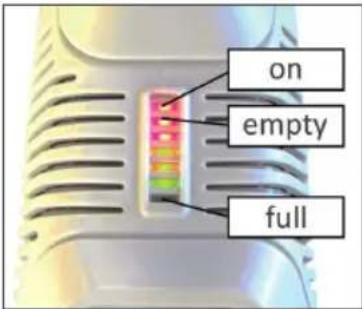
Connect the power cord (5) of the charger (6) with a wall socket. The first LED of the charging LEDs (3) lights up.
-
Put the lower end of the handle of the screwdriver, as pictured on the overview photo, as far as it will go into the charger, by inserting the charging terminals into the corresponding openings of the charger.
-
Depending on the charging state, the corresponding charging LEDs light up and flash. The flash cell is fully charged when all LEDs shine permanently. The screwdriver is ready for use.
Note:
When inserting the screwdriver into the charger, make sure it easily can be placed. Do not use force.
INSERTING/REPLACING THE SCREW BIT
Before changing the screw bit, set the rotating direction button (7) into the middle position to avoid unintentional start-up.
-
Only replace the screw bit when the screwdriver is switched off.
-
Pull out the screw bit from the bit holder (1) and replace it with the desired one. A magnet inside the bit holder holds the screw bit in its place.
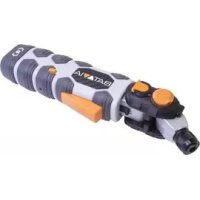
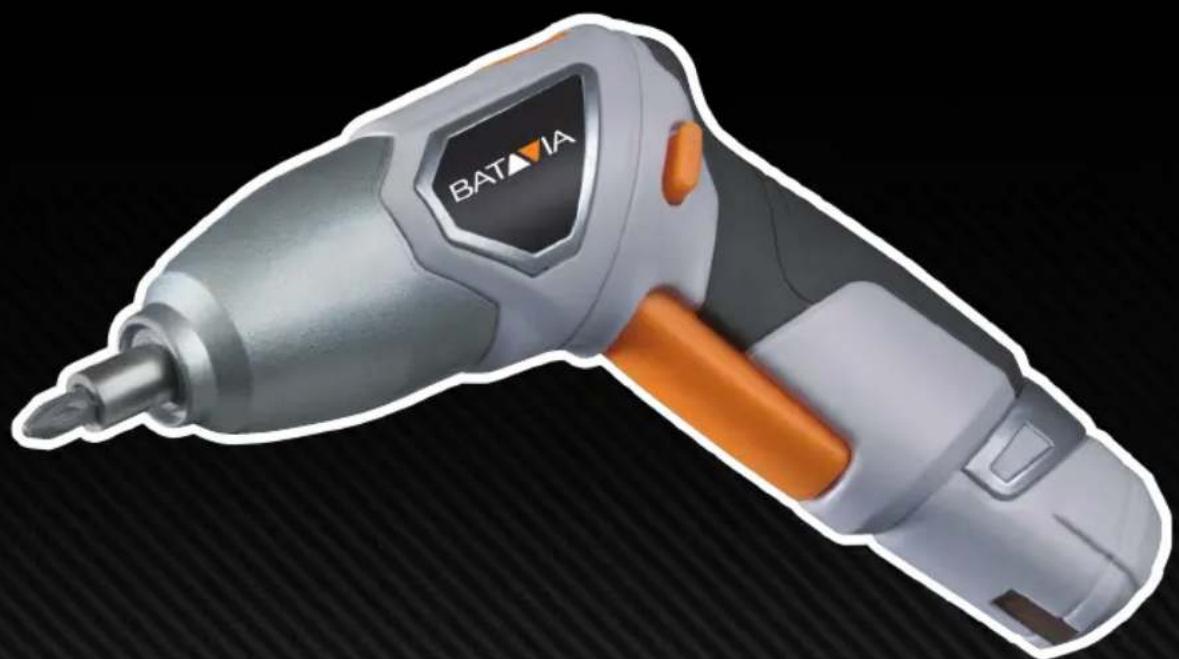
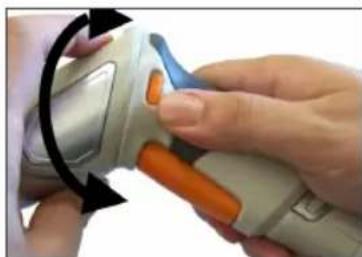
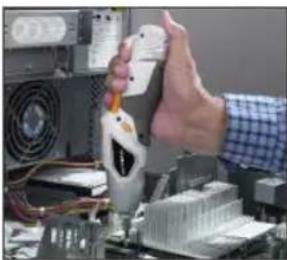
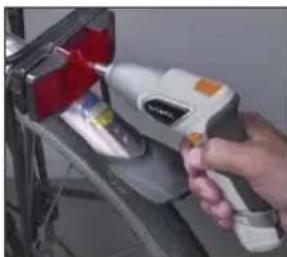
The flash cell screwdriver is equipped with an adjustable twist-grip which can be setup as a straight grip or as a pistol grip. Press the unlocking button (8) at the top of the screwdriver and twist the grip to the desired position.
Straight Grip
Pistol Grip
SWITCHING ON AND OFF/SCREWING
-
Press the ON/OFF trigger (2) to switch on the flash cell screwdriver. Release the trigger to switch off the screwdriver.
-
Use the rotating direction button (7) to reverse the rotating direction. In the middle position the ON/OFF trigger is locked. Set the switch to this position when putting down the machine to avoid an accidental start-up.
-
Before using the machine, check whether the screw bit is inserted correctly. Avoid overtightening as this may damage the screw head or the threads. Press the screw bit against the screw with a constant pressure and drive in the screw.
-
To unscrew, setup a counter clockwise rotating direction. Insert the screw bit into the slot in the head of the screw. Hold the screw-bit straight to the head of the screw to avoid damaging the screw or the screw head. Use a constant pressure when pressing the screw bit against the screw while removing the screw.
- After screwing, always put the flash cell screwdriver into the charger. This way it will be ready for use all the time.
Note:
The rotating direction button can only be pressed, while the ON/OFF trigger is released.
LIGHT ATTACHMENT
- Remove the screwdriver from the charger.
- Put the light attachment (9) from below on the grip of the flash cell screwdriver. Make sure is audibly snaps in.
- Press the ON/OFF switch (12) at the light attachment to switch on the LED torch (11).
- Press the ON/OFF switch (12) again to switch off the LED torch and to switch on the LED work light (10).
- Press the ON/OFF switch (12) a third time to switch off both LED lights.
- Pull off the light attachment straight from the grip of the screwdriver in order to remove it.
Note:
The flash cell screwdriver can only be charged when the light attachment has been removed.
CLEANING AND STORING
- Unplug the charger before cleaning it.
-
Use only a dry or lightly moist cloth to clean the unit. Do not use aggressive chemicals as benzene or thinner, which may dissolve plastic parts, or abrasives.
-
Store the unit at a dry location that is protected from dust, dirt and extreme temperatures. Store it out of reach of children.
TECHNICAL DATA
Charger
Rated Input Voltage 230-240 VAC
Rated Output Voltage 4.6 VDC
Rated Power Input 40 W
Rated Power Output 2.4 A
Charging Time ca. 60 s
Protection Class II
Weight 592 g
Dimensions (Approx.) 54 × 71 × 77 ~mm
Flash Cell Screwdriver
Input 4.6
Conductor 2.3 VDC, 300F (2 pcs)
Max.Torque 2.5Nm
No Load Speed n0 200 min-1
Sound Pressure Level LpA = 58.7 ~dB(A)
Uncertainty K_pA^pA = 3 dB(A)
Sound Power Level L_WA^* = 69.7dB(A)
Uncertainty K_WA = 3 dB(A)
Vibrations a_b HD=0.295 m/s²
Uncertainty K = 1.5m / s
Weight 366
Dimensions (Approx.) 53 × 185 × 145 ~mm
Light Attachment
LEDs 5x
$$ 1 \times \text {L E D w h i t e} $$
Weight 62
Dimensions (Approx.) 54 × 71 × 77 ~mm
The following information:
that the declared vibration total value has been measured in accordance with a standard test method and may be used for comparing one tool with another;
that the declared vibration total value may also be used in a preliminary assessment of exposure.
EN
A warning:
- that the vibration emission during actual use of the power tool can differ from the declared total value depending on the ways in which the tool is used; and
- of the need to identify safety measures to protect the operator that are based on an estimation of exposure in the actual conditions of use (taking account of all parts of the operating cycle such as the times when the tool is switched off and when it is running idle in addition to the trigger time).
DISPOSAL AND RECYCLING

Do not dispose of electric power tools with domestic refuse.
The tool is shipped in packaging to reduce transport damage. This packaging is a raw material and as such can either be reused or can be fed back into the raw material cycle. The tool and its accessories are made from various materials such as metals and plastics. Take defective components to a special refuse collection point. Ask about these at your specialist shop or local council. The product and the user manual may be subject to changes. Technical data may be changed without prior notice.
EC-Declaration of conformity
We, the Batavia GmbH, Blankenstein 180, NL-7943PE Meppel, declare by our own responsibility that the product Cordless screwdriver, Item-No 7061166, Model Nr. BT-CSD002 is according to the basic requirements, which are defined in the European Directives Electromagnetic Compatibility 2004/108/EC (EMC), 2006/95/EC Low Voltage Directive (LVD) and their amendments. For the evaluation of conformity, the following harmonized standards were consulted: EN 55014-1, EN 55014-2, EN 60745-1, EN 60745-2-2, EN 61000-3-2, EN 61000-3-3, EN 61000-6-3
Meppel, 01 november 2011
Name and address of the person authorised to compile the technical file, who must be established in the Community;
Meino Seinen, QA Director Batavia GmbH, Blankenstein 180, 7943 PE Meppel, The Netherlands
BATVIA TM
Geachte klant
This Batavia product comes with a 2 year warranty
Dear Client, all Batavia products have undergone a strict quality process. If for any reason this product is not working or damaged, please contact our Client Service Centre. Please retain your original receipt of purchase. The Batavia warranty covers all defects in workmanship or materials for a two year period from the date of purchase. The Batavia warranty does not cover any malfunction, or defect resulting from misuse, neglect, alteration, or repair.
Other European countries | Customer Services
Monday till Friday from 8 am until 4 pm
Overige landen Europa | Klantenservice