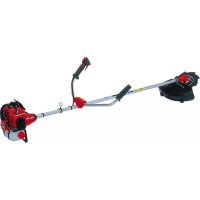
T243XS - Grass trimmer Shindaiwa - Free user manual and instructions
Find the device manual for free T243XS Shindaiwa in PDF.



User questions about T243XS Shindaiwa
0 question about this device. Answer the ones you know or ask your own.
Ask a new question about this device
Download the instructions for your Grass trimmer in PDF format for free! Find your manual T243XS - Shindaiwa and take your electronic device back in hand. On this page are published all the documents necessary for the use of your device. T243XS by Shindaiwa.
USER MANUAL T243XS Shindaiwa
Please ensure that you read the operator's manual before using your product.
Intended use of this product
- Shindaiwa Grass Trimmers/Brushcutters are lightweight, high-performance, petrol engineered units designed for weed control, grass trimming and brush cutting in areas difficult to control by any other means.
- Do not use this unit for any purpose other than aforementioned.
Users of the product
- You should not use this product until you have read the operator's manual carefully and fully absorbed its content.
- This product should not be used by anyone who has failed to read the operator's manual properly, is suffering from a cold, tiredness or otherwise in poor physical condition, or children.
- Keep in mind that the operator or user is responsible for accidents or hazards occurring to other people or their property.
About your operator's manual
This manual contains necessary information about the assembly, operation, and maintenance of your product. Please read it carefully and absorb its contents.
Always keep your manual in a place where it is readily accessible.
If you have lost your manual or it is damaged and no longer readable, please purchase a new one from your shindaiwa dealer.
- The units used in this manual are SI units (International System of Units). Figures in parentheses are reference values, and there may be a slight conversion error in some cases.
Loaning or assigning your product
- When loaning the product described in this manual to another party, ensure that the person borrowing and working with the product receives the operator's manual along with the product. If you assign your product to another party, please enclose the operator's manual with the product when handing it over.
Enquiries
- Please contact your shindaiwa dealer for requests regarding information about your product, the purchase of consumables, repairs, and other such enquiries.
O Notices
- The content of this manual may be changed without notice for the purpose of upgrades to the product. Some of the illustrations used may differ from the product itself in order to make the explanations clearer.
This product requires the assembly of some parts. - Please consult your shindaiwa dealer if anything is unclear or of concern.
Manufacturer:
YAMABIKO CORPORATION
1-7-2 Suehirocho, Ohme, Tokyo 198-8760, JAPAN
Authorized Representative in Europe: CERTIFICATION EXPERTS B.V.
Stationsplein 30, 1382AD Weesp, The Netherlands
For safe use of your product 4
Warning notices 4
Other indicators 4
Symbols 4
Location in which a safety decal is attached.. 6
Handling fuel 6
Handling the engine 7
Handling the product 8
Packing list. 13
Description 14
Before you start 15
Assembly 15
Adjusting the balance 18
Preparing the fuel 19
Engine operation 20
Starting the engine 20
Stopping the engine 21
Trimming operation 22
Basic trimming operation with nylon line cutting head 22
Basic trimming operation with metal blade 24
Precautions to observe when working. 26
Maintenance 27
Daily Maintenance 27
10-Hour Maintenance 27
10/15 Hour Maintenance 27
50-Hour Maintenance 27
135-Hour Maintenance 28
Carburettor adjustment 29
Checking the blade 29
Loading nylon line 30
Long term storage 30
Troubleshooting Guide 32
Specifications 35
Declaration of conformity 36
Be careful to read this section before using your product.
The precautions described in this section contain important safety information. Please observe them carefully.
- You must also read the precautions that appear in the body of the manual itself.
Text following a [diamond mark] mark describes the potential consequences of failing to observe the precaution.
Warning notices
Situations where there is a risk of physical injury to the operator and other people are indicated in this manual and on the product itself by the following warning notices. Always read and observe them carefully in order to ensure safe operation.

DANGER
WAR
RNING

AUTION
This symbol accompanied by the word "DANGER" calls attention to an act or a condition which will lead to serious personal injury or death of operators and bystanders.
This symbol accompanied by the word "WARNING" calls attentions to an act or a condition which can lead to serious personal injury or death of operators and bystanders.

"CAUTION" indicates a potentially hazardous situation which, if not avoided, may result in minor or moderate injury.
Other indicators
As well as warning notices, this manual uses the following explanatory symbols:

Circle and slash symbol means whatever is shown is prohibited.
NOTE IMPORTANT
This enclosed message provides tips for use, care and maintenance of the product.
Framed text featuring the word "IMPORTANT" contains important information about the use, checking, maintenance and storage of the product described in this manual.
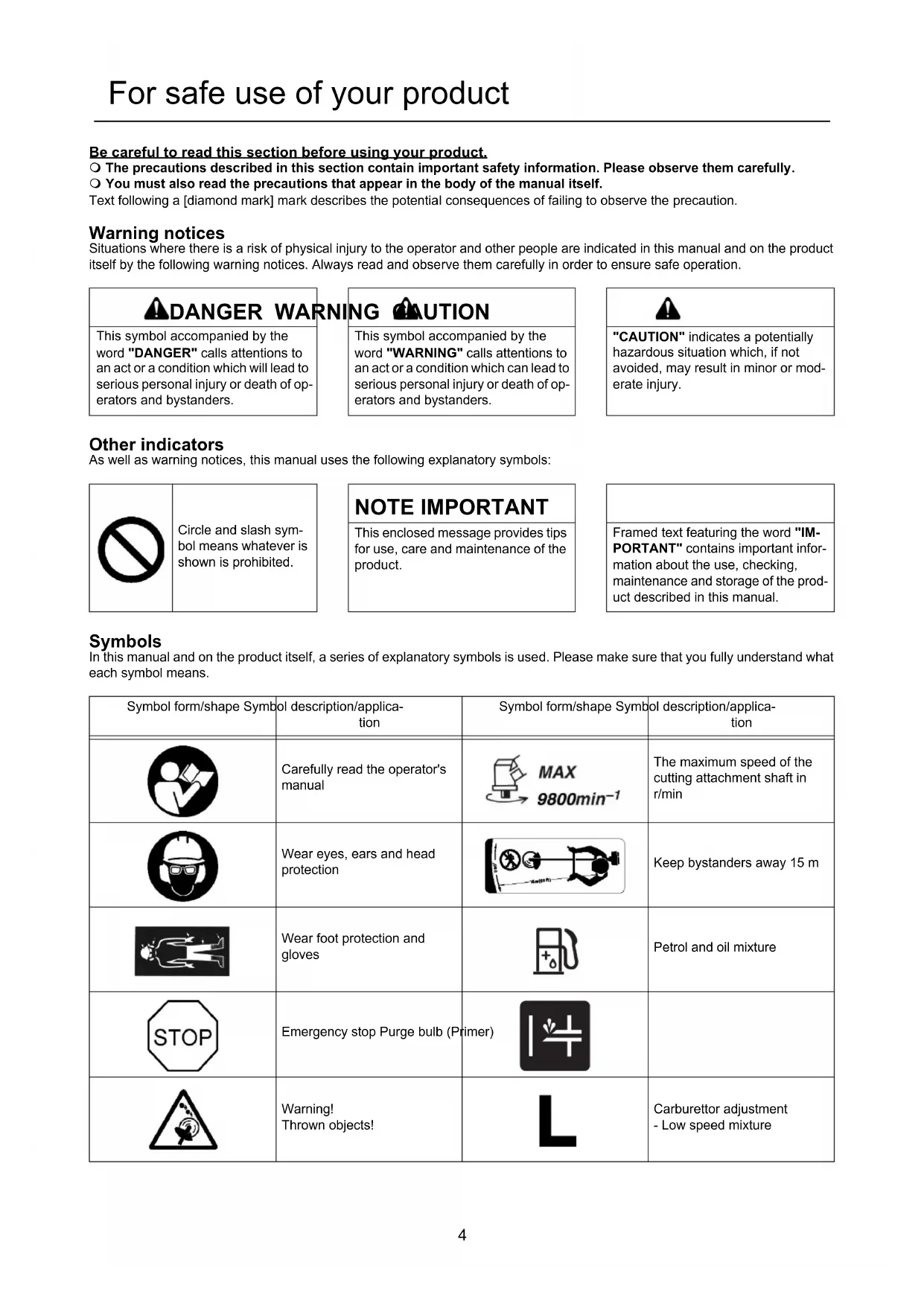
Symbols
In this manual and on the product itself, a series of explanatory symbols is used. Please make sure that you fully understand what each symbol means.
| Symbol form/shape Symbol | description/applica- tion | Symbol form/shape Symbol | description/applica- tion |
| Carefully read the operator's manual | MAX 9800min-1 | The maximum speed of the cutting attachment shaft in r/min | |
| Wear eyes, ears and head protection | Keep bystanders away 15 m | ||
| Wear foot protection and gloves | Petrol and oil mixture | ||
| STOP | Emergency stop Purge bulb (Primer) | ||
| Warning! Thrown objects! | L | Carburettor adjustment - Low speed mixture | |
| Warning, side thrust | H | Carburettor adjustment - High speed mixture | |
| Usage without shield not per- mitted | T | Carburettor adjustment - Idle speed | |
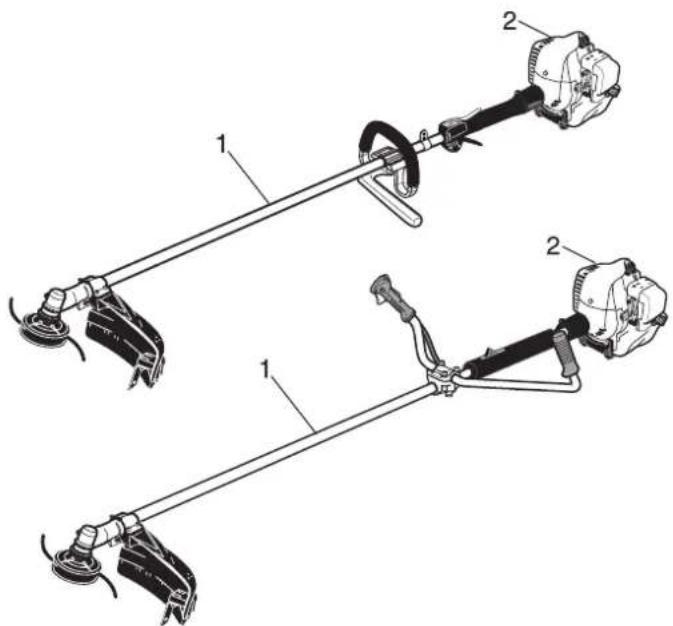
| Usage of metal blades not permitted | L | U-handle | |
| Usage of nylon line cutting head not permitted | Loop handle | ||
| Do not use the product in places with poor ventilation | Beware of high-temperature areas | ||
| Beware of fire | LWA dB | Guaranteed sound power lev- el | |
| Choke Control "Cold Start" Position (Choke Closed) | Choke Control "Run" Position (Choke Open) | ||
| Beware of electric shocks Engine start |
Location in which a safety decal is attached
The safety decal shown below has been attached to the products described in this manual. Ensure that you understand what the decal means before using your product.
If the decal becomes unreadable due to wear and tear or damage, or peels off and is lost, please purchase a replacement decal from your dealer and attach it in the location shown in the illustrations below. Ensure that the decal is readable at all times.

1. Safety decal (Part number 890617-43130)
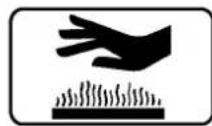
2. Safety decal (Part number X505-002310)
Handling fuel

DANGER
Always keep well away from fire when refuelling
Fuel is highly inflammable and leads to a risk of fire if mishandled. Use extreme care when mixing, storing or handling or serious personal injury may result. Be careful to observe the following instructions.
Do not smoke or hold a flame near when refuelling.
Do not fuel up while the engine is hot or in operation.
If you do so, the fuel could ignite and cause fire, leading to burns.

About the container and refuelling place
Use an approved fuel container.
Fuel tanks/cans may be under pressure. Always loosen fuel caps slowly allowing pressure to equalize.
DO NOT fill fuel tanks indoors. ALWAYS fill fuel tanks outdoors over bare ground.
For safe use of your product
| DANGER |
| Fuel spills can cause fire Observe the following precautions when refuelling: ○ Do not add so much fuel that it reaches the mouth of the fuel tank. Keep the fuel within the prescribed level (up to the shoulder level of the fuel tank). ○ Mop up any fuel that overflows or spills out due to overfilling. ○ Tighten the fuel tank cap securely after refuelling. ◆ Fuel spills can cause fire and burns when ignited. |
| Do not start the engine in the area where you refuelled ○ You must not start the engine in the place where you carried out the refuelling. Move at least 3m from the place where you refuelled before starting the engine. ◆ Fuel leaks that occur while refuelling can cause fire if ignited. |
| Fuel leaks cause fire ○ After refuelling, always check that there are no leaks or discharges of fuel from the fuel pipe, fuel system grommets, or around the fuel tank cap. ○ If you do find fuel leaks or discharges, stop using the product immediately and contact your dealer to have it repaired. ◆ Any fuel leaks could cause fire. |
Handling the engine
| WARNING |
| Starting the engine Be particularly careful to observe the following precautions when starting the engine: ○ Check that none of the nuts and bolts are loose ○ Check that there are no fuel leaks ○ Place the product in a flat, well ventilated place ○ Leave plenty of space around the product and do not allow people or animals near it ○ Start the engine with the throttle trigger in the idle speed position ○ Hold the product firmly to the ground when starting the engine ◆Failure to observe the precautions could cause an accident or injury, or even lead to a fatality. |
| Once the engine has started, check for abnormal vibrations and sounds ○ Check that there are no abnormal vibrations or sounds once the engine starts. Do not use the product if there are abnormal vibrations or sounds. Contact your dealer to have it repaired. ◆Accidents involving parts that fall or shatter off can cause wounds or serious injury. |
| Do not touch high temperature or high voltage components while the product is running Do not touch the following high temperature or high voltage components while the product is running or for some time after it stops. ○ Silencer, spark plug, angle transmission, and other high temperature components ◆You could burn yourself if you touch a high temperature component. ○ Spark plug, spark plug wire, and other high voltage components ◆You could receive an electric shock if you touch a high voltage component while the product is running. |
| Put safety first in the case of fire or smoke ○ If fire comes from the engine or smoke appears from any area other than the exhaust vent, first distance yourself from the product to ensure your physical safety. ○ Use a shovel to throw sand or other such material on the fire to prevent it from spreading, or put it out with a fire extinguisher. ◆A panicked reaction could result in the fire and other damage becoming more extensive. |
For safe use of your product
| WARNING |
| Exhaust fumes are toxic ○ The exhaust fumes from the engine contain toxic gases. Do not operate the product indoors or in other ill ventilated places. ◆ The exhaust fumes could cause poisoning. |
| Turn off the engine when checking or maintaining the product Observe the following precautions when checking and maintaining your product after use: ○ Turn the engine off and do not attempt to check or maintain the product until the engine has cooled ◆ You could burn yourself. ○ Remove the spark plug cap before performing checks and maintenance ◆ An accident could occur if the product starts unexpectedly. |
| Checking the spark plug Observe the following precautions when checking the spark plug. ○ If the electrodes or terminals are worn, or if there are cracks in the ceramics, replace them with new parts. ○ The spark test (for checking whether the spark plug is sparking) must be carried out by your dealer. ○ The spark test must not be carried out in proximity of the spark plug hole. ○ The spark test must not be performed in places where there are fuel spills or inflammable gases ○ You must not touch the metal parts of the spark plug ◆ The spark plug could ignite a fire or give you an electric shock. |
Handling the product General precautions
| WARNING |
| Operator's manual ○ Be careful to read the operator's manual properly before using your product in order to ensure correct operation. ◆ Failure to do so could lead to an accident or serious injury. |
| Do not use the product for anything other than its intended purpose ○ You must not use the product for any purpose other than those described in the operator's manual. ◆ To do so could lead to an accident or serious injury. |
| Do not modify the product ○ You must not modify the product. ◆ To do so could lead to an accident or serious injury. Any malfunction resulting from a modification to the product will not be covered by the manufacturer's warranty. |
| Do not use the product unless it has been checked and maintained ○ You must not use the product unless it has been checked and maintained. Always ensure that the product is checked and maintained on a regular basis. ◆ Failure to do so could lead to an accident or serious injury. |
| Loaning or assigning your product ○ When loaning your product to another party, ensure that the person borrowing the product receives the operator's manual along with it. ○ If you assign your product to another party, please enclose the operator's manual with the product when handing it over. ◆ Failure to do so could lead to an accident or serious injury. |
| Being prepared in case of an injury In the unlikely event of an accident or injury, please ensure that you are pre-packed. ○ First aid kit ○ Towels and wipes (to stop any bleeding) ○ Whistle or mobile phone (for calling outside help) ◆ If you are unable to perform first aid or call for outside help, the injury could worsen. |
Precautions for use
| DANGER |
| Do not use the product when the trimmer blade is turning at idle speed ○You must not use the product while the trimmer blade is turning if the Grass Trimmer is running with the throttle trigger in the idle speed position. ◆To do so could lead to an accident or serious injury. |
| Do not remove the shield ○Do not operate the product without the shield in place. ◆Any objects that ricochet off the trimmer blade could cause an accident or serious injury. |
| The area within a 15 m radius is a danger zone The area within a 15 m radius of the product is a danger zone. Be careful to ob-serve the following precautions while working with the product. ○Do not allow children and other people or pets to enter the danger zone. ○If another person enters the danger zone, turn off the engine to stop the blade from rotating ○When approaching the operator, signal to him by, for example, throwing twigs from outside the danger zone, and then check that engine has been switched off and the blade has stopped turning ○If more than one person is working with the product, identify the way in which you will signal to each other and work at least 15 m apart ◆Any objects that ricochet off the trimmer blade, and any contact with the trimmer blade, could cause blindness or a fatal accident. |
| WARNING |
| Users of the product |
| The product should not be used by: |
| ○ people who are tired |
| ○ people who have taken alcohol |
| ○ people who are on medication |
| ○ people who are pregnant |
| ○ people who are in poor physical condition |
| ○ people who have not read the operator's manual |
| ○ children |
| ◆ Failure to observe these instructions could lead to an accident. |
| ○ The ignition system of this product generates electromagnetic fields during operation. Magnetic fields can cause pacemaker interference or pacemaker failure. To reduce health risks, we recommend that pacemaker users consult their physician and the pacemaker manufacturer before operating this product. |
| Environment of use and operation |
| ○ Do not use the product in places where there is no sure foothold, such as on steep slopes or after rainfall, as such places are slippery and dangerous. |
| ○ Do not operate the product at night or in dark places with poor visibility. |
| ○ When using the product on a gentle slope, work in a level, contour-like motion. |
| ◆ A serious injury could result if you fall or slip, or fail to operate the product correctly. |
| ○ For your own health and your safe and comfortable work, operate the machine within the air temperature range of -5°C to 40°C. |
| ◆ Failure to observe these instructions could result in damage to your health. |
| Turn off the engine when moving around |
| When moving around in the situations described below, turn off the engine and ensure that the trimmer blade has stopped rotating, then fit the trimmer blade cover and position the silencer away from yourself. |
| ○ Moving to the place where you are working |
| ○ Moving to another area while you are working |
| ○ Leaving the place where you have been working |
| ◆ Failure to observe these precautions could cause burns or serious injury. |
| ○ When transporting the product by car, empty the fuel tank, fit the trimmer blade cover, and secure the product firmly in place to prevent it from moving around. |
| ◆ Travelling by car with fuel in the trimmer tank could lead to a fire. |
For safe use of your product
| WARNING |
| Vibration and coldIt is believed that a condition called Raynaud's Phenomenon which affects the fingers of certain individuals may be brought about by exposure to vibration and cold. Exposure to vibration and cold may cause tingling and burning, followed by loss of colour and numbness in the fingers. The following precautions are strongly recommended because the minimum exposure which might trigger the ailment is unknown.○ Keep your body warm, especially the head and neck, feet and ankles, and hands and wrists.○ Maintain good blood circulation by performing vigorous arm exercises during frequent work breaks, and also by not smoking.○ Limit the number of hours of operation. Try to fill each day with jobs where operating the trimmer or other hand-held power equipment is not required.○ If you experience discomfort redness and swelling of the fingers, followed by whitening and loss of feeling, consult your physician before exposing yourself further to cold and vibration.Failure to observe these instructions could result in damage to your health. |
| Repetitive stress injuriesIt is believed that over-using the muscles and tendons of the fingers, hands, arms and shoulders may cause soreness, swelling, numbness, weakness and extreme pain to the areas just mentioned. Certain repetitive hand activities may put you at a high risk for developing a repetitive stress injury (RSI). To reduce the risk of RSI, do the following:○ Avoid using your wrist in a bent, extended or twisted position.○ Take periodic breaks to minimize repetition and rest your hands. Reduce the speed and force in which you do the repetitive movement.○ Do exercises to strengthen hand and arm muscles.○ See a doctor if you feel tingling, numbness or pain in your fingers, hands, wrists or arms. The sooner RSI is diagnosed, the more likely permanent nerve and muscle damage can be prevented.Failure to observe these instructions could result in damage to your health. |
Proper training
Do not permit operation without proper training and protective equipment.
Be thoroughly familiar with the controls and proper use of unit.
Know how to stop the unit and shut off the engine.
Know how to unhook a harnessed unit quickly.
Never allow anyone to use the unit without proper instruction.
| WARNING |
| Remove foreign objects and obstructions before working with the product ○ Before starting work, check the area where you will be working and remove any small stones and empty cans likely to ricochet off the cutting attachment, as well as any pieces of string or wire that might become twisted around the cutting attachment. ◆ An accident or serious injury can occur if foreign objects ricochet off the cutting attachment or wire and other materials twisted round the product spring off it. |
| Do not hold the cutting attachment up when working with the product ○ Do not hold the cutting attachment up while you work. You must not work with the cutting attachments raised above knee level. ◆ Raising the cutting attachment above knee level brings the plane of rotation closer to the face, and any objects that fly off the cutting attachments could cause an accident or serious injury. |
| Turn off the engine immediately if anything goes wrong In the following situations, turn off the engine immediately and ensure that the cutting attachments have stopped before checking each area of the product. Replace any damaged parts. ○ If the cutting attachment hits a rock, tree, post, or other such obstruction while you work. ○ If the product suddenly starts to vibrate abnormally. ◆ Continuing to use parts when they are damaged could lead to an accident or serious injury. |
WARNING
Kickback
The phenomenon that occurs if the trimmer blade comes into contact with a tree, post, rock or other hard object while rotating at high speed and reacts by recoiling powerfully and instantaneously is known as kickback.
Causing kickback can result in a loss of control over the product and is highly dangerous.
In particular, if the front-right quadrant of the trimmer blade (B) strikes a shrub or other such object, the trimmer blade will cause the product to recoil sharply backwards to the right.
To prevent kickback, do not trim from left to right. Be careful to ensure that the trimmer blade does not strike any hard objects.
- When trimming, ensure that the object you are cutting meets the portion of the blade 1/3 in from the front edge on the left-hand side (A).
Failure to do so could cause an injury or fatal accident.
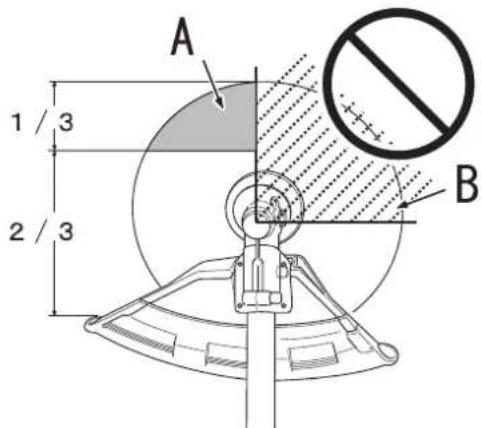
Precautions concerning the cutting attachment
DANGER
Always stop the engine when a cutting attachment jam occurs. Do not attempt to remove an object causing a jam if the engine is running. Severe injury can occur if a jam is removed and the cutting attachment suddenly starts.
1.With metal blade
WARNING
Use correct blades
Serious injury may result from the improper use of blades. Read and comply with all safety instructions listed in this manual.
Use only cutting attachments recommended by YAMABIKO Corporation.
The type of blade used must be matched to the type and size of material cut. An improper or dull blade can cause serious personal injury. Blades must be sharp. Dull blades increase the chance of kick-out and injury to yourself and bystanders.
- Plastic/Nylon Grass/Weed Blades may be used where ever the nylon line head is used. Do not use this blade for heavy weeds or brush.
- The 3 cutter blade is designed especially to cut weeds and grass. To avoid injury due to kickback or blade fracture, do not use the 3 cutter blade to cut brush or trees.
- 8 Tooth Weed/Grass Blade is designed for grass, garden debris and thick weeds. Do not use this blade for brush or heavy woody growth, 19mm diameter or larger.
- 80 Tooth Brush Blade is designed for cutting brush and woody growth up to 13mm diameter.
22 Tooth Clearing Blade is designed for dense thickets and saplings up to 64mm diameter.
Damaged or shattered blades can cause accidents and serious injury.
Inspect blade before use
Pieces from a cracked metal blade can fly off during operation. Inspect metal blades for cracks before each use. Discard cracked blades no matter how small the crack. Cracked blades can be the result of the misuse or improper sharpening.
Damaged or shattered blades can cause accidents and serious injury.
Reaction forces
Be sure you understand the reaction forces of push and pull, and kickback described in this manual, and how these forces may affect your balance in the operation of a unit.
Failure to do so could cause an injury or fatal accident.
For safe use of your product
2.With nylon line cutting head
| WARNING |
| Use correct cutting attachment ○ Serious injury may result from the improper use of cutting attachment. Read and comply with all safety instructions listed in this manual. ○ Use only cutting attachments recommended by YAMABIKO Corporation. ○ Use only nylon line cutting head. Do not use any type of metal blade. ◆ Failure to do so could lead to an accident or serious injury. |
| Excessive nylon line beyond cut off knife could fly off when the nylon line cutting head starts rotating after adjustment of nylon line length. ◆ Failure to do so could lead to an accident or injury. |
| Do not trim near cars or pedestrians Use extreme caution when operating over bare spots and gravel, because the line can throw small rock particles at high speeds. The shield on the unit cannot stop objects which bounce or ricochet off hard surfaces. ◆ Failure to do so could lead to an accident or serious injury. |
| Avoid wire Do not trim in any area where there are broken strands of fencing wire. Remove the broken pieces of wire, or give the area wide berth. Wear proper safety protection. Do not cut where you cannot see what the cutting device is cutting. ◆ Failure to do so could lead to an accident or serious injury. |
| CAUTION |
| Use only flexible, non-metallic line recommended by YAMABIKO Corporation. |
Protective gear
| WARNING |
| Wear protective gear Always wear the following protective gear when working with the trimmer. 1. Head protection (helmet): Protects the head 2. Ear muffs or ear plugs: Protect the hearing 3. Safety goggles: Protect the eyes 4. Face shield: Protects the face 5. Safety gloves: Protect the hands from cold and vibration 6. Work clothes that fit (long sleeves, long trousers): Protect the body 7. Heavy duty, non-slip protective boots (with toecaps) or non-slip work shoes (with toecaps): Protect the feet 8. Shin guards: Protect the legs ◆Failure to observe these precautions could result in damage to your sight or hearing, or lead to a serious injury. When necessary, please use the protective gear below. ○ Dust mask: Protects the breathing apparatus ○ Bee net: To deal with attacks by bees |
| Wear proper clothing. Do not wear ties, jewellery, or loose, dangling clothing which could be caught in the unit. Do not wear open toed footwear, or go bare-foot or barelegged. In certain situations, total face and head protection may be required. For heavy brush cutting with metal blade, log-ger's trousers or leg chaps with protective inserts are added considerations. ◆Failure to observe these precautions could result in damage to your sight or hearing, or lead to a serious injury. |
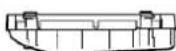
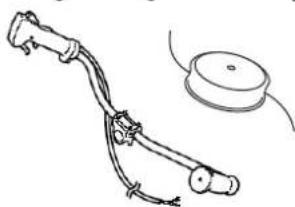
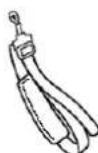
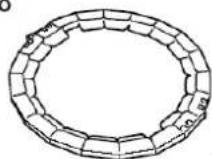
The following parts are packed separately in the packing box.
- When you have unpacked the box, please check the parts that it contains.
- Contact your dealer if anything is missing or broken.
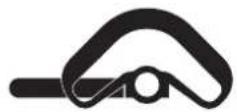

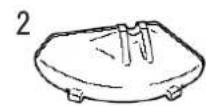
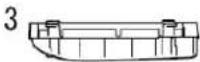
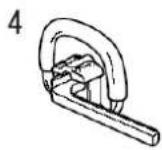
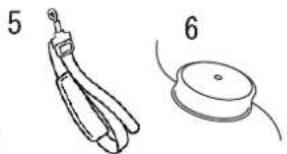
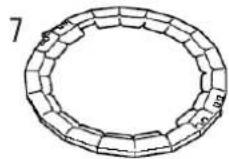
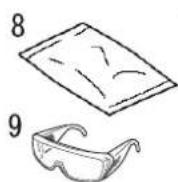
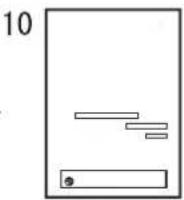
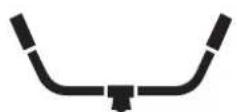
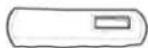
- Engine and shaft tube
- Shield
- Sub-shield
- Handle
- Shoulder harness
- Nylon line cutting head
-
Blade cover
-
Tool set
Bolt
L-wrench
- Socket wrench
- Upper clamp
- Spacer
- Scaper
-
Safety goggles
-
Operator's manual
2

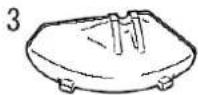
4
5
7
8
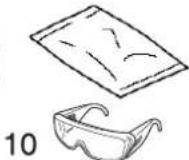
11
- Engine and shaft tube
- Protector
- Shield
- Sub-shield
- Handle
- Nylon line cutting head
-
Shoulder harness
8.Blade cover -
Tool set
Bolt
L-wrench
- Socket wrench
- Upper clamp
- Spacer
- Scaper
-
Safety goggles
-
Operator's manual
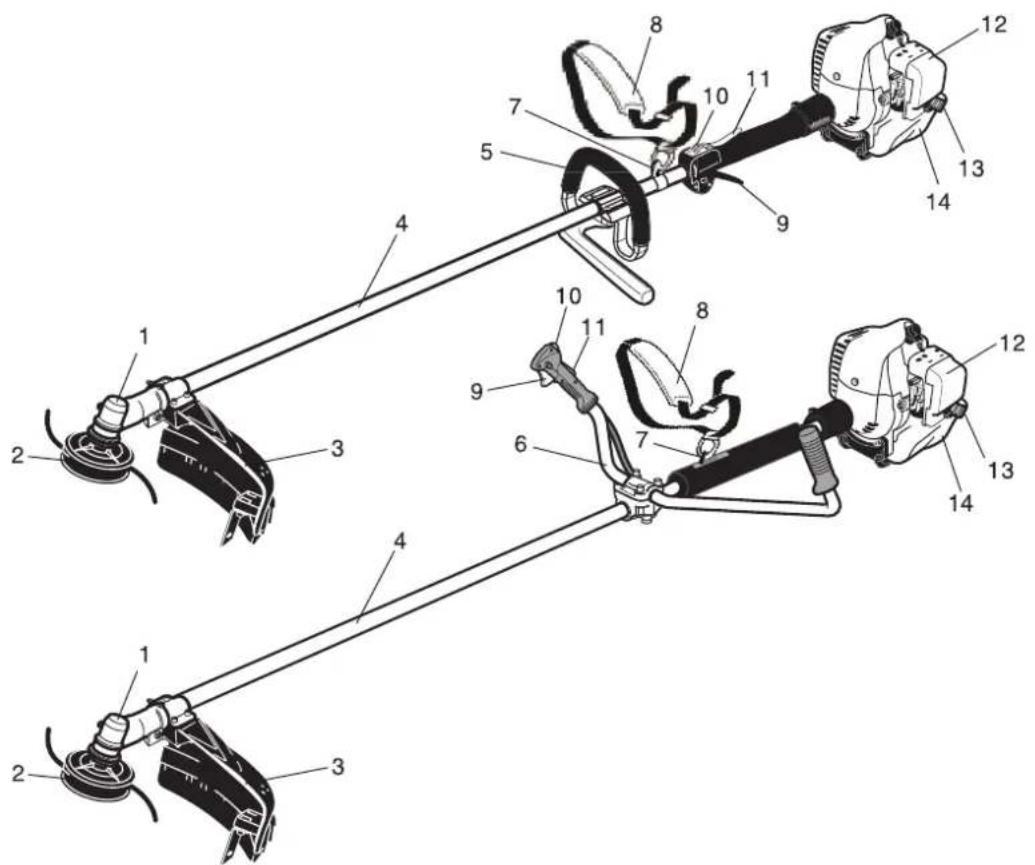
- Angle transmission Having two gears to change to angle of rotating axis.
- Cutting attachment
- Shield Device to protect the operator from accidental contact with the cutting head and thrown objects.
- Shaft tube Part of the unit that provides a casing for power transmission shaft.
- Loop-handle Light weight, suitable for nylon line trimmer.
- U-handle Having the configuration of a bicycle handle bar to reduce working effort compared to a loop-handle.
- Suspension point Device on which the harness can be hooked.
-
Shoulder harness An adjustable strap to suspend unit.
-
Throttle trigger Activated by the operator's finger for controlling the engine speed.
- Ignition switch
- Throttle trigger lockout Locks throttle trigger in the idling position until you have a proper grip with your right hand around the handle.
- Air cleaner cover Covers air filter.
- Fuel tank cap For closing the fuel tank.
- Fuel tank Contains fuel and fuel filter.
Assembly

WARNING
Read the operator's manual carefully to ensure that you assemble the product correctly.
Using a product that has been incorrectly assembled could lead to an accident or serious injury.

Assembly of the handle

CAUTION
Install the handle so that it does not hide any of the safety decals.
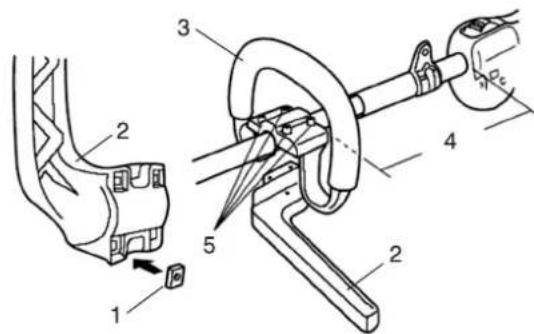
-
Square nut
-
About 250 mm
-
Barrier
-
Bolt
-
Handle
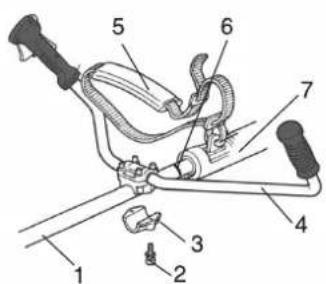
- Shaft tube
- Shoulder harness
- Lower cap retaining screw
- Handle positioning label
- Lower Cap
- Protector sleeve
- Handlebar
Loop handle version
- Put the 4 square nuts into the frame of barrier.
- Fit the handle and barrier over the outer pipe and tighten the 4 bolts.
- Position the handle about 250~mm ahead of the throttle housing end.
- Secure the handle by alternately tightening the four bolts in a diagonal or "crisscross" fashion.
U-handle
- Use the 4 mm L-wrench to remove the lower cap retaining screws from the handlebar bracket.
- Position the handle on the outer tube forward of Handle positioning label as shown in figure. Reassemble the lower cap to the handlebar bracket in the reverse order of disassembly.
- Locate the handle in the best position for operator comfort.
- Firmly tighten both lower cap retaining screws.
- Install the protector sleeve on the outer tube.
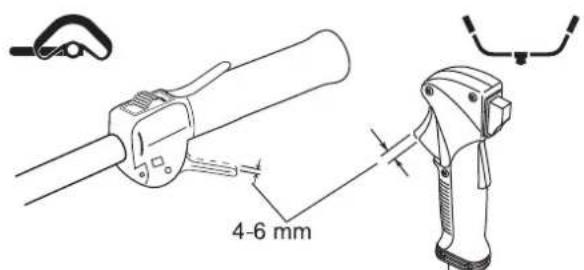
Adjust throttle lever free play
The throttle lever free play should be approximately 4-6 mm. Make sure that the throttle lever operates smoothly without binding. If it becomes necessary to adjust the lever free play, follow the procedures and illustrations that follow.
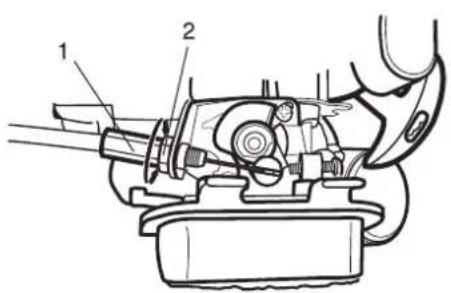
- Cable adjuster 2. Lock nut
Cutting attachment shield assembly
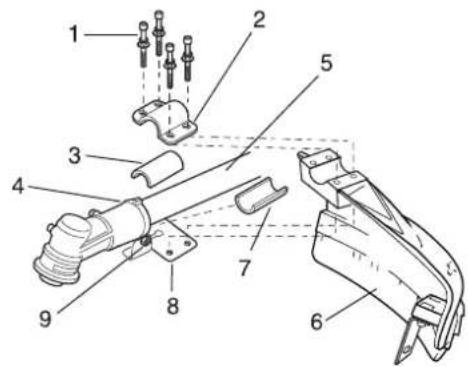
- Socket-head cap Screw
- Bracket
- Shim
- Clamp screw
-
Outer tube
-
Cutting attachment shield
- Shim
- Cutting attachment shield mounting plate
- Retaining nut
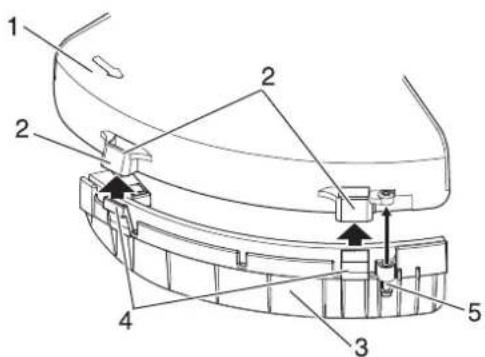
-
Cutting attachment shield
-
Sub-shield 4.Hook
-
Hook receiver
-
Bolt
-
Loosen the air cleaner cover knobs and remove the air cleaner cover.
- Loosen the lock nut on the cable adjuster.
- Turn the cable adjuster in or out as required to obtain proper free play 4-6 mm.
- Tighten the locknut.
- Reinstall the air cleaner cover.
Cutting Attachment Shield
- Insert the cutting attachment shield between the outer tube and the cutting attachment shield mounting plate.
NOTE
It may be necessary to loosen the retaining nut and clamp screw to adjust cutting attachment shield mounting plate.
- Fit the two shims and the bracket over the outer tube and loosely install the four socket-head cap screws.
- Tighten the four socket-head cap screws to secure the cutting attachment shield.

CAUTION
Make sure the clamp screw and retaining nut are securely tightened before tightening the four socket-head cap screws.
Sub-shield (when trimmer head is in use) (Consult your dealer.)
- Attach the shield extension to the cutting attachment shield.
- Tighten the bolt.

WARNING
Never use this product without sub-shield when using a trimmer head.

CAUTION
Make sure the sub-shield is completely hooked at the hook receiver.
Installing a nylon line cutting head
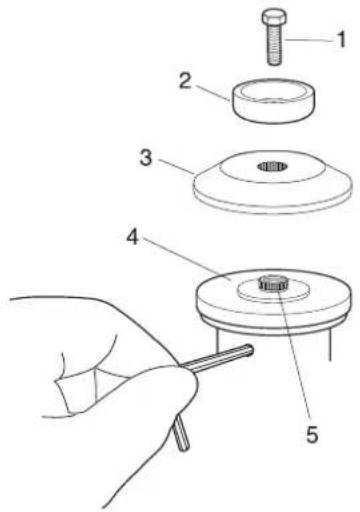
- Shaft bolt (not used)
4.Holder A - Bolt guard (not used)
- Gearcase shaft
- Holder B
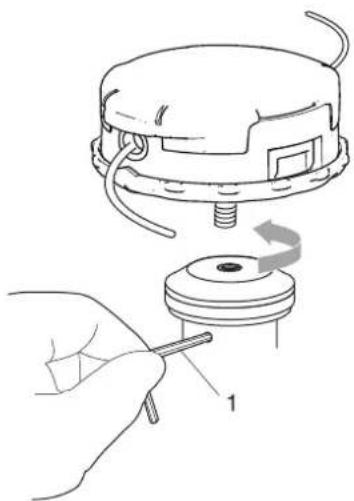
- L-wrench
Installing a blade

WARNING
Do not attempt to fit the trimmer blade with one hand or without using the socket spanner. Fit the trimmer blade accurately using the supplied socket spanner and tighten firmly in position.
The trimmer must not be used if the blade vibrates or is loose.
Wear heavy duty gloves when working with the trimmer blade. When replacing the trimmer blade during a trimming task, ensure that the engine is switched off and that the blades have stopped.
Do not use any tools other than the proved socket spanner to tighten the blade, a pneumatic or electric tool may tighten the blade more than necessary and cause the nut or the output shaft to break.
When turning the product over to replace the trimmer blade, ensure that the fuel tank cap is securely in place.
Failure to do so could lead to an injury or serious accident, or cause a fire.
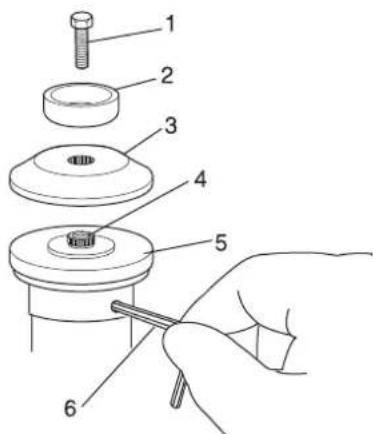
- Shaft bolt
- Bolt guard
-
Holder B
-
Output shaft
- Holder A
- L-wrench
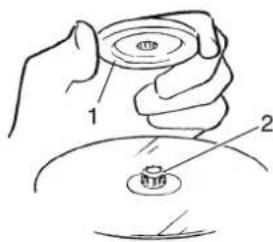
-
Holder B
-
Bolt guard
-
Output shaft
-
L-wrench (blade not shown for clarity)
Adjusting the balance Adjusting the shoulder harness

WARNING
This product is designed to fit a wide variety of body sizes, but may not be adjustable for extremely tall persons. Do not use the unit if your feet can reach the cutting attachment when the unit is attached to the harness.
IMPORTANT
A person's size can affect the balancing adjustment. Also the balancing procedure may not work with some units on some persons. If the shoulder harness does not fit you or cannot be adjusted well, please ask your dealer for assistance.
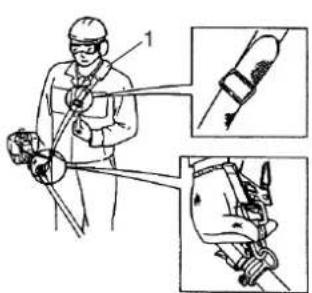
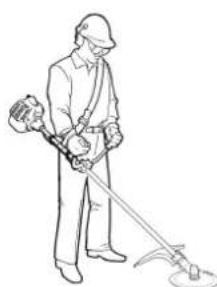
1. Shoulder harness
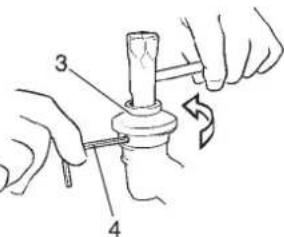
- Turn the product upside down so the gearcase output shaft is facing UP and remove the shaft bolt, bolt guard and holder B from the gearcase shaft.
- Align the hole in blade holder A with the matching hole in the gearcase flange and then temporarily lock the output shaft by inserting a L-wrench through both holes.

CAUTION
Install the blade so its printed surface is visible to the operator when the brushcutter is in the normal operating position.

WARNING
The blade must fit flat against the holder flange. The blade mounting hole must be centered over the raised boss on blade holder A.
- Fit the blade over the flange on holder A.
- Install blade holder B on the output shaft. The recess in the holder must fit tightly against the blade.
- Install the bolt guard and then the blade retaining bolt. Using the socket wrench, tighten the bolt firmly in a counter-clockwise direction.
-
Remove the L-wrench.
-
Hook the harness hook to the hanger on the outer tube.
- Wear the shoulder harness so that the hook stays at your right hand side.
- Adjust the length of the shoulder harness so that you can hold and operate the machine comfortably.
IMPORTANT
Adjust the shoulder harness so the shoulder pad rests comfortably on the off-side shoulder and the cutting path of the cutting attachment is parallel to the ground. Make sure all hooks and adjustment devices are secure.

WARNING
Always wear a shoulder harness when operating this product with a blade.
NOTE
Using a shoulder harness with a brush-cutter allows you to maintain proper control of the product and reduces fatigue during extended operation.
Preparing the fuel

DANGER
- Fuel is highly inflammable and there is a risk of fire if it is handled incorrectly. Carefully read and observe the precautions in the section of this manual titled "For safe use of your product".
Once the refuelling is complete, securely tighten the fuel tank cap and do not forget to check that there are no leaks or discharges of fuel from the fuel pipe, fuel system grommets, or around the fuel tank cap. If you do find fuel leaks or discharges, stop using the product immediately and contact your dealer to have it repaired.
If the fuel ignites, it could cause burns and fire.


CAUTION
There is a difference in pressure between the fuel tank and the outside air. When refuelling, loosen the fuel tank cap slightly to eliminate the difference in pressure.
Otherwise, fuel may get spewed.
NOTE
Stored fuel ages. Do not mix more fuel than you expect use in thirty (30) days. Do not mix directly in fuel tank.
Fuel

Fuel supply
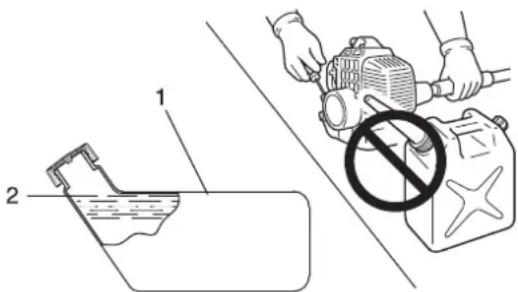
1. Fuel tank 2. Shoulder level
- Fuel is a mixture of regular grade petrol and an air-cooled 2-stroke engine oil of reputable brand name. Minimum 89 Octane unleaded petrol is recommended. Do not use fuel containing methyl alcohol or more than 10% of ethyl alcohol.
- Recommended mixture ratio; 50 : 1 (2 %) for ISO-L-EGD Standard (ISO/CD 13738), JASO FC,FD grade and Shindaiwa One 50 : 1 oil.
- Do not mix directly in engine fuel tank.
- Avoid spilling petrol or oil. Spilled fuel should always be wiped up.
- Handle petrol with care, it is highly inflammable.
-
Always store fuel in approved container.
-
Always refuel in a well ventilated location. Do not pour fuel indoors.
- Place the product and the refuelling tank on the ground when performing the refuelling operation. Do not refuel the product on the loading platform of a truck, or in other such places.
- Always ensure that the fuel level remains below the shoulder level of the fuel tank when refuelling.
- There is a difference in pressure between the fuel tank and the outside air. When refuelling, loosen the fuel tank cap slightly to eliminate the difference in pressure.
Always wipe up any fuel spills. - Move at least 3m away from where you refuelled before you start the engine.
- Keep the refuelling tank in a shaded area away from fire.
Starting the engine

WARNING
- When starting the engine, observe the precautions described from Page 4 in the section "For safe use of your product" to ensure that you operate the product correctly.
If the cutting attachment rotates even though the throttle trigger is in the idle speed position when the engine is started, adjust the carburettor before using the product.
Failure to observe the precautions could cause an accident or injury, or even lead to a fatality.
NOTE
Pull out the starter grip gently at first, and then more rapidly. Do not pull the starter rope out to more than 2/3 of its length.
Do not let go of the starter grip as it returns.
Starting a cold engine
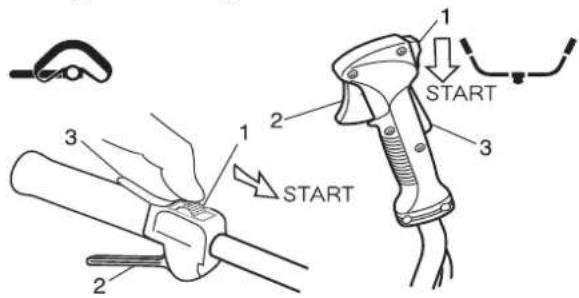
- Ignition switch
-
Throttle trigger
-
Throttle trigger lockout
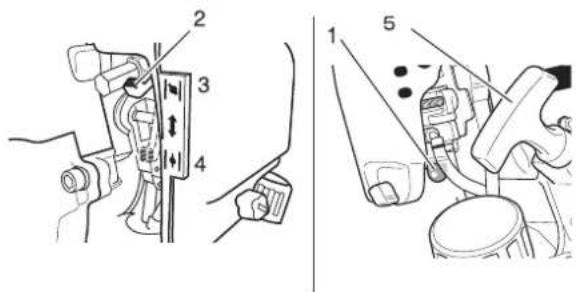
- Purge bulb
- Choke lever
-
Cold Start (CLOSE)
-
Run (OPEN)
- Starter handle
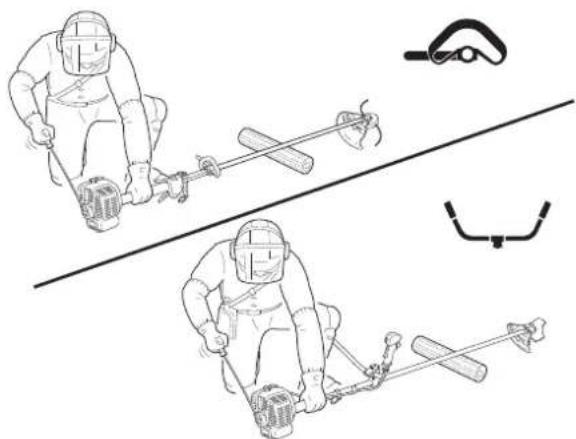
(Connect the spark plug cap if the product has been in storage for a long period of time)
The starting procedure depends on whether the engine is cold or warm. A cold engine is started as follows.
- Remove the trimmer blade cover and check the trimmer blade. If anything is wrong, replace it with a new one.
- Placing the product on level ground, check to ensure that the blade does not come into contact with the surface of the ground or any other impediment using a beam or other such implement.
- Check that there are no fuel leaks.
- Move the ignition switch to the Start position.
- Make sure that the throttle trigger is at the idle speed position.
- Move the choke lever to the Closed position.
-
Alternately press and release the purge bulb until the fuel is sucked up into it.
-
Checking that the area around you is safe, hold the position closest to the engine firmly as shown in the illustration, pulling several times on the starter grip.
- If you hear an explosion-like sound and the engine stops immediately, move the choke lever to the Open position and continue pulling on the starter grip to start the engine.
- If the engine starts immediately when you carry out the instructions in step 8, above, return the choke lever gently to the Open position.
- Leave the engine to warm up at idle speed for a while.
Engine warm-up
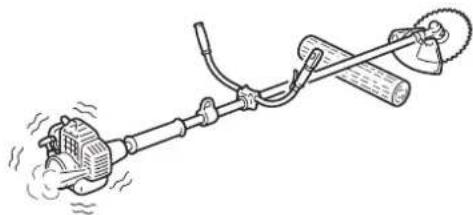
Starting a warm engine
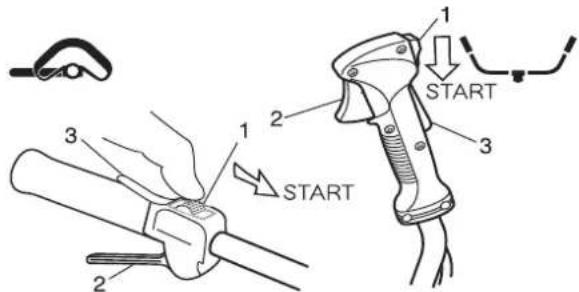
-
Ignition switch
-
Throttle trigger
-
Throttle trigger lockout
Stopping the engine
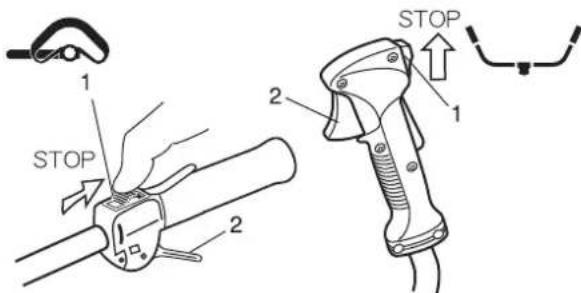
-
Ignition switch 2. Throttle trigger
-
Once the engine starts, allow it to warm up for 2 to 3 minutes at idling (i.e. low speed).
- Warming the engine helps to lubricate its internal workings more smoothly. Allow the engine to warm up fully, especially when it is cold.
-
Never run the engine without the cutting attachment fitted.
-
Move the ignition switch to the Start position.
- Make sure that the throttle trigger is at the idle speed position.
- Check that the choke lever is in the Open position.
- If no fuel is visible in the purge bulb, alternately press and release the purge bulb until the fuel is sucked up into it.
-
Checking that the area around you is safe, hold the position closest to the engine firmly, and pull on the starter grip to start the engine.
-
Move the throttle trigger to the idle speed position and set the engine to idling (i.e. low speed), keep it idling for about 2 minutes.
- Move the ignition switch to the Stop position.
- In the event of an emergency, stop the engine immediately using the ignition switch.
- If the engine fails to stop, move the choke lever to the "Cold Start" position. The engine will stall and come to a halt (an emergency stop).
- If the engine fails to stop when the ignition switch is used, have the ignition switch checked and repaired by your dealer before you use the product again.
Always disconnect the spark plug wire from the spark plug to ensure the engine cannot be started before you work on the unit or leave it unattended.

DANGER
Always stop the engine when a cutting attachment jam occurs. Do not attempt to remove an object causing a jam if the engine is running. Severe injury can occur if a jam is removed and the cutting attachment suddenly starts.
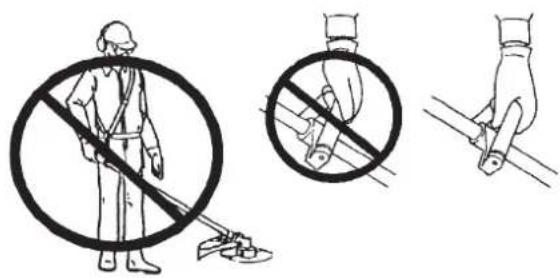
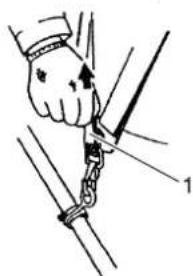
-
Emergency tab
-
Never attempt to operate the product with one hand.
- Ensure that you hook your thumbs around the grips, wrapping them in your thumb and remaining fingers.
Always mount the trimmer correctly using the shoulder harness.
- The shoulder harness is fitted with an emergency release function. In case of emergency, strongly pull the emergency tab at the hook. The machine will be released from the strap.
Basic trimming operation with nylon line cutting head Adjusting nylon line
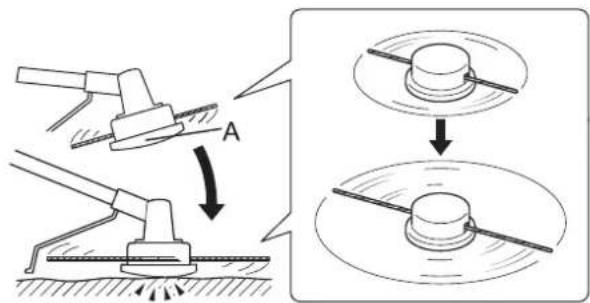
Engine operating speeds
- Cut off knife on the shield adjusts cutting swath automatically by cutting nylon lines evenly when attachment starts rotating.
- When operating with less than maximum cutting swath, cut two nylon lines in equal lengths.
- To advance trimmer line, tap the nylon line cutting head (A) against the ground while the head is turning at normal operating speed.
Operate the unit at full throttle while cutting grass.

CAUTION
Operation of trimmer without a cutting attachment shield and using excessive line length can lead to premature clutch failure.
Operation at low speeds can lead to premature clutch failure.
The basic cutting actions
The basic cutting actions pictured are: Trimming, scything, scalping and lawn edg These actions are as follows:
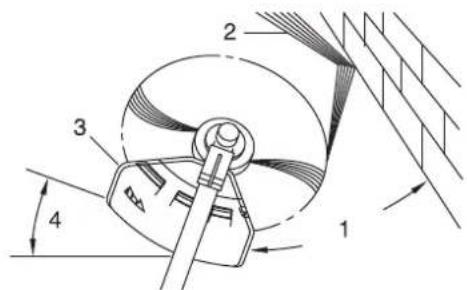
-
Angle to wall
-
Knife side raised
-
Debris
-
Angle to ground
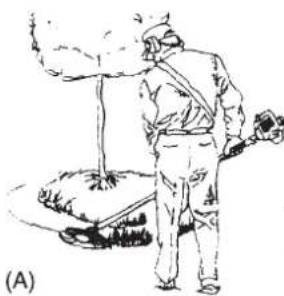
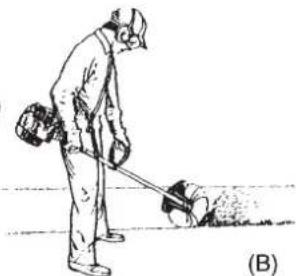
A: Scalping B: Edging
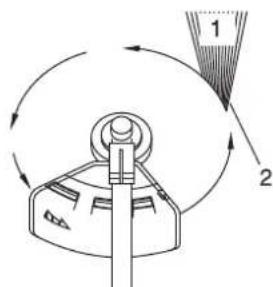
Nylon line cutting head rotates anticlockwise.
The knife will be on the left side of the shield.
- Debris
- Cut on this side
Trimming
This is feeding the trimmer carefully into the material you wish to cut. Tilt the head slightly to direct the debris away from you. If cutting up to a barrier such as a fence, wall or tree, approach from an angle where any debris ricocheting off the barrier will fly away from you.
Move the nylon line cutting head slowly until the grass is cut right up to the barrier, but do not jam (overfeed) the line into the barrier. If trimming up wire mesh or chain link fencing, be careful to feed only up to the wire. If you go too far, the line will snap off around the wire.
Trimming can be done to cut through weed stems one at a time. Place the nylon line cutting head near the bottom of the weed never high up, which could cause the weed to chatter and catch the line. Rather than cut the weed right through, just use the very end of the line to wear through the stem slowly.
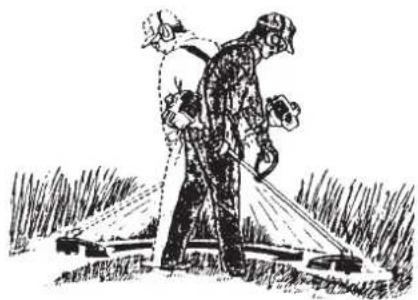
Scything
This is the cutting or mowing of large grassy areas by sweeping or swinging the trimmer in a level arc. Use a smooth, easy motion. Do not try to hack or chop down the grass. Tilt the nylon line cutting head to direct the debris away from you on the scything stroke. Then return without cutting grass for another stroke. If you are well protected and do not care whether some debris is thrown in your direction, you may scythe in both directions.
Scalping and edging
Both of these are done with the nylon line cutting head tilted at a steep angle. Scalping is removing top growth, leaving the earth bare. Edging is trimming the grass back where it has spread over a pavement or driveway. During both edging and scaling, hold the unit at a steep angle in a position where the debris, and any dislodged dirt and stone, will not come back towards you even if it ricochets off the hard surface.
Although the pictures show how to edge and scalp, every operator must find for himself the angles which suit his body size and cutting situation.
For nearly all cutting, it is good to tilt the nylon line cutting head so that contact is made on the part of line circle where the line is moving away from you and the shield (See appropriate picture). This results in the debris being thrown away from you.
Tilting the head to the wrong side will shoot the debris toward you. If the nylon line cutting head is held flat to the ground so that cutting occurs on the whole line circle, debris will be thrown at you, drag will slow the engine, and you will use up a lot of line.
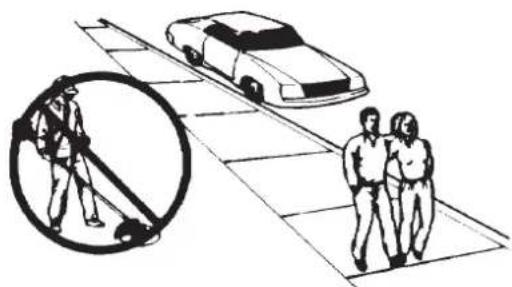
Do not trim near cars or pedestrians.
Always wear proper eye protection against thrown objects. Objects can bounce up at you from the ground under the shield, or ricochet off any nearby hard surface.
Do not trim at high speed near roadways when there is traffic, or in places where there are pedestrians. If you must trim where people are in the zone of risk use a much lower or reduced speed, by using a partial trigger setting. Do not use full throttle.
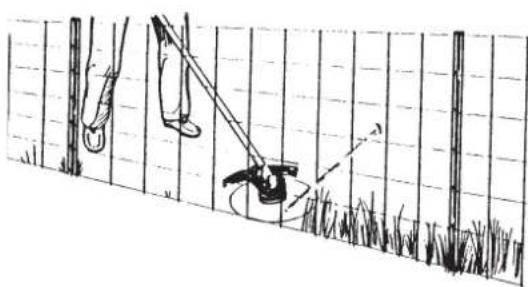
Line pushed into wire fencing will snap off.
Do not push the line into tough weeds, trees, or wire fences. Pushing the line into chicken wire, chain link fencing or thick brush can result in snapped-off line ends being hurled back at the operator. The proper way is to cut right up to a barrier, such as any of those mentioned, but never run the line into or through the obstruction. Do not cut closely to obstruction or barrier.
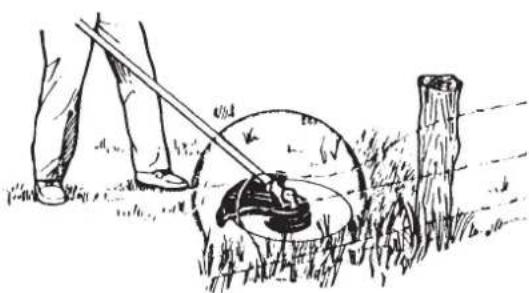
Avoid wire
Avoid nylon line contact with broken wire fencing. Pieces of wire broken off by the trimmer can be hurled at high speeds.
Basic trimming operation with metal blade
WARNING
Please observe the following instructions when trimming.
Ensure that the trimmer blade does not come into contact with hard obstructions such as stone, metal, or concrete.
If the blade hits an obstruction, turn off the engine immediately and ensure that the blade has stopped before checking the blade and shield for damage.
Never use cracked blades, as they could fly off while you are working.
Check to ensure that the trimmer blade has been tightened securely in place.
Replace the shield if it is damaged or cracked.
Replace the trimmer blade nut when it becomes worn.
Failure to do so could lead to an accident or serious injury.
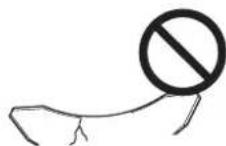
Engine operating speeds
Operate the engine at full throttle while cutting. Best fuel efficiency is obtained by releasing the throttle when swinging back after a cut.
- To prevent possible engine damage, do not allow the trimmer or brushcutter to run at high speeds without a load.
- Avoid operating the attachment at low speeds. Doing so can lead to rapid clutch wear. In addition, slow-speed operation tends to cause grass and debris to wrap around the cutting attachment.
Use correct blade
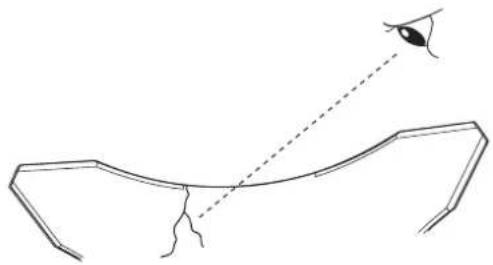
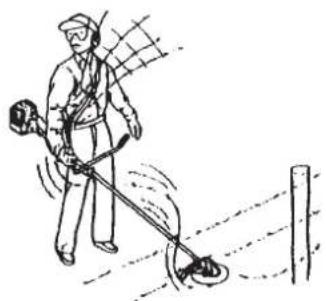
Inspect blades before use
Wires can catch and flap around
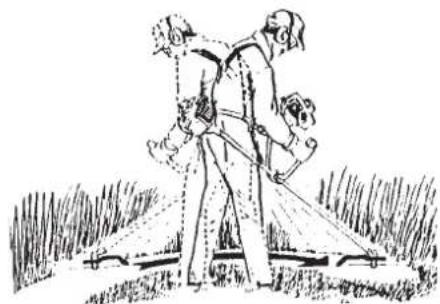
Scything weeds
Reaction forces
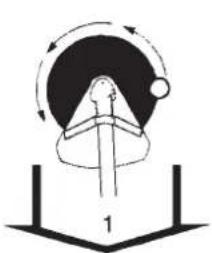
Anticlockwise rotation
1. Push
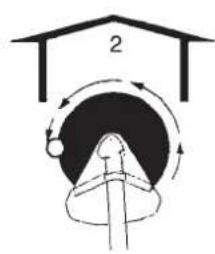
2.Pull
Always use the blade suited for the job.
- Do not allow the trimmer blade to come into contact with hard obstructions such as stone, concrete or metal.
- Do not cut into the ground with the blade.
- If the blade hits an obstruction, turn the engine off immediately and ensure that the trimmer blade has stopped rotating before checking the blade and shield for damage.
- Do not operate with a dull, bent, fractured or discoloured blade and worn or damaged nut.
- Never use a cracked trimmer blade as it could shatter off while you are working.
- Do not run engine at full throttle without a load.
- Remove all foreign objects from work area.
- Do not operate brushcutter without shoulder harness and shield.
This is cutting by swinging the cutting attachment in a level arc. It can quickly clear areas of field grass and weeds. Scything should not be used to cut large, tough weeds or woody growths.
If a sapling or shrub binds the cutting attachment, do not use the cutting attachment as a lever to free the bind, because this will cause cutting attachment failure.
Instead, shut off the engine and push the sapling or shrub to free the blades.
Do not use a cracked or damaged blade.
Push.
The operator may feel the unit push toward him when he tries to cut the object on right. If he cannot hold the blade in the cut, a kickback may occur when the blade is pushed out to where the teeth at the outside furthest point from the operator are cutting. The blade will "kickback" sideways.
Pull.
The opposite of push. When object on left, the operator may feel the unit pull away. Although this pull type of cutting may cause sawdust to be thrown back at the operator, it is recommended for sawing off heavy brush because the cutting is smoother and more stable than when the unit pushes.
Trimming operation
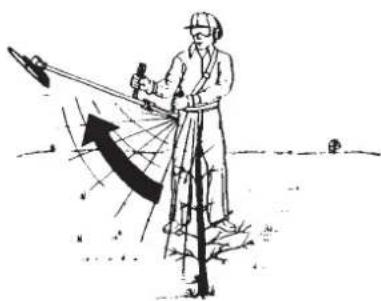
Kickback
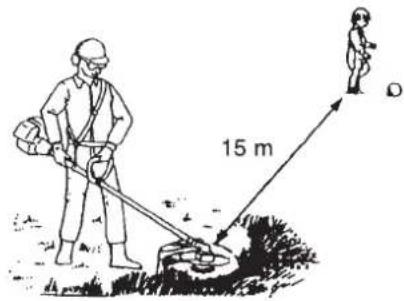
Precautions to observe when working
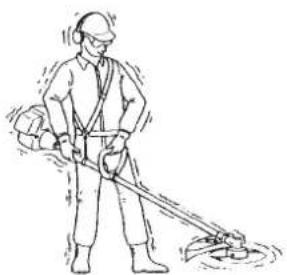
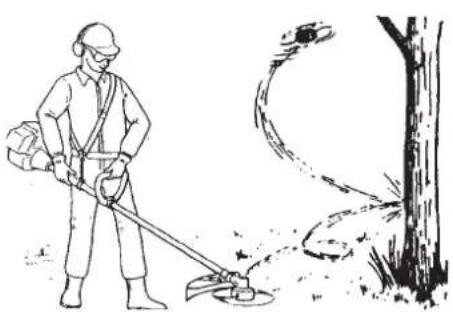
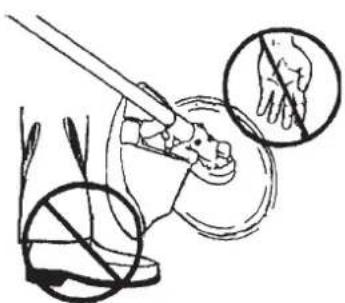
Kickback.
If you hit a hard object with the front-right of the trimmer blade, such as when trimming in both directions, the blade will kick sharply back to the right. This is a phenomenon known as "kick back", and can cause a serious accident due to the operator losing control over the product. Take particular care to ensure that you do not strike any hard object with the front-right of the trimmer blade.
-
The area within a radius of 15m of the product is a danger zone. Make sure that there are no children, onlookers, or pets in this zone. If anyone comes within 15m , turn off the engine immediately to stop the blade from rotating.
-
If someone is helping you with the work or you are working together, identify the way in which you will signal to each other and work at least 15m apart. You are advised to carry a whistle in case you need to communicate.
-
Turn off the engine immediately if the product suddenly starts to vibrate abnormally. Sudden vibration may be caused by a problem with a component such as the flywheel, clutch, or trimmer blade, or by a loose screw or other such factor. Do not use the product until you have identified the cause of the problem and the repair has been completed.
-
The trimmer blade could fly off unless tightened securely. Ensure that it is fitted securely in place.
-
Replace the shield if it is damaged or cracked.
-
If you work with the angle transmission in contact with the surface of the ground, the trimmer blade nut and cup can easily become worn. Replace them with new parts if this happens.
-
When you turn off the engine, check to ensure that the trimmer blade has stopped rotating before you lower the product to the ground. Even if the engine has been turned off, the blade can still cause an injury while free-wheeling.
-
The silencer will remain hot for some time after the engine has been turned off. Carry the product with the silencer away from you to avoid touching it with your body.
-
When carrying the product, always turn the engine off and fit the trimmer blade cover over the trimmer blade.
WARNING
Before performing any maintenance, repair, or cleaning work on your unit, make sure the engine and cutting attachment are completely stopped. Disconnect the spark plug wire before performing service or maintenance work.
Never repair a damaged blade by welding, straightening, or by modifying its shape. An altered blade may break during operation, resulting in serious personal injury.
Daily Maintenance
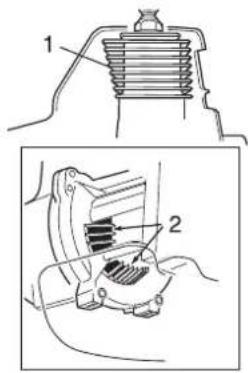
1. Cylinder fins 2. Air intake
Prior to each work day, perform the following:
- Remove the dirt and debris from the engine, check the cooling fins and air cleaner for clogging, and clean them as necessary.
- Carefully remove any accumulations of dirt or debris from the silencer and fuel tank. Check cooling air intake area at base of crankcase. Remove all debris. Dirt build-up in these areas can lead to engine overheating, fire, or premature wear.
Clean any debris or dirt from the cutting attachment. - Check for loose or missing screws or components. Make sure the cutting attachment is securely fastened.
- Check the machine for leaking fuel or grease.
10- Hour Maintenance
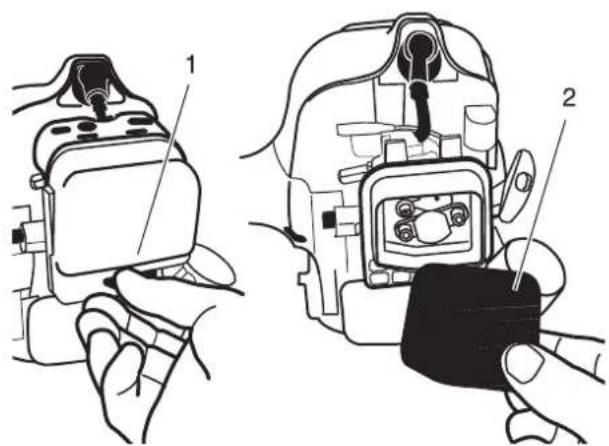
1. Unscrew fastener 2. Air filter element
(more frequently in dusty conditions)
- Remove the air cleaner cover by loosening the unscrew fastener and lifting.
- Remove the air cleaner element.
Clean or replace as necessary. - Wash element thoroughly in soap and water.
- Let element dry before reinstalling the element.
- Replace air cleaner cover.

CAUTION
- Never operate the unit if the air cleaner assembly is damaged or missing.
10/15 Hour Maintenance
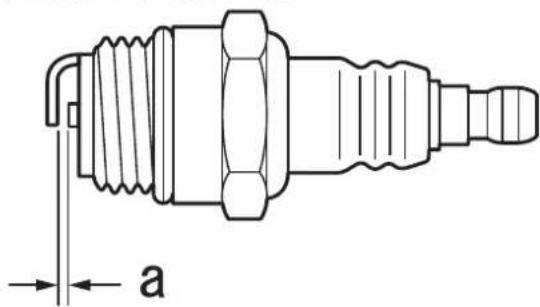
a:0.6-0.7mm
- Check plug gap. Correct gap is 0.6mm to 0.7mm .
- Inspect electrode for wear.
- Inspect insulator for oil or other deposits.
- Replace plug if needed and tighten to 15N· m - 17N· m (150 kgf·cm to 170 kgf·cm).
50-Hour Maintenance
(more frequently in dusty conditions)
Without cutting attachment installed on gearcase:
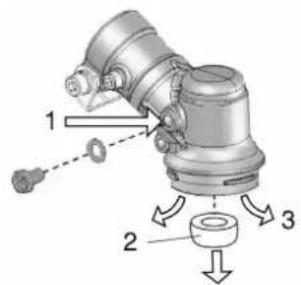
-
New grease
-
Old grease
-
Output shaft collar
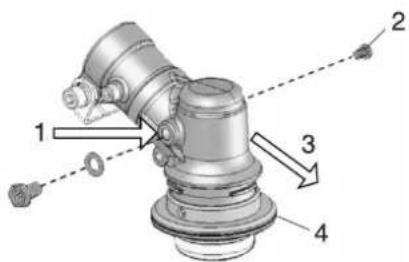
-
New grease
-
Old grease
-
Drain screw
-
Cutting attachment not shown
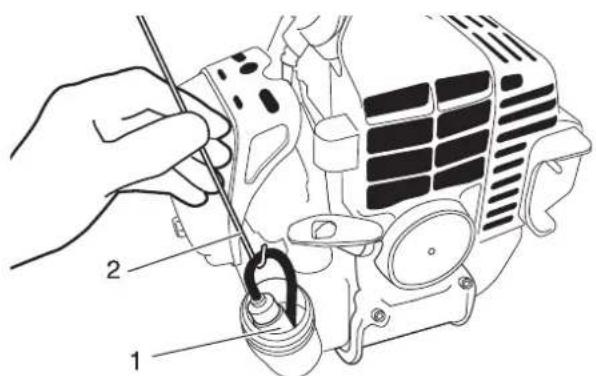
- Fuel filter 2. Hooked wire
135-Hour Maintenance
- Clean the cylinder cover and clean grass and dirt from the cylinder fins.
- Remove the cutting attachment, cutting attachment holder and gear shaft collar. Remove the filler plug from the side of the gearcase and press new grease into the gearcase until old grease is pushed out. Use good quality lithium multi grease.
- Remove mainshaft and lubricate both ends of the splines.
With cutting attachment installed on gearcase:
- Clean the cylinder cover and clean grass and dirt from the cylinder fins.
- Remove the filler plug and drain screw from the side of the gearcase and press new grease into the gearcase until old grease is pushed out. Use good quality lithium multi grease.
- Remove mainshaft and lubricate both ends of the splines.
Fuel Filter Maintenance
Use a hooked wire to extract the fuel filter from inside the fuel tank. Remove and replace the filter element. Before reinstalling the filter, inspect the condition of the fuel line. If damage or deterioration are noted, the unit should be removed from service until you can consult with an authorized servicing dealer.

CAUTION
Make sure you do not pierce the fuel line with the end of the hooked wire. The line is delicate and can be damaged easily.

WARNING
Never operate the unit with a damaged or missing silencer or spark arrester! Operating with a missing or damaged spark arrester is a fire hazard and could also damage your hearing.
- Carbon deposits in silencer will cause a drop in engine output and overheating. Spark arrester screen must be checked periodically. Clean deposits from silencer.
IMPORTANT
Do not remove the silencer cover. If necessary, Please consult your dealer.
Carburettor adjustment

WARNING
YOU MAY ADJUST THE IDLE SPEED ONLY by turning the idle speed adjustment screw (T).
During carburettor adjustment, the cutting attachment may move. Pay utmost attention and care to the cutting attachment so as not to get injured by the moving cutter.
- When carburettor adjustment is completed, the cutting attachment should not move at idle speed, otherwise serious personal injury may result.
You must NOT carry out any Carburettor adjustment, other than the idle speed. All other adjustments MUST be performed by an authorized service dealer, or serious personal injury may result due to malfunction of the engine.

CAUTION
- When there is trouble with the carburettor, contact an authorized service dealer.
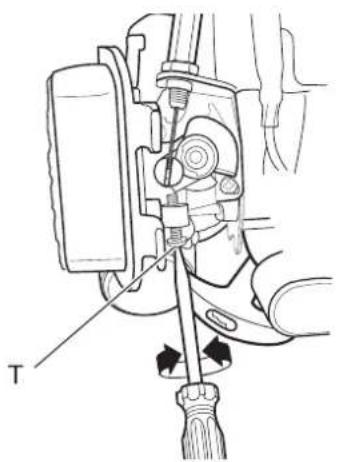
T: Idle speed adjustment screw
Every unit is test run at the factory and the carburettor is fine tuned for maximum performance.
Before adjusting carburettor, clean or replace air filter, start engine and run several minutes to bring it to operating temperature. The engine must return to idle speed whenever the throttle lever is released. Idle speed is adjustable, and must be set low enough to permit the engine clutch to disengage the cutting attachment.
To adjust the carburettor proceed as follow:
- Place the unit on the ground, then start the engine, and then allow it to idle 2-3 minutes until warm.
- If the attachment moves when the engine is at idle, reduce the idle speed by turning the idle adjustment screw(T) counter-clockwise.
- Repeat the process of accelerating to full throttle and return to idle a few times. Check that the cutting attachment stops moving at idle.
- If a tachometer is available, the engine idle speed should be final adjusted to the settings recommended in the Specifications section.
NOTE
When the carburettor cannot be adjusted properly with the idle speed adjustment screw (T), you must contact an authorized service dealer.
Checking the blade

- Use only blade designated for this model by the manufacturer.
- When a crack is noticed on the blade, do not use it but replace with a new one.
- Ensure that the blade is correctly fitted in accordance with the instructions.
Loading nylon line
1. Wear Indicators
Long term storage
- When the cutting blade becomes dull due to wear, reverse it for further use.
- When chip or bend occurs on the blade, vibration will increase. Replace with new one.
-
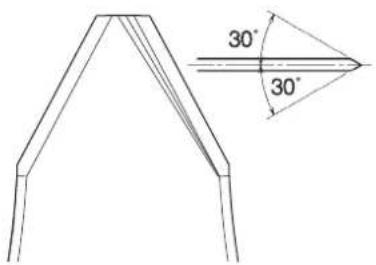
When filing the blade file 3 cutting edges evenly using a flat file as shown in the illustration. Otherwise, the balance will be lost and vibration will increase.
-
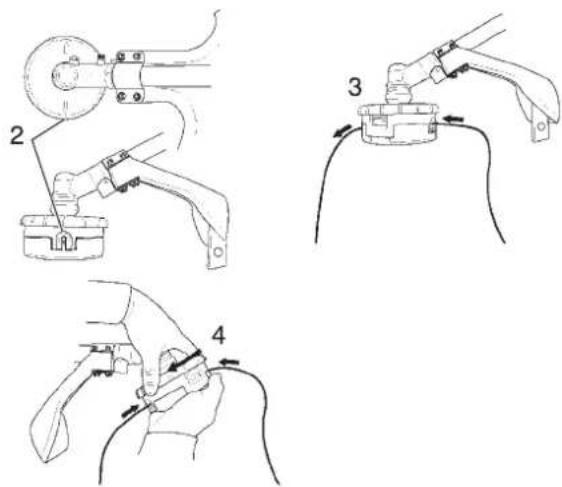
Cut one piece of line to recommended length.
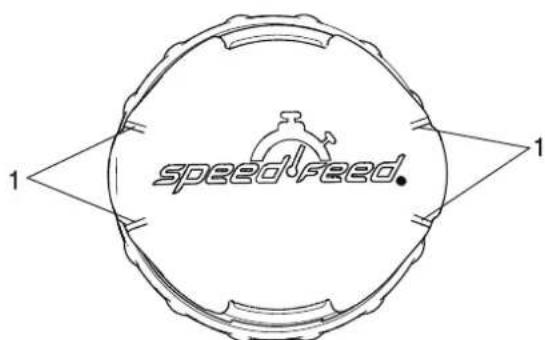
2.4 mm dia. -6 m - Align arrows on top of knob with openings in eyelets.
- Insert one end of nylon line into an eyelet, and push line equal distance through nylon line cutting head.
- Hold nylon line cutting head while turning knob clockwise to wind line onto spool until about 13cm of each line remains exposed.
IMPORTANT
When the wear indicators located at the bottom of the nylon line cutting head are worn smooth, replacement of the cover or the entire nylon line cutting head is required.
Whenever the unit will not be used for 30 days or longer, use the following procedures to prepare it for storage.
- Clean external parts thoroughly and apply a light coating of oil to all metal surfaces.
- Drain all the fuel from the carburettor and the fuel tank.
To remove the remaining fuel from the fuel lines and carburettor and with the fuel drained from the fuel tank.
- Prime the primer bulb until no more fuel is passing through.
- Start and run the engine until stops running.
- Repeat steps 1 and 2 until the engine will no longer start.
NOTE
All stored fuels should be stabilized with a fuel stabilizer such as STA-BIL.
Gasoline stored in the carburettor for extended periods can cause hard starting, and could also lead to increased service and maintenance costs.
- Remove the spark plug and pour about 7 grams of 2-stroke engine oil into the cylinder through the spark plug hole. Place a clean cloth over the spark plug hole. Slowly pull the recoil starter 2 or 3 times so oil will evenly coat the interior of the engine. Reinstall the spark plug. (Do not connect the spark plug cap.)
- Before storing the unit, repair or replace any worn or damaged parts.
- Remove the air cleaner element from the carburettor and clean it thoroughly with soap and water. Let dry and reassemble the element.
- Store the unit in a clean, dust free area.
Troubleshooting Guide
The engine does not start
| Diagnosis Cause Solution | ||
| Does the engine crank? NO YES | ·Faulty recoil starter. ·Fluid in the crankcase. ·Internal damage. | ·Consult your dealer |
| Good compression? NO YES | ·Loose spark plug. ·Tighten and re-test. ·Excess wear on cylinder, piston, rings. | ·Consult your dealer |
| Does the tank contain fresh fuel of the proper grade? NO YES | ·Fuel incorrect, stale, or contaminated; mixture incorrect. | ·Refill with fresh, clean unleaded gasoline with a pump octane of 89 or higher mixed with a 2-cycle air cooled mixing oil that meets or exceeds ISO-L-EGD and/or JASO FC, FD classified oils at 50:1 gasoline/oil ratio. |
| Is fuel visible and moving in the return line when priming? NO YES | ·Check for clogged fuel filter and/or vent. ·Priming pump not functioning properly. | ·Replace fuel filter or vent as required. restart. ·Consult your dealer |
| Is there spark at the spark plug wire terminal? NO YES | ·The ignition switch is in Stop position. ·Shorted ignition ground. ·Faulty ignition unit. | ·Move to the Start position. ·Consult your dealer |
| Check the spark plug. NO | ·If the plug is wet, excess fuel may be in the cylinder. ·The plug is fouled or improperly gapped. ·The plug is damaged internally or of the wrong size. | ·Crank the engine with the plug removed, reinstall the plug, and restart. ·Clean and regap the plug to 0.6 mm. Restart. ·Replace |
Low power output
| Diagnosis Cause Solution | ||
| Is the engine overheating? • Operator is overworking the unit. • Carburettor mixture is too lean. • Improper fuel ratio. • Fan, fan cover, cylinder fins dirty or damaged. • Carbon deposits on the piston or in the silencer. | • Shorten trimmer line. Cut at a slower rate. • Consult your dealer • Refill with fresh, clean unleaded gasoline with a pump octane of 89 or higher mixed with a 2-cycle air cooled mixing oil that meets or exceeds ISO-L-EGD and/or JASO FC, FD classified oils at 50:1 gas-oil/oil ratio. • Clean, repair or replace as necessary. • Consult your dealer | |
| Engine is rough at all speeds. May also have black smoke an/ or unburned fuel at the exhaust. | • Clogged air cleaner element. • Loose or damaged spark plug. • Air leakage or clogged fuel line. • Water in the fuel. • Replace the piston seizure. • Faulty carburettor and/or dia-phragm. | • Service the air cleaner element. • Tighten or replace. • Repair or replace fuel filter and/or fuel line. • Consult your dealer |
| Engine is knocking. | • Overheating condition. • Improper fuel. • Carbon deposits in the combustion chamber. | • See above. • Check fuel octane rating; check for presence of alcohol in the fuel. Re-fuel as necessary. • Consult your dealer |
Additional problems
| Diagnosis Cause Solution | ||
| Poor acceleration. | Clogged air filter. Clogged fuel filter. Replace the fuel filter. Lean fuel/air mixture. Consult your dealer Idle speed set too low. Adjust. | Clean the air filter. the fuel filter. Consult your dealer Idle speed set too low. Adjust. |
| Engine stops abruptly. | Switch turned off. Fuel tank empty. Refuel. Clogged fuel filter. Replace fuel filter. Water in the fuel. Shorted spark plug or loose terminal. Ignition failure. Consult your dealer Piston seizure. Consult your dealer | Reset the switch and re-start. fuel filter. Drain; replace with clean fuel. Clean or replace spark plug, tight-en the terminal. dealer dealer |
| Engine difficult to shut off. | Ground (stop) wire is disconnected, or switch is defective. Overheating due to incorrect spark plug. Overheated engine. | Test and replace as required. Idle engine until cool. Clean and regap the plug to 0.6 mm. Correct plug. Idle engine until cool. |
| Cutting attachment rotates at engine idle. | Engine idle too high. Broken clutch spring or worn clutch spring boss. Loose attachment holder. | Adjust. Replace spring/shoes as required, check idle speed. Inspect and re-tighten holders securely. |
| Engine will not idle down. | Engine idle set too high. Engine has an air leak. | Adjust Consult your dealer |
| Excessive vibration. | Warped or damaged cutting attachment. Loose gearcase. Bent main shaft/worn or damaged bushings. Trimmer line not wound properly on spool. | Inspect and replace attachment as required. Tighten gearcase securely. Inspect and replace as necessary. Rewind trimmer line. |
| Cutting attachment will not rotate. | Shaft not installed in power-head or gearcase. Broken shaft. Damaged gearcase. | Inspect and reinstall as required. Consult your dealer Consult your dealer |
- Checking and maintenance requires specialist knowledge. If you are unable to check and maintain the product or deal with a fault yourself, consult your dealer. Do not attempt to dismantle the product.
- Consult your dealer in the event of a problem that is not covered in the table above, or other such concerns.
For spare parts and consumables, please use only genuine parts and designated products and components. Using parts from other manufacturers or non-designated components may result in a malfunction.
| T243XS-SF C243S | SF | ||
| External dimensions: Length × Width × Height 1727 × 379 × 323 mm | 1727 × 577 × 493 mm | ||
| Mass: Unit without fuel, cutting attachment and harness (ISO11806-1: 2011) Unit with fuel, specified cutting attachment, guard and harness Unit without fuel, cutting attachment, guard and harness | 5.7 kg | 5.7 kg | |
| 6.7 kg | 6.8 kg | ||
| 5.1 kg | 5.2 kg | ||
| Volume: Fuel tank (full) 690 mL | |||
| Fuel: Gasoline | Regular grade petrol. Minimum 89 Octane unleaded petrol is recommended. Do not use fuel containing methyl alcohol or more than 10% of ethyl alcohol. Two stroke, air-cooled engine oil. ISO-L-EGD Standard (ISO/CD 13738), JASO FC,FD grade and Shindaiwa Premium 50:1 oil. 50:1 part (2%) | ||
| Oil | |||
| Mixture ratio | |||
| Cutting attachment: Nylon line cutting head (Cutting swath) | Speed-Feed 400 (400 mm) | ||
| Thread | Left-handed thread M7 ×1.0 pitch | ||
| Nylon cord size (diameter) | 2.4 mm | ||
| Nylon cord length | 6 m | ||
| Gear Case: Gear ratio and lubrication | 1.36 reduction and good quality lithium grease | ||
| Rotational direction of output shaft viewed from above | Anticlockwise | ||
| maximum rotational frequency of the spindle | 9560 r/min | ||
| Engine: Type | Air cooled two stroke, single cylinder | ||
| Carburettor | Diaphragm type | ||
| Magneto | Flywheel magneto - CDI system | ||
| Spark plug | NGK BPMR8Y | ||
| Starter | Recoil starter | ||
| Power transmission | Automatic centrifugal clutch | ||
| Engine displacement | 23.9 cm³ | ||
| Maximum shaft brake power (ISO 8893) | 0.78 kW | ||
| Fuel consumption at maximum engine power | 0.58 L/h | ||
| Recommended maximum engine speed (With STD attachment installed) | 9900 r/min | ||
| Recommended engine idling speed | 3000 ±100 r/min | ||
| 2006/42/EC | Left handle | 6.7 m/s² | 4.0 m/s² |
| Vibration (ISO 22867) aHV,eq | Right handle | 6.2 m/s² | 4.7 m/s² |
| Uncertainty K | 1.2 m/s² | 1.2 m/s² | |
| Sound pressure level (ISO 22868) LpAeq | Uncertainty KpA | 93.4 dB(A) | 95.2 dB(A) |
| 1.5 dB(A) | 1.5 dB(A) | ||
| Sound power level (ISO 22868) LWARa | Uncertainty KWA | 106.9 dB(A) | 107.5 dB(A) |
| 2.1 dB(A) | 2.1 dB(A) | ||
These specifications are subject to change without notice.
The undersigned manufacturer:
YAMABIKO CORPORATION
1-7-2 Suehirocho
Ohme, Tokyo 198-8760
JAPAN
This declaration of conformity is issued under the sole responsibility of the manufacturer.
Declaresthatthehereunderspecifiednewunit:
Brand: shindaiwa
Type: T243XS-SF,
C243S-SF
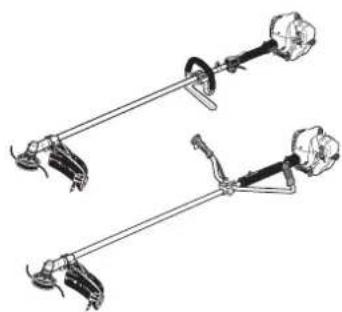
GRASS-TRIMMER/BRUSHCUTTER
Complies with:
- the requirements of Directive 2006/42/EC (use of harmonized standard EN ISO 11806-1: 2011)
- the requirements of Directive 2014/30/EU (use of harmonized standard EN ISO 14982: 2009)
- the requirements of Directive 2000/14/EC
Conformity assessment procedure followed ANNEX V
Measured sound power level: 107 dB(A) T243XS-SF, 107 dB(A) C243S-SF
Guaranteed sound power level: 110 dB(A) T243XS-SF, 110 dB(A) C243S-SF
Serial Number 37001001 to 37100000
Tokyo, October 1st 2018
YAMABIKO CORPORATION
naayuti timura
The authorized representative in Europe who is authorized to compile the technical file.
Company: CERTIFICATION EXPERTS B.V.
Address: Stationsplein 30, 1382AD Weesp, The Netherlands
Masayuki Kimura Mr. Richard Glaser
General Manager
Quality Assurance Dept.
MEMORANDUM
YAMABIKO CORPORATION
1-7-2 Suehirocho, Ohme, Tokyo 198-8760, JAPAN
PHONE: 81-428-32-6118. FAX: 81-428-32-6145.
shindaiwa®
GB
X750-028750
X750280-4902
MANUEL D'UTILISATION COUPE-HERBE/DEBROUSSAIL-LEUSE
T243XS-SF C243S-SF
A VERTISSEMENT


LIRE ATTENTIVEMENT LES INSTRUCTIONS ET SUIVRE LES RÉGLES DE SECURITÉ. LE NON-RESPECT DES RÉGLES DE SECURITÉ ENTRAINÉ UN RISQUE DE BLESSURE GRAVE.