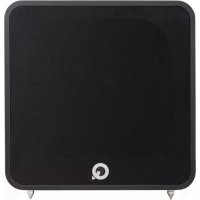
QB 12 - Subwoofer Q-ACOUSTICS - Free user manual and instructions
Find the device manual for free QB 12 Q-ACOUSTICS in PDF.



| Brand | Q-ACOUSTICS |
| Model | QB 12 |
| Product Type | Active Subwoofer |
| Subwoofer Type | Infinite Baffle |
| Dimensions (W x H x D) | 426 mm (height with spikes); depth and width not specified |
| Weight | 21.5 kg (47.4 lb) |
| Power Supply | Mains, power cord supplied |
| Amplifier Power (max) | Not specified in the manual |
| Frequency Response | Not specified in the manual |
| Inputs | LFE input (RCA), stereo L/R inputs |
| Controls | Phase (0°/180°), crossover (crossover frequency), level (volume) |
| Power Mode | Auto (auto standby) or ON (forced on) |
| Warranty | 1 year (extendable to 2 years upon registration) |
| Maintenance | Slightly damp cloth, no solvents or abrasive products |
| Safety | Do not expose to water or humidity; unplug before storm; maintain sufficient ventilation |
| Feet | Adjustable spikes with protective caps for delicate floors |
| Supplied Accessories | Power cord, spikes, protective caps |
Frequently Asked Questions - QB 12 Q-ACOUSTICS
User questions about QB 12 Q-ACOUSTICS
0 question about this device. Answer the ones you know or ask your own.
Ask a new question about this device
Download the instructions for your Subwoofer in PDF format for free! Find your manual QB 12 - Q-ACOUSTICS and take your electronic device back in hand. On this page are published all the documents necessary for the use of your device. QB 12 by Q-ACOUSTICS.
USER MANUAL QB 12 Q-ACOUSTICS
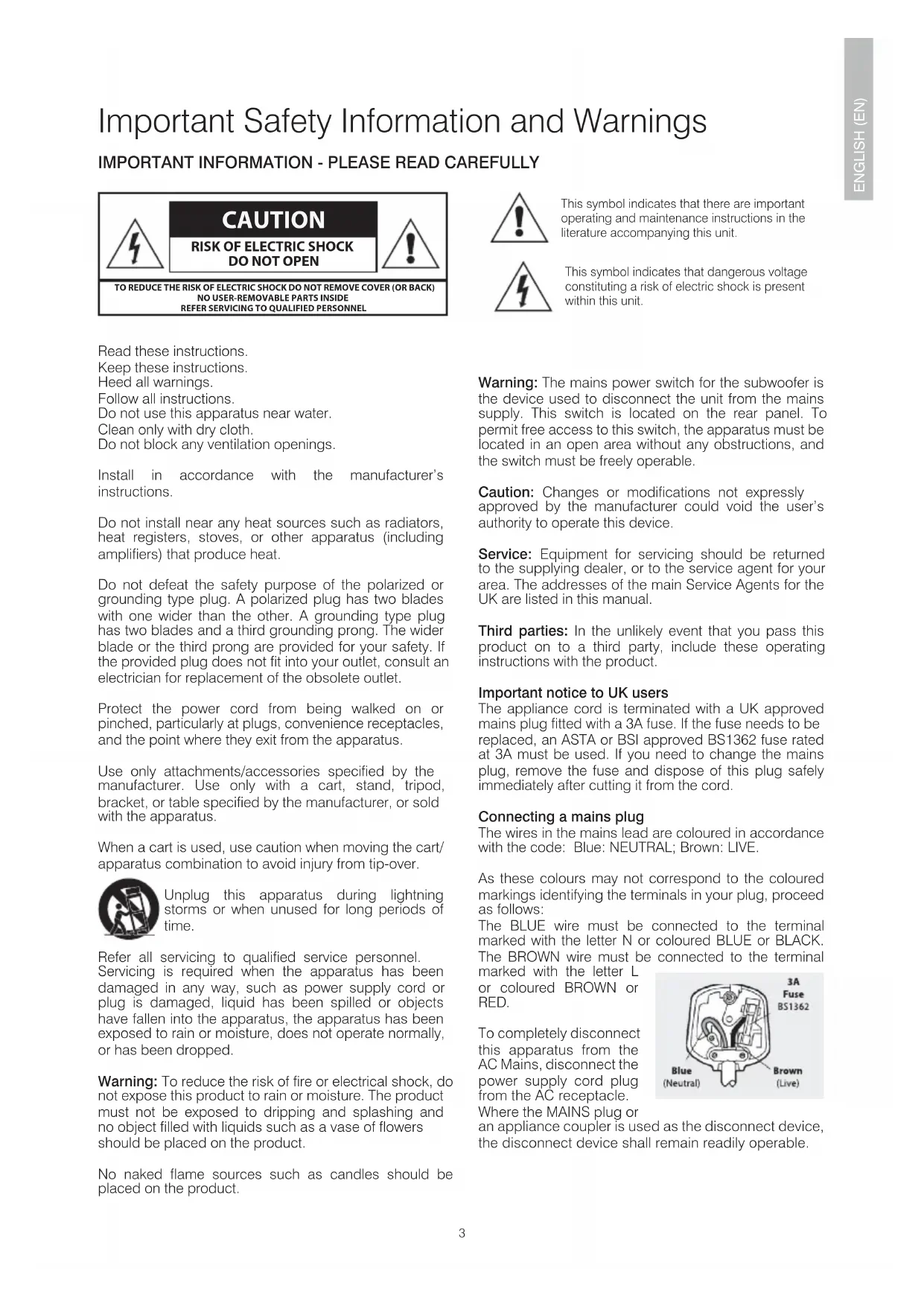
This symbol indicates that there are important operating and maintenance instructions in the literature accompanying this unit.
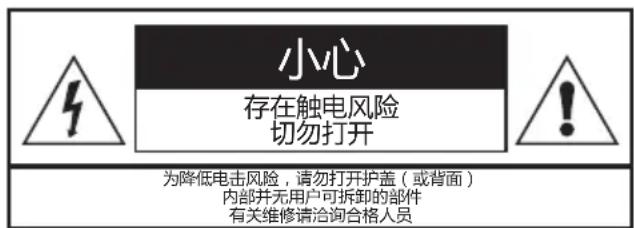
This symbol indicates that dangerous voltage constituting a risk of electric shock is present within this unit.
Read these instructions.
Keep these instructions.
Heed all warnings.
Follow all instructions.
Do not use this apparatus near water.
Clean only with dry cloth.
Do not block any ventilation openings.
Install in accordance with the manufacturer's instructions.
Do not install near any heat sources such as radiators, heat registers, stoves, or other apparatus (including amplifiers) that produce heat.
Do not defeat the safety purpose of the polarized or grounding type plug. A polarized plug has two blades with one wider than the other. A grounding type plug has two blades and a third grounding prong. The wider blade or the third prong are provided for your safety. If the provided plug does not fit into your outlet, consult an electrician for replacement of the obsolete outlet.
Protect the power cord from being walked on or pinched, particularly at plugs, convenience receptacles, and the point where they exit from the apparatus.
Use only attachments/accessories specified by the manufacturer. Use only with a cart, stand, tripod, bracket, or table specified by the manufacturer, or sold with the apparatus.
When a cart is used, use caution when moving the cart/ apparatus combination to avoid injury from tip-over.

Unplug this apparatus during lightning storms or when unused for long periods of time.
Refer all servicing to qualified service personnel. Servicing is required when the apparatus has been damaged in any way, such as power supply cord or plug is damaged, liquid has been spilled or objects have fallen into the apparatus, the apparatus has been exposed to rain or moisture, does not operate normally, or has been dropped.
Warning: To reduce the risk of fire or electrical shock, do not expose this product to rain or moisture. The product must not be exposed to dripping and splashing and no object filled with liquids such as a vase of flowers should be placed on the product.
No naked flame sources such as candles should be placed on the product.
Warning: The mains power switch for the subwoofer is the device used to disconnect the unit from the mains supply. This switch is located on the rear panel. To permit free access to this switch, the apparatus must be located in an open area without any obstructions, and the switch must be freely operable.
Caution: Changes or modifications not expressly approved by the manufacturer could void the user's authority to operate this device.
Service: Equipment for servicing should be returned to the supplying dealer, or to the service agent for your area. The addresses of the main Service Agents for the UK are listed in this manual.
Third parties: In the unlikely event that you pass this product on to a third party, include these operating instructions with the product.
Important notice to UK users
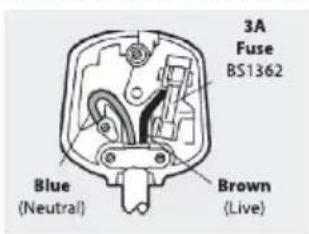
The appliance cord is terminated with a UK approved mains plug fitted with a 3A fuse. If the fuse needs to be replaced, an ASTA or BSI approved BS1362 fuse rated at 3A must be used. If you need to change the mains plug, remove the fuse and dispose of this plug safely immediately after cutting it from the cord.
Connecting a mains plug
The wires in the mains lead are coloured in accordance with the code: Blue: NEUTRAL; Brown: LIVE.
As these colours may not correspond to the coloured markings identifying the terminals in your plug, proceed as follows:
The BLUE wire must be connected to the terminal marked with the letter N or coloured BLUE or BLACK. The BROWN wire must be connected to the terminal
marked with the letter L or coloured BROWN or RED.
To completely disconnect this apparatus from the AC Mains, disconnect the power supply cord plug from the AC receptacle.
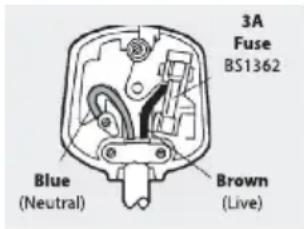
Where the MAINS plug or an appliance coupler is used as the disconnect device, the disconnect device shall remain readily operable.
Introduction
Thank you for purchasing Q Acoustics.
This manual is intended to take you through setup and installation and will help provide optimum performance from the product.
Please read the instructions, important safety information and warnings carefully before installation and use, to ensure the safe and satisfactory operation of this product.
The Q Acoustics Q B12 subwoofer is designed to meet the highest expectations of dedicated 2-channel audiophiles and discerning movie enthusiasts. It features a dedicated class D power amplifier and 305mm (12 inch) driver.
In the carton you will find:
- QB12 Subwoofer
- Owner's manual.
- A mains power cord or cords to suit the country of sale.
- 4 spikes, locking nuts and spike covers.
Check the product carefully. If any items are damaged or missing, report this to your dealer as soon as possible.
We hope you enjoy the Q Acoustics experience.
For any additional info not contained within this manual, support questions and/or requests, please visit our on-line Knowledge Base Portal at www.qacoustics.co.uk/faqs
Preparation

Lift the speaker from the carton by holding the cabinet. Do not touch the driver unit or use the protective bag to lift it. The QB12 is very heavy - get assistance to lift it if necessary.
Thread the locking nut onto the spike and screw all four spikes into the threaded inserts on the subwoofer. If you have a wood or stone floor push a spike protector over each spike before turning the speaker upright. When the speaker is the right way up adjust all the spikes until the loudspeaker is level and stable.
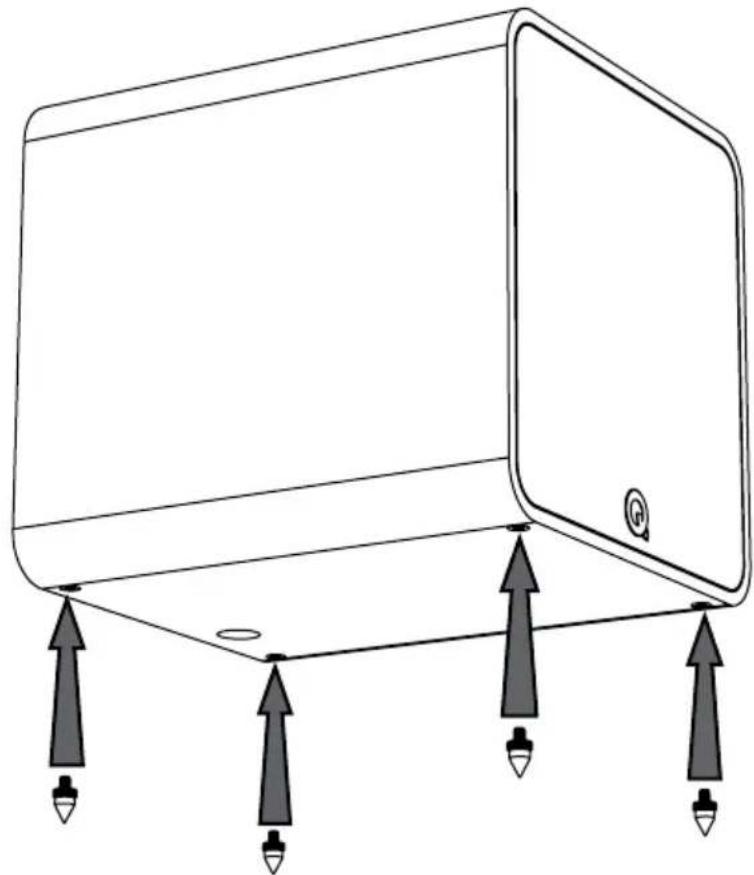

Spikes are sharp. Exercise care! Never place a spiked loudspeaker where it can cause damage! Always move your loudspeakers by lifting them - never drag them!
Positioning
Bass frequencies are substantially omni-directional. Although this means that you can position the subwoofer almost anywhere, the stereo image will still benefit from positioning the subwoofer in line with the front loudspeakers and as central to the listening position as possible. This may not be feasible in a multichannel system. If you place the subwoofer too close to a wall the bass will be reinforced, therefore in some locations the bass may be boomy and indistinct.
The POWER Switch is the means of disconnecting this apparatus from the mains supply and is mounted on the control panel.
When positioning the subwoofer ensure the floor is sound with no loose floorboards etc. The air movement from the subwoofer at high volumes is substantial - do not place it close to soft furnishings or objects that may rattle. Do not place objects of any kind on the unit.

All the loudspeakers may be operated close to TV monitors with no ill-effects with the exception of the Q B12 which should not be operated within 500mm of TV screens monitors or other magnetically sensitive equipment. Plasma and LCD screens are unaffected.
Controls and Connections
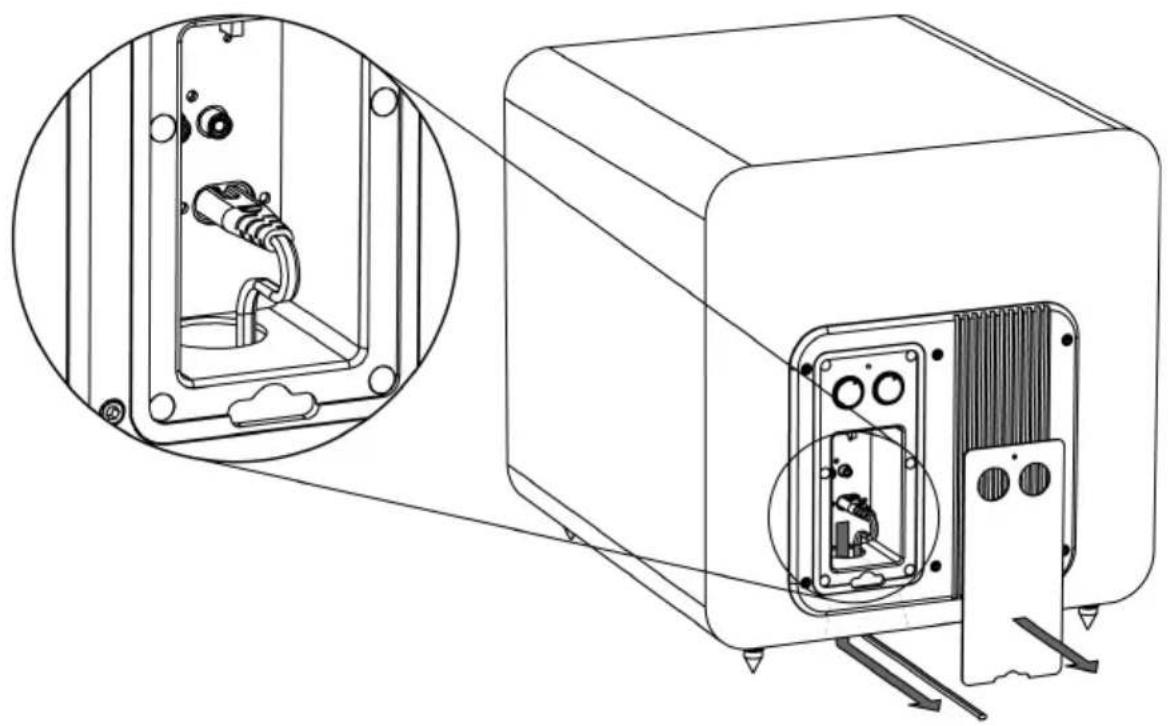
Controls and Connections
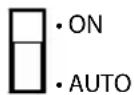
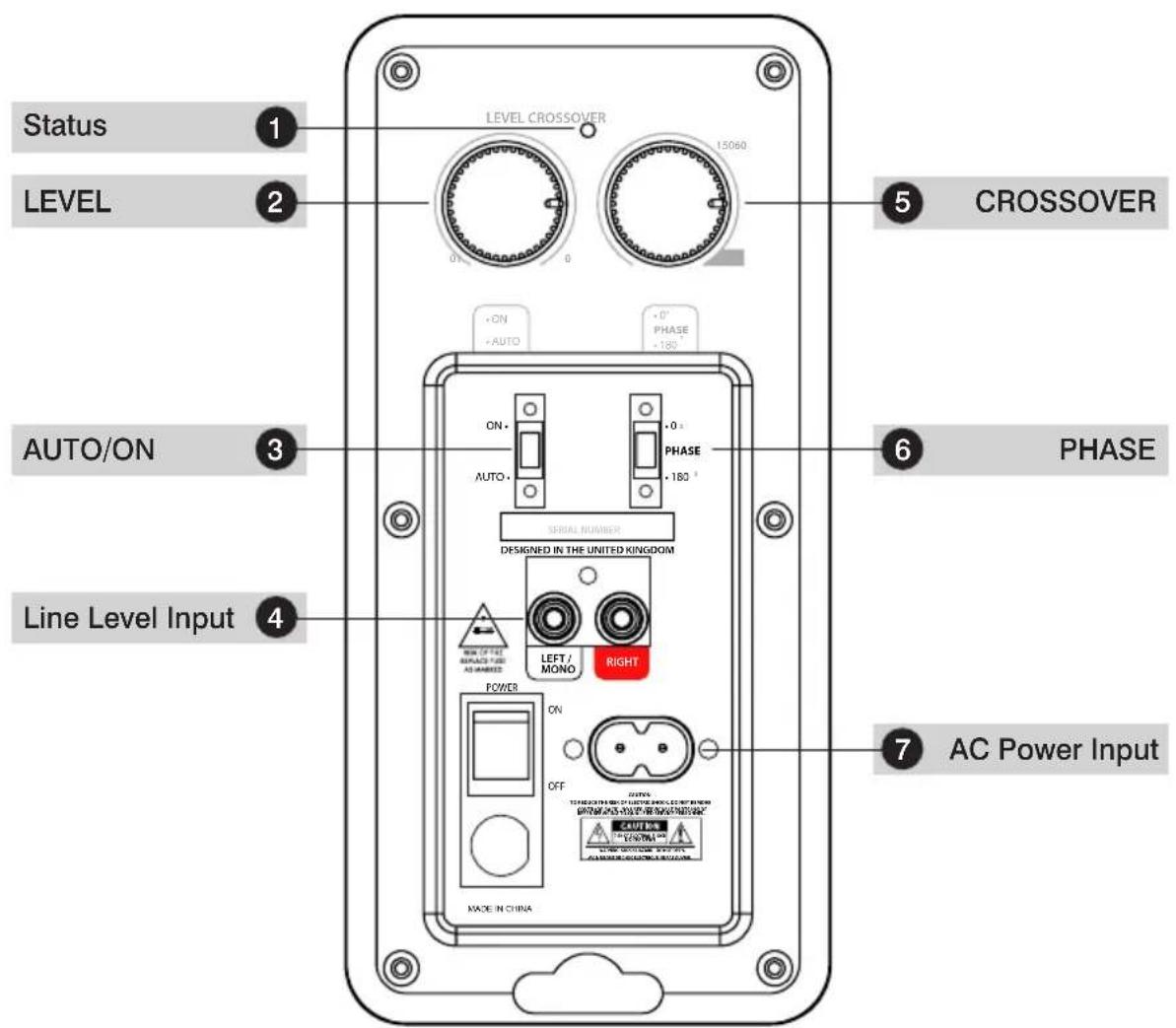
With this switch set to AUTO, when not in use the subwoofer shuts down to save power and switches on when it senses a signal. This can be over-ridden by switching ON.
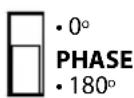
The Phase Switch (2) changes the phase of the subwoofer so that it works in phase with the rest of the speakers in the system. Place the subwoofer more than 1 metre away from the front speakers and switch the phase between 0^ and 180^ . When the subwoofer sounds louder and fuller then it is in phase.
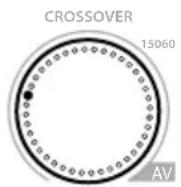
The Crossover Control (3) changes the pitch at which the subwoofer starts to work. It is recommended that the crossover point is set to the 'AV' setting on the dial when used with a Q Acoustics system. If you are using the subwoofer with a non Q Acoustics system then you can change the crossover point to suit your system.
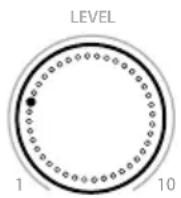
The Level Control (4) increases or decreases the volume of your subwoofer in relation to the other speakers in the system. Start with the volume at 0 on the dial then turn it up slowly until you can hear it. The subwoofer should be heard as part of the overall sound and not overpower the rest of the system. There is no rule for setting the volume on your subwoofer so experiment with different music and films to set it to your tastes.
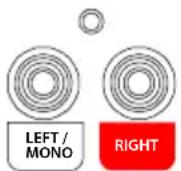
The Line Level Input-LFE (6) is Q Acoustics preferred AV connection to the amplifier.
Connect the subwoofer to the output on your AV amplifier or DVD player. Use R and L if your amplifier output is split left and right.
Multi-Channel AV System
For Stereo System connection, see next section.
Connections
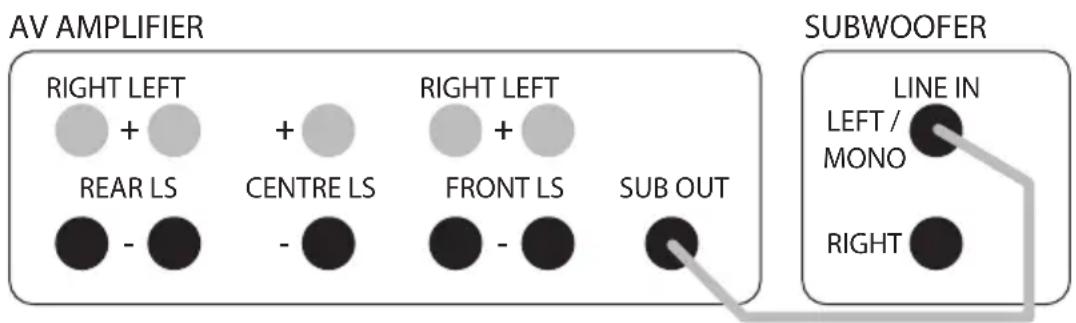
For a typical AV system set-up you will need a single RCA phono interconnect. As this cable is likely to be quite long, make sure you get a good quality fully screened cable. Your Q Acoustics dealer will be happy to supply you with a suitable interconnect.
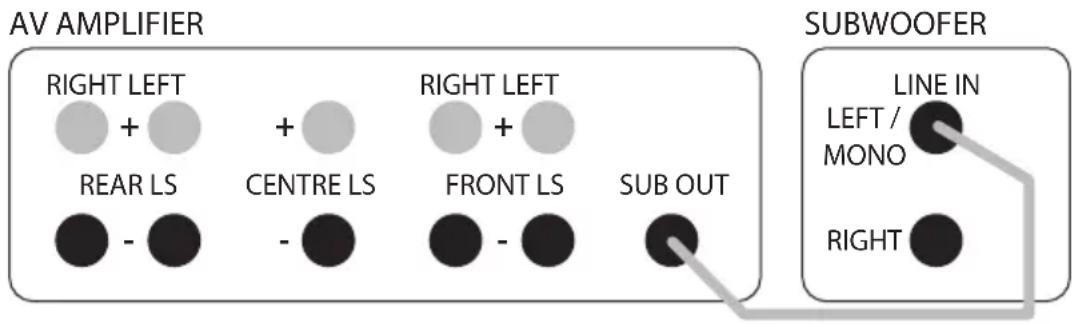
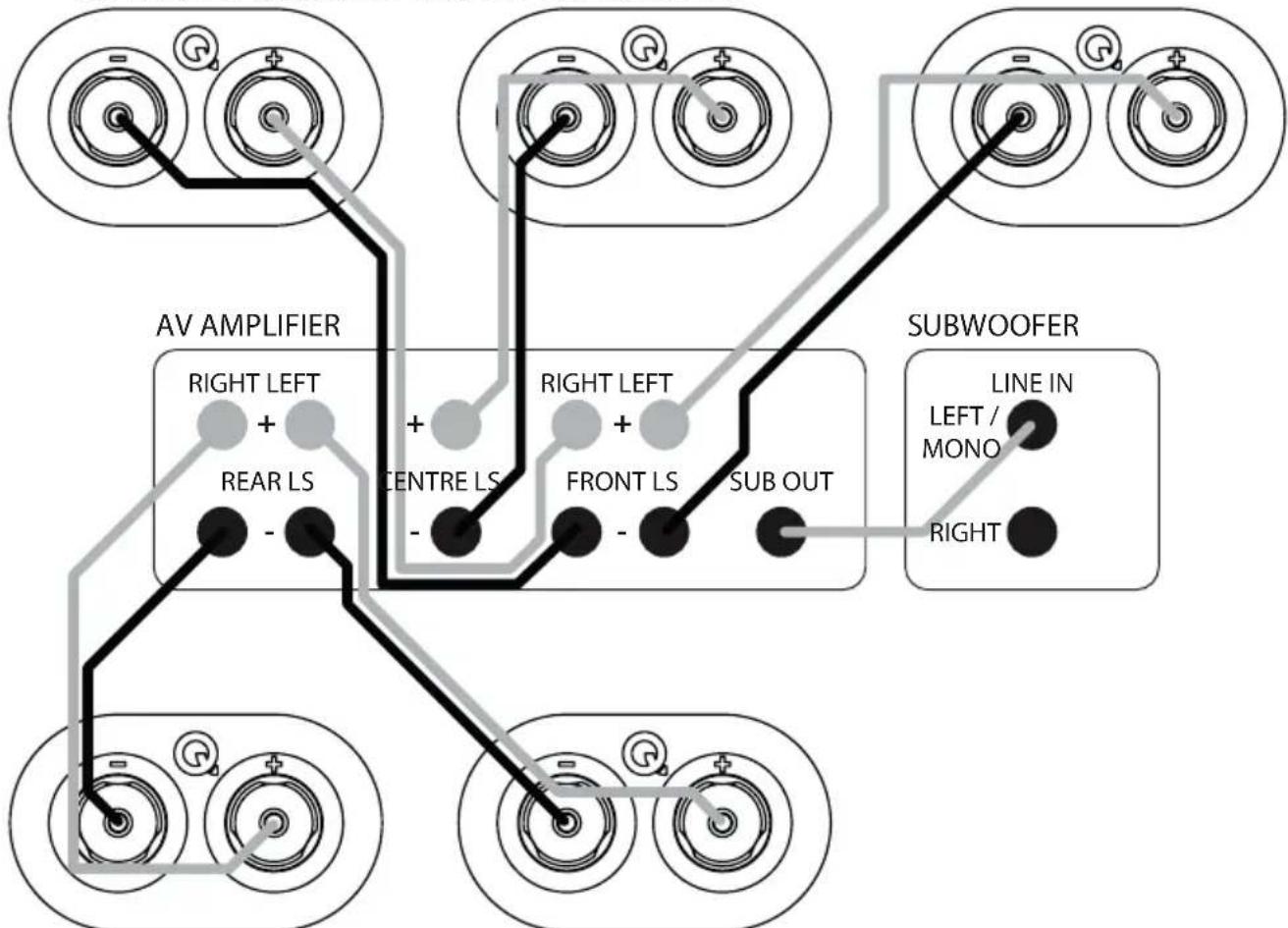
Connect the SUBWOOFER OUTPUT on the AV amplifier to the L/Mono Line input on the subwoofer, pushing the plugs firmly home to ensure a good contact.
Setting Up
Check that all system connections are properly and securely made. Ensure that the subwoofer is switched off.
Set the controls to the following default settings:
| Level | Approximately | half |
| Crossover | Fully clockwise (AV setting) | |
| Phase invert | 0° | |
| Auto on | AUTO or ON |
Plug the supplied power cord into the subwoofer and then into an AC supply socket. Switch on the power at the supply socket and then switch the POWER switch on the subwoofer to 'ON'. The Status light on the subwoofer amplifier panel will glow and the subwoofer is operational.
Check the settings on your AV amplifier to make sure that the subwoofer is set to 'ON' or 'YES'. The subwoofer level on the AV amplifier should be set at its default position or 0dB. You should already have set the speaker sizes and positions for all the other speakers in your system. If you have the option to set the crossover frequency on the other channels make sure this is set appropriately to your speakers. Finally, set the distance (or delay) setting that is correct for the subwoofer position you have chosen.
Multi-Channel AV System
Play some stereo music you are familiar with and experiment with the PHASE setting and LEVEL controls until you hear a seamless blend between the front speakers and the subwoofer. If you can hear the subwoofer standing out it's too loud!
Always bear in mind that the human ear's sensitivity to bass varies enormously with the volume level, hence the need for a wide range of programme material and sound levels.
Many Home Theatre amplifiers have distance settings which build in a time delay depending on the distance of the speaker from the optimum listening position; the sweet spot. The location of the subwoofer is one of the most important aspects of any Home Theatre system, therefore getting these settings correct will give a significant improvement to the system's overall performance.
Do not adjust to more than +/-0.5m from the original measured distance. If it has not been possible to discern any improvement in the tone, try swapping the PHASE switch position on the Q B12 and repeat the exercise. Then re-check the sound with some stereo music again to make sure an improvement has been noticed.
If the Q B12 is subsequently moved relative to the other speakers reset the amplifier's subwoofer distance setting to the new value and repeat the exercise. Once you are happy the optimum setting has been achieved the sound should be full, warm and integrated, with no individual speaker being dominant.
If the subwoofer is triggered on by appliances switching on and off, re-route the input signal cable before taking further measures.
Multi-Channel AV System
When running loudspeaker cables be especially careful not to run them across open floor areas where they could be a source of danger. Run loudspeaker cables around room boundaries whenever possible. Line level signal cables should be run away from mains cables. Never run line level signal cables parallel to power cables especially on long runs.
If the subwoofer is triggered on by appliances switching on and off, re-route the input signal cable before taking further measures.
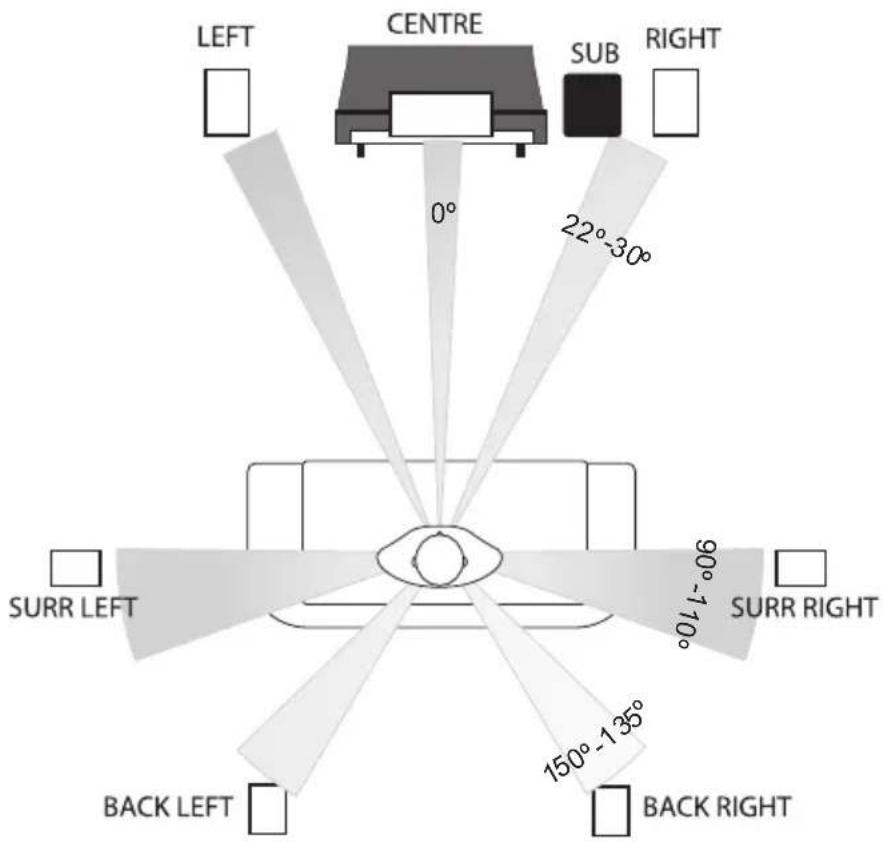
Placement: The Front and Centre speakers should be in line. If this is not possible, consult your processor manual for guidance on adjusting relative centre / front delay times. If you have a 5.1 system, the listening seat can be closer to the rear wall. As always, be prepared to experiment.
Bass Management:
AV processors offer the choice of 'Large' or 'Small' for the speakers. If you choose 'Large' the speaker receives the full frequency. Choose 'Small' and the bass is sent to the Subwoofer. We recommend you choose 'Small' for bookshelf speakers wherever they are used in the system. The floorstanding should be set to 'Large'. The subwoofer option should be enabled (set to 'ON' or 'YES')
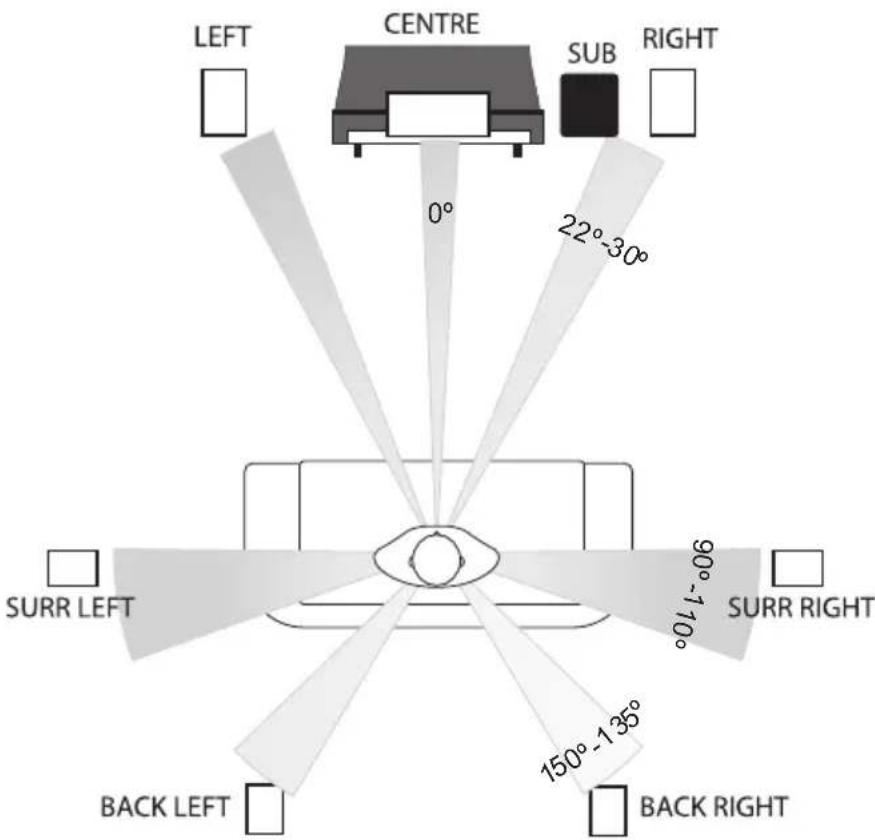
Above is the Dolby Labs recommended layout for 7.1systems. The 6.1 layout is the same except a single central speaker replaces the two back units. The 5.1 layout has no back speakers
Levels: When the basic system parameters have been established, put your processor into the 'setup' routine. Set up each individual speaker so that the level is the same at the listening position as all the others. If your processor enables you to adjust the delay times, follow the instructions closely as this will profoundly affect the final result. When you play a movie you may think the rear channels are too soft - they aren't! You may however have to adjust the subwoofer level both at the processor and at the subwoofer. Once set, do not re-adjust these levels.
LFE: The LFE channel sends all the bass sound effects to the subwoofer. If speakers are set to 'Small', system bass from those channels is also sent to the subwoofer. If you play the system at extreme levels and / or have the subwoofer level set too high you may overdrive the subwoofer with unpleasant sonic results. If this occurs, reduce the level immediately.
Phase: If your speakers are incorrectly wired the bass will be blurred and thin. In this case, check the wiring carefully. If your speaker wire has a tracer along one core, consistently use the striped core to connect all the positive (RED) terminals. In this way the system will always be in phase.
Always follow the instructions in your AV processor manual!
Stereo System
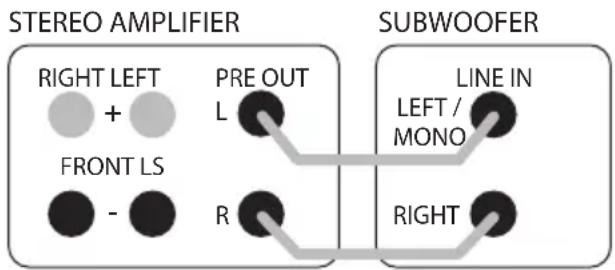
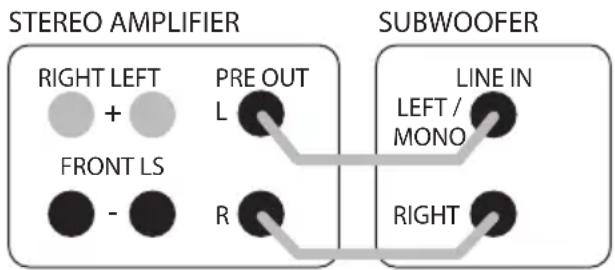
Connect a good quality stereo RCA phono lead to the L and R inputs on the Q B12 and connect the other end to the PRE OUT sockets on the rear of the amplifier. The subwoofer will automatically add the L and R signals together so that no information is missed.
If you wish to use two subwoofer then you can run a single RCA phono cable to each subwoofer and thus have a stereo subwoofer system. Ensure that the L output on the amplifier goes to the left hand side subwoofer and R to the right hand side to preserve the stereo image of the main speakers. The subwoofer will need to be placed close to their respective main speakers and the set-up will need to be done separately for each subwoofer.
Stereo System
Setting Up
Check that all system connections are properly and securely made. Ensure that the subwoofer is switched off. Set the controls to the following default settings:
Level Approximately half
Crossover Minimum (50Hz) for large floorstanders and halfway (100Hz) for bookshelf or small speakers
Phase invert 0^
Auto on AUTO or ON
Plug the supplied power cord into the subwoofer and then into the AC supply socket. Switch on the power at the supply socket and then switch the POWER switch on the subwoofer to 'ON'. The Status light on the subwoofer amplifier panel will glow and the subwoofer is operational.
Play some music you are familiar with and experiment with the PHASE setting and LEVEL control until you hear a good blend between the front speakers and the subwoofer. If you can hear the subwoofer standing out it's too loud!
Always bear in mind that the human ear's sensitivity to bass varies enormously with the volume level, hence the need for a wide range of programme material and sound levels. Once you are happy with the sound you can then fine tune the performance by using the remaining controls.
CROSSOVER: The crossover control determines the frequency above which your subwoofer output begins to diminish. This should be set so that it corresponds with the frequency your main speakers begin to produce a strong output by themselves. The adjustment allows for a smooth handing over between subwoofer and main speaker output. If this setting is too low there will be a 'hole' in the sound where certain frequencies are weak, conversely if it is too high there will be an exaggeration of certain frequencies producing an overpowering bass. You can get an idea of the correct setting from your main speakers' specification sheet. Look for the lowest frequency that the speaker produces (the "-3dB point") under the "Frequency Response" heading. Room positioning has a dramatic effect on low frequency reproduction of both the subwoofer and your main speakers so don't be worried if you find you require a setting which does not correlate with the specified low frequency point of your main speakers.
Aftercare
Cabinet Care

Clean cabinets only with a lightly dampened cloth. Do not use solvent based cleaning materials. Never use abrasives of any kind.
The cabinet surfaces will usually only require light dusting. Should an aerosol or other cleaner be used, apply the cleaner onto the cloth first and not directly onto the product. Test a small area first, as some cleaning products may damage the finish. Avoid products that are abrasive, or contain acid or alkaline agents. Do not use any cleaning materials on the drive units and avoid touching them as damage may result.
Grilles
Grilles should only be cleaned using a soft brush when necessary.
Drive Units
Do not touch the drive units as they are easily damaged when exposed.
Warranty
Q Acoustics subwoofoers are warranted free of defects in materials and workmanship for a period of 1 year from the date of purchase. During the warranty period Q Acoustics will, at its option, repair or replace any product found to be faulty after inspection by the company or its appointed distributor or agent.
Misuse and fair wear and tear are not covered by warranty.
Goods for repair should in the first instance be returned to the supplying dealer. If this is not possible contact Q Acoustics or their appointed distributor for your area to determine the correct warranty procedure. If possible, the original packaging should be used to return the product as damage sustained during transit to the repair centre is not covered by the warranty. The warranty does not in any way affect your legal rights.
Warranty can be extended to 2 years by registering your product at www.qacoustics.co.uk/register.
For service information contact: support@qacoustics.co.uk
Q Acoustics
Woodside 2, Dunmow Rd
Bishopstortford,Herts,UK
CM23 5RG
Specifications

Active Subwoofer
Enclosure type:
Bass unit (mm):
Peak Amplifier Power:
Continuous Amplifier Power:
Frequency range:
Cabinet dimensions (WxHxD):
Weight:
QB12
Infinite baffle
305 mm High-excursion driver (12.0 in)
440W
220W
28 Hz - 300 Hz
400 × 400 × 446 ~mm (15.7 × 15.7 × 17.6 in)
426 mm (16.8 in) incl. spikes
21.5 kg (47.4 lbs)

ACOUSTICS

ACOUSTICS
Woodside 2, Dunmow Rd
Bishops Stortford, Herts, UK
CM23 5RG
Technische Daten

Aktiv-Subwoofer
Gehäusetyp:
Tieftöner:
www.qacoustics.co.uk/register.
Woodside 2, Dunmow Rd
Bishopstortford,Herts,UK
CM23 5RG
Especillasiones

Subwoofer activo:
Tipodecaja:
Unidad de graves:
Potencia maxima del
amplificador:
305 mm High-excursion driver (12.0 in)
440W
220W
28 Hz - 300 Hz
4
400 × 400 × 446 ~mm (15.7 × 15.7 × 17.6 in)
426 mm (16.8 in) inclure des pointes
21.5 kg (47.4 lbs)

ACOUSTICS
QACOUSTICS.CO.UK
www.qacoustics.co.uk/register.
Woodside 2, Dunmow Rd
Bishops Stortford, Herts, UK
CM23 5RG
Specifications

305 mm High-excursion driver (12.0 in)
440W
220W
28 Hz - 300 Hz
400 × 400 × 446 ~mm (15.7 × 15.7 × 17.6 in)
Woodside 2, Dunmow Rd
Bishops Stortford, Herts, UK
CM23 5RG
Specifiche
Woodside 2, Dunmow Rd
Bishopstortford,Herts,UK
CM23 5RG
Specifications

Achieve subwoofer
Behuizingtype:
Baseenheid:
305 mm High-excursion driver (12.0 in)
440W
220W
28 Hz - 300 Hz
400 × 400 × 446 ~mm (15.7 × 15.7 × 17.6 in)
426 mm (16.8 in) incl. kegels
21.5 kg (47.4 lbs)

ACOUSTICS
QACOUSTICS.CO.UK

ACOUSTICS
www.qacoustics.co.uk/register.
Woodside 2, Dunmow Rd
Bishops Stortford, Herts, UK
CM23 5RG
Dane techniczne

305 mm High-excursion driver (12.0 in)
440W
220W
28Hz-300Hz
400 × 400 × 446 ~mm (15.7 × 15.7 × 17.6 in)
426 mm (16.8 in) wraz z podpörkami
21.5 kg (47.4 lbs)

ACOUSTICS
QACOUSTICS.CO.UK

ACOUSTICS
Woodside 2, Dunmow Rd
Bishops Stortford, Herts, UK
CM23 5RG
Especificações

Active Subwoofer
Enclosure type:
Bass unit (mm):
Peak Amplifier Power:
Continuous Amplifier Power:
Frequency range:
Cabinet dimensions (WxHxD):
Cabinet height incl. spikes:
Weight:
QB12
Infinite baffle
305 mm High-excursion driver (12.0 in)
440W
220W
28 Hz - 300 Hz
400 × 400 × 446 ~mm (15.7 × 15.7 × 17.6 in)
426 mm (16.8 in)
18.5 kg (43 lbs)
Subwoofer ativo
Tipo de alojamento:
Unidade de graves:
305 mm High-excursion driver (12.0 in)
440W
220W
28 Hz - 300 Hz
400 × 400 × 446 ~mm (15.7 × 15.7 × 17.6 in)
426 mm (16.8 in) inc. gramps
Peso:
21.5 kg (47.4 lbs)

ACOUSTICS
QACOUSTICS.CO.UK

ACOUSTICS
Baxnay nHopmaun o mepax 6e3oNaChOCTN i npdUnpeKdHn
BAKHAR INHΦOPMALI—IOXKALYICTA, IPOUHTAITE BHIMATEJIbHO
DaHHbI CNMBON O3HaayeT, YTO B INΦoPMaUNHOHbIX NeaTHbIX MaTePnaJax K ΚΤΟΥ ΜόρуɒdOBaHɪŋ coæpχaTcB BaʌhBiye yKa3aHЯ.
AnHHbCMBBON O3Haayet,TO B 3TOM o6OpyOBaHN NMeETc ONaCHOe HApJxKeHne, HeCyuee B Ce6e pUck yDapa 3JIeKTPnueckmTOKOM.
IpoHTaTe DaHHyH INHCTpyKUIO.
CoXpaHnTe daHHyIO nHCTpyKcNIO.
PnIMTe K CBeDeHnIO BcpeDynpExHnIA.
CnedyTe Bcem yKa3aHnHaM.
He nnonb3yIne 3To o6OpdyOBaHnE 6nNnB0Dbl.
IIN OYNCTKO T3aPRAHENM NcNOLb3yITe TOJIbKO CyXyK TKaHb. He 3aKpbBaIte BEHTNIALIOHbIE OTBepCTn.
YCTaHaBIMBaIte 6OpOyIOBaHHe B COOTBeTCTBm C yKa3AHMn Ipon3BOJNTen.
He yctahabnbaite cntemy Bbni3 nctouhknOB tenna, taKnx KaKa BaTapeu, perncptpb otOnne HNY, kXOHHbE PNTBt NIN DpyrOe 06OpdyoBaHne (BTOMHCNE ycWnten),n3nyaiooe Teno.
He Hapyuaine 6eOnacHyo KOHCTpyKunIO nonpHON BUNKN IINBUNK 3aEMnIooero Tnna. POnapHAn BNkA IMeET Dba HOKeBbIX KOHTAKTa paHOH WnpHHb. BNkA 3aEmnHOoero Tnna IMeET DBAHOKeBbIX KOHTAKTa N 3aEmnHOoWn tTbp. IImpOKN KOHTAKTN 3aEMnIOO nTbtp. npedHa3NaYeHb dna ObecneHHe6eOnaCHOCTn. Ecnn BNkApnaraemoro Whypa NtAHn He noDxOuNT K BAue Po3eTke, o6patntEc b KnEeKTPnky dnaAMehbycTapeBweepo3eKn.
PpoknabBaeI HHP NtAHNA TAK, YTObNo Hemy He XOJIINN INTO6bEroHEMOHNEpeXaTb,OCOeHHOBMeCTaX pJOMC BUNKO, PO3ETKONMBMeTe BIXoJaN3ObOpyOBAHN.
NcnoB3yIte NCKIOHTENbHO npncnOc6eHNA/DOONHTenbHoe
OBOpD0BaHHe, peKOMeHNDBaHHbIe npOn3BOUInTeM. NcNoB3yIte
OBOpD0BaHHe TOnbKO C npnlaRaIOuIMMCa K Hemy IIN
peKOMeHNDBaHHbIMnpOn3BOUInTeM TeNEXKo, NOCTABKO,
HTaTbOM, KPOHHTeHOM INI CTOLOM.
PnncnoB3OBAHmTeoKKnIaNpcMeChHnOBOpDobAHn6yDbTe octopokhbl, TaK KaK B Cnyae ee onpOKnDbHaHn Bbl MOKeTe nOnyHTb TpaBMy.

OTKnouaIte obopydObaHne ot cetn BO Bpemr rpo3bI INBcnyae,ecNBI He CobpaTecb Nlb3oBaTbca IMIINNTbHoe Bpema.
Bce paobToI NO texHnueckomy o6cnykBaHmIO DOnKbI BblonHtbcra KBaHnOuPObAHbIM TexHnuecknmpcoHaON. TexHnueckoe 06cnykBaHme Heo6xOdmo Bclyae NobpeXeHnOBopdyoBaHn, HapnpMe npN O8pexJeHm UHypa NITaHn INN BnIKN, NnonaHn XJNDKocTN ININ dpYnx PpeMTeo BVHTpb O6pOyDobAHn, BO3neCTBn IOxNn INN BnAIn, C6oeB B paobTe o6opyoBaHn INN erO naDeHn.
BHHaHHe! BO n36eXaHHe BOCnMaHcHHe HUN yDapa 3neKtpueckm TOKOM, He noDBepraTte o6OpdyoBaHHe BO3eIcTBIO DoJDA HIN BnA. Ha npOyKT He DOnXHbI nonaTaB KaNN KxNkocTn. He cNe dyET CTaBtB npEIMTe, HAnONHeHHbIe XNkKOCTbO, KaH AnpImep Ba3 a CBTAMn, HA CNCTeMy.
HeIb3pa3MeaTaHaN3eJINHCTOCHNIOTKpbITOroTnAmEH, HapnpMep CBeH.
BHHaHHe! CTeBOI BbKIOUaTeN IIN cabBypepa npedHa3NaueH IITORO, yTObI OTKIOUaTb erO oTeN PHTAHIN. 3OT peKIOUaTeN HAXOHTcH Ha 3aDHe N aHEIN, YTObI OBeCneHTb CBOODHb IOCTyn K DaHOMy nepeKIOUaTeN, ObOpdyOBaHn DoJXHO HaxoNTbcB B OTKpbTOn 30He 6e3 KaNX-1NO MExaHueckn IpeneTCTBN. HeoXoIMO, YoTObI nepeKIOUaTeN MoXHO bIo JERKO BkIOUHTb INI BbKIOUHTb.
BnMaHHe! N3MeHeHH B o6OpyObaHnn, KOtOpBe He 6bIin npraMo Oo6peHb IpnON3BDmTeHem, MOrY IINuHTb NON3OBaTeHn PpaBa EKcNpyaTnpoBaTb DaHHe O6OpyObaHne.
TexHueckoe 06cnyKBAHne. O6OpDcBAHne, noJnHexaee texHueckomy 06cnyKBAHIO, doJNHO 6bIb Bo3BpaUeHO dInepyIOCTaBNIky cepBCHOMy aReHTy, JeINCTByOuEMy B BaIeM perNoHe. AApeca oChOBhix cepBCHbIX areHToB B BenIKo6pTuHH yKa3aHBi B DaHHom pyKOBOdCTBe.
Ipepa TpebIM liam. IB TOM cnuyae,ecn Bbl npepaTe 60bpyoBaHHe Tpebmy liu, npnoKIne K Hemy daHHOe pykoBOCTBO NO kCNyatauM.
BaxHoe npIMeHaHne dna nonb3OBeTaeJe BEnko6pTaHn
Ha KOnHue Hpya HnTaHn HaxoHTc HtencbHa Bnka, Oo6peHHa Dn NcNoB3OBaHn B Benko6pTaHHn O6OpyOBOAHHn PnpExpaHnTelem Ha 3 A. Fcn Bam Heo6xOIMo 3aMeHnTb np6oxpaHntB, nCnoB3yHe Oo6peHHn AccouaHnei no NcblTAHAM TokAMn KopoTKoro 3aMbKaHn (ASTA) nn BpTaHCKm INCTHTyOM CTaHapTOB (BSI) np6oxpaHntB BS1362 HA 3 A. Ecn Bam Heo6xOIMo 3aMeHnB tIeNcebHyIO BuKy, CHIMATE np6oxpaHntB n noCeT TOR, KaK OTpeKeTe ee ot Hpya NtHa, He3ameJInTeBHO 6eONaCHO yTNINbNpyte ee.
PoiKIOUcHHe WTeNCeBHOB BUNK
PpOBOa B nHTaiOeM npOBoE okpaueHb no cneDyioeMy npHnny.CHH:HEITPAJIbHbI INPOBO;KOpuHeBb:INPOBOID NOHAPJXKEHEM.
Tak KaT 3TN UBeTa MOryT He CoBnadaTb C UBeTHbIMN OTMeTKaMn Ha nonocax BaIeH BUNK, BInONNHte CnElyIOUne JeicCTBn. CINHn npoBOd HxJHO CoeINHTb C NOIKOCOM, IMCIOUm OTMcTKy "N" nIn OkpaenHHbM BCINHn nn EEPHbI uEBt. KOPNUHEBbl npoBOd
HeoXoDIMO COeHNHTb C
NONOCOM,IMEOOM OTMETKy
"L" INN OKpaHHeHbIM B
KOPNUHEBbl INN KPACHbl
UBet.
TTO TRO BIOI NHOCTBIOOKNHITb 06opyoBaHnCOT CEN NEPEMEHOROTOKA,OTCOEHNHTe HHP NHTAHNOr PO3ETK.
Ecnn stencenbHa Bnka nn pa3bem nCnoNb3yOTc KaKa pa3beHnHkoee yCTpOoiCTBO, daHHoe yCTpOoiCTBO dONKHO 6bTb BCerdaBpa6oHemcoCTOHN.
В级以上
Bxod Hn3Knx yactOT nHeHOrO ypOBHg (6) - npednoHTaembQ Acoustics cnoc6 AV-noknueHn K ycuiTeHIO.
IopKIOUHTe ca6Byfep K BbIXOy AV-peCnBepa nn npOnrPbBaTeTaN DVD. NcNoJIb3yIte IeBbIn n IpaBbIn BxOdbI, ecNn BbIXoD BaWeRo ycINITeR pa3deneH ha IeBbIn n IpaBbIn.
MHOROKaHaJIbHaaydIOBn3yajbHaCNCTeMa
INΦopMaζη O NOKloueHn Ctepeo3BykoBOn CnCTeMb I npVeBeHa B CneDyUoεm pa3dJe.
CoeDInHeHn
Ctanhapthoe nocknuehe nponcxoind tpe3 rhe3do coeHHnna Tnpa «TIObnaH» Iny noKluyehn 3BykoBOrKa6en.ДЯ uCTaHOBk TINOBOyauNOB3yAALbHOcNCTEmbl Bam NOTpe6yeTcEHNCTBeHHOE coeHHNTelbHOe yctpoiCTBO, KOTOpoe 6ydt NOKJIQUaTbcra K pa3bemy Tnpa «TIObNAH’. Tak kak 3tot Ka6eNb O6bUH0 6bIbaet DnnHHbIM, y6eINTEcb, YTO OH XopoWero KaueCTBa n NOJHOCTbO EKpaHnPOBaH.
Bau dinep Q Acoustics Bcerda roTOB npeIIOXkNTb Bam IOxOaun Ka6eJIb.
IopknIOUHTe BblXOD «CAbByΦEP» ha aydnOBn3yajbHom ycHInTeNe K BXoHOMy pa3bemy «J/MOHO» Ha ca6ByΦepe, npouHo 3akpenINB WteNcBHyIO BnIKy drr oBeCneHnXopoWero KOHTaKa.
Hacroka
Y6eINTEcB, YTO BCE NOIKIOUeHn IpOIN3BeIeHbI IpaBnIbHO n HaeXHO. Ca6Byep dOnJKeH 6bITb BbIKIOUeH.
YCTaHOBNTe CneDyIOUne npaMeTpbl NO yMOJuaHIO:
UpoBHeNb Pn6n3ntelbHo CpeHni KpoccoBep NOnHocTbIO no yacobOy cTpeKe (HaCtpoiKa AV) NepeKIOuOaTeIb 0' Auto on AUTO nIN ON
BCTaBbTe npnlaRaIoUmciuShypr nntaHnB ca6Byeep u po3eKyu nepemehoro ToKa. IoeknouHTe 3neKTpoTOK nnoCTaBbTe BblKnluOaTeJIb nntaHnB ca6Byeepa B noLoXeHne "ON". Hndnkatop nntaHnHa naHeIyCunNTeIaCa6Byeepa 3arOpntcra. Utak, ca6Byeep roTOB K pa6ote.
IpoBepbTe HacTpOkn Ha BaWem AV-pecuBepe, yTo6bl y6eHtbcra, yTo ca6Byeep yCTaHOBJIeB B noLoXeHne "ON" uIN "YES". YpoBEnb ca6Byepe ha AV-pecuBepe dOnJxeh 6b1b yCTaHOBJIeB B noLoXeHne no yMOnUaHnIO uIN Ha O DB. Bbl DoJXhbl 6blnn yJx eYcTAHOBITb pa3MepbI KOJONKn N Bb6paTb MeCTONoLoxeHne DnB CEx OCTaJIbHbIX KOJIOHOK ayDIOOCNCTEmbl. HakoHeU, yCTaHOBITe npaMeTpbl pacCToRnHn (uIN BpeMeHN BblEepKKn), COOTBEcTByIOUe Bbl6paHHOMy Bamm MecTONoLoxeHnO ca6ByepeA.
Ponpo6yntpe npnrrpaTb Kakyu-Hn6ydb Ctepe03aNNcB, KOtOpU Bbl XopoO 3HaTe, INo3KcnepmEnTpuyTe cnapaMeTpamn nepeKJIouateTnfa3bl n peryJlTopa ypOBHn, Noka He ycIbIiHTe PIIaBHO ndyuiN 3ByKOBoi CNrHal, PndctabJIIOUI CO6o CMecb ayDnOCnIHAnOB OT NepeHNK KOHOK iCa6Byfepa. Ecnny aynocnHaI ca6Byfepa cnllkOM BblJeIeTcR, 3TO 3NaHT, YTO OH nIgpaET CNIshKom rPOMko!
MhoroKaHaJIbHaaydIOBn3yaJIbHaCNCTeMa
ImeTe B BuNy, yTo cyBCTBnTEbHOCTb yeIOBeueCKOrO yxa K HuxHIM qACTOTaM 3HaunTeJIbHO MeHReTcB 3abNCIMOCtN OT rPOMKOCTN 3Byka, NToTomy Heo6xOJIMO IMeTb MHOKeCTBO pa3HbIX nporpaMM n ypOBHeN 3Byka.
Mhorne ycnnte nn Dn IOMaunx KInHoteaTPOB nMeOT npaMeTpbl paCtOHN, KOtOpbIe BCTpaNBAOT Bpem BbIepKKn B 3abncmocTN OT pacctoHNAOT KOJONHKD O ONTMaNbHO NOLOXeHNAcYMaTeJI, B 30He HauNyUwero BocnpnTn. MeToNoLoXeHne ca6ByΦepa YBJIeTcA ODNHM N3 BaXHeuNX acNeKTOB IIO6oro Domaunero KInHoteaTpa, No3Tomy UcTaHOBka npaBUNbHbIX npaMeTPOB B DaHHOM Cnyae 3NaHTeNbHO ynuWNT o6uee 3ByaHne CNCTEmbl.
He MeHnTe 6oJee Yem Ha NOpMeTpa N3HaayalbHo Bbl6paHHoe pacCTOHNHe. EcIn yIyUHTb 3ByK He ydaetc, nonpo6yIte NomeHrB napaMeTpbl nepeKlouaTeIa3b Ha ca6Byfope Q B12 n ChOba npOBepntb 3ByuHne. PpocnyuaiTe KaKyIO-HN6ydb CtepeofoHueckyIO 3aINCb, UTO6bl y6eINTbcB yIyuWeHn KaueCTBa 3Byka.
EcnBb6yTe MeHrMeTcOnIOJKeHne ca6ByΦepa Q B12 OTHCNTeHbHO npYnX KOHOK, yCTaHOBtte HOBOe 3HaueHne napameTpapacctOraHna Ha ycIITe ne c6ByΦepa n ChOBa npOBepbTe 3ByK. KaK TOnbKO Bam NOpBaNTcKaueCTBO 3ByuHn, MoKeTe CHTaTb, YTO BB bIbpaJI ONTMJaNbHbIe HAcTpoKN. 3ByK DOnJKeH 6bITb NOHbIM MMRKM. PpN 3OM HN OHa N3 KOLOHOK He DOJXHa BBeJIaTbCRA.
BlaOapra BbICOKoI yMOBOI MOHOCHTN, IINPOKOMy Dnana3OHU IN NOBOPOTbIM BbICOKOaCTOThbIM roNoBkAm, Q Acoustics ndealbHO IOxOJNT dIg NOTOnOuHON KOHfupauu.
MHorokhaJIbHaaydIOBn3yaJIbHaCNCTeMa
IPEHRAIPIABARLCEHTPAJIbHAIPEENRAJIEBAR
ObbEMHAnIINPABAHOBbEMHAnJIeBA
Korda Bby 6ydeTe npotraBbTa Ka6eN akyctnuecko cnCTembl, NOCTapaNTecb He npotraBaT bX nO OTKpbITbIM yuaCTkAm NOna, TaK KaT TaM OHN MOrY T ppeCTabNtB onaCHOCTb. IpotraBaIte npOBDa BDOJIb CTEn, rDe 3TO BO3MOxHO. Ka6eN CnHaJa LInHeHoro yPOBnCneDyeT PpOKlaDbIBaT B OTdAneHIN OT OCHOBbIX Ka6eN. HnkOrda He npotraBaIte Ka6eN CnHaJa LInHeHoro yPOBn NapaJIleNbHO C Ka6eJMI NITAHN, OcO6eHHo Ha 60nbWne paCCToHHN.
Ecni ca6Byep BkIIOuaeTcB pe3yIbTaTe BkIOUeHn I BbIKIOUeHn 6bITOBbIX npi6OpOB, n3MeHnte HappaBHeHne Ka6JIa BXoJHO rHana, IpexJe yem npHHMaTb daJIbHeIWe Mepbl.
PacnoOnoJHHe: NpeHnne n ceHTpaIbHa KONOHKa DOnXhbl HaxOaNTbCn Ha OdHOJ LInHH. Ecnn 3To He npedctabIeTcra BO3MOxHbIM, o6paTntEcB K BaWemy pyKOBoDCTBy NO EKcnNyatau nn pOueccopa, UTo6bl OTperyUnpoBaTb COOTBeTCTByUoUee Bpem BbldePkN dJa CEHTpaIbHo/ nepeHnx KOLOHok. Ecnn y Bac CnCTema 5.1, To MeCTO cnUwateMa MoKeT 6blb6nke K 3aJHne CTHe. Ka0 obHyHO, 6yNbTe rTOOBbl 3KcNepmEHTnpoBaTb.
PerynpoBaHne HxhNx yactOT: A ydi NOBu 3y aJbHbIe npoeccopbl npednaot BapnAHTbl «BoJbUOn» nIN Maje B OTHOWeHn KonoHok. EcnBbl Bb6epTe B JbUOn, TO KOJOhKa 6ydet NOJyATB NOHooCTOTbH 3ByK. Bb6epnte BapnAHT Ma HN3Kne 3ByKObIe qACTOTbl 6ydt HApBaJIeHbI B ca6ByΦep. Mbl peKomeHdyem Bam BblpaTb BapnAHT «MaJeHbKn» dJa ayDInOCNCTEm MoJeN noNoHbIe KOJohKn He3aBvCmO OT TOFO, rDe OHn 6ydt NcNoJIb3OBAtcba B ayDInOCNCTeme. B moJen HanoJbHa cJe dyet yctaHOBNTb
BbIe npBvEeHOb peKoMeHnyEmoe Dolby Labs pacnOIOKeHne nIra cIcTeM 7.1. Cxema dnnCnCTembl 6.1 OTNIuAeTc TOnbKO TeM, yTo eINHCTBeHHaueHTpaJIbHaJ KONOHka 3aMeHReT DBe 3aIHHe cekun. B KOHpyaun 5.1 3aHN He KOJIOHKN OTCyTCTBYOT.
napaMeTp 《Bolbwoi》.PnTOM Heo6xOJIMO BkIIOHTb ONUHO «Ca6ByΦep» (yCTaHOBtB B NOLOXeHne "ON" nn "YES").
YpOBHn. KOrda oCHOBhIe npaMeTpbl CnCTEmbl 6dyT HanaXeHb, 3anyCTnte nporpaMMy yCTaHOBKn I KOHfNpynpoBaHn B npoceccope. HAcTPOte KaJyIO KOLOHky TaK, YTObI C MeCTa, TKe HaxOHTcra CnytaTeB, IN Co BCEx OCTaNbHbIX MeC T Nx UpOBH 6bln OOnHaKOBbl. EcnB Baw npocccop No3BOJrER peYlnpObaT BpEM RaBdePckn, YETKO CNeDyTE IHCTpyKcun, TAK KaK 3TO 3HaHTeBHO uLyuHTI KOHeHb Pe3yIbTaT. KOrda Bbl 6yDeTe CMOTpeTB fNlbMbI, Bam MoXeT NOKa3aTbcR, YTO 3aHnE KaHaJIb 3ByuAT CnIIkOM TINxo, HO 3To He TaK! BO3MOXHO, Bam npndTCr OTperynipoBaT bUPOBHN Ca6Byfepe KaK Ha cAmOM ca6Byfepe, TaK n Ha npoccecope. Korda Bbl 3aJaNTe DaHHble npaMeTpbl, He MeHnIe nx.
Hn3KoactOTbIe 3000ekTbI: KaHAn Hn3KOaCTOTbIX 3000ekTob OTnpabnreT BCE Hn3KOaCTOTbIe 3000ekTbI Ha c6Byep. Ecn KOnOHKn yctahOBnEhbl B onuio «MaJeHbKn», HxHnue yactOTbl DaHHbX KaHaIOB TaKHe HnPaBnIOTc H a c6Byep. Ecn Bbl yctAHOBnTe BCNTeMe n (nIn) B c6Byepe BbcOKn ypOBeHb, Bbl MoKeTe Npeerpy3ntb c6Byep, n 3Byk 6ydt He npraTeH BaWeMy Cnyxy. Ecn Bbl CTOLKHynic b C TINM, HEmdJIeHNO NOHN3bTe ypOBeHb.
Φa3a. Ecnn Baun KOJIOHKn HnppaBnIbHO CoeINHeHbI, To HNXnue qactObl 6ydy T He npraTHbIMN IN Cma3aHHbIMN). B TaKOM cnyae Xopo0o npOBepbTe coeINHeHn rpoBOIOB. Ecnn y npoBOda KOnOHKn EcbTbnp6Op dnn OtbICKaHn NOBpeXJeHn no OdHn JxJle, nCnoJIb3yInTe NOLOCByU XnUy Dnna NOKIQUeHn BCex NONOKeITbHBix (KPACHbIX) NoIIOcOB. TaKm Obpa3OM CNTema Bcerda 6ydt B a3e.
Bcerda cneyuTe yka3aHnM, npednncAHbIM B pyKOBOcTBe NO EKcnnyaTaun Baueero aydnoBzayhoro npoueccopa!
Ctepeo3ByKOBaR cnCTema
IopKlOHTe KaueCTBeHHbI CtepeofoHnueckn npOBOD c coeHNHTeJAMN TnpA «TIOJIbNaH» dJa 3ByKOBOrO cnHaIa K BXoHbIM rHe3dAm "L" n "R" moJeI N Q B12 n IopKlOHTe dpyroI KOHeI K rHe3dAm "PRE OUT" Ha 3aDne paHeI yCunITeJIa.
C6Byep abTomatnueckn doabnt cnHaIb n3 rHe3D "L" n "R" BmecTe, n TaKIM o6pa3OM HnKaKne daHHbIe He 6yUyt yNyUeHbI. Ecnn Bbl XeJaTe NcNoJIb3ObaT bDa ca6Byepa, TO Bbl MoXeTe npOBecTI oINH Ka6enB dIy 3ByKOBOrO CNHaIc C CoEINHHTeJIaMn TIna «TIOJIbNaH» K KaJdOMy ca6Byepy n TaKIM 6pa3OM Imetb CTpeofoHnueckyIO CnCTEmy ca6ByepoB.
Y6eHntecb, yTO BbIXoJ "L" ycunIteTn IeT K IeBOMy ca6Byfepy, a BbIXoJ "R"- K npabOMy. 3To HxKHO, YTObI COxpaHnTb 3ByKObyIO KapTHy OCHOBhIx KOLOHOK. Ca6ByfepbI cneJeT NOCTaBnTb praOM Cnx OCHOBhIMN KOLOHKAMn. HaCtpoiKy Heo6XoDIMO npOn3BecTI OTdJIbHO dJI KaJDoTO ca6Byfepa.
Ctepeo3ByKOBa cnCTema
HacpoKa
Y6eHntecb, YTO BcE NOKluyeHn Ipn3BeHb IpabunbHo n HaJeXHO. Ca6Byep DoJxeh 6bITb BbIKIOueH. UCTaHOBtce CneDyUOuIe npaMeTpbl NO yMOJuaHNO:
YpOBeHb
Pn6Iu3nteJbHo
cpeHn
KpoccoBep MinHmAlbHoe 3NaueHne (50 Tq) dny 6OJIbXn XHaONbHbIX KOLOHOK n CpeHHee 3NaueHne (100Tq)
ДЯ ПОЛОЧьIX ИИ МАLEньКИX KOJOHOK
IpeeknouaTeIb a3bl 0°
Auto on AUTO nnn ON
BCTaBBTe npnlaRaUoHmca shypr nHTaHn B ca6Byepe npo3eKty nepemehoro Toka. Npoknoute 3neKTpoTOK nOcTaBBTe BbIKNouateJIb nHTaHn ca6Byeepa B noJoxKeHne "ON". HndnKaTOp nHTaHn Ha naHeI yCnnntela ca6Byepea 3arOpNTc. ItaK, ca6Byepe roTOB K pa6ote.
Nonpo6yIte npOnrpaTb Kakyu-NH6ydb Ctepe03aNcB, KOTopyo Bbl Xopo0o 3Haete, INo3KcnpmEnTpnyTe cnapaMeTpamn nepeKlOuataTea3bl n peryJlTopa yPOBn, NOKa He ycbliHTe xopo0wn 3ByKOBoCnHaj, PpeCTabJIIOUoiu Co6oB cmEc b ayDnOCnHaNoB OT nepeDnX KOLOHOK n ca6Byfepa. Ecnn ayDnOCnHaJ ca6Byfepa CnIIkOM BblJeIeTcR, 3TO 3NaHT, YTO OH IrgaET CnIIkOM rPOMko!
ImeTe B BVNy, yTO yUBCTBNTeNbHOCTb yeIOBeueCKOTo yXa K HIXHM YactOTAm 3HaHTeNbHO MeHReTcB 3aBNCIMOCtN OT rPOMKoCTn 3ByKa, PO3TOMy HeO6XoDIMO IMeTb MHOKeCTBO pa3HbIX nporpaMM uypOBHe 3ByKa. KaTOnbKO Bam NOpBaNTcKaueCTBO 3ByKa, Bbl MoXeTe IpeEITN K HaCTpOKe OCTaJIbHbIX npaMeTpOB.
KpoccoBep. PerynTOp KpoccoBepa OnpedeneT, Ha KaKoJ UactOTE BbIXOHO CnHbI BaWero Ca6Byepea HauHaet CTpeMnteJIbHO yMeHbTaBc. 3TO DOJXHO 6bITb YCTaHOBHeO TaKIM O6pa3OM, YTO6bl DaHHaY cAtractota COOTBeTCTBOBaIa YactOTE, Ha KOTOPoN OCHOBHbIE KOLOHKn CamN HauHAIOT BbIDaBAbT CINbHbIE 3ByKOBBie CnHbIb. TaKaN HAcTPOJa DeLaE T Bo3MOXHbIM PnaBHyIO 3ByKOByIO NpeDaCy CuHAnOB ca6Byepea N OCHOBHOb KOLOHKn. Ecn npamETp CnIshKom Hn3Kn, TO 6yDet «PpOBAI» B 3ByaHIn, KOrda KaKe-TO YactOTb 6byt CnAbMn, I, HAO6OpOT, ecn OH CnIshKom BbcOKN, ONpeDeJeHHbIe YactOTb 6byt npON3BODHTCnIshKom Hn3Kn, TAgKeBb 3ByK. Bbl MoXeTe HaHTN npaBnIbHbIe HAcTPOKn B CneuΦnKaUcN OCHOBhIX KOLOHok. JIra 3ToTO HaNITe INΦOpMaUIO O camO Hi3KoU qACTOTE, KOTOpU pON3BODHT KOLOHka («Cenb ±3Db»), B pa3dene «AMPNNTyDHO-CACTOTNaXapaKTepNCTKA». PaCnoNoXeHne KOMHaTb I Meet cyueCTBeHHoe 3HaueHne dIra BOCpOn3BeDEHn Hn3Kx X qACTOT KaCa6Byepea, TaK i OCHOBhIX KOLOHok, NOtOMy He BOINHyITcB, ecn Bbl O6HapyKITE, YTO Bam NoHaO6bNTc npaMeTp, KOTOpBII He COOTHCNTc C yKa3aHHO Hn3KoU qACTOTO OCHOBhIX KOLOHOK.
PoclenpoJauKHoe o6cIyKuBaHne
YxoДЗаКорпсOM

Kopnyc MoxHOn QnCTnTb TOnBko CneRka CMOueHHo CanfoTe KOn. He NcNoB3yIte YnCTaIne CpeIcTba Ha OCHObe pactbOpnteNe. HnKOrDa He NcNoB3yIte a6pa3nBbl.
Kak npabnlo, noBepxhoctb Kopnyca Tpe6yet TonbKO JERKO ONUCTKN OT nbll. Iprn nCnoIb3OBaHn a3po30bHorO nn KaKoro-lnbo Dpyrro ONUCTBA HaHOCITE ero Ha cAfoTky, a He Ha camo n3dene. Ira hauana nonpO6yte uNCTaee CpeCTBO Ha MaJeHbKom yUacTke NOBepXHOCTN 3dEJIa, TaK kAK HeKOTOpBle UNCTaue CpeCTBa MOrTy NOBpeNTb NOKpbItne. N36eaiTe nCnoIb3OBaHn abpa3uBoB nn CpeCTB, CoedePkaux KncIoTHbIe nn UeNoOHbpepeHTb. Bo n36exaHne NobpeJdeHn He nCnoIb3ynte YNCTaue CpeCTBa dnnuCTKn rOLOBok n He TporaiTe nx.
3aunTHbce cetkn
3aunthbte CETKn npn Heo6xoJMOCTn CJIeJeT YIcHTb TOnbKO MrgkO JTeTKo.

EcnBbIncnOb3yeTe cntEmblQ Acoustics 6e3 3aunTHbIX ceTOK,obraTeNbHO yCTaHabnBaIte nx Ha MeCTO,KoTdBA KOMHaTe HaxOJrTCdETN IIN DOMaUHHe XNBOTHbe.
y3nbl npB0da
K y3nam npinbOda lyuwe He npiKaCaTbcra, TaK KaN IX IeKo NOBpeINtB.
Гарантуя
Ha npodykuiu KOMnAHN Q Acoustics npedoctabreTc rapaHTn OTCyTCTBn DeeKTOB c TOKN 3peHn KaueCTBa MaepnaIob n n3rotOBneHn Cpokom Ha 4 roa (1 rod dna ca6Byepa) c daTb npno6peHn. B TeueHne rapaHTnHorO cpoKa KOMnAHN Q Acoustics o83yeTc npoIN3BeCTn peMOHT nn 3ameHtB n3deHn, ecnn noCle npoBeHn npOBepKn OHa nn ee HsNaueHb nnCTpn6bIOTop nn yNoHOMoehnbl npedctabntel b Ohapxkat deek T npedocTabneHHom Ha npOBepky n3deHn.
TapaHTnHa PaePocOCTpaHReTcRa HEnpabNlBHOe NcNOJb3ObaHne n eCTeCTBeHHbI IN3HOC.
Tobapn Dnpe moHTa DoJXHb B nepByo oupepb 6bTb BO3Bpauehbl nocTabNBwemy nx dInepy. Ecnn 3To He npedctabnreTcra Bo3MOxHbIM, CBAKNTecb c Q Acoustics nn Ha3NaeHHbIM KOMPAnHe NCTpn6bIOTOpom DnBaWero pRHOHa, UTOb OnpedeJIntb npabunbHyO rapaHTnHyO npoeDpy. No Bo3MOxHOCTn CneDyET NCIOB3OBaTb OPINHAJIbHyO yNAKOBY DnRA BO3BpTa N3DeJIY, Ta KaK Ha yUep6, npuHNHeHbI BO Bpemr TpaHCnoptnpOBKn B ceHTp peMOHTa, He paCnpocTpAraHETc rapaHTn. 3Ta rapaHTn HIKoIM o6pa3OM He BnIReT Ha BaUN 3aKOHHbIe npaba.
Cpok DeiCTBnra rapaHTn moKHO npoJntb do 5 neT (2 roDa dna ca6Byfepa), 3apeHCTpnpOBaB n3dene Ha Be6-ctpaHnce
www.qacoustics.co.uk/register.
Woodside 2, Dunmow Rd
Bishops Stortford, Herts, UK
CM23 5RG
Cpeunfokaun

AKTNBbI ca6Byep
TnK Kopnyca:
BnOK HxKHXx YactOT:
305 mm High-excursion driver (12.0 in)
440W
220W
28 Hz - 300 Hz
400 × 400 × 446 ~mm (15.7 × 15.7 × 17.6 in)
426 mm (16.8 in) Bknioua shnnil
21.5 kg (47.4 lbs)

ACOUSTICS
QACOUSTICS.CO.UK

ACOUSTICS
Helt medurs (AV-installing)
Woodside 2, Dunmow Rd
Bishops Stortford, Herts, UK
CM23 5RG
Specificationer

Aktiv subwoofer
Chassityp:
Basenhet :
Kabinettets matt (BxHxD):
Vikt:
QB12
Sluten lada
305 mm High-excursion driver (12.0 in)
440W
220W
28 Hz - 300 Hz
400 × 400 × 446 ~mm (15.7 × 15.7 × 17.6 in)
426 mm (16.8 in) inkl. spikes
18.5 kg (43 lbs)

ACOUSTICS
QACOUSTICS.CO.UK

ACOUSTICS
重要安全信息和警告
重要信息 - 请仔细阅读
阅读这些操作指南。
保存这些操作指南。
注意所有警告
遵守所有操作指南。
请勿在靠近水的地方使用本设备。
仅用于布清洁。
请勿堵塞任何通风孔。
按照制造商的说明进行安装。
Woodside 2, Dunmow Rd
Bishops Stortford, Herts, UK
CM23 5RG
Specifications

有源低音炮
箱体类型:
低音单元:
峰值放大器功率:
连续放大器功率:
交叉频率:
箱体尺寸(宽x高x长)
重量:
QB12
无限障板
305 mm High-excursion driver (12.0 in)
440W
220W
28 Hz - 300 Hz
400 × 400 × 446 ~mm (15.7 × 15.7 × 17.6 in)
426 mm (16.8 in) 包含螺钉
18.5 kg (43 lbs)

ACOUSTICS
QACOUSTICS.CO.UK