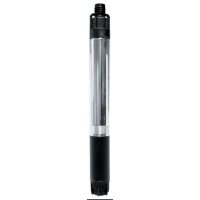
TBP 4000 M - Pump METABO - Free user manual and instructions
Find the device manual for free TBP 4000 M METABO in PDF.

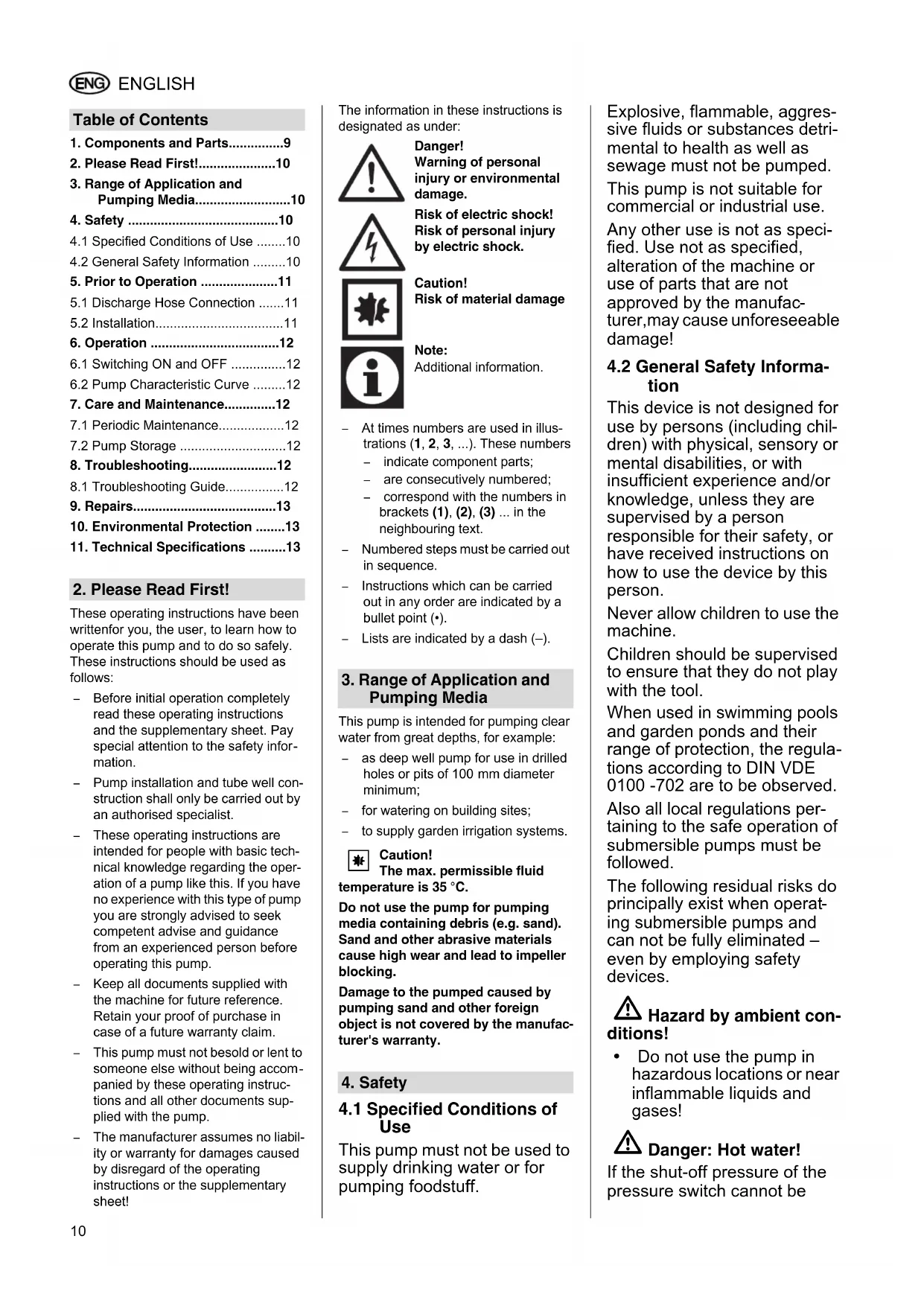


| Product type | Submersible deep well pump |
| Brand | Metabo |
| Model | TBP 4000 M |
| Dimensions (housing) | Height: 920 mm, Diameter: 98 mm |
| Weight without cable | 10.5 kg |
| Weight with cable | 12.0 kg |
| Mains voltage | 230 V ~ 50 Hz |
| Rated power | 750 W |
| Rated current | 4.0 A |
| Max. flow rate | 3800 l/h |
| Max. head | 55 m |
| Max. discharge pressure | 5.5 bar |
| Max. immersion depth | 20 m |
| Max. liquid temperature | 35 °C |
| Protection rating | IP 68 |
| Protection class | I |
| Power cable length | 22 m (HO7 RN-F) |
| Discharge connection | 1" female thread |
| Materials | Stainless steel and plastic |
| Number of impellers | 7 |
| Overload protection | Yes (automatic motor shut-off) |
| Regular maintenance | Rinse with clean water, clean suction openings and impellers |
| Winter storage | Protect from frost, drain and store away from cold |
Frequently Asked Questions - TBP 4000 M METABO
User questions about TBP 4000 M METABO
0 question about this device. Answer the ones you know or ask your own.
Ask a new question about this device
Download the instructions for your Pump in PDF format for free! Find your manual TBP 4000 M - METABO and take your electronic device back in hand. On this page are published all the documents necessary for the use of your device. TBP 4000 M by METABO.
USER MANUAL TBP 4000 M METABO
TBP 4000 M TBP 5000 M

Originalbetriebsanleitung 3
Original operating instructions 9
F Instructions d'utilisation originales 14
NL Origineel gebruikaanwijzing 20
DA Originalbrugsvejledning. 26
ES Manual de instrucciones original 31
EL Ppwtotuio odnyiwv Aetoupyiac 37
FIN Alkuperäiskäyttoohje. 43
RUS OpnHaJIbHoe pyKOBoIDCTBO IO 3KcIIyatau.. 48
| de Deutsch KONFORMITÄTSERKLÄRUNG Wir erklären in alleiniger Verantwortlichkeit: Diese Tieflbrunnenpumpe, identifiziert durch Type und Seriennummer *1), entspricht allen einschlädigen Bestimmungen der Richtlinien *2) und Normen *3). Technische Unterlagen bei *4) - siehe unter. |
| en English DECLARATION OF CONFORMITY We declare under our sole responsibility: This deep well pump, identified by type and serial number *1), complies with all relevant requirements of the directives *2) and standards *3). Technical file at *4) - see below. |
| fr Français Déclaration DE CONFORMITÉ Nous déclarons sous notre seule responsabilité: Cette pompè à puits profond, identifiée par le type et le numéro de série *1), est conforme à toutes les prescriptions applicables des directives *2) et normes *3). Documents techniques pour *4) - voir ci-dessous. |
| nl Nederlands CONFORMITEITSVERKLARING Wijverklaren op eigén en uitsluitende verantwoording: Deze dieptebronpomp, geïdentificerd door type en seriennummer *1), voldoet aan alle relevante bepalingen van de richtlijnen *2) en normen *3). Technische documentationatie bij *4) - zie onder. |
| da Dansk OVERENSSTEMMELSESERKLÄRING Vi erklærer under almindeligt ansvar: Denne dybbrøndspumpe, identifereret ved angivelse af type og seriennummer *1), opfylder alle relevante bestemmels er i direktiverne *2) og standarderne *3). Teknisk dossier ved *4) - se nedenfor. |
| es Espanol DECLARATION DE CONFORMIDAD Declaramos con responsabilidad propia:Esta bomba para pozos profundos, identificada por tipo y número de série *1), corresponde a las dispositions correspondentes de las directivas *2) y de las normas *3). Documentación技术水平ica con *4) - ver abajo. |
| el Eλληνικά ΔΗλΩΣΗ ΠΙΣΤΟΤΗΤΑΣ Δηλώνουμε με οδία ευθύνη: Autή η αντλία πηγαδιών, του αναγνωριζεται Μέσω τύτου και αριθμου σειράς *1), ανταιοκρίνεαι σε ὀλες τις σχετικός διατάξεις των Μδηγιών *2) και των προτήπων *3). Εχυία ἐγγραφα στο *4) - βλέτε κατωτέρω. |
| fi Suomi VAATIMUSTENMUKAISUUSVAKUUTUS Vakutamme yksinomaisella vastuullamme: Tämä svväkaivopumppu, merkitty typpitunnuksella ja sarjanumerolla *1), vastaa direktiivien *2) ja normien *3) kaikkia asiaankuulvia märäryksiä. Teknisten asiakirjojen säilytyspaikka *4) - katso alhaalla. |
*1) TBP 4000 M - 02504000... ; TBP 5000 M - 02505000...
2) 2011/65/EU 2006/95/EC 2004/108/EC
3) EN 50581 EN 60335-1 EN 60335-2-41 EN 62233
EN 55014-1: EN 55014-2 EN 61000-3-2 EN 61000-3-3
2015-02-06, Volker Siegle
(Director Innovation, Research and Development)
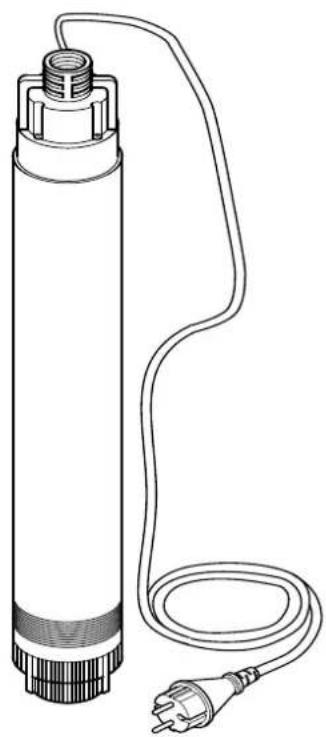
1. Components and Parts
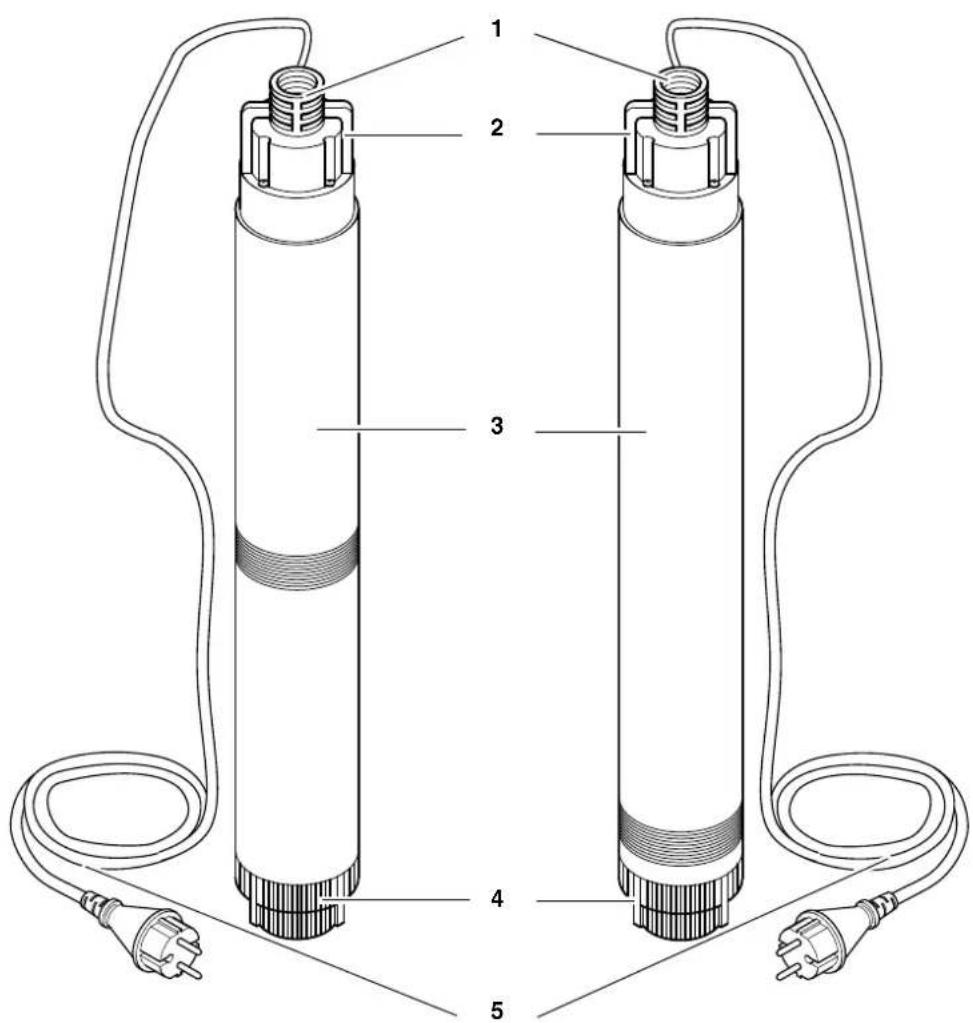
TBP 4000 M TBP 5000 M
1 Discharge port
2 Hanger
3 Pump casing
4 Suction inlet
5 Power supply cable with plug (22m)
Not shown
-15 m rope
Table of Contents
- Components and Parts...9
- Please Read First! 10
-
Range of Application and Pumping Media. 10
-
Safety 10
4.1 Specified Conditions of Use 10
4.2 General Safety Information 10
- Prior to Operation 11
5.1 Discharge Hose Connection 11
5.2 Installation 11
6. Operation 12
6.1 Switching ON and OFF 12
6.2 Pump Characteristic Curve 12
- Care and Maintenance..12
7.1 Periodic Maintenance. 12
7.2 Pump Storage 12
8. Troubleshooting 12
8.1 Troubleshooting Guide... 12
9. Repairs.. 13
10. Environmental Protection .........13
11. Technical Specifications 13
2. Please Read First!
These operating instructions have been written for you, the user, to learn how to operate this pump and to do so safely. These instructions should be used as follows:
Before initial operation completely read these operating instructions and the supplementary sheet. Pay special attention to the safety information.
- Pump installation and tube well construction shall only be carried out by an authorised specialist.
- These operating instructions are intended for people with basic technical knowledge regarding the operation of a pump like this. If you have no experience with this type of pump you are strongly advised to seek competent advise and guidance from an experienced person before operating this pump.
- Keep all documents supplied with the machine for future reference. Retain your proof of purchase in case of a future warranty claim.
- This pump must not be sold or lent to someone else without being accompanied by these operating instructions and all other documents supplied with the pump.
- The manufacturer assumes no liability or warranty for damages caused by disregard of the operating instructions or the supplementary sheet!
The information in these instructions is designated as under:

Danger! Warning of personal injury or environmental damage.
Risk of electric shock! Risk of personal injury by electric shock.

Caution! Risk of material damage

Note: Additional information.

-
At times numbers are used in illustrations (1, 2, 3, ...). These numbers
-
indicate component parts;
are consecutively numbered;
correspond with the numbers in brackets (1), (2), (3) ... in the neighbouring text. -
Numbered steps must be carried out in sequence.
- Instructions which can be carried out in any order are indicated by a bullet point () .
- Lists are indicated by a dash (-).
3. Range of Application and Pumping Media
This pump is intended for pumping clear water from great depths, for example:
- as deep well pump for use in drilled holes or pits of 100mm diameter minimum;
for watering on building sites;
to supply garden irrigation systems.
Caution! The max
The max. permissible fluid temperature is 35^
Do not use the pump for pumping media containing debris (e.g. sand). Sand and other abrasive materials cause high wear and lead to impeller blocking.
Damage to the pumped caused by pumping sand and other foreign object is not covered by the manufacturer's warranty.
4. Safety
4.1 Specified Conditions of Use
This pump must not be used to supply drinking water or for pumping foodstuff.
Explosive, flammable, aggressive fluids or substances detrimental to health as well as sewage must not be pumped.
This pump is not suitable for commercial or industrial use.
Any other use is not as specified. Use not as specified, alteration of the machine or use of parts that are not approved by the manufacturer, may cause unforeseeable damage!
4.2 General Safety Information
This device is not designed for use by persons (including children) with physical, sensory or mental disabilities, or with insufficient experience and/or knowledge, unless they are supervised by a person responsible for their safety, or have received instructions on how to use the device by this person.
Never allow children to use the machine.
Children should be supervised to ensure that they do not play with the tool.
When used in swimming pools and garden ponds and their range of protection, the regulations according to DIN VDE 0100-702 are to be observed.
Also all local regulations pertaining to the safe operation of submersible pumps must be followed.
The following residual risks do principally exist when operating submersible pumps and can not be fully eliminated - even by employing safety devices.
Hazard by ambient conditions!
- Do not use the pump in hazardous locations or near inflammable liquids and gases!
Danger: Hot water!
If the shut-off pressure of the pressure switch cannot be
reached due to poor pressure conditions or a defective pressure switch the water can heat up within the pump as a result of internal circulation.
Through this the pump and the connection lines can become damaged or leaky, allowing hot water to escape. Danger of scalding!
- Do not operate the pump against a closed pressure line for longer than 5 minutes.
- Unplug the pump and allow to cool. A specialist must check the system to make sure it is in perfect working order before it can be used again.

1. Danger! Risk of electricity lock!
- Do not direct water jet directly against the pump or other electrical parts! Risk of fatal electric shock!
- Do not touch the plug with wet hands! To unplug always pull at the plug, not the power cable.
- Connect only to an earthed outlet that is properly installed, earthed and tested. Mains voltage and fuse protection must correspond to those stated in the "Technical Specifications".
Protection must be provided by a residual current device (RCD) of max. 30mA capacity. - The earthed outlet or the plug connection to an extension cable must be located in an area safe against flooding and protected from water.
- Use only extension cables of sufficient lead cross section (see "Technical Specifications"). Unroll cable reels fully.
-
Do not buckle, squeeze, drag or drive over power cable and extension cables; protect from sharp edges.
-
Place extension cable so that it can not get into the fluid to be pumped.
Unplug: - prior to all servicing;
- when persons are in the swimming pool or garden pond.

Danger by pump fail
If you notice shipping damage while unpacking, notify your supplier immediately. Do not operate the pump!
- Before each use check the pump, especially the power cable and plug for possible damage. Risk of fatal electric shock!
- A damaged pump must be workmanlike repaired before it can be used again.
- Do not attempt to repair the pump yourself! When repaired inexpertly there is a hazard of fluid entering the electrical parts of the pump.

Caution!
To avoid water damage, e.g. flooded rooms, caused by pump malfunctions or defects:
provide for suitable safety measures such as the following:
- alarm or
collection tank with monitoring.
The manufacturer is not liable for any damage caused by:
improper use of the pump;
- overloading of the pump through continuous operation;
- failure to operate and store the pump in a frost-free environment;
- unauthorised modification of the pump (repairs to electrical equipment may only be carried out by qualified electricians!);
use of spare parts which have not been tested and
approved by the manufacturer; or
- use of unsuitable installation materials (fittings, connection lines etc.).
Suitable installation materials:
- pressure-resistant (min. 10 bar)
heat-resistant (min. 100^)
5. Prior to Operation
5.1 Discharge Hose Connection
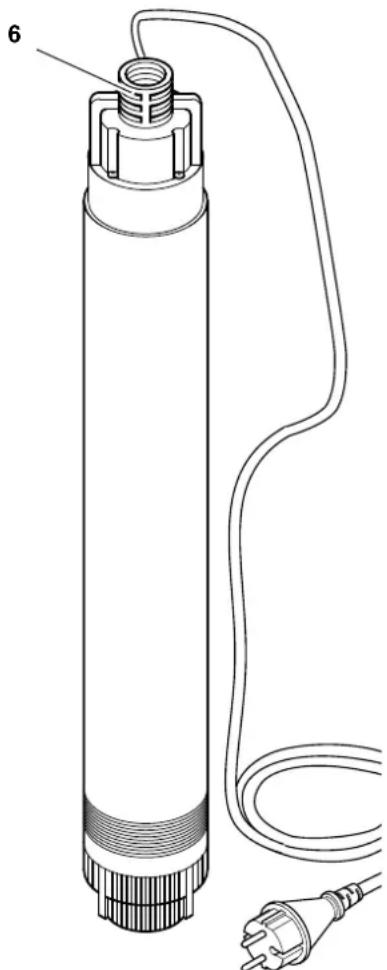
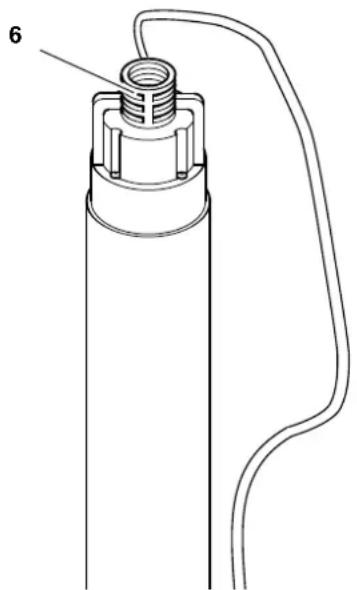
The discharge hose is either screwed directly on the discharge port (6) or connected by means of a multi-adapter (if necessary secure discharge hose with hose clamps).
5.2 Installation

Caution!
- Pump installation and tube well construction shall only be carried out by an authorised specialist.
- For initial operation of the deep well pump follow the instructions given in the supplementary sheet.
ENG ENGLISH
- Required space approx. 100mm diameter.
The pump must not be submerged deeper into water then stated in the "Technical Specifications".
The pump's suction inlet must not be positioned in the well's filtration area and not near the bottom. Position the pump as high as possible in the well, but at least 2m below the water level.
In case the pump is not operated in a tube well the operator must ensure that no foreign matter is taken in.
Caution! Do not lift pump at cable or discharge hose; both are not designed for the tensile load by the weight of the pump.
- Lower pump to the bottom of the fluid container. Use a sturdy rope fastened to the pump head to lower the pump. The pump can also be operated when suspended by a rope.
- Plug the power cable in.
6. Operation
6.1 Switching ON and OFF
To start the submersible pump plug the power cable in.
Unplug to stop the pump.

Caution!
At too low a water level the
deep well pump runs dry and will be damaged or destroyed.
When operating the pump always make sure that the water level is sufficient and dry running is not possible.
Damage caused by running dry is not covered by the manufacturer's warranty!
Overload protection
This submersible pump has an overload protection which automatically turns the motor off in case the pump is overloaded.
If the overload protection has tripped:
- Unplug.
- Remove cause for the overload (see "Care and Maintenance").
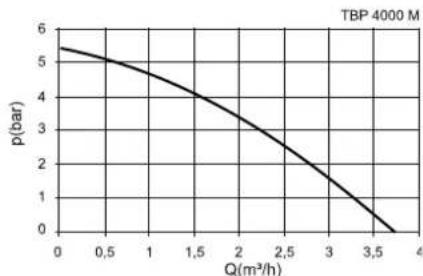
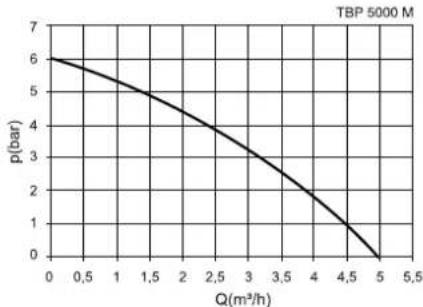
6.2 Pump Characteristic Curve
The pump characteristic curve shows which pump capacity is possible in dependence on the delivery head.
7. Care and Maintenance

Danger!
Prior to all servicing:
- Turn OFF.
- Unplug.
- Ensure that pressure is relieved from the pump and connected accessories.
Service and repair work other than described here must be left to qualified specialists.
7.1 Periodic Maintenance
In order for the deep well pump to function perfectly at any time periodic maintenance is required. This also applies if the deep well pump is operated under heavy conditions, but not turned on over prolonged periods.
- Let the pump run periodically to keep solids from getting stuck inside the pump.
- Leave pump in the water if possible, to keep residual matter from drying inside the pump.
Yearly maintenance
- Check pump casing and cable for damage.
- Rinse pump with clear water. Remove persistent soiling, e.g. algae desposits, with brush and dishwashing liquid.
- To flush the inside of the pump, place it into a container filled with clear water and turn ON briefly.
Cleaning the suction inlets
- At the bottom of the lower part, in the centre opening, is a locking for removing the end piece.
Unscrew the three securing screws from the locking.
- Push all three plastic locking bars of the locking from inside to the outside and pull the end piece out.
- Clean end piece with clear water and fit it back into the pump. The plastic locking bars must engage with an audible click.
Cleaning the impellers
- Loosen the screws on the upper part of the deep weel pump and remove the top.

Note:
If necessary you can remove the power cable. To do so, loosen the two screws of the cable clamp and pull off the cable plug.
- Completely unscrew the lower part.
- Unscrew the hexagon nut on the impeller shaft and pull the impellers off.
- Clean impellers and all accessible inside surfaces of the casing. Remove any fibres which may have wound around the impeller shaft. Remove persistent soiling with brush and dishwashing liquid.

Caution!
When reassembling the pump make sure the O-rings on both upper and lower part are undamaged and properly positioned.
5. Re-assemble the deep well pump.
7.2 Pump Storage

Caution!
Frost damages the pump and accessories, as both always contain water!
- When there is danger of freezing remove pump and accessories and store in a frost-free location.
8. Troubleshooting

Danger!
Prior to all servicing:
- Turn OFF.
- Unplug.
- Ensure that pressure is relieved from the pump and connected accessories.
8.1 Troubleshooting Guide
Pump does not run:
No mains voltage.
- Check cables, plug, outlet and mains fuse.
- Mains voltage too low.
Use only extension cables with sufficient lead cross section (see "Technical Specifications").
Overload protection tripped.
- Remove cause for overload (water too warm? Pump blocked by foreign objects?)
Motor hums but does not start:
- Pump blocked by foreign object.
Clean pump.
Pump does not pump properly:
Delivery head too high.
- Observe max. delivery head (see "Technical Specifications").
- Discharge hose kinked.
Straighten discharge hose.
- Discharge hose leaky.
Seal discharge hose, tighten screw fittings.
Pump runs very noisily:
- Pump primes air.
- Ensure a sufficient supply of water.
9. Repairs

Danger!
Have your power tool serviced by a qualified repair person using only identical replacement parts. This will ensure that the safety of the power tool is maintained.
Contact your local Metabo representative if you have Metabo power tools requiring repairs. See www.metabo.com for addresses.
You can download a list of spare parts from www.metabo.com.
10. Environmental Protection
All packaging materials are recyclable. Worn out power tools and accessories contain considerable amounts of valuable raw and plastic materials, which can be recycled.
11. Technical Specifications
| TBP 4000 M TBP 5000 M | |||
| Mains voltage | V | 230 ~ 1 | 230 ~ 1 |
| Frequency Hz 50 50 | |||
| Rated output W 750 1000 | |||
| Rated current | A 4,0 5,5 | ||
| Fuse protection min. (time-lag or B-type circuit breaker) | A | 10 | 10 |
| Running capacitor | μF | 16,0 | 16,0 |
| Rated speed | min-1 | 2800 | 2800 |
| Pump capacity max. | l/h | 3800 | 5000 |
| Delivery head max. | m | 55 | 60 |
| Delivery pressure max. | bar | 5,5 | 6,0 |
| Immersion depth max. | m | 20 | 20 |
| Max. temperature of primed medium | °C | 35 | 35 |
| Protection class | IP 68 | IP 68 | |
| Degree of protection | I | I | |
| Insulation class | B | B | |
| Materials | stainless steel and synthetic material | stainless steel | |
| Power cable (HO 7 RN-F) | m | 22 | 22 |
| Discharge port (AG=male, IG=female) | 1" IG | 1" IG | |
| Dimensions (pump casing) | |||
| Height | mm | 920 | 920 |
| Diameter | mm | 98 | 98 |
| Impellers | 7 | 8 | |
| Weight without cable with cable | kg | 10,5 | 10,7 |
| kg | 12,0 | 12,2 | |
| Max. length of extension cable at 3 x 1.0 mm² lead cross-section at 3 x 1.5 mm² lead cross-section | m | 30 | 30 |
| m | 50 | 50 | |
En la pagina web www.metabo.comSEOSEOSEOSEOSEOSEOSEOSEOSEOSEOSEOSEOSEOSEOSEOSEOSEOSEOSEOSEOSEOSEOSEOSEOSEOSEOSEOSEOSEOSEOSEOSEOSEOSEOSEOSEOSEOSEOSEOSEOSEOSEOSEOSEOSEOSEOSEOSEOSEOSEOSEOSEOSEOSEOSEOSEOSEOSEOSEOSEOSEOSEOSEOSEOSEOSEOSEOSEOSEOSEOSEOSEOSEOSEOSEOSEOSEOSEOSEOSEOSEOSEOSEOSEOSEOSEOSEOSEOSEOSEOSEOSEOSEOSEOSEOSEOSEOSEOSEOSEO SEO SEO SEO SEO SEO SEO SEO SEO SEO SEO SEO SEO SEO SEO SEO SEO SEO SEO SEO SEO SEO SEO SEO SEO SEO SEO SEO SEO SEO SEO SEO SEO SEO SEO SEO SEO SEO SEO SEO SEO SEO SEO SEO SEO SEO SEO SEO SEO SEO SEO SEO SEO SEO SEO SEO SEO SEO SEO SEO SEO SEO SEO SEO SEO SEO SEO SEO SEO SEO SEO SEO SEO SEO SEO SEO SEO SEO SEO SEO SEO SEO SEO SEO SEO SEO SEO SEO SEO SEO SEO SEO SEO SEO SEO SEO SEO SEO SEO SEO SEO
MaHcHMaJIbHO dOnyCTHMaT Emnepa-Typa HnDIOCTn COCTaBnEe35°C.
EcnHacoc He BHIOUoAeTcIa InepeKaUNBaHHNkIOKCTeB Hero nonaHnHOpOHBie TeJa (HanpMep, necok). NecOK npyrue a6pa3NBhble BeueCTBa npNbOaT K cnlbHomy H3HOcy 6JNOKIpOBKe pa6oOero HOleca.
PnIOBpeHdeHn Hacoca B pe3yIbTaTe NOnaHaHn Necha Hn HhbyN NOCTOPOHHX NpeDMetOB rapaHTn npON3BOIDHTeJEM He npeoCTabIeTcR.
4. Be3onachocTb
4.1 Испобзованne no ha3naueHnIO
HeOnyckaetcNcNoIb30BaHnne Hacoca dJa NpOaun PNTbeB0B0BdI NnI DnpeKaUHaHnPaNnueEByIX npOdyKTOB.
3aPpeaaetcnaepKaunBaHnE B3pbIBOONacbIX,TopIOuNX,aRpeCCNBbIX NINOnaChbIX DIA 3DOpOBByBeueCTB,a TaKHe fekaln.
Hacoc He npedha3hauehДЯ npofoecchoHaJIbHOrO nI npOMblIeHHOrO IcNoJb3OBaHnA.
JIIO6oe dpyroE hCNOb3OBAHne RAJRAETcH HeDOnyCTnMbIM. HcNoJIb3OBAHne He nHa3NaueHnU, N3MeHeHnYCTPOIcTBA HIN NcNoJIb3OBAHne DeTaJeN, KOTOpBie He 6bln IpOBepeHb IIN ODO-6peHb Ipon3BOJNTeIeM, MOrT NOBLeuB 3a CO6oHEnpeDbUdeHHbIM MaTePnaJIbHbI yuep6!
4.2 06uhe yka3aHnno no texHNke 6e3ONaCHOCTN
DaHHoe yctpoicTBO He DOJIHKHO NcnoJb3OBaTbcr IINzAMN, KOTOpBie HE B COCTOR HNN CnpaBnTbcr C HmB CNly CBOHX OprAHnueHbIX Φn3HueCKHX, NCNXueCKNX UIN yMCT-
BENHbIX BO3MOXHOCTeN, a TaKHe B CnIy OTCYTCTBnI 3HaHn N/INn ONbITa. 3TO BO3- MOJHO, TOJIbKO eCNI 3TN IInca HaxOJrTcN oNd Na6JIIODeHnEM YeIOBEKa, OTBeTCTBeHHORo 3a INx 6e3ONaCHOCTb, INn eCNI OHN NOJyUHNIOT HeRc COOT-BETCTByUOuNe yKa3aHnI NO NCNOJIb3OBaHIO yCTpOJCTBa.
HeOnyckTaB DeTei KnCNoIb3OBAHIO NHCTpyMeHTa.
TeHdoJIHHbI HaxOHTbcr NOIPOCTOHHbIM Ha6JIIODeHNEM, YTO6bI OHN He IcNOJIb3OBaII INHCTpyMeHT B KaueCTBe INrpyuKN.
Pn 3KcIpyaTaunB 6accenHax n npydx, a TaKe Bnx3aUHTbIX 3OHaX DOJHHbICo6JIIOJaTbcr IIOJOKeHnCtAnapTa DIN VDE 0100-702.
Takke co6IouaIte npn 3Tom MeCThIe npedncaHna.
Pn 3KcnpyaTaunn NorpyHbIX HAcOCOB CyueCTBYOT CLeDyUOHe OCTaTOUHbIe ONaCHOtN, KOTOpBie HeJIb3r NOJHOCTbU yCTpaHNTb, daKe npINHB NaJIeKaUne MepbI 6e3oNaCHOCTn.
OnachocTb, CB83aH-HaC OKpyHaOuSe CpeDo!
He nCnoB3yIte Hacoc BO B3pbIBOONaChbIX NOMEue-HnX nn B6Jn3n rOpUnx KndKoCTe nn ra3OB!
TopyaBoda npedCTaBnaetco6oOnaCHOctb!
Ecnn daBHe NBeBmATNueCKO BbIKIOUaTeJI He DoCTnraeTcBcIeDCTBHe HekOppeKTHO BbINOHHHbIX HaCTpoEK IINBCJeDCTBne DeΦeKTa Camoro NHeBMATNueCKO BbIKIOUaTeJI, BOda n3-3a ZnpKyIaCIN BHyTpNI yCTpOJCTBa MoKeT HarpeBaTbcR.
3TO BeDeT K HenCnpaBHOCTN NIN HeRepeMTeHnHOCHTyCTPOI-CTBa H COeDInHtEJIbHbIX Tpy6OpPBOIOB, B pe3yIbTaTe Yero Tropaay BOda MoKeT
BbICTyNaTb Hapxv. OnaCHOCTb OKora!
- YcTpoIcTBo MaKc. 5 MmHy TdoJIHHO Iopa6OtaTb C 3aKpbITbIM HAnOpHbIM Tpy- 60npoBODOM.
OTCOEINHInTe yCTpOInCTBO OT CETN NITAHnI N daHTe Emy OCTbITb. Ipeed IOBTOPbIM BBOIDOM B 3KcIIyATAuIIO CneuaJI-CTbl DOJHHbl IpOBepNTb HcnpaBHOCt b FyHKUOHIpOBAHnYCTaHOBN.
Onachocb,obycnoBJIeHHaHcNoIb3OBAHNem 3JeHTpoo6OpydoBaHnA!
He HappaBraIte ctpyO BOdbI HeNocpeDCTBeHNO Ha Hacoc Nn Dpyrne 3JeK- TpueeKne y3JI! ONa- CHOcTb DnA Jn3Hn, OBCsIOBLeHHa YdapOM 3JeKTPpueecknM TOKOM!
He 6epntec3a ceTeByIO BnIky BlaJHHbIMn pyKaMn! Bcerda TaHnTe 3a ceTeByIO BnIKy, a He 3a Ka6eJIb.
Hacoc pa3pewaeTcnoKJIIOuATb TOIbKO Kpo3eT-KAM C 3aUHTbIM KOHTaKTOM, KOTOpBIE HaJIeJXaUIM O6pa3OM yCTaHOBJIeHbI, 3a3EmLeHbI INpOBepHe. HanpJHexHe cETn I npedoxpaHNTeJIb DOJXHbI COOTBeTCTBOBaTb 3HaueHnA, yKa3aHHbIM BTexHnueChnx XapaKTepnCTNKax.
3aHTaOcUeCTBnEeTcC NOMOaIbIO aBTOMaTa 3aHTbI OT TOKa yTeuKn MaKc.30mA.
Po3eTKa C 3aUHTbIM KOHTaKTOM HIN UTeKeHoe COeINHeHne C yDInHnTeJIb-HbIM Ka6eIeM DOJHXbI paCIOlaRaTbcR B 3aUuIeHHoI OT 3aTOpJIeHnaO6IaCTN I 6bITb 3aUuIeHbI OT BOdbl
- YdHnHnTeIbHbI KabeIb DOJIHeH NMeTb DoCTaTOHoe NOpEpeHoe ceYeHne (cM. "TexHnueckne xapKTePncTkn"). KaBEn
OJIHHbI 6bITb NOJIHOCTbIO pa3MOTaHbIC 6apa6aHa.
He donyckaTb 3aIOMOB, 3aKIMaHnHa Hae3da Ha ceTeBOH ydInHHTeHBHk Ka6eJIb; 6peYb OT KOHTa C OcTpblm KpOM-KAMN, MaCJOM N BblCOKOH TEMpepaTypoI.
- PpOKlaIbIbTaB ydJIINHnTeIbHbI Ka6eJIb TaK, YTO6bl OH He MoR IOnaCTb B NpeKaUHbAeMyIO JNIDKOCTb.
- BbITaHyTbcTeBOuI WTeKeP:
-пегд поведенем
лобьх paбOT ha устpoи-
CTBE;
-ecnB6accHe nnn npdy HaxoJrTcIIOuN.
OnachocTB,obycnoB- IeHHaIeΦeHTamN yCTpOu- CTBa!
Ecn npn pacnaKOBbHaHn yctpoiCTBa 6hApxHebl NOBpeJdeHn, NOpUeH-H bI npn TpaHCnOpTNPOBKe, He3aMeIInTeJbHo COo6uHTe 06 3Tom CBOeMy dInepy. Pnp 3Tom H pa3peWaeTcBBoHt bYcTPOI-CTBO B 3KcIIyaTaCuHIO.
- PpOBePnTe HAcOC, B OcO6EHHOCTn CeTeBOi Ka6JIbN I StTeKep, Ha HAIuHne BO3-MoXHbIX NOBpeXJDeHNIpeEi KaXDbIM BKIIOUeHNHeM. OnaCHOCTb dJaHHN, OByCNoBLeHNaYdApOM 3JeKTPnueeCHmTOkOM!
- IOBTOPOHoe HcNOb3OBa-Hne NOBpeKdEHHoHacOca DOnyckaeTcraToJIbKO NocLe OcyueCTBHeHNr peMOHTa KBaIINΦuNpOBAHHbIMNCeUHaJIncTaMn.
He BbIOJHnTe CaMOCToTeJIbHbI pEMONT npNo6opa! Pn HeHaJeKaUepeMOHTe CyueCTByeT ONaCHOCTb IPOHKnHOBeHHaIKOCTn B 3JIeKtpo06OpyDoBaHne Hacoca.
BHHMaHHe!
YTO6bI N36EkaTb yUepe6a OT BODbl, HAnpIMep 3aToPJIeHnI NOMEuEHH, Bbl3BaH-Horo DeΦeKtAmN IIN HeNCnpaBHOCTaMn HaCoca:
3aapanapobatb nCnoJb30BaHne noXoJxnx Mep6e3OanacHOCTn,Ha np.:
- yCTPOINCTBO aBapnHOB cnHAn3aunn nn
-EMKOCbIyC6OpaBODbl C yCTPOINCTBOM KOHTpOJI HAONHeHn
PpOn3BODHTeJIb He HecET HnKaOJ OTBETCTBEHHOCTN 3a yUep6, KOtOpbl MOKeT 6bITb HaHecen B pe3yIbTaTe
- NcNoIb3OBAHnYcTpOINCTBa Hn No Ha3HaueHnIO;
- neperpuy3KN BCJeCDTBHeHnpepbBHOpa6oTbI;
- 3KcNlyaTaunn Hnn XpaHHeHna yCTpoNCTBa 6e3 3aUNTB1 OT MOp03a;
- CamocToTaeIbHOro BHeceHnHa3MeHEnB KOHCTpyKcNIO yCTpOInCTBa;Pon3BoDntb peMOHT3JIeKTponPi6OpOB pa3peWaeTcra TOnIbKO CneuaJIInCTam-3JIeKTpnKaM!
- HcNoIb3OBAHnA 3aNaChbIX qacte, He npOBepEHbIX n He yTBepKdEHHbIX npON3- BOIDNTeJEM;
-
IcnoIb3OBAHnHa HeNoDxoDJaUeRO MOHTaXHHORo MaTePnAla (apMaTpya, CoeHNHTeNbHbIe Tpy6OpOBoDbI N. ). IOnxOJaun MoHTaXHHbIMaTePnA!
-
BbIepeKnBaeT daBleHne (MnH. 106ap);
-TeNIOCTOKN(MNH.100°C)
5. IpepeBvOdom B 3Hcnpny-atauio
5.1 NoidKJIoueHne HanopHoro Tpy6oNpObOda
HanopbI Tpy6oPbOd IIObo Heno- cpeCTBeHNO pINBnHnBaetc K HanOpHOMy NaTpy6K (6), IIO6oNkUoyaETc npi NOMOuM MylbTaHaanTepa (pnp Heo6xOdmocTN 3aΦHKcnPoBaTb Hanop
HbI Tpy6oPBOOd ⅢaHROBbIMN XOMyTAMn).
5.2 yCTaHOBbA
BHHMaHne!
- YctaHObHa Hacoca u CoopyKeHne 6ypoBOrO KOIoQa DOJIHHbI pOn3BOdHTbcr ABTOpH3OBAHHbIM CneuAInCTOM.
Co6IIOaIte npHIOHeHne NO BBOyB 3HCnIyatauNIO ChBaHHHO HAcOca.
Heo6xoJHMOe MeTo - npu6JI. 100 MM B dHaMeTpe. - UcTpoIcTbO pa3peSeHo norgpyKaTb B BOy MaKcHmYM Do npNBeDeHHoB TExHnuecknx XapaKTepNCTNKax pa6oye rIy6hbl.
BcacsBaOuHne OTBepCTnHaocHe DoJIHHbI HxOJITbcra B o6laCTnФHbTPaunN KOLOUca NIN B6NI3nDHa.KePNTe HAcOC B KOLOUce KaMOXHO Bblie, HO He MeHee 2 M HInKe yPOBnR BObl.
EcHn Hacoc He 3KcnIyatnpyeTcBCKBaHHOM KOIOUe,3KcnIyATpyoOe npedpnaTne DOnJHONo3a6OTtbcr O TOM,HTo6bl OH HeBCacbBal INHOpDhbI qACTNcbl.
BHHMaHne!
He noDnHMaTb HAcoc 3a Ka6eJIb Nn HAnOpHbI uHaHr, NoCKoJIbHy Ka6eJIb HAnOpHbI uHaHr He paCCHTaHbI Ha TReOByIO Harpy3Hy, OBCyCNOBLeHHyIO BECOM HAcoca.
- Onyctntb hacoc ha dno pe3epBy-apa c KNDKOCTBIO. NcNoIb3yIte IJRA ONyCKAHINI pOuHbI TPOC, KOtOpBII KpeNITcB B cepXHei qACTn HAcoca. Hacoc TaKHe MOxHOb 3KcNlyaTnpoBaTb B NOBWeEHHom Ha TpOce COCTOHHM.
- IoHJIuOHTb cTeBoI uTeKepe.
6.3KcIpyaTauia
6.1 BnHIOueHne/BbIKIOueHne
ДяВКЛIOHENI NOpyHHORO HAcoca BCTaBnTb cTeBOwTeKepe.
ДЯВынluоHЯ NOrpyHHORHaCocCa BbITaHyT ceTeBOI WTeKepe.
BHHMaHHe!
PnCNIuHkOM HN3HOM yPOBHe BOaBi CKBaHNHHbI HAcOC 6yDet pa6oTaTB BCyXIO, npOn3OeT erO nobpeKeHne nn pa3pyeHne.
Pn3HcNpyataun Hacocay6eNTecb,TO yPOBEH BoBj RABJIETCAIOCTaTOUHbIM pa6Ota BCyXyo NCHJIOUHeHa.
TapaANTn npOn3BODnteI npn cyxom xOe HcNIOuayetca!
3aunTa ot neperpeBa
JaHHbI norpyKHOH HAcOC cHa6KeH 3aunTOI OT neperpy3KN, KOTOPa ABOtOMaTHueCKN OTHIOuAeT DBIrTaTeJb, ecNI nOprpyKHOH HACOC NCbITbBaet nepeRpy3Kn.
Ecni cpa6oTana 3aunTa oT nepeRpy3kn:
- N3BLeKInTe ceTeBOI uTeKepe.
- YctpaHntb npnHy neperpy3nn (cm."Texo6cnyHBAHne n yxoD").
PeyIpaHOBKIOaHTe HAcoc, TTObblBHTn HAcOHa He OceJaIN HHOPOhBe TEJIa.
- IIO BO3MOXHOCTN OCTABJIaIte HAcOC C BODoI, YTO6bI BHyTpIn HAcOCA He HAJIINaJIIN OCTaTKI.
EkeoDhoe texo6cnyHbAHne
- Поверпь Коруca На сока И Кабел ha OTCyTCTBne NOBpeHd- HnI.
- Ppombyt b Hacoc YHCTO BDOI. 3aTBepeBwne 3arpa3HeHH, HApnpMeP OTIOKeHH BODOpCNeY, ydaJIbTb C NOMoUbU ZeKn MOnOuero cpeCTBa.
3.ДЯпомьнHacoca n3HyTpN norpyntb HAcOC B EMKoCTb YHCTO BOdON HeHaDoJIRO BKIOHTb.
OuHCTHa BCaCbIbAIOUx OTBepcTm
- Ha HnKHe CTOpOHe HnKHe qactn B CpeHem OTBepCTn HaxoNTcR 3anop DnIa CHrTHa KOHcEBOrO 3Je-MeHTa.
OTBnHTNb TpN CTONOpHbIX BNHTa Ha 3anope. - BbIaBHTB BCE TPNIIaCTIKOBbIX pRreJ3anopa H3HyTpHn HApKy IN 3BJIeYb KOHcEBoN 3JeMeHt.
- OuHCTnTb KOHcEBOeJEMeHT BOOIOI BCTaBHTb HA MeCTo.INa-CTIKOBBIE PnREIN DOJIHKHbI 3aΦHK-CNPOBaTbC A RBHO pa3JIYHMbIM UeJHKOM.
OuHcTHa pa6oUHX KOIEC
- OcIa6ntb BnHTbHaBepxHeu qactn CKBaIKHHOrO HAcoca NCHrTb BepxHIOU qACTb.
iYka3aHne:
Pn Heo6xOJMoOCTN Bbl MoKeTe OTCOeHNHTb CTeBOI Ka6JIb. Jn3TOGcJeYET Ocna6Tb IBa BVHTa Ha depKaTeIe Ka6JI N BbITrHyTb Ka6JIbHbI WTeKep.
- PONHOCTbBbIBHHTNb HNXHHO 1yactb.
- BbIBHTntb WeCTTgpaHHbIe raIKn Ha BAly pa6OeTe KOleca n CHrTa pa6OHe KOleca.
- OuHCTb pa6Oue KoIeCa n BCE DOCTyNHbIe BHyTpeHHne CTOpOHbI Kopnyca. Pn HEOxOIMOCTH ydaJIHTb BOJOKHa, HAMOTaBUnieCe r Ha BaI pa6OHeO KoIeCa. 3aTBePdEeBUne 3aRpa3HeHr ydaJIHTb c NOMOUsbIO UeTKn MIOUeero CpeDCTBa.
BHHMaHHe!
PnC6OpHe HAcOca CneIHTe 3a Tem, yTO6bI yNLOTHNTeNbHbIe KOJIbua KpyrIoro CeueHna Ha BepXHei HnHHHeu cactn He 6bln NobpeKeDeHbI n paBnBHo pacNoIarJNCb.
5. BHOBb co6paTb cKBaHHHbI HaocC.
7.2 XpaHenne npn6opa
BHHMaHHe!
Mopo3 Oka3bIbaeT pa3pyaHooee Ha Hacoc N npHaDJIeKHOCTn, TaH KaH B HNX NOCTOARHO COepHHTCB ODa!
PnOnaCHOCTN 3aMeP3aHnIeMoHTnpoBaTb np6Op n pInHaJIeJHHOCTN IN XpaHnTB B 3aunuH-HOM OT MOp03a MeCTe.
3NeKtpoDbBraTeIb rYdNT, He 3anyCKaETCR:
Hacoc 3a6IoknpoBaH nocToPOHHM npedMetom.
- OCHNTb HAcOc.
Hacoc noaet Hndkoctb HenpaBbHO:
CINHOM60JIbuaBbICotaNoaH.
Co6bIpaTaMaHCmMaJIbHO DoNY-CTMMyo BbICOTy NODaHn (CMOTPnTe "TexHnueckne xapaHTepNCtIKN").
3aIOMBHaOpHOM Tpy6OpPObOe.
- PpOJIOKHTb HAnOpHbI Tpy6o-npoBOd pOBHO.
HanopHbI Tpy6oPpOBoH HereepMeTHeH.
- YnnotHb HanopHy Tpy6oNPOBO, 3aTaryb pe3b60Bbie coeINHeHJ.
Hacoc pa6oTaet cnHOM yMHO:
Hacoc nocecabibaet BO3dyx.
- Y6eHntecb, yTO NMeTcra DOCTaTOHyBn 3aIac BObl.
9. PemOHr

OnachocTb!
IopyaTe pemont Baawero 3eKtpoHnCTpyMeHTA ToJbHO HbAlnHnCnpoBAHhbIM CneuaJIHCTam.ДЯpeMOHTa DOJIHHbI HCNoJIb3OBaTbCtToJbHO OprHnHaJIbHbIe 3aNaChbIeYactN.3To O6ecneHT CoXpaHeHNe3KcIIyatauONHHO HaJeKHocTH3eKTPoHNCTpyMeHTa.
Дл ремонта Инстуmetа Metabo обрашадетсь В PernohaJIbHoeпрдтавипелбгОmetabo.Adpecm.Ha caite www.metabo.com.
Cnncn 3anaChbix qacte moHNO ckaaTb c caTa www.metabo.com.
10. 3aunTa OKpykaOuSei Cpebl
MaTePnAlynaKOBn yCtpoNCTBaHa 100% npirodeH dI nepepa60TKu BTOPNHOrO NcNoJIb3OBAHn.
OTcnyKINBWe CBOC pOcK yCTpOcTBA n npHaJNeKHOCTn COePkaT 6oJIbWoE KOJIHecTBO CEHHbIX CBIpBeBbIX N OJIIMepbIX MaTePnaIaOB, KOTOpbie TaKHe MOrYt 6bITb HAnpaBHeHb Ha NoBToPHyIO nepepa60THy.
- TexHueecHne xapaKTepeNCTHH
CtpaHa n3rOToBLeHnIy IITaJIIN
Празиьовпель: "Metabowerke GmbH", Metaboallee 1, D-72622 Nuertingen, Германя.
3aBoD-n3rOToBnTeIb: Metabowerke', Via Grandi, 8, I-20097 SAN DONATO MILANESE (MI), nTaJIIN
IIMnopTeP B Pocn:
OOO"MeTa6o Ebpa3na
Pocn,127273,MocBa
yI. Bepe30Ba aJIeA,I 5 a, cTp 7,oΦnc 106
TeI.:+74959807841
ДаТа npОиЗВODICTBA 3aшнфрOBаHA B 10-3нaчHOM сернHOM HOMepe INHCTpyMeHTA, yHa3aHHOM Ha erO uINbДИKe. 1-я zuΦpa obO3HauaET roД, HanpIMeP «4» obO3HauaET, YTO nI3dJIe npОиЗВeDEHo B 2014 roDy. 2-я nI 3-я zuΦpbI obO3HauaIOT HOMeR HeJELN B rOdy npОиЗВODICTBa (c 1oJ no 52I).
TapaHTnHbI cpoK:1 roD c daTbI npOdaJH CpoK cLyX6bl HcTpymeHTa:5 let c daTbI n3roTOBLeHn
Metabowerke GmbH
Metabo-Allee 1
72622 Nuertingen
Germany
www.metabo.com