EZMDDS 5142W - Refrigerator ZEROWATT - Free user manual and instructions
Find the device manual for free EZMDDS 5142W ZEROWATT in PDF.



| Product type | Fridge-freezer |
| Brand | Zerowatt |
| Model | EZMDDS 5142W |
| Climate class | SN, N, ST, T (10°C to 43°C) |
| Refrigerant | R600a (isobutane) |
| Defrosting | Manual |
| Freezing capacity | 4 stars (down to -18°C) |
| Thermostat | Mechanical (settings MIN, MED, MAX, OFF) |
| Interior lighting | LED (class G) |
| Number of shelves | 2 + 1 vegetable drawer |
| Vegetable drawer | Yes, with lid |
| Adjustable feet | Yes (2 at front) |
| Reversible door opening | Yes |
| Door handle | Removable (optional) |
| Power supply | 220-240 V, 50 Hz |
| Maintenance and cleaning | Clean interior with warm water and baking soda; exterior with regular cleaning product |
| Safety | Flammable refrigerant gas; avoid naked flames; do not use extension cord |
| Spare parts and repairability | Thermostat, sensors, boards, light sources available for 7 years; handles, hinges, shelves, bins for 7 years; door gaskets for 10 years |
| Warranty | 2 years (EU) |
| Compliance | WEEE Directive 2012/19/EC; CE marking |
Frequently Asked Questions - EZMDDS 5142W ZEROWATT
User questions about EZMDDS 5142W ZEROWATT
0 question about this device. Answer the ones you know or ask your own.
Ask a new question about this device
Download the instructions for your Refrigerator in PDF format for free! Find your manual EZMDDS 5142W - ZEROWATT and take your electronic device back in hand. On this page are published all the documents necessary for the use of your device. EZMDDS 5142W by ZEROWATT.
USER MANUAL EZMDDS 5142W ZEROWATT
natural_image
Simple line drawing of a refrigerator with two ovals on the front panel (no text or symbols)DOUBLE DOOR
LANGUAGES
English 3
Italiano....24
Français 45
Español....67
Deutsch....89
Portuguese 111
Nederlands.... 134
Ελληνικά 155
Dansk....177
Svenska....196
Suomi....216
Norsk 237
Hrvatski....256
Srpski....277
Čeština 298
Polski 318
Slovenščina 339
Slovenský....359
Română....379
Български.... 399
Magyar 421
Русский....442
SUMMARY
SAFETY INFORMATION .... 4
ENERGY SAVING....12
PRODUCT OVERVIEW....13
Climate Class....13
TRANSPORTATION INSTRUCTIONS....14
INSTALLATION INSTRUCTIONS....14
STARTING TO USE....14
OPERATION....15
Switching on your unit ....15
Operation instructions....15
Tips for keeping food perfect in the Fridge....16
If you're not at home for a long time ....16
TAKE CARE....16
Defrosting....16
Cleaning and Care....17
REVERSING THE DOOR SWING....18
DOOR HANDLE INSTALLATION (optional)....21
Door Space Requirements....21
Levelling the Unit....21
TROUBLE SHOOTING....22
SCRAPPING OLD APPLIANCES....23
Conformity....23
Thank you for purchasing this product.
Before using your refrigerator, please carefully read this instruction manual in order to maximize its performance. Store all documentation for subsequent use or for other owners. This product is intended solely for household use or similar application such as:
- the kitchen area for personnel in shops, offices and other working environments
- on farms, by clientele of hotels, motels and other environments of a residential type
- at bed and breakfasts (B & B)
- for catering services and similar applications not for retail sale.
This appliance must be used only for purposes of storage of food, any other use is considered dangerous and the manufacturer will not be responsible for any omissions. Also, it is recommended that you take note of the warranty conditions. Please, to obtain the best possible performance and trouble free operation from your appliance it is very important to carefully read these instructions. Failure to observe these instructions may invalidate your right to free service during the guarantee period.
SAFETY INFORMATION
This guide contains many important safety information. Please, we suggest you keep these instructions in a safe place for easy reference and a good experience with the appliance.
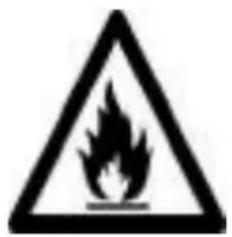
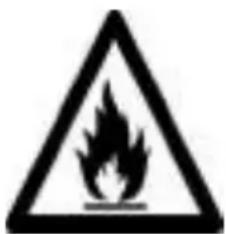
The refrigerator contains a refrigerant gas (R600a: isobutane) and insulating gas (cyclopentane), with high compatibility with the environment, that are, however, inflammable.
Caution: risk of fire
If the refrigerant circuit should be damaged:
● Avoid opening flames and sources of ignition.
Thoroughly ventilate the room in which the appliance is situated
WARNING!
- Care must be taken while cleaning/carrying the appliance to avoid touching the condenser metal wires at the back of the appliance, as you might injure your fingers and hands or damage your product.
- This appliance is not designed for stacking with any other appliance. Do not attempt to sit or stand on top of your appliance as it is not designed for such use. You could injure yourself or damage the appliance.
- Make sure that mains cable is not caught under the appliance during and after carrying/moving the appliance, to avoid the mains cable becoming cut or damaged.
- When positioning your appliance take care not to damage your flooring, pipes, wall coverings etc. Do not move the appliance by pulling by the lid or handle. Do not allow children to play with the appliance or tamper with the controls. Our company declines to accept any liability should the instructions not be followed.
- Do not install the appliance in humid, oily or dusty places, nor expose it to direct sunlight and to water.
- Do not install the appliance near heaters or inflammable materials.
- If there is a power failure do not open the lid. Frozen food should not be affected if the failure lasts for less than 20 hours. If the failure is longer, then the food should be checked and eaten immediately or cooked and then refrozen.
- If you find that the lid of the chest freezer is difficult to open just after you have closed it, don’t worry. This is due to the pressure difference which will equalize and allow the lid to be opened normally after a few minutes.
- Do not connect the appliance to the electricity supply until all packing and transit protectors have been removed.
- Leave to stand for at least 4 hours before switching on to allow compressor oil to settle if transported horizontally.
- This freezer must only be used for its intended purpose (i.e. storing and freezing of edible foodstuff).
- Do not store medicine or research materials in the Wine Coolers. When the material that requires a strict control of storage temperatures is to be stored, it is possible that it will deteriorate or an uncontrolled reaction may occur that can cause risks.
- Before performing any operation, unplug the power cord from the power socket. On delivery, check to make sure that the product is
not damaged and that all the parts and accessories are in perfect condition.
- If in the refrigeration system a leak is noted, do not touch the wall outlet and do not use open flames. Open the window and let air into the room. Then call a service center to ask for repair.
- Do not use extension cords or adapters.
- Do not excessively pull or fold the power cord or touch the plug with wet hands.
- Do not damage the plug and/or the power cord; this could cause electrical shocks or fires.
- If the supply cord is damaged, it must be replaced by the manufacturer, its service agent or similarly qualified person in order to avoid a hazard.
- Do not place or store inflammable and highly volatile materials such as ether, petrol, LPG, propane gas, aerosol spray cans, adhesives, pure alcohol, etc. These materials may cause an explosion.
- Do not use or store inflammable sprays, such as spray paint, near the Wine Coolers. It could cause an explosion or fire.
- Do not place objects and/or containers filled with water on the top of the appliance.
- We do not recommend the use of extension leads and multi-way adapters.
Do not dispose of the appliance on a fire. Take care not to damage, the cooling circuit/pipes of
the appliance in transportation and in use. In case of damage do not expose the appliance to fire, potential ignition source and immediately ventilate the room where the appliance is situated.
- The refrigeration system positioned behind and inside the Wine Coolers contains refrigerant. Therefore, avoid damaging the tubes.
- Do not use electrical appliances inside the food storage compartments of the appliance, unless they are of the type recommended by the manufacturer.
- Do not damage the refrigerant circuit.
- Do not use mechanical devices or other means to accelerate the defrosting process, other than those recommended by the manufacturer.
- Do not use electrical appliances inside the food storage compartments, unless they are of the type recommended by the manufacturer.
- Do not touch internal cooling elements, especially with wet hands, to avoid cracks or injuries.
- Maintain the ventilation openings in the appliance enclosure or in the built-in structure, free of obstruction.
- Do not use pointed or sharp-edged objects such as knives or forks to remove the frost.
- Never use hairdryers, electrical heaters or other such electrical appliances for defrosting.
- Do not scrape with a knife or sharp object to
remove frost or ice that occurs. With these, the refrigerant circuit can be damaged, the spill from which can cause a fire or damage your eyes.
- Do not use mechanical devices or other equipment to hasten the defrosting process.
- Absolutely avoid the use of open flame or electrical equipment, such as heaters, steam cleaners, candles, oil lamps and the like in order to speed up the defrosting phase.
- Never use water wash the compressor position, wipe it with a dry cloth thoroughly after cleaning to prevent rust.
- It is recommended to keep the plug clean, any excessive dust residues on the plug can be the cause fire.
- The product is designed and built for domestic household use only.
- The guarantee will be void if the product is installed or used in commercial or non-residential domestic household premises.
- The product must be correctly installed, located and operated in accordance with the instructions contained in the User Instructions Booklet provided.
- The guarantee is applicable only to new products and is not transferable if the product is resold.
- Our company disclaims any liability for incidental or consequential damages
- The guarantee does not in any way diminish your statutory or legal rights.
- Do not perform repairs on this Wine Coolers. All interventions must be performed solely by qualified personnel.
- If you are discarding an old product with a lock or latch fitted to the door, ensure that it is left in a safe condition to prevent the entrapment of children.
- This appliance can be used by children aged from 8 years and above and by persons with reduced physical, sensory or mental capabilities or with a lack of experience and knowledge; provided that they have been given adequate supervision or instruction concerning how to use the appliance in a safe way and understand the hazards involved.
- Children should not play with the appliance. Cleaning and user maintenance should not be made by children without supervision.
- Locks :If your Fridge/Freezer is fitted with a lock, to prevent children being entrapped keep the key out of reach and not in the vicinity of the appliance. If disposing of an old Fridge/Freezer break off any old locks or latches as a safeguard.
- FOR a free standing appliance: this refrigerating appliance is not intended to be used as a built-in appliance
- ANY replacement or maintenance of the LED lamps is intended to be made by the manufacturer, its service agent or similar qualified person. The energy efficiency class of the lamp is grade G.
- DO not store explosive substances such as aerosol cans with a flammable propellant in this appliance.
- THE appliance has to be unplugged after use and before carrying out user maintenance on the appliance.
- WARNING: Please scrap the refrigerator according to local regulators for it uses flammable blowing gas and refrigerant.
- WARNING: Do not locate multiple portable socket-outlets or portable power supplies at the rear of the appliance.
- DANGER: Risk of child entrapment. Before you throw away your old refrigerator or freezer: -Take off the doors.
-Leave the shelves in place so that children may not easily climb inside.
- THE refrigerator must be disconnected from the source of electrical supply before attempting the installation of accessory.
ENERGY SAVING
For better energy saving we suggest:
- Installing the appliance away from heat sources and not exposed to direct sunlight and in a well-ventilated room.
- Avoid putting hot food into the refrigerator to avoid increasing the internal temperature and therefore causing continuous functionalizing of the compressor.
- Do not excessively stuff foods so as to ensure proper air circulation.
• Defrost the appliance in case there is ice to facilitate the transfer of cold. - In case of absence of electrical energy, it is advisable to keep the refrigerator door closed.
- Open or keep the doors of the appliance open as little as possible.
- Avoid adjusting the setting to temperatures too cold.
- Remove dust present on the rear of the appliance.
- Refrigerating appliances might not operate consistently (possibility of defrosting of contents or temperature becoming too warm in the frozen food compartment) when sited for an extended period of time below the cold end of the range of temperatures for which the refrigerating appliance is designed.
- The fact that effervescent drinks should not be stored in food freezer compartments or cabinets or in low-temperature compartments or cabinets, and that some products such as water ices should not be consumed too cold;
- The need to not exceed the storage time(s) recommended by the food manufacturers for any kind of food and particularly for commercially quick-frozen food in food-freezer and frozen-food storage compartments or cabinets;
- The precautions necessary to prevent an undue rise in the temperature of the frozen food while defrosting the refrigerating appliance, such as wrapping the frozen food in several layers of newspaper.
- The fact that a rise in temperature of the frozen food during manual defrosting, maintenance or cleaning could shorten the storage life.
- The necessity that, for doors or lids fitted with locks and keys, the keys be kept out of the reach of children and not in the vicinity of the refrigerating appliance, in order to prevent children from being locked inside.
- Opening the door for long periods can cause a significant increase of the temperature in the compartments of the appliance.
- Clean regularly surfaces that can come in contact with food and accessible drainage systems.
- Clean water tanks if they have not been used for 48 h; flush the water system connected to a water supply if water has not been drawn for 5 days.
- Store raw meat and fish in suitable containers in the refrigerator, so that it is not in contact with or drip onto other food.
- If the refrigerating appliance is left empty for long periods, switch off, defrost, clean, dry, and leave the door open to prevent mould developing within the appliance
PRODUCT OVERVIEW
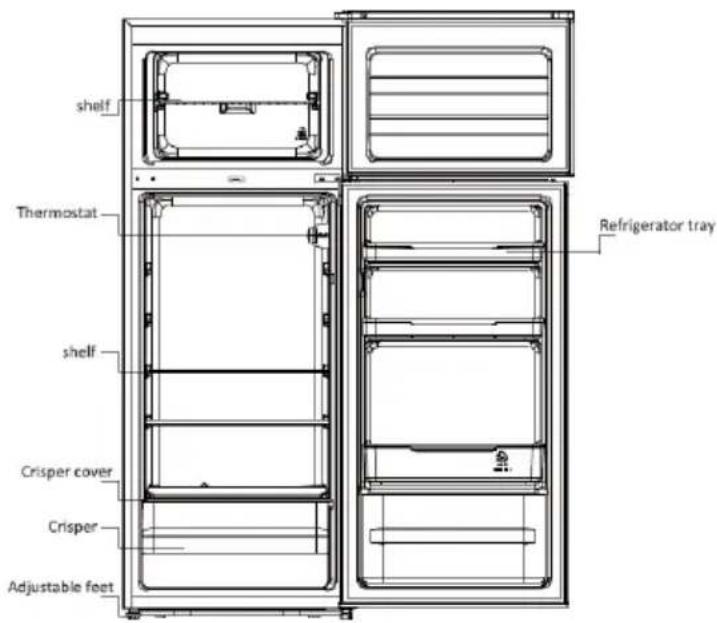
The most energy-saving configuration requires drawers, food box and shelves to be positioned in the product, please refer to the above pictures.
*The picture above is only for reference. The actual configuration will depend on the physical product or statement by the distributor
Climate Class
The appliance is designed to operate at the limited range of ambient temperature, depending on climate zones. Do not use the appliance at the temperature out of the limit. Climate class of your appliance is indicated on the label with technical description inside the fridge compartment.
| Climate Class | Amb. T. (°C) | Amb. T. (°F) |
| SN | From 10 to 32 | From 50 to 90 |
| N | From 16 to 32 | From 61 to 90 |
| ST | From 16 to 38 | From 61 to 100 |
| T | From 16 to 43 | From 61 to 110 |
- extended temperate: 'this refrigerating appliance is intended to be used at ambient temperatures ranging from 10 °C to 32 °C';
- temperate: 'this refrigerating appliance is intended to be used at ambient temperatures ranging from 16 °C to 32 °C';
- subtropical: 'this refrigerating appliance is intended to be used at ambient temperatures ranging from 16 °C to 38 °C';
- tropical: 'this refrigerating appliance is intended to be used at ambient temperatures ranging from 16 °C to 43 °C';
TRANSPORTATION INSTRUCTIONS
The appliance should be transported only in a vertical upright position. The packing as supplied must be intact during transportation. If during the course of transport the product has been transported horizontally, it must only be laid on its left hand side (when facing the door front) and it must not be operated for at least 4 hours to allow the system to settle after the appliance is brought back to upright position.
- Failure to comply with the above instructions could result in damage occurring to the appliance. The manufacturer will not be held responsible if these instructions are disregarded.
- The appliance must be protected against rain, moisture and other atmospheric influences.
INSTALLATION INSTRUCTIONS
- If possible avoid placing the appliance near cookers, radiators or in direct sunlight as this will cause the compressor to run for long periods. If installed next to a source of heat or refrigerator, maintain the following minimum side clearances:
From Cookers 4" (100 mm)
From Radiators 12" (300 mm)
From Fridges 4" (100 mm)
- Make sure that sufficient room, with an average temperature of between 16^ C and 32^ C, is provided around the appliance to ensure free air circulation. Ideally, a space of no less than 9cm on the back and 2cm on the sides.
- The appliance should be located on a smooth surface.
- It is forbidden to use the refrigerator outdoors.
- Protection from moisture. Do not locate the freezer in moist space to avoid the metal parts rusty. And do not spray water to the freezer, otherwise it will weaken the insulation and causes current leakage.
- Refer to "Cleaning and Care" section to prepare your appliance for use.
- If the freezer is installed in unheated areas, garages etc., in cold weather condensation may form on the outer surfaces. This is quite normal and is not a fault. Remove the condensation by wiping with a dry cloth.
- Never place Refrigerator in a wall recessed or into fitted cabinets or furniture when it is working, the grille at the back may become hot and the sides warm. Do not drape the Refrigerator with any covering.
STARTING TO USE
Before you starting to use the freezer, please check that:
- The interior is dry and air can circulate freely at the rear.
- Clean the interior as recommended under "TAKE CARE" section (electric parts of the refrigerator can only be wiped by dry cloth).
- Do not switch on until 4 hours after moving the fridge/freezer. The coolant fluid needs time to settle. If the appliance is switched off at any time, wait 30 minutes before switching back on to allow the coolant fluid to settle.
- Before connecting the Refrigerator to the mains supply position. The thermostat control
dias is located inside the Fridge compartment.
- Turn the thermostat knob to the "3" position and turn on the electricity. The compressor and the light inside the refrigerator will begin to work.
- Before storing foods in your refrigerator, turn the refrigerator on and wait for 24 hours, to make sure it is working properly and to allow the Fridge/Freezer to fail to the correct temperature.
- Open the door 30 minutes later, if the temperature in the refrigerator decreased obviously, it shows that the refrigerator system works well. When the refrigerator operates for a period of time, the temperature controller will automatically set the temperature within limits it opens.
OPERATION
Switching on your unit
The temperature selector Knob is located on the right hand side wall of the refrigerator interior.
Setting "Off": unit is off.
Setting "MIN": less cool temperature.
Setting "MED": normal operation (adequate for most situations)
Setting "MAX": coolest Temperature
During high ambient temperature: it may be necessary to set the thermostat to the coolest setting (position "MAX"). This may cause
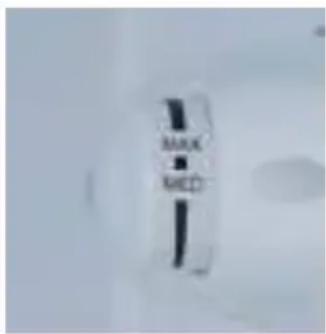
the compressor running continuously in order to maintain a low temperature in the cabinet.
For the first time you install your refrigerator, set the thermostat knob at "MED". Give your refrigerator time to cool down completely before adding food. It is the best to wait 24 hours before adding food. The thermostat knob controls the temperature. When the thermostat control knob is set to "OFF", the refrigerator will not be running.
The temperature of the refrigerator is controlled by the thermostat in the fridge compartment.
- Under the normal opera ng condi on (in spring and autumn), it is recommended to set at Model MED.
- In winter when the ambient temperature is low, it is recommended to set at Model MAX.
Operation instructions
- The appliance might not operate consistently (possibility of defrosting of contents or temperature becoming too warm in the frozen food compartment) when sited for an extended period of time below the cold end of the range of temperatures for which the refrigerating appliance is designed
- The information about the climate range of the appliance is provided on the rated plate.
- The fact that the internal temperatures could be affected by such factors as the location of the refrigerating appliance, ambient temperature and the frequency of door opening, and, if appropriate, a warning that the setting of any temperature control device might have to be varied to allow for these factors
- The fact that effervescent drinks should not be stored in food freezer compartments or cabinets or in low-temperature compartments or cabinets, and that some products such as water ices should not be consumed too cold
- The need to not exceed the storage time(s) recommended by the food manufacturers for any kind of food
Tips for keeping food perfect in the Fridge
Take extra care with meat and fish: cooked meats should always be stored on a shelf above raw meats to avoid bacterial transfer. Keep raw meats on a plate which is large enough to collect juices and cover it with cling film or foil.
Leave space around food: this allows cold air to circulate around the Fridge, ensuring all parts of the Fridge are kept cool.
Wrap up food!: to prevent transfer of flavors and drying out, food should be separately packed or covered. Fruit and vegetables need not be wrapped.
Pre-cooked food should be cooled properly: allow pre-cooked food to cool down before placing in the Fridge. This will help to stop the internal temperature of the Fridge from rising.
Shut the door!: to prevent cold air escaping, try to limit the number of times you open the door. When retuning from shopping, sort foods to be kept in your Fridge before opening the door. Only open the door to put food in or take it out.
If you're not at home for a long time
- Turn off the refrigerator first and then unplug the unit from the wall outlet.
- Remove all the food.
- Clean the refrigerator.
- Leave the lid open slightly to avoid possible formation of condensation, mold, or odors.
- Use extreme caution in the case of children. The unit should not be accessible to child's play.
- Short vacations: Leave the refrigerator operating during vacations of less than three weeks.
- Long vacations: If the appliance will not be used for several months, remove all food and unplug the power cord. Clean and dry the interior thoroughly. To prevent odor and mold growth, leave the door open slightly: blocking it open if necessary or have the door removed.
TAKE CARE
Defrosting
NOTE THIS UNIT DOES NOT HAVE AN AUTO DEFROST SYSTEM.
Please use a plastic ice shovel when clearing the frosting of the evaporator. Do not use metal sharp objects.
Defrost twice a year or when a frost layer of around 5 mm has formed.
Alternatively you may switch off the freezer at the socket outlet and pull out the mains plug. Extract the water conduit and put in a water container.
As a temporary measure, this frost should be scraped away using a plastic scraper. NEVER use a metal or sharp instrument. This should be carried out if the frost build-up cannot be scraped away, or if it begins to interfere with the food storage. Chose a time when the stock of frozen food is low and proceed as follow:
- Take out the frozen food, turn the Refrigerator off at the mains supply and leave the doors open. Ideally the frozen food should be put into another Fridge/Freezer or refrigerator. If this is not possible wrap the food, firstly in several sheets of newspaper or large towels and then in a thick rug or blanket and keep it in a cool place.
- Scrape away as much frost build-up as possible using the plastic scraper. To accelerate the thawing process place bowls of hot water inside the Fridge/Freezer cabinet. As the solid frost
loosens, prize it away with the plastic scraper and remove.
- When defrosting is completed, clean your Fridge/Freezer as described.
Cleaning and Care
After defrosting you should clean the Fridge/Freezer internally with a weak solution of bicarbonate of soda. Then rinse with warm water using a damp sponge or cloth and wipe dry. Wash the baskets in warm soapy water and ensure they are completely dry before replacing in the Fridge/Freezer.
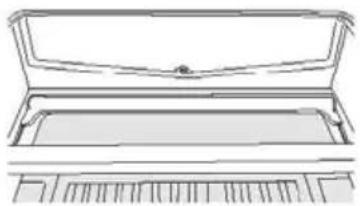
Condensation will form on the back wall of the Fridge; however it will normally run down the back wall and into the drain hole behind the salad bin.
natural_image
Line drawing of a mechanical part with a flat top and rectangular base (no text or symbols)The drain hole will have a “cleaning spike” inserted into it. This ensures that small pieces off food can not enter the drain. After you have cleaned the inside of your Fridge and removed any food residues from around the whole, use the “cleaning spike” to make sure that there are no blockages. Use standard furniture polish to clean the Fridge/Freezer exterior. Make sure that the doors are closed to prevent polish getting on the magnetic door seal or inside.
The grille of the condenser at the back of the Fridge/Freezer and the adjacent components can be vacuumed using a soft brush attachment.
Do not use harsh cleaners, scouring pads or solvents to clean any part of the Fridge/Freezer.
REVERSING THE DOOR SWING
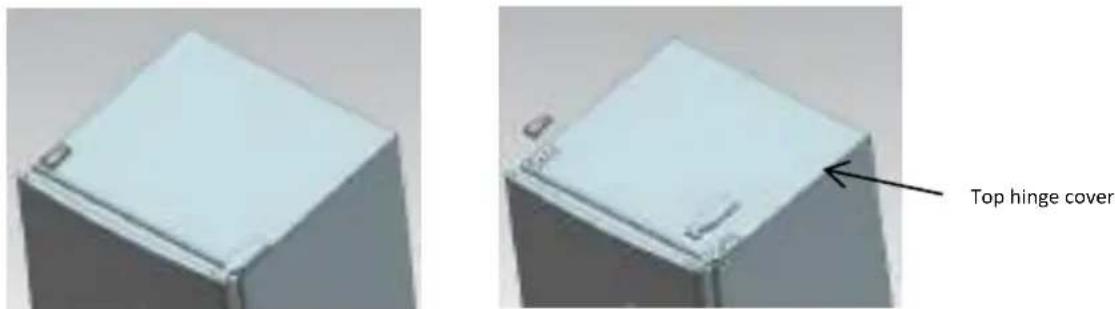
- Remove the right top hinger cover.
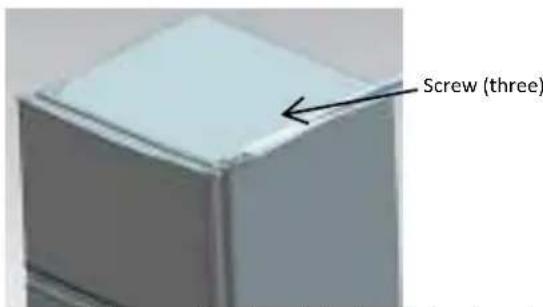
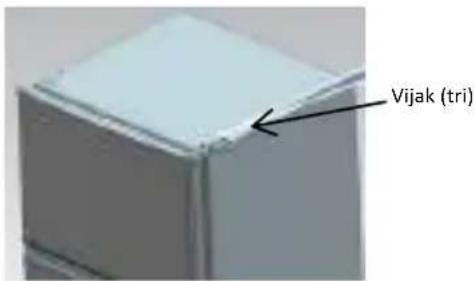
- Remove the screws fixed the top-hinge with cross-slot screwdriver.
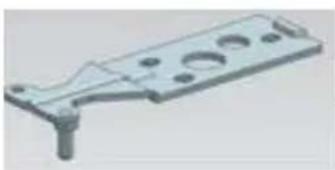
- Replace the top-hinge and the top-door limit block and the door bearing bush to the other side.
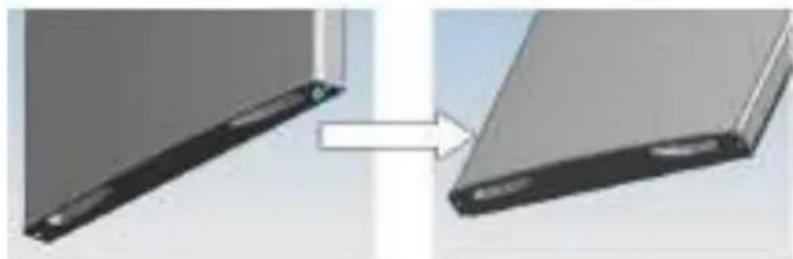
A. Remove the nut with sleeve. Take off the washer then remove the axes to the other side and fixed. Remove the door limit block

natural_image
3D mechanical part diagram showing a bracket being cut with holes, no text or symbols presentB. Please taking out another door limit block, with screw mounting to the door
natural_image
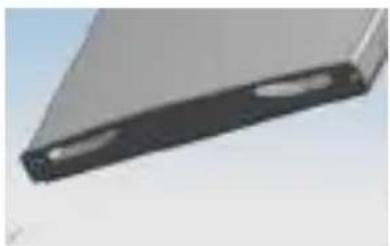
Diagram showing a device being processed from a component, with no visible text or symbolsC. Please taking out another door limit block, with screw mounting to the door
natural_image
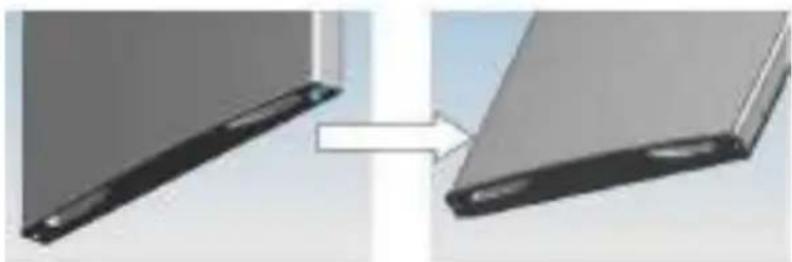
Close-up of a metallic electronic component with two mounting holes (no text or symbols visible)- Disassemble the screws fixed the bottom-hinge with cross-slot screwdriver.
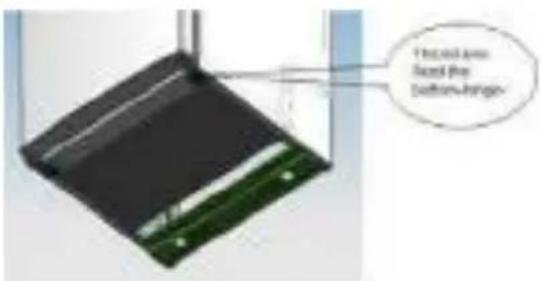
Note: the refrigerator-freezer incline angle less 45^ .
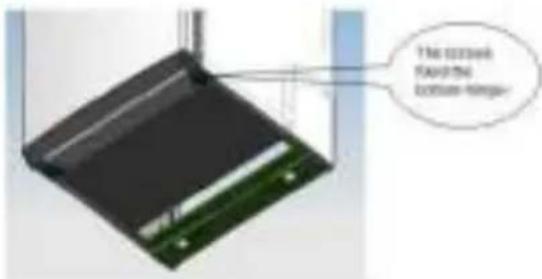
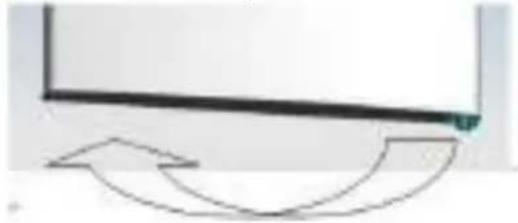
- Replace the bottom door bearing bush and the limit block.
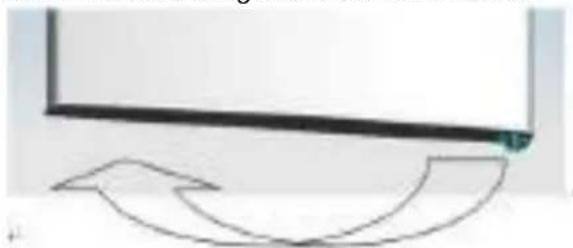
natural_image
Simple line drawing of a curved object with an arrow, no text or symbols present- Replace the bottom hinge to the other side then fix it with
screws.
natural_image
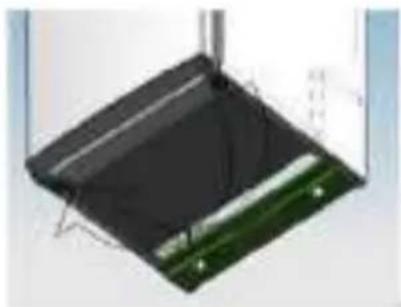
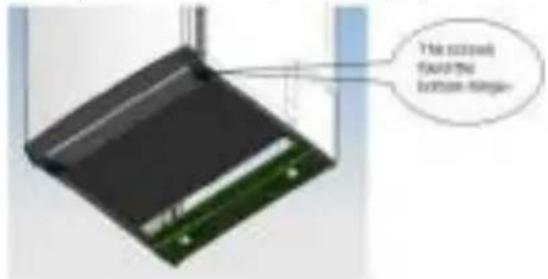
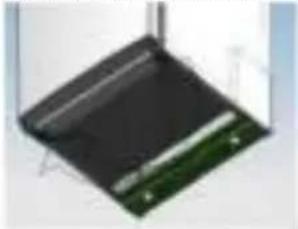
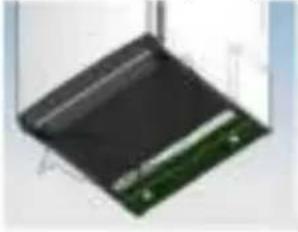
3D rendering of a black rectangular object with green internal structure, suspended by a vertical pole (no text or symbols visible)- Replace the mid-hinge.
natural_image
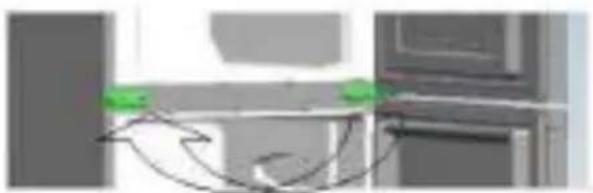
Exterior view of a modern office building (no signage)-
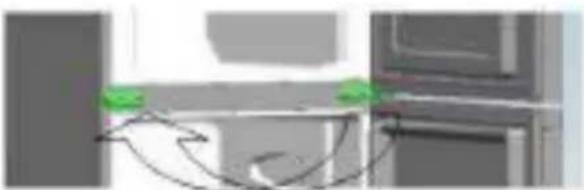
Set the bottom door right position, fix the mid-hinge.
-
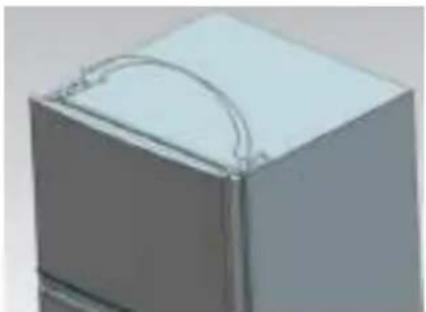
Replace the top-hinge.
natural_image
3D rendering of a modern refrigerator with a curved glass lid (no text or symbols visible)
natural_image
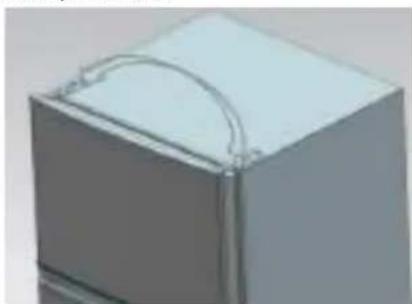
Abstract geometric composition with yellow and green blocks (no text or symbols)- Set the top door right position, fix the top-hinge and the cover.
natural_image
Solid color block image with pink top and olive bottom (no text or symbols)- Install the four screw caps and two catches to corresponding position.
- Ensure the Appliance is unplugged and empty.
- Adjust the two leveling feet to their highest position.
• We recommend you have someone to assist you.
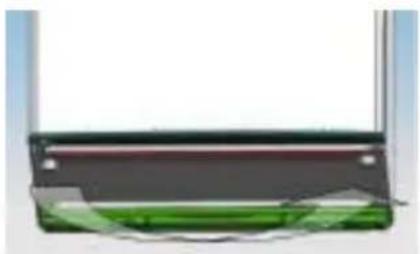
- replace the leveler to the other side and adjust it to make sure the cabinet level.
natural_image
Diagram of a battery pack with green insulation and red leads (no text or symbols)DOOR HANDLE INSTALLATION (optional)
Note: Figures in the user manual are only for reference. The actual product may differ slightly. The refrigerator must be disconnected from the source of electrical supply before attempting the installation of accessory.
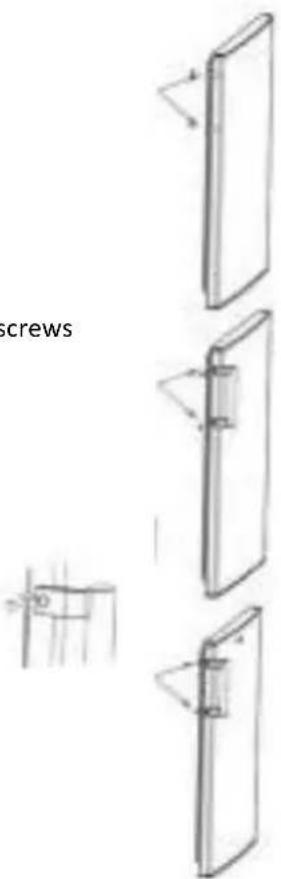
Step 1: take out two plug pins from the door (Side of door open)
Step 2: Install the door handle to the door and fasten it with screws
Step 3: Cover screw caps of the handle into screw holes
*The picture above is only for reference. The actual configuration will depend on the physical product or statement by the distributor
Door Space Requirements
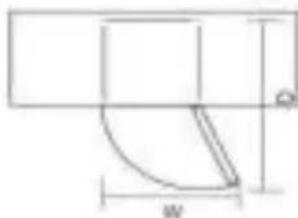
The unit's door must be able to open fully as shown.
$$ \mathrm{W} \times \mathrm{D} \geqslant 9 0 2 \times 1 0 5 2 \mathrm{mm} $$
Levelling the Unit
To do this adjust the two levelling feet at the front of the unit. If the unit is not level, the door and magnetic seal alignments will not be covered properly.
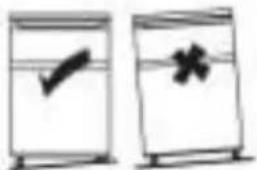
Make sure that the foot touches the ground before use.
Look down from the top, clockwise and counterclockwise loosening, tightening.
natural_image
Two identical containers with checkmarks and a cross symbol, no text or labels presentTROUBLE SHOOTING
- If the appliance does not operate when switched on, check.
- Power cut: If the internal temperature of the Fridge/Freezer compartment is -18°C or less when the power returns, your food is safe. The food in your Fridge/Freezer will remain frozen for approx 16 hours with the door closed. Do not open the Fridge/Freezer door more than necessary.
- The product is designed and built for domestic household use only.
- The plug is inserted properly in the socket and that the power supply is on. (To check the power supply to the socket, plug in another appliance).
- The fuse has blown/circuit breaker has tripped/main distribution switch has been turned off.
- The temperature control has been set correctly.
- If the refrigerator is exceptionally cold, you may have accidentally adjusted the thermostat control dial to a higher position.
- If the refrigerator is exceptionally warm, the compressor may not be working. Turn the thermostat control dial to the maximum setting and wait a few minutes. If there is no humming noise, it is not working. Contact the local store where your purchase was made.
- If condensation appears outside of the Refrigerator, this may be due to a change in the room temperature. Wipe off any residue of moisture. If the problem continues contact the local store where your purchase was made.
- If the provided plug has been replaced, make sure the new plug is properly connected. If the appliance is still not operating after the above checks, please contact Customer Service.
SCRAPPING OLD APPLIANCES
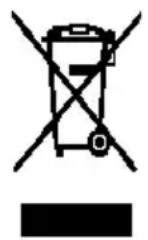
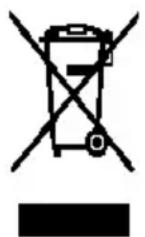
This appliance is marked according to the European directive 2012/19/EU on Waste Electrical and Electronic Equipment (WEEE).
WEEE contains both polluting substances (which can cause negative consequences for the environment) and basic components (which can be re-used). It is important to have WEEE subjected to specific treatments, in order to remove and dispose properly all pollutants, and recover and recycle all materials.
Individuals can play an important role in ensuring that WEEE does not become an environmental issue; it is essential to follow some basic rules:
WEEE should not be treated as household waste.
WEEE should be handed over to the relevant collection points managed by the municipality or by registered companies. In many countries, for large WEEE, home collection could be present.
In many countries, when you buy a new appliance, the old one may be returned to the retailer who has to collect it free of charge on a one-to-one basis, as long as the equipment is of equivalent type and has the same functions as the supplied equipment.
Conformity
By placing the mark on this product, we are confirming compliance to all relevant European safety, health and environmental requirements which are applicable in legislation for this product
Dear customer
If you want to return or replace the product, please contact the store where you buy.
(Remember to bring the purchase invoice)
SOMMARIO
natural_image
Line drawing of a closed storage tray with a triangular lid (no text or symbols)natural_image
3D rendering of a rectangular object with a flat top and a small square cutout on the side (no text or symbols visible)
natural_image
3D model of a rectangular electronic component with a small protrusion and an arrow pointing to it (no text or symbols visible)natural_image
3D mechanical part assembly showing a bracket being rotated, with no visible text or symbolsnatural_image
Diagram showing a device being processed from a black plastic clip into a gray plastic sheet (no text or symbols visible)natural_image
Close-up of a metallic electronic component with two circular holes (no visible text or symbols)natural_image
Simple line drawing of a horizontal bar with curved arrows below, no text or symbols presentnatural_image
Close-up of a black electronic component with green circuitry and a small white stripe (no visible text or symbols)natural_image
Exterior view of a modern office building (no signage)natural_image
3D rendering of a rectangular box with a curved lid on top (no text or symbols visible)natural_image
Solid color block image with yellow top and green bottom (no text or symbols)
natural_image
Two solid color blocks, pink above a yellow-green rectangle, with no text or symbols.natural_image
Illustration of a black rectangular object with green and gray sections, partially enclosed by a white frame (no text or symbols visible)natural_image
Technical line drawing of a door mechanism with three sequential steps (no text or symbols)natural_image
Line drawing of a closed storage tray or vent with a lid, showing internal compartments and base (no text or symbols)natural_image
3D mechanical part assembly showing a bracket being cut with holes (no text or symbols)natural_image
Two views of a flat electronic device showing a close-up of its edge (no text or symbols visible)natural_image
Close-up of a metallic electronic component with two small circular features (no visible text or symbols)natural_image
Simple line drawing of a curved arrow pointing downward from a horizontal bar (no text or symbols)natural_image
Close-up of a black electronic component with green circuitry and a small green stripe, no visible text or symbols.natural_image
Diagram of a kitchen appliance with a green arrow indicating rotation or movement (no text or symbols)natural_image
Abstract color block composition with yellow top, green bottom, and gray middle (no text or symbols)natural_image
3D rendering of a rectangular box with a curved metal rim (no text or symbols visible)natural_image
Simple vertical color block with pink top and olive bottom (no text or symbols)natural_image
Illustration of a battery pack with green and black casing (no text or symbols)INSTALLATION DE LA POIGNÉE DE PORTE (en option)
natural_image
Pure technical line drawings of a door mechanism with no text or symbolsnatural_image
Two identical containers with checkmarks and a cross symbol, no text or labels presentDÉPANNAGE

natural_image
Line drawing of a piano with a slanted top and base (no text or symbols)natural_image
3D rendering of a rectangular object with a light blue lid and small square cutout on top (no text or symbols visible)
natural_image
3D model of a rectangular electronic component with a small protrusion and an arrow pointing to a small feature (no text or symbols visible)natural_image
3D mechanical part assembly showing a bracket being cut with holes (no text or symbols)natural_image
Diagram showing a device being processed from a panel, with no visible text or symbolsnatural_image
Close-up of a metallic electronic component with two small holes, no visible text or symbolsnatural_image
Simple line drawing of a curved arrow pointing downward from a horizontal bar (no text or symbols)natural_image
Close-up of a black electronic component with green connectors and a white stripe, no visible text or symbols.natural_image
Interior view of a kitchen appliance with oven and door (no visible text or symbols)natural_image
Simple geometric shape with yellow top and green bottom (no text or symbols)natural_image
3D rendering of a modern stainless steel refrigerator with a curved glass lid (no text or symbols visible)natural_image
Two solid color blocks, one pink and one olive, stacked vertically with no text or symbols.natural_image
Close-up of a mechanical component with green and black surfaces, no visible text or symbolsINSTALLATIONSANWEISUNG......1
natural_image
Line drawing of a closed mechanical component with no text or symbolsnatural_image
3D mechanical part assembly showing a bracket being cut with holes, before and after assembly (no text or symbols)natural_image
Diagram showing a device being processed from a flat panel to a closed panel, with no visible text or symbols.natural_image
Close-up of a metallic electronic component with two small holes (no text or symbols visible)natural_image
Simple line drawing of a horizontal bar with curved arrows below (no text or symbols)natural_image
Close-up of a black electronic device with a green circuit board and a white stripe, no visible text or symbols.natural_image
Exterior view of a modern office building (no signage)natural_image
Abstract color block composition with yellow, green, and red sections (no text or symbols)natural_image
3D rendering of a modern refrigerator with a curved glass lid (no text or symbols visible)natural_image
Two solid color blocks, pink above a yellow middle block, with no text or symbols.natural_image
Illustration of a green and black object with a horizontal bar, possibly a device or panel (no text or symbols visible)TÜRGRIFF EINBAUEN (optional)
FEHLERSUCHE
natural_image
Line drawing of a closed storage tray or rack with a lid, showing no text or symbols.natural_image
3D rendering of a rectangular box with a lid, no visible text or symbols
natural_image
3D model of a rectangular electronic component with a small protrusion and an arrow pointing to a feature (no text or symbols visible)natural_image
3D mechanical part diagram showing a bracket before and after assembly (no text or symbols)natural_image
Diagram showing a device being processed from a screen to a flat panel (no text or symbols visible)natural_image
Close-up of a metallic electronic device with two small circular features on the side (no visible text or symbols)- Desaperte os parafusos que fixam a dobradiça inferior com a chave de fendas cruzada.
natural_image
Simple line drawing of a horizontal bar with curved arrows below (no text or symbols)natural_image
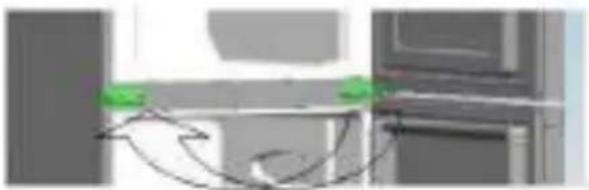
Close-up of a black electronic component with a green circuit board and a white stripe, no visible text or symbols.- Substitua a dobradiça central.
natural_image
Exterior view of a modern office building (no signage)natural_image
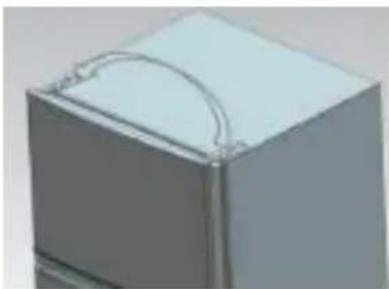
Abstract color block composition with yellow top, green bottom, and red middle (no text or symbols)- Substitua a dobradiça superior.
natural_image
3D rendering of a modern stainless steel refrigerator with a curved glass lid (no text or symbols visible)natural_image
Two solid color blocks, one pink and one olive, stacked vertically (no text or symbols)natural_image
Illustration of a green and black object with a curved line, possibly a device or panel (no text or symbols visible)natural_image
Line drawing of a closed mechanical part with no text or symbolsnatural_image
3D rendering of a rectangular object with a light blue top and dark base, no visible text or symbols.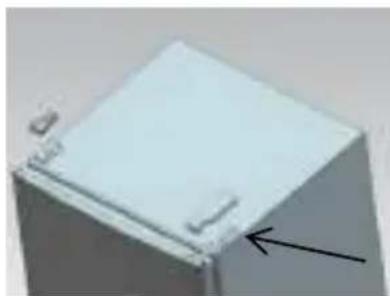
natural_image
3D rendering of a white rectangular object with a small protrusion and an arrow pointing to its side (no text or symbols visible)natural_image
3D mechanical part assembly showing a bracket being rotated, with no visible text or symbolsnatural_image
Diagram showing a device being processed from a panel, with no visible text or symbolsnatural_image
Close-up of a metallic electronic component with two small circular features on a dark surface (no text or symbols visible)natural_image
Simple line drawing of a horizontal bar with curved arrows below, no text or symbols presentnatural_image
Close-up of a black electronic component with a green circuit board (no visible text or symbols)natural_image
Interior view of a kitchen appliance with a green arrow pointing to a component (no visible text or symbols)- Stel de onderste deur af in de juiste positie en bevestig het middelste scharnier.
natural_image
Abstract geometric shape with yellow and green blocks (no text or symbols)natural_image
3D rendering of a metallic rectangular box with a curved glass lid (no text or symbols visible)- Stel de bovenste deur af in de juiste positie, bevestig het bovenste scharnier en deafdekking.
natural_image
Two solid color blocks, one pink and one olive-green, stacked vertically with no text or symbols.natural_image
Pure diagram of a mechanical component with no visible text, numbers, or symbolsDEURKLINK INSTALLEREN (optioneel)
natural_image
Technical line drawings of door frame components (no text or symbols)Vereiste deurruimte
natural_image
Two identical diagrams showing a checkmark inside a container and a cross symbol inside, both without any text or labels.PROBLEMEN OPLOSSEN
natural_image
Line drawing of a closed book with a triangular cover and spines (no text or symbols)natural_image
3D rendering of a rectangular object with a flat top and corner detail (no text or symbols visible)
natural_image
3D model of a rectangular electronic component with a small protrusion and an arrow pointing to a small feature (no text or symbols visible)natural_image
Close-up of a 3D cube with a corner edge and an arrow pointing to its edge (no text or symbols visible)Βίδα (τρία)
natural_image
3D mechanical part diagram showing a bracket before and after assembly (no text or symbols)natural_image
Two views of a flat-panel electronic device showing a black clip and a gray panel, with an arrow indicating transformation (no text or symbols visible)natural_image
Close-up of a metallic electronic component with two small circular features on the side (no text or symbols visible)natural_image
Simple line drawing of a horizontal bar with curved arrows below (no text or symbols)natural_image
Close-up of a black electronic device with a green circuit board and a white stripe (no visible text or symbols)natural_image
Interior view of a kitchen appliance with oven, door, and window (no visible text or symbols)natural_image
3D rendering of a rectangular box with a curved glass edge (no text or symbols visible)
natural_image
Abstract color block composition with yellow top, green bottom, and red middle (no text or symbols)natural_image
Two solid color blocks, one pink and one olive-green, stacked vertically (no text or symbols)natural_image
Illustration of a laptop with a green screen and black bezel (no text or symbols)natural_image
Two identical hand-drawn diagrams showing a checkmark and a cross symbol inside water-filled containers (no text or labels)natural_image
Line drawing of a closed storage tray with a lid, showing internal compartments and base (no text or symbols)natural_image
3D mechanical part assembly showing a bracket being cut with holes, before and after assembly (no text or symbols)natural_image
Diagram showing a device being processed from a panel edge, with no visible text or symbols.natural_image
Close-up of a metallic electronic component with two circular features (no visible text or symbols)natural_image
Simple line drawing of a horizontal bar with curved arrows below (no text or symbols)natural_image
3D rendering of a black rectangular object with green base and white stripe, suspended by a vertical line (no text or symbols visible)natural_image
Exterior view of a modern office building (no signage)natural_image
Abstract color block composition with yellow top, green bottom, and red middle (no text or symbols)natural_image
Exterior view of a modern stainless steel refrigerator with a curved glass lid (no text or symbols visible)natural_image
Two solid color blocks, one pink above a yellow, with no text or symbols.natural_image
Illustration of a green and black object with a curved line, possibly part of a device or panel (no text or symbols visible)MONTERINGS AF D∅RHÅNDTAG (ekstraudstyr)
natural_image
Two identical containers with checkmarks and a cross symbol, no text or labels presentFEJLFINDING
SKROTNING AV GAMLA APPARATER....215
natural_image
Line drawing of a closed storage tray with a triangular top opening (no text or symbols)natural_image
3D rendering of a rectangular object with a flat top and a small square cutout on the side (no text or symbols visible)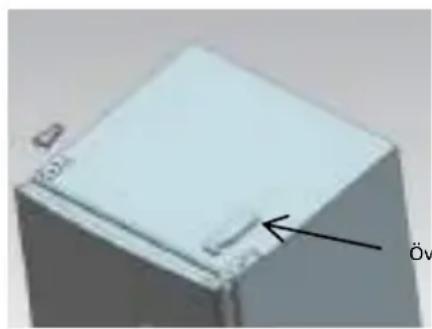
natural_image
3D model of a rectangular electronic component with a small protrusion and an arrow pointing to it, labeled 'Öv' (no other text or symbols)Övre gångjärnslock
natural_image
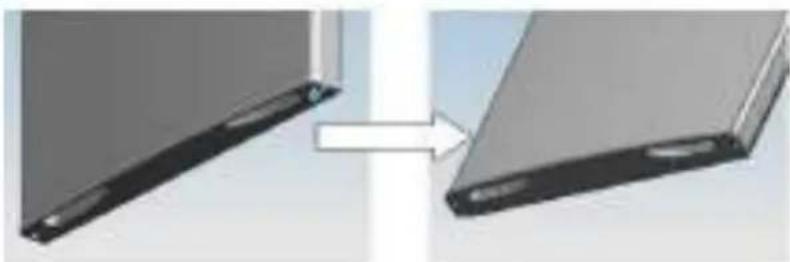
3D mechanical part diagram showing a bracket before and after assembly (no text or symbols)B. Ta bort dörrblocket
natural_image
Diagram showing a device being processed from a screen, with no visible text or symbolsnatural_image
Close-up of a metallic electronic component with two small circular features (no visible text or symbols)natural_image
Simple line drawing of a horizontal bar with curved arrows below, no text or symbols presentnatural_image
Close-up of a black electronic component with a green circuit board and a white strip, no visible text or symbols.natural_image
Interior view of a kitchen appliance with a green arrow pointing to a component (no visible text or symbols)natural_image
Abstract color block composition with yellow top, green bottom, and red middle (no text or symbols)natural_image
Close-up of a metallic rectangular box or cabinet with a flat top (no visible text or symbols)natural_image
Two solid color blocks, one pink and one olive, stacked vertically (no text or symbols)natural_image
Illustration of a battery pack with green liquid and red stripe (no text or symbols)MONTERING AV DÖRRHANDTAG (tillval)
natural_image
Diagram showing three sequential steps of a door or cabinet assembly with arrows indicating motion direction (no text or symbols)FELSÖKNING
SKROTNING AV GAMLA APPARATER
natural_image
Line drawing of a closed storage tray or vent with a lid, showing internal compartments and base (no text or symbols)natural_image
3D rendering of a rectangular object with a flat top and a small circular mark on the side (no text or symbols visible)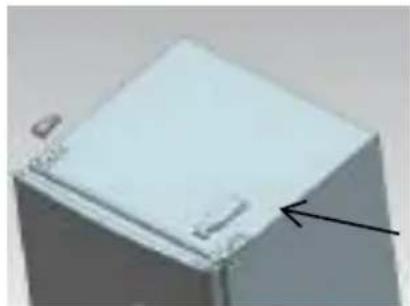
natural_image
3D rendering of a white rectangular object with a small protrusion and an arrow pointing to its edge (no text or symbols visible)Yläsanan kansi
natural_image
3D mechanical part diagram showing a bracket before and after assembly (no text or symbols)natural_image
Diagram showing a device being processed from a left-side component to a right-side component (no text or symbols visible)natural_image
Close-up of a metallic electronic component with two small circular features on the side (no text or symbols visible)natural_image
Simple line drawing of a horizontal bar with curved arrows below, no text or symbols presentnatural_image
Close-up of a black electronic device with a green circuit board and a white strip, no visible text or symbols.- Vaihda keskisarana.
natural_image
Interior view of a kitchen appliance with a green arrow pointing to a component (no visible text or symbols)natural_image
Abstract color block composition with yellow top, green bottom, and red middle (no text or symbols)- Vaihda yläsarana.
natural_image
3D rendering of a rectangular box with a curved glass edge and a vertical seam, no text or symbols visiblenatural_image
Two solid color blocks, pink above a yellow middle block (no text or symbols)natural_image
Illustration of a mechanical component with green and black sections, no visible text or symbolsOVENKAHVAN ASENNUS (valinnainen)
natural_image
Pure technical line drawing of three vertical panels with triangular connectors, no text or symbols presentnatural_image
Pure geometric diagram showing a curved shape with dimension label 'w' and angle marker (no text or symbols beyond basic geometry)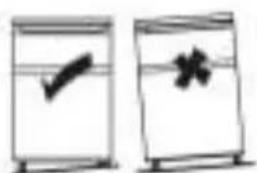
VIANMÄÄRITYS
natural_image
Line drawing of a closed book with a triangular cover and spines (no text or symbols)natural_image
3D rendering of a rectangular object with a light blue lid and dark base (no text or symbols visible)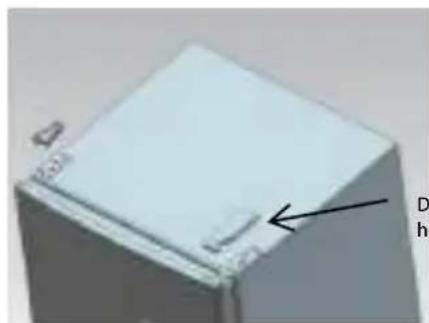
natural_image
3D model of a rectangular electronic component with a small protrusion and an arrow pointing to it, labeled 'D' and 'ha' (no other text or symbols)Det øverste hengseldekselet
natural_image
3D mechanical part diagram showing a bracket before and after assembly (no text or symbols)natural_image
Diagram showing a device being processed from a component, with no visible text or symbolsnatural_image
Close-up of a metallic electronic component with two small circular features, possibly battery or connector (no text or symbols visible)Merk: kjøleskapet/fryseren har en hellingsvinkel på under 45°.
natural_image
Simple line drawing of a horizontal bar with curved arrows below (no text or symbols)natural_image
Close-up of a black electronic device with a green circuit board and a white stripe (no visible text or symbols)natural_image
Interior view of a kitchen appliance with a green arrow pointing to a component (no visible text or symbols)natural_image
Abstract color block composition with yellow top, green bottom, and red middle (no text or symbols)natural_image
3D rendering of a rectangular box with a curved lid on top (no text or symbols visible)natural_image
Simple vertical color block composition with pink above yellow and red (no text or symbols)natural_image
Illustration of a green and black object with a white horizontal bar, possibly a device or panel (no text or symbols visible)INSTALLASJONS FOR D∅RHÅNDTAK (valgfritt)
natural_image
Technical line drawing of a door mechanism with three sequential steps (no text or symbols)natural_image
Two identical containers with checkmarks and a cross symbol, no text or labels presentFEILS∅KING
Enheten er merket iht. direktiv 2012/19/EU om elektrisk og elektronisk avfall (WEEE).
natural_image
Line drawing of a closed mechanical component with no text or symbolsnatural_image
3D rendering of a rectangular object with a flat top and a small circular detail on the side (no text or symbols visible)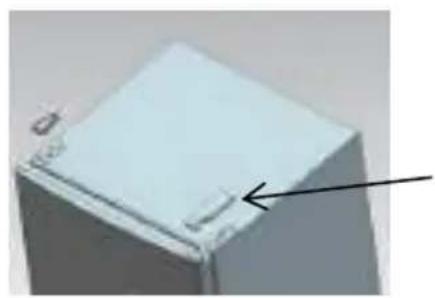
natural_image
3D rendering of a rectangular object with a small protrusion and an arrow pointing to its edge (no text or symbols visible)Poklopac gornje šarke
- Križnim odvijačem uklonite vijke kojima je pričvršćen gornji okov.
- Zamijenite gornji okov i graničnik gornjih vrata i ležište vrata s druge strane.
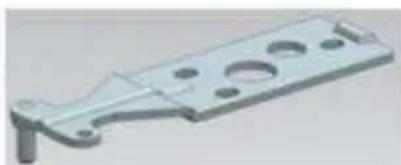
A. Uklonite maticu sa sidrom. Uklonite podložak, a zatim i osi s druge strane koje su pričvršćene.
natural_image
3D rendered mechanical part with circular holes and a protruding rod (no text or symbols)
natural_image
3D model of a mechanical bracket component (no text or symbols visible)B. Uklonite graničnik vrata.
natural_image
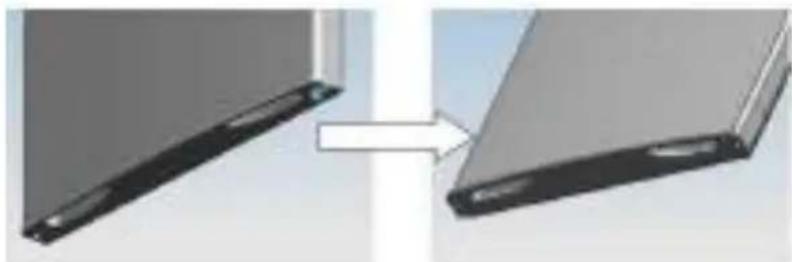
Diagram showing a device being processed from a black plastic clip into a gray plastic panel (no text or symbols visible)C. Uklonite drugi graničnik vrata vijkom kojim su montirana vrata.
natural_image
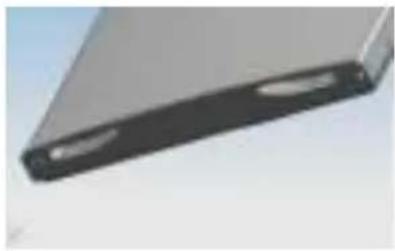
Close-up of a metallic electronic component with two small circular holes (no text or symbols visible)- Križnim odvijačem uklonite vijke kojima je pričvršćen donji okov.
Napomena: Kut nagiba hladnjaka-zamrzivača manji je od 45°.
natural_image
Simple line drawing of a horizontal bar with curved arrows indicating motion or force (no text or symbols)natural_image
Close-up of a black electronic device with a green circuit board and a white strip, no visible text or symbols.natural_image
Exterior view of a modern kitchen appliance with oven and door (no visible text or symbols)- Pravilno postavite donja vrata i pričvrstite srednji okov.
natural_image
Abstract geometric composition with yellow and green blocks (no text or symbols)natural_image
3D rendering of a modern refrigerator with a curved lid (no text or symbols visible)- Pravilno postavite gornja vrata, pričvrstite gornji okov i zaštitu.
natural_image
Two solid color blocks, one pink above a yellow center, with no text or symbols.natural_image
Illustration of a green and black object with a white horizontal bar, partially enclosed by a light blue border (no text or symbols)natural_image
Two identical containers with checkmarks and a cross symbol, no text or labels presentRJEŠAVANJE PROBLEMA
- Ako uređaj ne radi kada se uključi, provjerite.
- Nestanak struje Ako je unutrašnja temperatura hladnjaka/zamrzivača -18 °C ili niža kad se struja vrati, vaša je hrana sigurna. Hrana u vašem hladnjaku/zamrzivaču će ostati smrznuti oko 16 sati uz zatvorena vrata. Ne otvarajte vrata hladnjaka/zamrzivača više nego je potrebno.
Ovaj uređaj označen je sukladno Direktivi 2012/19/EZ o otpadnoj električnoj i elektroničkoj opremi (WEEE).
natural_image
Line drawing of a closed storage tray with a lid, showing internal compartments and base (no text or symbols)Unutar otvora za pražnjenje bice umetnut „vrh za čišćenje“. To će sprečiti da sitni komadići namirnica upadnu u taj otvor. Nakon čišćenja unutrašnjosti svog frižidera i uklanjanja ostataka hrane oko tog otvora, upotrebite „vrh za čišćenje“ da biste proverili da li je došlo do začepljenja otvora. Za čišćenje spoljašnjosti frižidera/zamrzivača, koristite uobičajena sredstva za poliranje nameštaja. Vodite računa da vrata uređaja budu zatvorena kako sredstvo za poliranje ne bi dospelo na magnetnu zaptivnu traku na vratima ili u unutraš njost uređaja.
natural_image
3D rendering of a rectangular object with a light blue lid and dark base (no text or symbols visible)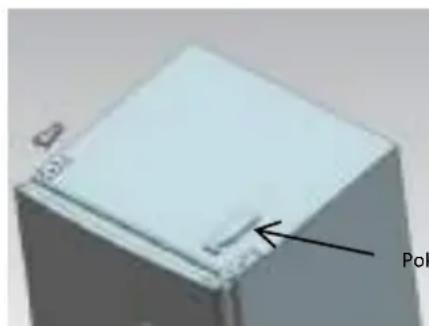
natural_image
3D model of a rectangular electronic component with a labeled feature 'PoH' and an arrow pointing to a small feature (no other text or symbols)Poklopac gornje šarke
- Pomoću krstastog šrafcigera uklonite šrafove kojima je fiksirana gornja šarka.
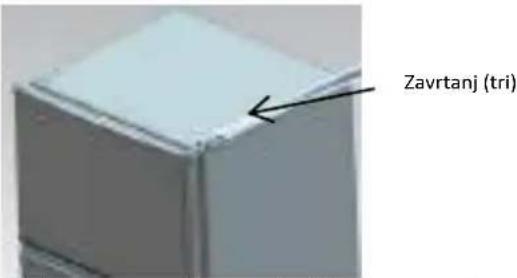
- Zamenite gornju šarku i blokator gornjih vrata i ležište vrata sa druge strane.
A. Uklonite navrtku sa sidrom. Uklonite podložak, a zatim i ose sa druge strane koje su fiksirane.

natural_image
3D mechanical part assembly showing a bracket being rotated to form a flanged component (no text or symbols visible)B. Uklonite blokator vrata
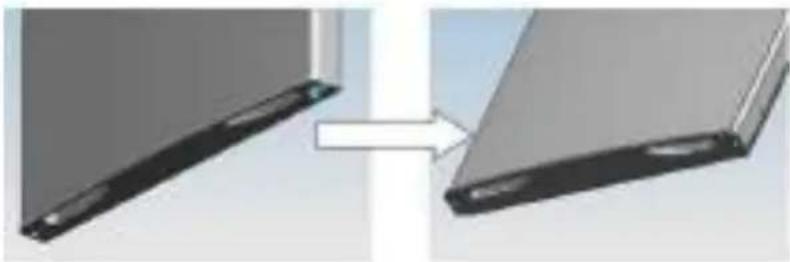
natural_image
Two views of a flat electronic device showing internal components, with no visible text or symbols.C. Uklonite drugi blokator vrata, sa šrafom kojim su montirana vrata
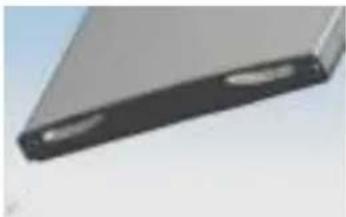
natural_image
Close-up of a metallic electronic component with two small circular features (no visible text or symbols)- Pomoću krstastog šrafcigera uklonite šrafove kojima je fiksirana donja šarka.
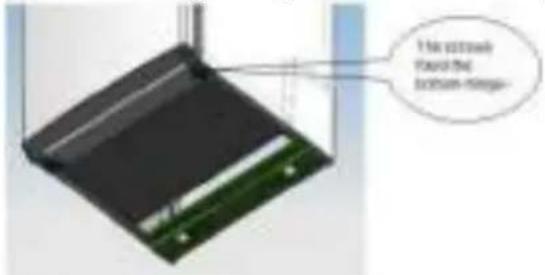
Napomena: ugao nagiba frižidera-zamrzivača je manji od 45°.
- Zamenite ležište donjih vrata i blokator.
natural_image
Simple line drawing of a horizontal bar with curved arrows pointing downward (no text or symbols)- Zamenite donju šarku sa druge strane i zatim je fiksirajte šrafovima.
natural_image
Close-up of a black electronic device with a green circuit board and a white stripe, no visible text or symbols.- Zamenite srednju šarku.
natural_image
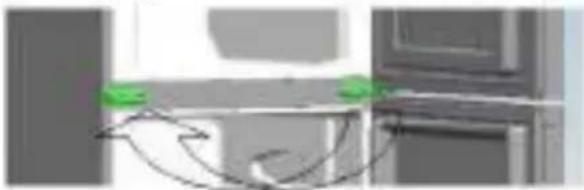
Exterior view of a modern kitchen appliance with a green handle and control panel (no visible text or symbols)- Pravilno postavite donja vrata i zašrafite srednju šarku.
natural_image
Abstract color block composition with yellow top, green bottom, and red stripe (no text or symbols)- Zamenite gornju šarku.
natural_image
3D rendering of a modern refrigerator with a curved lid (no text or symbols visible)- Pravilno postavite gornja vrata, zašrafite gornju šarku i zaštitu.
natural_image
Two solid color blocks, pink above yellow, with no text or symbolsnatural_image
Illustration of a battery pack with green liquid and red stripe (no text or symbols)natural_image
Diagram showing three sequential steps of a door or cabinet installation, with no visible text or symbols.* Gornja slika je samo za referencu. Stvarna konfiguracija će zavisiti od fizičkog proizvoda ili izjave distributera
natural_image
Two identical containers with checkmarks and a cross symbol, no text or labels presentOTKRIVANJE I OTKLANJANJE PROBLEMA /KVAROVA
natural_image
Line drawing of a closed book with a blank cover and spines (no text or symbols)natural_image
3D mechanical part diagram showing a bracket before and after assembly (no text or symbols)natural_image
Diagram showing a device transitioning from a black rectangular component to a gray rectangular component, with no visible text or symbols.natural_image
Close-up of a black rectangular object with two small circular indentations, possibly a CD or DVD (no text or symbols visible)natural_image
Simple line drawing of a horizontal bar with curved arrows indicating direction (no text or symbols)natural_image
Close-up of a black electronic device with a green circuit board and a white stripe, no visible text or symbols.natural_image
Interior view of a kitchen appliance with a green arrow pointing to a component (no visible text or symbols)natural_image
Solid color block image with yellow top and green bottom (no text or symbols)natural_image
3D rendering of a rectangular refrigerator with a curved lid (no text or symbols visible)natural_image
Two solid color blocks, one pink and one olive-green, stacked vertically (no text or symbols)natural_image
Pure diagram of a mechanical component with green and gray sections, no text or symbols visibleMONTÁŽE KLIKY DVERÍ (volitelné)
natural_image
Pure technical line drawings of three door frame components without any text or symbolsŘEŠENÍ PROBLÉMŮ
-Take off the doors.
natural_image
Line drawing of a closed storage tray with a triangular lid (no text or symbols)natural_image
3D rendering of a rectangular object with a flat top and a small square mark on the side (no text or symbols)
natural_image
3D mechanical part assembly showing a bracket being rotated, with no visible text or symbolsnatural_image
Diagram showing a device transitioning from a flat panel to a rectangular panel with two circular ends (no text or symbols)natural_image
Close-up of a metallic electronic component with two circular features (no visible text or symbols)natural_image
Simple line drawing of a horizontal bar with curved arrows below (no text or symbols)natural_image
Close-up of a black electronic device with a green circuit board and a white stripe, no visible text or symbols.natural_image
Interior view of a kitchen appliance with a green arrow pointing to a component (no visible text or symbols)natural_image
Two solid color blocks: yellow top with black border, green bottom with red border (no text or symbols)natural_image
3D rendering of a modern refrigerator with a curved lid (no text or symbols visible)natural_image
Illustration of a device with green and black components, no visible text or symbolsROZWIAZYWANIE PROBLEMÓW
natural_image
Line drawing of a closed storage tray with a lid, showing internal compartments and base (no text or symbols)natural_image
3D rendering of a rectangular object with a flat top and a small square mark on the side (no text or symbols visible)
natural_image
3D model of a rectangular electronic component with a small labeled component (no readable text or symbols)natural_image
3D mechanical part assembly showing a bracket being rotated, with no visible text or symbolsnatural_image
Diagram showing a device being processed from a black component, with no visible text or symbols.natural_image
Close-up of a metallic electronic component with two small circular features (no visible text or symbols)natural_image
Simple line drawing of a horizontal bar with curved arrows below (no text or symbols)- Spodnji tečaj premestite na drugo stran in ga pričvrstite z vijaki.
natural_image
Black rectangular electronic device with a green circuit board and a white cable, mounted on a stand (no visible text or symbols)- Premestite sredinski tečaj.
natural_image
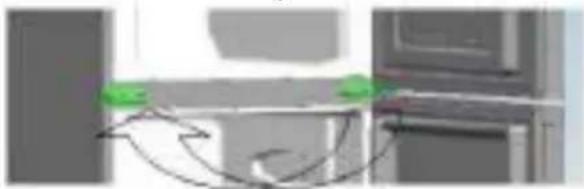
Exterior view of a modern office building (no signage)- Spodnja vrata namestite v ustrezen položaj in pričvrstite sredinski tečaj.
natural_image
Two solid color blocks, top yellow and bottom green, stacked vertically (no text or symbols)natural_image
3D rendering of a rectangular refrigerator with a curved lid (no text or symbols visible)natural_image
Two solid color blocks, one pink and one olive, stacked vertically with no text or symbols.natural_image
Illustration of a green and black object with a curved line, possibly part of a device or panel (no text or symbols visible)NAMESTITVE ROČAJA VRAT (neobvezno)
natural_image
Pure technical line drawing of a door mechanism with no text or symbolsnatural_image
Two identical containers with checkmarks and a cross symbol, no text or labels presentISKANJE IN ODPRAVLJANJE NAPAK
natural_image
Line drawing of a closed storage tray or drawer with a handle and base (no text or symbols)natural_image
3D mechanical part assembly showing a bracket being cut with holes (no text or symbols)B. Vyberte zarážku dverí
natural_image
Diagram showing a device transitioning from a black panel with two slots to a gray panel with two holes, indicating a process or assembly (no text or symbols present)natural_image
Close-up of a metallic electronic component with two small circular features on a dark surface (no text or symbols visible)natural_image
Simple line drawing of a curved arrow pointing downward from a horizontal line (no text or symbols)- Znovu nasadte spodný záves na druhej strane, potom upevnite skrutkami.
natural_image
Black rectangular electronic device with green circuit board and white stripe (no visible text or symbols)natural_image
Exterior view of a modern office building (no signage)natural_image
Abstract color block composition with yellow top, green bottom, and red middle (no text or symbols)natural_image
3D rendering of a rectangular refrigerator with a curved glass lid on top (no text or symbols visible)natural_image
Two solid color blocks, one pink and one olive, stacked vertically (no text or symbols)natural_image
Illustration of a battery pack with green and black casing (no text or symbols)INŠTALÁCIE KL'UČKY DVERÍ (volitel'né)
natural_image
Two identical containers with checkmarks and a cross symbol, no text or labels presentRIEŠENIE PROBLÉMOV
natural_image
Line drawing of a closed book with a triangular cover and spines (no text or symbols)natural_image
3D rendering of a rectangular object with a flat top and side edges, resembling a battery or container (no text or symbols visible)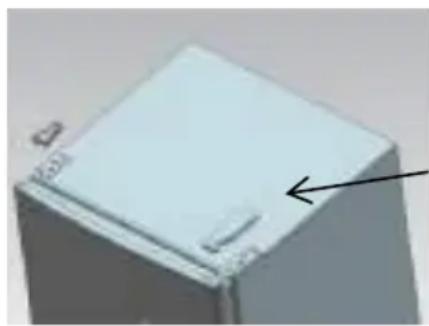
natural_image
3D model of a rectangular electronic component with a black arrow pointing to its side (no text or symbols visible)Capacul balamalei superioare
natural_image
3D mechanical part assembly showing a bracket being rotated, with no visible text or symbolsnatural_image
Diagram showing a device being processed from a component, with no visible text or symbolsnatural_image
Close-up of a metallic electronic component with two small holes, no visible text or symbolsnatural_image
Simple line drawing of a horizontal bar with an arrow pointing downward (no text or symbols)natural_image
Close-up of a black electronic device with a green circuit board and a white stripe, no visible text or symbols.natural_image
Exterior view of a modern office building (no signage)natural_image
Abstract color block composition with yellow top, green bottom, and red middle (no text or symbols)natural_image
3D rendering of a rectangular box with a curved top surface (no text or symbols visible)natural_image
Two solid color blocks, one pink and one olive-green, stacked vertically with no text or symbols.natural_image
Illustration of a green and black object with a horizontal bar, possibly a device or panel (no text or symbols visible)natural_image
Pure technical line drawing of a door mechanism with no text or symbolsnatural_image
Two identical containers with checkmarks and a cross symbol, no text or labels presentDEPANARE
natural_image
Line drawing of a closed mechanical component with a triangular top and base (no text or symbols)natural_image
3D rendering of a rectangular box with a lid, no visible text or symbols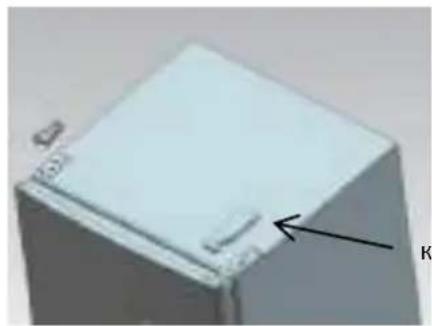
natural_image
3D model of a rectangular electronic component with a small protrusion and an arrow pointing to a feature (no text or symbols visible)natural_image
3D mechanical part assembly showing a bracket being rotated, with no visible text or symbolsВ. Отстранете ограничителя на вратата
natural_image
Diagram showing a device being processed from a flat panel, with no visible text or symbols.natural_image
Close-up of a black rectangular electronic component with two small circular features, possibly a battery or connector (no text or symbols visible)natural_image
Simple line drawing of a horizontal bar with curved arrows below (no text or symbols)natural_image
Close-up of a black electronic device with a green circuit board and a white stripe, no visible text or symbols.natural_image
Exterior view of a modern office building (no signage)natural_image
Abstract geometric composition with yellow, green, and red blocks (no text or symbols)natural_image
3D rendering of a rectangular box with a curved lid (no text or symbols visible)natural_image
Two solid color blocks, pink above a yellow middle layer, with no text or symbols.natural_image
Illustration of a mechanical component with green and black sections, no visible text or symbolsЗА ИНСТАЛИРАНЕ НА ДРЪЖКАТА НА ВРАТАТА (по избор)
ОТСТРАНЯВАНЕ НА ПРОБЛЕМИ
natural_image
Line drawing of a closed mechanical device with a triangular top and base (no text or symbols)natural_image
3D rendering of a rectangular object with a flat top and a small square cutout on the side (no text or symbols visible)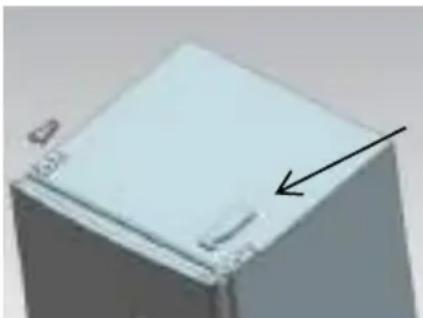
natural_image
3D model of a rectangular electronic device with a black arrow pointing to its top surface (no text or symbols visible)natural_image
3D mechanical part assembly showing a bracket being rotated, with no visible text or symbolsnatural_image
Diagram showing a device being processed from a black panel to a gray panel, with no visible text or symbols.natural_image
Close-up of a metallic electronic component with two small holes, no visible text or symbolsnatural_image
Simple line drawing of a horizontal bar with a curved arrow below it (no text or symbols)natural_image
Close-up of a black electronic device with a green circuit board and a white stripe (no visible text or symbols)natural_image
Interior view of a kitchen appliance with a green arrow pointing to a component (no visible text or symbols)natural_image
Abstract geometric shape with yellow and green blocks (no text or symbols)natural_image
3D rendering of a rectangular box with a curved lid on top (no text or symbols visible)natural_image
Solid color block image with pink top and olive bottom (no text or symbols)natural_image
Illustration of a mechanical component with green and black sections, no visible text or symbolsHIBAELHÁRÍTÁS
natural_image
Line drawing of a closed storage tray with a lid, showing internal compartments and casing (no text or symbols)natural_image
3D rendering of a rectangular box with a lid, no visible text or symbols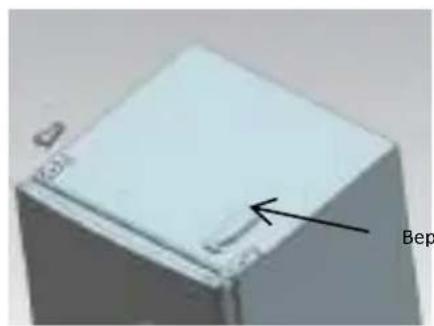
natural_image
3D model of a rectangular electronic component with a small protrusion and an arrow pointing to it, labeled 'Bep' (no other text or symbols)natural_image
3D mechanical part assembly showing a bracket being cut with holes (no text or symbols)natural_image
Diagram showing a device being processed from a black panel to a gray panel, with no visible text or symbols.natural_image
Close-up of a metallic electronic component with two small circular features (no visible text or symbols)natural_image
Simple line drawing of a horizontal bar with curved arrows below (no text or symbols)natural_image
Close-up of a black electronic device with a green circuit board and a white strip, no visible text or symbols.natural_image
Exterior view of a modern office building (no signage)natural_image
Abstract color block composition with yellow, green, and red sections (no text or symbols)natural_image
3D rendering of a rectangular box with a curved lid on top (no text or symbols visible)natural_image
Solid color block image with pink top and olive bottom (no text or symbols)natural_image
Illustration of a mechanical component with green and black sections, no visible text or symbolsnatural_image
Pure technical line drawings of three mechanical components without any text, numbers, or symbolsnatural_image
Two identical containers with checkmarks and a cross symbol, no text or labels presentFOR appliances without a 4-star compartment: this refrigerating appliance is not suitable for freezing foodstuffs
FOR a free standing appliance: this refrigerating appliance is not intended to be used as a built-in appliance
FOR Wine Coolers: this appliance is intended to be used exclusively for the storage of wine
FOOD STORAGE
Position different food in different compartments according to be below table
| Refrigerator compartment | Type of food |
| Door or balconies of fridge compartment | ·Foods with natural preservatives, such as jams, juices, drinks, condiments.·Do not store perishable foods |
| Crisper drawers (salad drawer) | ·Fruits, herbs and vegetables should be placed separately in the crisper bin·Do not store bananas, onions, potatoes, garlic in the refrigerator |
| Fridge shelf – middle | ·Dairy products, eggs |
| Fridge shelf – top | ·Foods that do no need coocking, such as ready-to-eat foods, deli meats, leftovers. |
| Freezer drawer(s)/tray | ·Foods for long-term storage·Bottom drawer for raw meet, poultry, fish·Middle drawer for frozen vegetables, chips.·Top tray for ice cream, frozen fruit, frozen baked goods. |
- It's suggested to set the temperature at 4^ in the fridge compartment, and, whether possible, at -18^ in the freezer compartment.
- For most food categories, the longest storage time in the fridge compartment is achieved with colder temperatures. Since some particular products (as fresh fruits and vegetables) may be damaged with colder temperatures, it is suggested to keep them in the crisper drawers, whenever present. If not present, maintain an average setting of the thermostat.
- For frozen food, refer to the storage time written on the food packaging. This storage time is achieved whenever the setting respects the reference temperatures of the compartment (one-star -6°C, two stars -12°C, three stars -18°
POSITIONING
Install the appliance at a location where the ambient temperature corresponds to the climate class indicated on the rating plate of the appliance:
- Extended temperate (SN): ‘this refrigerating appliance is intended to be used at ambient temperatures ranging from 10 °C to 32 °C’
- Temperate (N): ‘this refrigerating appliance is intended to be used at ambient temperatures ranging from 16 °C to 32 °C’
- Subtropical (ST): ‘this refrigerating appliance is intended to be used at ambient temperatures ranging from 16 °C to 38 °C’
- Tropical (T): ‘this refrigerating appliance is intended to be used at ambient temperatures ranging from 16 °C to 43 °C’
AVAILABILITY OF SPARE PARTS
“Thermostats, temperature sensors, printed circuit boards and light sources are available for a minimum period of seven years after placing the last unit of the model on the market. Door handles, door hinges, trays and baskets for a minimum period of seven years and door gaskets for a minimum period of 10 year, after placing the last unit of the model on the market”.
GUARANTEE
Minimum guarantee is: 2 years for EU Countries, 3 years for Turkey, 1 year for UK, 1 year for Russia, 3 years for Sweden, 2 years for Serbia, 5 years for Norway, 1 year for Morocco, 6 months for Algeria, Tunisia no legal warranty required.
TECHNICAL ASSISTANCE
To contact the technical assistance, visit our website: https://corporate.haier-europe.com/en/ Under the section “website”, choose the brand of your product and your country. You will be redirected to the specific website where you can find the telephone number and form to contact the technical assistance
For further information about the product, please consult https://eprel.ec.europa.eu/ or scan the QR on the energy label supplied with the appliance
BG

- LANGUAGES
- SUMMARY
- SAFETY INFORMATION
- WARNING!
- ENERGY SAVING
- PRODUCT OVERVIEW
- Climate Class
- TRANSPORTATION INSTRUCTIONS
- INSTALLATION INSTRUCTIONS
- STARTING TO USE
- OPERATION
- Switching on your unit
- Operation instructions
- Tips for keeping food perfect in the Fridge
- If you're not at home for a long time
- TAKE CARE
- Defrosting
- Cleaning and Care
- REVERSING THE DOOR SWING
- DOOR HANDLE INSTALLATION (optional)
- Door Space Requirements
- Levelling the Unit
- TROUBLE SHOOTING
- SCRAPPING OLD APPLIANCES
- Conformity
- Dear customer
- SOMMARIO
- INSTALLATION DE LA POIGNÉE DE PORTE (en option)
- DÉPANNAGE
- TÜRGRIFF EINBAUEN (optional)
- FEHLERSUCHE
- DEURKLINK INSTALLEREN (optioneel)
- Vereiste deurruimte
- PROBLEMEN OPLOSSEN
- MONTERINGS AF D∅RHÅNDTAG (ekstraudstyr)
- FEJLFINDING
- MONTERING AV DÖRRHANDTAG (tillval)
- FELSÖKNING
- SKROTNING AV GAMLA APPARATER
- OVENKAHVAN ASENNUS (valinnainen)
- VIANMÄÄRITYS
- INSTALLASJONS FOR D∅RHÅNDTAK (valgfritt)
- FEILS∅KING
- RJEŠAVANJE PROBLEMA
- OTKRIVANJE I OTKLANJANJE PROBLEMA /KVAROVA
- MONTÁŽE KLIKY DVERÍ (volitelné)
- ŘEŠENÍ PROBLÉMŮ
- ROZWIAZYWANIE PROBLEMÓW
- NAMESTITVE ROČAJA VRAT (neobvezno)
- ISKANJE IN ODPRAVLJANJE NAPAK
- INŠTALÁCIE KL'UČKY DVERÍ (volitel'né)
- RIEŠENIE PROBLÉMOV
- DEPANARE
- ЗА ИНСТАЛИРАНЕ НА ДРЪЖКАТА НА ВРАТАТА (по избор)
- ОТСТРАНЯВАНЕ НА ПРОБЛЕМИ
- HIBAELHÁRÍTÁS
- FOOD STORAGE
- POSITIONING
- AVAILABILITY OF SPARE PARTS
- GUARANTEE
- TECHNICAL ASSISTANCE
- BG
Brand : ZEROWATT
Model : EZMDDS 5142W
Category : Refrigerator