
ZTLP 130 S - Refrigerator ZEROWATT - Free user manual and instructions
Find the device manual for free ZTLP 130 S ZEROWATT in PDF.


| Product Type | Refrigerator with freezer compartment |
| Brand | Zerowatt |
| Model | ZTLP 130 S |
| Total Capacity | Approx. 130 L |
| Refrigerant | R600a (isobutane) |
| Power Supply | 220-240 V ~ 50 Hz / 230 V ~ 60 Hz |
| Climate Class | SN, N, ST, T |
| Door Reversibility | Yes, reversible door |
| Temperature Control | Mechanical knob |
| Defrosting | Manual (defrost when frost >4mm) |
| Interior Shelves | Adjustable shelves |
| Crisper Box | Yes |
| Bottle Racks | Yes |
| Freezer Compartment | Yes (drawers) |
| Adjustable Feet | Yes, leveling legs |
| Cleaning Frequency | Monthly |
| Cleaning Agent | Neutral detergent, water, then dry |
| Safety Features | Complies with Low Voltage Directive 73/23/EEC and EMC Directive 89/336/EEC; grounded connection required |
| Electrical Requirements | Dedicated grounded socket |
| Ventilation Requirements | Back: ≥100mm, sides: ≥100mm, top: ≥200mm |
Frequently Asked Questions - ZTLP 130 S ZEROWATT
User questions about ZTLP 130 S ZEROWATT
0 question about this device. Answer the ones you know or ask your own.
Ask a new question about this device
Download the instructions for your Refrigerator in PDF format for free! Find your manual ZTLP 130 S - ZEROWATT and take your electronic device back in hand. On this page are published all the documents necessary for the use of your device. ZTLP 130 S by ZEROWATT.
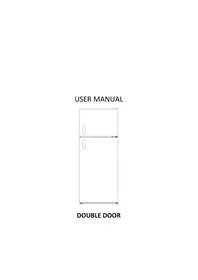
USER MANUAL ZTLP 130 S ZEROWATT
. Your new appliance is designed exclusively for domestic use.
To ensure best use of your appliance, carefully read the operating instructions which contain a description of the appliance and advice on storing and preserving food. Keep this handbook for future reference.
- After unpacking the appliance, make sure it is not damaged and that the door closes properly. Any damage must be reported to the dealer within 24 hours of delivery of the appliance.
- Wait at least two hours before switching the appliance on, in order to ensure that the refrigerant circuit is fully efficient.
- Make sure installation and the electrical connection are carried out by a qualified technician according to the manufacturer's instructions and in compliance with the local safety regulations.
- Clean the inside of the appliance before using it.
BEFORE USING THE APPLIANCE
1. Packing
The packing material is 100% recyclable and bears the recycling symbol. Comply with the local regulations for disposal. Keep the packing materials (plastic bags, polystyrene parts, etc.) out of the reach of children, as they are a potential source of danger.
2. Scrapping/Disposal
The appliance is manufactured using recyclable material.
This appliance is marked in compliance with European Directive 2002/96/EC on Waste Electrical and Electronic Equipment (WEEE). By ensuring the correct scrapping of this appliance, you can help prevent potentially negative consequences for the environment and the health of persons.
The symbol ☒ on the appliance, or on the accompanying documents, indicates that this appliance should not be treated as domestic waste but must be taken to a suitable collection centre for the recycling of electrical and electronic equipment. When scrapping the appliance, make it unusable by cutting off the power cable and removing the doors and shelves so that children cannot easily climb inside. Scrap the appliance in compliance with local regulations on waste disposal, taking it to a special collection centre; do not leave the appliance unattended even for a few days, since it is a potential source of danger for children. For further information on the treatment, recovery and recycling of this appliance, contact your competent local office, the household waste collection service or the shop where you purchased the appliance.
Information:
This appliance does not contain CFC (the refrigerant circuit contains R134a) or HFC (the refrigerant circuit contains R600a) (refer to the rating plate inside the appliance).
Appliances with isobutane (R600a): Isobutane is a natural gas without environmental impact but is flammable. Therefore, make sure the refrigerant circuit pipes are not damaged.
Declaration of conformity
. This appliance is intended for storing food and is manufactured in conformity with European regulation (EC) No. 1935/2004.
CE
. This product has been designed, manufactured and marketed in compliance with:
- the safety objectives of Low Voltage Directive 73/23/EEC;
- the protection requirements of EMC "Directive 89/336/EEC, amended by Directive 93/68/EEC.
. Electrical safety of the appliance is guaranteed only if it is connected to an efficient and approved earthing system.

natural_image
Simple black-and-white sketch of a four-leaf clover tree on a hill (no text or symbols)IMPORTANT SAFETY INSTRUCTIONS
These warnings are provided in the interests of your safety. Ensure that you understand
Them all before installing or using this appliance. Your safety is of paramount importance.
If you are unsure about any of the meanings or these warnings contact the Customer
Care Department.
Installation
- This appliance is heavy. Care should be taken when moving it.
- It is dangerous to alter the specifications or attempt to modify this product in any way.
- Ensure that the appliance does not stand on the electrical supply cable. If the supply cord is damaged, it must be replaced by a special cord available from your local Service Force Centre.
- Any electrical work required to install this appliance should be carried out by a qualified electrician or competent person.
- Parts which heat up should not be exposed. Whenever possible, the back of the appliance should be close to a wall but leaving the required distance for ventilation as stated in the installation instructions.
- The appliance should be left for 2 hours after installation before it is turned on, in order to allow the refrigerant to settle.
CAUTION: You must keep the appliance stand in the place where is ventilative anytime.
Child Safety
- This appliance is not intended for use by young children or infirm persons unless they have been adequately supervised by a responsible person to ensure that they can use the appliance safely.
- Yong children should be supervised to ensure that they do not play with the appliance.
During Use
- This appliance is designed for domestic use only, specifically for the storage of edible foodstuffs only.
- Frozen food should not be refrozen once it has thawed out.
- Do not place carbonated or fizzy drinks in the freezer.
- Ice lollies can cause 'frost/freezer burns' if consumed straight from the freezer.
- Do not remove items from the freezer if your hands are damp/wet, as this could cause skin abrasions or frost/freezer burns.
Maintenance and Cleaning
- Switch off, and unplug the appliance before carrying out any cleaning or maintenance work.
- Do not use sharp instruments to scrape off frost or ice. (See defrosting instructions).
CAUTION: You must not use any mechanical equipment or other way that quicken up the defrosting process to defrost the appliance.
Do not damage the refrigerant circuit.
You must not use any electric appliance inside the appliance except that are commended by the manufacturer.
Servicing
This product should be serviced by an authorised engineer, and only genuine spare parts should be used.
- Under no circumstances should you attempt to repair the machine yourself. Repairs carried out by inexperienced persons may cause injury or serious malfunctioning. Contact your local Service Force Centre.
At the End of the Appliance Life
NOTE: Before discarding an old wine cooler, switch off and disconnect it from the power supply. Cut off and render any plug useless. Ensure that the door cannot jam (removing it is best), regardless of whether or not it can be pushed open from inside.
AN OLD WINE COOLER CAN BE A DEADLY PLAYTHING FOR CHILDREN!
CAUTION: At the end of the function life of the appliance it must be disposed in accordance with the W.E.E.E directive (See below). You appliance contains R600a refrigerant and inflammable gas in the insulating foam.
- Before discarding your wine cooler, switch it off and disconnect it from the power supply. Cut off and render any plug useless.
- Ensure that the door cannot shut completely, regardless of whether or not it can be pushed open from the inside (removing the door is best).

Please read this instruction book carefully before use and retain for future reference.
PARTS AND FEATURES

① Evaporator
② Shelves of refrigerator chamber
③ Glass cover
④ Crisper box
⑤ Leveling Legs
⑥ Bottle Racks
⑦ Handle
⑧ Door Switch
⑨ Temperature Control Knob
2. Correctly positioning
Well Ventilating
There is need of good ventilation around the refrigerator for easy dissipation of heat, high efficiency of refrigeration and low power consumption. For this purpose, sufficient clear space should be need around the refrigerator. Its back is at least 100mm away from the wall, its sides at least have a space of 100mm separately and the height from over its top is not less than 200mm. A clear space should be left to open its doors to 160 4

natural_image
Cartoon illustration of a book character with arms and legs, waving (no text or symbols)Power Supply
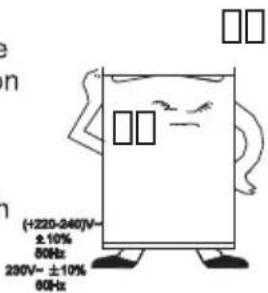
The refrigerator is only applied with power supply of single phase alternating current of (220-240)V\~/50Hz;230V\~/60Hz. If fluctuation of voltage in the district user is of so large that the voltage exceeds the above scope, for safety sake, be sure to apply a.c. automatic voltage regulator to the refrigerator. The refrigerator must employ a special power socket instead of common one with other electric appliances. Its plug must match the socket with ground wire.
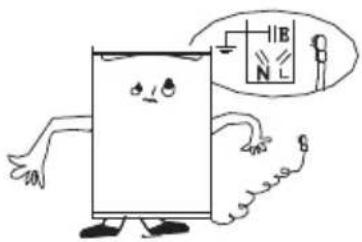
Power Line Cord
The cord should be neither lengthened nor folded into coil during operation. Moreover, it is forbidden that cord is kept close onto the compressor at the back of the refrigerator, the surface temperature of which is quite high when operating. Touching with it would deactivate the insulation or cause leakage for electricity.
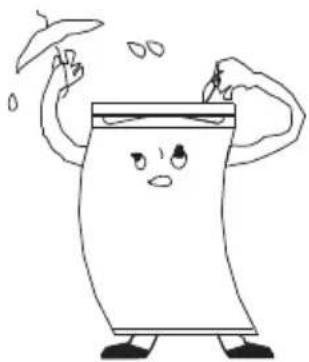
Protection from Moisture
Avoiding placing the refrigerator in a place where heavy moisture is present so as to minimize possibility of rusty for its metal parts. Still more, the refrigerator is forbidden to be directly sprayed by water, otherwise, poor insulation and current leakage would occur.
natural_image
Cartoon illustration of a document character with arms and legs, holding a tray (no text or symbols)2. Correctly positioning
Protection from Heat
The refrigerator should be far away from any heat source or direct sunshine.

natural_image
Cartoon illustration of a smiling pot with steam rising, no text or symbols presentFixing Stable
Floor on which refrigerator will be placed must be flat and solid. It should not be laid on any soft material such as foam plastic, etc. If the refrigerator is not on the same level, adjust the screws suitably. The refrigerator should not be placed near anything which may echo.

natural_image
Cartoon illustration of a smiling computer monitor character with arms and legs (no text or symbols)Keep Away from Danger
It is inadvisable that the refrigerator is placed near any volatilizable or combustible such as gas, petrol, alcohol, lacquer and banana oil, etc. The above-mentioned objects can not be stored in the refrigerator.

natural_image
Cartoon illustration of a smiling document character holding a book and a pen (no text or symbols)Moving
When fixed or moved, the refrigerator can not be set horizontally or declined to more than 45° or upside-down.

3.Cautions
★ It must be checked that the voltage used should be the same as the rated voltage before the refrigerator is used.
★ Water contained in food or getting into air inside the refrigerator by opening doors may form a layer of frost inside, It will weaken the refrigerator when the frost is thick, Defrosting on evaporator is operated manually. When the biggest thickness of the frost layer on the evaporator increase to 4mm, it must be turn off the power supply to defrost. The defrost water flow into the water collection pan through the drain port and evaporate by the heat of compressor.
★ If the supply cord of this appliance is damaged, it must only be replaced by a repair shop appointed by the manufacturer, because special purpose tools are required.
★ It is dangerous to alter the specifications or attempt to modify this products in any way
When you change the light bulb or when the refrigerator is not in use for long periods, disconnect it from the electricity supply..
★ Wait for 5 minutes before restart the unit after the power supply blackout..
4. Changing the reversible door
This refrigerator has been built with the door hinges on the right. If you wish to change the opening direction, follow the instructions below:
- Remove the small plastic cover (7) and the screws (6) which fix the worktop to disassembly the worktop.
- Remove the two screws (1) that hold the upper hinge (5) (right side) to the frame. Take away the upper hinge (5).
- Lift the door and place it on a padded surface to prevent scratching it.
- Remove the two screws(8) that hold the lower hinge(2) and Make sure to Remove the lower hinge(2).
-
Remove the left front leg (4) and transfer it to the right side.
-
Before placing this lower hinge(2), remove the bolt-pin (9) and reverse the direction of the lower hinge(2). Then install the lower hinge (2) onto the left side of the lower frame with two screws (8).
-
Insert the bolt-pin(9) to the lower hinge (2).
-
Set the door to its place making sure the door seat at the lower hinge(2)
9..While holding the door in the closed position secure the upper hinge (5) in the top frame of left side with two screws (1). Please remember that do not tighten the two screws(1) until the top of the door is levelled with the counter top.
-
Install the worktop onto the top of the cabinet with screws(6) and cover the small plastic cover(7)
-
Remove the door handle (10) from the left side to the right side.
4. Changing the reversible door

FIGURE 1

FIGURE 2
FIGURE 1 - REPRESENTS POSITION OF COMPONENTS PRIOR TO DOOR REVERSAL.
FIGURE 2 - REPRESENTS POSITION OF COMPONENTS AFTER DOOR REVERSAL.
5.Maintenance
★ The refrigerator should be cleaned and maintained once a month.
When performing maintenance, make absolutely sure that the power plug is first disconnected from the power outlet.
★ Wipe the inner and outer surface of the refrigerator and its accessories with wet cloth. If they are too dirty, scrub them with neutral detergent, and then clean them with water and dry them with clean cloth. After this, a small quantify of glass wax is recommended to polish the refrigerator surface with a flannelette.
For cleaning, don't use hot water, diluent, petrol, alcohol, kerosene, washing powder, cleanser, aikailinous detergent, acid, Chemical cloth, etc. So as not to damage the lacquer coat and plastics. It is forbidden than the refrigerator is directly sprayed with water. Otherwise, it would cause rusty or weaken the insulation.
★ Be careful to upkeep the sealing rubber bars of the doors. They should always be cleaned.
★ If the plastic parts in refrigerator remain contaminated for a long time by oil (animal or vegetable), they will be easy aged and possibly cracked. The drain pan gets dirty very easily if it is not cleaned regularly, bad odours will be produced, get into the habit of cleaning this pan regularly.
6. Troubleshooting
- When the refrigerator does not work
Check if there is a power failure.
Check if the power plug is plugged into the power outlet.
Check that the fuse has not blown.
- When the refrigerator is cooling excessively
The temperature control dial may be set too high.
If you place foodstuffs containing a lot of moisture directly under the cool air outlets, they will freeze easily. This does not indicate a malfunction.
- When the refrigerator is not cooling sufficiently
The food may be packed too tightly together which will block the flow of cool air.
You may have put something hot or a lot of foodstuffs into the refrigerator.
The door may not have been closed properly.
The door gaskets may be damaged.
The refrigerator may not be ventilated.
There may be insufficient clearance between the refrigerator and the surfaces. Immediately both sides and above.
The temperature control dial may not be set properly.
- When the defrosting water overflows inside the refrigerator and onto the floor.
Check that the drain pipe and the drain hose are not clogged.
Check that the drain pan is housed properly.
Whether the thickness of the frost layer was thicker than 4mm when you make the refrigerator defrost.
- When condensation form on the outside of the refrigerator.
Condensation may form on the outside when the humidity is high such as during a wet season. This is the same result as the condensation formed when chilled water is poured into a glass. It does not, therefore, indicate a failure, wipe dry with a dry cloth.
- When you hear a sound like water flowing.
A sound like water flowing is the refrigerant flowing. It does not Indicate a malfunction.
- When the cabinet's side panel heats up
The side panel of the cabinet will heat up when the door is opened or closed frequently, when starting the unit and when the unit operates in summer with high ambient outside temperature, In such case, do not touch the panel, it results from the dissipation of the heat from inside the cabinet, and it does not mean that something is wrong with the refrigerator.
7. Technical specifications
*For the detailed technical specifications, please refer to the nameplate at the back of the refrigerator..
*Specifications are subject to change without prior notice.
1. Componenti
COMPONENTI E CARATTERISTICHE

FIGURA 1

FIGURA 2

natural_image
Line drawing of a rectangular device with a label pointing to the top-left corner (no text or symbols on the device itself)natural_image
Simple line drawing of a four-leaf clover tree with a curved trunk and leaf (no text or symbols)1. DÔLEŽITÉ BEZPEČNOSTNÉ POKYNY
natural_image
Line drawing of a fish inside a container with an arrow indicating direction (no text or symbols)natural_image
Line drawing of an open refrigerator with shelves and a decorative lamp (no text or symbols)V tomto spotrebiči je odmrazovanie chladničky automatické.
natural_image
Pure technical line drawing of two mechanical components with no text or symbolsDemontujte dva kryty skrutiek a odskrutkujte skrutky zhora.
3

natural_image
Simple line drawing of a mechanical component or bracket with no text or symbolsPresuňte pravý záves vlavo.
6

natural_image
Simple line drawing of a curved object with two circular markers on each side (no text or symbols)Namontujte závesy a dvierka postupne zdola hore.
8

natural_image
Simple line drawing of a rectangular frame with a base and top edge (no text or symbols)SAFETY WARNING UPDATING

Children and vulnerable people safety
English:
This appliance is not intended for use by persons (including children) with reduced physical, sensory or mental capabilities, or lack of experience and knowledge, unless they have been given supervision or instruction concerning use of the appliance by a person responsible for their safety.
Children should be supervised to ensure that they do not play with the appliance.
Italian:
Caution: risk of fire!
If the model contains R600a-(see name plate under refrigerant) the coolant isobutene is naturals gas that, is very environmentally friendly but also combustible.
When transporting and installing the unit care must be taken to ensure that none of the refrigeration circuit components become damaged.

WARNING - Do not store explosive substances such as aerosol cans with a flammable propellant in this appliance
Test information for refrigerator freezer or upright freezer
In order to freeze more food stuff and reach best performance, the drawers (if have) in the freezer compartment can be removed for use.
The rated data in rating label and energy label of this appliance shall be validated by testing the samples which drawers have been removed.
ENGLISH:
RECCOMENDATIONS
The fridge makes some noises when working. This is entirely normal and you might hear HUMMING, GURGLING, RUSTLING AND WHISTLING, as well as slight CLICKING OR JUMPING noises.
FRENCH:
CONSEILS PRATIQUES
natural_image
Simple line drawing of a refrigerator with a piping bag and cooling unit, no text or symbols present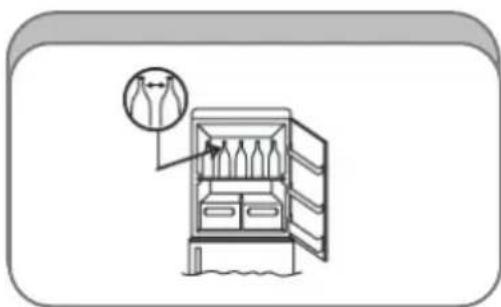
natural_image
Line drawing of an open refrigerator with a circular inset showing a bird perched on top (no text or symbols)EN: Adjust the feet to level the appliance.
l'appareil.
natural_image
Simple line drawing of a refrigerator with an arrow pointing to the door (no text or symbols)EN: Install the fridge leaving a gap between it and other furniture or appliances.
natural_image
Diagram of a refrigerator with a circular arrow indicating airflow or ventilation direction (no text or symbols)EN: Make sure accessories are installed properly.
Do not install the appliance outside.
The appliance works properly at the following temperature ranges:
Climatic class: SN +10 +32°C
Climatic class: N +16 +32°C
Climatic class: ST +18 +36°C
Climatic class: T +18 +43°C
Climatic class: N/ST +16 +38°C
(See appliance's rating plate)

FR:
PRECAUTIONS ET SUGGESTIONS GENERALES
Dear client, apart from the instruction booklet, we recommend you read carefully the instructions contained in this information sheet. This will provide you with some important safety guidelines, as well as instructions on how to install and operate the temperature control dial. Should the temperature control dial be missing, please ask your distributor for it.
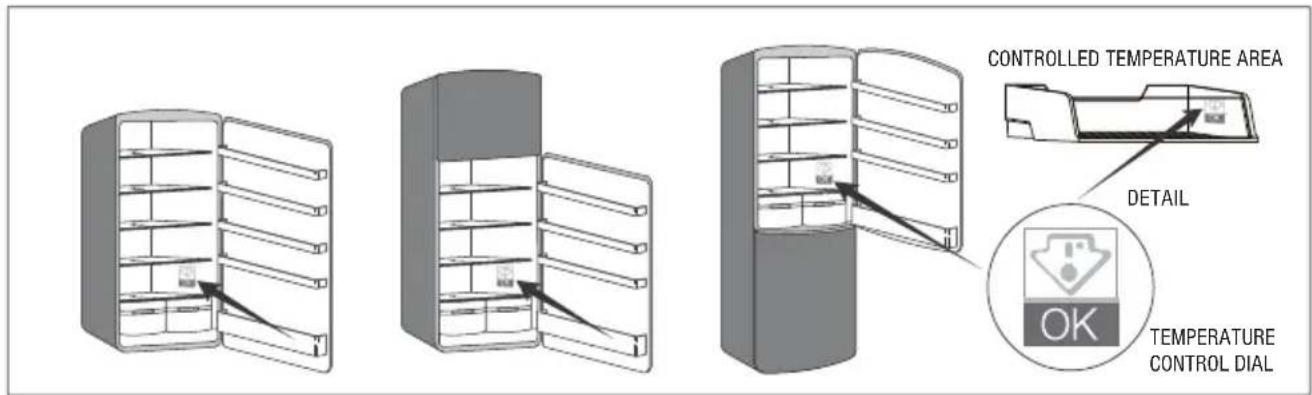
1. THE COLDEST AREA OF THE FRIDGE
This symbol indicates the coldest area of your fridge. This area is usually defined by the fruit and vegetable compartment(s) at the bottom and the symbol shown here at the top.

2. TEMPERATURE INDICATOR
In order to help you set your fridge properly, we have included a temperature control dial which will monitor the temperature in the area defined as the coldest.
CAUTION: The indicator was designed to function exclusively in your fridge. It is not possible to use it in another fridge or for any other purposes.
TEMPERATURE CONTROL
By using the temperature control dial you will be able to check on a regular basis that the temperature of the coldest area is correct. If this is not the case, it will be necessary to change the position of the thermostat.
The room temperature and the frequency with which the fridge door is opened have an impact on the internal temperature.
In order to maintain the correct temperature inside the fridge, check that the control dial is green (see Figure 1).
If the control dial turns white (see Figure 2), it means that the temperature is too high. In that case, set the thermostat and wait 12 hours before re-checking.
After charging the product or opening the door, it is normal for the control dial to turn white after a few seconds.


fi gure 1 fi gure 2
3. FOOD HYGIENE AND FRIDGE MANAGEMENT RULES
A good use of the fridge and the compliance with food hygiene rules contribute to improving food storage.
Clean the internal part of the fridge regularly with delicate products or with water and disinfectant in order to combat bacteria effectively.
Remove all food packaging before placing it in the fridge (for instance yoghurt carton packages).
Wrap the products systematically in order to avoid mutual contamination.
Do not place any kitchenware or other containers inside the fridge after having already used them prior to washing up (for instance, spoons or knives contaminated by food).
Wait for foodstuffs to have completely cooled down prior to storage (e.g. soups). Limit the number of door openings and in any case do not leave the doors open for a long time, in order to prevent the fridge temperature from rising.
Place the foodstuffs so that the air may flow freely throughout the entire fridge. Store the foodstuffs according to their nature inside the appropriate compartments and in particular, place the following items in the coldest area: meat, poultry, cold meats or sausages, ready-made dishes, mixed salads, egg or cream based pastry products, fresh pasta, dough, pizza, fresh products and cheeses made of whole or pasteurised milk, ready-made legumes sold without plastic bag and more generally all fresh products with use-by date and associated with storage temperatures lower or equal to +4°C.

Z STUDIO - Cod. 41030825/A
Rear spacer

natural_image
Diagram showing a cart with wheels connected to a rotating cylindrical component, illustrating mechanical motion (no text or symbols)How to drive the screw of door handle (if there is handle for this model)
Step 1

natural_image
Pure electrical circuit lines without any symbolsStep 2

natural_image
Technical line drawing of a cylindrical mechanical component with mounting holes and a curved top edge (no text or symbols)
Step 1: unscrew the round head screws on the side of the door to open
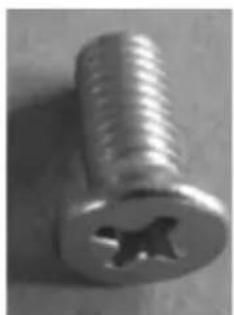
Step 2: drive the upper flat head screw into the positioning hole for 2 or 3 circles.
Step 3: drive the lower flat head screw into the positioning hole for 2 or 3 circles.

natural_image
Technical line drawing of a cylindrical device with two mounting holes and curved internal structure (no text or symbols)
natural_image
Close-up of a metallic screw with threaded head and central hole (no text or symbols visible)Round head screw
Step 4: alternatively drive the upper and lower screws into the holes for about 5 or 6 circles, until you can't drive it any more.
natural_image
Close-up of a metallic screw with a hole and star-shaped cutout (no text or symbols visible)Flat head screw
- BEFORE USING THE APPLIANCE
- Packing
- Scrapping/Disposal
- Information:
- Declaration of conformity
- CE
- IMPORTANT SAFETY INSTRUCTIONS
- Installation
- Child Safety
- During Use
- Maintenance and Cleaning
- Servicing
- At the End of the Appliance Life
- Correctly positioning
- Well Ventilating
- Power Supply
- Power Line Cord
- Protection from Moisture
- Protection from Heat
- Fixing Stable
- Keep Away from Danger
- Moving
- 3.Cautions
- Changing the reversible door
- 5.Maintenance
- Troubleshooting
- Technical specifications
- Componenti
- DÔLEŽITÉ BEZPEČNOSTNÉ POKYNY
- SAFETY WARNING UPDATING
- Children and vulnerable people safety
- English:
- Italian:
- Caution: risk of fire!
- Test information for refrigerator freezer or upright freezer
- RECCOMENDATIONS
- FRENCH:
- CONSEILS PRATIQUES
- FR:
- THE COLDEST AREA OF THE FRIDGE
- TEMPERATURE INDICATOR
- TEMPERATURE CONTROL
- FOOD HYGIENE AND FRIDGE MANAGEMENT RULES
- Rear spacer
- How to drive the screw of door handle (if there is handle for this model)
Brand : ZEROWATT
Model : ZTLP 130 S
Category : Refrigerator