ManualGo.com
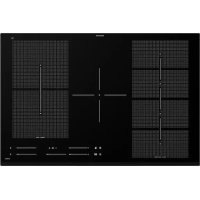
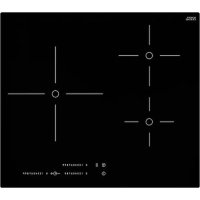
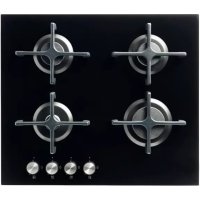
STORBRÄNNAN 105.405.45 - Cooker IKEA - Free user manual and instructions
Find the device manual for free STORBRÄNNAN 105.405.45 IKEA in PDF.



| Features | Details |
|---|---|
| Type of stove | Induction |
| Number of burners | 4 burners |
| Total power | 7.4 kW |
| Dimensions | 60 cm x 60 cm x 85 cm |
| Weight | 70 kg |
| Surface material | Glass-ceramic |
| Additional features | Timer, child safety, pot detection |
| Maintenance | Clean with non-abrasive products, wipe splashes immediately |
| Safety instructions | Do not leave the appliance unattended, use gloves to handle hot dishes |
| Warranty | 2 years |
| Installation information | Professional installation recommended, comply with current electrical standards |
Frequently Asked Questions - STORBRÄNNAN 105.405.45 IKEA
Download the instructions for your Cooker in PDF format for free! Find your manual STORBRÄNNAN 105.405.45 - IKEA and take your electronic device back in hand. On this page are published all the documents necessary for the use of your device. STORBRÄNNAN 105.405.45 by IKEA.
USER MANUAL STORBRÄNNAN 105.405.45 IKEA
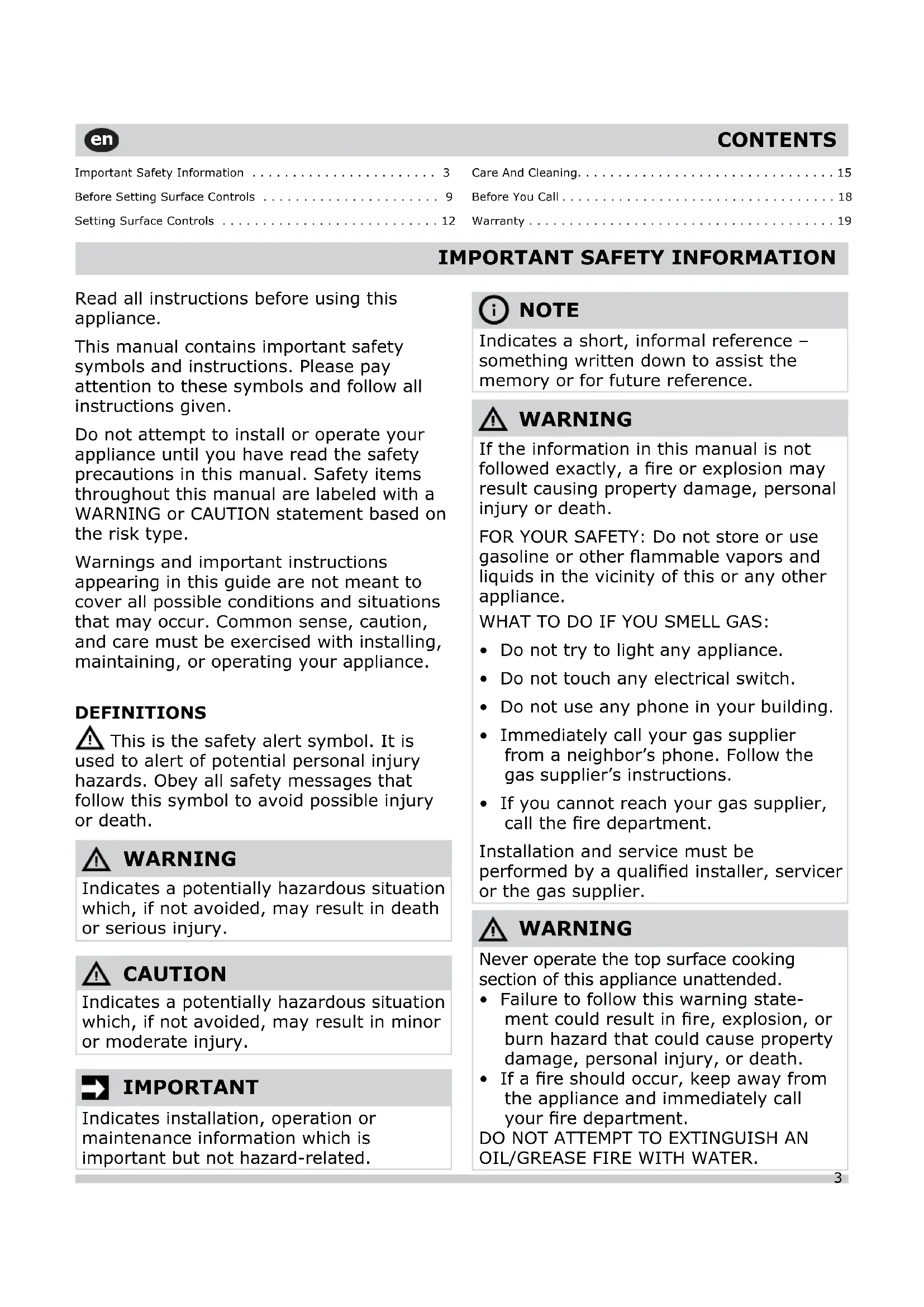
DEFINITIONS This is the safety alert symbol. It is used to alert of potential personal injury hazards. Obey all safety messages that follow this symbol to avoid possible injury or death. WARNING Indicates a potentially hazardous situation which, if not avoided, may result in death or serious injury. CAUTION Indicates a potentially hazardous situation which, if not avoided, may result in minor or moderate injury. IMPORTANT Indicates installation, operation or maintenance information which is important but not hazard-related. WARNING If the information in this manual is not followed exactly, a re or explosion may result causing property damage, personal injury or death. FOR YOUR SAFETY: Do not store or use gasoline or other ammable vapors and liquids in the vicinity of this or any other appliance. WHAT TO DO IF YOU SMELL GAS:
- Do not try to light any appliance.
- Do not touch any electrical switch.
- Do not use any phone in your building.
- Immediately call your gas supplier from a neighbor’s phone. Follow the gas supplier’s instructions.
- If you cannot reach your gas supplier, call the re department. Installation and service must be performed by a qualied installer, servicer or the gas supplier. Read all instructions before using this appliance. This manual contains important safety symbols and instructions. Please pay attention to these symbols and follow all instructions given. Do not attempt to install or operate your appliance until you have read the safety precautions in this manual. Safety items throughout this manual are labeled with a WARNING or CAUTION statement based on the risk type. Warnings and important instructions appearing in this guide are not meant to cover all possible conditions and situations that may occur. Common sense, caution, and care must be exercised with installing, maintaining, or operating your appliance. NOTE Indicates a short, informal reference – something written down to assist the memory or for future reference. Important Safety Information ....................... 3 Before Setting Surface Controls ...................... 9 Setting Surface Controls ...........................12 CONTENTS Care And Cleaning ................................15 Before You Call ..................................18 Warranty ......................................19 WARNING Never operate the top surface cooking section of this appliance unattended.
- Failure to follow this warning state- ment could result in re, explosion, or burn hazard that could cause property damage, personal injury, or death.
- If a re should occur, keep away from the appliance and immediately call your re department.
DO NOT ATTEMPT TO EXTINGUISH AN
OIL/GREASE FIRE WITH WATER.4
UNPACKING AND INSTALLATION
IMPORTANT Read and follow the below instructions and precautions for unpacking, installing, and servicing your appliance. Remove all tape and packaging before using the appliance. Destroy the carton and plastic bags after unpacking the appliance. Never allow children to play with packaging material. Do not remove the wiring label and other literature attached to the appliance. Do not remove model/serial number plate. Cold temperatures can damage the electronic control. When using this appliance for the rst time, or when the appliance has not been used for an extended period of time, be sure the appliance has been in temperatures above 32ºF (0ºC) for at least 3 hours before turning on the power to the appliance. Never modify or alter the construction of the appliance by removing the leveling legs, panels, wire covers, anti-tip brackets/ screws, or any other part of the appliance. Be sure to have an appropriate foam- type re extinguisher available, visible, and easily accessible located near the appliance. GROUNDING INSTRUCTIONS WARNING
- Avoid re hazard or electrical shock. Failure to follow this warning may cause serious injury, re, or death.
- Avoid re hazard or electrical shock. Do not use an adapter plug, use an extension cord, or remove grounding prong from the power cord. Failure to follow this warning may cause serious injury, re, or death. Proper Installation—Be sure your appliance is properly installed and grounded by a qualied technician. In the United States, install in accordance with the National Fuel Gas Code ANSI Z223.1/NPFA No. 54, latest edition and National Electrical Code NFPA No. 70 latest edition, and local electrical code requirements. In Canada, install in accordance with CAN/CGA B149.1 and CAN/CGA B149.2 and CSA Standard C22.1, Canadian Electrical code, Part 1-latest editions and local electrical code requirements. Install only per installation instructions provided in the literature package for this appliance. For personal safety, this appliance must be properly grounded. For maximum safety, the power cord must be securely connected to an electrical outlet or junction box that is the correct voltage, is correctly polarized and properly grounded, and protected by a circuit breaker in accordance with local codes. WARNING Air curtain or other overhead range hoods which operate that operate by blowing a downward air ow onto a range or cooktop, shall not be used in conjunction with gas ranges or cooktops other than when the range or cooktop and hood have been designed, tested, and listed by an independent test laboratory for use in combination with each other.5
Conversion to (L.P.) Gas This appliance allows for conversion to Liqueed Petroleum (L.P.) Gas. WARNING Personal injury or death from electrical shock may occur if the conversion to L.P. gas is not made by a qualied installer or electrician. Any additions, changes or conversions required in order for this appliance to satisfactorily meet the application needs must be made by a qualied technician. If L.P. conversion is needed, contact your local L.P. Gas provider for assistance. It is the personal responsibility of the consumer to have the appropriate outlet or junction box with the correct, properly grounded wall receptacle installed by a qualied electrician. It is the responsibility and obligation of the consumer to contact a qualied installer to assure that the electrical installation is adequate and is in conformance with all local codes and ordinances. See the installation instructions packaged with this appliance for complete installation and grounding instructions.
- Storage In or On Appliance—Flamma- ble materials should not be stored in an oven or microwave, near surface burners or elements, or in the storage or warmer drawer (if equipped). This includes paper, plastic, and cloth items, such as cookbooks, plastic ware, and towels, as well as ammable liquids. Do not store explosives, such as aero- sol cans, on or near the appliance.
- Do not leave children alone - Children should not be left alone or unattended in the area where appliance is in use. They should never be allowed to sit or stand on any part of the appliance, including the storage drawer, lower broiler drawer, warmer drawer, or low- er double oven.
- Do not store items of interest to chil- dren in the cabinets above the appli- ance or on the backguards of ranges. Children climbing on or near the appli- ance to reach items could be seriously injured.
- Do not allow children to climb or play around the appliance. The weight of a child on an open oven door may cause the appliance to tip, resulting in se- rious burns or other injury. An open drawer when hot may cause burns.6
WARNING Stepping, leaning, or sitting on the door or drawers of this appliance can result in serious injuries and also cause damage to the appliance. Never cover any slots, holes or passages in the oven bottom or cover and entire rack with materials such as aluminum foil. Doing so blocks air ow through the oven and may cause carbon monoxide poisoning. Aluminum foil linings may also trap heat, causing a re hazard. Do not use oven or warmer drawer (if equipped) for storage. Never use your appliance as a space heater to heat or warm the room. Doing so may result in carbon monoxide poisoning and overheating of the appliance. CAUTION
- When heating fat or grease, watch it closely. Grease may catch re if it be- comes too hot.
- Do not use water or our on grease res. Smother re or ame or use dry chemical or foam-type extinguisher. Cover the re with a pan lid or use baking soda.
- Use dry potholders. Moist or damp pot- holders on hot surfaces may result in burns from steam. Do not let pothold- ers touch hot cooking areas. Do not use towels or other bulky cloths.
- Do not heat unopened food containers - Build-up of pressure may cause con- tainer to burst and result in injury. CAUTION Wear proper apparel - Loose-tting or hanging garments should never be worn while using the appliance. Do not let clothing or other ammable materials contact hot surfaces. Do not touch surface burners or elements, areas near these burners or elements, interior surfaces of the oven, or the warmer drawer (if equipped). Surface burners and elements may be hot even though they appear cool. Areas near surface burners and elements may become hot enough to cause burns. During and after use, do not touch, or let clothing or other ammable materials touch these areas until they are cool. These areas may include the cooktop, surfaces facing the cooktop, oven vent areas, oven door, and oven window. Do not attempt to operate the appliance during a power failure. If the power fails, always turn off the appliance. If the appliance is not turned off and the power resumes, electric surface elements may resume operation when power is restored. Once the power resumes, reset the clock and the oven function.7
CAUTION Use Proper Flame Size — Adjust ame size so it does not extend beyond the edge of the utensil. The use of undersized utensils will expose a portion of the burner ame to direct contact and may result in ignition of clothing. Proper relationship of utensil to ame will also improve efciency. Know which knob or key controls each surface heating area. Place cookware with food on the cooking area before turning it on. Turn the cooking area off before removing the cookware. Use proper pan size. This appliance is equipped with one or more surface units of different sizes. Select cookware with at bottoms that match the surface unit heating element. The use of undersized cookware may expose a portion of the ame to direct contact and may result in the ignition of clothing or other items. Using the proper cookware on the cooking areas will improve efciency. Always turn knob to the full LITE position when igniting top burners. Visually check that burner has lit. Then adjust the ame so it does not extend beyond the edge of the utensil. To reduce the risk of burns, ignition of ammable materials, and spillage due to unintentional contact with the utensil, the handle of the utensil should be positioned so that it is turned inward, and does not extend over adjacent surface burners Never leave surface burners unattended at high heat settings — Boil overs cause smoking and greasy spill overs that may ignite, or a pan that has boiled dry may melt. Glazed cooking utensils — Only certain types of glass, glass/ceramic, ceramic,earthenware, or other glazed utensils are suitable for cook top service without breaking due to the sudden change in temperature. Check the manufacturer’s recommendations for cook top use. When you are aming foods under a ventilating hood, turn the fan on.
IMPORTANT INSTRUCTIONS FOR
CLEANING YOUR APPLIANCE
CAUTION Before manually cleaning any part of the appliance, be sure all controls are turned off and the appliance is cool. Cleaning a hot appliance can cause burns. Clean the appliance regularly to keep all parts free of grease that could catch re. Do not allow grease to accumulate. Greasy deposits in the fan could catch re. Always follow the manufacturer’s recommended directions for use of kitchen cleaners and aerosols. Be aware that excess residue from cleaners and aerosols may ignite causing damage and injury. Clean venitlating hoods frequently - Grease should not be allowed to accumulate on hood or lter. Follow the manufacturer’s instructions for cleaning vent hoods.8
Do not repair or replace any part of the appliance unless specically recommended in the manuals. All other servicing should be done only by a qualied technician. This reduces the risk of personal injury and damage to the appliance. Always contact your dealer, distributor, service agent, or manufacturer about problems or conditions you do not understand. Ask your dealer to recommend a qualied technician and an authorized repair service. Know how to disconnect the power to the appliance at the circuit breaker or fuse box in case of an emergency. Important: This appliance has been tested and found to comply with the limits for a class B digital device, pursuant to
Part 18 of the FCC rules (United States)
and ICES-001 (Canada). These limits are designed to provide reasonable protection against harmful interference in a residential installation. This unit uses and can radiate radio frequency energy and, if not installed and used in accordance with the instructions, may cause harmful interference to radio communications. However there is no guarantee that interference will not occur in a particular installation. If this unit does cause harmful interference to radio or television reception, which can be determined by turning the unit off and on, the user is encouraged to try to correct the interference by one or more of the following measures:
- Reorient or relocate the receiving anten- nae.
- Increase distance between unit and re- ceiver.
- Connect the unit into an outlet or a circuit different from that to which the receiver is connected.en
Gas surface burner types The cooktop is equipped with gas surface burners with different BTU ratings. The ability to heat food quickly and in large amounts increases as the burn- er size increases.
- Small burners are best used for low-ame heat- ing of small amounts of food.
- Standard burners can be used for most surface cooking needs.
- The largest burner is best used for bringing large quantities of liquid rapidly up to temperature or when preparing larger quantities of food. The large burner is located at the right front position on the cooktop. Regardless of size, always select cookware that is suitable for the amount and type of food being pre- pared. Select a burner and set the ame size appro- priately for the pan. Never allow ames to extend beyond the outer edge of the pan. Figure 1: Burner cap, burner head, ignitor, and orice Burner Cap Burner Head Orice Holder Ignitor CAUTION
- Do not allow spills, food, cleaning agents, or any other material to enter the gas orice holder opening.
- Always keep the burner caps and burner heads in place whenever the surface burners are in use.
- Never place ammable items on the cooktop. Assembly of the Burner Caps Make sure that all of the surface burner caps and surface burner grates are installed correctly and at the correct locations.
1. Remove all packing material from the cooktop
2. Make sure burner head and caps are properly
placed on the surface burners. Important: The burner head has a hole which ts over the ignitor. Make sure the head ts snugly be- fore placing the burner caps. Note: Unpack the burner grates and position them on the cooktop after the burner heads and caps are properly installed.en
Cookware Material Types The cookware material determines how evenly and quickly heat is transferred from the surface element to the pan bottom. The most popular materials available are:
- Aluminum - Excellent heat conductor. Some types of food will cause it to darken (Anodized aluminum cookware resists staining and pitting).
- Copper - Excellent heat conductor but discolors easily (see Aluminum).
- Stainless - Slow heat conductor with uneven cooking results. Durable, easy to clean, and re- sists staining.
- Cast Iron - A slow heat conductor, but will re- tain heat very well. Cooks evenly once cooking temperature is reached.
- Porcelain-enamel on metal - Heating charac- teristics will vary depending on base material.
- Glass - Slow heat conductor. IMPORTANT Do not place empty aluminum, glass, or porce- lain-enamel coated cookware on the burner. The melting point of cookware made with these ma- terials may be reached quickly, especially if left empty. If the cookware melts it will damage the cooktop. Follow all the cookware manufacturer’s recommendations for use and care of cookware. IMPORTANT NEVER place or straddle a cooking utensil over two different surface cooking areas at the same time. Incorrect use may damage the cooktop. Using Proper Cookware The size and type of cookware used will inuence the heat setting needed for best cooking results. Be sure to follow the recommendations for using proper cookware as illustrated in “Figure 2: Testing Cook- ware” and “Figure 3: Proper Cookware”. Figure 2: Testing Cookware Check for atness by rotating a ruler across the bottom of the cookware (see “Figure 2: Testing cookware”). Cookware should have at bottoms that make good contact with the entire surface of the heating element.
eight of handle does not tilt pan. Pan is well balanced
an sizes match the amount of food to be prepared and the size of the surface element.
ade of material that conducts heat well.
- Curved and warped pans
- Cookware larger than element by more than one-half inch or 12mm.
- Heavy handle tilts pan.
- Pan is much smaller than the element. Figure 3: Proper Cookwareen
Install Burner Grates To install burner grates, place the grates at-side down and align them into the cooktop recess.. The grates have tabs that interlock, so it is important to place the center grate rst. IMPORTANT
- Make sure the burner grates are properly placed on the cooktop before using the surface burners (Figure 4). The grates are designed to rest inside the recess on the cooktop.
- Grates should rest ush against each other and against the sides of the recess.
- Do not line the area underneath the grates or any part of the cooktop with aluminum foil or with any other lining. Figure 4: Install grates middle-rsten
Locations of the Gas Surface Burners
2. The STANDARD sized burners are used for most
surface cooking needs.
3. The POWER burner is best used for bringing
large quantities of liquid rapidly up to tempera- ture or when preparing larger quantities of food. Figure 5: 30” Cooktop Figure 6: 36” Cooktop Setting a surface burner:
1. Place cooking utensil on center of surface burner
grate. Be sure the cooking utensil rests stable on the burner grate.
2. Push the burner’s surface control knob in and
turn counterclockwise out of the OFF position (Figure 7).
3. Release the surface control knob and rotate to
the LITE position ( ). Visually check that the- burner has a steady gas ame. Once the surface burner has a ame, push the sur- face control knob in and turn counterclockwise to the desired ame size setting. Adjust the ame as needed using the knob markings. Figure 7: Surface control knob NOTE
- When setting a surface control knob to the lite position, all of the electronic surface ignitors will spark at the same time. However, only the surface burner you are setting will ignite.
- In the event of an electrical power outage, the surface burners may be lit manually. To light a surface burner, hold a lit match to the burn- er head, then slowly turn the surface control knob to lite. Once the burner ignites, push in and turn knob out of lite then to the desired ame setting. Use caution when lighting sur- face burners manually.
Set proper burner ame size The color of the ame is the key to proper burner adjustment. A good ame is clear, blue and hardly visible in a well-lighted room. Each cone of ame should be steady and sharp. Adjust or clean the burner if ame is yellow-orange. For most cooking: start on the highest setting and then turn to a lower setting to complete the pro- cess. Use the recommendations below as a guide for determining proper ame size for various types of cooking (Table 1). For deep fat frying: use a thermometer and adjust the surface knob accordingly. If the fat is too cool, the food will absorb the fat and be greasy. If the fat is too hot, the food will brown so quickly that the center will be under-cooked. Do not attempt to deep fat fry too much food at once as the food will nei- ther brown nor cook properly. Figure 8: Proper burner ame CAUTION Do not place ammable items such as plastic wrappings, spoon holders, or plastic salt and pepper shakers on the cooktop when it is in use. These items could melt or ignite. Potholders, tow- els, or wooden spoons could catch re if placed too close to the surface burners. CAUTION Never extend the ame beyond the outer edge of the cooking utensil. A higher ame wastes ener- gy, and increases your risk of being burned by the ame (Figure 8). Flame size Type of cooking High ame Start most foods; bring water to a boil; pan broiling Medium ame Maintain a slow boil; thicken sauc- es, gravies; steaming Low ame Keep foods cooking; poaching; stewing These settings are based on medium-weight metal or aluminum pans with lids. Settings may vary when using other types of pans. Table 1: Recommended ame settings for cookingen
Home Canning Be sure to read and observe all the following points when home canning with your appliance. Check with the USDA (United States Department of Agriculture) Web site and be sure to read all the information they have available as well as follow their recom- mendations for home canning procedures.
- Use only a completely at bottom canner with no ridges that radiate from the bottom center when home canning. Heat is spread more evenly when the bottom surface is at. Use a straight- edge to check canner bottom.
- Make sure the diameter of the canner does not exceed 1 inch beyond the surface element mark- ings or burner.
- It is recommended to use smaller diameter can- ners on electric coil and ceramic glass cooktops and to center canners on the burner grates.
- Start with hot tap water to bring water to boil more quickly.
- Use the highest heat setting when rst bringing the water to a boil. Once boiling is achieved, re- duce heat to lowest possible setting to maintain that boil.
- Use tested recipes and follow instructions care- fully. Check with your local Cooperative Agri- cultural Extension Service or a manufacturer of glass jars for the latest canning information.
- It is best to can small amounts and light loads. Do not leave water bath or pressure canners on high heat for an extended amount of time. Using a Griddle (not included) Use non-stick cooking spray or oil as needed. Slowly preheating the griddle ensures even heat distribu- tion for best cooking results. Before rst use:
- Wash Griddle in hot soapy water. Rinse and then dry completely. After each use:
- Store in a dry place and keep uncovered.
- After each use, clean with a stiff brush and hot water. Using the Griddle:
- Place the griddle centered over the left side gas burners.
- Preheat the griddle for 5 minutes on medium to medium low setting. Slow preheat ensures even heat distribution during the cooking process.
- DO NOT preheat the griddle on HI setting. Pre- heating on HI may warp the griddle and prevent even heat distribution. Figure 9: Griddle use NOTE You can order a griddle calling to (833) 337-4006.en
Remove spills and any heavy soiling as soon as pos- sible. Regular cleaning will reduce the difculty of major cleaning later. Figure 10: Use cleaners with caution Surface or Area Cleaning Recommendation Aluminum and vinyl Using a soft cloth, clean with mild dish detergent and water. Rinse with clean water, dry and polish with a soft, clean cloth. Painted and plastic control knobs Painted body parts Painted decorative trims Using a soft cloth, clean with mild dish detergent and water or a 50/50 solution of vinegar and water. Rinse with clean water, dry and polish with a soft, clean cloth. Glass cleaners may be used, but do not apply directly to surface; spray onto cloth and wipe. Control panel Using a soft cloth, clean with mild dish detergent and water or a 50/50 solution of vinegar and water. Do not spray liquids directly on the oven control and display area. Do not use large amounts of water on the control panel - excess water on the control area may cause damage to the appliance. Do not use other liquid cleaners, abrasive cleaners, scouring pads, or paper towels - they will damage the nish. Control knobs Using a soft cloth, clean with mild dish detergent and water or a 50/50 solution of vinegar and water. To remove control knobs: turn to the OFF position, grasp rmly, and pull off the shaft. To replace knobs af- ter cleaning, line up the OFF markings and push the knobs into place. Stainless Steel Using a soft cloth, clean with mild dish detergent and water or a 50/50 solution of vinegar and water. Rinse with clean water, dry with a soft clean cloth. Do not use cleaners containing abrasives, chlorides, chlo- rine, or ammonia. Coated Stainless Steel Using a soft cloth, clean with mild dish detergent and water or a 50/50 solution of vinegar and water. Rinse with clean water, dry with a soft clean cloth. Do not use appliance cleaner, stainless steel cleaner, or cleaner containing abrasives, chlorides, chlorine, or ammonia. These cleaners may damage the nish. CAUTION Before cleaning any part of the appliance, be sure all controls are turned off and the appliance is cool. If ammonia or appliance cleaners are used, they must be removed and the appliance must be thor- oughly rinsed before operating. Follow manufac- turer’s instructions and provide adequate ventila- tion.en
Surface or Area Cleaning Recommendation Gas cooktop surface burners See “Cleaning the burner head” on page 17. Gas cooktop surface grates Gas cooktop burner caps Use a non-abrasive plastic scrubbing pad and mild abrasive cleanser. Do not allow food spills with a high sugar or acid content (milk, to- matoes, sauerkraut, fruit juices or pie lling) to remain on the burner grates or burner caps. These spills may cause a dull spot even after cleaning. Clean these spills as soon as surfaces are cool. Thoroughly dry immediately following cleaning. Cooktop grates are dishwasher safe but we recommend hand washing.en
Cleaning the burner heads To avoid possible burns, do not attempt cleaning before turning off all surface burners and allowing them to cool. Any additions, changes, or conversions required in order for this appliance to satisfactorily meet the application needs must be made by an authorized qualied Agency. Routinely clean the cooktop. Wipe with a clean, damp cloth and wipe dry to avoid scratches. Keeping the surface burner head ports and slots clean will prevent improper ignition and an uneven ame. To clean recessed and contoured areas of cooktop:
- If a spill occurs on or in the recessed or con- toured areas, blot up spill with an absorbent cloth.
- Rinse with a clean, damp cloth and wipe dry. To clean burner heads:
1. Remove the burner cap and burner head (see
Figure 11). Clean the cap and head with hot soapy water and dry thoroughly.
2. For burned-on and dried spills, apply hot soapy
water to the burner cap and head to allow time for the soils to soften.
3. Use a toothbrush to clean all over the burner
4. Wipe the burner cap and head clean with a soft,
clean cloth, sponge, or scratch-free cleaning pad. Wipe out burner orice with a cloth before placing burner head and cap back on. The burn- er assembly must be completely dry before use.
5. Make sure the burner caps and heads are placed
and seated properly over the ignitor. The three mounting legs on burner will align with slots on the orice holder. When placed correctly, the burner cap should not move off the burner head (see “Assembly of the Burner Caps” on page 9).
6. If burner fails to light, recheck placement of
burner head to the orice holder and cap. Figure 11: Removeable burner components Important notes:
- Always keep the surface burner caps in place whenever a surface burner is in use.
- When replacing the burner caps, be sure the burner caps are seated rmly on top of the burner heads.
- For proper ow of gas and ignition of burners do not allow spills, food, cleaning agents, or any other material to enter the gas orice port opening. CAUTION To avoid possible burns do not attempt to operate the surface burners without the burner caps. Do not use spray oven cleaner on the cooktop. Burner Cap Burner Head Orice Holder Ignitoren
Solutions to Common Problems Before you call for service, review the following list. It may save you time and expense. Possible solutions are provided with the problem listed Problem Cause / Solution Entire appliance does not operate Appliance not connected. Make sure power cord is plugged properly into out- let. Check your fuse box or breaker box to make sure the circuit is active. Electrical power outage. Check house lights to be sure. Call your local electric company for service outage information. Cooktop Problems Problem Cause / Solution Surface burners do not ignite. Surface control knob was not completely turned to LITE ( ). Push in and turn the surface control knob to LITE until the burner ignites and then turn the control knob to the desired ame size. Burner ports are clogged. With the burner OFF and cool, use a small-gauge wire or needle to clean the burner head slots and ignition ports. See“Cleaning the burner heads” in the Care & Cleaning section on page 17 for additional cleaning instructions. Range power cord is disconnected from outlet (electric ignition models only). Be sure the power cord is securely plugged into the power outlet. Circuit is broken. Check breaker box or fuse box. Electrical power outage. Burners may be lit manually. See “Setting a surface burner” on page 12. Surface burner ame uneven or only part way around burner cap. Burner slots or ports are clogged. With the surface burner OFF and cool, clean ports with a small-gauge wire or needle. If moisture is present after cleaning, lightly fan the ame and allow the burner to operate until ame is full. Burner caps are not seated properly. Check that all burner caps are level and seated correctly on the burner heads. See“Cleaning the burner heads” in the Care & Cleaning section on page 17 for additional cleaning instructions. Surface burner ame is too high. Surface control knob is set too high. Adjust to a lower ame setting. Burner caps are not seated properly. Check that all surface burner caps are level and seated correctly on the surface burner heads. See“Cleaning the burner heads” in the Care & Cleaning section on page 17 for additional clean- ing instructions. Incorrect L.P. conversion. Refer to L.P. conversion kit instructions to correct. Surface burner ame is orange. Dust particles in main gas line. Allow the burner to operate a few minutes until ame turns blue. In coastal areas, a slightly orange ame is unavoidable due to salt content in the air. Incorrect L.P. conversion. Refer to L.P. conversion kit instructions to correct.19
WARRANTY How long is the IKEA guarantee valid? This guarantee is valid for ve (5) years from the original date of purchase of Your appliance at IKEA, un- less the appliance is named LAGAN or TILLREDA in which case two (2) years of guarantee apply. The origi- nal sales receipt is required as proof of purchase. If service work is carried out under guarantee, this will not extend the guarantee period for the appliance. Who will execute the service? IKEA “Service Provider” will provide the service through its own service operations or authorized service partner network. What does this guarantee cover? The guarantee covers faults of the appliance which have been caused by faulty construction or material faults from the date of purchase from IKEA. This guarantee applies to domestic use only. Some exceptions not guaranteed are specied under the headline “What is not covered under this guarantee?” Within the guarantee period, the costs to remedy the fault (e.g., repairs, parts, labour and travel) will be covered, pro- vided that the appliance is accessible for repair without special expenditure. On these conditions the local regulations are applicable. Replaced parts become the property of IKEA. What will IKEA do to correct the problem? IKEA appointed Service Provider will examine the product and decide, at its sole discretion, if it is covered under this guarantee. If considered covered, IKEA Service Provider or its authorized service partner through its own service operations, will then, at its sole discretion, either repair the defective product or replace it with the same or a comparable product. What is not covered under this guarantee?
- Normal wear and tear.
- Deliberate or negligent damage, damage caused by failure to observe operating instructions, incorrect installation or by connection to the wrong voltage, damage caused by chemical or electrochemical reac- tion, rust, corrosion or water damage including but not limited to damage caused by excessive lime in the water supply, damage caused by abnormal environmental conditions.
- Consumable parts including batteries and lamps.
- Non-functional and decorative parts which do not affect normal use of the appliance, including any scratches and possible colour differences.
- Accidental damage caused by foreign objects or substances and cleaning or unblocking of lters, drain- age systems or soap drawers.
- Damage to the following parts: ceramic glass, accessories, crockery and cutlery baskets, feed and drainage pipes, seals, lamps and lamp covers, screens, knobs, casings and parts of casings. Unless such damages can be proved to have been caused by production faults.
- Cases where no fault could be found during a technician’s visit.
- Repairs not carried out by our appointed service providers and/or an authorized service contractual partner or where non-original parts have been used.
- Repairs caused by installation which is faulty or not according to specication.
- The use of the appliance in a non-domestic environment i.e. professional use.
- Transportation damages. If a customer transports the product to his home or another address, IKEA is not liable for any damage that may occur during transport. However, if IKEA delivers the product to the customer’s delivery address, then damage to the product that occurs during this delivery will be covered by IKEA.
- Cost for carrying out the initial installation of the IKEA appliance. However, if an IKEA appointed Service Provider or its authorized service partner repairs or replaces the appliance under the terms of this guar- antee, the appointed Service Provider or its authorized service partner will reinstall the repaired appli- ance or install the replacement, if necessary.20
WARRANTY How country law applies The IKEA guarantee gives you specic legal rights, and you may also have other rights which vary from state to state or jurisdiction to jurisdiction. However these conditions do not limit in any way consumer rights described in the local legislation. Area of validity For appliances which are purchased in United States or Canada, or moved to one of the mentioned coun- tries, the services will be provided in the framework of the guarantee conditions normal in the specied country. An obligation to carry out services in the framework of the guarantee exists only if the appliance complies and is installed in accordance with: - the technical specications of the country in which the guarantee claim is made; - the Assembly Instructions and User Manual Safety Information. The dedicated AFTER SALES for IKEA appliances Please don’t hesitate to contact IKEA appointed After Sales Service Provider to:
- make a service request under this guarantee;
- ask for clarications on installation of the IKEA appliance in the dedicated IKEA kitchen furniture;
- ask for clarication on functions of IKEA appliances. To ensure that we provide you with the best assistance, please read carefully the Assembly Instructions and/or the User Manual before contacting us. How to reach us if you need our service In order to provide you a quicker service, we recommend to use the specic phone numbers listed on this manual. Always refer to the numbers listed in the booklet of the specic appliance you need an assistance for. Please also always refer to the IKEA article number (8 digit code) placed on the rating plate of your appli- ance. SAVE THE SALES RECEIPT! It is your proof of purchase and required for the guarantee to apply. The sales receipt also reports the IKEA name and article number (8 digit code) for each of the appliances you have purchased. Do you need extra help? For any additional questions not related to After Sales of your appliances please contact your nearest IKEA store call centre. We recommend you read the appliance documentation carefully before contacting us. Phone number: (833) 337-4006 Opening hours: Monday - Friday 8:30 am - 8:00 pm EST21