EasyManual
Lilium - Speaker Sonus Faber - Free user manual and instructions
Find the device manual for free Lilium Sonus Faber in PDF.



| Features | Details |
|---|---|
| Product type | Speaker |
| Audio technology | Full-range speakers with diffusion technology |
| Impedance | 4 Ohms |
| Frequency range | 20 Hz - 35 kHz |
| Rated power | 300 W |
| Dimensions | Height: 120 cm, Width: 30 cm, Depth: 40 cm |
| Weight | 45 kg |
| Recommended use | High-fidelity music listening, home cinema |
| Maintenance | Clean with a soft cloth, avoid abrasive products |
| Warranty | 2 years |
| Safety | Do not expose to moisture, avoid shocks |
| Included accessories | Connection cables, user documentation |
| Additional information | Compatible with high-quality amplifiers |
Frequently Asked Questions - Lilium Sonus Faber
User questions about Lilium Sonus Faber
0 question about this device. Answer the ones you know or ask your own.
Ask a new question about this device
Download the instructions for your Speaker in PDF format for free! Find your manual Lilium - Sonus Faber and take your electronic device back in hand. On this page are published all the documents necessary for the use of your device. Lilium by Sonus Faber.
USER MANUAL Lilium Sonus Faber
thank you and congratulations for having purchased Sonus faber Lilium.
Sonus faber designs its speakers to meet our customers' highest expectations immediately. As our aim is to ensure you get the best possible listening result in full safety, please read this instruction manual carefully before installation.
Should you have any doubts or enquiries, please contact the technical staff of your sales point, the official Sonus faber distributor in your country, or contact Sonus faber's customer service directly by writing to customerservice@sonusfaber.com.
Finally, we highly recommend that you register your speaker online at www.sonusfaber.com.
Enjoy your music!
Verehrter Kunde,
Lilium is packed in a manner that effectively preserves it, while making its removal simple.
We suggest, however, following these general recommendations:
- Keep all packaging for any future transport;
- Do not wear watches, bracelets, rings etc. in order to avoid scratching the speakers and their precious finishes when unpacking. The same care will be taken to protect the speakers from any metal finishes on the clothes you are wearing, such as zips, buttons, belt clasps, rivets, etc.
- Open the package following the instructions printed on it.
IMPORTANT:
We strongly suggest that the following operations are carried out by no less than two persons.
Moreover, the speaker package should be opened in a place that is as close as possible to the final location of the speaker in the listening room.
Specific indications:
- Remove the protective upper Stratocell layer;
- Remove the protective plastic bag;
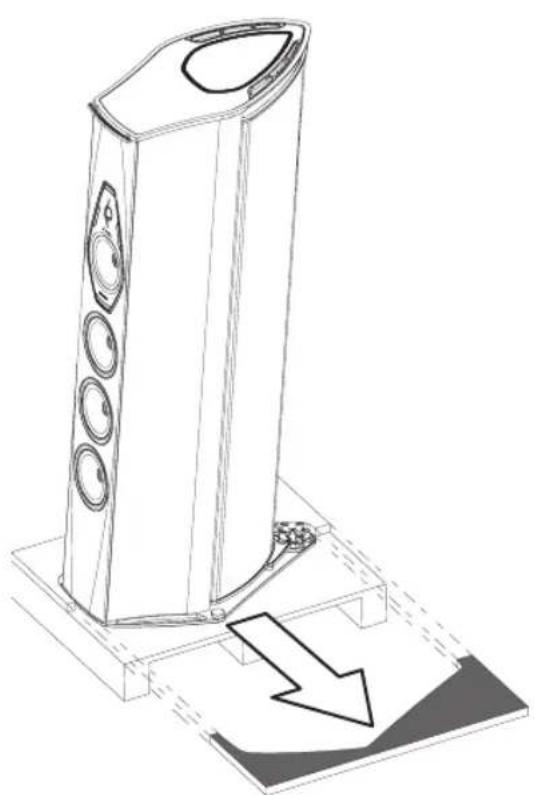
- Remove the fixing plates at the base of the speaker from the pallet (fig.1);
- Unscrew the three fixing screws and remove the wooden half-gauge placed on the pallet, at the base of the speaker (fig.2);
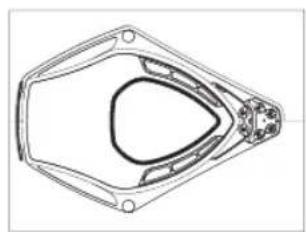
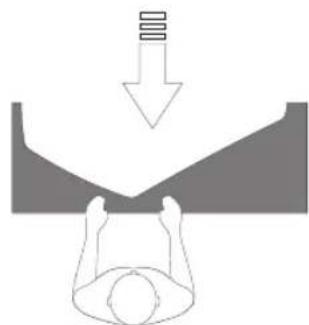
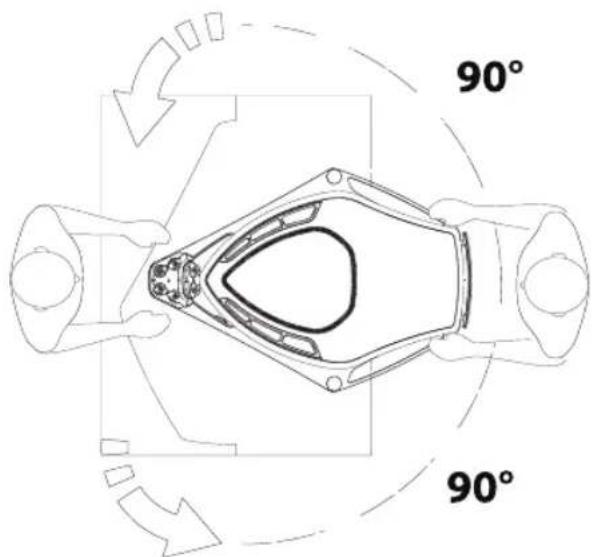
- Carefully rotate the speaker (fig.3);
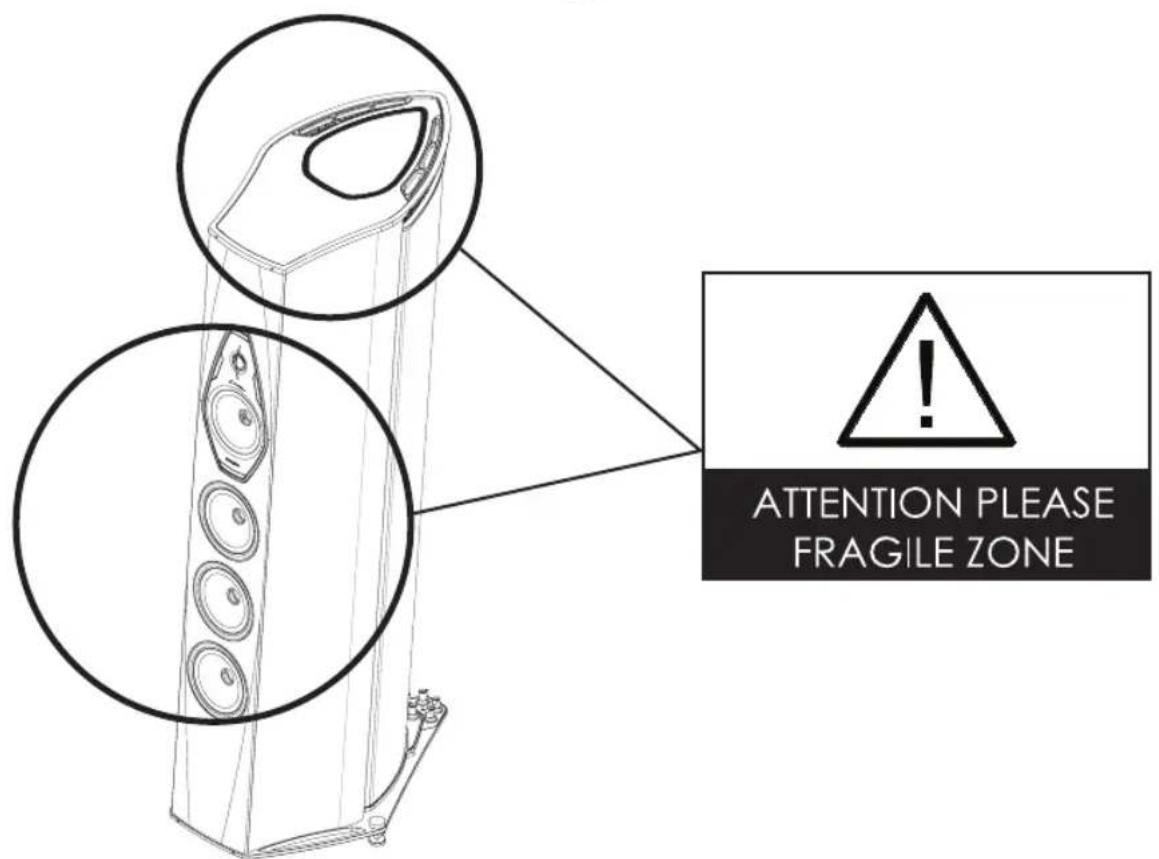
WARNING! DO NOT grab the speaker from the aluminium plate and the glass pane on its top!
DO NOT TOUCH the drivers while performing this operation. (fig.4);
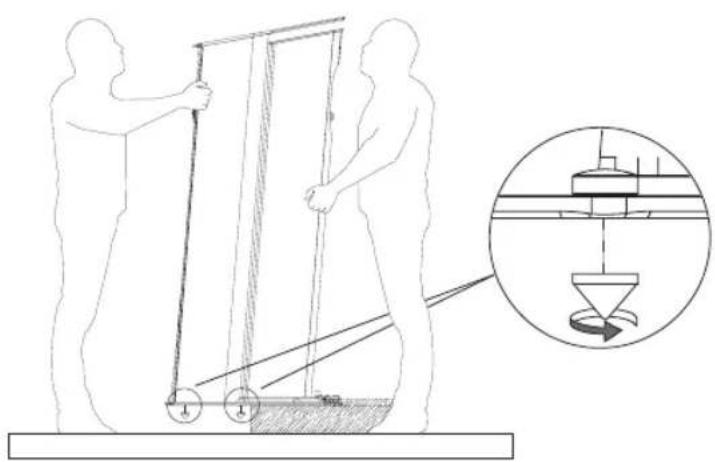
- Screw in the short front spike and the long side spikes (fig.5);
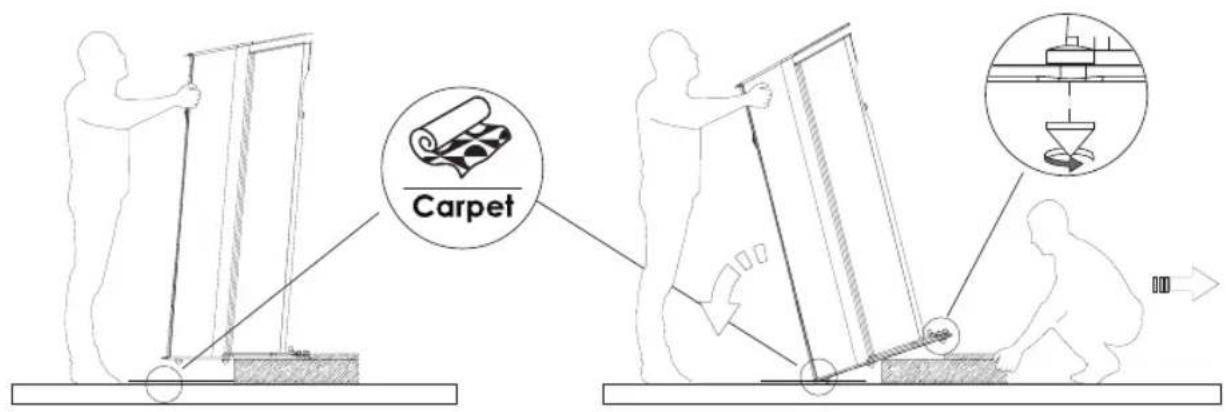
- Tilt the speaker frontwards until the front spike touches the floor. WARNING! Place a microfiber cloth or a carpet under the aluminium base to protect it (fig.6);
- Screw in the short rear spike (fig.7);
- Remove the pallet from underneath the speaker (fig.7);
- Then put the speaker in its final position in the listening room.
Content of the package:
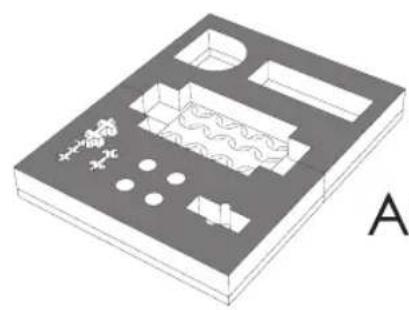
In addition to the speaker, you will find a box of accessories in the packaging that contains:
- Nr. 1 Lilium Book;
- Nr. 1 Instruction Manual
- Nr.2 + 2 Spikes;
- Nr. 4 Coins:
- Nr. 2 Spikes blocks;
- Nr. 1 Pipe wrench;
- Nr. 2 Thread-tensioning masks;
- Nr. 1 Microfiber cloth;
- Nr. 1 Bottle of detergent;
- Nr. 2 Dust-proof fabric cover;
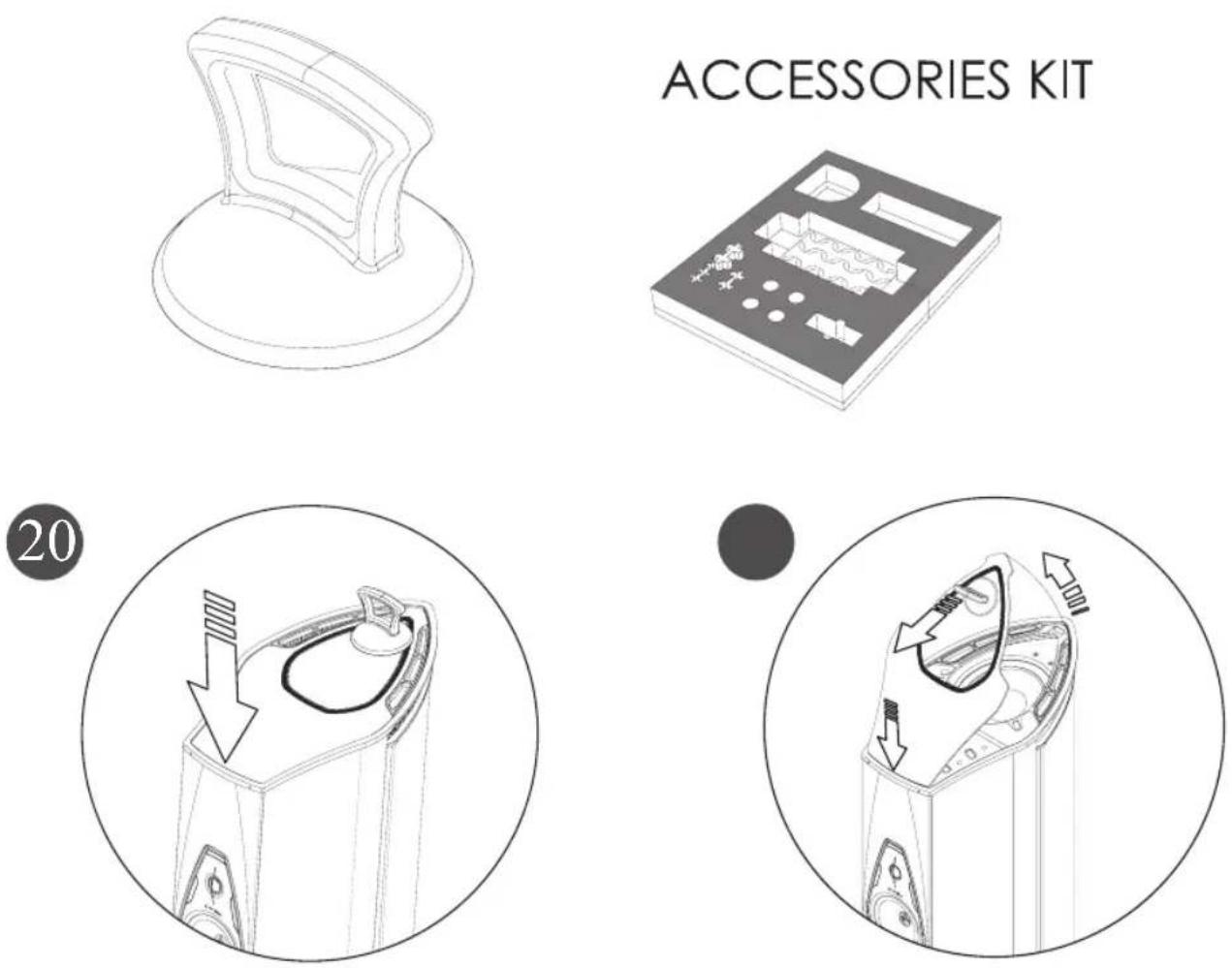
- Nr. 1 Suction cap to remove Lilium's glass top.
INSTALLING THE THREAD-TENSIONING MASK
The speaker can be fitted with a thread-tensioning mask, to be found in the accessories kit, by carefully following these instructions:
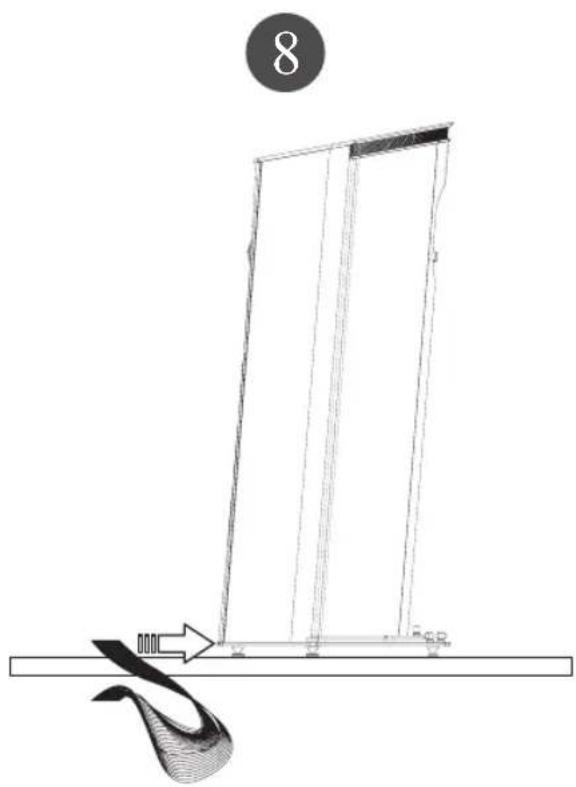
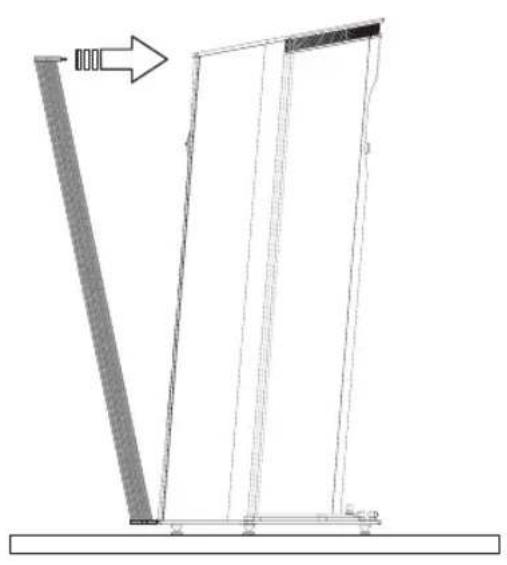
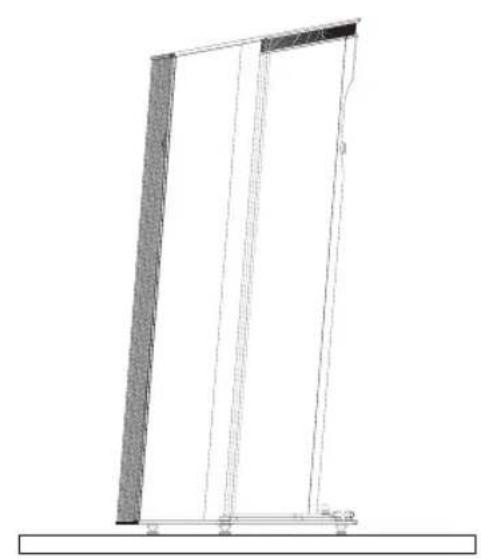
- Insert the pins of the bars of the thread-tensioning mask in the relevant guides, starting from the bottom of the speaker (fig.8);
- Stretch the elastic bands of the mask until you are able to insert the pins of the mask bars into the relevant guides in the upper part of the speaker (fig.9).
If you wish to disassemble the thread-tensioning mask, first pull the bar pins out starting from the top of the speaker, then move to the base.
IMPORTANT:
While mounting or removing the thread-tensioning mask as described above, be careful not to damage the front part of the speaker.
CONNECTIONINSTRUCTIONS
This operation must be carried out with all equipment switched off!
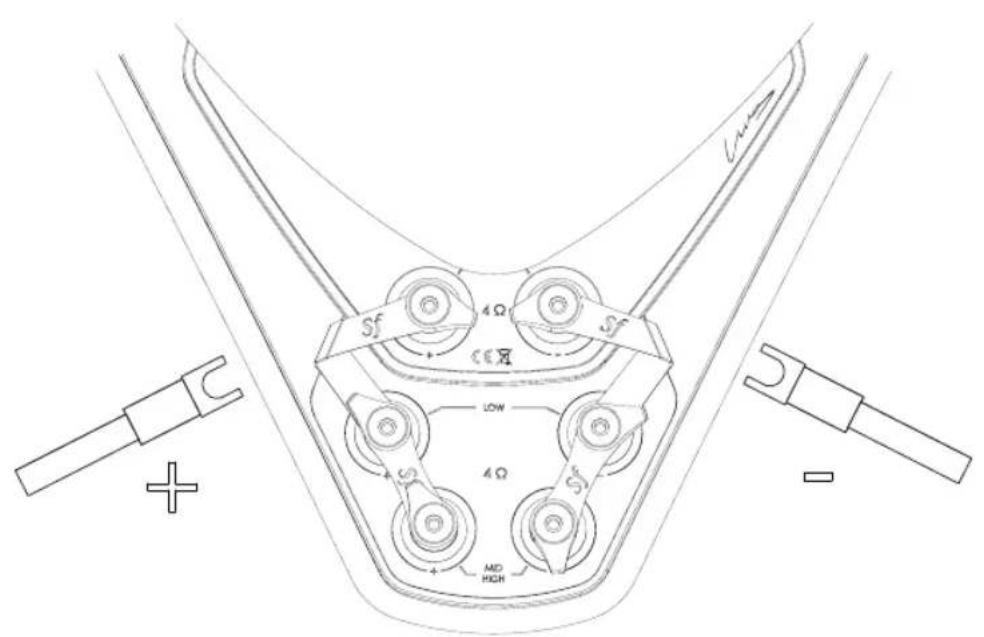
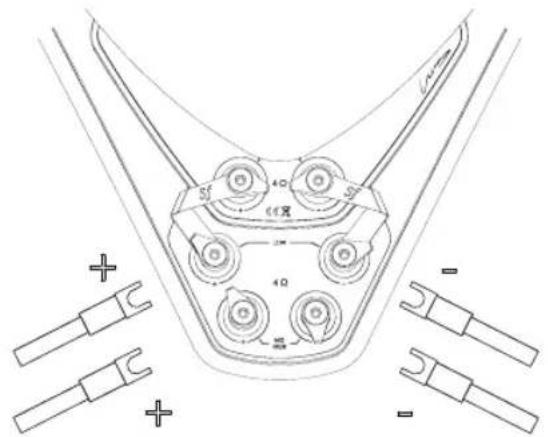
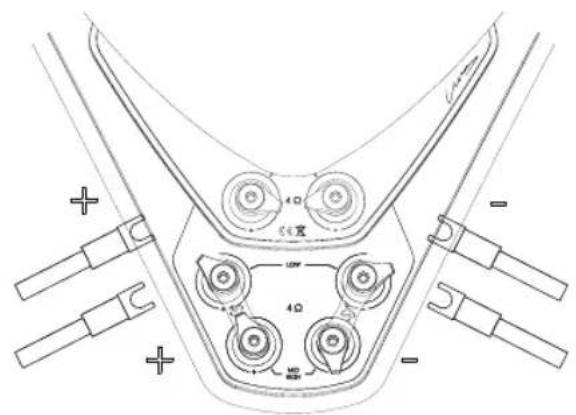
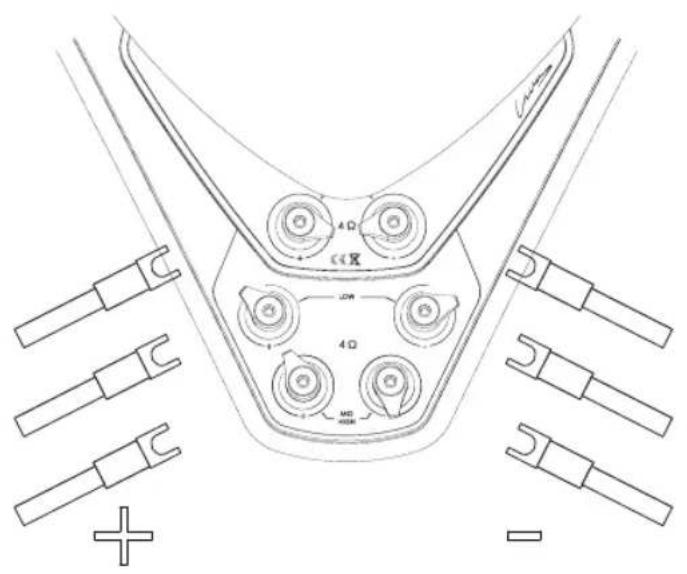
The rear panel of Lilium features two terminal boards, one hosting the terminals for the positive polarity, the other for the negative polarity. These accept connection with spade connectors, bananas, and with bare cables.
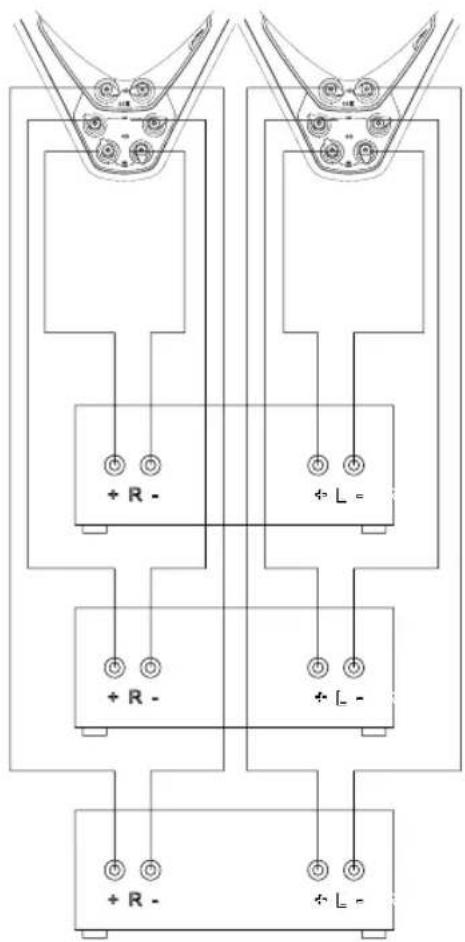
If we analyse the two boards bottom up, the first horizontal pair of positive and negative terminals feeds - separately - the medium-high frequencies of the speakers. The second pair feeds, separately, the front woofers; while the third pair is designed to feed the infra-woofer, still separately. Please refer to the illustration in figure 10.
Inside the package, all the connection jumpers are already installed on Lilium's terminal board. The full set of one Lilium speaker consists in four jumpers (therefore, eight jumpers per pair).
By using the right amount of these jumpers, Lilium can be connected according to the most usual configurations and be easily adapted to the different types of ending of the power cables preferred by the users. In the case of banana connections, each terminal must be unscrewed first in order to remove the plastic cap that protects each pin.
Please find below a description of the different connections; the sequence of these connections is marked by a progressive escalation in the quality of the sound reproduction in terms of definition, control and details.
MONO-WIRING
OR STANDARD CONNECTION
The standard connection requires a single stereophonic amplifier or a pair of monophonic amplifiers, together with a single kit of power cables.
The connection shall be made by leaving the terminals connected one to the other by means of the jumpers, as they are already set when the speaker is unpacked, and as shown in figure 10.
BI-WIRING
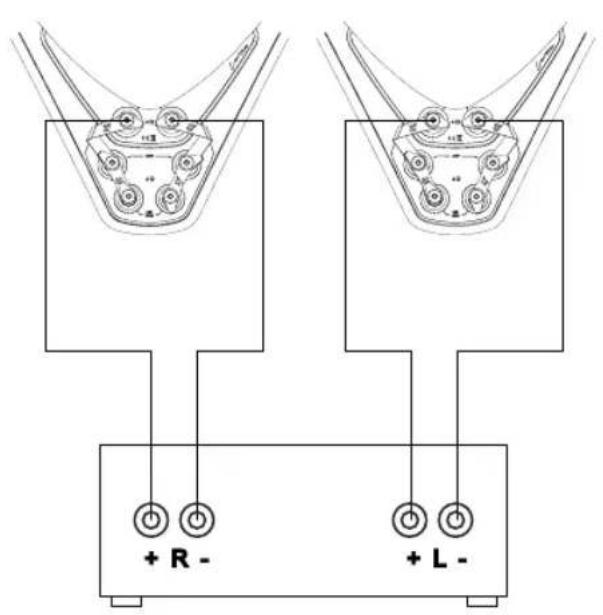
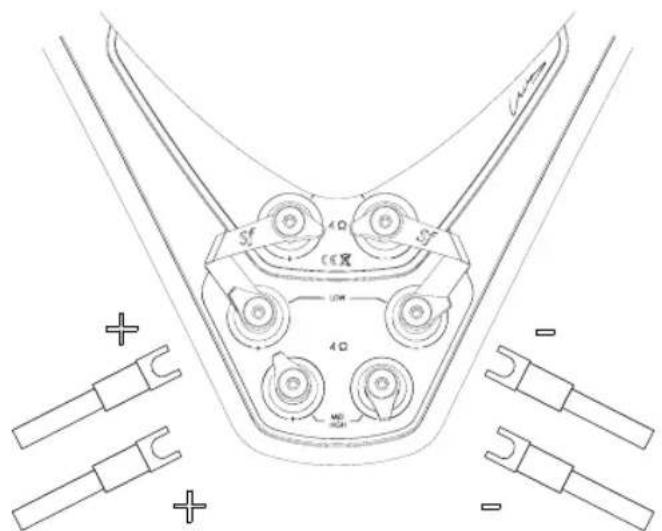
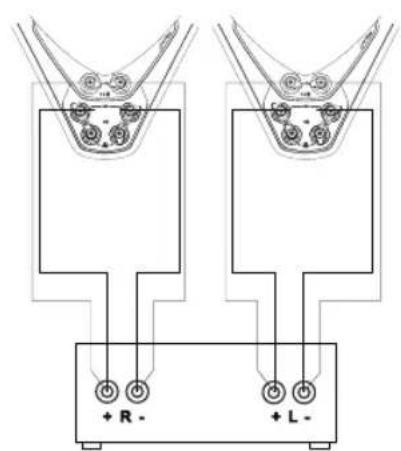
This type of connection improves the general reproduction quality, and in particular the bass frequencies. It is performed by using a single stereophonic amplifier or a pair of monophonic amplifiers, together with two kits of power cables. This configuration can be implemented on the Lilium speaker in two options:
I. The option we deem better sees the medium-high section fed by a power cable, and the low and infra-low frequency sections fed by the other cable together. For the correct jumper positioning, please refer to figure 11.
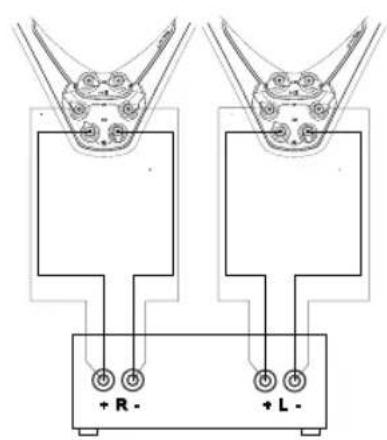
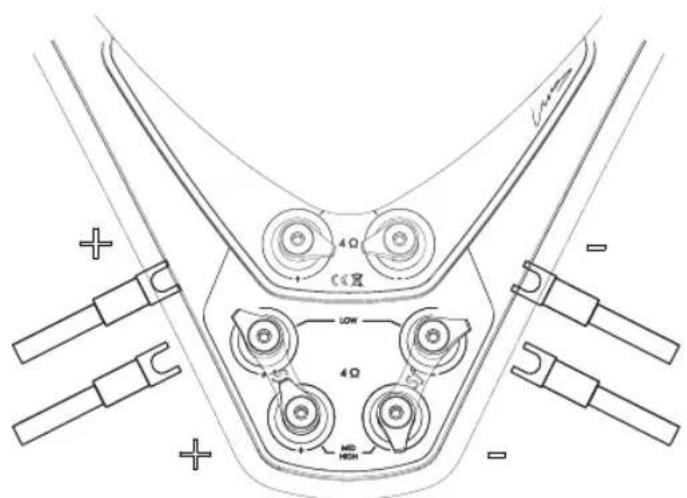
II. An interesting option is the one where the infralow section is fed by a power cable, while the medium-high section is fed together with the low frequency section by the other cable. For the correct jumper positioning, please refer to figure 12.
TRI-WIRING
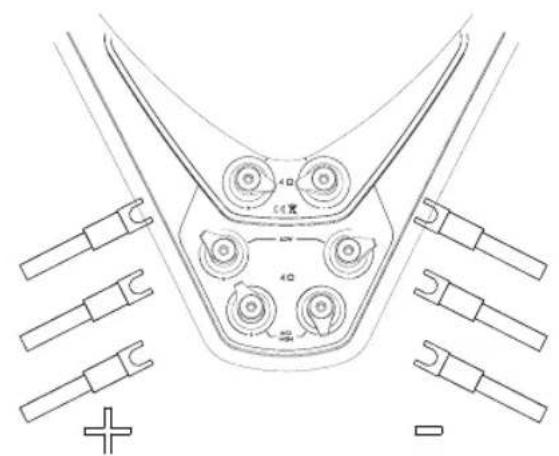
The tri-wiring connection is made with a single stereophonic amplifier or a pair of monophonic amplifiers together with three kits of power cables, where each cable feeds one section of Lilium, and by removing all the jumpers (ref. figure 13).
BI-AMPLIFICATION
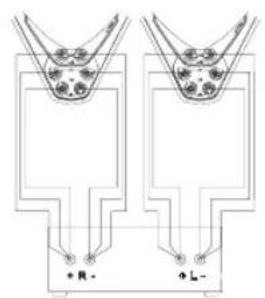
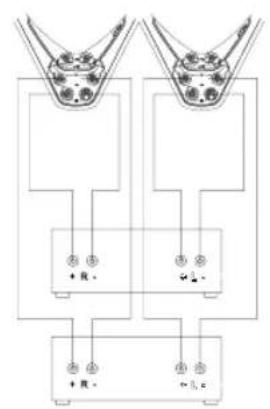
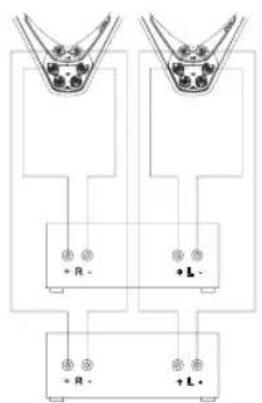
Bi-amplification improves the reproduced sound in a general manner, and in particular gives greater dynamics and control of the bass frequencies. To produce this configuration with either two stereophonic amplifiers or four monophonic amplifiers, you need two pairs of power cables with which you can implement two options:
I. The option we deem better is achieved by feeding the medium-high section with a stereophonic amplifier (or a pair of monophonic amplifiers), and the low + infra-low frequency sections with the other stereophonic amplifier (or the other pair of monophonic amplifiers). For the correct jumper positioning, please refer to figure 14.
II. An interesting option is the one where the infralow section is fed by a stereophonic amplifier (or a pair of monophonic amplifiers), while the medium-high section and the low frequency section are fed together by the other stereophonic amplifier (or the other pair of monophonic amplifiers). For the correct jumper positioning, please refer to figure 15.
TRI-AMPLIFICATION
Tri-amplification is achieved with three stereophonic amplifiers, or with six monophonic amplifiers together with three kits of power cables. Here each stereophonic amplifier (or each pair of monophonic amplifiers) feeds one section of Lilium, after all the jumpers have been removed (ref. figure 16).
This configuration is the apex in the gradual quality rise, as specified in this chapter.
Finally, the accurate tightening of the contacts and a periodical check of same contributes to improved performance.
INSTALLATION ADVICE: AMPLIFICATION AND POSITIONING OF LILIUM IN A ROOM
Many questions may arise regarding the correct interfacing of Lilium. To dispel any doubts, we feel the need to specify what follows. A project of this kind cannot be designed to operate optimally with one single type of amplification only.
The only thing we can confirm is that a state-of-the-art loudspeaker system requires an amplification system that is just as state-of-the-art, no matter what technology is used.
It is self-evident that if a loudspeaker system of a considerable size, like Lilium, is installed in a rather large room, this requires a type of amplification that guarantees a large reserve of undistorted power.
Regarding the position of the loudspeakers in a room, some general advice can prove useful to obtain the maximum performance possible:
- The choice of the listening room and the speaker position influence the performance of the whole system. A room with an irregular shape is preferable; this type of room improves the response in the environment because it limits the formation of standing waves;
- Rugs and curtains (without exaggerating) positively influence the acoustic response, because they contribute to the absorption of reflections and standing waves that are created in the listening room;
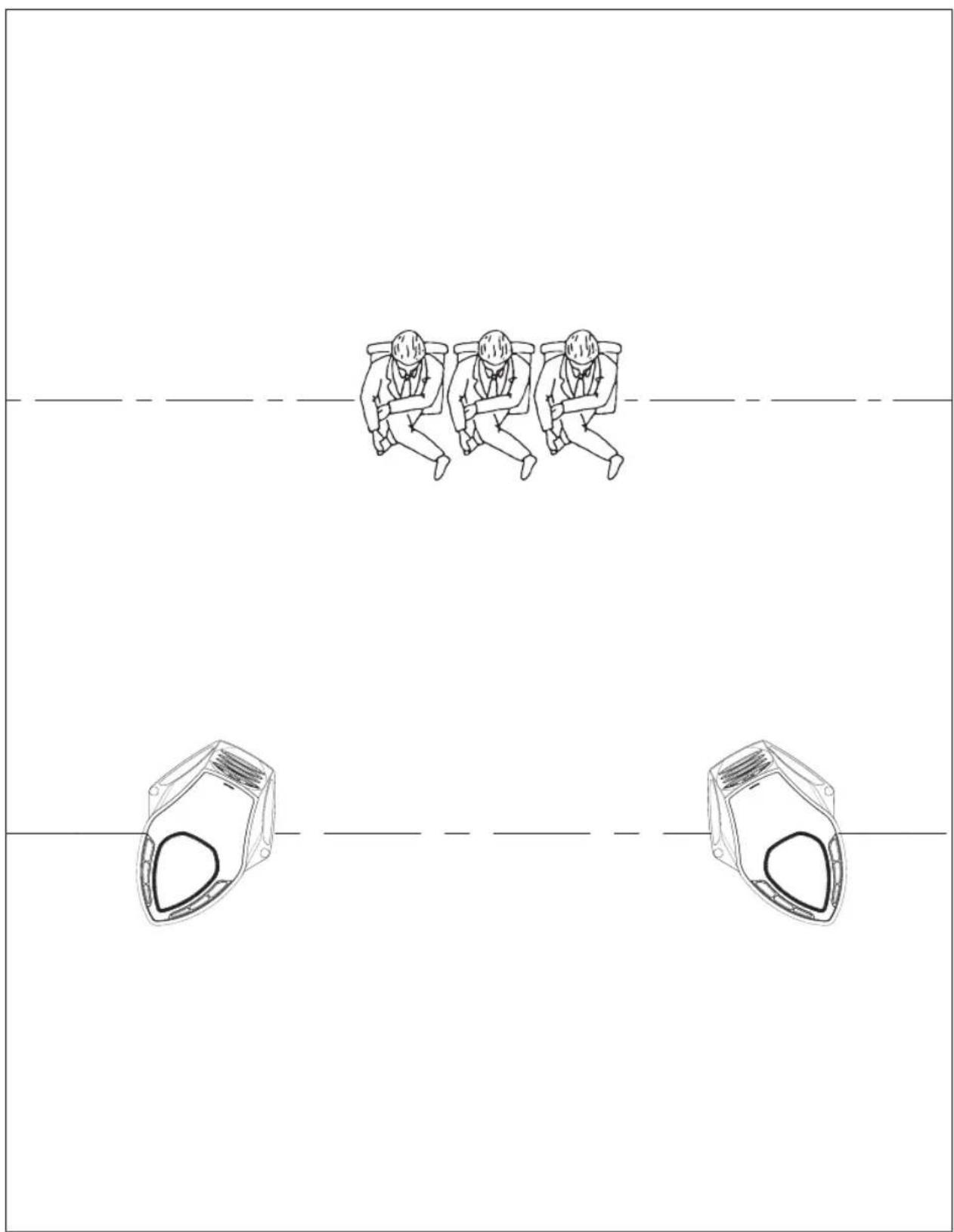
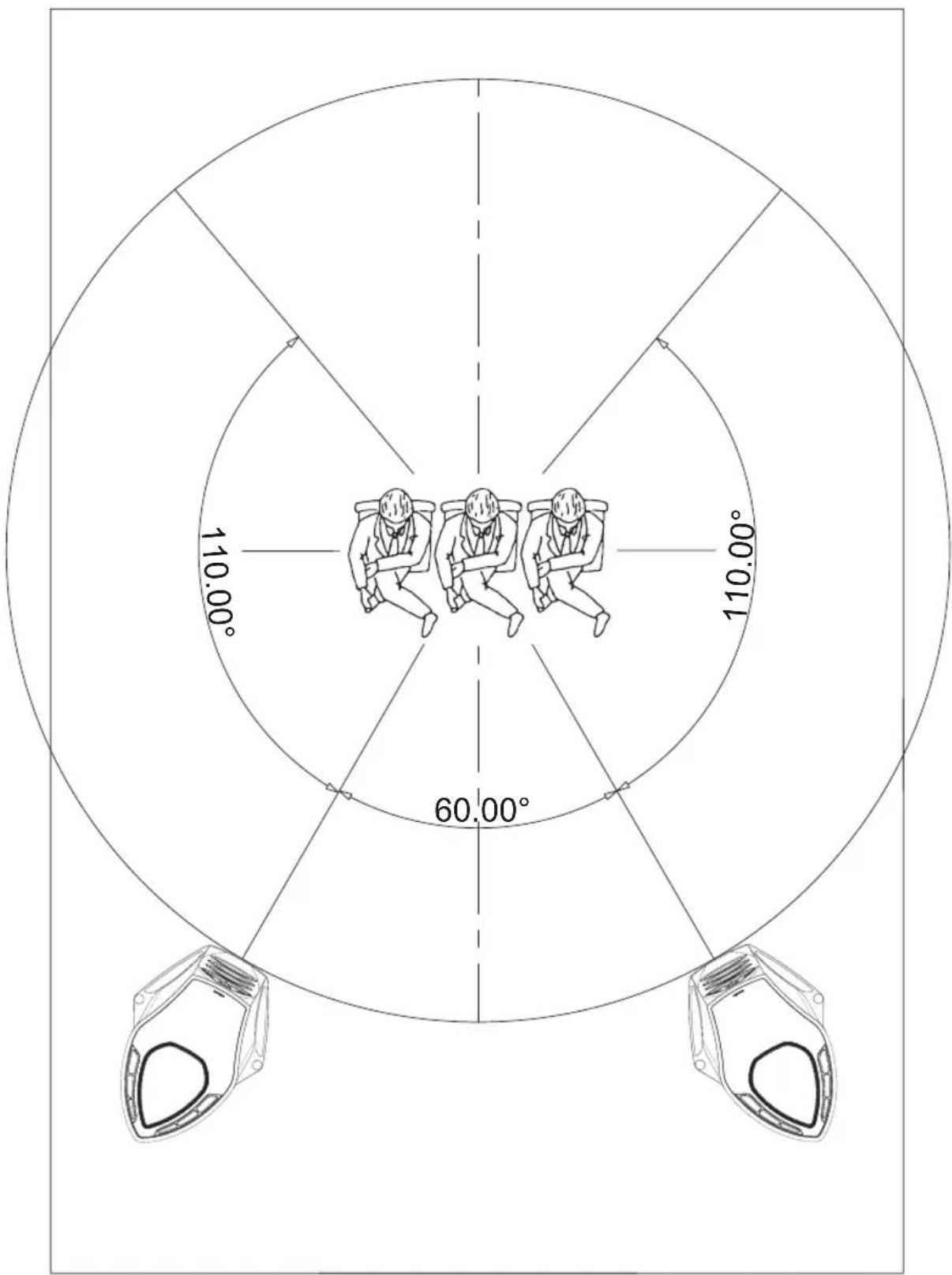
- There are no hard and fast rules for every environment. A good approach to the issue of positioning Lilium in a room, however, is to virtually divide the listening room into three equal parts, as shown by the broken lines in figure 17. At this point, position the speakers on the first of these broken lines and well away from the side walls. The listening position should be placed on the second broken line, as shown in figure 17. In this manner a good amount of air is guaranteed all around the subjects involved in the stereo reproduction, because the speakers can work freely while the listener is not struck by the acoustic reflections that generate near the walls and the corners of the room. Figure 18 shows how the speakers should be angled to converge towards the listening point, thus creating the classic 'isosceles triangle' configuration. This final adjustment, consisting of angling the speakers literally towards the ears of the listener, greatly improves the focus of the stereophonic image.
We are aware that many of our customers will not be able to create these quasi-ideal listening conditions because of objective problems connected with the organization of spaces and furniture in their house. Therefore we advise positioning the two Lilium speakers apart by a distance not shorter than 200cm and to keep the same distance also between each individual Lilium speaker and the listening position.
During the very first listening occasions you might need to change the distance between the speakers and between each speaker and the listening position. It is paramount to guarantee a height of 1.1m to the ear of the listener, considering a person seated in his/her preferred position.
OPTIMIZATION OF THE ULTRA-LOW FREQUENCIES
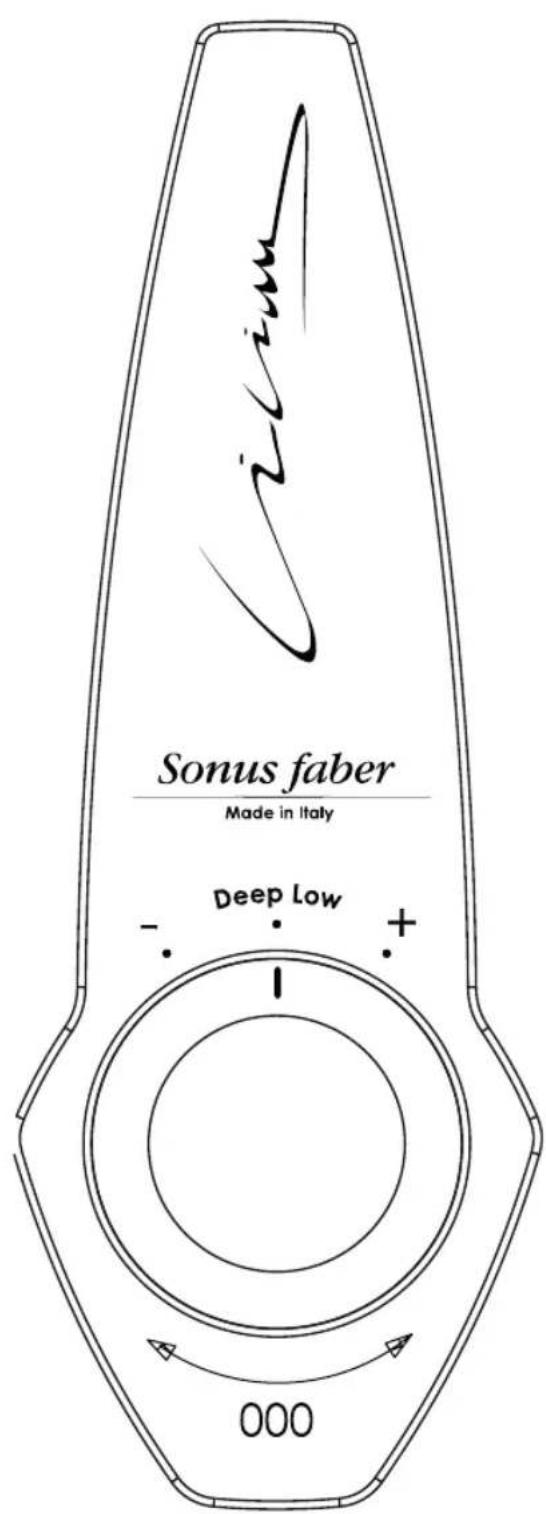
Remember that the level of the extremely low range of the sound spectrum can be optimized using the control knob located at the back of the speaker cabinet, and assigned to the lowest frequencies (figure 19); this knob offers three alternative positions.
The knob setting depends typically upon the listener's taste and upon the specific characteristics of the environment, i.e. its absorption capacity and the even diffusion of the lowest sound components.
MAINTENANCE AND CLEANING OF LILIUM
Lilium does not require any special maintenance, with the exception of regular general cleaning. To preserve its look undamaged, we warmly recommend protecting the speaker with the fabric cover provided in the package, especially when you expect not to use the speaker for a long period of time.
Do not use products such as wax or detergents to clean the wooden part of the cabinet, because these could stain or damage the wood or the drivers. We recommend simply using a clean soft cloth (microfiber for example, like the one supplied in the package), possibly slightly damp (with the supplied liquid). Wood is a natural, living material that can be affected by environmental conditions. We advise keeping the speakers distant from heat sources or windows, in particular during the summer months. We advise keeping the speaker away from direct sunlight.
To clean the metal surfaces and the glass of Lilium, we recommend using the supplied cloth and liquid.
Any dust on the unit, on the front panels or the drivers must be removed using a soft paintbrush, being very careful not to damage their delicate membranes.
To remove the dust on the passive radiator placed under Lilium's glass top, please carefully comply with the following instructions:
- Place the suction cap - to be found in the accessories kit - on Lilium's glass top, paying attention non to scratch the aluminium profile (ref. fig.20);
- While pressing your hand on the lower portion of the glass top, lift its upper part as shown in fig.21;
- Remove the Lilium glass pane and clean the passive radiator with a soft paintbrush, paying extreme attention not to damage the driver; Please perform this operation with utmost care, not to damage the elastic threads running between the aluminium profiles of the two cabinets! Do not damage the Velcro strap under the glass and on the aluminium top.
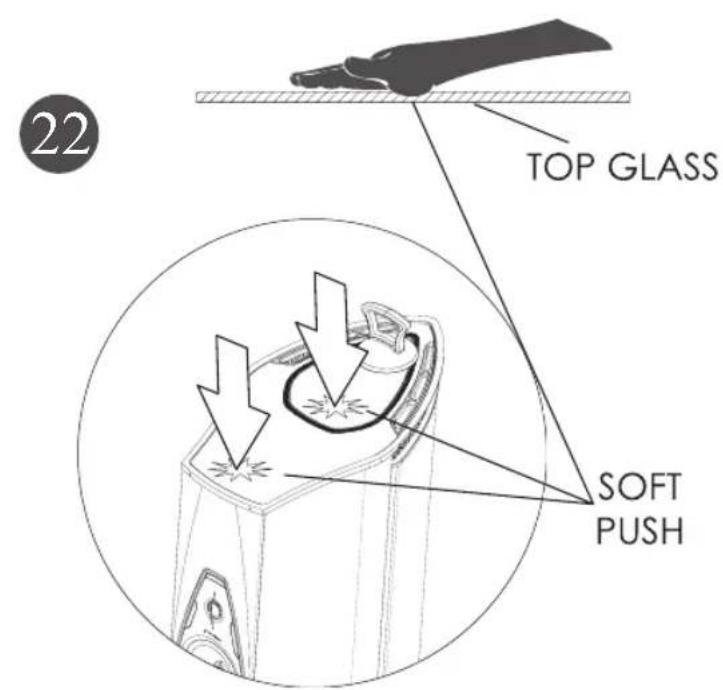
- Put the previously removed glass back to its place by means of the suction cap provided. First lay down the lower part of the glass pane, then the upper part, so that the glass pane will fit into its housing; then press slightly (ref. fig.22).
These simple guidelines will help keep your speaker perfect for many years. Time will help improve the sound by breaking in the moving parts of the speaker (membranes and suspensions), and the acoustic chamber will become accustomed to music being played the more it is used - much like what happens with acoustic string instruments!
GUARANTEE
Lilium speakers are designed and built in compliance with the highest quality standards.
Should however a fault or a malfunctioning occur, the speakers are covered by guarantee in compliance with the regulations in force in the Country were the loudspeakers were purchased. In such cases, please contact the Sonus faber dealer where you purchased the loudspeaker, and refer to the relevant regulation.
In addition and for your convenience please remember:
- To absolutely keep the receipt that proves you have purchased the loudspeaker, which receipt you will exhibit to the dealer in case of need;
- that the speakers in need of repair should be returned in their original packaging in order to be shipped safely, together with a description of the malfunction or defect noticed by the customer;
- the guarantee covers the speakers for any construction faults as long as they have not been dismantled, modified, tampered with or used for purposes or in ways that have not been outlined in this manual.
| System | 3.5 way, orthogonal non interactive dual enclosure, para-aperiodic vented box "Stealth Reflex System" on the main enclosure, passive radiator tuned and "Zero Vibration Transmission" technology on the subwoofer enclosure, modulation-free 90° and decoupled from the main one, staggered low frequency floorstanding loudspeaker system. |
| Cabinet | "Lyra shape" design, progressive thickness triple curvature cabinet walls damped spread resonance spectrum system, Sub-structural ribs are strategically placed for total rejection of spurious vibrations and standing waves control. Two double "dampshelves" (from "The" experience), i.e. CNC anodized machined avional "vibration dampers" (on the top and on the bottom of each cabinet) "stiffen" the column structures reducing consistently structural micro-vibrations coming from the cabinets' walls and the transducers. The "Anima legata" system is used in an innovative way, encompassing the structural ribs of the subwoofer enclosure. A special steel rod, a high speed mechanical interface, concentrates the remaining micro-vibrations conveying them to the dual multiple "Tuned Mass Dampers", i.e. two differently tuned special custom devices optimized to erase micro-vibrations, by oscillating in anti-phase. The subwoofer enclosure has been decoupled from the main enclosure through a new implementation of the Zero Vibration Transmission technology, a suspension system, eliminating any acoustic feedback and any vibration propagation to the listening room. The radiation of the main enclosure and of the subwoofer one are orthogonal to avoid any intermodulation. |
| Tweeter | Bonus faber "Arrow Point" DAD (Damped Apex Dome, synthesis of the classic dome and ring transducer) H28 XTR-04. A Bonus faber designed 28 mm moving coil driver, with Bonus faber's vibration optimized mechanical interface. The ultra dynamic linearity is given by the new Neodymium motor system. Implemented with a natural wood acoustic labyrinth rear chamber, a mechanical anti-resonator designed for this application. |
| Midrange | Bonus faber M18 XTR-04. A Bonus faber designed 180 mm neodymium magnet system ultra dynamic linearity midrange. CCAW wire is used on a composite former "eddy current free" voice coil. The dynamically linear magnetic field motor incorporates triple Kellog/Goeller rings. A special custom diaphragm is made with a real time air dried non pressed blend of traditional cellulose pulp, kapok, kenaf and other natural fibers, developed according to the most natural sound. To further inhibit any residual cone coloration we are using a transparent viscous surface damping coating. The same way as the tweeter, the midrange is decoupled from the main baffle board and designed synergistically with its optimized "acoustic chamber". A special coaxial anti-compressor is used, designed to remove cavity resonances and distortions. |
| Woofers | Bonus faber W18XTR-16. A triple of Bonus faber designed 180 mm lightweight "sandwich" cone structure (high-tech syntactic foam core and two external surface skins of cellulose pulp) woofers are integrated in an acoustically amorphous "stealth reflex" chamber. Designed to blend perfectly with the special midrange and, at the same time, to have absolute definition in their range: the sandwich structure with outer paper pulp skins has the same sonic character of the midrange cone. A powerful long stroke motor system with a 1,5" controlled "eddy current" voice coil is implemented for high speed, performance and linearity. |
| Infra Woofer | Bonus: Sonus faber SW26 XT-08. Sonus faber designed a 260 mm infra woofer, lightweight hard paper composite sandwich cone technology for a maximum rigidity and implemented it in an acoustically amorphous passive radiator tuned separated enclosure. The unit features a very powerful long throw motor with a 2.5" voice coil for ultra dynamic linearity. To perfectly match the low-end performance to different listening rooms it is possible to adapt the SPL of the infra woofer. |
| Cross-over | Non-resonant design, optimized amplitude/phase response for optimal space/time performance. "Paracross topology". The impedance at low frequencies is controlled for a clear and friendly amplifier performance. Double staggered transfer function low frequency/room interface optimized filter. Highest quality is used in terms of the components: Mundorf "Supreme" Silver/Gold/Oil capacitors, Jantzen inductors. Cross-over: 80Hz - 250 Hz - 2500Hz. |
| Frequency Response | 20 Hz - 35.000 Hz, Stealth reflex included. |
| Sensitivity | 92 db SPL (2.83V/1 m). |
| Nominal Impedance | 4 ohm. |
| Suggested Amplifier Power Output | 100W - 800W, without clipping. |
| Long-Term Max Input Voltage (Iec 268-5) | 30 V rms |
| Dimensions | 160cm x 491cm x 705cm (HxWxD). |
| Weight | 103 Kg each – net weight 156 kg each - shipping weight (The shipping weight may slightly change from time to time because different humidity values over the year might affect the wooden boxes'weight). |
SUPPORT DRAWINGS
SUPPORT DRAWINGS
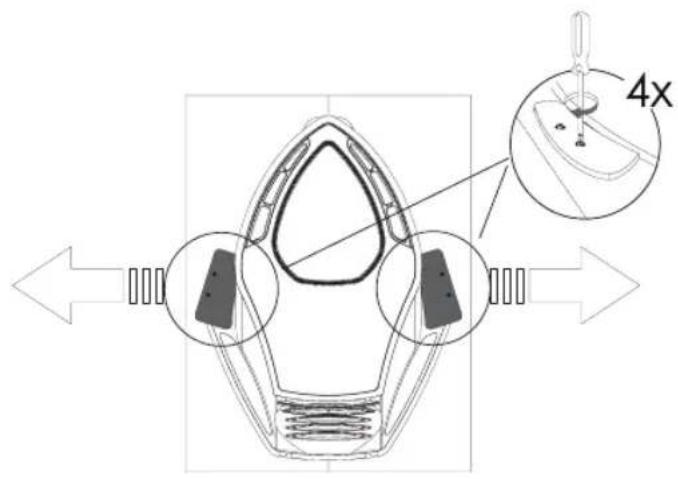
1
2
3
4
SUPPORT DRAWINGS
5
6
7
9
ACCESSIONS KIT
SUPPORT DRAWINGS
10
11
12
SUPPORT DRAWINGS
13
14
15
16
SUPPORT DRAWINGS

18


Install the speakers in order to achieve the best possible stability. If it's the case, adjust points/feet supports. Avoid placing heavy objects on the speaker as they can compromise its stability.
In case the speaker is placed on a surface other than the suggested stands (ex. shelves, bookcases, TV supports, etc.) or directly the floor, firstly check that it can support the weight of the speaker(s). Also check that there is enough friction between the speaker and the surface in order to avoid any movement caused through vibrations whilst in use. Where needed rubber adhesive feet can be purchased from all good hardware stores.
Do not put any objects containing water or other liquid/liquefiable substance on the speaker system.
Follow the connection diagram suggested in the instructions manual. Remember that the parallel connection of two or more speakers can damage your amplifier. If in doubt, contact your dealer.
Whilst the audio system is operative at high volumes avoid staying in close proximity to the speaker system. This can cause permanent damage to your hearing! Children should maintain a safe distance from the speaker system of at least 50cm .
The speakers produce an electromagnetic field which is harmless to humans and pets, but they can cause disturbances in the correct functioning of electronic equipment such as monitors or cathode tube TVs when placed in close proximity. If this occurs, simply and slowly distance one from the other. As a further precaution, it is not advisable to place credit cards or similar magnetically read objects on top of the speaker system.
The technology behind the functioning of the speakers is based on the principles of electromagnetism, and thus the user should avoid operating equipment that generates strong electromagnetic fields as these could affect the correct functioning of the speaker. Avoid placing transmitting devices such as mobile phones, cordless phones, intercom systems etc. on top of the speaker systems.
Do not directly connect to a constant voltage (100V, 70.7V or similar) sound distribution system. This could have as a consequence a serious system's overload with probable damages to the loudspeaker system and/or the amplifier unit.
Keep amplifier-speaker connection and power (mains) cables separate. Mains cables carry an alternating voltage at a frequency of 50Hz (60Hz in Japan and the USA) and an intensity that can be high, and thus produce an electromagnetic field even at audio frequency around them. In the case of coupling of these two types of cables an annoying hum noise will be perceived through the speakers. If this should occur, do provide an adequate distance between the cables.
Be very careful during the assembly and disassembly of the rubber string grille, if present. Check that the first metal string holder is properly inserted before tightening the strings to secure the second one.
The speaker cable terminals accept banana plugs. Remove the red and black plastic caps only if you intend to implement this type of connection and ensure that the other end of the cable is connected to the power output terminals of your amplifier. This protection is aimed at avoiding accidental connection to unprotected electrical outlets.

SICHERHEITSHINWEISE
DECLARATION OF CONFORMITY
Bonus: The Faber SpA with headquarters in Via Antonio Meucci, 10 - 36057 Arcugnano (VI) Italy, under its sole responsibility that the passive speaker system:
LILIUM
you have purchased which this declaration relates is in conformity to:
Directive: 2004/108/EC (EMC) Electromagnetic compatibility. 2011/65/EU (RoHS) Restriction of the use of certain hazardous substances in electrical and electronic equipment.
2012/19/EU (WEEE) Waste electrical and electronic equipment.
Standards: EN 60065:2002 + A1:2006 + A11:2008
Audio, video and similar electronic apparatus - Safety requirements.
EN 55013:2001 + A1:2003 + A2:2006
Sound and television broadcast receivers and associated equipment - Radio disturbance characteristics.
EN 55020:2007
Immunity characteristics - Limits and methods of measurement.
EN 61000-6-1:2007
Generic standards - Immunity for residential, commercial and light-industrial environments.
EN 61000-6-3:2007 + A1:2012
Generic standards - Emission standard for residential, commercial and light-industrial environments.
Arcugnano, 30.06.2014
Mauro Grange
CEO
C
The passive speaker system:
LILIUM
is in conformity to International standards:
IEC 60065:2001 + A1:2005 + A2:2010
Audio, video and similar electronic apparatus - Safety requirements.
UL 60065-1 7th Edition
Standard for audio, video and similar electronic apparatus - Safety requirements.
CAN/CSA-C22.2 60065-3 + A1:2006
Audio, video and similar electronic apparatus - Safety requirements.
CISPR 13:2001 + A1:2003 + A2:2006
Sound and television broadcast receivers and associated equipment - Radio disturbance characteristics - Limits and methods of measurement.
CISPR 20:2006
Sound and television broadcast receivers and associated equipment - Immunity characteristics - Limits and methods of measurement.
IEC 61000-6-1:2005
Generic standards - Immunity for residential, commercial and light-industrial environments.
IEC 61000-6-3:2006
Generic standards - Emission standard for residential, commercial and light-industrial environments.
Arcugnano, 30.06.2014
Mauro Grange
CEO
INFORMAZIONI PER LA TUTELA AMBIENTALE
Waste of electrical and electronic equipment Directive WEEE 2002/96/EC - RoHS 2011/65/EU (for residents in EU Countries only)
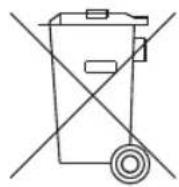
This logo set on the product means that the recycling of this apparatus comes within the framework of the directive 2002/96/EC concerning the Waste on electrical and electronic equipment (WEEE).
The presence of dangerous substances in the electrical and electronic equipments can have potential con sequences on the environment and human health in the cycle of reprocessing this product.
Therefore, at the end of its lifetime, this product shall not be disposed with other non non-recycled waste.
As the end user, your role is of prime importance in the cycles of re-using, recycling, and other forms of valorisation of this electrical and electronic equipment.
Local authorities and resellers have set special procedures for the purpose of collecting and recycling this product.
You have the obligation to use the selective waste collection systems put in place by your local authorities.