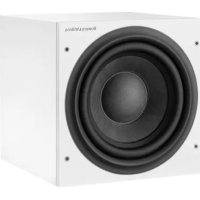
ASW610 - Subwoofer B&W - Free user manual and instructions
Find the device manual for free ASW610 B&W in PDF.



| Product type | Active subwoofer |
| Brand | Bowers & Wilkins (B&W) |
| Model | ASW610 |
| Amplifier power | 200 W RMS |
| Frequency response | 30 Hz – 140 Hz (±3 dB) |
| Low-pass filter | Adjustable from 40 Hz to 140 Hz |
| Phase switch | 0° or 180° |
| Equalization switch | Position A (corner) or B (non-resonant room) |
| Bass extension | 3 positions: A (max), B (medium), C (min) |
| Signal inputs | Line (RCA) and speaker-level (binding posts) |
| 12 V trigger | Yes (Trigger jack) |
| Operating indicator | Green (active) / Red (standby) |
| Power-on modes | On, Auto (standby after 5 min), Standby (Trigger) |
| Feet supplied | 4 M6 decoupling spikes + 4 rubber feet |
| Front grille | Removable |
| Maintenance | Dust with a dry cloth; avoid any product on the speakers |
| Safety | Do not expose to moisture; unplug before cleaning; do not place liquid objects |
| Warranty | 5 years (mechanical) / 2 years (electronic) – parts and labor |
| Dimensions (approx.) | Height: 43 cm, Width: 33 cm, Depth: 40 cm |
| Weight (approx.) | 18 kg |
Frequently Asked Questions - ASW610 B&W
User questions about ASW610 B&W
0 question about this device. Answer the ones you know or ask your own.
Ask a new question about this device
Download the instructions for your Subwoofer in PDF format for free! Find your manual ASW610 - B&W and take your electronic device back in hand. On this page are published all the documents necessary for the use of your device. ASW610 by B&W.
USER MANUAL ASW610 B&W
Limited Warranty.....13
François
Important Safety Instructions
- Read these instructions.
- Keep these instructions.
- Heed all warnings.
- Follow all instructions.
- Do not use this apparatus near water.
- Clean only with dry cloth.
- Do not block any ventilation openings. Install in accordance with the manufacturer's instructions.
- Do not install near any heat sources such as radiators, heat registers, stoves, or other apparatus (including amplifiers) that produce heat.
- Do not defeat the safety purpose of the polarized or grounding-type plug. A polarized plug has two blades with one wider than the other. A grounding type plug has two blades and a third grounding prong. The wide blade or the third prong are provided for your safety. If the provided plug does not fit into your outlet, consult an electrician for replacement of the obsolete outlet.
- Protect the power cord from being walked on or pinched particularly at plugs, convenience receptacles, and the point where they exit from the apparatus.
- Only use attachments/accessories specified by the manufacturer.
- Use cart with the cart, stand, tripod,
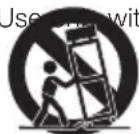
bracket, or table specified by the manufacturer, or sold with the apparatus. When a cart is used, use caution when moving the
cart/apparatus combination to avoid injury from tip-over.
- Unplug this apparatus during lightning storms or when unused for long periods of time.
- Refer all servicing to qualified service personnel. Servicing is required when the apparatus has been damaged in any way, such as power-supply cord or plug is damaged, liquid has been spilled or objects have fallen into the apparatus, the apparatus has been exposed to rain or moisture, does not operate normally, or has been dropped.
- Do not expose this apparatus to dripping or splashing and ensure that no objects filled with liquids, such as vases, are placed on the apparatus.
- To completely disconnect this apparatus from the AC Mains, disconnect the power supply cord plug from the AC receptacle.
-
The mains plug of the power supply cord shall remain readily operable.
-
When replacement parts are required, be sure the service technician has used replacement parts specified by the manufacturer or have the same characteristics as the original part. Unauthorised substitutions may result in fire, electric shock or other hazards.
- Check that there are no cables under the carpet that may be damaged by the spike feet. Do not walk the product on the spike feet as this may cause them to become detached from the cabinet and cause damage. Take care not to impale yourself with the spike feet.
- For continued protection against fire hazard, use fuses only of the correct type and rating. Mains fuses are located inside the appliance as well as on its back panel. Replacement of the internal fuse should be entrusted to an authorised operative. User-replaceable fuse types are shown in the specification.
- Isolation of the appliance from the power supply is by means of removal of the power cord from the rear of the appliance or removal of the power cord from the wall power outlet. Either the wall outlet or the rear of the appliance must remain freely accessible at all times while the apparatus is in use.
- This product should be operated only from the type of power source indicated by the marking adjacent to the power cord entry. If you are not sure of the type of power supply to your home, consult your product dealer or local power company.
- Do not overload wall outlets, extension cords or integral convenience receptacles, as this can result in a risk of fire or electric shock.
- Magnetic fields - The product creates a stray static magnetic field. Do not place any object that may be damaged by this magnetic field (eg cathode ray tube televisions or computer monitors, audio and video tapes and swipe cards) within 0.5m (2 feet) of the appliance. The appliance may cause distortion of cathode ray tube images beyond this distance. LCD and Plasma screens are not affected.
- Mounting - Do not place this product on an unstable stand, tripod, bracket or table. The product may fall causing serious injury and serious damage. Any mounting of the product should follow the manufacturer's instructions.
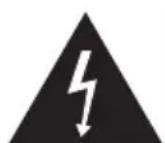
CAUTION
RISK OF ELECTRIC SHOCK DO NOT OPEN

AVIS: RISQUE DE CHOC ELECTRIQUE - NE PAS OUVRIR
The presence of this symbol on the product warns the user that there is a risk of dangerous electrical shock if the product is opened beyond the point at which the symbol appears. There are no user serviceable parts inside. Leave servicing to qualified personnel.

The lightning flash with arrowhead symbol within an equilateral triangle, is intended to alert the user to the presence of uninsulated "dangerous voltage" within the product's enclosure that may be of sufficient magnitude to constitute a risk of electric shock to persons.

The exclamation point within an equilateral triangle is intended to alert the user to the presence of important operating and maintenance (servicing) instructions in the literature accompanying the product.
WARNING: To reduce the risk of fire or electric shock, do not expose this apparatus to rain or moisture.
Do not expose the device to rain, use it near water or in damp or wet conditions, or place containers on it containing liquids which might spill into any openings.
When setting up the device, make sure that the AC outlet you are using is easily accessible. If some trouble or malfunction occurs, immediately turn off the power switch and disconnect the plug from the outlet. Even when the power switch is turned off, electricity is still flowing to the product at the minimum level. When you are not using the device for a long time, make sure to unplug the power cord from the wall AC outlet.
Introduction
Dear customer,
Thank you for choosing Bowers & Wilkins. Please read this manual fully before unpacking and installing the product. It will help you to optimise its performance. B&W maintains a network of dedicated distributors in over 60 countries who will be able to help you should you have any problems your dealer cannot resolve.
Environmental Information
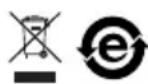
All B&W products are designed to comply with international directives on the Restriction of Hazardous Substances
(RoHS) in electrical and electronic equipment and the disposal of Waste Electrical and Electronic Equipment (WEEE). These symbols indicate compliance and that the products must be appropriately recycled or processed in accordance with these directives. Consult your local waste disposal authority for guidance.
Carton Contents
Check in the carton for:
1 Mains cable
1 Accessory pack containing:
4 M6 spike feet
4 M6 rubber feet
4 Lock nuts (10mm across flats)
Installation
The subwoofer has been designed both for Home Theatre installations and to augment the bass performance of 'full range' speakers in 2-channel audio systems. All audio installations require some
thought in installation if they are to reach their full performance potential and this manual will guide you through the process.
The subwoofer requires connection to the mains power supply, so it is important that you familiarise yourself with the safety instructions and heed all the warnings. Keep this manual in a safe place for future reference.
The Subwoofer Connection and Control Panel (Figure 1)
- Status indicator.
- On, Auto, Stand-by switch.
- Line-level input volume.
- Speaker level input volume.
- Low-pass filter frequency.
- Low-pass filter selection switch.
- Bass extension switch.
- Equalisation switch.
- Phase reverse switch.
- 12V trigger input.
- Line level input sockets (left and right).
- Speaker level input binding posts (left and right).
- Mains input.
- External fuse holder.
Subwoofer Applications
The primary function of a subwoofer is to reproduce signals from an audio-visual processor Low Frequency Effects (LFE) channel. In addition, the processor may be configured to divert the low bass portion from some or all of the other channels and add it to the LFE information. This is usually done by selecting "small" loudspeakers in the processor set-up procedure.
In 2-channel audio applications a subwoofer is used to extend the bass response lower than that provided by the satellite speakers. The subwoofer low-pass filter should be set so that the subwoofer takes over as the output of the satellite speakers falls.
Subwoofer Positioning and Installation
The ear poorly perceives the source location of low frequency sound so the position of subwoofoers in the listening room is generally less critical compared to full-range speakers. However, best results are usually obtained if the subwoofer is placed between the left and right speakers or in the vicinity of one of them. If two subwoofoers are used, it is best to put one near the left and one near the right speaker. Placing a subwoofer behind the listening position, even in multichannel surround sound installations, generally results in inferior imaging, but may be an acceptable compromise if domestic considerations dictate.
As with all speakers, the proximity of room boundaries affects the sound of a subwoofer. Bass volume increases as more surfaces come into close proximity with the speaker. Unlike full-range speakers, however, the overall system balance can be corrected by
adjusting the volume level of the subwoofer. The more boost gained from the room, the lower the volume can be set and the less hard the subwoofer has to work; but there is a down side. Subwoofer positioned near corners often generate more low-frequency room resonances, making the bass more uneven with frequency. There is no substitute for experiment as all rooms behave differently, so the subwoofer should be tried in a variety of positions before a final decision is made. A piece of music with a bass line ascending or descending the musical scale is useful for assessing the smoothness of the bass response. Listen for exaggerated or quiet notes.
If the subwoofer is to be used in a confined space (e.g. built into furniture), the space must be ventilated to allow sufficient air to circulate and cool the unit. Ask your dealer for advice.
The subwoofer is intended to be floor mounted only. It is important to ensure the subwoofer stands firmly on the floor using the spike feet supplied whenever possible. The spike feet are designed to pierce carpet and rest on the floor surface. Initially, screw the lock nuts onto the spikes enough to leave the nuts floating just above the carpet when the spikes are resting on the floor beneath. Screw the spikes fully into the threaded inserts in the base of the cabinet. If the cabinet rocks when placed on the floor, unscrew the two spikes that do not touch the floor until the cabinet rests firmly without rocking. Finally, lock the nuts against the cabinet. It may be more convenient to fit and adjust the spike feet after speaker positioning has been optimised.
If there is no carpet and you wish to avoid scratching the floor surface, use either a protective metal disc (a coin perhaps) between the spike and the floor or use the supplied rubber feet. Fit the rubber feet by screwing one into each of the holes in the underside of the cabinet.
The grille fitted to the front of the subwoofer may be removed if desired. Take care however not to touch the moving parts of the drive unit as damage may result.
Using Multiple Subwoofoers
Using multiple subwoofoers in a single installation can improve performance in the following ways:
- Maintain stereo separation to the lowest frequencies.
- Smooth out the effects of low frequency room resonances.
- Enable a higher maximum sound output.
In the case of two subwoofoers used in a 2-channel audio system, stereo separation will only be improved if each channel has its own subwoofer located close to the appropriate satellite speaker.
Electrical Connections
Disconnect all audio system equipment from the mains until the signal connections have been made and checked. This avoids the risk of damage whilst connections are made or broken. The subwoofer can
accept both line level signals via the RCA Phono sockets (Item 11 in Figure 1) and speaker level signals via the binding posts (Item 12 in Figure 1). Use the following guide to select the appropriate connection method for your installation:
Application: Home Theatre
Subwoofer connected to AV Processor with separate power amplifiers: Figure 2
Subwoofer connected to AV Processor with integrated power amplifiers:
- using line-level inputs: Figure 3
- using speaker level inputs: Figure 4
Note: The subwoofer is always better connected via its line level inputs in home theatre applications.
Application: 2-channel audio
Subwoofer connected to Integrated Amplifier:
- using line-level inputs: Figure 5
- using speaker level inputs: Figure 6
Two Subwoofoers connected to Integrated Amplifier:
- using line-level inputs: Figure 7
- using speaker level inputs: Figure 8
Subwoofer connected to Pre/Power Amplifier:
- using line-level input: Figure 9
- using speaker level inputs: Figure 10
Two Subwoofoers connected to Pre/Power Amplifier:
using line-level inputs: Figure 11
- using speaker level inputs: Figure 12
Before Auditioning
Before auditioning your new subwoofer installation and fine-tuning it, double check the connections. Make sure in particular that:
- The phasing is correct. If the speaker level inputs are used, ensure that the positive terminals on the subwoofer (marked + and coloured red) are connected to the positive output terminals on the amplifier and that the negative terminals on the subwoofer (marked - and coloured black) are connected to the negative output terminals on the amplifier. Incorrect connection can result in a confused sound with poor bass.
- Left to right channels are not confused. Left/right confusion can result for example in orchestral elements appearing in the wrong place in the stereo image, or Home Theatre sound effects not matching the action on screen.
Switching On and Off
Subwoofoers are best switched on after any other item and switched off first. The On/Auto/Standby switch (Item 2 in Figure 1) and Status Indicator (Item 1 in Figure 1) operate as follows:
On: With the switch to On, the subwoofer will remain fully active and the indicator will glow green.
Auto: With the switch set to Auto, the subwoofer will initially become fully active and the indicator will glow green. After about 5 minutes without an input signal, the subwoofer will automatically enter "sleep" mode. The indicator will glow red. When an input signal is detected, the subwoofer will automatically become active and the indicator will glow green. The subwoofer will return to sleep after about 5 minutes with no input signal.
Audio-visual processors incorporating an "automatic" set up procedure may be "confused" by subwoofer with an auto switch-on/sleep function. A potentially damaging fault condition can arise. Subwoofer are best left switched on and fully active during set up if such a processor is used.
Standby: With the switch set to Standby the subwoofer will become active when 12V is applied to the Trigger Input (Item 10 in Figure 1). Zero volts at the input will return the subwoofer to sleep. The indicator will glow green when the subwoofer is active and red when the subwoofer is in sleep.
Setting The Subwoofer Controls
There are 7 controls to consider:
The VOLUME (LINE) control (Item 3 in Figure 1)
The VOLUME (SPEAKER) control (Item 4 in Figure 1)
- The LOW-PASS FREQ (frequency) control (Item 5 in Figure 1)
- The LOW-PASS FILTER switch (Item 6 in Figure 1)
Note: This applies only to the LINE input. The filter is always in circuit with the SPEAKER LEVEL input.
- The BASS Extension switch (Item 7 in Figure 1)
- The EQ (equalisation) switch (Item 8 in Figure 1)
The PHASE switch (Item 9 in Figure 1)
The appropriate settings depend on the equipment used with the subwoofer and the modes of connection. If using more than one subwoofer, ensure the controls on each one are set the same.
Note: The VOLUME (LINE) and VOLUME (SPEAKER) controls only operate on their respective line and volume inputs. An unused volume control is best set to Min.
Home Theatre Settings
Set the VOLUME (LINE or SPEAKER) control initially to the 9 o'clock position.
Set the LOW-PASS FILTER switch to OUT.
Set the EQ switch initially to position A.
Set the PHASE switch initially to 0^
Set the LOW-PASS FREQ (frequency) control to 140 if the speaker level inputs are used. The setting is irrelevant if the line level inputs are used.
See the "Fine Tuning" section for more.
The subwoofer is not a THX^忍 licensed component, but may be used with a THX^忍 controller if desired. If a THX^忍 controller is used, ensure that the subwoofer
function is enabled. This incorporates all the filtering and level setting required for the subwoofer in all modes. For level calibration, the internal test noise and channel level controls in the THX^® controller should be used. In all cases the levels should be set to obtain 75dB SPL (C-weighted) at the listening position from the controller's internal noise test signal.
With other processors, configure the front and surround speakers to "large" or "small" as appropriate before setting the levels. Use the internal noise test signal and volume controls of the processor to set the levels of all the speakers. Only change the VOLUME control on the subwoofer if there is not enough range in the processor to achieve the correct levels. Inexpensive sound level meters are readily available from electronics stores and can be used to calibrate the levels. Refer to your processor manual for further details on how to set the levels.
2-channel Audio Settings
Set the VOLUME (LINE or SPEAKER) control initially to the 9 o'clock position.
Set the LOW-PASS FILTER switch to IN.
Set the EQ switch initially to position A.
Set the PHASE switch initially to 0^
Set the LOW-PASS FREQ control to match the -6dB low frequency cut-off frequency of the satellite speakers. Note: Both -3dB and -6dB figures can be found in the specification of each B&W speaker model. If the satellite speaker manufacturer quotes only a -3dB frequency, the optimum setting for the LOW-PASS FREQ control should be between 0.6 and 0.9 times that figure. The more gradual the low frequency roll-off of the satellite speakers, the lower the frequency should be set.
See the Fine Tuning section for more.
Fine-tuning
Home Theatre
In home theatre systems, the subwoofer (LFE) signal is a separate channel rather than an extension of the signal to the satellite speakers. The LOW-PASS FILTER is switched out (or set to maximum), because the processor provides all the filtering for any speakers set to "small". However, the position of the PHASE switch must still be assessed. Normally the phase will be set to 0^ , but if the subwoofer is positioned at a distance significantly different from the other speakers, or the power amplifier driving the other speakers happens to invert the signal, the 180^ position may be preferable. Listen with the switch in both positions and choose the one that gives the fullest sound. If there is little difference, leave the switch at 0^ .
Surround sound processors normally have a calibrated noise signal that can be used to set the relative levels of all the speakers, making the task somewhat more straightforward than for 2 channel audio. However, do not be afraid to alter the settings to your personal preference. It is all too easy to get carried away with the capabilities of the subwoofer, especially with some special low-frequency effects. Often a more realistic
portrayal, and one more satisfying in the long term, is to be had by setting the subwoofer level lower than the standard calibration level.
2-channel Audio
Set the system up in the preferred position and play some programme with a steady bass content.
The optimum settings of the PHASE switch and the LOW-PASS FREQ control are inter-related and also dependent on the low-frequency cut-off characteristic of the satellite speakers. However, the settings recommended above for the LOW PASS FREQ control and PHASE switch have been chosen to integrate well with most satellite speaker bass alignments.
Using the initial settings, first check the setting of the PHASE switch. Choose the option that gives the fullest sound. Normally the recommended option will be optimum, but may not be in certain circumstances. These may be that the power amplifiers feeding the satellite speakers invert the signal or that the subwoofer is not placed close to the satellite speakers.
Next, adjust the VOLUME (LINE or SPEAKER) of the subwoofer relative to the satellite systems to your liking. Use a wide variety of programme material to get an average setting. A setting that sounds impressive on one piece may sound overpowering on another. Listen at a realistic volume level as the perception of musical balance varies with sound level.
Finally, adjust the LOW-PASS FREQ control to give the smoothest transition between the subwoofer and satellite speakers.
All Applications
The BASS EXTENSION switch offers three options of subwoofer bass extension. Position A gives the greatest extension and position C gives the least extension. Position B provides a compromise setting. If the system is to be used at very high volume levels or in a large listening room, restricting the bass extension by selecting either B or C may help ensure that the subwoofer is not asked to exceed its performance limits. In most situations the BASS EXTENSION switch should be left in position A.
The EQ switch alters the subwoofer bass roll-off alignment. The bass you hear is a combination of the subwoofer plus the effects of the room and you should choose the position that best complements your room and the location of the subwoofer. Position A gives a "drier" alignment, more suited to placing the subwoofer in a corner or compensating for a resonant room. Position B is suited to a less resonant room acoustic and use away from a corner.
If you get problems with uneven bass - certain bass notes are exaggerated more than others - then you probably have a room interface problem and it is worth experimenting with the location of the subwoofer. What may seem like small changes in position - 15cm (6in) or so - can have a profound effect on the sound. The use of multiple subwoofer can smooth the effects of room resonances, as each subwoofer will tend to excite resonances at different frequencies. If you appreciably alter the relative distances from the
subwoofer(s) and satellite speakers to the listening position, re-assess the PHASE switch setting. You should also check the volume of the subwoofer (using either the processor output levels or the VOLUME control on the subwoofer amplifier as appropriate), but only after setting the phase correctly.
Aftercare
The cabinet surfaces usually only require dusting. If you wish to use an aerosol or other cleaner, remove the grille first by gently pulling it away from the cabinet. Spray aerosols onto the cleaning cloth, not directly onto the product. Test a small area first, as some cleaning products may damage some of the surfaces. Avoid products that are abrasive, or contain acid, alkali or anti-bacterial agents. Do not use cleaning agents on the drive unit. The grille fabric may be cleaned with a normal clothes brush whilst the grille is detached from the cabinet. Avoid touching the drive unit, as damage may result. Switch off the subwoofer before cleaning.
Do not use the subwoofer as a table. When in use, objects left on top of the subwoofer are liable to rattle. In particular, avoid the risk of liquids being spilled (e.g. from drinks or vases of flowers).
If the system is taken out of use for a long period, disconnect the subwoofer from the mains supply.
Limited Warranty
This product has been designed and manufactured to the highest quality standards. However, if something does go wrong with this product, B&W Group Ltd. and its national distributors warrant free of charge labour (exclusion may apply) and replacement parts in any country served by an official B&W distributor.
This limited warranty is valid for a period of five years from the date of purchase or two years for electronics including amplified loudspeakers.
Terms and Conditions
1 The warranty is limited to the repair of the equipment. Neither transportation, nor any other costs, nor any risk for removal, transportation and installation of products is covered by this warranty.
2 This warranty is only valid for the original owner. It is not transferable.
3 This warranty will not be applicable in cases other than defects in materials and/or workmanship at the time of purchase and will not be applicable:
a. for damages caused by incorrect installation, connection or packing,
b. for damages caused by any use other than correct use described in the user manual, negligence, modifications, or use of parts that are not made or authorised by B&W,
c. for damages caused by faulty or unsuitable ancillary equipment,
d. for damages caused by accidents, lightning, water, fire heat, war, public disturbances or any other cause beyond the reasonable control of B&W and its appointed distributors,
e. for products whose serial number has been altered, deleted, removed or made illegible,
f. if repairs or modifications have been executed by an unauthorised person.
4 This guarantee complements any national/regional law obligations of dealers or national distributors and does not affect your statutory rights as a customer.
How to claim repairs under warranty
Should service be required, please follow the following procedure:
1 If the equipment is being used in the country of purchase, you should contact the B&W authorised dealer from whom the equipment was purchased.
2 If the equipment is being used outside the country of purchase, you should contact the B&W national distributor in the country of residence who will advise where the equipment can be serviced. You can call B&W in the UK or visit our web site to get the contact details of your local distributor.
To validate your warranty, you will need to produce the warranty booklet completed and stamped by your dealer on the date of purchase. Alternatively, you will need the original sales invoice or other proof of ownership and date of purchase.
Epaoyc Tou subwoofer
H Baikn I toupyia evoc subwoofer iva va avanapayi to onma tou kavaiou xaunaw ouxvoTntwV (LFE) evoc noukavalou ouotmuatoC oikiaokou kivnuatoypapou. Einnov, avo eEePyaotnc surround to nipen, uopei va avanapayi kal tic nou xaunleoc ouxvoTNTcTwv aAwwkavaaiwv (av n.x. ta unoloina neia tou ouotnauoC dev anodiodouv ikavonoiNTiKa ta naaa). H eitoupyia autn EKTeeiTai ouvthOc opizovtac ta aAina nexia wC "muKpa" ano tov enEePyaotn.
He octaBnTe ycTpoNCTBO NOI DOxKdEm, He nCNoB3yIe erO OKoJIO BObI INI B YCNOBHX BBICOKO BnAxAHHOCTN, He CTaBbTe HaBepx annapaTa
COCyIbIC KINKOCtBIO, KOTopAR MOKeT npOIHTBCR IN pOHNKHyTB B OTBepCTNA.
Pn yctahOBKe ycTpoNCTBa y6eHNTecb,TO ceTeBa p03eTKa IERKO DOCTyHNa. B Cnyuae BO3HNKHOBEHHA abapnn nn HeNCnpaBHOCTn HEmeDneHNO BbIKIOUHTe NITaHHe N BbIHbTe BNkky n3 PO3eTKn. Daxke KOrda cTeBOB bIKIOUaTeNb HaxOJNTcB NOLOXeHHN BbIKI (OFF), 3JeKTPuYeCTBO BCE paBHNOPOdoJIkaET NoCTynaTB B annapat, XOTnHa MNHMmaIbHom ypOBHe. Ecnn Bbl He Co6HpaeTECb NCNoIb3OBAt b annapat B TeueHHe dNITeIbHoro BpemeHn, BbIHbTe BNkky cTeBOrO Ka6eHn n3 HaCTEHHO p03eTKn.
BVeDHeNc
YBaXaEmbIn NOKyNaTeJIb,
Бларпза пибразниakнвогсбуфра npon3bOCTBa komnaHn Bowers & Wilkins!
IoxaanyiCTa, BHImaTeIbHo npOHTte DaHHO pyKOBOIDCTBO. OHO NOMoKET ONTUMN3nPOBaTb xapaKTepnCTnKn BaWe ayDIOOCnCTEmbl. B&W NOdEprXNBaET cetb CneuaJIIN3nPOBaHHbIX DnCTp6bIoTOPOB 60Jee Yem B 60-Tn CTPaHax. EcIny Bac BO3HNKIn KaKe-1n6o nPobJeMbl, C KOTOpbIMn He MoKET cnpaBnTbcr DnJIep, HaSi NcCTp6bIoTOPbI OxOTHO npNDyT K Bam Ha NOMOuB.
HnΦopMaunrno 3aunTe Okpykaoue Cpebl

Bce npoDyktb B&W co3aHbI B noJIHOM COOTBETCTBUN C MeKdyHaPOdHBIMn DnpeKTINBaM N OOrpaHnueHnM
NcNoIb3OBAHnO npChbix MaTePnaIOB (Restriction of Hazardous Substances - RoHS) B 3JIeKTPnueckom n 3JIeKTPoHHOM o6OpyIOBaHn, a TaKxpe no er0 yTIN3aUu (Waste Electrical and Electronic Equipment - WEEE). 3NaK nepepepkHyToR MycOpHoro 6aka 03Haayet COOTBeTCTBne INPeKTHiBAM I TO, YTO pODoYKT DOJXKeH 6blTB npAunlbHO yTIN3OBAH HnI nepepa6oTaH. PpOKOHcyIbTnpUyTEcb C BaWei MeCTHO OprAHn3aUnei, KOTopA 3aHmMaETC H yTIN3aUnei OTXODOB, NO BONPOcAM npAunlbHO CdaUn BaWero o6OpyIOBaHn B yTINb.
CopeKmOe ynaKOBKn
Y6eIntecb,TOB Kopo6Ke NMeetca:
1 cTeBOn Ka6eIb
1DOnOHnTeBHaYyNaKOBKa,CoepKaaAa:
4 mna c pe3b6oM6
4pe3nHObblx onOpblc pe3b60M6
4 KOHTprauKn (nloockne 10 MM)
HcTannna
Ca6Byepe cnpoeKtnpoBaH KaK dIpa60bIB COCTaBe KOMnJIeKTOB DOMaUHero TeaTpa, TaK IdN AONONHeHn 6acOBo CoCTaBnIOuSei “NONHOJnAna3OHHbIX” KOJHOK B 2-KaHaJIbHbIX ayDnO CnCTemax. JIO6aayDnO CnCTema Tpe6yET npOyMaHOrO NOxOJa K INCTaJIrAunI DnpeaIN3aUnn ee NOnHOrO NOTeHcuaIaN, n B 3ToI NHCTpyKUnn npINBoDnTC pyKOBoDCTBO n DOCTNXeHN ONTImaJIbHOrO 3ByaHnI.
Ca6Byep Tpe6yET NOcOeHHeHnK 3NeKTpuecko CeTn, PO3ToMy BaxHo, YTO6bI Bbl O3HaKOMUINCb CO BCEMN INCTpyKuYAMN P0 6e3OnaChocTN n Co6JIIOdaJN BCE Mepbl IpeDcTOpoxHOCtN. CoXpaHNTe 3Ty INCTpyKuHO B HaJeKHOM MeTe dJa 6yduJero pyKOBOdCTBa.
PanaheIb c opraHaMn ynpaBneHnna pa3bemAmn dIra nOdkJIoueHnca6ByΦepa (Pnc.1)
1.ИндкаTop coCTOHHNIA
2. BbIKIOuataIb On, Auto, Stand-by.
3. PerynupobkA ypoBHa Ha IINHeHOM BXOe.
4. PerynpoBka ypOBHa KaIIOHOuHOM BXOe.
5. Yactota cpe3a qnIbItpa BbICOKnx YactOT LPF.
6. Cenektop pfNJIbTpBa Blicoknx YacToL PFL.
7. IpeeknioaTeIb paacupeHna 6acob.
8. IpeeknouateIb 3kBaIaI3epa.
9. IpeeknioaTeIb 4a3bl.
10. 12-B TpnrrepehBb BxoD.
11. Pa3bEmbl IINHeHOrO BxOda (JIeBbI n npaBbI).
12. KneMbI KOHOuHOrO BXoJa (JeBaI npaBaI).
13. Bxod cetebo ngtaHn.
14. Kopnyc BheuHero npedoxpahnteJr.
PpmeHne ca6Byepa
OchOBnA fynKcua Ca6Bypepa-Bocnpo3BeJeHne KaHana Hn3KoYAcTOTNbIX 3ΦΦeKTob Low Frequency Effects (LFE), nOnyuaemoro ot ayDno BnDeo npoueccopa. Kpome toro, npouecopp MoKeT 6bITb NaCTpoeh Ha nepeHaNPaBNeHne Hn3KoYAcTOTNbIX COCTaBnIOxNt HEKOToPbIX NIN BCEX KaHAnOB B KaHAN LFE. O6bUHO 3TO DeJaTeCn PyTem 3aDaHnI K0JOhOK «MaJIbIM»- "small" B XOe npoceDypbl yctahOBKn npoueccopa.
B2-kaHaJIbHbIX aydno cncTeMax ca6Byepe
NCNoIb3yeTcA JnB BOCnpOn3BeDeHn8 6acOB,6OJeE
HN3Knx,YemMOryT BblaTb CATEllNTHbIe KOLOHKn.
KpocCOBep ca6Byepea DoJKeH 6blT HAcTpoEH TaKIM
Obpa3OM, YTO6bl Ca6Byepe HaunHan pa60TaTb Tam,
rde OTdaHa caTeLLNTHbIX KOLOHOK HaunHaET PaDaTb.
Pa3MeueHne n HcTaJIaIcna ca6Byepea
Haun yun c Tpydom onpeJeIOT HanpaBHeHne Ha nCTOCHK HN3KOuACTOTHO 3Byka, NO3OMy pacnoJIOKeHne ca6BycpoB B KOMHaTe dnn npocnyuINBaHH, BOo6ue roBOpA, MeHee KpHTNuHO, Yem nn NOnHOaNa3OHNbIX KOLOHOK. Ondako HauNyUWe pe3yNbTaTbI ObuHNO NOnyuaIOTcR, ecnna c6Bycpep ycTAHOBtB Mekdy neBOH n npaBOH AC, NObIn3OCTN K ODoH n3 Hx. Ecnn NcNoJIb3yeTcR Dba c6Bycpa, TO Lyuwe BCero ycTAHOBtB ODNH OKOLO NeBOi, a Dpyro - OKOLO npaBOH KOLOHKn. Pa3MeueHne ca6Bycpa 3a CnHOn CnuWateNei, DaXe B MHorOKaHaNbHbIX CNCTEmax OkpyKaIoUeTo 3ByKa, O6bHuO pINBODNT K UxyDuHeHIO 3BYKOBTO OBpa3a, HO MOKeT OKa3aTbCn PnEMLeMbIM KOMnpOMnCCOM, ECnN 3TO DNkTYeT O6CTAHOBKa B DOME.
Kak n dpyrnx akycntuuecknx cnCTem, 6n30ctb K rpaHnqam KOMHaTb Bnnaet Ha 3ByaHne ca6Bycpepa. TpomkoCTb no Hn3kIM qactotam Bo3pactaeT no Mepe toro, kak BCE 60nbwe CTen np6nXaaetc K NCTOCHNY 3Byka. Ondako, B OTnInyne OT NOnHOJnana30HNbIX KOLOHOK, 6oum 6aIanC B CnCTeMe MOxHO NOkOppeKTnpOBaTB, OTPeynnpOBaB yPOBeH b TpOMKOCTn Ca6Bycpepa. Yem 60nbwe ycIneHne, NOlyaEmoe 3a Cuet CTeh NOMeEHHN, TEM MeHbUIO TpOMKOCTb CNeDyET UCTAHOBITb, IN TEM MeHbWe Harpy3Ka Ha c6Bycep; HO B 3TOM eCTb IN HeratNBHaN CTopoHa. Ca6Bycepbl, pa3MeJeHHbIe B ByIax, YacTo nopoxJaOT MHOKeCTBO KOMHaTHbIX pe3OHACOB, DeJANBAC BOEone HepABHomePbIM No QACTOTE. 3Decb HNUTO He MOXET 3aMeHNTb 3KcNEpIMeHT, T.K. BCE KOMHaTb BeDyT Ce6n Ppa3HOMy, TaK UTO c6Bycep CNeDyET NOnpOboBaTb YCTaHOBtB BO MHOKeCTBE pa3HbIX MeCT, IpexJde Yem CDeNaTb OKOHaTeNbHbI BbIbOp. My3bIKaNbHbIe Ipon3BeDEHnC BacoBBIM NapTnAMN, IOBbIaHOzIMN INI NOnHXaIOzIMN CBOIO qACTOTy, MOryt OKa3aTcBn POe3HbIMN DnR OceHKn rJaDKOCTN BacoBOrO oTKnka. BHImateNbHO BCnywaIteCB CNIWKOM TpOMKne INI JxE CNIWKOM TNXe HOTbl.
Ecni ca6Byep 6yDet NcNoJIb3OBAtbcB 3aMKHyTOM npoctpaHCTBe (HaIpIMep, BCTpaNBAtbcB Me6eJIb), TO dOnxHa 6bITb OecnepeHa BeHTnlaUria, DOctaToCHa Ira erO oxJaXdEHH. IocOBetyntecb CO CBOIM DInIepom No 3Tomy BONpocy.
Cabbyep npedha3aueh TOnbKO dHaonbHou yctahOBKn. Baxho BCIOy, rDe 3TO BO3MOxHO, o6ecneHTB npOohoe nIoXeHne ca6Bypepa Ha NOy C NOMOUsbU WINOB, BXODAUX B KOMNJIeKT. WInbl paCCHTAHbHa To, uTo6bl npOTKHyTb KOBePn OINpaTbcra Ha NobepxHoCTb Noa.Cchayana HabepHNTe KOHTprauKn Ha WInbl TaK, uTo6bl OCTaCn He6oBshOu 3a3Op HAd KOBpom npi WInax, npOuHO CTOruNX Ha NOy. 3aBepHNTe WInbl Do ynpa B OTBepCTnC pe3b6oB B OCHOBaHN KOpnyca ca6Bypepa. Ecnn Kopync wataetc, OTBepHNTe Ha3aD WInbl, KOTopbIe He KacaIOTcR NOna, uTo6bl OH npOuHO BCTan Ha BCE onOpbl. HakoHeU, 3aTaNHTe KOHTprauKn B CTOPOHy Kopnyca. Bolee ydo6HO OTPeynpobAt b BVICOTy WInOB nocTe TORO, KaK Bbl BBiepeTe ONTMaJIbHO MeCTO DnKoLOHOK.
Ecni y Bac Het KObpa, n Bbl XOTnTe N36eKaTb
UapannH Ha NOy, NCNoJb3yIte 3aunTHbIe
MeTaNueckne DnCKN (HaNPmep, MOHeTb),
BCTaBnEMBie MExdy UINaMn N NOIOM, INJx Ke
YCTaHOBNTpe3INHOBbie HOKKN N3 KOMnKeTA.
PpNBHTnte pe3INHOBble ONOpbl N BblPOBnYe
KOPnyc ToCHo TAK Je, KaN b Cnyuae C uINaMn.
3aunTHaPeWetKa(rpnlb),PnKpeHnHaHaΦpoHTaIbHOI NOBepXHocTn ca6Byepea,MOxET 6bITb CHrTaNo JeHaHIO.Odako 6yDbTeOcTOPOXHbI HKe KacaITecb NOdBHXhBX DeTaJeI DpaBepa(DINHaMnKa),YTO6bl He NOBpeNTb INX.
IcnoJb3OBAHHe HeckoJIbKnx ca6BypepoB
NcnoIb3yHeckoIbKO ca6ByepeOB B OndHnHCTaIIaUN, BblMOKeTe yIyUuNTb KaueCTBO 3ByuHaHn CneDyUOuM 06pa3OM:
- CoxpaHntb pa3dJeHHe cTepeo KaHaIOB BnIOTb DO cambIX HNXHIX YAcTOT.
CrnaNTbBnHHe Hn3KoAcToTHbIX pe3OHaHCoB NOMEeHEN. - YBENHITb MaKcImaJIbHOe 3ByKOBOe JaBHeHne.
EcnI Dba ca6Bypepa nCnOJb3yOTcB 2-KaHaJIbHO ayDIO CNTeMe, pa3dJeHne CTepeo KaHaJOB MOxHO yNyUHTb JNtB B TOM Cnyae, KOrJa B KAxDOM KaHaJIe NMeETc CO6CTBeHHbI c6Bypep, YCTaHOBJIeHHb I OKOLO COOTBeTcTBYIOSei CATeJInTHOH KOJOHKn.
3NeKtpnueckne coeHHeHHa
Bo n36ekahne noBpeKdEHH OTCOeDHNHe TnTaHne BCero ayDno o6OpyDoBaHn Ha BpeM npOBepKn BCEX noDCoeDInHeHn.
Ca6Byepe npHnMaet CnHaJIbI JInHeHOrO yPoBnYepe3 rHe3da RCA Phono (no3u11 Ha pnc.1),a TaKKe CnHaJIbI BbICOKoO yPoBnYepe3 KJIeMMbl (no3u12 Ha pnc.1),pacNoJoxeHHbI Ha 3aAdHei NaHeII.
BbIbpa cnooc coeHHeHna ca6Bypepa B BaWe ayDnOncTeMe,BOcNoIb3yIteCb CneDyIOUIMN peKOMeHdaunMn:
CNCIOJIb3OBAHnEM BXOIOB JINHeiHOro yPOBHa: pnc.3
C INcNoJIb3OBAHnEM BXoIOB BbICOKOrO ypoBHa: pnc.4
PnmeHne:BOMaWHNX KINHOeATpax BcERda lyuwe NOcoEHNHTb ca6Byep cnHaJOM IHHoHO yPOBHA.
Приимены: 2-kaHaJIbHaЯ aydnocntema
Ca6Bypep noDCoeDInHeN K nHTerPnpoBaHHOMy yCnnteIIO:
CNCIOJIb3OBAHnEM BXOIOB JINHeiHO rpoBHpnc.5
C INcNoJIb3OBAHnEM BXoIOB BbICOKOrO ypoBHa: pnc.6
IbCa6Byepa,NoDCoeINHeHHbIe K INHTerpnpoBAHHOMy yCnNTeIO:
CNCIOJIb3OBAHnEM BXOIOB JINHeiHOro ypoBHpnc.7
C INcNoJIb3OBAHnEM BXoIOB BbICOKOrO ypOBn: pnc.8
Ca6Byep noDCOeINHeK npEduCnIteIIO nn yCuNITeIO MOUHOCTN:
CNCIOJIb3OBaHHeM BXOIOB JINHeiHO rpoBHn: pnc.9
C INcNoJIb3OBAHnEM BXoIOB BbICOKOrO ypoBHa: pnc.10
Ibca6byepa,noDCoeHHeHHbI npeDycnnteIO nn yCNNTeIO MOCHOCTN:
CnOJIb3OBaHHeM BXoIOB JInHeHOrO yPOBHr: pnc.11
CnCNoJIb3OBaHHeM BXOIOB BblCOKOrO yPOBHa: pnc.12
Ipeep npOBepKo KaueCTBa 3ByuHaHn
Ipepe npOBepKo KaueCTBa 3ByaHnHOBOy aynocntembl n eToHOn HAcTPOkO, DBAxkbI npOBepbTe npabunbHOCtB BCEx CoeHNHeHn. Y6eNTecb B TOM, YTO:
- Праььнho ВьбраHA Фа3a - ecn
ИСПОЛБ3YOTcB BXODbl BbICOKORO ypoBня,
уБeДиТecь, YTO NOLOXHTeJIbHbIe KJIeMMbl Ha
ca6Bypepe (MapKupOBaHHbIe + n KpaCHORO
цВЕТa) NOДКЛIOЧЕНbl K NOLOXHTeJIbHbIM
КЛeМмam KOJOHOK, a OTPuCaTeJIbHbIe
(MapKupOBaHHbIe - n YechPHorO zuBeTa)
ПОДКЛIOЧЕНbl K OTPuCaTeJIbHbIM KJIeMMam
КOLOHok. HenpaBnblbblb6op Фa3bl
прИВоДNT K Pa3MbItoCTN 3ByKa C HeyctOnuHBbIM
3ByKOBbIM OБразOM ИИ N K HexBaTke bacOB, ИИ
К TOMU IN K ДPyROMy BmecTe.
2.Паьи n leви KaHalb He nepenyTaHb.3To MoKxet npBecTN K TOMy,TO,CKaXeM,3ByuHaHne HnCTpyMeHTOB B opKeCTpe NOKaXeTc 3epKaJIbHO OtpaXeHHbIM IIN Jx,TO eEe 6OJee HENpNTHO,3ByKN B DoMaUHe MTeaTpHe 6byT COBnaDaTb C npONCXoDЯm Ha 3KpaHe TelenBn3opa.
BkIIOyehne n BbIKIOyehne nTaHnA
PekomeHnyetc BkIIOuATb ca6Byep nocne BCex octaBbIX KOMNoHErTOB, a BBIKIOUaTb erO, HAObOpOT, nepBbIM.
IpeeknioateIb On/Auto/Standby (no3u2Ha pnc.1) nHdkatop coctoHn Status Indicator (no3u1 Ha pnc.1) pa60aOT cJeDyUOUM o6pa3om:
On: Pn nepeKIOHcATENE B 3TOM NOLOXeHN, caBpyep nOCToHHO OCTaETCBKIOUeyHHbIM CBETOBO INHdkaTOP CBETNTCA 3JeHbIM CBETOM.
Auto:ПиpekeKIOUaTeJe B noLoXeHn Auto,прпьом BKIOUeHn ca6ByΦep NOIHOCTbIO BKIOUaETcH IN CBETOBOH INDkaTOP CBETNTcH 3eJIeHbIM cBeTOM.ПиМePHO uePe3 5 MmHT,ecn Na BxOJ He NoCTyHn CnHAn,ca6ByΦep aBTOMaTuWeCKN nepeXoDTB peXm «CHA" (ROTOBHOCTn) IN CBET INDkaTopa MeHReTCn Ha KpacbH.ПиOBHApXeHn BXODHOro CnHana ycINITeB abTOMaTuWeCKN nepeXoDTB pa6OuH peXm IN INDkaTOP CTaHOBUTcH 3eJIeHbIM.3aTeM ca6ByΦep ONrTB BEpHETCn B peXm «CHA" (ROTOBHOCTn),ecn Hne 6yDet nOnyHaTb CnHAn 60Jee 5 MNHT.
Aydno Bndeo npocccopbc cncTeMaMn aBTOMaTneCKO KOppeKcnn aKyCTNk NOMEeHN MOryT 6bITb CbNTbC TOnKy Ca6ByΦepaMn C cyHKuEn aBTOMaTneCKO BKIOUeHN/ «3acblNaHnra>.PpN 3TOM MoKET BO3HNKHyTb
NOTEHuaJIbHO onaChnCITyaun. Lyuwe Bcero BKIOUHTb ca6Bycpep NOnHocTbIO Ha BpeM npOeIypbI aBTOHaCTpOkn, ecnn npoueccop ee IcNoIb3yeT.
Standby:Пи поpeклочатeneВ поожени Standby ca6Bycpep nepexoДNT B aKTHBHOe coCTOHHne, KOrJaHaero BXODNoDAeTcTprirrepHbI (nyckoboi) cunHan 12 B Trigger Input (no3uŋ 10 Ha pnc.1).HynBoe HapRjXeHne Ha 3Tom BXOde BepHet ca6Bycpep B COCTOHHne «CHa».ИнДNKaTop CBETNTCHeJIeHbIM,KOrJa ca6Bycpep aKTHBEH,N KpacHBiM-KOrJa OH nepexoDNT B COCTOHHne «CHa»
HactpoJa ca6Byepa c nomoubIO opraHOB ynpaBneHn
Ca6Bypep cna6keh 7-IO opraHAMn ynpaBHeHHr:
- PerynayTopom rpoMkoCTNo JINHeHOMy BXOy VOLUME (LINE) (no3u 3 Ha pnc.1)
- Peryntopom rpmkocn no KOJHOCHOMy BXOy BbICOKoYO yOBH VOLUME (SPEAKER) (no3n4 4 Ha pnc.1)
- Perylntopom yactoTbI cpe3a LOW-PASS FREQ (no3n5Ha pnc.1)
- Bbiklnoyatelem HU-Фильтpa LOW-PASS FILTER (no3nua 6 ha pnc. 1)
PnmeaHne: 3ToT nepeKIOuOaTeIb 3aTparnBaET ToIbKO IINHeHbB BXoD - LINE. FInbTp BcERda HaxODNTcHa NyTcCIRHana, NocTynaIOUeRo Ha BXoD KOIOHOOHOrO ypOBH - SPEAKER LEVEL.
- Bыключatelem pexkma pacwnpeHna 6acOB BASS Extension (no3n6Ha pnc.1)
- Bыклочаелем ржима 3 KBализаги EQ (no3иця 8 ha pnc. 1)
-Переклочаелемфa3bI PHASE (no3nua 10 ha pnc.1)
OnTImaJIbHoe noJoxeHne peryIaTOPOB 3aBnCITOToro, KaKOE o6OpyIOBaHne nCNoIb3yETcOcbMeCTHO cabBypepOM n CnOCo6a erOcoEINHeHH. Ppi nCnOJIb3OBAHHn 60Jee OdHOrO ca6Bypepa, y6eNITecb, YTO peryJIaTOpbl 60NXca6BypepoB HaxOaTcB OdNHAKOBOM NOJoxeHH.
PnmeaHne: PeryIaTOpbl rpoMkoCTnu VOLUME (LINE) n VOLUME (SPEAKER) DeiCTbYOT ToJIbKO Ha cBOnx BxoJax. He icNoJIb3yEmbl peryIaTOp rpoMkoCTn IyuWe BCero BbIBeCTn Ha MInHMym.
HactpoynДЯДOMausheroTeaTpa
YcTaHOBnTepeyIaTOpbI rPOMKocTIVOLUME(LINE nSPEAKER)dHauHaA BNoLoXeHne<9acOB>.
YcTaHOBInTe BbIKIIOuAteInb LOW-PASS FILTER B NOJoxHeHne OUT.
YCTAHOBNTe BbIKIIOUaTeIb EQ IJIr HauJaB NOLOXKeHne A.
YcTaHOBtTe nepeKlnHouaTeIb fpa3bI PHASE nHaayana B noLoXeHne 0^
YcTaHOBuTe peryIaTOp yacToTbI cpe3a LOW-PASS FREQ B noJoxKeHne 140,ecnncnoNb3yIOrCBxOdbI KOHOCHoro ypOBH.
3Ta yCTaHOBka Hn Ha YTO He BInraTe, ECnn NCNoIb3yIOTC BXOJI BIHeHOrO ypOBHr.
CM. TaKxe pa3dJI "ToUHa HaCTpoKa".
Ca6Byep He ABnEeTcI NueH3npoBaHHbIM KOMnoHeHToM THX°, HO, npN XeJaNHN, MOKeT 6bITb NCNoB3OBaH C KOHTpOJIePOM THX°. EcIn Bbl NOb3yeTeCb KOHTpOJIePOM THX°, y6eJnteCb, YTO aKTHBnPOBaHa erO cyHKUra Ca6Bypepa. B 3Tom Cnyae KOHTpOJIePcAM BblONHReT BCIO FInbTpauNIO cHrHaN a YCTaHOBky yPOBHN dNn CA6Bypepa BO BcEx pexImax. DnA KAnIbPoBKn yPOBHN rPOMKOCTN CNeDyET NcNOb3OBAtB TectOBoi RHepeTop Wyma n perYJrTOpbI yPOBHN KaHApOB KOTpOJIePa THX°. Bo BcEx cnyaRx Ha MeCe NpocnyuINBaHn DOJXeH 6bITb DOCTnHyT yPOBeHb 3ByKOBOr OabLeHnra 75 dB (B3BeWeHHbI NO KPNBOI C) Ha WymOBom TectOBom CnHaJe.
Pn nCnoB3OBAHn Dpynx npoecccopOB, oxapakTeepn3yIte fpoHTaNbHbIe AC nTbIOBIE AC KaK "60nbWne "nn "MaIbIe "pePeK KaNbPoBkoYpOBHr pOMKoCTn. IJRA KAnbPoBKN yPOBHN rPOMKoCTn NCNoB3yIte BCTpoEHbI rHepaTOp Wyma n perynTOpbl yPOBHN KaHANOB npoecccopa. NImehnre noLoXeHne peryIaTopa VOLUME caBByFepa TOnbKO B TOM Cnyae, ecIn npoecccop He o6NaJaET DoCTaTOUHbIM dnaHa3OHm IJr DOCTnKeHHn npaBnIbHO YPOBHN rPOMKoCTn. IJRA KaNbPoBKn yPOBHN XopoWo NCNoB3OBAtB HeDopOrNe n3MePntEn 3ByKOBOr DaBLeHHN, KOToPbIe npoDaIoTCB Mara3Hax 3JeKTPoHHO annapaTypbI. POnp6Ho O KaNbPoBKe yPOBHN rPOMKoCTn CM. IHCTpyKuIO NO 3KcNpyaTuIN npoecccopa.
B 2-kaHaJIbHOn aYdNIOscntEm
YcTaHOBnTe peryIaTOp rPOMKocTn VOLUME (LINE nn SPEAKER) nAhaIa B noLoXeHne «9 YacOB».
YcTaHOBnTe BbIKIouaTeIb LOW-PASS FILTER b noLoXeHne IN.
YcTaHOBnTe BbIKIIOuAteIb EQ IJIaHaJaBA bnoJKeHne A.
YCTAHOBITe nepeKIOUaTeIb 0.
YcTaHOBtpepyTOp cactOtIcpe3a LOW-PASS FREQ Ha Tu YactOToY, rDe xapaKTepnCTnKa caTeNlTOB CnXJaETCnHa -6 d5. PnpMeueHne: 3NaHeH NactOToB KaK dA-3 d5, TaK n DnA-6 d5 MOxHo HauTn B TexHnuecknx XapaKTepnCTnKa XIOBO KoONHKn B&W. EcnJx Je npOn3BOoNTeNb caTeNlTOB PnBODnT B NaCnOpTe TOnbKO YactOTy DnA yPOBnR -3dB, ONTMaJIbHa NAcTpOuKa DnA LOWPASS FREQ DoJXHa 6bITb rDe-To MeJxdy 0.6 n 0.9 OTorO 3NaHeHn. Yem BoJee nnABHO cnaJaet XapaKTepnCTnKa caTeNlTOB Ha Hn3KnX YactOTax, TEM BoJee Hn3Kan YactOTa DoJXHa 6bITb yCTaHOBNeHa.
CM. TaKke pa3dJe "ToHnHa HacTpOka".
Toyna HacTroponka DomaHn TeaTp
B cncTeMax domaHrero TeaTpa noctynaIoUmHa
ca6Bypep cnHaI Hn3KoOaCTOTNbIX 3ΦΦeKTOB (LFE)
npedctabnnet c0b0 nO TdJIbHbI KaHaN, a He
npoJOnJxHe neHana, noDaBaemoro Ha npyrne
koJOnKn. Hc pInlbTp (LOW-PASS FILTER)
BbIKIOaETcra (nIi CTaBNTcRa HA MaKcNMy), TaK
KaK npocccop oBeCneuNaeBcIO pINbTpauIO
dIa IIObX KOIOHOK, OxapAKTePN3OBaHHbIX KaK
"MaIbIe". OdHako NOJoxEHNO nepeKIOUaTeIa
fAp3bl PHASE DOJXHO 6bITb Pn 3ToM BbIbpaHO.
O6bIyHO fAp3a YcTaHaBnBaETcra Ha 0^ , Ho eCNl
ca6Bypep pacnoJoxEH Ha ropa3do 6Obnwem
pacCTOHN OT CnyWateN, Yem dpYrNE KOLOHKN,
nIi Xe ECNI yCNIHTeMb MOUHOCTN, INTAIOUIm
dpyrne KOJOnKn, INHBPtpyET cIRHaI, TO
noJOnKeHne 180° MoKeT OKa3aTbcR
npednoOtnteJIbHee. Ipn3BeInte npocnyuBaHne c
pekeKnIOuataTelem B 060nx NIOJoxEHNAx I BbIbepnte
TO, KOTOpoe oBeCneuBAeT hAn6Oonee HacblueHHoe
6acamn 3ByaHne. Ecnn pa3Hnua He6ObnbAan,
octaBbTe pekeKnIOuataJIb B nOJoxEHN 0°.
O6bIuHO npoecccopbl OKpykaIoJero 3Byka ImeOT rehepator TectOBoro UyMOBOrO cnHaHana, nCNoJIb3yEmbl IJIa YCTaHOBKn OTHOcNTeNbHbIX yPOBHe rPOMKoCTn BCex KOLOHOK, YTO O6JIerCuAE T HAcTPOkY CuCTeMb lOMaUHrO KINHOteAtpa NcPabHEHIO C DByXKaHbHOb aYdNOCnCTeMoI. Ondako He BoITecb MeHTb HAcTPOkY B COOTBetCTBm C BaWM BKycOM. OueHb JERKO yBLeCbBa3MOxHoCTaMn Ca6ByΦepa, Oco6EHHO cNeuΦnueckmHn3KoUacToTHbIMN 3ΦΦeKTaMn. BCE Je, Han6BoJepeaJIncTnHoe n, B KOHeuHOM nTOre, HAnMeHee YTOMtEJIbHoe 3ByaHne DOCTnraeTcR yCTaHOBko yPOBnCa6ByΦepa HnKe, Yem CTaHapThbI yPOBeH b KaIIb6PoBKn.
2-kaHaJIbHaaydnoocntema
PacCTaBbTe ayDnOncntEmy B npeJNoHTeJbHoi KOHfNpyaunn 3aNyCTte My3bIkaJIbHyIO nporpamMy C NOCToAHhbIM 6acOBbIM KOMnoHEhTOM.
OnTmAbHbIe yCTaHOBKn nepeKJIIOuTaTeJ PHASE n peryIaTopa LOW-PASS FREQ B3aMOCBra3aHbI n, NOMMO 3TOrO, 3aBnCrt OT napameTpOB HcnaDa xapaKTepnCTnK caTeJIINTOB. Tem He MeHee, peKOMeHNoBaHHbIe BblIe ycTaHOBKn PHASE n LOWPASS FREQ xopoWo pa6oTaIOT dJa 60JIbWnHCTBa clyuaeB n 6acobbIX xapaKTepnCTNk caTeJIINTOB. NcNoIb3yra NaaJIbHbIe yCTaHOBKn, ChauJana npOBepbTe noLoXKeHne nepeKJIIOuTaTeJ Phase.
Bb6epnte TaKoe noJoxKeHne, npn KOTOpom
noJyaeTc HAn6Oone nONHOBeChbI 3Byk. O6bIHo
peKoMeHDoBaHHoe nOJoxKeHne OKa3bIBAeTcR
ONtMaJIbHbIM, HO INHOJa 3TO MOKeT 6bITb He TaK.
HaNPmEp, ecN BblncNoJIb3YeTe CoEINHeHn
IIHeHOrO yPoBH, a ycInNTeTI MoUHocTn,
nHTaIOue caTeJIINrbl, INBHePTnpYIOCT CNHaJI; IJIi
ecNI ca6BypepbI paCNOJIOXeHbI DaJIeKO OT
caTeJIINrOB.
Iocne 3TOrO yCTaHOBnTe rPOMKoCTb ca6ByΦepa
VOLUME (LINE nnn SPEAKER) no OTHOWeHnO K
CaTeJIITAM B 3aBnCIMOCtN OT JnUHOro BKyCa. IInr
BbIbopa ycpeDHeHHoro BapnaHTa, npocnywaTe
pa3Ho06pa3HbIe My3bIkaJIbHbIe npOn3BeDeHnR. To,
YTO BnEuaTJAEr Ha OdHOM MaTePnAJe, MOKet
NOKa3aTbC R CnWkOM MouHbIM IINr DpyrOro.
BocnpnTne 6baHaCA 3aBnCnT OT ypOBHr
rPOMKOCTn, NO3OTomy npOn3BOAnTe npocnyuBaHne
Ha pa3ymHO rPOMKOCTn.
HaKoHeu, BbIbepnte yactOty peryHToPOM LOWPASS FREQ TaK, YTObblCTbIKOBka xapaKTepnCTNKcaBBypepa n caTeJIHTOB 6bla MaKcImaJbHO nnabHoi.
BoBceCxCnyuaX
BbIKIOUaTeJI BASS EXTENSION nMeET TpI
NoLOXeHnI dIpa pacupeHnI OTdauN ca6Byfepa No
6acam. IonoXeHne A daet camyio paucupeHHyo
OTdauY, a C-HaImeHbSyU. IonoXeHne B-3TO
KOMnpomCCHbI BapnaHT. EcIn cncTeMa 6ydet
NCNoB3OBAtBCra Ha OueHb 6oJbux ypoBHx
rPOMKOCTn INN B 6oJbux NOMEseHnIX,
OrpaHnueHne pacupeHnI OTdauN ca6Byfepa No
6acam BbIbOpOM B INN C moXeT NOMOyB
yDOCTOBepuTcR, YTO OT ca6Byfepa He
NOTpe6yeTcR ppeBbIaTb CBOIN PpeJeNbHbIe
BO3MOXHOCTN. B 6oJbUnHCTBe cnTuaynI
NepeKnIOuAteJI BASS EXTENSION DoJXeH 6blTb
OCTaBHeN B IonoXeHnA.
IpekeKIOUaTeJIb YacToTHO KoRpeKcUN EQ
H3MeHReT BnD Hc cnaDa xapaKTePncTNIk
ca6Byepe. HaWe Bocnpnrtne 6aca 3aBncnt KaK
OT ca6Byepe, TaK n OT peakCn N OmeSeHn.
Bb6paTne IonoXeHne nepeKIOuataTEn,
06ecneuBaIOoee HauNyUHn pe3yNbTaT B DaHHOM
PomeeHn n npN daHHOM MeCTOnOJIOXeHn
ca6Byepe. IonoXeHne A daet bOone CdepxaHHoe,
"CyxoE" 3ByaHHe n lyuwe pa6otaet npN yrNoBom
pa3MeueHn ca6Byepe aNN B rynKo KOMHaTe.
IonoXeHne B 6bIbwe noxOdnt dJa "rIyXoN
KOMHaTbI n pa3MeueHn ca6Byepe BdaII N OT yrNa.
EcnBbOuyuaeTe HepaBHomepHocTb 6aca-T.e. HeKOTOpbIe BACOBIE ToHa 3Byut 60nee NOUepKHyTO, Yem OCTaIbHbIe -TO npuHOn 3TORO MOKeT 6bITb pe3oHaHC NOMEueHn, IN B 3TOM Cnyuae CNe dyET N0kCnePmeHTnpoBaTb C pacNoLOXeHnEM ca6Bypepa. DaJxe He6oNbwoe,-OkOIO 15 cm, - nepemeueHne MOKeT cyueCTBeHHO NOBInrTa Ha KaueCTBO 3Byka. Nopobuyte He TOnbKO nepeDburTa CB6Bypep, HO n npuNOdbIMaTb erO HaN pONOM. NcnoIb3OBAHne HeckOJIbKnx Ca6BypepoB MOKeT CrIaIITb pe3oHaHC, T.K. KaKdBi Ca6Bypep 6yDet BB3iBaTb pe3oHaHC Ha CBOINx qactOTax. Pn cyueCTBeHHOM N3MeHeHn PACCTOARHn OT ca6Bypepa (nn Ca6BypepoB) n catelIITOB do CnywaTeJe Heo6xOJIMO 3aHOBO npOBepNTb POLOXeHne NepeKluoyatela Pha3bl PHASE. TaKxe, npOBepbTe yPoBeH b rpmKocTN ca6Bypepa (npn NOMOun BbIXoDHoro CnIHana Ipooceccopa nn peryIaTopa rpmKocTN ca6Bypepa VOLUME, no cHTyaun), HO cneBa Heo6xOJIMO npabInbHo HAcTpntb pha3y.
YxOa3ac6Byepom
O6bIuHO Tpe6yeTc IINb nepnoDnueckn CTnpaTb Nblb c Kopnyca ca6Byepepa Kyckom MmKoH cyXOH TKaHN. PnncNoJIb3OBaHH a3po3OJIbHbIX YNCTnUHX CpeDCTB, INCJdyET pacblIaTb He npAHO KaopNyac, aHaTKaHb. He npImeHnTe a6pa3NBbIe, KNCIOThBle, 8eONyHbIe nAHTNbakTePepnaHBbIe CpeDCTBa.ChaHana CHMNTe DeKOpATNBHyO peWEkY, YTObI He 3anaKaTb ee, OHaKO 6yDbTe OCTOPOXHbI Hne NOBpeNTe DnHAMNK. IIn HaaHApA npOBepbTe JeNCTBNE a3po3OJIa Ha He6OJIbWOM yUactKe NOBepxHocTN. PeWeTKy MoXHO UnCTtB MmKoI 5eTKoN. OTKnIOuHTe ca6Byepe, npExJe YEM YNCTtB erO.
He nCnoB3yIe ca6Byep B kaueCTBe cToNka.
Pn BkIoUeHmN ca6Byepa PpeMTebl, Iexaune Ha HEM, 6yDyT dpe6e3XaTb. B OcObeHHocTn,
n36eraIte CTaBHT Ha ca6Byep Ba3bl C ZBeTaMn,
ctakaHbIC HAHNTKAMN T.I., TaK KaK npoNTaR
XnIKOCTb MoKeT Bbl3BaTb NOBpeJDeHnra annapata.
EcnBaasaaynO CnCTemaDOnrO He nCNoJb3yeTcA,OTcoeAnHnte ca6ByepOT 3NeKtpocetn.
OrpaHnueHHa rapaHTna
DaHHe n3dJIne 6bIIO pa3pa6oTaHO n npOn3BeDeHO B COOTBETCTBUN C BBICOaHmIM CTaHdApTAMN KaecTBA. OHaKo, pni ObHapXKeHn KaKo-1n60 HeNCpabHocTn, KOMNaHn B&W Group Ltd. n eHaunOHaHbHbe INCTp6bIoTObpI rapaHTnpyIOT 6ecnPaTHbI peMOHT (CyueCTByIOT HeKOToPbIE NCKLIOUeHn) n 3aMeHy cAteTeB IIO6oB CTpaHe, O6cLyXnBaEMo OFuINaJIbHbIM INCTp6bIoTOpOM KOMNaHn B&W.
DaanHnO rpaHnueHHa rapaHTnI DeiCTBnTeNbHa Ha nepnoO ndHO roda co dHa npno6peTeHn I3deJnA KOHeHbIM nOp6bTeJeM.
YcIOBnra rapaHTnn
1Даннога rapaHTnOrpaHnUBaETcNoHHKoIobopydOBaHn.3aTpaTbI NOpeB03Ke NJIIO6bIeDpyrHe 3aTpaTbI, a TaKxE pNCK npiOTKJIIOUeHN,peB03Ke INHCTaJIINpOBaHnN3deJIn He NOKpbIBaIOTc DaHHOraPapHTneI.
2 DeiCTBne daHHoI rapaHTnI pacnpoc ToIbKO Ha nepBOHaayalbHOrO BlaJeNbca. IpaHTnI He MoXeT 6bITb nepeDaHa dpyromy InuCy.
3ДаHHa rapaHTn paCnpocTpaHReTcT TOnbko Ha Te HeNCpabBHOCTN, KOTOpbIe Bbl3BaHbl DeΦeKTHbIM MaTePnaJAMn N/INn DeΦeKtAmn Pn INpOu3BOdCTBe Ha MOMeHT npNo6peTeHnR n He paCnpocTpaHReTc:
a. NaOBpeKDeHnB, Bbl3BaHHbIe HnPaBnJIbHOuHCTaJIaCneN, NOcOeDnHeHEm NynyNaKOBKn,
- Na NOBpeJxDeHn, BbI3BaHHbIe IcNoJIb3OBaHHeM, He COOTBeTCTByIOUIM ONuCAHHOMy B pyKoBOJcTBe No pImMeHnIO, a TaKXe HnpaBnIbHbIM ObaueHneM, MoNΦnIupOBaHHeM NII NcNoJIb3OBaHHeM 3aNaChbIX qAcTei, He npOn3BeDeyHHbIX NII He oOobpeHHbIX KOMnAHneB&W,
B. Na NOBpeJXDeHn, BbI3BaHHbIe HeNcnpaBHbIM NII HEnOxOJaUIM BCNOMOraTeJIbHbIM 06OpyDoBaHNem,
r. Ha NOBpeJxIeHn, Bbl3BaHHbIe HeCHaCTHbIMN CnyaAMn, MoHNHei, BOoI, NoXapOM, BOHOn, Ny6bnHbIMn 6ecnpaKamn nn JIO6bIMn dpyrIMn pakTopaMn, He noDnaIauOuImn nOkOHtpoJIb KOMNaHmN B&W n e e OfmuNaIbHbIX DnCTpN6bIOTOpOB,
I. Ha n3denn, cepnHbH HOpem KOTopbIX 6bln N3MeHeh, yHNUTOKeH nn CdeJah Hey3HaBaEMbIM,
e. Ha n3deJnna, nouHnKa nn MoDnФnKauaN KOtOpbIX npOIN3BOOnJInc JInC0m, He yNoJHomOueHHbIM KOMpaHne B&W.
4ДaHHaIraPANTnI ABJIeTcI DOIOJIHeHEm K HaUNOHaJIbHbIM/perNoHAJIbHbIM 3aKoHOJaTeJIbCTBaM,KOTOpBIM NOdYHHOTcI DInIepblIIN HAUHOHaJIbHbIe IINCTpN6bIOTopbl,TOEcTB pI IN BO3HNKHOBeHmI npOTNbOpeuH, HaUHOHaJIbHbIe/perNoHAJIbHbIe 3aKoHOJaTeJIbCTBa IMeIOT npOpNTeTHyIO Cnly. DaHHaIraPANTnI He HapUwaet Baunx npab Notpe6nteJ.
Kya o6paTntb8 3a rapaHTnHbIM OocnykubHem
Pn Heo6xOaMocTn noJyHeHra paHTnHorO 0cbnyKbAHn, BblONHtE CJeDyUcne Warr:
1 Ecnn ObopydoBaHne nCnoJb3yeTcB CtpaHe npno6peTeHn, Bam Heo6xOIMo CBra3aTbcr C yNoIHomOeHHbIM dInepom KOMnaHn B&W, y KOToPoro 6bln npno6peTeHo o6OpydoBaHne.
2 Ecnn OobopydObaHne nCnoJb3yeTc 3a npedeIamn CTpaHbl npno6peTeHnB, Bam Heo6xOIMMO CBra3aTbCn HauNoHaJIbHbIM DnCTpN6bIOTOpOM KOMNaHn B&W B daHHo CTpaHe, KOToPbI NocOBetye Bam, rDe moXHO noOHHTb OobopydObaHne. Bbl MoKeTe No3BOHHTb B KOMNaHIO B&W B BeNIKo6pUtaHn IIN Xe
HETcIIOCEITb HaW Be6caT, YTO6bl y3HaTb, KOHTaKTThb aDpec BaWero MeCTHO r DnCTpN6bIOTopa.
Дляпolyчени rapaHTинHOrO obcnyxHBaHHa, Bam Heo6xOIMo npeIOCTaBnTb daHHbI 6yKneT, 3aONHeHHbI BaWIM dJIePOM c NOCTaBJIeHHo IM B DeH npO6peTeHHaOBaHHa NeaTbIO; IINI JIe Yek npOdaXNI INI dpyroEdoKa3aTeNbCTBO BlaJeHHaOBpOyIDOBaHHem IN DaTbI pNIO6peTeHHa.
Česky
Návod k použití
DULEZITÁ BEZPECNOSTNÍ UPOZORNÉNÍ
STANDARDS CONFORMITY
NORTH AMERICA

Conforms to ANSI/UL Standard 60065 7th Edition
Certified to CAN/CSA Standard C22.2 No. 60065

Complies with Part 15 of the FCC Rules
Operation is subject to the following conditions:
- This device does not cause harmful interference and
- This device must accept any interference received,
including interference that may cause undesired operation.
EU DECLARATION OF CONFORMITY
We,
B&W Group Ltd.
whose registered office is situated at
Dale Road, Worthing, West Sussex, BN11 2BH, United Kingdom
declare under our sole responsibility that the products:
ASW608, ASW610, ASW610XP
comply with the EU Electro-Magnetic Compatibility (EMC) Directive 89/336/EEC, in pursuance of which the following standards have been applied:
EN 55020 : 2002 Sound and television broadcast receivers and associated equipment - Immunity characteristics
EN 55013 : 2001 Sound and television broadcast receivers and associated equipment - Radio disturbance characteristics
EN 61000-3-2:2000 Electro-magnetic compatibility (EMC) — Part 3-2: Limits - Limits for harmonic current emissions (equipment input current up to and including 16A per phase)
EN 61000-3-3 : 1995 Electro-magnetic compatibility (EMC) — Part 3-3: Limits - Limitation of voltage changes, voltage fluctuations and flicker in public low-voltage supply systems, for equipment with rated current ≤ 16A per phase and not subject to conditional connection
and comply with the EU Low Voltage Directive 73/23/EEC and amendment 93/68/EEC, in pursuance of which the following standard has been applied:
EN 60065:2002 Audio, video and similar electronic apparatus - Safety requirements
This declaration attests that the manufacturing process quality control and product documentation accord with the need to assure continued compliance.
The attention of the user is drawn to any special measures regarding the use of this equipment that may be detailed in the owner's manual.
Signed:
G Edwards
Executive Vice President, Operations
B&W Group Ltd.
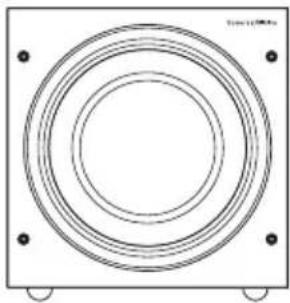
ASW608
Description Active closed-box subwoofer system
Drive unit 1x 200mm (8 in) paper/Kevlar cone long-throw
Frequency range -6dB at 23Hz and 25/140Hz adjustable (EQ at A)
Frequency response ±3dB 32Hz - 40/140Hz adjustable (EQ at A)
Bass extension -6dB at 23Hz (position A)
-6dB at 28Hz (position B)
-6dB at 36Hz (position C)
Amplifier Power output: 200W
Rated power
consumption: 40W / 0.5W standby
Input impedance: 33k Ω
Signal / noise: >90dB
Functions: Volume level - line in
Volume level - speaker in
Low-pass filter frequency
Low-pass filter bypass
Bass extension
Bass roll-off alignment
Auto sense on/standby
Phase switch
Inputs: Line in (RCA Phono)
Speaker in (Binding post)
12v trigger (3.5mm jack)
Low-pass filter Active 4th-order, variable cut-off frequency
Dimensions Height: 260mm (10.2 in) not including feet
Width: 260mm (10.2 in)
Depth: 330mm (13 in) including grille and controls
Net weight 8.85kg (19.5 lb)
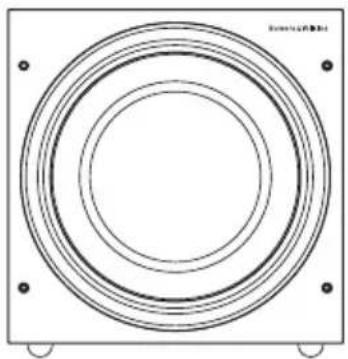
ASW610
Description Active closed-box subwoofer system
Drive unit 1x 0250mm (10 in) paper/Kevlar cone long-throw
Frequency range -6dB at 20Hz and 25/140Hz adjustable (EQ at A)
Frequency response ±3dB 27Hz - 40/140Hz adjustable (EQ at A)
Bass extension -6dB at 20Hz (position A)
-6dB at 25Hz (position B)
-6dB at 30Hz (position C)
Amplifier Power output: 200W
Rated power
consumption: 40W / 0.5W standby
Input impedance: 33k Ω
Signal / noise: >90dB
Functions: Volume level - line in
Volume level - speaker in
Low-pass filter frequency
Low-pass filter bypass
Bass extension
Bass roll-off alignment
Auto sense on/standby
Phase switch
Inputs: Line in (RCA Phono)
Speaker in (Binding post)
12v trigger (3.5mm jack)
Low-pass filter Active 4th-order, variable cut-off frequency
Dimensions Height: 310mm (12.2 in) not including feet
Width: 310mm (12.2 in)
Depth: 375mm (14.8 in) including grille and controls
Net weight 12.5kg (27.6 lb)
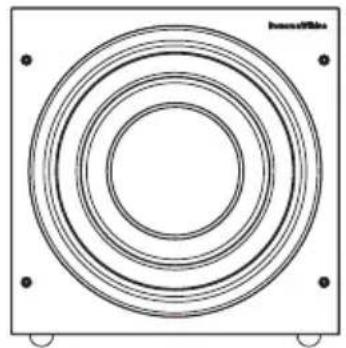
ASW610 XP
Description Active closed-box subwoofer system
Drive unit 0250mm (10 in) paper/Kevlar cone long-throw
Frequency range -6dB at 18Hz and 25/140Hz adjustable (EQ at A)
Frequency response ±3dB 25Hz- 40/140Hz adjustable (EQ at A)
Bass Extension -6dB at 18Hz (position A)
-6dB at 23Hz (position B)
-6dB at 28Hz (position C)
Amplifier Power output: 500W
Rated power
consumption: 94W
Standby: 0.8W
Idle (ON no signal) 11.8W
Input impedance: 33k
Signal / noise: >80dB
Functions: Input level (line in)
Input level (speaker in)
Low-pass filter frequency
Low-pass filter bypass
Bass extension
Bass roll-off alignment
Auto sense on/standby
Phase switch
Inputs: Line In (RCA Phono)
Speaker in (Binding post)
12v trigger (3.5mm jack)
Low-pass filter Active 4th-order, variable cut-off frequency
Dimensions Height: 325mm (12.2 in) not including feet
Width: 325 mm (12.2 in)
Depth: 374mm (14.7 in) including grille and controls
Net weight 15.5kg (34.4 lb)
Bowers & Wilkins
B&W Group Ltd
Dale Road
Worthing West Sussex
BN11 2BH England
T+44(0)1903221800
F +44 (0) 1903 221801
info@bwgroup.com
www.bowers-wilkins.com
B&W Group (UK Sales)
T+441903221500
Euksales@bwgroup.com
B&W Group North America
T+19786642870
E marketing@bwgroupusa.com
B&W Group Asia Ltd
T +852 2 869 9916
E info@bwgroup.hk
Kevlar is a registered trademark of DuPont.
Nautilus is a trademark of B&W Group Ltd.
Copyright © B&W Group Ltd. E&OE
Printed in China.

- François
- Important Safety Instructions
- CAUTION
- AVIS: RISQUE DE CHOC ELECTRIQUE - NE PAS OUVRIR
- WARNING: To reduce the risk of fire or electric shock, do not expose this apparatus to rain or moisture.
- Introduction
- Environmental Information
- Carton Contents
- Installation
- The Subwoofer Connection and Control Panel (Figure 1)
- Subwoofer Applications
- Subwoofer Positioning and Installation
- Using Multiple Subwoofoers
- Electrical Connections
- Application: Home Theatre
- Application: 2-channel audio
- Before Auditioning
- Switching On and Off
- Setting The Subwoofer Controls
- Home Theatre Settings
- 2-channel Audio Settings
- Fine-tuning
- Home Theatre
- 2-channel Audio
- All Applications
- Aftercare
- Limited Warranty
- Terms and Conditions
- How to claim repairs under warranty
- Epaoyc Tou subwoofer
- BVeDHeNc
- HnΦopMaunrno 3aunTe Okpykaoue Cpebl
- CopeKmOe ynaKOBKn
- HcTannna
- PanaheIb c opraHaMn ynpaBneHnna pa3bemAmn dIra nOdkJIoueHnca6ByΦepa (Pnc.1)
- PpmeHne ca6Byepa
- Pa3MeueHne n HcTaJIaIcna ca6Byepea
- IcnoJb3OBAHHe HeckoJIbKnx ca6BypepoB
- 3NeKtpnueckne coeHHeHHa
- Приимены: 2-kaHaJIbHaЯ aydnocntema
- Ipeep npOBepKo KaueCTBa 3ByuHaHn
- BkIIOyehne n BbIKIOyehne nTaHnA
- HactpoJa ca6Byepa c nomoubIO opraHOB ynpaBneHn
- HactpoynДЯДOMausheroTeaTpa
- B 2-kaHaJIbHOn aYdNIOscntEm
- Toyna HacTroponka DomaHn TeaTp
- 2-kaHaJIbHaaydnoocntema
- BoBceCxCnyuaX
- YxOa3ac6Byepom
- OrpaHnueHHa rapaHTna
- YcIOBnra rapaHTnn
- Kya o6paTntb8 3a rapaHTnHbIM OocnykubHem
- Česky
- Návod k použití
- DULEZITÁ BEZPECNOSTNÍ UPOZORNÉNÍ
- STANDARDS CONFORMITY
- NORTH AMERICA
- EU DECLARATION OF CONFORMITY
- ASW608, ASW610, ASW610XP
- ASW608
- ASW610
- ASW610 XP
- Bowers & Wilkins
Brand : B&W
Model : ASW610
Category : Subwoofer