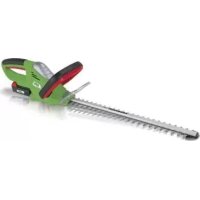
FAH 18 C4 - Hedge trimmers FLORABEST - Free user manual and instructions
Find the device manual for free FAH 18 C4 FLORABEST in PDF.



| Product type | Cordless hedge trimmer |
| Brand | Florabest |
| Model | FAH 18 C4 |
| Motor voltage | 18 V |
| Battery type | Li-Ion 18 V, 2.0 Ah |
| Charging time | approx. 3-5 h |
| No-load speed | 1300 min⁻¹ |
| Max. operating time | 45 min |
| Cutting length | approx. 520 mm |
| Blade length | approx. 580 mm |
| Tooth spacing | approx. 15 mm |
| Weight (with blade guard, without charger) | 2.70 kg |
| Sound pressure level (LₚA) | 77.5 dB(A) (K=3 dB) |
| Guaranteed sound power level (Lₜₐ) | 93 dB(A) |
| Front handle vibration | 1.964 m/s² (K=1.5 m/s²) |
| Rear handle vibration | 0.970 m/s² (K=1.5 m/s²) |
| Main features | Double-edged blade, 2-hand safety switch, quick-stop brake, protective guard |
| Package contents | Hedge trimmer, blade guard, battery, charger, user manual |
| Maintenance and cleaning | Clean blades after use, lubricate regularly, sharpen dull teeth |
| Safety | Wear eye/ear protection, gloves, fitted clothing; do not use in rain |
| Spare parts and repairability | Parts available via customer service (IAN number 273485) |
| Warranty | 3 years (subject to warranty conditions) |
Frequently Asked Questions - FAH 18 C4 FLORABEST
User questions about FAH 18 C4 FLORABEST
0 question about this device. Answer the ones you know or ask your own.
Ask a new question about this device
Download the instructions for your Hedge trimmers in PDF format for free! Find your manual FAH 18 C4 - FLORABEST and take your electronic device back in hand. On this page are published all the documents necessary for the use of your device. FAH 18 C4 by FLORABEST.
USER MANUAL FAH 18 C4 FLORABEST
Translation of the original instructions
NL
BE
ACCU-HEGGENSCHAAR
Before reading, unfold the page containing the illustrations and familiarise yourself with all functions of the device.
FR BE
GB/IE Translation of the original instructions Page 22
General Description. 23
Scope of delivery. 23
Function Description 23
Overview 23
Technical Data. 24
Notes on Safety 24
Symbols 24
General safety instructions for power tools 25
Special Safety Directions for the device 28
Correct handling of the battery charger 29
Charging the battery. 30
Removing/inserting the battery. 31
Recharging the battery. 31
Used batteries 31
Operating 31
Switching On and Off 32
Checking the battery charge level .... 32
Working with the Hedge Trimmer.....32
Cutting Techniques 32
Cleaning and Maintenance.....33
Cleaning. 33
Maintenance 33
Storage. 34
Waste Disposal and
Environmental Protection .34
Trouble Shooting 35
Spare Parts/Accessories 36
Guarantee 36
Repair Service. 37
Service-Center.37
Importer 37
Translation of the original EC declaration of conformity 132
Exploded Diagram 133
Introduction
Congratulations on the purchase of your new device. With it, you have chosen a high quality product. During production, this equipment has been checked for quality and subjected to a final inspection. The functionality of your equipment is therefore guaranteed. It cannot be ruled out that residual quantities of lubricants will remain on or in the equipment in isolated cases. This is not a fault or defect and it represents no cause for concern.

The operating instructions constitute part of this product. They contain important information on safety, use and disposal.
Before using the product, familiarise yourself with all of the operating and safety instructions. Use the product only as described and for the applications specified. Keep this manual safely and in the event that the product is passed on, hand over all documents to the third party.
Intended Use
The equipment is specified for use only for the cutting and trimming of hedges, bushes and ornamental shrubs in the domestic environment. Any other use that is not explicitly approved in these instructions may result in damage to the equipment and represent a serious danger to the user.
This equipment is not suitable for commercial use.
The equipment is designed for use by adults. Adolescents over the age of 16 may use the device only under supervision.
The operator or user is responsible for accidents or damage to other people or their property. The manufacturer is not liable for damages caused by unspecified use or incorrect operation.

Before use, check that the blades are sharp. Ensure that the blades are sharpened whenever blunt, in order to avoid overstressing of the machine. Damages caused by cutting with blunt blades are not covered by the guarantee.
General Description
See the front fold-out page for illustrations.
Scope of delivery
Carefully unpack the trimmer and check that it is complete. Dispose of the packaging material correctly.
Function Description
The cordless hedge trimmer features a high-quality knife made from special lasercut steel. When trimming, the cutting teeth move to and fro in a linear shearing motion. The strike guard at the tip of the knife prevents unpleasant kickback reactions when hitting walls, fences, etc. Operators are protected by the appliance's two-hand safety switch and quick-stop brake function. The hand protection guards your hands against twigs and branches. Read the sections below to learn more about each operating element's function.
Overview
A
1 Strike guard
2 Safety knife bar
3 Hand protection
4 Safety switch
5 Front handle
6 Ventilation slots
7 On/Off switch
8 Rear handle
9 Battery
10 Battery release buttons
11 Battery charge state indicator (LED)
12 Battery charger
13 Knife guard
13a Suspension blade guard
B
14 Guide track
E
15 Button for state of charge display
Technical Data
Appliance . FAH 18 C4
Motor voltage. 18V = .2.0 Ah Idling speed. 1300 min-1 (rpm) Runtime.max.45 min* Cutting length.. appr.520 mm Length of knife.. appr.580 mm Max. cutting capacity.. appr.15 mm Weight (with blade guard, without battery charger).2.7 kg Sound pressure level (L_pA) .77.5 dB(A), K_pA = 3 dB Sound power level (L_WA) guaranteed .93 dB(A) measured.91 dB(A); K_WA = 2.09 dB Vibration (a_h) Rear handle .. 0.970~m / s^2 K = 1.5m / s^2 Front handle... 1.964~m / s^2 K = 1.5m / s^2
Battery (Li-Ion) ... MOCA-V18-2.0Ah
Nominal voltage. 18 V = Capacity. 2.0 Ah Charging time approx. 3-5 h
Recharger......JLH122100470G
Nominal consumption. 15 W
Voltage input. 100-240 V~, 50-60 Hz
Voltage output. 21 V=; 470 mA
Protection class. ☑ II
Protection category. IP20
- The actual runtime under load of a fully charged battery depends on how you work and on the load put on the trimmer during operation.
Noise and vibration values have been determined according to the standards and regulations mentioned in the declaration of conformity.
Technical and optical changes may be undertaken in the course of further development without notice. All dimensions, references and information in this instruction manual are therefore not guaranteed. Legal claims made on the basis of the instruction
manual can therefore not be considered as valid.
The stated vibration emission value was measured in accordance with a standard testing procedure and may be used to compare one power tool to another.
The stated vibration emission value may also be used for a preliminary exposure assessment.

Warning:
vibration emission value may differ during actual use of the power tool from the stated value depending on the manner in which the power tool is used.
Safety precautions aimed at protecting the user should be based on estimated exposure under actual usage conditions (all parts of the operating cycle are to be considered, including, for example, times during which the power tool is turned off and times when the tool is turned on but is running idle).
Notes on Safety
This section details the basic safety instructions for working with the appliance.
Symbols
Symbols in the manual

Warning symbols with information on damage and injury prevention.

Instruction symbols (the instruction is explained at the place of the exclamation mark) with information on preventing damage.

Help symbols with information on improving tool handling.
Symbols on the Equipment

Caution!

Read through the instruction manual carefully.

Wear eye and ear protection.

Do not use the hedge trimmer in the rain or on wet hedges.

Information of the acoustic power level L_WA in dB.
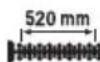
Cutting length

Cutting capacity
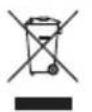
Electrical appliances must not be disposed of with the domestic waste.
Symbols on the battery
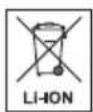


Do not dispose of batteries in household waste, fire or water.

Do not subject the battery to strong sunlight over long periods and do not leave it on a heater (max. 45^ ).

Take batteries to an old battery collection point where they will be recycled in an environmentally friendly manner.
Symbols on the recharger

WARNING!

Before using for the first time, carefully read through the user manual

The recharger is for indoor use only.

Protection class II
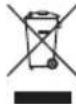
Electrical appliances must not be disposed of with the domestic waste.
General safety instructions for power tools

WARNING! Read all safety directions and instructions.
Omissions in the compliance with safety directions and instructions can cause electrical shock, fire and/or severe injuries.
Retain all safety directions and instructions for future use.
The term "power tool" in the warnings refers to your mains-operated (corded) power tool or battery-operated (cordless) power tool.
1) WORK AREA SAFETY
-
Keep work area clean and well lit. Cluttered or dark areas invite accidents.
-
Do not operate power tools in explosive atmospheres, such as in the presence of flammable liquids, gases or dust. Power tools create sparks which may ignite the dust or fumes.
GBIE
- Keep children and bystanders away while operating a power tool. Distractions can cause you to lose control.
2) ELECTRICAL SAFETY
- Power tool plugs must match the outlet. Never modify the plug in any way. Do not use any adapter plugs with earthed (grounded) power tools. Unmodified plugs and matching outlets will reduce risk of electric shock.
- Avoid body contact with earthed or grounded surfaces, such as pipes, radiators, ranges and refrigerators. There is an increased risk of electric shock if your body is earthed or grounded.
- Do not expose power tools to rain or wet conditions. Water entering a power tool will increase the risk of electric shock.
- Do not abuse the cord. Never use the cord for carrying, pulling or unplugging the power tool. Keep cord away from heat, oil, sharp edges or moving parts. Damaged or entangled cords increase the risk of electric shock.
- When operating a power tool outdoors, use an extension cord suitable for outdoor use. Use of a cord suitable for outdoor use reduces the risk of electric shock.
- If operating a power tool in a damp location is unavoidable, use a residual current device (RCD) protected supply. Use of an RCD reduces the risk of electric shock.
3) PERSONAL SAFETY
- Stay alert, watch what you are doing and use common sense when operating a power tool. Do not use a power tool while you are tired or under the influence of drugs, alcohol or medication. A moment of inattention white operating power tools may result in serious personal injury.
- Use personal protective equipment. Always wear eye protection. Protective equipment such as dust mask, non-skid safety shoes, hard hat, or hearing protection used for appropriate conditions will reduce personal injuries.
- Prevent unintentional starting. Ensure the switch is in the off-position before connecting to power source and/or battery pack, picking up or carrying the tool. Carrying power tools with your finger on the switch or energising power tools that have the switch on invites accidents.
- Remove any adjusting key or wrench before turning the power tool on. A wrench or a key left attached to a rotating part of the power tool may result in personal injury.
- Do not overreach. Keep proper footing and balance at all times. This enables better control of the power tool in unexpected situations.
- Dress properly. Do not wear loose clothing or jewellery. Keep your hair, clothing and gloves away from moving parts. Loose clothes, jewellery or long hair can be caught in moving parts.
If devices are provided for the connection of dust extraction
and collection facilities, ensure these are connected and properly used. Use of dust collection can reduce dust-related hazards.
4) POWER TOOL USE AND CARE
-
Do not force the power tool. Use the correct power tool for your application. The correct power tool will do the job better and safer at the rate for which it was designed.
-
Do not use the power tool if the switch does not turn it on and off. Any power tool that cannot be controlled with the switch is dangerous and must be repaired.
-
Disconnect the plug from the power source and/or the battery pack from the power tool before making any adjustments, changing accessories, or storing power tools. Such preventive safety measures reduce the risk of starting the power tool accidentally.
-
Store idle power tools out of the reach of children and do not allow persons unfamiliar with the power tool or these instructions to operate the power tool. Power tools are dangerous in the hands of untrained users.
-
Maintain power tools. Check for misalignment or binding of moving parts, breakage of parts and any other condition that may affect the power tool's operation. If damaged, have the power tool repaired before use. Many accidents are caused by poorly maintained power tools.
-
Keep cutting tools sharp and clean. Properly maintained cutting tools with sharp cutting edges are less
likely to bind and are easier to control.
- Use the power tool, accessories and tool bits etc. in accordance with these instructions, taking into account the working conditions and the work to be performed. Use of the power tool for operations different from those intended could result in a hazardous situation.
5) CAREFUL HANDLING AND USE OF BATTERY DEVICES
- Charge the batteries only in chargers that are recommended by the manufacturer. Risk of fire if a charger that is suitable for a specific type of battery is used with other batteries.
- In the power tools, use only the batteries designed for the purpose. The use of other batteries may result in injuries and risk of fire.
- Keep the unused battery away from paper clips, coins, keys, nails, screws and other small metal objects, which could cause bridging of the contacts. A short circuit between the battery contacts may cause burns or fire.
- If used incorrectly, liquid may leak from the battery. Avoid contact with this. In the event of accidental contact, rinse off with water. If the liquid gets into eyes, seek medical assistance. Leaking battery fluid may cause skin irritations or burns.
6) SERVICE
- Have your power tool serviced by a qualified repair person using only identical replacement parts. This will ensure that the safety of the power tool is maintained.
Special Safety Directions for the device
1) SPECIAL SAFETY DIRECTIONS FOR HEDGE TRIMMERS
- Keep all parts of the body away from the cutter blade. Do not remove cut material or hold material to be cut when blades are moving. Make sure the switch is off when clearing jammed material. A moment of inattention while operating the hedge trimmer may result in serious personal injury.
- Carry the hedge trimmer by the handle with the cutter blade stopped. When transporting or storing the hedge trimmer always fit the blade guard. Proper handling of the hedge trimmer will reduce possible personal injury from the cutter blades.
- Hold the power tool only on the insulated handle surfaces, as the cutting blade may come into contact with concealed power cables. Contact between the cutting blade and a live cable may render metallic components live and result in an electric shock.
- Keep cable away from cutting area. During operation the cable may be hidden in shrubs and can be accidentally cut by the blade.
- Before the work, search the hedge for concealed objects, e.g. cable etc. In this way you avoid damage to the appliance
- Hold the hedge trimmer correctly, e.g. with both hands on the handles, if there are two handles. Loss of control of the equip
ment may result in injuries.
- Wear suitable clothing and work clothes when working with the equipment. Do not hold the equipment by the cutting blade or lift it on the cutting blade. Contact with the cutting blade can cause injuries.
2) FURTHER SAFETY DIRECTIONS

For your personal safety:
or suitable work clothes such

as boots with non-slip soles, sturdy long trousers, gloves and goggles.
Do not wear long flowing clothing or jewellery, as this may be caught by moving parts. Do not use this tool while walking barefooted or while wearing open sandals.
- The appliance is designed for trimming hedges. Do not use to cut twigs, hard wood or other objects. This could damage the appliance.
- Do not attempt to dislodge a blocked/trapped blade before switching the tool off. There is a risk of injury.
- When operating the appliance, always hold it well with both hands and at some distance away from your body. This enables better control of the power tool in unexpected situations.
- Do not use the tool in the vicinity of flammable liquids or gasses. Fire- and explosion risk exist in the event of a short circuit.
- The blades have to be checked for wear in regular intervals and re-sharpened. Blunt blades will
overload the machine. Resulting damages are not covered by warranty.
- Do not attempt to repair the tool yourself, unless you are schooled in this field. All works, which are not described in this manual, may only be performed by our Service-Centre. Many accidents are caused by poorly maintained equipment.
3) SPECIAL SAFETY DIRECTIONS FOR BATTERY-OPERATED TOOLS
-
Ensure that the device is switched off before inserting the battery. Inserting a battery into a power tool that is switched on may result in accidents.
-
Recharge the batteries indoors only because the battery charger is designed for indoor use only. Risk of electric shock.
To reduce the electric shock hazard, unplug the battery charger from the mains before cleaning the charger.
-
Do not subject the battery to strong sunlight over long periods and do not leave it on a heater. Heat damages the battery and there is a risk of explosion.
-
Allow a hot battery to cool before charging.
-
Do not open up the battery and avoid mechanical damage to the battery. Risk of short circuit and fumes may be emitted that irritate the respiratory tract. Ensure fresh air and seek medical assistance in the event of discomfort.
-
Do not use non-rechargeable batteries. This could damage the appliance.
4) RESIDUAL RISKS
Even if properly operating and handling this electric tool, some residual risks will remain. Due to its construction and build, this electric tool may present the following hazards:
a) Cuts
b) Ear damage if working without ear protection.
c) Damage to your health caused by swinging your hands and arms when operating the appliance for longer periods of time or if the unit is not held or maintained properly.

Warning! During operation, this electric tool generates an electromagnetic field which, under certain circumstances, may impair the functionality of active or passive medical implants. To reduce the risk of serious or lethal injuries, we recommend that persons with medical implants consult their doctor and the manufacturer of their medical implant before operating the machine.
Correct handling of the battery charger
- This appliance can be used by children aged from 8 years and above and persons with reduced physical, sensory or mental capabilities or lack of experience and knowledge if they have been given supervision or instruction concerning use of the appliance in a safe way and understand the hazards involved. Children shall not play with the appliance. Cleaning and user maintenance shall not be made by children without supervision.
GBIE
- To charge the battery, use only the charger supplied. Risk of fire and explosion. This ensures that the safety of the device is maintained.
- Before each use, check the charger, cable and plug and have them repaired by qualified professionals and only with original parts. Do not use a defective charger and do not open it up yourself. This ensures that the safety of the device is maintained.
- Connect the charger only to a socket with an earth. Ensure that the mains voltage matches the specifications on the charger rating plate. Risk of electric shock.
- Disconnect the charger from the mains before closing or opening connection to the battery / power tool / device. This ensures that the battery and charger are not damaged.
- Keep the charger clean and away from wet and rain. Do not use the charger outdoors. Dirt and the entry of water increase the risk of electric shock.
- Operate the charger only with the appropriate original batteries. Charging other batteries may result in injuries and risk of fire.
- Avoid mechanical damage to the charger. This can result in internal short circuits.
- Do not operate the charger on a combustible surface (e.g. paper, textiles). Risk of fire due to heating during charging.
-
If the power cable for this equipment is damaged, it must be replaced by the manufacturer, a customer service agent of the same or a similarly qualified person in order to prevent hazards.
-
The battery of the appliance is not fully charged at the time of delivery. It therefore needs to be fully recharged before you use it for the first time. For the first recharge cycle we recommend that you charge the battery for about 3-5 hour. Slot the battery into the base and plug the battery charger into a mains outlet.
- When the battery is fully charged, unplug the charger from the mains and from the appliance.
- Do not charge the battery continuously. Repeatedly charging small capacities may damage the battery cells.
Charging the battery

Do not expose the battery to extreme conditions such as heat or impact. Risk of injury from escaping electrolytic solution! After eye/skin contact, rinse the affected areas with water or a neutraliser and consult a doctor.

Charge the battery in a dry room only. Prior to attaching the charger, check that the battery's outer surface is clean and dry. There is a risk of injury due to electric shock.
- Charge the battery before the first time of use. Do not briefly charge the battery several time in a row.
- Please use the charging device supplied to charge up the device.
- If a fully recharged battery lasts for considerably shorter operating times, the battery is used up and needs to be replaced. Only use an OEM spare battery available from our Customer Service.
Always take heed of the applicable safety instructions as well as the environmental protection regulations and information.
- The warranty excludes all defects caused by improper handling.
Removing/inserting the battery

-
To remove the battery (9) from the appliance, press the release button (10) on the battery and pull out the battery.
-
To insert the battery (9), place it on the guide track (14) and push it back into the appliance. It will audibly snap in.
Recharging the battery

Recharge the battery when the last charge state indicator LED (E 11) changes from green to red.

-
Remove the battery (9) from the appliance, as necessary.
-
Insert the battery (9) in the charging compartment of the battery charger (12). It will audiably snap in.
-
Plug the battery charger (12) into a mains outlet. An LED charge status indicator (E 11) of the battery (9) flashes green while charging. For each section of the battery that is already charged, a green LED lights up. When all three LEDs of the charge status indicator light up in green, the battery is fully charged.
-
When the battery is fully re-charged unplug the battery charge
er (12) from the mains.
- Press the release button ( A 10) on the battery (9) and pull the battery out of the battery charger (12).
Used batteries
If a fully recharged battery lasts for considerably shorter operating times, the battery is used up and needs to be replaced. Only use an OEM battery pack replacement available from our Customer Service.
Always take heed of the applicable safety instructions as well as the environmental protection regulations and information (see "Waste Disposal and Environmental Protection").
Operating

Wear suitable clothing and work gloves when working with the equipment. Wear eye and ear protection. Ensure that the equipment is functional before each use. The On/Off switch and the safety switch must not be held closed. They must switch off the motor when on is released. Should a switch be damaged, stop working with the equipment. Ensure that the mains voltage value matches the label on the equipment. Reduce the risk of injuries and accidents by wearing personal protection equipment and ensuring that the unit is fully functional.

Note noise protection and local specifications.

Switching On and Off

Ensure that you are standing in a firm position with both hands gripping the hedge trimmer away from the body. Ensure that the trimmer is in contact with no other objects before switching on.
Removing the blade guard:
- Press the blade guard (A 13) at the points marked press and remove it.
Turning on:
(see "Removing/inserting the battery").
- Press the safety switch (4) at the front handle (5).
- Press the On/Off switch (7). The hedge trimmer will run at top speed.
Turning off:
- Release the safety switch (4) or the On/Off switch s (7).
Checking the battery charge level
The battery's (9) charge level is indicated by the charge state indicator (11).

Press the button for state of charge display (15) on the battery (9).
The LEDs indicate the battery's charge level.

Recharge the battery when the last charge state indicator LED (11) changes from green to red.
Working with the Hedge Trimmer

During cutting work, ensure that no contact is made with objects, e.g. such as wire fencing or main plant stems. This may result in damage to the cutter bar.
- If the blades become jammed with solid objects, turn the device off immediately and remove the rechargeable battery. Only then should you remove the object.
- Avoid overstraining the equipment during work.
Cutting Techniques
- Cut thick branches beforehand using a branch clippers.
- The double-sided cutter bar enables cutting in both directions or, with a swinging action, from one side to the other.
In case of vertical cutting, move the hedge trimmer uniformly forward or up and down in an arc movement.
In case of horizontal cutting, move the hedge trimmer in a sickle-shaped movement to the edge of the hedge, so that cut branches fall to the ground.
In order to achieve long straight lines, the placing of tensioned guiding cords is recommended.
Cutting Shaped Hedges:
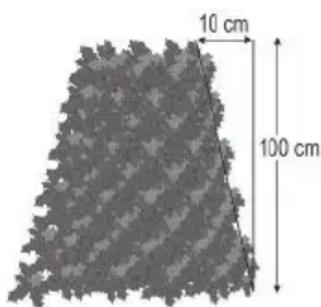
It is recommended that hedges be cut in a trapezoidal shape, in order to prevent stripping off of the lower branches. This corresponds to the natural plant
growth and allows the hedge to thrive optimally. During cutting, only the new annual growths are reduced and thus a dense branching and a good screen will develop.
- Cut the sides of a hedge first. To do this, move the hedge trimmer in the direction of growth from bottom to top. If you cut down from the top, the thinner branches will move out, which may result in some areas having sparse growth or holes.
- Cut the top edge, according to taste, in a flat shape, roof shape or rounded shape
- Trim young plants to the required shape. The main growth should remain undamaged until the hedge has reached the planned height. All other shoots are lopped off to half size.
Care of Free-Growing Hedges:
Free-growing hedges are not shaped when cut, although they must be regularly maintained so the hedge does not become too high.
Cleaning and Maintenance

Repair and servicing work not described in this manual should always be carried by our Service Centre. Use only original parts.

Turn off the appliance and, before doing any servicing, remove the battery.

Wear gloves when handling the safety knife bar. This will protect you against cuts.
The following cleaning and servicing should be done regularly. This will ensure a long and reliable service life.
Cleaning

Do not spray the appliance with water and do not immerse it in water. Electric shock hazard!
- Keep clean the ventilation slots, motor housing and handles of the appliance. Use a damp cloth or a brush.
- Do not use cleaning agents or solvents. You may otherwise irreparably damage the appliance.
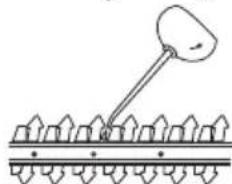
Always keep the equipment clean. After using the equipment, it is imperative to: - Clean the blade (with an oily cloth);
- Oil the blade shaft with an oil can or spray.
Maintenance
- Prior to every use, check the appliance for obvious defects such as loose, worn or damaged parts. Check that the screws in the safety knife bar (A 2) are tight.
- Check covers and safety devices (see A) for damages and correct installation. Replace as necessary.
- You can smoothen minor nudges in the cutting teeth yourself using a knife grinder to sharpen the cutting edges. The trimmer will only cut well if the teeth are sharp.
- Blunt, bent or damaged knife bars to be replaced.
Storage
- Keep the device in the blade guard (A 15) supplied, dry and out of reach of children.
- You can hang the device up vertically on the suspension device (A 13a) on the blade guard (A 13). Please attach two hooks or screws to the wall for this purpose.
- Remove the battery before storing the unit for longer periods of time (e.g. hibernation).
- Store the battery only in a partially charged state. The state of charge should be 40 - 60% over a longer storage period (two LED lights of the charge status indicator (A 11) light up in green).
- During a longer storage period, check the state of charge of the battery and recharge if necessary roughly every 3 months.
- In order to keep the battery well charged, avoid exposing the appliance to extreme heat or cold in storage.
- Store the equipment between 10^ and 25^ . During storage, avoid extreme cold or heat so the battery does not lose power.
Waste Disposal and Environmental Protection
Remove the battery from the device and take the device, battery, accessories and packaging for environmentally friendly recycling.
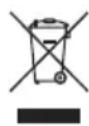
Machines do not belong with domestic waste.
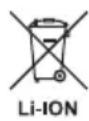
Do not dispose of batteries in household waste, fire (risk of explosion) or water. Damaged batteries may damage the environment and your health if toxic fumes or liquids leak out.
- Return the unit to a recycling centre.
- Dispose of batteries in discharged condition. We recommend covering the pole with adhesive tape to prevent a short circuit. Do not open up the battery.
- Dispose of batteries in accordance with the local regulations. Take batteries to an old battery collection point where they will be recycled in an environmentally friendly manner. For information about this, ask your local waste management company or our service centre.
- Throw the cut grass on the compost. Do not throw it in the normal household waste.
Trouble Shooting
| Problem Possible | ble cause Corrective action | |
| Appliance won't start | Battery (A 9) discharged Redcharge battery (see „Charging“) | |
| Battery (A 9) not inserted Insert battery (see „Operation“) | ||
| Safety switch (A 4) not pressed properly | Turn on (see "Operation") | |
| On/Off switch (A 7) defective | Send in to Service Centre for repair | |
| Intermittent operation | Internal loose contact | Send in to Service Centre for repair |
| On/Off switch (A 7) defective | ||
| Knife bar becomes hot | Knife bar (A 2) is blunt | Have the Knife bar sharpened or replaced (Service Centre) |
| Knife bar (A 2) is notched | Have the Knife bar checked or replaced (Service Centre) | |
| Too much friction due to lack of lubrication | Oil the knife bar (A 2) | |
| Bad trim | Too much friction due to missing lubrication | Lubricate knife bar (A 2) |
| Knife bar (A 2) dirty Clean knife bar | ||
| Knife bar (A 2) blunt | Grind or have knife bar replaced (Service Centre) | |
| Bad cutting technique | See ("Working with the hedge trimmer") | |
| Battery (A 9) not fully charged | Recharge battery (see "Charging") |
Spare Parts/Accessories
Spare parts and accessories can be obtained at www.grizzly-service.eu
If you do not have internet access, please contact the Service Centre via telephone (see "Service-Center" Page 37). Please have the order number mentioned below ready.
Position Position Description Order No.
instruction exploded
manual drawing
A3 SET 11 Hand protection 91100530
A 4+5 SET 35 Front handle 91100557
A 934 Battery 18 V 80001160
A 12 SET 33 Battery charger EU 80001088
A 13 25 Knife guard 91100544
Guarantee
Dear Customer,
This equipment is provided with a 3-year guarantee from the date of purchase.
In case of defects, you have statutory rights against the seller of the product. These statutory rights are not restricted by our guarantee presented below.
Terms of Guarantee
The term of the guarantee begins on the date of purchase. Please retain the original receipt. This document is required as proof of purchase.
If a material or manufacturing defect occurs within three years of the date of purchase of this product, we will repair or replace - at our choice - the product for you free of charge. This guarantee requires the defective equipment and proof of purchase to be presented within the three-year period with a brief written description of what constitutes the defect and when it occurred.
If the defect is covered by our guarantee, you will receive either the repaired product
or a new product. No new guarantee period begins on repair or replacement of the product.
Guarantee Period and Statutory Claims for Defects
The guarantee period is not extended by the guarantee service. This also applies for replaced or repaired parts. Any damages and defects already present at the time of purchase must be reported immediately after unpacking. Repairs arising after expiry of the guarantee period are chargeable.
Guarantee Cover
The equipment has been carefully produced in accordance with strict quality guidelines and conscientiously checked prior to delivery.
The guarantee applies for all material and manufacturing defects. This guarantee does not extend to cover product parts that are subject to normal wear and may therefore be considered as wearing parts (e.g. knives, battery and gear wheel) or to cover damage to breakable parts (e.g. switches). This guarantee shall be invalid if the prod
uct has been damaged, used incorrectly or not maintained. Precise adherence to all of the instructions specified in the operating manual is required for proper use of the product. Intended uses and actions against which the operating manual advises or warns must be categorically avoided. The product is designed only for private and not commercial use. The guarantee will be invalidated in case of misuse or improper handling, use of force, or interventions not undertaken by our authorised service branch.
Processing in Case of Guarantee
To ensure quick handling of you issue, please follow the following directions:
-
Please have the receipt and identification number (IAN 273485) ready as proof of purchase for all enquiries.
-
Please find the item number on the rating plate.
-
Should functional errors or other defects occur, please initially contact the service department specified below by telephone or by e-mail. You will then receive further information on the processing of your complaint.
-
After consultation with our customer service, a product recorded as defective can be sent postage paid to the service address communicated to you, with the proof of purchase (receipt) and specification of what constitutes the defect and when it occurred. In order to avoid acceptance problems and additional costs, please be sure to use only the address communicated to you. Ensure that the consignment is not sent carriage forward or by bulky goods, express or other special freight. Please send the equipment inc. all accessories supplied at the time of purchase and ensure adequate, safe transport packaging.
Repair Service
For a charge, repairs not covered by the guarantee can be carried out by our service branch, which will be happy to issue a cost estimate for you.
We can handle only equipment that has been sent with adequate packaging and postage.
Attention: Please send your equipment to our service branch in clean condition and with an indication of the defect.
Equipment sent carriage forward or by bulky goods, express or other special freight will not be accepted.
We will dispose of your defective devices free of charge when you send them to us.
Service-Center
CB Service Great Britain
Tel.: 0871 5000 720
(£ 0.10/Min.)
E-Mail: grizzlyl@lidl.co.uk
IAN 273485
IE Service Ireland
Tel.: 1890 930 034
(0,08 EUR/Min., (peak))
(0,06 EUR/Min., (off peak))
E-Mail: grizzlyy@lidl.ie
IAN 273485
Importer
Please note that the following address is not a service address. Please initially contact the service centre specified above.
Tirar/colocar o accumulator 120
Carregar bateria. 120
Tirar/colocar o accumulator

** The last two digits of the year in which the CE marking was affixed.