CF80 - Fridge WAECO - Free user manual and instructions
Find the device manual for free CF80 WAECO in PDF.


| Product type | Compression cooler |
| Brand | WAECO |
| Model | CF80 |
| Dimensions (W x H x D) | 790 x 455 x 500 mm |
| Weight | 34 kg |
| Power supply | 12/24 V=== and 100-240 V~ |
| Power consumption | 110 kWh/year |
| Cooling range | +10°C to -18°C (+50°F to 0°F) |
| Gross / net capacity | 80 L / 79 L |
| Climate class | N, ST, T (ambient temperature +16°C to +43°C) |
| Noise emissions | 46 dB(A) |
| Refrigerant | R-134a |
| Main functions | Turbo mode, 3-level battery protector, temperature display, removable handles, reversible lid hinge |
| Protections | Reverse polarity protection, short-circuit protection, 15 A fuse |
| Maintenance and cleaning | Clean inside and outside with a damp cloth; do not immerse |
| Defrosting | Manual: turn off, open, wipe off water |
| Spare parts and repairability | Fuse T2.5AL 250V, incandescent lamp; repairs by authorized service center |
| Safety | Residual-current circuit breaker required on boats; do not use hard tools to defrost |
| Delivery contents | Cooler, 12/24 V and 100-240 V cables, handles, manual |
Frequently Asked Questions - CF80 WAECO
Do not immerse in water.
Never use hard or sharp tools to remove the ice.
User questions about CF80 WAECO
0 question about this device. Answer the ones you know or ask your own.
Ask a new question about this device
Download the instructions for your Fridge in PDF format for free! Find your manual CF80 - WAECO and take your electronic device back in hand. On this page are published all the documents necessary for the use of your device. CF80 by WAECO.
USER MANUAL CF80 WAECO
natural_image
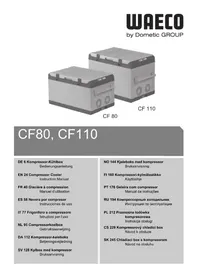
Two gray and black electronic devices labeled CF 80 and CF 110, with fan blades visible (no text or symbols on the devices themselves)CF80, CF110
line
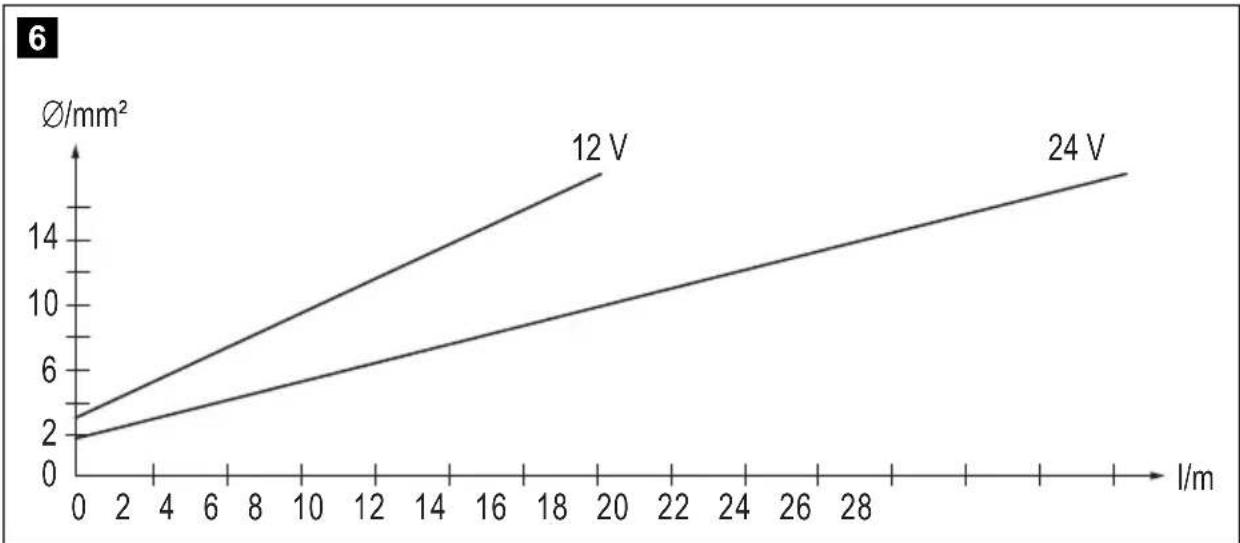
| I/m | 12 V (Ø/mm²) | 24 V (Ø/mm²) | | --- | ------------ | ------------ | | 0 | 2 | 2 | | 20 | 15 | 10 | | 28 | - | 15 |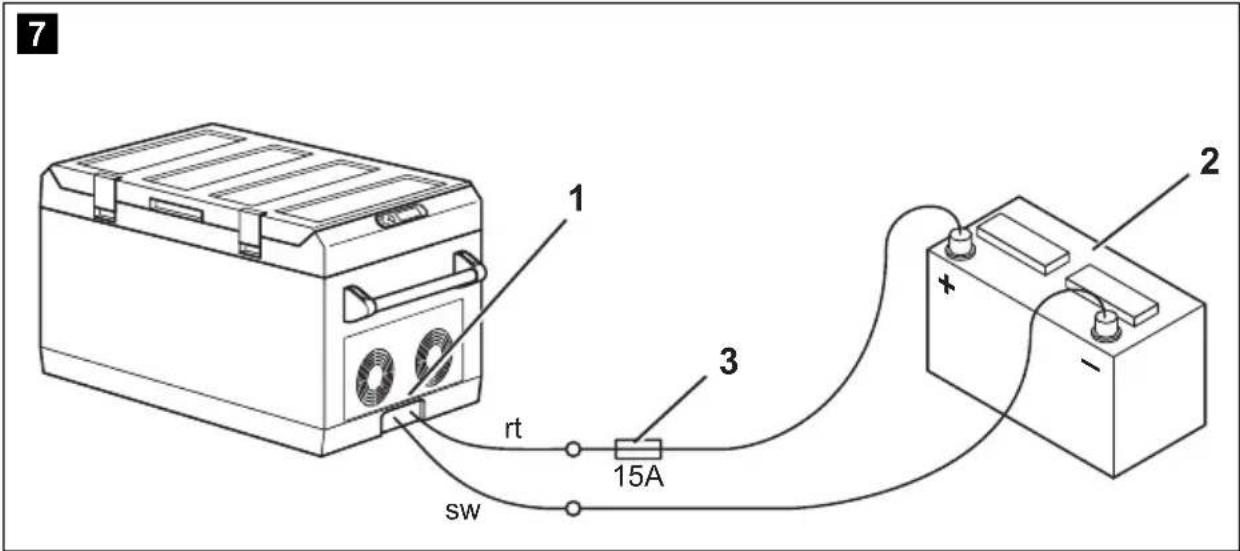
Please read this operating manual carefully before starting the device. Keep it in a safe place for future reference. If the device is passed on to another person, this operating manual must be handed over to the user along with it.
The manufacturer cannot be held liable for damage resulting from improper usage or incorrect operation.
Contents
1 Explanation of symbols....25
2 Safety instructions....25
2.1 General safety 25
2.2 Operating the device safely 27
3 Scope of delivery....28
4 Intended use....28
5 Function description 28
5.1 Operating and display elements 29
5.2 Connections 30
6 Operation 30
6.1 Before initial use 30
6.2 Energy saving tips 31
6.3 Connecting the cooler 31
6.4 Using the battery monitor 33
6.5 Using the cooler 34
6.6 Setting the temperature 35
6.7 Switching off the cooler 36
6.8 Defrosting the cooler 36
6.9 Replacing the device fuse 36
6.10 Replacing the light bulb 37
7 Cleaning and maintenance 37
8 Guarantee....37
9 Troubleshooting....38
10 Disposal 38
11 Technical data .... 39
1 Explanation of symbols

DANGER!
Safety instruction: Failure to observe this instruction will cause fatal or serious injury.

WARNING!
Safety instruction: Failure to observe this instruction can cause fatal or serious injury.

CAUTION!
Safety instruction: Failure to observe this instruction can lead to injury.

NOTICE!
Failure to observe this instruction can cause material damage and impair the function of the product.

NOTE
Supplementary information for operating the product.
▶ Action: This symbol indicates that action is required on your part. The required action is described step-by-step.
√This symbol describes the result of an action.
fig. 1 5, page 3: This refers to an element in an illustration. In this case, item 5 in figure 1 on page 3.
2 Safety instructions
2.1 General safety

DANGER!
- On boats: If the appliance is powered by the mains, ensure that the power supply has a residual current circuit breaker.

WARNING!
- Do not operate the device if it is visibly damaged.
- This device may only be repaired by qualified personnel. Improper repairs can lead to considerable hazards.
- Persons (including children) whose physical, sensory or mental capacities or whose lack of experience or knowledge prevent them from using this product safely should not operate it without the supervision or instruction of a responsible person.
● Electrical devices are not toys.
Always keep and use the device out of the reach of children.
● Children must be supervised to ensure that they do not play with the device. - If this device's power cable is damaged, it must be replaced by the manufacturer, customer service or a similarly qualified person in order to prevent safety hazards.
- Do not store any explosive substances such as spray cans with propellants in the device.

CAUTION!
- Disconnect the device from the mains
– before cleaning and maintenance - a f t e r u s e
- Food may only be stored in its original packaging or in suitable containers.

NOTICE!
● Only connect the device as follows:
- With the DC cable to a DC plug socket in the vehicle (e. g. cigarette lighter)
- Or with the 230 V connection cable to the 230 V AC mains supply
- Check that the voltage specification on the type plate corresponds to that of the energy supply.
- The cooling device is not suitable for transporting caustic materials or materials containing solvents.
● Never pull the plug out of the socket by the cable.
- If the cooler is connected to the DC socket: Disconnect the cooler and other power consuming devices from the battery before connecting the quick charging device.
- If the cooler is connected to the DC socket: Disconnect the cooler or switch it off when you turn off the engine. Otherwise you may discharge the battery.
2.2 Operating the device safely

DANGER!
- Do not touch exposed cables with your bare hands. This especially applies when operating the device with an AC mains power supply.

CAUTION!
- Before starting the device, ensure that the power supply line and the plug are dry.

NOTICE!
- Do not use electrical devices inside the cooler unless they are recommended by the manufacturer for the purpose.
- Do not place the device near naked flames or other heat sources (heaters, direct sunlight, gas ovens etc.).
● Danger of overheating!
Ensure at all times that there is sufficient ventilation so that the heat that arises during operation does not build up. Make sure that the device is sufficiently far away from walls and other objects so that the air can circulate.
● Ensure that the ventilation slots are not covered.
- Do not fill the inner container with ice or fluid.
● Never immerse the device in water.
● Protect the device and the cable against heat and moisture.
3 Scope of delivery
fig. 1, page 3, shows the scope of delivery.
| Item Quantity Description | |||||
| 1 | 1 | C | o | o | I e |
| 2 | 1 | Connection cable for 12/24 V--- connection | |||
| 3 1 Connection cable for 100–240 V~ connection | |||||
| 4 2 Carrying handle, consisting of:– 2 holders– 1 handle– 4 fastening screws | |||||
| – 1 Operating manual | |||||
4 Intended use

The cooler is suitable for cooling and freezing foods. The device is also suitable for use on boats.

The appliance is designed for use with a 12 V--- or 24 V--- battery in a car, boat or caravan, or on a 100–240-V\~ mains supply.

CAUTION! Health hazard!
Please check if the cooling capacity of the device is suitable for storing the food or medicine you wish to cool.
5 Function description
The cooler can chill products, keep them cool as well as freeze them. A maintenance-free refrigerant circuit with compressor provides the cooling. The extra strong insulation and powerful compressor ensure especially fast cooling.
The cooler is designed for mobile use and can be carried by two detachable handles.
When used on boats, the cooler can be withstand a constant heel (inclination) of 30^ .
Scope of functions:
● Power pack with priority circuit for connecting to the AC mains
● 3-level battery monitor for protecting the vehicle battery
● Programmed turbo mode for rapid cooling
● Display with temperature gauge switches off automatically at low battery voltage
● Temperature adjustment (with two buttons in steps of 1 °C (2 °F)
- Detachable carrying handles
5.1 Operating and display elements
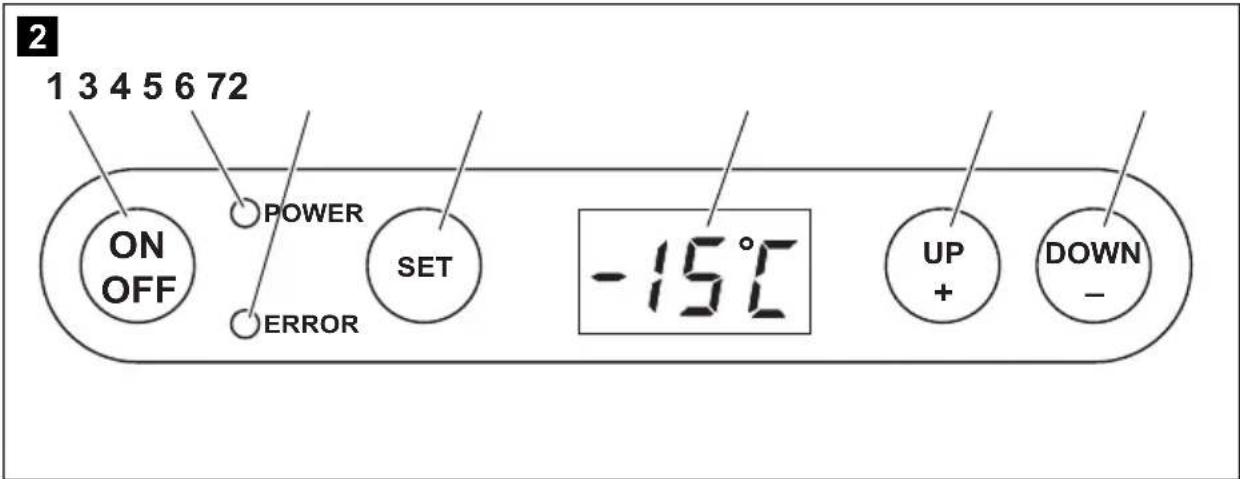
Operating panel (fig. 2, page 3)
Item Description Explanation
| 1 ON OFF | Switches the cooler on or off when the button is pressed for between one and two seconds | |
| 2 POWER Status indication | ||
| LED lights up green: | Compressor is on | |
| LED lights up orange: | Compressor is off | |
| LED flashes orange: | display switched off automatically due to low battery voltage | |
| 3 ERROR LED flashes red: Device is switched on but not ready for operation | ||
| 4 SET Selects the input mode– Temperature setting– Celsius or Fahrenheit display– Set battery monitor | ||
| 5 – Display, shows the information | ||
| 6 UP + | Press once to increase the value | |
| 7 DOWN – | Press once to decrease the value | |
5.2 Connections
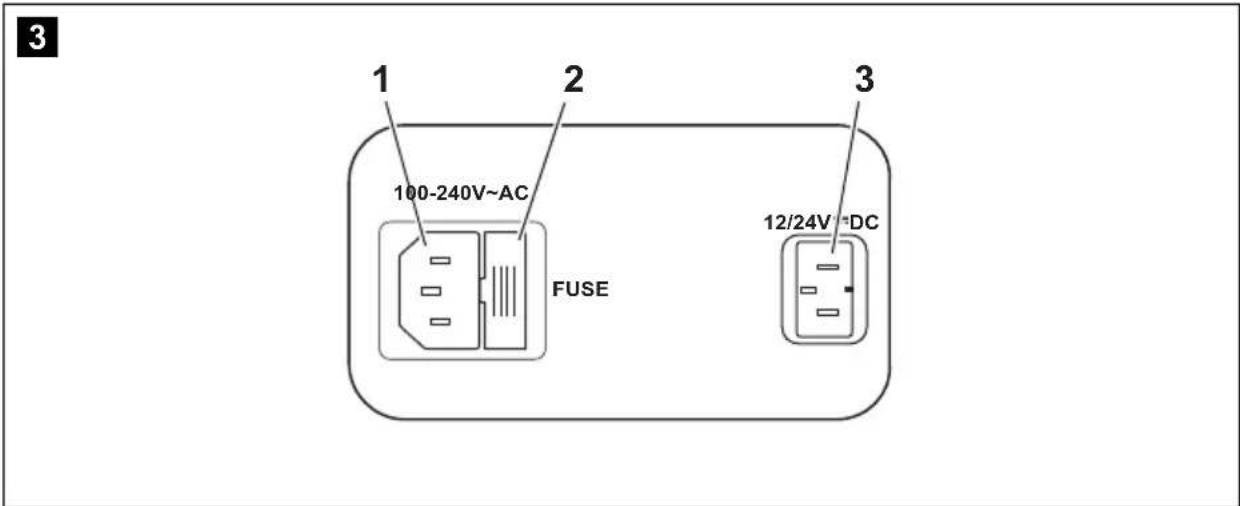
Connection sockets (fig. 3, page 3):
Item Description
1 Connection socket AC voltage supply
2 Fuse holder
3 Connection socket DC voltage supply
6 Operation
6.1 Before initial use

NOTE
Before starting your new cooler for the first time, you should clean it inside and outside with a damp cloth for hygienic reasons (please also refer to the “Cleaning and maintenance” on page 37).
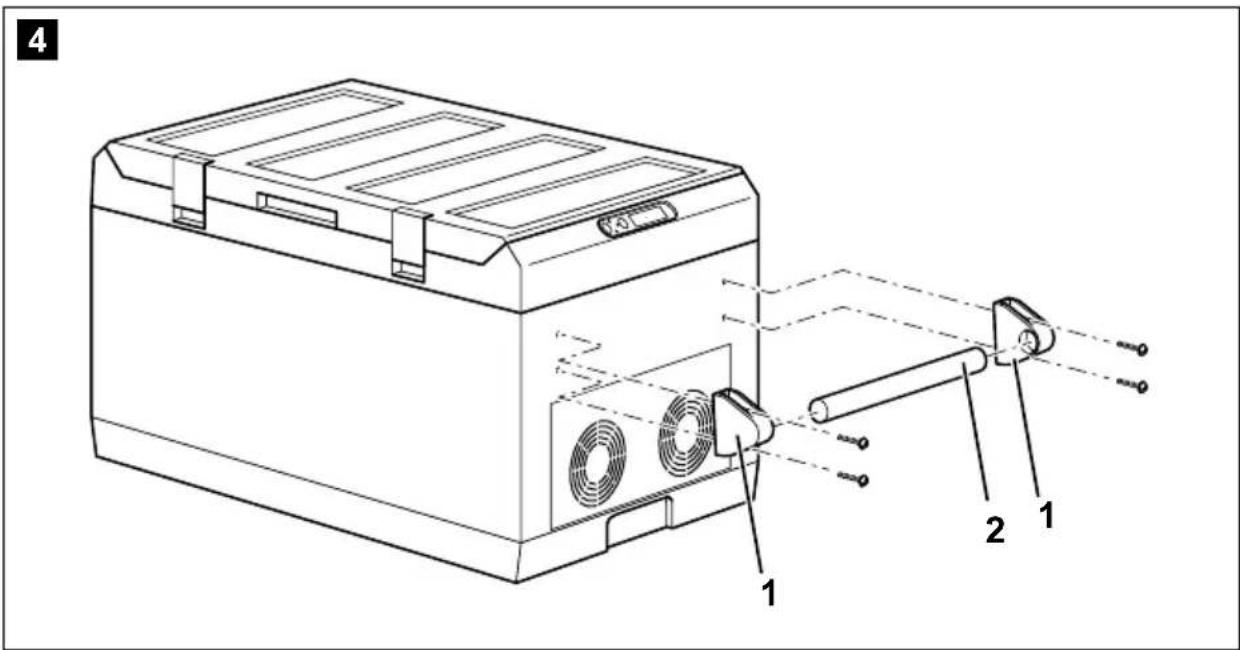
The handles are enclosed unassembled. If you wish to attach the handles, proceed as follows:
▶ Make a handle by putting two holders (fig. 4 1, page 4) and a handle (fig. 4 2, page 4) together.
▶Fasten the grip with the enclosed screws in the holes provided.
Selecting the temperature units
You can switch the temperature display between Celsius and Fahrenheit. This is how to do it:
▶Switch on the cooler.
▶ Press the "SET" button (fig. 2 4, page 3) twice.
▶ Use the "UP +" (fig. 2 6, page 3) and "DOWN -" (fig. 2 7, page 3) buttons to select Celsius or Fahrenheit.
√The selected temperature units then appear in the display for a few seconds. The display flashes several times before it returns to the current temperature.
Turning the lid stop around
You can turn the lid stop around if you want to open the lid from the other side.
To do this, proceed as follows:
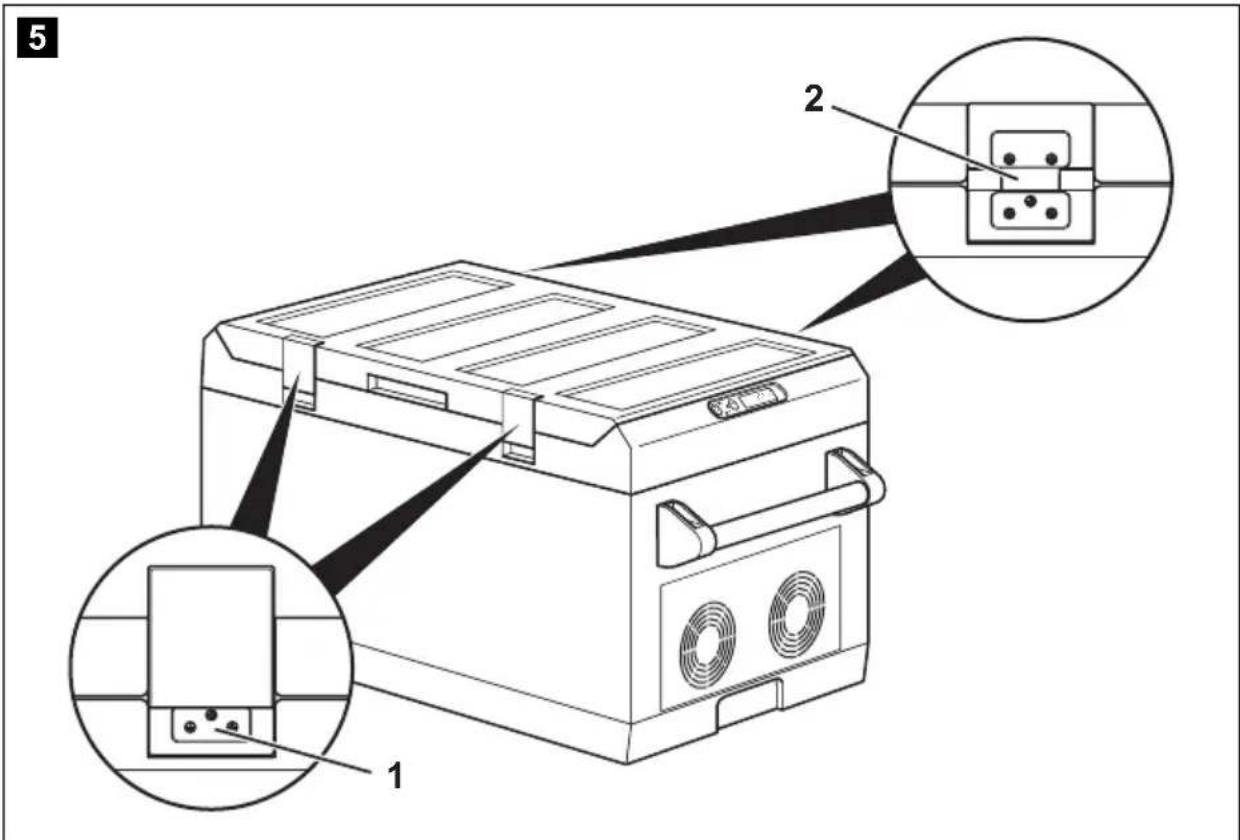
▶ Undo the screws on the lock lugs (fig. 5 1, page 4) and take them off.
▶ Undo the screws on the hinges (fig. 5 2, page 4) and take them off.
▶Lay the lid down.
▶Fit the hinges on the side you want.
▶Fit the lock lugs on the side you want.
6.2 Energy saving tips
- Choose a well ventilated installation location which is protected from direct sunlight.
- Allow hot food to cool down first before you place it into the device.
- Do not open the cooler more often than necessary.
- Do not leave the lid open for longer than necessary.
● Defrost the cooler once a layer of ice forms. - Avoid unnecessary low temperatures.
6.3 Connecting the cooler
Connecting to a battery (Vehicle or boat)
The cooler can be operated with 12 V or 24 V---.

NOTICE! Danger of damaging the device!
Disconnect the cooler and other consumer units from the battery before you connect the battery to a quick charging device.
Overvoltage can damage the electronics of the device.
For safety reasons the cooler is equipped with an electronic system to prevent the polarity reversal. This protects the cooler against short-circuiting when connecting to a battery.

NOTICE! Danger of damaging the device!
To avoid drops in voltage and therefore performance, keep the cable as short as possible and only disconnect it when necessary. For this reason avoid additional switches, plugs or power strips.
▶Determine the required cross section of the cable in relation to the cable length according to fig. 6, page 5.
Key for fig. 6, page 5
Co-ordinate axis Meaning Unit
I Cable length m
∅ Cable cross section mm²

NOTICE! Danger of damaging the device!
Make sure that the polarity is correct.
Before starting up the device for the first time, check whether the operating voltage and the battery voltage correspond (see type plate).
▶Make sure that the cable at the positive battery terminal (fig. 7 2, page 5) is protected with a 15 A fuse (fig. 7 3, page 5).
▶ Plug the 12/24-V connection cable (fig. 1 2, page 3) into the DC socket on the cooler (fig. 7 1, page 5).
▶ Connect the red cable (fig. 7 rt, page 5) to the positive terminal of the battery (fig. 7 2, page 5).
▶ Connect the black cable (fig. 7 sw, page 5) to the negative terminal of the battery (fig. 7 2, page 5).
Connecting to a 100–240 V AC mains (E.g. in the home or office)

DANGER! Danger of electrocution!
- Never handle plugs and switches with wet hands or if you are standing on a wet surface.
- If you are operating your cooler on board a boat from a mains connection of 100–240 V\~, you must install a residual current circuit breaker between the 100–240 V AC mains and the cooler.
Seek advice from a trained technician.
The cooler has a built-in multi-voltage mains adapter with a priority circuit for connecting to a 100-240 V\~ supply. The priority circuit automatically switched to mains operation if the appliance is connected to a 100–240 V\~ supply, even if the 12/24 V cable is still connected.
When switching between the AC mains and the battery supply, the red LED may light up briefly.
▶ Plug the 100–240 V connection cable (fig. 1 3, page 3) into the AC voltage socket and connect it to the 100–240 V AC mains.
6.4 Using the battery monitor
The device is equipped with a multi-level battery monitor that protects your vehicle battery against excessive discharging when the device is connected to the on-board 12/24 V supply.
If the cooler is operated when the vehicle ignition is switched off, the cooler switches off automatically as soon as the supply voltage falls below a set level. The cooler will switch back on once the battery has been recharged to the restart voltage level.

NOTICE! Danger of damage!
When switched off by the battery monitor, the battery will no longer be fully charged. Avoid starting repeatedly or operating current consumers without longer charging phases. Ensure that the battery is recharged.
In “HIGH” mode, the battery monitor responds faster than at the levels “LOW” and “MED” (see the following table).
| Battery monitor mode LOW MED HIGH | |||
| Switch-off voltage at 12 V | 10.1 V | 11.4 V | 11.8 V |
| Restart voltage at 12 V | 11.1 V | 12.2 V | 12.6 V |
| Switch-off voltage at 24 V | 21.5 V | 24.1 V | 24.6 V |
| Restart voltage at 24 V | 23.0 V | 25.3 V | 26.2 V |
This is how to select the battery monitor mode:
▶Switch on the cooler.
▶ Press the "SET" button (fig. 2 4, page 3) three times.
▶ Use the “UP +” (fig. 2 6, page 3) and “DOWN -” (fig. 2 7, page 3) buttons to select the battery monitor mode.
√The selected mode then appears in the display for a few seconds. The display flashes several times before it returns to the current temperature.

NOTE
When the cooler is supplied by the starter battery, select the battery monitor mode "HIGH". If the cooler is connected to a supply battery, the battery monitor mode "LOW" will suffice.
If you wish to operate the cooler from the AC mains, set the battery monitor to the "LOW" position.
6.5 Using the cooler

NOTICE! Danger of overheating!
Ensure at all times that there is sufficient ventilation so that the heat that generated during operation can dissipate. Ensure that the ventilation slots are not covered. Make sure that the device is sufficiently far away from walls and other objects so that the air can circulate.
▶Place the cooler on a firm foundation.
Make sure that the ventilation slots are not covered and that the heated air can dissipate.
▶Close the cooler, see “Connecting the cooler” on page 31.

NOTE
If you wish to operate the cooler from the AC mains, set the battery monitor to the "LOW" position.

NOTICE! Danger from excessively low temperature!
Ensure that the only those objects are placed in the cooler that are intended to be cooled at the selected temperature.
▶ Press the “ON/OFF” button (fig. 2 1, page 3) for between one and two seconds.
√The "POWER" LED lights up.
√ The display (fig. 2 5, page 3) switches on and shows the current cooling temperature.

NOTE
The temperature displayed is that of the middle of the interior. The temperatures elsewhere can deviate from this temperature.
√The cooler starts cooling the interior.

NOTE
When operating with the battery, the display switches off automatically if the battery voltage is low. The LED “POWER” flashes orange.
6.6 Setting the temperature
▶ Press the "SET" button (fig. 2 4, page 3) once.
▶ Use the "UP +" (fig. 2 6, page 3) and "DOWN -" (fig. 2 7, page 3) buttons to select the cooling temperature.
√The cooling temperature appears in the display for a few seconds. The display flashes several times and then the current tempera-ture is displayed again.
6.7 Switching off the cooler
▶Empty the cooler.
▶Switch the cooler off.
▶Pull out the connection cable.
If you do not want to use the cooler for a longer period of time:
▶Leave the cover slightly open. This prevents odour build-up.
6.8 Defrosting the cooler
Humidity can form frost in the interior of the cooling device or on the vaporiser. This reduces the cooling capacity. Defrost the device in good time to avoid this.

NOTICE! Danger of damage!
Never use hard or pointed tools to remove ice or to loosen objects which have frozen in place.
To defrost the cooler, proceed as follows:
▶Take out the contents of the cooling device.
▶If necessary, place them in another cooling device to keep them cool.
▶Switch off the device.
▶Leave the cover open.
▶Wipe off the defrosted water.
6.9 Replacing the device fuse

WARNING! Danger of electrocution!
Disconnect the connection cable before you replace the device fuse.
▶Pull off the connection cable.
▶ Pry out the fuse insert (fig. 3 2, page 3) with a screwdriver.
▶ Replace the defective fuse with a new one that has the same rating (T2.5AL 250V).
▶Press the fuse insert back into the housing.
6.10 Replacing the light bulb
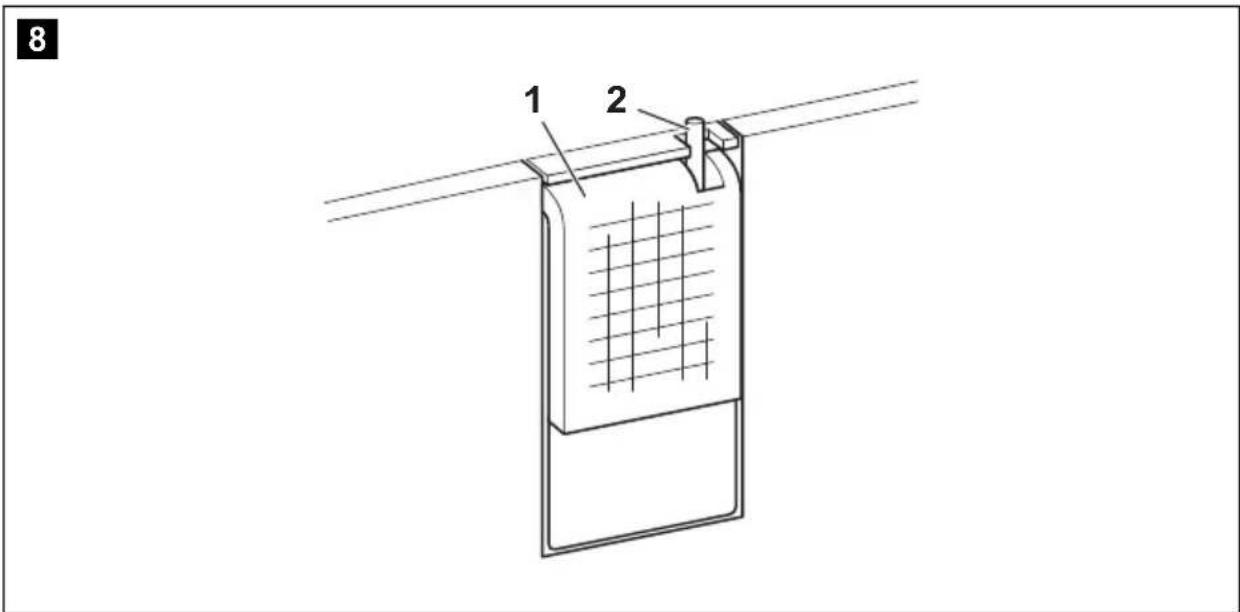
▶ Press the switch pin (fig. 8 2, page 5) downwards so that the transparent part (fig. 8 1, page 5) of the lamp can be removed at the front.
▶Replace the light bulb.

NOTE
The LEDs in the light bulb must be aligned with the transparent part of the lamp.
▶Press the transparent part of the lamp back into the housing.
7 Cleaning and maintenance

WARNING!
Always disconnect the device from the mains before you clean and service it.

NOTICE! Risk of damage
● Never clean the cooler under running water or in dish water.
- Do not use abrasive cleaning agents or hard objects during cleaning as these can damage the cooler.
▶ Occasionally clean the device interior and exterior with a damp cloth.
8 Guarantee
The statutory warranty period applies. If the product is defective, please contact the manufacturer's branch in your country (see the back of the instruction manual for the addresses) or your retailer.
For repair and guarantee processing, please include the following documents when you send in the device:
● A copy of the receipt with purchasing date
● A reason for the claim or description of the fault
9 Troubleshooting
| Fault Possible cause Suggested remedy | ||
| Device does not function, LED does not glow. | Battery voltage is too low. | Test the battery and charge it as needed. |
| No voltage present in the AC voltage socket. | Try using another plug socket. | |
| The device fuse is defective. | Replace the device fuse, see “Replacing the device fuse” on page 36. | |
| The integrated mains adapter is defective. | This can only be repaired by an authorised repair centre. | |
| The device does not cool (plug is inserted, “POWER” LED is lit). | Defective compressor. | This can only be repaired by an authorised customer services unit. |
| The device does not cool (plug is inserted, “POWER” LED flashes orange, display is switched off). | Battery voltage is too low. | Test the battery and charge it as needed. |
| The display shows an error message (e.g. “Err1”) and the appliance does not cool. | The appliance has switched off due to an internal fault. | This can only be repaired by an authorised repair centre. |
10 Disposal
▶Place the packaging material in the appropriate recycling waste bins wherever possible.
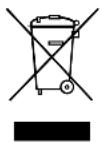
If you wish to finally dispose of the product, ask your local recycling centre or specialist dealer for details about how to do this in accordance with the applicable disposal regulations.
11 Technical data
| CF80 CF110 | ||
| Connection voltage: | 12/24 V--- and 100–240 V~ | |
| Rated current: | ||
| - 12 V---: 7.5 A | ||
| - 24 V---: 3.5 A | ||
| - 100–240 V~: 1.3 to 0.7 A | ||
| Cooling range: | +10 °C to -18 °C (+50 °F to 0 °F) | |
| Category: 1 1 | ||
| Energy efficiency class: A+ A+ | ||
| Energy consumption: | 110 kWh/annum | 117 kWh/annum |
| Gross capacity: | 80 l | 106 l |
| Usable capacity: | 79 l | 105 l |
| Climate class: | N, ST, T | N, ST, T |
| Ambient temperature: | +16°C – +43 °C | +16°C – +43 °C |
| Noise emission: | 46 dB(A) | 46 dB(A) |
| Dimensions (W x H x D) in mm: | 790 x 455 x 500 | 790 x 555 x 500 |
| Weight: 34 kg | 37 kg | |

NOTE
If the ambient temperature is above +32 °C (+90 °F), the minimum temperature cannot be attained.
Test/certificates:


The coolant circuit contains R-134a.
PASS PÅ! Fare for overoppheting!
natural_image
Abstract black and white logo design with stylized letters (no text or symbols)Dometic Australia Pty. Ltd.
1 John Duncan Court
Varsity Lakes QLD 4227
+61 7 55076000
+61 7 55076001
Mail: sales@dometic-waeco.com.au
AUSTRIA
Dometic Austria GmbH
The Gateway · 25 Canton Road,
Tsim Sha Tsui · Kowloon
Hong Kong
+852 24611386
+852 24665553
Mail: info@dometic-waeco.com.hk
ITALY
Dometic Italy S.r.l.
Via Virgilio, 3
I-47100 Forli
+39 0543 754901
+39 0543 756631
Mail: info@dometic.it
NORWAY
Dometic Norway AS
Skolmar 24
N-3232 Sandefjord
+47 33428450
吕 +47 33428459
Mail: firmapost@waeco.no
POLAND
Dometic Poland Sp. z o.o.
Ul. Puławska 435A
02-801 Warszawa
Poland
+48 22 414 32 00
+48 22 414 32 01
Mail: info@dometic.pl
RUSSIA
Dometic RUS LLC
Komsomolskaya square 6-1
107140 Moscow
Russia
+7 495 780 79 39
+7 495 916 56 53
Mail: info@dometic.ru
SLOVAKIA
Dometic Slovakia s.r.o.
Tehelná 8
SK-98601 Fil'akovo
+421 47 4319 107
+421 47 4319 166
Mail: info@dometic.sk
SPAIN
Dometic Spain S.L.
Avda. Sierra del Guadarrama, 16
E-28691 Villanueva de la Cañada
Madrid
+34 902 111 042
+34 900 100 245
Mail: info@dometic.es
SWEDEN
Dometic Scandinavia AB
Gustaf Melins gata 7
Dometic Switzerland AG
Riedackerstrasse 7a
CH-8153 Rümlang (Zürich)
+41 44 8187171
+41 44 8187191
Mail: info@dometic-waeco.ch
TAIWAN
WAECO Impex Ltd.
Taipei Office
2 FL-3 · No. 56 Tunhua South Rd, Sec 2
Taipei 106, Taiwan
+886 2 27014090
+886 2 27060119
Mail: marketing@dometic-waeco.com.tw
UNITED KINGDOM
Dometic UK Ltd.
Dometic House · The Brewery
Blandford St. Mary
Dorset DT11 9LS
+44 844 626 0133
+44 844 626 0143
Mail: sales@dometic.co.uk
UNITED ARAB STATES
Dometic AB
Regional Office Middle East
P O Box 74775
Dubai, United Arab Emirates
+971 4 321 2160
+971 4 321 2170
Mail: info@dometic.ae
UNITED STATES OF AMERICA
Dometic Marine Division
2000 N. Andrews Ave. Extension
Pompano Beach, FL 33069 USA
+1 954 973 2477
+1 954 979 4414
Mail: marinesales@dometicusa.com
- CF80, CF110
- Contents
- Explanation of symbols
- DANGER!
- WARNING!
- CAUTION!
- NOTICE!
- NOTE
- Safety instructions
- General safety
- Operating the device safely
- Scope of delivery
- Intended use
- CAUTION! Health hazard!
- Function description
- Scope of functions:
- Operating and display elements
- Connections
- Item Description
- Operation
- Before initial use
- Selecting the temperature units
- Turning the lid stop around
- Energy saving tips
- Connecting the cooler
- Connecting to a battery (Vehicle or boat)
- NOTICE! Danger of damaging the device!
- Co-ordinate axis Meaning Unit
- Connecting to a 100–240 V AC mains (E.g. in the home or office)
- DANGER! Danger of electrocution!
- Using the battery monitor
- NOTICE! Danger of damage!
- Using the cooler
- NOTICE! Danger of overheating!
- NOTICE! Danger from excessively low temperature!
- Setting the temperature
- Switching off the cooler
- Defrosting the cooler
- Replacing the device fuse
- WARNING! Danger of electrocution!
- Replacing the light bulb
- Cleaning and maintenance
- NOTICE! Risk of damage
- Guarantee
- Troubleshooting
- Disposal
- Technical data
- PASS PÅ! Fare for overoppheting!
- Dometic Australia Pty. Ltd.
- AUSTRIA
- Dometic Austria GmbH
- ITALY
- Dometic Italy S.r.l.
- NORWAY
- Dometic Norway AS
- POLAND
- Dometic Poland Sp. z o.o.
- RUSSIA
- Dometic RUS LLC
- SLOVAKIA
- Dometic Slovakia s.r.o.
- SPAIN
- Dometic Spain S.L.
- SWEDEN
- Dometic Scandinavia AB
- Dometic Switzerland AG
- TAIWAN
- WAECO Impex Ltd.
- UNITED KINGDOM
- Dometic UK Ltd.
- UNITED ARAB STATES
- Dometic AB
- UNITED STATES OF AMERICA
- Dometic Marine Division
Brand : WAECO
Model : CF80
Category : Fridge