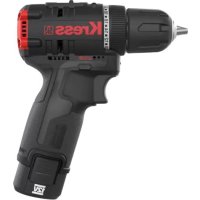
KUA24 - Screwdriver KRESS - Free user manual and instructions
Find the device manual for free KUA24 KRESS in PDF.



| Brand | Kress |
| Model | KUA24 |
| Product Type | Cordless Screwdriver Drill |
| Rated Voltage | 12 V Max (10.8 V nominal) |
| No-load Speed | 0-500 / 0-1800 min⁻¹ |
| Torque Settings | 20+1 (drilling) |
| Max Torque | 40 Nm |
| Chuck Clamping Capacity | 10 mm |
| Drilling Capacity in Steel | 10 mm |
| Drilling Capacity in Wood | 20 mm |
| Weight | 0.9 kg |
| Chuck Type | Keyless Chuck |
| Battery Type | Li-Ion |
| Battery Included | 2 packs KPB1202 |
| Charger Included | KCH1202 |
| Sound Pressure Level | LpA = 82 dB(A) |
| Sound Power Level | LwA = 93 dB(A) |
| Vibrations (metal drilling) | ah,D = 2.603 m/s², K = 1.5 m/s² |
| Functions | Drilling, screwdriving |
| Safety | Overload, overtemperature and deep discharge protection |
| Maintenance and cleaning | Clean with a dry cloth. Do not use water or chemicals |
| Operating Temperature | 0 °C to 45 °C |
| Charging Temperature | 0 °C to 40 °C |
| Spare parts and repairability | Spare parts available from after-sales service. No user-serviceable parts |
Frequently Asked Questions - KUA24 KRESS
User questions about KUA24 KRESS
0 question about this device. Answer the ones you know or ask your own.
Ask a new question about this device
Download the instructions for your Screwdriver in PDF format for free! Find your manual KUA24 - KRESS and take your electronic device back in hand. On this page are published all the documents necessary for the use of your device. KUA24 by KRESS.
USER MANUAL KUA24 KRESS
PRODUCT SAFETY GENERAL POWER TOOL SAFETY WARNINGS
WARNING Read all safety warnings, instructions, illustrations and specifications provided with this power tool. Failure to follow all instructions listed below may result in electric shock, fire and/or serious injury.
Save all warnings and instructions for future reference.
The term "power tool" in the warnings refers to your mains-operated (corded) power tool or battery-operated (cordless) power tool.
1) Work area safety
a) Keep work area clean and well lit. Cluttered or dark areas invite accidents.
b) Do not operate power tools in explosive atmospheres, such as in the presence of flammable liquids, gases or dust. Power tools create sparks which may ignite the dust or fumes.
c) Keep children and bystanders away while operating a power tool. Distractions can cause you to lose control.
2) Electrical safety
a) Power tool plugs must match the outlet. Never modify the plug in any way. Do not use any adapter plugs with earthed (grounded) power tools. Unmodified plugs and matching outlets will reduce risk of electric shock.
b) Avoid body contact with earthed or grounded surfaces, such as pipes, radiators, ranges and refrigerators. There is an increased risk of electric shock if your body is earthed or grounded.
c) Do not expose power tools to rain or wet conditions. Water entering a power tool will increase the risk of electric shock.
d) Do not abuse the cord. Never use the cord for carrying, pulling or unplugging the power tool. Keep cord away from heat, oil, sharp edges or moving parts. Damaged or entangled cords increase the risk of electric shock.
e) When operating a power tool outdoors, use an extension cord suitable for outdoor use. Use of a cord suitable for outdoor use reduces the risk of electric shock.
f) If operating a power tool in a damp location is unavoidable, use a residual current device (RCD) protected supply. Use of an RCD reduces the risk of electric shock.
3) Personal safety
a) Stay alert, watch what you are doing and use common sense when operating a power tool. Do not use a power tool while you are tired or under the influence of drugs, alcohol or medication. A moment of inattention while operating power tools may result in serious personal injury.
b) Use personal protective equipment. Always wear eye protection. Protective equipment such as dust mask, non-skid safety shoes, hard hat, or hearing protection used for appropriate conditions will reduce personal injuries.
c) Prevent unintentional starting. Ensure the switch is in the off-position before connecting to power source and/or battery pack, picking up or carrying the tool. Carrying power tools with your finger on the switch or energising power tools that have the switch on invites accidents.
d) Remove any adjusting key or wrench before turning the power tool on. A wrench or a key left attached to a rotating part of the power tool may result in personal injury.
e) Do not overreach. Keep proper footing and balance at all times. This enables better control of the power tool in unexpected situations.
f) Dress properly. Do not wear loose clothing or jewellery. Keep your hair and clothing away from moving parts. Loose clothes, jewellery or long hair can be caught in moving parts.
g) If devices are provided for the connection of dust extraction and collection facilities, ensure these are connected and properly used. Use of dust collection can reduce dust-related hazards.
h) Do not let familiarity gained from frequent use of tools allow you to become complacent and ignore tool safety principles. A careless action can cause severe injury within a fraction of a second.
4) Power tool use and care
a) Do not force the power tool. Use the correct power tool for your application. The correct power tool will do the job better and safer at the rate for which it was designed.
b) Do not use the power tool if the switch does not turn it on and off. Any power tool that cannot be controlled with the switch is dangerous and must be repaired.
c) Disconnect the plug from the power source and/ or remove the battery pack, if detachable, from the power tool before making any adjustments, changing accessories, or storing power tools. Such preventive safety measures reduce the risk of starting the power tool accidentally.
d) Store idle power tools out of the reach of children and do not allow persons unfamiliar with the power tool or these instructions to operate the power tool. Power tools are dangerous in the hands of untrained users.
e) Maintain power tools and accessories. Check for misalignment or binding of moving parts, breakage of parts and any other condition that may affect the power tool's operation. If damaged, have the power tool repaired before use. Many accidents are caused by poorly maintained power tools.
f) Keep cutting tools sharp and clean. Properly maintained cutting tools with sharp cutting edges are less likely to bind and are easier to control.
g) Use the power tool, accessories and tool bits etc. in accordance with these instructions, taking into account the working conditions and the work to be performed. Use of the power tool for operations different from those intended could result in a hazardous situation.
h) Keep handles and grasping surfaces dry, clean and free from oil and grease. Slippery handles and grasping surfaces do not allow for safe handling and control of the tool in unexpected situations.
5) Battery tool use and care
a) Recharge only with the charger specified by the manufacturer. A charger that is suitable for one type of battery pack may create a risk of fire when used with another battery pack.
b) Use power tools only with specifically designated battery packs. Use of any other battery packs may create a risk of injury and fire.
c) When battery pack is not in use, keep it away from other metal objects, like paper clips, coins, keys, nails, screws or other small metal objects, that can make a connection from one terminal to another. Shorting the battery terminals together may cause burns or a fire.
d) Under abusive conditions, liquid may be ejected from the battery; avoid contact. If contact accidentally occurs, flush with water. If liquid contacts eyes, additionally seek medical help. Liquid ejected from the battery may cause irritation or burns.
e) Do not use a battery pack or tool that is damaged or modified. Damaged or modified batteries may exhibit unpredictable behaviour resulting in fire, explosion or risk of injury.
f) Do not expose a battery pack or tool to fire or excessive temperature. Exposure to fire or temperature above 130^ may cause explosion.
g) Follow all charging instructions and do not charge the battery pack or tool outside the temperature range specified in the instructions. Charging improperly or at temperatures outside the specified range may damage the battery and increase the risk of fire.
6) Service
a) Have your power tool serviced by a qualified repair person using only identical replacement parts. This will ensure that the safety of the power tool is maintained.
b) Never service damaged battery packs. Service of battery packs should only be performed by the manufacturer or authorized service providers.
DRILL SAFETY WARNINGS
1) Safety instructions for all operations
a) Hold the power tool by insulated gripping surfaces, when performing an operation where the cutting accessory or fasteners may contact hidden wiring or its own cord. Cutting accessory or fasteners contacting a "live" wire may make exposed metal parts of the power tool "live" and could give the operator an electric shock.
2) Safety instructions when using long drill bits
a) Never operate at higher speed than the maximum speed rating of the drill bit. At higher speeds, the bit is likely to bend if allowed to rotate freely without contacting the workpiece, resulting in personal injury.
b) Always start drilling at low speed and with the bit tip in contact with the workpiece. At higher speeds, the bit is likely to bend if allowed to rotate freely without contacting the workpiece, resulting in personal injury.
c) Apply pressure only in direct line with the bit and do not apply excessive pressure. Bits can bend causing breakage or loss of control, resulting in personal injury.
SAFETY WARNINGS FOR BATTERY PACK
a) Do not dismantle, open or shred cells or battery pack.
b) Do not short-circuit a battery pack. Do not store battery packs haphazardly in a box or drawer where they may short-circuit each other or be short-circuited by conductive materials. When battery pack is not in use, keep it away from other metal objects, like paper clips, coins, keys, nails, screws or
other small metal objects, that can make a connection from one terminal to another. Shorting the battery terminals together may cause burns or a fire.
c) Do not expose battery pack to heat or fire. Avoid storage in direct sunlight.
d) Do not subject battery pack to mechanical shock.
e) In the event of battery leaking, do not allow the liquid to come into contact with the skin or eyes. If contact has been made, wash the affected area with copious amounts of water and seek medical advice.
f) Keep battery pack clean and dry.
g) Wipe the battery pack terminals with a clean dry cloth if they become dirty.
h) Battery pack needs to be charged before use. Always refer to this instruction and use the correct charging procedure.
i) Do not maintain battery pack on charge when not in use.
j) After extended periods of storage, it may be necessary to charge and discharge the battery pack several times to obtain maximum performance.
k) Recharge only with the charger specified by KRESS. Do not use any charger other than that specifically provided for use with the equipment.
I) Do not use any battery pack which is not designed for use with the equipment.
m) Keep battery pack out of the reach of children.
n) Retain the original product literature for future reference.
o) Remove the battery from the equipment when not in use.
p) Dispose of properly.
q) Do not mix cells of different manufacture, capacity, size or type within a device.
r) Keep the battery away from microwaves and high pressure.
SYMBOLS
| To reduce the risk of injury, user must read instruction manual | |
| Warning | |
| Wear ear protection | |
| Wear eye protection | |
| Wear dust mask | |
| Li-Ion Li-Ion | Li-Ion battery. This product has been marked with a symbol relating to 'separate collection' for all battery packs and battery pack. It will then be recycled or dismantled in order to reduce the impact on the environment. Battery packs can be hazardous for the environment and for human health since they contain hazardous substances. |
| Batteries may enter water cycle if disposed improperly, which can be hazardous for ecosystem. Do not dispose of waste batteries as unsorted municipal waste. | |
| Do not burn | |
| Wear protective gloves | |
| Lock | |
| Screwdriving | |
| Drilling | |
| Wood | |
| Metal |
| High speed | |
| Low speed | |
| Waste electrical products must not be disposed of with household waste. Please recycle where facilities exist. Check with your local authorities or retailer for recycling advice. |
COMPONENT LIST
| 1. CHUCK |
| 2. TORSION ADJUSTING RING |
| 3. MECHANICAL TRANSMISSION LEVER |
| 4. BATTERY STATUS |
| 5. REVERSING LEVER |
| 6. SOFT HANDLE |
| 7. BATTERY PACK LOCK KNOB |
| 8. BATTERY PACK* |
| 9. START/STOP SWITCH |
| 10. LED LAMP |
- Not all the accessories illustrated or described are included in standard delivery.
TECHNICAL DATA
Type designation KUA24 (A24-designation of machinery, representative of drill)
| KUA24 | ||
| Voltage 12V | Max** | |
| No-load speed 0-500/0-1800/min | ||
| Torsion adjusting positions 20+1 | ||
| Maximum torque 40Nm | ||
| Maximum clamping capability 10mm | ||
| Maximum drilling capability | Steel 10mm | |
| Wood 20mm | ||
| Machine weight 0.9kg | ||
** Voltage measured without workload. Initial battery voltage reaches maximum of 12 volts. Nominal voltage is 10.8 volts.
Noise Information
Wear ear protection.
| A weighted sound pressure L | pA=82dB(A) |
| A weighted sound power L | wA = 93dB(A) |
| KpA&KwA | 5dB(A) |
Vibration Information
| Vibration total values (triax vector sum) determined according to EN 62841 | |
| Drilling into metal | Vibration emission value ah,d=2.603m/s2 |
| Uncertainty K = 1.5 m/s2 | |
The declared vibration total value and the declared noise emission value have been measured in accordance with a standard test method and may be used for comparing one tool with another.
The declared vibration total value and the declared noise emission value may also be used in a preliminary assessment of exposure.
WARNING: The vibration and noise emissions during actual use of the power tool can differ from the declared value depending on the ways in which the tool is used especially what kind of workpiece is processed dependant on the following examples and other variations on how the tool is used:
How the tool is used and the materials being cut or drilled. The tool being in good condition and well maintained. The use of the correct accessory for the tool and ensuring it is sharp and in good condition.
The tightness of the grip on the handles and if any anti vibration and noise accessories are used.
And the tool is being used as intended by its design and these instructions.
This tool may cause hand-arm vibration syndrome if its use is not adequately managed.
WARNING: To be accurate, an estimation of exposure level in the actual conditions of use should also take account of all parts of the operating cycle such as the times when the tool is switched off and when it is running idle but
not actually doing the job. This may significantly reduce the exposure level over the total working period.
Helping to minimise your vibration and noise exposure risk. Always use sharp chisels, drills and blades.
Maintain this tool in accordance with these instructions and keep well lubricated (where appropriate).
If the tool is to be used regularly then invest in anti vibration and noise accessories.
Plan your work schedule to spread any high vibration tool use across a number of days.
TECHNICAL DATA
| KUA24 | |
| Battery pack(KPB1202) 2 | |
| Charger(KCH1202) 1 |
We recommend that you purchase your accessories listed in the above list from the same store that sold you the tool. Refer to the accessory packaging for further details. Store personnel can assist you and offer advice.
Note: Please read the instructions carefully before use.
Usage
This tool is used to turn screws or drill holes in wood, metal and plastics.
INSTALLATION AND OPERATION
| STEPS Pictures | |
| BEFORE OPERATION | |
| Disassemble battery pack | See Figure A1 |
| Battery pack charging | See Figure A2 |
| Installation of battery pack | See Figure A3 |
| INSTALLATION | |
| CHUCK ADJUSTMENTWarning: When replacing acces-sories, make sure that the power supply is cut off and the switch is turned off (the reversing lever is in the middle position). When starting the tool, make sure that there is no hidden danger to the drill bit. Damage or loosening of the chuck may cause personal injury. | |
| Drill bit disassembly See Figure B1 | |
| Installation of drill bit See Figure B2 | |
| OPERATION | |
| Forward and reverse switchingWarning: The direction of rota-tion can not be changed until the machine is completely stationary. | See Figures C1, C2, C3 |
| SPEED SHIFT See Figure D | |
| TORSION ADJUSTMENT Drill, screwdriver | See Figure E |
| Start/stop Warning: Do not use start-stop switch for long time and low speed operation, otherwise the machine may overheat and cause tool damage. | See Figure F |
| LED indication The LED will be lit when the switch is pressed. The tool and battery are equipped with automatic power-off protection system. The LED flickers for 3 seconds and then goes off, indicating that the protection system works. At this time, the system automatically cuts off the power supply to prolong the battery life. The following situations may trigger automatic power-off protection: · Overload: Tools are overloaded when they are running, the current is too high. In this case, release the switch, stop the operation leading to tool overload, and restart the switch. · Overheat: In the case above, if the tool is not started, the tool and battery may be overheated. In this case, cool the tool and battery pack before starting the switch again. · Low voltage: The tool does not work when the remaining capacity is too low. In this case, dismantle and replace the battery pack. Warning:Make sure the reversing lever is on the left or right, press the switch and the LED light comes on. | See Figure F |
FAQs
1. Why has the switch been pressed and the machine does not work?
There is a reversing lever at the top of the switch. When it is in the middle position, the machine will lock the start-stop switch. Put it where it needs to be turned and press the button, the machine will start to rotate.
2. Why does the electric drill stop running before the screw is tightened?
At this time, please adjust the torsion adjustment ring between the frame and the chuck. The torsion corresponding to position 1 is the smallest, and that corresponding to position 20 is the largest. Position 3 specially for drilling holes This problem can be solved by adjusting the torsion adjustment ring to a higher level.
3. Why is the working time of the same battery pack sometimes long and sometimes short?
As mentioned above, if a battery pack is left unused for too long, its working time will be shortened. Such situation will be improved after charging and using for several times. Under doing heavy work, such as screwing big screw into hard wood, the battery power will be consumed very fast. Do not charge in the environment below 0 or above 40^ , which will also affect the performance of the battery pack.
MAINTENANCE
Remove the battery pack from the tool before carrying out any adjustment, servicing or maintenance.
There are no user serviceable parts in your power tool. Never use water or chemical cleaners to clean your power tool. Wipe clean with a dry cloth. Always store your power tool in
a dry place. Keep the motor ventilation slots clean. Keep all working controls free of dust.
FOR BATTERY TOOL
The ambient temperature for use and storage of the tool and battery ranges from 0 to 45^ The recommended charging environment temperature range during charging is 0 - 40^
ENVIRONMENTAL PROTECTION
Waste electrical products must not be disposed of with household waste. Please recycle where facilities exist. Check with your local authorities or retailer for recycling advice.
DECLARATION OF CONFORMITY
We, Positec Germany GmbH Postfach 32 02 16,50796 Cologne,Germany
On behalf of Positec declare that the product Description Battery-powered Drill Type KUA24 (24-designation of machinery, representative of Drill) Function Drilling
Complies with the following Directives, 2006/42/EC, 2011/65/EU&(EU)2015/863, 2014/30/EU
Standards conform to
EN 55014-1,
EN 55014-2,
EN 62841-1,
EN 62841-2-1
The person authorized to compile the technical file,
Name Marcel Filz
Address Positec Germany GmbH
Postfach 32 02 16, 50796 Cologne, Germany

2021/11/10
Allen Ding
Deputy Chief Engineer, Testing & Certification
Positec Technology (China) Co., Ltd
18, Dongwang Road, Suzhou Industrial
Park, Jiangsu 215123, P. R. China
18, Dongwang Road, Suzhou Industrial
Park, Jiangsu 215123, P. R. China
NOTICE ORIGINALE AVERTISSEMENTS DE SECURITE GENÉRAUX POUR L'OUTIL
INFORMATIONS RELATIVES AU BRUIT
INFORMATIONS RELATIVES AUX VIBRATIONS
18, Dongwang Road, Suzhou Industrial
Park, Jiangsu 215123, P. R. China
ISTRUZIONI ORIGINALI
18, Dongwang Road, Suzhou Industrial
Park, Jiangsu 215123, P. R. China
Nós,
Positec Germany GmbH
Postfach 32 02 16, 50796 Cologne, Germany
2021/11/10
Allen Ding
Engenheiro-chefe adjunto,
Teste e Certificacao
Positec Technology (China) Co., Ltd
18, Dongwang Road, Suzhou Industrial Park, Jiangsu 215123, P. R. China
OORSPRONKELIJKE GEBRUIKSAANWIJZING ALGEMENE VEILIGHEIDSWAARSCHUWINGEN VOOR VERMOGENSMACHINE
18, Dongwang Road, Suzhou Industrial
Park, Jiangsu 215123, P. R. China
6E30NACHOCTb N3DEJINNA
OBUHE NPABUNA TEXHNK
6E30NACHOCTN INPN PABOTE C
3JEKTPONHCTPYMEHTOM
1PPEOCTEPEXHE! BHHMaTeJIbHo
03HaKOMbTEcB C HnCTpyKznnMn
npedoctepexehnMn NO texhke 6e3oNacHOCTn.
HeBbIOHHeHne BEx CHXKeIpNBEdEHbIX NHCTpyKcuN
In peKOMeHdaaM MoKET npIBeCTn K nopaxeHIO
3JEKTPuYeCKIM TOKOM, IOXApY n cepbe3HbIM TpaBMam.
CoxpaHnte Bce npedoctepexehnN n HnCTpyKcuN
dna daNbHeWero NoIb3OBAHn.
B daJIbHeHWeM TepmN "3JEKTPoHnCTpyMeNT"
ncNoJIb3yETcKa kAn dJa paBoTaIoUero OT cEtN (npoBOHO)
3JEKTPoHnCTpyMeHTa, TaK n DnA 3JEKTPoHnCTpyMeHTa,
paBoTaIoUero OTO AkkymyIaTopa (BeCnpoBOHO).
1. 5E3ONACHOCTb HA PABOYEM MECTE
a) CoepKnte pa60ee MeCTO B YnCTOTE IN XopoIOOCBeUeHHbIM. 3arpoMOxKeHHbIe I nIOXo OCBeUeHHbIe 3OHbI CNOCo6CTByIOT BO3HnKHOBeHHIO HeCuaCTbIX Cnyaeb.
b) He pa6oTaIe C nHCTpyMeHToM BO B3pbIOOanCHOaTMocCpepe, B pncyTCTBHN BOCnlaMeHReMbIX XnIKoCTeR, Ra3OB HnN PbIN. Bo3nKaIOUne npi pa6oTe 3JeKTPoIHCTpyMeHTa NCKpbl MOryt npuBeCTN K BOCnlaMeHeHIO rOpOHx BeueCTB.
c) Pn pa6oTe c HNCTpyMeHToM Detn N NOCTOPOHHe DOJXHbI HAXOHTbcra Ha 6e3OnaCHOM pacCTOHH. OTBJIeueHHe BHIMAHm MOKeT nPnBecTu K IOTepe Bamu KOHTpOJa.
2.3JEKTP06E30NACHOCTb
a) 1eBbIe BnIKN 3JIeKTPOHHCTpyMeHTOB
dONKhbl COOTBeTCTBOBaTb PO3eTKaM. HNKoRda HNKOM 06pa30m He n3MeHnTe CoeHNHTeBHyO BnKy. Ppn 3a3emHeHHbIX 3JeKTPoHNCTpyMeHTax He nCNoIb3yIte HnKaNX nepexoDHNKOB. Hen3MeHHeHbIe BNkN u COOTBeTCTByIOUcne PO3eTKn CHnKaIOT PNCK NopaxHeN3JeKTPOTOKOM.
b) 36eraTe fN3HueCKOro KOHTaTc 3a3eMJIeHHbIMN NOBepXHOCTaMn, TaKMMN, KaK Tpy6bl, paDnAToPbI, pNNTbl N XOJIOHNbHNKn. Puck nopaxeHn 3JIeKTPOTOKOM NOBbIaaeTcA, ecNI BaJe TeNo 6yDet 3a3eMJIeHo.
c) He noDBepraIte 3JIeKTPoHnCTpyMeHTbI BO3dEChTBnIO DOxJr NIN BBICOKO BnAaXHOCTN. IonoJaHne BoDbl B 3JIeKTPoHnCTpyMeHT NOBbIaet ONaCHOCTb NOPaXHeHr 3JIeKTPoTOKOM.
d)ПраиьнообрааиTeсьс3лeКТрka6eIem. HNKOrda He nCNoIb3yIte Ka6eIb dЯпepenOckn 3ЛeKTPoHHCTPymEHTa,a TaKKe He TAHHTe 3a Ka6eIb dЯ BbIKHoueHn I3 pO3eTKn. DepxNte Ka6eIb Ha 6e3OnaChOMpacCTOraHn OT NCTOuHKnOB TeIIa, MaCla, OCTpbIX KpOMOK n DBNXUxXcra YAcTei. NObpeKJdeHHbIe nIIN 3aNYTaHbIe Ka6eIi NOBbIaIOT pNCK npopaxHn 3JIeKTPOTOKOM.
e) Pn pa6oTe c 3JeKTPoHnHCTpyMeHTOM BHe NOMEueHn HcNoJIb3yIte YdInHHTeIN, KOtOpbl E npEHa3HaueHbI Ira pa6Otbl Ha OTKpbITOM BO3dyXe. 3TO CHNXaet PNCK nopaXeHn 3JeKTPoTOKOM.
f)ПиИСпОЛьЗОВAHн 3ЛeКТрОнHCTPyMeHTa BO BlnaXHOM NOMEseHn erO Heo6xOДМо NOДКЛIOUATb K 3ЛeKТрOCeTH Yepe3 YcTPOHCTBO 3aUNTHORO OTKIOUChEN (Y30).ИспОЛьЗОВАнe Y3O cHnkaet pUCK nopakHeHn 3ЛeKТpoTOKOM.
3. JIyHAR 6E30NACHOCTb
a) BybTe BHIMATEIbHbI: CneIITe 3a TEM, YTO Bbl DeIaeTe, n pyKOBOCTBByTEcB 3dpabBIM Cmblom, pa60TaN C3JIeKTPoHNCTpyMeHTOM. He nCnoIb3yIte 3JIeKTPoHNCTpyMeHT, eCIN Bbl YCTaII HNI HAXOINTeCb NOB BO3dEICTBHeM CNlbHOJeNCTBYUONX CpeDCTB, aIKOROI NMI MeNKAMeHTOB. IOTepra BHIMAHnJa DaxKe Ha KOPOTKoe MRHOBeHnepn pa60Te c3JIeKTPoHNCTpyMeHTOM MOXET npINBecTI K cepbe3HbIM TpaBMam.
b) NcnoIb3yIte HnHnBnDyAJIbHbIe CpeCTBa 3aunTbI. Bcerda HaedeBaIte CpeCTBa 3aunTbI rna3. TakiE cpeCTBa 3aunTbI, KaK peCnnpatOp, HeCKoJIb3raJaa 3aUHTHa 06Yb, KACKa IIN 3aUnTHbIe HayuHNKn, NcNoJIb3yIOUHeCEB COOTBeTCTBYIOUX ycNOBnx, ChNXaIOT pNCK NOJUyeHn TpaBM.
c)Претоврацаiteслчайньзалуck 3лкгюнсгимп.У6eNTecb,чTO BblKIOUaTeIbHaxOДNTcB NIOLOKeHHN "BblKIOUeHO"песд NOkKIOUeHHm K 3лкгюстп / nJIn aKKyMЛТOPHOn 6aTapeN, c6OpKoII INIpeHOCOM 3лкгюнсгимп. Ппевocka ИНСгрмЕТС спльczem Ha KhoNke rycka nJIИ BkLIOUeHHe B Cetb 3лкгюнсгимп.TA C BkLIOUeHHbIM BblKIOUaTeIeM CnOco6CTByET HechactHOMY cIryHaO.
d) YdaJIaIe BCE peRyIINpOBOUHbIe npncnoc6JeHnna IINrAeUHbIE KJIIOuN nepeB BKIOUHeHEm 3JIeKTPoHHCTpyMeHTa. OCTaBJIeHNbIe Ha BpaUaIOUxCJ DeTaJIax 3JIeKTPoHHCTpyMeHTa, OHN MOryt pInBecTn K TpaBMe.
e) He nepehanpraiaTecb. NocToaHHO 3aHMaIte yCTOuHBOE noIOXeHne n NOdepKnBaIte paBHOBeCne. 3TO No3BOJnAET LyUWe KOHTPOJNPOBaTB 3JIeKTPOINHCtpyMeHT B HEnpeDbUdEHhBX CNTyaUNx.
f) OdeBaIteCb HaJIeKauIm o6pa3OM. He HadeBaIte CBo6oHyIO OJExdy IIN yKpaWeHn. DePckHTe BOLOcbI, OJExdy n nepuATKn Ha paCCTOAHN OT DBHXyUxxCraCTe. CBO6oHyIO OJExdy, YKpaWeHn IIN DIIHHbIe BOLOcbI MOKeT 3aTAYb B DBNXyUxncsCe qACTn.
g) NcnoIb3yIte npedycmOTpeHHbIe cpeCTBa n yctpoIcTBA dIa C6Opa IyaJIeHn IbIN, ECIN HHCTPymENT OCHaUe H TAKOBIMN. NcnoIb3ObaHne TAKIX CpeIcTB MOXET CHN3NTb ONaCHOCTN, CBraAHHbIe C nbJIbIO.
h) He no3BOJYte OCBeOJMeHHoCTH, NOJUyeHHoB Bpe3yIbTaTe qACTORO NcNOJb3OBaHHN HCHTpymEHTOB, 3aCTaBNTb Bac paccJa6nTbc8 INrHOpHPOBaTb npHHuINbI TexHNK6e3OnaCHOCTn npn pa6ote C nHCTpyMeHTOM. HeocToPoXHoe DeiCTBVE MOKET PpNBecTI K cepBe3HbIM TpaBMam B TeueHHe NoJIN CeKYHbI.
4. INCINb3OBAHNE 3JIEKTPOHHCTPYMEHTA N YXOD 3A HNM
a) He neperpykaite 3neKtpOHCTpymeHT. NcnoIb3yIte noXoJusn HNCTpymeT dJa KaKdoonpepeHHeu. IpaBnIbHO nOobpaHHbI 3neKtpOHCTpymeHT BbINOJIHIT pa6Ot yIyuWe nHaedxhee Ha ypoBHe, dIra KOTOPOro OH npedHa3HaueH.
b) He nCnoJb3yIte 3JIeKtpOnHCTpyMeHT,ecnBbIKIOUaTeIb HEBO3MOXHO BkIOUHTb HINBbIKIOUHTb. IIO6o 3JIeKtpOnHCTpyMeHT, KOTOpbIHNBO3MOXHO KOHTpOINPOBaTb BbIKIOUaTeIeM,npEiCTaBIIeT OAnCHOCTb IN DOJIKeH 6bITbOTpeMOHTPOBaH.
c) OToCoeHnHTe WTeNCenb OT 3NeKtpocetn n / nn aKKymyIaTOpHyo 6aTapeo ot
3NeKtpoHnCTpyMeHTa nepe npObeHeHnEM KaKnx-1n60 HAcTpoE, CmEHO HAcAOK nHxpaHeHHem 3NeKtpoHnCTpyMeHTa. IOpObHbIe npedoxpahntenbHbIe MepbI CHNkaIOT onaCHOctb CnyauHoro NyCKa 3NeKtpoHnCTpyMeHTa.
d) XpaHnTe He HcNoIb3yUoNecra 3JIeKTPoHnHCTpyMeHTb I MeCTax, HeOcTynHbIX dIaI DeTei. He pa3peMaIte pa6OtaTb C 3JIeKTPoHnHCTpyMeHTom IInuam, KOTOpbIe He 3HaIoT erO oCobEnHOCTei INH He O3HaKOMJIeHbI c DaHHoN IHCTpyKUnne. 3JIeKTPoHnHCTpyMeHTbl B pykax Heo6yueHHbIX IOnb3ObaTeNeI npedctabJIAOT onaCHOCTb.
e) ПОДЕРЖИBAИТЕ 3ЛЕКТПОНСТРМЕNTВ
ИССРАВHOM COCTОгнIN. ПОВЕРЯITE ИНСТРМЕNT
HA ПЕДМET CMESEENN INN 3aEDANN
ДВИЖUYIIXCS YACTeN, NOLOMK NDETAJIEN INN
ЛЮБИX INBIX HENCIPABHOCTeN, MORYUINX
NOBLINrTb HA pa6OTy 3ЛЕKТПОНСТРМЕNTa. B
СЛУЧAE NOВPEKJDEHNA CLEYET OTPEMOHTNPOBAtB
3ЛЕKТПОНСТРМЕNT Nepeп PMMeHEnM. MHorne
HECHACTHBe CNYAH Bbl3BaHbI PINOxIM yXODOM 3a
3ЛЕKТПОНСТРМEHOM.
f) PexkyuHn HNCTpyMeHT DOJXeH 6bITb 3aTOueHHbIM N YNCTbIM. Ipi nIOJIepKaHm IN PEXyUx INHCTpyMeHTOB B HAJIeKaaIeM COCTOAHN IN C OCTpbIM IN PEXyUzIMN KpOMKaMn BEPOrTHoCTb INx 3aKJIINHbAHn yMeHbShaETcN IN MM NErYe ynpabJIaTb.
g) NcnoJb3yIte 3JeKTPoHnCTpyMeHT, npHHaJIeXHOCTN, CBepNa H T. N. B COOTBETCTBNI C daHHbIMn HHCTpyKUmaH, CneUNΦNKoI KOHKpeTHORO Tnna 3JeKTPoHnCTpyMeHTa, yuHTbIBa YCIOBnPa60TbI N BblONHReMyo 3a4aY. NcnoJIb3ObaHnE 3JeKTPoHnCTpyMeHTa DJIa INbIX ONEpaun, NOMMO Tex, dJIa KOTOpbIX OH
IpeHa3HaueH,MOKET IpNBecTN K BO3HnKHObeHHO ONaCHO CNTyaUIN.
h)PyuKn N NOBepxHOCTn Dn3axBaTaN0JXhbIMN 6bITb CyXMn, YNCTbIMN H 6e3 CNEOB Macna H Cma3Kn. CkOJIb3Kne pyuKn N NOBepxHOCTn Dn3axBaTaN He n03BOJNAHOT 6e3OnaCHO ObaaTaBC NHCtpyMeHTOM N KOHTpONIPoBaTb ERO B HEnpeDnEHHbIX CNTyaCINX.
5.ИСПОЛБ3OBAHNE AKKUMYЛТOPHOROHCTPYMEHTA ИУХOD 3АΗΝΜ
a) PpOn3BODHTe NOp3apAky aKKMyJrToPA TOJbKO pN NOMOUn OPnHnHaJIbHOrO 3apAHorO yCtpoIcBA. 3ApAHDoe ycTPOIcTBO, KOtOpoe NOxOuIT DnI OJHO rTO TnA aKKMyJIrTOpHOr HOb SaTapeN, MoKET npINBeCTN K NoXApY, KOrDa IcNoJIb3YeTCR C DpyrIM TINOM aKKMyJrTOpHOr HOb SaTapeN.
b) NcnoJb3yIte aKKMyJrTOpHbI HnCTpyMeHTOJIbKO COpHrHaJIbHbIMN aKKMyJrTOpAMN. NcnoJb30BaHne IIO6oI pyrTO Tna aKKMyJrTOpa MOKeT PnIBeCTn K TpaBMe INI NOkApy.
c) HenccnoIb3yEmbIe aKKymJrTopHbIe 6aTapEn XpaHInTe OTdEJIbHO OT MeTaJIINueCKNX npeJMeTOB, TAKHX KAK cKpeNKn dJa 6ymarN, MoHeTbI, KJIouH, TB03n, BnHTbI N TOMY NOO6HoE, KOtOpbIE MOrYT 3aMKHyTB KOHTaKTbI 6aTapEn. 3aMbIkaHne KOHTaKTOB aKKymJrTopHOh 6aTapEn MoXet npHBecTI K OXoRAM INI IOxApY.
d) B KpnTnuecknx CnTyauunx N3 akKymyIaTopa MoXe BbITEKaTb XNkOcTB - N36eraIte KOHTaKTA C He. Ecn XNkOcTB BCE Xe nonaHa NOBepxHocTB Koxn, CMOIe ee 60lbuHM KOINueCTBOM BObl. PpN nonaHaHH XNkOcTH B rna3a cpoHNO o6paTHeCb 3a MednHcKoI NOMoubIO. XNkOcTB, BbITEKua I3 aKKymyIaTopa, MOXe Bb13BaTb pa3dpaxHeHne IIN OXOrn.
e) He nCnoB3yIte akKymJLTopHyO 6aTapeo HnHCTpyMeHT, KOtOpbI NOBpeXJDeH HnMoHnΦnUPOBaH. NOBpeXJDeHHBe Hn MOiΦnUPOBaHHBe aKKMyJLTopHbIe 6aTapeu MoYr Cpa6aTaIBaTB HeNpeDcKa3yeMbIM O6pa3OM, YTO MOKeT npINBeCTn K Noxkapy, B3pbBy Hn PNCKy NOnyuHeHn TpaBMbl.
f) He noDBepraTe aKKyMnyTOpHyo 6aTapeo nHn HNCTpyMeHT Bo3JeICTBnO ORHa nHn Ype3MepHO BbICOKo TEMnepaTypbl. Bo3JeCTBnE OTHn Nn TEmnepaTypbl Bblue 130^ MoKET npNBecTn K B3pbIbY.
g) CledyTe Bcem HNCTpyKUmaH No 3apJKe H He 3apJkaTe aKKymyIaTOp NIn NHCTpymeHT BHe dnaana3OHa TempeaTyp, yka3aHHoro B HHCTpyKUnx. HenpaBnIbHaer 3apJka NIn TeMnepaTaYa, BbxOJaua 3a npedeJIby yka3aHHoro dnaana3OHa, MoKeT IOBpeiNTb aKKymyIaTOp INOBicITb PnCK BO3rOpAHn.
6. CEPBNUCHOE OBCJYKNAHNE a) PeMOHT 3JIeKTPoHnCTpyMeHTa DOJIKeH BbINOJIHrTbCRA KBAJIHΦNcIUPOBaHHbIM NEPCOHaIOM C HcIOJIb3OBAHNEM TOJIbKO OPINHAJIbHbIX 3aNaCHbIX 4aCTe. 3To rapaHTnpyET 6e3onacHOCTb erO NCIOJIb3OBAHnI.
b) HNKOrda He 06cIyXnBaIte NOBpeXdEHHbIe aKKymJrTopbl. O6cIyXnBaHne aKKymJrTOpHbIX 6aTapeI DOnJIxHO BbIIOJIHrTbCt TOJIbKO IpOIN3BOIDITeJIeM INI aBTOPI3OBaHHbIMN NOCTABUKNKAMN CepBUNCHbIX ycIyI.
PpeynpeKdeneHne o co6IIOeHNn TeXHKn 6e3onacnoctn npn pa6ote c apenbio
1) PpeynpekdeHne o co6nIOeHNn TexHKn 6e3oNaChOCTn dIra Bcex onepaun
a) Pnp pa6oTe c HNCTpymeHOM, KOrda pexyunn 3JeMeHT Nn KpeNxHbIe DeTaIN MOrYT COpnKacatbC4 COCKbITOn IPOBOKO nn Co6CTBeHHbIM UHypom, Depknte 3JEKTPOHCTPymeT 3a N30lnpOBAHbIE 3axBaTHbIe NOBepxHOCTn. Pexyu nn 3JeMeHm nU KpeNxHbIe demanu, coPpKacaIOuecra C npoeodom nohnapKeHuem, Mozym nepedamb hAnpXeHue Ha omKpbMbIe Memannuueckue Yacmu 3JekmpouHcmpyMeHa,moMoxem npueecMu K npopaxHuO 3Jekmpuueckum mOKOM.
2)П配电电电电电电电电电电电电电电电电电电电电电电电电电电电电电电电电电电电电电电电电电电电电电电电电电电电电电电电电电电电电电电电电电电电电电电电电电电电电电电电电电电电电电电电电电电电电电电电电电电电电电
a) HNKOrda He pa6oTaIte c 6OJIe ee BbICOKoik CKOpocTbIO BblIe MaKcHMaJIbHOJ DOnyCTHMoIK CKOpocTbIO 6ypOBoi rOlOBKn. Ha 6OJIe BbICOKx CKOpocTg rOlOBKa MoKeT crN6aTbc, ecIn OHa npn 3tOM BpauaetCra 606oHOr, He cOpNKacacBc C pa6oUe NOBepXHOCTbIO, yTO MoKeT pPbECTN K TpaBMe.
b) Bcerda Na uHaHaIe CBepeHne Ha MaNoi CKOpOCTn, KOrDa HakoHeuHk 6ypoBoi rOIOBKn cOnpNKacAICc pa6ooyi NOBepXHOCTbIO 3aROTOBKn. Ha 60one BbICOKnx CKOpOCTx rOIOBka MOKeT CrN6aTbCra, eCIn OHa npn 3TOM BpaUaTeC bO6OJHo, He cOnpNKacAocb C pa6ooyi NOBepXHOCTbIO, YTO MOKeT pINBEcTN K TpaBMe.
c) HadaBnBaIte Ha IHCTpymeT ToIbKO NO npraMoN IHHN C rOIOBko N He daBNTe CInuKOM CnIbHO. TOrIOBKn MOryT Crn6aTbcR, Bbl3bIBaY NOLOMky IHCTpymeHa Nn Notepko KOHTPOJ, YTO MOKeT npNBecrN K TpaBMe.
INPABUNIa TEXHnKbE3OJACHOCTNdJIAKKYMylrTOPHOBATAPEN
a) He donyckaetcpa36npaTb, BCKpbBaTb, n3MeJb4aTb 3IeMeHtbl NHTAHN aKKymyIaTophyIO 6aTapeIO.
b) He donyckaetca hakopotko 3amblkatb 3IeMeHTb IITaHnI aKKymJrTOp. He donyckaetc6ecnpoJIOHO xpaHtB 3IeMeHTb IITaHnI aKKymJrTOp B Kopo6ke IIN RAuNKe, rpe OHN MOryt 3aMKHyTb dpyr dpyra HIN MOryt 6bITb 3aMKHyTb dpyrHM MeTAJIuYeCKHM npedMeTaMn. EcnI akKymJrTOpHa8 6aTapeR He NCOnlb3yeTc, depxnte ee noaJIbWe ot MeTAJIuYeCKNX npedMeTOB, TaKxK kAc 3axMMbI, MOHeTb, rBO3DN, BNHTb I npOue MeTAJIuYeCKNe npedMeTb He60JIbWOro pa3Mepa, KOToPbIE MOrY CoeHNHTb KLEMMbl dpyr C dpyrom. KopOTKoe 3aMbKaHne KLEMM bTaApen MoKet cTaTb npuHHo OXOROB INI NOXapa.
c) He donyckaetc noBepraTb akkymyIaTOphyIO 6atapeIO BO3deIeCTBnIO BBICOKNX TemnepaTy pnn nIaMeHH. N36eraIte XpaHEnHn aKKymyIaTOpHO 6atapeIN B MeCTax, noBepKeHHbIX BO3deIeCTBnIO npramoro COJHeHOro CBeta.
d) He donyckaetc noDBepratb akkymyIaTOPHyIO 6atapeo MexaHnueckm ydapam
e) B cnyuae npoteukn akkymnylTopH06aTapeN, He donyckaTe KOHTAKTa 3JeKtpoNTa C KoxKe nnI rna3amn. B cnyuae taKoro KOHTAKTa Heo6xOJIMO npomblb nopaxKeHHbYactOK 06nIbHbIM KOJIueCTBOM BOdbI N O6paTntbcra MeuunHCKO nOMOcbIO.
f) AKKyMnyTOpHyO 6aTapeIO Heo6xOdHMo coepKaTb B uHCTOTE n cyXOCTn.
g) B cnyuae 3aqrpa3HeHnKoHTaKTOB
akymyIaTOPHO6aTapeHx Heo6xoJHMO npOtepeTb uCTOn cyXo TkaHbIO.
h) AkkyMylrTopHyio 6aTaapeIO Heo6xOdmo 3apKaTb nepeI nCNoIb3OBaHnEM. Bcerda CJeDyIte daHHoN IHCTpyKcnn N HCNoIb3yIte npabNbHbI NOPdOK 3apJKn.
i) He donyckaetc octabTb aKKMyJrTOP Ha 3apdHOM yCTpOCTBE, cIN OH He hCNOJb3YeTC.
j) Nocne npoJOnKHeJIbHOrO xpaHeHHa MoKeT noTppe6oBaTbC HeCKoJIbKO pa3 3apAaNTb I pa3pAnrTa aKKyMylrTopHyIO 6aTapeIo dIra DOCTnXeHHa MaKcMAmbHOH 3ΦΦeKTNBHOCTN ee pa6Otbl.
k) Исплььтугел толбко Зардные усточьа, указаанные Кress. He Донусяаця Исплььзовы Кaknie-lибо Зардные усточьа, за Исключенem сецально пedingha3нayehhhix дядан Horo obopydobahna.
I) He donyckaetc nCNoB3OBAt b kakne-ll6o aKKymyIaTOpHbIe 6aTapen, He npedHa3HaueHHbIe dIra nCNoB3OBAHn c daHHbIM 06OpydoBaHnem.
m) XpaHnTe aKKymyIaTOpHyIO 6aTaapeIO B MecTaX, HeoCTynhIx dIeTei.
n) CneIyET COxpaHHTb OpiRHaJIbHyIO DOKyMeHtAciuHO Ha N3dEIne dIg 6yduero HcNoJIb3OBAHnI.
o) IIO BO3MOXHOCTN H3BLeKaIte AKKyMylTOpHyO 6aTapeIO n3 n3denn, eCIn OHa He NcNoJb3yETcra.
p) YTNIN3HpyTe aKKyMnyTOpHyIO 6aTapeIO DOJXKhbIM 06pa3OM.
q) He nCnoJb3yIe aKKymyIaTOpbl CTOPOHHX npOn3BODnTeNei
r) Depknte 6atapeo noaIbue OTe MHKPOBOJHOBbIX neey n BbICOKO daBHeHn.
UCJIOBHBIE OBO3HAUEHNIA
BapnaHTOB erO npImeHnI o6pe3aEmbIX nII nnФyEmbIX MaTePnAnOB.
IcnpaBHOCTn INHCTpyMeHTa n ero npabINbHOro TexHHueCKOrO 06cIyKUBaHH.
IcnoJIb3OBAHncooTBeCTBvUOux akceccyapOB n COCTOARHnBCex pexuNX IOBepxHOCTeN OCTPOTB IN KpOMOK.
ПлNotHOCn 3axBaTHa pyKoRtKaX n NcNoIb3OBAHnK KaKxJN60 aHTNB6paQnoHHbIX akCECCyapOB.
IcnoJIb3ObaHnIHCTpyMeHTa B COOTBeTCTBmN C ero IpeHa3HaueHHeHem N 3TNMI HhCTpyKlunrMNI.
3TOT INHCTpymEHT MOKeT BbI3BaTb TpeMOp pyK,ecJIn erO nCNoJIb3OBaHHe He 6yJeTe peRyJIHnPOBaTbcra DOJIxHBIM o6pa3OM.
PNEOCTEPEXEHNE!IgOBcneHnMaKcImaJIbHOYTOUHOCTNIpNI OueHKe YPOBnBaO3dNCTBnB PeaJIbHbIXYCIOBnX NCOJb3OBAHN DoJKNbTaTKe YuHTbIbATcBc BCEacNeKTb pa6oHero LkKnla, TaKne KAK nepNoDbl BpeMeHn, KOrJaNHCTpyMeHNT BbIKNIOHe, a TAKKe pa6Otae H XONOTOM XOy INHe BblONHReT PAcTKUeCKyO pa6Oty. 3To MoKet 3NaHTeNBHOCHN3NTb YPOBEh BO3dNCTBnR Ha OepaTopa 3a BeCb pa6OHy npeNoD, PO3BOJRA MNHMn3nPoBaTb ONaCHOCTBnB Bu6paunn N Wyma.
Bcerda nCnoJb3yIte 3aToeHhIe Je3Bn, CBePna n pe3cbl.
OcbnykBaIte 3OT IHCTpyMeH T COOTBETCTBn C DaHHbIMN IHCTpyKUmaN I XopoIO CMA3bIaIe (npn Heo6xOJUMocT).EcNI INCTpyMeH NcNoIb3yETcpeYJIpaHPO, pnpo6peTne aHTNB6paUOnHbIe AkCECCyApbl.
ПлануteCBоIраФК pa6OТы,чTOБыpa36NTb ИСПОЛБЗОВАнUE ИСТРУМЕТOB CBВICOKО BИБРAZNEHa HECKONBJKOДнeI.
AKCECCYAPbl
TEXHnueCKOE OBCJyXKBAHNE
Chmnte akkymyIaTOpHy 6atapeo C nHcTpymeHaTepeB BbINOnHeHnEM NIObIx HJaAIOuHbIX pa6Ot,TEXHueCKOrO 06cNyXnBaHHn nn peMOHTa.
B 3JektpoHCTpyMeHTe OTCyTCTByIOT DetaII, NOJNExaUne
O6cIyKuBaHIO NOnb3OBeTeJIem. HIKOrda He IcNoIb3yIte
BOy UIN XIMnueCKNe YnCTaUne CpeCTBa Ira YnCTKn
3JektpoHCTpyMeHTa. IpotnpaiTe erO cyXoi TkaHbIO. BcerDa
XpaHNTe 3JektpoHCTpyMeHT B cyXOM MeTe. CoepxHNTe B
YnCTOTE BEHTnIaONHHbIe OTBepCTN DAIRaTeJI.
ДЛА AKKUMYЛТOPHBIX ИСHTPYМЕТОВ
OTxoDbI 3NEKtpoTeXHnueeckO npOdykUnn He cneNyET yTINN3nPOBaTB C 6bITOBbIMN OTxOaAMn. OHN DOnKNbI 6bITB DOCTaBHe B MeCTHbI CEHTp yTINN3aUNn DnA
HaIeKaeI nepepa6oTkn.
DEKJIAPAUNCAOTBETCTBNA
Mbl, Positec Germany GmbH Postfach 32 02 16,50796 Cologne,Germany
3aBnRE,TO n3dEne OncAHne AkkymyIaTOPHaApelb
Moei KUA24 (A24-06o3haeHne MaunHbI, npeCTaBJeHHoI dpelbo) Ha3naeHne CbePene
CoOTBcTCTByETIIOJoxeHnM DnpeKtNB, 2006/42/EC, 2011/65/EU&(EU)2015/863, 2014/30/EU
I CTaHdapTaM EN 55014-1, EN 55014-2, EN 62841-1, EN 62841-2-1
JIInO, yINJHOMOeHHoe COCTaBtB TexHueckn faaiI:
Мя Marcel Filz
Aapec Positec Germany GmbH
Postfach 32 02 16, 50796 Cologne, Germany

2021/11/10
Allen Ding
3aMeCTeIb rIaNbHOrO INHKeHepa,
TeCTnPoBaHne n cepTnФnKaUma
Positec Technology (China) Co., Ltd
18, Dongwang Road, Suzhou Industrial Park, Jiangsu 215123, P. R. China
18, Dongwang Road, Suzhou Industrial
Park, Jiangsu 215123, P. R. China

Copyright © 2021, Positec. All Rights Reserved. AR01623500

- PRODUCT SAFETY GENERAL POWER TOOL SAFETY WARNINGS
- Save all warnings and instructions for future reference.
- DRILL SAFETY WARNINGS
- SAFETY WARNINGS FOR BATTERY PACK
- TECHNICAL DATA
- Type designation KUA24 (A24-designation of machinery, representative of drill)
- Vibration Information
- Usage
- FAQs
- Why has the switch been pressed and the machine does not work?
- Why does the electric drill stop running before the screw is tightened?
- Why is the working time of the same battery pack sometimes long and sometimes short?
- MAINTENANCE
- Remove the battery pack from the tool before carrying out any adjustment, servicing or maintenance.
- FOR BATTERY TOOL
- ENVIRONMENTAL PROTECTION
- DECLARATION OF CONFORMITY
- NOTICE ORIGINALE AVERTISSEMENTS DE SECURITE GENÉRAUX POUR L'OUTIL
- ISTRUZIONI ORIGINALI
- OORSPRONKELIJKE GEBRUIKSAANWIJZING ALGEMENE VEILIGHEIDSWAARSCHUWINGEN VOOR VERMOGENSMACHINE
- 5E3ONACHOCTb HA PABOYEM MECTE
- 2.3JEKTP06E30NACHOCTb
- JIyHAR 6E30NACHOCTb
- INCINb3OBAHNE 3JIEKTPOHHCTPYMEHTA N YXOD 3A HNM
- 5.ИСПОЛБ3OBAHNE AKKUMYЛТOPHOROHCTPYMEHTA ИУХOD 3АΗΝΜ
- INPABUNIa TEXHnKbE3OJACHOCTNdJIAKKYMylrTOPHOBATAPEN
- TEXHnueCKOE OBCJyXKBAHNE
- ДЛА AKKUMYЛТOPHBIX ИСHTPYМЕТОВ
- DEKJIAPAUNCAOTBETCTBNA
Brand : KRESS
Model : KUA24
Category : Screwdriver