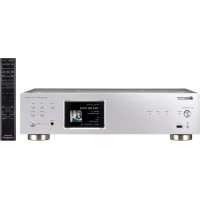
N70AE - AV receiver PIONEER - Free user manual and instructions
Find the device manual for free N70AE PIONEER in PDF.



| Product Type | Audio-video receiver / Network audio player |
| Brand | Pioneer |
| Model | N-70AE |
| Power supply | AC 220-240 V, 50/60 Hz |
| Power consumption (operation) | 40 W |
| Standby power consumption | 0.3 W (up to 2.4 W with network standby) |
| Digital audio inputs | Front USB (type A, 5 V/0.5 A), Rear USB (type A, 5 V/1 A), USB DAC (type B), Optical, Coaxial, Network (Ethernet/Wi-Fi) |
| Audio outputs | Analog RCA (2.2 Vrms), XLR (4.2 Vrms, N-70AE only), Optical, Coaxial, Headphone (6.35 mm) |
| Supported audio formats | MP3, WMA, WAV, AIFF, FLAC, Apple Lossless, DSD (DSF/DSDIFF) up to 11.2 MHz |
| D/A converter (USB DAC) | PCM up to 384 kHz/32 bit, DSD up to 11.2 MHz |
| Network connectivity | Ethernet 10/100, Wi-Fi 802.11 a/b/g/n |
| Network functions | Internet Radio (TuneIn), Spotify Connect, AirPlay, Music Server (DLNA), App control |
| Advanced audio functions | Direct Mode, Hi-Bit32, Up Sampling, Auto Sound Retriever, Lock Range Adjust |
| Display | Screen with playback info, album art, network status |
| Remote control | RC-931S (included) |
| Care and cleaning | Clean with a soft, dry cloth. Do not use solvents. Disconnect before cleaning. |
| Safety | Do not block ventilation slots. Do not expose to moisture. Use only the supplied AC adapter. |
| Spare parts and repairability | Repair by authorized service center. Spare parts available from the manufacturer. |
| Warranty | Manufacturer's warranty (see conditions in packaging) |
| Dimensions (approx.) | 435 x 130 x 330 mm (not verified) |
| Weight (approx.) | 11 kg (not verified) |
Frequently Asked Questions - N70AE PIONEER
User questions about N70AE PIONEER
0 question about this device. Answer the ones you know or ask your own.
Ask a new question about this device
Download the instructions for your AV receiver in PDF format for free! Find your manual N70AE - PIONEER and take your electronic device back in hand. On this page are published all the documents necessary for the use of your device. N70AE by PIONEER.
USER MANUAL N70AE PIONEER
Front Panel (N-70AE) 3
Front Panel (N-50AE) 4
Rear Panel (N-70AE) 5
Rear Panel (N-50AE) 6
Remote Controller 7
Display 8
Install
Connections with an amplifier 9
Connecting the power cord, etc. 11
Initial Setup
Power On & Initial Setup 12
Playback
USB Storage Device/HDD 14
Internet Radio 16
Spotify 17
AirPlay 18
MusicServer 19
Using a computer to save and delete the music on a USB HDD
connected to this unit 21
Using this unit as a D/A converter 22
Adjusting sound quality 24
- Entering text 253
Supplementary information
Supplementary information for player functions 26
Advanced Setup
Advanced Settings 27
Firmware Update 30
Others
Troubleshooting 32
General Specifications 34
License and Trademark Information 35
> Before Start > Part Names > Install > Initial Setup > Playback
Supplementary information | Advanced Setup | Others
What's in the box
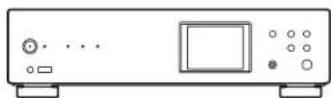
Main unit (1) (N-70AE is used in the illustrations)
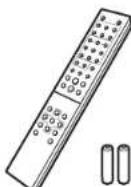
Remote controller (RC-931S) (1), Batteries (AAA/R03) (2)
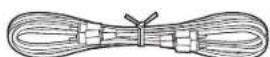
Analog Audio Cable (1)
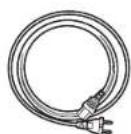
Power Cord (1)
N-70AE only
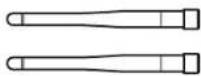
Wireless antenna (2)
Quick Start Guide (1)
This document is an online instruction manual. It is not included as an accessory.
i
The power cord must be connected only after all other cable connections are completed.
- We will not accept responsibility for damage arising from the connection of equipment manufactured by other companies.
- Functionality may be introduced by firmware updates and service providers may cease services, meaning that some network services and content may become unavailable in the future.
- Specifications and appearance are subject to change without prior notice.
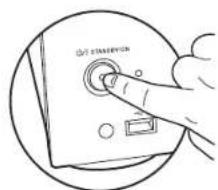
The main power cannot be turned on or off with the remote controller. Use the / STANDBY/ON button on the main unit.
Before Start
Part Names
Install
Initial Setup
Playback
Supplementary information | Advanced Setup | Others
Front Panel (N-70AE)
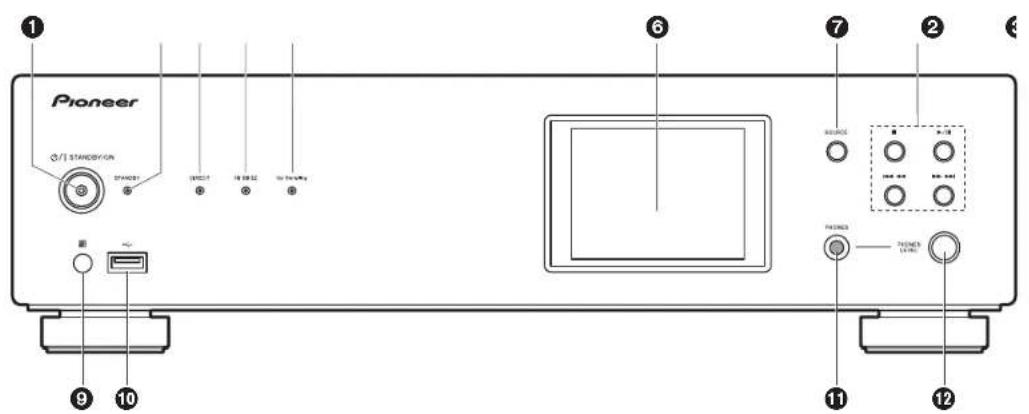

- ①/STANDBY/ON button/indicator: Switch the main power of the unit on and off. While the unit is starting up, the indicator in the center of the button slowly flashes blue, then lights blue when it has started.
- STANDBY indicator: Lights red when the unit is in standby mode.
- DIRECT indicator: Lights when the DIRECT mode is on. (→P24)
- Hi-Bit32 indicator: Lights when the Hi-Bit32 feature is on. (→P24)
- Up Sampling indicator: Lights when the Up Sampling feature is on. (P24)
- Display (→P8)
- SOURCE button: Switches the input to be played.
- Play buttons:
: This button stops playback.
▶/■: This button pauses the playback.
: Move to the track before the one being played.
:Move to the next track.
Depending on the input, these buttons may be disabled.
9. Remote control sensor
10. USB port: Connect a USB storage device or HDD (hard disk drive) to play music files. You
can also supply power (maximum 5 V/0.5 A) to USB devices with a USB cable.
- When connecting a HDD that requires more than 5V / 0.5A , connect to the USB port
(maximum 5 V/1 A) on the rear of the unit.
11. PHONES jack: Connect headphones with a standard plug (6.3 mm diameter).
12.PONES LEVEL dial: Adjust the volume of the headphones.
Before Start > Part Names > Install > Initial Setup > Playback
Supplementary information | Advanced Setup | Others
- ①/STANDBY/ON button/indicator: Switch the main power of the unit on and off. While the unit is starting up, the indicator in the center of the button slowly flashes blue, then lights blue when it has started.
- STANDBY indicator: Lights red when the unit is in standby mode.
- DIRECT indicator: Lights when the DIRECT mode is on. (→P24)
- Hi-Bit32 indicator: Lights when the Hi-Bit32 feature is on. (→P24)
- Up Sampling indicator: Lights when the Up Sampling feature is on. (→P24)
- Display (→P8)
- SOURCE button: Switches the input to be played.
- Play buttons:
: This button stops playback.
▶/■: This button pauses the playback.
: Move to the track before the one being played.
:Move to the next track.
Depending on the input, these buttons may be disabled.
9. Remote control sensor
10. USB port: Connect a USB storage device or HDD (hard disk drive) to play music files. You
can also supply power (maximum 5 V/0.5 A) to USB devices with a USB cable.
- When connecting a HDD that requires more than 5V / 0.5A , connect to the USB port (maximum 5V / 1A ) on the rear of the unit.
Before Start
PartNames
Install
Initial Setup
Playback
Supplementary information | Advanced Setup | Others
Rear Panel (N-70AE)
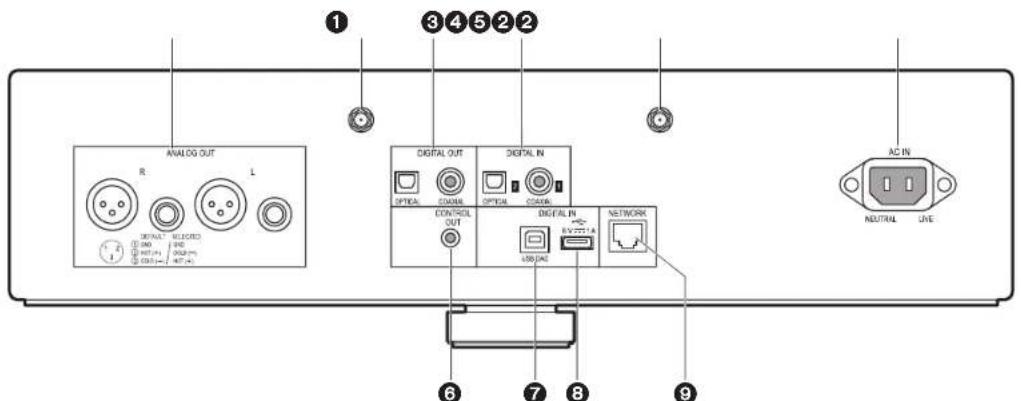

- ANALOG OUT jack: Use the supplied analog audio cable or a commercially available XLR cable to connect an integrated amplifier, for example.
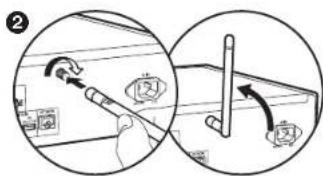
- Wireless antenna jack: Connect the supplied wireless antenna to connect wirelessly. After firmly attaching the antenna, adjust the angle according to the connection status.
- When re-packaging the unit, etc., remove the wireless antenna to prevent damage.
- DIGITAL OUT OPTICAL/COAXIAL jack: Use a digital optical cable or digital coaxial cable to connect an integrated amplifier, for example.
- DIGITAL IN OPTICAL/COAXIAL jack: Use a digital optical cable or digital coaxial cable to connect a CD player, for example.
- AC IN: Connect the supplied power cord.
- CONTROL OUT Jack: By connecting Pioneer brand amplifiers and CD players, centralized control is possible, for example you can control the amplifiers and CD players from the Pioneer Remote App.
- USB DAC port: Use a USB cable (A—B type) to connect a computer.
- USB port: Connect a USB storage device or HDD (hard disk drive) to play music files. You can also supply power (maximum 5 V/1 A) to USB devices with a USB cable. It is also possible to save or delete music files on the USB HDD with a computer over the network.
(P21)
- NETWORK jack: Connect to the network with an ethernet cable.
Before Start > Part Names > Install > Initial Setup > Playback
Supplementary information | Advanced Setup | Others
Rear Panel (N-50AE)
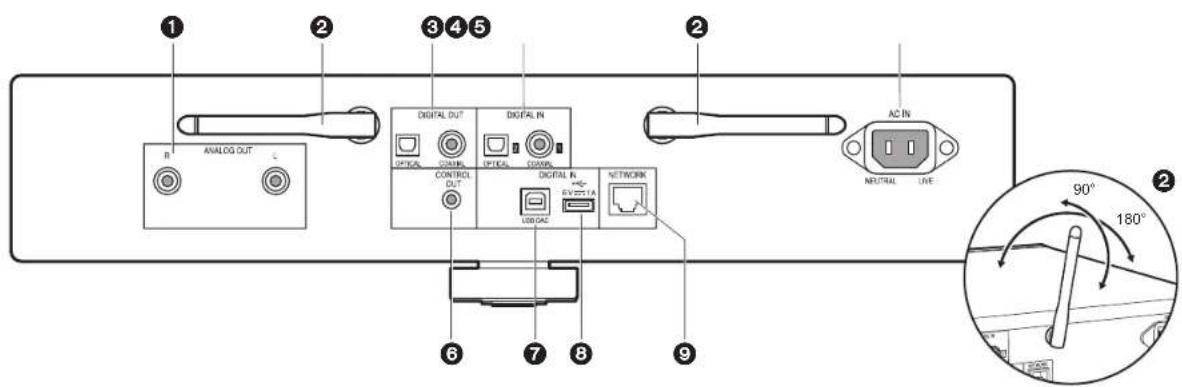
- ANALOG OUT jacks: Use the supplied analog audio cable to connect an integrated amplifier, for example.
- Wireless antenna: Erect this to connect wirelessly. The diagram shows the movable range for the wireless antenna. Do not try to force it beyond this range otherwise you may break it.
- DIGITAL OUT OPTICAL/COAXIAL jack: Use a digital optical cable or digital coaxial cable to connect an integrated amplifier, for example.
- DIGITAL IN OPTICAL/COAXIAL jack: Use a digital optical cable or digital coaxial cable to connect a CD player, for example.
- AC IN: Connect the supplied power cord.
- CONTROL OUT Jack: By connecting Pioneer brand amplifiers and CD players, centralized control is possible, for example you can control the amplifiers and CD players from the Pioneer Remote App.
- USB DAC port: Use a USB cable (A—B type) to connect a computer.
- USB port: Connect a USB storage device or HDD (hard disk drive) to play music files. You can also supply power (maximum 5 V/1 A) to USB devices with a USB cable. It is also possible to save or delete music files on the USB HDD with a computer over the network.
(P21)
- NETWORK jack: Connect to the network with an ethernet cable.
Before Start
PartNames
Install
Initial Setup
Playback
Supplementary information | Advanced Setup | Others
Remote Controller
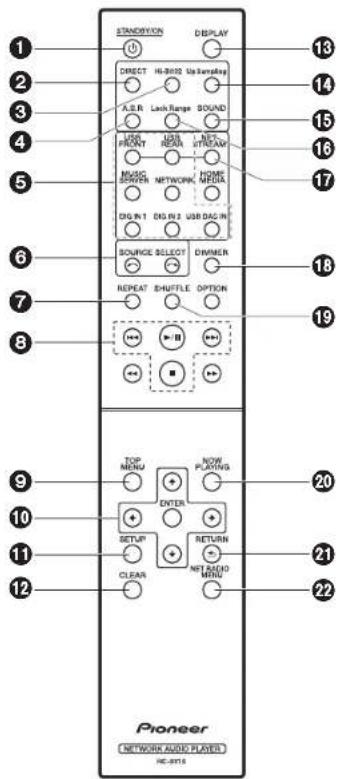
- STANDBY/ON button: When the main power of the unit is on, this turns the unit on or into standby mode. The main power cannot be turned on or off with the remote controller.
-
DIRECT button: Switch the DIRECT mode on and off. ()24)
-
Hi-Bit32 button: Switch the Hi-Bit32 feature on and off.(→P24)
4.A.S.R button:Switch the Auto Sound Retriever feature on and off. ( 24)
-
INPUT SELECTOR buttons: Switches the input to be played.
-
button input source played switches each time you press one of these buttons.
-
REPEAT button: Set repeat play.
-
Play buttons:
: Move to the track before the one being played.
▶/11: Play or pause play
▶I: Move to the next track.
- Stop playback.
Depending on the input, the operation may not start.
- TOP MENU button: Move to the top menu of the selected input.
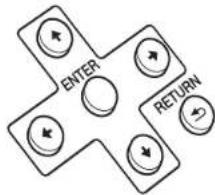
10.Cursors, ENTER button: Select the item with the cursors and press ENTER to confirm.
11. SETUP button: Displays the Setup menu. (→P27)
12.CLEAR button: Used when entering text, etc.
13.DISPLAY button: Press to turn off the display of this unit. Press again to turn the display
on.
14.Up Sampling button: Switch the Up Sampling feature on and off. ( P24)
15.SOUND button: Displays the SOUND menu. ( P24)
16.Lock Range button: Displays the Lock Range Adjust settings screen. (→P24)
17.NET STREAM button: Switch the network services, such as internet radio, each time you press the button.
18. DIMMER button: You can adjust the brightness of the display in three steps.
19. SHUFFLE button: Set shuffle play.
20. NOW PLAYING button: When you have changed the display during play, for example, this button returns the display to show information about the file being played.
21. RETURN button: Returns the display to the previous state.
22.NET RADIO MENU button: Use this when playing the internet radio.
HOMEMEDIA,OPTION,and are not used.

Before Start
PartNames
Install
Initial Setup
Playback
Supplementary information | Advanced Setup | Others
Display
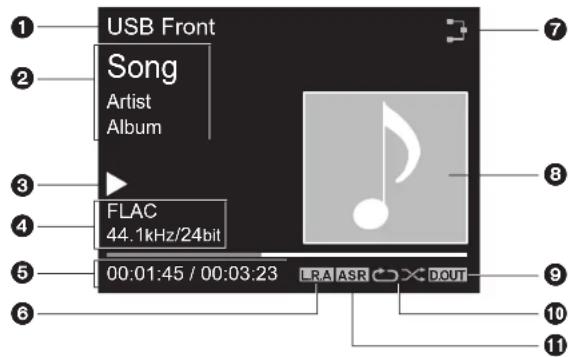
- The source is displayed.
(USB Front / USB Rear / USB DAC In / Music Server / Network / Digital In 1 / Digital In 2) - The name of the file, artist, album, etc., is displayed.
- Displays the play status.
- Displays file format, sampling frequency, and quantization bit information.
- The file play status is displayed. This may not be displayed depending on the input or file.
- This is displayed when the Lock Range Adjust setting is set to other than "Range 7". ( P24)
- Lights in the following conditions.
: When the connection setting on the unit is "Wired" and the unit is connected to the network.
X: When the connection setting on the unit is "Wired" and the unit is not connected to the network.
: When the connection setting on the unit is "Wi-Fi" and the unit is connected to the network.
: When the connection setting on the unit is "Wi-Fi"and the unit is not connected to the network. - If an album jacket is recorded for the file being played, it is displayed here.
- This is displayed when the digital audio output setting is on. ( P29)
10.Lights in the following conditions.
: When all track repeat play is on
: When one track repeat play is on
: When shuffle play is on
-
This is displayed when the Auto Sound Retriever feature is on. (→P24)
-
When DISPLAY on the remote controller is pressed to turn off the display, the unit may appear the same as if you had unplugged the unit from the power outlet, but electricity is still being supplied to the unit. To completely cut the unit off from the power supply, you need to unplug the power plug (shutoff device) unit from the power outlet.

Connections with an amplifier
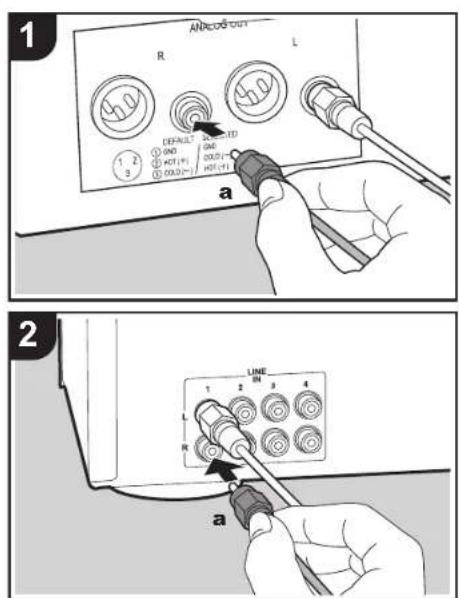
N-70AE is used in the illustrations. N-50AE does not have an XLR jack.

You can play the audio from network features such as internet radio and from devices connected to this unit through speaker systems connected to integrated amplifiers or AV receivers. Connect to suit the input jacks on your amplifier.
Connecting with an analog audio cable
The signal is converted to analog in the D/A converter of this unit and then output to an integrated amplifier, for example. Connect the LINE IN jacks on an integrated amplifier with the supplied analog audio cable to the ANALOG OUT jack on this unit.
Before Start
Part Names
Install
Initial Setup
Playback
Supplementary information | Advanced Setup | Others
Connecting with an XLR cable (N-70AE only)
The signal is converted to analog in the D/A converter of this unit and then output to an integrated amplifier, for example. Connect the XLR input jack on an integrated amplifier with an XLR cable to the ANALOG OUT jack (XLR jack) on this unit.
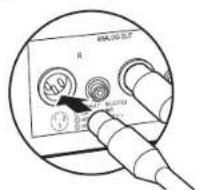
Connecting with a digital optical cable
The signal is converted to analog in the D/A converter of the integrated amplifier, for example. Connect the OPTICAL IN jack on an integrated amplifier with a digital optical cable to the DIGITAL OUT OPTICAL jack on this unit.
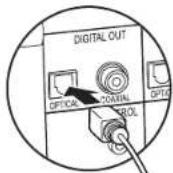
- The digital signals that can be output by this unit are linear PCM signals with a sampling frequency and quantization bit rate of 192kHz / 24 bit (operation may not be possible with all connected devices or environments).
a Monaural Miniplug Cables (without resistors)
Connecting with a digital coaxial cable
The signal is converted to analog in the D/A converter of the integrated amplifier, for example. Connect the COAXIAL IN jack on an integrated amplifier with a digital coaxial cable to the DIGITAL OUT COAXIAL jack on this unit.
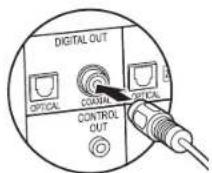
- The digital signals that can be output by this unit are linear PCM signals with a sampling frequency and quantization bit rate of 192kHz / 24 bit (operation may not be possible with all connected devices or environments).
The control jack
By connecting Pioneer brand amplifiers or CD players, for example, that have control jacks using monaural miniplug cables (without resistors), you can centralize control of the devices using the Pioneer Remote App.
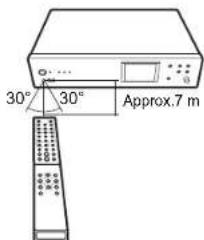
Furthermore, even when the other devices are put in places where the remote control signal is unable to reach, you can enable operation of the other components through the remote control sensor of this unit.
- Also make sure to connect with the analog audio cable. Centralized control cannot work correctly with only the control jack connection.
- With this connection, the remote control sensors on the amplifier and CD player stop working. Point the remote controller at remote control sensor of this unit.
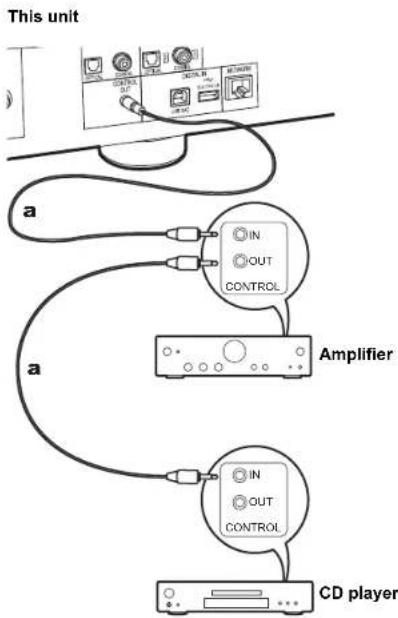
Before Start
Part Names
Install
Initial Setup
Playback
Supplementary information | Advanced Setup | Others
Connecting the power cord, etc.
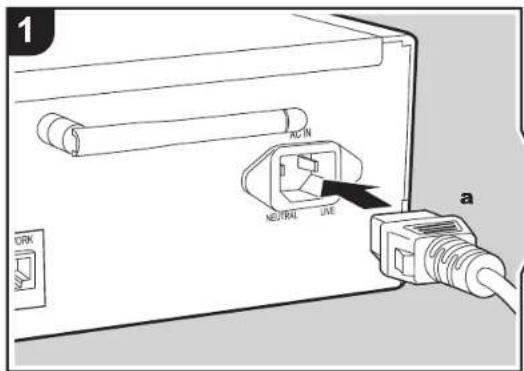
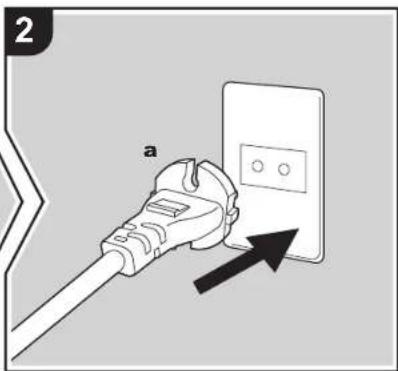
Power cord connection
This model includes a removable power cord. The power cord must be connected only after all other connections are completed. Make sure you first connect the power cord to AC IN terminal of the unit and then connect to the outlet. Always disconnect the outlet side first when disconnecting the power cord.
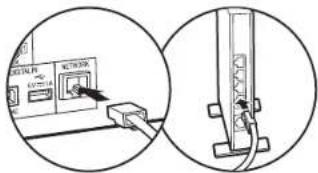
Ethernet cable connection
To connect to the network with an ethernet cable, use the NETWORK jack. When using Wi-Fi connection, make settings in initial settings ( P12) . When using N-70AE, make sure you have connected the supplied wireless antenna. ( P5) You can enjoy features such as internet radio and AirPlay by connecting to the network.
Before Start
Part Names
Install
Initial Setup
Playback
Supplementary information | Advanced Setup | Others
Power On & Initial Setup
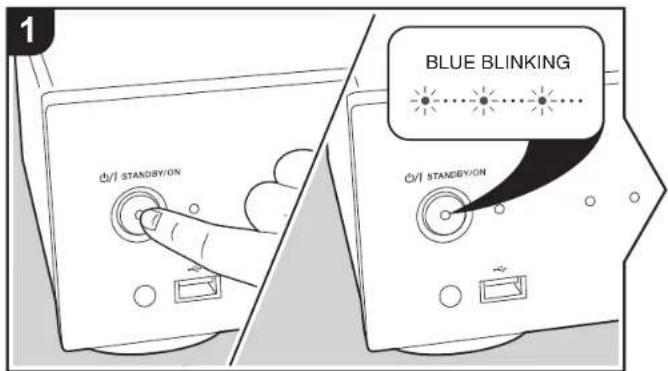
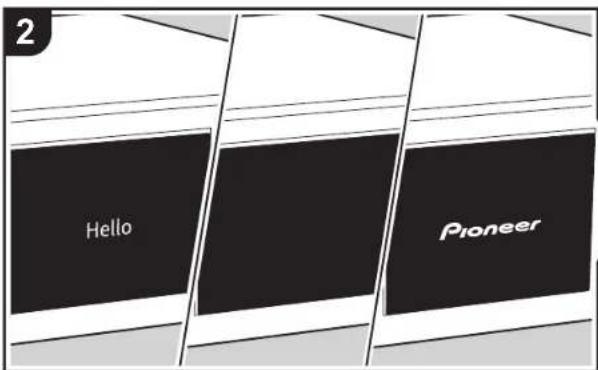
Starting up: When you press /I STANDBY/ON on the main unit, the STANDBY/ON indicator in the center of the button slowly flashes blue, then "Hello" is displayed on the display about 20 seconds later. After this, the display goes blank, then after the Pioneer logo is displayed, you can start operating the unit.
Wi-Fi connection settings
When you first turn the power on, the initial setup screen is displayed automatically, allowing you to easily make Wi-Fi connection settings.
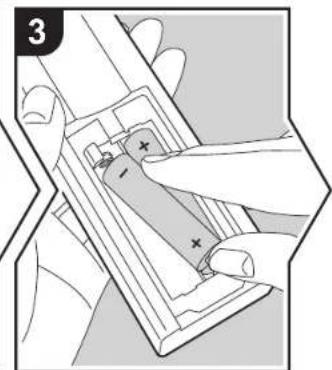
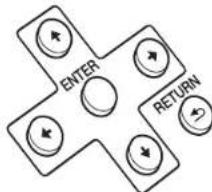
To set, select the item with the cursors on the remote controller and press ENTER to confirm. To return to the previous display, press RETURN.
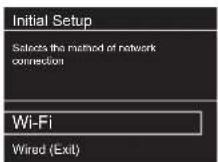
To make Wi-Fi settings, select "Wi-Fi". If you have connected with an ethernet cable, select "Wired (Exit)" and confirm. If you select "Wi-Fi", select the method for setting in the next screen (for example "Scan Networks").
Before Start
Part Names
Install
Initial Setup
Playback
Supplementary information | Advanced Setup | Others
While setting up the network, screens asking you to accept the Onkyo Group privacy policy and agree to the privacy policies required to use the Chromecast built-in feature are displayed. Select "Accept" and press ENTER to indicate agreement. For information on the settings required to use the Chromecast built-in feature and the operations to play it, refer to the included Chromecast built-in instruction sheet.
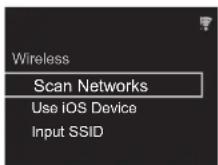
To redo the initial settings, press SETUP on the remote controller, select "Wi-Fi" in "Network Setting" - "Connection", then select "Wi-Fi Setup".
Scan Networks
From the list of SSID for access points such as wireless LAN routers, select the required SSID and make the settings.
- Select the SSID of the access point you want to connect and then confirm.
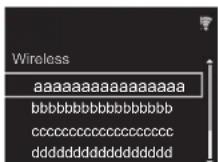
- Select either "Enter Password" or "Push Button" and confirm. If the access point has an automatic setting
button, by selecting "Push Button" you can connect without entering a password.
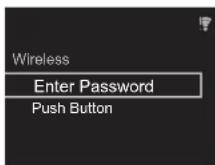
- If you select "Enter Password", enter the password of the access point and press ENTER. For details on how to enter text, refer to "Entering text" (→P25).
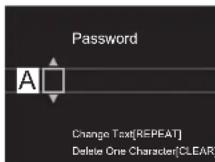
If you select "Push Button", then after pressing and holding the automatic setting button on the access point for the required amount of time, press ENTER on the remote controller.
- displayed when the settings are complete.
Use iOS Device
Set by sharing the iOS device's Wi-Fi settings with this unit.
- Connect the iOS device by Wi-Fi.
- Select this device in the "SET UP NEW AIRPLAY SPEAKER..." item on the screen of the iOS device and select "Next".
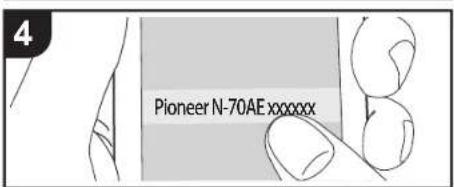
This unit is displayed as "Pioneer N-70AE XXXXX" or
"Pioneer N-50AE XXXXX".
- After establishing the connection, select "Done" on the screen of the iOS device.
- displayed on the display of the unit when the settings are complete.
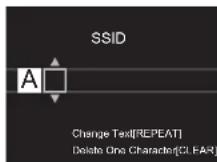
Enter SSID of the access point
Set by entering the SSID of the access point you want to connect.
1. Enter the SSID. For details on how to enter text, refer to "Entering text" (→P25).
- Select and confirm the authentication method.
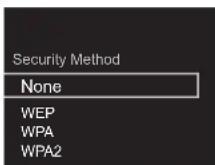
- If you select "None", proceed to step 3. If you select "WEP", "WPA", or "WPA2", enter the password and confirm.
- displayed when the settings are complete.

> Before Start > Part Names > Install > Initial Setup > P l a y b a c k
Supplementary information | Advanced Setup | Others
USB Storage Device/HDD
Basic operations
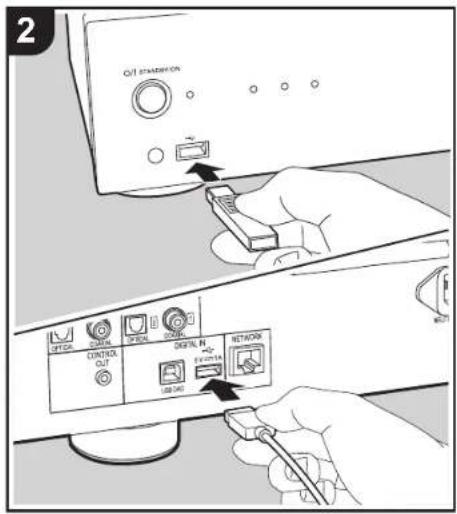
You can play music files by connecting a USB storage device or HDD (hard disk drive) to the USB port on the front or rear of the unit.
The USB port on the front supports a maximum 5 V/0.5 A power supply. If the HDD requires more than this, connect to the USB port (maximum 5 V/1 A) on the rear of the unit.
1. Turn the unit on.
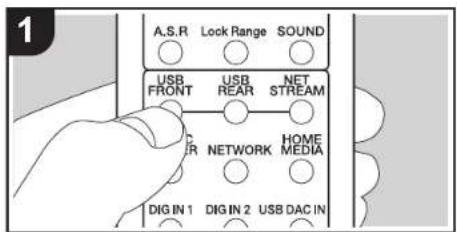
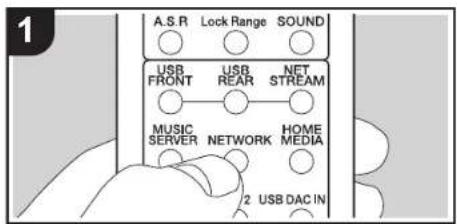
2. Press USB FRONT or USB REAR
- Plug your USB storage device or HDD into the USB port on the front or rear.
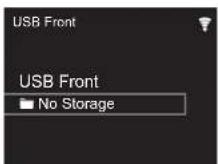
- Folders and music files are displayed on the display when loading is complete.
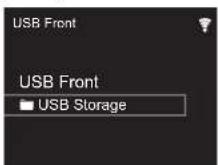
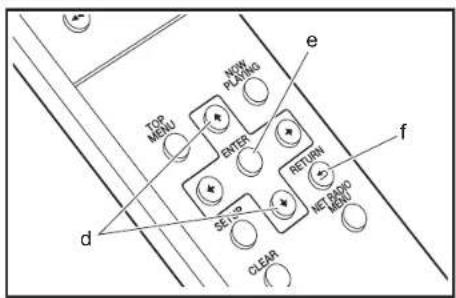
- Select the folder or music file with the cursors (d) of the remote controller and press ENTER (e) to confirm. To return to the previous display, press RETURN (f).
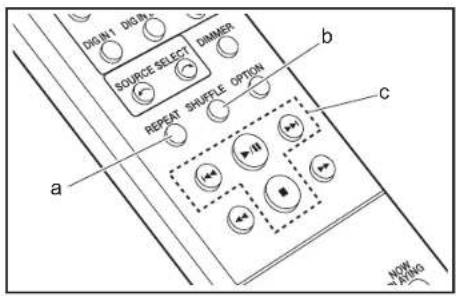
- Use play buttons (c) to stop play or choose tracks to play. The display of album name, artist name, and album art is supported with MP3/WMA/Apple Lossless/FLAC/AAC/
> Before Start > Part Names > Install > Initial Setup > P I a y b a c k
Supplementary information | Advanced Setup | Others
DSD (DSF only) format music files. The formats for embedded images are JPEG and PNG.
- Characters that cannot be displayed by this unit appear as "J."
- The USB port of this unit conforms with the USB 2.0 standard. The transfer speed may be insufficient for some content you play, which may cause some interruption in sound.
Repeat play
- Repeatedly press REPEAT (a) during play to display or on the display.
Repeat play of all tracks.
Repeat play of the selected individual track.
To cancel repeat play, press REPEAT (a) several times until the icons disappear.
Shuffle play
- Repeatedly press SHUFFLE (b) during play to display > on the display.
× : Play tracks in a folder randomly.
To cancel shuffle play, press SHUFFLE (b) until the icon disappears.
USB Storage / HDD Device Requirements
Note that operation is not guaranteed with all USB storage devices or HDD.
- This unit can use USB storage devices that comply with the USB mass storage device class standard. (However, there are still devices that cannot be played by this unit even if they comply with the USB mass storage class standard.)
- The unit is also compatible with USB storage devices using the FAT16 or FAT32 file system formats. Other formats such as exFAT, NTFS, and HFS cannot be
played by this unit.
If the USB storage device has been partitioned, each section will be treated as an independent device.
- Up to 20,000 tracks per folder can be displayed, and folders may be nested up to 16 levels deep.
- USB hubs and USB storage devices with hub functions are not supported. Do not connect these devices to the unit.
- USB storage devices with security function are not supported on this unit.
- If the USB storage device or HDD comes with an AC adapter, we recommend that you use its AC adapter to power it.
Media inserted to the USB card reader may not be available in this function. Furthermore, depending on the USB storage device, proper reading of the contents may not be possible.
- We accept no responsibility whatsoever for the loss or damage to data stored on a USB storage device when that device is used with this unit. We recommend that you back up your important music files beforehand.
Supported Audio Formats
This unit supports the following music file formats. Note that sound files that are protected by copyright cannot be played on this unit.
MP3 (.mp3/.MP3):
Supported formats: MPEG-1/MPEG-2 Audio Layer 3
Supported sampling rates: 44.1kHz , 48kHz
- Supported bitrates: Between 8 kbps and 320 kbps and VBR.
WMA (.wma/.WMA):
Supported sampling rates: 44.1 kHz, 48 kHz
- Supported bitrates: Between 5 kbps and 320 kbps and VBR.
WMA Pro/Voice/WMA Lossless formats are not
supported
WAV (.wav/.WAV):
WAV files include uncompressed PCM digital audio.
Supported sampling rates: 44.1 kHz, 48 kHz, 88.2 kHz, 96 kHz, 176.4 kHz, 192 kHz
- Quantization bit: 8 bit, 16 bit, 24 bit
AIFF (.aiff/.aif/.AIFF/.AIF);
AIFF files include uncompressed PCM digital audio.
Supported sampling rates: 44.1 kHz, 48 kHz, 88.2 kHz, 96 kHz, 176.4 kHz, 192 kHz
Quantization bit: 8 bit, 16 bit, 24 bit
AAC (aac/m4a/mp4/3gp/3g2/AAC/M4A/MP4/3GP/3G2);
Supported formats: MPEG-2/MPEG-4 Audio
Supported sampling rates: 44.1 kHz, 48 kHz, 88.2 kHz, 96 kHz
- Supported bitrates: Between 8 kbps and 320 kbps and VBR.
FLAC(.flac./FLAC):
Supported sampling rates: 44.1 kHz, 48 kHz, 88.2 kHz, 96 kHz, 176.4 kHz, 192 kHz
Quantization bit: 8 bit, 16 bit, 24 bit
Apple Lossless (.m4a/.mp4/.M4A/.MP4):
Supported sampling rates: 44.1 kHz, 48 kHz, 88.2 kHz, 96 kHz, 176.4 kHz, 192 kHz
Quantization bit: 16 bit, 24 bit
DSD (dsf./dff./DSF./DFF):
Supported formats: DSF/DSDIFF
Supported sampling rates: 2.8 MHz, 5.6 MHz, 11.2 MHz
> Before Start > Part Names > Install > Initial Setup > P l a y b a c k
Supplementary information | Advanced Setup | Others
Internet Radio
Basic operations
You can use internet radio services such as Tuneln by connecting this unit to a network that has an internet connection.
Depending on the internet radio service, the user may need to register from their computer first.
-
Tum the unit on.
-
Press NETWORK.
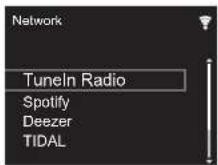
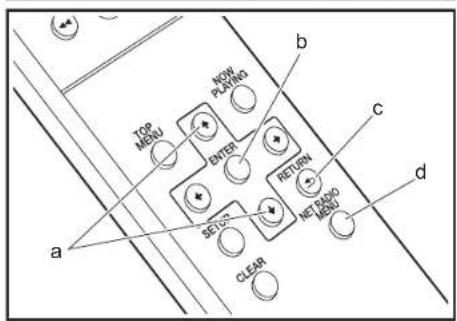
- Select "Tuneln Radio" with the cursors (a) of the remote controller and press ENTER (b) to confirm. After switching the display to the internet radio service, you can select stations with the cursors (a) on the remote controller and press ENTER (b) to confirm. To return to the previous display, press RETURN (c).
Tuneln
You can register a station you have played as a favorite.
1. Press NET RADIO MENU (d) while playing Tuneln.
2. Select "Add to My Presets" on the display and confirm.
3. To play a favorite, in the top screen of Tuneln, select the registered station in "My Presets" and confirm. To delete favorites, press NET RADIO MENU (d) during play, select "Remove from My Presets" and confirm.


> Before Start > Part Names > Install > Initial Setup > P l a y b a c k
Supplementary information | Advanced Setup | Others
Spotify
Basic Operation
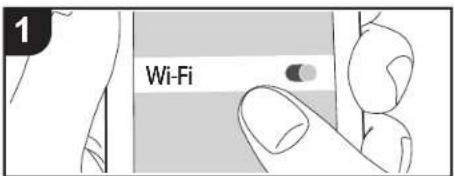
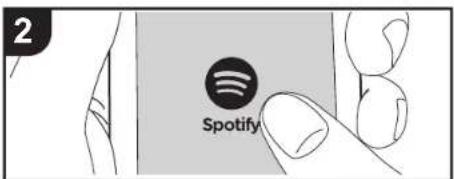
Spotify Connect play is possible by connecting this unit to the same network as a smart phone or tablet. To enable Spotify Connect, install the Spotify application on your smartphone or tablet and create a Spotify premium account.
- Connect the smartphone to the same network as this unit.
- Start the Spotify app.
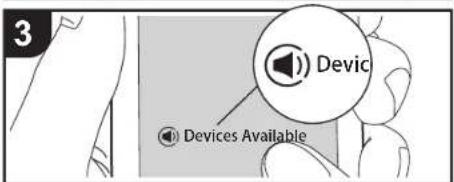
- Play the track in the Spotify app, then after switching to the screen for controlling play, tap "Devices Available" at the bottom of the screen.
- Select this unit. This unit is displayed as "Pioneer N-70AE XXXXX" or "Pioneer N-50AE XXXXX".
-
This unit turns on automatically and the input selector changes to Network and streaming of Spotify starts.
-
If "Option Setting" - "Power Off Setting" - "Network Standby" is set to "Off" in the Setup menu, manually turn the unit on and then press NETWORK on the remote controller.
Refer to the following for Spotify settings: www.spotify.com/connect/
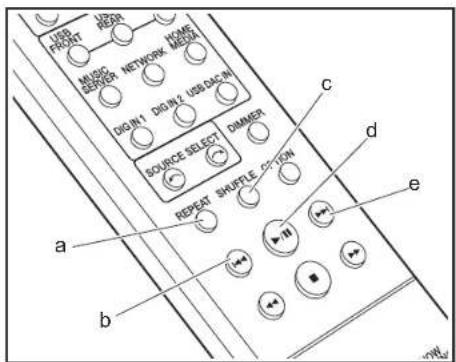
The following remote controller operations are also possible.
(a) This button starts repeat play.
(b) This button plays the previous track.
(c) This button starts shuffle play.
(d) Pressed during play this button pauses playback. Pressed while paused, and it restarts play.
(e) This button plays the next track.
> Before Start > Part Names > Install > Initial Setup > P l a y b a c k
Supplementary information | Advanced Setup | Others
AirPlay®
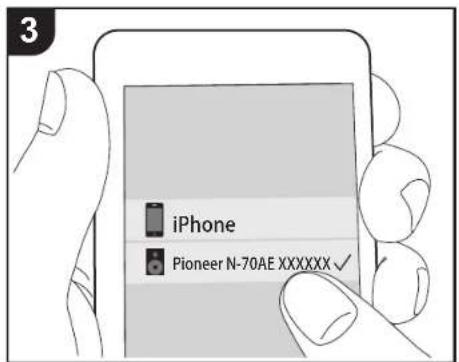
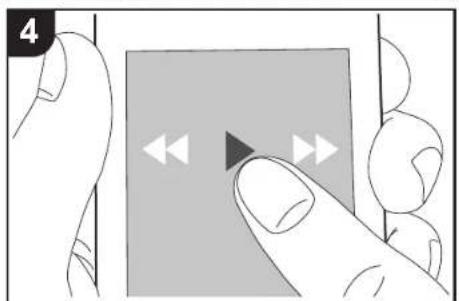
e.g., iOS 10
Basic Operation
You can wirelessly enjoy the music files on an iPhone, iPod touch, or iPad connected to the same access point as this unit. Update the OS version on your iOS device to the latest version.
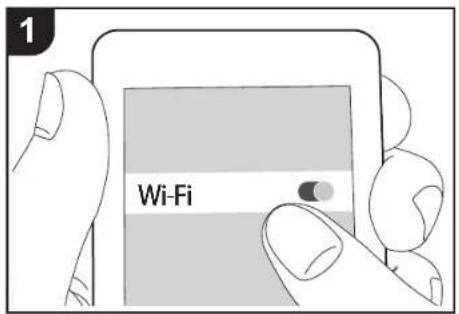
- Connect the iOS device to the same network as this unit.
-
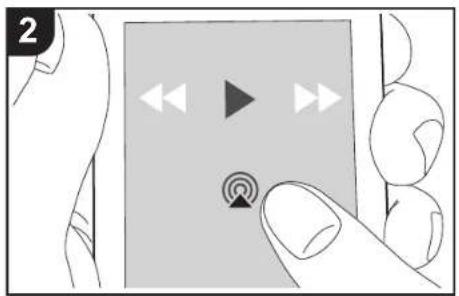
Tap the AirPlay icon the play screen of the music app on the iOS device and select this unit from the list of devices displayed.
-
This unit is displayed as "Pioneer N-70AE XXXXX" or "Pioneer N-50AE XXXXX".
-
If an "AirPlay Password" has been set on this unit, enter the password you set.
-
Play the music files on the iOS device.
-
At the time of purchase, the Network Standby feature is set to On, and when play of AirPlay starts, the power of this unit automatically comes on and play starts.
- Due to the characteristics of AirPlay wireless technology, the sound produced on this unit may slightly be behind the sound played on the AirPlay-enabled device.
- SHUFFLE and REPEAT on the remote controller do not work. Operate from the iOS device.
You can also play the music files on a computer with iTunes (Ver. 10.2.2 or later). Make sure this unit and the computer are connected to the same network, click the AirPlay icon
in iTunes, select this unit from the list of devices displayed, and start play of a music file.
> Before Start > Part Names > Install > Initial Setup > P I a y b a c k
Supplementary information | Advanced Setup | Others
Music Server
It is possible to stream music files stored on PCs or NAS devices connected to the same network as this unit. The network servers this unit is compatible with are those PCs with players installed that have the server functionality of Windows Media Player 11 or 12, or NAS that are compatible with home network functionality. You may need to make some settings in advance to use Windows Media Player 11 or 12. Note that only music files registered in the library of Windows Media Player can be played.
Configuring Windows Media® Player
Windows Media Player 11
- Turn on your PC and start Windows Media Player 11.
- In the "Library" menu, select "Media Sharing" to display a dialog box.
- Select the "Share my media" check box, and then click "OK" to display the compatible devices.
-
Select this unit, and then click "Allow
-
When it is clicked, the corresponding icon is checked. 5. Click "OK" to close the dialog.
Depending of the version of Windows MedPlayer, there may be differences in the names of items you can select.
Windows Media Player 12
- Tum on your PC and start Windows Media Player 12.
-
In the "Stream" menu, select "Turn on media streaming" to display a dialog box.
-
If media streaming is already turned on, select "More streaming options..." in the "Stream" menu to list players in the network, and then go to step 4.
-
Click "Turn on media streaming" to list players in the network.
- Select this unit in "Media streaming options" and check that it is set to "Allow".
- Click "OK" to close the dialog.
Depending of the version of Windows MediPlayer,
there may be differences in the names of items you can select.
Playing
- Turn the unit on.
- Start the server (Windows Media Player 11, Windows Media Player 12, or NAS device) containing the music files to play.
- Make sure that the PCs and/or NASs are properly connected to the same network as this unit.
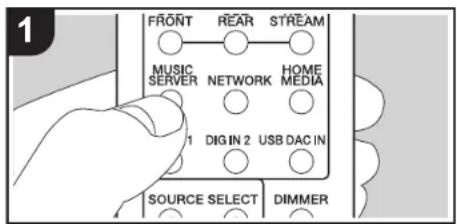
- Press MUSIC SERVER.
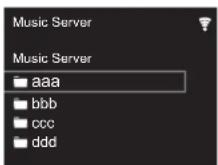
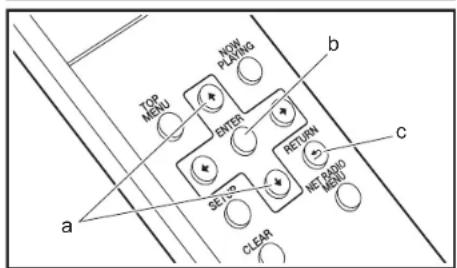
- Select the server or music file with the cursors (a) of the remote controller and press ENTER (b) to confirm. To return to the previous display, press RETURN (c).
If "No Server" is displayed, check whether the network is
properly connected.
Depending on the server being used and the files played, elapsed play time and remaining play time may not be displayed. - For music files on a server, there can be up to 20,000 tracks per folder, and folders may be nested up to 16 levels deep.
> Before Start > Part Names > Install > Initial Setup > P I a y b a c k
Supplementary information | Advanced Setup | Others

Controlling Remote Playback from a PC
You can use this unit to play music files stored on your PC by operating the PC inside your home network. The unit supports remote playback with Windows Media© Player 12.
1. Turn on your PC and start Windows Media Player 12.
2. Open the "Stream" menu and check that "Allow remote control of my Player..." is checked. Click "Turn on media streaming" to list players in the network.
3. Select and right-click the music file to play with Windows Media Player 12. To remotely play a music file on another server, open the target server from "Other Libraries" and select the music file to play.
4. Select this unit in "Play to" to open the "Play to" window of Windows Media Player 12 and start playback on the unit. If your PC is running on Windows 8.1, click "Play to", and then select this unit. If your PC is running on Windows 10, click "Cast to Device", and select this unit. Operations during remote playback are possible from the "Play to" window on the PC.
Remote playback is not possible when using a network service or playing music files on a USB storage device.
- Depending of the version of Windows, there may be differences in the names of items you can select.
Supported Audio Formats
This unit supports the following music file formats.
Note that playback via wireless LAN of sampling rates of 88.2kHz or higher, and DSD are not supported.
Remote play of FLAC, and DSD is also not supported.
Variable bit-rate (VBR) files are supported. However, playback times may not be displayed correctly.
- Remote playback does not support the gapless playback.
MP3 (.mp3/.MP3):
Supported formats: MPEG-1/MPEG-2 Audio Layer-3
Supported sampling rates: 44.1 kHz, 48 kHz
Supported bitrates: Between 8 kbps and 320 kbps and VBR.
WMA (.wma/.WMA):
Supported sampling rates: 44.1 kHz, 48 kHz
- Supported bitrates: Between 8 kbps and 320 kbps and VBR.
- WMA Pro/Voice/WMA Lossless formats are not supported.
WAV (.wav/.WAV):
WAV files include uncompressed PCM digital audio.
Supported sampling rates: 44.1 kHz, 48 kHz, 88.2 kHz, 96 kHz, 176.4 kHz, 192 kHz
Quantization bit: 8 bit, 16 bit, 24 bit
AIFF (aiff/aifl.AIFF./AIF):
AIFF files include uncompressed PCM digital audio.
Supported sampling rates: 44.1 kHz, 48 kHz, 88.2 kHz, 96 kHz, 176.4 kHz, 192 kHz
Quantization bit: 8 bit, 16 bit, 24 bit
AAC (.aac/.mp4/.mp4/.3gp/.3gp/.AAC/.M4A/.MP4/.3GP/.3GP/.3GP/.3GP/.3GP/.3GP/.3GP/.3GP/.3GP/.3GP/.3GP/.3GP/.3GP/.3GP/.3GP/.3GP/.3GP/.3GP/.3GP/.3GP/.3GP/.3GP/.3GP/.3GP/.3GP/.3GP/.3GP/.3GP/.3GP/.3GP/.3GP/.3GP/.3GP/.3GP/
Supported formats: MPEG-2/MPEG-4 Audio
Supported sampling rates: 44.1 kHz, 48 kHz, 88.2 kHz, 96 kHz
- Supported bitrates: Between 8 kbps and 320 kbps and VBR.
FLAC (.flac/.FLAC):
Supported sampling rates: 44.1 kHz, 48 kHz, 88.2 kHz,
96 kHz, 176.4 kHz, 192 kHz
Quantization bit: 8 bit, 16 bit, 24 bit
LPCM (Linear PCM):
Supported sampling rates: 44.1 kHz, 48 kHz
- Quantization bit: 16 bit
Apple Lossless (.m4a/.mp4/.M4A/.MP4):
Supported sampling rates: 44.1 kHz, 48 kHz, 88.2 kHz, 96 kHz, 176.4 kHz, 192 kHz
Quantization bit: 16 bit, 24 bit
DSD(.dsf/.dff/.DSF/.DFF):
Supported formats: DSF/DSDIFF
Supported sampling rates: 2.8 MHz, 5.6 MHz, 11.2 MHz
> Before Start > Part Names > Install > Initial Setup > P l a y b a c k
Supplementary information | Advanced Setup | Others
Using a computer to save and delete the music on a USB HDD connected to this unit
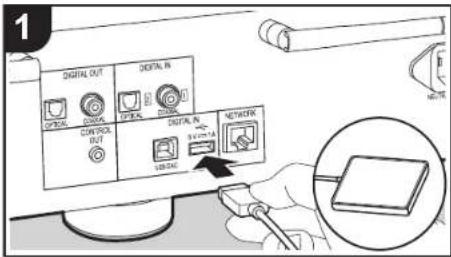
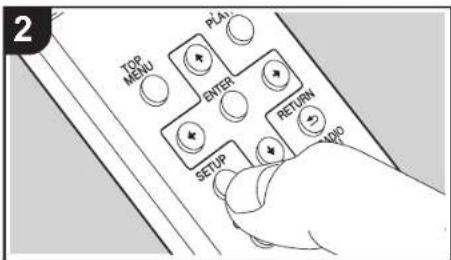
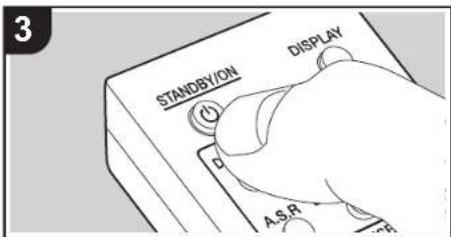
Basic operations
Without having to disconnect the HDD (hard disk drive) connected to the USB port on the rear of the main unit and reconnecting to a computer, you can save and delete music files directly over a network.
-
Plug your HDD into the USB port on the rear of the main unit. Use an HDD for Windows® when connecting an HDD.
-
To use this feature, plug your HDD into the USB port on the rear of the main unit.
-
Format the connected HDD. Select "Option Setting" - "Storage" - "Format" in this unit's Setup menu, select "Start" and then press ENTER.
-
Formatting by this unit is necessary when using this feature.
-
Do not switch the power of the main unit to standby until formatting is complete.
-
When you format the HDD, all data on the HDD will be deleted, so you should backup data before formatting.
-
If you cannot format on this unit, format firstly on your computer, then try to format using this unit again.
-
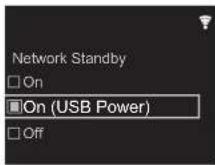
Select "Option Setting" - "Power Off Setting" - "Network Standby" in this unit's Setup menu, select "On (USB Power)" and then press ENTER.
-
Switch this unit to standby.
-
When this unit is on, you cannot use a computer to access the HDD connected to the USB port on the rear of the main unit.
-
On a computer connected to the same network as this
unit, display a list of devices connected to the network.
This unit is displayed as "Model name XXXXX". (XXXXX are alphanumeric characters identifying each unit)
If on Windows, click the icon that shows the unit as a computer rather than the one that shows it as a media device.
- In the "USB Storage" folder in the folder of this unit you will see the content of the HDD connected to the USB port on the rear of the main unit. Use normal computer operations to save or delete the files.
We have confirmed the operation of this feature on the following OS's. (As of March 2017)
Windows 7
Windows 8.1
Windows® 10
macOS Sierra 10.12
-
If this unit is not shown in the network list in Window, perform the "Updating to the latest information" operation.
-
We do not guarantee operation when playing the tracks, etc., saved on an HDD connected to this unit, on other equipment over a network.

> Before Start > Part Names > Install > Initial Setup > P l a y b a c k
Supplementary information | Advanced Setup | Others
Using this unit as a D/A converter

You can convert the digital audio from computers and audio devices such as CD players to analog, then output them from the ANALOG OUT jacks.
To play the audio from a computer, you need to install the special driver on your computer. Download the driver software from our website.
http://www.pioneer-audiovisual.eu/
Connections
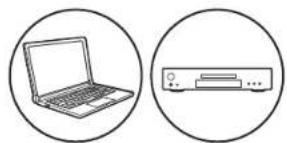
Use an A-B type USB cable to connect a computer. Use either a digital optical cable or digital coaxial cable, depending on the jacks on the device to be connected, to connect audio devices such as CD players.
Playing Back
-
Turn the unit on.
-
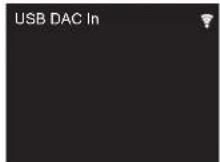
When playing a computer connected to the USB DAC port, press USB DAC IN to change the input on this unit to "USB DAC In".
> Before Start > Part Names > Install > Initial Setup > P I a y b a c k
Supplementary information | Advanced Setup | Others
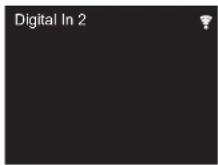
When playing a device connected to the DIGITAL IN
OPTICAL jack, press DIG IN 2 to change the input on this unit to "Digital In 2".
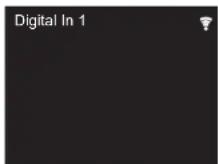
When playing a device connected to the DIGITAL IN
COAXIAL jack, press DIG IN 1 to change the input on this unit to "Digital In 1".
- Start play on the player.
The digital signals you can input with this unit are as follows.
(Operation may not be possible depending on the connected device and environment)
- Signals that can be input through the USB DAC port: Linear PCM signals with a sampling frequency and quantization bit rate of up to 384 kHz/32 bit, and DSD with a sampling frequency up to 11.2 MHz
- Signals that can be input through the DIGITAL IN OPTICAL/COAXIAL jacks: Linear PCM signals with a sampling frequency and quantization bit rate of up to 192 kHz/24 bit


> Before Start > Part Names > Install > Initial Setup > P l a y b a c k
Supplementary information | Advanced Setup | Others
Adjusting sound quality
Reproduce the original sound faithfully (DIRECT mode)
Processing that affects sound quality is shut down so sound closer to the original is reproduced.
-
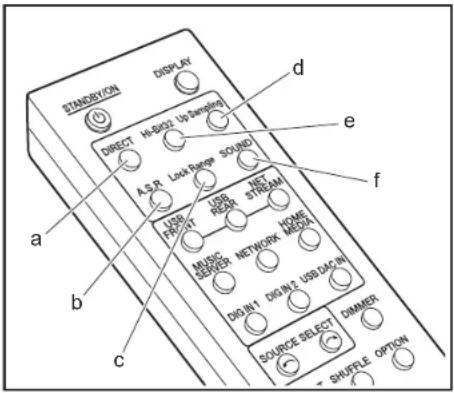
Press DIRECT (a).
-
The DIRECT indicator on the front of the main unit lights when the DIRECT mode is on.
- When the DIRECT mode is on, Auto Sound Retriever, HiBit32, and Up Sampling are fixed to off.
Playing even better quality sound (SOUND menu)
Use the SOUND menu to process the audio in a variety of ways to get even better playback sound quality.
- Press SOUND (f).
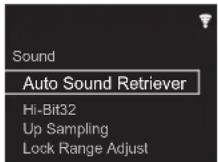
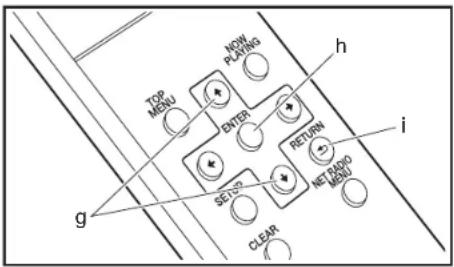
- Select the item or setting value with the cursors of the remote controller (g) and press ENTER (h) to confirm your selection. To return to the previous display, press RETURN (i).
- To exit the settings, press SOUND (f).
Auto Sound Retriever
By compensating for the parts deleted during the processing to compress the audio, the unit is able to enrich and improve the inflection of the sound.
- You can also press A.S.R (b) to turn the feature on and off.
- This feature cannot be used when the DIRECT mode is on.
Hi-Bit32
The dynamic range is expanded by converting audio with bit rate quantizations of between 16 bits and 24 bits to have a bit rate quantization of 32 bits. This achieves a smoother and more refined sound reproduction.
- The Hi-Bit32 indicator on the front of the main unit lights when this feature is on.
- You can also press Hi-Bit32 (e) to turn the feature on and off.
- This feature cannot be used when the DIRECT mode is on.
Up Sampling
Increasing the sampling frequency helps achieve sound reproduction with a higher degree of clarity.
- The Up Sampling indicator on the front of the main unit lights when this feature is on.
- You can also press Up Sampling (d) to turn the feature on and off.
- This feature cannot be used when the DIRECT mode is on.
Lock Range Adjust
Sound quality is improved by narrowing the lock range to reduce incidental sounds. However, narrowing the lock range too much can cause interruptions to sound and noise. Adjust the lock range while listening to some audio. Different settings can be set for this setting for each input selector.
"Range 7" (default value) to "Range 1 (for Expert)"
- You can also press Lock Range (c) to display the Lock Range Adjust setting screen.
> Before Start > Part Names > Install > Initial Setup > P I a y b a c k
Supplementary information | Advanced Setup | Others
Entering text
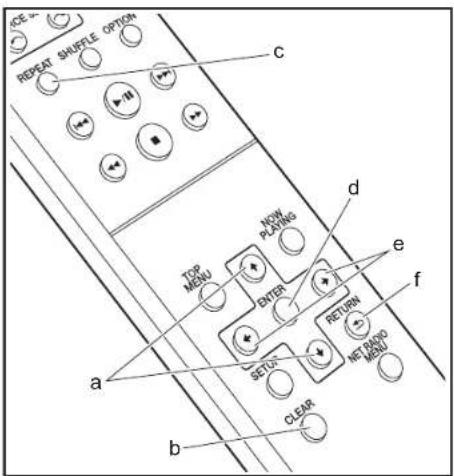
Text entry, for passwords, etc., uses the following remote controller buttons.
/ buttons (a): Each press changes the character.
CLEAR button (b): deletes the character in the cursor position.
REPEAT button (c): Each press changes text type in the order upper case lower case numbers symbols.
ENTER button (d): Confirms the entered content.
/ buttons (e): Move the position (cursor position) where the character is to be entered.
RETURN button (f): Cancels input and returns you to the previous display.
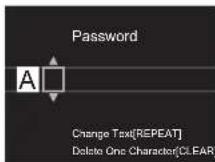
> Before Start > Part Names > Install > Initial Setup > Playback
Supplementary information | Advanced Setup | Others

Supplementary information for player functions
Due to firmware (the software for the system) updates after you make your purchase or firmware changes during production of the product, there may be additions or changes to the features available compared to what is in the instruction manual.
For information about player functions that have been added or changed, see the following references.
Supplementary information for player functions Click here
> Before Start > Part Names > Install > Initial Setup > Playback
Supplementary information | Advanced Setup | Others
Advanced Settings
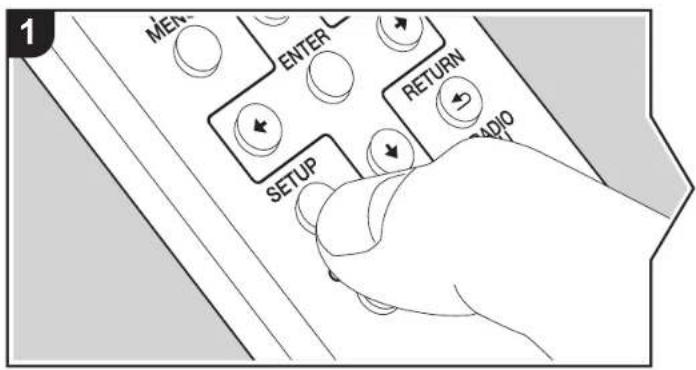
The unit allows you to configure advanced settings to provide you with an even better experience.
- Press SETUP on the remote controller.
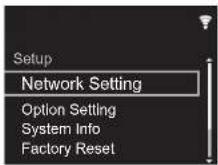
- After the Setup screen is displayed, select the content or the setting with the cursors on the remote controller and press ENTER to confirm your selection. To return to the previous screen, press RETURN.
- To exit the settings, press SETUP.
Network Setting
Connection
Select the network connection type.
"Wi-Fi": To connect via wireless LAN
"Wired" (Default Value): To connect via wired LAN
Perform "Wi-Fi Setup" if you select "Wi-Fi".
Wi-Fi Setup
Make Wi-Fi connection settings. (→P12)
This can be set only when "Wi-Fi" is selected in "Connection".
> Before Start > Part Names > Install > Initial Setup > Playback
Supplementary information | Advanced Setup | Others
- You can make Wi-Fi connection settings using a web browser on a computer. For details, refer to "Web Setup" (P29).
DHCP
"On" (Default Value): Auto configuration by DHCP
"Off": Manual configuration without DHCP
If selecting "Off", you must set "IP Address", "Subnet Mask", "Gateway", and "DNS Server" manually.
IP Address
Displays/Sets the IP address.
Subnet Mask
Displays/Sets the subnet mask.
Gateway
Displays/Sets the gateway.
DNS Server
Displays/Sets the primary DNS server.
Proxy URL
Displays/Sets the proxy server URL.
Proxy Port
Displays/Sets the proxy server port number when you enter "Proxy URL".
■ Friendly Name
Change the device name for this unit which is shown on other devices connected to the network to an easily recognized name. You can input up to 31 characters. For details on how to enter text, refer to "Entering text" ( P25) . After finishing input, press ENTER.
AirPlay Password
You can set a password of up to 31 characters so that only registered users can use AirPlay. For details on how to enter text, refer to "Entering text" (→P25). After finishing input, press ENTER.
Network Check
You can check the network connection.
Option Setting
Power Off Setting
| Auto Standby This setting places the unit on standby automatically after 20 minutes of inactivity without any audio input. "On" (Default Value): The unit will automatically enter standby mode. "Off": The unit will not automatically enter standby mode. | |
| Network Standby | When this feature is turned "On", you can turn on the power of the unit via the network using an application that can control this unit .When you have selected "On (USB Power)" and this unit is on standby, you can use a computer connected to the same network as this unit to access an HDD connected to the USB port on the rear of the main unit.If either "On" (default setting) or "On (USB Power)" is selected, power consumption during standby becomes larger than normal.When the connection to the network is lost, "Network Standby" may be disabled to reduce power consumption. |
Digital Filter
"Slow": Soft and fluid sound
"Sharp" (Default Value): Sound with more structure and firmness
"Short": Sound that starts quick and seems to move forward "Short"
Storage
Information The file system, available capacity, and total capacity of the HDD connected to the USB port on the rear of the main unit is displayed.
> Before Start > Part Names > Install > Initial Setup > Playback
Supplementary information | Advanced Setup | Others
| Format Format the HDD connected to the USB port on the rear of the main unit. In order to use a computer connected to the same network as this unit to access an HDD connected to this unit, the HDD needs to be formatted by this unit. When you format the HDD, all data on the HDD will be deleted, so you should backup data before formatting. To format, select "Start", and then press ENTER. · The tracks, files, etc., on an HDD formatted on this unit cannot be viewed even when directly connected to a computer. |
Language
Select the language displayed on the display.
English (Default Value), German, French, Spanish, Italian, Dutch, Swedish, Russian, Chinese
Digital Out
Make settings for digital audio output.
"On" (Default Value),"Off"
Balance Out (N-70AE only)
You can switch the phase of the XLR ANALOG OUT jack of this unit to match the phase of the XLR jack on the connected device.
"2-HOT/3-COLD" (default value), "2-COLD/3-HOT"
- When connecting an integrated amplifier or other device with an analog audio cable, select "2-HOT/3-COLD". The phase of the output audio is reversed when you select "2-COLD/3-HOT".
System Info
The MAC address of this unit and the current firmware version will be displayed.
Factory Reset
Reset the settings of this unit to the status at the time of shipment. We recommend that you take a note of the settings you have changed before going ahead with a factory reset. Select "Start" and confirm to go ahead. The unit will be placed on standby automatically when initializing is completed.
Update
"Update" is not displayed if there are no firmware updates.
via Network
Press ENTER to select when you want to update the firmware via network.
via USB
Press ENTER to select when you want to update the firmware via USB.
Web Setup
You can make Wi-Fi connection settings using a web browser on a computer. Be sure your computer is connected to the router wirelessly.
If this unit is connected to the router using ethernet cable, you can not do this setting.
- Turn the unit on.
- Press Setup on the remote controller, select "Wi-Fi" in "Network Setting" - "Connection", then select "Wi-Fi Setup".
- Press / to select "Use iOS Device" and press ENTER.
- In the list of wireless LAN connections on your computer, select SSID of this unit (softap_0009B0xxxxxx).
"xxxxxx" in SSID is the lower three bytes of the MAC address.
-
Open the web browser on your computer and access http://192.168.200.1
-
The "Web Setup" menu is displayed. Make network settings for this unit.
- Depending on the equipment being used or connection environment, this function may not work.
- Consult the appropriate operating instructions for information regarding operation of the computer.
- Since this kind of connection is not encoded, a minor security risk may be involved.
> Before Start > Part Names > Install > Initial Setup > Playback
Supplementary information | Advanced Setup | Others

Firmware Update
The updating function on this unit
This unit has functionality to update the firmware (the system software) over a network or by the USB port. This enables us to make improvements to a variety of operations and to add features.
How to update
There are two methods for updating the firmware: via network and via USB. The update may take about 5 minutes to complete for either method: via network or via USB. Furthermore, existing settings are guaranteed regardless of the method used for update.
- For the latest information on updates, visit our company's website. There is no need to update the firmware on this unit if there is no update available.
- When performed over the network, it may take even more time depending on the connection status.
During an update, do not - Disconnect and reconnect any cable or USB storage device, or perform any operation on the component such as turn off its power
- Accessing this unit from a PC or smartphone using an application
Disclaimer: The program and accompanying online documentation are furnished to you for use at your own risk. We will not be liable and you will have no remedy for damages for any claim of any kind whatsoever concerning your use of the program or the accompanying online documentation, regardless of legal theory, and whether arising in tort or contract.
In no event will we be liable to you or any third party for any special, indirect, incidental, or consequential damages of any kind, including, but not limited to, compensation, reimbursement or damages on account of the loss of present or prospective profits, loss of data, or for any other reason whatsoever.
Updating the Firmware via Network
- Check that the unit is turned on, and the connection to the Internet is secured.
- Turn off the controller component (PC etc.) connected to the network.
- Stop any playing Internet radio, USB storage device, or server content.
- The setup screen is displayed on the display when SETUP on the remote controller is pressed.
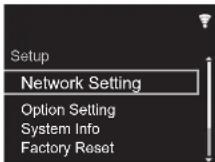
- Press / and ENTER to select "Update" - "via Network" in order.
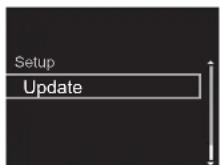
- "Update" is not displayed if there are no firmware updates.
- Press ENTER to start the firmware update.
"COMPLETE" is displayed when the update is complete. - Press /I STANDBY/ON on the main unit to switch the power of the unit off. The process is completed and your firmware is updated to the latest version.
> Before Start > Part Names > Install > Initial Setup > Playback
Supplementary information | Advanced Setup | Others
If an error message is displayed: When an error occurs, *** Error! is displayed on the display of this unit. (* represents an alphanumeric character.) Check the following:
- -01, -10: Ethernet cable not found. Connect the Ethernet cable properly.
-
* - 02, * - 03, * - 04, * - 05, * - 06, * - 11, * - 13, * - 14, * - 16, * - 17, * - 18, * - 20, * - 21 : Internet connection error. Check the following:
-
The router is turned on
-
This unit and the router are connected via the network. Try to disconnect and then connect again the power to the unit and router. This may solve the problem. If you are still unable to connect to the Internet, the DNS server or proxy server may be temporarily down. Check the service status with your ISP provider.
-
Others: Disconnect then reconnect the power cord, then repeat from the beginning.
Updating via USB
- Prepare a 128 MB or larger USB storage device (FAT16 or FAT32 file system format).
- Delete any data stored on the USB storage device.
- Turn off the controller component (PC etc.) connected to the network.
- Stop any playing Internet radio, USB storage device, or server content.
- Some USB storage devices may take long to load, may not be loaded correctly, or may not be correctly fed depending on the device or their content.
- We will not be liable whatsoever for any loss or damage of data, or storage failure arising from the use of the USB storage device with this unit. Thank you for your understanding.
- Connect the USB storage device to your PC.
- Download the firmware file from our company's website to your PC and unzip.
Firmware files are named in the following way:
PIONAP***************************************************************************************************** Unzip the file on your PC. The number of unzipped files and folders varies depending on the model.
- Copy all unzipped files and folders to the root folder of the USB storage device.
Make sure to copy the unzipped files. - Connect the USB storage device to the USB port of this unit.
- If you connect a USB hard disk drive to the USB port of the unit, we recommend that you use its AC adapter to power it.
If the USB storage device has been partitioned, each
section will be treated as an independent device. - The Setup screen is displayed on the display when SETUP button on the remote controller is pressed.
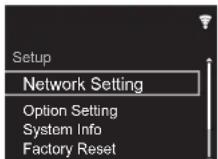
- Press / and ENTER to select "Update" - "via USB" in order.
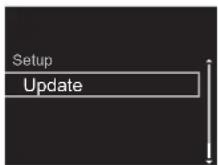
-
"Update" is not displayed if there are no firmware updates.
-
Press ENTER to start the firmware update.
"COMPLETE" is displayed when the update is complete.
- Press I/STANDBY/ON on the main unit to switch the power of the unit off. The process is completed and your firmware is updated to the latest version.
- Remove the USB storage device from this unit.
If an error message is displayed: When an error occurs, **-** Error! is displayed on the display of this unit. Check the following:
- -01 , -10 : USB storage device not found. Check whether the USB storage device or USB cable is correctly inserted to the USB port of this unit. Connect the USB storage device to an external power source if it has its own power supply.
- * - 05, * - 13, * - 20, * - 21 : The firmware file is not present in the root folder of the USB storage device, or the firmware file is for another model. Retry from the download of the firmware file.
- Others: Disconnect then reconnect the power cord, then repeat from the beginning.

> Before Start > Part Names > Install > Initial Setup > Playback
Supplementary information | Advanced Setup | Others
Troubleshooting
Before starting the procedure
When operation is unstable, problems may be solved by simply turning the power on or to standby or disconnecting/ connecting the power cord, rather than reviewing settings and operations. Try the simple measures on both the unit and the connected device. If the problem isn't fixed after referring to "Troubleshooting", resetting the unit to the status at the time of shipment may solve the problem. Note that your settings will also be initialized when you reset, so we recommend that you note down your settings before doing the following.
Resetting the unit (this resets the unit settings to the default)
- Press SETUP on the remote controller, select "Factory Reset" - "Start" in the Setup screen and press ENTER.
- Press ENTER.
- The unit switches to standby and the settings are reset.
Power
Cannot turn on the unit
Unplug the power cord from the wall outlet, wait 2 minutes or more, then plug it in again.
The unit turns off unexpectedly
- The unit automatically switches to standby when the "Option Setting" - "Power Off Setting" - "Auto Standby" setting in the Setup menu functions.
The / STANDBY/ON indicator on the main unit continues to flash blue and operations are not possible
- Unplug the power cord from the wall outlet, wait 2 minutes or more, then plug it in again. If this doesn't fix the issue, there may be a malfunction. Unplug the power cord from the wall outlet and contact the dealer or our customer support.
The display doesn't light
It is possible that the display has been turned off by pressing DISPLAY. Press DISPLAY to turn the display on.
Wi-Fi Connection
- Try plugging/unplugging the power supply of this unit and the router, and try rebooting the router.
Cannot connect to the access point
- Check that the setting of SSD and encryption (WEP, etc.) is correct.
- Connection to an SSID that includes multi-byte characters is not supported. Name the SSID of the wireless LAN router using single-byte alphanumeric characters only and try again.
- When the wireless LAN router setting is at stealth mode (mode to hide the SSID key) or when ANY connection is off, the SSID is not displayed. Change the setting and try again.
Connected to an SSID different to the SSID selected
- Some access points allow you to set multiple SSIDs for one unit. If you use the automatic setting button on such a router, you may end up connecting with a different SSID from the SSID you wanted to connect to. Use the connection method requiring you to enter a password if this happens.
Playback is Interrupted and communication does not work
- Shorten the distance from the access point or remove obstacles to improve visibility, and try again. Place the unit away from microwave ovens or other access points. It is recommended to place the access point and the unit in the same room.
If there is a metallic object near the unit, wireless LAN
connection may not be possible as the metal can effect on the radio wave.
- When other access point are used near the unit, several issues such as interrupted playback and communication may occur. You can avoid these issues by changing the channel of the access point. For instructions on changing channels, see the instruction manual provided with the access point.
Audio
Sound is interrupted
- Narrowing the lock range too much with the Lock Range Adjust setting can cause interruptions to sound and also may cause noise. Sound interruptions caused by adjustments to the lock range are not covered by our guarantees of operation. Listen to some audio while adjusting the lock range.
There is no digital sound
- Set "Option Setting" - "Digital Out" in the Setup menu to "On".
- DSD audio cannot be output digitally.
Cannot Play USB storage device / HDD
- Check whether the USB storage device or USB cable is correctly inserted to the USB port of the unit.
- Disconnect the USB storage device from the unit, and then try reconnecting.
- This unit may not recognize USB storage devices and HDDs as proper devices sometimes. Try switching this unit to standby and then turning it on again.
Depending on the type of format, the playback may not be performed normally. Check the type of the file formats that is supported. ( P15) - Cautions regarding USB and HDD devices (→P15)
> Before Start > Part Names > Install > Initial Setup > Playback
Supplementary information | Advanced Setup | Others
Network function
- If you cannot select a network service, it will become selectable when the network function is started.
Try plugging/unplugging the power supply of this unit and the router, and try rebooting the router.
Cannot access the Internet radio
- Certain network service or contents available through the unit may not be accessible in case the service provider terminates its service.
Make sure that your modem and router are properly connected, and make sure they are both turned on.
Depending on ISP, setting the proxy server is necessary. - Make sure that the used router and/or modem is supported by your ISP.
Cannot access the network server
- This unit needs to be connected to the same router as the network server.
- This unit is compatible with Windows Media Player 11 or 12 network servers or NAS that are compatible with home network functionality. Furthermore, when using a PC, only music files registered in the Windows Media Player library can be played.
Playback stops while listening to music files on the network server
- When the PC is serving as the network server, try quitting any application software other than the server software (Windows Media Player 12, etc.).
- If the PC is downloading or copying large files, the playback may be interrupted.
The album names and artist names for the Music Server are not displayed
-
Meta data, such as album names and artist names, needs to be recognized on the server for distribution to this unit, so this depends on the specifications of the NAS or server you are using.
-
The file formats supported depend on the NAS or server software. For details, contact the manufacturer of NAS or the server software.
Album art in Music Server is displayed sometimes but not other times
- Music Server depends on the specifications of the server software.
The formats supported depend on the server software. - For details, contact the manufacturer of the server software.
Saving and deleting the music on a USB HDD connected to this unit from a computer
When an HDD formatted with this unit is connected to a computer, the files are not shown or cannot be read or written by the computer
- As the HDD formatted by this unit is formatted with a special format, it will not be possible to view or read/write files even when connected to a computer (Windows or Macintosh).
This unit is not displayed in the list of network connected devices on the computer
- When this unit is on, you cannot use a computer to access the HDD connected to the USB port on the rear of the main unit. You need to first set "Network Standby" to "On (USB Power)", then switch this unit to standby. In the Setup menu select "Option Setting" - "Power Off Setting" - "Network Standby", then select "On (USB Power)" and press ENTER, and finally press STANDBY/ON on the remote controller to switch this unit to standby.
D/A converter feature
Make sure that the devices are properly connected.
- Play audio compatible with the input jacks on this unit.
(P23)
Cannot play audio from computers
- Cancel the muting on your computer
- Select this unit in the audio output settings on your computer. If this unit's input is set to anything other than
"USB DAC In", the computer will not detect this unit. - To play the audio from a computer, you need to install the special driver on your computer. Download the driver software from our website.
http://www.pioneer-audiovisual.eu/ - If there are multiple applications running on the computer, shut down those applications that you are not using.
Sampling frequency is always the same through the USB DAC In input
Depending on the computer settings, even if the sampling frequencies of the files being played are different, they are converted to the same sampling frequency for output.
Computer sounds other than music are heard through the USB DAC In input
Depending on the settings on the computer, sounds such as the computer startup tone or error sounds may be played through this unit.
> Before Start > Part Names > Install > Initial Setup > Playback
Supplementary information | Advanced Setup | Others
General Specifications
■ Analog Audio Output
Rated Output Level and Impedance
RCA OUT: 2.2 Vrms (1 kHz, 0 dB) / 500 Ω
- XLR OUT (N-70AE): 4.2 Vrms (1 kHz, 0 dB) / 500 Ω
Frequency Response
·4Hz-90kHz(-3dB)
Signal to Noise Ratio
(N-70AE) RCA OUT: 114 dB (A-weighting),
XLR OUT: 117 dB (A-weighting)
(N-50AE) RCA OUT: 112 dB (A-weighting)
Dynamic Range
117dB (24bit, 32bit)
THD+N
0.0017%
Channel Separation
110dB(1kHz)
■ Phones Output (N-70AE)
Output Power
- 100 mW + 100 mW (32Ω, 1 kHz THD 1%)
Supported Phones Impedance
16Ω-600Ω
Frequency Response
- 4 Hz - 80 kHz (-3 dB)
THD+N
0.01%
Digital Audio Input
FRONT/REAR USB
Type A, USB2.0 High Speed
- DC Output: 5 V 1 A (Rear) / 5 V 0.5 A (Front)
USB DAC
Type B, USB2.0 High Speed
Coaxial Digital Input
- RCA Jack, 0.5 Vp-p / 75 Ω
Optical Digital Input
Optical Jack, -24 dBm or more / 660 nm
Digital Audio Output
Coaxial Digital Output
- RCA Jack, 0.5 Vp-p/75Ω
Optical Digital Output
Optical Jack, -14 -21 dBm / 660 nm
Network
Wired LAN
- Ethernet Jack
10BASE-T/100BASE-TX
Wireless LAN (Wi-Fi)
IEEE 802.11 a/b/g/n standard
5 GHz/2.4 GHz band
Other
Control Out
- 3.5 mini-jack (mono)
General
Power Supply
AC220-240V,50/60Hz
Power Consumption
N-70AE:40.0W
N-50AE:30.0W
0.3 W (In Standby)
2.0 W (In Standby, Network Standby: On, Network
Setting: Wired)
- 2.4 W (In Standby, Network Standby: On, Network Setting: Wi-Fi)
Auto Standby
On (20 min) / Off
Dimensions (W× H× D)
N-70AE:435mm×121mm×364mm
N-50AE:435mm×99mm×340mm
Weight
Supplementary information | Advanced Setup | Others
License and Trademark Information

CERTIFIED
The Wi-Fi CERTIFIED Logo is a certification mark of Wi-Fi Alliance

AirPlay, iPad, iPhone, iPod, iPod classic, iPod nano and iPod touch are
iPad Air and iPad mini are trademarks of Apple Inc.
"Made for iPod", "Made for iPhone" and "Made for iPad" mean that an electronic accessory has been designed to connect specifically to iPod, iPhone, or iPad, respectively, and has been certified by the developer to meet Apple performance standards. Apple is not responsible for the operation of this device or its compliance with safety and regulatory standards.
Please note that the use of this accessory with iPod, iPhone or iPad may affect wireless performance.
AirPlay works with iPhone, iPad, and iPod touch with iOS 4.3.3 or later, Mac with OS X Mountain Lion or later, and PC with iTunes 10.2.2 or later.
The Spotify software is subject to third party licenses found here: https://developer-spanfity.com/vesik-third-party-licenses/
Chromecast is a trademark of Google Inc.
This product is protected by certain intellectual property rights of Microsoft. Use or distribution of such technology outside of this product is prohibited without a license from Microsoft.
Windows 7, Windows Media, and the Windows logo are trademarks or registered trademarks of Microsoft Corporation in the United States and/or other countries.
macOS is a trademark of Apple Inc., registered in the U.S. and other countries.
DSD and the Direct Stream Digital logo are trademarks of Sony Corporation.
All other trademarks are the property of their respective owners. I Toutes les autres marques commerciales sont la propriété de leurs detenteurs respectifs. I El resto de MARCAS commerciales son propidad de sus respectivos propriétarios. I Tutti gli altri marchi di fabbrica sono di proprietà dei rispetti propriatori. I Alle anderen Warenzeichen sind das Eigenium ihrer jeweiligen Eigentümer. I Alle andere handelsmeriken zijn eigendom van de desbetreffende rechtsbebenden. I Alle alla verumarken tillhar deras respective agare.

BLACKFIRE
This Mark Certifies that this product is compliant with the BLACKFIRE ALLIANCE Standard.
Please refer to www.BLKFireALLIANCE.COM for more information. BLACKFIRE™ is a Registered Trademark (No. 85,900,599) of BLACKFIRE RESEARCH CORP. All rights reserved.

FireConnect™is technology powered by BlackFire Research.

Pioneer
2-3-12 Yaesu, Chuo-ku, Tokyo 104-0028 JAPAN
U.S.A.>
18 PARK WAY, UPPER SADDLE RIVER, NEW JERSEY 07458, U.S.A.
Tel: 1-201-785-2600 Tel: 1-844-679-5350
Tel: +49(0)8142 4208 188 (Product Support)
Anteros Building, Odyssey Business Park, West End Road, South Ruislip,
Middlesex, HA4 6QQ United Kingdom
Tel: +44(0)208 836 3612
- Avenue de Marais F - 95816 Argenteuil Cedex FRANCE
Tel: +33(0)969 368 050
KopnpaIgO3HII
2-3-12, Racy, Hyo-ky, r. Tokno, 104-0028, RIOHNR
© 2017 Onkyo & Pioneer Corporation. All rights reserved.
Onkyo group has established its Privacy Policy, available at [http://pioneer-audiovisual.com/privacy?]
"Pioneer" is a trademark of Pioneer Corporation, and is used under license.
SN 29403190
AAC (.aac/.m4a/.mp4/.3gp/.3g2/.AAC/.M4A/.MP4/.3GP/.3G2):
- Formats pris en charge: MPEG-2/MPEG-4 Audio
Taux d'echantillonnage pris en charge: 44,1 kHz, 48 kHz, 88,2 kHz, 96 kHz - Debits binaires pris en charge: Entre 8 kbps, 320 kbps et VBR.
FLAC (flac/FLAC):
Taux d'échantillonnage pris en charge:44,1 kHz, 48 kHz,88,2 kHz,96 kHz,176,4 kHz,192 kHz
- Bits de quantification: 8 bits, 16 bits, 24 bits
Apple Lossless (.m4a/.mp4/.M4A/.MP4):
Taux d'échantillonnage pris en charge: 44,1 kHz
48kHz,88,2kHz,96kHz,176,4kHz,192kHz
- Bits de quantification: 16 bits, 24 bits
DSD (.dsf/.dff/.DSF/.DFF):
AAC (.aac/.m4a/.mp4/.3gp/.3g2/.AAC/.M4A/.MP4/.3GP/.3G2):
- Formats pris en charge: MPEG-2/MPEG-4 Audio
Taux d'echantillonnage pris en charge:44,1 kHz, 48 kHz,88,2 kHz,96 kHz - Debits binaires pris en charge: Entre 8 kbps, 320 kbps et VBR.
FLAC(.flac/.FLAC) :
Taux d'échantillonnage pris en charge: 44,1 kHz.
48 kHz, 88,2 kHz, 96 kHz, 176,4 kHz, 192 kHz
- Bits de quantification: 8 bits, 16 bits, 24 bits
Balance Out (N-70AE unquirement)
VoussoupiezchangeraIapeseLpaseXLRANALOGOUTdecetappareilpourquelle correspondedela celsede la pseXLRdupersiphériqueraccorde.
(N-70AE) RCA OUT: 114 dB (A-weighting),
XLR OUT:117 dB (A-weighting)
(N-50AE) RCA OUT: 112 dB (A-weighting)
Plage dynamique
Prise RCA,0.5Vp-p/75Ω
N-70AE:435mm×121mm×364mm
- N-50AE:435 mm × 99 mm × 340 mm
Poids
N-70AE:11,4kg
N-50AE:7,4kg
> Avant de Demarrer
> Nom des pièces
> Installation
>Initial Setup
> Lecture
The Wi-Fi CERTIFIED Logo is a certification mark of Wi-Fi Alliance

AirPlay, iPad, iPhone, iPod, iPod classic, iPod nano and iPod touch are trademarks of Apple Inc., registered in the U.S. and other countries.
IPad Air and IPad mini are trademarks of Apple Inc.
"Made for iPod", "Made for iPhone" and "Made for iPad" mean that an electronic accessory has been designed to connect specifically to iPod, iPhone, or iPad, respectively, and has been certified by the developer to meet Apple performance standards. Apple is not responsible for the operation of this device or its compliance with safety and regulatory standards.
Please note that the use of this accessory with iPod, iPhone or iPad may affect wireless performance.
AirPlay works with iPhone, iPad, and iPod touch with iOS 4.3.3 or later, Mac with OS X Mountain Lion or later, and PC with iTunes 10.2.2 or later.
The Spotify software is subject to third party licenses found here: https://developer.spotify.com/esdk-third-party-licenses/
Chromecast is a trademark of Google Inc.
This product is protected by certain intellectual property rights of Microsoft. Use or distribution of such technology outside of this product is prohibited without a license from Microsoft.
Windows 7, Windows Media, and the Windows logo are trademarks or registered trademarks of Microsoft Corporation in the United States and/or other countries.
macOS is a trademark of Apple Inc., registered in the U.S. and other countries.
DSD and the Direct Stream Digital logo are trademarks of Sony Corporation.
All other trademarks are the property of their respective owners. I Toutes les autres marques commerciales sont la propriété de leurs detenteurs respectifs. I El resto de MARCAS commerciales son propidad de sus respectivos propriétarios. I Tutti gli altri marchi di fabbrica sono di proprietà dei rispetti propriatori. I Alle anderen Warenzeichen sind das Eigenium ihrer jeweiligen Eigentümer. I Alle andere handelsmeriken zijn eigendom van de desbetreffende rechtsbebenden. I Alle alla verumarken tillhar deras respective agare.

BLACKFIRE
This Mark Certifies that this product is compliant with the BLACKFIRE ALLIANCE Standard.
Please refer to www.BLACKFIREREALLIANCE.COM for more information. BLACKFIRE™ is a Registered Trademark (No. 85,900,599) of BLACKFIRE RESEARCH CORP. All rights reserved.

FireConnect™is technology powered by BlackFire Research.


Pioneer
2-3-12 Yaesu, Chuo-ku, Tokyo 104-0028 JAPAN
U.S.A.>
18 PARK WAY, UPPER SADDLE RIVER, NEW JERSEY 07458, U.S.A.
Tel: 1-201-785-2600 Tel: 1-844-679-5350
Tel: +49(0)8142 4208 188 (Product Support)
Anteros Building, Odyssey Business Park, West End Road, South Ruislip,
Middlesex, HA4 6QQ United Kingdom
Tel: +44(0)208 836 3612
- Avenue de Marais F - 95816 Argenteuil Cedex FRANCE
Tel: +33(0)969 368 050
KopnpaIgO3HII
2-3-12, Racy, Hyo-ky, r. Tokno, 104-0028, JIHOHJ
© 2017 Onkyo & Pioneer Corporation. All rights reserved.
Onkyo group has established its Privacy Policy, available at [http://pioneer-audiovisual.com/privacy?]
"Pioneer" is a trademark of Pioneer Corporation, and is used under license.
SN 29403190
AAC (.aac/.m4a/.mp4/.3gp/.3g2/.AAC/.M4A/.MP4/.3GP/.3G2):
- Formatos compatibles: Audio MPEG-2/MPEG-4
- Tasas de muestro compatibles: 44,1 kHz, 48 kHz, 88,2
kHz, 96 kHz - Tasas de bits compatibles: Entre 8 kbps y 320 kbps y VBR.
FLAC (flac./FLAC):
- Tasas de muestreo compatibles: 44,1 kHz, 48 kHz, 88,2 kHz, 96 kHz, 176,4 kHz, 192 kHz
DSD (.dsf/.dff/.DSF/.DFF):
- Formatos compatibles: DSF/DSDIFF
- Tasas de muestro compatibles: 2,8 MHz, 5.6 MHz, 11,2
MHz

AAC (.aac/.m4a/.mp4/.3gp/.3g2/.AAC/.M4A/.MP4/.3GP/ .3G2):
- Formatos compatibles: Audio MPEG-2/MPEG-4
-
Tasas de muestreo compatibles: 44,1 kHz, 48 kHz, 88,2 kHz,96 kHz
-
Tasas de bits compatibles: Entre 8 kbps y 320 kbps y VBR.
FLAC(.flac/.FLAC):
- Tasas de muestreo compatibles: 44,1 kHz, 48 kHz, 88,2 kHz, 96 kHz, 176,4 kHz, 192 kHz
- Bit deuantificacion: 8 bits, 16 bits, 24 bits
LPCM (PCM lineal):
- Tasas de muestro compatibles: 44,1 kHz, 48 kHz
- Bit deuantificacion: 16 bits
Apple Lossless (.m4a/.mp4/.M4A/.MP4):
- Tasas de muestreo compatibles: 44,1 kHz, 48 kHz, 88,2 kHz, 96 kHz, 176,4 kHz, 192 kHz
- Bit deuantificacion: 16 bits, 24 bits
DSD (dsf./df/.DSF./DFF):
English (Valor predeterminado), German, French, Spanish, Italian, Dutch, Swedish, Russian, Chinese
Digital Out
(N-70AE) RCA OUT: 114 dB (A-weighting),
XLR OUT: 117 dB (A-weighting)
(N-50AE) RCA OUT: 112 dB (A-weighting)
Rango dinámico
117dB(24bit,32bit)
THD+N
0.0017%
Separación de canal
110dB(1kHz)
Salida de auriculares (N-70AE)
Potencia de salute
- 100 mW + 100 mW (32 Ω, 1 kHz THD 1%)
Impedancia de los auriculares compatible
16Ω-600Ω
Salida digital coaxial
Conector RCA,0,5 Vp-p/75Ω
Salida digital optica
Conector optico, -14 -21 dBm/660 nm
Red
LAN por cable
- Conector Ethernet
10BASE-T/100BASE-TX
LAN Inalambrica (Wi-Fi)
Estandar IEEE 802.11 a/b/g/n
Banda 5 GHz/2,4 GHz
Otros
Salida de control
Miniconector 3,5 (mono)
General
Alimentación
220-240VCA,50/60Hz
Consumo de energia
N-70AE:40,0W
N-50AE:30,0W
0.3 W (en modo de espera)
2,0 W (en modo de espera, Network Standby: On,
Network Setting: Wired)
2,4 W (en modo de espera, Network Standby: On,
Network Setting:Wi-Fi)
Auto Standby
On (20 min) / Off
Dimensiones (An × AI × Pr)
N-70AE:435mm×121mm×364mm
N-50AE: 435mm× 99mm× 340mm
Peso
N-70AE:11.4kg
N-50AE:7,4kg
> Antes de empezar
The Wi-Fi CERTIFIED Logo is a certification mark of Wi-Fi Alliance

AirPlay, iPad, iPhone, iPod, iPod classic, iPod nano and iPod touch are trademarks of Apple Inc., registered in the U.S. and other countries.
IPad Air and IPad mini are trademarks of Apple Inc.
"Made for iPod", "Made for iPhone" and "Made for iPad" mean that an electronic accessory has been designed to connect specifically to iPod, iPhone, or iPad, respectively, and has been certified by the developer to meet Apple performance standards. Apple is not responsible for the operation of this device or its compliance with safety and regulatory standards.
Please note that the use of this accessory with iPod, iPhone or iPad may affect wireless performance.
AirPlay works with iPhone, iPad, and iPod touch with iOS 4.3.3 or later, Mac with OS X Mountain Lion or later, and PC with iTunes 10.2.2 or later.
The Spotify software is subject to third party licenses found here: https://developer.spotify.com/esdk-third-party-licenses/
Chromecast is a trademark of Google Inc.
This product is protected by certain intellectual property rights of Microsoft. Use or distribution of such technology outside of this product is prohibited without a license from Microsoft.
Windows 7, Windows Media, and the Windows logo are trademarks or registered trademarks of Microsoft Corporation in the United States and/or other countries.
macOS is a trademark of Apple Inc., registered in the U.S. and other countries.
DSD and the Direct Stream Digital logo are trademarks of Sony Corporation.
All other trademarks are the property of their respective owners. I Toutes les autres marques commerciales sont la propriété de leurs detenteurs respectifs. I El resto de MARCAS commerciales son propidad de sus respectivos propriétarios. I Tutti gli altri marchi di fabbrica sono di proprietà dei rispetti propriatori. I Alle anderen Warenzeichen sind das Eigenium ihrer jeweiligen Eigentümer. I Alle andere handelsmeriken zijn eigendom van de desbetreffende rechtsbebenden. I Alle alla verumarken tillhar deras respective agare.

BLACKFIRE
This Mark Certifies that this product is compliant with the BLACKFIRE ALLIANCE Standard.
Please refer to www.BLKFireALLIANCE.COM for more information. BLACKFIRE™ is a Registered Trademark (No. 85,900,599) of BLACKFIRE RESEARCH CORP. All rights reserved.

FireConnect™is technology powered by BlackFire Research.

Pioneer
2-3-12 Yaesu, Chuo-ku, Tokyo 104-0028 JAPAN
U.S.A.>
18 PARK WAY, UPPER SADDLE RIVER, NEW JERSEY 07458, U.S.A.
Tel: 1-201-785-2600 Tel: 1-844-679-5350
Tel: +49(0)8142 4208 188 (Product Support)
Anteros Building, Odyssey Business Park, West End Road, South Ruislip,
Middlesex, HA4 6QQ United Kingdom
Tel: +44(0)208 836 3612
- Avenue de Marais F - 95816 Argenteuil Cedex FRANCE
Tel: +33(0)969 368 050
KopnpaIg O 3Hn
2-3-12, Racy, Hyo-ky, r. Tokno, 104-0028, RIOHNR
© 2017 Onkyo & Pioneer Corporation. All rights reserved.
Onkyo group has established its Privacy Policy, available at [http://pioneer-audiovisual.com/privacy?]
"Pioneer" is a trademark of Pioneer Corporation, and is used under license.
SN 29403190
F1706-0
- 2 9 4 0 3 1 9 0 *
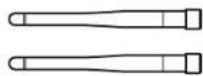
Antenna wireless (2)
AAC (aac/.m4a/.mp4/.3gp/.3g2/.AAC/.M4A/.MP4/.3GP/ .3G2):
AAC (.aac/.m4a/.mp4/.3gp/.3g2/.AAC/.M4A/.MP4/.3GP/ .3G2):
English (Valore predefinito), German, French, Spanish, Italian, Dutch, Swedish, Russian, Chinese
Digital Out
- Tipo B, USB2.0 High Speed
The Wi-Fi CERTIFIED Logo is a certification mark of Wi-Fi Alliance

AirPlay, iPad, iPhone, iPod, iPod classic, iPod nano and iPod touch are trademarks of Apple Inc., registered in the U.S. and other countries.
IPad Air and IPad mini are trademarks of Apple Inc.
"Made for iPod", "Made for iPhone" and "Made for iPad" mean that an electronic accessory has been designed to connect specifically to iPod, iPhone, or iPad, respectively, and has been certified by the developer to meet Apple performance standards. Apple is not responsible for the operation of this device or its compliance with safety and regulatory standards.
Please note that the use of this accessory with iPod, iPhone or iPad may affect wireless performance.
AirPlay works with iPhone, iPad, and iPod touch with iOS 4.3.3 or later, Mac with OS X Mountain Lion or later, and PC with iTunes 10.2.2 or later.
The Spotify software is subject to third party licenses found here: https://developer.spotify.com/esdk-third-party-licenses/
Chromecast is a trademark of Google Inc.
This product is protected by certain intellectual property rights of Microsoft. Use or distribution of such technology outside of this product is prohibited without a license from Microsoft.
Windows 7, Windows Media, and the Windows logo are trademarks or registered trademarks of Microsoft Corporation in the United States and/or other countries.
macOS is a trademark of Apple Inc., registered in the U.S. and other countries.
DSD and the Direct Stream Digital logo are trademarks of Sony Corporation.
All other trademarks are the property of their respective owners. I Toutes les autres marques commerciales sont la propriété de leurs detenteurs respectifs. I El resto de MARCAS commerciales son propidad de sus respectivos propriétarios. I Tutti gli altri marchi di fabbrica sono di proprietà dei rispetti propriatori. I Alle anderen Warenzeichen sind das Eigenium ihrer jeweiligen Eigentümer. I Alle andere handelsmeriken zijn eigendom van de desbetreffende rechtsbebenden. I Alle alla verumarken tillhar deras respective agare.

BLACKFIRE
This Mark Certifies that this product is compliant with the BLACKFIRE ALLIANCE Standard.
Please refer to www.BLKFireALLIANCE.COM for more information. BLACKFIRE™ is a Registered Trademark (No. 85,900,599) of BLACKFIRE RESEARCH CORP. All rights reserved.

FireConnect™is technology powered by BlackFire Research.
Pioneer
2-3-12 Yaesu, Chuo-ku, Tokyo 104-0028 JAPAN
U.S.A.>
18 PARK WAY, UPPER SADDLE RIVER, NEW JERSEY 07458, U.S.A.
Tel: 1-201-785-2600 Tel: 1-844-679-5350
Tel: +49(0)8142 4208 188 (Product Support)
Anteros Building, Odyssey Business Park, West End Road, South Ruislip,
Middlesex, HA4 6QQ United Kingdom
Tel: +44(0)208 836 3612
- Avenue de Marais F - 95816 Argenteuil Cedex FRANCE
Tel: +33(0)969 368 050
KopnpaIg O 3Hn
2-3-12, Racy, Cyo-Ky, r. Tokno, 104-0028, RINOHN
© 2017 Onkyo & Pioneer Corporation. All rights reserved.
Onkyo group has established its Privacy Policy, available at [http://pioneer-audiovisual.com/privacy?]
"Pioneer" is a trademark of Pioneer Corporation, and is used under license.
SN 29403190
F1706-0
- 2 9 4 0 3 1 9 0 *
AAC (.aac/.m4a/.mp4/.3gp/.3g2/.AAC/.M4A/.MP4/.3GP/.3G2):
DSD (.dsf/.dff/.DSF/.DFF):
DSD(.dsf/.dff/.DSF/.DFF):
English (Standardwert), German, French, Spanish, Italian, Dutch, Swedish, Russian, Chinese
Digital Out
The Wi-Fi CERTIFIED Logo is a certification mark of Wi-Fi Alliance

AirPlay, iPad, iPhone, iPod, iPod classic, iPod nano and iPod touch are
iPad Air and iPad mini are trademarks of Apple Inc.
"Made for iPod", "Made for iPhone" and "Made for iPad" mean that an electronic accessory has been designed to connect specifically to iPod, iPhone, or iPad, respectively, and has been certified by the developer to meet Apple performance standards. Apple is not responsible for the operation of this device or its compliance with safety and regulatory standards.
Please note that the use of this accessory with iPod, iPhone or iPad may affect wireless performance.
AirPlay works with iPhone, iPad, and iPod touch with iOS 4.3.3 or later, Mac with OS X Mountain Lion or later, and PC with iTunes 10.2.2 or later.
The Spotify software is subject to third party licenses found here https://developer-spanfity.com/edsdk-third-party/licenses/
Chromecast is a trademark of Google Inc.
This product is protected by certain intellectual property rights of Microsoft. Use or distribution of such technology outside of this product is prohibited without a license from Microsoft.
Windows 7, Windows Media, and the Windows logo are trademarks or registered trademarks of Microsoft Corporation in the United States and/or other countries.
macOS is a trademark of Apple Inc., registered in the U.S. and other countries.
DSD and the Direct Stream Digital logo are trademarks of Sony Corporation.
All other trademarks are the property of their respective owners. I Toutes les autres marques commerciales sont la propriété de leurs detenteurs respectifs. I El resto de MARCAS commerciales son propidad de sus respectivos propriétarios. I Tutti gli altri marchi di fabbrica sono di proprietà dei rispetti propriatori. I Alle anderen Warenzeichen sind das Eigenium ihrer jeweiligen Eigentümer. I Alle andere handelsmeriken zijn eigendom van de desbetreffende rechtsbebenden. I Alle alla verumarken tillhar deras respective agare.


BLACKFIRE
This Mark Certifies that this product is compliant with the BLACKFIRE ALLIANCE Standard.
Please refer to www.BLKFireALLIANCE.COM for more information. BLACKFIRE™ is a Registered Trademark (No. 85,900,599) of BLACKFIRE RESEARCH CORP. All rights reserved.

FireConnect™is technology powered by BlackFire Research.
Pioneer
2-3-12 Yaesu, Chuo-ku, Tokyo 104-0028 JAPAN
U.S.A.>
18 PARK WAY, UPPER SADDLE RIVER, NEW JERSEY 07458, U.S.A.
Tel: 1-201-785-2600 Tel: 1-844-679-5350
Tel: +49(0)8142 4208 188 (Product Support)
Anteros Building, Odyssey Business Park, West End Road, South Ruislip,
Middlesex, HA4 6QQ United Kingdom
Tel: +44(0)208 836 3612
- Avenue de Marais F - 95816 Argenteuil Cedex FRANCE
Tel: +33(0)969 368 050
KopnpaIgO3HII
2-3-12, Racy, Hyo-ky, r. Tokno, 104-0028, RIOHNR
© 2017 Onkyo & Pioneer Corporation. All rights reserved.
Onkyo group has established its Privacy Policy, available at [http://pioneer-audiovisual.com/privacy?]
"Pioneer" is a trademark of Pioneer Corporation, and is used under license.
SN 29403190
AAC (.aac/.m4a/.mp4/.3gp/.3g2/.AAC/.M4A/.MP4/.3GP/
.3G2):
- Ondersteunde demonsteringsfrequencies: 44.1 kHz, 48 kHz, 88.2 kHz, 96 kHz, 176.4 kHz, 192 kHz
Kwantiseringsbit: 8 bit, 16 bit, 24 bit
Apple Lossless (.m4a/.mp4/.M4A/.MP4):
- Ondersteunde bemonsteringsfrequencies: 44,1 kHz,
48 kHz, 88.2 kHz, 96 kHz, 176.4 kHz, 192 kHz
Kwantiseringsbit: 16 bit, 24 bit
DSD (.dsf/.dff/.DSF/.DFF):
- Ondersteunde formaten: DSF/DSDIFF
- Ondersteunde demonsteringsfrequencies: 2,8 MHz
5.6 MHz, 11.2 MHz



Internetradio
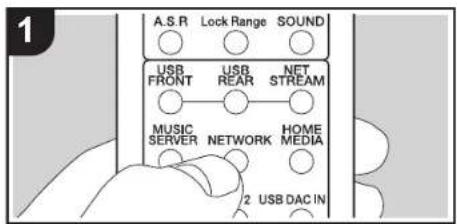
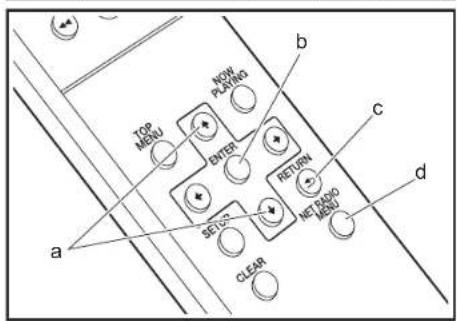
Basisbedlingen
- Ondersteunde demonsteringsfrequencies: 44.1 kHz, 48 kHz, 88.2 kHz, 96 kHz, 176.4 kHz, 192 kHz
Kwantiseringsbit: 8 bit, 16 bit, 24 bit
AAC (.aac/.m4a/.mp4/.3gp/.3g2/.AAC/.M4A/.MP4/.3GP/.3G2):
- Ondersteunde formaten: MPEG-2/MPEG-4 Audio
- Ondersteunde demonsteringsfrequencies: 44,1 kHz, 48 kHz, 88,2 kHz, 96 kHz
- Ondersteunde bitsnelheden: Tussen 8 kbps en 320 kbps en VBR
FLAC(.flac/.FLAC):
- Ondersteunde demonsteringsfrequencies: 44.1 kHz, 48 kHz, 88.2 kHz, 96 kHz, 176.4 kHz, 192 kHz
Kwantiseringsbit: 8 bit, 16 bit, 24 bit
LPCM (Linear PCM):
- Ondersteunde bemonsteringsfrequencies: 44,1 kHz, 48 kHz
Kwantiseringsbit:16 bit
Apple Lossless (.m4a/.mp4/.M4A/.MP4):
- Ondersteunde demonsteringsfrequencies: 44.1 kHz, 48 kHz, 88.2 kHz, 96 kHz, 176.4 kHz, 192 kHz
Kwantiseringsbit: 16 bit, 24 bit
DSD (dsf./df/.DSF./DFF):
- Ondersteunde formaten: DSF/DSDIFF
- Ondersteunde bemonsteringsfrequencies: 2,8 MHz, 5,6 MHz, 11,2 MHz
"Wired" (Fabrieksinstalling): Verbinden via bedraden LAN
English (Fabrieksinstellung), German, French, Spanish, Italian, Dutch, Swedish, Russian, Chinese
Digital Out
"On" (Fabrieksinstelling), "Off"
Balance Out (alleen N-70AE)
(N-70AE) RCA OUT: 114 dB (A-weging),
XLR OUT: 117 dB (A-weging)
(N-50AE) RCA OUT: 112 dB (A-weging)
Dynamisch bereik
117dB(24bit,32bit)
THD+N
0.0017%
Kanaalscheiding
110dB(1kHz)
N-70AE:40,0W
N-50AE:30,0W
0.3 W (In Stand-by)
2.0 W (In Stand-by, Network Standby: On, Network
Setting: Wired)
2.4 W (In Stand-by, Network Standby: On, Network
Setting:Wi-Fi)
Auto Standby
On (20 min) / Off
The Wi-Fi CERTIFIED Logo is a certification mark of Wi-Fi Alliance
Made for


AirPlay, iPad, iPhone, iPod, iPod classic, iPod nano and iPod touch are
Trademarks of Apple Inc., registered in the U.S. and other countries,
iPad Air and iPad mini are trademarks of Apple Inc.
"Made for iPod", "Made for iPhone" and "Made for iPad" mean that an electronic accessory has been designed to connect specifically to iPod, iPhone, or iPad, respectively, and has been certified by the developer to meet Apple performance standards. Apple is not responsible for the operation of this device or its compliance with safety and regulatory standards.
Please note that the use of this accessory with iPod, iPhone or iPad may affect wireless performance.
AirPlay works with iPhone, iPad, and iPod touch with iOS 4.3.3 or later, Mac with X Mountain Lion or later, and PC with iTunes 10.2.2 or later.
The Spotify software is subject to third party licenses found here: https://developer-spanfity.com/esdk-third-party-licenses/
Chromecast is a trademark of Google Inc.
This product is protected by certain intellectual property rights of Microsoft. Use or distribution of such technology outside of this product is prohibited without a license from Microsoft.
Windows 7, Windows Media, and the Windows logo are trademarks or registered trademarks of Microsoft Corporation in the United States and/or other countries.
macOS is a trademark of Apple Inc., registered in the U.S. and other countries.
DSD and the Direct Stream Digital logo are trademarks of Sony Corporation.
All other trademarks are the property of their respective owners. I Toutes les autres marques commerciales sont la propriété de leurs detenteurs respectifs. I El resto de MARCAS commerciales son propidad de sus respectivos propriétarios. I Tutti gli altri marchi di fabbrica sono di proprietà dei rispetti propriatori. I Alle anderen Warenzeichen sind das Eigenium ihrer jeweiligen Eigentümer. I Alle andere handelsmeriken zijn eigendom van de desbetreffende rechtsbebenden. I Alle alla verumarken tillhar deras respective agare.


BLACKFIRE
This Mark Certifies that this product is compliant with the BLACKFIRE ALLIANCE Standard.
Please refer to www.BLKFireALLIANCE.COM for more information. BLACKFIRE™ is a Registered Trademark (No. 85,900,599) of BLACKFIRE RESEARCH CORP. All rights reserved.

FireConnect™is technology powered by BlackFire Research.
Pioneer
2-3-12 Yaesu, Chuo-ku, Tokyo 104-0028 JAPAN
U.S.A.>
18 PARK WAY, UPPER SADDLE RIVER, NEW JERSEY 07458, U.S.A.
Tel: 1-201-785-2600 Tel: 1-844-679-5350
Tel: +49(0)8142 4208 188 (Product Support)
Anteros Building, Odyssey Business Park, West End Road, South Ruislip,
Middlesex, HA4 6QQ United Kingdom
Tel: +44(0)208 836 3612
- Avenue de Marais F - 95816 Argenteuil Cedex FRANCE
Tel: +33(0)969 368 050
KopnpaIgO3HII
2-3-12, Racy, Hyo-ky, r. Tokno, 104-0028, RIOHNR

© 2017 Onkyo & Pioneer Corporation. All rights reserved.
Onkyo group has established its Privacy Policy, available at [http://pioneer-audiovisual.com/privacy?]
"Pioneer" is a trademark of Pioneer Corporation, and is used under license.
SN 29403190
F1706-0
- 2 9 4 0 3 1 9 0 *
Frontpanel (N-70AE) 3
Frontpanel (N-50AE) 4
Bakpanel (N-70AE) 5
Bakpanel (N-50AE) 6
Fjarrkontroll 7
Display 8
Installera
Ansluttingar till en forstarkare 9
Att ansluta natkabeln, etc. 11
Grundinställning
DSD (.dsf/.dff/.DSF/.DFF):
Format som stods: DSF/DSDIFF
- Samplingsfrekvenser som stöds: 2,8 MHz, 5,6 MHz, 11,2 MHz
AAC (.aac/.m4a/.mp4/.3gp/.3g2/.AAC/.M4A/.MP4/.3GP/ .3G2):
DSD(.dsf/.dff/.DSF/.DFF):
- Format som stöds: DSF/DSDIFF
- Sampling frekvenser som stöds: 2,8 MHz, 5,6 MHz, 11.2 MHz


Visar/staller in subnet mask.
Gateway
Visar/staller in gateway.
DNS Server
Visar/staller in den primara DNS-server.
Proxy URL
Visar/staller in proxyserverns URL
Proxy Port
Visar/ställer in proxieservers n portsnumber n ar du anger"Proxy URL".
■ Friendly Name
2.0 W (I standby; Network Standby: On, Network Setting:
Wired)
2,4 W (I standby, Network Standby: On, Network Setting:
Wi-Fi)
Auto Standby
On (20 min) / Off
Matt(B×H×D)
N-70AE:435mm×121mm×364mm
N-50AE:435mm×99mm×340mm
Vikt
N-70AE:11.4kg
N-50AE:7,4kg

The Wi-Fi CERTIFIED Logo is a certification mark of Wi-Fi Alliance

AirPlay, iPad, iPhone, iPod, iPod classic, iPod nano and iPod touch are trademarks of Apple Inc., registered in the U.S. and other countries.
IPad Air and IPad mini are trademarks of Apple Inc.
"Made for iPod", "Made for iPhone" and "Made for iPad" mean that an electronic accessory has been designed to connect specifically to iPod, iPhone, or iPad, respectively, and has been certified by the developer to meet Apple performance standards. Apple is not responsible for the operation of this device or its compliance with safety and regulatory standards.
Please note that the use of this accessory with iPod, iPhone or iPad may affect wireless performance.
AirPlay works with iPhone, iPad, and iPod touch with iOS 4.3.3 or later, Mac with OS X Mountain Lion or later, and PC with iTunes 10.2.2 or later.
The Spotify software is subject to third party licenses found here: https://developer.spotify.com/esdk-third-party-licenses/
Chromecast is a trademark of Google Inc.
This product is protected by certain intellectual property rights of Microsoft. Use or distribution of such technology outside of this product is prohibited without a license from Microsoft.
Windows 7, Windows Media, and the Windows logo are trademarks or registered trademarks of Microsoft Corporation in the United States and/or other countries.
macOS is a trademark of Apple Inc., registered in the U.S. and other countries.
DSD and the Direct Stream Digital logo are trademarks of Sony Corporation.
All other trademarks are the property of their respective owners. I Toutes les autres marques commerciales sont la propriété de leurs detenteurs respectifs. I El resto de MARCAS commerciales son propidad de sus respectivos propriétarios. I Tutti gli altri marchi di fabbrica sono di proprietà dei rispetti propriatori. I Alle anderen Warenzeichen sind das Eigenium ihrer jeweiligen Eigentümer. I Alle andere handelsmeriken zijn eigendom van de desbetreffende rechtsbebenden. I Alle alla verumarken tillhar deras respective agare.

BLACKFIRE
This Mark Certifies that this product is compliant with the BLACKFIRE ALLIANCE Standard.
Please refer to www.BLKFireALLIANCE.COM for more information. BLACKFIRE™ is a Registered Trademark (No. 85,900,599) of BLACKFIRE RESEARCH CORP. All rights reserved.

FireConnect™is technology powered by BlackFire Research.
Pioneer
2-3-12 Yaesu, Chuo-ku, Tokyo 104-0028 JAPAN
U.S.A.>
18 PARK WAY, UPPER SADDLE RIVER, NEW JERSEY 07458, U.S.A.
Tel: 1-201-785-2600 Tel: 1-844-679-5350
Tel: +49(0)8142 4208 188 (Product Support)
Anteros Building, Odyssey Business Park, West End Road, South Ruislip,
Middlesex, HA4 6QQ United Kingdom
Tel: +44(0)208 836 3612
- Avenue de Marais F - 95816 Argenteuil Cedex FRANCE
Tel: +33(0)969 368 050
KopnpaIgO3HII
2-3-12, Racy, Cyo-Ky, r. Tokno, 104-0028, RINOHN
© 2017 Onkyo & Pioneer Corporation. All rights reserved.
Onkyo group has established its Privacy Policy, available at [http://pioneer-audiovisual.com/privacy?]
"Pioneer" is a trademark of Pioneer Corporation, and is used under license.
SN 29403190

F1706-0


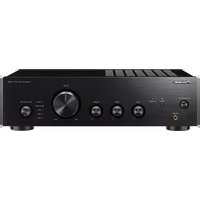
- Install
- Initial Setup
- Playback
- Supplementary information
- Advanced Setup
- Others
- > Before Start > Part Names > Install > Initial Setup > Playback
- What's in the box
- i
- Front Panel (N-70AE)
- Rear Panel (N-70AE)
- Rear Panel (N-50AE)
- Remote Controller
- Display
- Connections with an amplifier
- Connecting with an analog audio cable
- Connecting with an XLR cable (N-70AE only)
- Connecting with a digital optical cable
- Connecting with a digital coaxial cable
- The control jack
- Connecting the power cord, etc.
- Power cord connection
- Ethernet cable connection
- Power On & Initial Setup
- Wi-Fi connection settings
- Scan Networks
- Use iOS Device
- Enter SSID of the access point
- > Before Start > Part Names > Install > Initial Setup > P l a y b a c k
- USB Storage Device/HDD
- Basic operations
- > Before Start > Part Names > Install > Initial Setup > P I a y b a c k
- Repeat play
- Shuffle play
- USB Storage / HDD Device Requirements
- Supported Audio Formats
- MP3 (.mp3/.MP3):
- WMA (.wma/.WMA):
- supported
- WAV (.wav/.WAV):
- AIFF (.aiff/.aif/.AIFF/.AIF);
- AAC (aac/m4a/mp4/3gp/3g2/AAC/M4A/MP4/3GP/3G2);
- FLAC(.flac./FLAC):
- Apple Lossless (.m4a/.mp4/.M4A/.MP4):
- DSD (dsf./dff./DSF./DFF):
- Internet Radio
- Tuneln
- Spotify
- Basic Operation
- AirPlay®
- Music Server
- Configuring Windows Media® Player
- Windows Media Player 11
- Windows Media Player 12
- Playing
- Controlling Remote Playback from a PC
- Using a computer to save and delete the music on a USB HDD connected to this unit
- Using this unit as a D/A converter
- Connections
- Playing Back
- Adjusting sound quality
- Reproduce the original sound faithfully (DIRECT mode)
- Playing even better quality sound (SOUND menu)
- Auto Sound Retriever
- Hi-Bit32
- Up Sampling
- Lock Range Adjust
- Entering text
- Supplementary information for player functions
- Supplementary information | Advanced Setup | Others
- Advanced Settings
- Network Setting
- Connection
- Wi-Fi Setup
- DHCP
- IP Address
- Subnet Mask
- Gateway
- DNS Server
- Proxy URL
- Proxy Port
- ■ Friendly Name
- AirPlay Password
- Network Check
- Option Setting
- Power Off Setting
- Digital Filter
- Storage
- Language
- Digital Out
- Balance Out (N-70AE only)
- System Info
- Factory Reset
- Update
- via Network
- via USB
- Web Setup
- Firmware Update
- The updating function on this unit
- How to update
- Updating the Firmware via Network
- Updating via USB
- Troubleshooting
- Before starting the procedure
- Resetting the unit (this resets the unit settings to the default)
- Power
- Cannot turn on the unit
- The unit turns off unexpectedly
- The O / I STANDBY/ON indicator on the main unit continues to flash blue and operations are not possible
- The display doesn't light
- Wi-Fi Connection
- Cannot connect to the access point
- Connected to an SSID different to the SSID selected
- Playback is Interrupted and communication does not work
- Audio
- Sound is interrupted
- There is no digital sound
- Cannot Play USB storage device / HDD
- Network function
- Cannot access the Internet radio
- Cannot access the network server
- Playback stops while listening to music files on the network server
- The album names and artist names for the Music Server are not displayed
- Album art in Music Server is displayed sometimes but not other times
- Saving and deleting the music on a USB HDD connected to this unit from a computer
- When an HDD formatted with this unit is connected to a computer, the files are not shown or cannot be read or written by the computer
- This unit is not displayed in the list of network connected devices on the computer
- D/A converter feature
- (P23)
- Cannot play audio from computers
- Sampling frequency is always the same through the USB DAC In input
- Computer sounds other than music are heard through the USB DAC In input
- General Specifications
- ■ Analog Audio Output
- ■ Phones Output (N-70AE)
- Digital Audio Input
- Digital Audio Output
- Network
- Other
- General
- License and Trademark Information
- CERTIFIED
- BLACKFIRE
- Pioneer
- AAC (.aac/.m4a/.mp4/.3gp/.3g2/.AAC/.M4A/.MP4/.3GP/.3G2):
- FLAC (flac/FLAC):
- DSD (.dsf/.dff/.DSF/.DFF):
- FLAC(.flac/.FLAC) :
- Balance Out (N-70AE unquirement)
- > Avant de Demarrer
- > Nom des pièces
- > Installation
- >Initial Setup
- > Lecture
- FLAC (flac./FLAC):
- AAC (.aac/.m4a/.mp4/.3gp/.3g2/.AAC/.M4A/.MP4/.3GP/ .3G2):
- FLAC(.flac/.FLAC):
- LPCM (PCM lineal):
- DSD (dsf./df/.DSF./DFF):
- Salida de auriculares (N-70AE)
- Red
- Otros
- > Antes de empezar
- AAC (aac/.m4a/.mp4/.3gp/.3g2/.AAC/.M4A/.MP4/.3GP/ .3G2):
- DSD(.dsf/.dff/.DSF/.DFF):
- AAC (.aac/.m4a/.mp4/.3gp/.3g2/.AAC/.M4A/.MP4/.3GP/
- .3G2):
- Internetradio
- Basisbedlingen
- LPCM (Linear PCM):
- Balance Out (alleen N-70AE)
- Installera
- Grundinställning
Brand : PIONEER
Model : N70AE
Category : AV receiver