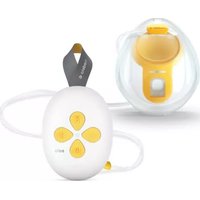
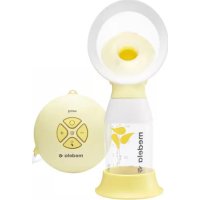
USER MANUAL Swing Maxi MEDELA
Swing Flex™ Swing Maxi Flex™
EN
Instructions for use
FR
Mode d'emploi
NL
Gebruiksaanwijzing
ID
Petunjuk penggunaan
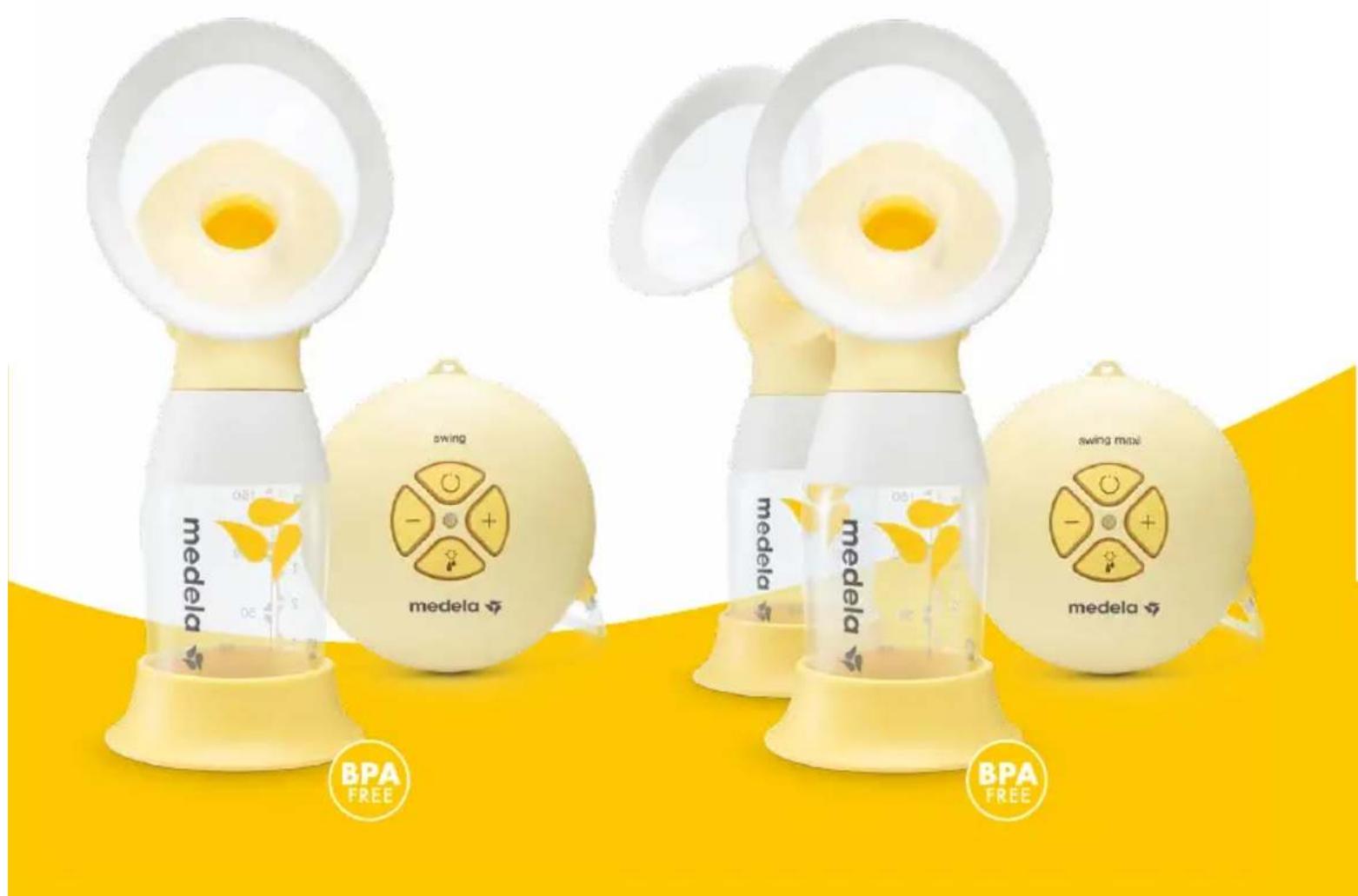
Thank you for choosing the Swing Flex / Swing Maxi Flex breast pump. Breast milk is the natural choice for your baby, but there are reasons and situations where breastfeeding is not possible. For over 50 years, it has been Medela's conviction that these mothers and babies can be supported. In close cooperation with breastfeeding experts, Medela, one of the market leaders, has researched and developed breast pumps that perfectly meet breastfeeding mother's needs. For mothers who insist on the best for their babies and themselves. Because you care.
- Intended use / Population - Contraindication 5
- Meaning of symbols 6
- Important safety information 9
- Product description Swing Flex 10
- Product description Swing Maxi Flex 11
- Cleaning 12
6.1 Cleaning overview 12
6.2 Disassemble 13
6.3 Wash 14
6.4 Sanitise 14
6.5Cleaning tubing 15
6.6 Cleaning the motor unit 15
7.Preparing for pumping 16
7.1 Mains operation 16
7.2 Battery operation 16
7.3Assembling the pump set 18
8. Expression 20
8.1 Swing Flex - Preparing for single pumping 20
8.2 Swing Maxi Flex - Preparing for single pumping 20
8.3 Swing Maxi Flex - Preparing for double pumping 22
8.4 Swing Maxi Flex - Preparing for hands-free expression with the Easy Expression Bustier 24
8.5 Pumping 26
9. Storing and thawing breast milk 28
9.1Storage 28
9.2 Freezing 28
9.3Thawing 28
10.Troubleshooting 29
- Warranty/Disposal 30
- Spare parts and Accessories 31
- EMC/Technical description 33
- Technical specifications 34
1. Intended use / Population - Contraindication

The intended use and indications of breast pumps
Breast pumps are intended to be used by lactating women in the hospital or home environment for expressing breast milk. Breast pumps are indicated to alleviate the symptoms of engorgement by expressing milk. In case of mastitis breast pumps support the healing process by removing breast milk from the affected breast. Breast pumps are indicated to relieve sore and cracked nipples and to bring out flat or inverted nipples. Also breast pumps enable mothers to provide breast milk for babies who cannot feed directly at the breast for a variety of reasons such as latch-on problems, cleft palate or premature babies.
Intended patient population/user
Adolescent paediatric or adult lactating women. Many women find it convenient, or even necessary, to use a breast pump to express and store their breast milk once they have returned to work, are travelling or are otherwise separated from their baby. Women are often delighted to learn that a breast pump can be used as a supplement to breastfeeding and that some pumps are designed to mimic the suckling of a nursing baby.
Contraindications
There are no known contraindications for the Swing Flex / Swing Maxi Flex breast pump.
2. Meaning of symbols
6
The warning symbol identifies all instructions that are important for safety. Failure to observe these instructions can lead to injury or damage to the breast pump! When used in conjunction with the following words, the warning symbol stands for:

Warning
Can lead to serious injury or death.

Note
Can lead to material damage.

Caution
Can lead to minor injury.

Info
Useful or important information that is not related to safety.
Symbols on the packaging

This symbol indicates that the material is part of a recovery/recycling process.

This symbol indicates a carton package.

This symbol indicates to keep the device away from sunlight.

This symbol indicates to handle the fragile device with care.

This symbol indicates the temperature limitation for operation, transport and storage.

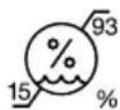
This symbol indicates the humidity limitation for operation, transport and storage.

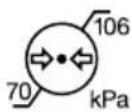
This symbol indicates the atmospheric pressure limitation for operation, transport and storage.

This symbol indicates to keep the device dry.

This symbol indicates that the packaging contains products intended to come in contact with food according to regulation 1935/2004.
This symbol indicates unique GSI Global Trade Item Numbers (GTIN).

This symbol indicates do not dispose the device together with unsorted municipal waste (for EU only).

This symbol indicates to follow instructions for use.
Symbols on the device

This symbol indicates to follow instructions for use.

This symbol indicates the compliance with the essential requirements of the Council Directive 0123 93/42/EEC of 14 June 1993 concerning medical devices.

This symbol indicates the manufacturer.

This symbol indicates do not dispose the device together with unsorted municipal waste (for EU only).

This symbol indicates the compliance with additional USA and Canada safety requirements for medical electrical equipment.

This symbol indicates a type BF applied part.

This symbol indicates manufacturer's serial number of the device.
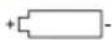
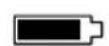
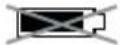
This symbol indicates the positioning of battery cell.

This symbol indicates the protection against ingress of solid foreign objects and against harmful effects due to the ingress of water.

This symbol indicates the date of manufacture (four digits for the year and two digits for the month).
Symbols on the mains adapter

This symbol indicates that the mains adapter is a class II device.

This symbol indicates the compliance with China Compulsory Certification.

This symbol indicates that the mains adapter is for indoor use only.

This symbol indicates the compliance with USA and Canada safety requirements.

This symbol indicates the compliance with Federal Communications Commission requirements.

This symbol indicates polarity of d.c. power connector.

This CE-mark indicates the compliance with the low voltage and electromagnetic compatibility directive.

This symbol indicates to not dispose the device together with unsorted municipal waste (for EU only). The solid bar symbol indicates that mains adapter is put on the market after 13 August 2005.

This symbol indicates the compliance with energy efficiency requirements.

This symbol indicates alternating current.

This symbol indicates direct current.

This symbol indicates the compliance with energy efficiency requirements.

This symbol indicates that the mains adapter is safety tested.

This symbol indicates a short-circuit proof safety isolating transformer.
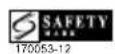
Singapore Consumer Protection Registration.

This symbol indicates that the electronic device incorporating transformer(s) and electronic circuitry(ies), converts electrical power into single or multiple power outputs.

This symbol indicates the compliance with AUS/NZ requirements (regulatory compliance mark).
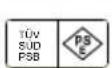
This symbol indicates the compliance with PSE requirements (Japan, Product Safety Electrical Appliance and Material Safety Law).

The KC mark indicates that the product meets Korean EMC and electric safety requirements.
IP20
This symbol indicates the protection against ingress of solid foreign objects and against harmful effects due to the ingress of water.

Failure to follow these instructions/safety information can lead to danger from the device. Subject to technical changes.
Device

Danger of electrocution! Keep the device dry! Never immerse in water or other liquids!

The Swing Flex / Swing Maxi Flex breast pump is not heat-resistant: Keep away from radiators and open flames.

Do not expose the motor unit to direct sunlight.
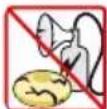
Never use a damaged device. Replace damaged or worn parts.
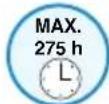
The operating life of the Swing Flex breast pump is 275 hours. The service life is two years.

Repairs must be performed only by an authorised service agency. Do not repair yourself! No modifications to the device are permitted.
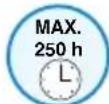
The operating life of the Swing Maxi Flex breast pump is 250 hours. The service life is two years.
Electrical use
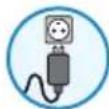
Separation from the mains is only assured through the disconnection of the mains adapter from the wall socket outlet.
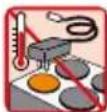
Keep the mains adapter away from heated surfaces.
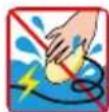
Do not reach for any electrical device if it has fallen into water. Unplug immediately.
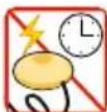
The breast pump should never be left unattended when plugged into a power source.
Use

Use the Swing Flex / Swing Maxi Flex breast pump only for its intended use as described in this manual.

Do not drive whilst hands-free pumping.

Do not use the Swing Flex/Swing Maxi Flex breast pump while bathing or showering.
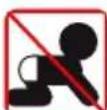
Supervision is necessary when the Swing Flex / Swing Maxi Flex breast pump is used in the vicinity of children.
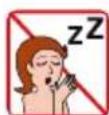
Do not use the Swing Flex / Swing Maxi Flex breast pump while sleeping or overly drowsy.

Contact your lactation consultant or breastfeeding specialist if you experience problems or pain.
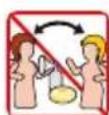
This is a single user product. Use by more than one person may present a health risk.
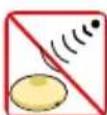
Portable and mobile radio frequency communications equipment can affect the Swing Flex / Swing Maxi Flex breast pump.
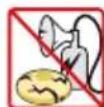
Never operate an electrical device if it has a damaged cord or plug, if it is not working properly, if it has been dropped or damaged, or dropped into water.
16
Swing Flex - single electric 2-Phase breast pump
article 600.0975
spare part 099.0015
on/off button
reduce vacuum
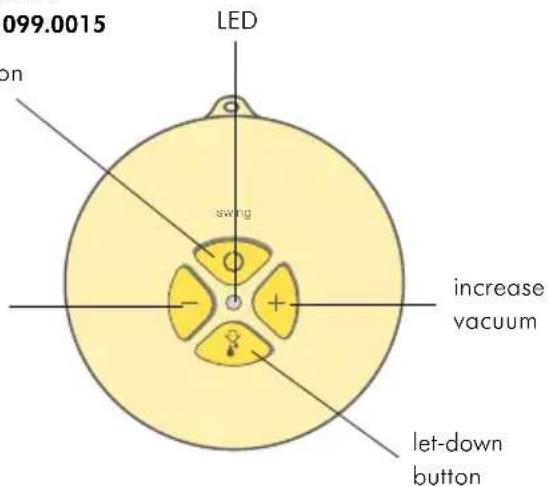
1x motor unit:
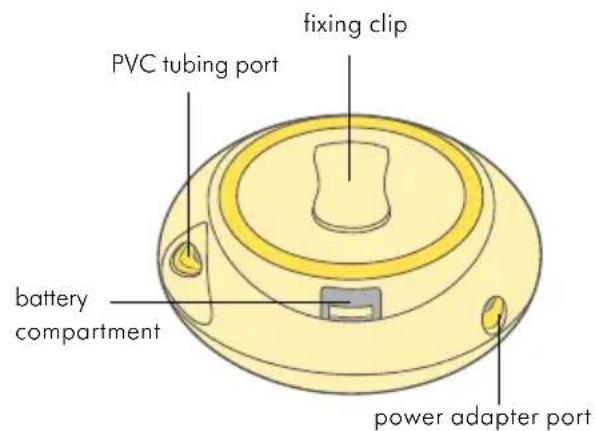
breast shields:
1× 21 mm (article 101035239)
1× 24mm (article 101035240)
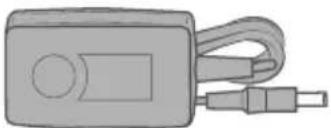
1x mains adapter
article spare part
Euro 4.8V 201.1055 099.0016
UK 4.8V 201.1056 099.0017
AUS/NZ 4.8V 201.1057 099.0018
CN 4.8V 201.1058 099.0276
US/JP 4.8V 201.1059 101033542
KR4.8V 101034044 101038305
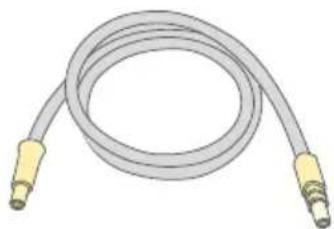
1x Swing Flex tubing
article 201.1079
spare part 101034002
1x connector
article 200.9728
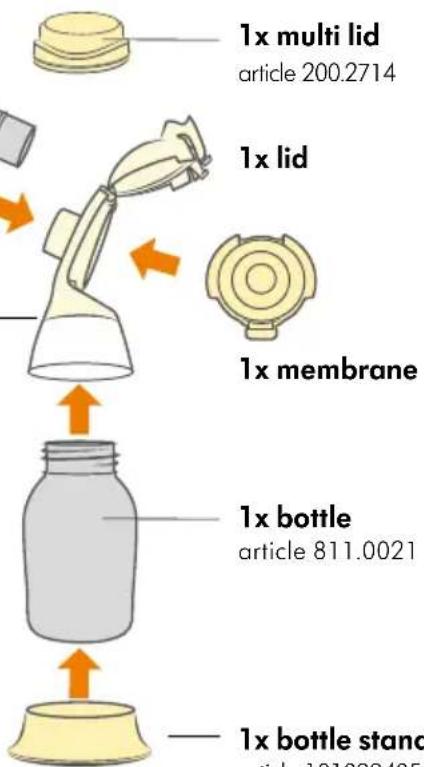
1x bottle stand
1x membrane
1x bottle
article 811.0021
article 101033405
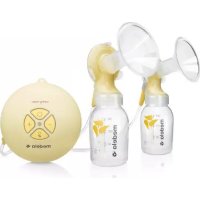
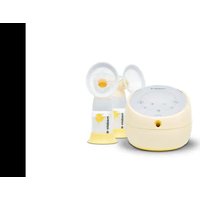
Swing Maxi Flex - double electric 2-Phase breast pump
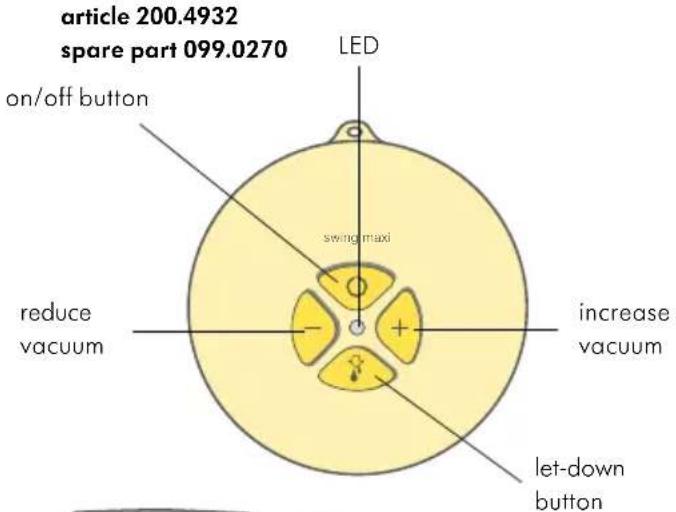
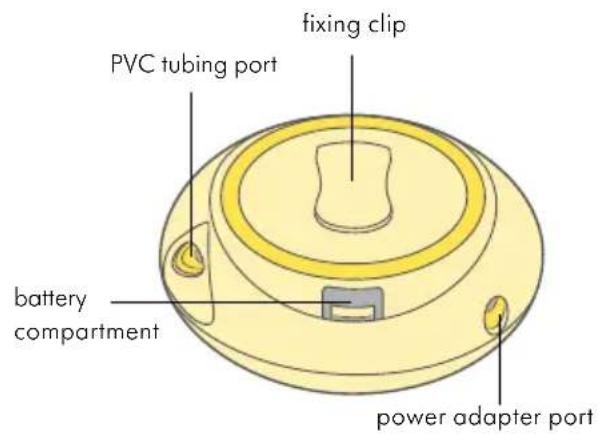
1x motor unit:
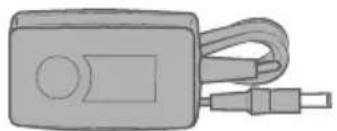
1x mains adapter
breast shields:
2× 21mm (article 101035239)
2× 24mm (article 101035240)
article spare part
Euro 12V 201.1146 099.0271
UK 12V 201.1147 099.0272
AUS/NZ 12V 201.1149 099.0273
CN 12V 101032865 099.0274
US/JP 12V 201.1148 101033543
KR 12V 101034045 101038303
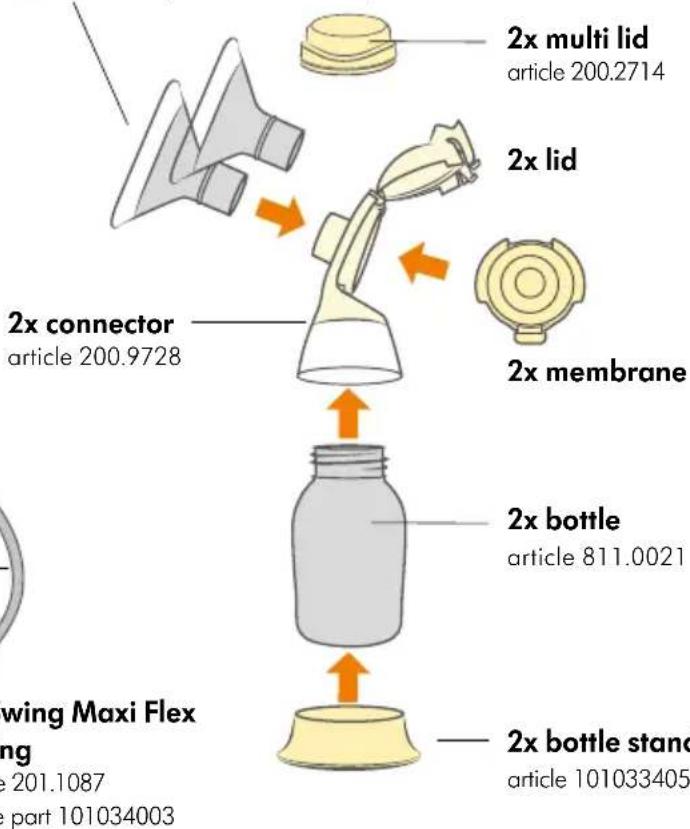
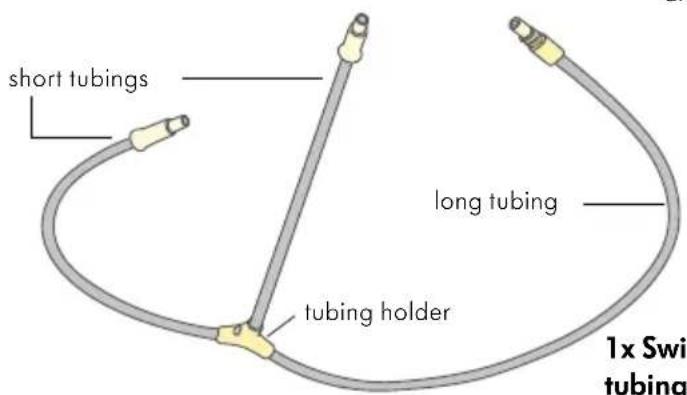
1x Swing Maxi Flex tubing
article 201.1087
spare part 101034003
2x multi lid
article 200.2714
2x lid
2x membrane
2x bottle
article 811.0021
2x bottle stand
article 101033405
1
6.1 Cleaning overview
Washing and sanitising are two different activities. They must be done separately to protect you, your baby and the performance of your breast pump.
Wash - To clean the surfaces of the parts by physically removing contamination.
Sanitise - To kill living organisms, such as bacteria or viruses, that may be present on the surfaces of the parts.
| When to clean | Breast shield(s) | Connector and membrane | Bottles & lids |
| Before 1st use | ✓ 6.2 disassemble
✓ 6.3 wash
✓ 6.4 sanitise | ✓ 6.2 disassemble
✓ 6.3 wash
✓ 6.4 sanitise | ✓ 6.2 disassemble
✓ 6.3 wash
✓ 6.4 sanitise |
| After each use | ✓ 6.3 wash | ✓ 6.2 disassemble
✓ 6.3 wash | ✓ 6.2 disassemble
✓ 6.3 wash |
| Once per day | ✓ 6.4 sanitise | ✓ 6.2 disassemble
✓ 6.4 sanitise | ✓ 6.2 disassemble
✓ 6.4 sanitise |
| When to clean | Tubing | Motor unit |
| As needed | see chapter 6.5 see chapter 6.6 |
6.2 Disassemble
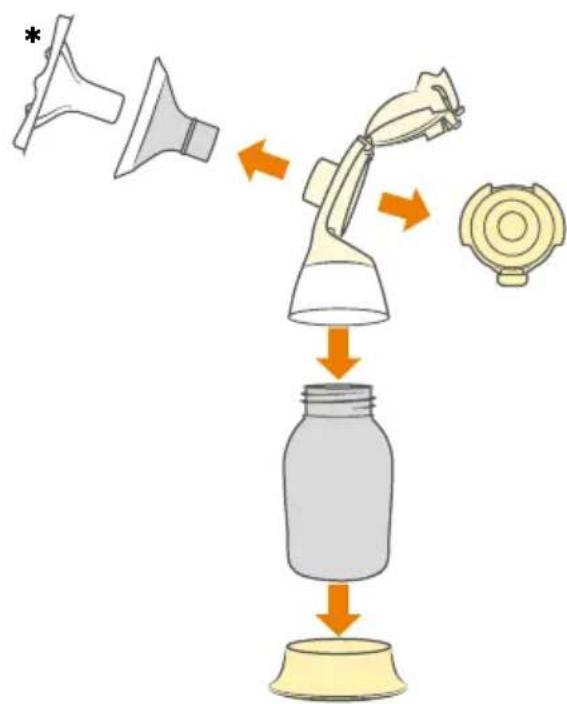
- Remove and dispose the protective cover* from the breast shield before first use.
Disassemble the pump set into its individual parts (breast shield, connector, membrane, milk bottle).
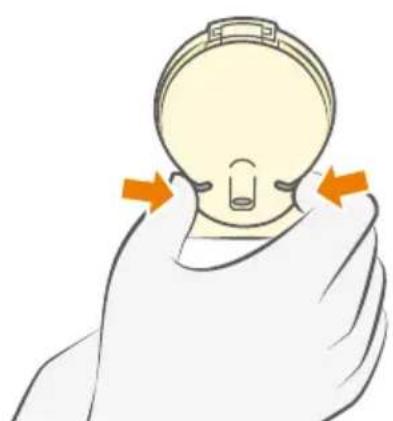
- Open back cap of the connector by squeezing both flaps.
- Check all parts for damage.
- Replace damaged or worn parts.

Caution
- Do not spray or pour liquid directly onto the pump.
- Only use drinking-quality water for cleaning.
Take apart and wash all parts that come in contact with the breast and breast milk immediately after use to avoid drying up of milk residues and to prevent growth of bacteria.
- Do not clean the tubing with Quick Clean bags in the microwave.
- Unplug the breast pump before cleaning the motor unit.

Note
The pump set requires no maintenance.
- Take care not to damage parts of the pump set during cleaning.
- Do not use the breast milk if bottles or components become damaged.
6.3 Wash
Before first use and after each use
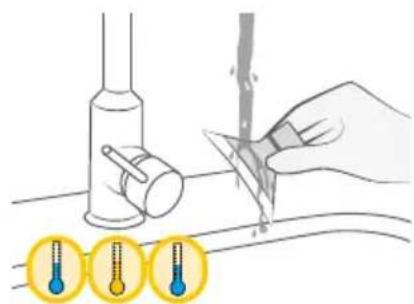
Sink Stovetop
- Rinse all parts with cold, clear drinking-quality water (approx. 20^ ).
- Clean these parts with plenty of warm, soapy water (approx. 30^ ). Use a commercially available washing-up liquid, preferably without artificial fragrances and colouring (pH neutral).
- Rinse the parts with cold, clear drinking-quality water for 10-15 seconds (approx. 20^ ). Dry after washing.
OR
Dishwasher
Place all parts, except for the tubing, on the top rack or in the cutlery section. Use a commercially available dishwashing detergent. Dry after washing.
6.4 Sanitise
Before first use and once per day
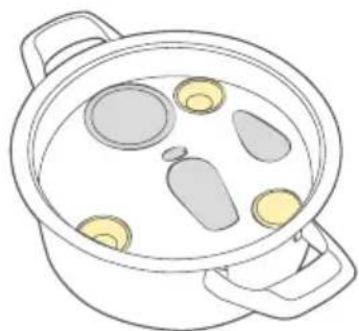
Cover all parts, except the tubing, with water and boil at least for 5 minutes. Dry after sanitising.
OR
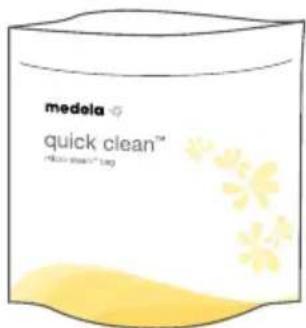
Microwave
Use Quick Clean* bags in the microwave in accordance with the instructions. Dry after sanitising.
- Accessories available for order: see chapter 12. For more information, visit www.medela.com.
Drying
Dry with a clean cloth or leave to dry on a clean cloth. Put the clean parts in a clean storage bag or a clean environment. Do not store parts in an airtight container/bag if moist. It is important that all residual moisture dries.
6.5Cleaning tubing
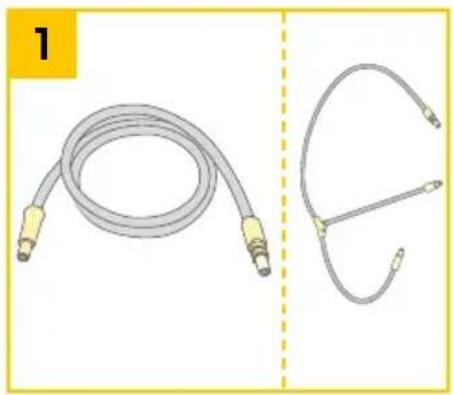
- No visible residues
No cleaning needed.
- With visible residues
- Rinse tubing in cool water
- Wash tubing in warm, soapy water
- Rinse tubing with clear water
- Shake out water droplets
- Hang to air dry
Do not sanitise the tubing.
6.6 Cleaning the motor unit
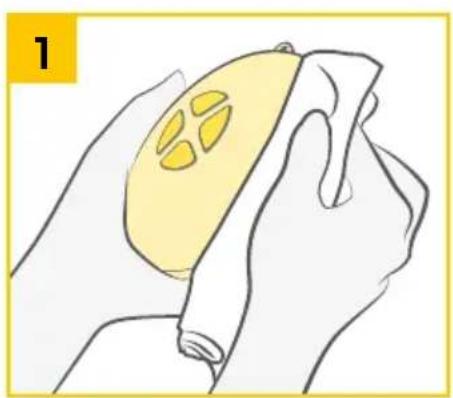
To clean the motor unit, wipe the housing with a clean, damp (not wet) cloth. You may use drinking-quality water and a basic washing-up liquid or a non-abrasive detergent.
! Note
- If the individual components of the pump set are cleaned in a dishwasher, parts may be discoloured by food pigments. This has no impact on the function.
- The membrane at the connector prevents the milk from flowing into the tubing, however, inspect the tubing after each pumping session for visible residues. If there are visible residues in the tubing, follow the instructions in chapter 6.5.
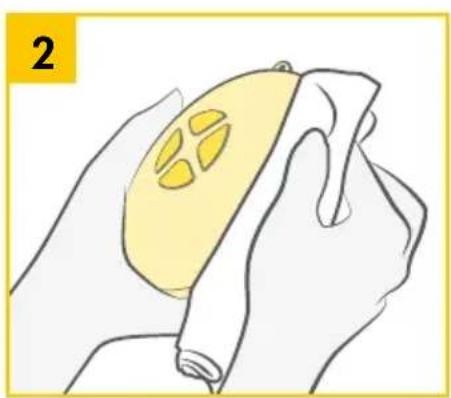
Additionally you may use an alcohol-based disinfecting agent.
7. Preparing for pumping


Warning
- Mains operation:
Follow the exact order of the steps.
- Only use the mains adapter supplied with the Swing Flex / Swing Maxi Flex.
- Make sure the voltage of the mains adapter is compatible with the power source.
i Info
- Battery operation:
- You can operate the Swing Flex / Swing Maxi Flex breast pump via battery or mains.
The batteries do not need to be removed when the mains adapter is used for pumping.
- Regularly check the condition of the batteries in the motor unit.
- If Swing Flex / Swing Maxi Flex will remain unused for a longer period of time, remove the batteries from the battery compartment.
- Batteries last for 4 - 6 pumping sessions (approx. 112 hours pumping time).
7.1 Mains operation
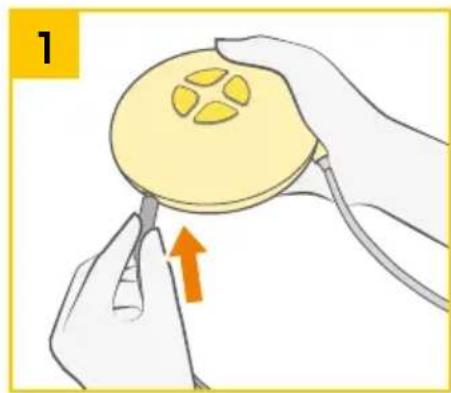
Plug the mains adapter cord into the motor unit.
7.2 Battery operation
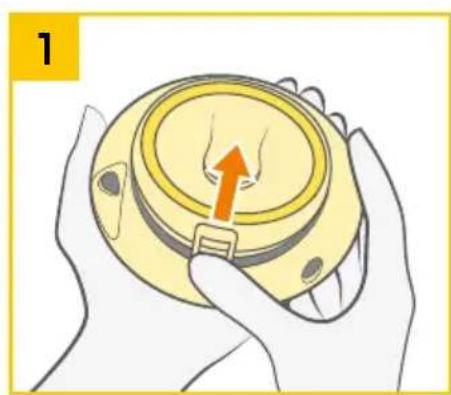
Open the battery compartment on the back in the direction of the arrow.

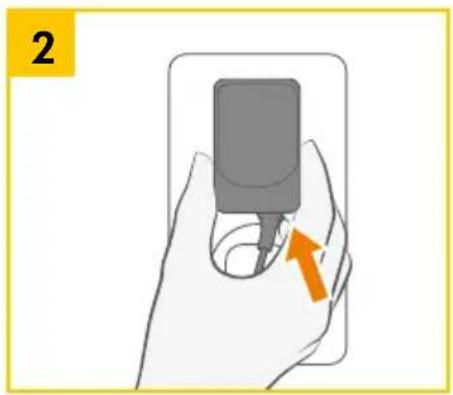
Plug the mains adapter into the mains socket. The motor unit is now ready for operation.
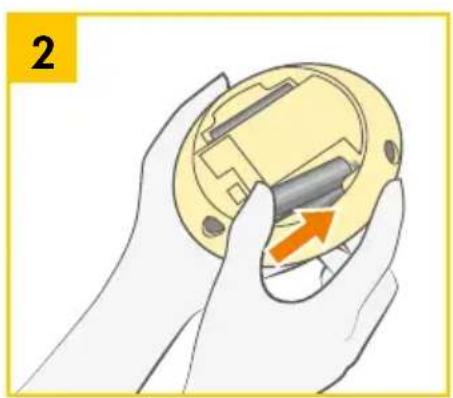
Insert four AA Mignon LR6 batteries for Swing Flex.
Insert six AAA Micro 1.5 V batteries for Swing Maxi Flex.
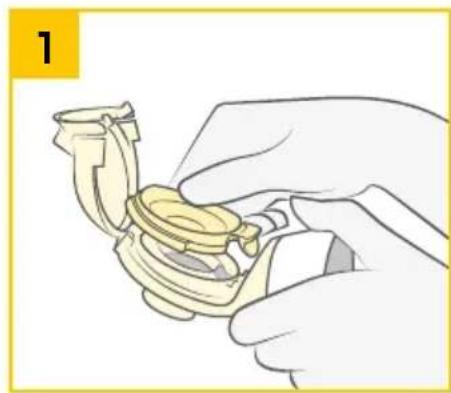
Close the battery compartment. The pump is ready for operation via battery.
7. Preparing for pumping


Caution
- Wash hands thoroughly (at least one minute) with soap and water before touching the breast and pump parts. Dry your hands with a fresh towel or a single-use paper towel.
- Also, bottles and component parts may become damaged if mishandled, e.g. dropped, over-tightened, or knocked over.
- Take appropriate care in handling bottles and components.

Note
- Use Medela original accessories only.
- Hold the tubing by the connecting piece while attaching and detaching it.
- All components must be completely dry before use.

Info
- Carry out all the steps with care and assemble the pump set correctly. Otherwise a good vacuum may not be achieved.
7.3 Assembling the pump set

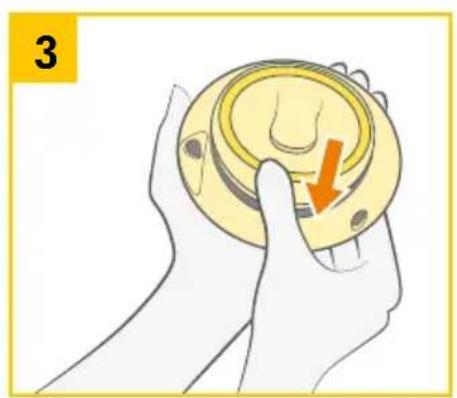
Check pump set components for wear or damage before use and replace if necessary.
Make sure parts are cleaned according to chapter 6 before assembling the pump set. Carefully place the membrane into the connector with the flap into the opening of the connector.
Make sure that the membrane forms a seal around the edge of the connector.
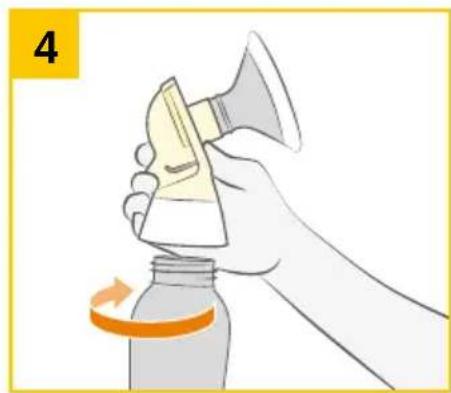

Screw bottle into connector.
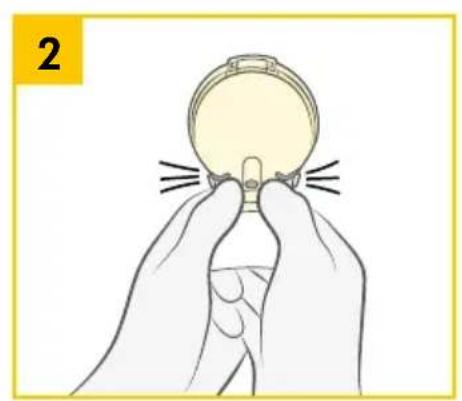
Close the lid of the connector until it audibly clicks.

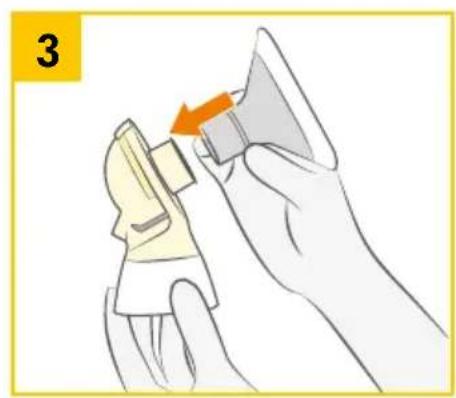
Insert the breast shield onto the connector.
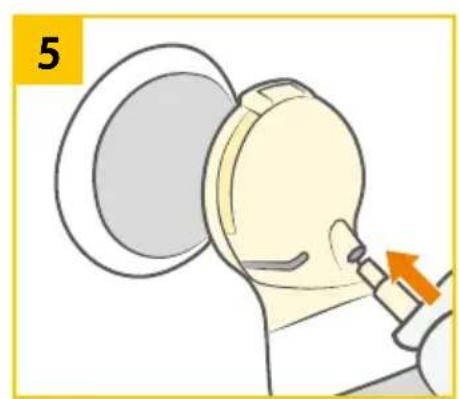
Insert the tubing into the corresponding opening in the lid of the connector.

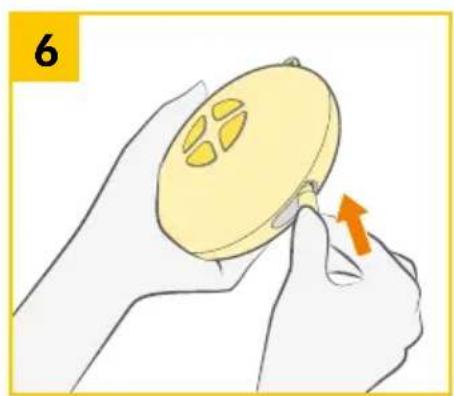
Insert the other end of the tubing into the motor unit.
20

Caution
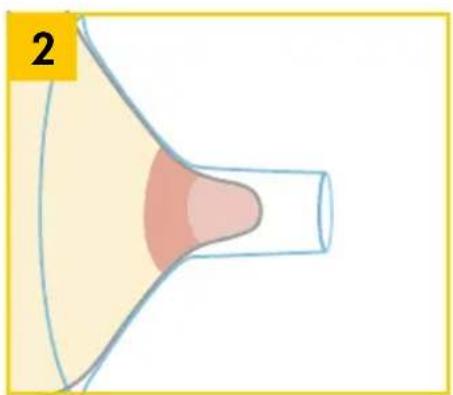
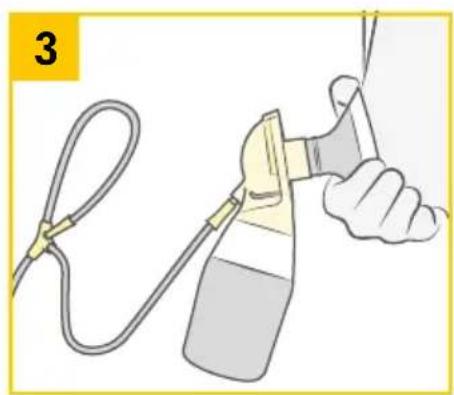
- Step 2 (chapters 8.1, 8.2, 8.3):
The product comes with two different breast shield sizes 21mm and 24mm .
- Answer the following questions to find out whether the available breast shield sizes fit:
- Does your nipple rub the tunnel sides to the point of causing discomfort?
- Do you see excessive areola being pulled into the tunnel?
- Do you see any redness?
Is your nipple or areola turning white?
- Do you feel unexpressed milk after breast milk pumping?
If you answered "YES" to any of these questions, consider trying a new size by following the measuring instructions at www.medela.com.
If you are still unsure that you selected the right breast shield size, contact your lactation consultant or breastfeeding specialist.
See brochure "Choosing your Medela breast shield size".
! Note
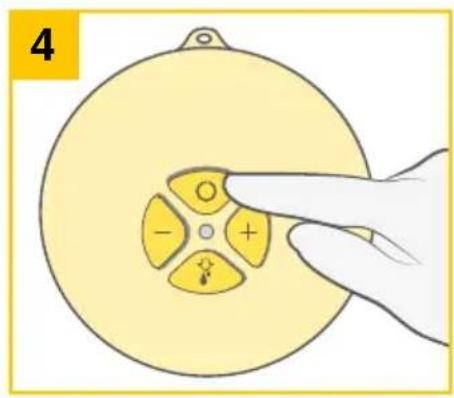
- Step 3 (chapters 8.1, 8.2, 8.3): Do not hold the pump set by the bottle. This can lead to blockage of the milk ducts and engorgement.
8.1 Swing Flex - Preparing for single pumping
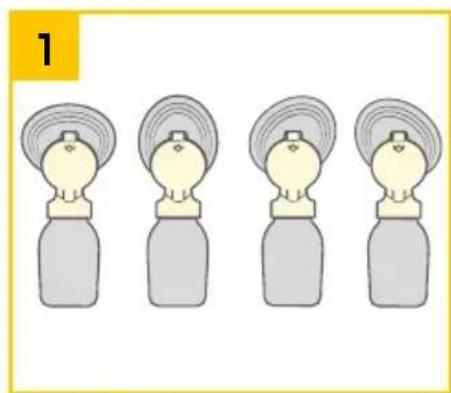

The oval breast shield can be rotated (360^) and placed in the desired position to have the most comfortable fit for you.
8.2 Swing Maxi Flex - Preparing for single pumping
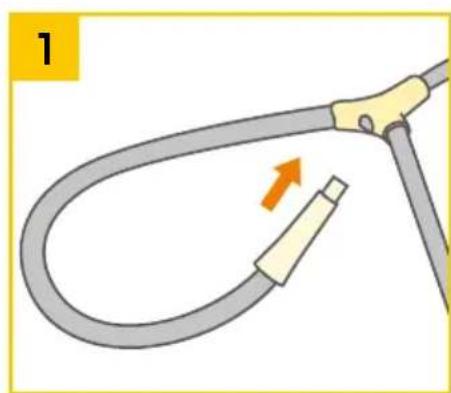

Insert the unused short tubing into the tubing holder.
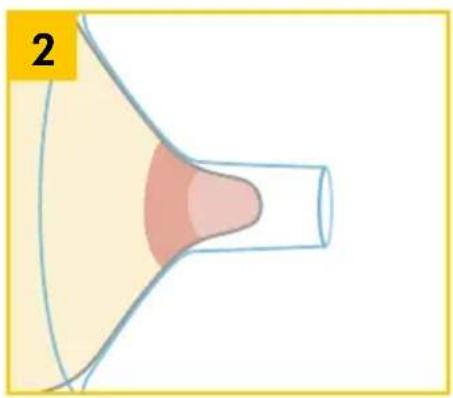
Place the breast shield on your breast so that your nipple is properly centred in the tunnel.

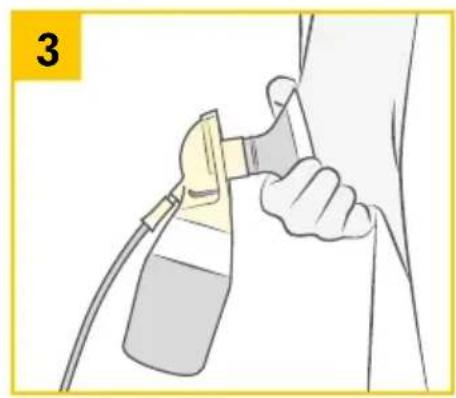
Hold the breast shield onto your breast with your thumb and index finger. Support your breast with the palm of your hand.

rannnnnne
on pmpnng, see
eepnneee
Place the breast shield of one bottle on the first breast so that the nipple is properlycentred in the tunnel.

Hold the breast shield onto your breast with your thumb and index finger. Support your breast with the palm of your hand.
rannnnnne
on pmpnng, see
eepnne eee
2

Caution
- Step 2 (chapter 8.3):
- Wash hands thoroughly (at least one minute) with soap and water before touching the breast, the clean pump parts and clean pump set. Dry your hands with a fresh towel or a single-use paper towel.
- Do not hold the pump set by the bottle. This can lead to blockage of the milk ducts and engorgement.
i Info
- Double pumping saves time and increases the energy content of the milk.
8.3 Swing Maxi Flex - Preparing for double pumping


The oval breast shield can be rotated (360^) and placed in the desired position to have the most comfortable fit for you.

Switch on the breast pump with
Place the breast shield on your breast so that your nipple is properly centred in the tunnel.
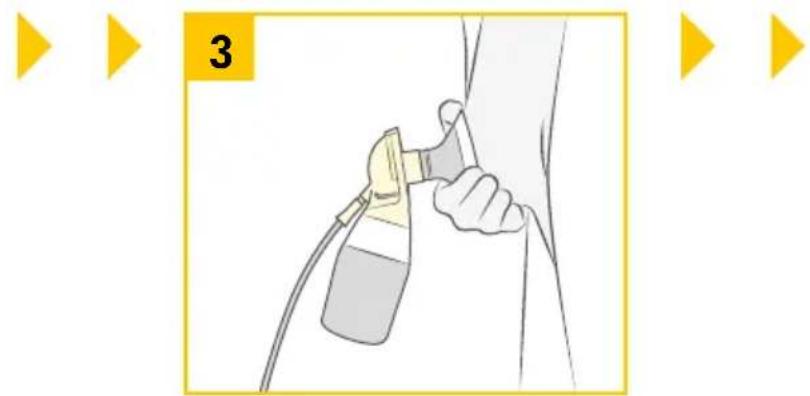
Hold the breast shield onto your breast with your thumb and index finger. Support your breast with the palm of your hand.
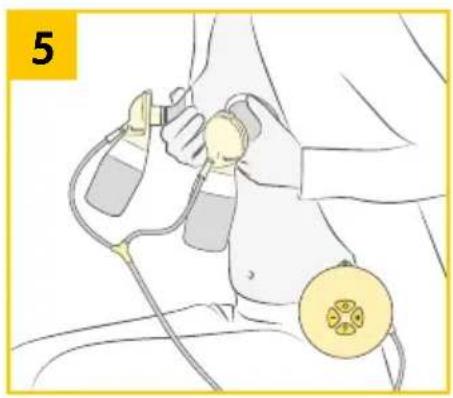
Place the second breast shield on your breast so that your nipple is properly centred in the tunnel.
8. Expression
24
! Note
- Easy Expression Bustier must be purchased separately. More information on www.medela.com
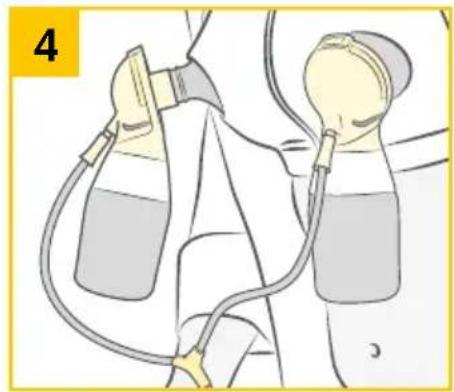
8.4 Swing Maxi Flex - Preparing for hands-free expression with the Easy Expression Bustier
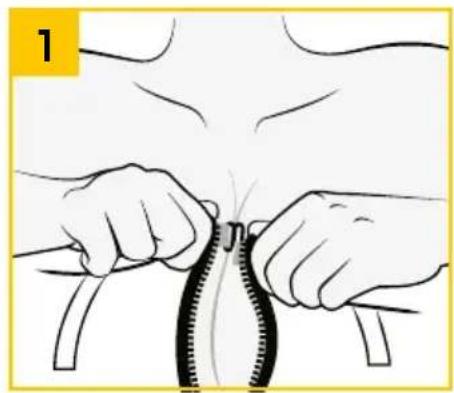

Put on the Easy Expression Bustier and close it using the hook on top.

Connect the assembled pump set to the breast shields.
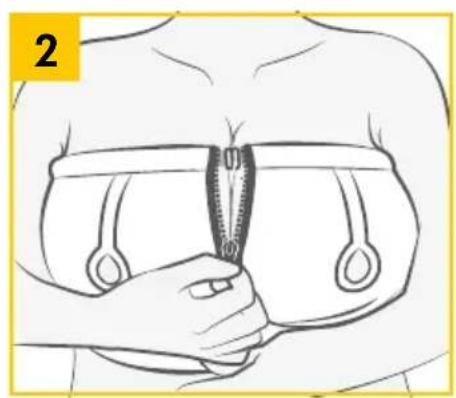
Leave the zip open slightly.
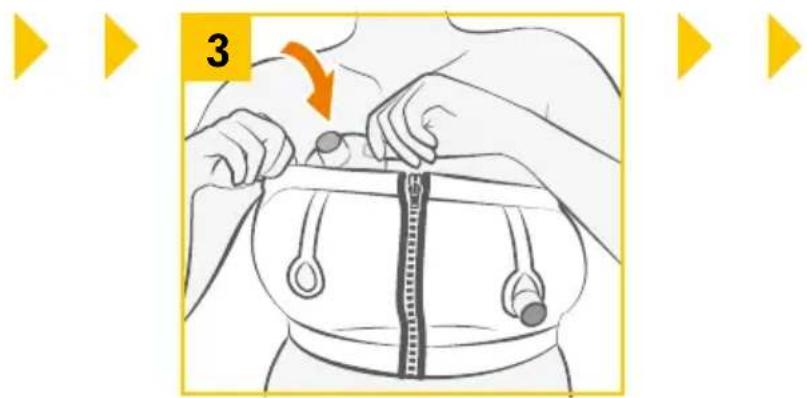
Place the breast shield on your breast under the bustier such that your nipple is centred in the tunnel of the breast shield.
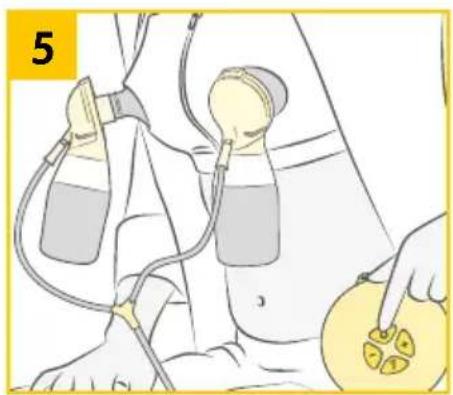
Start pumping.
chcpenrnnnne 8.5.
8. Expression
26

Caution
- Contact your your lactation consultant or breastfeeding specialist if you can express only minimal or no milk, or if expression is painful.
! Note
Always disconnect the Swing Flex /Swing Maxi Flex from the power source after expression.
- Only fill the bottle to the 150ml mark.
i Info
- Swing Flex / Swing Maxi Flex switches off automatically if it has been running for 30 minutes with no interaction.
- Do not kink the tubing during expression.
The following table shows the different LED status:
| Lights up On | |
| Does not light up Off | |
| Even, regular flashing Stimulation phase | |
| Light constantly on Expression phase | |
| Rapid flashing Min./Max. vacuum | |
8.5 Pumping
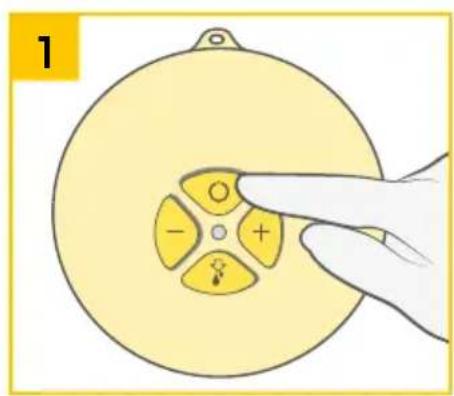

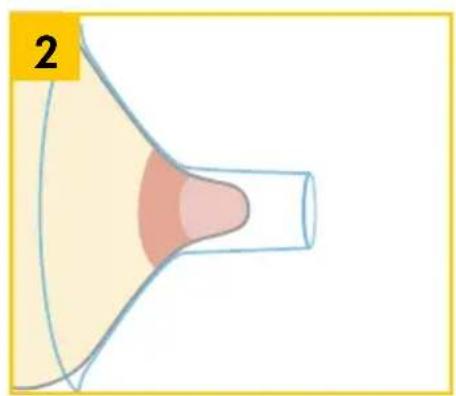
Switch on the breast pump with
The stimulation phase lasts a maximum of two minutes. The stimulation phase will then automatically change to the expression phase.

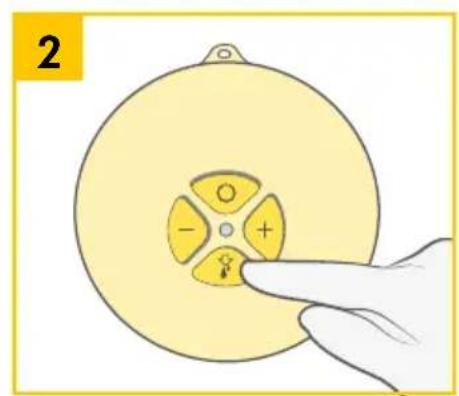
Switch off the breast pump with
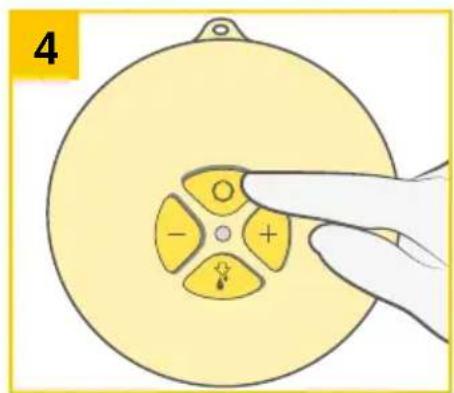
If your milk starts to flow earlier, press the button to change to the expression phase.
Make sure that the milk is flowing into the bottle properly.

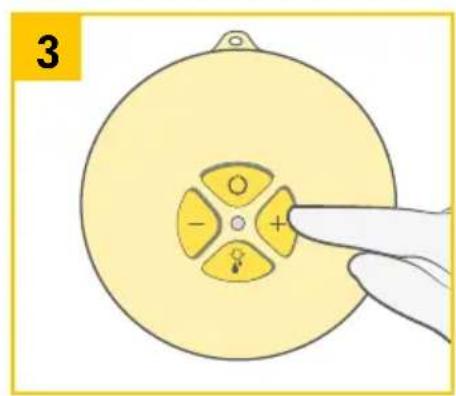

The Max. Comfort vacuum can be adjusted in every phase. Max. Comfort vacuum: Use to increase the vacuum until it is slightly uncomfortable. Press to reduce the vacuum, until it is comfortable again.
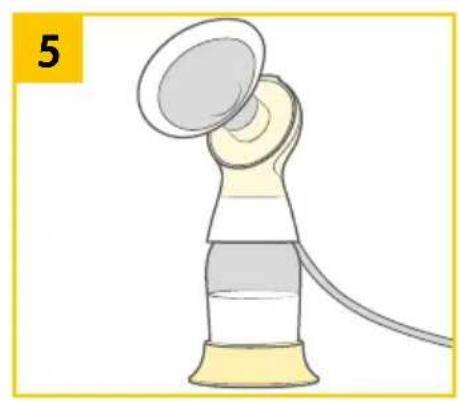
Use the bottle stand to prevent the bottle from tipping over.


aannnnnne aannnnnne
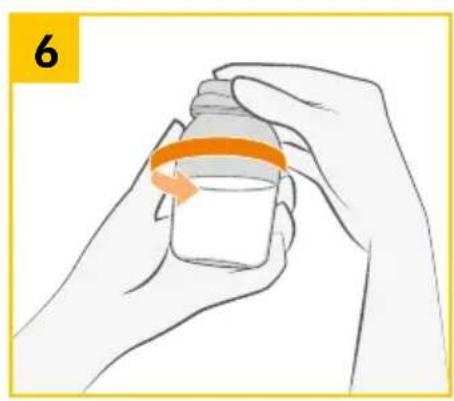
Close the bottle with a lid.
Follow the instructions in chapter 9 "Storing and thawing breast milk".
9.1Storage
| Storage guidelines for freshly expressed breast milk (for healthy term babies) |
| Room temperature
16 to 25 °C
(60 to 77 °F) | Refrigerator
4°C (39°F)
or colder | Freezer
-18°C (0°F)
or colder | Breast milk thawed in
the refrigerator |
| Up to 4 hours is best | Up to 3 days is best | Up to 6 months is best | At room temperature:
Up to 2 hours |
| *Up to 6 hours for milk
expressed under very
clean conditions | *Up to 5 days for milk
expressed under very
clean conditions | *Up to 9 months for milk
expressed under very
clean conditions | Refrigerator:
Up to 24 hours
Do not refreeze! |
*Guidelines for expressing milk under very clean conditions:
Before expressing breast milk, mothers should wash their hands with soap and water or an alcohol-based hand sanitiser. The pump parts, bottles and pumping area must be clean. Breasts and nipples do not need to be washed before pumping.
- These guidelines for storage and thawing of breast milk are a recommendation. Contact your lactation consultant or breastfeeding specialist for further information.
- Store breast milk in the coldest spot of the refrigerator (at the back of the glass shelf above the vegetable compartment).
9.2 Freezing
- Freeze expressed breast milk in plastic bottles or milk storage bags. Do not fill the bottles or bags more than 3/4 full to allow space for possible expansion.
- Label the bottles or bags with the date and volume of expression.
- Plastic bottles and component parts become brittle when frozen and may break when dropped.
- Do not use the breast milk if bottles or components become damaged.
9.3Thawing

Caution
Do not thaw or warm breast milk in a microwave or a pan of boiling water. This helps preserve important components and prevents burns.
- To preserve breast milk components, thaw the milk overnight in the refrigerator. Alternatively, hold the bottle or bag under warm water (max. 37^ / 98.6^ ).
- Gently swirl the bottle or bag to mix any fat that has separated. Avoid shaking or stirring the milk.
| Problem | Solution |
| If the motor is not running | Check presence of mains current.
Check the position of the batteries in the battery compartment. |
| If there is low or no suction | Verify the membrane is clean and not damaged.
Make sure that the membrane forms a seal around the edge of the connector and the lid is firmly connected with the connector.
Check all connections.
Check if the ends of the tubing fit securely into the back of the connector and into the port on the breast pump. During single pumping, insert the unused tubing into the tubing holder.
There should be no water in the tubing.
Do not kink the tubing during expression.
Ensure the breast shield forms a complete seal around the breast.
All components must be completely dry. |
| If condensation appears in the tubing | Clean the tubing as described in chapter 6.5. Shake out any water drops. |
| The pump becomes wet | Unplug the mains adapter from the socket.
Switch off the pump.
Do not place the pump upside down. The control panel must point upwards.
Store the pump in a dry, warm place for 24 hours.
Note:
Do not expose the pump to direct sunlight.
Do not accelerate the drying process by use of heat. |
Warranty
The "International Warranty" brochure contains detailed warranty information.
Disposal
This is a single user product. Use by more than one person may present a health risk. The unit is made of metals and plastics and should be disposed of in accordance with the European directives 2011/65/EU and 2012/19/EU. Additional, local guide-lines must also be observed. Please take care that you dispose of the unit and its accessories in accordance with your local disposal guidelines.
The following accessories for Swing Flex / Swing Maxi Flex are available from Medela distribution partners by specifying the product number.
Sales articles Swing Flex / Swing Maxi Flex
Article number
Product
101033773 Swing Flex breast pump EN NL FR (Euro adapter)
101036226 Swing Flex breast pump EN NL FR (Euro adapter) for India
101033777 Swing Flex breast pump EN (AUS/NZ adapter)
101033793 Swing Flex breast pump EN (UK adapter) for UK
101033775 Swing Flex breast pump EN NL FR (UK adapter)
101036238 Swing Flex breast pump EN NL FR (US adapter)
101033817 Swing Maxi Flex breast pump EN NL FR (Euro adapter)
101036232 Swing Maxi Flex breast pump EN NL FR (Euro adapter) for India
101033825 Swing Maxi Flex breast pump EN (AUS/NZ adapter)
101033845 Swing Maxi Flex breast pump EN (UK adapter) for UK
101033819 Swing Maxi Flex breast pump EN NL FR (UK adapter)
101033821 Swing Maxi Flex breast pump EN NL FR (US adapter)
Spare parts Swing Flex
Article number
Product
099.0016
Swing Flex adapter (100-240 V; 4.8 V) Euro
099.0017
Swing Flex adapter (100-240 V; 4.8 V) UK
099.0018
Swing Flex adapter (100-240 V; 4.8 V) AUS/NZ
099.0276
Swing Flex adapter (100-240 V; 4.8 V) CN
101033542
Swing Flex adapter (100-240 V; 4.8 V) US/JP
101038305
Swing Flex adapter (100-240 V; 4.8 V) KR
099.0015 Swing Flex motor unit
101034002 Swing Flex tubing
101034005 PersonalFit Flex connector
Spare parts Swing Maxi Flex
Article number
Product
099.0271
Swing Maxi Flex adapter (100-240 V; 12 V) Euro
099.0272
Swing Maxi Flex adapter (100-240 V; 12 V) UK
099.0273
Swing Maxi Flex adapter (100-240 V; 12 V) AUS/NZ
099.0274
Swing Maxi Flex adapter (100-240 V; 12 V) CN
101033543
Swing Maxi Flex adapter (100-240 V; 12 V) US/JP
101038303
Swing Maxi Flex adapter (100-240 V; 12 V) KR
099.0270 Swing Maxi Flex motor unit
101034003 Swing Maxi Flex tubing
101034005 PersonalFit Flex connector
Accessories for Swing Flex / Swing Maxi Flex
| Article number | Product |
| 101033953* | PersonalFit Flex breast shield S (21 mm) |
| 101033964* | PersonalFit Flex breast shield M (24 mm) |
| 101033992* | PersonalFit Flex breast shield L (27 mm) |
| 101033997* | PersonalFit Flex breast shield XL (30 mm) |
| 800.0796 | 150 ml breast milk bottles (3 pcs) |
| 200.1659 | 250 ml breast milk bottles (2 pcs) |
| 008.0040 Quick Clean microwave bags |
Other Medela products are available at www.medela.com
- If the result of expression is unsatisfactory or expression is painful, contact your lactation consultant or breastfeeding specialist. A different size of breast shield may help make expression more comfortable and successful.
Swing Flex and Swing Maxi Flex are EMC-tested in conformity with the requirements of IEC 60601-1-2:2007 3rd Edition and IEC 60601-1-2:2014 4th Edition according to clause 7 and 8.9.
Warning - The electric breast pumps Swing Flex and Swing Maxi Flex should not be used adjacent to or stacked with other equipment. If adjacent or stacked use is necessary, the electric breast pumps Swing Flex and Swing Maxi Flex should be observed to verify normal operation in the configuration in which it will be used. Wireless communications equipment such as wireless home network devices, mobile phones, cordless telephones and their base stations, walkie-talkies can affect the electric breast pumps Swing Flex and Swing Maxi Flex and should be kept at least a distance 30 cm away from the equipment.
Swing Flex

vacuum (approx.)
-35 ... -250 mmHg
-5…-33kPa
45... 111 cpm

| In Out | |
| 100-240 V~ 50/60 Hz max 0.5 A | 4.8 V=1.2 A |
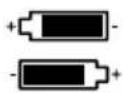
4 × 1.5 ~V , Alkaline
AA, Mignon, LR6
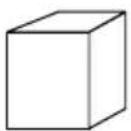
121 × 129 × 57 ~mm
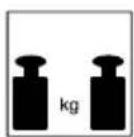
300g
200g
Swing Maxi Flex

vacuum (approx.)
-35 ... -250 mmHg
-5…-33kPa
45...111cpm
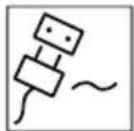
| In Out | |
| 100-240 V~ 50/60 Hz max. 0.6 A | 12 V=1.5 A |
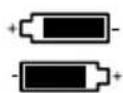
6 × 1.5 ~V , Alkaline
AAA, Micro, LR03
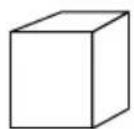
121 × 129 × 57 ~mm
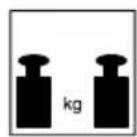
290g
220g
Operation/Transport/Storage
Operation/Transport/Storage
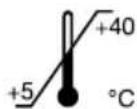
Operation
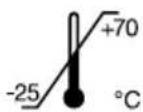
Transport/Storage
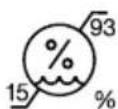
Operation/Transport/Storage
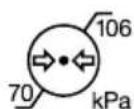
Transport/Storage/Operation

Operation
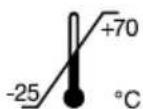
Transport/Storage
45... 111 cycles/min
45... 111 cycles/min
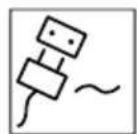
Netherlands & Belgium
Medela Benelux BV
Uilenwaard 31
5236 WB's-Hertogenbosch
The Netherlands
Phone +31 73 690 40 40
Fax +31 73 690 40 44
info@medela.nl
info@medela.be
www.medela.nl
www.medela.be
France
Medela France SAS
14 rue de la Butte Cordière
91154 Étampes Cedex
France
Phone +33 169161030
Fax +33 169161032
info@medela.fr
www.medela.fr

0123