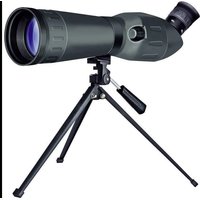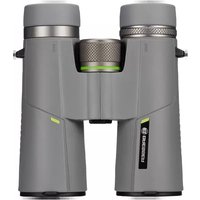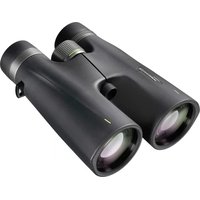
Dachstein 2060X80 ED - Binoculars BRESSER - Free user manual and instructions
Find the device manual for free Dachstein 2060X80 ED BRESSER in PDF.


Frequently Asked Questions - Dachstein 2060X80 ED BRESSER
User questions about Dachstein 2060X80 ED BRESSER
0 question about this device. Answer the ones you know or ask your own.
Ask a new question about this device
Download the instructions for your Binoculars in PDF format for free! Find your manual Dachstein 2060X80 ED - BRESSER and take your electronic device back in hand. On this page are published all the documents necessary for the use of your device. Dachstein 2060X80 ED by BRESSER.
USER MANUAL Dachstein 2060X80 ED BRESSER
natural_image
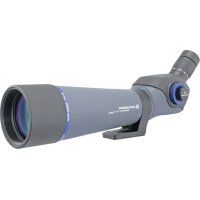
Two black telescope-like optical instruments with visible lens and mounting brackets (no text or symbols)text_image
Labeled diagram of a mechanical device with numbered parts for identification43-25100
text_image
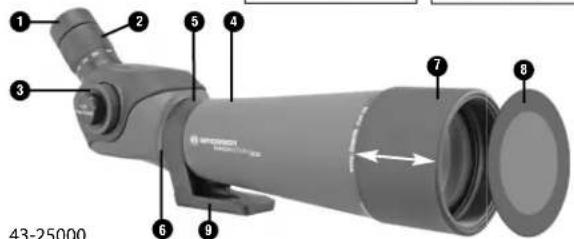
1 2 3 4 5 6 7 8 9 43-25000
WARNUNG!
Never look directly into or close to the sun with this device. DANGER OF BLINDNESS!

ATTENTION!
Congratulations on your new spotting scope. It has an exclusive lens made of ED glass. This improves colour veracity, contrast and focus to far above the normal lens standard. Lenses of ED (Extra low Dispersion) glass are made using a very costly process and reduce the secondary colour spectrum to a minimum.
Your spotting scope also has top-quality FMC coating. The main tube is waterproof and filled with nitrogen.
Parts
- Twist up eyepieces (rotatable)
- Zoom setting / zoom lens
- Focus wheel (coarse/fine) 01:10 gearing
- Optical tube.
- Centre ring (mobile)
- Adjustment/fastening screw
- Sun visor
- Dust cap
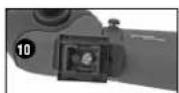
- Tripod fitting
- Tripod connection thread
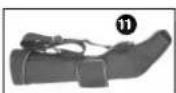
- Carrying bag
Setting up the spotting scope
Ideally the spotting scope should be on a tripod of suitable load-bearing capacity (obtainable as a Bresser accessory). Your spotting scope has a tripod thread to DIN standard (5). It can therefore be attached to any tripod with a DIN standard thread.
Important:
Remove the protective caps from the main tube and eyepiece. Make sure they are reinserted after every use.
Handling
If no tripod is available place the spotting scope on a secure, clean horizontal surface.
A ground tripod is ideal (optional, appropriately rugged, load limit 4 kgs). Make sure the tripod is horizontal. Connect tripod and adaptor plate using the tripod thread connection and fix your spotting scope in place on the ground tripod. (Adhere to the tripod operating instructions.)
Operation
First remove the lens cover (screw) and pull the sun visor carefully out to its full extent. Then remove the lens cap. Turn the zoom lens to the smallest (16x) or (20x) magnification
Move the main tube (horizontally)
Your spotting scope has a tube clamp (mobile centre ring) with fastening screw. Turn that screw counter-clockwise to undo the main tube clamp. You can then turn the tube about its own axis. The desired viewing position can thus be set. To fix the main tube in place turn the fastening screw clockwise.
Move the main tube (horizontally)
Your spotting scope has a tube clamp (mobile centre ring) with fastening screw. Turn that screw counter-clockwise to undo the main tube clamp. You can then turn the tube about its own axis. The desired viewing position can thus be set. To fix the main tube in place turn the fastening screw clockwise.
Focussing, zoom function
The Dachstein spotting scope has a double focussing wheel for coarse and fine setting (10:1 gearing).
Align the spotting scope to a target about 50 to 100 m away, slowly turn the focussing wheel (large=coarse focus) until the image is correctly focussed. To finely adjust focussing use the smaller wheel.
Turn the zoom lens and change focus slowly upwards. Focus correction is essential.
When zooming in or out always correct the focus with the wheel.
Indoor Viewing vs. Outdoor Viewing
Although you may casually observe through an open or closed window, the best observing is always done outdoors. Temperature differences between inside and outside air, and the low quality of window glass can blur images through the spotting scope.
Sun shield
Extend the sun shield (8) in strong sunshine affecting visibility. Put your hand around the spotting scope aperture ring and simply push the shield out.
Terrestrial Observing
When viewing land objects, you will be observing through heat waves on the earth surface. You may have noticed these heat waves while driving down a highway during the summer. Heat waves cause a loss of image quality.
If heat waves interfere with your viewing, try focusing at low power to see a steadier, higher quality image. Observe in early morning hours, before the earth has built up too much internal heat.
Cleaning and Maintenance
Your spotting scope is a precision optical instrument designed for a lifetime of rewarding viewing. It will rarely, if ever, require factory servicing or maintenance. Follow these guidelines to keep your spotting scope in the best condition:
- Avoid cleaning the spotting scope's lenses. A little dust on the front surface of the spotting scope's correcting lens will not cause loss of image quality.
- When absolutely necessary, dust on the front lens should be removed with very gentle strokes of a camel hair brush or blown off with an ear syringe (available at most pharmacies).
- Fingerprints and organic materials on the front lens may be removed with a solution of 3 parts distilled water to 1 part
isopropyl alcohol. You may also add 1 drop of biodegradable dishwashing soap per pint of solution. Use soft, white facial tissues and make short, gentle strokes. Change tissues often.
CAUTION: Do not use scented or lotioned tissues or damage could result to the optics.
- Your spotting scope is waterproof: That is, it is designed to be used by the sportsperson, boater or casual user in an environment in which exposure to water, such as rain, mist, splashing and so forth, might be a possibility. It is intended to be resistant to accidental exposure to water, but it is not designed for intentional submersion or extended use in water. If your spotting scope is intentionally immersed in water for any significant length of time, you risk voiding the warranty in doing so.
Also note that although your spotting scope may be used near a water environment, water on the lens will cause images to be distorted. Wipe off water from the entire device with a soft cloth when you leave the water environment.
Warranty
The guarantee period is 20 years and begins on the day of purchase.
You can consult the full guarantee terms as well as information on details of our services at www.bresser.de/warranty_terms.
Important:
Make sure to return the device carefully packed in the original packaging in order to prevent transport damage. Please also enclose the cash receipt (or a copy). This warranty does not imply any restriction of your statutory rights.
Name:
Postcode / City: ....
Street:
Telephone: ....
Date of purchase:
Signature: ....