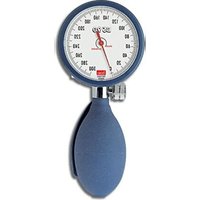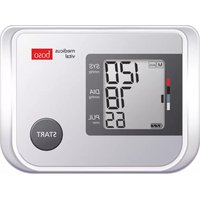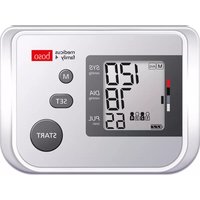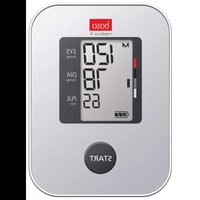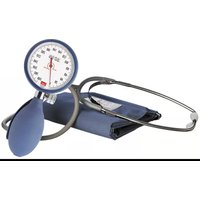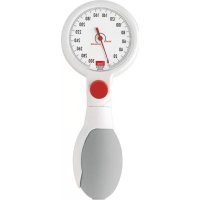
Egotest - Blood pressure monitor BOSO - Free user manual and instructions
Find the device manual for free Egotest BOSO in PDF.



Frequently Asked Questions - Egotest BOSO
User questions about Egotest BOSO
0 question about this device. Answer the ones you know or ask your own.
Ask a new question about this device
Download the instructions for your Blood pressure monitor in PDF format for free! Find your manual Egotest - BOSO and take your electronic device back in hand. On this page are published all the documents necessary for the use of your device. Egotest by BOSO.
USER MANUAL Egotest BOSO
1 Blood pressure monitor 1 Instruction manual
1 Blood pressure cuff 1 case
1 Stethoscope on cuff*
*may not be included in special order
Symbols
| CE 0124 | CE marking |
| Date of manufacture | |
| Manufacturer | |
| mmHg | Unit of measurement for determining blood pressure |
| Proper functionality of the device is tested up to a drop height of 1 meter | |
| Relative humidity limitation | |
| Temperature range in degrees Celsius | |
| REF | Order number |
| Important notes | |
| Observe operating instructions | |
| MD | Medical device |
| UDI | Unique product identifier |
| SN | Serial number |
| CH REP | Switzerland - Authorization |
Please read these instructions for use carefully before use and keep them in a safe place.
The metrological check - at least every 2 years - can be carried out either by the manufacturer or by authorized service providers in accordance with the Medical Devices Operator Ordinance.
Preliminaries
This blood pressure monitor complies with the international standard ISO 81060-1.
The device can be used with any arm circumference as indicated on the associated cuff.
Modification of the device and/or accessories is not permitted. This can lead to measurement errors.
The device can be used by any user who has knowledge of auscultatory blood pressure measurement.
EN
Purpose
Non-invasive measurement of systolic and diastolic blood pressure in humans.
Indication
Verification of blood pressure in humans. Diagnosis, follow-up or suspicion of hypotension or hypertension.
Contraindication
Measurement of blood pressure should be omitted in the case of:
Venous or arterial access
Lymphedema (e.g. mastectomy)
- Fresh surgical wounds
Intended users
The boso aneroid devices for self-measurement are used by persons trained in auscultatory blood pressure measurement. The patient is intended to be the user.
Target patient group
The boso aneroid devices for self-measurement are used by people who carry out self-measurements of blood pressure.
Important notes
Keep the unit away from strong vibrations (do not bump or drop it) and protect it from dirt and moisture. Make sure that the cuff is not damaged by sharp objects (needle, scissors, etc.).
The device must no longer be used if there is visible damage, leakage or misalignment of the pressure pointer (e.g. zero point shifted).
Do not inflate above 300mmHg
The measuring time should not exceed 2 min. There must be a break of at least 2 min. between 2 measurements.
The patient must observe the following things to measure blood pressure:
△sit comfortably
Do not cross legs
Lean or otherwise support the back and arms
be as relaxed as possible during the measurement and do not speak
rest for 5 minutes before the first measurement
General instructions for self-measurement of blood pressure
Selfmeasurement does not equate to therapy. Do not change the dosage of the medicines prescribed by the doctor on your own initiative.
- Blood pressure fluctuations are normal. Even with a repeat measurement, considerable differences can occur. One-time or irregular measurements do not provide reliable information about the actual blood pressure. A reliable assessment is only possible if you measure regularly under comparable conditions and write down the measured values in the blood pressure passport.
-
The measurement must always be taken in the relaxed state. It is advisable to check your blood pressure twice a day - in the morning when you get up and in the evening when you have relaxed after work.
-
When drug therapy is necessary depends not only on the blood pressure, but also on the respective risk profile of the patient in question. Please talk to your doctor if even one of the two values (systole, diastole) is constantly above the limit values for clearly elevated blood pressure.
Blood pressure values
To determine blood pressure, two values must be measured:
Systolic (upper) blood pressure: It occurs when the heart muscle contracts and blood is forced into the blood vessels.
- Diastolic (lower) blood pressure: It is present when the heart muscle is stretched and fills with blood again.
Blood pressure readings are expressed in mmHg (mm mercury column).
The World Health Organisation (WHO) has set the following limits for assessing blood pressure levels:
| Assessment | systolic | diastolic |
| Clearly elevated blood pressure (hypertension) | From 140 mmHg | From 90 mmHg |
| Still normal blood pressure | 130 to 139 mmHg | 85 to 89 mmHg |
| Normal blood pressure | 120 to 129 mmHg | 80 to 84 mmHg |
| Optimal blood pressure | Up to 119 mmHg | Up to 79 mmHg |
Self-measurement of blood pressure at home often results in somewhat lower values than those measured by a doctor. That is why the German Hypertension League has set lower limits for home measurements:
Measurement at home: 135 / 85mmHg
Measurement in the doctor's office: 140 / 90mmHg
Putting on the cuff
The cuff must not be applied over wounds as this may cause further injury.
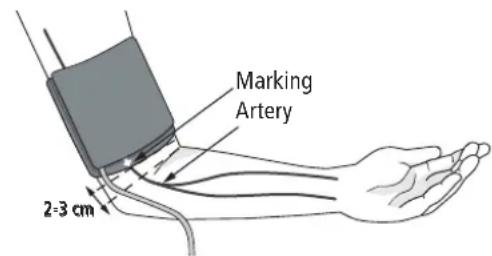
Important: The stethoscope membrane for listening to the Korotkoff sounds must be placed on the artery inside the upper arm.
Put the cuff on so that the lower edge of the cuff ends approx. 2-3 cm above the crook of the elbow and the center of the rubber bag (marking on the cuff) is above the artery. The cuff should not be too tight, about two fingers should still fit between the arm and the cuff so as not to put pressure on the artery.
Make sure that rolling up garments does not put pressure on the arm that affects circulation. It is better to take off tight clothes before measuring.
Carrying out the measurement
Blood pressure must always be measured on the arm with the higher pressure values. To do this, first measure the blood pressure on both arms and then always on the arm whose blood pressure value is higher.
- Apply the cuff as described in "Applying the cuff".
- Put on the earpiece of the stethoscope.
-
Place the arm with the cuff comfortably, slightly bent and steady on the table.
-
Close the valve completely by turning the air release screw to the right (clockwise) or by a strong pumping motion on units with a push-button valve.
- Inflate the cuff while constantly monitoring the pressure gauge. Keep pumping until the pointer of the manometer exceeds your usual blood pressure by about 30mmHg
If you still hear throbbing sounds in the stethoscope, continue pumping until you no longer hear any sounds, i.e. until the blood flow is cut off.
- Open the valve by turning (anticlockwise) the air release screw or operating the push button. The release rate should be 2 to 3mmHg per second, according to the WHO (World Health Organisation).
To avoid a reading error, read the pressure values perpendicular to the scale.
7. At the first distinct arterial tone (throbbing sound) in the stethoscope, read the systolic (upper) blood pressure value on the manometer scale.
At the last audible arterial tone, read the diastolic (lower) blood pressure value.
It is recommended that during auscultatory measurement
- of adults the phase V (K5)
- of children aged 3 to 12 years the phase IV (K4)
- of pregnant women phase V (K5) are used, except for those in whom sounds are audible when the cuff is deflated, in which case phase IV (K4) of Korotkoff sounds should be used.
K5 is the point at which the sounds heard with the stethoscope are no longer audible. K4 is the point at which the sounds heard with the stethoscope change from a clear beating sound to a muffled beating sound.
- After finishing the measurement, fully open the release valve (counterclockwise) for quick cuff deflation.
If you want to repeat the measurement, you should wait at least
2 minutes until your blood circulation has returned to normal.
If no further measurement is to be taken, remove the cuff.
Cuffs
Only use boso cuffs that are suitable for your device (1-tube or 2-in-1 tube cuffs). The cuff must be selected to fit the arm circumference. To obtain reliable measurement results, please measure the arm circumference with a measuring tape and compare it with the information on the cuff. If you need a different cuff or different cuff size(s), please contact your dealer.
Technical data
| Measuring range Acc | Accuracy of pressure display | Storage conditions | Operating conditions |
| 0-300 mmHg | ±3 mmHg or 2% of the reading (the higher value applies) | +70°C -30 °C 85% 15% % | +40°C -10 °C 85% 15% % |
Cleaning device and cuff
To clean the device, please use only a soft, dry cloth.
To clean the cuff, please remove the rubber bag. The cuff cover can be washed by hand at max. 30^
Disinfection
For wipe disinfection of the device (exposure time min. 5 min.) and for spray disinfection of the cuff we recommend the disinfectant Microzid Sensitive Liquid (Schülke & Mayr).
Disinfect the device and cuff after each measurement on a patient.
The boso aneroid devices for self-measurement described in these instructions for use are intended for reuse on several persons.
Obligation to report incidents
A serious incident shall be reported to the manufacturer and to the competent authority of the Member State in which the user and/or patient is established.
A "serious incident" means an incident that directly or indirectly had, could have had, or may have had any of the following consequences:
- the death of a patient, user or other person,
- the temporary or permanent serious deterioration of the state of health of a patient, user or other person,
- a serious public health hazard.
Please direct reports of serious incidents to:
Warranty/Customer Service
We provide a 3-year quality warranty for this product from the date of purchase. The date of purchase must be proven by invoice. Within the warranty period, defects resulting from material or manufacturing faults will be repaired free of charge. The warranty does not extend the warranty period for the entire appliance, but only for the replaced components.
The warranty does not cover wear and tear (e.g. cuff), transport damage or any damage caused by improper handling (e.g. failure to follow the instructions for use) or by tampering by unauthorized persons.
The warranty does not give rise to any claims for damages against us. The buyer's statutory claims for defects pursuant to Art. 437 of the German Civil Code (BGB) shall not be restricted.
In the event of a claim under the warranty, the unit (disinfected) must be sent together with the original proof of purchase to:
Please ensure disposal of the unit in accordance with all regional and national environmental regulations.