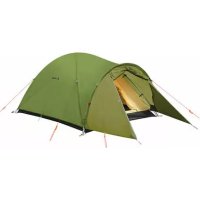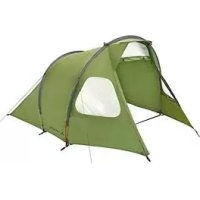
Chapel L 3P - Tent Vaude - Free user manual and instructions
Find the device manual for free Chapel L 3P Vaude in PDF.



Frequently Asked Questions - Chapel L 3P Vaude
User questions about Chapel L 3P Vaude
0 question about this device. Answer the ones you know or ask your own.
Ask a new question about this device
Download the instructions for your Tent in PDF format for free! Find your manual Chapel L 3P - Vaude and take your electronic device back in hand. On this page are published all the documents necessary for the use of your device. Chapel L 3P by Vaude.
USER MANUAL Chapel L 3P Vaude
By an intake rain-protected adjustable ventilation.

STORMCORD COLLECTOR
Stormcord tensioner and collector for guylines.

4-WAY-ZIP
Entrance with 4-way zip can be fully opened and removed.
SILICONIZED
Longer lifespan, excellent UV reflection, superior water beading properties.
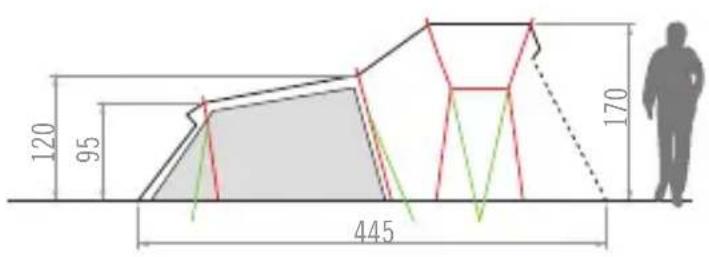
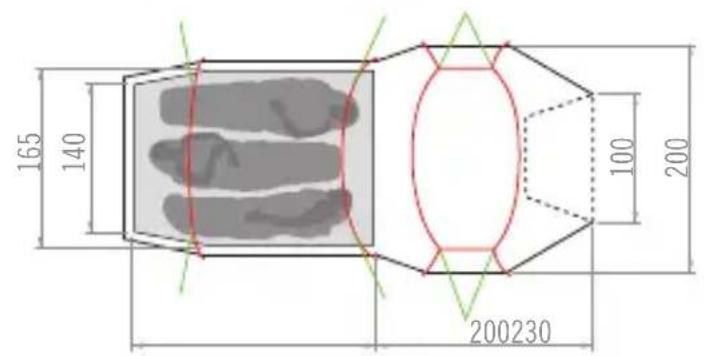

Weight max: 3.990g
Packing size: 55 × 30 cm
Water column groundsheet:
7.000 mm
Water column fly:
3.000 mm
ATTENTION: PLEASE RETAIN THIS BOOKLET FOR FUTURE REFERENCE.
INTRODUCTION
Endless freedom, adventure and summit thrills.
Mountains and nature as far as the eye can see.
Peace and excitement all in one.
That is the Spirit of Mountain Sports.
We here at VAUDE are passionate about mountain sports. This passion can be found in every single one of our VAUDE products.
As a modern family business we take our social and environmental responsibility very seriously: we have been a bluesign member since 2008, one of the most stringent ecological standards in the world. And as the first European outdoor outfitter we are also constantly improving our environmental performance through EMAS certification, the EU's eco-management and audit scheme.
So hope to see you soon up in the mountains... Antje von Dewitz
CHOOSING YOUR SITE:
- Pitch your tent on level ground, in an area protected from wind and not in a hollow, where water can quickly collect when it rains.
Take into account wind direction when pitching your tent - face the entrance downwind and sheltered if possible.
Take into account that camping near water sources could lead to condensation build up on your tent and belongings. - Don't pitch your tent in dangerous places. This includes gorges, underneath cliffs or rocks, near glacier-fed rivers, in forests or near fire spots.
- Remove all pointy or sharp objects that could damage the tent floor.
- Use a tent footprint or groundsheet to protect the tent floor.
- If you are planning on camping in one spot for a longer period of time, make sure to pitch in shade or half shade - UV radiation accelerates the aging process of tent fabrics and coatings.
- When camping on snow and in freezing conditions,
dig a pit in front of the tent door or in the vestibule in which cold air can collect.
- Avoid snow build up by regularly clearing snow off the surface of the tent.
- Cooking inside your tent should be avoided whenever possible due to the danger of fire or carbon dioxide poisoning. If you need to make an exception, make sure to ensure sufficient ventilation and keep the stove as far from the tent walls as possible. This might mean having to detach the inner tent and fold it back.
SET UP - GENERAL INSTRUCTIONS:
VAUDE tents are well known for their simple set up. If any step in the process seems difficult, do not use force; take the time to find out what the problem is.
- Spread out the tent on the ground. (Inner and outer tent are delivered attached to each other.) In windy conditions you should stake out the tent. Use guy lines to anchor it, for example, to a rock, backpack, etc.
- Sort the poles and assemble the sections by sliding
ENGLISH
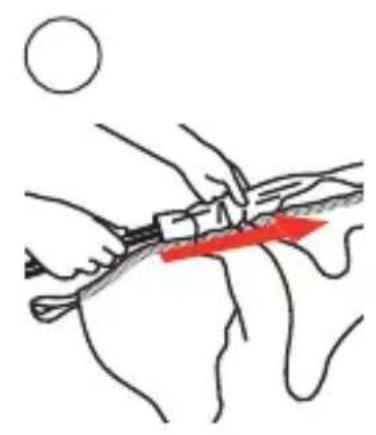
them into each other. Do not whip out the pole sections so they snap together. Make sure that each pole section is fully inserted into the next section; otherwise they may crack or break under pressure. Gently slide the poles through the pole sleeves. Do not pull them through.
-
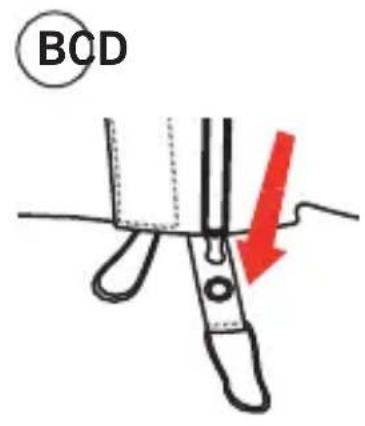
Erect the tent and make sure that the entrance zip is not under undue tension or strain which could easily damage the zip. Use the releasing lock at the bottom of the entrance.
-
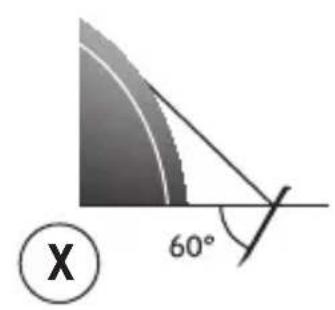
Stakes should be driven in at a 60^ angle away from the tent (X).
-
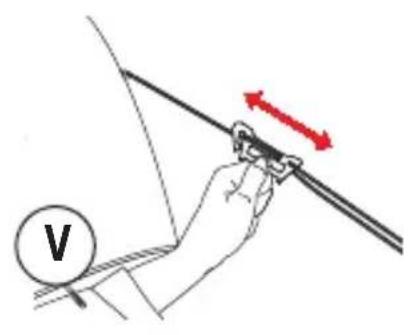
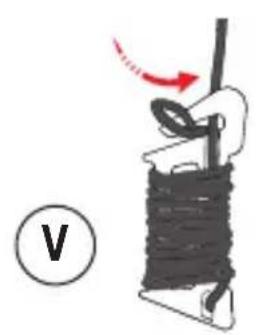
In the event of strong winds or a storm, it is necessary to additionally secure the tent with the attached storm cords. To adjust the length of the storm cord, push the Stormcord Collector up or down. If the storm cord is not required, wrap the cord around the Stormcord Collector and secure the end on the hook provided for this purpose (V).
-
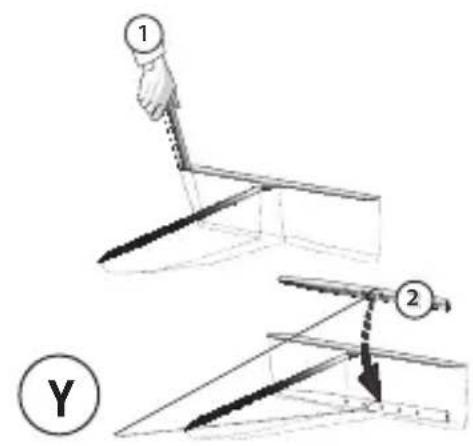
The VAUDE Y-stakes that come with our tents are very durable and resistant to bending and especially suited for hard ground and grass. For
extremely hard ground, we recommend the use of tent pegs or spikes. VAUDE offers special stakes for very soft ground, snow or sand. Hammer them in vertically for soft soil or bury them horizontally to anchor in sand or fresh powder snow (Y).
SETTING UP - "MODEL-SPECIFIC":
Please follow these instructions step by step, the order is important.
-
Clear the ground of any sharp items (We recommend the use of an optional groundsheet protector).
-
Spread out the tent on the ground. Please note: Inner and outer tent are delivered attached to each other.
-
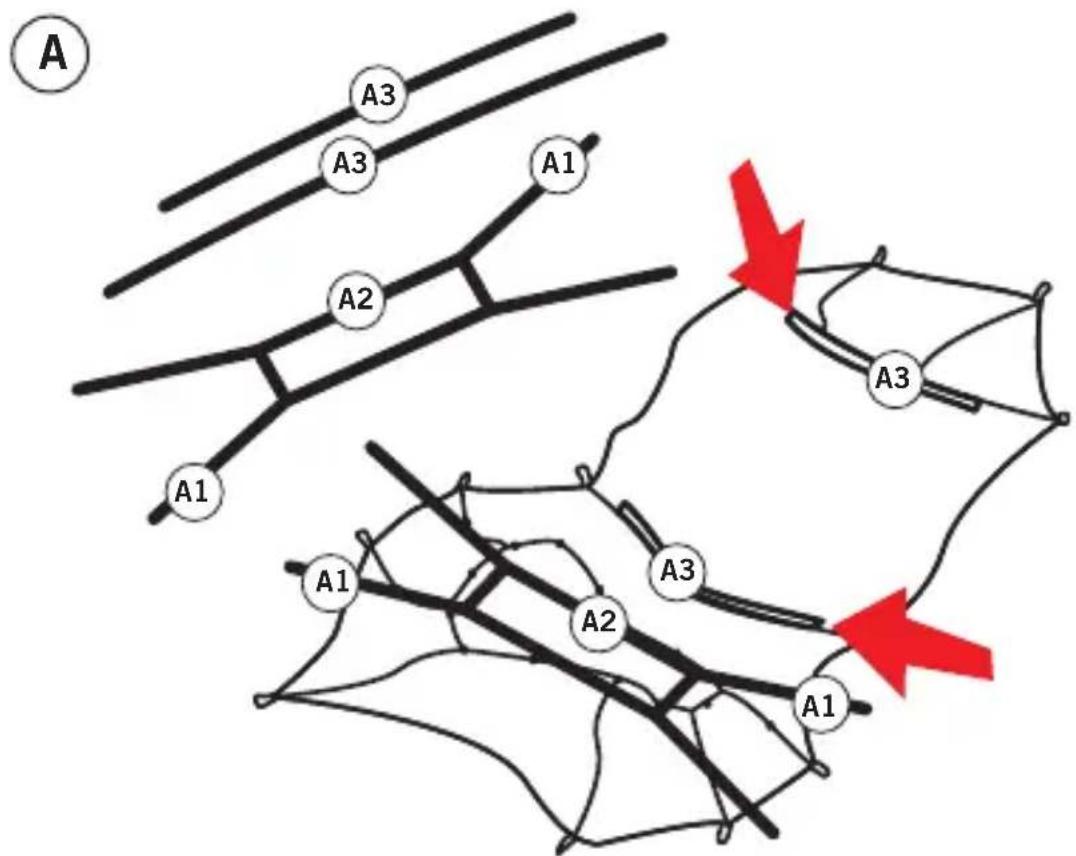
Lay out and assemble the poles. There are two sets for the porches (A1), 2 short roof poles (A2) and 2 long poles (A3).
-
For each set of porch poles (A1) put one into the eyelet at the base of the window side of the porch (B).
-
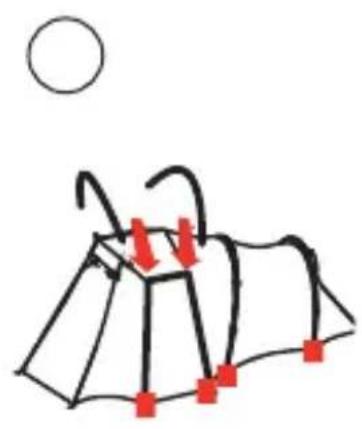
One after the other push the roof poles (A2) up towards the porch poles (A1) and then connect them (C).
-
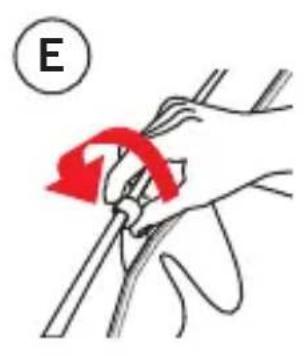
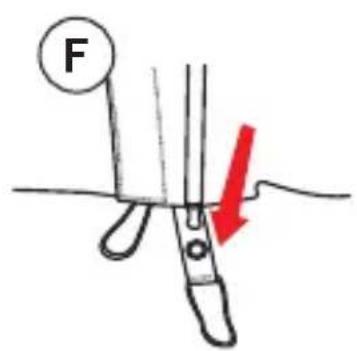
Now push the two long poles (A3) into the tunnel section (D). The lower arch should be at the back, the higher one at the front; then the cover for the porch should be clipped to the porch poles (E). Next tense the poles of the tunnel and insert them into the appropriate point in the base (F).
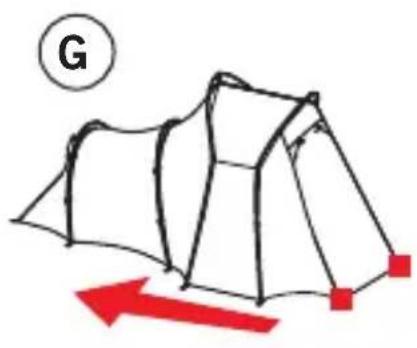
- Now insert two tent pegs into the porch, open out the tent and secure it with two further tent pegs at the back. The tent should now stand unaided (G).
- Anchor the base, porches and, if necessary, guy ropes.
- Ensure that there is sufficient ventilation. This can be controlled by opening the entrances or window.
Take Down - General Instructions:
- Remove everything from the tent's interior.
- Freestanding tents can be gently shaken out to remove leaves, sand, and other debris.
- Turn the tent over with floor facing upward and allow it to dry a bit longer.
- If it's not possible to dry the tent completely before packing it, this should be done within 12 hours to
prevent the risk of mold and mildew growth.
- As in the tent set up, never pull the poles out of the pole sleeves; rather push them through.
- When storing a tent in its stuff sack, make sure that stakes and poles don't press against the tent fabric and damage it.
Before taking down your tent, close all zips and roll up the guy lines. That way you won't have to untangle them when it comes time to set the tent up again, and pitching is that much easier.
DISMANTLING - "MODEL-SPECIFIC":
- Unfasten the covering of the tent from the porch and take the poles out of the tunnel section. Then take the poles of the porch out of the base eyelets.
- Fold up the poles and roll them up with the tent, if possible. Do not force the poles into the storage bag if it is full as this may result in damage to the storage bag or tent.
ENGLISH
STORAGE/CARE/REPAIRS:
- As soon as the tent is dry and clean it can be stored in its pack sack in a well-ventilated, cool and dry place. Please do not store the tent near paints, adhesives, oils, plastics, or fuels (gas canisters, etc.)! The gasses emitted from these materials contain plasticizers that can damage your tent over time.
- Zips are always a weak point in a tent's structure. If they get dirty, clean them with a (tooth) brush and lubricate them with graphite (pencil lead), silicon or sewing machine oil. Apply carefully and remove excess oil with a soft cloth.
- Never store your tent when it's wet for a longer period of time. Unpack it as soon as you arrive and dry it out in a well-ventilated place. To do so, separate the inner and outer tents or use the poles to create space between the two.
- Do not whip out tent poles and snap the sections together. This can damage the pole ends as well as the anodization. Check the poles regularly for cracks or other potential damage. Wash the poles and use silicon spray at any sign of corrosion (from
salt water, for example)
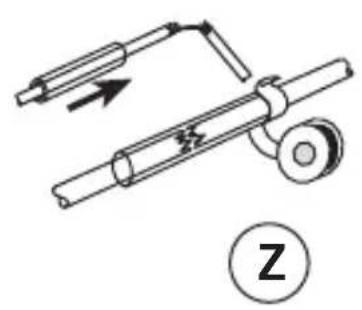
VAUDE only uses poles from the renowned manufacturers DAC and Yunan. These tend to become slightly bent with use, helping to reduce fracturing. Please do not attempt to bend these back into shape. Although aluminum is extremely fl exible this might damage or even break the poles. Every VAUDE tent comes with a Pole Doctor or repair sleeve. If a tent pole breaks while out on a trip, simply slide the repair sleeve over the broken section and then use tape to attach it (Z).
- The tent should only be cleaned by hand, never in a washing machine! Use a soft cloth and luke warm water. Detergents or cleaning agents may harm the tent's coating and waterproofing.
Use a brush to rub Nikwax Tech Wash in a 1:4 ratio with water on stubborn stains. Follow up with Nikwax Tent & Gear Solarproof waterproofing, applying generously to the area cleaned.
- When on the road, repair tears in the tent wall with repair tape and seal from the inside with a PU or silicon seam sealer. The seam should however
be correctly repaired as soon as possible in order to prevent further tearing. Please contact your retailer to do this.
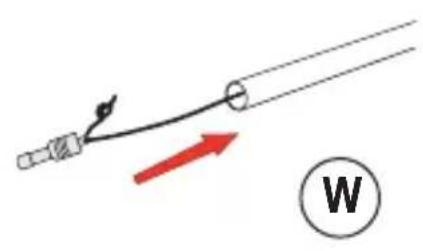
- Tent pole shock cords can be retightened if necessary (elasticity can wear out in very cold conditions or due to aging). To do this first remove the end cap and then untie the knot in the cord. Retie the knot further up the cord and replace the cap (W).
TECHNICAL DETAILS:
Depending on tent models, VAUDE tents feature the following:
FEATURES/FABRICS:
SILICONISED:
Increases tent life by 20% - a triple coating reflects damaging UV radiation to a much greater degree than standard treatments.
- 8-times greater tear resistance – siliconised fabrics attain a tear resistance of 8-11 kg compared to 1.3 kg of PU coated fabrics.
Excellent water beading properties - water simply
beads on the surface.
- Retensioning – the Polyamid carrier material swells up when damp or wet. The tent needs to be retensed if rain/snow initiate.
- Sealing - siliconised materials cannot be factory seam sealed (exception: VAUDE Silicon Seam Seal). When camping in extremely rainy conditions we recommend sealing all seams by hand with a silicon seam sealer.
FLY:
30D POLYESTER RIPSTOP SI/PU; WATERTIGHT TO 3,000MM.
- High tear resistance with reinforcement cross threads woven in.
- SI/PU - Polyurethane coating of the inner layer for maximum comfort thanks to reduced accumulation of condensation. Treble silicone coating of the outer layer for greater tear resistance, UV resistance and higher beading effect.
ENGLISH
INNER TENT:
30D POLYESTER RIPSTOP 285T.
- Thickly woven Ripstop polyester; wind-, sand- and blizzard-proof, with high tear resistance and breathability.
FLOOR:
70D POLYAMIDE 190T, PU COATED; WATER COLUMN 7.000 MM.
- Tightly woven polyamide floor with a laminated PU coating; waterproof up to 7.000mm .
SAFETY GUIDELINES:
- Please heed safety guidelines for all appliances used in the tent.
Always keep exits and throughways as well as vent openings accessible.
Find out what the rules and regulations are for the campsite you are on and heed fire safety precautions. - Avoid hazardous materials inside the tent, such as stove or automobile fumes (for example in the Drive Base/Van).
- Wear your shoes around the tent. Stakes and other anchors can be very sharp.
- Do not stake out the guy lines over paths or trails. These can be easily tripped over in the dark.
ATTENTION! A CONSERVER POUR UNE CONSULTATION ULTERIEURE!
INTRODUCTION
OPSLAG/ONDERHOUD/REPARATIES:
To je Spirit of Mountain Sports.
My z VADUE zijeme horskym sportem. Cela nase vaseh pro hory se odrazi v kazdém vyrobku od Vaude.