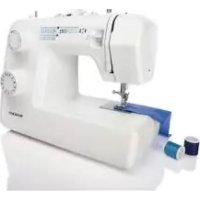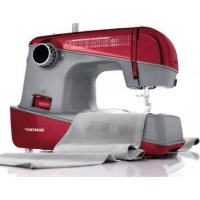
SNMD 33 A1 - Sewing machine SILVERCREST - Free user manual and instructions
Find the device manual for free SNMD 33 A1 SILVERCREST in PDF.



| Product type | Sewing machine |
| Brand | SilverCrest |
| Model | SNMD 33 A1 |
| Dimensions (L x W x H) | approx. 430 x 277 x 94.6 mm |
| Weight | approx. 6.0 kg |
| Rated voltage | 230 V / 50 Hz |
| Rated machine power | 70 W |
| Bulb power | 100 mW (LED) |
| Hook type | CB hook |
| Needle system | 130/705H |
| Number of stitches | Straight stitch, zigzag, overlock, buttonhole, patchwork, monogram, scallop, etc. |
| Included accessories | Universal foot, zipper foot, buttonhole foot, invisible hem foot, button foot, edge guide, needle threader, bobbins (3x), oiler, screwdriver, brush/seam ripper, needles |
| Maintenance | Clean feed dogs and hook regularly; oil with special sewing machine oil |
| Safety | Unplug before cleaning; do not leave unattended; use only recommended accessories |
| Warranty | 3 years (domestic use) |
| Service number | 00800 555 00 666 (toll-free) |
| Material | Aluminum / plastic |
| Power cord length | approx. 1.8 m |
| Pedal cord length | approx. 1.4 m |
Frequently Asked Questions - SNMD 33 A1 SILVERCREST
User questions about SNMD 33 A1 SILVERCREST
0 question about this device. Answer the ones you know or ask your own.
Ask a new question about this device
Download the instructions for your Sewing machine in PDF format for free! Find your manual SNMD 33 A1 - SILVERCREST and take your electronic device back in hand. On this page are published all the documents necessary for the use of your device. SNMD 33 A1 by SILVERCREST.
USER MANUAL SNMD 33 A1 SILVERCREST
MACHINE A COUDRE SNMD 33 A1
FR BE
MACHINE A COUDRE
Operation and Safety Notes
IAN 74612
FR BE
NL BE
DE AT CH
GB IE

Before reading, unfold the page containing the illustrations and familiarise yourself with all functions of the device.
| FR / BE | Instructions d'utilisation et consignes de sécurité | Page | 5 |
| NL / BE | Bedienings- en veiligheidsinstructies | Pagina | 27 |
| DE / AT / CH | Bedienungs- und Sicherheitshinweise | Seite | 49 |
| GB / IE | Operation and Safety Notes | Page | 71 |
Présentation
Coudre/ applications utiles
Suture
Point overlock standard:
Point overlock double:
CROWN Service Center
tekniHall Elektronik GmbH
Breitefeld 15
DE-64839 M nsterü
IAN 74612
sewingguide-service-fr@teknihall.com
sewingguide-service-be@teknihall.com
Fabricant
CROWN Service Center
tekniHall Elektronik GmbH
Breitefeld 15
DE-64839 M nsterü
IAN 74612
sewingguide-service-be@teknihall.com
Vervaardiger
CROWN Service Center
tekniHall Elektronik GmbH
Breitefeld 15
DE-64839 Munster
IAN 74612
sewingguide-service-de@teknihall.com
Hersteller
Introduction. 72
Intended use. 72
Details of the machine.. 72
Accessories 72
Technical data 73
Important safety instructions.. Page 74
Getting ready
Connecting machine to power source.. 75
Fitting the snap-in sewing table.. 75
Inserting the needle.. 76
Two-step pressor foot lever.. 76
77
Setting spool pins.. 77
Winding the bobbin. 78
Inserting the bobbin.. 78
79
Thread tension Page 80
Bringing up the lower thread . Page 80
Sewing basics
Sewing / Useful applications Page 81
Matching needle/ fabric/ thread
How to choose your pattern . Page 82
Straight stitching and needle position.. Page 82
Zigzag stitching
Zippers and piping.. Page 83
Blind hem foot . Page 84
Sewing on buttons.. 84
How to sew buttonholes.. 85
Overlock stitches.. Page 86
3-step zig-zag.. Page 86
Stretch-stitch
Patch work. Page 87
Monogramming and embroidering with embroidery hoop* .Page 88
Applique 88
Scallop stitching
Twin needle Page 89
Maintenance
Maintenance.. Page 90
Trouble shooting guide.. Page 91
Disposal
Guarantee
Service
Service number Page 92
Manufacturer
Introduction
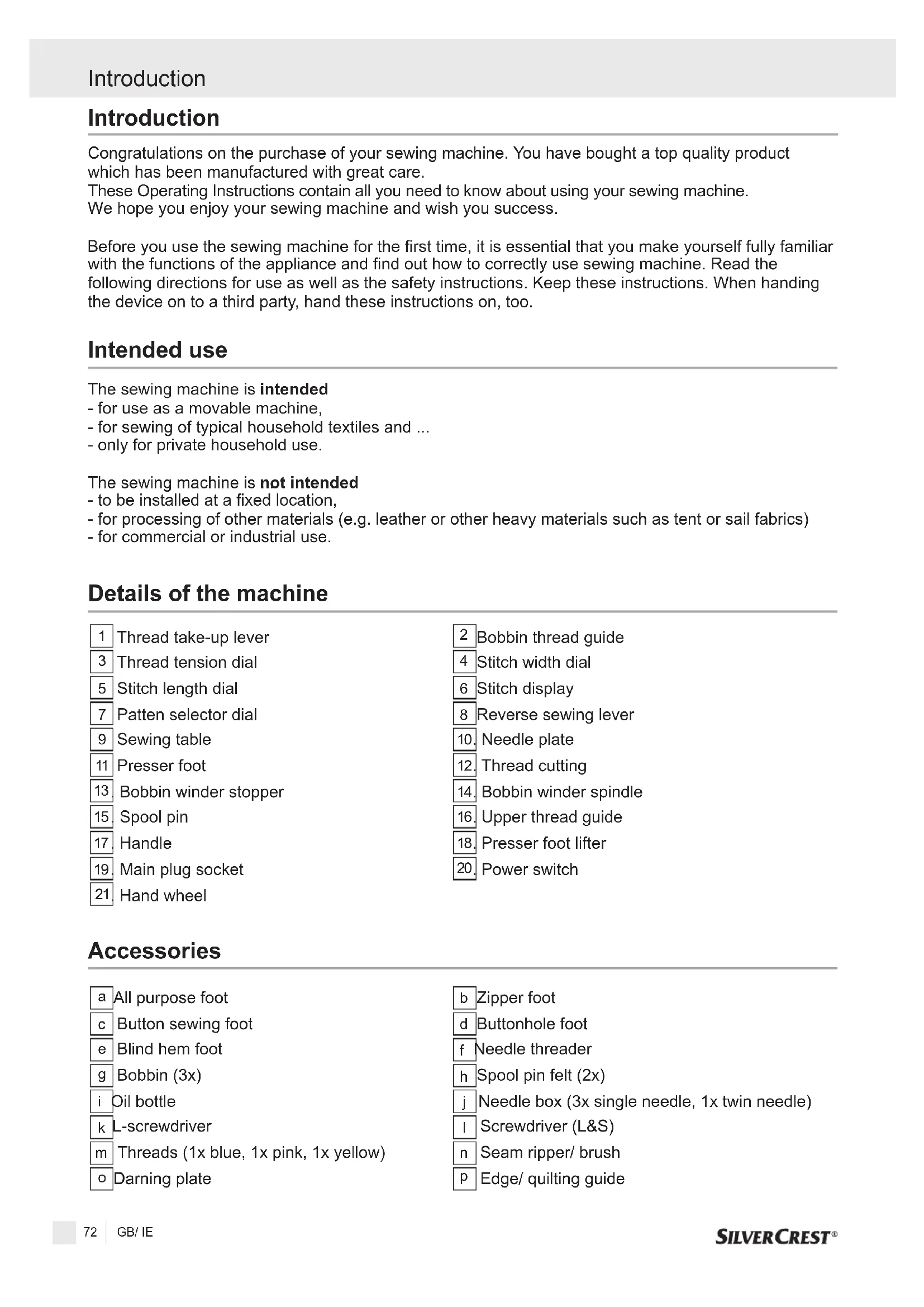
Congratulations on the purchase of your sewing machine. You have bought a top quality product which has been manufactured with great care.
These Operating Instructions contain all you need to know about using your sewing machine.
We hope you enjoy your sewing machine and wish you success.
Before you use the sewing machine for the first time, it is essential that you make yourself fully familiar with the functions of the appliance and find out how to correctly use sewing machine. Read the following directions for use as well as the safety instructions. Keep these instructions. When handing the device on to a third party, hand these instructions on, too.
Intended use
The sewing machine is intended
- for use as a movable machine,
- for sewing of typical household textiles and ...
- only for private household use.
The sewing machine is not intended
- to be installed at a fixed location,
- for processing of other materials (e.g. leather or other heavy materials such as tent or sail fabrics)
- for commercial or industrial use.
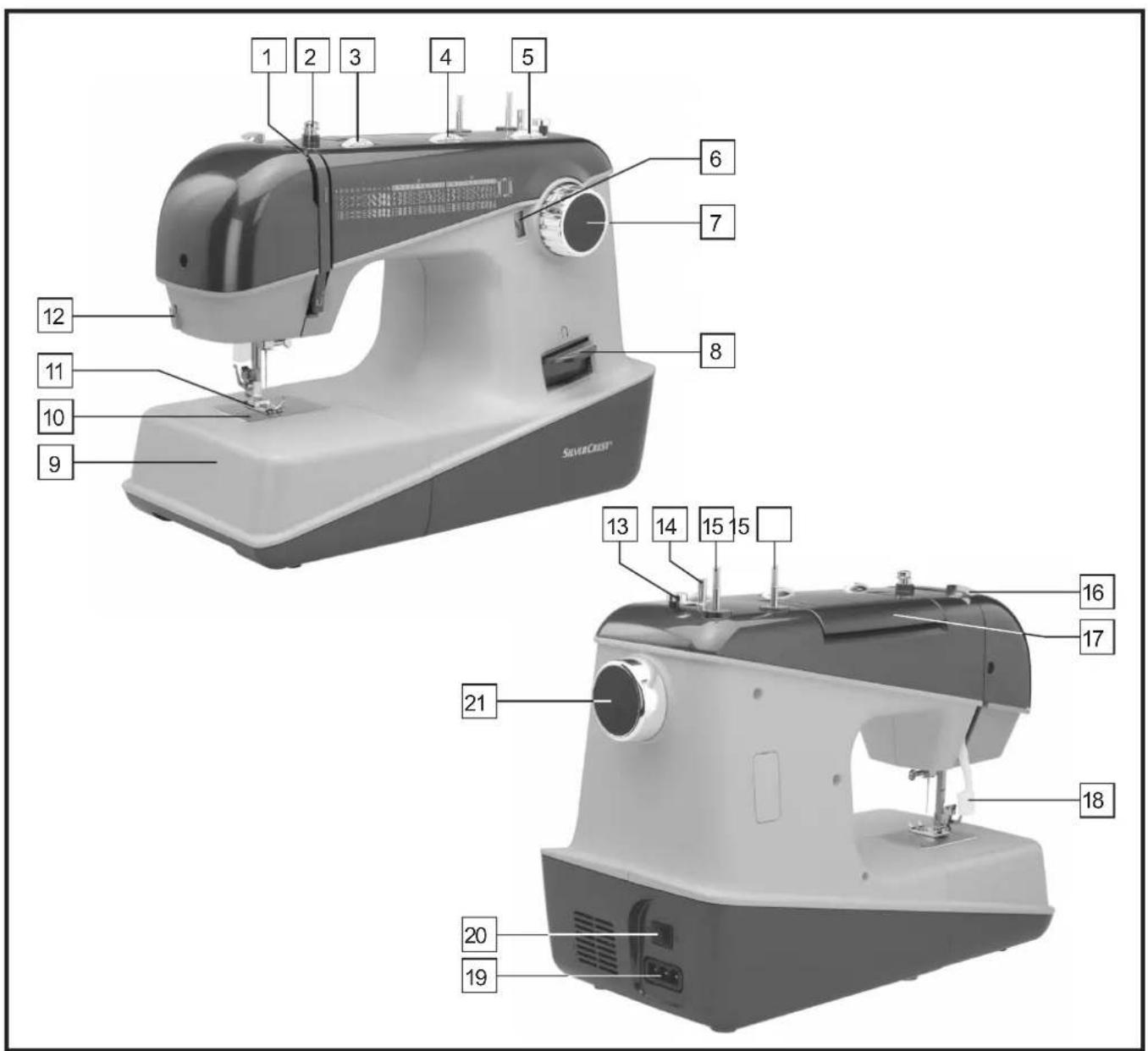
Details of the machine
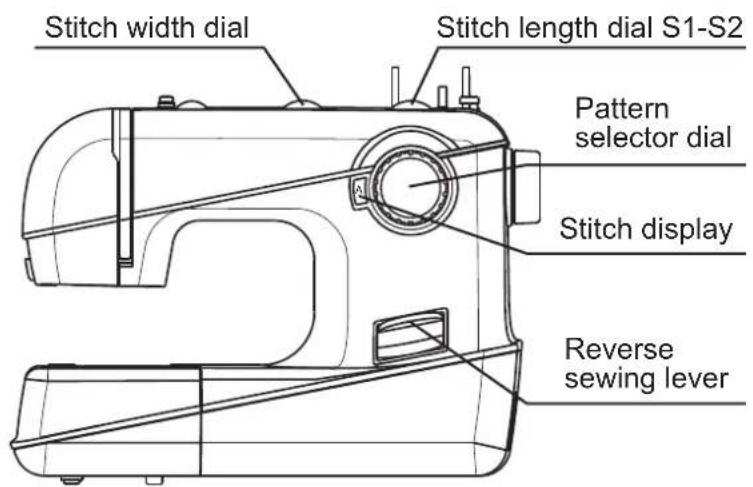
1 Thread take-up lever
Thread tension dial
5Stitch length dial
7 Patten selector dial
9 Sewing table
11 Presser foot
13 Bobbin winder stopper
15. Spool pin
17. Handle
19 Main plug socket
21. Hand wheel
2 Bobbin thread guide
4Stitch width dial
6Stitch display
8 Reverse sewing lever
10.Needle plate
12. Thread cutting
14. Bobbin winder spindle
16. Upper thread guide
18. Presser foot lifter
20. Power switch
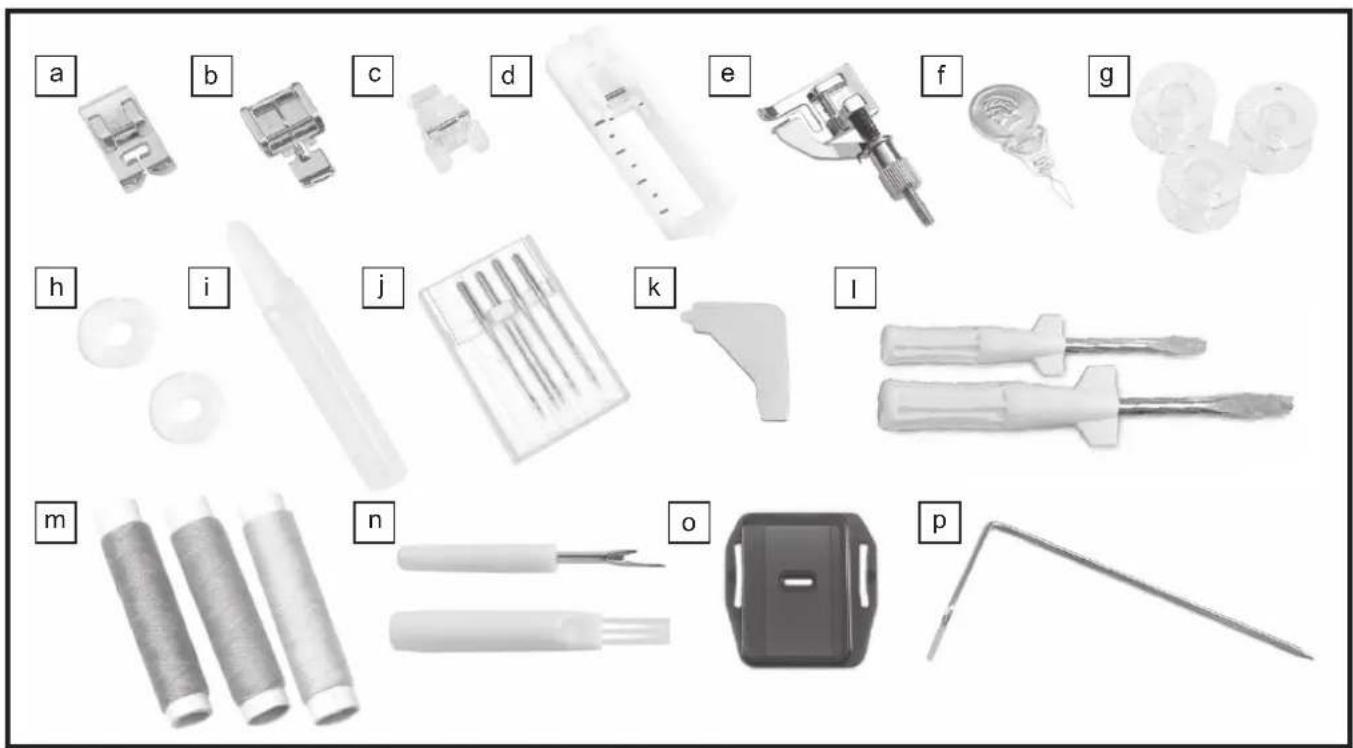
Accessories
aAll purpose foot
c Button sewing foot
e Blind hem foot
g Bobbin (3x)
i Oil bottle
k L-screwdriver
m Threads (1x blue, 1x pink, 1x yellow)
Darning plate
bZipper foot
d Buttonhole foot
f Needle threads
h Spool pin felt (2x)
j Needle box (3x single needle, 1x twin needle)
Screwdriver (L&S)
n | Seam ripper/ brush
P Edge/ quilting guide
Technical data
| Rated voltage | 230 V/ 50 Hz | |
| Power rating | - Machine | 70 Watt |
| - Sewing light | 100 mW | |
| - Total | 70 Watt | |
| Dimensions | - When handle is folded down | A p p r d9.7 (V/ T H x D9)4 . 5 m m |
| Cable length | - Power cable | Approx. 1,8 m |
| - Foot control cable | Approx. 1,4 m | |
| Weight | - Machine | Approx. 6.0 kg |
| Material | Aluminium / plastic | |
| Operating elements | - Mains power switch ON/OFF | Available |
| - Foot control for sewing speed | Available | |
| Display elements | - Stitch display | Available |
| - Sewing light | Available | |
| Looper system | Oscillating Hook | |
| Needle system | 130/705H | |
| Interference-free | In acc. with EU Directive | |
| TÜV approved | Yes | |
| Product guarantees | 3 years | |
| Class | II |
When using an electrical appliance, basic safety should always be followed, including the following: Read all instructions before using this sewing machine.
DANGER - To reduce the risk of electric shock:
- An appliance should never be left unattended when plugged in.
- Always unplug this appliance from the electric outlet immediately after using, as well as before cleaning and other maintenance.
- The sewing machine is equipped with a LED lamp. If the LED lamp is broken, it must be replaced by the manufacturer or its service agent in order to avoid a hazard.
WARNING - To reduce the risk of burns, fire, electric shock, or injury to persons:
- Do not allow to be used as a toy. Close attention is necessary when this appliance is used by or near children.
- Use this appliance only for its intended use as described in this manual. Use only attachments recommended by the manufacturer as contained in this manual.
- Never operate this appliance if it has a damaged cord or plug, if it is not working properly, if it has been dropped or damaged, or dropped into water. Return the appliance to the nearest authorized dealer or service center for examination, repair, electrical or mechanical adjustment.
- Never operate the appliance with any air openings blocked. Keep ventilation openings of the sewing machine and foot controller free from accumulation of lint, dust, and loose cloth.
- Keep fingers away from all moving parts. Special care is required around the sewing machine needle.
- Always use the proper needle plate. The wrong plate can cause the needle to break.
- Do not use bent needles.
- Do not pull or push fabric while stitching. It may deflect the needle causing it to break.
- Switch the sewing machine off ("O") when making any adjustments in the needle area, such as threading needle, changing needle, threading bobbin, or changing presser foot, and the like.
- Always unplug sewing machine from the electrical outlet when removing covers, lubricating, or when making any other user servicing adjustments mentioned in the instruction manual.
- Never drop or insert any object into any opening.
- Do not use outdoors.
- Do not operate where aerosol spray products are being used or where oxygen is being administered.
- To disconnect, turn all controls to the off ("O") position, then remove plug from outlet.
- Do not unplug by pulling on cord. To unplug, grasp the plug, not the cord.
- The sound pressure level under normal operating conditions is 75dB(A).
- Please turn off the machine or unplug when the machine is not operating properly.
- Never place anything on the foot controller.
- If the supply cord that is fixed with foot controller is damaged, it must be replaced by the manufacturer or its service agent or a similar qualified person in order to avoid a hazard.
- This appliance is not intended for use by persons (including children) with reduced physical, sensory or mental capabilities, or lack of experience and knowledge, unless they have been given supervision or instruction concerning use of the appliance by a person responsible for their safety.
- Children should be supervised to ensure that they do not play with the appliance.
- Keep the instruction at a suitable place that close to the machine, and hand it over if you give the machine to a third party.
SAVE THESE INSTRUCTIONS
This sewing machine is intended for household use only.
Connecting machine to power source
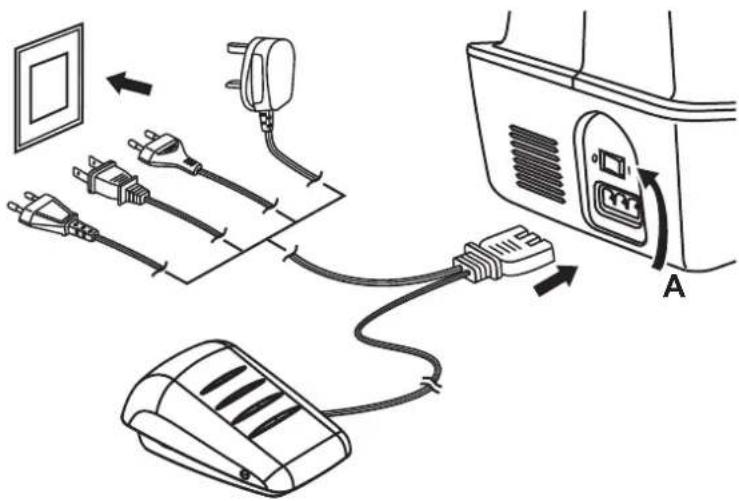
Attention:
Unplug power cord when machine is not in use.
Attention:
Consult a qualified electrician if in doubt as to connect machine to power source.
Unplug power cord when machine is not in use.
The foot control must be used with the appliance by FC-2902B (220-240V area) manufactured by FDM (zhejiang founder motor corporation Ltd, China).
Connect the machine to a power source as illustrated.
Sewing light
Press main switch (A) for power and light on. ("I")
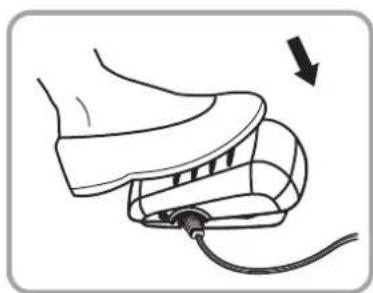
Foot control
Foot control regulates the sewing speed.
Installing the snap-in sewing table
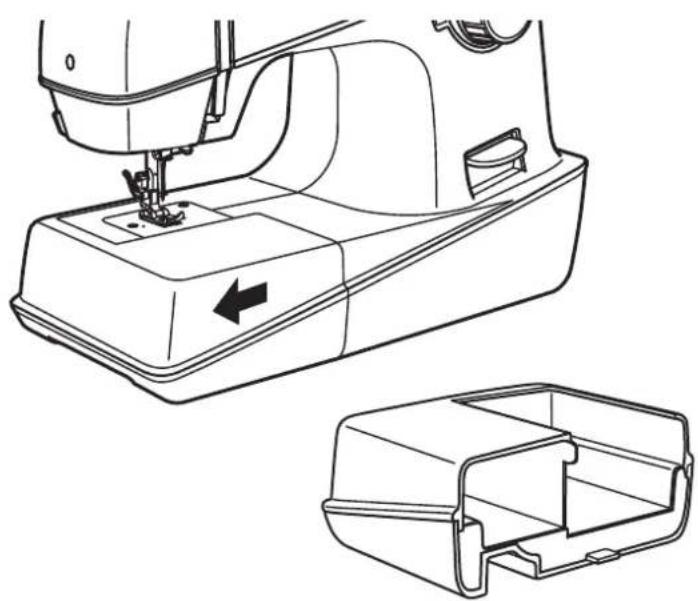
Keep the snap-in sewing table horizontal, and push it in the direction of the arrow.
The inside of the snap-in sewing table can be utilized as an accessory box.
Getting ready
Inserting the needle
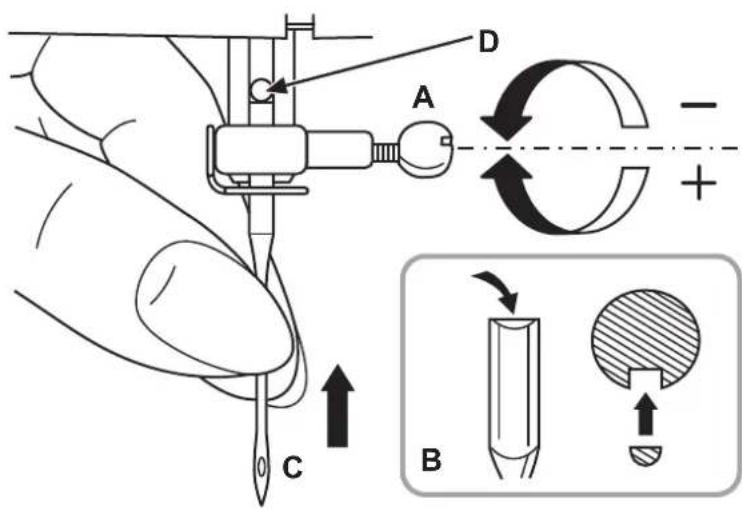
Attention:
Turn power switch to off ("O").
Needles must be in perfect condition.
Change the needle regularly, especially if it is showing signs of wear and causing problems.
Insert the needle following the illustrated instructions.
A. Loosen the needle clamp screw and tighten again after inserting the new needle.
B. The flat side of the shaft should be towards the back.
C/D. Insert the needle as far up as it will go.
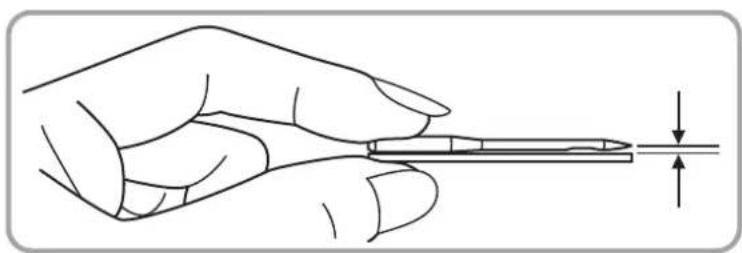
Only use fully-functional needles:
Problems can occur with:
- Bent needles
- Blunt needles
- Damage points
Two-step presser foot lifter
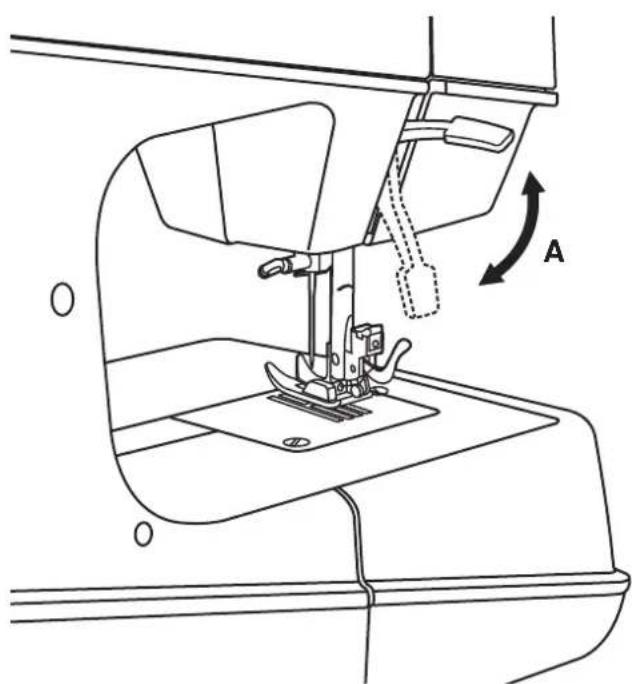
When sewing several layers or thick fabrics, the presser foot can be raised a second stage for easy positioning of the work. (A)
Attaching the presser foot holder
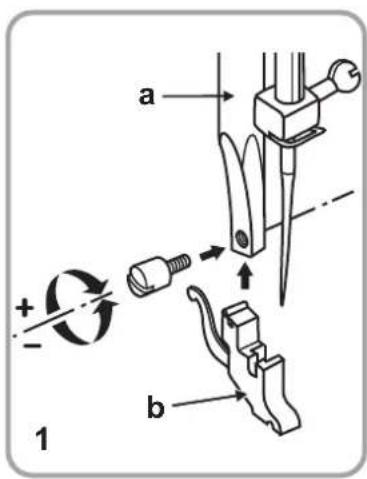
Attention:
Turn power switch to off ("O") when carrying out any of the above operations!
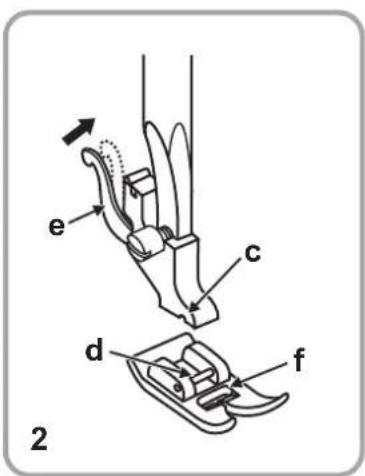
- Raise the presser bar (a) with the presser foot lifter. Attach the presser foot holder (b) as illustrated.
2. Attaching the presser foot
Lower the presser foot holder (b) using the presser foot lifter, until the cut-out (c) is directly above the pin (d) The presser foot (f) will engage automatically.
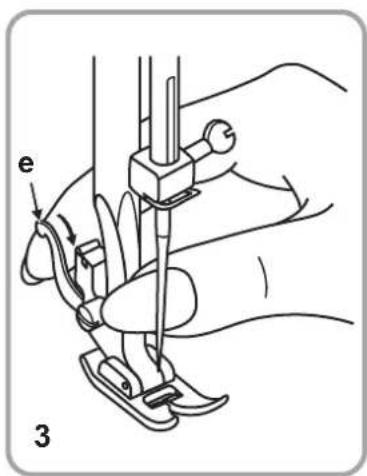
3. Removing the presser foot
Raise the presser foot using the presser foot lifter. Raise the lever (e) and the foot disengages.
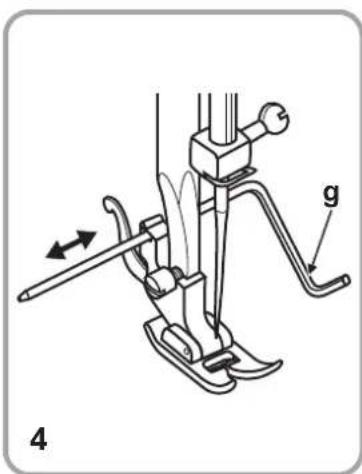
4. Attaching the edge/ quilting guide
Attach the edge/ quilting guide (g) in the slot as illustrated. Adjust as needed for hems, pleats, quilting, etc.
Setting spool pins
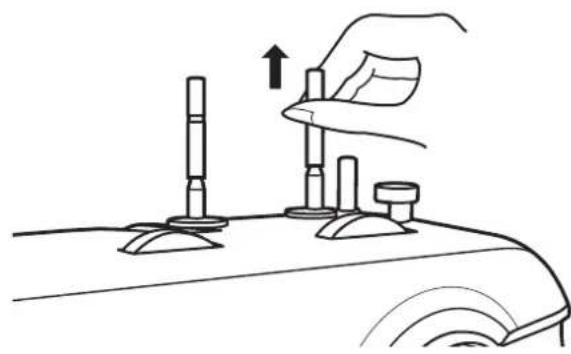
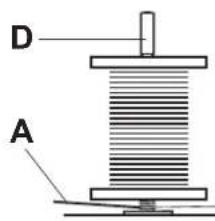
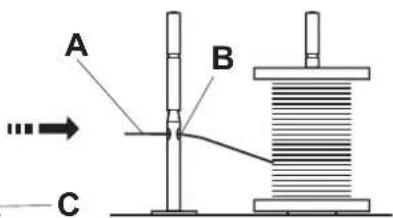
The spool pins are used for holding the spools of thread when feeding the thread to the machine.
To use, pull up the spool pins. Push down for storage.
A. Upper thread
B.Hole
C. Tangle
D. Spool pin
Note:
When using thread which has tendency to tangle around a spool pin (D), thread through the hole (B) of spool pin as shown. The hole should face the thread spool.
Winding the bobbin
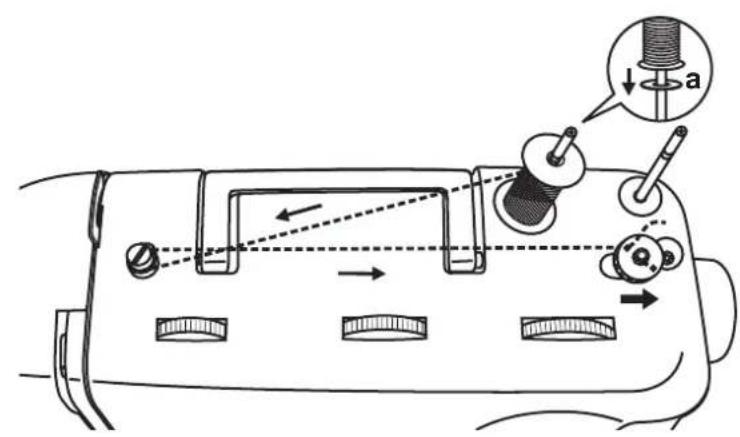
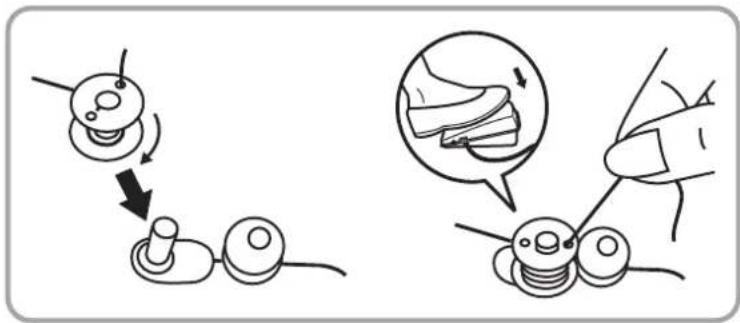
a. Spool pin felt
Place an empty bobbin on spindle.
Take the thread from the spool through the guide to the bobbin.
Wind the thread a few times by hand around the empty bobbin in a clockwise direction. Push the bobbin to the right towards the bobbin winding position.
Press the foot control gently. The bobbin will stop winding when it is full. Push the bobbin to the left to "sewing position" and remove it.
Note:
When the bobbin winder spindle is in "bobbin winding" position, the machine will not sew. To start sewing, push the bobbin winder spindle to the left (sewing position).
Inserting the bobbin
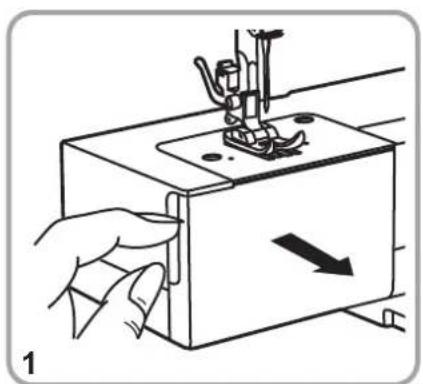
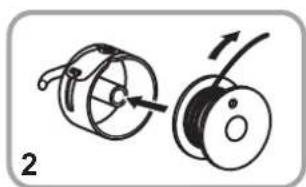
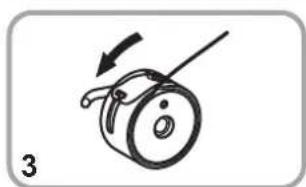
Attention:
Turn power switch to off ("O").
When inserting or removing the bobbin, the needle must be fully raised.
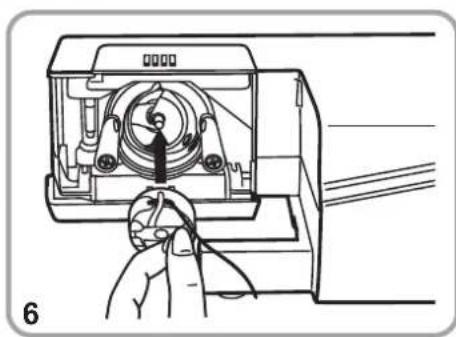
- Open the hinged cover.
- Hold the bobbin case with one hand.
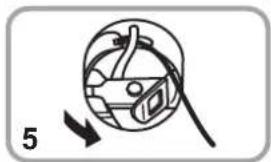
- Insert the bobbin (2) so that the thread runs in a clockwise direction (arrow). (3)
- Put the thread under the tension spring.
- Hold the bobbin case by the hinged latch.
- Insert it into the shuttle.
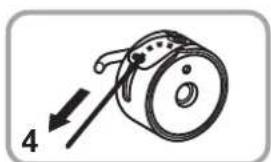
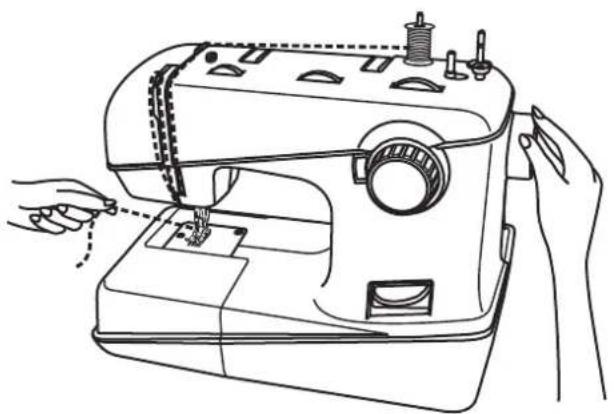
Threading the upper thread
Attention:
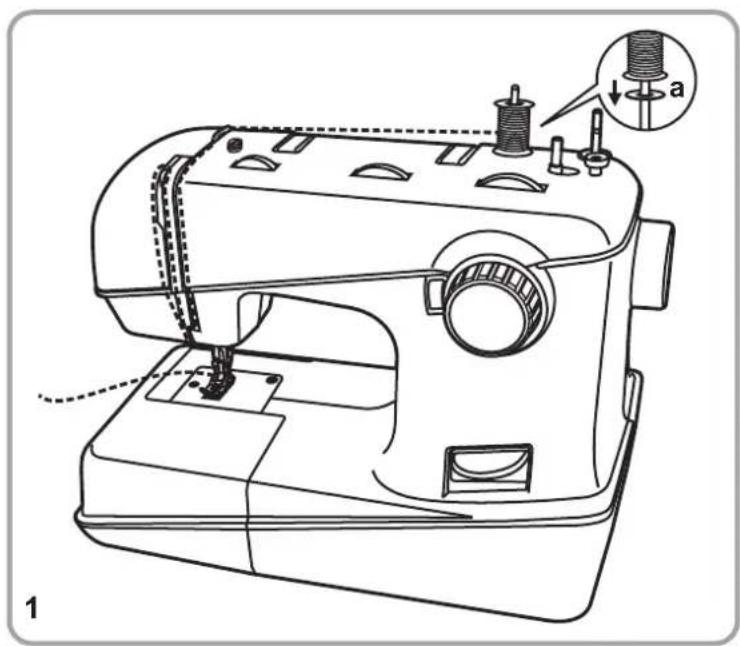
Turn power switch to off ("O"). Raise the needle bar.
a. Spool pin felt
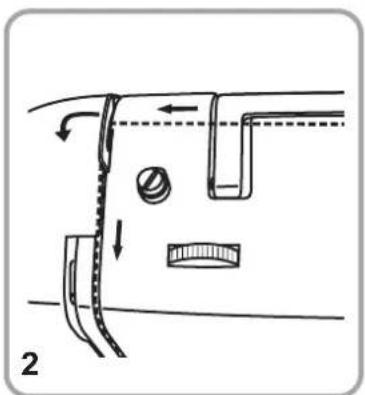
Follow completely the numbered sequence in upper threading. Should you skip or fail to properly engage the thread with any of the thread guides, you will not sew properly. (1-5)
Continue to draw the thread down and into the needle bar thread guide. Pass the thread through the eye of the needle from front to back.
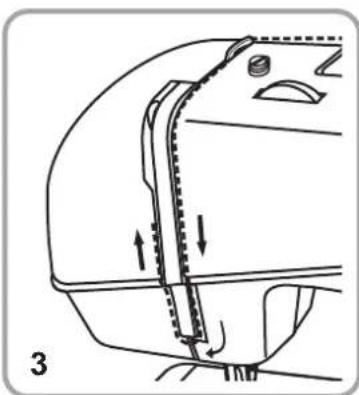
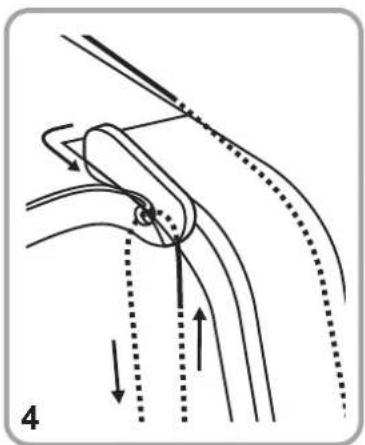
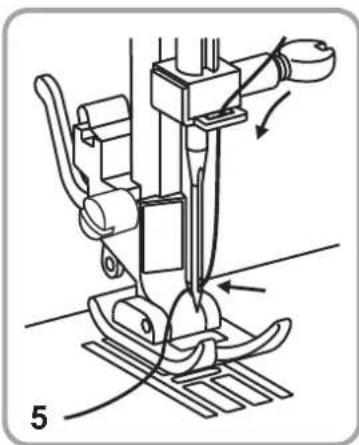
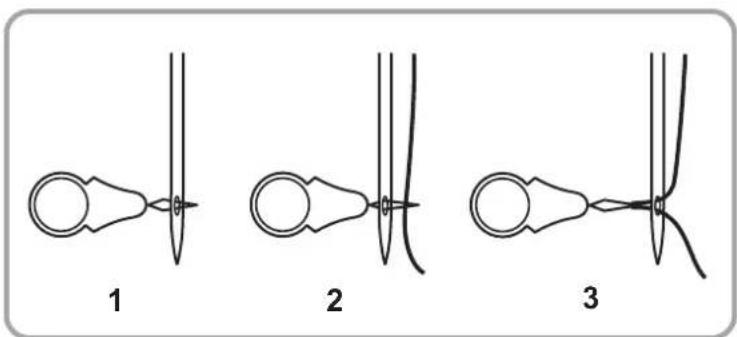
Needle threads
You can use the needle threads as a knitting aid.
-
Insert the needle threader through the eye of the needle from back to front.
-
Guide the upper thread through the wire loop of the needle threads.
-
Pull the needle threader together with the thread back through the eye of the needle.
Thread tension




Note:
The bobbin thread tension does not normally have to be adjusted.
Lower thread tension
To test the bobbin thread tension, remove the bobbin case and bobbin and hold it by suspending it by the thread. Jerk it once or twice. If the tension is correct, the thread will unwind by about an inch or two. If the tension is too tight, it does not unwind at all. If the tension is too loose, it will drop too much. To adjust, turn the small screw on the side of the bobbin case.
Upper thread tension
Basic thread tension setting: "AUTO" To increase the tension, turn the dial to the next number up. To reduce the tension, turn the dial to the next number down.
A. Normal thread tension
B. Upper thread tension too loose
C. Upper thread tension too tight
Bringing up the lower thread
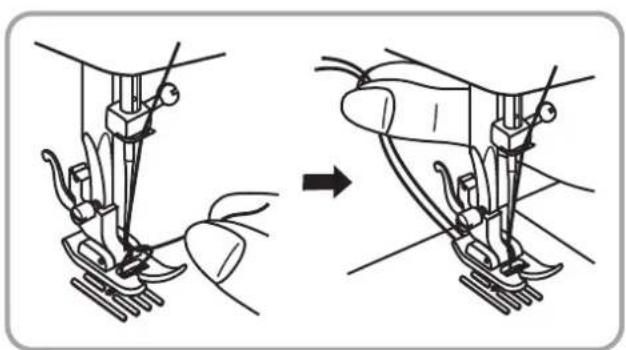
Hold the upper thread with the left hand.
Turn the handwheel forwards until the needle is raised.
Pull on the upper thread to bring the lower thread up through the stitch plate hole. Lay both threads to the back under the presser foot.
Sewing / Useful applications
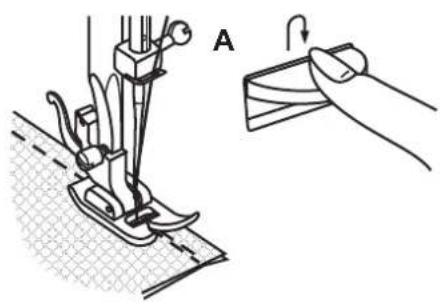
Stitching
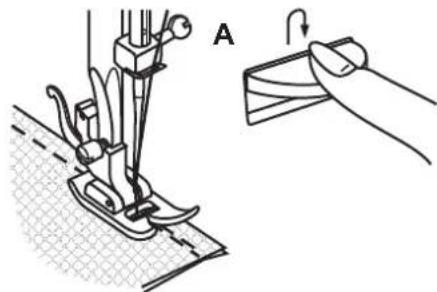
At the end of seam, press down the reverse sewing lever. Sew a few reverse stitches.
Release the lever and the machine will sew forwards again. (A)
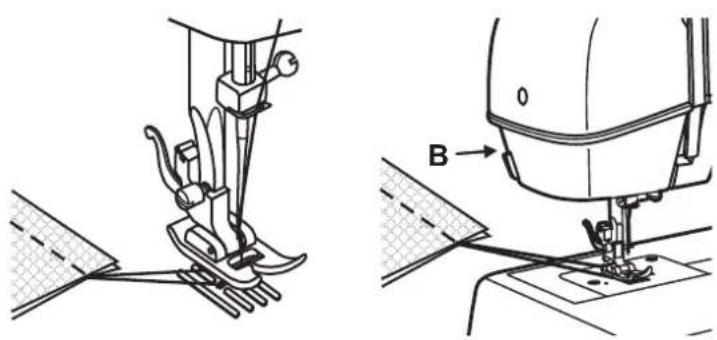
Removing the work
Turn the handwheel towards to bring the thread take up lever to its highest position, raise the presser foot and remove work towards the back.
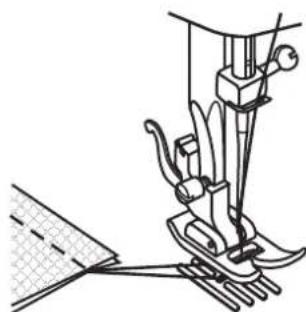
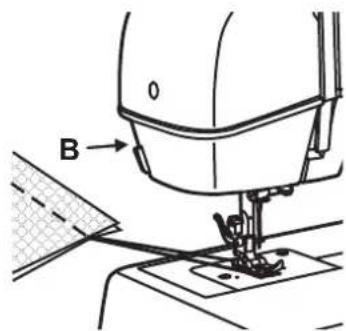
Cutting the thread
Hold the threads behind the presser foot with both hands, guide them to the slit (B) and press down.
Matching needle/ fabric/ thread
NEEDLE, FABRIC, THREAD SELECTION GUIDE
| NEEDLE SIZE | FABRICS THREAD | |
| 9-11(65-75) | Lightweight fabrics-thin cottons, voile, serge, silk, muslin, Qiana, interlocks, cotton knits, tricot,jerseys, crepes, woven polyester, shirt & blouse fabrics. | Light-duty thread in cotton,nylon or polyester. |
| 12(80) | Medium weight fabrics-cotton, satin, kettleclote,sailcloth, double knits, lightweight woollens. | Most threads sold are medium size and suitable for these fabrics and needle sizes. Use polyester threads on synthetic materials and cotton on natural woven fabrics for best results. Always use the same thread on top and bottom. |
| 14(90) | Medium weight fabrics-cotton duck, woolen,heavier knits, terrycloth, denims. | |
| 16(100) | Heavyweight fabrics-canvas, woolens, outdoor tent and quilted fabrics, denims, upholstery material (light to medium). | |
| 18(110) | Heavy woollens, overcoat fabrics, upholstery fabrics, some leathers andVINyls. | Heavy duty thread, carpet thread. (Use heavy foot pressure-large numbers.) |
IMPORTANT: Match needle size to thread size and weight of fabric.
Note twin needle:
- Twin needles, can be purchased for utility and decorative work.
- When sewing with twin needles, the stitch width dial should be set at less than "3" and set the needle position dial to middle position.
- European needles show sizes 65, 70, 80 etc. American and Japanese needles show size 9, 11, 12 etc.
- Replace needle often (approximately every other garment) and / or at first thread breakage or skipped stitches.
Sewing basics
How to choose your pattern
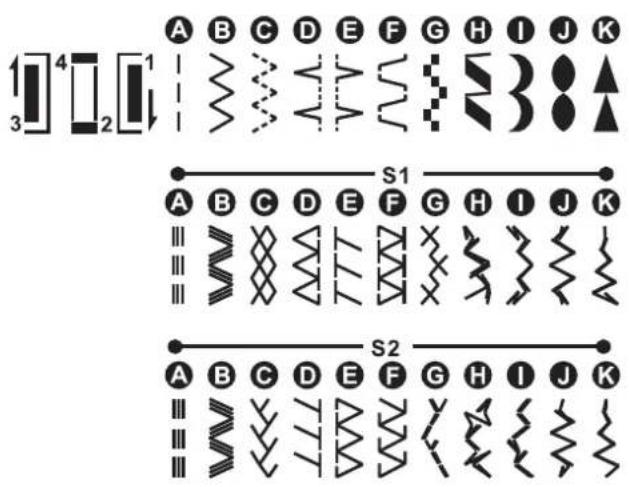
For straight stitch, select pattern "with pattern selector dial. Adjust the stitch length with the stitch length dial. You may choose any needle position, by turning the stitch width dial.
For zigzag stitch, select pattern " 32 " with pattern selector dial. Adjust the stitch length and stitch width according to the fabric being used.
To obtain any of the other patterns shown in the upper row on the stitch selection panel, select the letter above the stitch with the stitch selector dial. Adjust the stitch length and the stitch width with the control dials according to the result desired.
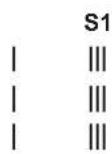
To obtain any of the patterns on the second row, turn the stitch length dial to "S1", to obtain any of the patterns on the third row, turn the stitch length dial to "S2", select the pattern desired with the pattern selector dial and adjust the stitch width with the stitch width dial.
Straight stitching and needle position
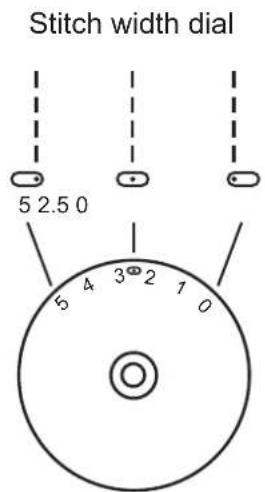
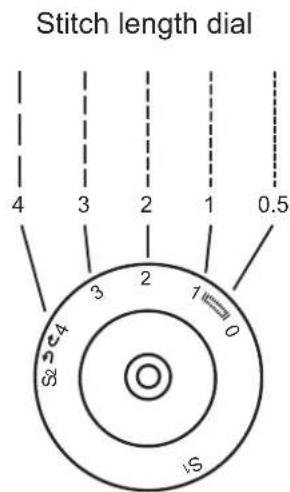
Turn the pattern selector dial so that the stitch display shows the "A" (straight stitch).
Generally speaking, the thicker the fabric, thread and needle, the longer the stitch should be.
Choose your needle position, from left position to right needle position by changing the stitch width dial from "0" to "5".
Zig zag stitching
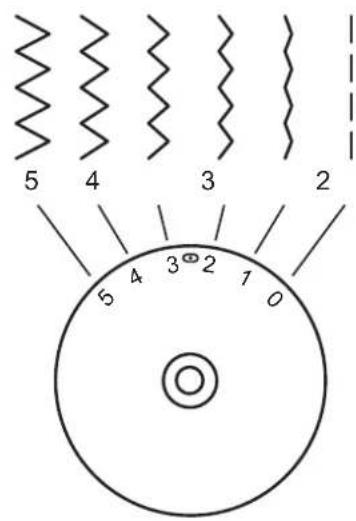
Stitch width dial
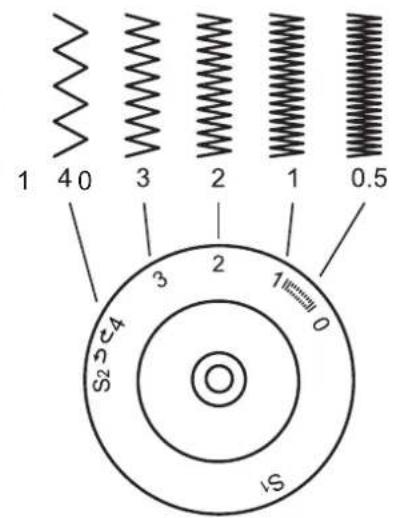
Stitch length dial
Turn the pattern selector dial to "B".
Function of stitch width dial
The maximum zigzag stitch width for zigzag stitching is "5"; however, the width can be reduced on any pattern. The width increases as you move zigzag dial from "0" - "5".
Function of stitch length dial while zigzagging
The density of zigzag stitches increase as the setting of stitch length dial approaches "0". Neat zigzag stitches are usually achieved at "2.5" or below.
Satin stitch
When the stitch length is set between "0" - "1", the stitches are very close together producing the "satin stitch" which is used for making buttonholes and decorative stitches.
Fine fabric
When sewing on very fine fabric, place a piece of thin paper under the fabric. It is easy to tear the paper and remove the paper after you have finish your seam.
Zipper foot
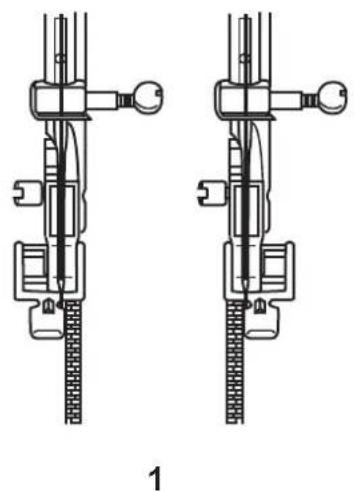
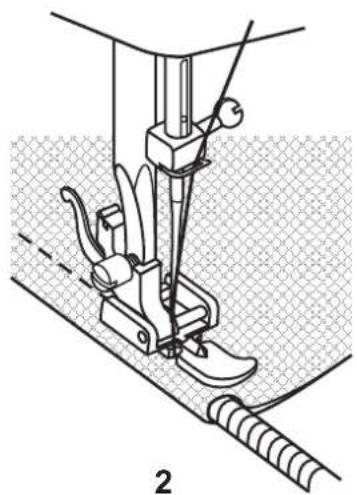
| Stitch | Stitch width | Stitch length |
| A | 2.5 | 1~4 |
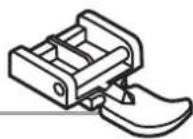
The zip foot can be inserted right or left, depending on which side of the foot you are going to sew. (1)
To sew past the zip pull, lower the needle into the fabric, raise the presser foot and push the zip pull behind the presser foot. Lower the foot and continue to sew.
It is also possible to sew in a length of cord, into a bias strip to form a "welt".
According to thickness of fabric to set stitch length control. (2)
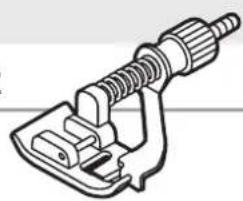
| Stitch | Stitch width | Stitch length |
| D | 1 | ~ |
For hems, curtains, trousers, skirts, etc.
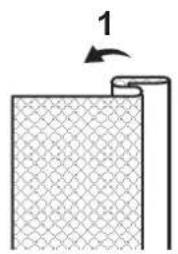
A. Blind hem/ lingerie for firm fabrics.
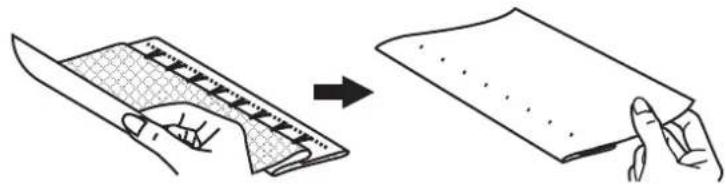
Fold the fabric as illustrated with the wrong side uppermost. (1)
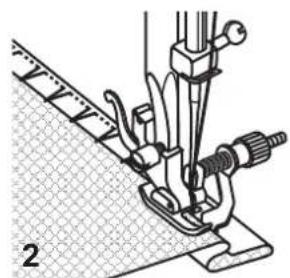
Place the fabric under the foot. Turn the handwheel forwards by hand until the needle swings fully to the left. It should just pierce the fold of the fabric. If it does not, adjust the stitch width accordingly. (2)
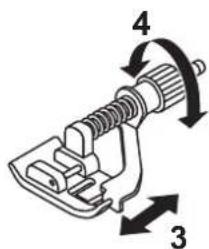
Adjust the guide (3) by turning the knob (4) so that the guide just rests against the fold. Sew slowly, by pressing the foot control lightly guiding the fabric along the edge of the guide.
Button sewing foot
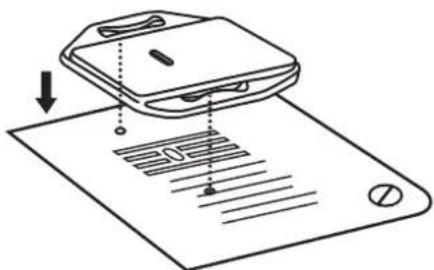
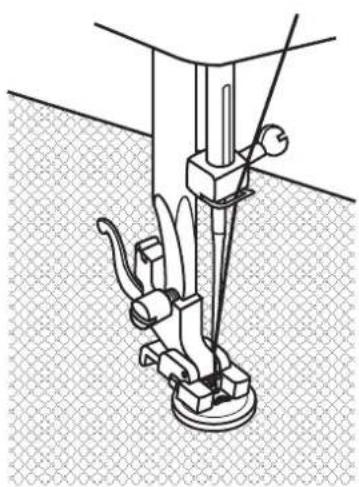
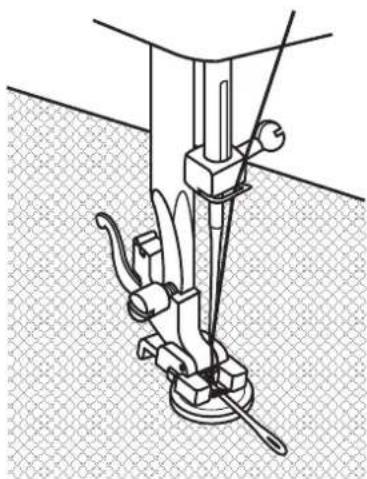
| Stitch | Stitch width | Stitch length |
| B | 0 | ~ |
Install the darning plate. This will cover the feed dog and the stitch length will be disabled.
Position the work under the foot. Place the button on the marked position, lower the foot, adjust stitch width to "0" and sew a few securing stitches. Adjust the stitch width according to the button. Turn the handwheel to check that the needle goes cleanly into the left or right hole of the button, and sew on the button. Adjust the stitch width to "0" and sew a few securing stitches.
If a shank is required, place a darning needle on top of the button and sew. For buttons with 4 holes, sew through the front two holes first, push work forward and then sew through the back two holes as described.
Buttonhole foot
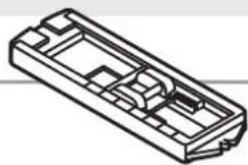
| Stitch | Stitch width | Stitch length |
| 10 | 5 | 0 |
Preparation:
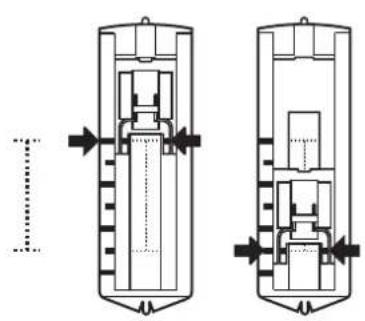
Remove the zigzag foot and attach the buttonhole foot. Adjust the stitch length dial between "0.5" - "1". The density of the stitch depends on thickness of the fabric.
Note: Always test sew a buttonhole.
To prepare the fabric:
Measure the diameter of the button and add 0.3cm (1/8") for the bartacks. If you have a very thick button, add more to the diameter measurement. Mark the position and length of the buttonhole on the fabric.
Position the fabric so that the needle is on the mark that is furthest from you.
Pull the buttonhole foot towards you as far as it will go.
Lower the foot.
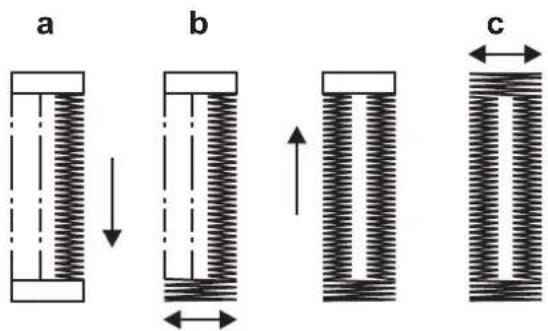
a. Turn the pattern selector dial to "I". Sew at moderate speed until you reach the end mark.
b. Turn the pattern selector dial to " 4 " and sew 5-6 bartack stitches.
c. Turn the pattern selector dial to "3" and sew the left side of the buttonhole to the mark at the end which is further from you.
d. Turn the pattern selector dial to " " and sew bar tack stitches.
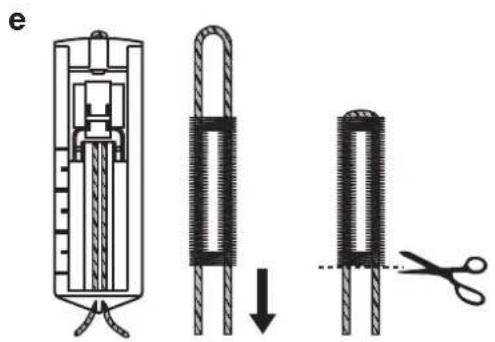
Remove the fabric from under the foot. Draw the upper thread through the backside of the fabric and knot upper and lower threads. Cut the center of the buttonhole with the seam ripper, being careful not to cut the stitches on either side.
Tips:
- Slightly reduce upper thread tension to produce better results.
- Use backing material for fine and stretchy fabrics.
- It is advisable to use a gimp cord for stretch or knit fabrics. The zigzag should sew over the gimp. (e)
A
B
C
| Stitch Stitch | width Stitch length | |
| E, F 3~5 | S1, S2 | |
Note:
Use new needles or ball point needles or stretch needle!
Seams, neatening, visible hems.
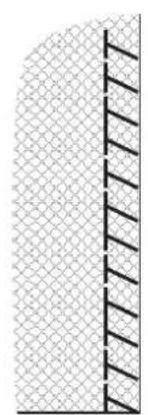
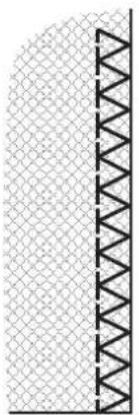
Stretch overlock
For fine knits,jerseys,neck edges,ribbing. (A)
Standard overlock
For fine knits,jerseys,neck edges,ribbing. (B)
Double overlock stitch
For fine knits, handknits, seams. (C)
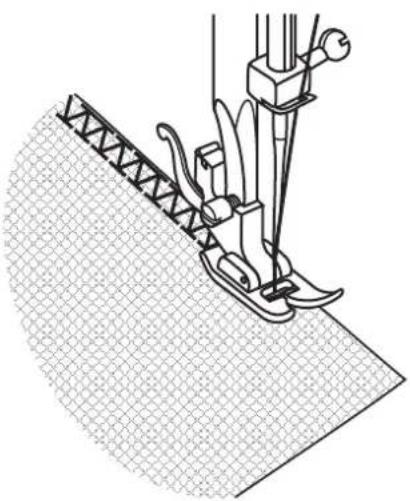
All overlock stitches are suitable for sewing and neatening edges and visible seams in one operation.
When neatening, the needle should just go over the edge of the fabric.
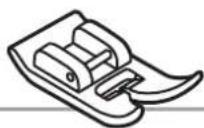
3-step zig-zag
| Stitch Stitch | width | Stitch length |
| C | 3 | ~ |
5
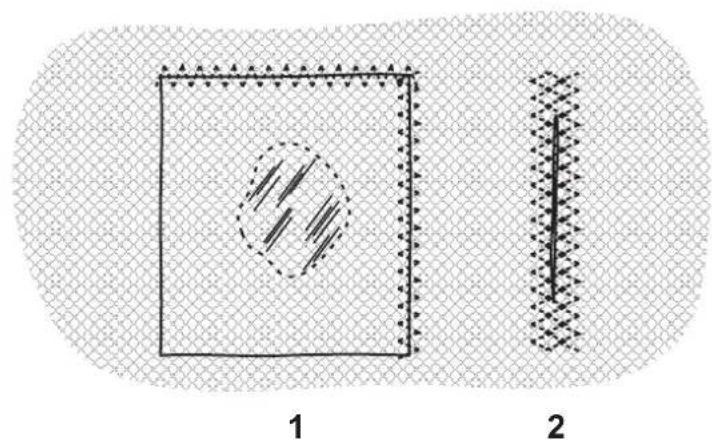
Sewing on lace and elastic, darning, mending, reinforcing edges.
Place patch in position. The stitch length can be shortened to produce very close stitches. (1)
When mending tears, it is advisable to use a piece of backing fabric to reinforce. The stitch density can be varied by adjusting the stitch length. First sew over the centre and then overlap on both sides. Depending on the type of fabric and damage, sew between 3 and 5 rows. (2)
| Stitch Stitch | width Stitch | length |
| A | 2 | . |
Triple straight stitch: (1)
For hardwearing seams.
The machine sews two stitches forwards and one stitch backwards. This gives triple reinforcement.
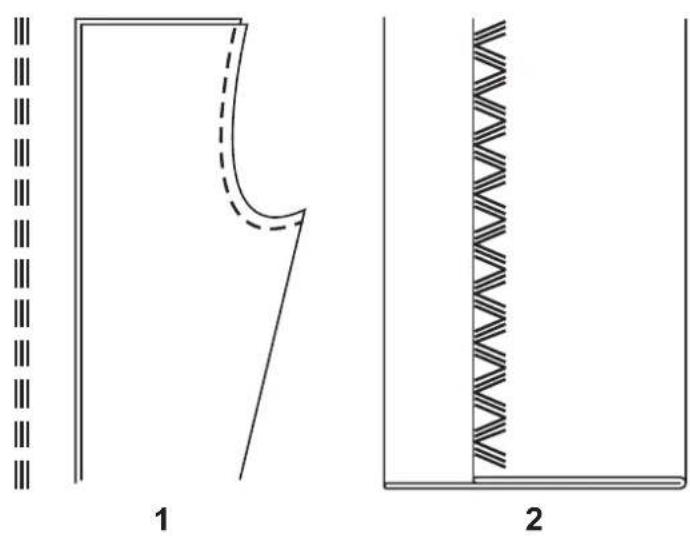
| Stitch Stitch | width stitch | length |
| B 3~5 S | 1, S2 |
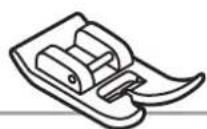
Triple zig-zag: (2)
For hardwearing seams, hems and decorative seams.
Triple zig-zag is suitable for firm fabrics like denim, corduroy, etc.
Patch work

| Stitch Stitch | width | Stitch | length |
| F 3~5 S | 1 |
To join two pieces of fabric while leaving a space between their edges.
- Fold over the edges of the two pieces of fabric for the hem and baste the edges to a thin piece of paper leaving a small space between them.
- Stitch along the edge, pulling both threads slightly when beginning to sew.
- Use thicker than normal threads for sewing.
- After sewing, remove the basting and the paper. Finish by tying knots on the reverse side at the beginning and the end of the seams.
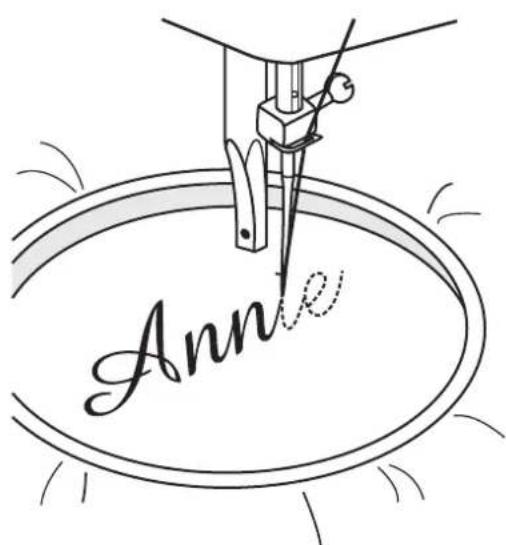
Monogramming and embroidering with embroidery hoop*
- Embroidery hoop not included with machine.
| Stitch Stitch | width | Stitch length |
| B | 1 | ~ |
5
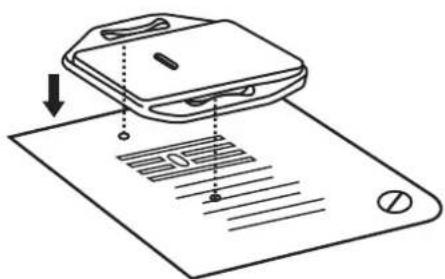
Attach the darning plate
- Remove the presser foot and the presser foot holder.
- Attach the darning plate.
- Lower presser foot lever before starting to sew.
- Adjust the stitch width according to the size of lettering or design.
Preparation for Monogramming and Embroidering*
- Draw the desired lettering or design on the right side of the fabric.
- Stretch the fabric between embroidery hoop as firmly as possible.
- Place the fabric under the needle. Make sure the presser foot bar is down in its lowest position.
- Turn the balance wheel towards you to bring up the lower thread through the fabric. Sew a few securing stitches at the starting point.
- Hold the hoop with thumb and forefingers of both hands.
- Coordinate sewing speed and movement of hoop.
Applique
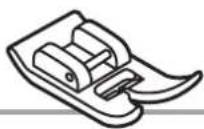
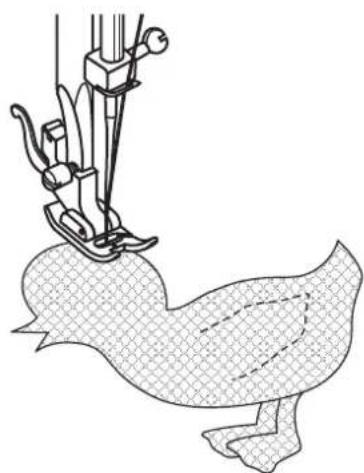

| Stitch Stitch | width Stitch | length |
| B 3~5 0.5~1 | ||
- Cut out the applique design and baste it to the fabric.
- Sew slowly around the edge of the design.
- Trim excess material outside the stitching.
Make sure not to cut any stitches. - Remove the basting thread.
- Tie top and bottom thread under the applique to avoid unraveling.
Scallop stitching
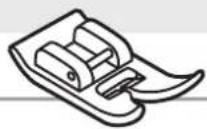
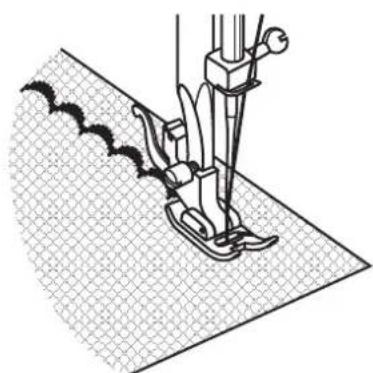
1
2
| Stitch Stitch | width | Stitch length |
| 1 | 3 | ~ |
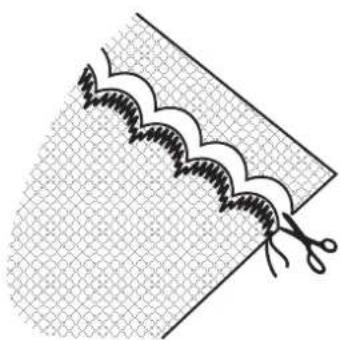
This machine automatically produces a scallop stitch which may be used as decorative edging.
- Sew the scallop stitch along the edge of the material.
- If desired, trim around the scallop with scissors to create a scalloped edge. Be careful not to cut the thread.
Twin needle
| Stitch | Stitch | width | Stitch | length |
| A | 2 | . |
Please note:
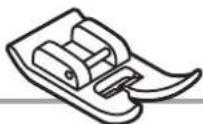
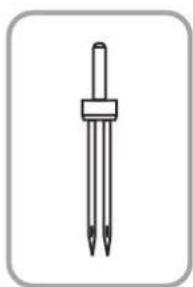
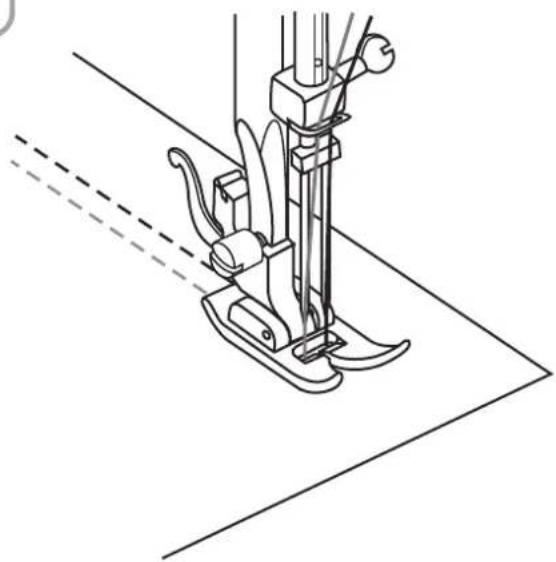
When sewing with twin needle, always proceed slowly, and make sure to maintain a low speed to insure quality stitching. When using twin needle on zig-zag make sure the stitch width dial is set between "0" and "3". Do not use twin needle at setting above "3".
- Make sure that the two threads used to thread the twin needle are of the same weight. You can use one or two colors.
- Insert the twin needle in the same way as single needle. Flat side of needle should face away from you.
- Follow instructions for single needle threading. Thread each needle separately.
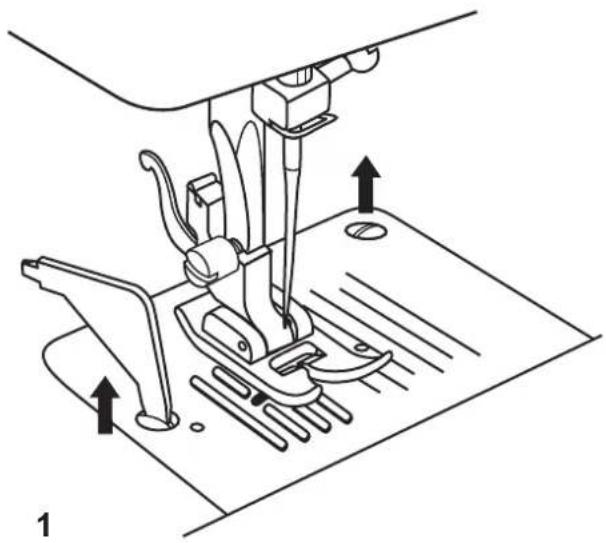
2
Attention:
Disconnect the machine from the electricity supply by removing the plug from the mains socket. When cleaning the machine, it must always be disconnected from the electricity supply.
Remove the stitch plate (1):
Turn the handwheel until the needle is fully raised. Open the hinged front cover and unscrew the needle plate screw with the screw driver.
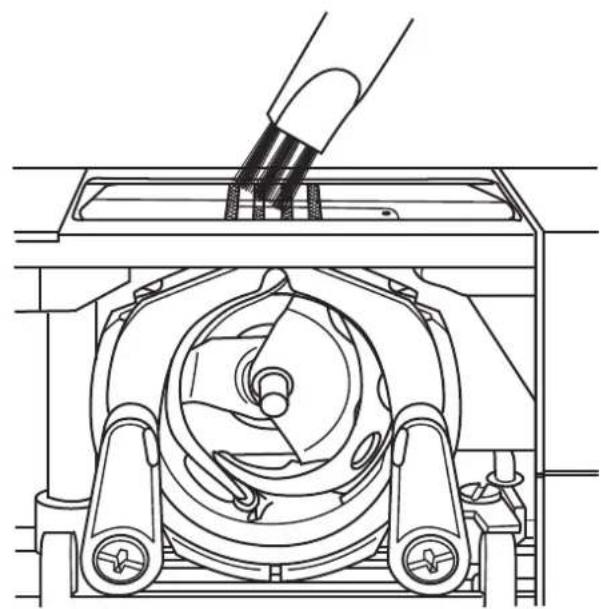
Cleaning the feed dog (2):
Remove the bobbin case and use the brush supplied to clean the whole area.
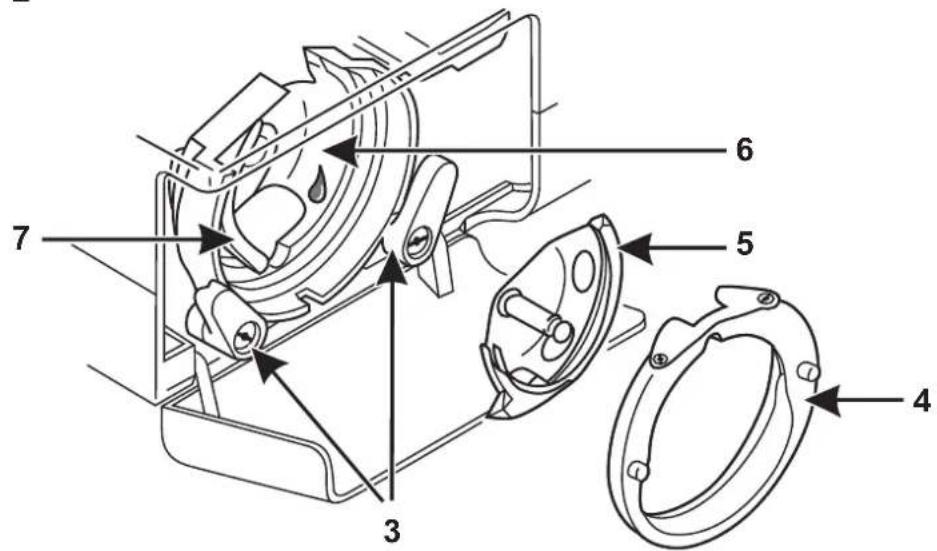
Cleaning and lubricating the hook (3-7):
Remove the bobbin case. Snap the two hook retaining arms (3) outwards. Remove the hook race cover (4) and the hook (5) and clean with a soft cloth. Lubricate at the points (6) (1-2 drops) with sewing machine oil. Turn the handwheel until the hook race (7) is in the left position. Replace the hook (5). Replace the hook race cover and snap back the two hook retaining arms. Insert he bobbin case and bobbin and replace the stitch plate.
Important:
Fabric fluff and threads must be removed regularly. Your machine should be serviced at regular intervals at one of our service agencies.
Trouble shooting guide
| Problem Cause Correction | ||
| Upper thread breaks | 1. The machine is not threaded correctly. 2. The thread tension is too tight. 3. The thread is too thick for the needle. 4. The needle is not inserted correctly. 5. The thread is round wound the spool holder pin. 6. The needle is damaged. | 1. Rethread the machine. 2. Reduce the thread tension. (lower number) 3. Select a larger needle. 4. Remove and reinsert the needle. (flat side towards the back) 5. Remove the reel and wind thread onto reel. 6. Replace the needle. |
| Lower thread breaks | 1. The bobbin case is not inserted correctly. 2. The bobbin case is threaded wrongly. 3. The lower thread tension is too tight. | 1. Remove and reinsert the bobbin case and pull on the thread. The thread should pull easily. 2. Check both bobbin and bobbin case. 3. Loosen lower thread tension as described. |
| Skipped stitches | 1. The needle is not inserted correctly. 2. The needle is damaged. 3. The wrong size needle has been used. 4. The foot is not attached correctly. | 1. Remove and reinsert needle. (flat side towards the back) 2. Insert a new needle. 3. Choose a needle to suit the thread and fabric. 4. Check and attach correctly. |
| Needle breaks | 1. The needle is damaged. 2. The needle is not correctly inserted. 3. Wrong needle size for the fabric. 4. The wrong foot is attached. | 1. Insert a new needle. 2. Insert the needle correctly. (flat side towards the back) 3. Choose a needle to suit the thread and fabric. 4. Select the correct foot. |
| Loose stitches | 1. The machine is not correctly threaded. 2. The bobbin case is not correctly threaded. 3. Needle/ fabric/ thread combination is wrong. 4. Thread tension wrong. | 1. Check the threading. 2. Thread the bobbin case as illustrated. 3. The needle size must suit the fabric and thread. 4. Correct the thread tension. |
| Seams gather or pucker | 1. The needle is too thick for the fabric. 2. The stitch length is wrongly adjusted. 3. The thread tension is too tight. | 1. Select a finer needle. 2. Readjust the stitch length. 3. Loosen the thread tension. |
| Uneven stitches, uneven feed | 1. Poor quality thread. 2. The bobbin case is wrongly threaded. 3. Fabric has been pulled. | 1. Select a better quality thread. 2. Remove bobbin case and retread and insert correctly. 3. Do not pull on the fabric while sewing, let it be taken up by the machine. |
| The machine is noisy | 1. The machine must be lubricated. 2. Fluff or oil have collected on the hook or needle bar. 3. Poor quality oil has been used. 4. The needle is damaged. | 1. Lubricate as described. 2. Clean the hook and feed dog as described. 3. Only use good quality sewing machine oil. 4. Replace the needle. |
| The machine jams | Thread is caught in the hook. | Remove the upper thread and bobbin case, turn the handwheel backwards and forwards by hand and remove the thread remains. Lubricate as described. |
Disposal
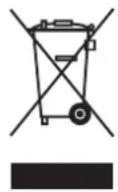
- Dispos of devices with dangerous defects carefully and ensure that they are no longer used.
- Do not dispose of the device in normal domestic waste.
- This product is produced according to EU directive 2002/96/EC.
- Dispose of the device over a registered waste disposal firm or through your communal waste disposal facility.
- Observe the currently valid regulations. In case of doubt, consult your waste disposal facility.
- Please dispose of all packaging materials in an environmentally friendly manner.
Keep the sewing machine's transport packaging. It may be useful for storing the machine, but is particularly useful if you want to ship the sewing machine for repair. Most instances of damage occur when the machines are being transported.
Guarantee
There is a three year guarantee on this device starting from the purchase date.
The device was inspected carefully and thoroughly before delivery.
Please keep your receipt as proof of purchase.
In case of a guarantee complaint, please call your service centre.
This is the only way to ensure free shipment of your goods to us.
The guarantee scope only covers material or manufacturing defects, it does not cover wear parts or damage to fragile parts e.g. switches. The product is only intended for private and not commercial use. In the event of misuse or improper handling, force or any kind of intervention, which has not been performed by our service office, the guarantee will lapse.
This guarantee does not limit your statutory rights.
Service number
These Operating Instructions cannot cover all possible applications.
For more information or in case of problems not covered or inadequately covered in these Operating Instructions, please contact the service number 00800 555 00 666 (f)ee
Please keep these Operating Instructions in a safe place and pass on to any future users.
Service-Address:
CROWN Service Center
tekniHall Elektronik GmbH
Breitefeld 15
DE-64839 Munster
IAN 74612
sewingguide-service-gb@teknihall.com
Manufacturer
Please be aware that the following address is not a service address. Please first contact the service office stated above.
Crown Technics GmbH
Lerchenstrasse 2
DE-74226 Nordheim

FR Numéro de service pour les réclamations:
BE 0080055500666() Gratisuit
NL Servicenummer bij reclamaties:
BE 0080055500666() Gratis
DE Servicenummer bei Reklamationen:
AT 0080055500666 (kostenfrei)
GB Service number for complaints:
IE 0080055500666()free
Version des informations Stand van de informatie