DXZ588RUSB - Car stereo CLARION - Free user manual and instructions
Find the device manual for free DXZ588RUSB CLARION in PDF.



| Product Type | Car stereo with CD/MP3/WMA/AAC player, RDS tuner, USB input and Bluetooth connectivity |
| Brand | Clarion |
| Model | DXZ588RUSB |
| Dimensions (main unit) | 178 (W) x 50 (H) x 158 (D) mm |
| Weight (main unit) | 1.6 kg |
| Power supply | DC 14.4 V (10.8 to 15.6 V allowable), negative ground |
| Current consumption | Less than 15 A |
| Output power | 4 x 31 W (DIN 45324, +B=14.4V) |
| Speaker impedance | 4 Ω (4 to 8 Ω allowable) |
| Radio frequency ranges | FM: 87.5 to 108 MHz (step 0.05 MHz); AM (MW): 531 to 1602 kHz (step 9 kHz); AM (LW): 153 to 279 kHz (step 3 kHz) |
| CD player section | Compact disc digital audio system; frequency response: 5 Hz to 20 kHz (±1 dB); signal-to-noise ratio: 100 dB (1 kHz); dynamic range: 95 dB; distortion: 0.01% |
| Supported audio formats | Audio CD, MP3, WMA, AAC (via CD, USB, iPod) |
| USB input | Front USB port for USB memory, iPod and MTP devices |
| Bluetooth | Hands-free function via optional CeNET Bluetooth adapter (BLT583); calls, phonebook, history |
| Tilt panel | Motorized tilt panel for access to CD slot and controls |
| Detachable control panel (DCP) | Anti-theft detachable control panel with included remote control |
| Active filters | Adjustable high-pass filter (HPF) and low-pass filter (LPF) (50/80/120 Hz or Through) |
| RCA line outputs | 6 RCA line outputs (front, rear, subwoofer) |
| Amplifier | MOS-FET amplifier 4 x 53 W (max) |
| Equalizer / sound | Digital Z-Enhancer (DZE) with 3 modes; bass, treble; Magna Bass Extend; Sound Restorer |
| RDS radio functions | AF, REG, TA, TP, PTY, EON; memory for 24 stations (6 FM1, 6 FM2, 6 FM3, 6 AM) |
| Auxiliary input | AUX input (3.5 mm jack) with adjustable sensitivity (Low/Mid/High) |
| Display | LCD screen with backlight; adjustable contrast; customizable screensaver |
| Remote control dimensions | 44 (W) x 113 (H) x 11 (D) mm; weight 40 g (battery included) |
| Included accessories | Remote control, battery (CR2025), detachable control panel, DCP case, user manual |
Frequently Asked Questions - DXZ588RUSB CLARION
User questions about DXZ588RUSB CLARION
0 question about this device. Answer the ones you know or ask your own.
Ask a new question about this device
Download the instructions for your Car stereo in PDF format for free! Find your manual DXZ588RUSB - CLARION and take your electronic device back in hand. On this page are published all the documents necessary for the use of your device. DXZ588RUSB by CLARION.
USER MANUAL DXZ588RUSB CLARION
RECEPTOR CD/USB/MP3/WMA/AAC COM CONTROLO CeNET


























natural_image
Pure geometric lines and shapes without any text, numbers, or symbols






















English
CAUTIONS:
This appliance contains a laser system and is classified as a "CLASS 1 LASER PRODUCT". To use this model properly, read this Owner's Manual carefully and keep this manual for your future reference. In case of any trouble with this player, please contact your nearest "AUTHORIZED service station". To prevent direct exposure to the laser beam, do not try to open the enclosure.
OBS!
USE OF CONTROLS OR ADJUSTMENTS OR PERFORMANCE OF PROCEDURES OTHER THAN THOSE SPECIFIED IN THE OWNER'S MANUAL MAY RESULT IN HAZARDOUS RADIATION EXPOSURE.
ADVARSEL.
2DXZ588RUSB

natural_image
Pure geometric diagram with intersecting lines and circles, no text or symbols presentThank you for purchasing this Clarion product.
* Please read this owner's manual in its entirety before operating this equipment.
* After reading this manual, be sure to keep it in a handy place (e.g., glove compartment).
* Check the contents of the enclosed warranty card and keep it carefully with this manual.
Contents
-
FEATURES....4
-
PRECAUTIONS .... 4 Flip Down Panel .... 4 Handling Compact Discs .... 5
-
CONTROLS .... 6 Names of the Buttons and Their Functions.... 6 Display Items.... 8 Display Screen.... 8
-
DCP (DETACHABLE CONTROL PANEL)....9
-
REMOTE CONTROL .... 10 Functions of Remote Control Unit Buttons.... 10 Inserting the Battery.... 12
-
OPERATIONS....13 Basic Operations....13 Radio Operations....17 Radio Data System Operations....19 CD/MP3/WMA/AAC Operations....22 Operations Common to Each Mode....27
-
OPERATIONS OF ACCESSORIES .... 30 USB/MTP Operations.... 30 iPod Operations.... 32 Bluetooth BB Operations.... 34 CD Changer Operations.... 37
-
TROUBLESHOOTING....39
- ERROR DISPLAYS 41
- SPECIFICATIONS 42
- OTHERS 42
natural_image
Pure geometric lines and crosshair symbols without any text or labels
3
DXZ588RUSB


English
1. FEATURES






- USB Direct Connection for iPod ® & Digital Media
• 24-bit DAC / 6ch RCA output / 4 × 53 watts MOS-FET amplifier
• Built-in High-pass filter & Low-pass filter
* "iPod" is for legal or rightholder-authorized copying only. Don't steal music. "iPod" is a trademark of Apple Inc., registered in the U.S. and other countries.
2. PRECAUTIONS
- This unit is applicable for on-road 4 wheel vehicle purpose only. Use for tractor, fork truck, bulldozer, off road vehicle, 2 or 3 wheel motor bicycle, marine boat or other special purpose vehicle is not appropriate.
- When the inside of the car is very cold and the player is used soon after switching on the heater moisture may form on the disc or the optical parts of the player and proper playback may not be possible. If moisture forms on the disc, wipe it off with a soft cloth. If moisture forms on the optical parts of the player, do not use the player for about one hour. The condensation will disappear naturally allowing normal operation.
- Driving on extremely bumpy roads which cause severe vibration may cause the sound to skip.
INFORMATION FOR USERS:
CHANGES OR MODIFICATIONS TO THIS PRODUCT NOT APPROVED BY THE MANUFACTURER WILL VOID THE WARRANTY.
Flip Down Panel
This unit uses a flip-down structure that makes possible large-size displays.
CAUTION
When opening and closing the FLIP DOWN PANEL, be careful not to catch your fingers. They could be injured.
- Always use this unit with the FLIP DOWN PANEL closed.
- Do not force operations or use this device abnormally when opening or closing the FLIP DOWN PANEL.
- Do not use the FLIP DOWN PANEL as a tray to place objects on when it is open.
- When closing the FLIP DOWN PANEL, do not press the [OPEN] button.
* Press the center of the DCP to close.
- Strong impacts to the operating or display section can cause damage or deformation.
- If the FLIP DOWN PANEL does not open fully, gently open it with your hand.


natural_image
Pure geometric lines and shapes without any text, numbers, or symbolsHandling Compact Discs
Use only compact discs bearing the


mark.
Do not play heart-shaped, octagonal, or other specially shaped compact discs.
Some CDs recorded in CD-R/CD-RW mode may not be usable.
Handling
- Compared to ordinary music CDs, CD-R and CD-RW discs are both easily affected by high temperature and humidity and some of CD-R and CD-RW discs may not be played. Therefore, do not leave them for a long time in the car.
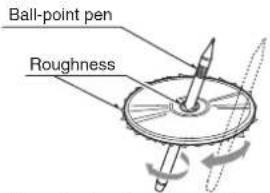
- New discs may have some roughness around the edges. If such discs are used, the player may not work or the
sound may skip. Use a ball-point pen or the like to remove any roughness from the edge of the disc. - Never stick labels on the surface of the compact disc or mark the surface with a pencil or pen.
- Never play a compact disc with any cellophane tape or other glue on it or with peeling off marks. If you try to play such a compact disc, you may not be able to get it back out of the CD player or it may damage the CD player.
- Do not use compact discs that have large scratches, are misshapen, cracked, etc. Use of such discs may cause misoperation or damage.
• To remove a compact disc from its storage case, press down on the center of the case and lift the disc out, holding it carefully by the edges. - Do not use commercially available CD protection sheets or discs equipped with stabilizers, etc. These may damage the disc or cause breakdown of the internal mechanism.
Storage
- Do not expose compact discs to direct sunlight or any heat source.
- Do not expose compact discs to excess humidity or dust.
- Do not expose compact discs to direct heat from heaters.
Cleaning
• To remove fingermarks and dust, use a soft cloth and wipe in a straight line from the center of the compact disc to the circumference.
- Do not use any solvents, such as commercially available cleaners, anti-static spray, or thinner to clean compact discs.
• After using special compact disc cleaner, let the compact disc dry off well before playing it.
natural_image
Pure geometric lines and crosshair symbols without any text or labels

natural_image
Pure geometric diagram with intersecting lines and circles, no text or symbols present3. CONTROLS
Names of the Buttons and Their Functions
![[OPTION] [SRC] [OPEN] [SEEK PANEL] [MENU] [UP], [DN] [+] , [-] [MUTE] [SOUND] [IR RECEIVER] [D] [TA] [▶ ENT]](/content/2026/02/375242/images/be18ea0dcd2571faaf34d41fb24a350b1d9c3aa0f53c0585c799d25ea6d15839.jpg)
With the FLIP DOWN PANEL opened
![[▲] (EJECT) [CD SLOT] [USB SLOT]](/content/2026/02/375242/images/b42744f6ad4119ad9bddac8d47a3850be0c329ae65abc8efa8b1e2b533496f2c.jpg)
natural_image
Pure geometric lines and shapes without any text, numbers, or symbols6DXZ588RUSB
natural_image
Pure geometric lines and shapes without any text, numbers, or symbolsNames of the Buttons and Their Functions
[OPEN] button
- Deeply push in [OPEN] button to unlock the flip down panel.
[ SRC] button
- Press the button to turn on the power.
- Press and hold the button for 1 second or longer to turn off the power.
- Switch the operation mode among the radio mode, etc.
[OPTION] button
- Press the button to enter the option mode.
- Press and hold the button for 1 second or longer to enter the adjust mode.
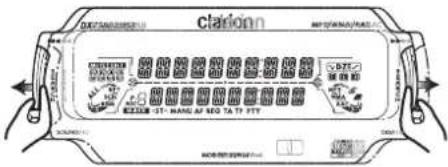
[SEEK PANEL]
- The [SEEK PANEL] allows the controls on the ends to be moved to right or left to permit station tuning (radio), track selection (CD), and to perform various settings in the adjustment mode.
[MENU] button
- Switch the band, or seek tuning or manual tuning while in the radio mode.
- Press the button to enter the list search mode while in the CD/MP3/WMA/AAC mode.
- Press and hold the button for 1 second or longer to play the first track while in the CD/MP3/WMA/AAC mode.
- Press the button to change the character.
[ ]button
- Play or pause a track while in the CD/MP3/WMA/AAC mode.
- Press the button to enter the preset memory mode (radio).
- Confirm various settings.
[UP], [DN] buttons
- Press the button upward or downward to recall the stored station while in the radio mode.
- Select the folder while in the MP3/WMA/AAC mode.
• Perform various settings.
[ ](SOUND) button
- Press the button to enter the sound adjust mode.
- Press and hold the button for 1 second or longer to turn on or off the MAGNA BASS EXTEND mode.
[TA] button
- Use the button to set the TA (Traffic Announcement) standby mode.
[IR RECEIVER]
- Receiver for remote control unit. (Operating range: 30^ in all directions)
[D] button
- Use the button to switch the user titles or track titles, etc. while in the CD/MP3/WMA/AAC mode.
- Press the button to switch the display indication (Main display, Title display and CT (clock time) display).
[MUTE] button
- Turn mute on or off.
[▲] (EJECT) button
- Press to eject a CD loaded in the unit.
[+], [-] buttons
- Press the button upward or downward to adjust the volume.
[CD SLOT]
- CD insertion slot.
[USB SLOT]
- USB memory/MTP/iPod devices insertion slot.
![CLARION DXZ588RUSB - [USB SLOT] - 1](/content/2026/02/375242/images/1e404444964cd05a0c79f5759b66f142f5bcd06a843b379da3d7665174377541.jpg)
![CLARION DXZ588RUSB - [USB SLOT] - 2](/content/2026/02/375242/images/a1be9b1d7d47f93ffea1d4aec9edbd8721f0e20d012a101dba445b56f30e1fa1.jpg)
![CLARION DXZ588RUSB - [USB SLOT] - 3](/content/2026/02/375242/images/cb76f680d08c45d5a1fee77a63dd6a392f0b7fcdff735ad445ae74e02f0016a6.jpg)
![CLARION DXZ588RUSB - [USB SLOT] - 4](/content/2026/02/375242/images/13b440ed7809ddfa08d86b597ebb22b6be6dc04ccbb400678948a0e5071034e4.jpg)
![CLARION DXZ588RUSB - [USB SLOT] - 5](/content/2026/02/375242/images/95b341c1170eb2d84d73e3827526340b69a2f20c9f009d600effab166f21190a.jpg)
![CLARION DXZ588RUSB - [USB SLOT] - 6](/content/2026/02/375242/images/ed371f46f21429f5008a6e24a9d0b7f7519eb50cca84a019ca64945ef16dd3aa.jpg)
![CLARION DXZ588RUSB - [USB SLOT] - 7](/content/2026/02/375242/images/19ab3b4c62bed10931408938478ccfc2bf36b92091917d145e10ef8cb14e8ee6.jpg)
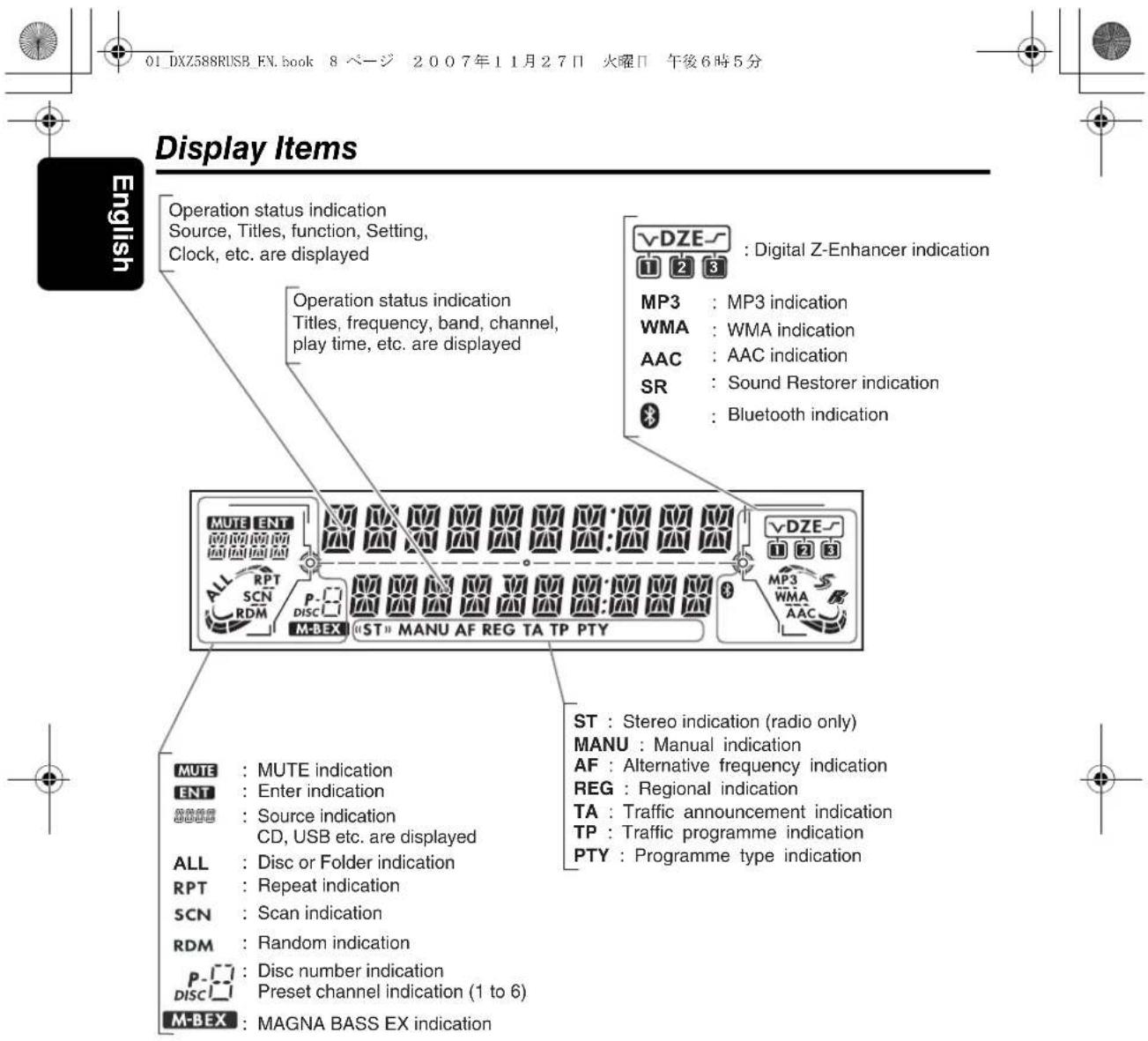
Display Screen
In extreme cold, the screen movement may slow down and the screen may darken, but this is normal. The screen will recover when it returns to normal temperature.
8DXZ588RUSB

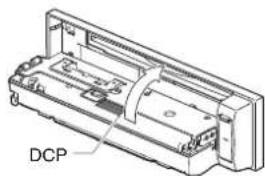
4. DCP (DETACHABLE CONTROL PANEL)
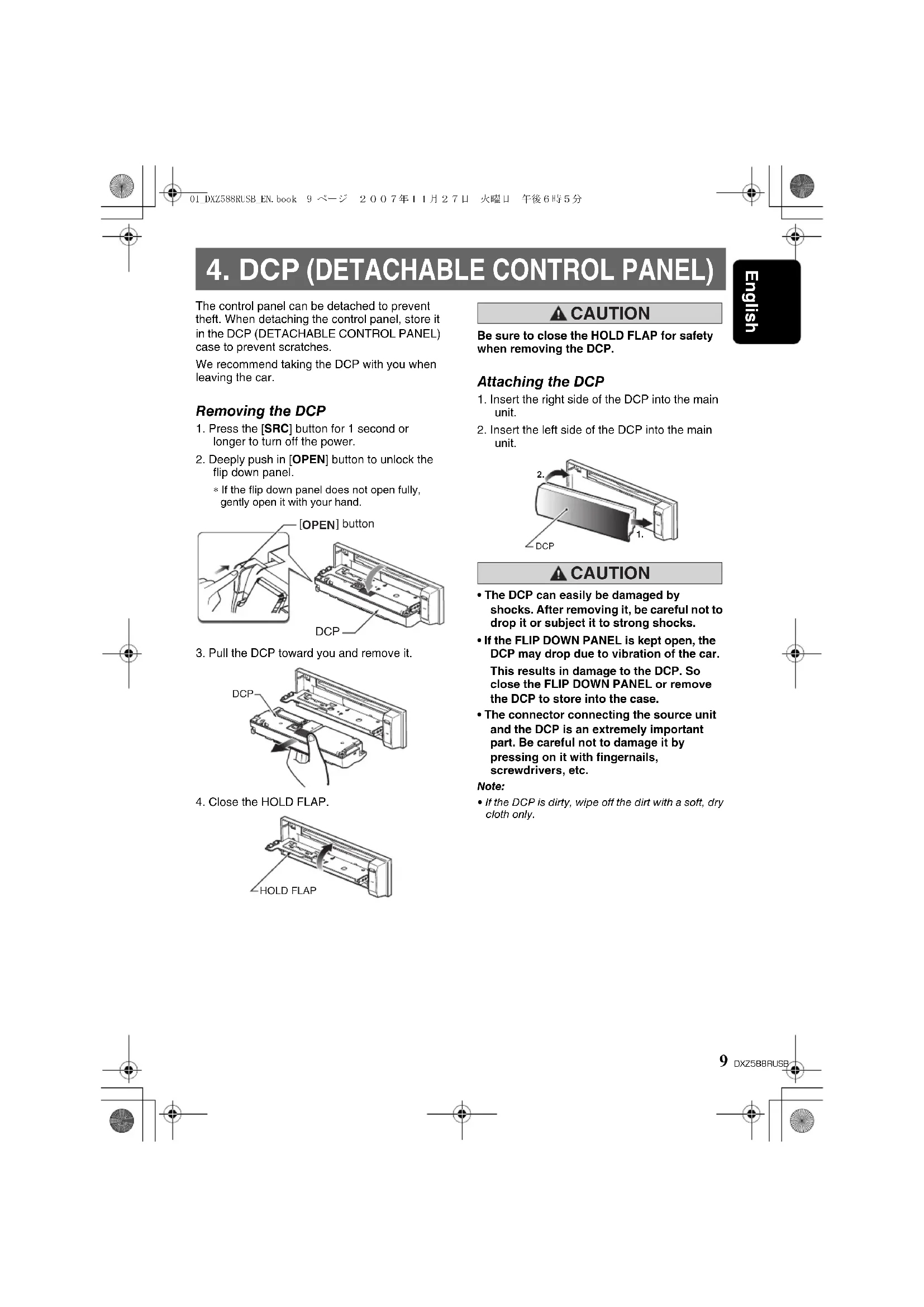
The control panel can be detached to prevent theft. When detaching the control panel, store it in the DCP (DETACHABLE CONTROL PANEL) case to prevent scratches.
We recommend taking the DCP with you when leaving the car.
Removing the DCP
-
Press the [SRC] button for 1 second or longer to turn off the power.
-
Deeply push in [OPEN] button to unlock the flip down panel.
* If the flip down panel does not open fully, gently open it with your hand.
![[OPEN] button DCP](/content/2026/02/375242/images/b763edb0e213feb56d8fcafa817b5213459672475d6ee9cfdc906bc1553fed1a.jpg)
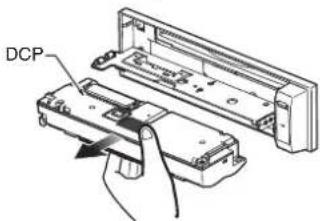
- Pull the DCP toward you and remove it.
- Close the HOLD FLAP.
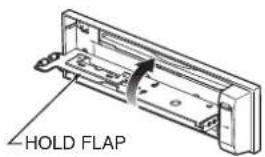
CAUTION
Be sure to close the HOLD FLAP for safety when removing the DCP.
Attaching the DCP
- Insert the right side of the DCP into the main unit.
- Insert the left side of the DCP into the main unit.
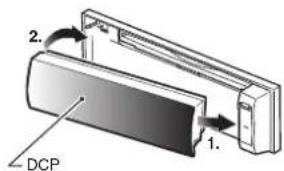
CAUTION
• The DCP can easily be damaged by shocks. After removing it, be careful not to drop it or subject it to strong shocks.
- If the FLIP DOWN PANEL is kept open, the DCP may drop due to vibration of the car. This results in damage to the DCP. So close the FLIP DOWN PANEL or remove the DCP to store into the case.
- The connector connecting the source unit and the DCP is an extremely important part. Be careful not to damage it by pressing on it with fingernails, screwdrivers, etc.
Note:
- If the DCP is dirty, wipe off the dirt with a soft, dry cloth only.
natural_image
Pure geometric lines and crosshair symbols without any text or labels

English
5. REMOTE CONTROL
Functions of Remote Control Unit Buttons
* Some buttons on the remote control unit have different functions from the corresponding buttons on the main unit.
![Signal transmitter [ SRC ] [ BND ] [ ▶ II ] [ ▶ III ] [ MUTE ] [ DISP ] [ TA ] [ PTY ] [ PS/AS ] [ AF ] clarion • Wireless Remote Controller •](/content/2026/02/375242/images/c2ffb5eb6ed11dc7b13619336de2f926492f3aaa25fd48c13effc8b2d61e25be.jpg)
- Shared modes
[SRC] button
- Use to alternate operation mode among the various modes.
- Press to cancel a traffic announcement broadcast, an emergency broadcast, and a PTY broadcast during a TA, ALARM or PTY interrupt.
[▲], [▼] buttons
• Increases and decreases volume.
[MUTE] button
[TA] button
- Turns mute function on and off.
• TA on and off. - Press to cancel a traffic announcement broadcast during a TA interrupt.
[AF] button
- Press to cancel an emergency broadcast during an ALARM interrupt.
[PTY] button
- Press to cancel a PTY broadcast during a PTY interrupt.
[DISP] button
- Press to select the desired display.
● Radio (Radio Data System) mode
[BND] button
- Switches reception band.
[◀◀], [▶▶] buttons
- Moves preset channels up and down.
[PS/AS] button
- Press to perform preset scan.
- Press and hold the button for 2 seconds or longer to perform auto store.
10DXZ5B8RUSB
Functions of Remote Control Unit Buttons
[AF] button
- AF function on and off.
- Press and hold the button for 1 second or longer to perform REG function on and off.
[PTY] button
- PTY mode on and off.
● CD/MP3/WMA/AAC and USB/MTP modes
[BND] button
- Press to play the first track.
[◀◀], [▶▶] buttons
- Press to move the tracks up and down.
- Press and hold the button for 1 second or longer to perform fast-forward/fast-backward (Except DRM file).
[▶II] button
- Switches between playback and pause.
[PS/AS] button
- Press to perform scan play.
- When in MP3/WMA/AAC and USB/MTP modes, press and hold the button for 1 second or longer to perform folder scan play.
[AF] button
- Press to perform repeat play.
- When in MP3/WMA/AAC and USB/MTP modes, press and hold the button for 1 second or longer to perform folder repeat play.
[PTY] button
- Press to perform random play.
- When in MP3/WMA/AAC and USB/MTP modes, press and hold the button for 1 second or longer to perform folder random play.
- CD changer mode
[BND] button
- Press to switch to next disc in ascending order.
[◀◀], [▶▶] buttons
- Press to move the tracks up and down.
- Press and hold the button for 1 second or longer to perform fast-forward/fast-backward.
[ ] button
- Switches between playback and pause.
[PS/AS] button
- Press to perform scan play.
- Press and hold the button for 1 second or longer to perform disc scan play.
[AF] button
- Press to perform repeat play.
- Press and hold the button for 1 second or longer to perform disc repeat play.
[PTY] button
- Press to perform random play.
- Press and hold the button for 1 second or longer to perform disc random play.
- iPod mode
[◀◀], [▶▶] buttons
- Press to move the tracks up and down.
- Press and hold the button for 1 second or longer to perform fast-forward/fast-backward.
[ ] button
- Switches between playback and pause.
[AF] button
- Press to perform repeat play.
[PTY] button
- Press to perform random play.
- Press and hold the button for 1 second or longer to perform all random play.
![CLARION DXZ588RUSB - [PTY] button - 1](/content/2026/02/375242/images/b67ed8cfbebcb12699a6a2ad940eee8b05c404107d07f9245fbfddf7d8c34ce1.jpg)
![CLARION DXZ588RUSB - [PTY] button - 2](/content/2026/02/375242/images/250b0f6b0fb700a90a992ab0a711cc033c6e43b8f66efecd27f70299c1c19cb0.jpg)
![CLARION DXZ588RUSB - [PTY] button - 3](/content/2026/02/375242/images/9f91aec634bec667ef16e56a26c335271bb933ddeb383914ccce5a5be0337815.jpg)
natural_image
Pure geometric lines and crosshair symbols without any text or labels![CLARION DXZ588RUSB - [PTY] button - 4](/content/2026/02/375242/images/42fbc6161eadcc90c74d89fce0f06aa8fced10ad09d9780823931d57c566560d.jpg)
English
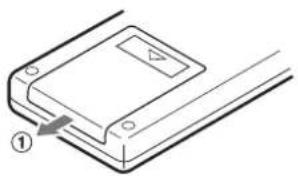
Inserting the Battery
①Turn over the remote control unit and slide the cover in the direction indicated by the arrow in the illustration.
②Insert the battery (CR2025) into the insertion guides, with the printed side (+) facing upwards.
③Press the battery in the direction indicated by the arrow so that it slides into the compartment.
④Replace the cover and slide in until it clicks into place.
Notes:
Misuse may result in rupture of the battery, producing leakage of fluid and resulting in personal injury or damage to surrounding materials. Always follow these safety precautions:
- Use only the designated battery.
- When replacing the battery, insert properly, with +/- polarities oriented correctly.
- Do not subject battery to heat, or dispose of in fire or water. Do not attempt to disassemble the battery.
- Dispose of used batteries properly.
natural_image
Technical line drawing of a mechanical component with a labeled part (no text or symbols present)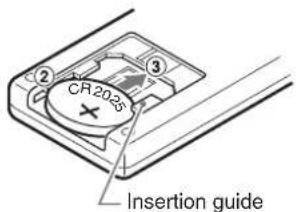

natural_image
Pure geometric diagram with intersecting lines and circles, no text or symbols present6. OPERATIONS
Note:
- Be sure to read this chapter referring to the front diagrams of chapter "3. CONTROLS" on page 6.
Basic Operations
CAUTION
Be sure to lower the volume before switching off the unit power or the ignition key. The unit remembers its last volume setting. If you switch the power off with the volume up, when you switch the power back on, the sudden loud volume may hurt your hearing and damage the unit.
Turning on/off the power
Note:
- Be careful about using this unit for a long time without running the engine. If you drain the car's battery too far, you may not be able to start the engine and this can reduce the service life of the battery.
- Press the [SRC] button. The mode that was previous active is displayed.
- Press and hold the [SRC] button for 1 second or longer to turn off the power for the unit.
Note:
- The first time this unit is turned on after the wire connections are completed, it must be checked what equipment is connected. When the power is turned on, the "SYSTEM CHECK" appears in the display. The system check starts within the unit. When the system check is complete, the unit returns to the radio mode.
Selecting a mode
- Press the [SRC] button to change the operation mode.
- Each time you press the [SRC] button, the operation mode changes in the following order:
Radio → CD/MP3/WMA/AAC → USB/MTP/iPod → (TELEPHONE) → (CD changer) → AUX → Radio...
* External equipment not connected with CeNET is not displayed.
* iPod/MTP can connect to this unit via USB SLOT.
Adjusting the volume
- Press the [+] or [-] button to adjust the volume.
* The volume level is from 0 (minimum) to 33 (maximum).
Switching the display
- Press the [D] button to select the desired display.
* When CT data is not received, "CT--:-" appears in the display.
natural_image
Pure geometric lines and crosshair symbols without any text or labels
Basic Operations
Adjusting Sound Mode
To change sound mode
- Press the [] button and select the sound mode to adjust.
- Push the [SEEK PANEL] leftward or rightward to select the "item name".
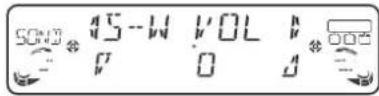
- Press the [UP] or [DN] button to select the "desired setting value".
* In the case of display blinking "ENT", you can press the [▶] button to add setting value.
* "BASS" and "TREBLE" can be adjusted only when "DZE" is set to "DZE OFF" (page 14).
* After completing settings, press the [♪] button to return to the previous mode.
Note:
- During sound adjustment mode, if no operation is performed for more than 10 seconds, this mode can be canceled and return to the previous mode.
● Adjusting the subwoofer output volume
You can adjust the volume output from the unit's subwoofer output terminal.
2-1. Select the "S-W VOL".
3-1. Press the [UP] or [DN] button to change the output volume.
* The factory default setting is "0". (Setting range: +5 to -5)
● Setting the Digital Z-Enhancer
This unit are provided with 3 types of sound tone effects stored in memory. Select the one you prefer.
* The factory default setting is "DZE OFF".
2-1. Select the "DZE".
3-1. Press the [UP] or [DN] button to select the tone effect. Each time you press the [UP] or [DN] button, the tone effect changes in the following order:
14DXZ5B8RUSB
"DZE OFF" <> "DZE 1" <> "DZE 2" <> "DZE 3"
DZE OFF : no sound effect
DZE 1 : Suitable for genuine speakers
DZE 2 : Suitable for separate speakers
DZE 3 : Suitable for co-axial speakers
3-2. When the "DZE 1", "DZE 2" or "DZE 3" is set, press the [ ] button Then press the [UP] or [DN] button to change the DZE level from +3 to -3.
* The factory default setting is "0".
3-3. Press the []out to return to the previous mode.
● Compensation
There is no need to compensate frequency characteristics if they are flat (no peaks or valleys) when you have measured the frequency characteristics with a measuring device. However, sometimes the frequency characteristics rise or fall in some places. If this happens, the frequency characteristics must be compensated. Create a frequency curve having characteristics that are opposite to the center frequency of parts where the characteristics rise and fall to cancel out these peaks and values, and make the frequency characteristics as flat as possible.
Making the frequency characteristics as flat as possible is called "Compensation".
● Compensation of frequency characteristics
The figure below shows the relationship between the center frequency, gain and Q curve.
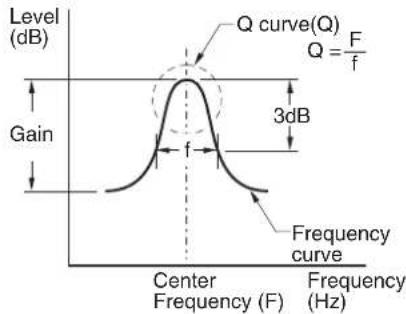
line
| Frequency (Hz) | Value | | -------------- | ----- | | Center | 3dB | | Gain | - |

natural_image
Pure geometric lines and shapes without any text, numbers, or symbolsBasic Operations
Q curve
The Q curve becomes sharper when the numerical value is increased, and smoother when the numerical value is decreased.
Flat frequency characteristics can be made by selecting a Q curve opposite to that of the curve to be compensated.
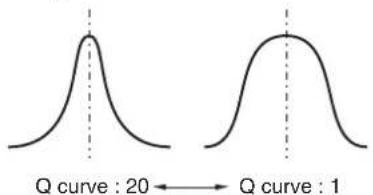
line
| Curve Type | Value | |------------|-------| | Q curve | 20 | | Q curve | 1 |● Adjusting the bass
The bass gain, bass FREQ (center frequency) and bass Q can be adjusted as follows.
The adjustment can only be performed when the DZE is set to "DZE OFF".
2-1. Select "BASS".
2-2. Press the [] output
2-3. Push the [SEEK PANEL] leftward or rightward and select from:
"B GAIN" ↔ "B FREQ" ↔ "B Q"
3-1. Press the [UP] or [DN] button to adjust the gain, the FREQ (center frequency) and the Q.
B GAIN: -7 to +7 (The factory default setting is "0")
B FREQ: 50Hz/80Hz/120Hz (The factory default setting is "50")
B Q: 1/1.25/1.5/2 (The factory default setting is "1")
3-2. Press the [] button to return to the previous mode.
● Adjusting the treble
The treble gain and treble FREQ (center frequency) can be adjusted as follows.
The adjustment can only be performed when the DZE is set to "DZE OFF".
2-1. Select "TREBLE".
2-2. Press the []button
2-3. Push the [SEEK PANEL] leftward or rightward and select from: "T GAIN" ↔ "T FREQ"
3-1. Press the [UP] or [DN] button to adjust the gain and FREQ (center frequency).
T GAIN: -6 to +6 (The factory default setting is "0")
T FREQ: 8KHz/12KHz (The factory default setting is "12K")
3-2. Press the [] button to return to the previous mode.
● Adjusting the sound restorer
The sound restorer enriches the playback of all types of music files that have undergone any level of data compression.
* The factory default setting is "OFF".
2-1. Select "S RESTOR".
3-1. Press the [UP] or [DN] button to adjust. Each time you press the [UP] or [DN] button, the sound restorer changes in the following order:
"OFF" <> "1" <> "2" <> "3"
Set this adjustment in accordance with the music source used.
OFF: For music sources compressed at high bit rate
1: For music sources compressed for high quality at low bit rate
2: For music sources compressed for standard quality at low bit rate
3: For music sources compressed for low quality at low bit rate
- Setting high pass filter
2-1. Select "HPF".
3-1. Press the [UP] or [DN] button to select the setting. Each time you press the [UP] or [DN] button, the setting changes in the following order:
"THROUGH" ↔ "50Hz" ↔ "80Hz" ↔ "120Hz"
* The factory default setting is "THROUGH" (through).
● Setting low pass filter
2-1. Select "S-W LPF".
3-1. Press the [UP] or [DN] button to select the setting.
Each time you press the [UP] or [DN] button, the setting changes in the following order:
"THROUGH" <> "50Hz" <> "80Hz" <> "120Hz"
* The factory default setting is "THROUGH" (through).
natural_image
Pure geometric lines and crosshair symbols without any text or labels

English
Basic Operations
● Adjusting the balance
2-1. Select "BALANCE".
3-1. Press the [UP] button to emphasize the sound from the right speaker, press the [DN] button to emphasize the sound from the left speaker.
* The factory default setting is "CENTER". (Adjustment range: L12 to R12)
● Adjusting the fader
2-1. Select "FADER".
3-1. Press the [UP] button to emphasize the sound from the front speaker, press the [DN] button to emphasize the sound from the rear speaker.
* The factory default setting is "CENTER". (Adjustment range: R12 to F12)
Adjusting MAGNA BASS EXTEND
The MAGNA BASS EXTEND does not adjust the low sound area like the normal sound adjustment function, but emphasizes the deep bass sound area to provide you with a dynamic sound.
- Press and hold the [] button for 1 second or longer to turn on the MAGNA BASS EXTEND effect. "M-B EX" lights in the display.
- Press and hold the [] button for 1 second or longer to turn off the MAGNA BASS EXTEND effect. "M-B EX" goes off from the display.
* The adjustment can only be performed when the DZE is set to "DZE OFF".
* The factory default setting is off.
Mute
Use this function to turn off the sound immediately.
- Press the [] button. The sound turns off and "MUTE" blinks in the display.
- Press the [] button again to cancel the mute mode.
CT (Clock Time) function
The CT function receives CT data sent from an Radio Data System station and displays the time.
* If a CT data is not being received, "CT--:--" appears in the display.
Note:
- CT data is not transmitted in some countries and by some broadcast stations. Also, in some areas, the CT may not display accurately.

natural_image
Pure electrical circuit lines without any symbolsRadio Operations
Listening to the radio
- Press the [SRC] button and select the radio mode. The frequency or PS and PTY appears in the display.
* PS: Programme service name
* PTY: Programme type
- Press the [MENU] button and select the radio band. Each time the button is pressed, the radio reception band changes in the following order:
$$ \begin{array}{l}\text { FM1 } \rightarrow \text { FM2 } \rightarrow \text { FM3 } \rightarrow \text { AM(MW / LW) } \rightarrow\\text { FM1... }\end{array} $$
- Push the [SEEK PANEL] leftward or rightward to tune in the desired station.
Tuning
There are 3 types of tuning mode available, seek tuning, manual tuning and preset tuning.
Seek tuning
There are 2 types of seek tuning: DX SEEK and LOCAL SEEK.
DX SEEK can automatically tune in to receivable broadcast stations; LOCAL SEEK can tune in to only broadcast stations with a good reception sensitivity.
-
Press the [MENU] button and select the desired band (FM or AM (MW/LW)).
-
Tune into a station.
* If "MANU" is lit in the display, press and hold the [MENU] button for 1 second or longer. "MANU" in the display goes off and seek tuning is now available.
* If "TA" is lit in the display, TP stations are automatically sought.
● DX SEEK
Push the [SEEK PANEL] leftward or rightward to automatically seek a station.
When the [SEEK PANEL] is pushed rightward, the station is sought in the direction of higher frequencies; if the [SEEK PANEL] is pushed leftward, the station is sought in the direction of lower frequencies.
* When seek tuning starts, "DX SEEK" appears in the display.
- LOCAL SEEK
If the [SEEK PANEL] is pushed leftward or rightward and held in position for 1 second or longer, local seek tuning will be enabled. Broadcast stations with good reception sensitivity are selected.
* When local seeking starts, "LO SEEK" appears in the display.
Manual tuning
There are 2 ways available: Quick tuning and step tuning.
When you are in the step tuning mode, the frequency changes one step at a time. In the quick tuning mode, you can quickly tune the desired frequency.
-
Press the [MENU] button and select the desired band (FM or AM (MW/LW)).
* If "MANU" is not lit in the display, press and hold the [MENU] button for 1 second or longer. "MANU" is lit in the display and manual tuning is now available. -
Tune into a station.
● Quick tuning
Push the [SEEK PANEL] leftward or rightward and hold in position for 1 second or longer to tune in a station.
- Step tuning
Push the [SEEK PANEL] leftward or rightward to manually tune in a station.
* If no operation is performed for more than 7 seconds, manual tuning is cancelled and the display returns to the previous mode.
Recalling a preset station
A total of 24 preset positions (6-FM1, 6-FM2, 6-FM3, 6-AM) exists to store individual radio stations in memory. Pressing the [UP] or [DN] button recalls the stored radio frequency automatically.
- Press the [MENU] button and select the desired band (FM or AM (MW/LW)).
- Press the [UP] or [DN] button to recall the stored station.
natural_image
Pure geometric lines and crosshair symbols without any text or labels

English
Radio Operations
Manual memory
- Select the desired station with seek tuning or manual tuning.
- Press the [] button to enter the preset memory mode. Press the [UP] or [DN] button to select a desired station, then press and hold the [] button for 2 seconds or longer to store the current station into preset memory.
Auto store
Auto store is a function for storing up to 6 stations that are automatically tuned in sequentially. If 6 receivable stations cannot be received, a previously stored station remains unoverwritten at the memory position.
- Press the [MENU] button and select the desired band (FM or AM (MW/LW)).
- Press the [OPTION] button.
- Push the [SEEK PANEL] leftward or rightward to select "AUTO STORE".
- Press and hold the [] button for 2 seconds or longer. The stations with good reception are stored automatically to the preset channels.
* If auto store is performed in the FM bands, the stations are stored in FM3 even if FM1 or FM2 was chosen for storing stations.
Preset scan
Preset scan receives the stations stored in preset memory in order. This function is useful when searching for a desired station in memory.
- Press the [OPTION] button.
- Push the [SEEK PANEL] leftward or rightward to select "PRESET SCN".
- Press the [] button.
* When a desired station is tuned in, press the [ ] button again to continue receiving that station.

natural_image
Pure geometric lines and shapes without any text, numbers, or symbolsRadio Data System Operations
Radio Data System
This unit has a built-in "Radio Data System" decoder system that supports broadcast stations transmitting "Radio Data System" data. This system can display the name of the broadcast station being received (PS) and can automatically switch to the broadcast station with the best reception as you move long distances (AF switching).
Also, if a traffic announcement or programme type is broadcast from an "Radio Data System" station, no matter what mode you are in, this broadcast is received.
Additionally, if EON information is received, this information enables automatic switching of other preset stations on the same network and interruption of the station being received with traffic information from other stations (TP). This function is not available in some areas.
When using the "Radio Data System" function, always set the radio to FM mode.
• AF : Alternative Frequency
• PS : Programme Service Name
• PTY : Programme Type
• EON : Enhanced Other Network
• TP : Traffic Programme
* "Radio Data System" interrupt does not function during AM radio reception.
* When set receives "Radio Data System" signal, and can read PS data, PS appears in the display.
AF function
The AF function switches to a different frequency on the same network in order to maintain optimum reception.
The factory default setting is "ON".
-
Press the [OPTION] button.
-
Push the [SEEK PANEL] leftward or rightward to select "AF".
-
Press the [UP] or [DN] button to select "ON" or "OFF".
• ON:
"AF" in the display lights and AF function turns on.
• OFF:
"AF" in the display goes off and AF function turns off.
- Press the [OPTION] button to return to the previous mode.
* If the reception of the current broadcast station deteriorates, "PI SEARCH" appears in the display and the radio searches for the same programme on another frequency.
REG (Regional programme) function
When the REG function is ON, the optimum regional station can be received. When this function is OFF, if the regional station area switches as you drive, a regional station for that region is received.
* The factory default setting is "OFF".
Notes:
• This function is disabled when a national station such as BBC R2 is being received.
- The REG function ON/OFF setting is valid when the AF function is ON.
- Press the [OPTION] button.
- Push the [SEEK PANEL] leftward or rightward to select "REG".
- Press the [UP] or [DN] button to select "ON" or "OFF".
• ON:
"REG" in the display lights and REG function turns on.
• OFF:
"REG" in the display goes off and REG function turns off.
- Press the [OPTION] button to return to the previous mode.
Manually tuning a regional station in the same network
- This function is valid when the AF function is ON and the REG function is OFF.
Note:
• This function can be used when a regional broadcast of the same network is received.
2. Press the [UP] or [DN] button to call out the regional station.
3. If the reception condition of the called out station is bad, press the [UP] or [DN] button to select the same preset memory station. The unit receives a local station on the same network.
natural_image
Pure geometric lines and crosshair symbols without any text or labelsEnglish
Radio Data System Operations
TA (Traffic Announcement)
In the TA standby mode, when a traffic announcement broadcast starts, the traffic announcement broadcast is received as top priority regardless of the function mode so you can listen to it. Traffic programme (TP) automatic tuning is also possible.
This function can only be used when "TP" is lit in the display. When "TP" is lit, this means that the "Radio Data System" broadcast station being received has traffic announcement programmes.
● Setting the TA standby mode
If you press the [TA] button when only "TP" is lit in the display, "TP" and "TA" light in the display and the unit is set into the TA standby mode until a traffic announcement is broadcast. When a traffic announcement broadcast starts, "TRA INFO" appears in the display. If you press the [TA] button while a traffic announcement broadcast is being received, the traffic announcement broadcast reception is cancelled and the unit goes into the TA standby mode.
● Cancelling the TA standby mode
As "TP" and "TA" lit in the display, press the [TA] button. The "TA" in the display goes off and the TA standby mode is cancelled.
* If "TP" is not lit, pressing the [TA] button searches for a TP station.
● Searching for a TP station
When "TP" is not lit, if you press the [TA] button, "TA" in the display lights and the unit automatically receives a TP station.
Note:
- If a TP station is not received, the unit continues the search operation. Pressing [TA] button again goes off "TA" in the display and stops TP station searching.
Auto store function for TP stations
You can automatically store up to 6 TP stations into preset memory. If the number of TP can be received less than 6, broadcast stations already stored in memory and left without being overwritten.
As "TA" lit in the display:
- Press the [OPTION] button.
- Push the [SEEK PANEL] leftward or rightward to select "AUTO STORE".
- Press and hold the [] button for 2 seconds or longer.
The TP stations with the good reception sensitivity are stored into preset memory.
* Even if you select FM1 or FM2, a TP station is stored into memory for FM3.
PTY
This function enables you to listen to a broadcast of the selected programme type even if the unit is on a function mode other than radio.
* Some countries do not yet have PTY broadcast.
* In the TA standby mode, a TP station has priority over a PTY broadcast station.
* The factory default setting is "OFF".
1. Press the [OPTION] button.
2. Push the [SEEK PANEL] leftward or rightward to select "PTY".
3. Press the [UP] or [DN] button to select "ON" or "OFF".
• ON:
"PTY" in the display lights and PTY standby mode is turned on. When the selected PTY broadcast starts, the PTY item name appears in the display.
• OFF:
"PTY" in the display goes off and PTY standby mode is cancelled.
- Press the [OPTION] button to return to the previous mode.
● Cancelling a PTY interrupt broadcast
Press the [TA] button during the PTY interrupt broadcast, the PTY interrupt is cancelled and the unit returns to PTY standby mode.
PTY seek
- Press the [OPTION] button to switch to the "Radio Data System" adjustment selection display.
- Push the [SEEK PANEL] leftward or rightward to select "PTY SELECT".
- Press the [] button.
- Push the [SEEK PANEL] rightward to search for a PTY broadcast in the direction of higher frequencies; push the [SEEK PANEL] leftward to search in the direction of lower frequencies.
* If no station with the selected PTY broadcast can be received, the unit returns to the PTY select mode.
20
OXZ5B8RUSB

Radio Data System Operations
PTY selecting
- Press the [OPTION] button to switch to the "Radio Data System" adjustment selection display.
- Push the [SEEK PANEL] leftward or rightward to select "PTY SELECT".
- Press the []buttent
- Press the [UP] or [DN] button to select the desired PTY.
The 29 types of PTY below can be selected.
| PTY item | |
| ENGLISH | Contents |
| NEWS News | |
| AFFAIRS Today's | events |
| INFO Information | |
| SPORT Sports | |
| EDUCATE Education | |
| DRAMA Drama | |
| CULTURE Culture | |
| SCIENCE Science | |
| VARIED Variety | |
| POP M Pop music | |
| ROCK M Rock music | |
| EASY M | Easy music |
| LIGHT M | Light music |
| CLASSICS | Classics |
| OTHER M | Other music |
| WEATHER | Weather |
| FINANCE Finance | |
| CHILDREN | For children |
| SOCIAL Social | |
| RELIGION Religion | |
| PHONE IN Phone in | |
| TRAVEL | Travel |
| LEISURE Leisure | |
| JAZZ | Jazz |
| COUNTRY | Country |
| NATION M | Nation music |
| OLDIES Oldies | |
| FOLK M | Folk music |
| DOCUMENT | Documentaries |
Emergency broadcast
If an emergency broadcast is received, all the function mode operations are stopped. "ALARM!" appears in the display and the emergency broadcast can be heard.
● Cancelling an emergency broadcast If you press the [TA] button, emergency broadcast reception is cancelled.
Switching the PTY display language
You can select one of 4 languages (English, German, Swedish or French) for the PTY displayed in the display.
* The factory default setting is "ENGLISH".
- Press the [OPTION] button to switch to the "Radio Data System" adjustment selection display.
- Push the [SEEK PANEL] leftward or rightward to select "LANGUAGE".
- Press the [UP] or [DN] button to select the desired language.
- Press the [OPTION] button to return to the previous mode.
Volume setting of TA, emergency broadcast (Alarm) and PTY
The volume for TA, Alarm and PTY interrupts can be set during TA, Alarm or PTY interrupt.
* The factory default setting is "15".
During a TA, Alarm or PTY interrupt, press the [+] or [-] button to set the volume to the desired level (0 to 33).
* When the TA, Alarm or PTY interrupt ends, the volume returns to the level it had before the interrupt.
English
CD/MP3/WMA/AAC Operations
MP3/WMA/AAC
What is MP3?
MP3 is an audio compression method and classified into audio layer 3 of MPEG standards. This audio compression method has penetrated into PC users and become a standard format.
This MP3 features the original audio data compression to about 10 percent of its initial size with a high sound quality. This means that about 10 music CDs can be recorded on a CD-R disc or CD-RW disc to allow a long listening time without having to change CDs.
What is WMA?
WMA is the abbreviation of Windows Media Audio, an audio file format developed by Microsoft Corporation.
Notes:
- If you play a file with DRM (Digital Rights Management) for WMA remaining ON, no audio is output (The WMA indicator blinks).
- Windows Media™, and the Windows ^® logo are trademarks, or registered trademarks of Microsoft Corporation in the United States and/or other countries.
● To disable DRM (Digital Rights Management)
When using Windows Media Player 9/10/11, click on TOOL → OPTIONS → MUSIC RECORD tab, then under Recording settings, unclick the Check box for RECORD PROTECTED MUSIC. Then, reconstruct files.
Personally constructed WMA files are used at your own responsibility.
What is AAC?
- AAC is an acronym for "Advanced Audio Coding" and refers to the audio compression method used with video compression standards MPEG-2 and MPEG-4.
- AAC files composed with the following conditions can be played:
-AAC files encoded with iTunes.
-iTunes Ver. 7.0 or earlier.
-File extension ".m4a" (".M4A")
- Tracks purchased at an iTunes Music store, and copyright-protected files cannot be played.
- When playing AAC files that include image data, additional time may be required before playback begins.
- Files may not play properly, depending on the iTunes version under which an AAC file is encoded.
Precautions when creating MP3/WMA/AAC file
● Usable sampling rates and bit rates
- MP3: Sampling rate 8 kHz–48 kHz, Bit rate 8 kbps–320 kbps / VBR
- WMA: Bit rate 8 kbps–320 kbps
- AAC: Sampling rate 8 kHz–48 kHz, Bit rate 8 kbps–320 kbps / VBR
● File extensions
- Always add a file extension ".MP3" (.mp3), ".WMA" (.wma) or ".M4A" (.m4a) to MP3, WMA or AAC file by using single byte letters. If you add a file extension other than specified or forget to add the file extension, the file cannot be played.
- Files without MP3/WMA/AAC data will not play. The files will be played soundlessly if you attempt to play files without MP3/WMA/AAC data.
* When VBR files are played, the play time display may differ the play location.
* When MP3/WMA/AAC files are played, a little no sound part is caused between tunes.

natural_image
Pure geometric lines and shapes without any text, numbers, or symbolsCD/MP3/WMA/AAC Operations
● Logical format (File system)
- When writing MP3/WMA/AAC file on a CD-R disc or CD-RW disc, please select "ISO9660 level 1, 2 or JOLIET or Romeo or APPLE ISO" as the writing software format. Normal play may not be possible if the disc is recorded on another format.
- The folder name and file name can be displayed as the title during MP3/WMA/AAC play but the title must be within 64 single byte alphabetical letters and numerals (including an extension).
- Do not affix a name to a file inside a folder having the same name.
- Folder structure
- A disc with a folder having more than 8 hierarchical levels will be impossible.
● Number of files or folders
- Up to 255 files can be recognized per folder. Up to 510 files can be played.
- Tracks are played in the order that they were recorded onto a disc. (Tracks might not always be played in the order displayed on the PC.)
- Some noise may occur depending on the type of encoder software used while recording.
Set the type of file to be played (multi-session function)
When a single disc holds both normal CD type tracks and MP3/WMA/AAC type tracks, use this command to select which type of track to play.
* Default setting is "CD".
- When only one type of track (either music CD or MP3/WMA/AAC) is recorded on a disc, selecting either type will allow playback of the disc.
-
When playing CCCD (copy-control CDs), set to CD type.
-
Press the [OPTION] button.
- Push the [SEEK PANEL] leftward or rightward to select "M-SESS".
- Press the [UP] or [DN] button to select "CD" or "MP3". The mixed mode is switched between CD type or MP3/WMA/AAC type.
• CD
When playing music CD only.
• MP3
When playing music MP3/WMA/AAC only.
- When setting is completed, remove the disc and reinsert it.
Backup Eject function
Just pressing the [▲] button, ejects the disc even if the power to the unit was not turned on.
- Press the [OPEN] button to open the FLIP DOWN PANEL.
Note:
- If the FLIP DOWN PANEL will not open far enough, open it gently with your hand.
- Press the [▲] button. Remove the disc after it is ejected.
- Close the FLIP DOWN PANEL.
* Press the center of the DCP to close.
Notes:
• Always close the FLIP DOWN PANEL once you take out the disc.
- If you force a CD into before auto reloading, this can damage the CD.
- If a CD (12 cm) is left in the ejected position for 15 seconds, the CD is automatically reloaded (Auto reload).
natural_image
Pure geometric lines and crosshair symbols without any text or labelsEnglish
CD/MP3/WMA/AAC Operations
Listening to a disc already loaded in the unit
Press the [SRC] button to select the CD/MP3/WMA/AAC mode.
When the unit enters the CD/MP3/WMA/AAC mode, play starts automatically.
If there is no disc loaded, the indication "NO DISC" appears in the title display.
Loading a CD
- Press the [OPEN] button to access the CD SLOT behind the FLIP DOWN PANEL.
- Insert a CD into the center of the CD SLOT with the labeled side facing up. The CD plays automatically after loading.
Notes:
- Never insert foreign objects into the CD SLOT.
- If the CD is not inserted easily, there may be another CD in the mechanism or the unit may require service.
• Discs not bearing the or mark and CD-ROMs cannot be played by this unit. - Some CDs recorded in CD-R/CD-RW mode may not be usable.
- Close the FLIP DOWN PANEL. * Press the center of the DCP to close.
CAUTION
Be careful not to catch your hand or fingers while closing the FLIP DOWN PANEL.
Notes:
- If the FLIP DOWN PANEL does not open fully, gently open with your hand.
• After loading a CD, always close the FLIP DOWN PANEL.
Pausing play
- Press the [] but to pause play.
"PAUSE" appears in the display. - To resume CD play, press the []▶ENT button again.
Displaying CD titles
This unit can display title data for CD-text/MP3/WMA/AAC disc and user titles input with this unit.
- Each time you press the [D] button, the title display changes in the following order:
- CD-TEXT disc
Track → Disc/Artist → User → Track ...
● MP3/WMA/AAC disc
Track → Folder → Title/Album → Artist → Track ...
Notes:
- If the CD playing is not a CD-text CD or no user title has been input, "NO TITLE" appears in the display.
- If MP3/WMA/AAC disc is not input TAG, "NO TITLE" appears in the display.
• For MP3, supports ID3 Tags V2.3 / 2.2 / 1.1 / 1.0. - Tag displays give priority to V2.3 / 2.2.
- In the case of album Tags for WMA, the information written into the extension header is displayed.
- Only ASCII characters can be displayed in Tags.
Selecting a track
- Track-up
-
Push the [SEEK PANEL] rightward to move ahead to the beginning of the next track.
-
Each time you push the [SEEK PANEL] rightward, the track advances ahead to the beginning of the next track.
- Track-down
- Push the [SEEK PANEL] leftward to move back to the beginning of the current track.
- Push the [SEEK PANEL] leftward twice to move back to the beginning of the previous track.

natural_image
Pure geometric lines and shapes without any text, numbers, or symbolsCD/MP3/WMA/AAC Operations
Fast-forward/fast-backward
● Fast-forward
- Push the [SEEK PANEL] rightward and hold in position for 1 second or longer.
● Fast-backward
- Push the [SEEK PANEL] leftward and hold in position for 1 second or longer.
* For MP3/WMA/AAC discs, it takes some time until the start of searching and between tracks. In addition, the playing time may have a margin of error.
Folder Select
This function allows you to select a folder containing MP3/WMA/AAC files and start playing from the first track in the folder.
- Press the [UP] or [DN] button. Press the [UP] button to move the next folder. Press the [DN] button to move the previous folder.
* Folder without an MP3/WMA/AAC file is not selectable.
- To select a track, push the [SEEK PANEL] leftward or rightward.
Top function
The top function resets the CD player to the first track of the disc. Press and hold the [MENU] button for 1 second or longer to play the first track (track No. 1) on the disc.
* In case of MP3/WMA/AAC, the first track of a folder being played will be returned.
List search function
-
Press the [MENU] button to enter the list search mode. And then the track list appears in the display.
-
Press the [UP] or [DN] button to select a track.
* If you push the [SEEK PANEL] leftward or rightward, the track list scrolls 5 lines at a time.
- Press the [] button to play.
* In case of MP3/WMA/AAC, this function is performed in the current folder.
* If no operation is performed for more than 10 seconds, this mode can be cancel and return to the usual mode.
Other various play functions
- Press the [OPTION] button.
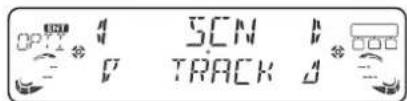
- Scan play
This function allows you to locate and play the first 10 seconds of all the tracks recorded on a disc.
-
Push the [SEEK PANEL] leftward or rightward to select "SCN".
-
Press the [UP] or [DN] button to select "TRACK", and then press the [▶] ENT button to perform scan play.
"SCAN" appears in the display.
* Scan play starts from the next track after the track currently being played.
natural_image
Pure geometric lines and crosshair symbols without any text or labels
English
CD/MP3/WMA/AAC Operations
- Folder scan play
This function allows you to locate and play the first 10 seconds of the first track of all the folders on an MP3/WMA/AAC disc.
-
Push the [SEEK PANEL] leftward or rightward to select "SCN".
-
Press the [UP] or [DN] button to select "ALL", and then press the [ ] button to perform folder scan play.
"ALL SCAN" appears in the display.
* Folder scan play starts from the next folder after the folder currently being played.
- Repeat play
This function allows you to play the current track repeatedly.
-
Push the [SEEK PANEL] leftward or rightward to select "RPT".
-
Press the [UP] or [DN] button to select "TRACK", and then press the [▶] ENT button to perform repeat play.
* "REPEAT" appears in the display.
● Folder repeat play
This function allows you to play a track currently being played in the MP3/WMA/AAC folder repeatedly.
-
Push the [SEEK PANEL] leftward or rightward to select "RPT".
-
Press the [UP] or [DN] button to select "ALL", and then press the [] button to perform folder repeat play. "ALL RPT" appears in the display.
● Random play
This function allows you to play all tracks recorded on a disc in a random order.
-
Push the [SEEK PANEL] leftward or rightward to select "RDM".
-
Press the [UP] or [DN] button to select "TRACK", and then press the [ ]ENT button to perform random play. "RANDOM" appears in the display.
● Folder random play
This function allows you to play all the tracks of all the folders recorded on an MP3/WMA/AAC disc in a random order.
-
Push the [SEEK PANEL] leftward or rightward to select "RDM".
-
Press the [UP] or [DN] button to select "ALL", and then press the [ ] to perform folder random play. "ALL RDM" appears in the display.
● To cancel the trick play
-
Push the [SEEK PANEL] leftward or rightward to select "TRICK PLAY OFF".
-
Press the [] button to cancel the trick play.

natural_image
Pure geometric lines and shapes without any text, numbers, or symbolsOperations Common to Each Mode
To change adjustment setting
-
Press and hold the [OPTION] button for 1 second or longer to switch to the adjustment selection display.
-
Push the [SEEK PANEL] leftward or rightward to select the "item name". "CONTRAST" <> "SCRN SVR" <> "MESSAGE INPUT" <> "AUTO SCR" <> "SCRL SPD" <> "DIMMER" <> "BLINKLED" <> "A CANCEL" <> "TEL-SEL" <> "TEL SP" <> "TEL SW" <> "SYSTEM CHECK"
-
Press the [UP] or [DN] button to select the "desired setting value".
* In the case of display blinking "ENT", you can press the [▶] button to adjust the setting value.
* After completing settings, press the [OPTION] button to return to the previous mode.
- Setting the contrast
You can adjust the display contrast to match the angle of installation of the unit.
* The factory default setting is "7". (Adjustment level: 1 to 16)
2-1. Select "CONTRAST".
3-1. Press the [UP] or [DN] button to adjust the contrast.
● Turning the screen saver function on or off
This unit is provided with the screen saver function which allows you to show various kinds of patterns and characters in the operation status indication area of the display in a random order. You can turn on or off this function. If the button operation is performed with the screen saver function on, the operation display corresponding to the button operation is shown for about 30 seconds and the display returns to the screen saver display.
* The factory default setting is "ON".
2-1. Select "SCRN SVR".
3-1. Press the [UP] or [DN] button to select the setting.
"ON" ↔ "OFF"
● Entering message information
Message up to 30 characters long can be stored in memory and displayed as a type of screen saver setting.
* The factory default setting is "WELCOME TO CLARION".
2-1. Select "MESSAGE INPUT".
3-1. Press the [] button
3-2. Press and hold the [MENU] button for 1 second or longer to clear the old message.
3-3. Push the [SEEK PANEL] leftward or rightward to move the cursor.
3-4 Press the [MENU] button to select a character type. Each time you press the [MENU] button, the character type changes in the following order: Capital letters → Numbers → Symbols → Umlaut → Capital letters...
3-5. Press the [UP] or [DN] button to select the desired character.
3-6. Repeat step 3-3 to 3-5 to enter up to 30 characters for message.
3-7. Press and hold the [Button] for 2 seconds or longer to store the message in memory and cancel the input message mode.
* Press and hold the [MENU] button for 1 second or longer to cancel the input message. Then press and hold the
[▶ENT] button for 2 seconds or longer to store the message and the message return to the default setting.
● Setting the method for title scroll
Set how to scroll in CD-TEXT, MP3/WMA/AAC title.
* The factory default setting is "ON".
2-1. Select "AUTO SCR".
3-1. Press the [UP] or [DN] button to select "ON" or "OFF".
• ON:
To scroll automatically.
• OFF:
To scroll just 1 time.
* When you want to see the title again, in the title mode, press and hold the [D] button for 1 second or longer to scroll the title.
natural_image
Pure geometric lines and crosshair symbols without any text or labels

English
Operations Common to Each Mode
● Setting the speed of the title scroll
This function allows you to adjust the speed of the title scroll.
* The factory default setting is "SPEED3".
2-1. Select "SCRL SPD".
3-1. Press the [UP] or [DN] button to select from "SPEED1" to "SPEED6".
● Setting the dimmer control
You can set the dimmer control "HIGH", "MID", "LOW" or "OFF".
* The factory default setting is "MID".
2-1. Select "DIMMER".
3-1. Press the [UP] or [DN] button to select "HIGH", "MID", "LOW" or "OFF".
● Anti-theft indicator
The red Anti-theft indicator is a function for preventing theft. When the DCP is removed from the unit, this indicator blinks.
* The factory default setting is "OFF".
2-1. Select "BLINKLED".
3-1. Press the [UP] or [DN] button to select "ON" or "OFF".
● Setting the external amplifier
* The factory default setting is "OFF".
2-1. Select "A CANCEL".
3-1. Press the [UP] or [DN] button to select "ON" or "OFF".
• ON:
Use with connected AMP.
• OFF:
Use with inside AMP.
● Set the cellular phone connection mode (TEL-SEL)
You can listen to your telephone calls from the speakers connected to this unit.
* The factory default setting is "AUX".
2-1. Select "TEL-SEL"
3-1. Press the [UP] or [DN] button to select "AUX" or "CeNET".
• AUX:
When you select "AUX", the AUX input cable is used to connect a AUX BLUETOOTH BB (BLT373) (sold separately).
• CeNET:
When you select "CeNET", the CeNET input cable is used to connect a cellular phone (BLT583) (sold separately). See "Bluetooth BB Operations" (page 34-36) for details.
- Setting the car speaker output for the cellular phone
* The factory default setting is "R".
* To output the telephone calls, set the cellular phone interrupt to ON.
2-1. Select "TEL SP".
3-1. Press the [UP] or [DN] button to select "R" or "L".
• R:
Telephone calls can be heard on the front right speaker connected to this unit.
• L:
Telephone calls can be heard on the front left speaker connected to this unit.
● Cellular phone interrupt setting
If you connect this unit and your cellular phone with a separately sold cable, you can listen to your telephone calls on your car speakers.
* The factory default setting is "OFF".
2-1. Select "TEL SW".
3-1. Press the [UP] or [DN] button to select the setting in the following order:
"OFF" <> "ON" <> "MUTE"
• OFF:
This unit continues normal operation even when the cellular phone is used.
• ON:
You can listen to your telephone calls from the speakers connected to this unit.
* When listening to your calls on your car speakers, you can adjust the volume by pressing the [UP] or [DN] button.
• MUTE:
The sound from this unit is muted during telephone calls.
Note:
- If connecting a hands-free kit, please ensure the setting is ON to receive the telephone audio through the system.

natural_image
Pure geometric lines and shapes without any text, numbers, or symbolsOperations Common to Each Mode
● Performing a system check
2-1. Select "SYSTEM CHECK".
3-1. Press and hold the [Pouten] for 1 second or longer. "SYSTEM CHECK" appears in the display, then the unit returns to the previous operation mode.
AUX function
This system has an external input cable so you can listen to sounds and music from external devices connected to this unit.
- Selecting AUX IN sensitivity
Make the following settings to select the sensitivity when sounds from external devices connected to this unit are difficult to hear even after adjusting the volume.
* The factory default setting is "MID".
-
Press the [OPTION] button, "AUX SENS MID" appears in the display.
-
Press the [UP] or [DN] button to select "LOW", "MID" or "HIGH".
-
Press the [OPTION] button to return to the previous mode.
Note:
- When AUX mode is selected, AUX IN sensitivity can be set.
Entering titles
Titles up to 10 characters long can be stored in memory and displayed for CD, CD changer and TV stations. The number of titles that can be entered for each mode are as follows.
| Mode Number of titles | |
| CD mode 50 titles |
| CD changer mode Number of titles |
| DCZ628 connected 100 titles |
- Press the [SRC] button to select the mode you want to enter a title (CD, CD changer or TV).
- Select and play a CD in the CD changer or tune in to a TV station for which you want to enter the title.
- Press the [OPTION] button.
- Push the [SEEK PANEL] leftward or rightward to select "TITLE INPUT".
-
Press the []outENT The display switches to the title input display.
-
Push the [SEEK PANEL] leftward or rightward to move the cursor.
- Press the [MENU] button to select a character type. Each time you press the [MENU] button, the character type changes in the following order: Capital letters → Numbers → Symbols → Umlaut → Capital letters...
- Press the [UP] or [DN] button to select the desired character.
- Repeat steps 6 to 8 to enter up to 10 characters for the title.
- Press and hold the [Button] for 2 seconds or longer to store the title into memory.
Clearing titles
- Select and play a CD in the CD changer or tune in to a TV station for which you want to clear the title.
- Press the [OPTION] button.
- Push the [SEEK PANEL] leftward or rightward to select "TITLE INPUT".
- Press the []outent The display switches to the title input display.
- Press and hold the [MENU] button for 1 second or longer. All characters in the title disappear.
- Press and hold the [] button for 2 seconds or longer to store the setting.
English
7. OPERATIONS OF ACCESSORIES
USB/MTP Operations
USB memory/MTP device operation Note:
- The following operations are the same as for CD mode:
*Pause
*Track selection
*Fast-forward/fast-backward (Except DRM file)
*Top function
*Scan play
*Repeat play
*Random play
*Folder selection
*List search function
See "CD/MP3/WMA/AAC Operations" (page 22-26) for details.
About USB memory
- USB is an acronym for Universal Serial Bus, and refers to an external bus standard supporting data transfer rates of 12 Mbps.
- This unit is compatible with USB 1.1/2.0 with maximum data transfer rates of 12 Mbps.
- USB memory devices that can be played by connecting to the unit's USB cable are limited to those recognized as "USB mass storage class devices"; operation is not guaranteed with all USB memory devices.
* Devices compatible with "USB Mass Storage Class" can be used merely by connecting to the host device, without need for special drivers or application software.
- Consult the manufacturer of your USB memory device for information regarding whether it is supported by "USB Mass Storage Class" standards.
-
Audio files playable on this unit are limited to MP3/WMA/AAC files. For details, see the section "MP3/WMA/AAC" (page 22).
• To prevent the accidental loss of data, always back up important data on your computer. -
This unit does not support connections to a computer. In addition, connections made through a USB hub device are also not supported.
- When a USB memory device is composed of two or more drives, only one of the drives will be detected.
- USB memory devices with security functions cannot be played.
- The order in which tracks are recorded may differ depending on the USB memory device connected (the actual playback order may not be the same as that indicated on your computer's display).
- If you continuously operate folder up/down, the play time keeps as "00:00", and the sound is not emitted.
About USB Digital Media Streaming
This unit supports USB Digital Media Streaming. USB Digital Media Streaming is a function used to play music files transmitted using Media Transfer Protocol (MTP). This function also supports the playback of WMDRM 10 files.
During USB Digital Media Streaming, the unit displays the "MTP" mode indicator.
Use of USB Digital Media Streaming requires the purchase of a supported portable audio player. For information regarding supported portable audio players, consult your nearest Clarion dealer, or visit Clarion's website.

natural_image
Pure geometric diagram with intersecting lines and circles, no text or symbols present
natural_image
Pure electrical circuit lines without any symbolsUSB/MTP Operations
CAUTION
- Insert and remove a USB memory/MTP device only when the device is not being accessed. Connecting or disconnecting the device at the following times may result in the loss of data:
- If the USB memory/MTP device is removed or power is disconnected during writing to the device.
- When the device is subjected to static electricity or electric noise.
- Do not leave a USB memory/MTP device unattended in an automobile. Exposure to direct sunlight or high temperatures may cause deformation or other malfunction of the USB memory/MTP device.
- Do not turn on vehicle ignition when the MTP device is connected, since it may result in loss or damage to data on the MTP device.
Connect the MTP device to the USB slot after vehicle ignition is turned on.
Connecting a USB memory/MTP device
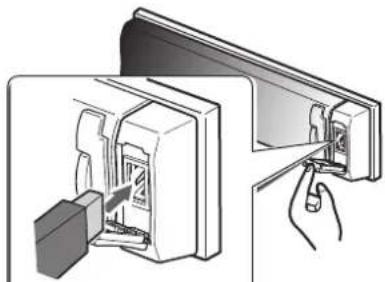
- Connect the USB memory/MTP device to the USB slot.
Playback will begin from the first file recorded on the device.
natural_image
Diagram showing a hand inserting a card into a device, with no visible text or symbolsConfirm the proper orientation of the connector before inserting.
* If the device is not recognized, press the [SRC] button to switch the source to the device.
* Always insert the device fully into the connector. Incomplete connections may cause the device not to be recognized.
* Depending on the number of tracks recorded, some amount of time may be required until all tracks are read into the unit.
* The order in which tracks are recorded may differ depending on the device connected (the actual playback order may not be the same as that indicated on your computer's display).
To listen to tracks on a connected USB memory/MTP device
- Press the [SRC] button to switch the source. When USB memory/MTP device is selected, playback (except DRM files) will begin from the location at which playback was previously stopped.
* When a USB memory/MTP device is connected the USB/MTP mode will be displayed.
* When a USB memory/MTP device is disconnected and then reconnected, playback will begin from the beginning of the USB memory/MTP device.
* When "MTP" mode is selected, AAC files on the MTP device cannot be played.
To stop play
- Press the [SRC] button and switch the function to a source other than the USB memory.
CAUTION
Do not remove the USB memory/MTP device when the USB/MTP mode is selected, since it may result in loss or damage to data on the USB memory/MTP device.
Always backup and save important data on your computer.
- Remove the USB memory/MTP device from the USB slot.
English
iPod Operations
This section describes operations when connected to an Apple iPod via the USB slot.
Notes:
- See the iPod Owner's Manual for details regarding operation conditions.
- The unit will not operate, or may operate improperly with unsupported versions.
- For a list of compatible Apple iPod unit with this model, please contact your Clarion dealer or www.clarion.com.
Connecting an iPod
When an iPod is connected to the USB slot, "Shuffle" set on the iPod will become as follows:
- "Shuffle (Albums)" play Random play
- “Shuffle (Songs)” play → All random play The iPod has two modes, the “Play mode” and the “iPod menu mode” for selecting tracks. Switch between these modes by pressing the [MENU] button.
Note:
- To connect iPod, please use the USB cable attached in iPod.
Select iPod mode
- Press the [SRC] button.
Playback will begin from the last file that was played on the iPod.
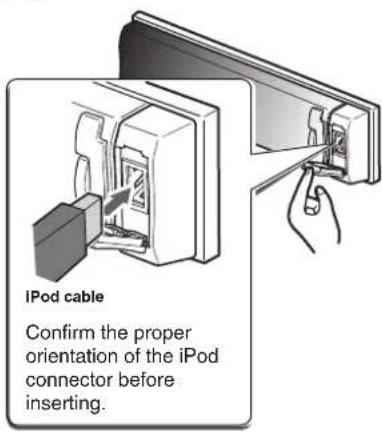
Note:
- The following operations in Play mode operate the same as in CD mode:
*Track selection: [SEEK PANEL]
*Fast-forward/fast-backward: [SEEK PANEL]
*Pause: [▶ ENT]
See "CD/MP3/WMA/AAC Operations" (page 22-26) for details.
Other various play functions (in Play mode)
Notes:
• These functions are not supported when in the iPod menu mode.
- The Random function set on the iPod remains the same after attachment/ detachment of the iPod.
- The Repeat function on the iPod will be changed when you connect/disconnect the iPod to the unit.
- Press the [OPTION] button.
- Repeat play
Play back one track repeatedly.
- Push the [SEEK PANEL] leftward or rightward to select "RPT".
- Press the [] button to perform repeat play.
● Random play
Play all albums within a selected category, in random order. (Corresponds to "Shuffle (Albums)" command on iPod.)
- Push the [SEEK PANEL] leftward or rightward to select "RDM".
- Press the [UP] or [DN] button to select "ALBUM", and then press the [▶]ENT button to perform random play.
● All random play
Play all tracks within a selected category, in random order. (Corresponds to "Shuffle (Songs)" command on iPod.)
- Push the [SEEK PANEL] leftward or rightward to select "RDM".
- Press the [UP] or [DN] button to select "ALL", and then press the [] but not to perform all random play.

natural_image
Pure geometric lines and shapes without any text, numbers, or symbolsiPod Operations
● To cancel the trick play
-
Push the [SEEK PANEL] leftward or rightward to select "RPT OFF" or "RDM OFF".
-
Press the [] button
Note:
- When the repeat play mode is canceled, after play all tracks within a selected category, playback will begin from the first track in the selected category.
- When playing the last track within a selected category in Random mode, if ACC is switched off then on again, playback will begin from a different track.
- Though the default setting of an iPod is "All Repeat", the indication on the mode status is not displayed.
Selecting category from the iPod menu
- Press the [MENU] button. The iPod menu categories will be displayed.
- Press the [UP] or [DN] button to switch between categories.
The iPod menu categories alternate in the following order:
"PLAYLIST" "ARTISTS" "ALBUMS" "SONGS" "GENRES" "COMPOSERS" "PLAYLIST" ...
Notes:
- The iPod menu mode can be canceled by pressing the [MENU] button.
- In iPod menu mode, if you push the [SEEK PANEL] or press the [UP] or [DN] button fast, playback may not be performed.
- Push the [SEEK PANEL] rightward to select the category.
- When the track name display is showing, push the [SEEK PANEL] rightward. Playback will begin from the first track in the selected category, and the iPod menu mode will be canceled.
* Subfolders may be displayed, depending on the category.
In this case, press the [UP] or [DN] button to switch between subfolders, then push the [SEEK PANEL] rightward to select the desired subfolder.
* When the track name display is showing, pushing the [SEEK PANEL] leftward will return to the currently playing folder name display.
- Press the [UP] or [DN] button to select a track within a category.
- Push the [SEEK PANEL] rightward to play the desired track.
About title display
This unit supports the display of title information transmitted from a connected iPod.
- Character code information is UTF-8; displayable characters include English alphanumerics, some symbols, and some umlaut characters.
- Unsupported characters will be replaced by asterisks (*).
natural_image
Pure geometric lines and crosshair symbols without any text or labelsEnglish
Bluetooth BB Operations
The CeNET Bluetooth interface adapter (BLT583) allows you to utilize your car's built-in audio system for wireless mobile phone handsfree communication.
The car stereo with BLT583 installed will be able to retrieve phonebook contacts, received call, dialed call, missed call, incoming and outgoing calls.
For details, consult the owner's Manual provided with your CeNET Bluetooth interface adapter.(Hereinafter, CeNET Bluetooth interface adapter is abbreviated as Bluetooth BB.)
Basic Operations
Select Bluetooth BB
- Press the [SRC] button to switch the source.
Making a call
There are 2 ways to make outgoing call.
● Direct Number Call
Outgoing call can be made by entering telephone numbers directly via the car stereo. Telephone number uses 0, 1, 2, 3, 4, 5, 6, 7, 8.
9, *, #, and +.
-
Press the [MENU] button to select "DIAL NUMBER".
-
Push the [SEEK PANEL] leftward or rightward to move the cursor.
-
Push the [UP] or [DN] button upward or downward to select the numbers.
-
Press and hold the [] button for 1 second or longer to call the mobile phone No.
* Press the "♩" button to end the call.
● Call from Phonebook
User can search the contact name in the phonebook and make call.
Alternatively, user can call from mobile phone.
- Press the [MENU] button to select "PHONE BOOK".
- Push the [SEEK PANEL] rightward to enter the contact name mode (In this case, use the [UP] or [DN] button to select the desired contact name).
-
When the contact name is displayed, push the [SEEK PANEL] leftward or rightward to select the contact name's phone number.
-
Press the [ ] button to call the mobile phone No. * Press the " ” button to end the call.
● Answering a call
- You can answer an incoming call by pressing any button.
* Press the "♩" button to reject an incoming call.
● Received/Dialled/Missed Call History
You can search any Received/Dialled/Missed Call History.
- Press the [MENU] button to select "RECEIVED CALL", "DIALLED CALL" or "MISSED CALL".
- Push the [SEEK PANEL] rightward to enter the contact name mode (In this case, use the [UP] or [DN] button to select the desired contact name).
- When the contact name is displayed, push the [SEEK PANEL] leftward or rightward to select the contact name's phone number.
- Press the [] button to call the mobile phone No.

natural_image
Pure geometric lines and shapes without any text, numbers, or symbolsBluetooth BB Operations
To change Bluetooth adjustment setting
- Press the [OPTION] button to switch to the Bluetooth adjustment selection display.
- Push the [SEEK PANEL] leftward or rightward to select the "item name". "PAIRING" <> "PAIRING SP" <> "SELECT" <> "DELETE" <> "MIC GAIN" <> "RING VOL" <> "AUTO ANS" <> "REFUSE" <> "AUTO CON" <> "PIN CODE" <> "ADDRESS" <> "VERSION" <> "PAIRING"...
- Push the [UP] or [DN] button upward or downward to select the "desired setting value".
* In the case of display blinking "ENT", you can press the [▶] button to the setting value.
* After completing settings, press the [DISP] button to return to the previous mode.
● PAIRING
This option is used to perform Bluetooth pairing with the mobile phone.
Up to a maximum of 5 devices can be paired.
2-1. Select "PAIRING".
3-1. Press the []butout
4-1. Push the [UP] or [DN] button upward or downward to select "SEARCH" or "WAIT".
5-1. Press and hold the [ ] button for 1 second or longer.
"SEARCH" mode: User can search the Bluetooth mobile phone.
"WAIT" mode: Alternatively User can search the Bluetooth BB (BLT583) via the mobile phone.
6-1. When you select "SEARCH" mode. Push the [UP] or [DN] button upward or downward to select the desired Bluetooth mobile phone.
7-1. Press and hold the [] button for 1 second or longer to pair.
● PAIRING SP
This is used for pairing special Bluetooth device which cannot carry out pairing in usual pairing mode.
Please use this pairing mode if your Bluetooth device is listed in the menu.
2-1. Select "PAIRING SP".
3-1. Press the [ ] button the special Bluetooth device is listed in the display.
4-1. Push the [SEEK PANEL] leftward or rightward to select the desired special Bluetooth device.
5-1. Push the [UP] or [DN] button upward or downward to select "SEARCH" or "WAIT".
* The next operation are the same as for "PAIRING" mode.
- SELECT
This is a setting for user to select one of the paired mobile phones.
2-1. Select "SELECT".
3-1. Press the [ ] button then the paired mobile phones appears in the display.
4-1. Push the [UP] or [DN] button upward or downward to choose one of the 5 devices.
5-1. Press and hold the [P] but for 1 second or longer to connect.
Connected device will be able to use all the functionalities provided.
- DELETE
This is a setting for user to delete one of the paired device from the list.
2-1. Select "DELETE".
3-1. Press the [ ] button then the paired mobile phones appears in the display.
4-1. Push the [UP] or [DN] button upward or downward to choose one of the 5 devices.
5-1. Press and hold the [ ] button for 1 second or longer to delete the paired device.
Note:
- Deleted paired device will not automatically rearrange in the paired device list.
natural_image
Pure geometric lines and crosshair symbols without any text or labelsEnglish
Bluetooth BB Operations
MIC GAIN
MIC gain can be set by each paired mobile phone device. Each registered device has unique MIC gain setting.
2-1. Select "MIC GAIN".
3-1. Push the [UP] or [DN] button upward or downward to change the MIC gain setting.
● RING VOL
This option is used to change the ringing volume.
2-1. Select "RING VOL".
3-1. Push the [UP] or [DN] button upward or downward to change the ringing volume.
● AUTO ANSWER
This is a setting to determine whether any incoming call will be automatically or manually answered.
* The factory default setting is "ON".
2-1. Select "AUTO ANS".
3-1. Push the [UP] or [DN] button upward or downward to select "ON" or "OFF".
ON: Any incoming call is automatically answered in 4 seconds.
OFF: User needs to manually answer the call.
● REFUSE
This function allows all incoming calls to be refused.
* The factory default setting is "OFF".
2-1. Select "REFUSE".
3-1. Push the [UP] or [DN] button upward or downward to select "ON" or "OFF".
ON: All incoming calls are automatically refused.
OFF: Incoming call notification enabled.
● AUTO CON
This function allows the Bluetooth BB to be connected automatically with previously connected device. Connection can be established at any source mode.
* The factory default setting is "ON".
2-1. Select "AUTO CON"
3-1. Push the [UP] or [DN] button upward or downward to select "ON" or "OFF".
ON: Automatic connection is enabled.
OFF: Automatic connection is disabled.
● PIN CODE
This PIN code is used during pairing mode. A maximum of 10 digits can be changed through the car stereo.
* The factory default PIN code is "1234".
2-1. Select "PIN CODE".
3-1. Press the [] button
4-1. Press and hold the [MENU] button to clear the old PIN code.
5-1. Push the [SEEK PANEL] leftward or rightward to remove the cursor.
6-1. Push the [UP] or [DN] button upward or downward to select the desired digits.
7-1. Press and hold the [ ] button for 2 seconds or longer to store in memory.
ADDRESS
This will hold the unique Bluetooth BB address.
The address is 12 figures.
2-1. Select "ADDRESS".
The Bluetooth BB address 6 figures appears in the display.
3-1. Push the [UP] or [DN] button upward or downward to display.
- VERSION
This will display the software version of the Bluetooth BB.
2-1. Select "VERSION".
The Bluetooth BB version appears in the display.

natural_image
Pure geometric diagram with intersecting lines and circles, no text or symbols presentCD Changer Operations
Note:
- The following operations are the same as for CD mode:
*Pause
*Track selection
*Fast-forward/fast-backward
*Scan play
*Repeat play
*Random play
See "CD/MP3/WMA/AAC Operations" (page 22-26) for details.
CD changer functions
When an optional CD changer is connected through the CeNET cable, this unit controls all CD changer functions. This unit can control a total of 2 changers.
Press the [SRC] button and select the CD changer mode to start play. If 2 CD changers are connected, press the [SRC] button to select the CD changer for play.
* If "NO MAG" appears in the display, insert the magazine into the CD changer. "DISC CHECK" appears in the display while the player loads (checks) the magazine.
* If "NO DISC" appears in the display, eject the magazine and insert discs into each slot. Then, reinsert the magazine back into the CD changer.
Note:
- Some CDs recorded in CD-R/CD-RW mode may not be usable.
CAUTION
CD-ROM discs cannot be played from every CD changer, it's depended on the model.
Displaying CD titles
This unit can display title data for CD-text CDs and user titles input with this unit.
- Press the [D] button to change the title display.
Procedure to scroll a title
Set "AUTO SCR" to "ON" or "OFF".
(The factory default setting is "ON". Refer to the subsection "Setting the method for title scroll" in section "Operations Common to Each Mode".)
- When set to "ON"
The title is automatically kept scrolling.
● When set to "OFF"
To scroll just 1 time.
Note:
- User title can't scroll.
When you want to see the title again, in the title mode, press and hold the [D] button for 1 second or longer to scroll the title.
Selecting a CD
- Press the [UP] or [DN] button to select a desired disc in the magazine.
* If a CD is not loaded in a slot of magazine, "NO DISC" appears in the display
Other various play functions
● Disc scan play
Disc scan play locates and plays the first 10 seconds of the first track on each disc in the currently selected CD changer. This function continues automatically until it is cancelled.
* Disc scan play is useful when you want to select a desired CD.
- Press the [OPTION] button.
- Push the [SEEK PANEL] leftward or rightward to select "SCN".
- Press the [UP] or [DN] button to select "ALL", and then press the [ ] but "ALL SCAN" appears in the display and disc scan play starts.
natural_image
Pure geometric lines and crosshair symbols without any text or labelsEnglish
CD Changer Operations
● Disc repeat play
After all the tracks on the current disc have been played, disc repeat play automatically replays the current disc over from the first track. This function continues automatically until it is cancelled.
- Press the [OPTION] button.
- Push the [SEEK PANEL] leftward or rightward to select "RPT".
- Press the [UP] or [DN] button to select "ALL", and then press the [PNTENT "ALL RPT" appears in the display and disc repeat play starts.
● Disc random play
The disc random play selects and plays individual tracks or discs automatically in no particular order. This function continues automatically until it is cancelled.
- Press the [OPTION] button.
- Push the [SEEK PANEL] leftward or rightward to select "RDM".
- Press the [UP] or [DN] button to select "ALL", and then press the [ ] but not "ALL RDM" appears in the display and disc random play starts.
● To cancel the trick play
- Press the [OPTION] button.
- Push the [SEEK PANEL] leftward or rightward to select "TRICK PLAY OFF".
- Press the [] button to cancel the trick play.

natural_image
Pure geometric lines and shapes without any text, numbers, or symbols- TROUBLESHOOTING
| Problem Cause Measure | |||
| General | Power does not turn on.(No sound is produced.) | Fuse is blown. Replace with a | use of the same amperage. If the fuse blows again, consult your store of purchase. |
| Incorrect wiring. Consult your | store of purchase. | ||
| No sound output when operating the unit with amplifiers or power antenna attached. | Power antenna lead is shorted to ground or excessive current is required for remote-on the amplifiers or power antenna. | 1. Turn the unit off.2. Remove all wires attached to the power antenna lead. Check each wire for a possible short to ground using an ohm meter.3. Turn the unit back on.4. Reconnect each amplifier remote wire to the power antenna lead one by one. If the amplifiers turn off before all wires are attached, use an external relay to provide remote-on voltage (excessive current required). | |
| Nothing happens when buttons are pressed.Display is not accurate. | The microprocessor has malfunctioned due to noise, etc. | Turn off the power, then press the [OPEN] button and remove the DCP.Press the reset button for about 2 seconds with a thin rod. 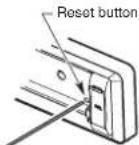 | |
| DCP or main unit connectors are dirty. | Wipe the dirt off with a soft cloth moistened with cleaning alcohol. | ||
| No sound heard The speaker protection circuit is operating. | 1. Turn down sound volume. Function can also be restored by turning the power off and on again. (Speaker volume is reduced automatically when the speaker protection circuit operates).2. If the sound is muted again, consult our service department. | ||
| CD/MP3/WMA/AAC | No sound heard MP3/WMA/AAC files are absent in a disc. | Write MP3/WMA/AAC files onto the disc properly. | |
| Files are not recognized as an MP3/WMA/AAC file. | |||
| File system is not correct. Use | |||
| Sound skips or is noisy. | Compact disc is dirty. Clean the compact disc with a soft cloth. | ||
| Compact disc is heavily scratched or warped. | Replace with a compact disc with no scratches. | ||
| Sound is cut or skipped. Noise is generated or noise is mixed with sound. | MP3/WMA/AAC files are not encoded properly. | Use MP3/WMA/AAC files encoded properly. | |
| Sound is bad directly after power is turned on. | Water droplets may form on the internal lens when the car is parked in a humid place. | Let dry for about 1 hour with the power on. | |
| Wrong filename File system is not correct. Use ISO9660 level 1, 2 or JOLIET or Romeo or APPLE ISO file system. | |||
English
| Problem Cause Measure | |||
| USB/MTP/iPod | No sound heard The device contains no MP3/WMA/AAC files. | Record MP3/WMA/AAC files properly to the device. | |
| The files are not proper MP3/WMA/AAC format. | |||
| Connectors are loose. Disconnect the device and reconnect securely. | |||
| Sound is interrupted or has noise. | The MP3/WMA/AAC files are improperly encoded. | Use only properly encoded MP3/WMA/AAC files. | |
| The device isn't recognized. | The device is damaged. Disconnect the device and reconnect. If the device is still not recognized, try replacing with a different device. | ||
| Connectors are loose. | |||
| According to the state of operation on the device, the communication fault is caused. | Disconnect the device and reconnect. | ||
| Can't insert the device. | The device has been inserted improperly. | Try reversing the connection direction of the device (usually the brand name surface should be facing left). | |
| The connector is broken. Repace with a new device. | |||


9. ERROR DISPLAYS
If an error occurs, one of the following displays is displayed.
Take the measures described below to eliminate the problem.
| Error Display Cause Measure | |||
| CD/MP3/WMA/AAC | ERROR 2 A CD is | caught inside the CD deck and is not ejected. | This is a failure of CD deck's mechanism and consult your store of purchase. |
| ERROR 3 A CD can | not be played due to scratches, etc. | Replace with a non-scratched, non-warped-disc. | |
| ERROR 6 A CD is | loaded upside-down inside the CD deck and does not play. | Eject the disc then reload it properly. | |
| CD changer | ERROR 2 A CD inside the CD changer is not loaded. | This is a failure of CD changer's mechanism and consult your store of purchase. | |
| ERROR 3 A CD inside the CD changer cannot be played due to scratches, etc. | Replace with a non-scratched, non-warped disc. | ||
| ERROR 6 A CD inside the CD changer cannot be played because it is loaded upside-down. | Eject the disc then reload it properly. | ||
| USB/MTP/iPod | ERROR 2 The files are not proper MP3/WMA/AAC format. | Use only properly encoded MP3/WMA/AAC files. | |
| ERROR 3 (USB/MTPmode) | The MP3/WMA/AAC files are improperly encoded. | Use only properly encoded MP3/WMA/AAC files. | |
| ERROR 3 (iPod mode) | The iPod contains no audio files. | Insert an iPod containing audio files. | |
| ERROR 5 The connected devices are not recognized. | Disconnect the device and reconnect. | ||
| BUS-PWR Overcurrent detection. Disconnect the devices and reconnect. If the devices are still not recognized, try replacing with a different devices. | |||
| HUB The connected devices are not recognized. | Disconnect the devices and reconnect. If the devices are still not recognized, try replacing with a different devices. | ||
If an error display other than the ones described above appears, press the reset button. If the problem persists, turn off the power and consult your store of purchase.
natural_image
Pure geometric lines and crosshair symbols without any text or labels
English
10.SPECIFICATIONS
Radio section
Tuning System: PLL synthesizer tuner Receiving Frequencies:
FM : 87.5 to 108 MHz (0.05 MHz steps)
MW : 531 to 1602 kHz (9 kHz steps)
LW : 153 to 279 kHz (3 kHz steps)
CD player section
System: Compact disc digital audio system
Frequency Response: 5 Hz to 20 kHz (±1 dB)
Signal to Noise Ratio: 100 dB (1 kHz)
Dynamic Range: 95 dB (1 kHz)
Distortion: 0.01%
General
Output Power: 4 × 31 W (DIN 45324, +B=14.4V)
Power Supply Voltage:
14.4 V DC (10.8 to 15.6 V allowable), negative ground
Power Consumption: Less than 15 A
Speaker Impedance: 4 Ω (4 to 8 Ω allowable)
Weight:
Main unit: 1.6 kg
Remote control unit: 40 g (including battery)
Dimensions:
- Specifications and design are subject to change without notice for further improvement.
11. OTHERS
WMDRM 10 for devices
- This product is protected by certain intellectual property rights of Microsoft. Use or distribution of such technology outside of this product is prohibited without a license from Microsoft.
- Content owners use Windows Media digital rights management technology (WMDRM) to protect their intellectual property, including copyrights. This device uses WMDRM software to access WMDRM-protected content. If the WMDRM software fails to protect the content, content owners may ask Microsoft to revoke the software's ability to use WMDRM to play or copy protected content. Revocation does not affect unprotected content. When you download licenses for protected content, you agree that Microsoft may include a revocation list with the licenses. Content owners may require you to upgrade WMDRM to access their content. If you decline an upgrade, you will not be able to access content that requires the upgrade.
42
OXZ5B8RUSB

natural_image
Pure geometric lines and shapes without any text, numbers, or symbolsnatural_image
Pure geometric lines and crosshair symbols without any text or labels1. CARACTÉRISTIQUES





Français
natural_image
Pure geometric lines and crosshair symbols without any text or labels
natural_image
Pure electrical circuit lines without any symbolsnatural_image
Pure geometric diagram with intersecting lines and circles, no text or symbols present3. LES COMMANDES
Ouvrez la PANNEAU INCLINABLE
![[▲] (EJECT) [CD SLOT] [USB SLOT]](/content/2026/02/375242/images/362acaf284b3f7f77342c5e9690d54901b933146c6d036288b20a6f597075c86.jpg)
natural_image
Pure geometric lines and symbols without any text, numbers, or readable characters46DXZ5B8RUSB
natural_image
Pure geometric diagram with intersecting lines and circular shapes (no text or symbols)
natural_image
Pure electrical circuit lines without any symbols
natural_image
Pure geometric diagram with intersecting lines and circles, no text or symbols presentnatural_image
Pure geometric lines and crosshair symbols without any text or labels
![Touche [OPEN] DCP](/content/2026/02/375242/images/50d9e1ef5c8a55ac568c50187f3c4effe6ba8f0abb3f293f4534b32ce1c06f90.jpg)
natural_image
Pure electrical circuit lines without any symbolsnatural_image
Pure geometric diagram with intersecting lines and circles, no text or symbols present5. TÉLÉCOMMANDE
- Modes partagés
Touche [SRC]
natural_image
Pure geometric lines and circular shapes without any text, numbers, or symbols![CLARION DXZ588RUSB - Touche [SRC] - 1](/content/2026/02/375242/images/f53fb25049e6b8ff33f7cb1e7d89ec8d7e1f91b2493ea4eeabc4d80ff837a9c1.jpg)
![CLARION DXZ588RUSB - Touche [SRC] - 2](/content/2026/02/375242/images/2e96b8d32804100871539f175649692b083a4da61556a3ea15ca03a109f8ef73.jpg)
natural_image
Pure geometric diagram with intersecting lines and circular shapes, no text or symbols presentnatural_image
Pure geometric lines and crosshair symbols without any text or labelsInsertion de la pile
natural_image
Technical line drawing of a mechanical component with a labeled part (no text or symbols present)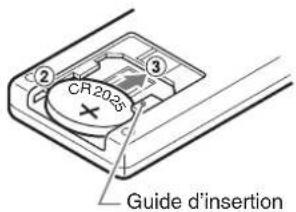
Français

natural_image
Pure geometric diagram with intersecting lines and circles, no text or symbols present
natural_image
Pure electrical circuit lines without any symbols
natural_image
Pure geometric diagram with intersecting lines and circles, no text or symbols present6. FONCTIONNEMENT
Remarque :
natural_image
Pure geometric lines and crosshair symbols without any text or labels
natural_image
Pure geometric diagram with intersecting lines and circles, no text or symbols present"S-W VOL" <> "DZE" <> "BASS" <> "TREBLE" <> "S RESTOR" <> "HPF" <> "S-W LPF" <> "BALANCE" <> "FADER"
natural_image
Pure electrical circuit lines without any symbolsline
| Frequency (Hz) | Niveau (dB) | | -------------- | ----------- | | 0 | 0 | | 3 | Peak | | 5 | 0 | | 10 | 0 | | 20 | 0 | | 30 | 0 | | 40 | 0 | | 50 | 0 | | 60 | 0 | | 70 | 0 | | 80 | 0 | | 90 | 0 | | 100 | 0 |● Courbe Q
natural_image
Pure geometric diagram with intersecting lines and a central circle, no text or symbols presentnatural_image
Pure geometric lines and crosshair symbols without any text or labels
natural_image
Pure geometric diagram with intersecting lines and circles, no text or symbols presentnatural_image
Pure geometric lines and shapes without any text, numbers, or symbolsnatural_image
Pure geometric lines and shapes without any text, numbers, or symbolsnatural_image
Pure geometric lines and shapes without any text, numbers, or symbolsnatural_image
Pure geometric diagram with intersecting lines and circles, no text or symbols presentFrançais
● Disque MP3/WMA/AAC
natural_image
Pure geometric lines and shapes without any text, numbers, or symbolsnatural_image
Pure geometric lines and crosshair symbols without any text or labels
natural_image
Pure geometric lines and shapes without any text, numbers, or symbols
natural_image
Pure technical diagram with geometric shapes and lines, no readable text or symbols
natural_image
Pure geometric diagram with intersecting lines and circles, no text or symbols presentnatural_image
Pure geometric lines and crosshair symbols without any text or labels
7. FONCTIONNEMENT DES ACCESSOIRES
natural_image
Pure geometric lines and shapes without any text, numbers, or symbolsnatural_image
Pure technical drawing lines without any text, numbers, or symbols
natural_image
Pure geometric diagram with intersecting lines and circles, no text or symbols presentFonctionnement iPod
- Lecture "Shuffle Albums)" → Lecture aléatoire
- Lecture "Shuffle (Morceaux)" → Lecture aléatoire totale
natural_image
Pure geometric lines and shapes without any text, numbers, or symbols
natural_image
Pure geometric diagram with intersecting lines and circles, no text or symbols presentFonctionnement iPod
natural_image
Pure geometric lines and crosshair symbols without any text or labels
natural_image
Pure technical drawing lines without any text, numbers, or symbols
natural_image
Pure geometric diagram with intersecting lines and circles, no text or symbols presentnatural_image
Pure geometric lines and shapes without any text, numbers, or symbolsnatural_image
Pure geometric diagram with intersecting lines and circles, no text or symbols present
natural_image
Pure technical drawing lines without any text, numbers, or symbols
natural_image
Pure geometric diagram with intersecting lines and circles, no text or symbols presentnatural_image
Pure geometric lines and crosshair symbols without any text or labels

natural_image
Pure geometric diagram with intersecting lines and circles, no text or symbols presentnatural_image
Pure geometric diagram with intersecting lines and a central circle, no text or symbols present8. EN CAS DE DIFFICULTÉ
natural_image
Pure electrical circuit lines without any symbols
natural_image
Pure geometric diagram with intersecting lines and circles, no text or symbols present10.FICHE TECHNIQUE
Section Radio
natural_image
Pure electrical circuit lines without any symbols
natural_image
Pure geometric diagram with intersecting lines and a circular pattern (no text or symbols)natural_image
Pure geometric diagram with intersecting lines and circles, no text or symbols present
natural_image
Pure geometric diagram with intersecting lines and circles, no text or symbols presentKlappbildschirm
natural_image
Pure geometric lines and crosshair symbols without any text or labels
natural_image
Pure electrical circuit lines without any symbolsnatural_image
Pure geometric diagram with intersecting lines and circles, no text or symbols present3. BEDIENELEMENTE
![[▲] (EJECT) [CD SLOT] [USB SLOT]](/content/2026/02/375242/images/ca055e82b50141dba371e022300d52aa495979ceb8eae5b3c27df3115f9e95b1.jpg)
[OPEN]-Taste
natural_image
Pure geometric lines and shapes without any text, numbers, or symbols![CLARION DXZ588RUSB - [OPEN]-Taste - 1](/content/2026/02/375242/images/2e08361bc92690b818839737141f4886b821c7463ee7a5d931fc5c7749954eb4.jpg)
![CLARION DXZ588RUSB - [OPEN]-Taste - 2](/content/2026/02/375242/images/be5dc8f6825e29ec2e60206bd4d5b98cc859025bae08c179532819778c200df0.jpg)
natural_image
Pure geometric diagram with intersecting lines and circular shapes, no text or symbols present![CLARION DXZ588RUSB - [OPEN]-Taste - 3](/content/2026/02/375242/images/c2b6b7e179cf375b93eede04f6b4411bb332ed2e5151522528f054b4aa0e502d.jpg)
natural_image
Pure electrical circuit lines without any symbols![CLARION DXZ588RUSB - [OPEN]-Taste - 4](/content/2026/02/375242/images/e1f3f08b2385e79a6cc7c2edfbb46528880923c256294b5e4660dfb7065c5c33.jpg)
natural_image
Pure geometric diagram with intersecting lines and circles, no text or symbols presentnatural_image
Pure geometric lines and crosshair symbols without any text or labels![CLARION DXZ588RUSB - [OPEN]-Taste - 5](/content/2026/02/375242/images/2cb1480f6a6c943dc9ac131c1a1bfaa1ab85d5854ce04ee5fa1491b41f2ebf08.jpg)
![CLARION DXZ588RUSB - [OPEN]-Taste - 6](/content/2026/02/375242/images/2711fddfc0b4e5d3e072f3a4d2dabc591c46840435c32a55c5c05cb43447091e.jpg)
natural_image
Pure electrical circuit lines without any symbols![CLARION DXZ588RUSB - [OPEN]-Taste - 7](/content/2026/02/375242/images/017cb164e4e12e11d0e2c49f9b92c6e5d30740f12604bfa3e9df48d308871a17.jpg)
natural_image
Pure geometric diagram with intersecting lines and circles, no text or symbols present4. ABNEHMBARE BEDIENKONSOLE (DCP)
▲ VORSICHT
natural_image
Pure electrical circuit lines without any symbolsnatural_image
Pure geometric diagram with intersecting lines and circles, no text or symbols present5. FERNBEDIENUNG
natural_image
Pure geometric lines and shapes without any text, numbers, or symbols90DXZ5B8RUSB
natural_image
Pure geometric lines and shapes without any text, numbers, or symbolsnatural_image
Pure geometric lines and crosshair symbols without any text or labelsnatural_image
Diagram of a device with a labeled component (no text or symbols present)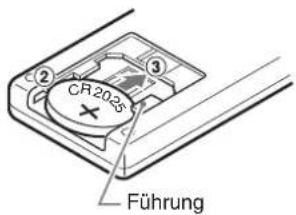

natural_image
Pure geometric lines and shapes without any text, numbers, or symbols
natural_image
Pure electrical circuit lines without any symbols
natural_image
Pure geometric diagram with intersecting lines and circles, no text or symbols present6. BEDIENUNG
Hinweis:
natural_image
Pure geometric lines and crosshair symbols without any text or labels
natural_image
Pure geometric lines and shapes without any text, numbers, or symbolsnatural_image
Pure geometric lines and shapes without any text, numbers, or symbolsnatural_image
Pure geometric lines and shapes without any text, numbers, or symbolsnatural_image
Pure geometric diagram with intersecting lines and circles, no text or symbols present
natural_image
Pure electrical circuit lines without any symbols
natural_image
Pure geometric diagram with intersecting lines and circles, no text or symbols presentnatural_image
Pure geometric lines and crosshair symbols without any text or labels
natural_image
Pure geometric lines and crosshair symbols without any text or labelsnatural_image
Pure geometric lines and shapes without any text, numbers, or symbolsnatural_image
Pure geometric lines and crosshair symbols without any text or labelsnatural_image
Pure geometric lines and crosshair symbols without any text or labels
natural_image
Pure geometric lines and shapes without any text, numbers, or symbolsnatural_image
Pure electrical circuit lines without any symbols
natural_image
Pure geometric diagram with intersecting lines and circles, no text or symbols presentnatural_image
Pure geometric lines and shapes without any text, numbers, or symbolsnatural_image
Pure geometric lines and crosshair symbols without any text or labelsnatural_image
Pure geometric diagram with intersecting lines and circles, no text or symbols presentnatural_image
Pure electrical circuit lines without any symbols
natural_image
Pure geometric diagram with intersecting lines and circles, no text or symbols present10.TECHNISCHE DATEN
Radioteil
MW : 531–1602 kHz (9-kHz-Raster)
LW : 153–279 kHz (3-kHz-Raster)
CD-Playerteil
System: Compact-Disc-Digitalaudio-System
natural_image
Pure geometric diagram with intersecting lines and a central circle, no text or symbols presentnatural_image
Pure geometric lines and crosshair symbols without any text or labels
1. CARATTERISTICHE






natural_image
Pure electrical circuit lines without any symbols
natural_image
Pure geometric lines and shapes without any text, numbers, or symbolsnatural_image
Pure electrical circuit lines without any symbolsnatural_image
Pure geometric diagram with intersecting lines and circles, no text or symbols present3. COMANDI
Italiano
![[▲] (EJECT) [CD SLOT] [USB SLOT]](/content/2026/02/375242/images/6ac2214a7bbcbec1485b256cf0ceed0c37d237642828283b6419f4004af86832.jpg)
natural_image
Pure geometric lines and shapes without any text, numbers, or symbols128DXZ588RUSB
natural_image
Pure geometric lines and shapes without any text, numbers, or symbolsPRECAUZIONE
natural_image
Pure electrical circuit lines without any symbolsnatural_image
Pure geometric diagram with intersecting lines and circles, no text or symbols present5. TELECOMANDO
natural_image
Pure geometric lines and shapes without any text, numbers, or symbols
natural_image
Pure geometric lines and shapes without any text, numbers, or symbolsnatural_image
Pure geometric lines and crosshair symbols without any text or labels
natural_image
Technical line drawing of a mechanical component with mounting holes and a labeled part (no text or symbols present)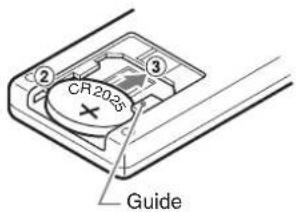
Italiano

natural_image
Pure geometric lines and shapes without any text, numbers, or symbols6. OPERAZIONI
Nota:
natural_image
Pure geometric lines and crosshair symbols without any text or labels
Operazioni di base
"DZE OFF" <> "DZE 1" <> "DZE 2" <> "DZE 3"
line
| Frequency (F) | Gain (dB) | | ------------- | --------- | | Peak | 3dB |

natural_image
Pure geometric lines and shapes without any text, numbers, or symbolsOperazioni di base
● Curva Q
natural_image
Pure geometric lines and crosshair symbols without any text or labels
Operazioni di base
natural_image
Pure geometric lines and shapes without any text, numbers, or symbolsOperazioni radio
Ascolto della radio
natural_image
Pure geometric lines and crosshair symbols without any text or labels
Operazioni radio
natural_image
Pure geometric lines and shapes without any text, numbers, or symbolsnatural_image
Pure geometric lines and crosshair symbols without any text or labels
natural_image
Pure geometric lines and shapes without any text, numbers, or symbolsnatural_image
Pure geometric lines and shapes without any text, numbers, or symbolsOperazioni CD/MP3/WMA/ACC
● Formato logico (File system)
natural_image
Pure geometric diagram with intersecting lines and circular shapes (no text or symbols)
Operazioni CD/MP3/WMA/ACC
natural_image
Pure geometric lines and crosshair symbols without any text or labels
Operazioni CD/MP3/WMA/ACC
natural_image
Pure geometric diagram with intersecting lines and circles, no text or symbols presentnatural_image
Pure geometric lines and crosshair symbols without any text or labels
natural_image
Pure geometric lines and shapes without any text, numbers, or symbolsnatural_image
Pure geometric diagram with intersecting lines and circles, no text or symbols presentOperazioni iPod
natural_image
Pure geometric lines and crosshair symbols without any text or labelsnatural_image
Pure geometric lines and shapes without any text, numbers, or symbolsnatural_image
Pure geometric lines and shapes without any text, numbers, or symbolsnatural_image
Pure geometric lines and crosshair symbols without any text or labels
natural_image
Pure geometric lines and shapes without any text, numbers, or symbols8. DIAGNOSTICA
WMDRM 10 for Devices
natural_image
Pure geometric lines and shapes without any text, numbers, or symbolsnatural_image
Pure electrical circuit lines without any symbols
natural_image
Pure geometric lines and shapes without any text, numbers, or symbolsnatural_image
Pure geometric lines and crosshair symbols without any text or labels
natural_image
Pure electrical circuit lines without any symbolsnatural_image
Pure geometric diagram with intersecting lines and circles, no text or symbols present3. BEDIENINGSORGANEN
natural_image
Pure geometric diagram with intersecting lines and shapes, no text or symbols present[MENU] toets
natural_image
Pure geometric lines and crosshair symbols without any text or labels![CLARION DXZ588RUSB - [MENU] toets - 1](/content/2026/02/375242/images/b9cd90d570859d0f2b207e298802cf752ba0f92362df7c0c7a4b94b49ff20637.jpg)
![CLARION DXZ588RUSB - [MENU] toets - 2](/content/2026/02/375242/images/bcaec5d2ac57ff90544a5ec866519a0c3d5eed650a6a1cead315d569a17e719c.jpg)
![CLARION DXZ588RUSB - [MENU] toets - 3](/content/2026/02/375242/images/883f0ac5fd95974f78e512ae57a7d474f5c14473e39b5153bcf937134cb6d67c.jpg)
natural_image
Pure electrical circuit lines without any symbols![CLARION DXZ588RUSB - [MENU] toets - 4](/content/2026/02/375242/images/de331f62b5b630eb4bf76108de87b15c1b3ddc4d3e205c11ffab5c9bbeff987d.jpg)
natural_image
Pure geometric diagram with intersecting lines and circles, no text or symbols present4. AFNEEMBAAR VOORPANEEL (DCP)
LET OP
natural_image
Pure electrical circuit lines without any symbolsnatural_image
Pure geometric diagram with intersecting lines and circles, no text or symbols present5. AFSTANDSBEDIENING
natural_image
Pure geometric lines and shapes without any text, numbers, or symbols
natural_image
Pure geometric lines and shapes without any text, numbers, or symbolsnatural_image
Pure geometric lines and crosshair symbols without any text or labels
natural_image
Pure geometric diagram with intersecting lines and circles, no text or symbols presentnatural_image
Technical line drawing of a mechanical component with a labeled part (no text or symbols present)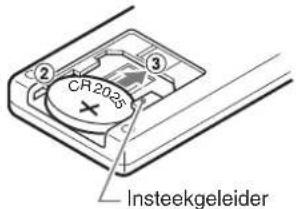
natural_image
Pure geometric lines and shapes without any text, numbers, or symbols
natural_image
Pure geometric diagram with intersecting lines and circles, no text or symbols present6. BEDIENING
Opmerking:
natural_image
Pure geometric lines and crosshair symbols without any text or labels
natural_image
Pure geometric diagram with intersecting lines and circles, no text or symbols presentBasisbediening
natural_image
Pure geometric lines and shapes without any text, numbers, or symbolsBasisbediening
line
| Frequency Range | Label | | --------------------- | ----------------- | | 0 | Niveau (dB) | | 3 | Q-curve (Q) | | 3 | 3dB | | 0 | Versterking (G) | | 0 | Frequentie-curve |Q-curve
line
| Curve | Value | |-------|-------| | Q-curve | 20 | | Q-curve | 1 |natural_image
Pure geometric lines and crosshair symbols without any text or labels
Basisbediening
natural_image
Pure geometric lines and shapes without any text, numbers, or symbols
natural_image
Pure geometric lines and shapes without any text, numbers, or symbolsnatural_image
Pure geometric lines and crosshair symbols without any text or labels
natural_image
Pure geometric lines and shapes without any text, numbers, or symbols
natural_image
Pure geometric lines and shapes without any text, numbers, or symbolsnatural_image
Pure geometric lines and crosshair symbols without any text or labels
natural_image
Pure electrical circuit lines without any symbols
natural_image
Pure geometric diagram with intersecting lines and circles, no text or symbols presentnatural_image
Pure technical drawing lines without any text, numbers, or symbols
natural_image
Pure geometric diagram with intersecting lines and circles, no text or symbols presentnatural_image
Pure geometric lines and crosshair symbols without any text or labels
natural_image
Pure technical drawing lines without any text, numbers, or symbols
natural_image
Pure geometric diagram with intersecting lines and circles, no text or symbols presentnatural_image
Pure geometric lines and symbols without any text, numbers, or readable characters186DXZ588RUSB
natural_image
Pure geometric diagram with intersecting lines and a central circle, no text or symbols present- Introweergave
natural_image
Pure geometric lines and crosshair symbols without any text or labels
natural_image
Pure geometric lines and shapes without any text, numbers, or symbols2-1. Kies "SCRN SVR".
natural_image
Pure geometric lines and crosshair symbols without any text or labels
natural_image
Pure electrical circuit lines without any symbols
natural_image
Pure geometric diagram with intersecting lines and a central circle, no text or symbols present
natural_image
Pure technical drawing lines without any readable text, numbers, or symbols
natural_image
Pure geometric diagram with intersecting lines and circles, no text or symbols presentnatural_image
Pure geometric lines and crosshair symbols without any text or labels
7. BEDIENING VAN ACCESSOIRES
natural_image
Pure geometric lines and symbols without any text, numbers, or readable characters192DXZ588RUSB
natural_image
Pure geometric lines and shapes without any text, numbers, or symbols
natural_image
Pure electrical circuit lines without any symbols
natural_image
Pure geometric diagram with intersecting lines and circles, no text or symbols presentnatural_image
Pure geometric lines and shapes without any text, numbers, or symbols
"PLAYLIST" <> "ARTISTS" <> "ALBUMS" <> "SONGS" <> "GENRES" <> "COMPOSERS" <> "PLAYLIST" ...
Opmerkingen:
natural_image
Pure geometric lines and crosshair symbols without any text or labels
natural_image
Pure electrical circuit lines without any symbols
natural_image
Pure geometric lines and shapes without any text, numbers, or symbols
Zet "AUTO SCR" op "ON" of "OFF".
● Als "ON" is ingesteld
● Als "OFF" is ingesteld
natural_image
Pure geometric lines and crosshair symbols without any text or labels
natural_image
Pure technical drawing lines without any text, numbers, or symbols
natural_image
Pure geometric diagram with intersecting lines and circles, no text or symbols presentnatural_image
Pure geometric lines and symbols without any text, numbers, or readable markings
natural_image
Pure geometric diagram with intersecting lines and circular shapes, no text or symbols present9. FOUTMELDINGEN
natural_image
Pure electrical circuit lines without any symbols
natural_image
Pure geometric diagram with intersecting lines and circles, no text or symbols presentnatural_image
Pure geometric diagram with intersecting lines and circles, no text or symbols presentnatural_image
Pure geometric lines and crosshair symbols without any text or labels
1. CARACTERÍSTICAS






natural_image
Pure geometric diagram with intersecting lines and circles, no text or symbols present
natural_image
Pure technical drawing lines without any text, numbers, or symbols
natural_image
Pure geometric diagram with intersecting lines and circles, no text or symbols presentnatural_image
Pure geometric lines and crosshair symbols without any text or labels
natural_image
Pure electrical circuit lines without any symbolsnatural_image
Pure geometric diagram with intersecting lines and circles, no text or symbols present3. CONTROLES
Apertura del PANEL ABATIBLE
![[▲] (EJECT) [CD SLOT] [USB SLOT]](/content/2026/02/375242/images/f2e2346f61cde3afec669a0e6591edf2f62a4f940efa5adff7a8f58116e2fa50.jpg)
natural_image
Pure geometric lines and circular shapes without any text, numbers, or symbols208DXZ58BRUSB
natural_image
Pure geometric diagram with intersecting lines and circular shapes, no text or symbols presentnatural_image
Pure geometric lines and crosshair symbols without any text or labels
M-BEX "ST" MANU AF REG TA TP PTY
natural_image
Pure electrical circuit lines without any symbols
natural_image
Pure geometric diagram with intersecting lines and circles, no text or symbols present4. DCP (PANEL DE CONTROL EXTRAÍBLE)
Español
- Modos compartidos
Botón [SRC]
natural_image
Pure geometric lines and crosshair symbols without any text or labels![CLARION DXZ588RUSB - Botón [SRC] - 1](/content/2026/02/375242/images/360b31bdca7fdfe8c3445f950e00276943b66bd474a6a9238241079f3f14428c.jpg)
![CLARION DXZ588RUSB - Botón [SRC] - 2](/content/2026/02/375242/images/ffc81c8ec58a843b46aafe0cbfff4409aea07d1db97dca416f72886ca32d2acd.jpg)
natural_image
Technical line drawing of a mechanical component with a labeled part (no text or symbols present)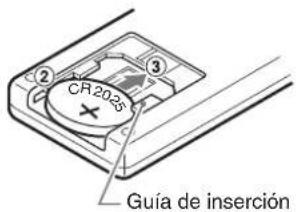
6. OPERACIONES
Nota:
natural_image
Pure geometric lines and crosshair symbols without any text or labels
Operaciones básicas
"S-W VOL" <> "DZE" <> "BASS" <> "TREBLE" <> "S RESTOR" <> "HPF" <> "S-W LPF" <> "BALANCE" <> "FADER"
"DZE OFF" <> "DZE 1" <> "DZE 2" <> "DZE 3"
natural_image
Pure electrical circuit lines without any symbolsOperaciones básicas
$$ " O F F" < >" 1" < >" 2" < >" 3" $$
natural_image
Pure geometric lines and crosshair symbols without any text or labels
Operaciones básicas
natural_image
Pure geometric lines and shapes without any text, numbers, or symbolsnatural_image
Pure geometric lines and crosshair symbols without any text or labels
natural_image
Pure geometric lines and crosshair symbols without any text or labels
The image contains no text.

natural_image
Pure geometric diagram with intersecting lines and shapes, no text or symbols presentnatural_image
Pure geometric lines and crosshair symbols without any text or labels
natural_image
Pure geometric lines and shapes without any text, numbers, or symbolsnatural_image
Pure geometric lines and crosshair symbols without any text or labels
natural_image
Pure geometric lines and crosshair symbols without any text or labels
natural_image
Illustration of a device being inserted into a wall-mounted panel, showing internal components and a hand holding the clip (no text or symbols present)natural_image
Pure geometric lines and shapes without any text, numbers, or symbolsnatural_image
Pure geometric lines and crosshair symbols without any text or labels
natural_image
Pure geometric lines and crosshair symbols without any text or labels
natural_image
Pure technical drawing lines without any text, numbers, or symbols
natural_image
Pure geometric diagram with intersecting lines and circles, no text or symbols presentnatural_image
Pure geometric lines and crosshair symbols without any text or labels
natural_image
Pure geometric lines and shapes without any text, numbers, or symbols
natural_image
Pure geometric diagram with intersecting lines and circles, no text or symbols presentnatural_image
Pure geometric lines and crosshair symbols without any text or labels
1. EGENSKAPER
AAC
USB Slot
@NET

MP3 ID3 TAG




natural_image
Pure electrical circuit lines without any symbols
natural_image
Pure geometric diagram with intersecting lines and circles, no text or symbols presentnatural_image
Pure geometric lines and crosshair symbols without any text or labels
natural_image
Pure electrical circuit lines without any symbolsnatural_image
Pure geometric diagram with intersecting lines and circles, no text or symbols present3. KONTROLLER
natural_image
Pure geometric lines and circular shapes without any text, numbers, or symbols248DXZ588RUSB
natural_image
Pure geometric diagram with intersecting lines and circular shapes, no text or symbols presentnatural_image
Pure geometric lines and crosshair symbols without any text or labelsDisplaydetaljer
natural_image
Pure electrical circuit lines without any symbols
natural_image
Pure geometric diagram with intersecting lines and circles, no text or symbols present4. DCP (LÖSTAGBAR KONTROLLPANEL)
ANMÄRKNING
natural_image
Pure electrical circuit lines without any symbols
natural_image
Pure geometric diagram with intersecting lines and circles, no text or symbols present5. FJÄRRKONTROLLEN
natural_image
Pure geometric lines and shapes without any text, numbers, or symbols252DXZ588RUSB
natural_image
Pure geometric lines and shapes without any text, numbers, or symbolsnatural_image
Pure geometric lines and crosshair symbols without any text or labels
natural_image
Simple line drawing of a rectangular electronic component with mounting holes and a labeled arrow (no text or symbols)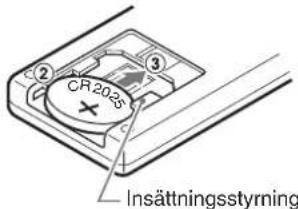
natural_image
Pure geometric lines and shapes without any text, numbers, or symbolsnatural_image
Pure geometric lines and crosshair symbols without any text or labels
"S-W VOL" <> "DZE" <> "BASS" <>
$$ " O F F" < >" 1" < >" 2" < >" 3" $$
"THROUGH" <> "50Hz" <> "80Hz" <> "120Hz"
natural_image
Pure geometric lines and crosshair symbols without any text or labels
natural_image
Pure geometric diagram with intersecting lines and circles, no text or symbols presentnatural_image
Pure geometric lines and crosshair symbols without any text or labels
natural_image
Pure geometric lines and shapes without any text, numbers, or symbolsnatural_image
Pure geometric lines and crosshair symbols without any text or labels
natural_image
Pure technical drawing lines without any readable text, numbers, or symbols
natural_image
Pure geometric diagram with intersecting lines and circles, no text or symbols presentnatural_image
Pure geometric lines and shapes without any text, numbers, or symbolsnatural_image
Pure geometric lines and crosshair symbols without any text or labelsnatural_image
Pure geometric lines and shapes without any text, numbers, or symbolsnatural_image
Pure geometric lines and crosshair symbols without any text or labels
natural_image
Pure electrical circuit lines without any symbolsGemensam manövrering för varje funktion
natural_image
Pure geometric lines and crosshair symbols without any text or labels
Gemensam manövrering för varje funktion
natural_image
Pure geometric lines and shapes without any text, numbers, or symbolsGemensam manövrering för varje funktion
natural_image
Pure geometric lines and shapes without any text, numbers, or symbolsnatural_image
Illustration of a hand inserting a device into a wall-mounted panel (no text or symbols visible)natural_image
Pure geometric lines and crosshair symbols without any text or labels
natural_image
Pure geometric lines and shapes without any text, numbers, or symbolsnatural_image
Pure geometric lines and crosshair symbols without any text or labels
natural_image
Pure geometric lines and shapes without any text, numbers, or symbols
natural_image
Pure technical drawing lines without any text, numbers, or symbols
natural_image
Pure geometric diagram with intersecting lines and circles, no text or symbols presentnatural_image
Pure geometric lines and crosshair symbols without any text or labels
natural_image
Pure geometric lines and shapes without any text, numbers, or symbols- FELSÖKNING
natural_image
Pure geometric lines and crosshair symbols without any text or labels
1. CARACTERÍSTICAS






natural_image
Pure geometric lines and crosshair symbols without any text or labels
natural_image
Pure electrical circuit lines without any symbolsnatural_image
Pure geometric diagram with intersecting lines and circles, no text or symbols present3. CONTROLOS
Com a CONSOLA RECLINÁVEL aberta
![[▲] (EJECT) [CD SLOT] [USB SLOT]](/content/2026/02/375242/images/4be1e68a58fa06c28fc72b76548f8ebadc205c4b1bcaa2bb2eb97f34d7910209.jpg)
Português
natural_image
Pure geometric lines and symbols without any text, numbers, or readable characters288DXZ588RUSB
natural_image
Pure geometric diagram with intersecting lines and circles, no text or symbols presentnatural_image
Pure geometric lines and crosshair symbols without any text or labels

natural_image
Pure geometric lines and shapes without any text, numbers, or symbols
natural_image
Pure electrical circuit lines without any symbols
natural_image
Pure geometric diagram with intersecting lines and circles, no text or symbols presentPRECAUÇÃO
natural_image
Pure electrical circuit lines without any symbols
natural_image
Pure geometric diagram with intersecting lines and circles, no text or symbols present5. CONTROLO REMOTO
natural_image
Pure electrical circuit lines without any symbols
natural_image
Pure geometric diagram with intersecting lines and circles, no text or symbols present● Modos CD/MP3/WMA/AAC e USB/MTP
Tecla [BND]
natural_image
Pure geometric lines and crosshair symbols without any text or labels![CLARION DXZ588RUSB - Tecla [BND] - 1](/content/2026/02/375242/images/4a9fdbb05e750307789ef5d3c0678648f1c3184443d298d9bb562ad288a8eb52.jpg)
![CLARION DXZ588RUSB - Tecla [BND] - 2](/content/2026/02/375242/images/188f5982a42bdd48d36cb6412ea954b67ea0ad2b1305f987afce13a10dde7e71.jpg)
Colocação da pilha
natural_image
Technical line drawing of a mechanical component with a labeled part (no text or symbols present)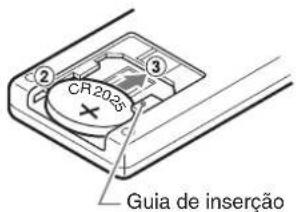
natural_image
Pure geometric diagram with intersecting lines and circles, no text or symbols present6. OPERAÇÕES
Nota:
"S-W VOL" <> "DZE" <> "BASS" <> "TREBLE" <> "S RESTOR" <> "HPF" <> "S-W LPF" <> "BALANCE" <> "FADER"
natural_image
Pure geometric lines and shapes without any text, numbers, or symbols
Operações básicas
line
| Frequency (F) | Amplitude (dB) | | ------------- | -------------- | | Central | Peak | | Hz | 3dB |● Curva Q
"T GAIN" <> "T FREQ"
"OFF" <> "1" <> "2" <> "3"
natural_image
Pure geometric lines and crosshair symbols without any text or labels
Operações básicas
- Ajuste do filtro passa alto
2-1. Seleccione "HPF"
FM1 → FM2 → FM3 → AM (MW/LW) → FM1 ...
natural_image
Pure geometric lines and shapes without any text, numbers, or symbolsnatural_image
Pure geometric lines and crosshair symbols without any text or labels
natural_image
Pure technical drawing lines without any text, numbers, or symbols
natural_image
Pure geometric diagram with intersecting lines and circles, no text or symbols presentnatural_image
Pure geometric lines and shapes without any text, numbers, or symbolsnatural_image
Pure geometric lines and shapes without any text, numbers, or symbolsnatural_image
Pure geometric lines and crosshair symbols without any text or labels
natural_image
Pure geometric lines and shapes without any text, numbers, or symbolsnatural_image
Pure geometric lines and crosshair symbols without any text or labels
natural_image
Pure electrical circuit lines without any symbolsnatural_image
Pure geometric lines and crosshair symbols without any text or labels
Sobre as memórias USB
natural_image
Pure geometric lines and crosshair symbols without any text or labels
natural_image
Pure technical drawing lines without any text, numbers, or symbols
natural_image
Pure geometric diagram with intersecting lines and circles, no text or symbols presentOperações USB/MTP
PRECAUÇÃO
natural_image
Pure geometric diagram with intersecting lines and circles, no text or symbols presentOperações iPod
natural_image
Pure geometric lines and shapes without any text, numbers, or symbolsnatural_image
Pure geometric lines and crosshair symbols without any text or labels
natural_image
Pure electrical circuit lines without any symbolsnatural_image
Pure geometric lines and crosshair symbols without any text or labels
natural_image
Pure geometric lines and crosshair symbols without any text or labels
natural_image
Pure electrical circuit lines without any symbolsnatural_image
Pure geometric diagram with intersecting lines and circles, no text or symbols presentclarion
// High-Tech High-Touch //
» DICCHARAZIONE DI CONFORMITA «
PBL No 07IRDC003C DCFMTEWLH003
natural_image
Pure geometric lines and crosshair symbols without any text or labels327
DXZ588RUSB
natural_image
Pure electrical circuit lines without any symbolsCE DECLARATION of CONFORMITY
we Clarion Europa GmbH
(supplier's name)
Hessenring 19-21, 64546 Mörfelden-Walldorf, GERMA NY (address)
declare under our sole responsibility that the product
CAR RADIO with CD PLAYER
MODEL: DXZ588RUSB
Product code:PE3043
TYPE:1043053A
(name, type or model, possibly sources and numbers of items)
to which this declaration relates is in conformity with the following
standard(s) or other normative document(s)
EN 55013:2001 + A1, EN 55020:2002 + A1
(title and/or number and date of issue of the standard(s) or other normative document(s))
(if applicable) following the provisions of 2004/108/EC Directive.
And following the provisions of 2004/104/EC Directive,
according to paragraph 3.2.9 of Annex I.
meets the limits defined in paragraph 6.5, 6.6, 6.8 and 6.9 of Annex I
(supplier's comment)
M örfelden-Walldorf GERMANY
6 DOC 2007
(Place and date of issue)
Sharma Yanba
Susumu Yamakawa
President
(name and signature or equivalent
marking of authorized person)
RefNo 07RCDC003C D.KDQC07A175
Clarion Co., Ltd.
2007/12
All Rights Reserved. Copyright © 2007: Clarion Co., Ltd.
Printed in China / Imprimé en Chine / Gedruckt in China / Stampato in Cina
Gedrukt in China / Impreso en China / Tryckt i Kina / Impresso na China
PE-3043E
280-8594-00
natural_image
Pure electrical circuit lines without any symbols
natural_image
Pure electrical circuit lines without any symbols
- English
- CAUTIONS:
- OBS!
- ADVARSEL.
- Contents
- FEATURES
- PRECAUTIONS
- INFORMATION FOR USERS:
- Flip Down Panel
- CAUTION
- Handling Compact Discs
- Handling
- Storage
- Cleaning
- CONTROLS
- Names of the Buttons and Their Functions
- [OPEN] button
- [ SRC] button
- [OPTION] button
- [SEEK PANEL]
- [MENU] button
- [ ]button
- [UP], [DN] buttons
- [ ](SOUND) button
- [TA] button
- [IR RECEIVER]
- [D] button
- [MUTE] button
- [▲] (EJECT) button
- [+], [-] buttons
- [CD SLOT]
- [USB SLOT]
- Display Screen
- DCP (DETACHABLE CONTROL PANEL)
- Removing the DCP
- Attaching the DCP
- Note:
- REMOTE CONTROL
- Functions of Remote Control Unit Buttons
- - Shared modes
- [SRC] button
- [▲], [▼] buttons
- [AF] button
- [PTY] button
- [DISP] button
- ● Radio (Radio Data System) mode
- [BND] button
- [◀◀], [▶▶] buttons
- [PS/AS] button
- ● CD/MP3/WMA/AAC and USB/MTP modes
- [▶II] button
- - CD changer mode
- [ ] button
- - iPod mode
- Inserting the Battery
- Notes:
- OPERATIONS
- Basic Operations
- Turning on/off the power
- Selecting a mode
- Adjusting the volume
- Switching the display
- Adjusting Sound Mode
- To change sound mode
- ● Adjusting the subwoofer output volume
- ● Setting the Digital Z-Enhancer
- ● Compensation
- ● Compensation of frequency characteristics
- Q curve
- ● Adjusting the bass
- ● Adjusting the treble
- ● Adjusting the sound restorer
- - Setting high pass filter
- ● Setting low pass filter
- ● Adjusting the balance
- ● Adjusting the fader
- Adjusting MAGNA BASS EXTEND
- Mute
- CT (Clock Time) function
- Radio Operations
- Listening to the radio
- Tuning
- Seek tuning
- ● DX SEEK
- - LOCAL SEEK
- Manual tuning
- ● Quick tuning
- - Step tuning
- Recalling a preset station
- Manual memory
- Auto store
- Preset scan
- Radio Data System Operations
- Radio Data System
- AF function
- REG (Regional programme) function
- Manually tuning a regional station in the same network
- TA (Traffic Announcement)
- ● Setting the TA standby mode
- ● Cancelling the TA standby mode
- ● Searching for a TP station
- Auto store function for TP stations
- As "TA" lit in the display:
- PTY
- • ON:
- • OFF:
- ● Cancelling a PTY interrupt broadcast
- PTY seek
- PTY selecting
- Emergency broadcast
- Switching the PTY display language
- Volume setting of TA, emergency broadcast (Alarm) and PTY
- CD/MP3/WMA/AAC Operations
- MP3/WMA/AAC
- What is MP3?
- What is WMA?
- ● To disable DRM (Digital Rights Management)
- What is AAC?
- Precautions when creating MP3/WMA/AAC file
- ● Usable sampling rates and bit rates
- ● File extensions
- ● Logical format (File system)
- - Folder structure
- ● Number of files or folders
- Set the type of file to be played (multi-session function)
- Backup Eject function
- Listening to a disc already loaded in the unit
- Loading a CD
- Be careful not to catch your hand or fingers while closing the FLIP DOWN PANEL.
- Pausing play
- Displaying CD titles
- - CD-TEXT disc
- ● MP3/WMA/AAC disc
- Selecting a track
- - Track-up
- - Track-down
- Fast-forward/fast-backward
- ● Fast-forward
- ● Fast-backward
- Folder Select
- Top function
- List search function
- Other various play functions
- - Scan play
- - Folder scan play
- - Repeat play
- ● Folder repeat play
- ● Random play
- ● Folder random play
- ● To cancel the trick play
- Operations Common to Each Mode
- To change adjustment setting
- - Setting the contrast
- ● Turning the screen saver function on or off
- ● Entering message information
- ● Setting the method for title scroll
- ● Setting the speed of the title scroll
- ● Setting the dimmer control
- ● Anti-theft indicator
- ● Setting the external amplifier
- ● Set the cellular phone connection mode (TEL-SEL)
- • AUX:
- • CeNET:
- - Setting the car speaker output for the cellular phone
- 2-1. Select "TEL SP".
- • R:
- • L:
- ● Cellular phone interrupt setting
- • MUTE:
- ● Performing a system check
- AUX function
- - Selecting AUX IN sensitivity
- Entering titles
- Clearing titles
- OPERATIONS OF ACCESSORIES
- USB/MTP Operations
- USB memory/MTP device operation Note:
- About USB memory
- About USB Digital Media Streaming
- Connecting a USB memory/MTP device
- To listen to tracks on a connected USB memory/MTP device
- To stop play
- iPod Operations
- Connecting an iPod
- Select iPod mode
- Other various play functions (in Play mode)
- ● All random play
- Selecting category from the iPod menu
- About title display
- Bluetooth BB Operations
- Select Bluetooth BB
- Making a call
- ● Direct Number Call
- ● Call from Phonebook
- ● Answering a call
- ● Received/Dialled/Missed Call History
- To change Bluetooth adjustment setting
- ● PAIRING
- ● PAIRING SP
- - SELECT
- - DELETE
- MIC GAIN
- ● RING VOL
- ● AUTO ANSWER
- ● REFUSE
- ● AUTO CON
- ● PIN CODE
- ADDRESS
- - VERSION
- CD Changer Operations
- CD changer functions
- Procedure to scroll a title
- Selecting a CD
- ● Disc scan play
- ● Disc repeat play
- ● Disc random play
- ERROR DISPLAYS
- 10.SPECIFICATIONS
- Radio section
- CD player section
- General
- OTHERS
- WMDRM 10 for devices
- CARACTÉRISTIQUES
- Français
- LES COMMANDES
- TÉLÉCOMMANDE
- - Modes partagés
- Touche [SRC]
- Insertion de la pile
- FONCTIONNEMENT
- Remarque :
- ● Courbe Q
- ● Disque MP3/WMA/AAC
- FONCTIONNEMENT DES ACCESSOIRES
- Fonctionnement iPod
- EN CAS DE DIFFICULTÉ
- 10.FICHE TECHNIQUE
- Section Radio
- Klappbildschirm
- BEDIENELEMENTE
- [OPEN]-Taste
- ABNEHMBARE BEDIENKONSOLE (DCP)
- ▲ VORSICHT
- FERNBEDIENUNG
- BEDIENUNG
- Hinweis:
- 10.TECHNISCHE DATEN
- Radioteil
- CD-Playerteil
- CARATTERISTICHE
- COMANDI
- PRECAUZIONE
- TELECOMANDO
- Italiano
- OPERAZIONI
- Nota:
- Operazioni di base
- ● Curva Q
- Operazioni radio
- Ascolto della radio
- Operazioni CD/MP3/WMA/ACC
- ● Formato logico (File system)
- Operazioni iPod
- DIAGNOSTICA
- BEDIENINGSORGANEN
- [MENU] toets
- AFNEEMBAAR VOORPANEEL (DCP)
- LET OP
- AFSTANDSBEDIENING
- BEDIENING
- Opmerking:
- Basisbediening
- Q-curve
- - Introweergave
- BEDIENING VAN ACCESSOIRES
- Opmerkingen:
- FOUTMELDINGEN
- CARACTERÍSTICAS
- CONTROLES
- DCP (PANEL DE CONTROL EXTRAÍBLE)
- Español
- - Modos compartidos
- Botón [SRC]
- OPERACIONES
- Operaciones básicas
- EGENSKAPER
- KONTROLLER
- Displaydetaljer
- DCP (LÖSTAGBAR KONTROLLPANEL)
- ANMÄRKNING
- FJÄRRKONTROLLEN
- Gemensam manövrering för varje funktion
- CONTROLOS
- PRECAUÇÃO
- CONTROLO REMOTO
- ● Modos CD/MP3/WMA/AAC e USB/MTP
- Tecla [BND]
- Colocação da pilha
- OPERAÇÕES
- Operações básicas
- - Ajuste do filtro passa alto
- Sobre as memórias USB
- Operações USB/MTP
- Operações iPod
- clarion
- CE DECLARATION of CONFORMITY
- Clarion Co., Ltd.
Brand : CLARION
Model : DXZ588RUSB
Category : Car stereo