
OF 1A 100 - Freezer INDESIT - Free user manual and instructions
Find the device manual for free OF 1A 100 INDESIT in PDF.
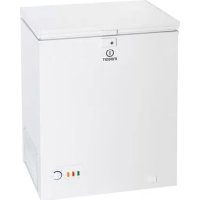



| Product type | Chest freezer |
| Brand | Indesit |
| Model | OF 1A 100 |
| Capacity | 100 liters (estimated) |
| Power supply | 220-240 V, 50 Hz |
| Defrosting | Manual |
| Interior light | Replaceable bulb 10 W |
| Storage basket | Yes, provided |
| Lid gasket | Important for sealing |
| Controls | Rotary thermostat (positions 1 to 6, OFF) |
| Indicator lights | Power (green), compressor (cycle), temperature not reached |
| Use | Long-term storage of frozen food |
| Installation | Free-standing (not built-in), minimum 15 cm space on sides and back |
| Ambient temperature | Avoid direct sunlight and heat sources, too cold temperature also harmful |
| Maintenance and cleaning | Clean interior with baking soda; defrost when frost reaches 5-10 mm |
| Safety | Do not block ventilation, do not use metal tools for defrosting, unplug before cleaning |
| Spare parts | Storage basket, light bulb (10W), lid gasket |
Frequently Asked Questions - OF 1A 100 INDESIT
User questions about OF 1A 100 INDESIT
0 question about this device. Answer the ones you know or ask your own.
Ask a new question about this device
Download the instructions for your Freezer in PDF format for free! Find your manual OF 1A 100 - INDESIT and take your electronic device back in hand. On this page are published all the documents necessary for the use of your device. OF 1A 100 by INDESIT.
USER MANUAL OF 1A 100 INDESIT
60044 Fabriano (AN) Italy
19:1390732661 www.adis.com
INDESIT


Italian

English

French

German

Spanish

Portuguese

Dutch

Polish

Turkish
INDEX
SAFETY AND INSTALLATION INSTRUCTIONS 10
TROUBLESHOOTING GUIDE 15


SAFETY AND INSTALLATION INSTRUCTIONS

The refrigerator is provided with
R600a refrigerant and cyclopentane foaming material, and both are combustible materials. Obsolete refrigerators should be isolated from fire and combustion treatment is forbidden.
tane foaming material, and both are combustible materials. Obsolete refrigerators should be isolated from fire, and combustion treatment is forbidden.
-WARNING - Keep ventilation openings, in the appliance enclosure or in the built-in structure, clear of obstruction.
-WARNING: Do not use mechanical devices or other means to accelerate the defrosting process, other than those recommended by the manufacturer.
-WARNING Do not use electrical appliances inside the food storage compartments of the appliance, unless they are of the type recommended by the manufacturer.
-WARNING Do not use electrical appliances inside the food storage compartments of the appliance, unless they are of the type recommended by the manufacturer.
DANGER or WARNING:
- Risk of child entrapment. Before you throw away your old refrigerator or freezer: - Take off the doors.
- Leave the shelves in place so that children may not easily climb inside.
- Do not use extension cords.
- This appliance can be used by children aged from 8 years and above and persons with reduced physical, sensory or mental capabilities or lack of experience and knowledge if they have been given supervision or instruction concerning use of the appliance in a safe way and understand the hazards involved. Children shall not play with the appliance. Cleaning and user maintenance shall not be made by children without supervision.
4. Do not store explosive substances such as aerosol cans with a flammable propellant in this appliance.

INDESIT
CHEST FREEZER
- This appliance is intended to be used in household and similar applications such as: - staff kitchen areas in shops, offices and other working environments;
- - farm houses and by clients in hotels, motels and other residential type environments;
- - bed and breakfast type environments;
- catering and similar non-retail applications.
Correct Disposal of this product
This marking indicates that this product should not be disposed with other household waste throughout the EU. To prevent possible harm to the environment or human health from uncontaminated textile disposal, it is reasonable to promote the sustainable reuse of material resources. To return your used device, please use the return and collection systems or contact the retailer where the product was purchased. They can take this product for environmental care recycling.
Before Using Your Freezer
Remove the exterior and interior packing. Check to be sure you have all of the following parts:
Storage Basket
Instruction Manual
Before connecting the freezer to the power source, let it stand upright for approximately 2 hours. This will reduce the possibility of a malfunction in the cooling system from handling during transportation.
Clean the interior surface with lukewarm water using a soft cloth.
Installing Your Freezer
This appliance is designed to be free standing only, and should not be recessed or built-in.
Place your freezer on a floor that is strong enough to support the freezer when it is fully loaded.
Allow 15 cm of space between the back and sides of the freezer, which allows the proper air circulation.
CHEST FREEZER
Locate the freezer away from direct sunlight and sources of heat (stove, heater, radiator, etc.). Direct sunlight may affect the acrylic coating and heat sources may increase electrical consumption. Extreme cold ambient temperatures may also cause the freezer not to perform properly. Avoid locating the freezer in moist areas.
Electrical Connection
Plug the freezer into an exclusive, properly installed-grounded wall outlet. Do not under any circumstances cut or remove the third (ground) prong from the power cord. Any questions concerning power and/or grounding should be directed toward a certified electrician or an authorized service center.
After connecting the freezer, turn the temperature control knob to a position '6' for 6 hours before loading your food. For your safety please read the following information.
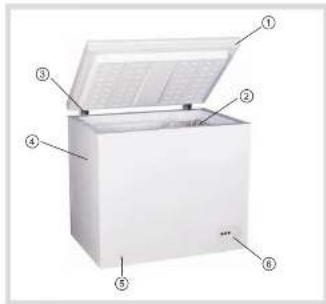
1. Door seal 4. Cabinet assembly foamed
2. Hanging basket 5. Outer tube
3. Hinge 6. Control panel

Temperature Control
The range of the temperature control is from position "1" (the warmest) to position "6" (the coldest).
coldest. Adjust the temperature control to the setting that best suits your needs. The medium position should be appropriate for home or office freezer use.
Turning the temperature control to "0" position stops the cooling cycle but does not shut off the power to the freezer.
Turning the temperature control to the "0" position stops the cooling cycle but does not shut off the power to the freezer.
If the unit is unplugged, loses power, or is turned off, you must wait 3 to 5 minutes before restarting it. If you attempt to restart before this time delay, the freezer will not start.
Large amounts of food will lower the cooling efficiency of the appliance.
If you choose to change the thermostat setting, adjust the thermostat control by one numerical increment at a time. Allow several hours for the temperature to stabilize between adjustments.
Replacing the light bulb
To replace the light bulb, unplug the appliance from the electrical socket. Follow the instructions below.
Access the light bulb by removing the cover as indicated in the diagram. Replace it with a similar light bulb within the power range indicated on the cover (10W).
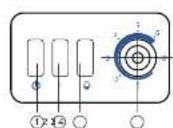
- Left indicator light: when on, it signals that the product is operating.
11
- Middle indicator light: during the compressor's normal On/Off cycle, the indicator light turns on to signal that the compressor is in the On phase.
- Right indicator light: when it turns on, it signals that the internal temperature has not yet reached the pre-set value.
- Thermostat knob: allows for adjusting the internal temperature.
Defrosting Your Freezer
When? For the most efficient operation and minimum energy consumption, defrost the freezer when the frost on the freezer walls is excessive or 5 to 10 mm thick.
Choose a time when the stock of frozen food is low.
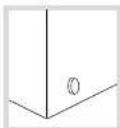
Remove the drain plug on the inside floor of the freezer by rotating it.
Place a shallow pan outside the drain outlet.
The defrost water will drain out.
CAUTION
Do not use boiling water because it may damage the plastic parts. In addition, never use a sharp or metallic instrument to remove frost as it may damage the cooling coils and will void the warranty. We recommend using the plastic scraper.
Remove the frozen food from the freezer and place it in a cooler to protect the food.
Turn the thermostat knob to OFF.
Unplug the freezer. The Power Supply light should be off (green light out).
During defrosting, the ice melts into the cabinet.

Remove the drain plug on the inside floor of the freezer by rotating it.
Place a shallow pan outside the drain outlet. The defrost water will drain out.
Check the pan occasionally so the water does not overflow.
Clean the interior of the freezer.
Replace the plug on the inside floor.
Reset the thermostat to the desired setting.
Allow the cabinet to cool before returning food to the freezer.
HELPFUL HINT:
Defrosting usually takes a few hours.
Leaving the door open will help speed the process. Also, pouring warm water (not boiling) on the ice/frost will help speed
melting. If you must use a scraper, please use caution - it is very easy to damage the freezer compartment and void your warranty.
The Freezer Compartment
This compartment is designed for the long-term storage of frozen food.
The storage life of frozen foods varies and the recommended storage time should not be exceeded. The instructions regarding the care of frozen foods should be followed when defrosting the freezer.
Pre-packed commercially frozen food should be stored in accordance with the frozen foods manufacturer's instructions for a four star frozen food storage compartment or home freezer.
Place frozen food into the freezer as quickly as possible after purchase. If there are instructions on the packet, carefully follow these instructions regarding storage times.
The freezer door is susceptible to breaking due to excessive ice build up. Be sure to defrost when the ice reaches 5 to 10 mm thick.
A storage basket is provided for the organization of odd-shaped items. To reach other packages in the freezer, just slide the basket to one side, or lift it out.
CHEST FREEZER
Declaration of conformity
This appliance is designed to store food and is manufactured in conformity with European Directive 90/128/EEC, 02/72/EEC and Regulation (EC) No. 1935/2004.

This appliance is designed, manufactured, and retailed in compliance with:
- the safety objectives of the Low Voltage Directive 2006/95/CE (which replaces Directive 72/73/CEE and subsequent amendments);
the protection requirements of the EMC Directive 89/336/EEC, as amended by Directive 93/68/EEC.
The electrical safety of the appliance can only be guaranteed if the product is connected to an approved earth connection.
Cleaning Your Freezer
Upon installation of your new appliance, it is recommended that it be cleaned thoroughly. Turn the temperature control to "OFF", unplug the freezer, remove the food and storage basket.
Wash the inside with a damp warm cloth containing a water and baking soda solution. The solution should be about 2 tablespoons of baking soda to a quart of water.
Wash the storage basket with a mild detergent solution.
Be sure to keep the door gasket (seal) clean to keep the unit running efficiently.
The outside of the freezer should be cleaned with mild detergent and warm water.
Dry the interior and exterior with a soft cloth. The condenser coils should be vacuumed when they are dusty or dirty.
It is recommended that the unit be cleaned each time it is defrosted to help keep the unit odor free and running efficiently.
Vacation Time
Remove all the food.
Unplug the freezer
Clean the freezer
Leave the door open slightly to avoid possible formation of condensation, mold, or odors.
Use extreme caution in the case of children. The unit should not be accessible to child's play.
Short vacations: Leave the freezer operating during vacations of less than three weeks. Long vacations: If the appliance will not be used for several months, remove all food and unplug the power cord. Clean and dry the interior thoroughly. To prevent odor and mold growth, leave the door open slightly: blocking it open if necessary or have the door removed.

INDESIT
13
PROBLEMS WITH YOUR FREEZERCARE AND MANAGE
Moving Your Freezer
Remove all the food
Securely tape down all loose items inside your freezer.
Remove the rollers to prevent damage. Tape the doors shut.
Be sure the freezer stays in the upright position during transportation.
Energy Saving Tips
The freezer should be located in the coolest area of the room, away from heat producing appliances or heating ducts, and out of the direct sunlight.
Let hot foods cool to room temperature before placing in the freezer. Overloading the freezer forces the compressor to run longer. Foods that freeze too slowly may lose quality, or spoil.
Be sure to wrap foods properly, and wipe containers dry before placing them in the freezer. This cuts down on frost build-up inside the freezer.
Freezer storage bin should not be lined with aluminum foil, wax paper, or paper toweling. Liners interfere with cold air circulation, making the freezer less efficient.
Organize and label food to reduce door openings and extended searches. Remove as many items as needed at one time, and close the door as soon as possible.
Try not to open the door too often, especially when the weather is wet and hot. Once you open the door, mind to close it as soon as possible.
Every now and then check if the appliance is sufficiently ventilated (adequate air circulation behind the appliance).

For household refrigerating appliances, in normal temperature conditions, please arrange the thermostat at the middle setting.
Before loading the appliance with packages of fresh foods, make sure they are cooled to ambient temperature.
Ice and frost layer increase energy consumption, so do clean the appliance as soon as the layer is 3 - 5mm thick.
If it is the outer condenser, the rear wall should be always clean, free of dust or any impurities.
Always consider instructions stated in sections Positioning and Energy Saving Tips, otherwise the energy consumption is substantially higher.
You can solve many common freezer problems easily, saving you the cost of a possible service call. Try the suggestions below to see if you can solve the problem before calling the servicer.
| PROBLEM POSSIBLE CAUSE | |
| Freezer does not operate | Not plugged in. The circuit breaker tripped or a blown fuse. The freezer temperature control is set at "0/OFF" |
| Compressor turns on and off frequently | The room temperature is hotter than normal. A large amount of food has been added to the freezer. The door is open too often. The door is not closed completely. The temperature control is not set correctly. The door gasket does not seal properly. The freezer does not have the correct clearances. The freezer has recently been disconnected for a period of time. Four hours are required for the freezer to cool down completely |
| Temperature inside the freezer is too warm | Temperature control is set too warm. Tum the control to a cooler setting and allow several hours for the temperature to stabilize. Door is kept open too long or is opened too frequently. Warm air enters the freezer every time the door is opened. Open the door less often. The door is not closed completely. The door gasket does not seal properly. A large amount of warm or hot food might have been stored recently. Wait until the freezer has had a chance to reach its selected temperature. The freezer has recently been disconnected for a period of time. Four hours are required for the freezer to cool down completely |
| Temperature inside the freezer is too cold | Temperature control is set too cold. Tum the control to a warmer setting and allow several hours for the temperature to stabilize |
| Popping or cracking sound when compressor comes on | Metal parts undergo expansion and contraction, as in hot water pipes. This is normal. Sound will level off or disappear as freezer continues to run |
| Bubbling or gurgling sound, like water boiling | Refrigerant (used to cool freezer) is circulating throughout the system. This is normal |
| Vibrations | Check to assure that the freezer is level. Floor is uneven or weak. Freezer rocks on the floor when it is moved slightly. Be sure floor can adequately support freezer. Level the freezer by putting wood or metal shims under part of the freezer. The freezer is touching the wall. Re-level the freezer and move it from the wall. See "Installation Instructions" |

15
TROUBLESHOOTING GUIDE
| PROBLEM POSSIBLE CAUSE | |
| Moisture forms on inside freezer walls | Weather is hot and humid, which increases internal rate of frost build-up. This is normal. Door is slightly open. Door is kept open too long, or is opened too frequently. Open the door less often. The door is not sealed properly |
| Moisture forms on outside of freezer | Door is slightly open, causing cold air from inside the freezer to meet warm moist air from outside |
| The door will not close properly | The freezer is not level. The gasket is dirty. The storage basket is out of position |

INDESIT
16

Italian English French

German Spanish Portuguese
OF 1A 100 OF 1A 200 OF 1A 250 OF 1A 300

INDESIT
TABLE OF CONTENTS
INSTALLATION INSTRUCTIONS 18 USING YOUR FREEZER 19 CARE AND CLEANING 21 TROUBLESHOOTING YOUR FREEZER 22 TROUBLESHOOTING GUIDE 23
17
WARNING

RECOMMENDATIONS:
TROUBLESHOOTING GUIDE 39

OF 1A 100
OF 1A 200
OF 1A 250
OF 1A 300

INDESIT
33
WARNING:

RECOMMENDATIONS:
INSTALLATION INSTRUCTIONS 50
USING THE FREEZER 51
MAINTENANCE AND CARE 53
PROBLEMS WITH THE FREEZER 54
TROUBLESHOOTING 55

Dutch Polish


INDESIT
49
INSTALLATION INSTRUCTIONS
WARNING

RECOMMENDATIONS:
1) WARNING - Keep the
ventilation openings, in the appliance housing
USEFUL TIP:
P03Mop0xvBaHHM MOp03HIIHHka
KOHJ HJI HAIHEPEKTHHHOH PO60THI MIIMAHHTHO CNOKKBHBAH SHEPII POMPOKGYHTE MOP3HNIHK, KOJI HA BO TCIHHAK 3AHHNHC HAHNIKOBI IYDTHCAHIN HEKO ABO IX TOBNIHA DOCHT5-510MM.
Oeepit hae, konn 3anae 3amopokoeho HkHNCBKNK
3HIMITc encycky np6kBy BnBnyrpiHH uactHHMop03HbHnka, NoBepHyBnH II
11omcrttb mackkn nian n i cyckntrabp.
POMMOPOJKEI BOZA 6yae BHTIKATK.
YBACA
He BHKOPHETONYBE Okpn, JIAGEBH MOKE NoTHKOHHTNI TAAHKOHOBI DETAI. KPMI TORO HIXOKHI HE BHKOPHETONYBE roctpi a60 METAENBI IHCTPYMETHN D18 BIIADIANHAH MOPOHOT, TAK JIK BOHN MOKHTY NIOHKOHTNH OXIOJIAGKHYONMI 3MHOBKH I AHYBOHATH PARTHAO.HM PekomehuyCMO BHKOPHETONYB TAAHKOHOBI CKP6EK. BnHmTt 3amopokey Eky mOpOthIbIHHa I nomictit bKampey oxolokkeHHraI 3axHcy. PobcHytpy ktpemopoy HHToppya ynoLokkEH BID CINHIMPOHSHHHK BID POETHK.CHTIO cKETPMHORO KHNCHMAB MHNKYTHC (39NE H CHTIO MBNKHEHC) 11iHpO3MOp0KcHHIaTaHeYKaMepy. 3imir cyckny np6ky na Buyrpiinu yacnni moepnHaHnka, noepnHyBn. PompoKoHcKaH 100000000000000000000000000000000000000000000000 Hac hay nepeipiree mdo, no6 bao he nepelianae. OHTITI BAYTPIIMNO NOBEPXIO MOP03HbINKAA 3AHHb 3aHbNyHKy HbHbHTiHbHbTnH. HanaityrRe rpeMopetyriRtnp na neo6xide nuaenna. 3AHHHTHE KAMPEH HA OYIO FOYIOHN JIN OXOLOIOKHEHIN. PBOHIEHTHY BOKMOPIHUNIK.

MOPO3HJBHA KAMEPA
KOPHCHA IOPADA:
PoMopOyBxHAnH, 8K pIaHIO, 3aHae KIIbKa roDHN. IaIOIO Bn SAHINHTe Iaepi BiKpTINHM, He npKcPcHIO Ipouoe. KIp TOro, KIOHANHBAI JIOy/JeHO TEIOIO BOIOHO (He OKpONIM) npKcPcHIO Ipouoe TaHENHO. IaIO IO BHKOpCtOBye cKe6oK, 6yIb JAcKa, MaHre Ha yB1, 100 BI MOKEI METKO NIOIOHTN KAMPEY MPOO3JIbHkNA I AYNHOBHANTB ANY PARTHIO.
Kamepa mopoJH.bHka
KIMACAPIHINCHUENAIAIIOBDOPTRHBIOJTO 36eepirHHNAMONOPOTEXAI TePMH 36epirAHn 3AMPOKHOHIOI IaIK BIPiP3HCTcI He MOKHnpepHHyBATH pKOMeIHOBAHn TepmH 36epIRAHn HcO6xIHNO BHKOHyBATH INETpykHI MIOI 36epirAHn 3AMPOKHOHIOI IaII HAc PO3MOPoKHeHH MOp03HINHJa. P03aocobhaamopoxeHaIpaipnueHaeI I KOMepnHoiMeNIOHNHbepiraTHca BbuOHO HIO INCTpyKnBnboHHaAMopoxeHOI kai DnTOpnnpIKOBaKAMcprHn 36epirHHaAMopoxeHOI kai a6o DomaiHHoTO mOpooHHHa. Nomicriti 3amopoejky Bky M0pOHHbIK NKOMORA INHINIC NICH ONUKYNK. JXnHO HAJIYBAHIN C IHTPKU, YBXJIOIaOIPRMyTeB NIX INTPKUYIN IOO YAC63cIFIRNA IJIePI MOpO3HbIHbHK MOKBy,JIIMAHChuePcE HAIHIOHNIOI bIOIOJI yTOBpHEHO.Ob6JIOKBO B0P3oMOPyIKYE MOpO3HbIHbHK, KOIN TOBmIHBA IOOy DCIOBAC 5-10 MM KOpHnA D36epiHa HINpuHAnuHnA D36epiHa HPOyTKHn HENpAHNHOf pOmH. TOrTO, HO6oepaHcno DOHHNkyKnBHy y MOpOHnHnY, IpocTo BIDyHKe KOpHNy BOnH 6x60 BnHnIT.
DOJIAIO6C.IYTOBOYBAHH
MOPO3HbHA KAMEPA
This appliance is designed for domestic use and complies with the relevant European Directives 90/128/EEC, 02/72/EEC and Regulation (EC) No. 1935/2004.

This appliance is intended for domestic use and complies with the following directives:
- 6318 6320 6321 6322 6323 6324 6325 6326 6327 6328 6329 6330 6331 6332 6333 6334 6335 6336 6337 6338 6339 6340 6341 6342 6343 6344 6345 6346 6347 6348 6349 6350 6351 6352 6353 6354 6355 6356 6357 6358 6359 6360 6361 6362 6363 6364 6365 6366 6367 6368 6369 6370 6371 6372 6373 6374 6375 6376 6377 6378 6379 6380 6381 6382 6383 6384 6385 6386 6387 6388 6389 6390 6391 6392 6393 6394 6395 6396 6397 6398 6399 6400
- Electromagnetic compatibility directive 89/336/EEC, amended by directive 93/68/EEC
The appliance can only be guaranteed safe if it is installed correctly and connected to an efficient earth.

INDESIT
Combined refrigerator-freezer
Before using the appliance, it is recommended to clean the interior.
To turn off the appliance, set the thermostat to the "OFF" position, unplug it, and remove the plug from the socket.
Remove all packaging materials and dispose of them properly. Keep the packaging out of reach of children as it can be a choking hazard.
Remove the baskets for cleaning with warm water and mild detergent.
Clean the door gaskets regularly with a soft cloth and mild detergent.
The exterior surface of the refrigerator should be cleaned with a soft cloth and mild detergent.
Clean the interior and exterior surfaces with a soft cloth and mild detergent.
The freezer door gasket is dirty, clean it with a damp cloth and mild detergent.
Remove the door gasket and clean it with warm soapy water, then dry it thoroughly before reinstalling.
Cleaning
Impact on operation.
Explanation of the freezer's operation and its components.
Close the door tightly to prevent frost buildup, ice formation, or odors.
Use protective gloves to avoid injury. Keep the appliance out of reach of children.
Short circuit. If the freezer is not operating, check the power cord. Unplug it. If the appliance will not be used for a long time, remove all food, clean it, and leave the door open to prevent mold. Before cleaning, unplug the appliance and allow it to thaw. To prevent damage, do not use sharp objects to remove ice.
77
Troubleshooting the freezer
Freezer
Initial operation.
Plug in the appliance. Set the temperature to the desired level. Close the door and allow the freezer to cool. Ensure the freezer is in a vertical position during operation.
Practical recommendations for using the freezer
The freezer should be placed in a well-ventilated area away from heat sources or direct sunlight. Allow hot food to cool to room temperature before placing it in the freezer. Overloading the freezer can cause the compressor to run continuously, reducing efficiency. Defrost the freezer regularly to maintain performance. Clean the interior with a mild detergent and water. Keep the door closed as much as possible to maintain temperature. Check the door seal regularly to ensure it is intact. If the door is opened frequently, the freezer will work harder to maintain temperature.

INDESIT
If the appliance is not working properly, before contacting the Technical Assistance Centre, check whether the problem can be easily solved. Read the instructions and the practical recommendations given in the user manual. In any case, the use of the appliance will be more efficient and you can easily solve the most common problems with the freezer. If the problem persists, contact the Technical Assistance Centre. To prevent this, follow the instructions below. You can solve the problems yourself by following the instructions.
Possible faults and how to fix them Freezer
| ПИОЕТЕСАМА | Моженба loроча loроча loроча loроча loроча loроча loроча loроча loроча loроча loроча loроча loроча loроча loроча loроча loроча loроча loроча loроча loроча loроча loроча loроча loроча loрочa loроча loроча loроча loроча loроча loроча loроча loроча loроча loроча loроча loроча loроча loроча loроча loроча loроча loроча loроча loроча loроча loроча loроча loроча loроч <|im_start|>assistant Морознокн He рпсшoc | He piкшчоуший lopeчб. Вьзнкчыв CB VOMTAM 3AZHCTY MEPEKJI AIOI TROPIB 3ZIIIO6HJNK. ТуSpecугутмоу морознокн BCTAHOBENO Y pOLOKCHH "0/OFF" |
| Часу Вьзн��ья и Вьзн��ья сья komSpecop | КIMнathа тетмпература видаа зурмалы. Вьзнka кIMнathбдл kayla bsyia nokmаделу морознокн. Дурci BДуркнанOTCBAHITAO 3AIAIIO OAOCTO. Дурci He pOONHCTTO 3AKPRTI. ТуSpecугутмоу морознокн BCTAHOBENH NERHIN PERTANILNO. Порознокн на Дурсхе He yuHIN NOKHIN PABHINHO. Mорознокн He mae DcSTACHTO 3AKPRTI. Морознокн 6byo NeHOOBANBO BIDKNOCHN Hnne Hnne Hnne Hnne Hnne Hnne Hnne Hnne Hnne Hnne Hnne Hnne Hnne Hnne Hnne Hnne Hnne Hnne Hnne Hnne Hnne Hnne Hnne Hnne Hnne Hnne Hnne Hnne Hnne Hnne Hnne Hnne Hnne Hnne Зур? peryamotуру BnyiINIPOXIOJIPOLOKCHENII Hnne IOLOKCHENII. ПорSpecугун: ПорSpecугун 7bDyHINIPOXIOJIPOLOKCHENII Hnne IOLOKCHENII. ПорSpecугун: ПорSpecугун 8bDyHINIPOXIOJIPOLOKCHENII Hnne IOLOKCHENII. ПорSpecугун: ПорSpecугун 9bDyHINIPOXIOJIPOLOKCHENII Hnne IOLOKCHENII. ПорSpecугун: ПорSpecугун 10bDyHINIPOXIOJIPOLOKCHENII Hnne IOLOKCHENII. ПорSpecугун: ПорSpecугун 11bDyHINIPOXIOJIPOLOKCHENII Hnne IOLOKCHENII. ПорSpecугун: ПорSpecугун 12bDyHINIPOXIOJIPOLOKCHENII Hnne IOLOKCHENII. ПорSpecугун: ПорSpecугун 13bDyHINIPOXIOJIPOLOKCHENII Hnne IOLOKCHENII. ПорSpecугун: ПорSpecугун 14bDyHINIPOXIOJIPOLOKCHENII Hnne IOLOKCHENII. ПорSpecугун: ПорSpecугун 15bDyHINIPOXIOJIPOLOKCHENII Hnne IOLOKCHENII. ПорSpecугун: ПорSpecугун 16bDyHINIPOXIOJIPOLOKCHENII Hnne IOLOKCHENII. ПорSpecугун: ПорSpecугун 17bDyHINIPOXIOJIPOLOKCHENII Hnne IOLOKCHENII. ПорSpecугун: ПорSpecугун 18bDyHINIPOXIOJIPOLOKCHENII Hnne IOLOKCHENII. ПорSpecугун: ПорSpecугун 19bDyHINIPOXIOJIPOLOKCHENII Hnne IOLOKCHENII. ПорSpecугун: ПорSpecугун 20bDyHINIPOXIOJIPOLOKCHENII Hnne IOLOKCHENII. ПорSpecугун: ПорSpecугун 21bDyHINIPOXIOJIPOLOKCHENII Hnne IOLOKCHENII. ПорSpecугун: ПорSpecугун 22bDyHINIPOXIOJIPOLOKCHENII Hnne IOLOKCHENII. ПорSpecугун: ПорSpecугун 23bDyHINIPOXIOJIPOLOKCHENII Hnne IOLOKCHENII. ПорSpecугун: ПорSpecугун 24bDyHINIPOXIOJIPOLOKCHENII Hnne IOLOKCHENII. ПорSpecугун: ПорSpecугун 25bDyHINIPOXIOJIPOLOKCHENII Hnne IOLOKCHENII. ПорSpecугун: ПорSpecугун 26bDyHINIPOXIOJIPOLOKCHENII Hnne IOLOKCHENII. ПорSpecугун: ПорSpecугун 27bDyHINIPOXIOJIPOLOKCHENII Hnne IOLOKCHENII. ПорSpecугун: ПорSpecугун 28bDyHINIPOXIOJIPOLOKCHENII Hnne IOLOKCHENII. ПорSpecугун: ПорSpecугун 29bDyHINIPOXIOJIPOLOKCHENII Hnne IOLOKCHENII. ПорSpecугун: ПорSpecугун 30bDyHINIPOXIOJIPOLOKCHENII Hnne IOLOKCHENII. ПорSpecугун: ПорSpecугун 31bDyHINIPOXIOJIPOLOKCHENII Hnne IOLOKCHENII. ПорSpecугун: ПорSpecугун 32bDyHINIPOXIOJIPOLOKCHENII Hnne IOLOKCHENII. ПорSpecугун: ПорSpecугун 33bDyHINIPOXIOJIPOLOKCHENII Hnne IOLOKCHENII. ПорSpecугун: ПорSpecугун 34bDyHINIPOXIOJIPOLOKCHENII Hnne IOLOKCHENII. ПорSpecугун: ПорSpecугун 35bDyHINIPOXIOJIPOLOKCHENII Hnne IOLOKCHENII. ПорSpecугун: ПорSpecугун 36bDyHINIPOXIOJIPOLOKCHENII Hnne IOLOKCHENII. ПорSpecугун: ПорSpecугун 37bDyHINIPOXIOJIPOLOKCHENII Hnne IOLOKCHENII. ПорSpecугун: ПорSpecугун 38bDyHINIPOXIOJIPOLOKCHENII Hnne IOLOKCHENII. ПорSpecугун: ПорSpecугун 39bDyHINIPOXIOJIPOLOKCHENII Hnne IOLOKCHENII. ПорSpecугун: ПорSpecугун 40bDyHINIPOXIOJIPOLOKCHENII Hnne IOLOKCHENII. ПорSpecугун: ПорSpecугун 41bDyHINIPOXIOJIPOLOKCHENII Hnne IOLOKCHENII. ПорSpecугун: ПорSpecугун 42bDyHINIPOXIOJIPOLOKCHENII Hnne IOLOKCHENII. ПорSpecугун: ПорSpecугун 43bDyHINIPOXIOJIPOLOKCHENII Hnne IOLOKCHENII. ПорSpecугун: ПорSpecугун 44bDyHINIPOXIOJIPOLOKCHENII Hnne IOLOKCHENII. ПорSpecугун: ПорSpecугун 45bDyHINIPOXIOJIPOLOKCHENII Hnne IOLOKCHENII. ПорSpecугун: ПорSpecугун 46bDyHINIPOXIOJIPOLOKCHENII Hnne IOLOKCHENII. ПорSpecугун: ПорSpecугун 47bDyHINIPOXIOJIPOLOKCHENII Hnne IOLOKCHENII. ПорSpecугун: ПорSpecугун 48bDyHINIPOXIOJIPOLOKCHENII Hnne IOLOKCHENII. ПорSpecугун: ПорSpecугун 49bDyHINIPOXIOJIPOLOKCHENII Hnne IOLOKCHENII. ПорSpecугун: ПорSpecугун 50bDyHINIPOXIOJIPOLOKCHENII Hnne IOLOKCHENII. ПорSpecугун: ПорSpecугун 51bDyHINIPOXIOJIPOLOKCHENII Hnne IOLOKCHENII. ПорSpecугун: ПорSpecугун 52bDyHINIPOXIOJIPOLOKCHENII Hnne IOLOKCHENII. ПорSpecугун: ПорSpecугун 53bDyHINIPOXIOJIPOLOKCHENII Hnne IOLOKCHENII. ПорSpecугун: ПорSpecугун 54bDyHINIPOXIOJIPOLOKCHENII Hnne IOLOKCHENII. ПорSpecугун: ПорSpecугун 55bDyHINIPOXIOJIPOLOKCHENII Hnne IOLOKCHENII. ПорSpecугун: ПорSpecугун 56bDyHINIPOXIOJIPOLOKCHENII Hnne IOLOKCHENII. ПорSpecугун: ПорSpecугун 57bDyHINIPOXIOJIPOLOKCHENII Hnne IOLOKCHENII. ПорSpecугун: ПорSpecугун 58bDyHINIPOXIOJIPOLOKCHENII Hnne IOLOKCHENII. ПорSpecугун: ПорSpecугун 59bDyHINIPOXIOJIPOLOKCHENII Hnne IOLOKCHENII. ПорSpecугун: ПорSpecугун 60bDyHINIPOXIOJIPOLOKCHENII Hnne IOLOKCHENII. ПорSpecугун: ПорSpecугун 61bDyHINIPOXIOJIPOLOKCHENII Hnne IOLOKCHENII. ПорSpecугун: ПорSpecугун 62bDyHINIPOXIOJIPOLOKCHENII Hnne IOLOKCHENII. ПорSpecугун: ПорSpecугун 63bDyHINIPOXIOJIPOLOKCHENII Hnne IOLOKCHENII. ПорSpecугун: ПорSpecугун 64bDyHINIPOXIOJIPOLOKCHENII Hnne IOLOKCHENII. ПорSpecугун: ПорSpecугун 65bDyHINIPOXIOJIPOLOKCHENII Hnne IOLOKCHENII. ПорSpecугун: ПорSpecугун 66bDyHINIPOXIOJIPOLOKCHENII Hnne IOLOKCHENII. ПорSpecугун: ПорSpecугун 67bDyHINIPOXIOJIPOLOKCHENII Hnne IOLOKCHENII. ПорSpecугун: ПорSpecугун 68bDyHINIPOXIOJIPOLOKCHENII Hnne IOLOKCHENII. ПорSpecугун: ПорSpecугун 69bDyHINIPOXIOJIPOLOKCHENII Hnne IOLOKCHENII. ПорSpecугун: ПорSpecугун 70bDyHINIPOXIOJIPOLOKCHENII Hnne IOLOKCHENII. ПорSpecугун: ПорSpecугун 71bDyHINIPOXIOJIPOLOKCHENII Hnne IOLOKCHENII. ПорSpecугун: ПорSpecугун 72bDyHINIPOXIOJIPOLOKCHENII Hnne IOLOKCHENII. ПорSpecугун: ПорSpecугун 73bDyHINIPOXIOJIPOLOKCHENII Hnne IOLOKCHENII. ПорSpecугун: ПорSpecугун 74bDyHINIPOXIOJIPOLOKCHENII Hnne IOLOKCHENII. ПорSpecугун: ПорSpecугун 75bDyHINIPOXIOJIPOLOKCHENII Hnne IOLOKCHENII. ПорSpecугун: ПорSpecугун 76bDyHINIPOXIOJIPOLOKCHENII Hnne IOLOKCHENII. ПорSpecугун: ПорSpecугун 77bDyHINIPOXIOJIPOLOKCHENII Hnne IOLOKCHENII. ПорSpecугун: ПорSpecугун 78bDyHINIPOXIOJIPOLOKCHENII Hnne IOLOKCHENII. ПорSpecугун: ПорSpecугун 79bDyHINIPOXIOJIPOLOKCHENII Hnne IOLOKCHENII. ПорSpecугун: ПорSpecугун 80bDyHINIPOXIOJIPOLOKCHENII Hnne IOLOKCHENII. ПорSpecуgн: ПорSpecуgн 81bDyHINIPOXIOJIPOLOKCHENII Hnne IOLOKCHENII. ПорSpecуgн: ПорSpecуgн 82bDyHINIPOXIOJIPOLOKCHENII Hnne IOLOKCHENII. ПорSpecуgн: ПорSpecуgн 83bDyHINIPOXIOJIPOLOKCHENII Hnne IOLOKCHENII. ПорSpecуgн: ПорSpecуgн 84bDyHINIPOXIOJIPOLOKCHENII Hnne IOLOKCHENII. ПорSpecуgн: ПорSpecуgн 85bDyHINIPOXIOJIPOLOKCHENII Hnne IOLOKCHENII. ПорSpecуgн: ПорSpecуgн 86bDyHINIPOXIOJIPOLOKCHENII Hnne IOLOKCHENII. ПорSpecуgн: ПорSpecуgн 87bDyHINIPOXIOJIPOLOKCHENII Hnne IOLOKCHENII. ПорSpecуgн: ПорSpecуgн 88bDyHINIPOXIOJIPOLOKCHENII Hnne IOLOKCHENII. ПорSpecуgн: ПорSpecуgн 89bDyHINIPOXIOJIPOLOKCHENII Hnne IOLOKCHENII. ПорSpecуgн: ПорSpecуgн 90bDyHINIPOXIOJIPOLOKCHENII Hnne IOLOKCHENII. ПорSpecуgн: ПорSpecуgн 91bDyHINIPOXIOJIPOLOKCHENII Hnne IOLOKCHENII. ПорSpecуgн: ПорSpecуgн 92bDyHINIPOXIOJIPOLOKCHENII Hnne IOLOKCHENII. ПорSpecуgн: ПорSpecуgн 93bDyHINIPOXIOJIPOLOKCHENII Hnne IOLOKCHENII. ПорSpecуgн: ПорSpecуgн 94bDyHINIPOXIOJIPOLOKCHENII Hnne IOLOKCHENII. ПорSpecуgн: ПорSpecуgн 95bDyHINIPOXIOJIPOLOKCHENII Hnne IOLOKCHENII. ПорSpecуgн: ПорSpecуgн 96bDyHINIPOXIOJIPOLOKCHENII Hnne IOLOKCHENII. ПорSpecуgн: ПорSpecуgн 97bDyHINIPOXIOJIPOLOKCHENII Hnne IOLOKCHENII. ПорSpecуgн: ПорSpecуgн 98bDyHINIPOXIOJIPOLOKCHENII Hnne IOLOKCHENII. ПорSpecуgн: ПорSpecуgн 99bDyHINIPOXIOJIPOLOKCHENII Hnne IOLOKCHENII. ПорSpecуgн: ПорSpecуgн 100bDyHINIPOXIOJIPOLOKCHENII Hnne IOLOKCHENII. ПорSpecуgн: ПорSpecуgн 101bDyHINIPOXIOJIPOLOKCHENII Hnne IOLOKCHENII. ПорSpecуgн: ПорSpecуgн 102bDyHINIPOXIOJIPOLOKCHENII Hnne IOLOKCHENII. ПорSpecуgн: ПорSpecуgн 103bDyHINIPOXIOJIPOLOKCHENII Hnne IOLOKCHENII. ПорSpecуgн: ПорSpecуgн 104bDyHINIPOXIOJIPOLOKCHENII Hnne IOLOKCHENII. ПорSpecуgн: ПорSpecуgн 105bDyHINIPOXIOJIPOLOKCHENII Hnne IOLOKCHENII. ПорSpecуgн: ПорSpecуgн 106bDyHINIPOXIOJIPOLOKCHENII Hnne IOLOKCHENII. ПорSpecуgн: ПорSpecуgн 107bDyHINIPOXIOJIPOLOKCHENII Hnne IOLOKCHENII. ПорSpecуgн: ПорSpecуgн 108bDyHINIPOXIOJIPOLOKCHENII Hnne IOLOKCHENII. ПорSpecуgн: ПорSpecуgн 109bDyHINIPOXIOJIPOLOKCHENII Hnne IOLOKCHENII. ПорSpecуgн: ПорSpecуgн 110bDyHINIPOXIOJIPOLOKCHENII Hnne IOLOKCHENII. ПорSpecуgн: ПорSpecуgн 111bDyHINIPOXIOJIPOLOKCHENII Hnne IOLOKCHENII. ПорSpecуgн: ПорSpecуgн 112bDyHINIPOXIOJIPOLOKCHENII Hnne IOLOKCHENII. ПорSpecуgн: ПорSpecуgн 113bDyHINIPOXIOJIPOLOKCHENII Hnne IOLOKCHENII. ПорSpecуgн: ПорSpecуgн 114bDyHINIPOXIOJIPOLOKCHENII Hnne IOLOKCHENII. ПорSpecуgн: ПорSpecуgн 115bDyHINIPOXIOJIPOLOKCHENII Hnne IOLOKCHENII. ПорSpecуgн: ПорSpecуgн 116bDyHINIPOXIOJIPOLOKCHENII Hnne IOLOKCHENII. ПорSpecуgн: ПорSpecуgн 117bDyHINIPOXIOJIPOLOKCHENII Hnne IOLOKCHENII. ПорSpecуgн: ПорSpecуgн 118bDyHINIPOXIOJIPOLOKCHENII Hnne IOLOKCHENII. ПорSpecуgн: ПорSpecуgн 119bDyHINIPOXIOJIPOLOKCHENII Hnne IOLOKCHENII. ПорSpecуgн: ПорSpecуgн 120bDyHINIPOXIOJIPOLOKCHENII Hnne IOLOKCHENII. ПорSpecуgн: ПорSpecуgн 121bDyHINIPOXIOJIPOLOKCHENII Hnne IOLOKCHENII. ПорSpecуgн: ПорSpecуgн 122bDyHINIPOXIOJIPOLOKCHENII Hnne IOLOKCHENII. ПORSpecуgн: ПорSpecуgн 123bDyHINIPOXIOJIPOLOKCHENII Hnne IOLOKCHENII. ПORSpecуgн: ПорSpecуgн 124bDyHINIPOXIOJIPOLOKCHENII Hnne IOLOKCHENII. ПORSpecуgн: ПорSpecуgн 125bDyHINIPOXIOJIPOLOKCHENII Hnne IOLOKCHENII. ПORSpecуgн: ПорSpecуgн 126bDyHINIPOXIOJIPOLOKCHENII Hnne IOLOKCHENII. ПORSpecуgн: ПорSpecуgн 127bDyHINIPOXIOJIPOLOKCHENII Hnne IOLOKCHENII. ПORSpecуgн: ПорSpecуgн 128bDyHINIPOXIOJIPOLOKCHENII Hnne IOLOKCHENII. ПORSpecуgн: ПорSpecуgн 129bDyHINIPOXIOJIPOLOKCHENII Hnne IOLOKCHENII. ПORSpecуgн: ПорSpecуgн 130bDyHINIPOXIOJIPOLOKCHENII Hnne IOLOKCHENII. ПORSpecуgн: ПорSpecуgн 131bDyHINIPOXIOJIPOLOKCHENII Hnne IOLOKCHENII. ПORSpecуgн: ПорSpecуgн 132bDyHINIPOXIOJIPOLOKCHENII Hnne IOLOKCHENII. ПORSpecуgн: ПорSpecуgн 133bDyHINIPOXIOJIPOLOKCHENII Hnne IOLOKCHENII. ПORSpecуgн: ПорSpecуgн 134bDyHINIPOXIOJIPOLOKCHENII Hnne IOLOKCHENII. ПORSpecуgн: ПорSpecуgн 135bDyHINIPOXIOJIPOLOKCHENII Hnne IOLOKCHENII. ПORSpecуgн: ПорSpecуgн 136bDyHINIPOXIOJIPOLOKCHENII Hnne IOLOKCHENII. ПORSpecуgн: ПорSpecуgн 137bDyHINIPOXIOJIPOLOKCHENII Hnne IOLOKCHENII. ПORSpecуgн: ПорSpecуgн 138bDyHINIPOXIOJIPOLOKCHENII Hnne IOLOKCHENII. ПORSpecуgн: ПорSpecуgн 139bDyHINIPOXIOJIPOLOKCHENII Hnne IOLOKCHENII. ПORSpecуgн: ПорSpecуgн 140bDyHINIPOXIOJIPOLOKCHENII Hnne IOLOKCHENII. ПORSpecуgн: ПорSpecуgн 141bDyHINIPOXIOJIPOLOKCHENII Hnne IOLOKCHENII. ПORSpecуgн: ПорSpecуgн 142bDyHINIPOXIOJIPOLOKCHENII Hnne IOLOKCHENII. ПORSpecуgн: ПорSpecуgн 143bDyHINIPOXIOJIPOLOKCHENII Hnne IOLOKCHENII. ПORSpecуgн: ПорSpecуgн 144bDyHINIPOXIOJIPOLOKCHENII Hnne IOLOKCHENII. ПORSpecуgн: ПорSpecуgн 145bDyHINIPOXIOJIPOLOKCHENII Hnne IOLOKCHENII. ПORSpecуgн: ПорSpecуgн 146bDyHINIPOXIOJIPOLOKCHENII Hnne IOLOKCHENII. ПORSpecуgн: ПорSpecуgн 147bDyHINIPOXIOJIPOLOKCHENII Hnne IOLOKCHENII. ПORSpecуgн: ПорSpecуgн 148bDyHINIPOXIOJIPOLOKCHENII Hnne IOLOKCHENII. ПORSpecуgн: ПорSpecуgн 149bDyHINIPOXIOJIPOLOKCHENII Hnne IOLOKCHENII. ПORSpecуgн: ПорSpecуgн 150bDyHINIPOXIOJIPOLOKCHENII Hnne IOLOKCHENII. ПORSpecуgн: ПорSpecуgн 151bDyHINIPOXIOJIPOLOKCHENII Hnne IOLOKCHENII. ПORSpecуgн: ПорSpecуgн 152bDyHINIPOXIOJIPOLOKCHENII Hnne IOLOKCHENII. ПORSpecуgн: ПорSpecуgн 153bDyHINIPOXIOJIPOLOKCHENII Hnne IOLOKCHENII. ПORSpecуgн: ПорSpecуgн 154bDyHINIPOXIOJIPOLOKCHENII Hnne IOLOKCHENII. ПORSpecуgн: ПорSpecуgн 155bDyHINIPOXIOJIPOLOKCHENII Hnne IOLOKCHENII. ПORSpecуgн: ПорSpecуgн 156bDyHINIPOXIOJIPOLOKCHENII Hnne IOLOKCHENII. ПORSpecуgн: ПорSpecуgн 157bDyHINIPOXIOJIPOLOKCHENII Hnne IOLOKCHENII. ПORSpecуgн: ПорSpecуgн 158bDyHINIPOXIOJIPOLOKCHENII Hnne IOLOKCHENII. ПORSpecуgн: ПорSpecуgн 159bDyHINIPOXIOJIPOLOKCHENII Hnne IOLOKCHENII. ПORSpecуgн: ПорSpecуgн 160bDyHINIPOXIOJIPOLOKCHENII Hnne IOLOKCHENII. ПORSpecуgн: ПорSpecуgн 161bDyHINIPOXIOJIPOLOKCHENII Hnne IOLOKCHENII. ПORSpecуgн: ПорSpecуgн 162bDyHINIPOXIOJIPOLOKCHENII Hnne IOLOKCHENII. ПORSpecуgн: ПорSpecуgн 163bDyHINIPOXIOJIPOLOKCHENII Hnne IOLOKCHENII. ПORSpecуgн: ПорSpecуgн 164bDyHINIPOXIOJIPOLOKCHENII Hnne IOLOKCHENII. ПORSpecуgн: ПорSpecуgн 165bDyHINIPOXIOJIPOLOKCHENII Hnne IOLOKCHENII. ПORSpecуgн: ПорSpecуgн 166bDyHINIPOXIOJIPOLOKCHENII Hnne IOLOKCHENII. ПORSpecуgн: ПорSpecуgн 167bDyHINIPOXIOJIPOLOKCHENII Hnne IOLOKCHENII. ПORSpecуgн: ПорSpecуgн 168bDyHINIPOXIOJIPOLOKCHENII Hnne IOLOKCHENII. ПORSpecуgн: ПорSpecуgн 169bDyHINIPOXIOJIPOLOKCHENII Hnne IOLOKCHENII. ПORSpecуgн: ПорSpecуgн 170bDyHINIPOXIOJIPOLOKCHENII Hnne IOLOKCHENII. ПORSpecуgн: ПорSpecуgн 171bDyHINIPOXIOJIPOLOKCHENII Hnne IOLOKCHENII. ПORSpecуgн: ПорSpecуgн 172bDyHINIPOXIOJIPOLOKCHENII Hnne IOLOKCHENII. ПORSpecуgн: ПорSpecуgн 173bDyHINIPOXIOJIPOLOKCHENII Hnne IOLOKCHENII. ПORSpecуgн: ПорSpecуgн 174bDyHINIPOXIOJIPOLOKCHENII Hnne IOLOKCHENII. ПORSpecуgн: ПорSpecуgн 175bDyHINIPOXIOJIPOLOKCHENII Hnne IOLOKCHENII. ПORSpecуgн: ПорSpecуgн 176bDyHINIPOXIOJIPOLOKCHENII Hnne IOLOKCHENII. ПORSpecуgн: ПорSpecуgн 177bDyHINIPOXIOJIPOLOKCHENII Hnne IOLOKCHENII. ПORSpecуgн: ПорSpecуgн 178bDyHINIPOXIOJIPOLOKCHENII Hnne IOLOKCHENII. ПORSpecуgн: ПорSpecуgн 179bDyHINIPOXIOJIPOLOKCHENII Hnne IOLOKCHENII. ПORSpecуgн: ПорSpecуgн 180bDyHINIPOXIOJIPOLOKCHENII Hnne IOLOKCHENII. ПORSpecуgн: ПорSpecуgн 181bDyHINIPOXIOJIPOLOKCHENII Hnne IOLOKCHENII. ПORSpecуgн: ПорSpecуgн 182bDyHINIPOXIOJIPOLOKCHENII Hnne IOLOKCHENII. ПORSpecуgн: ПорSpecуgн 183bDyHINIPOXIOJIPOLOKCHENII Hnne IOLOKCHENII. ПORSpecуgн: ПорSpecуgн 184bDyHINIPOXIOJIPOLOKCHENII Hnne IOLOKCHENII. ПORSpecуgн: ПорSpecуgн 185bDyHINIPOXIOJIPOLOKCHENII Hnne IOLOKCHENII. ПORSpecуgн: ПорSpecуgн 186bDyHINIPOXIOJIPOLOKCHENII Hnne IOLOKCHENII. ПORSpecуgн: ПорSpecуgн 187bDyHINIPOXIOJIPOLOKCHENII Hnne IOLOKCHENII. ПORSpecуgн: ПорSpecуgн 188bDyHINIPOXIOJIPOLOKCHENII Hnne IOLOKCHENII. ПORSpecуgн: ПорSpecуgн 189bDyHINIPOXIOJIPOLOKCHENII Hnne IOLOKCHENII. ПORSpecуgн: ПорSpecуgн 190bDyHINIPOXIOJIPOLOKCHENII Hnne IOLOKCHENII. ПORSpecуgн: ПорSpecуgн 191bDyHINIPOXIOJIPOLOKCHENII Hnne IOLOKCHENII. ПORSpecуgн: ПорSpecуgн 192bDyHINIPOXIOJIPOLOKCHENII Hnne IOLOKCHENII. ПORSpecуgн: ПорSpecуgн 193bDyHINIPOXIOJIPOLOKCHENII Hnne IOLOKCHENII. ПORSpecуgн: ПорSpecуgн 194bDyHINIPOXIOJIPOLOKCHENII Hnne IOLOKCHENII. ПORSpecуgн: ПорSpecуgн 195bDyHINIPOXIOJIPOLOKCHENII Hnne IOLOKCHENII. ПORSpecуgн: ПорSpecуgн 196bDyHINIPOXIOJIPOLOKCHENII Hnne IOLOKCHENII. ПORSpecуgн: ПорSpecуgн 197bDyHINIPOXIOJIPOLOKCHENII Hnne IOLOKCHENII. ПORSpecуgн: ПорSpecуgн 198bDyHINIPOXIOJIPOLOKCHENII Hnne IOLOKCHENII. ПORSpecуgн: ПорSpecуgн 199bDyHINIPOXIOJIPOLOKCHENII Hnne IOLOKCHENII. ПORSpecуgн: ПорSpecуgн 200bDyHINIPOXIOJIPOLOKCHENII Hnne IOLOKCHENII. ПORSpecуgн: ПорSpecуgн 201bDyHINIPOXIOJIPOLOKCHENII Hnne IOLOKCHENII. ПORSpecуgн: ПорSpecуgн 202bDyHINIPOXIOJIPOLOKCHENII Hnne IOLOKCHENII. ПORSpecуgн: ПорSpecуgн 203bDyHINIPOXIOJIPOLOKCHENII Hnne IOLOKCHENII. ПORSpecуgн: ПорSpecуgн 204bDyHINIPOXIOJIPOLOKCHENII Hnne IOLOKCHENII. ПORSpecуgн: ПорSpecуgн 205bDyHINIPOXIOJIPOLOKCHENII Hnne IOLOKCHENII. ПORSpecуgн: ПорSpecуgн 206bDyHINIPOXIOJIPOLOKCHENII Hnne IOLOKCHENII. ПORSpecуgн: ПорSpecуgн 207bDyHINIPOXIOJIPOLOKCHENII Hnne IOLOKCHENII. ПORSpecуgн: ПорSpecуgн 208bDyHINIPOXIOJIPOLOKCHENII Hnne IOLOKCHENII. ПORSpecуgн: ПорSpecуgн 209bDyHINIPOXIOJIPOLOKCHENII Hnne IOLOKCHENII. ПORSpecуgн: ПорSpecуgн 210bDyHINIPOXIOJIPOLOKCHENII Hnne IOLOKCHENII. ПORSpecуgн: ПорSpecуgн 211bDyHINIPOXIOJIPOLOKCHENII Hnne IOLOKCHENII. ПORSpecуgн: ПорSpecуgн 212bDyHINIPOXIOJIPOLOKCHENII Hnne IOLOKCHENII. ПORSpecуgн: ПорSpecуgн 213bDyHINIPOXIOJIPOLOKCHENII Hnne IOLOKCHENII. ПORSpecуgн: ПорSpecуgн 214bDyHINIPOXIOJIPOLOKCHENII Hnne IOLOKCHENII. ПORSpecуgн: ПорSpecуgн 215bDyHINIPOXIOJIPOLOKCHENII Hnne IOLOKCHENII. ПORSpecуgн: ПорSpecуgн 216bDyHINIPOXIOJIPOLOKCHENII Hnne IOLOKCHENII. ПORSpecуgн: ПорSpecуgн 217bDyHINIPOXIOJIPOLOKCHENII Hnne IOLOKCHENII. ПORSpecуgн: ПорSpecуgн 218bDyHINIPOXIOJIPOLOKCHENII Hnne IOLOKCHENII. ПORSpecуgн: ПорSpecуgн 219bDyHINIPOXIOJIPOLOKCHENII Hnne IOLOKCHENII. ПORSpecуgн: ПорSpecуgн 220bDyHINIPOXIOJIPOLOKCHENII Hnne IOLOKCHENII. ПORSpecуgн: ПорSpecуgн 221bDyHINIPOXIOJIPOLOKCHENII Hnne IOLOKCHENII. ПORSpecуgн: ПорSpecуgн 222bDyHINIPOXIOJIPOLOKCHENII Hnne IOLOKCHENII. ПORSpecуgн: ПорSpecуgн 223bDyHINIPOXIOJIPOLOKCHENII Hnne IOLOKCHENII. ПORSpecуgн: ПорSpecуgн 224bDyHINIPOXIOJIPOLOKCHENII Hnne IOLOKCHENII. ПORSpecуgн: ПорSpecуgн 225bDyHINIPOXIOJIPOLOKCHENII Hnne IOLOKCHENII. ПORSpecуgн: ПорSpecуgн 226bDyHINIPOXIOJIPOLOKCHENII Hnne IOLOKCHENII. ПORSpecуgн: ПорSpecуgн 227bDyHINIPOXIOJIPOLOKCHENII Hnne IOLOKCHENII. ПORSpecуgн: ПорSpecуgн 228bDyHINIPOXIOJIPOLOKCHENII Hnne IOLOKCHENII. ПORSpecуgн: ПорSpecуgн 229bDyHINIPOXIOJIPOLOKCHENII Hnne IOLOKCHENII. ПORSpecуgн: ПорSpecуgн 230bDyHINIPOXIOJIPOLOKCHENII Hnne IOLOKCHENII. ПORSpecуgн: ПорSpecуgн 231bDyHINIPOXIOJIPOLOKCHENII Hnne IOLOKCHENII. ПORSpecуgн: ПорSpecуgн 232bDyHINIPOXIOJIPOLOKCHENII Hnne IOLOKCHENII. ПORSpecуgн: ПорSpecуgн 233bDyHINIPOXIOJIPOLOKCHENII Hnne IOLOKCHENII. ПORSpecуgн: ПорSpecуgн 234bDyHINIPOXIOJIPOLOKCHENII Hnne IOLOKCHENII. ПORSpecуgн: ПорSpecуgн 235bDyHINIPOXIOJIPOLOKCHENII Hnne IOLOKCHENII. ПORSpecуgн: ПорSpecуgн 236bDyHINIPOXIOJIPOLOKCHENII Hnne IOLOKCHENII. ПORSpecуgн: ПорSpecуgн 237bDyHINIPOXIOJIPOLOKCHENII Hnne IOLOKCHENII. ПORSpecуgн: ПорSpecуgн 238bDyHINIPOXIOJIPOLOKCHENII Hnne IOLOKCHENII. ПORSpecуgн: ПорSpecуgн 239bDyHINIPOXIOJIPOLOKCHENII Hnne IOLOKCHENII. ПORSpecуgн: ПорSpecуgн 240bDyHINIPOXIOJIPOLOKCHENII Hnne IOLOKCHENII. ПORSpecуgн: ПорSpecуgн 241bDyHINIPOXIOJIPOLOKCHENII Hnne IOLOKCHENII. ПORSpecуgн: ПорSpecуgн 242bDyHINIPOXIOJIPOLOKCHENII Hnne IOLOKCHENII. ПORSpecуgн: ПорSpecуgн 243bDyHINIPOXIOJIPOLOKCHENII Hnne IOLOKCHENII. ПORSpecуgн: ПорSpecуgн 244bDyHINIPOXIOJIPOLOKCHENII Hnne IOLOKCHENII. ПORSpecуgн: ПорSpecуgн 245bDyHINIPOXIOJIPOLOKCHENII Hnne IOLOKCHENII. ПORSpecуgн: ПорSpecуgн 246bDyHINIPOXIOJIPOLOKCHENII Hnne IOLOKCHENII. ПORSpecуgн: ПорSpecуgн 247bDyHINIPOXIOJIPOLOKCHENII Hnne IOLOKCHENII. ПORSpecуgн: ПорSpecуgн 248bDyHINIPOXIOJIPOLOKCHENII Hnne IOLOKCHENII. ПORSpecуgн: ПорSpecуgн 249bDyHINIPOXIOJIPOLOKCHENII Hnne IOLOKCHENII. ПORSpecуgн: ПорSpecуgн 250bDyHINIPOXIOJIPOLOKCHENII Hnne IOLOKCHENII. ПORSpecуgн: ПорSpecуgн 251bDyHINIPOXIOJIPOLOKCHENII Hnne IOLOKCHENII. ПORSpecуgн: ПорSpecуgн 252bDyHINIPOXIOJIPOLOKCHENII Hnne IOLOKCHENII. ПORSpecуgн: ПорSpecуgн 253bDyHINIPOXIOJIPOLOKCHENII Hnne IOLOKCHENII. ПORSpecуgн: ПорSpecуgн 254bDyHINIPOXIOJIPOLOKCHENII Hnne IOLOKCHENII. ПORSpecуgн: ПорSpecуgн 255bDyHINIPOXIOJIPOLOKCHENII Hnne IOLOKCHENII. ПORSpecуgн: ПорSpecуgн 256bDyHINIPOXIOJIPOLOKCHENII Hnne IOLOKCHENII. ПORSpecуgн: ПорSpecуgн 257bDyHINIPOXIOJIPOLOKCHENII Hnne IOLOKCHENII. ПORSpecуgн: ПорSpecуgн 258bDyHINIPOXIOJIPOLOKCHENII Hnne IOLOKCHENII. ПORSpecуgн: ПорSpecуgн 259bDyHINIPOXIOJIPOLOKCHENII Hnne IOLOKCHENII. ПORSpecуgн: ПорSpecуgн 260bDyHINIPOXIOJIPOLOKCHENII Hnne IOLOKCHENII. ПORSpecуgн: ПорSpecуgн 261bDyHINIPOXIOJIPOLOKCHENII Hnne IOLOKCHENII. ПORSpecуgн: ПорSpecуgн 262bDyHINIPOXIOJIPOLOKCHENII Hnne IOLOKCHENII. ПORSpecуgн: ПорSpecуgн 263bDyHINIPOXIOJIPOLOKCHENII Hnne IOLOKCHENII. ПORSpecуgн: ПорSpecуgн 264bDyHINIPOXIOJIPOLOKCHENII Hnne IOLOKCHENII. ПORSpecуgн: ПорSpecуgн 265bDyHINIPOXIOJIPOLOKCHENII Hnne IOLOKCHENII. ПORSpecуgн: ПорSpecуgн 266bDyHINIPOXIOJIPOLOKCHENII Hnne IOLOKCHENII. ПORSpecуgн: ПорSpecуgн 267bDyHINIPOXIOJIPOLOKCHENII Hnne IOLOKCHENII. ПORSpecуgн: ПорSpecуgн 268bDyHINIPOXIOJIPOLOKCHENII Hnne IOLOKCHENII. ПORSpecуgн: ПорSpecуgн 269bDyHINIPOXIOJIPOLOKCHENII Hnne IOLOKCHENII. ПORSpecуgн: ПорSpecуgн 270bDyHINIPOXIOJIPOLOKCHENII Hnne IOLOKCHENII. ПORSpecуgн: ПорSpecуgн 271bDyHINIPOXIOJIPOLOKCHENII Hnne IOLOKCHENII. ПORSpecуgн: ПорSpecуgн 272bDyHINIPOXIOJIPOLOKCHENII Hnne IOLOKCHENII. ПORSpecуgн: ПорSpecуgн 273bDyHINIPOXIOJIPOLOKCHENII Hnne IOLOKCHENII. ПORSpecуgн: ПорSpecуgн 274bDyHINIPOXIOJIPOLOKCHENII Hnne IOLOKCHENII. ПORSpecуgн: ПорSpecуgн 275bDyHINIPOXIOJIPOLOKCHENII Hnne IOLOKCHENII. ПORSpecуgн: ПорSpecуgн 276bDyHINIPOXIOJIPOLOKCHENII Hnne IOLOKCHENII. ПORSpecуgн: ПорSpecуgн 277bDyHINIPOXIOJIPOLOKCHENII Hnne IOLOKCHENII. ПORSpecуgн: ПорSpecуgн 278bDyHINIPOXIOJIPOLOKCHENII Hnne IOLOKCHENII. ПORSpecуgн: ПорSpecуgн 279bDyHINIPOXIOJIPOLOKCHENII Hnne IOLOKCHENII. ПORSpecуgн: ПорSpecуgн 280bDyHINIPOXIOJIPOLOKCHENII Hnne IOLOKCHENII. ПORSpecуgн: ПорSpecуgн 281bDyHINIPOXIOJIPOLOKCHENII Hnne IOLOKCHENII. ПORSpecуgн: ПорSpecуgн 282bDyHINIPOXIOJIPOLOKCHENII Hnne IOLOKCHENII. ПORSpecуgн: ПорSpecуgн 283bDyHINIPOXIOJIPOLOKCHENII Hnne IOLOKCHENII. ПORSpecуgн: ПорSpecуgн 284bDyHINIPOXIOJIPOLOKCHENII Hnne IOLOKCHENII. ПORSpecуgн: ПорSpecуgн 285bDyHINIPOXIOJIPOLOKCHENII Hnne IOLOKCHENII. ПORSpecуgн: ПорSpecуgн 286bDyHINIPOXIOJIPOLOKCHENII Hnne IOLOKCHENII. ПORSpecуgн: ПорSpecуgн 287bDyHINIPOXIOJIPOLOKCHENII Hnne IOLOKCHENII. ПORSpecуgн: ПорSpecуgн 288bDyHINIPOXIOJIPOLOKCHENII Hnne IOLOKCHENII. ПORSpecуgн: ПорSpecуgн 289bDyHINIPOXIOJIPOLOKCHENII Hnne IOLOKCHENII. ПORSpecуgн: ПорSpecуgн 290bDyHINIPOXIOJIPOLOKCHENII Hnne IOLOKCHENII. ПORSpecуgн: ПорSpecуgн 291bDyHINIPOXIOJIPOLOKCHENII Hnne IOLOKCHENII. ПORSpecуgн: ПорSpecуgн 292bDyHINIPOXIOJIPOLOKCHENII Hnne IOLOKCHENII. ПORSpecуgн: ПорSpecуgн 293bDyHINIPOXIOJIPOLOKCHENII Hnne IOLOKCHENII. ПORSpecуgн: ПорSpecуgн 294bDyHINIPOXIOJIPOLOKCHENII Hnne IOLOKCHENII. ПORSpecуgн: ПорSpecуgн 295bDyHINIPOXIOJIPOLOKCHENII Hnne IOLOKCHENII. ПORSpecуgн: ПорSpecуgн 296bDyHINIPOXIOJIPOLOKCHENII Hnne IOLOKCHENII. ПORSpecуgн: ПорSpecуgн 297bDyHINIPOXIOJIPOLOKCHENII Hnne IOLOKCHENII. ПORSpecуgн: ПорSpecуgн 298bDyHINIPOXIOJIPOLOKCHENII Hnne IOLOKCHENII. ПORSpecуgн: ПорSpecуgн 300bDyHINIPOXIOJIPOLOKCHENII Hnne IOLOKCHENII. ПORSpecуgн: ПорSpecуgн 301bDyHINIPOXIOJIPOLOKCHENII Hnne IOLOKCHENII. ПORSpecуgн: ПорSpecуgн 302bDyHINIPOXIOJIPOLOKCHENII Hnne IOLOKCHENII. ПORSpecуgн: ПорSpecуgн 303bDyHINIPOXIOJIPOLOKCHENII Hnne IOLOKCHENII. ПORSpecуgн: ПорSpecуgн 304bDyHINIPOXIOJIPOLOKCHENII Hnne IOLOKCHENII. ПORSpecуgн: ПорSpecуgн 305bDyHINIPOXIOJIPOLOKCHENII Hnne IOLOKCHENII. ПORSpecуgн: ПорSpecуgн 306bDyHINIPOXIOJIPOLOKCHENII Hnne IOLOKCHENII. ПORSpecуgн: ПорSpecуgн 307bDyHINIPOXIOJIPOLOKCHENII Hnne IOLOKCHENII. ПORSpecуgн: ПорSpecуgн 308bDyHINIPOXIOJIPOLOKCHENII Hnne IOLOKCHENII. ПORSpecуgн: ПорSpecуgн 309bDyHINIPOXIOJIPOLOKCHENII Hnne IOLOKCHENII. ПORSpecуgн: ПорSpecуgн 310bDyHINIPOXIOJIPOLOKCHENII Hnne IOLOKCHENII. ПORSpecуgн: ПорSpecуgн 311bDyHINIPOXIOJIPOLOKCHENII Hnne IOLOKCHENII. ПORSpecуgн: ПорSpecуgн 312bDyHINIPOXIOJIPOLOKCHENII Hnne IOLOKCHENII. ПORSpecуgн: ПорSpecуgн 313bDyHINIPOXIOJIPOLOKCHENII Hnne IOLOKCHENII. ПORSpecуgн: ПорSpecуgн 314bDyHINIPOXIOJIPOLOKCHENII Hnne IOLOKCHENII. ПORSpecуgн: ПорSpecуgн 315bDyHINIPOXIOJIPOLOKCHENII Hnne IOLOKCHENII. ПORSpecуgн: ПорSpecуgн 316bDyHINIPOXIOJIPOLOKCHENII Hnne IOLOKCHENII. ПORSpecуgн: ПорSpecуgн 317bDyHINIPOXIOJIPOLOKCHENII Hnne IOLOKCHENII. ПORSpecуgн: ПорSpecуgн 318bDyHINIPOXIOJIPOLOKCHENII Hnne IOLOKCHENII. ПORSpecуgн: ПорSpecуgн 319bDyHINIPOXIOJIPOLOKCHENII Hnne IOLOKCHENII. ПORSpecуgн: ПорSpecуgн 320bDyHINIPOXIOJIPOLOKCHENII Hnne IOLOKCHENII. ПORSpecуgн: ПорSpecуgн 321bDyHINIPOXIOJIPOLOKCHENII Hnne IOLOKCHENII. ПORSpecуgн: ПорSpecуgн 322bDyHINIPOXIOJIPOLOKCHENII Hnne IOLOKCHENII. ПORSpecуgн: ПорSpecуgн 323bDyHINIPOXIOJIPOLOKCHENII Hnne IOLOKCHENII. ПORSpecуgн: ПорSpecуgн 324bDyHINIPOXIOJIPOLOKCHENII Hnne IOLOKCHENII. ПORSpecуgн: ПорSpecуgн 325bDyHINIPOXIOJIPOLOKCHENII Hnne IOLOKCHENII. ПORSpecуgн: ПорSpecуgн 326bDyHINIPOXIOJIPOLOKCHENII Hnne IOLOKCHENII. ПORSpecуgн: ПорSpecуgн 327bDyHINIPOXIOJIPOLOKCHENII Hnne IOLOKCHENII. ПORSpecуgн: ПорSpecуgн 328bDyHINIPOXIOJIPOLOKCHENII Hnne IOLOKCHENII. ПORSpecуgн: ПорSpecуgн 329bDyHINIPOXIOJIPOLOKCHENII Hnne IOLOKCHENII. ПORSpecуgн: ПорSpecуgн 330bDyHINIPOXIOJIPOLOKCHENII Hnne IOLOKCHENII. ПORSpecуgн: ПорSpecуgн 331bDyHINIPOXIOJIPOLOKCHENII Hnne IOLOKCHENII. ПORSpecуgн: ПорSpecуgн 332bDyHINIPOXIOJIPOLOKCHENII Hnne IOLOKCHENII. ПORSpecуgн: ПорSpecуgн 333bDyHINIPOXIOJIPOLOKCHENII Hnne IOLOKCHENII. ПORSpecуgн: ПорSpecуgн 334bDyHINIPOXIOJIPOLOKCHENII Hnne IOLOKCHENII. ПORSpecуgн: ПорSpecуgн 335bDyHINIPOXIOJIPOLOKCHENII Hnne IOLOKCHENII. ПORSpecуgн: ПорSpecуgн 336bDyHINIPOXIOJIPOLOKCHENII Hnne IOLOKCHENII. ПORSpecуgн: ПорSpecуgн 337bDyHINIPOXIOJIPOLOKCHENII Hnne IOLOKCHENII. ПORSpecуgн: ПорSpecуgн 338bDyHINIPOXIOJIPOLOKCHENII Hnne IOLOKCHENII. ПORSpecуgн: ПорSpecуgн 339bDyHINIPOXIOJIPOLOKCHENII Hnne IOLOKCHENII. ПORSpecуgн: ПорSpecуgн 340bDyHINIPOXIOJIPOLOKCHENII Hnne IOLOKCHENII. ПORSpecуgн: ПорSpecуgн 341bDyHINIPOXIOJIPOLOKCHENII Hnne IOLOKCHENII. ПORSpecуgн: ПорSpecуgн 342bDyHINIPOXIOJIPOLOKCHENII Hnne IOLOKCHENII. ПORSpecуgн: ПорSpecуgн 343bDyHINIPOXIOJIPOLOKCHENII Hnne IOLOKCHENII. ПORSpecуgн: ПорSpecуgн 344bDyHINIPOXIOJIPOLOKCHENII Hnne IOLOKCHENII. ПORSpecуgн: ПорSpecуgн 345bDyHINIPOXIOJIPOLOKCHENII Hnne IOLOKCHENII. ПORSpecуgн: ПорSpecуgн 346bDyHINIPOXIOJIPOLOKCHENII Hnne IOLOKCHENII. ПORSpecуgн: ПорSpecуgн 347bDyHINIPOXIOJIPOLOKCHENII Hnne IOLOKCHENII. ПORSpecуgн: ПорSpecуgн 348bDyHINIPOXIOJIPOLOKCHENII Hnne IOLOKCHENII. ПORSpecуgн: ПорSpecуgн 349bDyHINIPOXIOJIPOLOKCHENII Hnne IOLOKCHENII. ПORSpecуgн: ПорSpecуgн 350bDyHINIPOXIOJIPOLOKCHENII Hnne IOLOKCHENII. ПORSpecуgн: ПорSpecуgн 351bDyHINIPOXIOJIPOLOKCHENII Hnne IOLOKCHENII. ПORSpecуgн: ПорSpecуgн 352bDyHINIPOXIOJIPOLOKCHENII Hnne IOLOKCHENII. ПORSpecуgн: ПорSpecуgн 353bDyHINIPOXIOJIPOLOKCHENII Hnne IOLOKCHENII. ПORSpecуgн: ПорSpecуgн 354bDyHINIPOXIOJIPOLOKCHENII Hnne IOLOKCHENII. ПORSpecуgн: ПорSpecуgн 355bDyHINIPOXIOJIPOLOKCHENII Hnne IOLOKCHENII. ПORSpecуgн: ПорSpecуgн 356bDyHINIPOXIOJIPOLOKCHENII Hnne IOLOKCHENII. ПORSpecуgн: |

INDESIT
79
TROUBLESHOOTING GUIDE FOR THE FREEZER
| IPO8.IEEMA | MOK.JHBA IPHJHHA |
| Ha Bnytpiinix strinkax mopoiobhlbHKa ytbovocbctb Bolora | Igoioda Japka i bolora, ilio 36ilbyne pirenb yhtbopenn Hamaopoi bcepeHNi. Ie hornalno. Jaepi bckra bikpnti. Jaepi 6ytn 3anaTIO DOBTO bIKpHTI afo bIKpBaHcHc 3anaTIO bacto. BldkpHauitre, daepi ne taK qacto. Jaepi hnpabaiho 3akpnti. |
| Bolora ytbovocbcts ha xoohniHINI YacTHNI mopoiobhlbHKa | Jaepi 3eiga bikpHTI, ilio cspuHnuHcN 3miUyBaHnX xooDIOHO bOHTPrr 3cepDHN 3 TeHINM BOOTHM HOITRPM 3xoBH. |
| Jaepi He 3akpHauitcH ItpaHbHNo | MopoiobhlbHK He HcstBaTeHIN IO pioHIO. YshlhhNOOpa IpoKdIAK 6bpHya. KoHpyHn DIIe 36epiHAN 33XKOuHTHc B HcpaBHLHOMy MiH. |
Before contacting the after-sales service (see the warranty card), check whether the fault can be remedied by simple measures. To do this, read the corresponding sections of the manual, then switch the appliance off and on again, as this may often resolve the fault.
The appliance is intended for use in household and similar applications such as staff kitchen areas in shops, offices and other working environments, farm houses, by clients in hotels, motels and other residential type environments, bed and breakfast type environments, catering and similar non-retail applications. (IEC 60335-2-24:2010)
If the supply cord is damaged, it must be replaced by the manufacturer, its service agent or similarly qualified persons in order to avoid a hazard. (IEC 60335-2-24:2010)
WARNING: Keep ventilation openings, in the appliance enclosure or in the built-in structure, clear of obstruction. (IEC 60335-2-24:2010)
- WARNING: Do not use mechanical devices or other means to accelerate the defrosting process, other than those recommended by the manufacturer. (IEC 60335-2-24:2010)
Do not store explosive substances such as aerosol cans with a flammable propellant in this appliance.
- WARNING: Do not damage the refrigerant circuit. (IEC 60335-2-24:2017)
SAFETY or WARNING
1. Before using the appliance, carefully read the instructions. The appliance is intended for household use or similar applications: - in staff kitchens in shops, offices and other working environments; - in farmhouses; - by guests in hotels, motels and other residential-type environments; - in bed and breakfast establishments. 2. Do not use the appliance outdoors.

INDESIT
CHEST FREEZER

Assistance
- This passage is not in English and appears to be garbled OCR text. It is unusable.
- In case of doubt, contact the National Helpline 199.199.199.
- Check if the malfunction can be solved by your own (see Troubleshooting).
- If after all the checks, the appliance still does not operate or the problem persists, call the nearest Service Centre.
Communicating: - type of malfunction - appliance model (Mod.) - serial number (SN) This information can be found on the data plate located on the bottom of the device.
Never call on unauthorized technicians and always refuse spare parts which are not originals.

Assistance
- INDEX
- SAFETY AND INSTALLATION INSTRUCTIONS
- CHEST FREEZER
- BEFORE USING YOUR FREEZER
- ELECTRICAL CONNECTION
- TEMPERATURE CONTROL
- TURNING THE TEMPERATURE CONTROL TO "0" POSITION STOPS THE COOLING CYCLE BUT DOES NOT SHUT OFF THE POWER TO THE FREEZER
- REPLACING THE LIGHT BULB
- DEFROSTING YOUR FREEZER
- CAUTION
- HELPFUL HINT
- THE FREEZER COMPARTMENT
- DECLARATION OF CONFORMITY
- CLEANING YOUR FREEZER
- VACATION TIME
- PROBLEMS WITH YOUR FREEZERCARE AND MANAGE
- MOVING YOUR FREEZER
- ENERGY SAVING TIPS
- TROUBLESHOOTING GUIDE
- TABLE OF CONTENTS
- WARNING
- RECOMMENDATIONS
- INSTALLATION INSTRUCTIONS
- USEFUL TIP
- P03MOP0XVBAHHM MOP03HIIHHKA
- YBACA
- MOPO3HJBHA KAMEPA
- KOPHCHA IOPADA
- KAMEPA MOPOJH.BHKA
- DOJIAIO6C.IYTOBOYBAHH
- MOPO3HBHA KAMEPA
- COMBINED REFRIGERATOR-FREEZER
- CLEANING
- IMPACT ON OPERATION
- TROUBLESHOOTING THE FREEZER
- FREEZER
- INITIAL OPERATION
- PRACTICAL RECOMMENDATIONS FOR USING THE FREEZER
- SAFETY OR WARNING
- ASSISTANCE
Brand : INDESIT
Model : OF 1A 100
Category : Freezer