ManualGo.com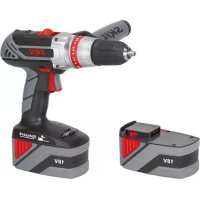
2598 AA - Drill SKIL - Free user manual and instructions
Find the device manual for free 2598 AA SKIL in PDF.


Download the instructions for your Drill in PDF format for free! Find your manual 2598 AA - SKIL and take your electronic device back in hand. On this page are published all the documents necessary for the use of your device. 2598 AA by SKIL.
USER MANUAL 2598 AA SKIL
A B C D E F J K L M H G
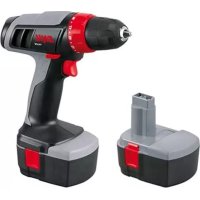
Cordless impact drill/driver 2598
• This tool is intended for impact drilling in brick as well as
for drilling in wood, metal, ceramic and plastic; tools with
electronic speed control and left/right rotation are also
suitable for screwdriving and thread cutting
• This tool is not intended for professional use
• Read and save this instruction manual 3
TECHNICAL SPECIFICATIONS 1
Max. torque for hard screwdriving application according to
C Red charging light
D Switch for changing direction of rotation
E Indicator of selected direction of rotation
F Switch for on/o and speed control
H Impact drilling position
J Ring for torque control
SAFETY GENERAL SAFETY INSTRUCTIONS WARNING! Read all safety warnings and all
instructions. Failure to follow the warnings and instructions may
result in electric shock, fire and/or serious injury. Save all
warnings and instructions for future reference. The term
“power tool” in the warnings refers to your mains-operated
(corded) power tool or battery-operated (cordless) power tool.
a) Keep work area clean and well lit. Cluttered or dark
areas invite accidents.
b) Do not operate power tools in explosive
atmospheres, such as in the presence of flammable
liquids, gases or dust. Power tools create sparks which
may ignite the dust or fumes.
c) Keep children and bystanders away while operating
a power tool. Distractions can cause you to lose control.
2) ELECTRICAL SAFETY
a) Power tool plugs must match the outlet. Never modify
the plug in any way. Do not use any adapter plugs
with earthed (grounded) power tools. Unmodied plugs
and matching outlets will reduce risk of electric shock.
b) Avoid body contact with earthed or grounded
surfaces such as pipes, radiators, ranges and
refrigerators. There is an increased risk of electric
shock if your body is earthed or grounded.
c) Do not expose power tools to rain or wet conditions.
Water entering a power tool will increase the risk of
d) Do not abuse the cord. Never use the cord for carrying,
pulling or unplugging the power tool. Keep cord away
from heat, oil, sharp edges or moving parts. Damaged
or entangled cords increase the risk of electric shock.
e) When operating a power tool outdoors, use an
extension cord suitable for outdoor use. Use of a cord
suitable for outdoor use reduces the risk of electric shock.
f) If operating a power tool in a damp location is
unavoidable, use an earth leakage circuit breaker.
Use of an earth leakage circuit breaker reduces the risk
a) Stay alert, watch what you are doing and use
common sense when operating a power tool.
Do not use a power tool while you are tired or
under the influence of drugs, alcohol or medication.
A moment of inattention while operating power tools may
result in serious personal injury.
b) Use personal protective equipment. Always wear
eye protection. Protective equipment such as dust
mask, non-skid safety shoes, hard hat, or hearing
protection used for appropriate conditions will reduce
c) Prevent unintentional starting. Ensure the switch is
in the off-position before connecting to power
source and/or battery pack, picking up or carrying
the tool. Carrying power tools with your nger on the
switch or energising power tools that have the switch on
d) Remove any adjusting key or wrench before turning
the power tool on. A wrench or a key left attached to a
rotating part of the power tool may result in personal injury.
e) Do not overreach. Keep proper footing and balance
at all times. This enables better control of the power tool
in unexpected situations.
f) Dress properly. Do not wear loose clothing or
jewellery. Keep your hair, clothing and gloves away
from moving parts. Loose clothes, jewellery or long hair
can be caught in moving parts.
g) If devices are provided for the connection of dust
extraction and collection facilities, ensure these are
connected and properly used. Use of dust collection
can reduce dust-related hazards.
4) POWER TOOL USE AND CARE
a) Do not force the power tool. Use the correct power tool
for your application. The correct power tool will do the job
better and safer at the rate for which it was designed.
b) Do not use the power tool if the switch does not turn
it on and off. Any power tool that cannot be controlled
with the switch is dangerous and must be repaired.
c) Disconnect the plug from the power source and/or
the battery pack from the power tool before making
any adjustments, changing accessories, or storing
power tools. Such preventive safety measures reduce
the risk of starting the power tool accidentally.
d) Store idle power tools out of the reach of children and
do not allow persons unfamiliar with the power tool or
these instructions to operate the power tool. Power
tools are dangerous in the hands of untrained users.8
e) Maintain power tools. Check for misalignment or
binding of moving parts, breakage of parts and any
other condition that may affect the power tool’s
operation. If damaged, have the power tool repaired
before use. Many accidents are caused by poorly
maintained power tools.
f) Keep cutting tools sharp and clean. Properly
maintained cutting tools with sharp cutting edges are less
likely to bind and are easier to control.
g) Use the power tool, accessories and tool bits etc.,
in accordance with these instructions, taking into
account the working conditions and the work to be
performed. Use of the power tool for operations dierent
from those intended could result in a hazardous situation.
5) BATTERY TOOL USE AND CARE
a) Recharge only with the charger specified by the
manufacturer. A charger that is suitable for one type
of battery pack may create a risk of re when used
with another battery pack.
b) Use power tools only with specifically designated
battery packs. Use of any other battery packs may
create a risk of injury and re.
c) When battery pack is not in use, keep it away from
other metal objects like paper clips, coins, keys,
nails, screws, or other small metal objects that can
make a connection from one terminal to another.
Shorting the battery terminals together may cause burns
d) Under abusive conditions, liquid may be ejected from
the battery; avoid contact. If contact accidentally
occurs, flush with water. If liquid contacts eyes,
additionally seek medical help. Liquid ejected from
the battery may cause irritation or burns.
a) Have your power tool serviced by a qualified
repair person using only identical replacement
parts. This will ensure that the safety of the power
SAFETY INSTRUCTIONS FOR CORDLESS DRILL/DRIVERS
• Wear ear protectors (exposure to noise can cause
• Use auxiliary handle(s), if supplied with the tool
(loss of control can cause personal injury)
• Do not work materials containing asbestos
(asbestos is considered carcinogenic)
• Dust from material such as paint containing lead, some
wood species, minerals and metal may be harmful
(contact with or inhalation of the dust may cause allergic
reactions and/or respiratory diseases to the operator or
bystanders); wear a dust mask and work with a dust
extraction device when connectable
• Certain kinds of dust are classied as carcinogenic (such
as oak and beech dust) especially in conjunction with
additives for wood conditioning; wear a dust mask and
work with a dust extraction device when
• Follow the dust-related national requirements for the
materials you want to work with
• Hold power tool by insulated gripping surfaces, when
performing an operation where the cutting accessory
or fastener may contact hidden wiring or its own cord
(cutting accessory and fasteners contacting a “live” wire
may make exposed metal parts of the power tool “live” and
could give the operator an electric shock)
• Use suitable detectors to find hidden utility lines or
call the local utility company for assistance (contact
with electric lines can lead to re or electrical shock;
damaging a gas line can result in an explosion;
penetrating a water pipe will cause property damage
or an electrical shock)
• Secure the workpiece (a workpiece clamped with
clamping devices or in a vice is held more securely than
• Avoid damage that can be caused by screws, nails and
other elements in your workpiece; remove them before
• Always check that the supply voltage is the same as the
voltage indicated on the nameplate of the charger
• In case of electrical or mechanical malfunction,
immediately switch o the tool or unplug charger from
• SKIL can assure awless functioning of the tool only
when the correct accessories are use d which can be
obtained from your SKIL dealer
• Use only accessories with an allowable speed matching
at least the highest no-load speed of the tool
• The tool/charger is not intended for use by persons
(including children) with reduced physical, sensory
or mental capabilities, or lack of experience and
knowledge, unless they have been given
supervision or instruction concerning use of the
tool/charger by a person responsible for their safety
• Ensure that children do not play with the tool/charger
• Ensure that switch D 2 is in the middle (locking) position
before making any adjustments or changing accessories
as well as when carrying or storing the tool
• Charge battery only with the charger that is supplied with
• Do not touch the contacts in the charger
• Do not expose tool/charger/battery to rain
• Do not charge battery in damp or wet environments
• Store tool/charger/battery in locations where temperature
will not exceed 40°C or drop below 0°C
• Batteries may explode when disposed of in re, so do not
burn battery for any reason
• Do not use charger when damaged; take it to one of the
ocially registered SKIL Service Stations for a safety check
• Do not use charger when cord or plug is damaged; cord
or plug should be replaced immediately at one of the
ocially registered SKIL Service Stations
• Do not use battery when damaged; it should be replaced
• Do not disassemble charger or battery
• Do not attempt to recharge non-rechargeable batteries
EXPLANATION OF SYMBOLS ON CHARGER/BATTERY
3 Read the instruction manual before use
4 Only use the charger indoors
5 Double insulation (no earth wire required)
6 Incorrect polarity of the charger connection could cause a
hazard (only charge the battery with the charger supplied)
7 Automatic shut-o when charger gets too hot (thermic
fuse blows and charger becomes useless)
8 Do not dispose of the charger together with household
9 Do not dispose of the battery together with household
WHEN CONNECTING NEW 3-PIN PLUG (U.K. ONLY):
• Do not connect the blue (= neutral) or brown (= live) wire in
the cord of the charger to the earth terminal of the plug
• If for any reason the old plug is cut o the cord of
the charger, it must be disposed of safely and not
• Charging battery 0
- battery of new tools is not fully charged
- insert charger plug A into charger B
- slide charger onto battery
- connect charger to power source
- red light C will turn on indicating that the battery is
! remove battery from charger after charging
period has ended thereby lengthening the service
- after 3 hours the charging operation will be completed,
and the battery may be used, even though the red
light may still be on (the red light may require more
than 3 hours to turn o)
- while charging, the charger and the battery may
become warm to touch; this is normal and does not
- ensure that the outside surface of the battery is clean
and dry before inserting into charger
- do not charge at temperatures below 0°C and over
40°C; this will seriously damage the battery as well as
- do not remove battery from tool while it is running
! a battery that is new or has not been used for a
longer period does not develop its full capacity
until after approximately 5 charging/discharging
- do not repeatedly recharge the battery after only a few
minutes of operation; this may result in a reduction of
operating time and battery eciency
- if you anticipate long periods of non-use for the tool, it
is best to unplug the charger from its power source
• Speed control for smooth starting @
• Changing direction of rotation #
- indicator E shows the selected direction of rotation
- when not properly set in left/right position, switch F 2
! change direction of rotation only when tool is at a
- insert the bit as deep as possible in the chuck
! do not use bits with a damaged shank
! only use sharp bits
• Torque control (VariTorque) %
- output torque will increase as clutch ring J is rotated
- when turning in a screw, rst try VariTorque position 1
and increase until the desired depth has been reached
- position G will lock up the clutch to permit (non-
impact) drilling or driving heavy-duty work
- position H will lock up the clutch to permit impact
! ensure that gear selector K is in position 2 when
clutch ring is in impact drilling position
! do not use impact drilling position H for drilling in
wood, metal, ceramic and plastic to prevent the
drill/screw bit from being damaged
• Mechanical gear selection ^
- set selector K to desired speed
! actuate the gear selector while tool is
- for screwdriving and drilling large diameters
- for tapping thread
- for drilling small diameters
- for impact drilling
• Holding and guiding the tool &
- always use auxiliary handle L 2 (can be adjusted
! while working, always hold the tool at the
grey-coloured grip area(s)
- keep ventilation slots M 2 uncovered
- do not apply too much pressure on the tool;
let the tool do the work for you
• When drilling ferrous metals
- pre-drill a smaller hole, when a large hole is required
- lubricate drill bit occasionally with oil
• When turning in a screw at/near the cross cut end or an
edge of wood, pre-drill a hole in order to avoid cracking of
• For an optimal use of the tool a steady pressure on the
screw is required, especially while removing
• When screwdriving in hard wood one should pre-drill
• Splinterfree drilling in wood (
• Dustfree drilling in walls )
• Dustfree drilling in ceilings ¡
• Drilling in tiles without skidding ™
• For more tips see www.skileurope.com10
MAINTENANCE / SERVICE
• This tool is not intended for professional use
• Keep tool and charger clean
- clean charging contacts in charger with alcohol or
- clean ventilation slots M 2 regularly with a brush or
! unplug charger from power source before cleaning
• If the tool/charger should fail despite the care taken in
manufacturing and testing procedures, repair should be
carried out by an after-sales service centre for SKIL
- send the tool or charger undismantled together with
proof of purchase to your dealer or the nearest SKIL
service station (addresses as well as the service
diagram of the tool are listed on www.skileurope.com)
• Do not dispose of electric tools, accessories and
packaging together with household waste material
(only for EU countries)
- in observance of European Directive 2002/96/EC on
waste of electric and electronic equipment and its
implementation in accordance with national law,
electric tools that have reached the end of their life
must be collected separately and returned to an
environmentally compatible recycling facility
- symbol 8 will remind you of this when the need for
• The battery must be kept separate from the natural
environment and should not be disposed of as normal
domestic waste (symbol 9 will remind you of this when
the need for disposing occurs)
! prior to disposal protect battery terminals with
heavy tape to prevent short-circuit
DECLARATION OF CONFORMITY
• We declare under our sole responsibility that this product is
in conformity with the following standards or standardized
documents: EN 60335, EN 61000, EN 60745, EN 55014,
in accordance with the provisions of the directives 2006/95/
EC, 2004/108/EC, 2006/42/EC
• Technical file at: SKIL Europe BV (PT-SEU/PJE),
4825 BD Breda, NL Arno van der Kloot
Operations & Engineering
• Measured in accordance with EN 60745 the sound
pressure level of this tool is 88 dB(A) and the sound
power level 99 dB(A) (standard deviation: 3 dB), and the
vibration ✱ (hand-arm method; uncertainty K = 1.5 m/s²)
✱ when drilling in metal 1.9 m/s²
✱ when impact drilling in concrete 14.8 m/s²
✱ when screwdriving 1.1 m/s²
• The vibration emission level has been measured in
accordance with a standardised test given in EN 60745;
it may be used to compare one tool with another and as
a preliminary assessment of exposure to vibration when
using the tool for the applications mentioned
- using the tool for dierent applications, or with dierent
or poorly maintainted accessories, may signicantly
increase the exposure level
- the times when the tool is switched o or when it is
running but not actually doing the job, may signicantly
reduce the exposure level
! protect yourself against the effects of vibration by
maintaining the tool and its accessories, keeping
your hands warm, and organizing your work patterns
2006/95/CE, 2004/108/CE, 2006/42/CE
(PT-SEU/PJE), 4825 BD Breda, NL Arno van der Kloot
Operations & Engineering
Operations & Engineering
Operations & Engineering
Operations & Engineering
F Afbryder til tænd/sluk og regulering af omdrejningstal
G Position for boring
H Position for slagboring
J Ring til justering af drejningsmoment
2006/95/EF, 2004/108/EF, 2006/42/EF
4825 BD Breda, NL Arno van der Kloot
Operations & Engineering
VEDLIKEHOLD / SERVICE
2004/108/EF, 2006/42/EF
(PT-SEU/PJE), 4825 BD Breda, NL Arno van der Kloot
Operations & Engineering
Operations & Engineering
Operations & Engineering
Operations & Engineering
in corrispondenza della(e) area(e) grigia(e)
direttive 2006/95/EG, 2004/108/EG, 2006/42/EG
(PT-SEU/PJE), 4825 BD Breda, NL Arno van der Kloot
Operations & Engineering
EN 60745, EN 55014, a 2006/95/EK, 2004/108/EK,
Operations & Engineering
Operations & Engineering
Operations & Engineering
Operations & Engineering
Operations & Engineering
Operations & Engineering
Operations & Engineering
2004/108/CE, 2006/42/CE
(PT-SEU/PJE), 4825 BD Breda, NL Arno van der Kloot
Operations & Engineering
Operations & Engineering
Operations & Engineering
Operations & Engineering
Operations & Engineering
Operations & Engineering
Operations & Engineering
Operations & Engineering
Operations & Engineering
Operations & Engineering
Operations & Engineering
A B C D E F J K L M H G